

Crypto World
Bitcoin’s ‘Deep Value’ Discount Faces Hawkish Fed Test: Bitwise

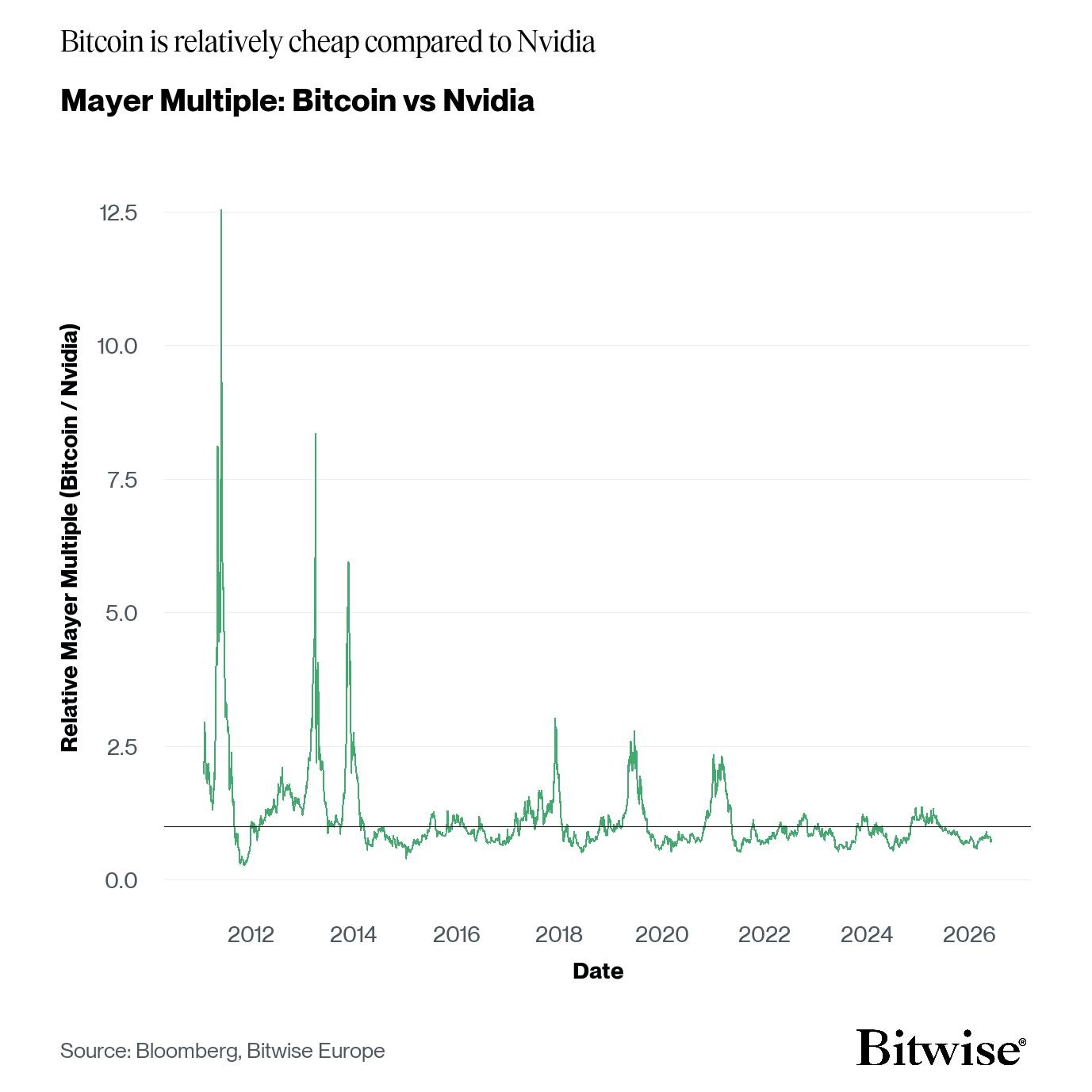
Bitcoin’s (BTC) valuation metrics continue to highlight a deep discount even as markets brace for a potentially hawkish Federal Reserve under new chair Kevin Warsh. Analysis from Bitwise Investments said BTC remains in a “deep value” zone after a valuation metric fell below 1.0, a level associated with long-term accumulation periods.
However, investor participation remains subdued, with CryptoQuant’s realized cap growth metric remaining in a bear phase since late October 2025. This points to a steady slowdown in fresh capital entering the BTC network.
At the same time, a growing list of key companies going public raises increased competition for liquidity across the investment market, so the focus shifts to whether BTC attracts new capital amid tighter liquidity conditions.
Deep-value or liquidity squeeze, which is most important?
The Federal Reserve kept interest rates unchanged at 3.5%-3.75% on Wednesday, a decision that largely matched Bitwise’s market expectations and avoided the hawkish surprise the market had feared.
While BTC dropped back below $64,000 on Thursday following the Fed’s interest rate announcement, Bitwise described its price as a “deep value” opportunity based on its Mayer Multiple, which compares price to its 200-day moving average. The firm noted the metric had remained below 1.0, a level that has historically aligned with accumulation periods.
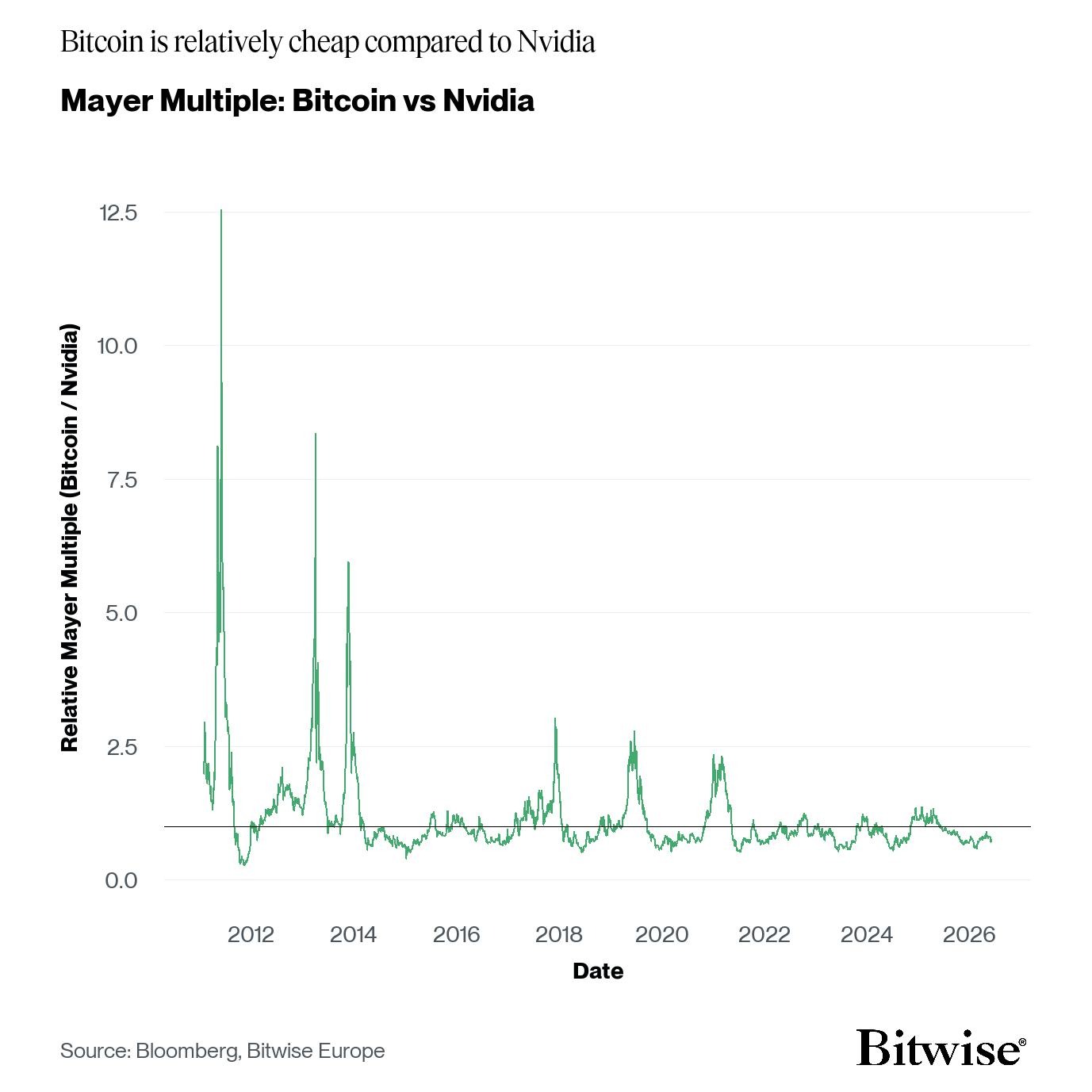
Bitcoin’s Mayer multiple vs Nvidia. Source: Bitwise
Bitwise argued that Bitcoin’s valuation stood out compared with AI-linked equities like NVIDIA, which were trading at significant premiums to long-term trend levels. The firm also flagged a growing pipeline of major capital raises, including potential offerings tied to SpaceX, Anthropic, and OpenAI. Collectively, those deals could attract more than $200 billion in investor demand.
Large listings often coincide with strong investor appetite. They also absorb liquidity that might otherwise flow into equities and cryptocurrencies. Bitwise said that elevated rates continue to limit the availability of capital for speculative assets despite Bitcoin’s attractive valuation profile.
The subdued participation is also reflected in Bitcoin’s capital flow trends. CryptoQuant’s realized cap growth metric has remained in a bear-phase regime since Oct. 30, 2025, even as Bitcoin’s valuation indicators moved into historically attractive territory.
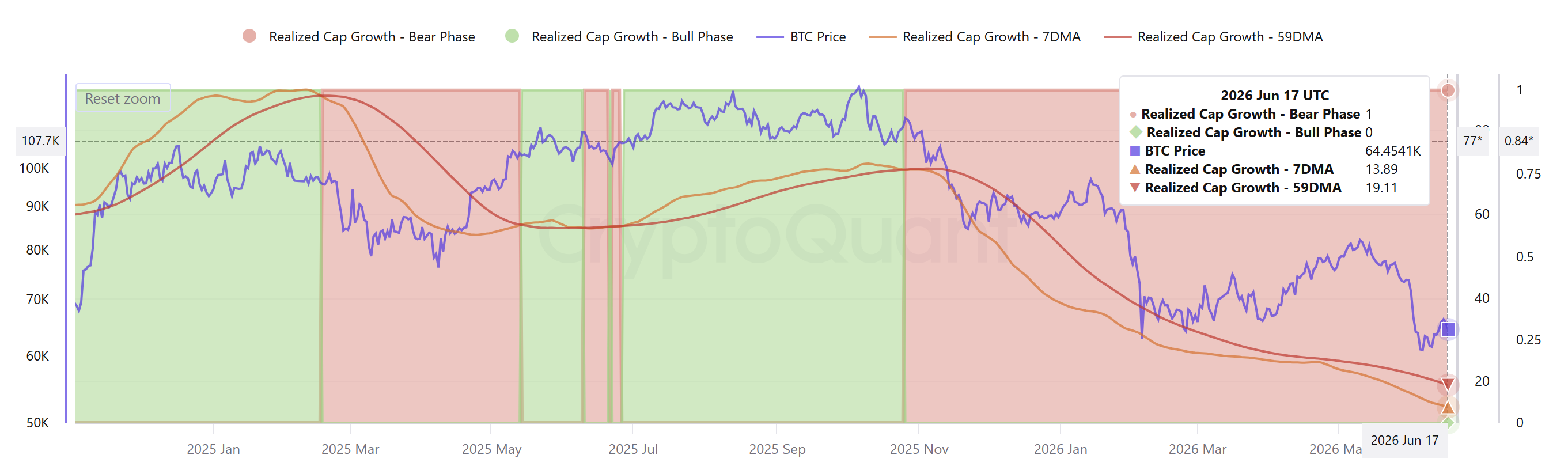
Bitcoin’s realized cap growth analysis. Source: CryptoQuant
Since entering the bear phase, the metric’s seven-day and 59-day moving averages have declined to 13.9 and 19.1 on June 17 from roughly 70 in Q4 2025. The slowdown suggests the pace of new capital entering the Bitcoin network has continued to weaken, highlighting investor caution.
Bitcoin researcher Axel Adler Jr. pointed to a separate concern following the Fed’s decision. While rates remained unchanged, the updated dot plot showed nine officials expecting at least one rate hike this year and six projecting two or more.
Bitcoin reacted negatively to the update, with selling volume expanded during the decline on Wednesday, marking the heaviest trading activity at the point of rejection at $66,200. For gold, an initial rebound above $4,300 faded, leaving the metal trading near $4,244 on Thursday.
The reaction aligns with Adler’s view that markets are pricing in a higher-for-longer rate path rather than a near-term policy easing.
Related: Capital B shareholders approve up to $120B in financing capacity for Bitcoin strategy
BTC traders split on the next move
Market data shows that BTC traders are interpreting the Fed’s outcome in different directions.
Market commentator Crypto Rover highlighted a newly opened $38.5 million Bitcoin short position using 30x leverage shortly after the FOMC meeting. The trader was reportedly sitting on roughly $750,000 in unrealized profit as Bitcoin moved lower.
Meanwhile, Bitcoin investor Jelle viewed the pullback below $64,000 from the weekly high of $67,255 as a routine retest of support. The analyst identified the $64,000 threshold as a key price point for buyers, adding,
“Hold here, and we likely see extended relief into $70k in the coming weeks. Big day ahead.”
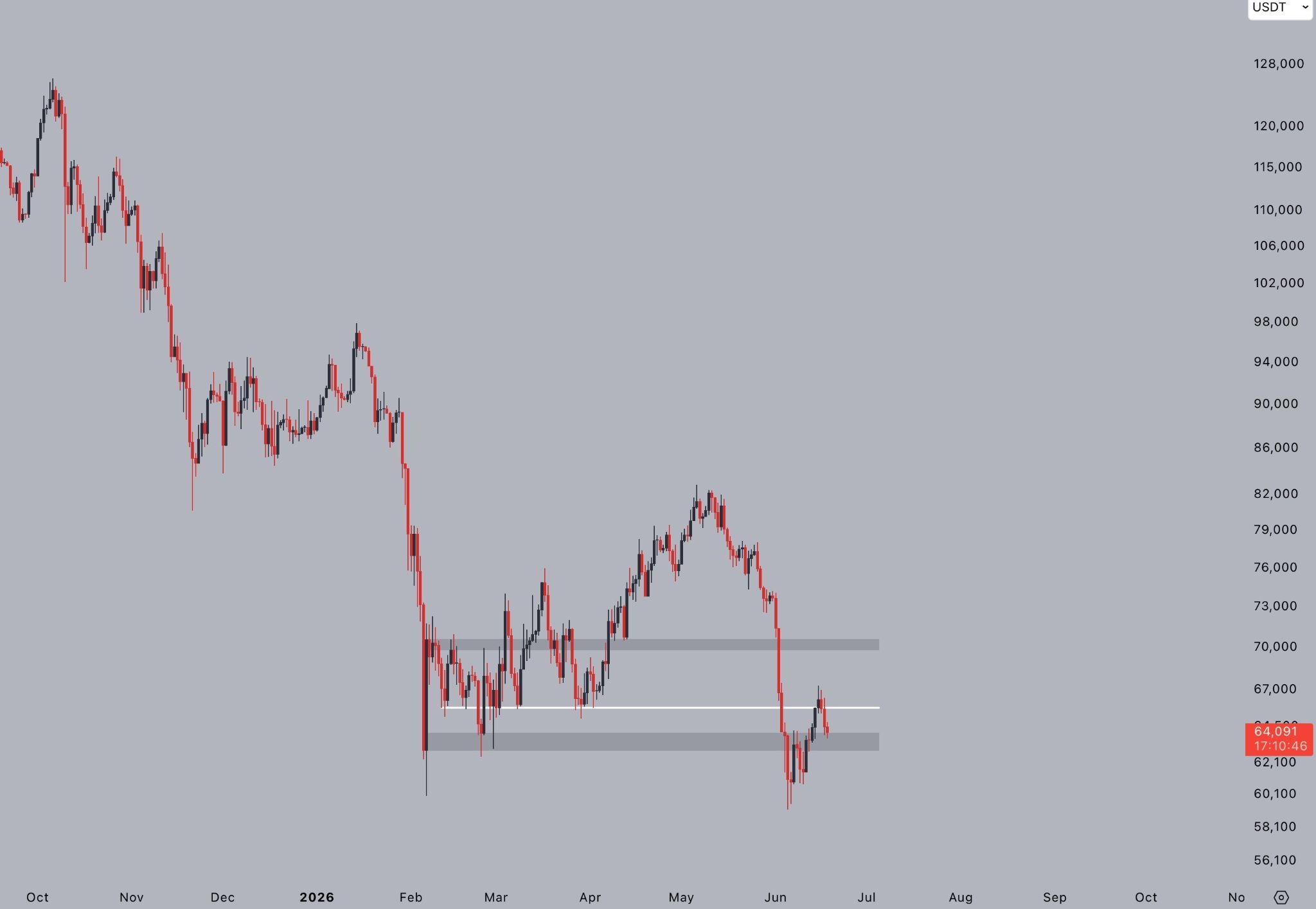
BTC/USD, one-day analysis by Jelle. Source: X
Related: Bitcoin capitulation ‘twice as weak’ after spot liquidity turns supportive: Glassnode



This negotiation over the government conflict-of-interest piece had delayed progress on the Clarity Act for months — now potentially beyond the window in which it could most easily become law in 2026. This week’s release of the final working draft of Clarity included the first ethics language openly circulated, so Democrats are now responding — many of them with disdain.
“Donald Trump raked in more than $1.4 billion from cryptocurrency ventures, and this bill does nothing to prevent him from vacuuming up his next $1.4 billion in crypto profits,” said Senator Elizabeth Warren, the Massachusetts Democrat who is her party’s ranking member on the Senate Banking Committee, referring to the crypto earnings Trump disclosed for 2025. She said the president will “simply ignore the law” as it’s proposed.
So what does the language do? It temporarily bans senior government officials (including the president, vice president, members of Congress and federal judges) from issuing or sponsoring cryptocurrencies.
However, it excuses activity in the past, and there are plenty of crypto business pursuits that don’t check the boxes of issuance or sponsorship, so it’s unlikely Trump would be forced to abandon some of his most prominent ties, such as his ownership stake in World Liberty Financial. He might have to create some legal distance for himself, such as placing certain investments in trusts that he can’t access directly.


Samsung Electronics plans to add stablecoin support to Samsung Wallet, expanding its mobile payments and rewards platform to include digital assets.
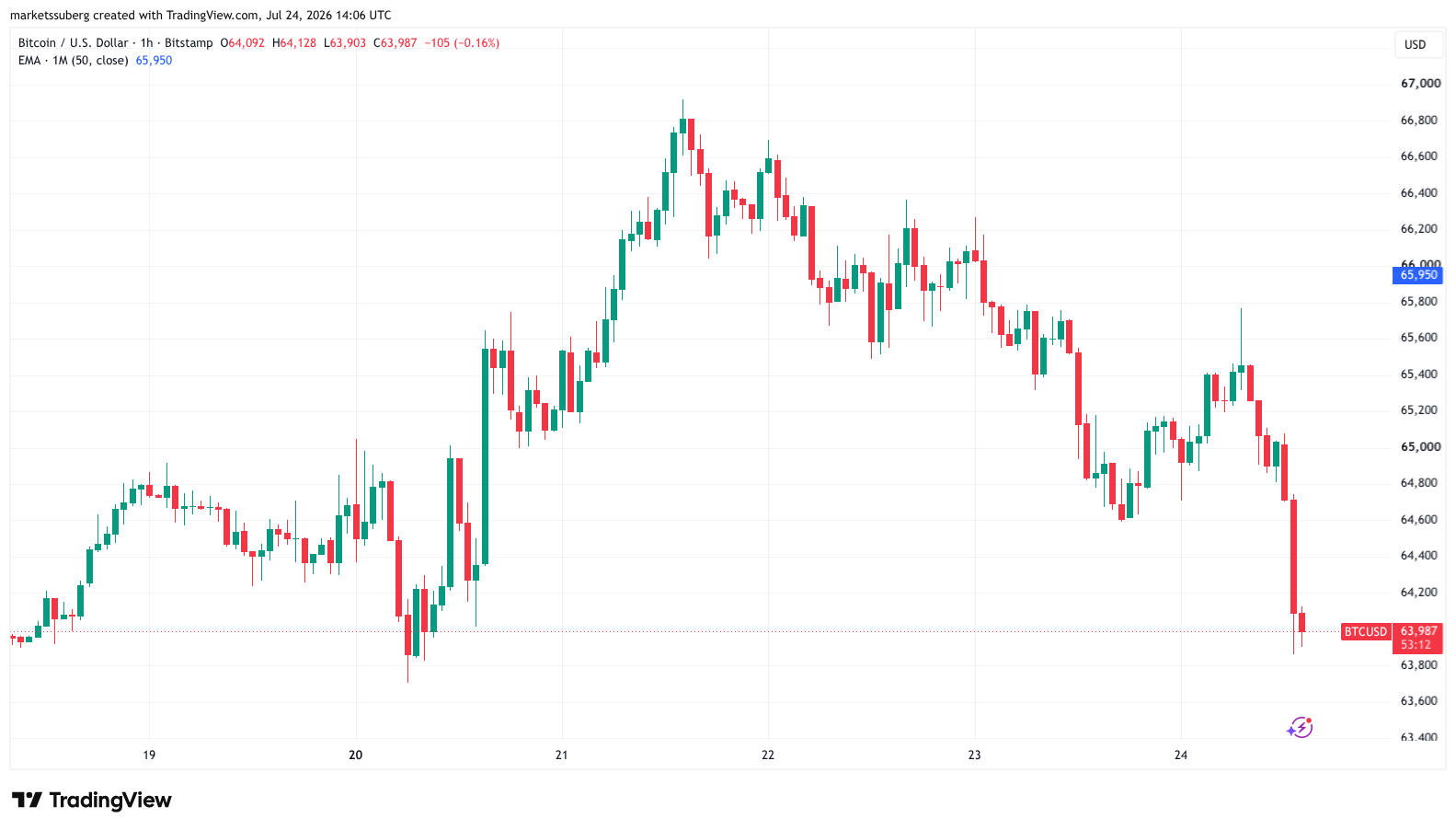
Bitcoin (BTC) fell more than 1.6% on Friday as its latest price correction accelerated after Wall Street opened.
Key points:
- Bitcoin price downside pressure mounts on the back of multiple macro headwinds.
- US bond yields further a hawkish pivot in Fed interest-rate expectations.
- BTC price analysis sees a Binance “plunge protection team” attempting to shore up the market.
Analysis warns US bond yields now “well above” target
Data from TradingView showed BTC/USD approaching $64,000 as bulls struggled to preserve recent gains.
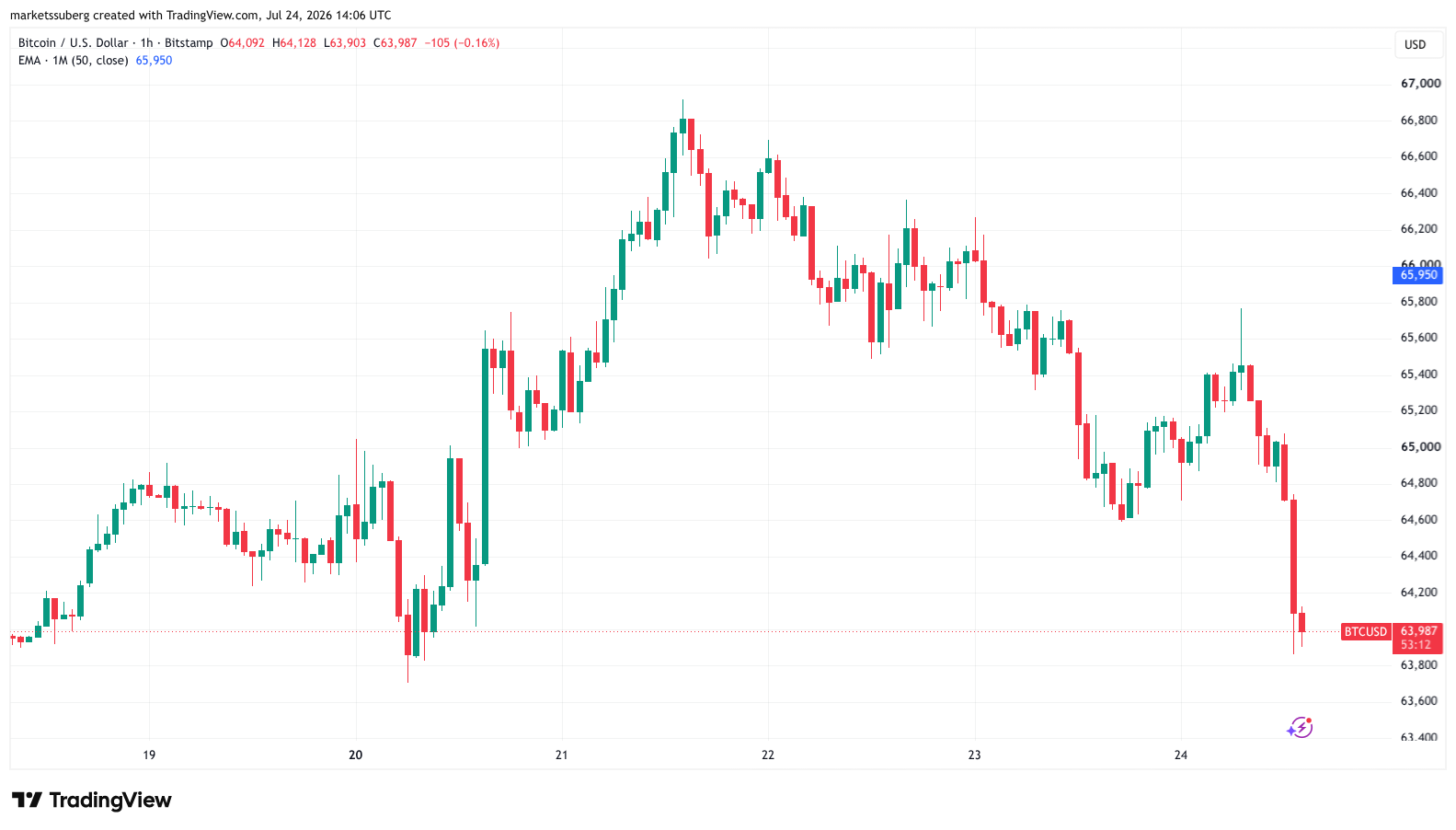
BTC/USD one-hour chart. Source: Cointelegraph/TradingView
Geopolitical tensions and macroeconomic headwinds weighed on crypto markets as appetite for risk assets faded.
Trading firm Mosaic Asset Company said rising US Treasury yields were a key driver of the sell-off.
“Massive moves are underway across the yield curve despite a weaker than expected consumer inflation report,” it wrote, referring to the latest US Consumer Price Index (CPI) report.
Mosaic said the two-year yield was particularly prone to influence the outlook on Federal Reserve interest-rate changes, with risk assets suffering as a result of additional hikes.
“The 2-year yield that tends to lead fed funds is now at 4.31% and sits well above the Federal Reserve’s target range,” it continued.
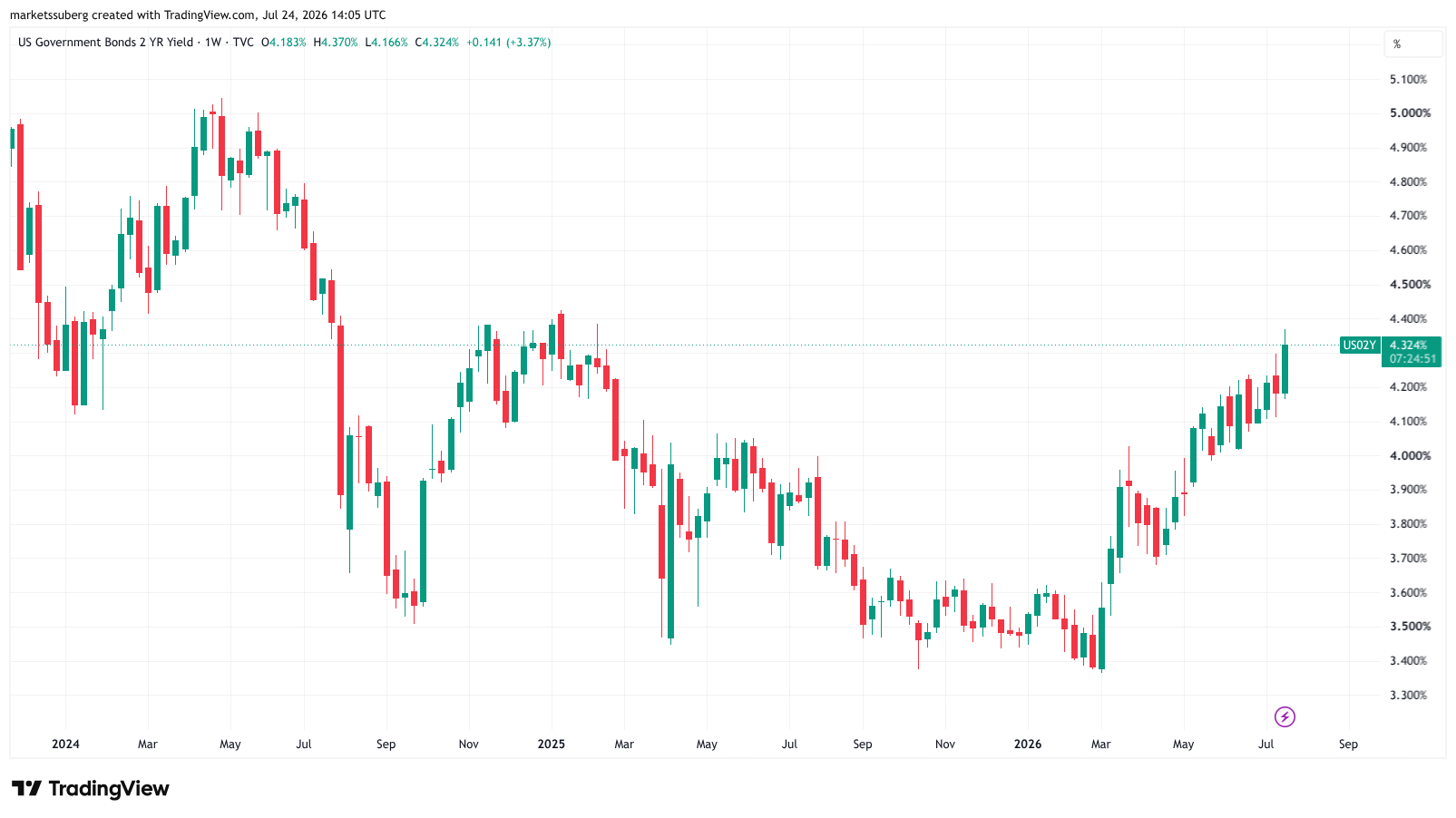
US two-year Treasury yield one-week chart. Source: Cointelegraph/TradingView
The latest data from CME Group’s FedWatch Tool showed that markets still expected the Fed to leave rates unchanged next week, while pricing in a 0.25% hike in September as one of two increases expected before the end of 2026.
Mosaic added that those expectations were “placing downward pressure on stock indexes.”
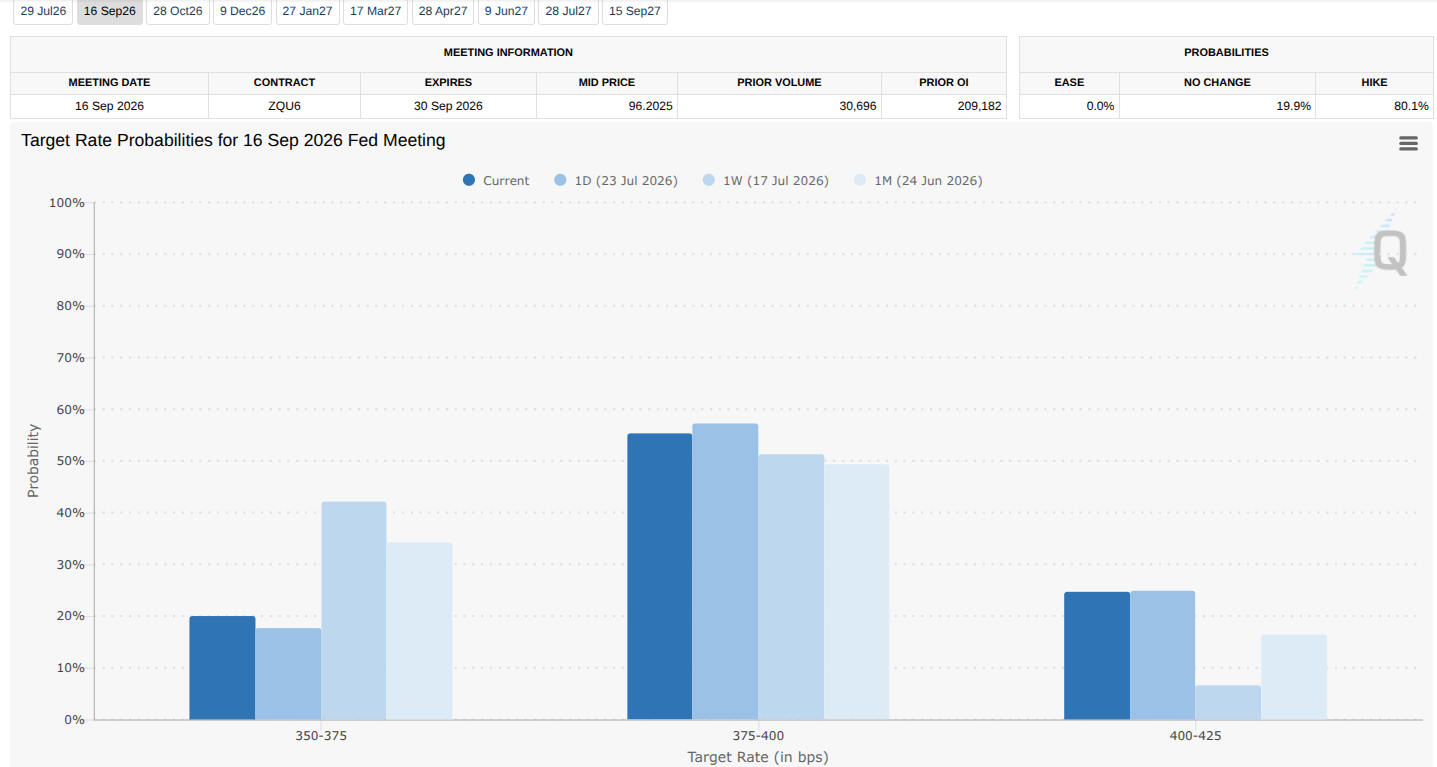
Fed target-rate probability comparison for September FOMC meeting (screenshot). Source: CME Group
Bitcoin price “plunge protection team” returns
In ongoing market monitoring, crypto trader Killa said BTC was repeating a familiar short-term trading pattern.
Related: BTC supply in profit eyes 60%, but analysis hints recovery may ‘roll back over’
“Textbook setup on $BTC. Seen this occur numerous times,” they said on X, repeating a post from early June in which they identified a “plunge protection team” active on the largest crypto exchange Binance.
A chart accompanying the post showed layers of bid liquidity below the spot price, with its owners potentially not planning for the positions to be filled.
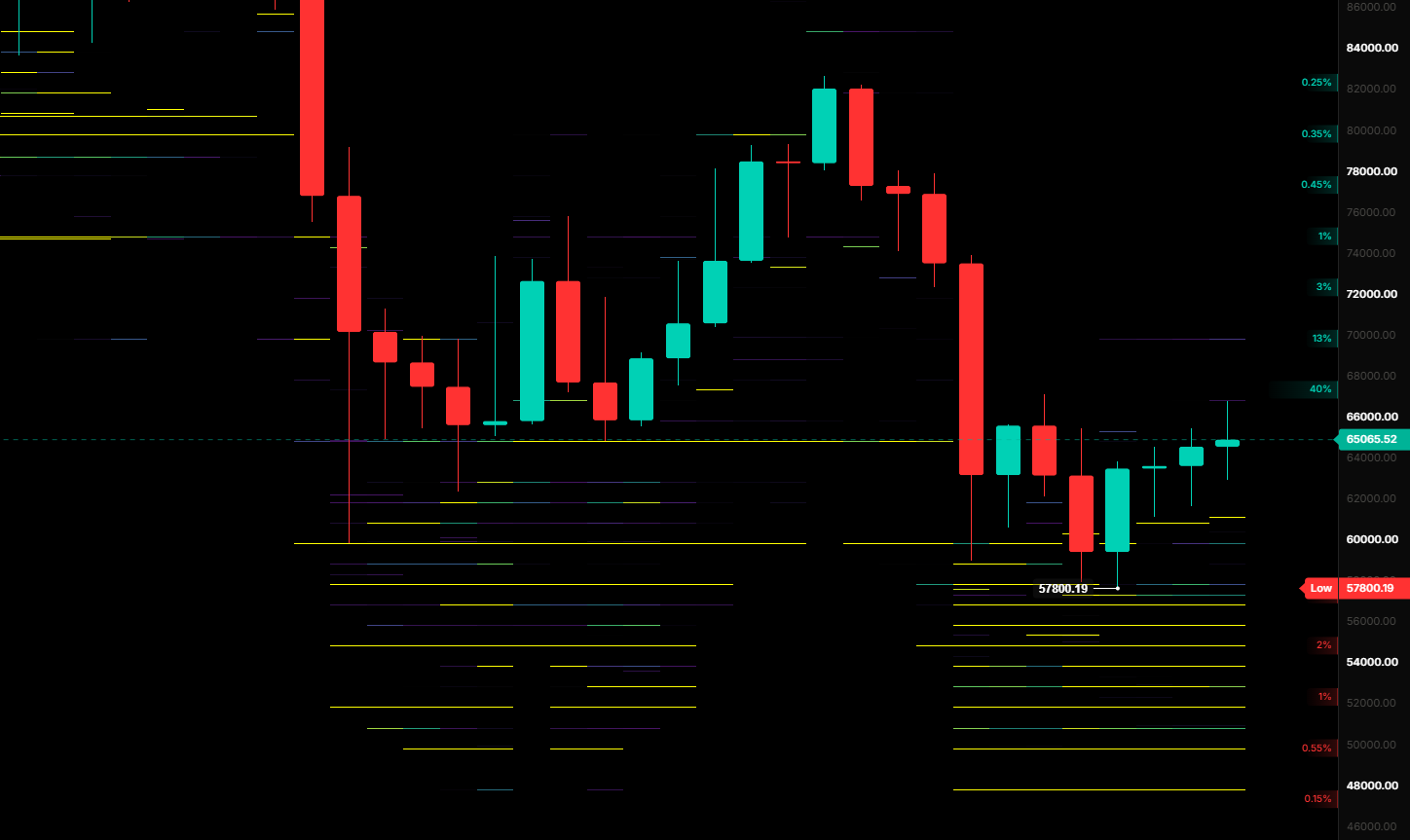
BTC/USDT chart with order-book liquidity data. Source: Killa on X.com
Analytics account Wealthmanager focused on $64,000, warning that a break below that level would “invalidate” the low-timeframe market structure.
Trader and analyst Rekt Capital, meanwhile, doubled down on the theory that BTC/USD was repeating behavior from its 2022 bear market, rejecting from the 50-month exponential moving average (EMA) at $65,950.
“Bitcoin hasn’t really offered any evidence to the contrary. Still following 2022 historical tendencies,” he summarized.
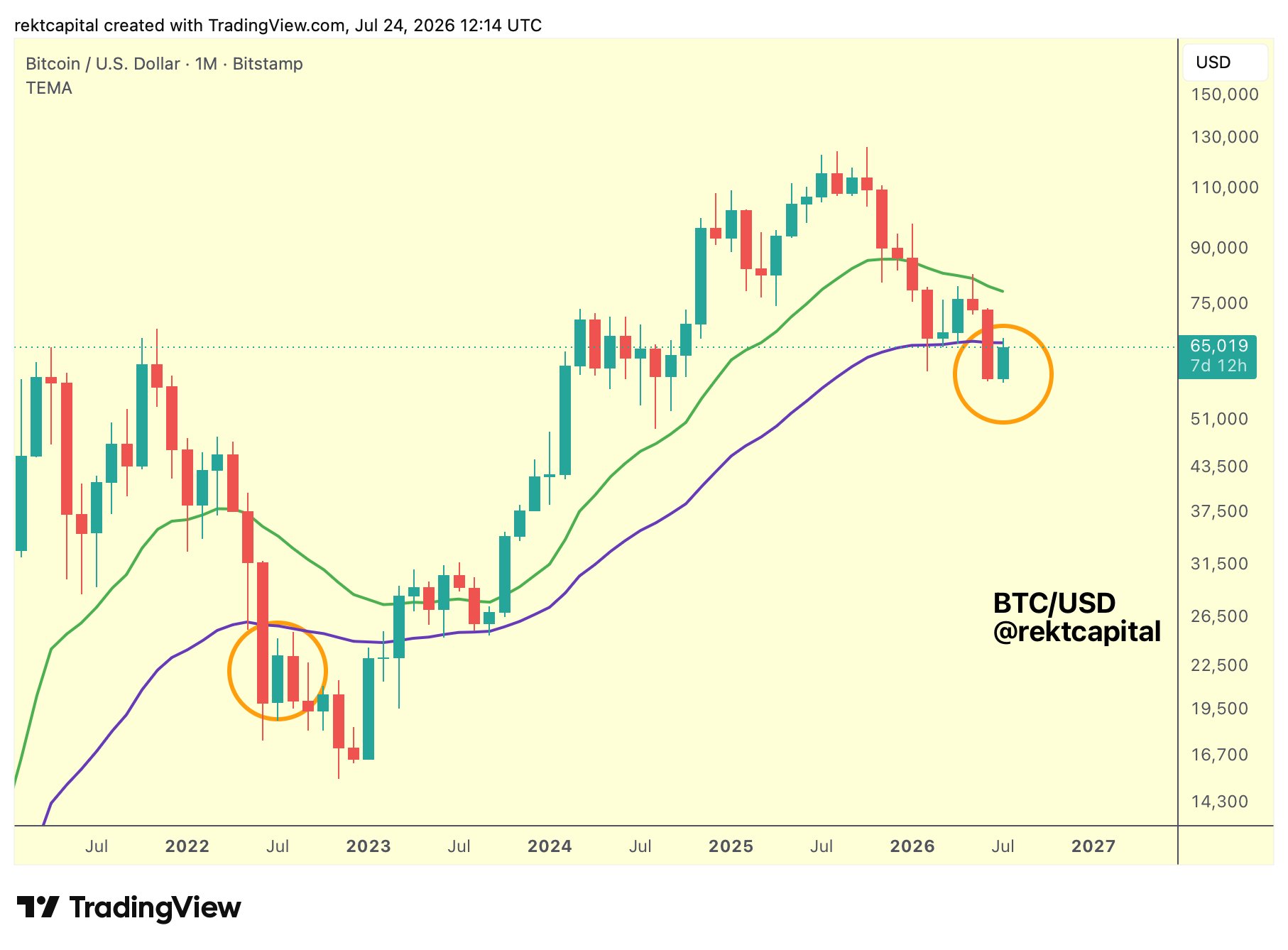
BTC/USD one-month chart with 21, 50EMA. Source: Rekt Capital on X.com


Crypto influencer and party animal Ansem has been banned from Uber after failing to heed its warnings and improve his 4.2 rating.
Ansem — real name Zion Thomas — shared Uber’s ban on X yesterday. The car-for-hire firm said that due to Ansem’s low rating, “we’ve had to remove access to your Uber account.”
Uber also claimed that his score hadn’t improved since a prior notification, implying that he’d already been warned.
He didn’t provide an explanation at first, which left many on X desperate to know exactly what kind of a passenger he is.
One user guessed that he kept making the drivers wait while his girls get ready. Ansem’s response was, “It’s really not my fault.”
He eventually explained in a little more detail about the reasons for the ban on his Market Bubble podcast.
Read more: Andrew Tate’s memecoin down 97% while he tweets from cell
He described what he called “an accumulation of just bad habits,” and said that he’s “always late.”
He added, “Every time I’ll call Uber, and we’re going out, we’re loud as fuck in the Uber. I got hella people with me, I got people screaming in the back seat, all this shit happening.”
As for his lateness, he said, “You know how it is when you’re leaving the fucking club or like getting ready to go to the club, everybody’s still getting ready and shit… people are drinking inside and trying to find their friends and everything.”
Ansem broke Uber’s guidelines
Uber has its own community guidelines that apply to everyone using the app that can affect whether or not the company decides to suspend a driver, or in Ansem’s case, a passenger.
For instance, you’re not allowed to bring in any open containers of alcohol or illegal drugs into an Uber. There are also several guidelines that emphasise respecting one another and not being rude.
Uber says, “Aggressive, confrontational, or harassing behavior is not allowed. Don’t use language, make gestures, or take action that could be disrespectful, threatening, or inappropriate.”
Other guidelines involve sticking to the law. Various forms of fraud are forbidden within an Uber, you must wear your seatbelts, and you can’t be bringing any firearms inside.
Read more: It’s been 365 days since Pump Fun promised an airdrop was ‘coming soon’
It’s not entirely clear what rating will get you banned as a rider. In 2019, it was reported that drivers were required to maintain a 4.6 average rating across their most recent 100 trips in order to keep using the app. Their overall rating, however, is averaged using their most recent 500 trips.
Uber has said that it will give riders with a below-average rating several opportunities to improve their score.
Unfortunately for Ansem, his repeated dillydallying and tendency to bring smashed passengers along for the ride appear to have cost him.
Got a tip? Send us an email securely via Protos Leaks. For more informed news and investigations, follow us on X, Bluesky, and Google News, or subscribe to our YouTube channel.
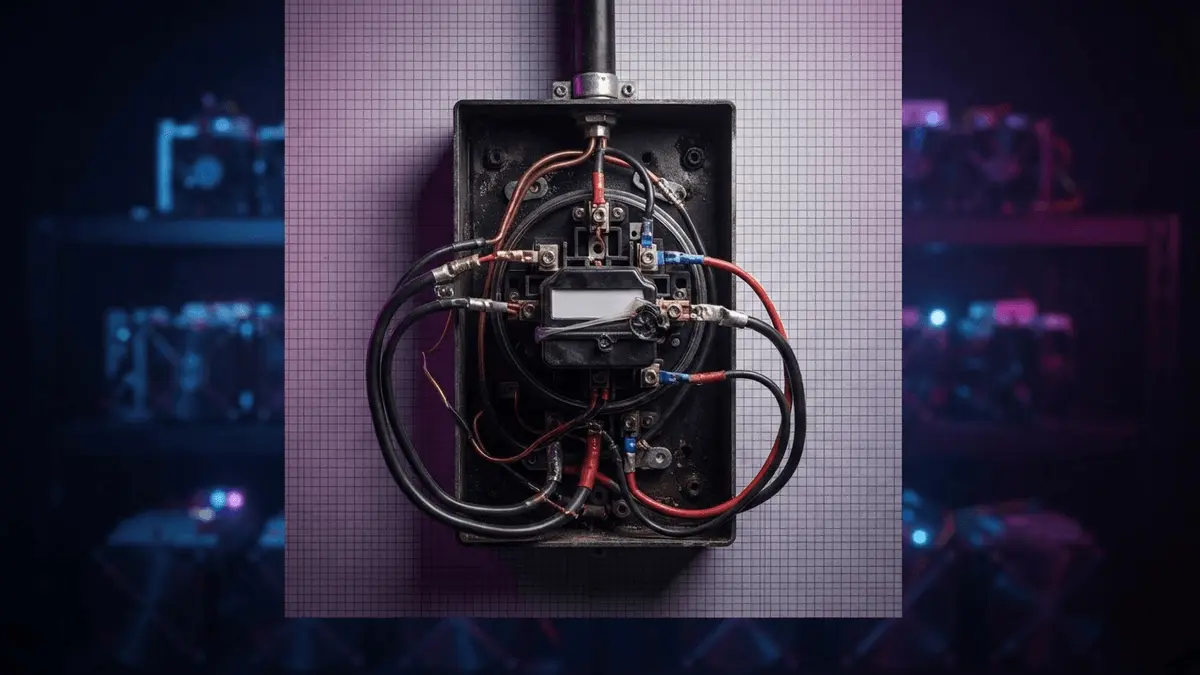
In Bitcoin news today, police in Malaysia dismantled a Bitcoin mining syndicate following four raids on July 22 and 23 by Tenaga Nasional Berhad (TNB) across four rented premises.
Authorities arrested three local men and seized 71 cryptocurrency mining rigs in an operation that generated an estimated RM80,000 to RM100,000 (~$25,000) in monthly profits.
The bust, codenamed Ops Letrik, exposes the persistent economics of illegal mining in Johor, Malaysia: electricity theft converts what would be an unprofitable operation into a high-margin one, with TNB absorbing the cost.
This story dropped as Bitcoin USD fell -0.4% over the past 24 hours, slipping to $65,300 after losing the $66,000 level yesterday. As of right now, support at $65,000 is holding steady.
Bitcoin News: How the Johor Syndicate Operated
The operation was carried out by the Johor Contingent Police Headquarters’ Criminal Investigation Department (D4) in collaboration with TNB’s Southern Region SEAL team.
Raids hit three residential homes and one shophouse in Iskandar Puteri, Johor Bahru Utara, and Kulai – each rented at RM5,000 to RM6,000 per month, with the rental arrangements still under active investigation.
The syndicate’s method was direct tapping: bypassing legitimate TNB meters with hardwired connections allowing their Bitcoin mining operations to run without paying bills.
Over roughly one month of operation before police moved in, that power theft inflicted RM67,502.30 in losses on TNB. The profit margin is self-evident – the syndicate was clearing multiples of its RM67,000 electricity liability in monthly Bitcoin revenue while paying it nothing.
Items seized included 71 cryptocurrency mining machines, two computers, two laptops, five routers, two monitors, two keyboards, one mobile phone, and two vehicles.
Johor police chief Datuk Ab Rahaman Arsad said one suspect acted as the manager across all four premises, while the other two were external technicians responsible for wiring and machine installation.
Ab Rahaman said initial investigations found the syndicate was capable of generating profits of between RM80,000 and RM100,000 per month, while the suspects are believed to have been paid around RM5,000 a month.
All three suspects, aged 26 to 46, were remanded until July 26. Police said they are actively tracking additional individuals linked to the network.
Discover: The Best Token Presales
Legal Exposure and Johor’s Enforcement Record
The case is being investigated under two statutes: Section 427 of the Penal Code for criminal mischief, which carries a jail term of between one and five years, or a fine, or both, upon conviction. and Section 37(1) of the Electricity Supply Act 1990 for interfering with electrical installations, which carries a fine not exceeding RM100,000, up to five years’ imprisonment, or both.
Combined exposure is meaningful but not prohibitive given the profit scale, which is precisely why the Malaysian crackdown has escalated enforcement frequency rather than relying solely on statutory deterrence.
Between January 2025 and June 2026, the Johor Contingent Police raided 16 premises linked to illegal cryptocurrency mining, seizing 158 machines in total and incurring TNB losses of nearly RM1 million.
The July 22–23 operation involved 71 mining machines and resulted in TNB utility losses estimated at RM67,502.30 – smaller in rig count than some prior busts but operationally similar in structure.
Trade BTC on Bybit and Get a Chance to Win Our $1,000 USDT Airdrop
Malaysia’s Broader Power Theft Problem
In wider Bitcoin news, the Johor raid is one node in a sustained national enforcement campaign. The scale separates Malaysia’s problem from most jurisdictions: this is not marginal grid abuse but a structured shadow industry operating at the expense of a state utility.
The arithmetic that drives these operations is straightforward. Legitimate Bitcoin mining in Malaysia requires paying commercial electricity rates against a fixed BTC price outcome, margins that compress quickly when the network difficulty rises.
Stealing power eliminates the primary variable cost, transforming marginal or loss-making operations into profitable ones regardless of market conditions. That dynamic explains why enforcement has not eliminated the practice despite years of raids, seizures, and prosecutions.
The contrast with above-board Bitcoin operations is stark. Where legitimate Bitcoin businesses manage treasury exposure and operational costs transparently, syndicates like the Johor network externalize their highest cost onto the public grid.
Johor police said they continue to track additional suspects connected to this syndicate, suggesting the network extends beyond the three men currently in custody.
Discover: The Best Crypto to Diversify Your Portfolio
The post Bitcoin News: Johor Syndicate Cleared $25,000 Monthly by Stealing Power appeared first on Cryptonews.
Crypto World
Bitcoin Rejected at $67K, Strategy Stays on Hold, BitMEX Shuts Down: Weekly Crypto Recap
The previous business week ended with a leg down that drove the primary cryptocurrency to $62,500. However, it reacted swiftly and recovered to $64,000 during the weekend.
The gradual climb continued on Sunday and Monday morning when BTC peaked at $65,000, but it was rejected and slipped south by over a grand to $63,750. The next leg up was a lot more impressive. Bitcoin didn’t stop at $65,000, and even the $66,000 resistance fell on the first attempt. Thus, the asset’s rally extended for a bit more, reaching $67,000 (on some exchanges) for the first time since the middle of June.
It came on the heels of renewed ETF net inflows and new accumulations from certain large investors. However, the price run couldn’t be sustained for long, and BTC quickly dipped back down to $66,000 on Wednesday, $65,000 on Thursday, and it plunged to $64,000 earlier today.
Despite its $3,000 correction from the local top, bitcoin remains about 2% up on the week. Similar gains are evident from Ethereum, which challenged $1,950 at one point, and TRX, which remains at around $0.33. Even more impressive price performance comes from XMR; a 9% pump has driven the privacy token to over $350. UNI and HBAR have posted notable gains as well, while HYPE, ZEC, CC, and DOGE remain in the red on a weekly scale.
Bitcoin’s market dominance has also dwindled in the past few days. It exploded to over 57% during the mid-week run, but it has dipped below 56% on CoinGecko now.
Market Data
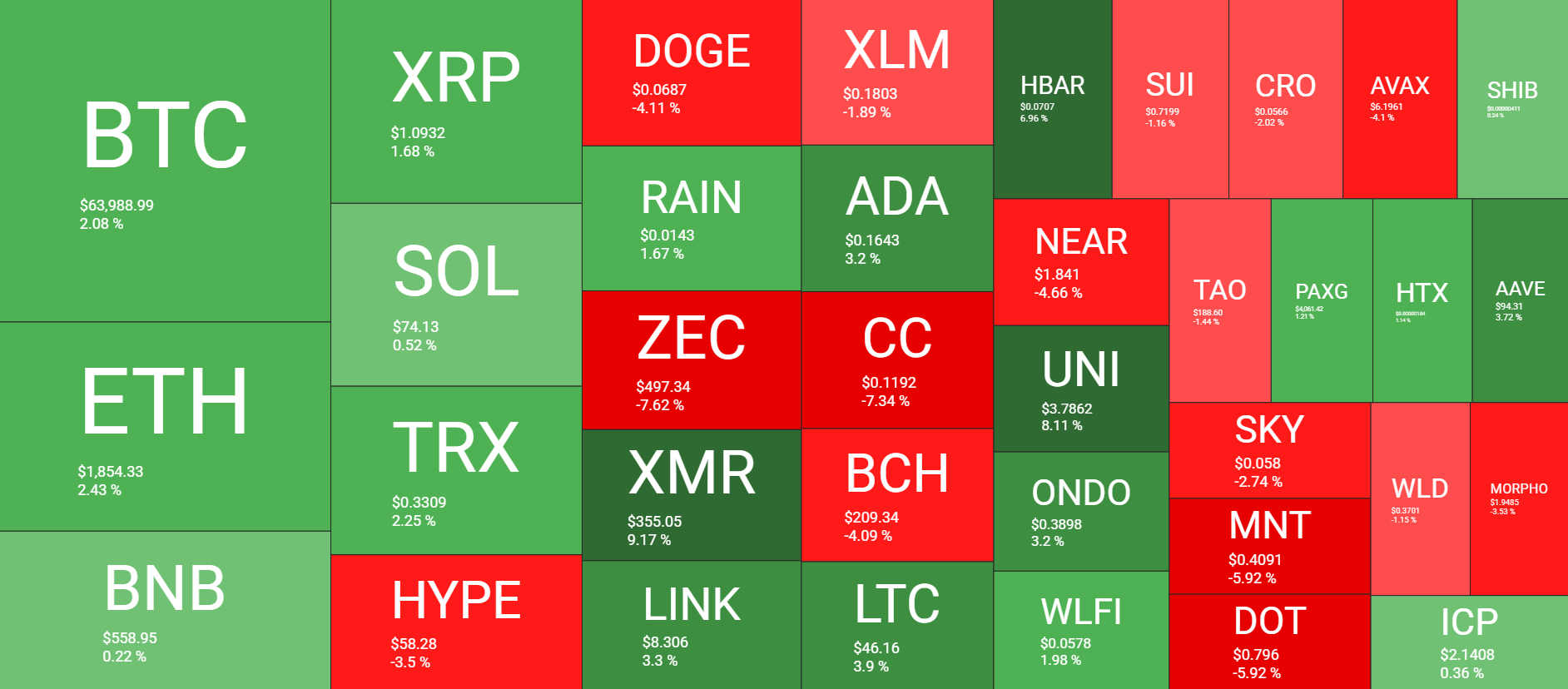
Market Cap: $2.295T | 24H Vol: $61B | BTC Dominance: 55.9%
BTC: $64.000 (+2%) | ETH: $1,855 (+2.4%) | XRP: $1.09 (+1.7%)
This Week’s Crypto Headlines You Can’t Miss
Strategy Extends Bitcoin Buying Pause While Growing Its USD Reserve: Details. Saylor’s company appears to have listened to some market experts who suggested that it should pause its BTC purchases in favor of rebuilding its USD reserve. The past week proved that narrative right once again with another no-buy bitcoin announcement.
Veteran Crypto Exchange BitMEX to Shut Down in September. After nearly a decade in existence, the veteran derivatives platform BitMEX announced that it will close shop in September. The creator of the 100x perpetual swap will permanently cease operations on September 23 and urged users to withdraw their funds by then. While on the subject, DEX aggregator Odos said it will shut down next week.
SEC Agrees to Overhaul Recordkeeping After Settling Coinbase Lawsuit Over Gensler’s Lost Texts. Despite not admitting any wrongdoing, the US Securities and Exchange Commission settled with Coinbase a lawsuit launched by the exchange and agreed to pay $150,000 in attorney fees. The regulator also said it will review its own internal processes.
‘Hackers Day’: 3 Crypto Protocols Drained of $35 Million in 24 Hours. July 23 became known in the crypto community as ‘Hackers’ Day’ with 3 major exploits taking place within less than 24 hours. The largest of the bunch was against Arbitrum-based protocol AFX Trade, in which the bad actors swiped over $24 million in USDC.
EU Hits Russia With Toughest Crypto Crackdown Yet. The European Union approved its 21st sanctions package against Russia, targeting 11 crypto operators and 94 financial institutions to combat sanctions evasion. Many of those platforms came from Belarus and Nigeria and were linked to numerous Russian financial activities.
Ethereum (ETH) Is Cheap, But Not at Bottom Yet: Analysts. The world’s largest altcoin may be trading well below its record peaks and at a discount, but that doesn’t necessarily mean that it has bottomed yet. Analysts at CryptoQuant noted that only two out of five signals suggest that the worst is behind ETH.
Charts
This week, we have a chart analysis of Ethereum, Ripple, Cardano, Binance Coin, and Hyperliquid – click here for the complete price analysis.
The post Bitcoin Rejected at $67K, Strategy Stays on Hold, BitMEX Shuts Down: Weekly Crypto Recap appeared first on CryptoPotato.

Hyperliquid, a decentralized perpetual futures exchange, has crossed a notable threshold in the tokenized asset boom: its weekly trading volume from tokenized real-world assets (RWAs) has surpassed the volume of every other asset category combined on the platform for the first time.
According to Blockworks analytics covering the week of July 13 to July 19, RWAs generated $25.1 billion in trading volume, representing 52% of Hyperliquid’s total weekly volume of $48.2 billion. The shift highlights how quickly tokenized financial instruments are becoming a primary driver of activity on certain crypto trading venues.
Key takeaways
- Blockworks data shows Hyperliquid’s RWA weekly trading volume reached $25.1 billion (July 13–19), 52% of the exchange’s total $48.2 billion.
- For the first time, RWA volume exceeded the combined trading volume of all other asset categories on Hyperliquid.
- RWA adoption is expanding: RWA.xyz reports RWA holders rose 32% in the past month to 1.25 million, while total RWA value increased 3.5% to $36.7 billion.
- Hyperliquid earned $7.6 million in weekly revenue, placing it third among crypto applications by revenue, behind Tether and Circle.
RWA trading becomes the dominant slice of Hyperliquid volume
Hyperliquid’s latest weekly numbers point to a structural change in what traders are choosing to transact. Blockworks’ platform-level breakdown indicates that tokenized real-world assets are no longer a side theme or niche product—on Hyperliquid, they are now the engine of activity.
ARK Invest’s Lorenzo Valente underscored the magnitude in an X post, stating that the Hyperliquid RWA market was larger than the combined crypto perpetual volume of every other DEX.
While DEX activity has historically skewed toward native crypto assets, the data now suggests tokenized instruments are increasingly central to derivatives-style trading. That matters because perpetual trading is typically used for continuous exposure, hedging, and rapid position adjustments—capabilities that become more valuable as RWAs gain depth, liquidity, and more accessible trading venues.
Growing RWA base supports higher turnover
The volume surge lines up with broader metrics for tokenized assets. RWA.xyz data cited in the report shows that over the past month, the number of RWA holders increased 32% to 1.25 million. In the same period, the total value of RWAs rose 3.5% to $36.7 billion.
That combination—more holders alongside a rising tokenized asset base—can help explain why trading activity is scaling. Higher participation can translate into more demand for exposure, while increasing total value often corresponds with improved market depth and product availability, both of which can attract more frequent trading.
At the platform level, Hyperliquid’s momentum also suggests that tokenization is moving beyond issuance and custody into active trading ecosystems. For investors and traders, this transition is important: it changes how tokenized assets behave in practice, shifting attention from “paper asset on-chain” narratives toward liquidity, price discovery, and day-to-day market functioning.
Revenue signals institutional-grade attention
Hyperliquid’s performance is not only measured by volume. DefiLlama data cited in the report indicates that the exchange generated $7.6 million in revenue over the past week. On that basis, Hyperliquid ranked third among crypto applications by weekly revenue, behind stablecoin issuers Tether ($112 million) and Circle ($45 million).
In practical terms, revenue ranking matters because it can reflect sustained user activity rather than one-off spikes. For markets, a venue that consistently captures fees and trading-related income can be a sign of durable liquidity and repeated engagement from market participants.
Still, it’s worth noting what the data does—and does not—tell us. The figures establish scale and traction, but they don’t by themselves reveal which specific RWA instruments are driving all of the incremental interest. Traders may watch for continued diversification within RWA offerings, and for whether liquidity and spreads remain robust as new product categories come online.
Wall Street relevance: “structural shift” claims and the derivatives debate
Beyond crypto circles, the growth has attracted commentary from traditional finance and tokenization advocates. In an X post, Circle co-founder and CEO Jeremy Allaire said increasing RWA trading on Hyperliquid represents a “major structural shift” in crypto markets—moving away from “speculating on endogenous digital commodities.”
The framing reflects a broader industry thesis: once tokenized financial products move onto blockchain infrastructure, crypto markets can become integrated execution venues for assets that previously traded through legacy channels. Earlier in July, Pantera Capital also suggested that perpetual futures could become a dominant trading instrument beyond crypto, citing structural advantages such as 24/7 trading, no contract expiries, simpler position management, and continuous price discovery.
That argument has gained additional political and regulatory attention. The report also references remarks by Jeffrey Sprecher, CEO of ICE—the parent company of the New York Stock Exchange—who urged regulators to create a “level playing field” for launching 24/7 onchain perpetual futures contracts. Sprecher’s position points to a rising question for the industry: whether regulators will treat onchain perpetuals in the same way as traditional derivatives, or whether a new framework will emerge for continuous, blockchain-based trading.
For readers, the key implication is that the conversation is broadening. The debate is no longer limited to whether tokenization “can work,” but whether market structure—especially derivatives mechanics—will accelerate adoption of tokenized instruments across a wider set of participants.
Next, market watchers should focus on whether Hyperliquid’s RWA-led share of volume can remain dominant week after week as the holder base grows, and whether regulators move toward a clearer framework for 24/7 onchain derivatives. Sustained liquidity and expanded RWA product coverage will likely be the telltale signs that the shift is more than a short-term surge.
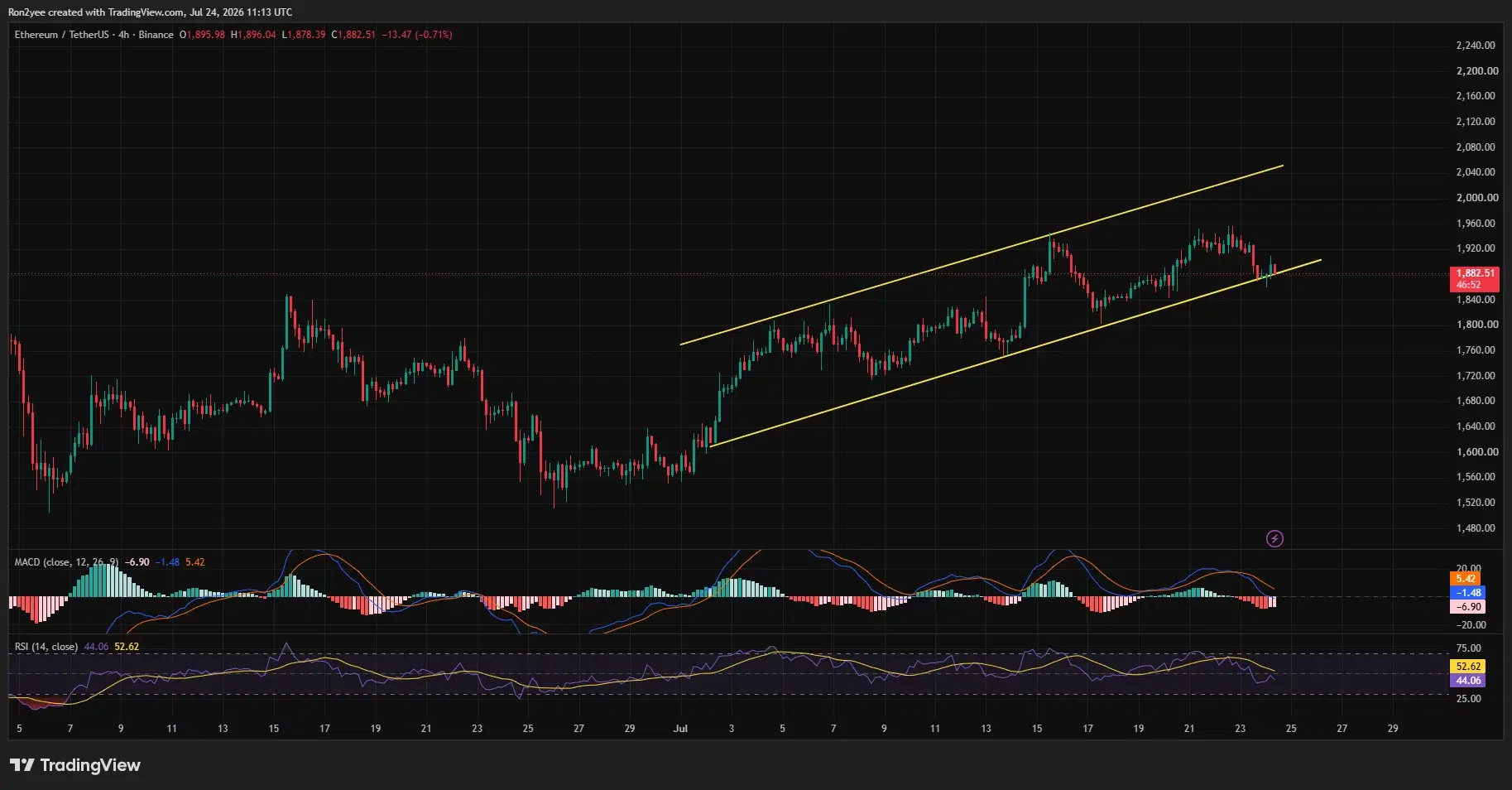
Ethereum price has retreated to $1,880 after failing to clear $2,000, as profit-taking, rising derivatives leverage and a sharp U.S. technology-stock sell-off weakened market sentiment.
Summary
- Ethereum price fell toward $1,880 after failing to break the key $2,000 resistance.
- Spot ETH ETFs logged $26.3 million in inflows despite weaker market sentiment.
- Holding $1,850 could support a rebound toward $1,950 and eventually $2,060.
According to data from crypto.news, Ethereum (ETH) price traded near $1,882 at press time, down about 3% over the previous 24 hours after reaching the $1,935–$1,950 region earlier in the week. Sellers emerged below the psychological $2,000 barrier and the 100-day exponential moving average, ending a rally that began near $1,560 in late June.
Wall Street’s technology rout added pressure during Thursday’s session. The Magnificent Seven stocks fell 4.8% and erased about $797 billion in market value, their worst day since the tariff-driven sell-off in April 2025. The S&P 500 dropped 1.2%, while the Nasdaq 100 lost 1.9%, according to CoinDesk.
Alphabet’s decision to raise its 2026 capital-spending forecast to as much as $205 billion and weaker-than-expected profits at Tesla drove the equity decline. High-beta assets came under pressure as investors questioned whether returns from artificial-intelligence spending could justify the sector’s rising costs.
Ether absorbed a steeper loss than Bitcoin, which held near $65,400 with a decline of less than 1%. The difference showed that investors remained more cautious toward altcoins as capital moved away from riskier trades.
ETF inflows and rising leverage have kept Ethereum’s recovery intact
U.S. spot Ethereum exchange-traded funds recorded $26.3 million in net inflows on July 23, extending their positive run to five consecutive sessions. BlackRock’s ETHA received $8.5 million, Fidelity’s FETH attracted $14.9 million, and Grayscale’s mini Ether fund added $2.9 million, according to Farside Investors.
The latest total followed inflows of $38 million, $37.5 million and $72.7 million during the first three sessions of the week. Although ETF demand has remained positive, Thursday’s figure dropped sharply from the previous day and failed to offset selling in the spot market.
Institutional access also expanded in Switzerland after BancaStato integrated Sygnum’s digital-asset infrastructure. The cantonal bank’s clients can now trade Bitcoin, Ether, Solana and USD Coin through its existing web and mobile banking platforms, adding another regulated distribution channel for ETH.
Derivatives traders increased their exposure as Ether approached resistance. Open interest climbed by 600,000 ETH over two days to 14.6 million ETH, its highest level since June 7, according to CoinGlass data.
Funding rates, positive through most of July, briefly turned negative on Thursday for the first time since June 29. The change occurred as $41.55 million in leveraged positions were liquidated over 24 hours, including $34.4 million in longs. A rise in open interest alongside negative funding leaves both bullish and bearish positions exposed to forced closures.
U.S. spot demand has yet to match the ETF recovery. CryptoQuant’s Coinbase Premium Index has remained negative for nearly three months, which means Ether has continued to trade at a discount on Coinbase compared with offshore exchanges.
Ethereum must defend $1,850 to preserve its ascending channel
The 4-hour chart places ETH at the lower boundary of an ascending parallel channel that has guided its recovery since early July. Immediate support sits between $1,850 and $1,880, while the channel’s upper boundary could reach approximately $2,060 if buyers reclaim $1,950.
According to crypto analyst Ali Martinez, the latest reaction has kept the channel structure valid.
“As long as this support at $1,850 continues to hold, I’m watching for a move back toward the upper boundary near $2,060.”
Short-term momentum remains weak. The 4-hour relative strength index has fallen to 44.06, below its moving average of 52.62, while the MACD line at minus 1.48 sits beneath its 5.42 signal line. Its negative histogram reading of 6.90 shows that sellers still control the immediate move.
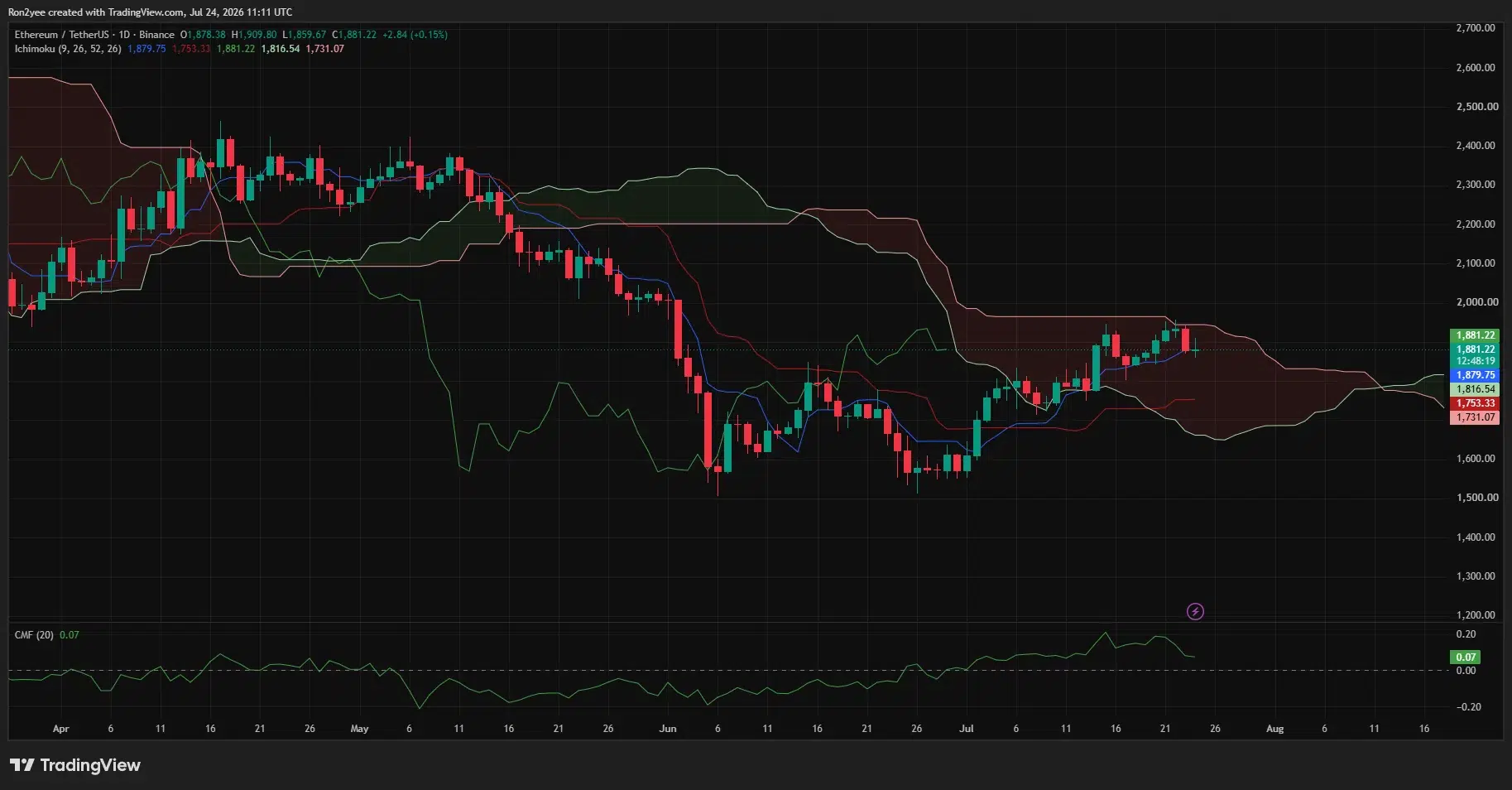
On the daily chart, ETH trades near the Ichimoku conversion line at $1,879 and above the forward cloud’s $1,816 upper boundary. The Chaikin Money Flow remains positive at 0.07, showing that net capital has not fully left the market despite the pullback.
CoinGlass’s weekly liquidation heatmap places the closest concentration of leveraged positions around $1,900–$1,910. A larger overhead cluster sits near $1,955–$1,965, where a price advance could force short liquidations and reopen the path toward $2,000.
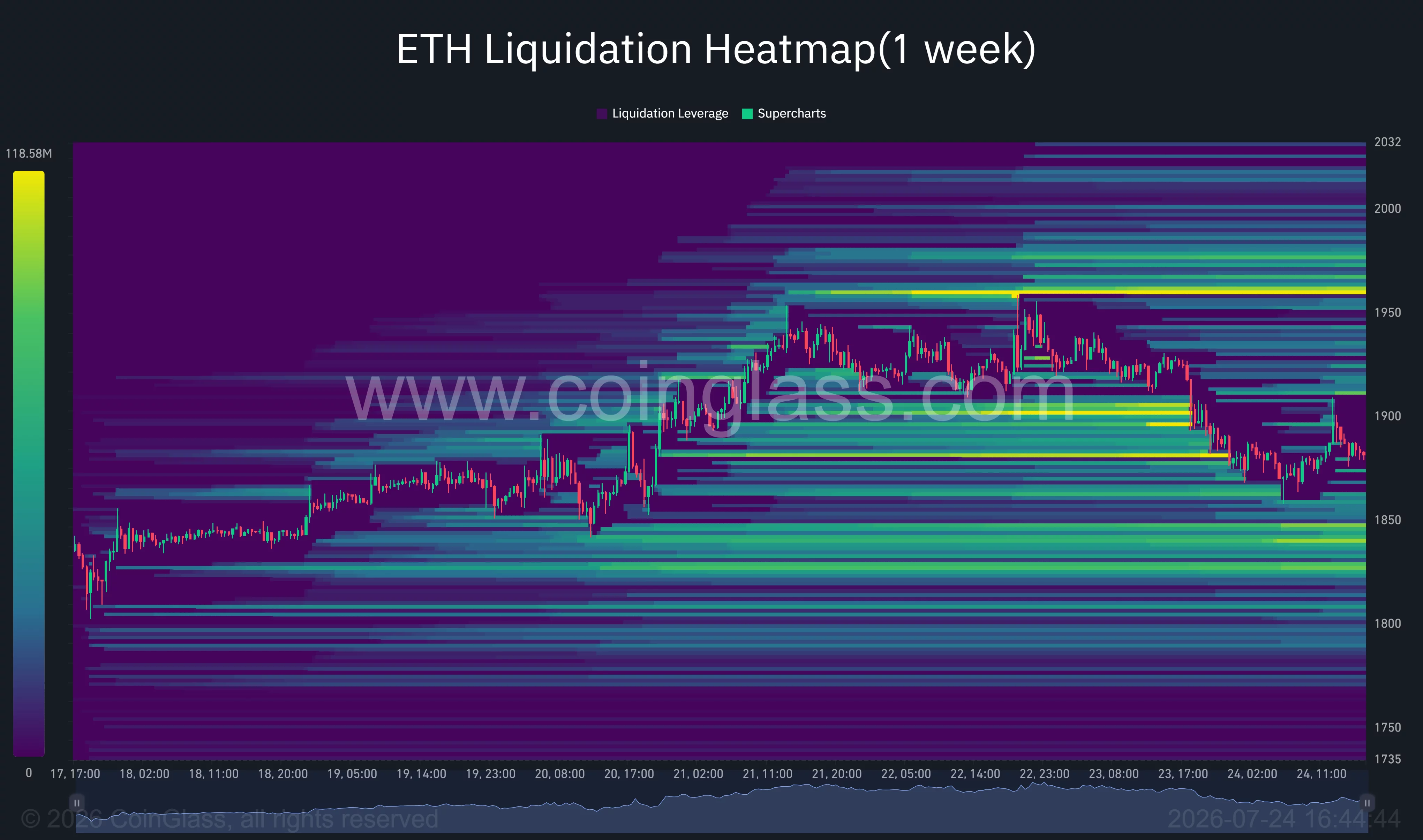
Downside liquidity has accumulated around $1,840–$1,850, followed by another concentration near $1,820. A 4-hour close below the channel boundary and $1,850 would invalidate the immediate recovery setup, exposing $1,816 and then $1,750–$1,730.
Persistent equity weakness, higher bond yields or renewed inflation pressure could deepen that breakdown. Bulls instead need to reclaim $1,910 and break the $1,950–$1,965 supply zone before Ethereum can make another credible attempt at $2,000.
Disclosure: This article does not represent investment advice. The content and materials featured on this page are for educational purposes only.
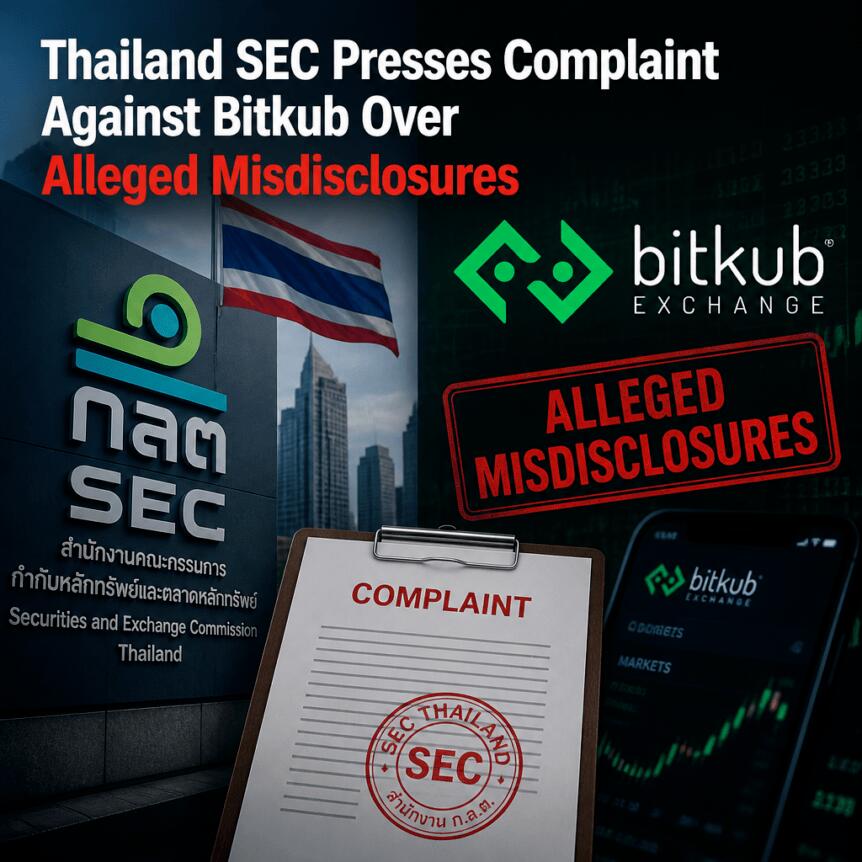
Thailand’s crypto market is facing renewed regulatory pressure after the country’s Securities and Exchange Commission (SEC) filed a criminal complaint against Bitkub Online and two former directors. The case centers on allegations that the exchange submitted misleading information to regulators in connection with a May 2021 cyberattack.
Bitkub is also in the spotlight because its parent company has been exploring a potential public listing, a development that heightens scrutiny around governance, risk controls, and the quality of disclosures for investors and customers alike.
Key takeaways
- The Thai SEC has filed a criminal complaint against Bitkub Online and former directors Sakolkorn Sakavee and Thaweesap Rawan over alleged false reporting tied to a May 2021 hack.
- Regulators say a cyberattack led to the theft of 16 types of digital assets worth about 1.7 billion baht (around $50 million), and that Bitkub’s daily net liquid capital reports failed to reflect the impact.
- Bitkub disputes the SEC’s characterization, arguing that disclosure was delayed to avoid a bank-run and that comparable assets were later purchased to cover the stolen funds.
- The SEC’s complaint could move through investigation, potential prosecution, and ultimately court proceedings.
What the SEC says happened after the 2021 hack
According to the SEC, a cyberattack in May 2021 resulted in the theft of 16 types of digital assets held by Bitkub. The regulator estimated the stolen assets were worth roughly 1.7 billion baht (about $50 million).
The core of the SEC’s allegation is not the hack itself, but the subsequent reporting. The SEC said Bitkub replaced the stolen assets by Oct. 31, 2021. However, the regulator claims that Bitkub did not accurately show the incident’s effects in the exchange’s daily net liquid capital reports.
In particular, the SEC alleged that reports filed between May 10 and Oct. 30, 2021 did not demonstrate a “significant reduction” in the exchange’s assets despite the theft. In the SEC’s view, the omission could have created the impression that customer assets remained unchanged and that the exchange had not suffered losses from the attack.
The complaint states that Bitkub and the former directors allegedly violated multiple provisions of Thailand’s digital asset regulations related to the alleged false disclosures. The matter is expected to progress through the Thai legal process, including investigation and possible prosecution before any court proceedings.
Bitkub’s response: delayed disclosure to prevent a bank run
Bitkub disputed the SEC’s allegations in a post on X. The exchange argued that the dispute stems from disclosure choices made after the May 2021 cyberattack rather than fraudulent conduct.
Bitkub said it delayed disclosing the wallet compromise to prevent a bank run while it worked to address the stolen funds. The company further stated that its co-founders later purchased digital assets equivalent to what was taken, meaning the exchange and its customers did not ultimately bear financial losses.
In addition, Bitkub said it has strengthened governance, compliance, and security systems since the incident.
The dispute effectively turns on competing narratives about timing and reporting accuracy: the SEC frames the documentation as materially misleading during the period when assets had been compromised, while Bitkub argues that the delayed disclosure was a risk-management decision intended to prevent panic among customers.
Why the case matters beyond one exchange
For Thailand’s crypto industry, this complaint underscores how regulators may treat disclosure practices—even where an operator claims losses were later covered. In many financial systems, timing and transparency during periods of operational stress are often as important as end results, because they influence how markets and counterparties assess risk.
From an investor and compliance perspective, the case also illustrates how governance is becoming a central focus for exchanges contemplating broader corporate moves. Bitkub’s public listing discussions—reported earlier by Cointelegraph—have already brought the company’s structure and controls into sharper view. While the SEC’s complaint relates specifically to 2021 reporting, it arrives at a time when corporate transparency is likely to be critical for any future fundraising or listing process.
Bitkub was founded in 2018 and has grown into one of Thailand’s most prominent trading venues. According to CoinGecko, it ranks first among Thai crypto exchanges by trust score and had about $712 million in daily trading volume at the time of publication.
IPO plans raise the stakes for governance and disclosures
In December 2025, Bitkub confirmed to Cointelegraph that it was considering an initial public offering, including a potential listing in Hong Kong. Cointelegraph also reported that it reached out to Bitkub for additional comment on the SEC complaint and its IPO plans, but did not receive a response by publication.
In that context, the SEC’s allegations could become more consequential than a purely legal matter. Even without determining guilt at this stage, criminal complaints can affect perceived risk for counterparties and potential investors, and they tend to intensify demands for internal documentation, auditability, and compliance readiness.
For customers, the practical question is how authorities and the exchange will reconcile the discrepancy between “late coverage” of stolen assets and the regulator’s view that early reporting should have shown a reduction in net liquid capital.
As the SEC’s complaint moves through Thailand’s legal system, readers will likely want to track what evidence is used to substantiate the alleged reporting gaps, how Bitkub supports its “bank run prevention” rationale, and whether the dispute changes the timeline or terms of any future corporate listing plans.

Thailand’s crypto industry is facing fresh regulatory scrutiny after authorities accused Bitkub, one of the country’s largest digital asset exchanges, of providing false information to regulators.
Thailand’s Securities and Exchange Commission (SEC) filed a criminal complaint against Bitkub Online and two former directors over alleged false reporting connected to a 2021 cyberattack, the regulator announced on Thursday.
The complaint names former Bitkub directors Sakolkorn Sakavee and Thaweesap Rawan, who the SEC said were responsible for submitting company reports during the period under investigation.
The case comes as Bitkub’s parent company considers a potential public listing, putting renewed attention on transparency and governance at one of Thailand’s most prominent crypto businesses.
SEC alleges Bitkub failed to disclose impact of hack
The SEC said a cyberattack in May 2021 resulted in the theft of 16 types of digital assets from Bitkub, worth about 1.7 billion baht ($50 million).
The regulator alleged that Bitkub later replaced the stolen assets by Oct. 31, 2021, but failed to accurately reflect the impact of the incident in its daily net liquid capital reports.
According to the SEC, reports submitted between May 10 and Oct. 30, 2021, did not show a significant reduction in the exchange’s assets following the theft.

Former Bitkub directors Sakolkorn Sakavee (left) and Thaweesap Rawan. Source: Bangkok Post
The regulator alleged that the omission gave the impression that customer assets remained unchanged and that the exchange had not suffered losses from the attack.
The SEC accused Bitkub and the former directors of violating multiple provisions of Thailand’s digital asset regulations over the alleged false disclosures. The case will now proceed through investigation, possible prosecution and court proceedings.
Bitkub says disclosure delayed to prevent bank run
Bitkub disputed the SEC’s allegations in a post on X, saying the case stems from disclosure decisions made after the May 2021 cyberattack rather than fraudulent conduct. The exchange said it delayed disclosing the wallet compromise to prevent a bank run while it addressed the loss of the stolen assets.
The company said its co-founders later purchased equivalent digital assets to cover the stolen funds, leaving neither the company nor its customers with financial losses. The company added that it has since strengthened its governance, compliance and security systems.
Related: Bank of Thailand targets USDT and cash flows in gray money crackdown
Founded in 2018, Bitkub has emerged as one of the largest crypto exchanges in Thailand. According to CoinGecko, the platform ranks first among Thai crypto exchanges by trust score and had about $712 million in daily trading volume at publishing time.
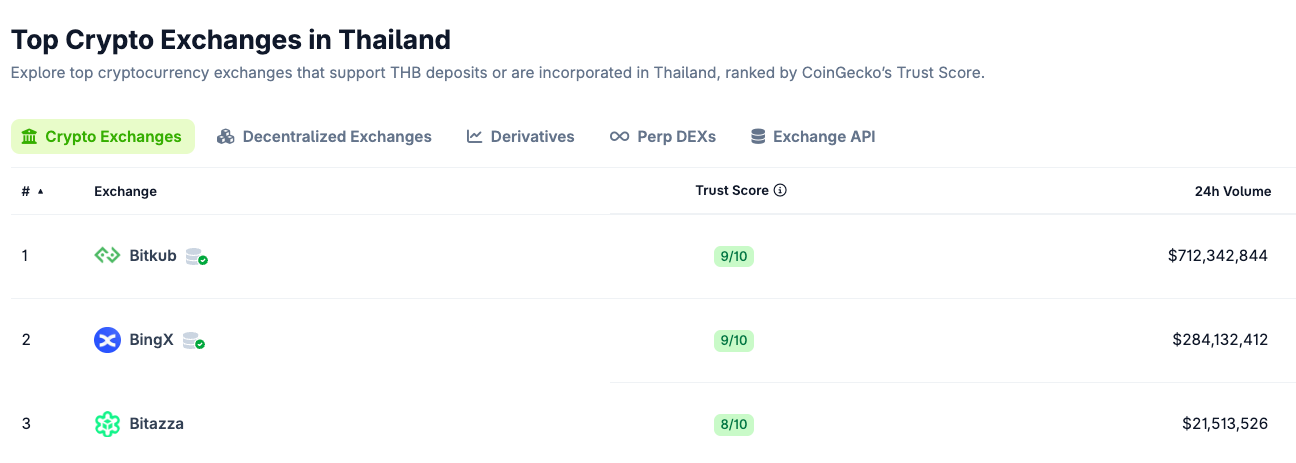
Source: CoinGecko
In December 2025, Bitkub confirmed to Cointelegraph it was considering an initial public offering (IPO), including a potential listing in Hong Kong.
Cointelegraph reached out to Bitkub for additional comment on the SEC’s complaint and its IPO plans but had not received a response by publication.
Magazine: Binance & OKX users face $1,900 fines in Vietnam, Coinbase in China? Asia Express

Trainline weighs in on Love Island ‘job-shaming’ row after Priya mocked co-star Elicia’s job at National Rail – and there’s even more drama in store as another love triangle is brewing

Apple Stock Climbs 2.59% After Baird Lifts Price Target to $330 Ahead of Next Week’s Earnings Report

Senate Dems should accept the victory they won on Trump’s crypto limits: White House


-

 Fashion7 days ago
Weekend Open Thread – Corporette.com
-

 Politics6 days ago
The House | The City of London can help the new chancellor deliver growth in every postcode
-

 Crypto World6 days ago
Ripple Payments Joins MiCA With 14 Firms, Does It Mean Anything For XRP?
-

 Politics5 days ago
Democrats look to World Cup watch parties to register thousands of voters
-

 Crypto World7 days ago
Ripple wins EU-wide access as ESMA adds it to MiCA register
-

 Crypto World3 days ago
Grayscale Files For Worldcoin ETF, WLD Registers Sharp Rise
-

 Tech4 days ago
Sail Virtually Aboard The “Itanic” With IA-64 Emulator
-

 NewsBeat4 days ago
Unregistered fitter used Gas Safe logo on business flyers
-
 Tech3 days ago
Turtle Beach Command Series KB7 review: a nifty screen-equipped gaming keyboard
-

 News Videos5 days ago
Big Money Is Entering XRP
-
 Business2 days ago
New Jersey voter registration controversy explained: How 6,600 noncitizens got on the rolls, and what happens next
-

 Crypto World6 days ago
Kaspersky exposes OkoBot’s 20-module crypto wallet attack
-

 Business7 days ago
Airlines warn Sunshine Protection Act could disrupt flight scheduling
-
 Entertainment3 days ago
Johnny Depp’s R-Rated Gothic Cult Classic Gets New Release Ahead of Sydney Sweeney Remake
-

 NewsBeat6 days ago
Durham County Council to send out electoral registration emails
-

 Crypto World2 days ago
Ethics, other provisions in crypto Clarity Act to be further discussed
-

 Crypto World6 days ago
MiCA Licensing Faces Delays as ESMA Adds 14 CASPs to Register
-

 Crypto World6 days ago
Chip Stocks Enter Bear Market After Moonshot Ai Unveils Kimi K3 Model
-
 NewsBeat4 days ago
Shanghai science forum photos show China’s AI and robotics advances in rivalry with US
-

 Tech4 days ago
Watch Flock Safety CEO Garrett Langley discuss the future of surveillance at TechCrunch Disrupt 2026
You must be logged in to post a comment Login