

Connect with us

Crypto World

Bitcoin’s Next Bull Market Has Already Begun, Says CryptoQuant

Published

on

Bitcoin’s Next Bull Market Has Already Begun, Says CryptoQuant

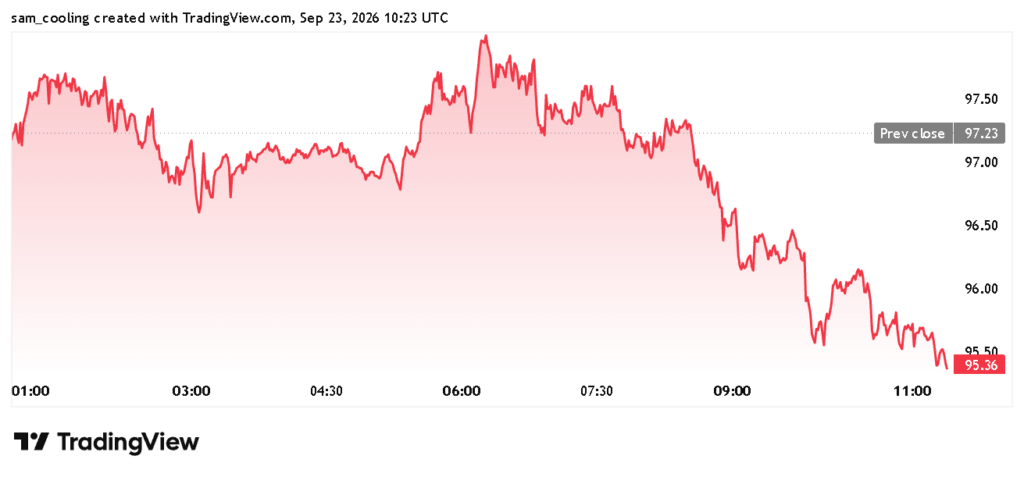
Bitcoin (BTC) faces its “next real test” at $90,000 as traders continue to return to unrealized profit.

Key points:

  • Bitcoin profit-takers may stall BTC price upside at $90,000, CryptoQuant predicts.
  • Onchain signals, including price reclaiming its 365-day moving average at $80,500, led analysts to call the start of the next bull market.
  • CryptoQuant CEO Ki Young Ju sees future cycle tops and bottoms as shallower thanks to institutional ownership.

Profit-taking means “natural pause” for BTC price at $90,000

In its latest weekly report issued on Tuesday, onchain analytics platform CryptoQuant warned that the area around $90,000 will bring increased odds of profit-taking should price reach it.

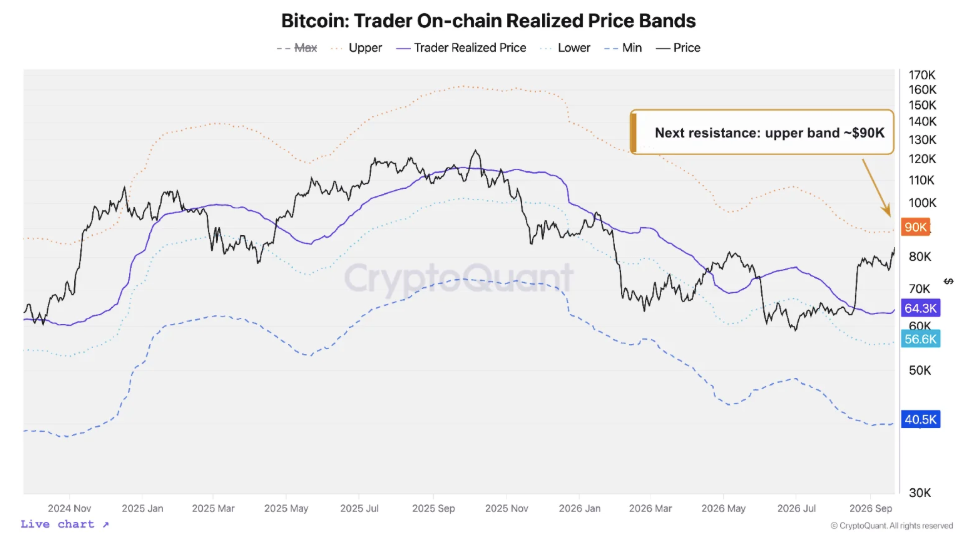
Bitcoin traders’ realized price — the average acquisition price of BTC that last moved onchain between one and three months ago — currently sits at $64,300. CryptoQuant data shows upper and lower bands around this level, signifying profit or loss margins for this cohort of the supply. The “upper band” for profit-taking sits at $90,300, or 40% above the realized price.

“The upper band coincides with the $88K–$90K on-chain supply cluster, making it the next resistance to clear. Historically, as price approaches the upper band, trader profit margins stretch and selling can intensify — a natural pause point within an uptrend, not a reversal,” CryptoQuant analysts stated.

Advertisement

Bitcoin trader realized price data (screenshot). Source: CryptoQuant

The report describes the path between current spot price at $86,000 and the profit-taking zone as “largely clear” while seeing no return to bear-market conditions.

“The bull market is confirmed. Technicals, valuation and on-chain data now point the same way — up,” it continued, echoing a previous assertion from CryptoQuant CEO Ki Young Ju.

In an X post this week, Ki saw future Bitcoin price cycles becoming less extreme than previous ones thanks to a shift from retail to institutional BTC ownership. 

Advertisement

“Today, a much larger market and growing institutional ownership are dampening both extremes. The same forces that limit the upside also soften the downside,” he wrote.

Bitcoin profitability stabilizes in 2026

Ki noted that during the 2026 bear market, Bitcoin’s market value to realized value (MVRV) ratio did not fall below its breakeven point of 1 at any point, signaling that the broader investor base remained in aggregate profit throughout — a clear contrast to prior macro downtrends.

Related: Bitcoin adds to bull-market hopes as price metric prints fourth-ever bullish cross

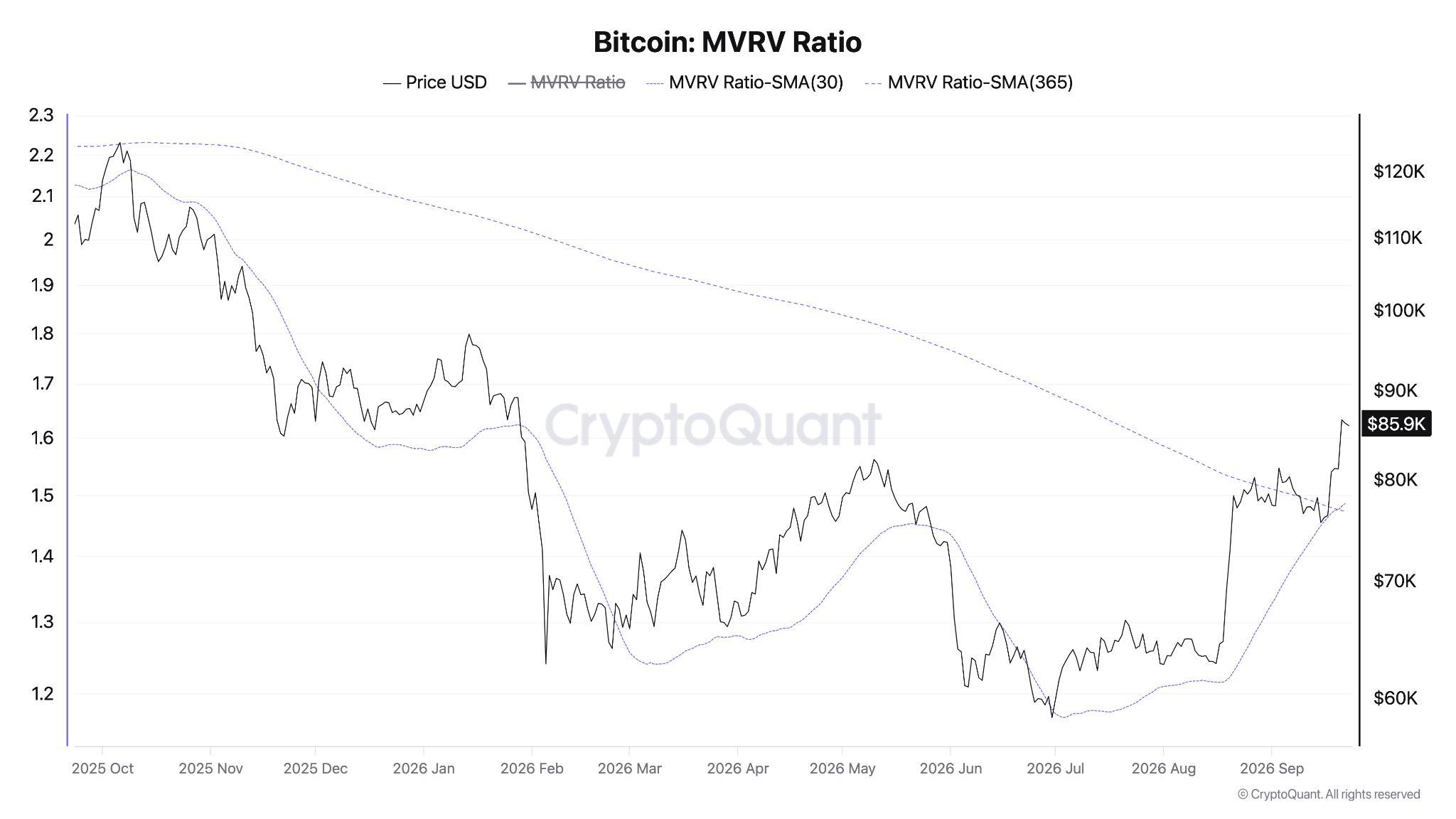
As Cointelegraph reported, MVRV has now crossed above its 365-day moving average — an event that signaled the end of both the 2018 and 2022 bear markets.

Advertisement

Bitcoin MVRV ratio. Source: CryptoQuant

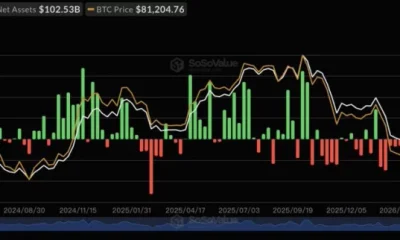
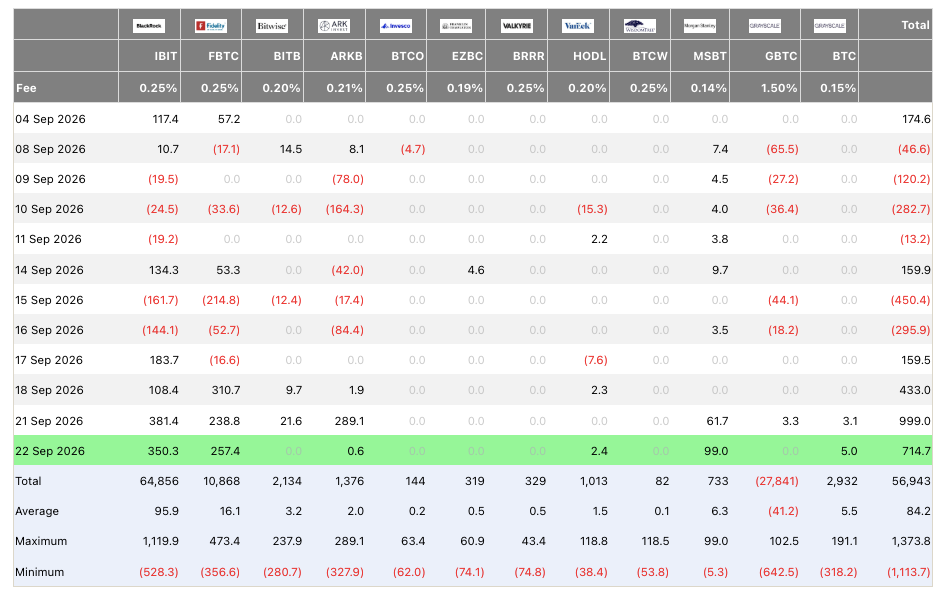
New capital inflows to Bitcoin remain notably high this month. The US spot Bitcoin exchange-traded funds (ETFs) saw net inflows of $1.7 billion for the first two days of the week, per data from UK-based investment company Farside Investors. Monday’s $999 million tally constituted the largest single-day total since October 2025.

Bitcoin ETF netflows data. Source: Farside Investors


Source link

Advertisement
Continue Reading
Click to comment

You must be logged in to post a comment Login

Leave a Reply

Crypto World

Live updates: Bitcoin slips under $86,000 as money rotates into BCH and ZEC

Published

on

Live updates: Bitcoin slips under $86,000 as money rotates into BCH and ZEC

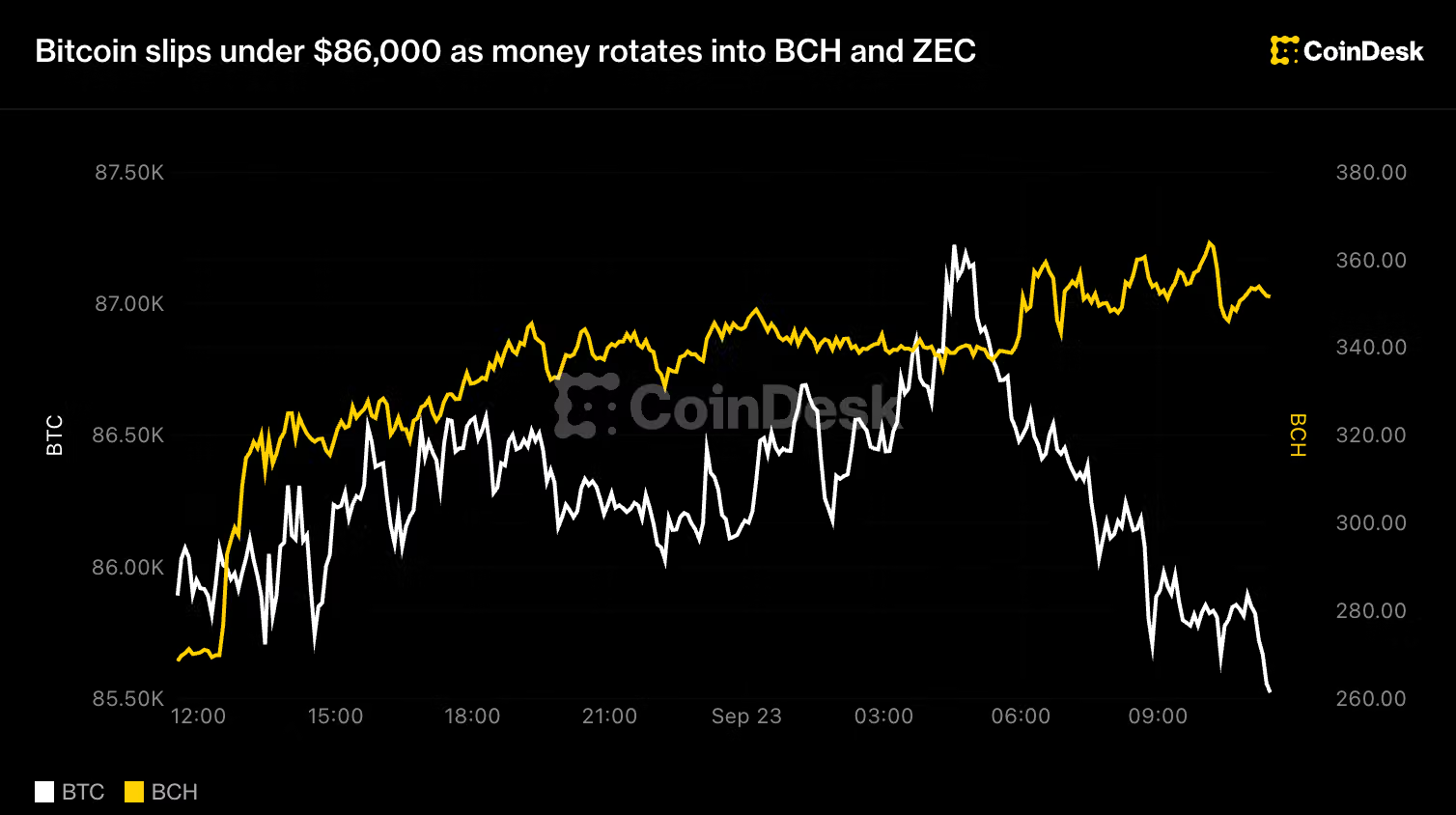
Bitcoin Cash jumped 28% to nearly $349 over 24 hours, the largest move among sizeable tokens, after CME Group said on Monday it will list Bitcoin Cash and Uniswap futures from Oct. 19.

Futures on a regulated U.S. exchange give funds a way to take a position without holding the coin, which matters for institutions whose mandates bar them from custodying crypto directly. It also gives market makers a hedging venue, which usually tightens spot pricing.

Bitcoin itself is trading around $85,800, down under 1% over 24 hours after matching Monday’s intraday high near $87,300 and meeting the same selling into it. ZEC rose 9% to just above $1,646 and XRP 3% to nearly $1.59, while TRX fell 2%.

“Optimism in the altcoin market and in equities suggests that we are witnessing a temporary shift of speculative capital from the leading cryptocurrency into altcoins,” Alex Kuptsikevich, senior analyst at FxPro, said in an email to CoinDesk. “Many investors had parked their cryptocurrency-allocated capital in the most liquid asset class and are now seeking more profitable opportunities.”

Advertisement

“In such situations, there has previously been a slowdown but not a reversal in BTC, as price pullbacks have attracted new buyers who had previously kept their money out of the risky crypto market,” he added.

On BCH specifically, the note pointed out the token has only climbed back to levels last seen in the second half of May, after reversing near $660 in early January and falling to $190.

A continued bid would put $450 in range, where buyers were active between October 2025 and this May.


Source link

Advertisement
Continue Reading

Crypto World

CFTC Chair Backs Tokenization as SEC Signals Path for On-Chain Stocks

Published

on

Crypto Breaking News

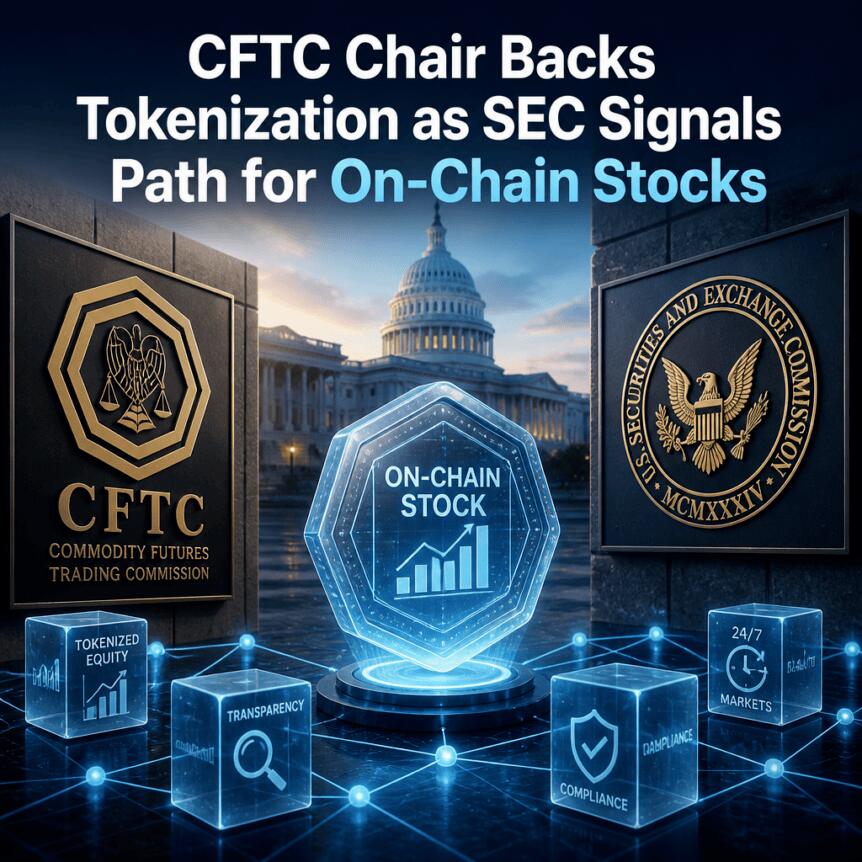
The US CFTC is signaling that regulators may have to rethink how markets function as tokenization spreads beyond crypto-native assets and into traditional finance. In remarks delivered Tuesday at the US Treasury Market Conference, CFTC Chair Michael Selig argued that “mass tokenization” could become a foundation for a more efficient financial system, driven by existing regulatory frameworks being adapted for blockchain-based settlement, collateral flows, and onchain market infrastructure.

Selig’s comments landed amid ongoing legislative uncertainty around crypto regulation, and alongside parallel efforts by the SEC to create regulated pathways for tokenized securities trading. Together, the two agencies’ messaging suggests US regulators are converging on the idea that tokenized markets will expand regardless of the pace of broader statutory reform.

Key takeaways

  • CFTC Chair Michael Selig said financial markets should prepare for “mass tokenization,” with regulators updating existing frameworks for onchain finance.
  • Selig framed tokenization of real-world assets as a potential shift toward near-instant settlement and real-time collateral movement across market participants.
  • The CFTC’s latest crypto regulatory filing for White House review is still at the “prerule” stage and does not yet specify proposed rules.
  • On the SEC side, tokenized US stock trading has advanced via a temporary “Innovation Exemption,” reflecting a step-by-step regulatory approach.

CFTC prepares for tokenized finance across asset classes

At the Treasury Market Conference, Selig drew an analogy between earlier market modernization—moving from “hand signals to electronic trading”—and the potential of tokenization to accelerate processing across asset classes. He said tokenization of real-world assets (RWAs) could support a more efficient system by enabling near-instant settlement and real-time collateral transfer between clearinghouses, intermediaries, and end users.

Importantly, Selig also described the CFTC’s regulatory posture as “principles-based.” That signals an approach focused on outcomes and risk controls rather than prescriptive technology rules, a stance that matters for builders because it may allow multiple tokenization architectures to fit within a common regulatory logic—as long as market conduct and compliance expectations are met.

Legislation stalled, but regulators keep moving

Selig’s remarks come after the CFTC had indicated it could proceed with crypto-related rulemaking under its existing authority if Congress did not enact the CLARITY Act. According to earlier coverage referenced in the article, the Senate failed to advance the bill on Sept. 15, leaving the question of comprehensive statutory clarity unresolved.

Advertisement

Since then, the CFTC continued its process. On Sept. 17, the CFTC submitted a regulatory action covering crypto asset transactions and markets for White House review, according to the filing described in earlier reporting. The filing is reportedly still at the “prerule” stage, meaning it does not yet detail the specific regulations the CFTC intends to pursue.

For market participants, the key takeaway is that regulatory work is progressing even without final legislative momentum. However, the lack of detail in the “prerule” stage also implies that traders, exchanges, custodians, and tokenization providers should expect ongoing uncertainty as proposals are drafted and reviewed.

SEC also pushes tokenized market infrastructure

While the CFTC is discussing tokenization in the context of a broader shift in market plumbing, the SEC has been taking steps focused on securities trading. The article notes that Jamie Selway, Director of the SEC’s Division of Trading and Markets, told Bloomberg TV that tokenization and crypto have recently become politicized, but that they are “not naturally a politicized function.” Selway also argued that US success in developing these markets should receive bipartisan support.

The agency’s practical pathway has included temporary regulatory allowances. On Sept. 17, the SEC granted a temporary “Innovation Exemption” for tokenized US stock trading. As described in the source, the exemption allows certain platforms to trade digital versions of US-listed stocks under specified conditions.

Advertisement

This matters because it represents a concrete mechanism for compliance testing—allowing limited market activity while longer-term rules are developed. It also reflects the SEC’s preference for incremental regulatory frameworks that can be refined based on observed market behavior and risk outcomes.

What to watch: convergence, but not synchronization

Taken together, the CFTC’s “mass tokenization” framing and the SEC’s temporary securities trading exemption point to a shared view: tokenization is likely to move from experimentation toward mainstream market infrastructure. Yet the agencies are not necessarily moving in lockstep. The CFTC’s position is rooted in adapting existing authority and establishing principles-based rules as onchain markets evolve, while the SEC’s approach—at least in the securities segment cited here—has emphasized targeted exemptions to manage regulatory transition.

Readers should watch for what emerges once the CFTC’s “prerule” filing advances beyond White House review and begins to outline more concrete rulemaking goals. At the same time, attention will likely remain on whether the SEC’s Innovation Exemption becomes a template for broader or longer-lasting tokenized securities permissions, and what conditions regulators ultimately consider essential for investor protection and market integrity.

Risk & affiliate notice: Crypto assets are volatile and capital is at risk. This article may contain affiliate links. Read full disclosure

Advertisement


Source link

Continue Reading

Crypto World

America Must Win Back Its Global Standing

Published

on

America Must Win Back Its Global Standing

“From this day forward, a new vision will govern our land,” President Donald Trump declared in his inaugural address in January 2017. “From this moment on, it’s going to be America First.” An insular, populist nationalism, coupled with an antipathy toward globalist ideas and institutions, became the central theme and the clarion call of both his terms in the White House.

President Trump has spent considerable energy lambasting the United Nations, an institution the United States helped create 80 years ago and has shaped ever since. He has derided it as an “unelected, unaccountable, global bureaucracy,” and little more than “a talking shop.”

A majority of Americans no longer agree with their president. In a Sept. 2025 global poll commissioned by The Rockefeller Foundation,  61% of American respondents agreed that their country should cooperate with others to solve global challenges, even if doing so meant compromising on some national interests. Only 16% responded with a no. Such American support for international cooperation has only increased. When the same question was posed in the 2026 iteration of the poll, which surveyed more than 35,000 people across 34 countries, support in the U.S. rose by four percentage points to 65%, while the opposition fell by two percentage points to 14%.

American public support for multilateral cooperation in 2026 exceeds that of Western Europe, where it stands at 61%. Despite President Trump’s attacks on the UN, 62% of Americans say they trust the institution—eight percentage points more than last year—while only 30% claim to distrust it. Nearly half of American respondents, 46%, say they comfortable with the UN playing a leading role on the world stage. Only 21% say they are uncomfortable.

Advertisement

As global stability has eroded and peace has grown increasingly fragile, the desire for cooperation across border has increased among Americans. In the same poll, respondents were asked to choose three priorities from a list of 13 global issues: among American respondents, 40% ranked preventing wars and conflicts among their most pressing concerns. 

The message to President Trump is clear. For most of the last 80 years, America has acted multilaterally, even during its unipolar moment. Americans do not want the U.S. to act unilaterally in an increasingly multipolar era. They want their country to practice the politics of consensus building rather than coercion.

A new call for international cooperation

I joined an initiative involving 100 former prime ministers and presidents from every continent that calls upon today’s leaders to build a stronger basis for cooperation in an increasingly fragmented and multipolar world. On Monday, on the sidelines of the United Nations General Assembly in New York, many of us came together to endorse core principles that could provide the basis for a new global consensus on solving shared problems and helping those in need.

Advertisement

As the poll commissioned by the Rockefeller Foundation found, more than half of American respondents, 53%, would support their president publicly endorsing these principles of cooperation. This finding suggests that America is not a nation committed to an “America first and America only” ideology, but a nation with a strong sense of the enduring values that bind it to the wider world.

Yet as American support for cooperation with the rest of the world rises, the inclination across the rest of the world to cooperate with America hangs in the balance. For decades, people everywhere have looked to America for hope and inspiration. That faith is now being  questioned.

America’s appeal as global leader, the same poll found, has diminished. Only 39% of the respondents worldwide are comfortable with the U.S. playing a leading role on the world stage. And 34% of the respondents across the globe regard the U.S. as a major threat to their own countries. On that grim metric, Russia scored even higher, at higher 42%. China, surprisingly, fared better at 30%.

When respondents to the 2026 poll were asked which countries they would be comfortable seeing take a leading role in world affairs, America ranked in the bottom half of the table. Canada outpolled America, with 60% of the respondents globally comfortable with it playing such a role, the highest vote recorded for any country.

Advertisement

Several middle powers were viewed more favorably by respondents as potential global leaders: Japan (58%), Australia (55%), the United Kingdom (54%), Germany, Spain, and Italy (all 53%), France (51%) and South Korea (42%).

While none of these countries comes remotely close to matching American economic and military power, America’s soft power has certainly suffered in recent years. It is estimated that 900 million people want to live somewhere other than their own country.

Surveys asking people which country they would prefer to live in have consistently put America in the lead. According to Gallup data, 24% of respondents in 2009 named America as their preferred new home. By 2025, that preference had shrunk to a mere 15%.

Renewing American leadership

Advertisement

America can still regain its soft power. Americans have not lost their optimism or their sense of belief in a better future. In the 2026 poll, 55% of American respondents professed that, during a crisis, their own community would pull together. An even more decisive majority, 64%, believe that, as Americans they share a responsibility to help others, even in countries they don’t know. And 76% of American respondents believe it is possible to build a better future for the next generation.

Americans need to convey these convictions more clearly and widely. Under pressure from an affordability crisis at home and military overreach abroad, Americans may not any longer be prepared to “bear any burden or pay any price.”

But the values that underpin America are still embraced by a majority of its people. This suggests that America still has what it takes to resume the global leadership that is needed more than ever in our turbulent world.


Source link

Advertisement
Continue Reading

Crypto World

Missed the AI Rally? Michael Burry Is Betting on Copper Instead

Published

on

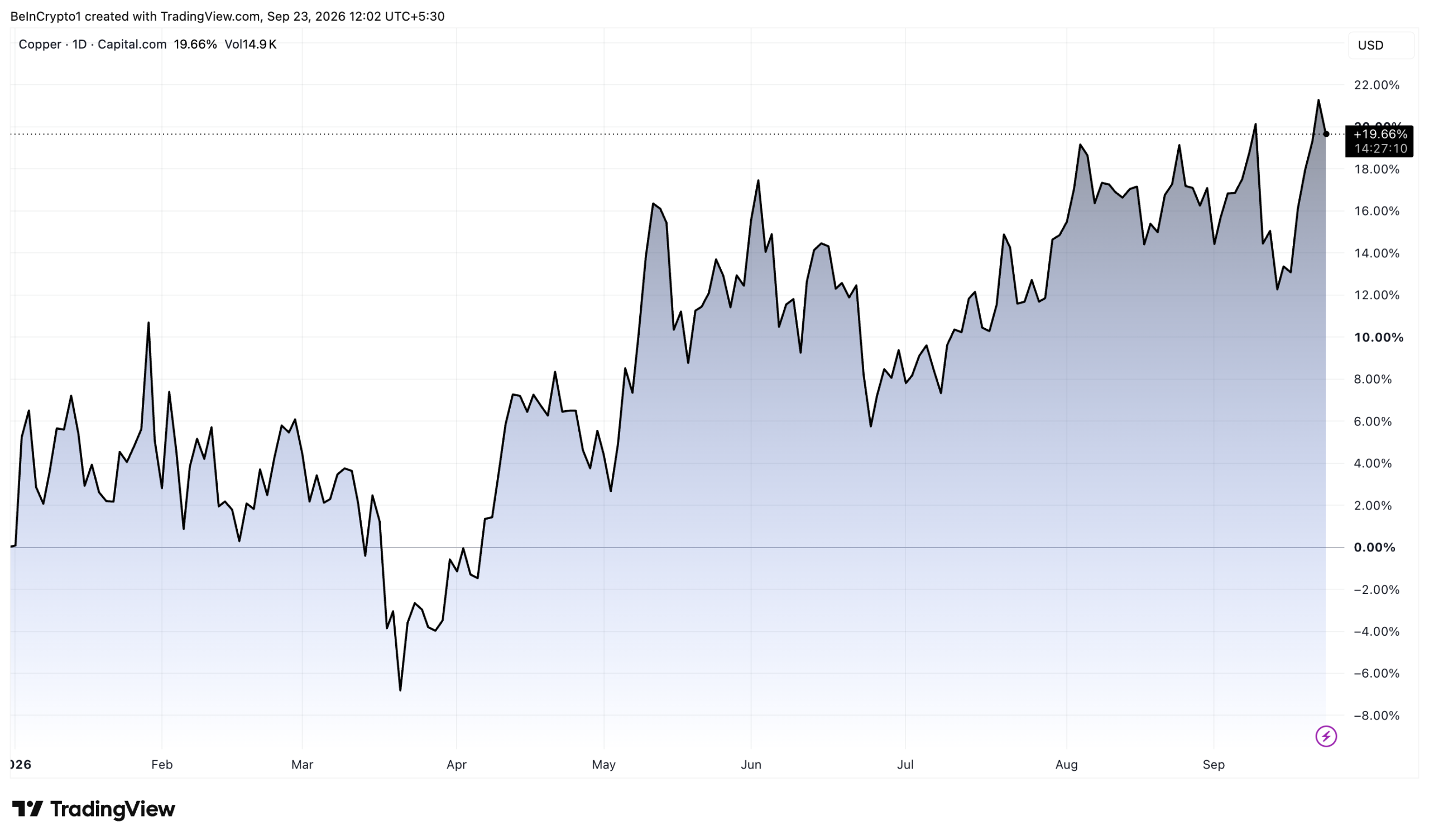
Copper Price Rally in 2026 to a New Record High.

Copper futures touched a record $6.95 a pound intraday on September 22 and closed at a record $6.92. The gain arrived a day after Michael Burry named a copper miner as his indirect artificial intelligence (AI) bet.

The rally has accelerated since mid-September as Chinese buyers stocked up ahead of the holidays. 

Copper Leaves Gold and Silver Behind in 2026

Copper has gained nearly 20% so far in 2026 and more than 46% over the past year. By comparison, gold is up 0.02% year-to-date, while silver has fallen 8.5%.

Over the past year, however, silver has risen 49.2% and gold 15.47%. Earlier this month, copper slid almost 8% after reports that a White House tariff plan had stalled. However, the metal has not regained strength as the world struggles with shortages.

Advertisement
Copper Price Rally in 2026 to a New Record High.
Copper Price Rally in 2026 to a New Record High. Source: TradingView

Copper cathode inventories in Shanghai fell to 43,900 tonnes, the lowest since 2023. Bloomberg reported the figure from weekly Shanghai Metals Market data released Monday.

In London, cancelled warrants, metal booked to leave London Metal Exchange (LME) warehouses, rose to 122,150 tonnes on Tuesday. That equals 48% of metal on warrant, leaving 133,725 tonnes available, according to MINING.COM data.

Burry’s Copper Bet Rests on an 18-Year Mine Gap

The tightening supply picture ties into the case that Burry made a day before the record. In a September 21 Substack post, he explained why he is largely ignoring the AI stock rally.

“The house party is packed, pushing AI higher today, but I am largely ignoring the woo-hoos…I think of copper, and how it gets prettier as it ages,” he wrote.

His answer to that crowded trade is Ero Copper, a Brazil-focused copper-and-gold producer. Burry backed the pick with data from Apollo chief economist Torsten Slok.

Major copper discoveries, with deposits containing at least 500,000 tonnes, have fallen from double digits a year to one or two, with none in 2025.

Advertisement

That shortage of discoveries matters because mines take so long to build. Slok noted that new deposits need roughly 18 years to reach production, while data centers add copper demand within two to three years.

Follow us on X to get the latest news as it happens

S&P Global’s longer-range outlook points in the same direction. The firm expects demand to climb 50% to 42 million tonnes by 2040. Without significant adjustments, it projects a 10-million-tonne shortfall by then.

Advertisement

However, the near-term outlook is less settled. CRU had projected a 639,000-tonne global surplus for 2026, though it saw the market as balanced at best in August. Burry also acknowledged that part of the rally reflects a temporary lull in supply.

Traders are now still waiting on the White House tariff decision, which will shape whether US stockpiles reach buyers elsewhere.

Subscribe to our YouTube channel to watch leaders and journalists provide expert insights

The post Missed the AI Rally? Michael Burry Is Betting on Copper Instead appeared first on BeInCrypto.

Advertisement


Source link

Continue Reading

Crypto World

Lighter price gains as Bitwise launches LIT staking ETP on Xetra

Published

on

Lighter price gains as Bitwise launches LIT staking ETP on Xetra - 1

Bitwise has launched its first exchange traded product tracking Lighter’s LIT token on Deutsche Börse Xetra, giving European investors access to the asset through conventional brokerage accounts.

Summary

  • Bitwise has launched its Lighter Staking ETP on Deutsche Börse Xetra, giving European investors access to LIT through regular brokerage accounts.
  • BLIT held roughly $4.74 million in assets backed by 1.01 million LIT at launch, making its current holdings small compared with LIT’s overall market value.
  • LIT traded around $5 on Sept. 23 after gaining close to 9% over 24 hours, though the token was already moving higher before the ETP launch.
  • The ETP could create more demand for LIT if it attracts sustained inflows, but its current size limits the immediate effect on the token’s supply.
  • Staking has not started and will only begin once BLIT reaches sufficient assets under management, with Bitwise yet to disclose the required threshold.

According to Bitwise, the Bitwise Lighter Staking ETP began trading under the ticker BLIT on Sept. 23 and tracks the Kaiko Lighter Reference Rate. The product carries an annual total expense ratio of 0.85% and is issued by Bitwise Europe GmbH in Germany.

Bitwise Lighter ETP holds more than 1 million LIT

BLIT is physically backed by LIT held in cold storage, meaning the product holds the underlying cryptocurrency instead of providing synthetic exposure to its price.

Advertisement

Bitwise data showed 202,594 ETP units outstanding as of Sept. 23, backed by 1.01 million LIT. Assets under management stood at approximately $4.74 million, with each ETP unit representing just under 5 LIT.

The structure allows investors to gain exposure to LIT using a regular brokerage account without directly holding the cryptocurrency or managing private keys and wallets.

LIT serves as the native token of Lighter, an Ethereum layer 2 decentralized exchange focused on perpetual futures and other onchain markets. The platform uses zero knowledge proofs to verify order matching and liquidations while processing transactions away from Ethereum before submitting proofs to the network.

Advertisement

Lighter has expanded beyond crypto perpetuals by offering markets tied to assets such as Apple, Amazon and Tesla shares. Users gain price exposure through perpetual contracts instead of owning the underlying stocks.

The exchange generates revenue from professional market makers, liquidations and treasury income while charging retail traders no trading fees.

Lighter has become one of the more active platforms in the decentralized perpetual futures market. During a major crypto market selloff in February, the exchange processed roughly $7.5 billion in perpetual futures volume over 24 hours, accounting for close to 9.5% of activity tracked across the sector.

Could the Bitwise ETP impact Lighter price?

The launch gives LIT another potential source of demand because BLIT is backed by the underlying token, but the size of the product remains small compared with LIT’s overall market value.

Advertisement

Bitwise held 1.01 million LIT worth $4.74 million for BLIT as of Sept. 23. CoinGecko placed LIT’s market capitalization at roughly $1.27 billion on the same day, while trading volume stood near $84.7 million.

BLIT therefore represents a small portion of the existing LIT market at launch. Its effect on supply could become more noticeable if the ETP attracts sustained inflows that require more tokens to back newly created units.

LIT was already trading higher around the launch. CoinGecko data showed the token at roughly $5 on Sept. 23, with its value in several currency pairs up close to 9% over the previous 24 hours. LIT had closed Sept. 21 near $4.74 before moving to $5.07 on Sept. 22.

The timing means the ETP listing has arrived during an existing move in LIT, making it difficult to attribute the token’s gains solely to Bitwise’s product.

Advertisement

Previous developments have shown that new distribution channels can coincide with LIT price moves. When Lighter added Robinhood Chain collateral support, LIT gained roughly 15%, while the integration gave eligible Robinhood Wallet users direct access to Lighter perpetual futures.

A similar access point opened in August when Upbit added a LIT won market, allowing customers to buy the token directly against South Korea’s currency.

Supply remains another factor. LIT launched with 25% of its total supply distributed through a community airdrop. Half of the overall token supply was allocated to the ecosystem, while 26% went to the team and 24% to investors. Team and investor allocations were placed under a one year lockup followed by three years of linear vesting.

Bitwise’s current holdings are therefore small compared with the amount of LIT that could enter circulation under the token’s longer term distribution schedule.

Advertisement

Staking has not started for BLIT

Despite its name, the Bitwise Lighter Staking ETP is not currently staking the LIT backing the product.

Bitwise said staking will begin only after BLIT reaches sufficient assets under management to make staking operations efficient. The company has not disclosed the required asset level or a date for activation.

Until then, BLIT provides exposure only to LIT’s price, while investors continue to pay the product’s 0.85% annual fee.

If staking begins, rewards earned by the ETP are expected to accrue daily and be reflected in the amount of cryptocurrency represented by each unit. Bitwise said it will announce the start of staking separately.

Advertisement

LIT already has staking functions within the Lighter ecosystem. Staking can provide access to the Lighter Liquidity Pool, with each staked LIT allowing users to deposit up to 10 USDC into the pool. Unstaking carries a three day lockup period.

Lighter has tied its token economics to protocol activity as well. The project launched LIT in December with plans to direct protocol revenue between ecosystem growth and token purchases depending on market conditions.

The buyback mechanism has previously coincided with price moves. LIT climbed around 16% when Lighter’s treasury began token buybacks in January, when protocol fees began flowing toward market purchases.

Bitwise expands its onchain trading products

BLIT follows Bitwise’s move into investment products tracking tokens connected to decentralized perpetual futures platforms.

Advertisement

The asset manager launched the Bitwise Hyperliquid Staking ETP in Europe in April, giving investors exchange traded exposure to HYPE. Bitwise later introduced a U.S. Hyperliquid ETF in May.

The U.S. product recorded 16 consecutive days of inflows following its launch before posting its first daily outflow in June, showing how flows into exchange traded crypto products can change after their initial trading period. Crypto.news previously reported that the Bitwise ETF created another regulated demand channel for HYPE while exposing the token to changes in ETF flows.

Lighter and Hyperliquid have competed for activity in the decentralized perpetual futures market. Lighter recorded close to $198 billion in 30 day perpetuals volume toward the end of 2025, compared with roughly $166 billion for Hyperliquid at the time.

Bitwise Managing Director and Head of Europe Bradley Duke said the new ETP expands the firm’s European staking products into a platform bringing assets such as U.S. stocks onto blockchain infrastructure.

Advertisement

“As on-chain trading platforms increasingly bridge crypto and mainstream markets, we expect this kind of infrastructure to become more relevant to a broader range of investors,” Duke said.

Lighter founder and CEO Vladimir Novakovski said the platform was built to provide institutional grade perpetuals trading onchain using zero knowledge proofs for verifiable execution.

“We’re excited to bring LIT to European investors who don’t yet have a direct way into on-chain markets,” Novakovski said.

BLIT is domiciled in Germany and listed on Deutsche Börse Xetra under ISIN DE000A4AV9T5. Bitwise lists the product as a secured debt security with physical replication, no leverage and no asset lending.


Source link

Advertisement
Continue Reading

Crypto World

Bitcoin Roars Back: ETF Demand Explodes as Investors Hunt for the Next Bull Market

Published

on

Crypto Breaking News

Bitcoin climbs above $86,000 as spot ETF inflows near $1 billion, while Ether funds gain traction and renewed crypto demand supports a broader market rebound.

Key Insights

Bitcoin trades near $86,500 as ETF inflows reach almost $1 billion in one day.

IBIT, ARKB and FBTC captured most of Monday’s renewed Bitcoin ETF demand.

Ether ETF inflows also rise, widening the recovery beyond Bitcoin across crypto.

Advertisement

Bitcoin traded near $86,500 on Wednesday as strong ETF demand reinforced its recent breakout and lifted broader crypto markets. The cryptocurrency reached $87,395 this week, marking its highest level since January. Meanwhile, U.S. spot Bitcoin ETFs attracted $998.95 million on September 21, according to SoSoValue data.

Bitcoin

Bitcoin’s latest advance followed a sharp reversal in ETF flows after a weak period for digital-asset products. The funds recorded their largest daily inflow since October 2025, while Bitcoin moved above $87,000 during Monday’s session. Moreover, the buying followed a $433 million inflow recorded by spot Bitcoin ETFs on September 18.

BlackRock’s iShares Bitcoin Trust led Monday’s ETF activity with $381.4 million in net inflows. ARK 21Shares Bitcoin ETF followed with $289.1 million, while Fidelity Wise Origin Bitcoin Fund received $238.8 million. Together, the three funds accounted for most of the day’s reported inflows, showing concentrated demand across major products.

The renewed demand also coincided with heavy short-position liquidations across crypto markets. Nearly $919 million in crypto short positions were reportedly liquidated during the latest surge, according to data cited by Investors Business Daily. Therefore, the rally combines stronger ETF flows with forced buying from traders who had positioned for further price declines.

Advertisement

Ether

Ether has also gained support as flows into spot Ether ETFs strengthen alongside Bitcoin’s recovery. U.S. spot Ether ETFs attracted about $143.8 million on September 18, ending three consecutive sessions of redemptions. BlackRock’s iShares Ethereum Trust accounted for most of that daily inflow, according to SoSoValue data.

The broader Ether ETF market then recorded about $270 million in net inflows on September 21. That marked the strongest single-day inflow for the group since October 2025, according to reported SoSoValue figures. Meanwhile, Ether recently traded around $2,773 as its price followed the wider cryptocurrency recovery.

The ETF activity gives the crypto rebound a broader base beyond Bitcoin, although daily flows can change quickly. Bitcoin still commands the largest share of U.S. spot crypto ETF assets, while Ether products continue building institutional market access. As a result, sustained creations across both groups would provide a clearer measure of whether renewed demand can persist after short-covering activity fades.

Diversification Debate and What Comes Next

The latest market action also intersects with a wider debate about portfolio diversification and dollar exposure. Howard Marks has argued that moving from U.S. stocks into dollar cash or bonds does not remove risks linked to the currency itself. His framework instead highlights assets such as international equities, gold and real estate as alternative sources of exposure.

Advertisement

Gold ETFs such as SPDR Gold Shares and iShares Gold Trust provide exposure to physical bullion rather than another dollar-denominated security. International equity funds such as Vanguard Total International Stock ETF also provide exposure to companies outside the United States. Real-estate funds, including U.S. and international REIT ETFs, offer another diversification route but remain sensitive to interest rates and economic conditions.

For crypto markets, the immediate focus remains on whether ETF demand can remain strong after the latest surge. Monday’s near-$1 billion Bitcoin inflow provides a major data point, but one session cannot establish a lasting trend. Therefore, continued ETF creations, sustained spot demand and reduced dependence on short liquidations will remain important measures for the next phase.

Risk & affiliate notice: Crypto assets are volatile and capital is at risk. This article may contain affiliate links. Read full disclosure


Source link

Advertisement
Continue Reading

Crypto World

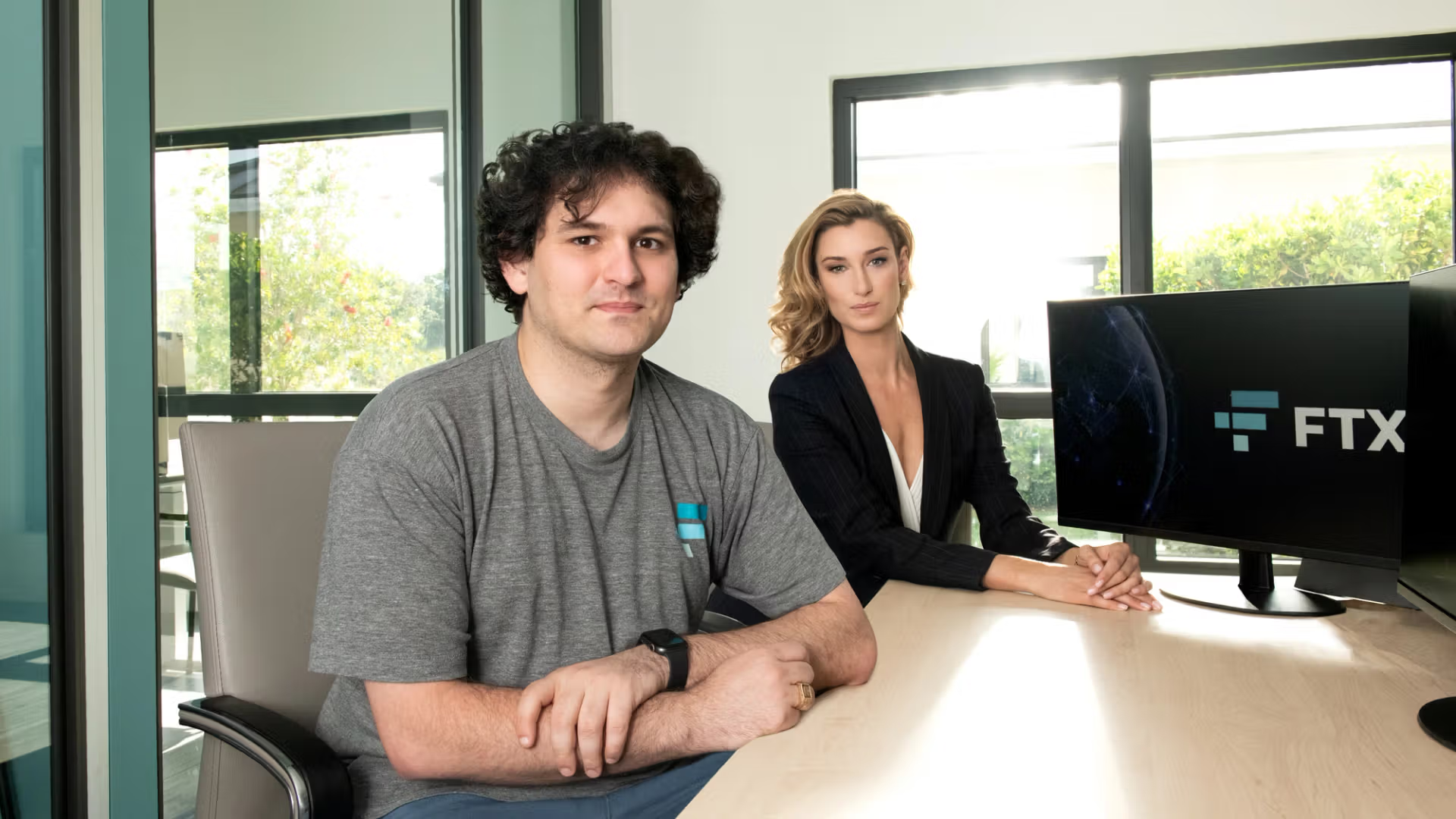
FTX, Alameda-linked wallets send $75 million in ether to Wintermute, onchain data shows

Published

on

FTX, Alameda-linked wallets send $75 million in ether to Wintermute, onchain data shows

Wallets labeled as belonging to the FTX bankruptcy estate and Alamada Research transferred as much as 27,373 ether , worth about $75 million, to crypto market maker Wintermute, according to two onchain analysts.

PeckShieldAlert flagged a transfer of 23,639 ether, worth roughly $65 million, from an Alameda Research and FTX bankruptcy estate-labeled address to a Wintermute wallet early on Wednesday. Onchain analyst EmberCN said six wallets transferred a combined 27,372 ether to Wintermute in a post on X. EmberCN traced the transfers and shared the Wintermute wallet movements on the Arkham intelligence platform.

The discrepancy between the two onchain analysts suggests that PeckShield’s alert identified the largest single transaction, whereas EmberCN took into consideration several transfers. The largest part of the transfer sent 23,639 ether to an labeled “Wintermute” on Etherscan.

A transfer to a market maker or over-the-counter platform can signal that a holder intends to sell or hedge a large position without sending it directly to an exchange. But the onchain data does not establish that Wintermute has sold the ether or that the transfer was made to fund creditor repayments.

Advertisement


Source link

Continue Reading

Crypto World

Can This TikTok-Style Debate App Fix the Internet’s Trust Problem?

Published

on

Can This TikTok-Style Debate App Fix the Internet’s Trust Problem?

7 in 10 people worldwide are wary of trusting anyone whose values or information sources differ from theirs. Most think this distrust runs deep enough for people to work against one another. This is also very evident in the comment section of any tweet about controversial topics or opinions.

Those findings come from the 2026 Edelman Trust Barometer, which polled nearly 34,000 people in 28 countries. The wariness held across age groups, income levels, and both developed and developing markets.

The same distrust shows up on the platforms people now use most for news. Social and video networks are now the most widely used way to reach online news, the Reuters Institute found. Yet, only 22% of people trust the news they find on social media. 

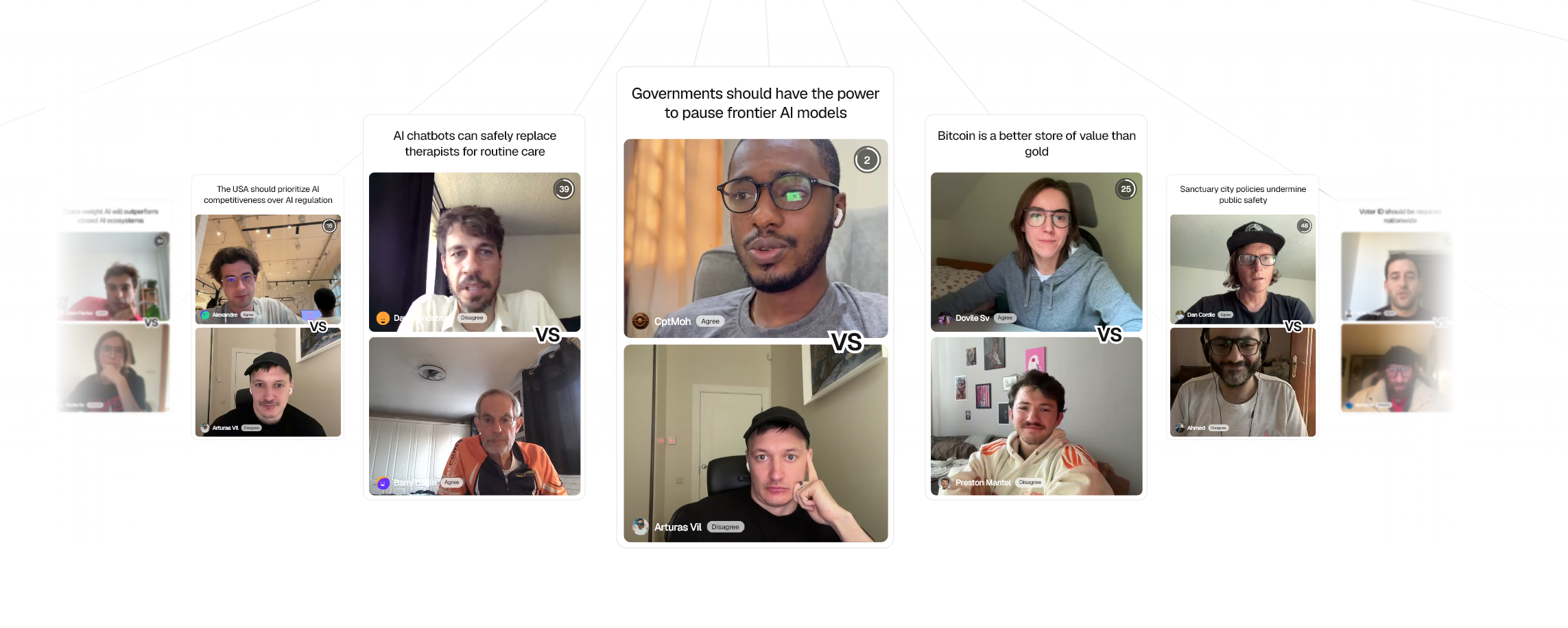
Geo, the knowledge network founded by The Graph co-founder Yaniv Tal, launched Geo Debates on September 22. The app puts two people who disagree on screen together, in the same short vertical format that those feeds run on.

Advertisement

Geo Debates Hands Each Side a Clock and Mutes the Other Mic

Each debate centers on one claim, and users must go on record with their stance before Geo will match them. The app then pairs each person only with someone who took the opposite side.

The two argue on video in timed, alternating turns. While one person speaks, the other’s microphone stays off, so neither can talk over the other.

Geo then stitches both recordings into one subtitled split-screen clip and publishes it to a vertical feed. Viewers vote on who made the stronger case and can open each claim to see what supports it. Claims are tagged as factual or opinion, but the platform does not rule on which ones are true.

Advertisement

The short-video format matches how audiences already take in information. Reuters Institute data shows 77% of people now watch online news videos every week. On TikTok, news viewing skews toward clips under two minutes.

Early debates cover crypto, markets, AI, politics, and culture, including whether Bitcoin (BTC) beats gold as a store of value. Tal ties the format to the democratic and scientific traditions of debate.

“In order to get closer to the truth, we have to be able to examine issues from different sides. Democracies have a rich tradition of debate, as does the scientific community. Any institution that seeks to find truth or alignment requires healthy debate, and I think we need to bring this into the internet age,” said Yaniv Tal.

How Geo Debates Lets Users Argue Each Other on Different Topics

Geo Files Each Claim in a Knowledge Graph With Web3 Roots

When a debate ends, Geo extracts each speaker’s claims and logs them under that person’s name. Other users can then pick up any of those claims and challenge them in turn.

Geo describes its network as knowledge for people and AI, with sources kept visible. Much of that sourcing depends on users, as Geo’s site asks visitors to add sources and context in their roles as curators.

Advertisement

The knowledge graph is also where Geo’s crypto roots show. The Graph’s blog describes Geo as a core developer on the protocol. Its earlier app, Geo Genesis, used The Graph’s GRC-20 standard for shared knowledge graphs to publish data onchain. Geo has not said whether debate claims are written onchain the same way.

Tal traces the project to misinformation around the 2016 US election and the clouded public debate over COVID.

A Crowd Vote Can Crown the Better Performer

The vote reflects who viewers think made the stronger case. That leaves room for a confident speaker to win on weaker evidence.

Reuters Institute data shows audiences already separate appeal from trust when judging news creators. Audiences rate them as more entertaining and relatable than traditional outlets, but less trustworthy and less impartial. A vote on the stronger case may reward the first set of traits over the second.

Advertisement

Recent research suggests the format matters. A 2024 study matched 582 UK Labour and Conservative voters for 10-minute unmoderated chats. 

Sympathy for the other side rose afterward, but mainly when pairs agreed or found common ground. Where they only disagreed, sympathy did not rise. Across the sample, the chats did not shift opinions.

Geo matches only people who disagree, the condition where that effect was weakest. Still, willingness to talk across party lines rose even among pairs who disagreed, and lasted two to three weeks.

Meanwhile, X’s Community Notes handles crowd judgment differently. A note appears publicly only after enough contributors from different points of view rate it helpful. Geo has not said whether its votes account for where viewers already stand.

Each debate also needs two people willing to argue on camera, and the record needs curators to add sources. That runs against a shift the Reuters Institute flagged, as fewer people post on social platforms and more simply scroll.

A split-screen clip could also be cut down to one side once it spreads beyond Geo. Tal built the app so arguments outlast the feed. First, Geo has to get enough people to stop scrolling and step in front of the camera.

The post Can This TikTok-Style Debate App Fix the Internet’s Trust Problem? appeared first on BeInCrypto.

Advertisement


Source link

Continue Reading

Crypto World

What a Diesel Export Ban Would Mean for U.S. Consumers

Published

on

What a Diesel Export Ban Would Mean for U.S. Consumers

Outgoing Senator John Cornyn of Texas, the largest oil-producing state in the U.S., claimed that the ban is a “gimmick.”

Cornyn’s colleague, Senator Lisa Murkowski of major oil producer Alaska, cast her doubts on the export ban to the Hill: “We’re talking about global supply, so I worry that we do something in the short-term … that doesn’t really move the needle.”

Senator Mike Rounds of South Dakota also expressed criticism and said he is instead looking to other options, including restarting idled refineries. “The bigger problem we’ve got right now is, as I understand it, in California, we’ve already lost two more refineries because of California’s strict environmental rules,” Rounds told the Hill. “I would like to get those back up and operational again.”

The reactions exhibit how keen Republicans are to appear that they are providing solutions to the rising costs of living. As Reuters’ energy columnist Ron Bousso put it, fuel costs are increasingly becoming a political liability, and for the wider GOP, “a politically popular ‘quick fix’ may prove difficult to resist.”

Advertisement


Source link

Continue Reading

Crypto World

HYPE’s Rally Has Real Fuel but $100 Is a Critical Test

Published

on

HYPE’s Rally Has Real Fuel but $100 Is a Critical Test

Hyperliquid (HYPE) has gained 88% in roughly two months and is sitting just below $100, and Hyperliquid’s open interest just printed a record $8.8 billion. Those two facts are related, but not in the simple way the rally’s biggest fans want to believe.

The move toward the all-time high is backed by real revenue growth and an accelerating buyback program, not pure speculation. But record open interest also means a crowded derivatives book, and a crowded book cuts both ways if HYPE fails to hold above resistance.

Hyperliquid Recovery Meets Reality: Why the $100 Test Is Arriving Now

The timing isn’t random. Bitcoin recovered above $85,000 for the first time since January, and that shift in risk appetite pulled speculative capital back into perpetual markets broadly. Hyperliquid, as the dominant venue for that flow, absorbed a disproportionate share of it.

Advertisement

HYPE printed a September all-time high of $96 on the back of that inflow, extending its two-month gain to 88%. If the uptrend holds, the immediate technical targets sit at $102 and $118 – levels that would confirm a clean breakout rather than a rejection at the psychological ceiling

(Source – TradingView, HYPE USDT)

The macro backdrop matters here, too. Crude oil slipping below $90 would ease inflation pressure and could deepen the broader risk-on trade that’s already lifting crypto – a conditional tailwind, not a guarantee, but one worth watching alongside Bitcoin’s own resistance tests, where leverage has repeatedly amplified moves in both directions.

Hyperliquid Revenue and Buybacks Are Fueling the Rally

Hyperliquid directs most of its generated revenue into HYPE buybacks, the mechanism that actually connects protocol activity to the token price. That mechanism has been running hot.

Advertisement

Average daily revenue rose from about $1.5 million in Q2 to $3 million in Q3 – a straightforward doubling, not the more dramatic multiple sometimes attached to the quarter as a whole.

(Source – TokenTerminal, Hyperliquid Revenue)

The sharper move came mid-August, when daily revenue exceeded $5 million. That spike coincided with weekly buyback spending through the assistance fund jumping from roughly $5 million to $20 million – nearly a fourfold increase in a matter of weeks.

HYPE crossed $80 for the first time during that exact window. The sequencing is the tell: trading activity rose, revenue followed, buyback spending quadrupled, and price broke to a new level shortly after. That’s a demand-and-supply-reduction story, not just a momentum chase

Access Up to 200x Leverage on Bitcoin and Ethereum CFDs on PrimeXBT

Advertisement

Why Record Open Interest Raises the Downside Risk

Open interest measures the notional value of outstanding derivatives positions – not order-book depth, and not a dollar figure that translates one-to-one into potential losses.

At $8.8 billion, Hyperliquid’s OI has now surpassed the level seen at the previous bull-market peak last October, suggesting positioning is more aggressive today than it was at the last major top.

(Source – Coinalyze, Hyperliquid OI)

Advertisement

That matters because a heavily leveraged book amplifies moves in both directions. A breakout above $100 with rising open interest would suggest fresh conviction entering the market. A rejection at resistance, with the same open interest sitting on the books, sets up forced unwinds, where longs get liquidated into a falling market, accelerating the drop.

The $85-$88 range is a potential pullback area if the rally cools from here. That’s not a prediction of collapse – it’s the specific level where the bullish thesis would need to hold if $100 rejects on the first attempt.

What HYPE Needs to Prove Next

The evidence supports two things simultaneously: a genuine activity-driven rally and an elevated derivatives book that raises the stakes of the next move. Both are true. Neither cancels the other out.

Advertisement

Three things will determine which path plays out. Does HYPE clear and hold $100 on volume, or does it stall and roll over? Does open interest keep climbing alongside price, confirming fresh conviction, or does it plateau while price pushes higher, a divergence that often precedes a squeeze? And does the revenue base supporting Hyperliquid’s buyback program stay above the mid-August run rate, or does it fade back toward Q3 averages?

A failure at resistance would put the $85-$88 zone in play, and a crowded $8.8 billion open interest book means that move could happen fast if forced liquidations kick in. That’s a real conditional risk. It is not, based on what’s currently on the table, a confirmed crash – it’s a specific scenario with specific triggers, and traders watching the tape over the next few sessions will know which one they’re in well before the headlines catch up.

The post HYPE’s Rally Has Real Fuel but $100 Is a Critical Test appeared first on Cryptonews.


Source link

Advertisement
Continue Reading

Trending

Copyright © 2025