

Crypto World
Bookmakers non AAMS affidabili: guida alla sicurezza



Perché scegliere un bookmaker non AAMS affidabile?
Molti scommettitori italiani si chiedono se abbia senso puntare su un bookmaker non AAMS. La risposta è sì, a patto di selezionare solo operatori che dimostrino solidità, licenze internazionali riconosciute e una reputazione positiva tra i giocatori. Un bookmaker non AAMS affidabile può offrire quote più competitive, promozioni più generose e una gamma più ampia di mercati sportivi rispetto ai siti regolamentati dall’AAMS.
Il vantaggio principale è la libertà di scegliere tra più valute, metodi di pagamento e, spesso, un’esperienza di gioco più fluida. Tuttavia, la mancanza di una supervisione locale implica che il giocatore debba essere più attento a valutare la licenza, il supporto e le policy di sicurezza prima di depositare i propri fondi.
Come verificare l’affidabilità di un bookmaker non AAMS
Licenze internazionali e regolamentazioni
Le licenze più riconosciute sono quelle rilasciate da Malta Gaming Authority (MGA), United Kingdom Gambling Commission (UKGC) e Curacao eGaming. Controllare il numero di licenza sul sito dell’operatore è il primo passo: una licenza valida garantisce che il bookmaker segua standard di sicurezza, protezione dei dati e fair play.
Un altro indicatore di affidabilità è la presenza di audit indipendenti, solitamente effettuati da eCOGRA o iTech Labs. Queste entità testano i generatori di numeri casuali (RNG) e verificano che le percentuali di payout siano conformi a quanto pubblicizzato.
Le offerte di benvenuto sono spesso il biglietto d’ingresso più allettante, ma è fondamentale leggere le clausole. Tra gli elementi da valutare troviamo i requisiti di scommessa (wagering requirements), i giochi ammessi al conteggio del turnover e le limitazioni temporali.
Ecco una checklist rapida da usare prima di accettare un bonus:
- Percentuale di rollover (es. 30x)
- Giochi su cui il bonus è valido (solo slot o anche sport)
- Limiti massimi di vincita derivante dal bonus
- Scadenza del bonus e della quota di scommessa
Metodi di pagamento e velocità di prelievo
Un bookmaker non AAMS affidabile deve offrire diverse opzioni di deposito e prelievo, dal tradizionale bonifico bancario alle carte di credito, fino ai portafogli elettronici più diffusi. La velocità di pagamento è cruciale: pochi giorni per un prelievo possono rovinare l’esperienza, mentre i pagamenti istantanei aumentano la fiducia.
Di seguito una tabella comparativa dei metodi più comuni e dei tempi medi di elaborazione:
| Metodo | Deposito (tempo) | Prelievo (tempo) | Commissioni |
|---|---|---|---|
| Carte di credito/debito (Visa, MasterCard) | Immediato | 1‑3 giorni lavorativi | 0 % |
| Portafogli elettronici (Skrill, Neteller) | Immediato | Fino a 24 ore | 0‑2 % |
| Bonifico bancario | 1‑2 giorni | 2‑5 giorni lavorativi | 0 % |
| Paysafecard | Immediato | Non supportato per prelievi | 0 % |
Registrazione, verifica dell’identità (KYC) e sicurezza
La procedura di registrazione su un bookmaker non AAMS è spesso più rapida rispetto ai siti italiani, ma la verifica KYC rimane obbligatoria per prelievi superiori a una certa soglia. Documenti tipici richiesti sono una carta d’identità, un passaporto o una patente, accompagnati da una bolletta recente per confermare l’indirizzo.
Per garantire la sicurezza dei dati, scegli operatori che usano protocolli SSL a 256 bit e che abbiano politiche di privacy conformi al GDPR. Un ulteriore segnale di affidabilità è l’autenticazione a due fattori (2FA) per l’accesso al conto.
Esperienza mobile e app per scommesse sportive
Oggi la maggior parte dei giocatori utilizza lo smartphone per piazzare le proprie scommesse. Un bookmaker non AAMS affidabile deve offrire un’app dedicata per iOS e Android, ottimizzata per velocità, stabilità e accessibilità.
Caratteristiche da cercare nell’app:
- Interfaccia intuitiva e caricamento rapido
- Notifiche push per quote live e promozioni
- Supporto per deposito e prelievo direttamente dal dispositivo
- Sezione “responsible gambling” con limiti di deposito e autoesclusione
Assistenza clienti e supporto multilingua
Un servizio di assistenza disponibile 24/7 è fondamentale, soprattutto quando si scommette su eventi live. I canali più comuni sono chat live, email e, in alcuni casi, supporto telefonico. Verifica sempre la rapidità di risposta e la competenza degli operatori.
Molti bookmaker non AAMS offrono supporto in inglese, spagnolo, francese e, in misura minore, in italiano. Se la lingua è un ostacolo, cerca un operatore che fornisca FAQ dettagliate tradotte nella tua lingua.
Gioco responsabile e strumenti di protezione
La responsabilità del giocatore è una priorità anche per i bookmaker non AAMS. Strumenti come limiti di deposito giornalieri, settimanali o mensili, autoesclusione temporanea e la possibilità di impostare promemoria di tempo di gioco aiutano a mantenere il controllo.
Alcuni operatori collaborano con organizzazioni di supporto al gioco problematico, offrendo link a linee di assistenza e materiale informativo. Scegliere un bookmaker che promuove attivamente il gioco responsabile è un segno di serietà e affidabilità.
Confronto rapido di alcuni bookmaker non AAMS consigliati
Di seguito una panoramica sintetica dei bookmaker non AAMS più affidabili per gli utenti italiani, basata su licenza, bonus di benvenuto, velocità di prelievo e supporto mobile.
| Bookmaker | Licenza | Welcome Bonus | Tempo medio prelievo | App mobile |
|---|---|---|---|---|
| BetMaster | MGA | 100 % fino a €200 + 20 free bet | Fino a 24 h | iOS & Android |
| SportWin | UKGC | 150 % fino a €300 | Fino a 12 h | App dedicata |
| LuckyBet | Curacao | 50 % fino a €100 + 10 free spin | 2‑3 giorni | Web‑responsive |
Per vedere una lista aggiornata di casinò non ADM, visita il nostro portale casino non ADM. Ricorda che la scelta finale dipende dalle tue preferenze personali: quote, sport disponibili, bonus e soprattutto la sensazione di sicurezza che percepisci durante la navigazione.



A US court has found that Meta’s AI ads tools materially developed fraudulent investment content, stripping Section 230 immunity and exposing the platform to securities fraud claims.
Summary
- In Bouck v. Meta, a Northern California federal court denied Section 230 immunity after finding that Meta’s AI ads tools materially shaped fraudulent investment content rather than passively hosting it.
- The ruling opens Meta and other platforms to securities fraud claims under Rule 10b-5, where a platform whose AI assembles ad content could be considered the legal “maker” of the fraudulent statement.
- Alphabet, Snap, TikTok, and X all deploy generative AI in their advertising products and face the same potential exposure under the Ninth Circuit’s material contribution test.
A US court found that Meta’s AI ads helped create fraudulent investment content, removing Section 230 protection from the platform.
Chief Judge Richard Seeborg of the Northern District of California denied a Section 230 dismissal in Bouck v. Meta Platforms, a penny-stock securities class action where plaintiffs alleged that Meta’s generative AI advertising tools had themselves “developed the ultimate content of the fraudulent ads,” making Meta a co-developer rather than a passive host.
The ruling follows a near-identical theory that survived dismissal in Forrest v. Meta, where Judge P. Casey Pitts found that Meta’s ad tools “mix and match” images, videos, text, and audio using generative AI, creating a genuine factual dispute over material contribution to illegal content.
Section 230 of the Communications Decency Act immunizes platforms from liability for third-party content. The line Seeborg drew is technically precise: targeting an audience is protected distribution. Transforming or generating ad content is not. That distinction has now survived at the dismissal stage in two separate cases in the same district.
The Rule 10b-5 question courts have not yet answered
Bloomberg Law legal commentary noted that the Bouck ruling opens a further, unresolved question under securities law. The Supreme Court’s “maker” doctrine in Janus Capital Group v. First Derivative Traders holds that the maker of a fraudulent statement is the entity with ultimate authority over the statement’s content and communication.
If a platform’s generative AI exercises that authority over an assembled investment solicitation, the platform may be the maker of the fraudulent statement under Rule 10b-5, primary securities fraud liability that has no Section 230 analog.
That argument has not yet been fully adjudicated. If it is, platforms whose AI systems assemble investment content could face securities fraud exposure with no Section 230 defense available.
Who else is exposed
The Ninth Circuit’s material contribution framework that survived in Bouck and Forrest applies to any platform whose AI tools actively shape ad content. Alphabet, Snap, TikTok, and X all deploy generative AI in their advertising systems.
As crypto.news reported, AI-driven fraud vectors are accelerating in 2026, with regulators and plaintiffs increasingly targeting the infrastructure layer rather than individual bad actors.
As crypto.news tracked, crypto platforms that use AI to assemble promotional content or investment-related communications could face similar exposure if this legal theory migrates from social media advertising into the digital asset context. Meta has said it will appeal both decisions.
Crypto World
Blockbuster Crypto News: Elon Musk SpaceX Anthropic Deal Fires Up AI Rally and Pepeto Could Be the Last Presale Entry Before Listing
The biggest moves in crypto always start with a headline from outside the market, and the blockbuster crypto news on May 7 was exactly that. Elon Musk dissolved xAI into SpaceX, signed a compute deal with Anthropic worth 220,000 Nvidia GPUs, and set the stage for an IPO that could reach $2 trillion.
When the richest person on the planet bets this hard on AI, the capital that follows touches every connected sector, and blockchain is first in line. But the real question is not which large cap will gain 20% from this wave.
The question is which entry still has a listing event ahead, because that is where the money that changes lives gets made. One project already has $9.86 million in presale capital, a working exchange, and a Binance listing approaching.
Elon Musk Dissolves xAI Into SpaceX and Signs Compute Deal With Anthropic
SpaceX confirmed that Anthropic will use all compute at the Colossus 1 data center in Memphis, gaining 300 megawatts of capacity within a month. Musk announced xAI no longer exists separately and now operates as SpaceXAI.
The company targets a mid-2026 IPO valued up to $2 trillion according to Stocktwits, and this blockbuster crypto news shows AI spending is pushing capital into blockchain at the same pace.
Crypto Has Made More Millionaires Than Any Other Asset Class, and 2026 Is the Next Wave
No other asset class in the last decade has created wealth as fast as crypto. Bitcoin turned $100 into $75 million for early holders. Ethereum turned $1,000 into over $4 million. Shiba Inu turned $8,000 into $9 million in one year according to CNN.
Those are not predictions, those are facts. And every one of those returns came from entering before the crowd showed up. In 2026, the blockbuster crypto news around AI and trillion-dollar IPOs is bringing a fresh flood of capital into digital assets, and the entries that deliver the next millionaire-level returns are the ones priced before a listing event.
Stocks cannot do this. Real estate cannot do this. Only crypto presales at the right moment produce this kind of return.
Pepeto: The Presale Raising Faster Than Any Project in 2026 With AI Contract Scanning
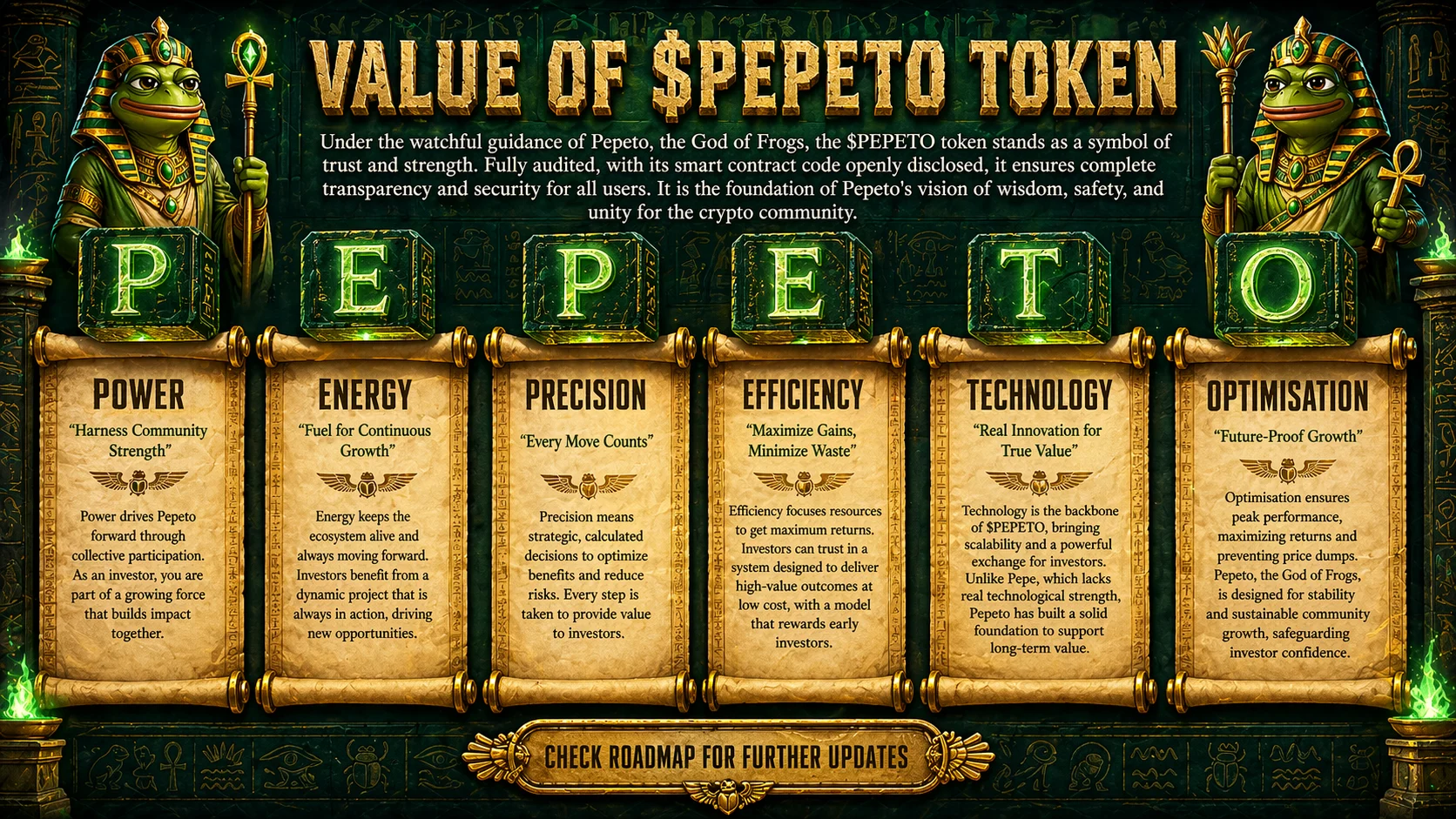
The blockbuster crypto news around Elon Musk and AI is not only about compute power, it is about which projects use AI as a real tool. Pepeto runs a contract scanner powered by AI that checks every token for risks before a buyer puts money in, putting the exchange ahead of platforms where traders depend on outside audit sites.
The exchange handles cross chain swapping across Ethereum, BNB Chain, and Solana with zero fees, so every dollar moved stays as value instead of bleeding into costs.
That zero fee model becomes a growth engine because each swap generates organic demand for the token as users grow. Meme culture draws new users in, and the tools keep them trading because the savings hit every order and the scanner lowers the risk of bad contracts.
SolidProof and Coinsult both audited every contract, a builder from the original Pepe project backs the team, and $9.86 million raised during a correction proves real capital.
Staking at 175% APY pays holders who enter now, and each presale stage sells faster because the price only moves up once a stage closes. The wallets filling this presale today are not guessing. They see the same math that made Shiba Inu buyers millionaires, and they are acting on it.
Conclusion
The blockbuster crypto news of 2026 is writing the next chapter of wealth creation, and Pepeto at $0.0000001869 with $9.86 million raised, dual audits, 175% APY staking, and an AI contract scanner sits at the center of it. Each presale stage fills faster than the last, and the price on Pepeto today will not be there when you come back tomorrow.
The crowd has not arrived yet, and by the time it does the Binance listing will have already repriced the token for everyone who waited. People who watched Shiba Inu turn pennies into fortunes and told themselves they would not miss the next one are looking at that moment right now.
Letting this presale close without entering is how those returns disappear from your hands. Getting in before listing day is how the next wave of crypto millionaires gets built.
Click To Visit Pepeto Website To Enter The Presale

FAQs
How does the Elon Musk SpaceX Anthropic deal connect to blockbuster crypto news for investors?
The SpaceX Anthropic deal sends a $2 trillion signal that AI infrastructure is reshaping capital markets, pushing fresh money into blockchain projects with real AI features. Pepeto runs an AI contract scanner with $9.86 million raised at $0.0000001869 before an expected Binance listing.
What is Pepeto and why are presale holders expecting 100x after listing?
Pepeto is a cross chain exchange with zero fee trading, an AI contract scanner, and 175% APY staking that has raised $9.86 million at $0.0000001869 before an expected Binance listing. The presale to listing repricing compresses months of price discovery into one move, the same math that created millionaires in past meme coin cycles.
Disclaimer: This is a Press Release provided by a third party who is responsible for the content. Please conduct your own research before taking any action based on the content.



The share of profitable Pump.fun traders climbed to 73.28% in April 2026, the fourth consecutive month above 50%. CoinGecko data shows the metric has more than doubled from its low of 30.08% in June 2025.
Profitable wallets had collapsed steadily through 2025 as retail traders absorbed heavy losses on Solana meme coins.
Pump.fun Wallets Stage Historic Profitability Comeback
Pump.fun launched on Solana in January 2024 and quickly became the dominant meme coin launchpad. By late 2024, monthly active wallets had grown into the millions. Most of those traders walked away with realized losses each month.
Profitable traders accounted for less than 50% of active wallets each month from June 2024 through December 2025. The metric hit a low of 30.08% in June 2025. That month, roughly 70% of them booked monthly losses.
Follow us on X to get the latest news as it happens
The trend changed in January 2026. The share of profitable traders climbed from 50.08% that month to 73.28% by April.
“While we cannot conclusively explain this reversal, we hypothesize it reflects a natural exodus of unprofitable traders from the platform. This is supported by the continuous decline in monthly active wallets from its peak of 5.2M in May 2025 to 1.8M in December 2025,” CoinGecko researcher Loke Choon Khei wrote.
Modest Gains Dominate the Comeback
In April 2026, 3.14 million active wallets transacted on Pump.fun. Of those, 2.30 million ended the month profitable. The wins, however, were heavily skewed toward small amounts.
“This study only accounts for Realized PnL; this means that it excludes bagholders who never sold their tokens even if it crashes to zero,” the report added.
About 2.05 million wallets, or 65.14% of the total, recorded gains between $1 and $500. Meanwhile, another 87,127 wallets booked profits between $500 and $1,000. Only 168,795 wallets, or 5.37%, cleared more than $1,000.
Losses followed a similar small-size pattern. About 792,724 wallets lost between $1 and $500, while just 24,538 took realized losses above $1,000.
Subscribe to our YouTube channel to watch leaders and journalists provide expert insights
The post 73% Pump.Fun Traders are in Profit, Best Month Since 2024 appeared first on BeInCrypto.


OpenAI has crossed $25bn in annualized revenue and is actively preparing its OpenAI IPO for as early as the fourth quarter of 2026.
Summary
- OpenAI crossed $25bn in annualized revenue in February 2026, up from $6bn at the end of 2024, driven by ChatGPT subscriptions and enterprise adoption.
- The OpenAI IPO is being prepared with Goldman Sachs, JPMorgan, and Morgan Stanley advising, targeting a potential filing in the second half of 2026.
- OpenAI is not yet profitable and projects annual cash burn reaching $57bn by 2027, making public capital access a financial necessity rather than a choice.
OpenAI has crossed $25bn in annualized revenue and is preparing its OpenAI IPO for as early as late 2026. The milestone was reported by The Information in early March, citing a person familiar with the figures, with Sacra estimating the revenue hit $25bn by the end of February, up from $6bn at the end of 2024. No software company has scaled to this revenue level in a comparable timeframe.
CFO Sarah Friar has told associates the company is targeting a regulatory filing in the second half of 2026, with a potential listing in 2027. Goldman Sachs, JPMorgan, and Morgan Stanley are in discussions about advising the offering.
Friar said separately that the company will allocate a portion of its IPO shares to retail investors, calling it “good hygiene” for a company of its size to act like a public company.
Why the IPO is not optional
OpenAI’s revenue growth is extraordinary but its economics are not. The company generated $13.1bn in revenue in 2025 and spent approximately $22bn to do it. Annual cash burn is projected to reach $57bn by 2027, and the company does not expect to reach breakeven until 2030. The $122bn raised in March gives OpenAI roughly 18 to 24 months of runway before another major capital event is required.
As crypto.news reported, OpenAI is also expanding aggressively into financial services, rolling out tools that connect ChatGPT with institutional data platforms, a move that signals ambitions well beyond consumer subscriptions.
The company’s April 2026 conversion to a public benefit corporation removed the structural barrier to going public that its nonprofit origins had created. Rival Anthropic is simultaneously pursuing its own $50bn raise at a $900bn valuation, creating a potential race to market that could affect OpenAI’s listing window and investor appetite.
Market and crypto implications
Kalshi prediction markets priced the probability of OpenAI announcing an IPO at close to maximum confidence for contracts resolving by early 2026. As crypto.news tracked, on-chain secondary markets are now pricing Anthropic above OpenAI on an implied valuation basis, adding competitive pressure that makes the IPO timeline more urgent.
A $1 trillion listing would be the largest public offering in technology history and would set the benchmark against which every AI company’s private valuation is subsequently judged.


JPMorgan AI spending has been reclassified from discretionary innovation to core infrastructure, placing it alongside data centers and cybersecurity in the bank’s budget.
Summary
- JPMorgan reclassified its $2bn annual AI budget from discretionary innovation to core infrastructure, placing it alongside payment systems and cybersecurity in its $19.8bn tech spend.
- CEO Jamie Dimon says JPMorgan AI deployment has already generated $2bn in operational savings, effectively self-funding the investment across 150,000 employees.
- The bank runs over 500 active AI use cases in production, including fraud detection that has cut anti-money laundering false positives by 95%.
JPMorgan has reclassified JPMorgan AI investment as core infrastructure, treating its $2bn annual budget as non-negotiable as cybersecurity. The world’s largest bank has moved its AI spending out of the discretionary innovation category and placed it alongside data centers, payment systems, and core risk controls inside its $19.8bn total technology budget for 2026.
CEO Jamie Dimon said the investment has already self-funded through $2bn in operational savings across more than 150,000 employees, adding a 10% to 11% productivity gain in engineering, operations, and fraud detection.
The reclassification is not symbolic. When a bank of JPMorgan’s scale treats AI as a non-discretionary cost on par with fraud detection infrastructure, the signal moves downstream to every other financial institution in its competitive set.
CFO Jeremy Barnum confirmed that modernization spending has peaked and the bank’s investment is now shifting toward products, platforms, and AI integration as a baseline operating cost rather than a special project.
What JPMorgan’s AI stack looks like
The bank’s proprietary LLM Suite, named Innovation of the Year at American Banker’s 2025 awards, is now used daily by more than 230,000 employees. It serves as an AI hub that integrates internal customer data, processing workflows, and external information sources through specialized agents.
Over 500 active AI use cases are in production, spanning fraud detection, investment banking deck generation, compliance review, and predictive liquidity management for corporate treasurers.
Fraud detection has seen some of the most measurable results. Anti-money laundering false positives have been cut by 95% using machine learning systems that monitor transactions in near real-time. The bank runs the AI on infrastructure backed by Microsoft Azure and Snowflake, giving it elastic scalability while maintaining the data governance that banking regulators demand.
Crypto and market relevance
JPMorgan is simultaneously pushing into digital assets. As crypto.news reported, the convergence of AI infrastructure investment and digital asset rails is creating a new competitive dynamic in financial services.
The bank has also launched its JPMD deposit token on public blockchain infrastructure, with its proprietary AI now managing JPMD flows and predicting when institutional clients will need liquidity before human traders identify the need.
Dimon has predicted JPMorgan will be a winner amid rising stablecoin threats and economic uncertainty, framing the AI and blockchain combination as the bank’s primary competitive moat.
As crypto.news tracked, OpenAI is rolling out competing financial-services tools targeting the same institutional clients JPMorgan is automating, setting up a direct infrastructure contest between AI-native companies and AI-upgraded incumbents for control of the next layer of financial operations.
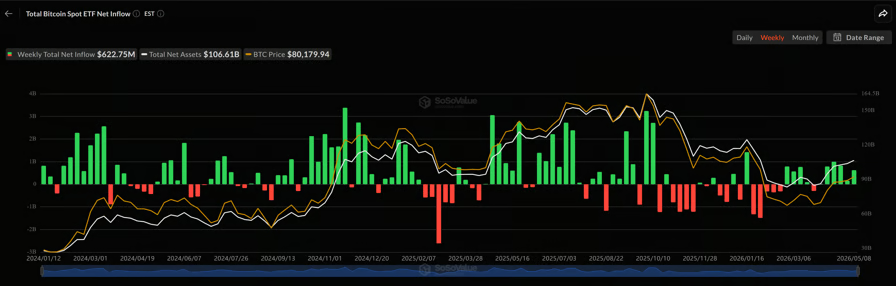
US spot Bitcoin exchange-traded funds (ETFs) have recorded a sixth consecutive week of net inflows, marking the longest such streak since August 2025.
The current six-week run stretches from the week of April 2 through Friday, pulling in a combined $3.4 billion, according to data from SoSoValue. The strongest week came in mid-April, when inflows hit $996.38 million for the week of April 17, while the streak’s weakest showing was the week of April 2 with just $22.34 million. The most recent week logged $622.75 million.
The run marks the longest streak of consecutive net weekly inflows in more than nine months, when a 7-week ran from June 13 to July 18, 2025, drew in roughly $7.57 billion, including $2.72 billion for the week of July 11 and $2.39 billion the following week.

Bitcoin ETFs weekly inflows. Source: SoSoValue
Notably, last week ended on a sour note, with outflows of $277.50 million on Thursday and $145.65 million on Friday. Monday and Tuesday had led the week strongly, pulling in $532.21 million and $467.35 million respectively, before Wednesday’s inflows slowed sharply to $46.33 million ahead of the late-week reversal.
Related: Bitcoin ETFs Extend Rally as Two-Day Inflows Near $1 Billion
Markets on edge as jobs data looms: Analyst
Markets entered Friday cautiously as investors braced for the US April Non-Farm Payrolls report, with consensus estimates pointing to payroll growth of just 62,000, well below the previous reading of 178,000, reinforcing expectations of a cooling labor market, Bitunix analysts wrote in a note shared with Cointelegraph.
The analysts noted that a stronger-than-expected ADP report of 109,000 jobs earlier in the week complicated the picture, leaving traders uncertain about the true state of employment heading into the release.
“On the geopolitical front, although the US and Iran have once again exchanged fire around the Strait of Hormuz, both sides continue to leave room for negotiations,” Bitunix wrote, adding that reports suggest the US and Iran may have reached a partial understanding on certain maritime issues.
In crypto, Bitcoin slipped below $80,000 on Thursday, with liquidation heatmaps showing heavy liquidity clustering around $78,000. A breakdown below that level could trigger cascading liquidations, while dense short positioning between $82,000 and $83,000 keeps the market stuck in a tug-of-war, the analysts wrote.
Related: Bitcoin Slips Below $80K As Spot ETF Inflows Top $1B
Ether ETFs post $70 million in weekly inflows
Meanwhile, Ether ETFs returned to positive territory for the week ending May 8, posting $70.49 million in net inflows after the previous week logged $82.47 million in outflows. The rebound follows a strong three-week run from April 10 to April 24, which drew in a combined $617.91 million, peaking at $275.83 million the week of April 17.
On a daily basis, Thursday saw $103.52 million in outflows, nearly wiping out gains built earlier in the week. Monday and Tuesday attracted $61.29 million and $97.57 million in inflows, respectively, before Wednesday slowed to $11.57 million. Friday’s $3.57 million recovery left the week positive.
Magazine: Guide to the top and emerging global crypto hubs — Mid-2026


Taiwan’s stock market extended its strong artificial intelligence-fueled rally in April, with investors pouring into semiconductor and technology shares as AI demand continued lifting exports and economic growth.
Summary
- Taiwan’s TWSE Index climbed 22.7% in April as AI-related semiconductor demand pushed first-quarter GDP growth to 13.7%, the fastest since 1987.
- Technology stocks accounted for 79% of market turnover, while average daily trading volume surged 187% year-over-year to NT$1.23 trillion.
- Margin loan balances hit a record NT$641 billion as investors increased exposure to Taiwan’s AI and semiconductor sectors.
According to Bank of America, the TWSE Index climbed 22.7% month-over-month to 38,926.63 and is now up 34.4% since the start of the year.
Technology stocks remained the main driver of trading activity across the market. The sector accounted for 79% of total turnover during the second quarter to date, while average daily turnover surged 187% year-over-year to about $38.9 billion.
Taiwan’s total stock market capitalization also rose 18% in April to $4 trillion, with technology companies making up more than four-fifths of the market.
The rally comes as Taiwan continues benefiting from global demand for AI infrastructure, chips, and cloud computing hardware. First-quarter GDP expanded 13.7% year-over-year, the fastest pace recorded since 1987, supported largely by AI-related exports. March exports jumped 61.8% from a year earlier and reached a record monthly high of $80 billion as shipments tied to advanced computing and semiconductor supply chains accelerated.
Investor activity has also intensified across leveraged trading and exchange-traded funds. Margin loan balances climbed 23% month-over-month to a record NT$641 billion, while Taiwan-listed ETFs attracted NT$1.5 trillion in new assets this year. Active long-only funds maintained near-record overweight positions on Taiwan equities in March, with semiconductor companies remaining the most favored sector among institutional investors.
The latest gains highlight how central Taiwan has become to the global AI supply chain. Companies linked to advanced chip manufacturing, AI servers, and cloud infrastructure have seen rising demand as firms worldwide race to expand AI computing capacity.
NVIDIA’s continued dominance in AI processors has also helped strengthen sentiment toward Taiwan’s semiconductor ecosystem, particularly suppliers connected to high-end chip packaging and production.
At the same time, signs of overheating are beginning to draw attention. Consumer inflation accelerated to 1.74% in April from 1.2% in March, partly driven by higher energy costs. The Taiwan dollar also appreciated against the U.S. dollar during the month as foreign capital continued flowing into local equities.
The AI spending wave continues to reshape global markets beyond Taiwan. Microsoft, Amazon, Meta, and Google have all announced plans to invest billions of dollars into AI data centers and computing infrastructure this year.
Analysts expect demand for advanced semiconductors and AI hardware to remain strong through 2026 as companies expand cloud and generative AI services worldwide.


Disclosure: This article does not represent investment advice. The content and materials featured on this page are for educational purposes only.
AI crypto trading bots gain popularity in 2026 as beginners seek automated passive income strategies.
Summary
- AI trading bots are reshaping crypto in 2026, helping beginners automate strategies and reduce emotional trading decisions.
- BulkQuant offers automated crypto trading with machine learning and pre-configured strategies.
- As markets grow more competitive, BulkQuant simplifies passive crypto trading for new users.
The cryptocurrency market in 2026 is evolving faster than ever. With Bitcoin regaining upward momentum and institutional capital continuing to enter the space, trading environments have become more competitive, data-driven, and highly automated. Recent developments—such as expanded crypto ETF access and improved regulatory clarity across major markets—are pushing both retail and professional traders toward smarter tools.
For beginners, this shift presents both a challenge and an opportunity. Manual trading is no longer enough to keep up with high-frequency market movements. As a result, AI crypto trading bots for beginners are quickly becoming the preferred solution for those seeking efficiency, consistency, and passive income.
Instead of reacting emotionally to price swings, traders are now deploying intelligent systems capable of analyzing markets, executing trades, and optimizing strategies automatically. This guide explores how automated crypto trading for passive income works in 2026 — and how anyone can start using it today.
What are AI crypto trading bots?
AI crypto trading bots are automated systems that use machine learning, data analysis, and algorithmic strategies to trade cryptocurrencies on behalf of users.
Unlike traditional bots that rely on fixed rules, modern AI-powered systems continuously adapt to market conditions. They analyze price trends, liquidity flows, volatility patterns, and trading signals to make informed decisions in real time.
These bots are designed to:
- Execute trades automatically 24/7
- Identify profitable opportunities using predictive analytics
- Reduce emotional decision-making
- Optimize strategies based on market behavior
In essence, they allow anyone — even with zero trading experience — to participate in crypto markets using intelligent automation.
Start now – Activate an AI crypto trading bot
How artificial intelligence is transforming crypto trading
Artificial intelligence is no longer a future concept — it is now a core driver of the crypto market.
With the rise of AI-powered crypto trading strategies, traders can access insights that were previously only available to hedge funds and institutional desks. AI processes massive datasets in seconds, uncovering patterns that human traders cannot easily detect.
Key transformations include:
Faster Execution
AI reacts instantly to market changes, capturing short-term opportunities.
Smarter Analysis
Instead of relying on a few indicators, AI evaluates thousands of data points simultaneously.
Adaptive Learning
Strategies evolve over time, improving performance in changing market conditions.
Emotion-Free Decisions
AI eliminates fear, greed, and hesitation—common pitfalls for beginners.
For anyone searching for “best automated crypto trading strategies 2026”, AI is now the foundation.
AI trading bots vs traditional trading: Key advantages
The difference between AI-driven trading and manual trading is no longer marginal — it is structural.
24/7 Automation vs Limited Human Attention
AI bots never stop monitoring the market, while human traders are restricted by time.
Dynamic Strategies vs Static Rules
AI adapts to volatility and trend changes, unlike fixed manual strategies.
Scalability vs Single-Market Focus
AI can track multiple assets and exchanges simultaneously.
Consistency vs Emotional Bias
AI executes trades based on logic, not panic or overconfidence.
This is why no experience crypto trading bots are becoming increasingly popular among beginners.
How crypto traders use AI in 2026
In 2026, AI trading is no longer complex or technical. Most platforms offer simplified tools designed for everyday users.
Common use cases include:
Automated Portfolio Allocation
AI distributes funds across assets based on risk and market conditions.
Grid Trading Bots
Capture profits from market fluctuations with structured buy/sell levels.
Arbitrage Trading
Exploit price differences across exchanges automatically.
Trend-Based AI Strategies
Identify and follow strong market trends early.
For users searching for “how to start AI crypto trading with no experience”, the process is now streamlined: choose a strategy, allocate capital, and let automation handle execution.
Best AI crypto trading bots in 2026 (beginner-friendly platforms)
1. BulkQuant
BulkQuant stands out as a fully automated AI crypto trading platform for passive income, designed specifically for users who want simplicity without sacrificing performance.
Its system integrates machine learning with quantitative trading models, allowing users to activate intelligent strategies without manual setup.
How to use it effectively:
Start by selecting a pre-configured AI strategy, allocating funds, and then let the system execute trades automatically. Over time, the platform continuously optimizes positions based on real-time market behavior.
This makes it one of the best AI trading bots for beginners in 2026.
2. 3Commas
A widely used platform offering smart trading tools, automation features, and AI-assisted strategies. Suitable for users who want flexibility.
3. Cryptohopper
A cloud-based trading bot platform known for customization and strategy marketplaces.
4. Pionex
An exchange with built-in bots, ideal for users looking for an all-in-one trading solution.
5. TradeSanta
Beginner-friendly platform with simple automation tools and preset strategies.
How to choose the right AI trading bot
When selecting the best AI crypto trading bot platform, consider:
Ease of Use – Beginner-friendly interface and quick setup
Transparency – Clear strategy logic and performance tracking
Risk Management – Stop-loss, capital protection, and position control
Exchange Integration – Compatibility with major crypto exchanges
Reputation – Trusted platform with real user feedback
Choosing wisely is critical for long-term success.
Risks and realities of AI crypto trading
Even the best automated crypto trading bots come with risks.
- Market volatility can lead to unexpected losses
- AI strategies are not guaranteed to be profitable
- Over-automation can reduce awareness of market trends
- Some platforms lack transparency
AI improves efficiency — but it does not eliminate risk.
Future trends: The next phase of AI crypto trading
The future of AI-driven crypto trading platforms is rapidly evolving:
Advanced Predictive Models
Combining on-chain data, macro trends, and sentiment analysis.
Decentralized AI Trading Systems
Integration with DeFi protocols for fully autonomous trading.
Personalized AI Strategies
Tailored to individual risk tolerance and financial goals.
Stronger Regulation
Improved transparency and security for users worldwide.
Conclusion: From manual trading to automated income
AI crypto trading bots are redefining how people engage with digital assets.
For beginners, the biggest advantage is clear: they no longer need to spend years mastering technical analysis to participate in the market. With the right tools, automated crypto trading for passive income is now accessible to anyone.
The real opportunity lies in using AI strategically — combining automation with basic understanding and disciplined risk management.
In 2026, success in crypto trading is no longer about working harder. It is about working smarter — with AI.
Disclosure: This content is provided by a third party. Neither crypto.news nor the author of this article endorses any product mentioned on this page. Users should conduct their own research before taking any action related to the company.

Key Highlights
- The crypto space is witnessing AI agents emerge as a significant narrative for 2026, continuing the evolution from DeFi, NFTs, and meme coin cycles
- Close to 1,000 developers participated in building AI agent applications during the Consensus Miami EasyA Hackathon, with representation from tech giants like Microsoft and Google
- Amazon Web Services introduced Amazon Bedrock AgentCore Payments, developed alongside Coinbase and Stripe, enabling AI agents to conduct payments with USDC
- Payment settlements occur on Base and Solana networks, creating a direct bridge between artificial intelligence and blockchain payment infrastructure
- Market observers caution that numerous projects might adopt “AI agent” terminology superficially without demonstrating genuine products, user bases, or revenue streams
Autonomous AI agents represent software capable of performing searches, making reservations, processing payments, and handling various tasks with minimal human oversight. The integration of these agents with cryptocurrency payment frameworks is capturing significant interest from developers, venture capital, and leading technology corporations.
This momentum became evident during Consensus Miami, where the EasyA Hackathon drew approximately 1,000 developers focused on creating AI agent applications. The event featured contributors from blockchain platforms including Base and Solana, alongside professionals from major tech companies such as Microsoft and Google.
Developer engagement at such gatherings frequently indicates emerging market directions. When programmers transition from theoretical discussions to actual product deployment, investment communities typically respond with heightened attention.
This movement extends beyond cryptocurrency-focused developers. Traditional web developers, cloud computing platforms, blockchain networks, and artificial intelligence firms are collectively addressing a fundamental challenge: how autonomous software should manage digital financial transactions.
Amazon Web Services Collaborates With Coinbase and Stripe
Amazon Web Services advanced this conversation significantly this week by unveiling Amazon Bedrock AgentCore Payments, a preview functionality developed through collaboration with Coinbase and Stripe.
This solution empowers AI agents to purchase web content, access APIs, utilize MCP servers, and transact with other autonomous agents. Coinbase and Stripe supply the wallet architecture and payment infrastructure.
Based on AWS technical documentation, the platform targets microtransaction use cases, encompassing payments for premium APIs, MCP servers, and digital content. Many of these transactions involve amounts under one dollar.
Conventional payment networks often prove inefficient for small-value transactions due to processing fees and settlement delays. Stablecoins offer rapid movement, global settlement capability, and programmable integration, positioning them as viable solutions for AI agent commerce.
CoinMarketCap confirmed that AgentCore Payments operates using USDC, with transaction finality occurring on Base and Solana blockchains.
Investment Considerations
Many market analysts identify the infrastructure segment as offering early-stage opportunities. This encompasses stablecoins, digital wallets, Layer-1 and Layer-2 blockchain networks, payment protocols, and developer tools. Entities such as Coinbase, Stripe, USDC, Base, Solana, and Ethereum each play roles within this emerging ecosystem.
AI-focused cryptocurrency tokens may likewise generate investor attention. Initiatives centered on decentralized computing, autonomous agent frameworks, data distribution networks, and oracle infrastructure could experience increased demand as this narrative expands.
Investors should prioritize identifying genuine user adoption, operational products, active developer communities, and transparent token economics. Previous market cycles witnessed numerous projects appropriating trending terms like “metaverse” or “AI” without producing viable offerings.
Security protocols and regulatory compliance represent additional considerations. AI agents with spending capabilities will require transaction limits, identity verification mechanisms, and fraud prevention measures. Regulatory bodies may intensify scrutiny of autonomous systems conducting large-scale stablecoin transfers.
The AWS AgentCore Payments platform, supported by Coinbase and Stripe partnerships, utilizing USDC transactions on Base and Solana, represents the most tangible advancement in this sector to date.
Concluding Observations
The AI agent narrative remains in its formative phase. However, with Amazon Web Services, Coinbase, and Stripe already deploying functional products, alongside nearly 1,000 developers actively contributing to the ecosystem, this movement has progressed beyond conceptual discussions. Its longevity as a crypto market component versus fading like previous trends will ultimately depend on achieving genuine user adoption and sustainable demand.
Key Takeaways
- Large whale address transferred 244K ETH to Binance across three days, creating downward price pressure
- Spot Ethereum ETFs in the US registered $103.5 million in withdrawals, breaking a four-day positive flow trend
- Since February’s market low, institutional investors have preferred Bitcoin allocations over Ethereum holdings
- An address connected to Erik Voorhees accumulated 2,920 ETH valued at $6.67 million USDT during recent weakness
- ETH price is range-bound between $2,197 floor and $2,389 ceiling, eyeing $3,000 as major bullish milestone
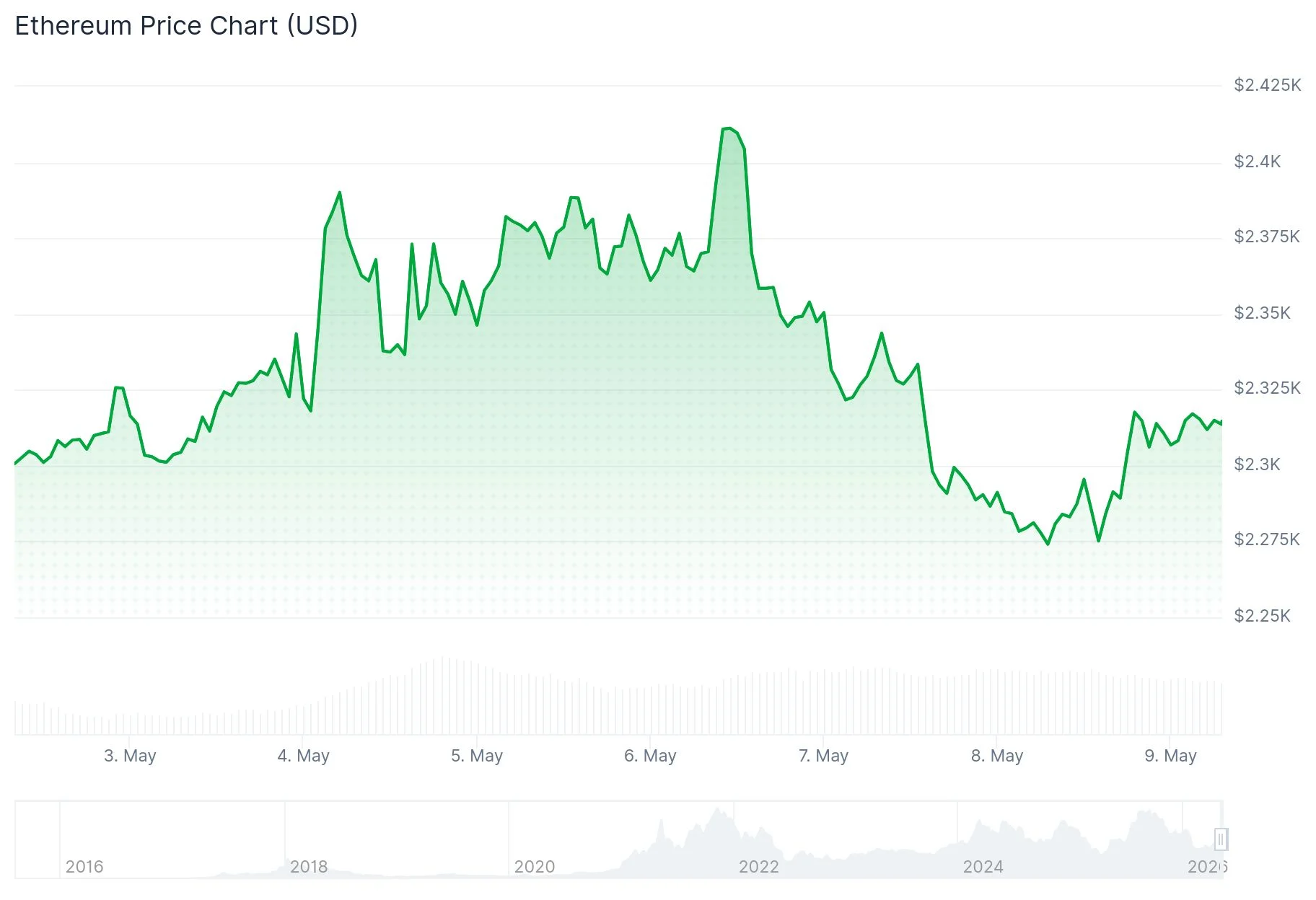
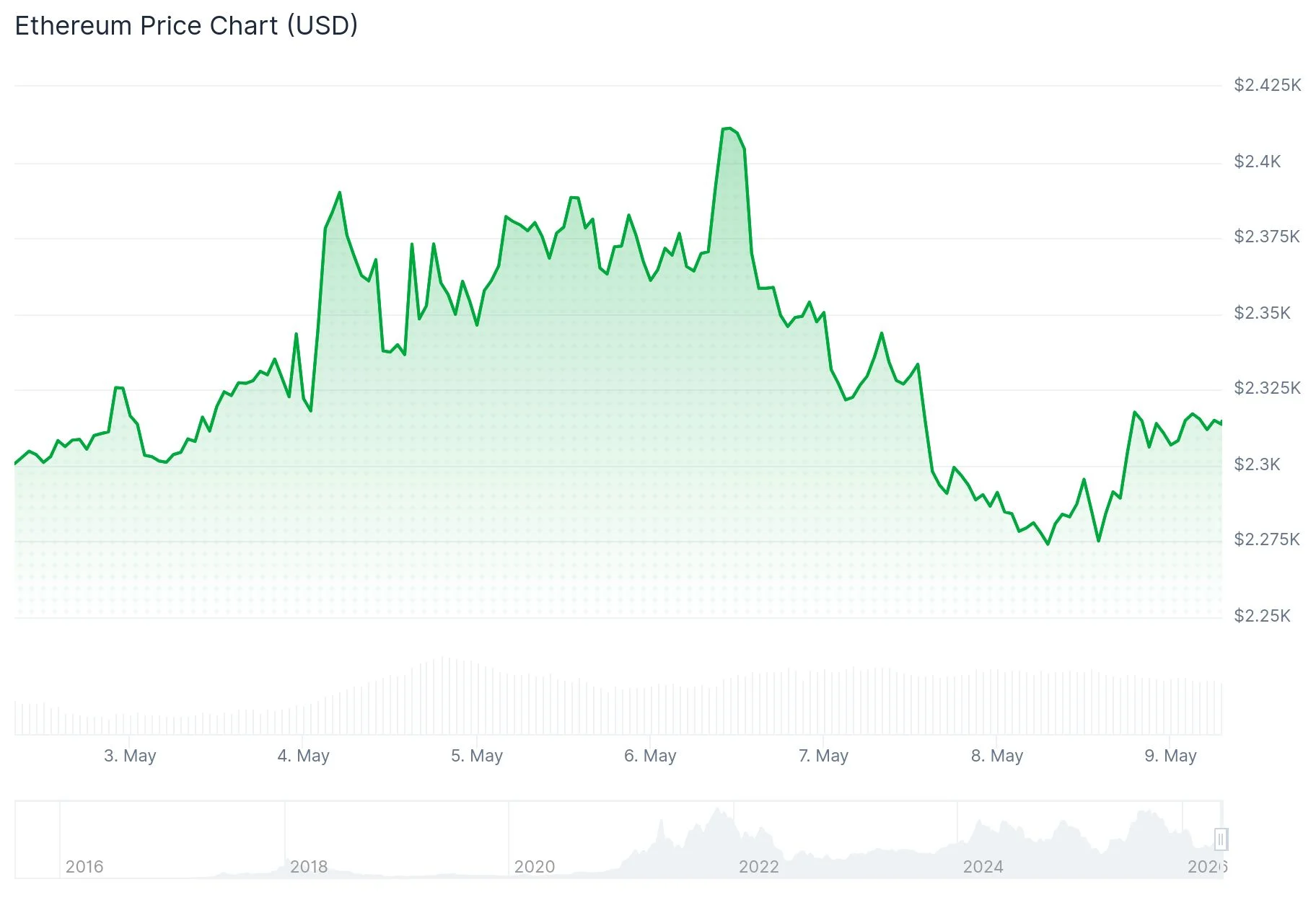
Ethereum hovers around $2,290 on Friday, retreating from its weekly peak as major whale distributions and deteriorating ETF flows create headwinds.
A substantial whale address, reportedly connected to Bitcoin veteran Garrett Jin, moved 78K ETH into Binance on Friday. This followed an earlier 166K ETH deposit on Wednesday, totaling 244K ETH in potential liquidations within a three-day window.
The timing of these transfers correlates with ETH’s nearly 6% correction, sliding from $2,423 down to $2,277 during the identical timeframe.
Jin has demonstrated market timing ability previously, notably executing a leverage liquidation strategy on October 10 after establishing a $1.1 billion short stake. He also absorbed a $378 million loss from bullish positions in January.
On the fund flow front, US-based spot Ethereum ETFs reversed their four-day accumulation pattern on Thursday, recording $103.5 million in net withdrawals.
Analysis from CryptoQuant reveals Bitcoin-focused funds have accumulated 92,116 BTC since February’s market trough, whereas Ethereum funds have decreased holdings by 127,000 ETH during the corresponding timeframe.
“Throughout volatile conditions, numerous funds demonstrate greater readiness to trim ETH holdings initially, while preserving or expanding BTC positions as the ‘more secure’ digital asset allocation,” CryptoQuant noted.
Strategic Accumulation Persists Despite Distribution Pressure
Not every major holder is exiting positions. An address linked to Erik Voorhees purchased 2,920 ETH using 6.67 million USDT, at approximately $2,284 per token, data from Lookonchain shows.
This particular address had accumulated 123,184 ETH previously, representing $266 million in total value. While the connection to Voorhees remains unverified, market observers are monitoring this accumulation pattern.
Cryptocurrency analyst Ted highlighted on X that ETH breaking beneath $2,300 has amplified bearish momentum throughout the market, with declining investor confidence following the adverse ETF data.
Critical Price Levels Under Watch
From a technical perspective, Ethereum maintains position near its 20-day and 50-day exponential moving averages at approximately $2,307 and $2,265. The 50-day EMA offered cushion following a two-session downturn.
Trader Sky published chart analysis on X identifying three cup-and-handle formations developing beneath the $2,389 resistance barrier. The assessment suggests a potential rally toward $3,000 upon clearing that threshold.
Trader Cantonese Cat shared alternative technical analysis displaying ETH revisiting a downward trendline recently breached in late April, indicating a possible false breakout before any durable upward trajectory.
Critical support zones are positioned at $2,197 and $2,107. Overhead resistance barriers stand at $2,389, followed by $2,746.
ETH has yet to validate a decisive breakout above $2,389 as of Friday’s session, with pricing remaining contained below that threshold.

US court rules AI ads make Meta liable for fraud

Holly Madison Details Group Sex With the Late Hugh Hefner

Most Parents Accidentally Teach Their Kids Financial Fear #consciousparenting

Manchester United reach agreement with Casemiro over contract clause amid transfer speculation

US brings back mandatory military draft registration

Steven Gerrard disagrees with Gary Neville over ‘shock’ Chelsea and Arsenal claim | Football
Most Parents Accidentally Teach Their Kids Financial Fear #consciousparenting

New Podcast with Bhawna mam #podcast #thevikaspodcastshow #reels #shorts #money

Lord, Why Do They Win While I Stay Defeated? Financial Breakthrough Prayer | Morning Prayer
-
 Crypto World1 day ago
HarrisX Poll Found 52% of Registered Voters Support the CLARITY Act
-

 NewsBeat6 days ago
Channel 5 – All Creatures Great and Small series 7 new post
-

 Crypto World2 days ago
Upbit adds B3 Korean won pair as Base token gains Korea access
-

 Tech5 days ago
Image AI models now drive app growth, beating chatbot upgrades
-

 News Videos6 days ago
AP Dhillon – Old Money (Official Audio)
-
 NewsBeat2 days ago
NCP car park operator enters administration putting 340 UK sites at risk of closure
-

 Fashion16 hours ago
Weekend Open Thread: Marianne Dress
-

 Sports6 days ago
Five killed in Texas plane crash identified as Amarillo pickleball players
-
Entertainment6 days ago
New Netflix Movies in May 2026 — My Top 3 Picks to Stream
-
Crypto World7 days ago
Pi Network Mandates Protocol 23 Upgrade for All Mainnet Nodes Before May 15 Deadline
-

 Entertainment6 days ago
Melissa Joan Hart and More Stars Attend 2026 Kentucky Derby
-

 Crypto World6 days ago
Bitcoin mining equities rise in 2026 as BTC lags behind
-
Entertainment6 days ago
Anna Nicole Smith’s Daughter Attends 2026 Kentucky Derby
-
Entertainment6 days ago
Venus Williams’ Best Met Gala Looks Over the Years
-

 Business6 days ago
Luka Doncic Injury Update: Doncic’s Hamstring Recovery Slows Lakers’ Hopes Against Thunder: Can He Run Yet?
-

 Business7 days ago
Kuwait International Airport Resumes Operations After Closure as Regional Tensions Ease in 2026
-
 Entertainment6 days ago
Netflix’s 10-Part Miniseries Based on a True Story Is a Perfect Weekend Binge
-
Entertainment6 days ago
“Storage Wars” star Darrell Sheets' ex-wife breaks silence on his death
-

 Sports6 days ago
Is Man United v Liverpool on TV? Channel, streaming and how to watch Premier League fixture
-
Crypto World6 days ago
Q1 2026 Tech Layoffs AI Wave Hits 81,747 as Firms Shift to AI Infrastructure
You must be logged in to post a comment Login