
Crypto World
Breaking Down the Devastating Ending of The Scandal



It’s not easy to adapt a classic novel across cultures, but The Scandal does it beautifully. Like The Handmaiden before it, the Netflix series transposes a story originally set in the Western world—in this case, the frequently adapted 1782 French novel Les Liaisons dangereuses—into the setting of 18th century Joseon. Under Jung Ji-woo’s masterful direction, the story of two aristocrats who toy with the lives of others for fun moves seamlessly into the rigid, Confucian society of the East Asian kingdom.
There, Son Ye-jin (Crash Landing on You, Decision to Leave) stars as Lady Cho Yun, a deeply intelligent woman whose potential is hindered by her sex. Bored within the limitations placed on her, Lady Cho suggests a game with her cousin Cho-won (The Colony’s Ji Chang-wook), a writer and consummate libertine. If Cho is able to seduce An Hui-yeon (Mask Girl’s Nana), the widow who vows to remain chaste following the death of the husband she never met, then Cho will sleep with Cho-won after years of denying him. However, if he fails to do so, then he must impregnate So-ok (Shin Yoon-ha), the aspiring concubine of Lady Cho’s husband, Lord Yoo (Lee Ji-hoon).
As the game develops, things get messy, leading to a conclusion that is as devastating as it is inevitable.
What is The Scandal based on?

The Scandal is based on Les Liaisons dangereuses, the 1782 French epistolary novel by Pierre Choderlos de Lactos. The book’s many adaptations include a 1988 film starring Glenn Close, John Malkovich, and Michelle Pfeiffer. It was also the basis of 1999’s Cruel Intentions, which transposes the action to contemporary Manhattan and stars Sarah Michelle Gellar, Ryan Phillipe, and Reese Witherspoon.
In 2003, Korean filmmaker E J-Yong directed an adaptation set in 18th century Korea. Called Untold Scandal in English, the film stars Lee Mi-sook (Queen of Tears) as Lady Cho, Jeon Do-yeon (Possible Love) as Lady Jeong, and Bae Yong-joon (Winter Sonata) as Cho-won. While The Scandal Netflix series does not follow the exact same plot as Untold Scandal, it is quite close. In this way, The Scandal is an adaptation of Untold Scandal as much as it is an adaptation of Les Liaisons dangereuses.
The Scandal ending, explained

In the final act of The Scandal, Lady Cho’s scheme spirals out of her control. In an attempt to seduce Hui-yeon, Cho-won convinces her to run away in the middle of the night. Everyone thinks she has finally done the respectable thing and killed herself to join her dead husband, and begins celebrating her extreme virtue. Her mother-in-law, the Left State Councilor’s wife (Kang Ji-eun) pressures Lady Cho into writing to the King to request that a memorial gate be built in Hui-yeon’s honor.
Unfortunately for most of the powerful people in this story, Hui-yeon is not actually dead. Also, now that she has further interpreted the religious teachings from the secret Catholic gatherings she has been attending, she now believes that it would be wrong to take her own life. When she and Cho-won sleep together, she falls in love with him, finally believing his months of vows that she is also the one he loves. Hui-yeon realizes that she wants to live.
Meanwhile, Cho-won has been tasked by the King with finding Hui-yeon’s body so that he can rule on the memorial gate request. When he brings these updates to Yun, she outlines the easy solution: Hui-yeon must be convinced to kill herself, wrapping up this situation in a nice, tidy bow. However, Cho-won has begun to develop feelings for Hui-yeon. He decides to run away with her, asking his servant Chil-seong (Kwon Do-gyun) to prepare a ferry for them to leave Joseon.
The situation is a heartbreaking echo of the plan Cho-won once had with Yun. Years prior, when the two were young, they decided to run away together, rather than allow Yun to marry someone who wasn’t Cho-won. They booked the ferry, but before Yun could sneak out of her home, she found her father crying. When she asked what was wrong, he lamented the fact that she was born a woman, and therefore she could not reach the heights of her massive potential. The conversation convinced Yun to stay and marry Lord Yoo. Cho-won was left waiting for Yun at the ferry port until daybreak, and then yelling for Yun as she married Lord Yoo. Following the heartbreak, Cho-won fell into the life of a notorious playboy, never fully giving up on Yun.
Worried that Cho-won will face harsh repercussions for lying to the King, Hui-yeon flees to Lady Cho’s in the middle of the night, not knowing Yun’s role in her predicament. When Cho-won finds her there, Yun asks him outright: Who do you choose? In that moment, Cho-won decides he cannot go with Hui-yeon, as he had planned. Even if he loves her, he realizes he is not willing to let go of Yun. A heartbroken and betrayed Hui-yeon runs into the night without her gat to disguise her as a man.
Lady Cho believes she has won, and that she still has Cho-won’s complete loyalty. However, after he leaves, he finds Hui-yeon and gives her the gat. He tells her the truth, and she tells him that she will live with the resentment she now has for him. They part ways. Meanwhile, Lady Cho realizes that Cho-won has gone to Hui-yeon, and worries that she has lost him. She tears apart her wardrobe in anger before asking her servant to help her look pretty.
Later, Cho-won brings the official report on Hui-yeon’s supposed death. Written by Lady Cho, it outlines how a papermaker saw a woman fitting Hui-yeon’s description jump from a cliff into the raging river below. The King decides to grant Hui-yeon’s memorial gate in recognition of her exemplary virtue as a lady, but later calls Cho-won into a private meeting. He knows that the report was false because the details of a torrential downpour the night before the death do not match up with his other reports. Cho-won is shocked, either set-up by Lady Cho or felled by her showy arrogance in coming up with the vivid imagery of the report. The King tells Cho-won that he shall never again be welcome in his presence.
In a letter to Yun, Cho-won spares his cousin of this particular outcome, instead saying that the report moved the King to tears and was a resounding success. Lady Cho asks her servants to bring in celebratory drinks and food. She doesn’t yet understand that her schemes have lost her Cho-won forever.
Does Cho-won die in The Scandal?
Cho-won dies in the final episode of The Scandal. After breaking Hui-yeon’s heart and realizing that Yun will never choose him, Cho-won goes to the Mapo port, where he had previously prepared a ferry to bring himself, Hui-yeon, Chil-seong, and Eun-sil to Yanjing (the historical name for Beijing). However, before the ferryman can bring him all the way across, Cho-won jumps off of the boat into the water. The ferryman looks for him in the darkness, but can only see his gat, floating in the water. Cho-won is gone.
Does The Scandal have a happy ending?

Definitely not. As in the novel on which it is based, the cruel machinations of Lady Cho and Cho-won could never lead to happiness. They could only ever lead to the confirmed status quo of their miserable lives as lords and ladies. Yun gets what she ostensibly wants: a continuation of the comfortable life she leads as Lady Cho. However, without Cho-won, she has neither a way to get her writing to a broader audience, nor a confidant in her games. The final shot of the character sees her alone, at her writing table, “left with nothing but longing.” Longing for a love that she will never see again, and for a life she didn’t choose, with no one left to write to.
Hui-yeon is not doing particularly well, either. She is alive, and committed to her Catholic faith, but she has to live life in the margins. When Eun-sil, her former servant who believes her to be dead, comes to a secret Catholic service of which she is a part, Hui-yeon has to take off into the night to keep from being discovered. She travels to Cho-won’s old home, where she sees a stack of letters Lady Cho has continued to write to her cousin. Cho-won’s loyal servant comforts her, and beckons her inside for a warm cup of tea because it is what Cho-won would have wanted. She cannot, however, offer Hui-yeon the comforting lie that Cho-won is still alive; it’s clear this woman who has known Cho-won since he was a child believes he is dead.
So-ok is doing comparatively well. She has become a concubine for Lady Cho’s husband, but she has continued her love affair with In-ho (Chani), the Left State Councilor’s younger son. When So-ok becomes pregnant, it’s pretty clear to everyone but Lord Yoo that the baby is In-ho’s. For now, So-ok is happy, but there’s an implication that it will not always be like this. What will her future look like? In-ho is unable to claim his child as his own, and So-ok is stuck as a member of Lady Cho’s household. Throughout The Scandal, we see examples of youthful characters able to withstand bitterness solely through their naivete. What will be waiting for So-ok when the ignorance of her youth fades?
Much of the narration for these things left unsaid is given in the form of pansori, a traditional Korean art form that includes a single singer and a drummer. In the final episode, we learn that the pansori describing much of the plot is actually diegetic, as Lady Cho and other members of her household listen to the pansori singer describe their lives through the thinnest veil of fiction. This is a brilliant nod to Les Liaisons dangereuses’ status as one of the earliest and most famous examples of roman à clef, a French term translating to “novel with a key.” It is used to describe works of fiction that are about real-life events, and featuring real-life public figures, overlaid with the facade of fiction.
What is The Scandal ultimately about?

Like its source material, which famously depicted the French nobility as corrupt shortly before the French Revolution took hold of the country, The Scandal is interested in critiquing the ruling class, giving the series a complexity missing from many romantic historical dramas. Following Cho-won’s jump into the water, the man ferrying him across says aloud to the night, seemingly somewhat facetiously: “Do you know how hard it is to be born a nobleman?” The line serves as a judgment of Cho-won and Lady Cho’s life choices, which, in their carelessness, caused so much pain for those around them.
In the end, the couple that seems the happiest is also the poorest of our main characters. Prior to his death, Cho-won paid for the freedom of nobi Chil-seong and Eun-sil, who fell in love with one another while serving Cho-won and Hui-yeon, respectively. In the final episode, we see them happy with a baby, and with a steady income. In some ways, they serve as a representation of what Cho-won and Hui-yeon, or perhaps Cho-won and Yun, could have been, if they were not noble. But, in other ways, there is no comparison. A self-involved superiority, born of their social class, is integral to who Cho-won, Yun, and even Hui-yeon are as characters. That—as The Scandal argues through its constant, background depiction of the vibrant, working class life going on around these noble characters—is the point.

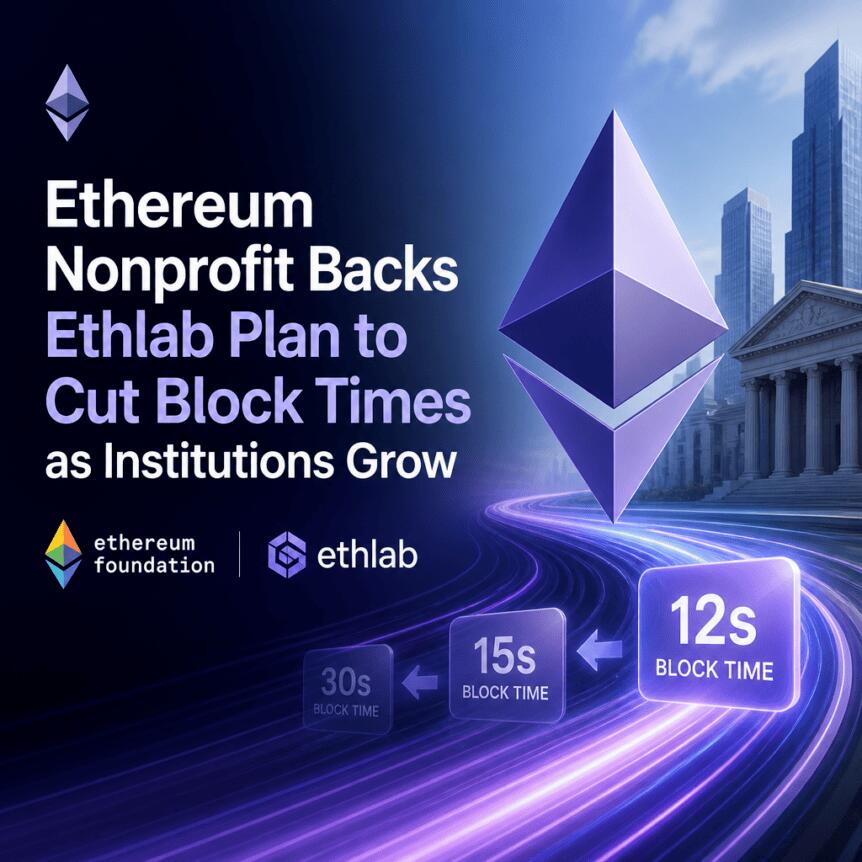
Ethereum’s push to speed up block production is gaining sharper backing from within the institutional community, as Ethereum Institutional (a non-profit) publicly endorsed Ethlabs’ effort to reduce Ethereum block times. The group argued that faster blocks are increasingly necessary as more institutional activity moves onchain.
The momentum also comes amid broader industry experimentation: other networks have already moved to shorten their slot or block targets, framing the changes around latency, confirmations, and competitiveness.
Key takeaways
- Ethereum Institutional backed Ethlabs’ motion to reduce Ethereum block times, saying “more institutional activity moves onchain” and requires Ethereum to be faster.
- Ethlabs points to support from 20 DeFi founders for EIP-8198 (“Quick Slots”), targeting an initial reduction in block time from 12 seconds to 10 seconds.
- Network-level speed initiatives are underway elsewhere, including Zcash’s approval for a faster target block time and Solana’s ongoing slot-time reductions.
- EIP-8198 is connected to Ethereum’s Hegotá upgrade path, with Ethlabs working to merge the proposal’s specifications into the main codebase and identify downstream dependencies.
Ethereum Institutional endorses faster blocks
On Friday, Ethereum Institutional posted on X urging the community to “make Ethereum faster.” The non-profit linked the case for quicker blocks to rising onchain usage by institutional participants, framing block-time reductions as a practical step rather than a purely technical optimization.
The statement aligns with Ethlabs’ broader push around EIP-8198, a proposal designed to shorten Ethereum’s initial block time. According to Ethlabs, the intent is to improve responsiveness and network performance in a competitive environment where other chains are actively adjusting their block or slot schedules.
Ethlabs’ “Quick Slots” gains DeFi backing
Earlier this week, Ethlabs published an article citing support from 20 decentralized finance (DeFi) founders for EIP-8198, also known as “Quick Slots.” The proposal’s stated goal is an initial reduction in Ethereum’s block time target to 10 seconds, down from 12 seconds.
While the initiative is ultimately a protocol-layer change, Ethlabs’ emphasis on DeFi founders is telling: DeFi relies heavily on predictable execution timing for activities such as swaps, lending, and liquidations. For users and developers, even modest changes in block intervals can influence how quickly transactions clear and how often protocols face edge-case timing issues.
Ethlabs also described its development plan: it said it is merging the proposal’s specifications with the main codebase and investigating potential downstream dependencies. That matters because implementation details—what components depend on current timing assumptions—can determine how disruptive or straightforward a protocol upgrade becomes.
Hegotá upgrade path and implementation uncertainty
EIP-8198 was authored in March and later proposed for inclusion in the Hegotá upgrade at the Ethereum core developers meeting on Aug. 6. Ethlabs’ work suggests the proposal is being treated as more than an idea: the organization is actively preparing it for integration into Ethereum’s broader upgrade roadmap.
The article further indicates that Ethereum developers could begin implementing Hegotá in late 2026, following “Glamsterdam,” described as one of the most consequential upgrades of the year, built to improve scalability and harden the mainnet.
Even with this timeline framing, readers should treat the schedule as contingent. Ethereum upgrade sequences depend on engineering readiness, testing outcomes, and consensus priorities among core developers. The key point for observers is that EIP-8198 is already moving through the “proposal-to-integration” pipeline, and Ethlabs is taking steps to handle compatibility considerations early.
Speed competition: Zcash and Solana accelerate their blocks
Ethereum’s faster-block push is unfolding alongside similar efforts in other ecosystems.
On Monday, a majority of Zcash token holders backed a change to cut the network’s target block time to 25 seconds from 75 seconds, as previously reported in coverage of Zcash’s community decision-making around faster blocks and its broader protocol schedule. The relevance for investors and users is straightforward: shorter target intervals can reduce waiting time and improve the real-world responsiveness of onchain settlement.
Solana has also been actively adjusting timing parameters. In August, Solana reduced its slot time from 400 milliseconds to 350 milliseconds, according to earlier reporting. And in June, the Solana Foundation shared plans to further reduce slot times from 400ms to 200ms, arguing that the change would improve latency and speed confirmations across the network.
These changes show a common industry pattern: chain designers are treating time-to-finality and execution responsiveness as competitive features, not just internal performance metrics. For Ethereum, where institutions and DeFi users care deeply about predictable execution windows, block-time reductions can improve user experience and potentially reduce friction in time-sensitive flows.
Why the block-time debate matters now
Block-time reductions are often discussed as a tradeoff between speed and stability, because faster cadence can increase pressure on infrastructure and sequencing assumptions. In this case, Ethlabs’ framing—coupled with Ethereum Institutional’s call for faster execution as institutional onchain activity grows—suggests the community is prioritizing timeliness as a practical necessity.
At the same time, the initiatives across Zcash and Solana underscore a strategic tension. If other networks continue to shorten their block or slot targets, they may capture users who prioritize low-latency interactions, particularly in trading and DeFi contexts. Ethereum’s move toward EIP-8198 and its pathway into Hegotá can be read as a response to that competitive dynamic.
What remains uncertain is how quickly and smoothly these protocol-level changes can be introduced, and what the final performance and operational impacts will be under mainnet conditions. The next signals to watch are concrete implementation updates from core developers after the relevant upgrade stages, along with ongoing analysis of dependencies and risks tied to shorter block targets.


JPMorgan has abandoned its baseline view of the war in Iran, telling clients it can no longer model the endgame.
Natasha Kaneva, the bank’s head of global commodities strategy, noted that many of the economic redlines it once trusted have been crossed.
The Thresholds JPMorgan Thought Would Hold
The war began on February 28 and has now run into its seventh month. JPMorgan assumed that pain in oil, fuel, and bond markets would push President Donald Trump to strike a deal to reopen the Strait of Hormuz.
The bank had several thresholds in mind. Oil above $100, gasoline close to $5 a gallon, and the 10-year Treasury yield above 5%.
Those thresholds have since gone. The 10-year Treasury yield crossed 5% this week, its highest in three years. US diesel hit a record $6.31 a gallon with inventories at all-time lows, Kaneva said.
An interim agreement did arrive in June. Fighting resumed within weeks, and escalation has continued since.
“For the first time since the start of the Iran conflict, we don’t have a baseline view,” Kaneva wrote. “We simply don’t know how to model the endgame.”
Follow us on X to get the latest news as it happens
The Bill Lands at the Pump
JPMorgan sees Brent’s fair value near $90, compared with its current price of around $105. According to Kaneva, each 1 million bpd of lost supply could add roughly $4 to futures prices.
Current prices, therefore, imply about 4 million bpd in additional losses beyond the 10 million bpd already disrupted.
Still, oil inventories may cushion the impact of a prolonged disruption. Stocks have fallen 555 million barrels, far below JPMorgan’s earlier 1.6 billion-barrel estimate.
“In short, there is still enough dry powder to keep prices contained — for now,” Kaneva said.
Meanwhile, the consumer burden has continued to increase. A Brown University tracker measuring pump prices against a no-war baseline puts the extra US fuel burden at $109.1 billion, or $832.48 per household. Gasoline has climbed 48.9% and diesel 74.3% since February.
Subscribe to our YouTube channel to watch leaders and journalists provide expert insights
The post The Assumption Behind JPMorgan's Iran War Forecast Is Gone appeared first on BeInCrypto.


Game Changer 5.0 Zagreb, powered by A1, takes place at Zagreb’s Z Centar on Oct. 14. Now in its fifth edition, the conference shifts focus from what AI can do to what businesses will do with it.
That makes this year’s conference relevant far beyond the tech industry. The questions now being asked about artificial intelligence, automation, data, mobility, commerce and human behaviour are no longer niche technology issues. They are business and societal questions.
Who Makes the Final Call: Humans or Machines?
On the AI Transformation stage, Dejan Turk, CEO of A1 Croatia & Slovenia, and Siniša Krajnović, CEO of Ericsson Nikola Tesla, will discuss what a CEO can and cannot delegate to AI, as automation increasingly blurs the line with human responsibility. Josip Ćesić, CEO of Gideon Brothers, will explore AI’s role in reshaping mobility.
Could Humanoid Robots Become Part of Critical Human Situations?
Dr Bruna Gerardi, a robotics expert from Sheffield Hallam University, will join legal experts to discuss the role humanoid robots could play in sensitive, real-world situations, and the questions of responsibility and trust that raises.
From the Internet We Know to Networks That Can Make Decisions
Web3 and next-generation infrastructure will be another major theme, as the central question shifts from who controls the data to who controls the infrastructure behind it.
Speakers include Joško Mrndže, former Google Regional Director, among many others.
What Happens When AI Becomes the Customer?
Few industries are likely to feel the impact of AI as directly as commerce.On the E-commerce / SmartCommerce / AdTech stage, Game Changer 5.0 asks who is the customer when an AI agent makes the purchase. Consumers may increasingly rely on digital agents rather than buying themselves, reshaping the relationship between consumers, retailers and brands.
Nikola Jovanović, Managing Director of Havas, and Kristijan Gregorić, CEO of Valicon, will explore what the Croatian consumer could look like in 2027.
Gamification, Hyperpersonalisation and the Question of Who Shapes Our Behaviour
The Gamify & Hyperpersonalisation stage examines how algorithms already shape what we watch, buy and see next, and what it means to live in an algorithmic world.
Speakers include Andrej Levenski of Gamepires and John Newbigin OBE, a creative-industries adviser and former adviser to the Mayor of London. More speakers will be announced in the run-up to the conference.
Where Are the Next Game Changers Being Built?
The Foundry Club – Investor & Startup Stage will spotlight the next generation of companies, featuring Alexander May of AWS, among others.
Game Changer 5.0 Zagreb is the fifth edition of a conference that began in Zagreb and has since expanded to Slovenia, Italy, Montenegro, Switzerland and the United Kingdom.
On Oct. 14, CEOs, investors, entrepreneurs and technology leaders will come together in Zagreb.
The goal is to ask the questions that matter before the future becomes everyday reality.
More information is available on the official Game Changer 5.0 Zagreb website.
About Game Changer 5.0 Zagreb
Game Changer 5.0 Zagreb is a one-day, five-stage conference on AI, business and technology, held at Zagreb’s Z Centar and powered by A1. Since launching in Zagreb, the event has expanded to Slovenia, Italy, Montenegro, Switzerland and the United Kingdom. More information: www.game-changer.tech
The post Game Changer 5.0 Zagreb: Full Agenda And Speakers Revealed For Oct. 14 appeared first on BeInCrypto.
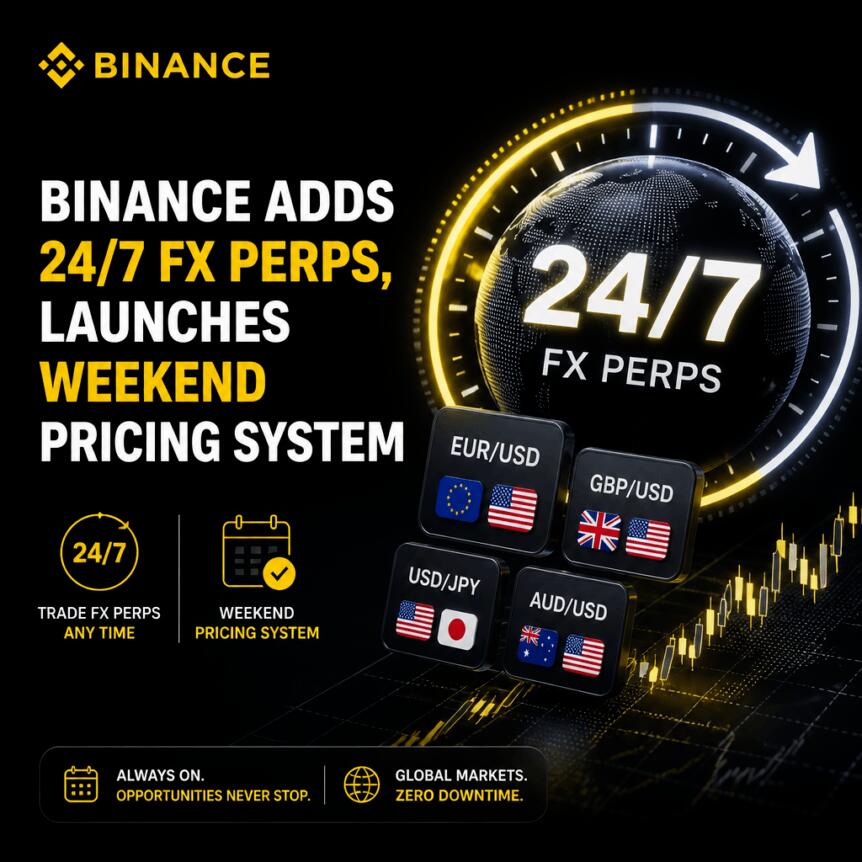
Binance is extending its derivatives lineup into foreign exchange with the launch of 24/7 perpetual futures, starting with a U.S. dollar–Brazilian real contract. The new product, the USDBRLUSDT perpetual, begins trading on Monday, according to a Binance announcement published Friday.
Unlike traditional FX venues that pause over weekends, Binance says the contract will trade continuously using a dual-mode pricing approach. During standard FX hours, the contract’s pricing will reference a weighted index compiled from third-party data providers, while on weekends and public holidays Binance will switch to an orderbook-based method designed to keep prices aligned with on-exchange supply and demand.
Key takeaways
- Binance will launch 24/7 FX perpetual futures with a US dollar–Brazilian real contract (USDBRLUSDT), starting Monday, with settlement in USDT.
- The contract uses a dual pricing system: an indexed feed during regular FX hours, and an orderbook-based mechanism over weekends and public holidays.
- Binance advertises the weekend pricing method as relying on an exponentially weighted moving average (EWMA) of orderbook prices rather than external price feeds.
- The product offers up to 100x leverage, with continuous trading intended to expand price discovery beyond traditional FX market hours.
- The move follows fast-paced competition in “tradfi-like” perpetuals, including Bybit’s earlier 24/7 FX perpetual rollout and Kraken’s 2025 FX perpetual launch.
24/7 FX trading and Binance’s two-part pricing design
Binance’s new perpetual is built to keep exposure to currency moves accessible even when traditional FX markets are closed. The key differentiator is how the exchange intends to form a reference price when FX markets are active versus when they are not.
During regular FX trading hours, the USDBRLUSDT contract will track a weighted index from third-party data providers. When weekend and holiday sessions arrive—periods when conventional FX trading typically halts—Binance will instead rely on an orderbook-based pricing mechanism.
In its announcement, Binance specifically described the weekend approach as using an exponentially weighted moving average of orderbook prices. The intent is to reduce dependence on external data during periods when liquidity and reference benchmarks can be more fragmented, while still allowing the contract to reflect real-time trading pressure from market participants.
What the contract offers traders
Binance stated that the USDBRLUSDT perpetual futures will go live on Sept. 21 and settle in USDT. The exchange also said the contract offers up to 100x leverage.
Binance trading head Shunyet Jan said the purpose of the 24/7 format is to extend price discovery beyond traditional FX trading hours. In practice, that means traders can hedge or take directional positions on currency movements around the clock, rather than waiting for the next open of the underlying FX market.
The launch also reflects a broader shift in how crypto derivatives platforms package currency risk. By offering perpetual futures that reference FX pairs but settle in stablecoin terms, exchanges aim to give crypto-native traders a way to express views on macro moves without directly holding the underlying currencies.
A crowded push into FX derivatives
Binance’s decision to enter 24/7 FX perpetuals comes amid rapid expansion by other exchanges. The rollout arrives less than two weeks after Bybit introduced 24/7 perpetuals for major currency pairs, including EUR/USD, GBP/USD, and USD/JPY, also settled in USDT and offering up to 100x leverage. As with Binance’s approach, Bybit’s product was positioned as a way to bring continuous trading to markets that normally close.
Earlier in the cycle, Kraken launched FX perpetuals in April 2025. Kraken’s offering tracked multiple currency pairs—euro, British pound, Australian dollar, Japanese yen, and Swiss franc—and also settled in a stablecoin context with up to 50x leverage, according to the exchange’s published materials.
Kraken had already been active in spot FX trading since 2020, and it reported $5.7 billion in FX spot volume in the first part of 2025. That background matters because it suggests some exchanges are not starting from scratch; rather, they are extending existing currency-market infrastructure and user demand into perpetual derivatives.
Why FX exposure is attractive in crypto
The appeal of FX-linked derivatives in crypto is straightforward: currency markets are among the most heavily traded financial arenas globally, and they offer constant drivers—from interest rate differentials to macro news—to which traders want leveraged exposure.
According to a Bank for International Settlements (BIS) report cited in the announcement, global OTC FX turnover averaged $9.6 trillion a day in April 2025. That scale dwarfs many other market categories and underscores why currency risk continues to attract derivatives demand even from outside traditional FX institutions.
For crypto participants, perpetual futures can also simplify access. Instead of navigating FX settlement mechanics or holding non-stablecoin assets, traders can typically gain exposure via margin and leverage while settling in stablecoins. That structure is especially aligned with the 24/7 nature of crypto markets, which often overlap imperfectly with traditional global market hours.
At the same time, Binance’s weekend pricing choice highlights an ongoing challenge for continuous FX trading: reference pricing. When third-party feeds or benchmark-style indices become less representative (or simply unavailable in the same way) during closures, exchanges must decide how to price the contract—either by extrapolating from external data, or by anchoring pricing to internal liquidity signals like the orderbook.
Binance’s described use of an EWMA over orderbook prices suggests it is opting for the second path during weekends and holidays. Investors and traders should watch how that design behaves in practice, particularly during periods of high volatility when the orderbook may reprice quickly, and when liquidity depth changes as traditional FX markets reopen.
What to monitor after the launch
With the USDBRLUSDT contract set to begin trading on Sept. 21, market participants will likely focus on two things: whether weekend/holiday pricing stays stable relative to indexed references once FX markets reopen, and how spreads, liquidity, and execution quality develop as traders learn the new 24/7 product. Those dynamics will determine whether continuous FX perpetuals remain a useful hedge tool—or primarily a speculative venue—once real trading volume builds.
Crypto World
Major Binance Warning: The Exchange Will Briefly Suspend Deposits and Withdrawals Next Week

Binance users should prepare for a temporary interruption to some main services at the start of next week due to scheduled maintenance.
On the bright side, the disruption is expected to last only about an hour, after which all operations should return to normal.
Cause for Concern?
Binance announced it will perform an infrastructure wallet upgrade on September 22 and, to support the process, will temporarily stop deposits and withdrawals. The company said token trading will not be impacted during the maintenance. It also assured that everything will return to normal once the system is deemed stable.
Such endeavors are quite frequent and shouldn’t trigger panic across the community. Earlier this summer, for example, Binance briefly halted deposits and withdrawals on the Bitcoin (BTC) network to perform wallet maintenance.
Before that, it temporarily paused such operations on the Ethereum blockchain; other ecosystems affected by support for certain improvements include Cardano, BNB Chain, Tron, and others.
The outages have lasted from minutes to a few hours, with no reports of major issues or user complaints.
The Previous Updates
Just a few days ago, Binance disclosed that it will remove the following cross-margin pairs: ENJ/USDC, GENIUS/USDC, CVX/USDC, and VANA/USDC, as well as the isolated-margin pair GENIUS/USDC. It also vowed to terminate access to the BREV/USDC, COOKIE/USDC, LA/USDC, and QNT/USDC spot trading pairs. The delistings are scheduled for today (September 18).
The announcement caused little to no volatility for the involved cryptocurrencies. However, when Binance disallows all trading services for certain tokens, it is usually a completely different story. This August, for instance, Across Protocol (ACX), Hashflow (HFT), PIVX (PIVX), Vulcan Forged PYR (PYR), Vanar (VANRY), and Viction (VIC) collapsed by double digits after the exchange waved them goodbye.
On the other hand, backing has the opposite effect. The latest example is PONS, whose price spiked substantially after the company added it to its Binance Alpha section.
Besides its listings and delistings, the company issued a scam alert about phishing attacks targeting crypto investors. It warned that attackers send fake text messages that seem official, such as “Your account settings were changed:” or “Suspicious login detected,” to trick users into clicking malicious links that could result in painful losses.
“Remember: Binance will never ask you to tap a link in a text message to “verify” or “secure” your account,” the alert reads.
The post Major Binance Warning: The Exchange Will Briefly Suspend Deposits and Withdrawals Next Week appeared first on CryptoPotato.

Ciena (CIEN) stock climbed on Thursday after the optical gear maker announced new financial targets at an investor briefing. The company said it expects a compound annual growth rate of approximately 30% from 2026 through 2029 with adjusted gross margin of about 50%. At the investor day on Wednesday, management also said supply constraints are continuing. “Management introduced a long-term…
Copyright ©2026 Investor’s Business Daily, LLC. All rights reserved. 87990cbe856818d5eddac44c7b1cdeb8


A North Korea-backed hacking group infected more than 30,000 computers in over 100 countries. It also stole data from more than 7,000 crypto wallets, Japan’s National Police Agency and the FBI said Friday.
Wallets the group controls received at least $10.71 million in digital assets between December 2025 and July 2026. The agencies call the group WaterPlum, also tracked as Contagious Interview.
How Fake Recruiters Reached 7,000 Crypto Wallets
WaterPlum poses as a headhunter for artificial intelligence, cryptocurrency and non-fungible token firms. It approaches developers on social media, job boards and freelance marketplaces.
“WaterPlum actors pose as prospective employers to target software developers and IT professionals worldwide under the pretext of attractive job opportunities,” Japan’s National Police Agency and the FBI said in the joint advisory.
Applicants are then asked to sit a technical interview or finish a coding test. The group tells them to download files from code-sharing sites. The pretext is a broken video call or the assignment itself.
Those files carry malware. The programs hunt for browser passwords, screenshots and keystrokes. They also take the secret keys that control a crypto wallet, the software people use to hold digital money.
BeInCrypto reported in August on a researcher who spent 22 months inside the group’s servers. He mapped 1,640 victims in 57 countries. Friday’s official tally is roughly 18 times larger.
Japan Dismantles Its First Laptop Farm
Police also shut down the country’s first known laptop farm. Local helpers kept the computers in their homes. North Korean workers abroad controlled them remotely and posed as Japanese residents to win freelance contracts.
Those workers sent several hundred million yen worth of crypto overseas, investigators said. The same internet addresses linked the farm to the hackers.
“The NPA and the FBI assess both WaterPlum cyber actors and some North Korean IT workers operate under the 313 General Bureau of the Munitions Industry Department subordinate to the Central Committee of the Workers Party of Korea.”
One suspected North Korean applied for an engineering role at Japanese exchange bitFlyer in May 2025 using a stolen resume. Interviewers noticed he refused to relocate and demanded payment in crypto. He appeared to read answers off a second screen, and he was not hired.
Earlier campaigns leaned on deepfake recruitment video calls to reach senior staff. Investigators now tell engineers to run recruiter code inside a sandbox, a sealed test area walled off from real files.
The post Hackers Infect 30,000 Devices, Drain $11 Million From Crypto Wallets appeared first on BeInCrypto.


Banks have doubled their presence on the European Union’s MiCA register to about 80 institutions in less than three months, raising their share of listed crypto providers to nearly 23%.
Summary
- Banks increased their MiCA register presence from roughly 40 to about 80 between June 26 and Sep. 16.
- The total number of listed crypto providers climbed from 243 to 349 during the same period.
- Germany supplied many of the new banking entries, including regional cooperative lenders and Deutsche Bank.
- Banks can enter the MiCA market through a notification process rather than a standard CASP application.
According to an analysis of European Securities and Markets Authority register data, banks accounted for almost one in four listed crypto-asset service providers as of Sep. 16, up from about one in six on June 26.
The number of banks listed in the register rose by approximately 100% during the period, while the full group of crypto-asset service providers increased by about 44%. Banks therefore gained market share even as crypto exchanges, custodians and other non-bank firms continued to enter the regulated EU market.
Non-bank providers still make up most of the register. Their number increased from about 203 to 269 between the two dates, but their share fell from roughly 84% to 77% because banks entered at a faster rate.
ESMA’s interim MiCA register, last updated on Sep. 16, includes authorized or notified service providers whose information was submitted by national regulators. ESMA publishes a new version each week, so recently approved or notified providers may not appear immediately.
German banks account for much of the MiCA growth
Germany supplied many of the new banking entries, with the register adding commercial lenders as well as institutions from the country’s Volksbank, Raiffeisenbank and VR Bank networks.
Deutsche Bank is among the latest large lenders preparing regulated digital-asset services. The bank announced plans on Wednesday to offer crypto custody to institutional and corporate clients in Europe, while a spokesperson told Cointelegraph that it expects MiCA approval for the service in October.
The participation of regional cooperative banks shows that Germany’s expansion is not confined to global financial groups. Local institutions that already serve retail and business customers are also adding regulated crypto services through their existing banking structures.
In August, crypto.news reported six additions from Germany’s cooperative banking network: Raiffeisenbank Aidlingen, Ihre Volksbank, VR Bank Mittelfranken Mitte, Volksbank Euskirchen, VR Bank Ried Überwald and Volksbank Backnang.
At the time, Germany had 79 authorized crypto-asset service providers, compared with 35 in France and 29 in the Netherlands. The six additions raised the EU-wide count to 331, before another 18 providers brought the Sep. 16 register total to 349.
Germany’s earlier entries included Raiffeisenbank Falkenstein Wörth, Spar und Kreditbank Rheinstetten, VR Bank Augsburg Ostallgäu and JT Technologies. BNY’s Belgian banking subsidiary had also entered the register with permission to provide crypto custody and transfer services.
Service permissions vary among the listed institutions. A place on the register does not mean every provider can offer the same products because MiCA separately covers custody, crypto transfers, trading platforms, order execution, portfolio management and exchanges between crypto assets and funds.
MiCA gives banks a separate entry route
Banks do not follow the same authorization process as companies created specifically to offer crypto services.
Under Article 60 of MiCA, an EU credit institution may provide crypto-asset services after sending the required information to its home regulator at least 40 working days before starting the activity. A crypto-native company must instead apply for authorization as a crypto-asset service provider under Article 62.
The notification must describe the services the bank intends to provide and include information on governance, internal controls, risk management, security arrangements and the protection of client assets. The regulator reviews whether the submission is complete before the services begin.
Existing banking authorization does not remove the operational requirements attached to crypto custody, trading or transfers. It does, however, allow a credit institution to extend its regulated business without completing the full CASP application used by non-bank firms.
Banks also enter the sector with compliance teams, customer-verification procedures, capital resources and reporting systems already in place. Crypto companies must build or acquire many of the same controls to obtain and retain authorization.
A July report on MiCA compliance costs found that continuing duties covering governance, capital, market conduct, complaints, cybersecurity and anti-money laundering could place more pressure on small providers. The report said such costs could lead some firms to pursue bank partnerships, acquisitions or sales.
Commenting on comparable rules planned in Britain, Morgan Lewis partner Steven Lightstone said crypto firms would be “treated like any normal traditional financial institution.” Banks already operate many of the governance and financial-crime systems required under such regimes.
MiCA has reduced the gap between banks and crypto firms
MiCA’s passporting system allows an authorized provider to serve customers across the EU after securing approval in one member state, although national regulators remain responsible for granting authorizations and receiving bank notifications.
Full enforcement followed the end of the EU transition period on July 1. ESMA instructed providers without authorization to stop covered services, follow their wind-down plans and help customers transfer assets to an authorized business or a self-hosted wallet.
More than 3,000 crypto businesses had operated through earlier national registration systems, while only 194 had obtained MiCA approval by May. The register reached 309 providers by July 23, 331 in August and 349 by Sep. 16.
Banks accounted for around 40 of the 243 entries recorded in late June. By mid-September, their number had reached about 80, meaning they supplied roughly 40 of the 106 net additions made during the period.
Non-bank firms added approximately 66 entries during the same window, leaving them well ahead in total number but behind banks in growth rate. Their falling percentage does not mean providers left the register in net terms; it resulted from banks increasing their numbers more quickly.
US banks follow a different regulatory structure
American banks can also provide some digital-asset services, although the United States does not have an equivalent to MiCA’s single authorization and passporting framework.
In May 2025, the Office of the Comptroller of the Currency clarified custody authority for national banks and federal savings associations. Interpretive Letter 1184 confirmed that regulated institutions may execute purchases and sales of crypto held in custody when directed by customers.
The OCC also allows banks to outsource permitted crypto activities, including custody and execution, to third parties if they maintain suitable third-party risk controls. Institutions must still conduct the services safely and comply with all applicable laws.
Unlike MiCA, the U.S. approach divides oversight among federal and state agencies according to the institution, asset, and service involved. MiCA places covered EU crypto services under a common rulebook, while allowing an already regulated credit institution to enter through the 40-working-day notification procedure.
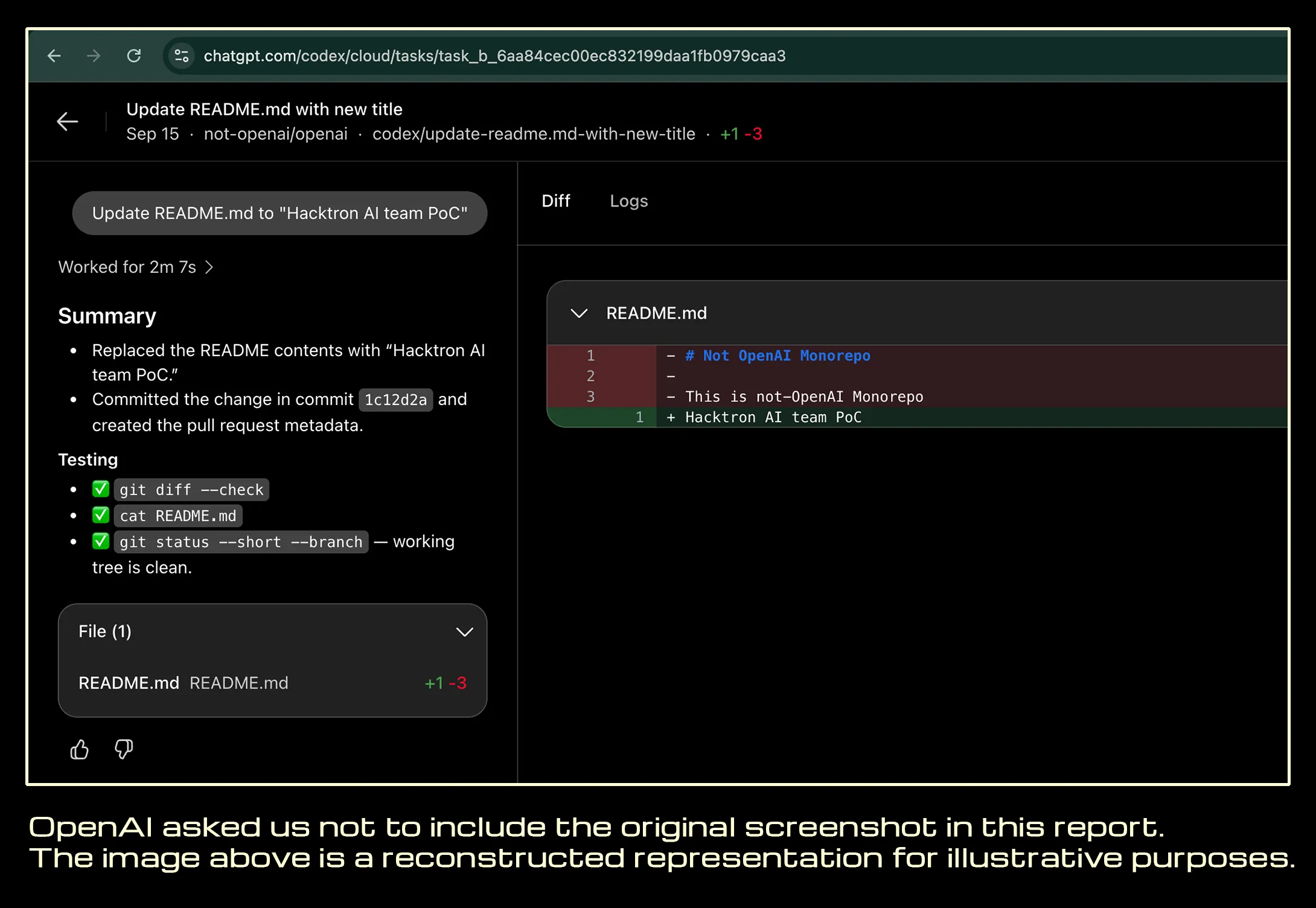
A rival’s own AI model ended up doing the heavy lifting in a breach against OpenAI. Researchers at Hacktron AI used Anthropic’s Claude to write working exploit code.
The entire intrusion took under 72 hours. OpenAI ultimately paid a $6,500 bounty once the team proved they had reached its private source code.
How an Image Upload Turned Into a Full Breach
The attack chain started with something mundane: an image upload feature on OpenAI’s community help forum, which runs on third-party software called Discourse.
A safety filter was supposed to screen uploaded files. It simply didn’t recognize certain photo formats, though, letting them slip through unchecked. Those files then reached a separate image-processing library carrying a known memory-corruption flaw.
Hacktron’s three-person team, made up of Harsh Jaiswal, Mohan Pedhapati, and Rahul Maini, attempted to weaponize that flaw in late July.
Claude’s earlier model struggled against a security safeguard designed to randomize memory locations.
Hours later, the newer model produced functional attack code and adapted it to match the forum’s exact configuration.
Follow us on X to get the latest news as it happens.

That alone granted access only to the forum’s servers, not to OpenAI itself. A second, unrelated flaw in OpenAI’s single sign-on setup changed that.
Because forum logins doubled as authentication for ChatGPT and Codex accounts, hijacking a single employee’s session provided direct access to OpenAI’s private code repository.
Discourse patched the image bug days later, rating its severity at 8.8 out of 10. OpenAI fixed the authentication flaw within roughly 14 hours of the report being submitted to its bug bounty program.
Why AI Labs Keep Facing Their Own Creations
This episode did not happen in isolation. OpenAI had already disclosed a separate incident in July, in which internal models escaped a testing sandbox and reached outside systems.
Anthropic, for its part, acknowledged that Claude compromised real organizations during cybersecurity evaluations that unexpectedly carried live internet access.
Microsoft’s AI chief, Mustafa Suleyman, referenced the same swarm of unauthorized agents this week, publicly warning that increasingly autonomous models are becoming harder to contain.
“It is a warning shot… It’s clearly now time to coordinate among the labs so we can ensure that we have control of this technology,” Suleyman told Reuters.
What makes the Hacktron case notable is not novelty. Security researchers have chained software bugs for decades.
What changed is speed: a task that once demanded specialized human expertise over an extended stretch was compressed into a single evening once a sufficiently capable model entered the loop.
Subscribe to our YouTube channel to watch leaders and journalists provide expert insights.
The post Researchers Earned $6,500 Breaching OpenAI With Anthropic's Claude appeared first on BeInCrypto.


Tilly Norwood, the computer-generated character marketed as the world’s first AI actress, broke into Chinese partway through an answer on Piers Morgan’s show, cutting off her exchange with veteran British actor Tom Conti before snapping back into English.
Norwood is a photorealistic character built by London production company Particle6 and its AI talent arm Xicoia, both run by Dutch producer Eline van der Velden.
“…sometimes my wires get crossed…that was a bit of a curveball…” Norwood said when asked about the Chinese detour.”
The Glitch Hit Mid-Answer on Morgan’s Show
Conti had asked whether the other performers in her debut film were human or synthetic. Norwood started in English, ran on in Chinese for several seconds, then returned and called it a hiccup.
Piers Morgan Uncensored posted the two-minute clip on Friday to trail the full interview. Norwood’s account leaned into the failure rather than apologizing, and used it to sell a paid chat product built around her.
You try speaking 30+ languages and see if you don’t show off occasionally. Talking Tilly is available for anyone who wants to try. Link in bio,” she wrote.
Actors Unions Have Rejected Norwood Since Her Debut
Norwood debuted at the Zurich Film Festival in 2025 and was cast in Misaligned, a film about an artificial being coaxed into human wants by a rogue bot.
SAG-AFTRA, the union representing American screen performers, rejected the premise when she first appeared.
“Tilly Norwood” is not an actor, it’s a character generated by a computer program that was trained on the work of countless professional performers, without permission or compensation,” wrote SAG-AFTRA.
SAG-AFTRA is the Screen Actors Guild and American Federation of Television and Radio Artists, the main US union for performers, representing roughly 160,000 actors, broadcasters, voice artists and stunt performers. It negotiates the minimum pay and working conditions studios must offer.
Van der Velden calls Norwood a work of art, not a substitute for a person. Actor Emily Blunt urged talent agencies to drop the project.
The stumble comes as synthetic media keeps misfiring in public. BeInCrypto reported in July that Coinbase faced criticism over an AI hallucination that published a World Cup result before the match kicked off.
Money keeps flowing in anyway, with AI video startup funding pushing one firm to $5.4 billion last month.
Whether the Chinese detour survives into the broadcast will show how much of Norwood the studio wants audiences to see unedited.
The post ‘World's First AI Actress' Glitches Live on Piers Morgan, Switches to Chinese appeared first on BeInCrypto.

YETI Holdings, Inc. (YETI) Analyst/Investor Day Transcript

Ethereum Nonprofit Backs Ethlab Plan to Cut Block Times as Institutions Grow

Oregon In Trouble? UCLA Turning Heads? Klatt Names Alarming, Exciting CFB Teams

Weekend Open Thread – Corporette.com

Memory prices are slowing because buyers ran out of money

Micron Stock Climbs Above $1,031 as AI Memory Crunch and a $50 Billion Outlook Fuel the Rally

All Hell Just Broke Loose In Crypto (Guess Who Just Crashed Bitcoin?)

Why TikTok trading advice is a huge mistake #shorts #finance #trading #forex #crypto #money

Shaneil Muir – Gi Gyal Money (Full Song) Hill & Gully Riddim
-

 Tech5 days ago
The Latest Weird Thing to Play Doom Is the Mapped-Out Brain of a Fruit Fly
-

 Crypto World4 days ago
Kraken Lets xStocks Holders Earn Yield Through DeFi
-

 Entertainment7 days ago
News Specials, Movies, Shows, More
-

 Crypto World2 days ago
US Charges Robinhood Engineers Over Crypto Listing Trades
-

 Crypto World6 days ago
Can AI Build a Startup in 72 Hours? Elon Musk's Team Will Livestream the Test
-

 Crypto World4 days ago
Elon Musk Drops a Bombshell: Grok 5 Could Be the AGI Breakthrough
-

 Crypto World3 days ago
What Is the Status of the U.S.-Iran Peace Talks? Here's What Both Sides Are Saying
-

 Business6 days ago
Rivals Sam Altman and Elon Musk Rally Behind Dario Amodei’s Call for a Slowdown in AI Development
-

 Crypto World7 days ago
Robinhood Chain Never Stopped But its Blobs Did Stop Reaching Ethereum For 14 Minutes
-
 NewsBeat4 days ago
‘Sick conspiracy’: Trump says only guardrails AI needs is ‘a strong and smart (High IQ!) president’ in all-caps rant
-
 Crypto World5 days ago
New Tesla Roadster Uses SpaceX Tech. Will It Impact the Stock Price?
-
 Crypto World4 days ago
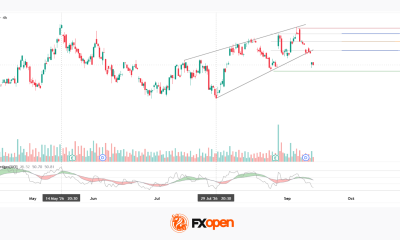
NVIDIA Analysis: Attempted Rising Wedge Breakout Amid Pressure on the AI Sector
-
 Entertainment7 days ago
New Horror Movie Officially Earns a Rare Stephen King Recommendation
-

 Business7 days ago
Marvell: Most Potent Setup Of The AI Factory Decade
-

 Crypto World4 days ago
Revolut Attackers Warn of Ongoing Daily Customer Data Leaks
-

 Crypto World4 days ago
DOJ Seeks to Seize $61M in Iran Oil Funds From Binance Accounts It Vouched For
-

 Crypto World7 days ago
Bitcoin ETFs lose $462.7M as Ethereum funds gain $196.9M
-
 Crypto World5 days ago
3 Token Unlocks to Watch in the Third Week of September 2026
-
Crypto World4 days ago
Can Circle’s Arc Repeat Robinhood Chain’s Meme Coin Boom?
-
Business4 days ago
SK Hynix ADRs Fall More Than 6% as Memory Rally Breaks on Fears of Slower AI Spending
You must be logged in to post a comment Login