

Join Mikko Hyppönen and security leaders from the NFL, CHANEL, and Atlassian for a two-hour digital summit on what AI-speed attacks change, what defenders should stop doing, and how to validate, decide, fix, and re-validate at machine speed.
Tech
Turning Tech Talent Into Leadership Legacy



Transitioning from years of working in a senior technical or executive role to a leadership position is one of the most challenging phases of a STEM career. It requires moving away from making decisions on your own to mentoring others, making strategic decisions for the organization, and collaborating with coworkers from different generations.
The shift in mindset is known as “legacy leadership,” a philosophy whereby success is no longer measured by personal achievements but by how effectively a senior leader empowers others.
To help seasoned professionals and senior experts navigate the transition, the inaugural IEEE International Leadership Conference (ILC) will provide attendees practical advice on cultivating collaborations and guiding emerging talent.
“Early in our STEM careers, we measure success by what we have achieved,” says Jeewika Ranaweera, cochair of the IEEE ILC program committee. “Later, we should measure success by what we enable, how many people we mentor, how much knowledge we transfer, and how many doors we open for the next generation.”
The ILC is scheduled for 3 and 4 October in Budapest. Registration is open.
Letting go of the “expert” identity
For decades, seasoned technologists have been valued primarily for their technical expertise. Shifting from that identity can feel uncomfortable, but legacy leadership requires measuring success by different standards. They include a leader’s influence on the staff, the ability to uphold the company’s mission, and empowering others to lead and succeed.
The transition requires leaders to find purpose outside their corporate titles, shifting their focus to the long-term sustainability of their teams, their organization, and the broader technical community.
“A professional legacy is not measured only by what we have achieved but also by sharing our knowledge, experience, and opportunities with others,” says Sudhanshu S. Jamuar, another program committee cochair. “The real transition from expert to a legacy builder happens when we stop asking, ‘What more can I accomplish myself?’ and start asking, ‘How many others can I enable to accomplish more?’”
Neeli Rashmi Prasad, IEEE ILC treasurer and sponsorship cochair, adds that the transition transforms a lifetime of technical work into a platform for future innovation.
“The true value of experience is not in how much knowledge we accumulate but in how intentionally we transfer it,” Prasad says. “When we partner with, mentor, and create space for others to lead, our expertise becomes a foundation for progress far beyond our own careers.”
Moving beyond advice-giving
True knowledge transfer requires coaching rather than advising, and mastering the art of active listening. To build deep trust with early-career colleagues and ensure a seamless transfer of leadership to the next generation, senior leaders must avoid offering unsolicited or outdated anecdotes. Effective mentorship is a collaborative loop in which senior experts contribute hard-won industry wisdom while remaining curious and learning from the fresh, cutting-edge perspectives of talented coworkers.
“Knowledge transfer is most powerful when it is a two-way bridge: experience flows from one generation to the next, while new ideas and perspectives flow back,” says Sudeendra Koushik, president of the IEEE Technology and Engineering Management Society and an ILC keynote speaker. “This approach transforms mentorship from simply passing on information into one where the next generation can question, experiment, innovate, and ultimately surpass what came before them.”
Seasoned professionals should encourage independent, disruptive thinkers rather than carbon copies of themselves, Prasad says.
“Legacy leadership is about building continuity,” she says. “We should not simply prepare the next generation to follow the paths we created; we should give them the confidence, knowledge, and networks to challenge those paths, create new ones, and take technology further than we imagined.”
Designing your next chapter
Leadership does not need to stop when one’s job ends; it can evolve. Seasoned, retired professionals can continue contributing meaningful service through pathways that align with their personal passions. They include:
- Advisory boards: steering corporate, technical, or community organizations.
- Civic engagement: applying engineering methodologies to solve community challenges.
- Volunteerism: mentoring the next generation of grassroots innovators through professional networks including IEEE.
Those pathways offer experienced professionals an opportunity to redefine success, not in terms of position, authority, or personal achievement but in terms of sustained impact.
“Retirement from a job should never mean retirement from purpose,” Koushik says. “Our experience becomes even more valuable when we use it in service of the profession, society, and the generation that follows.”
At the same time, the collaborative continuum relies on a proactive younger generation. Emerging leaders need to take responsibility for building their professional connections, Prasad says, advising: “Be bold, stay curious, and build your network early!”
A space for continuity
The conference is designed to combine a drive to cultivate emerging innovators with a deep reservoir of industry stewardship and strategic perspective. Rather than a single classroom session, the conference will feature a dedicated career-readiness and mentorship track where attendees can explore practical frameworks for building strategic professional networks, connecting with peer advocates, and establishing reciprocal knowledge-sharing opportunities across generations.
By participating, seasoned professionals can ensure their decades of expertise continue to yield dividends for generations to come.
“Our professional legacy is not the technology we build, the titles we earn, or the awards we receive,” Ranaweera says. “It is the knowledge we share, the lives we influence, and the future we help others create.”
You can view the agenda, read speaker biographies, and secure your seat at the ILC online.
From Your Site Articles
Related Articles Around the Web
Continue Reading
Microsoft Teams will soon let administrators tweak the list of file extensions commonly associated with malware and security threats to meet their company’s security requirements.
This will come as an update to Weaponizable File Protection, a built-in Teams messaging safety feature that scans conversations and blocks chat or channel messages with dangerous, high-risk file attachments.
As detailed in a new Microsoft 365 roadmap entry, the feature is currently in development and will start rolling out in November 2026.
“Microsoft Teams is expanding admin controls for Weaponizable File Protection. Administrators will be able to customize which file types are blocked in Teams to align with their organization’s security requirements or continue using the Microsoft-recommended default list,” Microsoft says.
“This added flexibility helps organizations tailor file protection policies while maintaining a secure collaboration environment.”
When it reaches general availability, it will be available across Android, desktop, iOS, macOS, and web platforms for standard multi-tenant cloud environments worldwide.
Right now, according to Microsoft’s support website, admins can’t change the list of blocked file types.
More Teams security improvements
Starting in December, admins can also block external users via the Defender portal to thwart cybercrime gangs(including ransomware groups) attempting to abuse Teams in social engineering attacks targeting victims’ employees.
Earlier this month, it said that Teams will get a new security feature designed to provide additional protection against phishing and fraud attempts by blurring QR codes sent by external senders.
This week, Microsoft also announced that, starting in November, it will let users report suspicious guest invitations directly from Teams to help their organization’s security teams identify and block phishing attempts and other attacks through guest invitations.
More recently, Microsoft has begun rolling out a new Teams meeting protection policy that lets admins automatically block all identified external bots from joining meetings.

Tech
Max vs 100 Sends Max Verstappen From Last on a 101 Kart Silverstone Grid to First in 35 Minutes
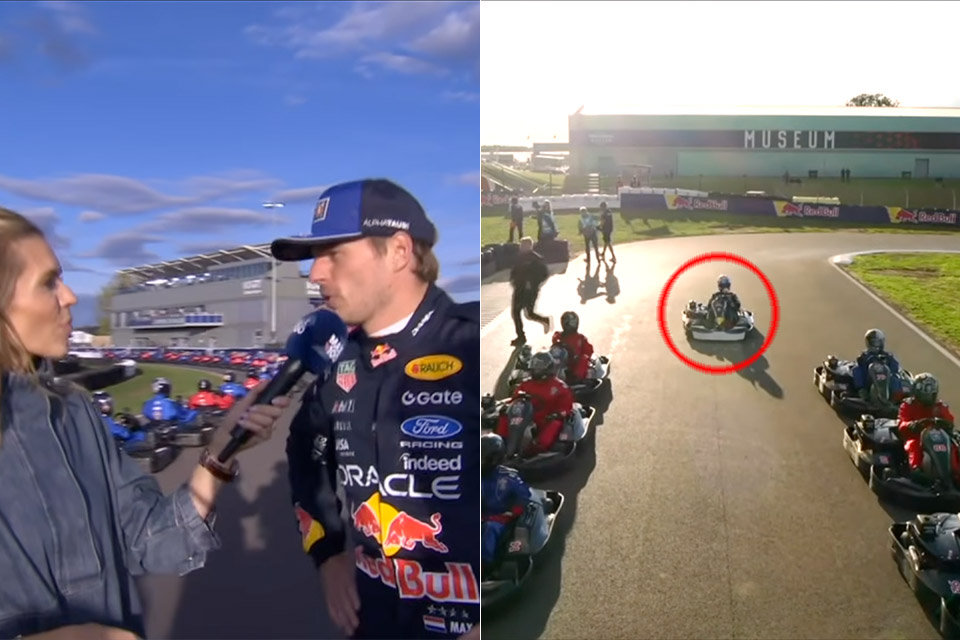
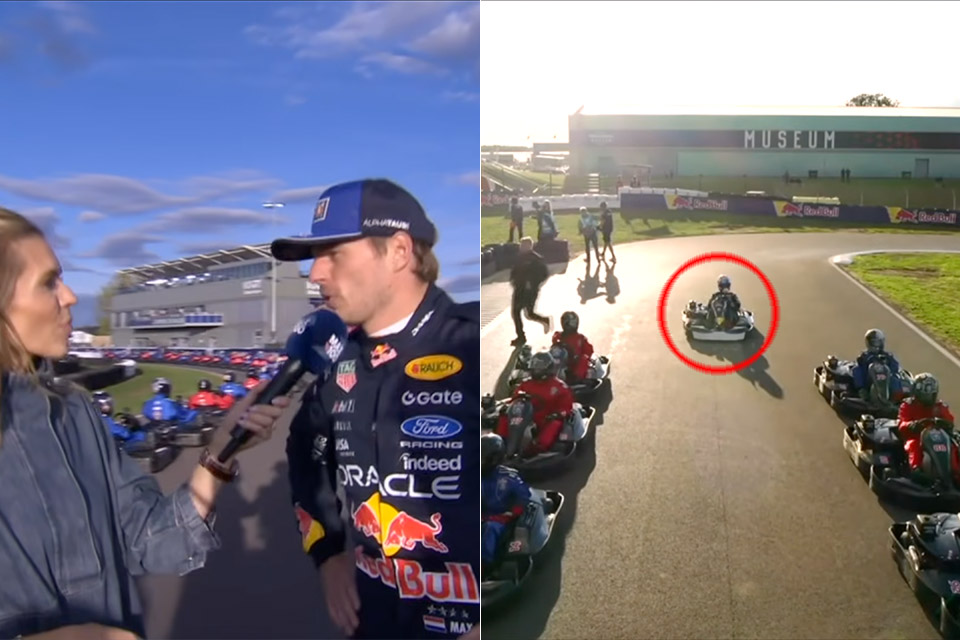
Red Bull staged Max vs 100 on Wednesday, September 16, 2026, as the largest go-kart race ever run, lining 101 identical karts on a purpose-built layout at Silverstone designed by race director David Terrien. Max Verstappen started 101st with a simple brief: catch and pass every driver ahead of him inside 30 laps or 75 minutes. Once the rear of his kart drew level with the front of another, that driver was out for good. The 100 people in front of him were athletes, content creators, streamers, journalists, and fans, most of whom had seen the track only in Tuesday practice plus one qualifying lap. Dutch Formula One journalist Jacky Martens took pole. YouTuber Zac Alsop and Red Bull Ford Powertrains technician Lewis Osler sat near the front with him.
Lights went out, mayhem ensued, and the field abruptly collapsed in on itself. Karts collided with each other’s bumpers, pointed in the incorrect direction, and stacked up at the first hairpin. Later, Verstappen claimed that he had no idea what was going on and informed the radio commentator that it was complete carnage. Despite this, he had passed over 10 drivers by the time he reached the start-finish line, and he continued to thread his way through the pack while others lost their confidence. By the completion of lap one, he was in 37th place, while sixty-three drivers had yet to complete a lap. When asked, he gave the number over the radio and stated it wasn’t a bad start. Yellow flags appeared briefly, freezing the rest of the pack.
Sale

LEGO Speed Champions Oracle Red Bull Racing RB20 F1 Race Car Model Kits – Building Set for Adults, Ages…
- RED BULL CAR – LEGO Speed Champions Oracle Red Bull Racing RB20 F1 Race Car buildable model for Red Bull and Formula 1 fans
- AUTHENTIC DETAILS – This F1 race car features design details from the real-life 2024 version, including a rear wing, halo bar, and wider rear tires…
- F1 MINIFIGURE – The vehicle kit includes an F1 driver minifigure wearing a Red Bull outfit and a winged helmet to place inside the F1 race car’s…

He’d bounced in the seat before the start, giving the kart an additional amount of roll as he launched off the line, and then braked a fraction of a second before everyone else to make way for the inevitable spinning. Open radios picked up the remainder of the pack reacting as he approached, and one driver begged him not to pass, while others were terrified, and he warned at least one of them he was coming for them. By lap five, the majority of the grid had gone. By lap six, he was inside the top 10, and by lap ten, he was in fourth place, gaining nearly three seconds each lap on the leaders while passing every 21 seconds. His quickest lap was 2:20.673, more than two and a half seconds faster than Martens’ 2:23.327.

Martens, Alsop, and Osler had created a 12-second lead, and the race director saw fit to allow them an extra fast-lap shortcut with time remaining on the clock. On lap 12, they used it together before abandoning caution and concentrated on defending rather than racing. Verstappen managed to past Alsop and Osler in a single circuit on lap 13 before carving up Martens to secure the victory. Overall, it only took him 14 laps. 35 minutes. There were 21 laps and 40 minutes remaining. As he raised the flag, he described the afternoon as simply magnificent, before joking that it was his first win of the year, so he’d accept it. He also stated that it was one of his favorite days in a kart, the type of session that reminded him of how he used to race before getting into Formula One all those years ago.

Martens finished second, with Osler, a mechanic from Verstappen’s own powertrain group, coming in third. Alsop finished fourth, followed by off-road racer Pol Tarrés in fifth, Paky TWC, RDJavi, photographer Larry Chen, mountain biker Bernard Kerr, and actor Neo Yau. A four-time world champion started last in a 101-kart field designed for this type of turmoil and finished in less than half the time. That was the most surprising part, but thankfully it was a good one.
[Source]
Tech
Tech Moves: Ascend promotes Nate Bek; Microsoft Word ‘Agent Mode’ architect exits; TAF names new exec
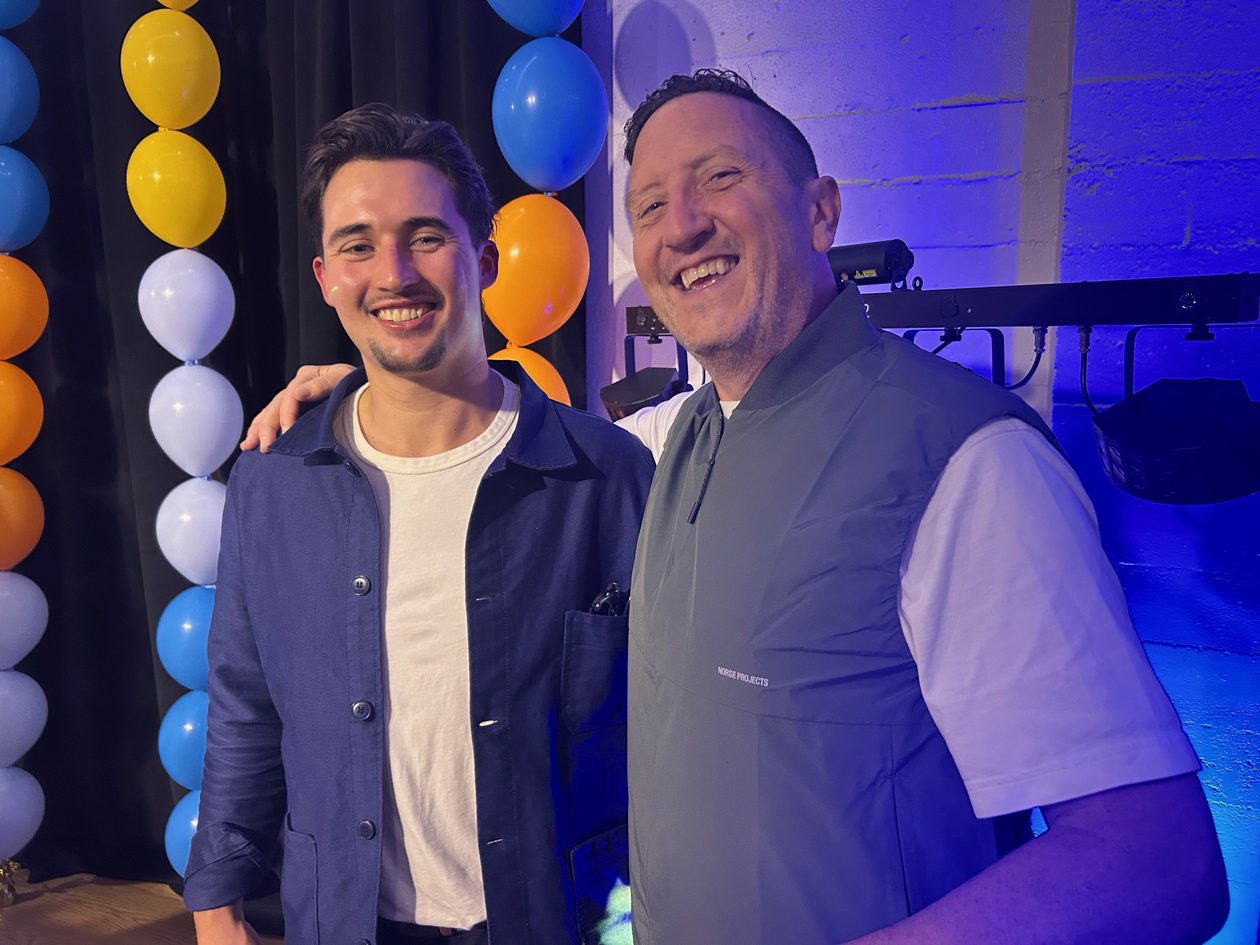
— Seattle-based venture capital firm Ascend promoted Nate Bek to principal. Bek joined the firm as an associate in January 2024 and was most recently senior associate and head of research.
Kirby Winfield, Ascend’s founding general partner, credited Bek with helping the firm’s companies launch with national press coverage, researching and communicating its investment theses, and sourcing deals including Neuramill and Endurance Energy.
“Nate has been a force multiplier for Ascend. It’s rare for a micro VC fund to have a resource like him,” Winfield said. “He not only executes and publishes novel market research and thought leadership that strengthens our brand and expands our reach; he’s also hyperconnected in the Seattle ecosystem and has sourced some of our most compelling investments.”
Winfield added, “We’re excited to see him continue to grow as Ascend becomes a nationally recognized pre-seed firm.”
Bek was previously a startups and venture capital reporter at GeekWire. He co-wrote a widely read GeekWire guest column in August making the case that many of Seattle’s most promising startups are building physical products such as rockets, power plants and off-road vehicles.

— Brandon Paddock left Microsoft to start his own AI software company. Paddock, who is based in Seattle, was a principal software architect in Microsoft’s Office organization and the technical lead for “Agent Mode” in Word, which shipped last fall and became the default Copilot experience in Word early this year. His last day was Sept. 11.
“I am incredibly excited about what I’m building, but not quite ready to talk about it here,” he wrote on LinkedIn.
Paddock first worked at Microsoft from 2005 to 2013, including on search features in Windows 7 and Windows 8. He rejoined in 2016 after serving as CTO of Seattle startup Zealyst. He also built the Twitter client Tweetium as a side project.

— Seattle-based STEM education nonprofit Technology Access Foundation named Donya Loyd Kemp director of TransformED, which works with teachers at partner public schools to put TAF’s project-based STEM learning model into practice.
Kemp comes to TAF from Atlanta, where she was principal of Purpose Built Schools Atlanta and director of project-based learning at Charles R. Drew Charter School. She was most recently a senior consultant at Potential Unleashed Consulting.
In a TAF Q&A, Kemp said she was excited to contribute to work “that recognizes the brilliance of students, particularly students who have historically been underestimated.”
“So excited to have Donya on board. Leveling up for our children and teachers,” TAF co-founder and executive director Trish Millines Dziko wrote on LinkedIn.

— Zillow Group named Rikki Tremblay vice president and principal accounting officer as Jennifer Rock retires as chief accounting officer, according to a regulatory filing. Rock will stay on in an advisory role through March 1, 2027.
Tremblay has worked at the Seattle-based real estate company since 2014, most recently as vice president of reporting, technical accounting and controls. She previously held audit roles at Deloitte.
— Joy Chik joined the board of NewCore, a Tel Aviv- and San Francisco-based startup building an identity platform for people and AI agents. NewCore emerged from stealth in June with $66 million in funding.
Chik, who is based in the Seattle area, spent 28 years at Microsoft, most recently as president of identity and network access. She announced her departure in April.

— Werner Koepf is now chief technology officer at VanillaSoft, a sales engagement software company. Koepf, a longtime Seattle-area tech leader, was previously chief product and technology officer at AI localization company LILT and senior vice president of engineering at Karat.
He has also held engineering leadership roles at Conversica, Ticketmaster, Expedia and Amazon, where he led the gifting business, including Wish List and registries.
— Mike Katz joined the board of MNTN, a publicly traded connected TV advertising company. Katz left Bellevue-based T-Mobile this year after 28 years, most recently as chief business and product officer. He remains an adviser to T-Mobile’s CEO.
— Christopher Budd joined Salesforce as director of security industry engagement, a new role connecting the company’s security team and research with the broader security industry. He joins Iain Mulholland and other former Microsoft colleagues. Budd, who has contributed many pieces to GeekWire over the years, previously led X-Ops communications at security company Sophos.

— Jay Carney joined venture capital firm SV Angel as general partner and head of public policy and communications. He will connect the firm’s portfolio companies and founders with policymakers in Washington and state capitals. A major focus will be Project Blueprint, SV Angel’s new effort to partner with tech founders and lawmakers to shape AI policy.
Carney, who is based in Washington, D.C., was previously global head of policy and communications at Airbnb, and Amazon’s senior vice president of global corporate affairs from 2015 to 2022. He was White House press secretary to President Obama from 2011 to 2014.
— Seattle-based A Place for Mom named Jason Conley chief technology officer. The company helps families find senior care. Conley will lead its technology strategy, engineering and data organization, including the use of AI across customer experiences and internal operations.
Conley will work remotely from Lexington, Ky. He was previously CTO at VIP Medical Group and Envera Health, and held senior technology roles at BrightSpring Health Services.
— Luis Montero rejoined the Seattle-based Gates Foundation to help shape its AI communications strategy across global health and development. Montero left the foundation about a decade ago for a career in tech.
His roles since then include global head of policy communications at Discord and public affairs positions at Edelman, Google and Microsoft, where he worked on executive communications for President Brad Smith. He is based in New York.
— Vancouver, B.C.-based defense tech startup Juno Industries expanded its board, advisory and leadership teams. The company develops AI-native command and control software and sensor systems for the Canadian Armed Forces and allies.
New leaders include head of engineering Dylan Neid, who spent nearly a decade at AbCellera; head of strategy Tania Belisle-Leclerc, former director of policy to Canada’s ministers of foreign affairs and national defense; and head of growth Bryan Riddell, former CEO of Team Rubicon Canada.
Claude Rochette and Alnesh Mohan will join the board once Juno goes public through a reverse merger with Trail Blazer Capital Corp., a shell company listed on the TSX Venture Exchange.
— And in case you missed it:
- Microsoft communications chief Frank Shaw will leave the company at the end of the year after overseeing its communications for nearly three decades, first at an outside agency and for the last 17 years as a Microsoft executive.
- Amazon named Kevin Mandia, founder of cybersecurity firm Mandiant, to its board of directors.

This week, Hackaday Editors Elliot Williams and Tom Nardi start the episode off by discussing the latest CircuitPython developments before covering some impressive reverse engineering efforts, the benefits of modeling your projects in 3D, and some of the most incredible timepieces that have ever graced the pages of Hackaday.
You’ll also hear about the fascinating potential of combing 3D and UV printing, Linux on the ESP32, and a virtual TV station that pulls from the Internet Archive. The episode wraps up with a Hackaday Europe double-feature: one talk extols the virtues of keeping things simple through bare metal development, while the other covers off-world hacks and fixes that will make you want to sign up for Space Camp.
Check out the links if you want to follow along, and as always, tell us what you think about this episode in the comments!
Episode 387 Show Notes:
Mailbag:
- Alex is looking for advice on getting an Air Precision APE2650 pulled from an Airbus A310 working.
- Mailbag still needs intro/outro music. Anyone want to whip something up? Send it to
mailbag@hackaday.com.
Interesting Hacks of the Week:
Quick Hacks:
- Elliot’s Picks:
- Tom’s Picks:
Can’t-Miss Articles:
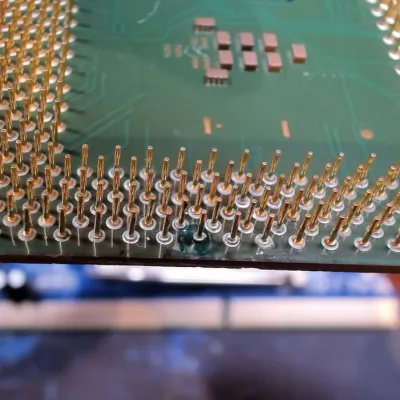
 Before moving to land grid array (LGA) packaging whereby each pin on the substrate is just a copper pad, processors commonly used pin grid array (PGA) packaging, including the still highly relevant AMD AM4 socket. With PGA you get a pin soldered onto the copper pad which inserts into the ZIF socket, rather than a fragile pin on the mainboard side. Repairing a damaged PGA pin can be easy if just the pin broke off at the solder joint, or rough if the pad was destroyed, as in the case of this Pentium III CPU that [Bits und Bolts] recently tried to fix.
In the case of something like a ground pin or similarly unimportant pin you can ignore the damage, but in this case it concerned an important pin for this 1.2 GHz Tualatin PIII core, with the damage consisting of a well and truly destroyed pad. The first step to repair the damage is thus to try and rebuild the pad, which was done using solder mask and solder.
Although a PIII-era Celeron CPU is definitely not a high-value CPU, since they have so few and such large pins they do make for useful test subjects when it comes to PGA repair practicing. In this case the affected data pad and pin appears to have been repaired successfully, with it running overclocked to 1.6 GHz and crushing similarly or higher clocked Pentium 4 and AMD Athlon CPUs of the era.
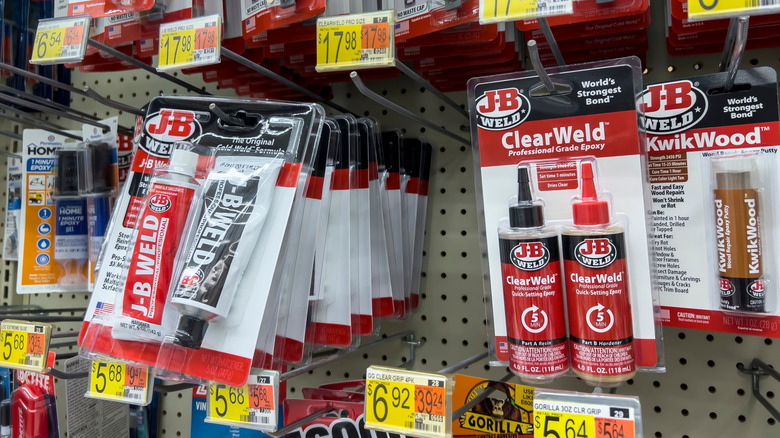
We’ve all been there. The hammer slips when you’re working on your boat and you crack the hull, or find a break in the handle of your favorite tool. Fortunately, you have some J-B Epoxy in your tool kit. But once you’ve slathered it on, how long until it’s really dry enough to get back to work?
For the flagship original J‑B Weld Epoxy Twin Tube (steel‑reinforced epoxy, which J-B Weld proudly makes in America), the manufacturer says it sets within four to six hours and fully cures within 15 to 24. That means the bond becomes solid enough to handle after about half a day, but it won’t reach its rated strength until about a full day has passed (assuming a room-temp environment). It’s great for automotive cracks, hole patching, and even some light carpentry, but there are definitely things J-B Weld should and shouldn’t be used for, which is why they make other products.
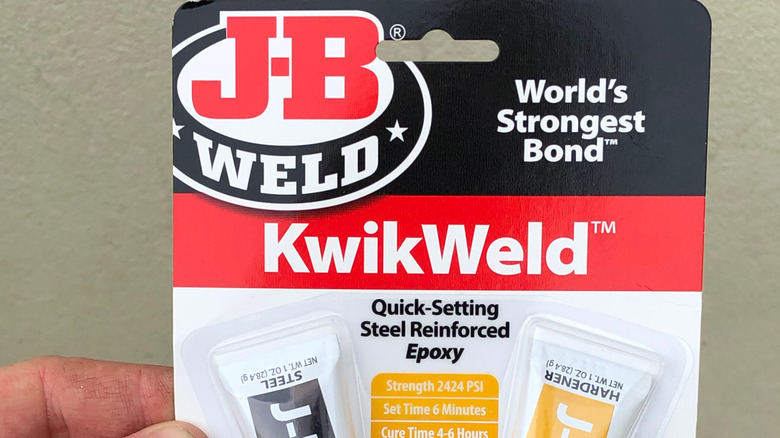
But times vary across the product line. J‑B Weld KwikWeld, for instance, is marketed as a fast‑setting steel‑reinforced epoxy that sets in just a few minutes and only takes four to six hours to fully cure. But it’s designed for quick fixes, not high-stress applications. PlasticWeld and some of the other plastic‑focused epoxies claim set times around 20 to 30 minutes, with full cure in about an hour. Then there are high‑temperature products like J‑B Weld ExtremeHeat which require longer cure cycles (many up to 24 hours) to develop extremely strong bonds with heat‑resistant properties.
Why is my J-B Weld still tacky?
The main advantage of J-B Weld and other epoxies is the incredible bond strength, so tackiness after a full cure cycle is annoying. If your J‑B Weld is still tacky after a day, there are three likely culprits: mix ratio, mixing quality, or ambient temperature. The setting and curing timelines the company lays out assume an equal blend of resin and hardener, thorough mixing, and clean surfaces. They also assume a dry, room-temperature environment, around 70 degrees Fahrenheit.
If you’ve passed the 24-hour mark and the epoxy is still tacky, you may have undermixed or used an incorrect ratio of resin to hardener. Too much of either will disrupt the chemical reaction that creates the bond, and the epoxy won’t fully cure; the same result occurs if you don’t fully mix. Also, if you don’t mix long enough, you may get pockets of uncured resin.
To troubleshoot, remove all uncured epoxy. Then remix really thoroughly, try your best to get as close to a perfect one-to-one ratio as possible, and thoroughly clean or roughen the surfaces before reapplication so it has something to stick to. Make sure you recap any unused epoxy, as well, to stretch out how long opened J-B Weld will last.
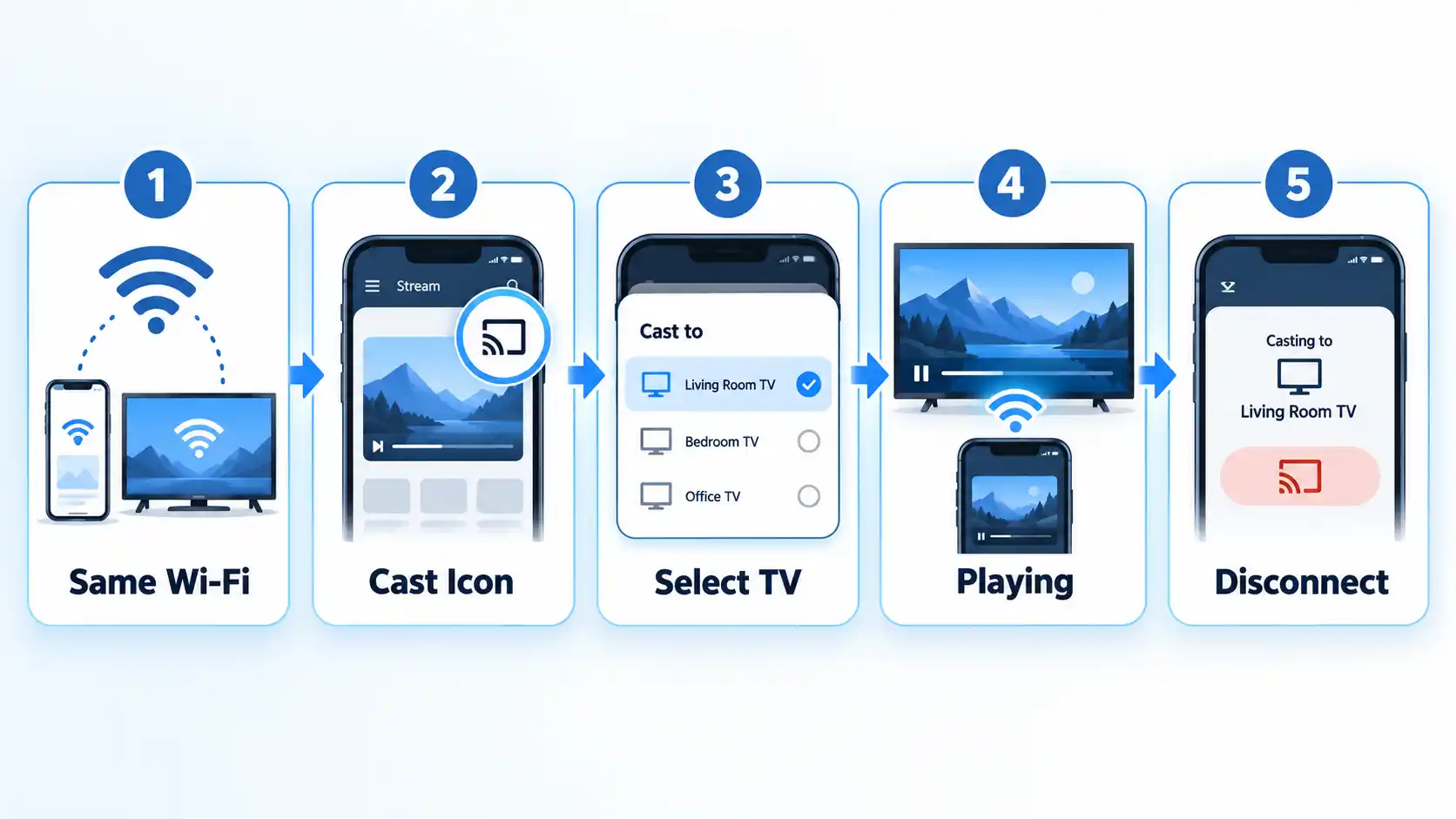
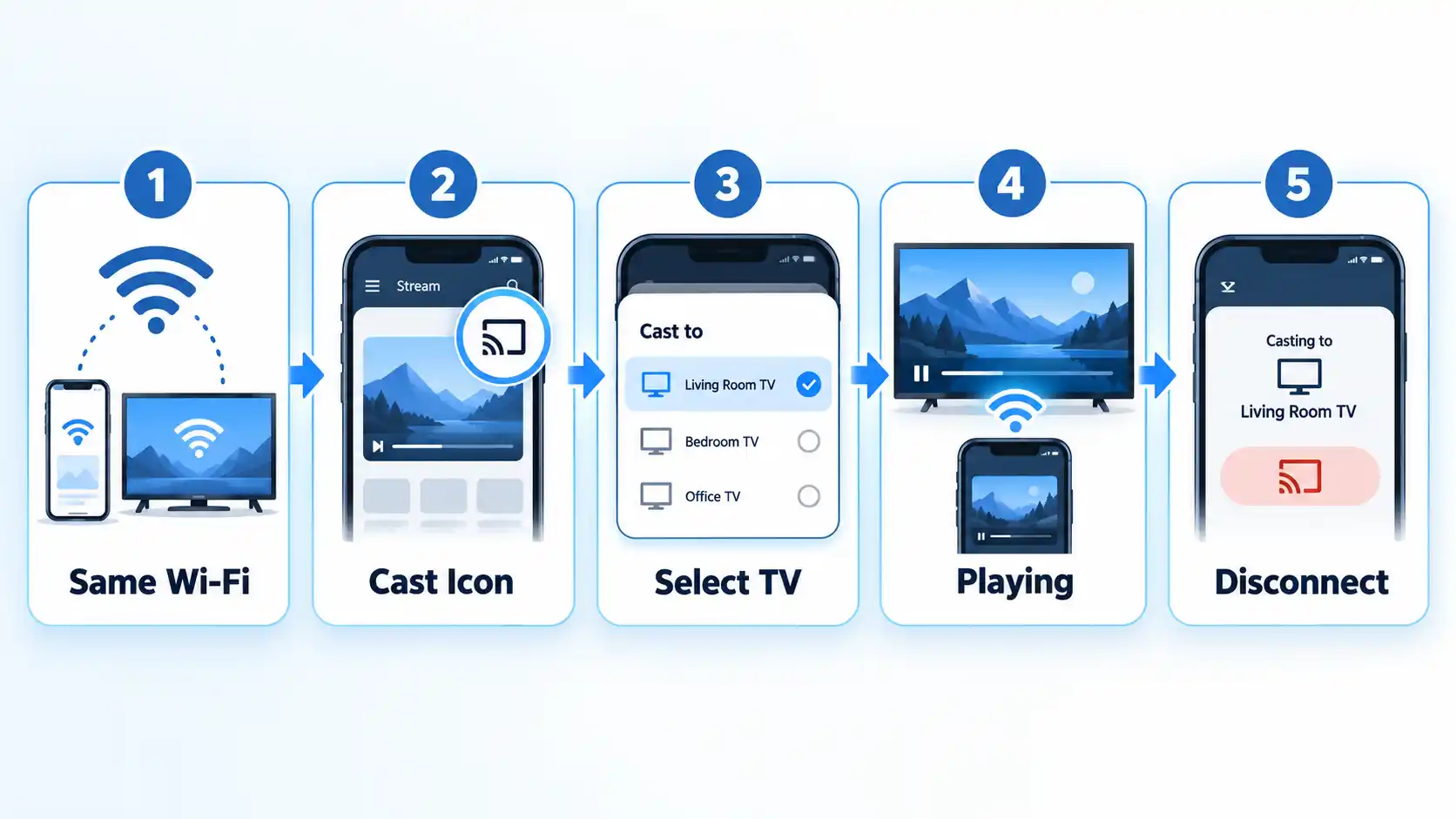
To cast a streaming app to a Smart TV, make sure the phone and TV or receiver support the same casting technology, connect them to the same Wi-Fi network, open the streaming app, tap its Cast or AirPlay control, and select the TV. If the TV does not appear, check receiver support, app compatibility, local-network permissions, and network isolation before assuming the television is faulty.
First, Check Which Casting Method Your TV Supports
“Casting” is often used as a catch-all term, but Smart TVs can support several different wireless display methods. The correct procedure depends on which technology your source device, streaming app, and television share.
Google Cast is the app-based casting system used by supported Chromecast devices, Google TV Streamer, and TVs with Google Cast. Google’s current Google Cast instructions say a supported mobile device can cast from a Cast-enabled app to a compatible receiver when both devices are on the same Wi-Fi network.
AirPlay is Apple’s wireless streaming system. Apple says an iPhone can stream supported video or audio to Apple TV 4K or an AirPlay 2-compatible Smart TV, and the normal setup requires both devices to be on the same Wi-Fi network. Apple’s current AirPlay guidance also separates direct media streaming from full-screen mirroring.
Screen mirroring copies the source device’s screen to the television. Samsung distinguishes Smart View mirroring from app-native casting, while Amazon uses Miracast for screen mirroring on compatible Fire TV devices. These methods are useful in some cases, but they should not be treated as identical to Google Cast or direct AirPlay media streaming.
A television can support more than one of these methods. An iPhone, for example, may cast from a Google Cast-enabled iOS app to a Cast receiver while using AirPlay with a different compatible television.
What You Need Before Casting
Prerequisites
- A phone, tablet, or computer supported by the casting method you plan to use.
- A streaming app or website that supports Google Cast, AirPlay, or the relevant receiver method.
- A compatible Smart TV or external receiver such as a supported Chromecast, Google TV Streamer, Apple TV, or television with the required built-in receiver.
- The sender and receiver connected to the same Wi-Fi network for the normal Google Cast or AirPlay workflow.
- The latest available version of the streaming app and, where practical, current TV or receiver software.
- Local Network permission enabled when required. Google says iOS 14 or later and macOS 15 or later need this permission to discover Cast receivers.
Two devices can both have internet access and still be unable to discover one another. Some guest, hotel, or segmented Wi-Fi networks isolate devices from each other, which can prevent local casting even though websites and streaming services still load normally.
Use this procedure when your streaming app supports Google Cast and your television or receiver supports a compatible Chromecast, Google TV Streamer, or TV with Google Cast.
Info Google ended production of Chromecast hardware in 2024 and introduced Google TV Streamer as its current streaming device. Supported existing Chromecast devices still work as Cast receivers, but Chromecast is no longer Google’s current new-hardware product line.
How to Cast a Streaming App With Google Cast
How to AirPlay a Streaming App From iPhone or iPad
Use AirPlay when your source device is an iPhone or iPad and the receiver is Apple TV 4K or an AirPlay 2-compatible Smart TV. AirPlay can stream supported media directly or mirror the entire Apple-device screen, but those are separate functions.
- Connect the iPhone or iPad and the AirPlay-compatible receiver to the same Wi-Fi network.
- Open the supported streaming app or media you want to play.
- Tap the AirPlay control. Apple notes that some apps place AirPlay behind another control such as Share.
- Select the Apple TV 4K or AirPlay 2-compatible Smart TV.
- Enter the AirPlay code shown on the television if prompted.
- Use the controls on the iPhone or iPad to manage playback.
- To stop streaming, open the AirPlay control again and return playback to the source device.
If you instead open Control Center and choose Screen Mirroring, the TV duplicates the device screen rather than using the same direct-media streaming workflow. Apple documents streaming and mirroring as separate operations.
LG’s current guidance also confirms that supported webOS televisions can receive AirPlay and that the iPhone and TV should be on the same Wi-Fi network. LG’s AirPlay instructions also show that AirPlay may need to be enabled in the television settings.
How to Cast From Chrome on a Computer
Chrome can send a browser tab or the computer screen to a compatible Google Cast receiver. This can help when a streaming service is available through a website rather than a mobile app.
- Connect the computer and Cast receiver to the same Wi-Fi network.
- Open an updated version of Google Chrome.
- Open the website or tab you want to display.
- Open Chrome’s menu and choose Cast, save, and share, then Cast.
- Select the receiver.
- If necessary, open Sources and choose whether to cast the current tab or the entire screen.
- Use Chrome’s Cast control to stop the session when finished.
Google notes that a website with native Google Cast support can behave differently from generic browser-tab casting. Some web content and plug-ins also do not work through Chrome’s generic casting path. Google’s current Chrome casting instructions document both tab and full-screen casting.
Casting vs Screen Mirroring: Which One Should You Use?
Use app-native casting when the streaming service supports it. In a normal Google Cast session, the phone or computer acts mainly as the controller while the Cast receiver handles playback.
Screen mirroring works differently. The television displays what is happening on the source device itself, so navigation and other on-screen activity can also appear on the TV.
Samsung’s current guidance distinguishes the two approaches: casting sends supported media while the phone acts as a controller, whereas Smart View mirrors the Galaxy-device screen. Samsung’s screen-sharing guidance also notes that Smart View availability and settings vary by device.
AirPlay can perform both roles. Apple provides a direct media-streaming route to supported receivers and a separate Screen Mirroring option for duplicating the device display.
Amazon’s Fire TV mirroring is model-dependent. Amazon says Miracast screen mirroring works only on compatible Fire TV devices, and if Enable Display Mirroring does not appear under Display & Sounds, the Fire TV does not support that method. Amazon’s Fire TV mirroring instructions document that limitation.
Do not assume screen mirroring is a universal fallback for every streaming app. Services can behave differently with mirroring, so the app’s own Cast or AirPlay control is usually the better-supported route when available.
How to Know the Cast Worked
Verify the result
- The correct television or receiver appears as the active destination.
- The Cast or AirPlay control shows an active connection where the app exposes a connection indicator.
- The selected content plays on the television rather than only on the phone, tablet, or computer.
- Playback controls on the source device affect the media playing on the television.
- Audio comes from the intended television or receiver output.
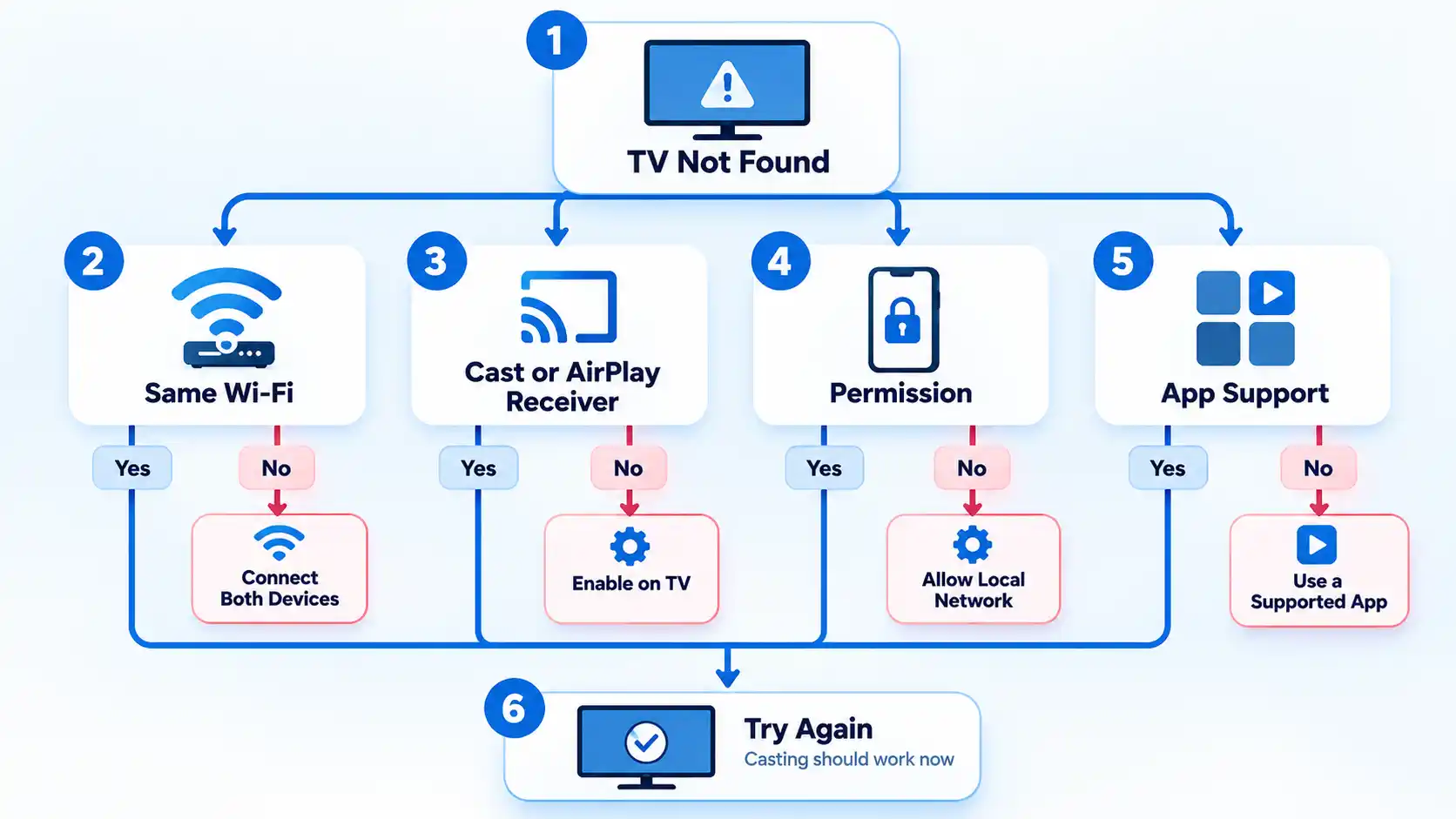
Why Your TV Does Not Appear When You Try to Cast
Discovery problems usually come from network, receiver, app, or permission issues rather than from the video itself.
The TV does not appear at all
Confirm that the sender and receiver are on the same Wi-Fi network and that the television or external device actually supports the casting method you are trying to use. A Smart TV label alone does not guarantee Google Cast or AirPlay support.
The Cast button is missing from one app
Update the app and check whether that service supports Google Cast. Google notes that the Cast control is not located in the same place in every supported app, and an app that lacks Cast support will not gain it merely because the television supports Google Cast.
An iPhone or iPad cannot find the Cast receiver
Check the app’s Local Network permission. Google says iOS 14 or later requires Local Network access for Cast-enabled apps to discover compatible devices on the local network.
AirPlay does not show the television
Confirm that the television supports AirPlay, that AirPlay is enabled on the TV where required, and that both devices are on the same Wi-Fi network. Apple and LG document these requirements for normal AirPlay use.
The TV appears but the connection keeps dropping
Check Wi-Fi stability, update the app and receiver software where updates are available, and restart the sender and receiver if necessary. Casting depends on the devices maintaining reliable local-network communication.
Both devices have internet, but they still cannot see each other
The network may be isolating devices from one another. This can happen on some guest, hotel, or segmented networks. Use a network that permits local-device discovery or follow the venue’s supported casting process where one is provided.
Fire TV does not show a screen-mirroring option
That Fire TV may not support Miracast screen mirroring. Amazon says that if Enable Display Mirroring is absent under Display & Sounds, the device is not compatible with that mirroring method.
What If Your TV Does Not Support Google Cast or AirPlay?
If the TV lacks the receiver technology your app needs, you can use the television’s native streaming app, add a compatible external streaming device, connect a computer through HDMI, or use another wireless method that both the service and hardware officially support.
For Google Cast, Google TV Streamer is Google’s current dedicated streaming hardware. Google ended Chromecast production in 2024, although supported existing Chromecast devices remain usable. Google’s Chromecast history announcement documents that transition.
If your television lacks the receiver you need, compare a Smart TV app, Chromecast or Google Cast, and a streaming stick by compatibility, control method, and upgrade path before adding hardware.
A separate streaming device can be more practical than trying to force an unsupported wireless protocol onto the television. It also avoids treating screen mirroring as the only fallback when the streaming service provides a better-supported native app or external-device route.
Bottom Line
Start by identifying which receiver technology your television supports. Use the streaming app’s native Google Cast or AirPlay control where available, keep the sender and receiver on the same local network, and verify that playback moves to the TV.
If the television never appears, check receiver compatibility, app support, Local Network permissions, AirPlay settings, and network isolation before adding new hardware. Screen mirroring can be useful, but it is a different method and should not be treated as a universal substitute for app-native casting.

As baking and pastry instructors at Musselman High School in West Virginia, Rachel Nauman and Allison McClintock understand how nutrition affects learning.
“I remember being young and hungry, and I couldn’t imagine going out the whole day without eating,” Nauman says. At her school, that’s not an issue. Thanks to the Community Eligibility Provision (CEP) program, schools and districts in low-income areas can serve students breakfast and lunch at no cost without requiring household applications. But things are changing nationwide.
Federal cuts to the Supplemental Nutrition Assistance Program (SNAP) under the 2025 congressional budget resolution (H.R. 1) have been shrinking the pool of families automatically certified for free school meals over the past year. Starting Oct. 1, states will be responsible for 75% of SNAP administrative cost, up from the current 50%.
These changes to families’ SNAP status’ and state budgets can threaten districts’ CEP eligibility. In non-CEP schools, families that previously qualified for free lunch will have to reapply. That worries Nauman.
“Sometimes parents aren’t there, or are too proud to fill out the paperwork,” she says. The shift in free lunch policies has forced schools to navigate the administrative logistics.
The Impact of Program Changes
The cuts in H.R. 1 mean fewer families are “directly certified” for free meals — the automatic process where schools don’t need paperwork since the state knows the family receives SNAP. This is already having an impact.
“We are just beginning to hear concerns from members about drops in direct certification,” says Diane Pratt-Heavner, a spokesperson for the School Nutrition Association.
In place of direct certification, families are filling out applications, and that is going to complicate things. At Leonardtown Middle School in St. Mary’s County, Maryland, Principal Deborah Dennie says the paperwork is onerous.
“There’s a parent letter, that’s the front, and the back gives the federal income eligibility guidelines,” she says. Then there are four pages of instructions, and only then do parents get to the application, with its multiple sections and numbered subsections.
“The families who qualify for these things, they don’t want to spend the time to go through all of this paperwork,” Dennie says. That could mean kids who need a free lunch aren’t going to get one.
CEP eligibility is based on Identified Student Percentage (ISP) — the share of kids directly certified through SNAP and other programs. Cuts to SNAP risk shrinking ISP, which could mean schools’ reimbursement rate drops so low that CEP becomes financially unfeasible.
That concerns Sommer Purvis, the child nutrition director at Livingston Parish Public Schools in Louisiana, where kids get free lunch through CEP. From 2021-2024, direct certification percentages in the district increased. For the past two years, the percentage has dropped, putting CEP at risk.
“We have started to be very proactive with monitoring those numbers to see where we are, how they’re changing,” Purvis says. “We want to make sure that we’re prepared.”
How Schools Are Responding
With all these changes to free lunch, school leaders are getting proactive, and teachers are getting prepared. In West Virginia, nearly 183,000 students may be at risk of losing CEP. If it looks like that might really happen, McClintock thinks teachers will step up.
“Teachers are always going to support a free and reduced lunch,” she says. “They’re going to talk to their legislators. They’re going to talk to board members to make sure that is heard loud and clear. There’s going to be a lot of grassroots movement.”
Purvis is already preparing for the worst. If CEP collapses, she wants to be ready to help parents through the paperwork of individual applications.
“We are monitoring our lists and trying to make sure that we are capturing as many of those students as we can,” she says. Loss of CEP would be “a fundamental change for families.”
Purvis has already laid the groundwork, knowing the current situation might arise. “We’re very transparent each year,” she says. That means telling parents: “The paperwork is not required, but that is a year-to-year decision and things can change.”
Meanwhile, after 10 years with CEP, the district needs to start asking questions internally, says Purvis.
“How would schools handle those applications? Because after 10 years, a majority of our cafeteria managers have never processed applications,” she notes. “A majority of our principals have not had to deal with meal collection and meal debt.”
With that in mind, Purvis is already being “very honest and transparent with those individuals about what might be coming,” she says. She’s also looking at what training would be needed. She’s making lists of which principals and cafeteria managers may need a refresher or an introduction to the free lunch process, and hoping the state’s department of education will help foot the bill if training is needed.
At Leonardtown Middle, meanwhile, Dennie is thinking about the role that teachers will play. If paperwork becomes a hurdle for families, classroom educators will likely be the canary in the coal mine. “My teachers tend to have their ears to the ground and if they hear something, then they bring it to our attention,” she says.
A student’s father came in to see a teacher recently, and Dennie suspected he was dealing with financial distress. Dennie gave the teacher a heads-up, “and lo and behold, when she spoke to him, that was indeed the problem,” she says. “We ended up doing something as a school for the family.”
Teachers will need to be even more attuned to such situations going forward. Families may not apply for free lunch “either because of pride, or because of the packet itself and how cumbersome it can be,” Dennie says.
A Proactive Approach
At Bartlett Academy, an alternative high school in Oklahoma that serves many students experiencing poverty and homelessness, Principal Amy Sanders is betting that a proactive approach will help her team weather the coming storm.
The district never went to automatic certification, and instead has always had families fill out applications for free lunch, whether or not the family thought it was needed. “That way we have an accurate count every year,” she says.
The application is part of the school’s orientation packet, along with standards for discipline, behavior, dress code and so on. This way, applying for free lunch becomes … ordinary.
“We have a lot of Native Americans [families], and there’s a pride about not letting everybody know your business,” Sanders observes. “We’ve tried to make it where this isn’t ‘everybody knows your business.’ This is just routine.”
Dennie is also trying to be proactive. She has lists of students who got free lunch or incurred food debt last year, and makes sure they all get applications to take home. When parents come for an open house, the application is right there on the table for them to pick up and fill out later. And she includes information about free lunch in her weekly newsletter, all year long.
“We let them know that it’s there,” she says. “We want to make sure that everybody gets what they need.”
Dennie notes that teachers and administrators alike have to tread a fine line here. In the past she’s encouraged kids to apply for free lunch, but as a result, one parent reported her to the board. “He said I have no right to talk to his kid,” she recalls. “So I make them aware, but at some point, I have to back off.”
Factorial Energy has signed a joint development agreement with Japan’s Mitsui Kinzoku for solid electrolytes, the latest in a run of partnerships its chief executive says are necessary because no single company can bring all-solid-state batteries to market. ProLogium, which is building Europe’s solid-state gigafactory at Dunkirk, is already mass-producing all-solid-state cells in Taiwan.
Factorial Energy has signed a joint development agreement with Japan’s Mitsui Kinzoku to industrialise its all-solid-state platform, the latest in a run of partnerships, InsideEVs reported. “Battery innovation can’t be done by one single company,” chief executive Siyu Huang said. The company listed on Nasdaq in June.
That is an unusual thing for a battery startup to say out loud.
The coalition splits the problem up. Posco Future M handles anodes and cathodes, Korea’s Phil Energy covers manufacturing tools, and Factorial is exploring how to scale with SK On. Factorial says it holds foundational intellectual property for all-solid electrolytes.
Two of its partners are European.
It has joint development agreements with Volkswagen’s PowerCo battery division and with Hyundai, and Mercedes ran a modified EQS 1,200km on its cells in September 2025. Huang said the company is “very well settled for both North American and European volumes“. Mercedes is a backer as well as a test partner, and Stellantis supplied the Dodge demonstrator.
None of it is in a production car yet.
The semi-solid FEST cell is rated up to 375 watt-hours per kilogram and sits in prototype Mercedes and Dodge vehicles. The all-solid Solstice targets 450 Wh/kg, roughly double a current lithium-ion cell, and uses a sulfide electrolyte Mitsui makes at a dedicated plant in Saitama. Karma Automotive is due to be the first to ship, in 2028.
The all-solid half is further off than the announcements suggest.
It is also not unclaimed territory. ProLogium is already mass-producing all-solid-state cells at 381 Wh/kg in Taiwan, about 6,000 packs a year, and broke ground on its French gigafactory in February.
Dunkirk is still a building site.
It is due to start at 0.8 GWh in 2028 and reach 12 GWh by 2032, subsidised by France and sited beside the Gravelines nuclear plant. It is also Taiwanese-owned, which is what a European solid-state champion looks like after Northvolt. The continent’s own champion did not get there.
The other view is that none of this reaches cars soon.
LG Energy Solution’s North America president said last month that the technology will arrive in phones “probably a decade“ before it reaches electric cars, because large formats are where companies struggle. Factorial’s answer is to stop trying to do it alone.
In the cross-over between the era of tapes into that of MP3s, you’d see quite a few of those special cassette tapes that were actually digital music players inside. Some simply provided a 3.5 mm input, while others were complete MP3 players or Bluetooth receivers that just happened to also output to the magnetic read head of a cassette player. Recently [Jonathan Rowny] decided to make his own version of the latter.
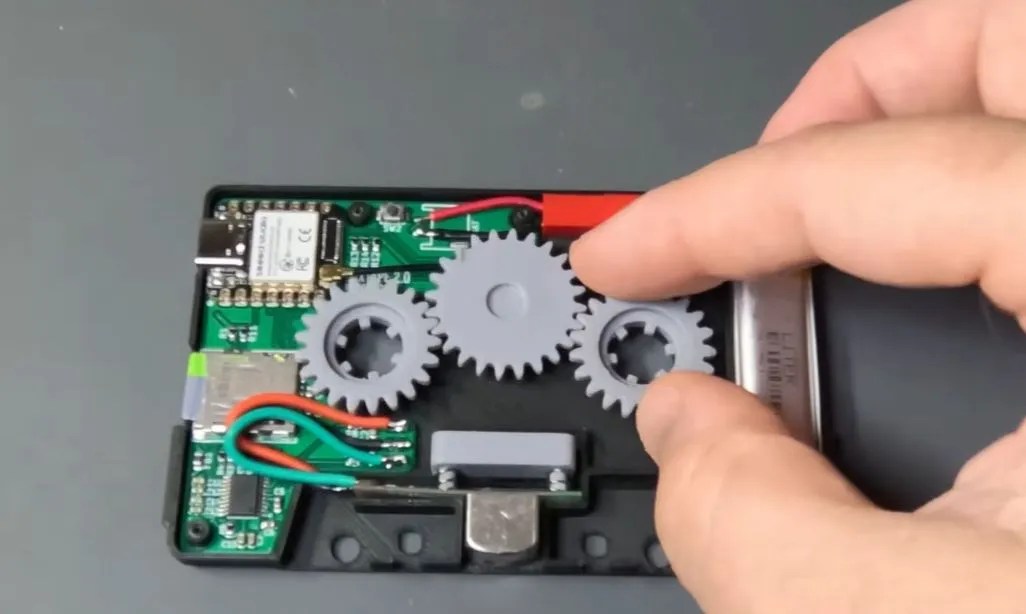
Although getting the actual audio signal into the read head is easy enough – requiring little more than its equivalent being used as a write head on the cassette side – actually interfacing with the player’s mechanisms like auto-stop, reverse and so on requires the use of some gearing that detect motion on what would be the tape spools, as well as transfer the motion from the take-up spool to the other spool so that features like the auto-stop mechanism don’t get triggered.
A lot of inspiration here can be found in e.g. the videos made by [Clint] of [Lazy Game Reviews] who looked at a number of examples – including their internals – over the years, with various levels of functionality. For this particular implementation an ESP32-S3 module is used for the brains, along with a microSD card reader for music and a PCM5102 I2S audio codec to create the analog audio signal.
The gears were printed using an SLA printer and seem to work all right. Unfortunately he didn’t realize the importance of the capstan as the mechanism that actually transports the tape, so its motion was not measured as is done in the better cassette adapters. This will likely be corrected in a future iteration, however.

News Videos2 minutes ago
Trump Just Replaced The Dollar With Cryptocurrency…

NewsBeat3 minutes ago
Trump says US has reached an agreement to take permanent control of Greenland’s security
Business4 minutes ago
Synaptics VP & corporate controller Esther Song sells $5,835 in stock




-

 Tech5 days ago
The Latest Weird Thing to Play Doom Is the Mapped-Out Brain of a Fruit Fly
-

 Crypto World4 days ago
Kraken Lets xStocks Holders Earn Yield Through DeFi
-

 Entertainment7 days ago
News Specials, Movies, Shows, More
-

 Crypto World2 days ago
US Charges Robinhood Engineers Over Crypto Listing Trades
-

 Crypto World6 days ago
Can AI Build a Startup in 72 Hours? Elon Musk's Team Will Livestream the Test
-

 Crypto World4 days ago
Elon Musk Drops a Bombshell: Grok 5 Could Be the AGI Breakthrough
-

 Crypto World3 days ago
What Is the Status of the U.S.-Iran Peace Talks? Here's What Both Sides Are Saying
-

 Business6 days ago
Rivals Sam Altman and Elon Musk Rally Behind Dario Amodei’s Call for a Slowdown in AI Development
-

 Crypto World7 days ago
Robinhood Chain Never Stopped But its Blobs Did Stop Reaching Ethereum For 14 Minutes
-
 Crypto World5 days ago
New Tesla Roadster Uses SpaceX Tech. Will It Impact the Stock Price?
-
 NewsBeat4 days ago
‘Sick conspiracy’: Trump says only guardrails AI needs is ‘a strong and smart (High IQ!) president’ in all-caps rant
-
 Crypto World4 days ago
NVIDIA Analysis: Attempted Rising Wedge Breakout Amid Pressure on the AI Sector
-
 Entertainment7 days ago
New Horror Movie Officially Earns a Rare Stephen King Recommendation
-

 Business7 days ago
Marvell: Most Potent Setup Of The AI Factory Decade
-

 Crypto World4 days ago
Revolut Attackers Warn of Ongoing Daily Customer Data Leaks
-

 Crypto World4 days ago
DOJ Seeks to Seize $61M in Iran Oil Funds From Binance Accounts It Vouched For
-

 Crypto World7 days ago
Bitcoin ETFs lose $462.7M as Ethereum funds gain $196.9M
-

 Crypto World5 days ago
3 Token Unlocks to Watch in the Third Week of September 2026
-
Crypto World4 days ago
Can Circle’s Arc Repeat Robinhood Chain’s Meme Coin Boom?
-
Business4 days ago
SK Hynix ADRs Fall More Than 6% as Memory Rally Breaks on Fears of Slower AI Spending
You must be logged in to post a comment Login