

Crypto World
BTC, ETH, BNB, XRP, SOL, ADA in Mixed View

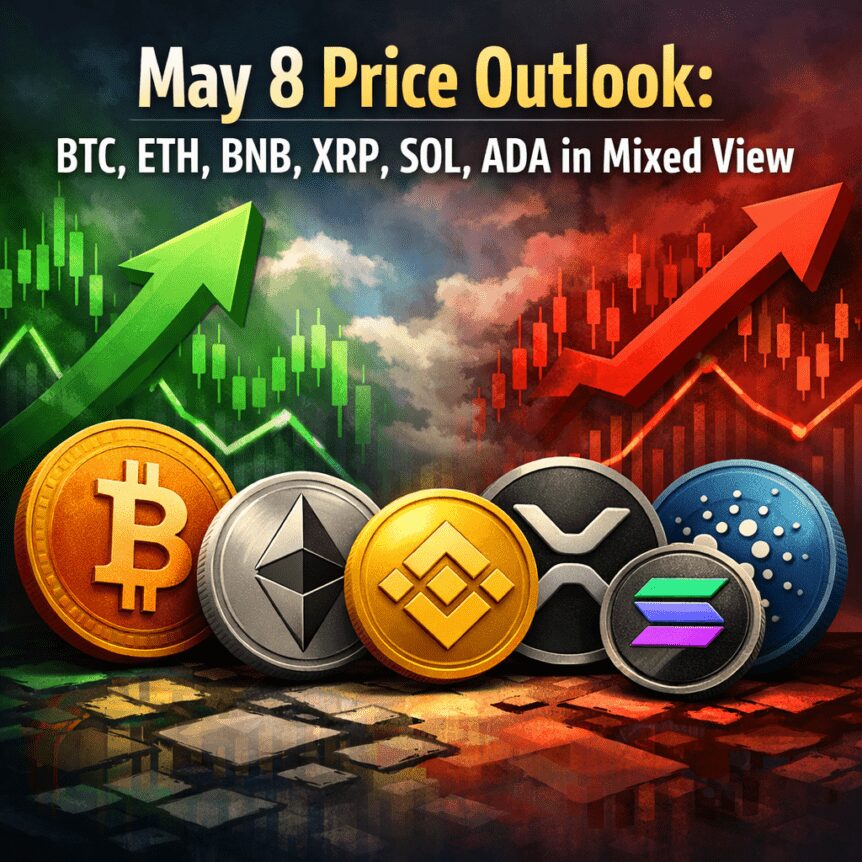
Bitcoin traded near $79,000 on Friday, as buyers stepped in on pullbacks toward the round figure and nudged prices back toward the $80,000 zone. The immediate question for traders is whether BTC can clear the overhead at around $84,000 and extend the current upmove, or if renewed selling pressure will cap the rally once more. The day’s readings come as a mosaic of signals from price momentum, on-chain flows, and notable market commentators, leaving traders weighing multiple interpretations of the short-term trajectory.
CryptoQuant analyst IT Tech weighed in on the chart dynamics, arguing that a bottom would only be confirmed if BTC rallies and sustains above $88,880. Until that level proves itself, the $85,000 to $88,000 area could remain a zone where buyers take profits and sellers step back in. Meanwhile, John Bollinger, creator of the Bollinger Bands, signaled a bullish turn in BTC’s trend in a recent post on X, suggesting the model’s readings point toward upside momentum and that positions have shifted in favor of the bulls.
Adding a different lens, Bitcoin exchange-traded funds (ETFs) registered $277.5 million in net outflows on Thursday, the first such move in May according to SoSoValue data. The retreat of funds from BTC-linked products hints that, even as fundamentals and some charts look constructive, a portion of investors are choosing to lock in profits near resistance rather than chase higher prices into the next leg.
Key takeaways
- Bitcoin remains near $79k with a critical test above $84k needed to sustain a broader uptrend toward $92k and beyond.
- A hold above $88,880 is seen by some analysts as a prerequisite to confirming a market bottom for BTC.
- On-chain ETF outflows in May suggest selective profit-taking even as the price action hints at potential upside in the near term.
- Ether and several major altcoins show mixed momentum, with several key levels flashing as potential breakout or breakdown points.
Bitcoin price outlook
From a technical vantage, BTC’s near-term direction hinges on the defense of the 20-day exponential moving average (EMA) around $77,929. A sturdy rebound from this level would imply renewed buying interest on every dip and could set the stage for a breakout above the $84,000 ceiling. If that breakout occurs and holds, the chart suggests the potential for a move toward $92,000, followed by a possible rise to around $97,924 as the next milestone on the upside.
Conversely, bears are likely to defend the $84,000 area. A break below $74,937 could open the door to the 50-day simple moving average near $73,448 and then the broader support line, potentially inviting a deeper pullback. In that scenario, traders would expect a period of consolidation before the market decides its next major directional move.
Ether price outlook
Ether (ETH) crossed into a softer phase after closing below the 20-day EMA near $2,304, a sign that profit-taking among traders may have cooled the immediate upside. The next meaningful support sits near the 50-day SMA around $2,225, with a bullish signal emerging if ETH can rebound off that level and maintain momentum.
The first hurdle for bulls is a break above $2,465, which would mark the initial step toward a resistance zone that could limit gains in the near term. Clearing that barrier could open the path to higher targets, potentially toward $3,050 if demand strengthens and price action stays constructive. Until such a breakout materializes, ETH could remain confined within its current range as bulls and bears duel near the midline.
Other marquee movers and their levels
BNB, XRP, SOL, DOGE, HYPE, ADA, ZEC, and BCH all present a mosaic of setups as traders assess whether they can sustain a trend shift or remain oscillating within established ranges.
BNB: The Binance Coin chart shows a retreat toward moving averages, suggesting that buyers are waiting for a clearer setup. A rebound off these averages could push BNB toward the $687 target, with overhead resistance expected between $570 and $687. A decisive close above $687 would inject bullish momentum toward $730 and potentially $790, though sellers are likely to challenge the higher hurdle around $790.
XRP: XRP continues to hover near its moving averages, indicating an equilibrium between buyers and sellers. A break below $1.27 could push the pair back into a descending channel, while a sustained push above the downtrend line and roughly $1.61 could clear the way to $2.
Solana: SOL is facing selling pressure near $90.73, though bulls have not conceded much ground. A push above $90.73 could drive SOL toward $98, with a potential extension to $117 if momentum accumulates. If prices fail to sustain above the moving averages, the pair could stay in a tighter range; a break below $82.65 could open a path toward $76.
Dogecoin: DOGE pulled back from the $0.12 resistance as traders took profits. The immediate line in the sand is the 20-day EMA near $0.10. A bounce from this level could see DOGE test $0.12 again and then target $0.14–$0.16. A break below the EMA could keep the currency in the lower $0.09–$0.12 range for a spell.
Hyperliquid (HYPE): The HYPE chart shaved off gains after failing to sustain a rally in the $43.76–$45.77 zone, with the price retreating to the 20-day EMA around $41.69. A rebound could re-energize bulls toward $50, while a drop below the 50-day SMA at about $40.29 could pull the price toward $34.45.
Cardano (ADA): ADA remains range-bound in a broad $0.22–$0.31 corridor. The 20-day EMA around $0.25 has started to tilt higher, and the RSI sits modestly in positive territory, suggesting a slight edge for bulls. A move above the moving averages could push ADA toward $0.30 and, eventually, to the $0.31 resistance. A break below the averages would tilt the balance toward the $0.22 support.
Zcash (ZEC): ZEC breached above $560 but stalled at $607. A shallow pullback is a constructive sign, indicating bulls aren’t in a rush to exit. A move above $607 could target $750, while supports sit at $496 (38.2% retracement) and $462 (50%), with a close below $428 (61.8% retracement) risking a deeper pullback.
Bitcoin Cash (BCH): BCH reversed from $486, keeping the pair largely within a range. With the 20-day EMA near $450 and the immediate band roughly $419–$486, a close above $486 could spark a move to $520, whereas a close below $419 might open the door to a slide toward $375.
What could shift the next leg?
Market participants are watching how BTC behaves around the $84,000 threshold and whether altcoins can sustain breakouts beyond their critical levels. The balance of on-chain flows, ETF behavior, and macro risk appetite will likely shape the near-term trajectory. If BTC can convincingly clear $84,000 and hold above key moving averages, the broader market could see a renewed cycle of risk-on positioning. If not, the current range-bound conditions may persist into the next phase of the market cycle.
Readers should stay attentive to potential catalysts beyond chart patterns—the evolving regulatory landscape, institutional interest, and flows into or out of crypto-linked funds—each of which can tilt sentiment and liquidity in the days ahead. In the near term, the market’s next move may hinge on whether BTC sustains momentum above key resistance and whether altcoins can muster the breadth to follow suit beyond their own technical thresholds.
As the week unfolds, the question remains: will the market manage to extend the nascent upside, or will profit-taking reassert itself, keeping prices tethered as traders await clearer signals?


Coinbase CEO Brian Armstrong is publicly backing the latest iteration of the Digital Asset Market Clarity Act (CLARITY) as the U.S. Senate prepares to markup the crypto market structure package. The development arrives amid renewed signals of cross‑party alignment on a set of framework conditions for digital assets, including clarified rules for stablecoins, DeFi, and tokenized securities.
According to Cointelegraph, Armstrong described the newest CLARITY version as “stronger” and in a more bipartisan position than prior drafts. He noted that the banking andcrypto industries have reached a “healthy compromise” on stablecoin yield, one of the principal sticking points that had stalled movement on the broader market structure bill in January.
“I think there was a healthy compromise there, brokered by Senators Tillis and Alsobrooks. And you know, it was a good compromise because both sides left a little bit unhappy, but at least we got to a place that we can all live with.”
The updated CLARITY bill reportedly strengthens provisions related to decentralized finance (DeFi), tokenized stocks, and clarifies the Commodity Futures Trading Commission’s (CFTC) authority to regulate crypto markets. Armstrong indicated that these refinements address several core regulatory concerns while seeking to balance innovation with consumer protections.
These remarks and the bill’s pending markup follow months of negotiations between the banking sector and the crypto industry. The discussions culminated in January 2025 when industry participants, led by Coinbase, rejected the draft version before renewed talks produced this latest iteration. A Cointelegraph article tracking the markup cycle highlights the evolving contours of the bill ahead of committee consideration.
Related: Latest version of crypto market structure bill raises eyebrows ahead of Senate markup
Key takeaways
- The latest CLARITY draft is described as having stronger bipartisan support and a more workable compromise on stablecoins, according to industry participants.
- Improvements address DeFi, tokenized stocks, and enhance the CFTC’s mandate to regulate crypto markets.
- Negotiations reflect ongoing tensions between traditional financial incumbents and crypto industry advocates, with a path forward dependent on legislative accommodations.
- Public opinion data cited in the report show sizable civilian engagement with crypto and varying levels of policy support among voters.
Regulatory trajectory and implications for market structure
The CLARITY framework sits at the intersection of several long‑standing regulatory priorities: defining the roles and responsibilities of U.S. financial regulators over crypto activities, clarifying who guards consumer protection in custody and exchange activities, and determining the permissible boundaries for novel products such as stablecoins and tokenized assets. The current iteration’s emphasis on DeFi and tokenized stocks indicates an attempt to bring widely used, decentralized activity into a more clearly defined regulatory perimeter without stifling innovation.
From a policy perspective, the heightened CFTC authority signals a potentially more centralized approach to overseeing many crypto market activities that fall outside traditional securities and commodities definitions. For market participants, this could translate into clearer registration, reporting, and compliance expectations, as well as a more consistent enforcement posture. For banks and custodians seeking to integrate crypto services, the bill’s provisions—together with ongoing international considerations—could influence licensing pathways, AML/KYC obligations, and cross‑border operating standards as part of a broader convergence with frameworks like MiCA in the European Union.
Analysts will watch how the final markup reconciles stablecoin mechanics with consumer protections, risk disclosures, and settlement timelines. The package’s reception will be weighed against existing regulatory landscapes, including potential implications for licensing requirements and supervisory cooperation between federal regulators and state jurisdictions.
Public sentiment, demographics, and policy receptivity
Industry advocacy groups report that approximately 20% of the U.S. population owns cryptocurrency, based on the National Cryptocurrency Association’s 2025 State of Crypto Holders survey, which surveyed about 54,000 Americans. The demographic breakdown shows a substantial share of holders under 45, underscoring a generation with considerable exposure to digital assets and a likely interest in policy stability that preserves access to financial innovation.
The same survey found that the leading use case cited by holders was investment—roughly 52% indicated they use digital assets to pursue financial growth or diversification. This aligns with broader narratives about crypto as a portfolio allocation rather than a purely transactional medium, highlighting the relevance of robust regulatory frameworks to protect investors while enabling prudent market growth.
A HarrisX poll conducted earlier this month reinforced a favorable view toward legislative action, showing that about 52% of registered U.S. voters surveyed supported passing the CLARITY Act, with roughly 11% opposed. The results suggest that a broad cross‑section of the electorate may favor a clarified regulatory regime for digital assets, provided it maintains market integrity and consumer protections.
For policymakers and compliance teams, these data points underscore the practical importance of a coherent regulatory framework that can accommodate digital asset innovation while delivering predictable rules for market participants and investors alike. The evolving conversation around DeFi, tokenized securities, and the appropriate scope of the CFTC’s remit remains central to the ongoing regulatory debate in the United States.
Related analysis: Will the CLARITY Act be good — or bad — for DeFi? — a publication exploring the policy and market structure implications of the act within the U.S. regulatory landscape.
In the broader policy context, the CLARITY bill’s progression intersects with international expectations for crypto governance, potential licensing regimes, and cross‑border oversight paradigms. As lawmakers weigh the balance between safeguarding consumers and enabling financial innovation, institutions—exchanges, banks, asset managers, and corporate treasuries—will monitor for changes that affect licensing thresholds, capital requirements, and compliance reporting protocols. The outcome could shape how crypto markets are integrated into mainstream financial infrastructure, including the potential for more standardized treatment of stablecoins and related settlement mechanisms.
Looking ahead, observers will be focused on the markup’s final language, the degree of regulatory alignment with other major markets, and the readiness of industry participants to meet any newly codified obligations. While the latest iteration has sharpened certain elements and broadened regulatory clarity, actual legislative adoption will depend on continued negotiation, stakeholder input, and the resolution of outstanding technical and legal questions raised by DeFi, tokenized assets, and evolving market structures.
As this process unfolds, compliance teams and legal counsel should track the bill’s amendments, committee reports, and potential cross‑agency guidance that could accompany enactment. The next phase will determine not only the letter of the law but also how financial institutions position themselves to operate within a newly defined U.S. crypto regime.

The U.S. Senate Banking Committee is wresting with a comprehensive crypto market structure bill, receiving more than 100 amendments ahead of its markup session. The proposed changes—primarily addressing stablecoins, protections for software developers, and ethics rules—signal a tight, policy-driven negotiation on how the United States should regulate digital-asset markets.
According to a list compiled by Politico, Democratic senators have introduced a wide slate of amendments, while Republican members are seeking incremental adjustments. The markup, scheduled for Thursday, follows a delay earlier in the year when crypto lobbying activity influenced committee dynamics and stalled movement on the legislation. The broader objective remains to delineate how U.S. market regulators will oversee the crypto sector, in contrast to the House’s July-passed CLARITY Act and ongoing cross-party debates over stablecoins and governance restrictions.
Key takeaways
- More than 100 amendments have been filed for the Senate Banking Committee’s crypto market structure bill, targeting stablecoins, software developer protections, and ethics provisions.
- Democrats propose a range of enhancements and safeguards, while Republicans pursue more modest, targeted adjustments.
- A Monday-dated version of the bill, as reported by Cointelegraph, would prohibit third-party platforms from offering yield on stablecoins in a manner that is functionally equivalent to interest on deposits.
- Ethics-related amendments seek to restrict ownership or affiliation with crypto by senior officials, while other measures aim to protect software developers from criminal liability related to money-transmitter registration.
- Other amendments touch on sanctions, the treatment of institutions engaging in crypto activity, and a potential revival of the DOJ’s National Cryptocurrency Enforcement Team.
Legislative trajectory and markup dynamics
The bill sits at the center of a long-running regulatory debate about how to harmonize innovation with investor protection and financial stability. The House version, known as the CLARITY Act, advanced earlier, but the Senate process has faced procedural hurdles and shifting coalitions. In January, a previous markup was indefinitely delayed after a major crypto industry lobbyist withdrew support, underscoring how lobbying dynamics can influence committee calendars and the fate of reform efforts.
As the Senate prepares for markup, legislators are weighing how to allocate regulatory authority between federal agencies and how to structure oversight in a way that addresses concerns about stablecoins, market integrity, and consumer protection. The overarching aim is to produce a coherent framework that clarifies regulatory responsibilities while avoiding duplicative or conflicting rules across banking, securities, and commodities regimes.
Amendment themes: stability, safeguards, and governance
Stablecoins and the yield question dominate the debate. Provisions restricting or shaping yields offered on stablecoins have been among the most contentious, reflecting broader concerns about potential yield-driven risk-taking and consumer protection. The amendments under consideration include a shift from a strict equivalence standard to a “substantially similar” approach in evaluating whether a yield is permissible, signaling a potential recalibration of the permissible activities for crypto platforms and issuers.
Ethics and integrity considerations are also prominent. One proposal would bar the president, vice president, senior officials, members of Congress, and their families from owning, promoting, or affiliating with crypto assets. The aim is to address perceived conflicts of interest and ensure public officials’ actions are not unduly influenced by personal crypto holdings or relationships with industry participants.
Software developers and technology providers form another focal point. A proposed amendment would create a safe harbor from criminal liability for developers who do not register as money transmitters, offering a clearer path for innovation while preserving critical regulatory guardrails. This approach has broad support among crypto groups arguing that the current framework imposes excessive or ambiguous obligations on developers building decentralized or non-custodial systems.
Other amendments address sanctions regimes, the treatment of institutions engaging in crypto activity, and the potential revival of the Department of Justice’s National Cryptocurrency Enforcement Team (N-CET), which was dismantled in the previous administration. These provisions reflect ongoing tensions over enforcement architecture, resource allocation, and the balance between deterrence and innovation.
Regulatory context and institutional impact
The unfolding debate sits within a broader regulatory context that includes active discussions around stablecoins, licensing, and cross-border governance. While the European Union pursues its MiCA framework to bring crypto activities under a centralized regime, U.S. policymakers continue to negotiate how federal agencies—such as the SEC, CFTC, and DOJ—should share oversight responsibilities. For banks, exchanges, and institutional investors, the evolving structure will shape compliance programs, risk management, and licensing considerations as firms navigate ever-shifting requirements and expectations.
From a compliance perspective, the amendments under discussion could influence how firms implement AML/KYC controls, determine appropriate licensing paths, and manage the risk of sanctions or enforcement actions. The potential restoration of DOJ’s N-CET, if enacted, would have implications for how federal authorities coordinate crypto enforcement and pursue cross-border cases, underscoring the ongoing convergence of policy and enforcement priorities in the crypto space.
Closing perspective
As the markup approaches, the committee faces a dense, high-stakes negotiation that will determine whether the United States adopts a more prescriptive or a more permissive regulatory posture for crypto markets. The outcome will bear on market structure, compliance obligations, and the interplay between innovation and investor protection in the years ahead. Observers should monitor the amendments’ evolution, the positioning of key committee members, and any shifts in support from industry participants and stakeholders as details emerge.
Crypto World
Kelp DAO Burns Exploiter's rsETH on Arbitrum, Plans Two-Week Withdrawal Reopening: Kelp DAO


Kelp DAO has burned the attacker’s rsETH tokens and outlined a recovery plan to refill liquidity through Aave’s Recovery Guardian multisig before resuming withdrawals.
21Shares launched its Hyperliquid ETF in the US, recording $1.2M in net inflows on its first day of trading.
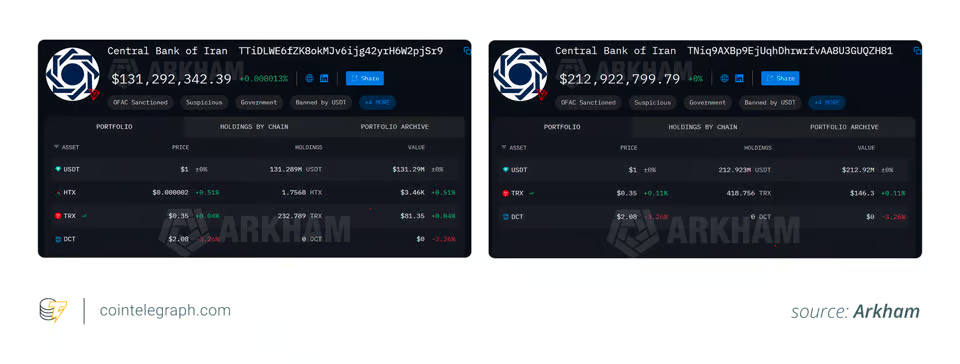
Blockchain analytics platform Arkham has published what it says is a public, onchain map of crypto wallets attributed to Iran’s central bank, making a pair of US-sanctioned Tron addresses publicly searchable for investigators and the wider public.
The move could increase scrutiny of how Iranian-linked entities use stablecoins and blockchain networks to move funds outside traditional banking rails, as US authorities intensify sanctions enforcement tied to terrorism financing and oil revenues.
Arkham’s May 11 research post groups the wallets into a Central Bank of Iran entity page and explorer, which the firm says can be used as a starting point to trace connected addresses and flows.
The map is built on two TRC-20 wallets that the US Treasury’s Office of Foreign Assets Control (OFAC) added to its Specially Designated Nationals list on April 24 as property of Bank Markazi Jomhouri Islami Iran, citing links to the Islamic Revolutionary Guard Corps-Qods Force and Hezbollah.

TRC-20 wallets tied to Iran. Source: Arkham
US authorities froze about $344 million in crypto linked to Iran as part of that action, Treasury Secretary Scott Bessent said, describing it as an effort to “systematically degrade Tehran’s ability to generate, move, and repatriate funds.” Tether separately said it had frozen the funds at the request of US authorities over “activity tied to unlawful conduct,” without explicitly naming Iran in its public statement.
Arkham’s wallet mapping reflects a broader push by blockchain analytics firms and stablecoin issuers to expose and disrupt sanctions evasion networks increasingly using crypto infrastructure tied to Tron and Tether.
Related: US Treasury sanctions Iran-linked crypto exchanges in first Iran-related designations
In an April 27 note, Chainalysis described a multi-step stablecoin “pipeline” in which Iranian oil revenues were routed through brokers, intermediary wallets, cross-chain bridges and decentralized finance protocols before cycling back into accounts associated with the Central Bank of Iran and IRGC-linked entities.
Iran’s wider crypto footprint
The Arkham findings come against a broader backdrop of growing Iranian crypto use. A February report on Iran’s digital assets footprint, citing estimates from TRM Labs and Chainalysis, put the country’s overall crypto transaction volume at about $11.4 billion in 2024 and $10 billion in 2025.
In May, Nobitex, Iran’s largest crypto exchange, was reportedly linked to members of a powerful family with ties to Supreme Leader Ali Khamenei, and used as a key conduit between domestic users and offshore liquidity.
In April, Iran reportedly considered charging crypto-denominated tolls to ships transiting the Strait of Hormuz, positioning digital assets as an additional revenue channel outside traditional banking rails.
Separately, Cointelegraph reported Friday that Tether had frozen more than 500 million USDT over a recent 30-day period across Ethereum and Tron, with around 506 million of that on Tron, according to BlockSec’s USDT Freeze Tracker.
A TRON spokesperson told Cointelegraph the network itself cannot monitor or block individual transactions, but pointed to the T3 Financial Crime Unit, a collaboration between TRON, Tether and TRM Labs launched in 2024, as its main channel for tackling abuse, saying it works with law enforcement “to freeze hundreds of millions of funds,” including funds tied to sanctioned entities and terror financing. Tether declined to comment.
Asia Express: North Korea denies crypto hacks, Upbit’s bank tests Ripple
Crypto World
EToro (ETOR) reiterates commitment to crypto despite falling activity in first quarter 2026


EToro (ETOR) doubled down on its commitment to crypto even as digital asset activity weakened in the first quarter and into April.
Revenue from crypto assets dropped 38% from the year-earlier quarter to $2.15 billion, the company said in its first-quarter earnings report released Tuesday. Net trading income from crypto derivatives fell 57% to $33.4 million while overall net income rose 37% to $82.4 million.
The trading platform said the crypto activity decline extended into April, with the total number of crypto trades falling 32% year-over-year and the invested amount per trade dropping 22%. Despite the downturn, CEO Yoni Assia expressed a bullish outlook.
“We do expect later this year to start seeing crypto rising back to, you know, near all-time-highs and that will drive crypto engagement,” Assia told CNBC, adding that the platform’s data suggests that when the markets fall, “retail investors on eToro actually buy the dip.”
The company said it activated its BitLicense to start trading in New York, three years after it was granted, and it completed the $70 million acquisition of crypto wallet provider Zengo, closed April 30.
“The acquisition of Zengo, a leading self-custodial crypto wallet provider, meaningfully advances our strategy of bridging traditional finance with on-chain infrastructure, prediction markets, perpetuals and the broader crypto ecosystem,” Assia said in the report.
Etoro shares fell 0.61% in pre-market trading on Wednesday.
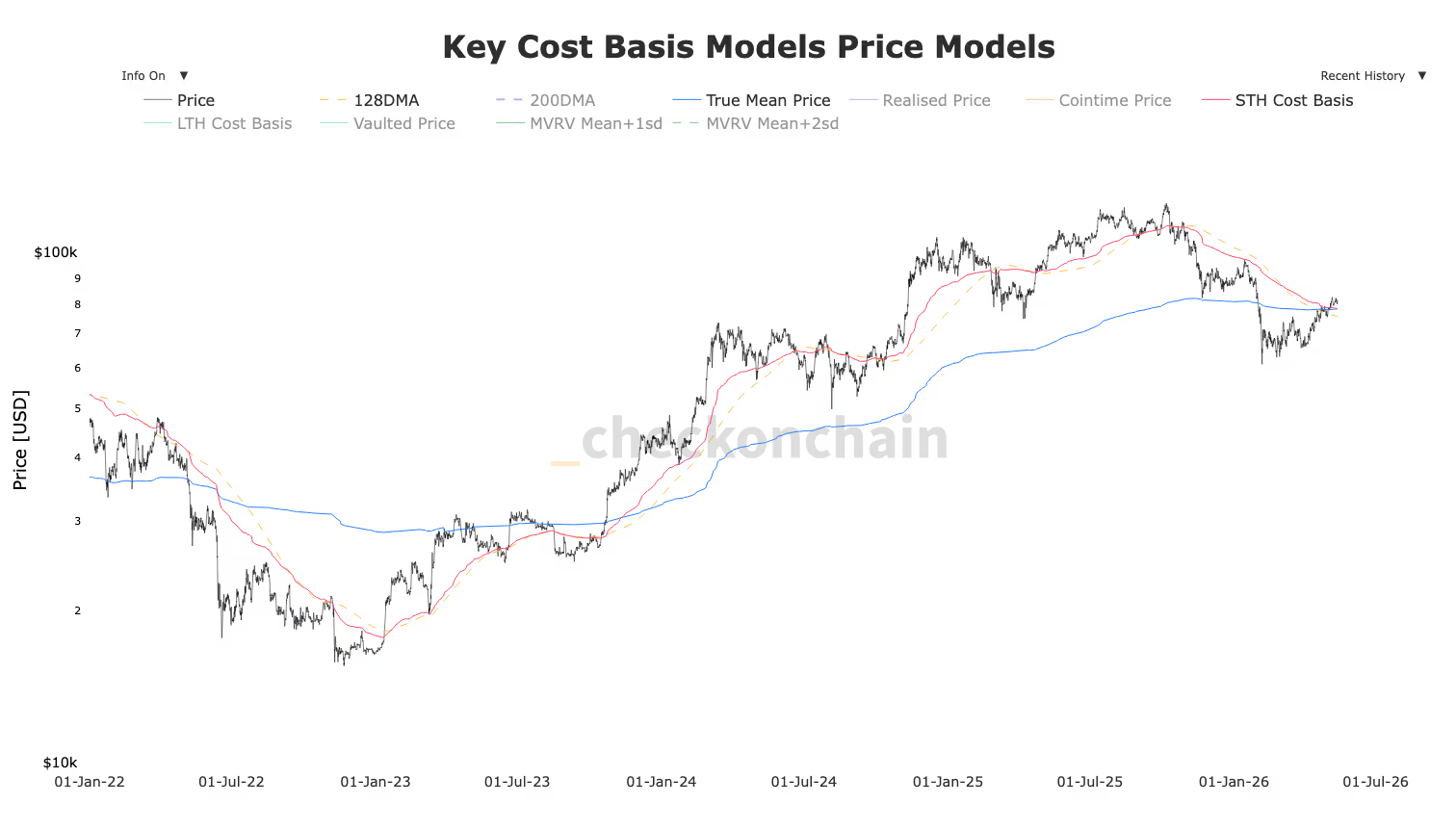
Bitcoin is fighting a key technical battle and is trading just below two closely watched long-term trend indicators: the 200-day Simple Moving Average (200SMA) at $82,455 and the 200-day Exponential Moving Average (200EMA) at $82,027, according to Glassnode data.
The 200SMA calculates the average closing price across the last 200 days, weighting each day equally. The 200EMA uses the same 200-day window but places greater emphasis on more recent prices, making it slightly more responsive to current market conditions.
Together, they form a confluence resistance zone around $82,000–$82,500 that bitcoin must convincingly reclaim to signal a recovery of its long-term uptrend.
Bitcoin first lost the 200DMA in late November 2025, when the price rolled over from $108,000. A brief recovery attempt in January failed to reclaim the level around $97,000 and by early February 2026 bitcoin had fallen to $60,000.
What gives bulls reason for cautious optimism is that bitcoin is holding above several significant cost basis levels, according to CheckonChain. The 128-day Moving Average sits at $75,700, representing the average price paid by buyers over that shorter timeframe and a level BTCX has successfully defended.
The True Market Mean, currently at $78,200, reflects the average price of every bitcoin at the time it last moved onchain, essentially representing the aggregate cost basis of the entire active market.
The Short-Term Holder Cost Basis at $78,400 tracks the average acquisition price of investors who bought within the last 155 days, a group historically prone to panic selling when underwater.
Bitcoin trading above all three suggests the majority of recent buyers remain in profit, reducing sell pressure from forced liquidations or panic selling. The key zone to watch is whether bitcoin can flip the $82,000-$82,500 into support.


As the White House and Congress continue to shape the U.S. crypto regulatory landscape, Coinbase CEO Brian Armstrong has thrown his weight behind the latest iteration of the Digital Asset Market Clarity Act (CLARITY). He said the bill is now in a stronger, more bipartisan position as the Senate prepares to markup the broader crypto market-structure legislation on Thursday.
Armstrong disclosed his assessment in a post on X, emphasizing that the current draft reflects a rare moment of cross-aisle consensus. “I don’t think it’s ever been in a stronger or more bipartisan position,” he wrote, signaling support from a major industry player even as lawmakers broker delicate compromises on contentious topics like stablecoin yields and DeFi safeguards. He also noted a “healthy compromise” on stablecoin yield, reached through negotiations that included Senators Thom Tillis and Alsobrooks. The brokered agreement appears to have boosted momentum for the legislation, even as some concerns remain about the path forward.
The current CLARITY framework, according to Armstrong, also broadens the bill’s reach in key areas such as decentralized finance (DeFi), tokenized stocks, and the authority granted to the Commodity Futures Trading Commission (CFTC) to regulate crypto markets. Those elements are part of a broader debate about how to delineate compliance regimes for a fast-evolving sector—balancing investor protections with innovation and market access.
The timing of Armstrong’s comments aligns with months of negotiation between the banking industry and crypto participants. The bill stalled earlier in the year after an initial draft faced pushback from industry players led by Coinbase, who argued that certain provisions created uncertainties or barriers for the market. Since then, lawmakers have pursued a revised version aimed at addressing core concerns while preserving Congress’s oversight of a rapidly expanding space. A separate article highlighted how the markup date and the broader political dynamics are shaping expectations for what changes might survive the process.
In the background, polls and surveys illustrate a public-facing climate that is increasingly engaged with crypto policy. A 2025 survey by the National Cryptocurrency Association—spanning about 54,000 U.S. residents—puts ownership of cryptocurrency at roughly 20% of the population. The study also notes that younger investors dominate the user base, with about two-thirds of crypto owners under the age of 45, and a minority (roughly 15%) over 55. Among owners, investing remains the primary use case, cited by about half (52%) as a means to “invest in their financial future.”
Public sentiment toward policy reform sits on a slightly different axis. A HarrisX poll conducted earlier this month found that about 52% of registered U.S. voters supported passing the CLARITY Act into law, while 11% opposed its enactment. Taken together, the signals from industry leadership, lawmakers, and public opinion suggest a moment when a carefully calibrated regulatory bill could gain traction—provided lawmakers can resolve remaining points of disagreement, particularly around DeFi definitions and the treatment of tokenized assets.
Key takeaways
- Coinbase’s Brian Armstrong publicly supports the latest CLARITY draft, calling it the strongest and most bipartisan iteration to date as the Senate moves toward markup.
- The compromise on stablecoin yield—brokered by Senators Tillis and Alsobrooks—appears to have reduced a major hurdle that previously stalled negotiations.
- New provisions in CLARITY reportedly expand coverage for DeFi activities, tokenized stocks, and strengthen the CFTC’s authority to regulate crypto markets.
- Public sentiment is mixed but leaning toward support for policy reform: about 52% of registered voters in HarrisX’s poll, and roughly 20% of Americans own crypto, according to the National Cryptocurrency Association’s 2025 report.
Armstrong’s stance and the politics of market structure reform
Armstrong’s comments underscore a broader trend: industry coalitions are aligning behind a version of CLARITY that they believe can withstand congressional scrutiny while acknowledging concessions. The banker-crypto negotiation dynamic has evolved from a stalemate to a calibrated bargaining room where stakeholders trade guardrails for clarity. The brokered stablecoin yield agreement—though still a live point of contention for some participants—has become a focal point that could determine whether the bill advances through committee stages and into floor debate.
Two elements anchor the current discourse. First, DeFi: the latest CLARITY text purportedly tightens oversight without stifling permissionless innovation, attempting to carve out a regulatory pathway that recognizes the practical realities of decentralized protocols. Second, tokenized stocks: the bill’s language seeks to address how tokenized representations of traditional assets would operate within an asset-ownership and transfer framework that regulators can oversee. Critics have warned about overreach, but proponents argue that clearer delineation reduces legal ambiguity for market participants and issuers alike.
Meanwhile, the CFTC’s expanded remit is a recurring theme: broader authority could help align crypto markets with existing commodity rules, potentially closing gaps that have long drawn regulatory attention. Advocates say it creates a consistent, rules-based environment that could encourage institutional participation, while opponents warn of overreach that could hamper innovation. The evolving language will likely be a proxy for how aggressively U.S. regulators intend to pursue crypto-market structure in the coming years.
Public sentiment, ownership, and investor behavior
The cautionary note from public sentiment matters because policy outcomes are increasingly tethered to political and cultural support beyond technocratic circles. The National Cryptocurrency Association’s 2025 State of Crypto Holders report—drawing on a substantial nationwide sample—paints crypto ownership as a cross-section of the population with a notable skew toward younger demographics. The finding that 20% of Americans own cryptocurrency signals a broad base of potential voters who may weigh policy decisions, even if the sector remains a minority in total terms.
The demographic slice matters for market participants. With 67% of crypto owners under 45, the policy debate intersects with a generation that will shape the sector’s trajectory for years to come. The same survey indicates that investment remains the top motivator for holdings, which has implications for how policy changes could influence market activity, risk appetite, and long-term adoption. On the political front, the HarrisX poll—conducted among registered voters—adds a layer of electoral context: a majority showing support for CLARITY’s passage suggests that policymakers may find it advantageous to push forward with a version deemed acceptable by both industry and broader citizenry, though opposition remains in measurable pockets.
For investors and builders, the practical takeaway is that policy momentum could translate into clearer compliance pathways and potentially reduce regulatory risk for compliant players. Yet the precise contours of DeFi governance, stablecoin oversight, and the treatment of tokenized assets remain live debates. The next weeks will reveal how much of the compromise translates into enforceable rules and which provisions survive the markup process.
What to watch next
As Thursday’s Senate markup approaches, market participants will be parsing whether lawmakers preserve the hard-worn compromises on stablecoins and DeFi while expanding clarity on tokenized equities and CFTC oversight. The outcome will shape the trajectory of U.S. crypto markets, determine whether major platforms can operate with greater regulatory certainty, and influence how innovative projects structure their compliance approaches. With public opinion showing notable support for reform, the key question remains: can Congress finalize a framework that protects investors, preserves competitive dynamics, and avoids hampering innovation in an industry still finding its regulatory footing? Watch for the final language of the markup and any amendments that signal a durable consensus or a fallback to earlier sticking points.
Source-based signals aside, the evolution of CLARITY—tied closely to the broader market-structure debate—will continue to intersect with how institutions engage with digital assets, how DeFi protocols navigate compliance, and how tokenized assets are treated under traditional regulatory paradigms. Investors and developers should monitor committee discussions, potential stakeholder briefings, and any new regulatory guidance that might accompany or follow enactment, as those elements will shape risk, opportunity, and timelines for deployment in the U.S. market.
Note: For context on the policy arc and related reporting, readers may reference contemporaneous coverage detailing the ongoing markup and negotiations surrounding the CLARITY Act and the broader crypto market-structure bill.
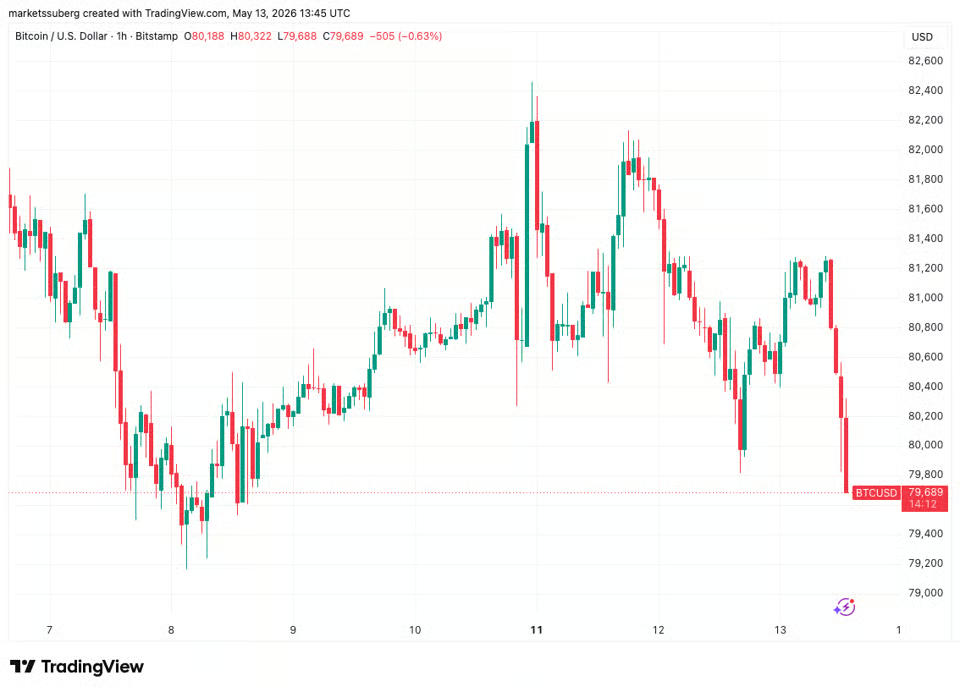
Bitcoin (BTC) fell below $80,000 into Wednesday’s Wall Street open as US inflation data continued to alarm.
Key points:
- Bitcoin price action sees fresh downside pressure thanks to US PPI inflation reaching its highest since 2022.
- Odds of further financial tightening by the Federal Reserve increased in a headwind for crypto.
- BTC price analysis sees the CME futures gap staying as resistance “until further notice.”
BTC price action loses $80,000 in fresh inflation blow
Data from TradingView showed a trip to near $79,500 accompanying the April release of the Producer Price Index (PPI).

BTC/USD one-hour chart. Source: Cointelegraph/TradingView
Like the Consumer Price Index (CPI) print the day prior, PPI delivered a surprise to the upside — a headwind for crypto and risk assets due to the implied future tightening of financial conditions by the Federal Reserve.
“The April increase is the largest advance since rising 1.7 percent in March 2022,” an official news release from the US Bureau of Labor Statistics (BLS) stated.
“On an unadjusted basis, the index for final demand rose 6.0 percent for the 12 months ended in April, the largest 12-month increase since moving up 6.4 percent in December 2022.”

US PPI one-month % change. Source: BLS
The US-Iran war and its associated impact on oil prices thus continued to filter through to the economy, with even more serious upheaval to come.
“All of the data is very clear: consumers are about to face another wave serious pressure on spending power,” trading resource The Kobeissi Letter wrote in a reaction on X.
The results further reduced the odds of the Fed cutting interest rates at its June meeting, with just a 1.4% chance of that outcome, per data from CME Group’s FedWatch Tool.

Fed target rate probabilities for June 17 FOMC meeting (screenshot). Source: CME Group
On Monday, trading resource Mosaic Asset Company summarized the risk that high oil prices, in particular, pose to the risk-asset uptrend.
“The prospect of rising interest rates on the short- and long-end of the yield curve could pose a challenge to stock market valuations,” it wrote in the latest edition of its regular newsletter, The Market Mosaic.
“The easing bias in central banks around the world is shifting to a more hawkish stance.”

CFDs on WTI crude oil one-day chart. Source: Cointelegraph/TradingView
Bitcoin futures gap in control “until further notice”
Bitcoin traders maintained hope for a successful breakout from current resistance for BTC/USD.
Related: Bitcoin price history suggests 77% odds of new all-time high within a year
“Break above that ~$82K region and that gap at $84K will surely be filled. Likely continuing quite a lot higher at that point,” Daan Crypto Trades wrote in his latest X analysis.
Daan Crypto Trades described US stocks as recovering “nicely” from their initial weakness over the CPI data.
“Market mostly awaiting some clarity in regards to the conflict in the middle east,” he added.

BTC/USDT perpetual contract one-day chart. Source: Daan Crypto Trades/X
Trader and analyst Rekt Capital, meanwhile, saw BTC/USD moving within an open “gap” in CME Group’s Bitcoin futures market — a common short-term price magnet.
“Bitcoin finally Weekly Closed below the top of the red area, confirming that price will be consolidating within the CME Gap until further notice,” he told X followers.

CME Bitcoin futures one-week chart. Source: Rekt Capital/X
Crypto World
Tokenized Treasuries hit $15 billion as BTC price stalls, Fed rate-hike concerns build: Crypto Daily
This is an excerpt from CoinDesk newsletter ‘Daybook.’ Sign up here, if you haven’t already.
While bitcoin remains pinned above $80,000, another interest rate-sensitive corner of the crypto market is booming and may suck capital out of other coins.
The total value locked in tokenized Treasuries has surged to $15.35 billion, topping the mid-April peak of around $15.10 billion, according to rwa.xyz data.
This comes as markets price in a higher probability of a Federal Reserve interest-rate hike (yes, an increase in borrowing costs), a stark shift from expectations for rapid rate cuts baked in earlier this year.
“The June cut just got significantly harder to defend, and the allocator positioning we flagged – capital sat in [BlackRock’s] BUIDL and tokenized T-bills rather than spot crypto – is going to look prescient by Friday,” Iggy Ioppe, CIO at Theo, said in an email.
Flows into yield-bearing tokenized Treasuries could rise further if today’s U.S. producer price index (PPI) points to persistent inflationary pressures in the pipeline. Consensus is for the April print to come in at 4.9% year-on-year, up from 4.0% in March.
An elevated reading would add to Fed rate-hike expectations and pose a headwind to risk assets. How bitcoin reacts remains to be seen, especially as it held largely steady above $80,000 after Tuesday’s hotter-than-expected CPI print.
While noting BTC’s resilience, analysts at Marex warned that further gains may be difficult if inflation continues to climb.
“That is the constraint for crypto: it can hold, but it will struggle to trend higher if real [inflation] rates keep grinding up,” analysts at Marex said.
Miners, too, present a potential headwind.
“If large miners are reporting big losses and pivoting toward AI, it usually means they may need to manage balance sheets more actively, which can translate into more spot supply on rallies. That is not a crash trigger, but it can cap upside in a choppy macro tape,” they noted.
In the broader market, smaller coins such as ING, DOT, ATOM and TRUMP added 5% or more, pointing to a rotation of capital into selective tokens. Majors like ether (ETH), solana (SOL), and XRP remain choppy.
Bitcoin and ether volatility indexes continue to point to near-term calm ahead of three major events: the PPI report, the Clartiy Act vote and the meeting between President Donald Trump and his Chinese counterpart, Xi Jingping.
In traditional markets, WTI crude oil futures bounced back above $100, while copper rose to near-record highs, both pointing to more commodity-led inflation ahead. Stay alert!
Read more: For analysis of today’s activity in altcoins and derivatives, see Crypto Markets Today . For a comprehensive list of events this week, see CoinDesk’s “Crypto Week Ahead.”
What’s trending
Today’s signal

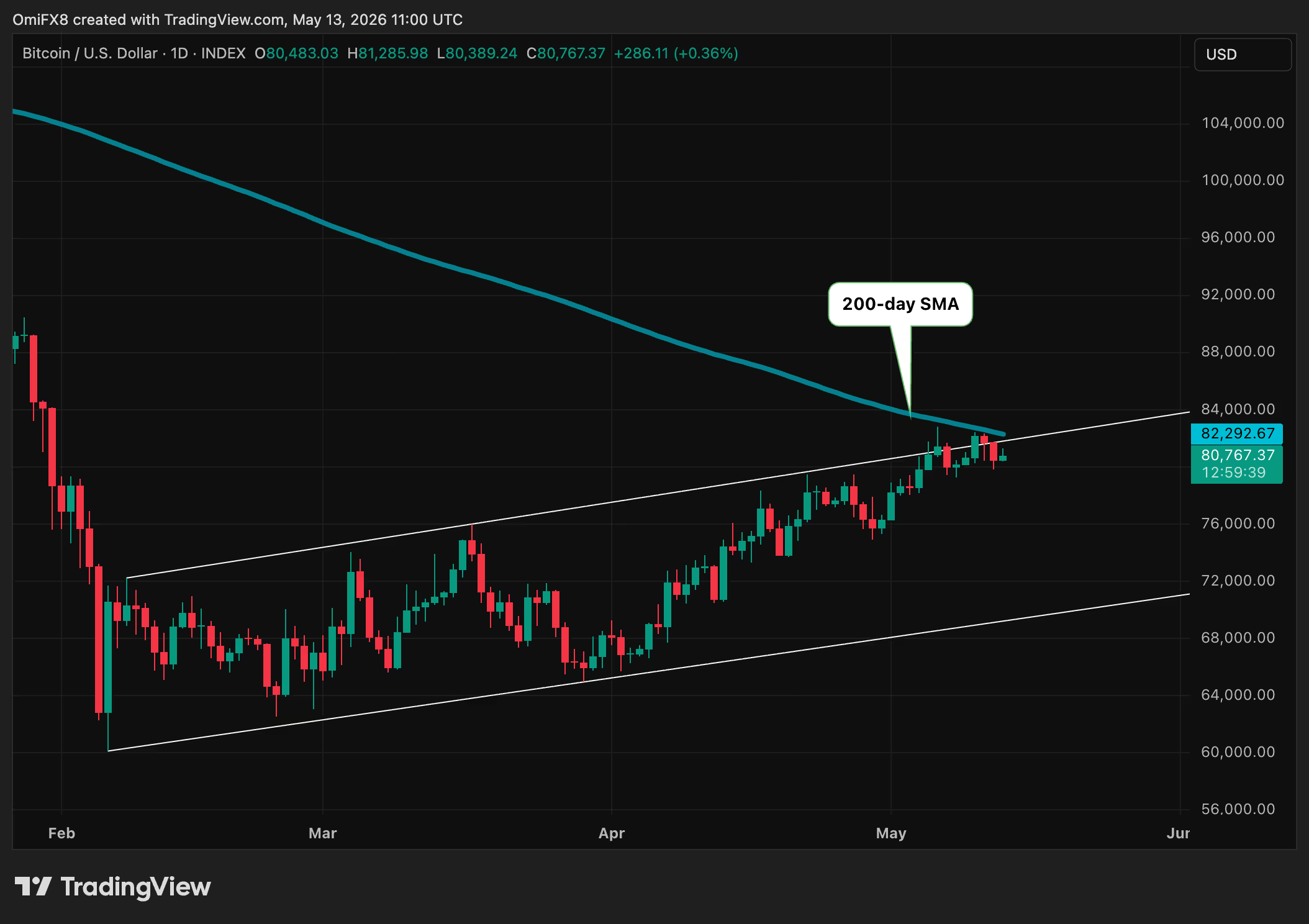
Bitcoin appears to be at an inflection point, with the recovery from February lows stalling near the 200-day simple moving average (SMA) at around $82,300 and the upper boundary of a rising channel.
The momentum has stalled just as macro uncertainty around inflation and Federal Reserve policy intensifies.
A bearish resolution would involve BTC failing to break above the 200-day average and slipping below $75,000, which was widely cited as a key level in February-March. That could encourage systematic sellers back to the market, particularly if rising Treasury yields continue to tighten financial conditions and weigh on risk appetite.
On the bullish side, a decisive move above the 200-day average would confirm a bull market, potentially yielding a rally to as high as $92,000.
CORRECTION (May 13, 7:07pm ET): Updates Iggy Ioppe’s title.

Iga Swiatek crushes Pegula to reach First Semifinal of 2026

Daily Deal: 5-in-1 MagSafe Wireless & Wired Charging Station

#joshuavan #fighter #myanmar #thailand #indonesia #malaysia #love #facebook #money

Manchester United reach agreement with Casemiro over contract clause amid transfer speculation

US brings back mandatory military draft registration

Steven Gerrard disagrees with Gary Neville over ‘shock’ Chelsea and Arsenal claim | Football
#joshuavan #fighter #myanmar #thailand #indonesia #malaysia #love #facebook #money

Johnson Reacts To Trump Saying, ‘I Don’t Think About Americans’ Financial Situation,’ Re Iran War

Before party after party #birthdaycelebration #financial #memeshorts
-
 Crypto World6 days ago
HarrisX Poll Found 52% of Registered Voters Support the CLARITY Act
-

 Fashion5 days ago
Weekend Open Thread: Marianne Dress
-

 Crypto World7 days ago
Upbit adds B3 Korean won pair as Base token gains Korea access
-
 NewsBeat7 days ago
NCP car park operator enters administration putting 340 UK sites at risk of closure
-

 Fashion2 days ago
Coffee Break: Travel Steam Iron
-

 Tech4 days ago
Auto Enthusiast Carves Functional Two-Stroke Engine from Solid Metal
-

 Fashion3 days ago
What to Know Before Buying a Curling Wand or Curling Iron
-

 Politics2 days ago
What to expect when you’re expecting a budget
-
 Business5 days ago
Ignore market noise, India’s long-term story intact, say D-Street bulls Ramesh Damani and Sunil Singhania
-

 Politics5 days ago
Politics Home Article | Starmer Enters The Danger Zone
-

 Tech3 days ago
GM Agrees To Pay $12.75 Million To Settle California Lawsuit Over Misuse Of Customers’ Driving Data
-

 Politics6 days ago
Simon Cowell Says He Was ‘Horrible’ To Susan Boyle During BGT Audition
-

 Entertainment7 days ago
Sarah Paulson Called Out For Met Gala ‘Hypocrisy’
-

 Entertainment6 days ago
General Hospital: Ric & Ava Bombshell – Ric’s Massive Secret Exposed!
-

 Crypto World7 days ago
Robinhood says Wall Street is building onchain
-

 Sports7 days ago
UEFA Champions League final schedule, teams, venue, live time and streaming | Football News
-

 Entertainment7 days ago
Why David Letterman Called CBS ‘Lying Weasels’
-
Entertainment7 days ago
Hayden Panettiere reveals she's estranged from mom, addresses brother Jansen's sudden death: 'I was floored'
-
 Sports7 days ago
Mike Tyson speaks out on status of Floyd Mayweather fight
-
 Entertainment7 days ago
Paramount+’s ‘Landman’ Season 3 Gets Promising New Update From Returning Director
You must be logged in to post a comment Login