

Crypto World
BTC wilts as Clarity Act odds tumble. U.S. deploys B1 bomber against Iran

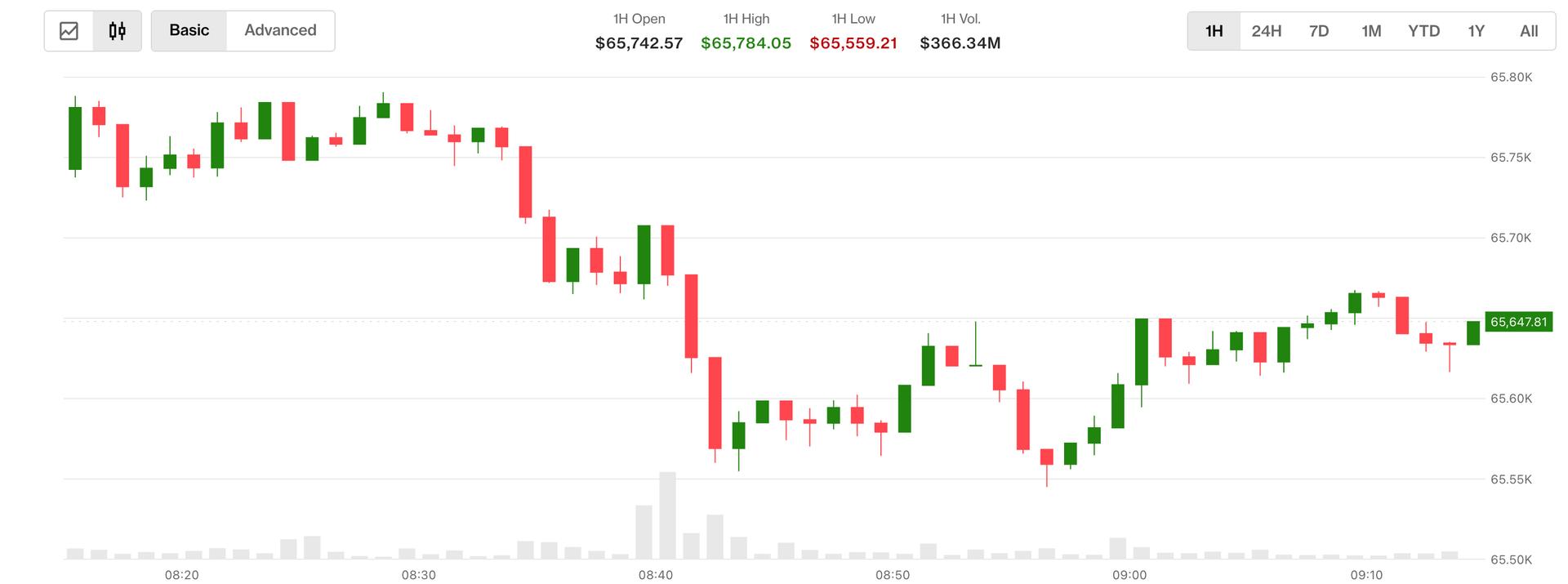
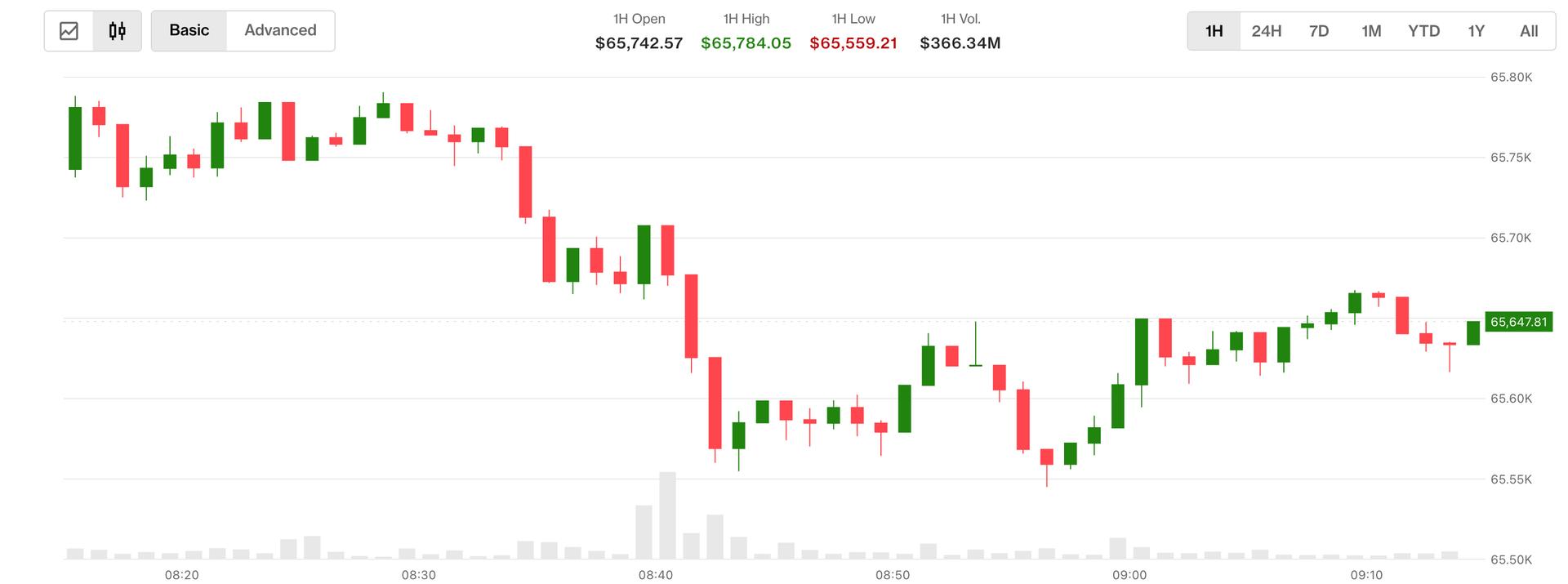
Bond markets are already reacting. The U.S. two-year Treasury yield jumped to 4.31%, its highest level since February 2025, while the benchmark 10-year yield rose to 4.66%, the highest since May, according to TradingView data. Higher yields raise the opportunity cost of holding non-yielding assets such as bitcoin and gold, often prompting investors to rotate out of speculative holdings and into fixed-income securities that now offer more attractive returns.
Adding to the cautious market sentiment, Axios reported that the U.S. military deployed a B-1 long-range bomber on Tuesday to strike targets linked to Iran’s Islamic Revolutionary Guard Corps. The use of the heavy bomber represents a clear escalation in the scale of U.S. operations and suggests Washington may be preparing for a broader campaign, rather than continuing with the more limited strikes seen in recent days.
Regulatory uncertainty persisted after a group of key Senate Democrats said the newest draft of the Digital Asset Market Clarity Act (Clarity Act) “falls short” on ethics and other critical provisions.
Betting markets on decentralized platform Polymarket reacted swiftly, with the implied odds of the Clarity Act passing tumbling from 46% to 38%.
Senate Republicans released the updated draft earlier Wednesday, which includes an ethics provision agreed to by the White House and President Donald Trump. Senator Bernie Moreno called it “the most powerful ethics language in U.S. history.

On 22 July, Alphabet reported its Q2 2026 results, with revenue rising 24% year-on-year to $119.8 billion. Google Cloud revenue surged 82% to $24.77 billion, comfortably exceeding analysts’ expectations. Search advertising generated $63.3 billion in revenue (+17%), while YouTube revenue increased 13% to $11.06 billion. Net income nearly quadrupled to $112.11 billion. However, according to the company’s financial statements, almost all of the increase was driven by unrealised revaluation gains on its private investments in Anthropic and SpaceX rather than by underlying operating performance. Meanwhile, quarterly capital expenditure doubled from a year earlier to $44.9 billion, reflecting continued investment in AI data centre infrastructure.
Technical Analysis
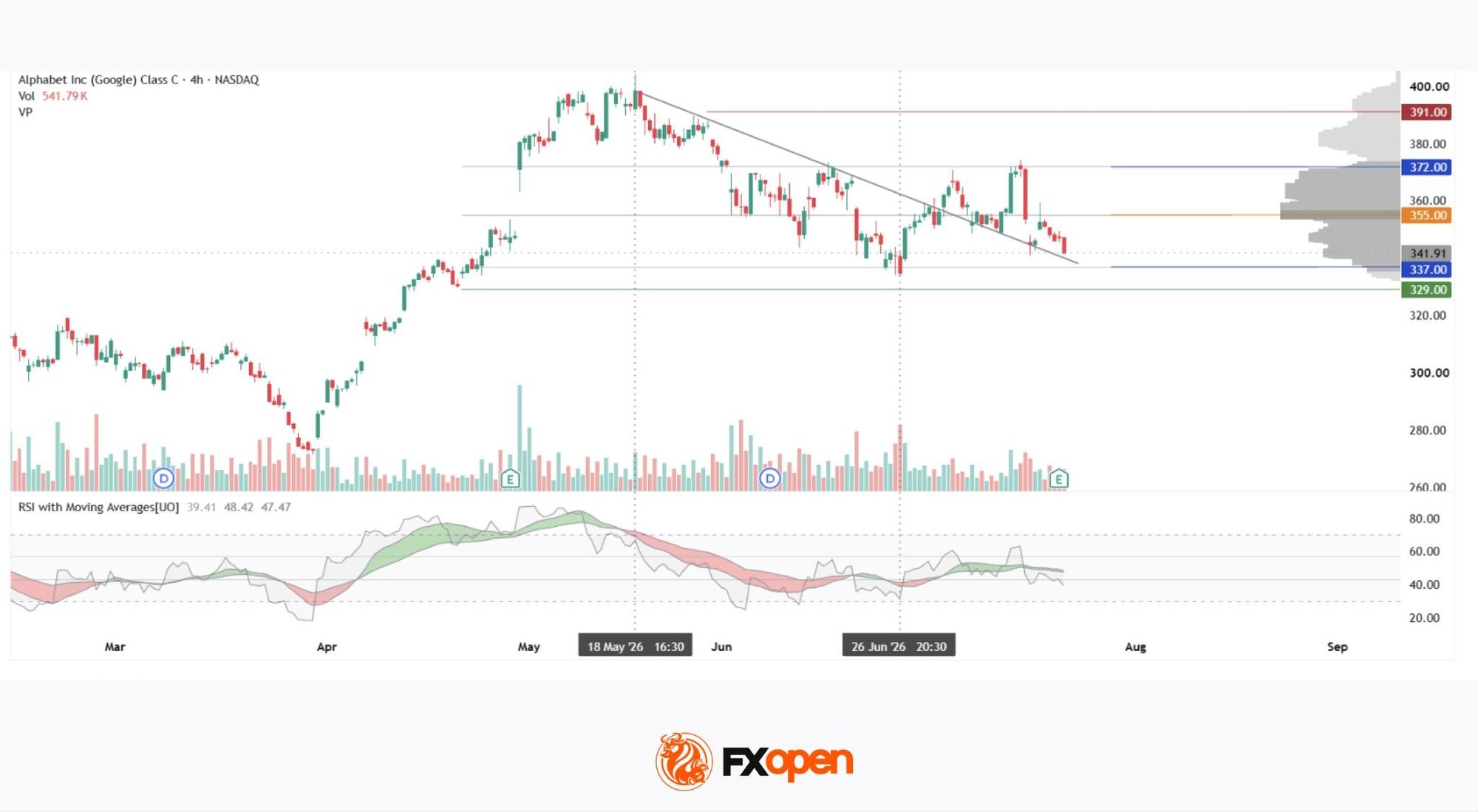
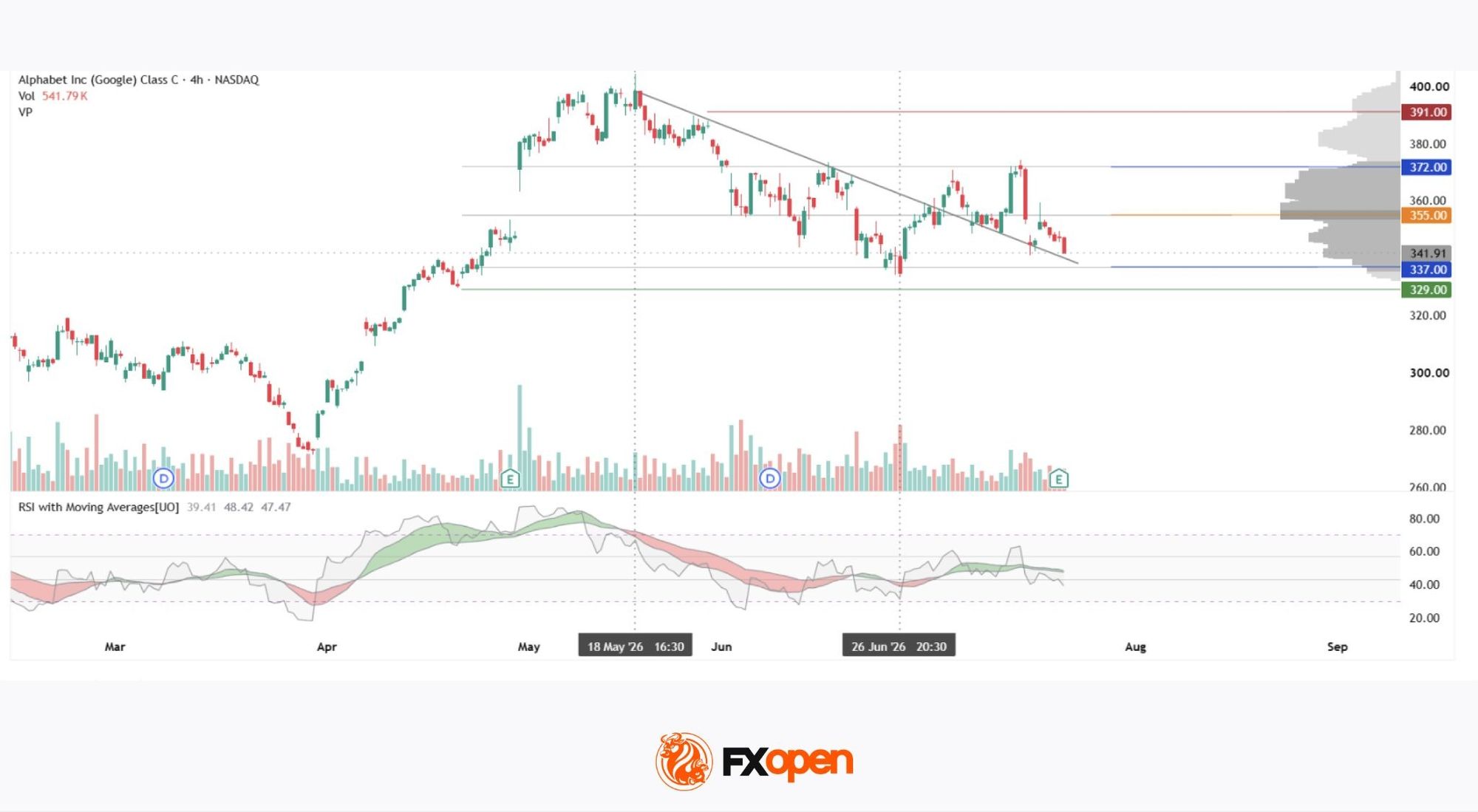
On the 4-hour chart of Alphabet (GOOGL Class A on FXOpen), a short-term bearish structure developed after the price reached the $404 area on 18 May. The decline lost momentum near $334. Following the reversal, the price attempted to break the trendline on 6 July but failed to move beyond the current market profile range. After another rejection from the upper boundary of the profile around $372, the stock turned lower and is now trading between the Point of Control (POC) at $355 and the lower edge of the profile near $337.
The red resistance zone around $391 could limit any recovery attempt, while continued selling pressure may shift attention towards the green support area near $329. The RSI + Moving Averages indicator currently shows readings of 39, 48, and 47. Although the RSI remains below the moving averages, the averages themselves are still coloured green and positioned in the middle of the neutral zone, suggesting that momentum remains inconclusive. Vertical volume has been relatively moderate since the price broke below the trendline, reinforcing the current lack of directional conviction.
Key Takeaways
Despite reporting a sharp increase in net income, Alphabet’s share price reaction has been relatively muted. Strong performances from Google Cloud and Search were partly offset by the fact that most of the profit growth came from a one-off investment revaluation rather than core operations. As a result, fundamental developments may continue to have a greater influence on the stock than the current technical picture in the near term.
Buy and sell stocks of the world’s biggest publicly-listed companies with CFDs on FXOpen’s trading platform. Open your FXOpen account now or learn more about trading share CFDs with FXOpen.
This article represents the opinion of the Companies operating under the FXOpen brand only. It is not to be construed as an offer, solicitation, or recommendation with respect to products and services provided by the Companies operating under the FXOpen brand, nor is it to be considered financial advice.
On 22 July, Alphabet reported its Q2 2026 results, with revenue rising 24% year-on-year to $119.8 billion. Google Cloud revenue surged 82% to $24.77 billion, comfortably exceeding analysts’ expectations. Search advertising generated $63.3 billion in revenue (+17%), while YouTube revenue increased 13% to $11.06 billion. Net income nearly quadrupled to $112.11 billion. However, according to the company’s financial statements, almost all of the increase was driven by unrealised revaluation gains on its private investments in Anthropic and SpaceX rather than by underlying operating performance. Meanwhile, quarterly capital expenditure doubled from a year earlier to $44.9 billion, reflecting continued investment in AI data centre infrastructure.
Technical Analysis
On the 4-hour chart of Alphabet (GOOGL Class A on FXOpen), a short-term bearish structure developed after the price reached the $404 area on 18 May. The decline lost momentum near $334. Following the reversal, the price attempted to break the trendline on 6 July but failed to move beyond the current market profile range. After another rejection from the upper boundary of the profile around $372, the stock turned lower and is now trading between the Point of Control (POC) at $355 and the lower edge of the profile near $337.
The red resistance zone around $391 could limit any recovery attempt, while continued selling pressure may shift attention towards the green support area near $329. The RSI + Moving Averages indicator currently shows readings of 39, 48, and 47. Although the RSI remains below the moving averages, the averages themselves are still coloured green and positioned in the middle of the neutral zone, suggesting that momentum remains inconclusive. Vertical volume has been relatively moderate since the price broke below the trendline, reinforcing the current lack of directional conviction.
Key Takeaways
Despite reporting a sharp increase in net income, Alphabet’s share price reaction has been relatively muted. Strong performances from Google Cloud and Search were partly offset by the fact that most of the profit growth came from a one-off investment revaluation rather than core operations. As a result, fundamental developments may continue to have a greater influence on the stock than the current technical picture in the near term.
Buy and sell stocks of the world’s biggest publicly-listed companies with CFDs on FXOpen’s trading platform. Open your FXOpen account now or learn more about trading share CFDs with FXOpen.
This article represents the opinion of the Companies operating under the FXOpen brand only. It is not to be construed as an offer, solicitation, or recommendation with respect to products and services provided by the Companies operating under the FXOpen brand, nor is it to be considered financial advice.


Bitcoin traded near $65,400 on Thursday, down 0.3% on the day and up 1.4% on the week, per CoinDesk data.
The market stayed quiet through Alphabet’s earnings, the report the whole week had been waiting on for a read on AI spending.
Alphabet delivered a split verdict. Revenue rose 24% to $119.8 billion and cloud grew 82%, both ahead of expectations, but the company lifted its 2026 capital spending forecast again, to $195 billion to $205 billion from $180 billion to $190 billion, citing a “supply-constrained” scramble to meet AI demand.
Its stock fell after hours as investors weighed the heavier spend against slimmer free cash flow.
Alphabet’s own shareholders may not like a fatter bill, but more capital pouring into AI infrastructure is what chip stocks have rallied on. Asian chipmakers rose again on Thursday, with the Kospi up 3.6% and Samsung and SK Hynix both up more than 2% on bets they will capture some of that spending.
The majors were flat. Ether held near $1,916, XRP at $1.13 and Solana at $77, with Hyperliquid the outlier, down 11% on the week. Oil kept climbing, extending a July rally that has revived inflation worries.
The next test is the Fed on July 28 and 29.

Kakao Group is teaming up with Circle to explore how won-backed stablecoins could be integrated into South Korea’s mainstream payment and financial services. The partnership comes as regulators work through a still-evolving legal framework for stablecoins, with the government signaling further legislative progress toward a Digital Asset Basic Act.
On Thursday, Kakao, Kakao Pay, and Kakao Bank said they signed a strategic memorandum of understanding (MOU) with Circle Internet Group. Under the agreement, the companies will study how Circle’s blockchain capabilities and global payment infrastructure might be connected to Kakao’s consumer platforms and financial services.
Key takeaways
- Kakao Group’s MOU with Circle centers on integrating won-backed stablecoin payments into Kakao’s payment and banking ecosystem.
- The partners plan to explore use cases including payments, cross-border remittances, merchant settlement, and links between traditional finance systems and blockchain networks.
- They also intend to consider tokenized financial services, but provided no details on products or launch timelines.
- The deal reflects growing “readiness” among major Korean platforms while stablecoin legislation remains under debate.
Why Kakao and Circle are focusing on won-backed stablecoins
The strategic MOU is positioned as a technology and infrastructure study rather than a specific deployment. Kakao’s stated areas of focus include stablecoin payments, cross-border remittances, merchant settlement workflows, and integration pathways that connect existing financial systems to blockchain networks.
That matters for investors and users because stablecoins—particularly those pegged to local currency—are often discussed as a bridge between traditional payment rails and faster, programmable settlement. For large consumer platforms like Kakao, the core value is distribution and liquidity access: if the regulatory environment permits won-pegged tokens, partners can move quickly to build payment functionality that meets local compliance expectations.
Circle’s role, as described in the announcement, relates to providing blockchain and global payments infrastructure that can be adapted for use inside Kakao’s services. However, the MOU does not specify what token model, issuance structure, or redemption mechanism would be used, and no product roadmap was disclosed.
South Korea’s regulatory process still not settled
South Korea has been moving toward legislation for won-backed stablecoins to encourage digital payment innovation while managing risks such as reserve adequacy, redemption rights, and oversight of issuers.
According to Cointelegraph’s reporting, the government has been preparing a bill outlining requirements for stablecoin issuance, collateral management, and internal controls. At the same time, lawmakers have introduced competing proposals—reflecting a policy debate about the structure of local-currency stablecoin markets.
One of the main points of contention involves which institutions should be allowed to issue won-based stablecoins. The Bank of Korea has argued that banks should hold a majority stake in stablecoin issuers. In contrast, the Financial Services Commission has warned that eligibility limits could reduce competition and inhibit innovation.
The uncertainty has practical consequences: without clarity on issuer eligibility and governance expectations, firms can test technology but may have limited ability to launch fully compliant services. That helps explain why Kakao and Circle are starting with an infrastructure-focused MOU rather than announcing a live stablecoin offering.
A policy timeline that keeps moving—without resolving the core issue
Even as the stablecoin rules remain contested, South Korea’s legislative direction signals continued momentum. In its economic growth strategy announced on July 14, the government listed advancing the Digital Asset Basic Act among priorities for the second half of 2026, according to an announcement reported by Korea’s official website.
For market participants, this indicates that lawmakers are not stepping back from regulation—though the details affecting stablecoin issuance and supervision may still shift as agencies argue over the appropriate balance between control, competition, and systemic risk management.
With that in mind, partnerships like Kakao’s can be read as a hedge: they reduce dependence on a single final regulatory blueprint by starting integration work early, even if deployment depends on whatever the final bill requires.
Testing stablecoin-related capabilities while waiting for rules
Beyond Kakao, other financial and tech firms in South Korea have been running pilots and tests as the regulatory groundwork continues. In April, internet bank Kbank partnered with Ripple to test blockchain-based remittances, per earlier coverage by Cointelegraph. The objective there is similar to what Kakao’s MOU suggests—improving payment and cross-border settlement efficiency while navigating local compliance constraints.
In May, KB Financial Group reportedly completed a pilot focused on stablecoin issuance, offline merchant payments, and cross-border remittances via the Kaia blockchain. KB Financial Group said it planned to introduce stablecoin services once regulations take effect, again highlighting the pattern of pre-compliance experimentation followed by product rollout only when legal requirements are in place.
These efforts underscore a broader dynamic in South Korea’s crypto economy: builders and established institutions are not waiting entirely for the final text of the law. Instead, they are using pilots and infrastructure research to reduce time-to-market—aiming to be operational as soon as regulators define how won-backed stablecoins should be issued and supervised.
For now, Kakao and Circle’s next step appears to be technical exploration—payments flows, remittance connectivity, and integration with existing systems—without a stated launch date. Investors and users should watch how the stablecoin bill debate resolves, particularly around issuer eligibility and oversight, since those decisions will likely determine what “won-backed stablecoin” implementations are legally feasible in practice.
The exchange has immediately halted all new account registrations following a strategic business review by its parent company, HDR Global Trading Limited. The wind-down ends an 11-year run for the Seychelles-incorporated venue, which debuted in 2014 and pioneered the foundational plumbing for modern digital asset derivatives trading.
The wind-down forces an immediate reduction of risk across the system, because while standard trading will continue for the next few weeks, the platform will apply strict limits on Aug. 26 to stop users from opening any new positions. Between that date and the final September deadline, operators will systematically force close all remaining open contracts to ensure the market shuts down in an orderly manner.
The main challenge BitMEX faces is how to offramp user assets into fiat currencies of their choice, as network congestion on the Bitcoin blockchain could cause significant withdrawal delays. However, the company’s current proof of reserves indicates that platform liabilities fully cover customer assets.
This exit marks the end of an 11-year run for the digital asset derivatives venue, which maintained a clean security record and lost no user funds to hacks or smart-contract exploits despite facing years of intense regulatory enforcement actions by global authorities.
The news comes just three weeks after BitMEX lost its CEO, chief financial officer and head of growth.
The pound remains under pressure following the release of weaker-than-expected UK inflation data. The slowdown in inflation has strengthened expectations that the Bank of England could adopt a more accommodative policy stance in the coming months, weighing on sterling. Meanwhile, the euro continues to trade within a relatively narrow range as investors await fresh signals from the eurozone economy.
Market participants also remain cautious due to the ongoing escalation of tensions in the Middle East. The United States continues to carry out strikes on targets in Iran, supporting demand for traditional refuge assets, including the US dollar, and limiting the recovery potential of European currencies.
Attention in the coming days will focus on the preliminary Purchasing Managers’ Index (PMI) releases from Germany, France, the United Kingdom, and the eurozone, which will provide an early assessment of economic conditions at the start of the third quarter. The data are particularly important for the euro, as they could influence expectations for the European Central Bank’s next policy moves. Stronger-than-expected figures may support the single currency, while weaker readings could reinforce expectations of further ECB policy easing. In addition, the weekly US initial jobless claims report will provide another update on the health of the US labour market.
EUR/USD
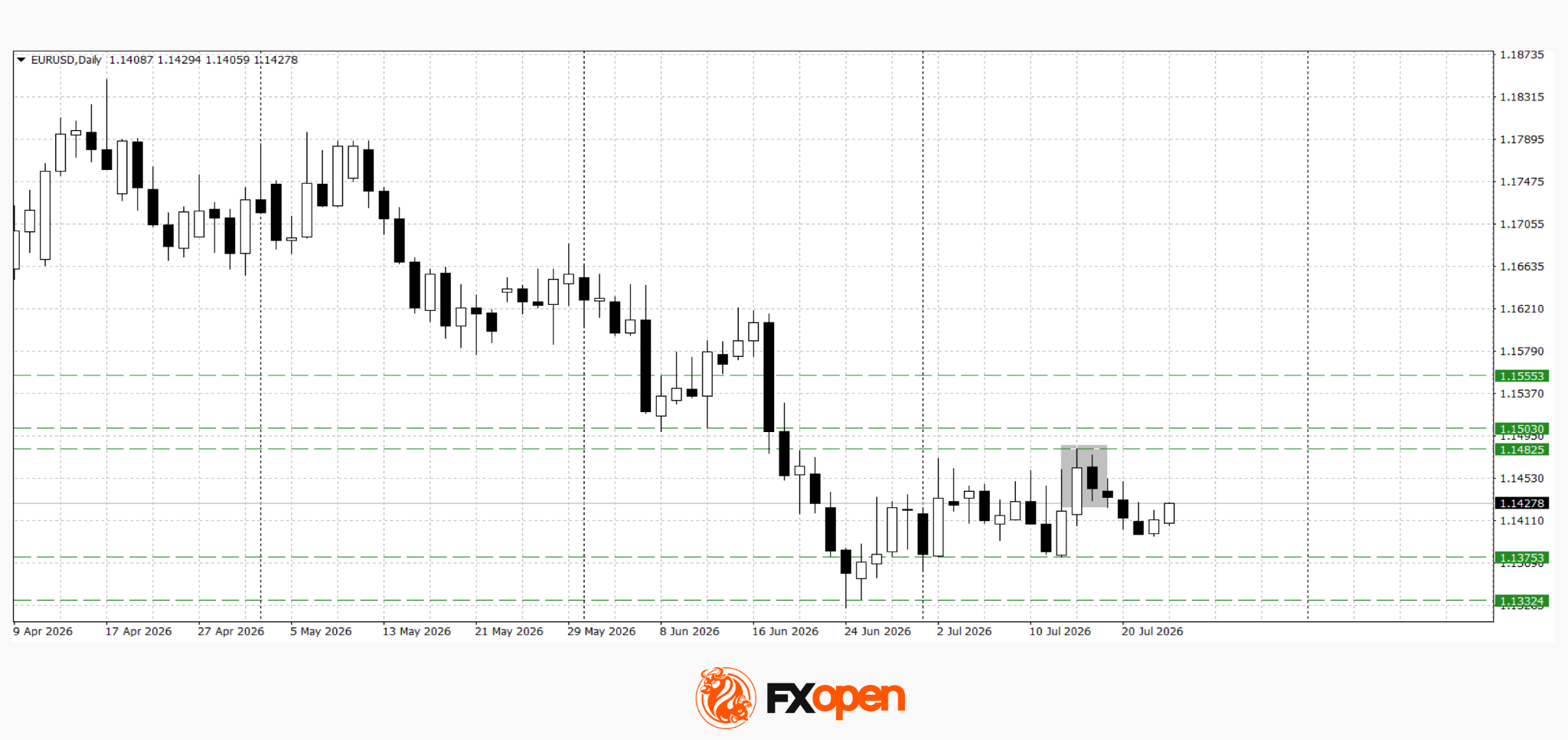
EUR/USD has entered a consolidation phase after failing to test the key resistance level at 1.1500. Technical analysis suggests the pair could decline towards the 1.1330–1.1370 area, as a bearish harami pattern has formed on the daily timeframe. A renewed upward correction may become more likely only after a decisive break and close above 1.1500.
Key events for EUR/USD:
- Today at 09:45 (GMT+3): France Flash PMI
- Today at 10:20 (GMT+3): Speech by Bundesbank Executive Board member Sabine Mauderer
- Tomorrow at 10:00 (GMT+3): Germany GfK Consumer Climate Index
GBP/USD
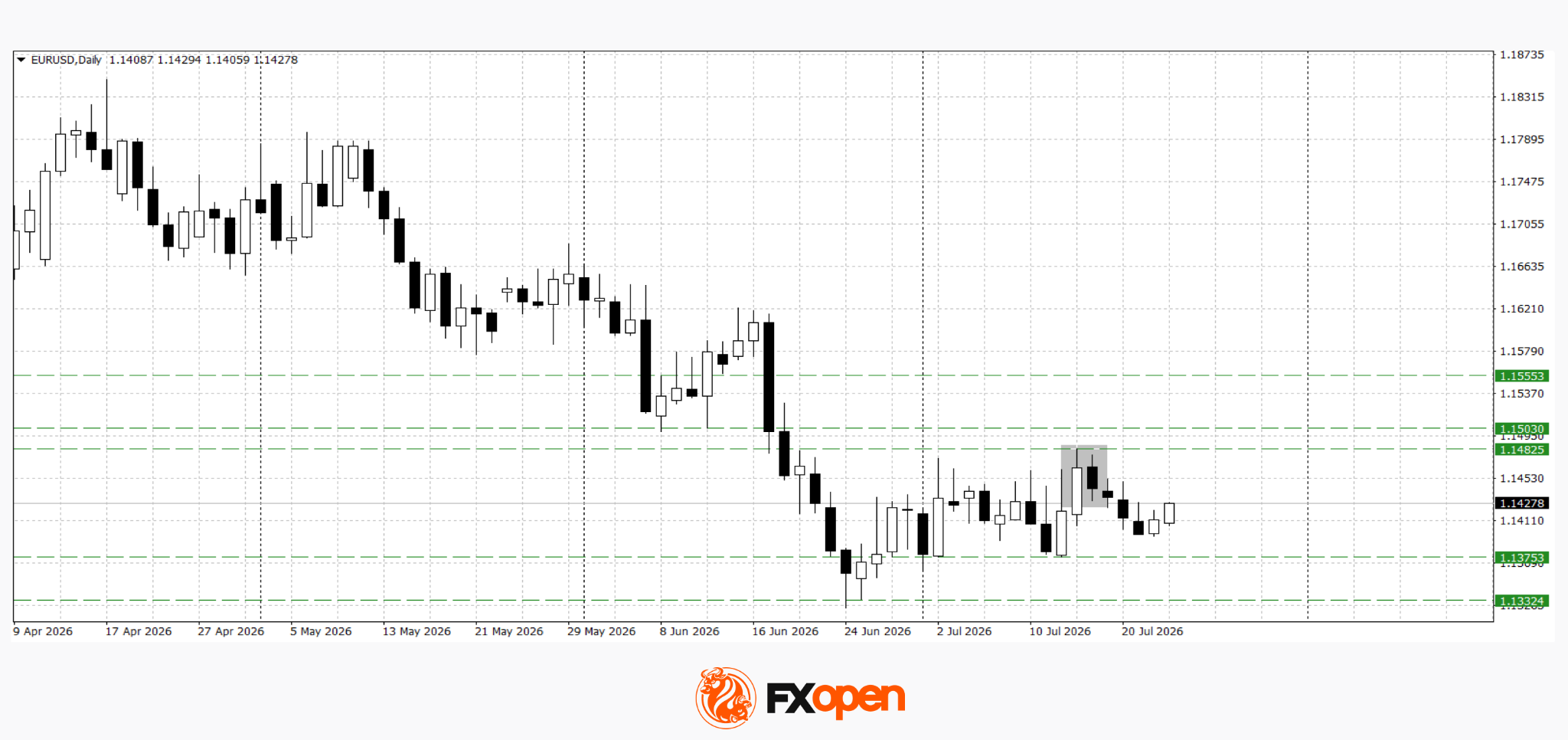
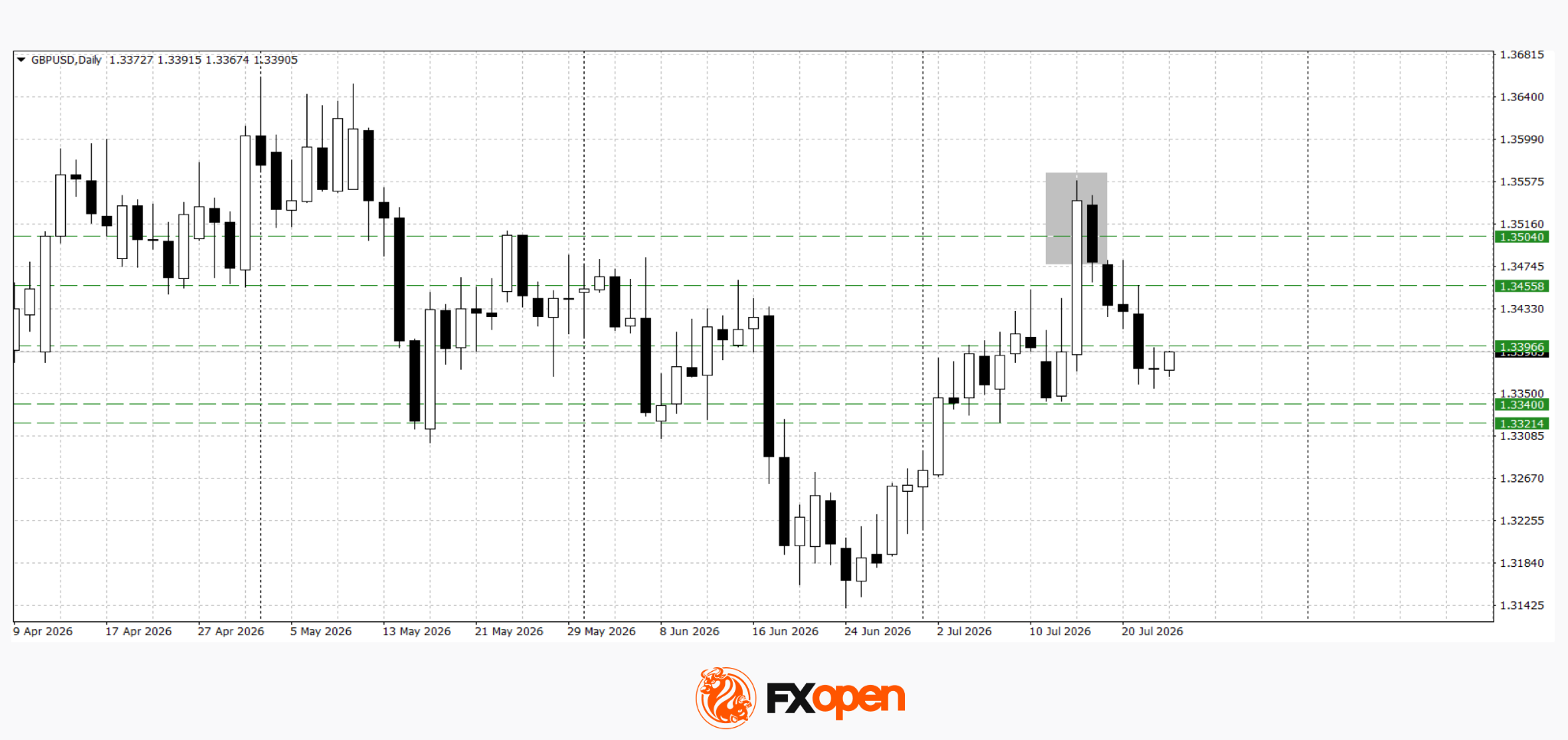
GBP/USD is undergoing a bearish pullback after buyers failed to establish a foothold above 1.3500. A bearish harami pattern has also formed on the daily chart, increasing the likelihood of another test of the nearby support zone at 1.3320–1.3340. The bearish scenario would only be invalidated by a decisive close above 1.3400.
Key events for GBP/USD:
- Today at 13:00 (GMT+3): UK CBI Industrial Trends Orders
- Today at 15:30 (GMT+3): US Initial Jobless Claims
- Tomorrow at 11:30 (GMT+3): UK Flash Manufacturing PMI
Summary
Sterling remains under pressure following softer UK inflation data, while the euro continues to consolidate as traders await fresh economic signals from the eurozone. Over the coming days, the preliminary PMI releases are likely to be the main catalysts for European currencies, as they could reshape expectations for future policy decisions by both the European Central Bank and the Bank of England. US macroeconomic data and developments in the Middle East are also expected to remain important drivers of market sentiment.
Trade over 50 forex markets 24 hours a day with FXOpen. Take advantage of low commissions, deep liquidity, and spreads from 0.0 pips (additional fees may apply). Open your FXOpen account now or learn more about trading forex with FXOpen.
This article represents the opinion of the Companies operating under the FXOpen brand only. It is not to be construed as an offer, solicitation, or recommendation with respect to products and services provided by the Companies operating under the FXOpen brand, nor is it to be considered financial advice.
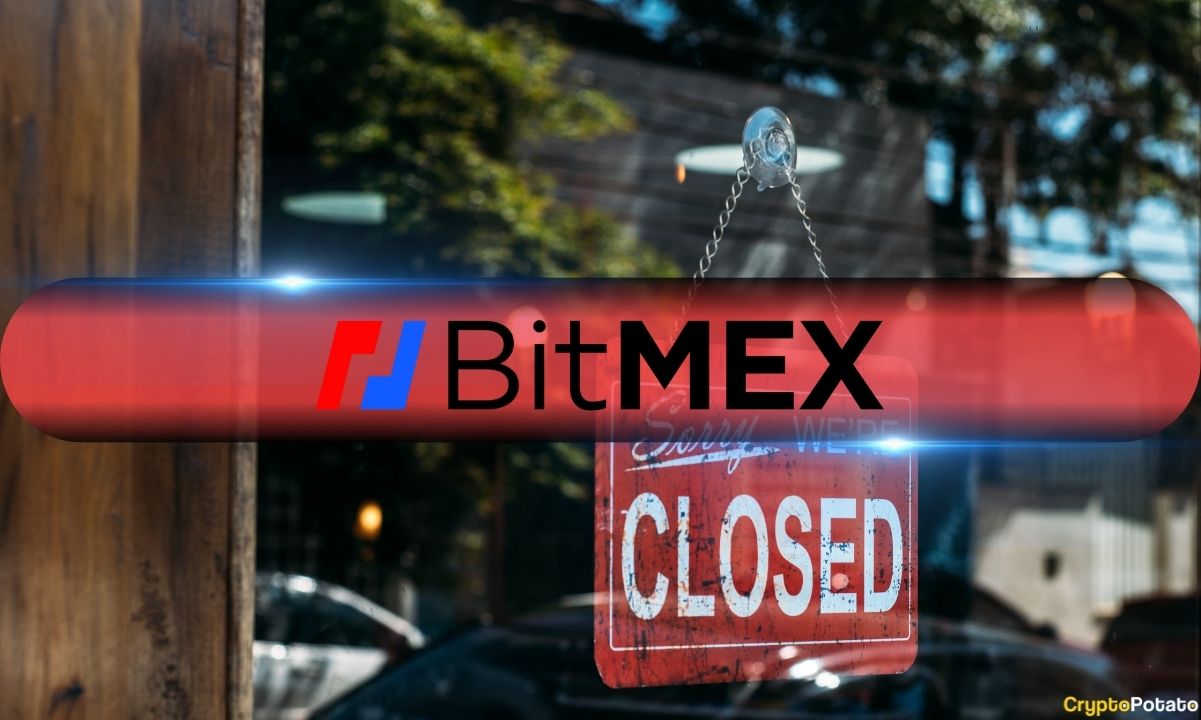
One of the pioneers of cryptocurrency derivatives trading and the creator of the 100x perpetual swap will permanently cease operations on September 23 after deciding to wind down the business.
The company has been active for more than 11 years, making the decision even more painful for the broader cryptocurrency industry.
Closing Down
The statement just published by BitMEX stated that the exchange will cease operations on September 23 this year at 04:00 UTC. Its parent company, HDR Global Trading Limited, said the move came after a strategic and detailed review of both the business and the crypto industry as a whole.
The trading platform has halted new account registrations and has urged existing users to close all open positions and withdraw their assets before the deadline.
BitMEX saw the light of day in 2014 and helped shape the modern crypto derivatives market. It introduced 100x leveraged perpetual swaps, a product that later became the industry standard and was eventually adopted by essentially every major crypto derivatives competitor. At its peak, BitMEX ranked among the world’s largest crypto exchanges, attracting professional traders with deep liquidity and advanced trading tools.
The statement further outlined the platform’s highly impressive security record, stating that no customers’ funds were ever lost to a hack throughout its near-decade-long existence.
What Went Wrong
Despite its growth in its initial years, US authorities went after the company’s founders in 2020 for violating anti-money laundering laws by operating the exchange without implementing adequate Know-Your-Customer (KYC) procedures. It later settled with the US, while the former CEO Arthur Hayes and other execs pleaded guilty to Bank Secrecy Act violations.
Although it remained open for years after resolving those cases, several competitors had emerged and taken a big chunk of its former market share.
BitMEX said trading will remain operational over the following months, but it will impose restrictions gradually as the shutdown approaches. After August 26, users will no longer be able to open new positions and will only be permitted to reduce existing ones. Customers will retain access to their accounts after the shutdown date (September 23) only to view balances, transaction history, and withdraw remaining assets.
The post Veteran Crypto Exchange BitMEX to Shut Down in September appeared first on CryptoPotato.


Cointelegraph is committed to providing independent, high-quality journalism across the crypto, blockchain, AI, and fintech industries.
All news, reviews, and analyses are produced with full journalistic independence and integrity. For more details on our standards and processes, please read our Editorial Policy.


By Rembrandt, founder of OLY
Charlie Munger had a rule that explains more of crypto than any whitepaper ever written: “Show me the incentive and I will show you the outcome.”
Now look at the incentives of every token you have ever held. Strip away the Discord, the roadmap, the word “community,” and the game underneath is simple: a pool of limited liquidity and a race to take it from each other.
There is exactly one way to get paid: market-sell before everyone else does. Buy early, dump at the right moment, onto the latecomers and the believers.
The traders dumped at the first sign of weakness. The mercenary farms dumped their emissions on your head.
The VCs unlocked and sold into your conviction. A handful of early insiders capture most of the money, everyone else funds it, and the whole arrangement wears the costume of a movement. That is not a market failure.
That is the design, working exactly as built: player versus player, dressed up as community. For four straight cycles the patient subsidized the impatient, and the industry called it normal. We all know what it was: extraction by design.
OLY exists because that game does not deserve another cycle.
Before OLY had a name, it had a list of every action a user can take in a token’s life: buy, hold, stake, provide liquidity, sell slowly, sell instantly. Each one was tested against a single question.
Does this action feed the people who stay, or feed on them? Then every action was priced to match. Nothing is banned, and nothing is free of consequence.
Munger’s rule, run in reverse: choose the outcome, then build the incentive that makes it the rational move.
The result runs like a machine with three parts. The fuel: tax revenue, paid by sellers. The engine: the vaults that generate long-term revenue for stakers.
The defense: a strategic liquidity buy wall that meets every crash. Start with the fuel, because nothing shows the design faster than the exits.
The fuel: exits, priced
OLY has three exits, priced by the damage they do.
A market-sell is the only act that truly pushes the price down. Every red candle you have ever stared at was someone choosing the fastest door.
OLY prices that door to match the damage: a dynamic tax that scales with the protocol’s market cap, highest while the protocol is young and stepping down automatically as it grows.
The exact brackets live in the whitepaper; the principle is what matters: the cost of the fast door falls as the protocol grows.
Taxes in the main pool are collected in ETH, using Uniswap V4 hooks. A limit order waits for a real buyer instead of eating the book, for a small flat fee.
An exit through single-sided liquidity is the unsung hero of the design. Instead of selling into the pool, you become the pool: your tokens sit as depth, earn trading fees while they wait, and convert to ETH as buyers arrive.
It is the one exit that cannot print a red candle, and it costs zero.
That price is not generosity. The protocol wants every leaver to choose the door that leaves the market standing.
What OLY prices is the damage: leave through the cheapest door and nobody feels it; slam the expensive one and you pay everyone still in the room.
Notice what the tax is in this design. Not a punishment. A price, and a revenue stream. Sellers are not the enemy; they are the fuel.
The engine: where the revenue goes
The largest share flows into a staked-ETH vault earning validator rewards through Lido.
The rest is split between a Uniswap liquidity vault that earns trading fees, direct staker payouts in ETH, a buy and burn that permanently shrinks supply, and the protocol’s newest layer: the Liquidity Defense, which gets its own section below. A percentage of the downside, captured and recycled into the system.
Follow that loop into a drawdown and you find the design’s strongest property: when the impatient rush to market sell, protocol revenue rises, and staker payouts rise along with it.
The moment every other system starves its people is the moment this one pays its stakers the most. Capitulation has a beneficiary: those with the highest conviction.
And what do the people who stay actually collect? The best of what DeFi has to offer: ETH from every taxed exit, stETH earning validator yield, trading fees from blue-chip liquidity positions, and, as the vault system grows, whatever the DAO adds next. One token, staked once, collecting a portfolio.
Most protocols pay stakers in freshly printed versions of themselves. OLY pays its stakers in everything else.
And the vault system is built to grow. The roadmap ahead includes an RWA vault on Robinhood Chain, pending DAO deployment, streaming tokenized stock yield to the same stakers, with more vaults to follow as Ethereum DeFi evolves.
Each new vault walks the same path: deployed, proven in production, then locked immutable. One stake, and your rewards reach beyond DeFi entirely.
The defense: liquidity that stands its ground
This is the part of the machine no tax can replicate. A tax makes the panicking seller pay, but it does not stop the fall; in a thin pool the crash happens anyway, just with a toll booth on the way down. So OLY defends with liquidity instead.
The protocol takes a share of every tax collection and stands it below the market price as concentrated ETH bids.
A crash cannot fall past those bids without selling into them, and every token they catch is permanently burned.
Sell-offs do not just pay the stakers; they arm the defense that meets the next sell-off. The more the price crashes, the more the protocol buys.
Commitment is priced too
The mint, opening August 28, prices patience directly: three pillars, best terms to the longest commitment.
Stakes run 88 days to 1,776, with share bonuses up to four times for the longest locks, and rewards landing on five rolling cycles of 8, 28, 90, 369, and 888 days.
The 888 was chosen because it is roughly one full crypto cycle.
Voting power comes from staking shares, not idle tokens. The steering wheel belongs to the people locked to the destination.
This is also how OLY answers the whale problem. In every token you have ever held, the largest holders were the largest threat: unstaked, unaccountable, one rumor away from nuking the chart. In OLY, size only works through staking.
Rewards flow to shares, voting power flows to shares, and shares come from locking, with real penalties for breaking the commitment.
A whale who wants whale economics must lock like everyone else, which means the largest positions in the system belong to the people least able to dump on you. The bigger the holder, the longer the alignment.
None of this makes OLY immune to markets. A reserve built on staked ETH falls when ETH falls.
Staking is a real commitment with real penalties for abandoning it. And a young protocol is a young protocol, whatever its architecture. What the design changes is not whether the storm comes. It changes who gets paid while it passes.
The thesis
Most tokens are extractive by design: they ensure value flows from the believers to the insiders. OLY is the reversal. Protection by design.
The impatient pay the patient. Conviction collects. Show me the incentive, and I will show you the outcome.
By the end of every cycle, the people who held are the people who matter. OLY is the incentive structure that finally agrees with them.
The mint opens August 28.
Website:oly.io • Whitepaper:oly.io/whitepaper • X:@olympusxreserve
This article is authored by a third party, and CoinJournal does not endorse or take responsibility for its content, accuracy, quality, advertisements, products, or materials. Readers should independently research and exercise due diligence before making decisions related to the mentioned company.


Grayscale’s filing for a proposed Worldcoin ETF has revealed that the 100 largest wallets control roughly 90% of the circulating WLD supply.
Summary
- Grayscale’s proposed Worldcoin ETF filing says the largest 100 wallets hold about 90% of the circulating WLD supply.
- The filing states that governance remains largely under the World Foundation while World Chain continues to rely on centralized infrastructure.
- The disclosures come days after Grayscale sought SEC approval to launch a spot Worldcoin ETF that would hold WLD directly.
According to a recent SEC registration statement filed by Grayscale for its proposed Grayscale Worldcoin ETF, the largest 100 wallets held approximately 90% of all WLD in circulation as of the filing date. The disclosure appeared in the fund’s risk factors, where the asset manager outlined ownership concentration and governance risks tied to the token that would back the proposed exchange-traded fund.
The filing comes only days after Grayscale sought approval to list the product on Nasdaq under the ticker GWLD, offering investors direct exposure to Worldcoin through a traditional brokerage account instead of requiring them to purchase and store the token themselves.
If approved, the trust would hold WLD directly, use the CoinDesk Worldcoin Benchmark Rate to determine its net asset value, and rely on BitGo Bank & Trust as custodian, while The Bank of New York Mellon would serve as administrator and transfer agent.
The ownership data disclosed by Grayscale differs from Worldcoin’s original vision for token distribution.
Worldcoin’s whitepaper said most WLD tokens would eventually be claimed by individuals who verified themselves as unique humans through the project’s identity system. Grayscale instead warned that a relatively small group of early adopters currently controls a substantial share of the tokens already released.
The registration statement adds that it is “reasonably likely” that early holders own a significant portion of the circulating supply, making WLD more concentrated than its long-term distribution goals suggest.
One of the largest addresses identified in public blockchain data belongs to the bridge connecting Ethereum and World Chain, meaning part of the concentrated holdings may represent assets deposited by multiple users rather than a single owner. Even so, Grayscale’s filing presents the overall concentration level as a material risk for prospective investors.
Filing outlines governance and decentralization risks
Beyond token ownership, the filing also describes several parts of the World Network that remain under centralized control.
According to Grayscale, governance of the network continues to be substantially guided by the World Foundation despite previous plans to decentralize decision-making over time. The filing states that WLD may eventually be used for governance, although the mechanisms required to support that transition remain new and untested at scale.
The disclosure contrasts with earlier statements from the project, which had promoted proof-of-personhood as a foundation for one-person-one-vote governance. Grayscale’s prospectus says governance has not yet reached that stage and continues to rely largely on the World Foundation.
The filing also identifies operational risks linked to the blockchain itself. World Chain currently depends on a centralized sequencer, while upgrade functions remain under the coordinated control of a limited group associated with the World Foundation, Tools for Humanity, and Optimism, the Ethereum layer-2 infrastructure supporting the network.
Grayscale further states that the Orb devices used to verify users are still manufactured and distributed mainly by or under the direction of Tools for Humanity. The filing also notes that the World Foundation continues to exercise significant influence over the protocol, the WLD treasury, and ecosystem grants.
ETF proposal arrives after recent ecosystem developments
The governance disclosures accompany Grayscale’s broader proposal to launch the first U.S. exchange-traded fund holding WLD directly.
Under the proposed structure, the trust would function as a passive investment vehicle without leverage or derivatives. Authorized participants would create and redeem shares in blocks of 10,000, known as baskets, either by delivering WLD directly or through cash transactions facilitated by liquidity providers. Grayscale has not yet disclosed the management fee, seed investment, or the number of WLD represented by each share, leaving those details for future amendments.
The SEC filing does not guarantee regulatory approval, and Nasdaq cannot list the product unless regulators approve the registration process.
The proposed ETF follows several developments that have increased attention on Worldcoin during recent months. In June, Robinhood added WLD to its trading platform, giving the token access to a larger retail audience.
Despite the listing, WLD fell nearly 15% on the day as traders focused instead on allegations reported by third parties involving Sam Altman and entities connected to the Worldcoin ecosystem, alongside continuing criticism of the project’s biometric identity verification system and token distribution model.

BITCOIN: WAKE UP BEFORE YOU MISS IT

Could matcha be slowing down how your body absorbs iron?

millionaires urge Burnham to tax them


-
 NewsBeat7 days ago
London Mayor Sadiq Khan handed a peerage by Keir Starmer alongside 15 other Labour figures… just days before the PM leaves No10
-

 Fashion6 days ago
Weekend Open Thread – Corporette.com
-

 Politics5 days ago
The House | The City of London can help the new chancellor deliver growth in every postcode
-

 Crypto World5 days ago
Ripple Payments Joins MiCA With 14 Firms, Does It Mean Anything For XRP?
-
 Crypto World6 days ago
Two July Windows Left: The CLARITY Act’s Senate Fight and What Failure Means
-

 Politics4 days ago
Democrats look to World Cup watch parties to register thousands of voters
-

 Crypto World5 days ago
Ripple wins EU-wide access as ESMA adds it to MiCA register
-

 Crypto World2 days ago
Grayscale Files For Worldcoin ETF, WLD Registers Sharp Rise
-

 NewsBeat3 days ago
Unregistered fitter used Gas Safe logo on business flyers
-

 Tech2 days ago
Sail Virtually Aboard The “Itanic” With IA-64 Emulator
-

 Crypto World7 days ago
Injective Submits SEC Transfer-Agent Registration to Onchain Ownership Records
-
 Tech2 days ago
Turtle Beach Command Series KB7 review: a nifty screen-equipped gaming keyboard
-

 NewsBeat6 days ago
Registration is now open for March for Men with Kev 2026
-
 Business1 day ago
New Jersey voter registration controversy explained: How 6,600 noncitizens got on the rolls, and what happens next
-
 Crypto World6 days ago
Claude Fable 5 Slips to Second in AI Coding Leaderboard
-

 News Videos6 days ago
Money | Class 12 Economics | CBSE Board Exam 2026-27
-

 Business6 days ago
Banco Bilbao Vizcaya Argentaria, S.A. (BBVA) Discusses Global Macro Environment and Economic Outlook for Core Markets Transcript
-

 Crypto World5 days ago
Kaspersky exposes OkoBot’s 20-module crypto wallet attack
-

 News Videos4 days ago
Big Money Is Entering XRP
-

 NewsBeat5 days ago
Durham County Council to send out electoral registration emails
You must be logged in to post a comment Login