

Crypto World
Buy STRC and make 28%? Traders say no thanks



STRC by Strategy (formerly MicroStrategy) is now offering investors more than 28% upside potential if it returns to par and pays its dividends over the next year. But investors keep selling it anyway.
Over the last week, STRC has declined 2% and is down 11% in 30 days. These sales in the face of Strategy’s generous offer are votes of diminishing confidence in management, including founder Michael Saylor.
As of today, STRC was paying a 12% annualized dividend at full par value of $100 yet was on sale for under $86 per share.
If that stock returns to Strategy’s intended $99-100 trading range and pays its dividends, investors would earn a total return of at least 15% on their stock price appreciation plus a stream of semi-monthly dividends.
Even better, those dividends have beneficial tax treatment as return of capital, meaning that 12% is even higher than 12% for many investors on a tax-adjusted basis.
Read more: Michael Saylor wants $100 STRC — the market says different
Moreover, the rally from sub-$86 to over $99 per share could occur anytime, not simply at a 12-month maturity. This would make the time-weighted value of any early 15% rally worth even more than if it rallied evenly across 12 months.
In addition, as if the offer wasn’t already sweet enough, Strategy pays its 12% dividend rate on each share’s full $100 par value, not based on the USD value of investors’ STRC holdings.
That means that an investor buying STRC below $86 per share is actually earning an effective dividend yield over 14% plus return of capital tax treatment.
Adding these numbers — 15% plus a tax-advantaged 14% — makes the offer sound almost too good to be true.
For many investors, an opportunity over 28% probably is.
Corporate objective for STRC to trade at $99–$100
Michael Saylor keeps saying he wants STRC to trade at $99-100, and investors could earn over 28% if it does within a year. Yet the market keeps selling.
The risk to counterbalance STRC’s incredible offer is, of course, that the price of STRC keeps declining anyway.
There is, after all, no guarantee by Strategy that STRC will ever rally back above $99. In fact, it could trade at any price down to $0.
It’s simply a preferred stock that Saylor’s company issued to fund BTC purchases. It’s changed hands for as low as $71.25 on the Nasdaq.
In other words, management has promised to defend $99-100 over the long term, yet they allowed it to trade 28.75% below par in the meantime. Not good.
Its own filings say its board intends to maintain the trading price of STRC near $100.
Yet even as the company funds an effective yield of roughly 14%, a return dwarfing junk bond yields and rivaling credit card rates, investors are still wary.
Read more: STRC crashes as Strategy’s unrealized BTC losses exceed $13 billion
STRC traders refuse to bid at par
Strategy built STRC to behave like a high-yield bank account or money market with a fatter payout rate, even though it’s nothing like an insured savings product.
No FDIC insured bank account or money market is allowed to lose money like the price of STRC.
Were a rational investor to have full confidence in Strategy to sustain its above-average dividend payouts, they should pay up to the full $100. Yet no one is doing that right now.
In an attempt to reinstill confidence, Strategy has hiked it dividend rate from 9% at STRC’s July 2025 debut through a long series of hikes to 12%, yet the price of STRC continues to deteriorate.
Each increase in dividend and decrease in stock price concedes that demand is too weak and uncertainty is still too high.
Paying $1.25 billion and STRC still in the mid-$80s
The cost of a quasi-peg that won’t hold is costing Strategy $1.25 billion annually in dividend payouts. And this figure is rising rapidly.
The reason bidders stay away sits in Strategy’s own disclosures. The company can change or suspend the dividend at will, guarantees nothing about the share price, and gives holders no way to redeem STRC for the $100 they want.
Worse, Strategy is now selling the asset meant to make its whole scheme work.
On July 6, Saylor disclosed that Strategy sold 3,588 BTC to fund dividends. Strategy’s stocks like STRC are, in theory, supposed to be supported by a growing treasury of BTC that has, in recent weeks, shrunk.
BTC was trading on thursday near $62,700, down 28% year to date. MSTR, Strategy’s common stock, opened for trading today down 38% year to date, amplifying BTC’s losses to the downside.
Got a tip? Send us an email securely via Protos Leaks. For more informed news and investigations, follow us on X, Bluesky, and Google News, or subscribe to our YouTube channel.


Bitcoin miner MARA Holdings shares rose about 15% in early trading Thursday after the company announced plans to acquire a Texas powered-land site with access to up to 2 gigawatts of electricity for AI computing and Bitcoin mining.
The 1,200-acre site in Matagorda county, about 90 miles southwest of Houston, is expected to provide access to an initial 1 GW of grid capacity by October 2027 and up to 2 GW by April 2028. MARA said it plans to develop the site as a digital infrastructure campus supporting both high-performance computing and Bitcoin mining.
Upon full energization, the site is expected to more than double the Bitcoin (BTC) miner’s potential power capacity to about 4.8 GW. HIF USA will retain a minority ownership stake in the project if MARA signs a lease with a high-performance computing tenant, according to the companies. The companies did not disclose financial terms of the transaction.
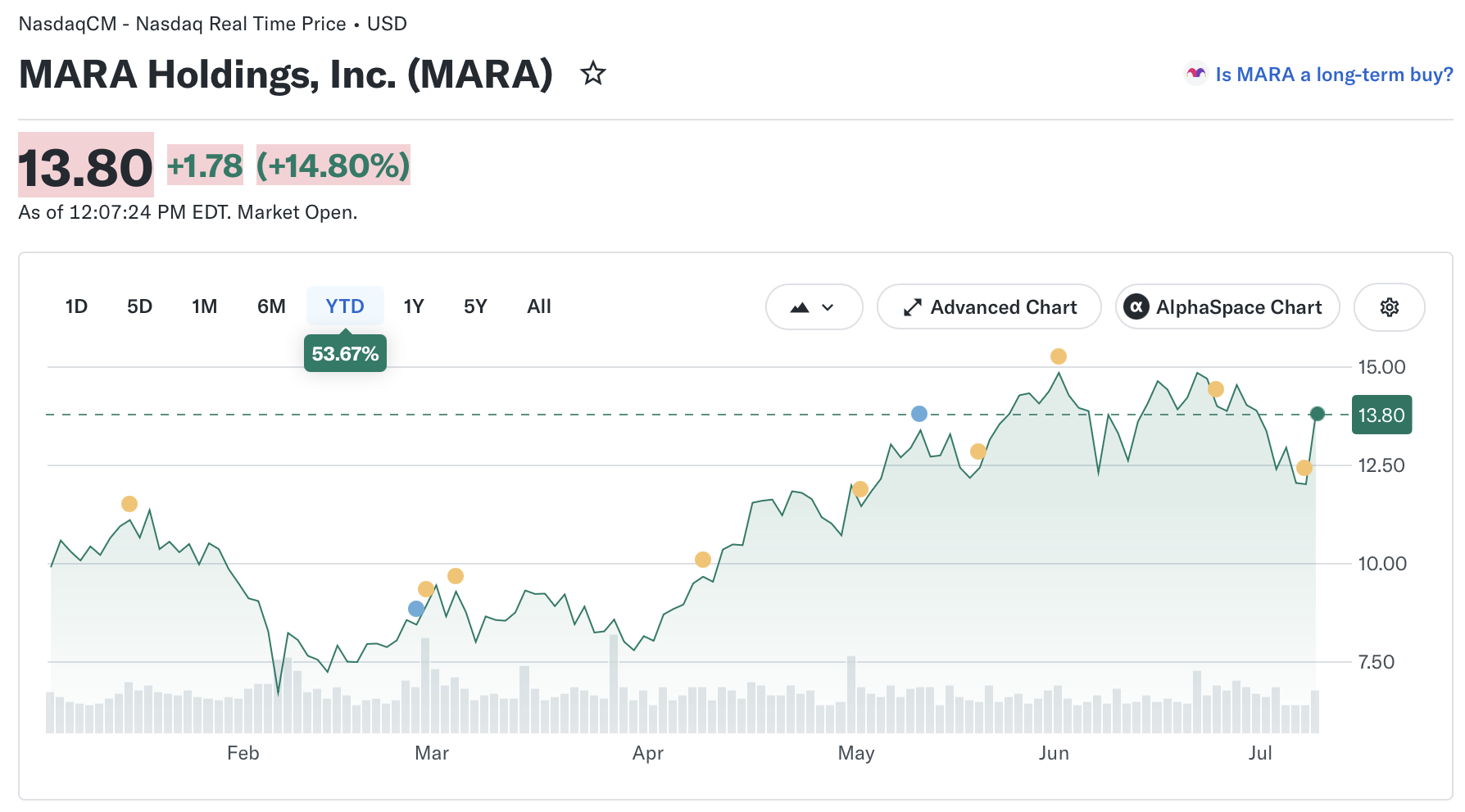
Source: Yahoo Finance
In a post on X, MARA said the project remains in the early stages of development and is subject to regulatory approvals, adding that construction will be phased over several years.
In April, MARA announced it would acquire Long Ridge Energy & Power, adding a 505-megawatt gas-fired power plant and a co-located data center in Ohio, in a roughly $1.5 billion transaction. Earlier this year, the company acquired a 64% stake in French computing infrastructure operator Exaion.
MARA is the fourth-largest publicly traded corporate holder of Bitcoin (BTC), with 36,303 BTC, according to data from BitcoinTreasuries.NET.
Related: Crypto Biz: Is AI the exit strategy for miners?
BTC miners bet big on AI data centers
Bitcoin miners have increasingly expanded into AI and high-performance computing as demand for data center capacity has grown. Rather than repurposing mining hardware, companies are leveraging existing power infrastructure built to support BTC mining, including grid connections, substations and energized sites.
However, converting mining sites into AI-ready data centers requires significant investment. CoinShares estimates mining infrastructure typically costs $700,000 to $1 million/MW, compared with $8 million to $15 million/MW for liquid-cooled AI infrastructure, while hyperscale customers require higher power density and uptime than many mining facilities were designed to provide.
Even so, several publicly traded miners have announced multibillion-dollar AI infrastructure agreements in recent months. Core Scientific expanded its hosting agreement with CoreWeave to more than $10 billion, while Hut 8 signed a 15-year, $7 billion data center lease with Fluidstack. TeraWulf has reported billions of dollars in contracted HPC revenue.
Investors have broadly rewarded the strategy. Hut 8 shares jumped about 20% after announcing its Fluidstack agreement, while companies with AI and HPC contracts have traded at higher valuation multiples than miners focused solely on Bitcoin production, according to a report from CoinShares.
Last week, TeraWulf shares rose about 12% after the Bitcoin miner announced a 20-year AI data center lease with Anthropic, expected to generate roughly $19 billion in contract revenue.
MARA is the sixth-largest holding in the sector exchange-traded fund CoinShares Bitcoin Mining ETF, as 4.76% of assets, according to Yahoo Finance data. WGMI shares were up more than 5% in early afternoon trading on Thursday.
Magazine: Bitcoin’s quantum dilemma: Bigger blocks or STARK proofs?
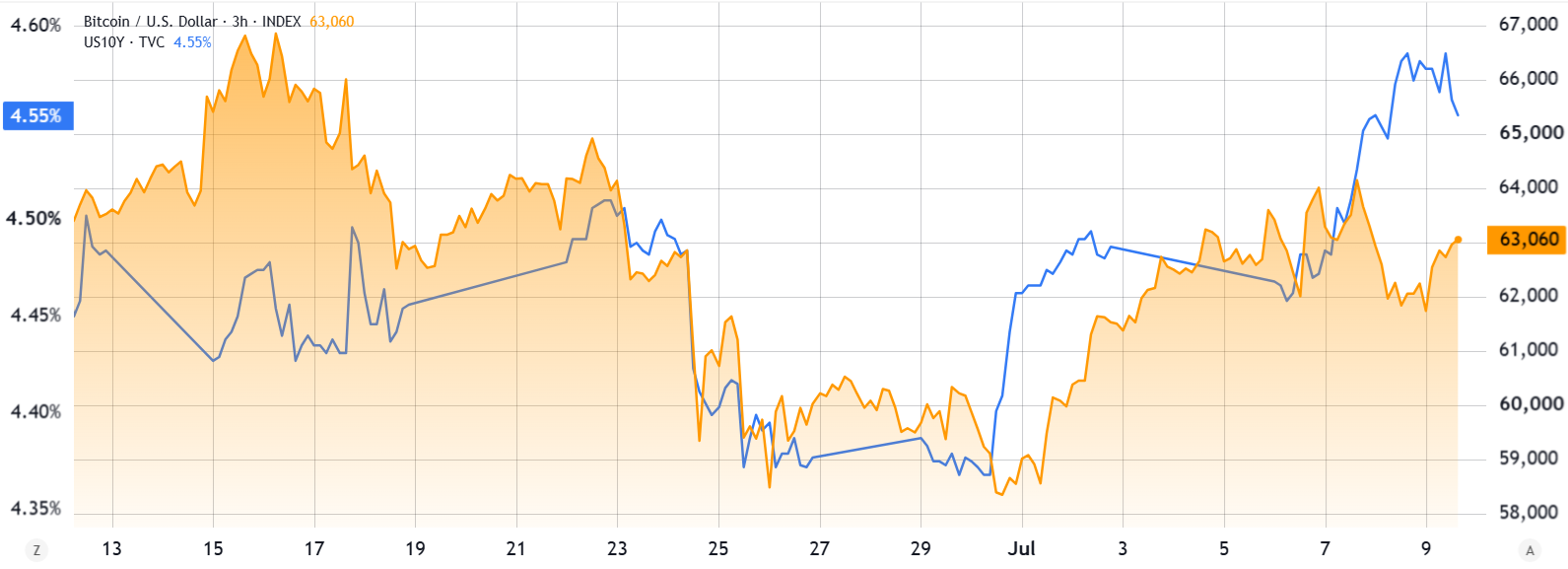
Bitcoin (BTC) reclaimed the $63,000 mark on Thursday, but traders fear a correction ahead of Friday’s $1.4 billion options expiry on Deribit. The concerns stem from the US government bond yield climbing toward a level that many view as a warning sign. Is the $62,000 support level at risk?
Key takeaways:
- Rising US Treasury yields signal debt concerns, negatively pressuring risk assets.
- Balanced Bitcoin options put-to-call volumes suggest limited downside from the $62,000 level.
US 10-year Treasury yield (left) vs. Bitcoin/USD (right). Source: TradingView
Bitcoin ETF outflows are not a concern ahead of the Bitcoin options expiry
The 10-year Treasury yield’s approach to 4.6% signals investor anxiety over the expansion of US government debt and prospects for further monetary policy expansion to avert an economic recession. Bitcoin has felt the impact, trading sideways while the Nasdaq-100 Index sits merely 4% below its all-time high.
The AI sector’s bullish momentum keeps pulling capital toward equities. Asian chipmaker SK Hynix oversubscribed IPO in the US helped push the sector higher on Thursday, led by Arm Holdings (ARM) 10% gains, Advanced Micro Devices (AMD) 7% rally and Micron’s 7% intraday gains.
Wednesday brought $85 million in net outflows from spot Bitcoin ETFs, ending a short three-day inflow run. Still, the figure does not confirm a reversal in institutional flows. More importantly, demand for Bitcoin options has stayed balanced between calls (buy) and puts (sell).
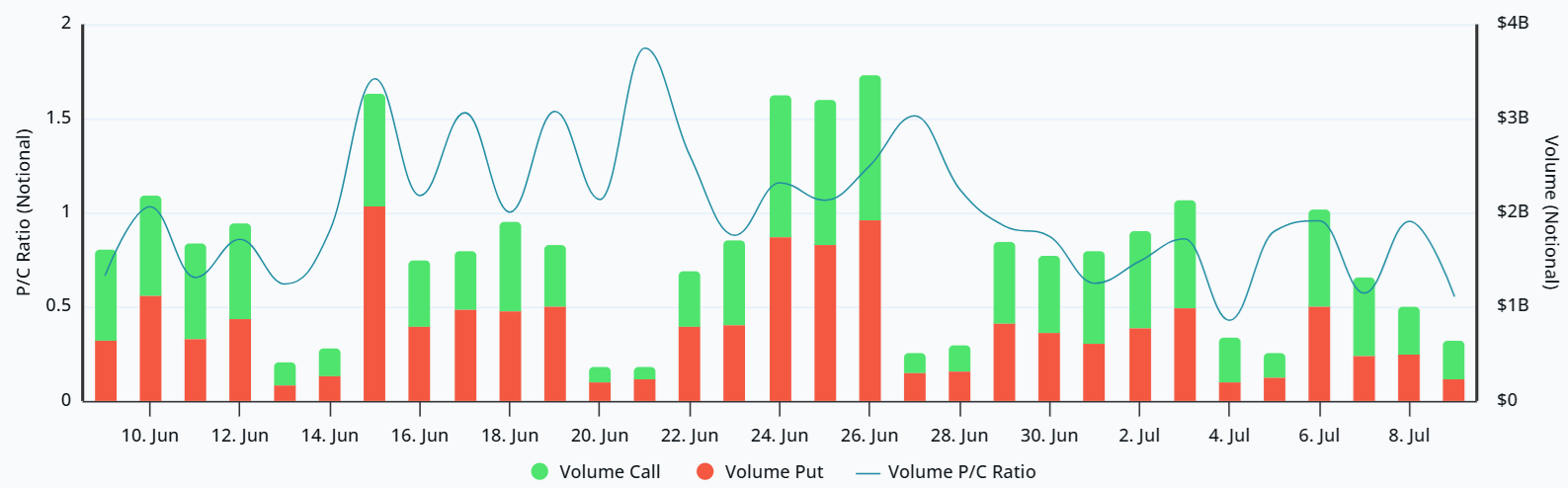
Bitcoin options put-to-call volumes ratio at Deribit. Source: Laevitas
Call options volume has outpaced put instruments over the past four days, reflecting reduced demand for downside movements. However, the upcoming weekly options expiry features an interesting setup as calls up to $62,500 total $137 million, while puts above $61,000 are at $121 million.
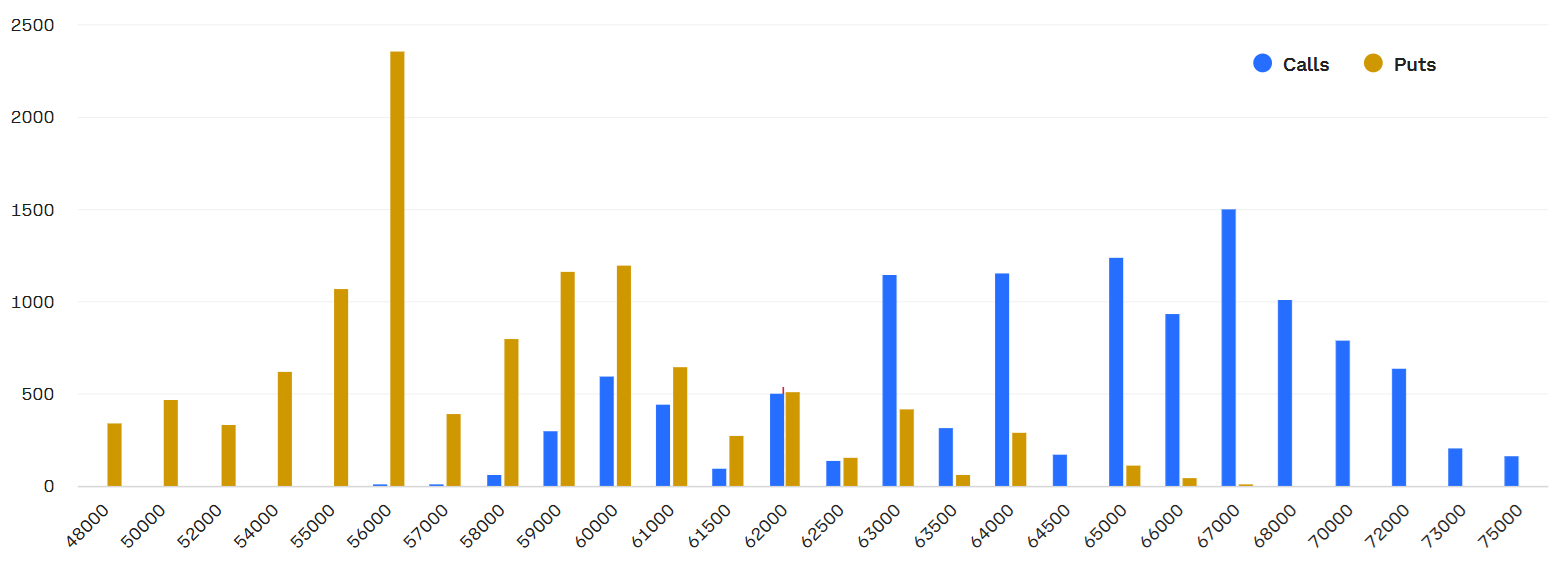
Deribit BTC options open interest for July 10, BTC. Source: Deribit
Bitcoin bulls would gain significant ground with a move above $63,500 by the 8:00 AM UTC expiry on Friday, boosting their advantage to $190 million. Bears hold a smaller $100 million edge below $61,000, limiting their incentive without additional catalysts.
Oil price decline could strengthen the demand for risk-on assets
A temporary truce in the Middle East could ease recession fears and shift money from fixed income into risk markets, likely pushing Bitcoin price higher. In contrast, continued strength in the AI sector drains capital from other investments while traders fear large Treasury issuance to cover growing debt.
Related: Bitcoin peels back to $62K as Fed-wary futures traders cut risk: Is the BTC rally over?
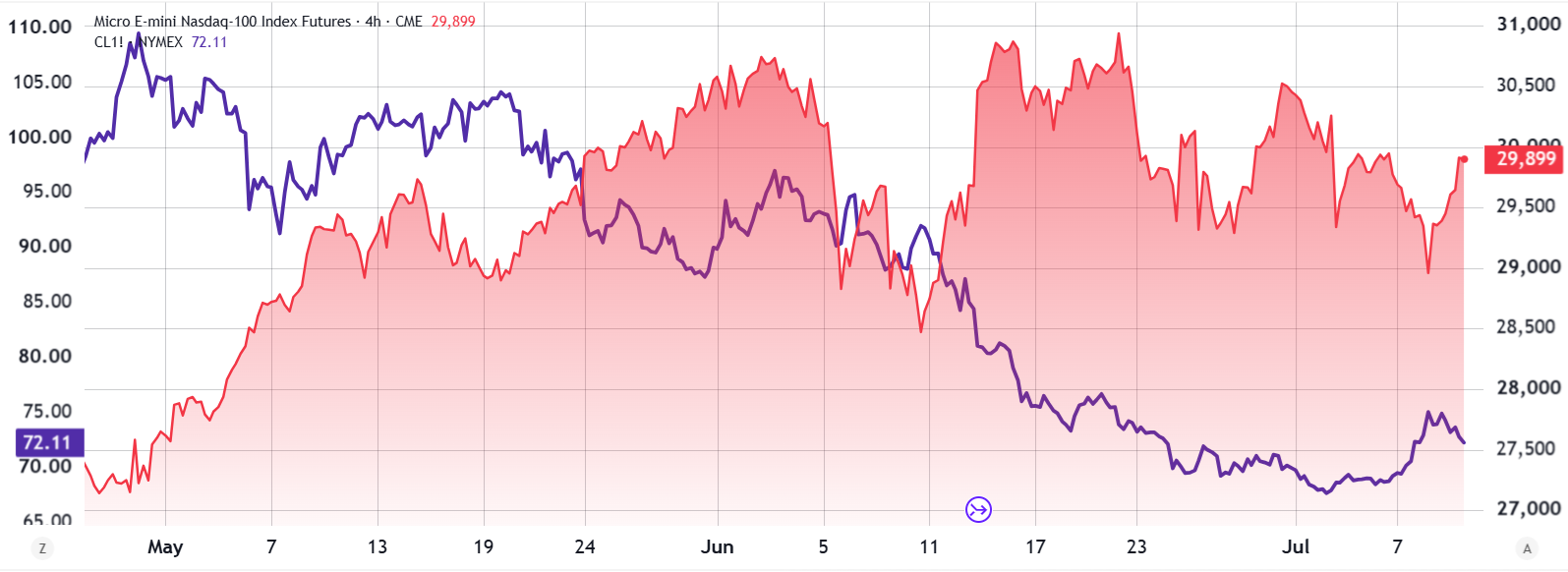
Crude WTI oil futures (left) vs. Nasdaq 100 Index futures (right). Source: TradingView
Traders should closely monitor whether Treasury yields will subside over the next week and if an aggravated war in Iran pushes oil prices higher. But with Bitcoin put options buying remaining restrained in recent sessions, the market appears positioned to strengthen the $62,000 support level.
Bitcoin sits in a delicate spot where a successful expiry resolution above $63,500 could provide short-term relief, but sustained upward momentum would require a boost from the macro side. As long as these dynamics persist, the odds favor limited bullish momentum for Bitcoin in the near term.
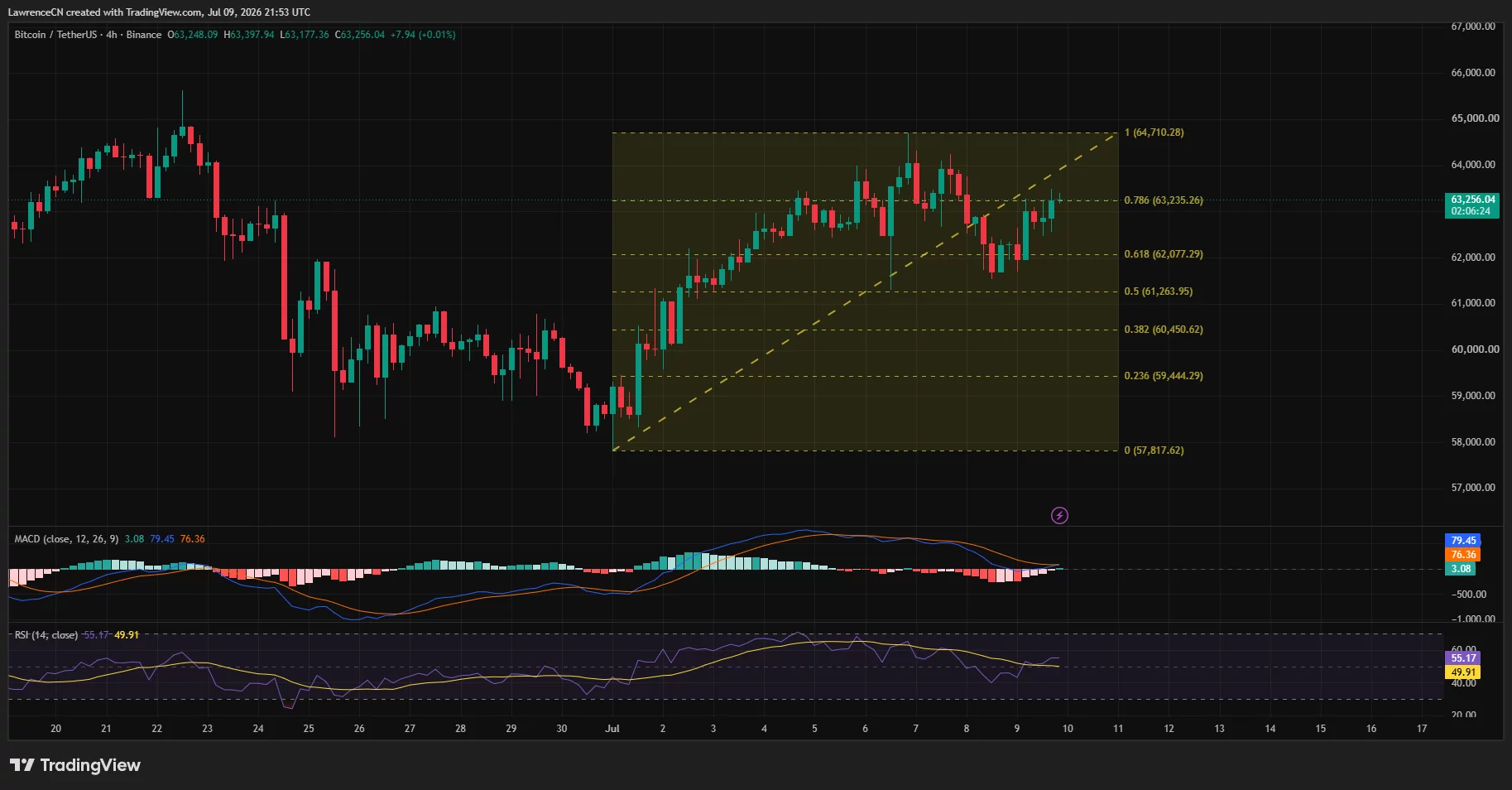
Bitcoin has climbed back above $63,000, gaining about 2% over the past 24 hours, as lower oil prices and softer U.S. bond yields have improved sentiment toward risk assets despite the crypto market remaining in extreme fear.
Summary
- Bitcoin has climbed above $63,000 as easing oil prices and lower Treasury yields lifted risk appetite.
- The Crypto Fear & Greed Index remains in Extreme Fear, showing investor confidence is still weak.
- Technical indicators suggest improving momentum, with Bitcoin testing key resistance near $63,235.
According to data from crypto.news, Bitcoin (BTC) traded around $63,250 on Thursday after recovering alongside other major cryptocurrencies as geopolitical concerns tied to Iran eased. The move followed a retreat in crude oil prices from recent highs and lower Treasury yields, conditions that often encourage investors to move back into higher-risk assets.
Although the recovery has pushed Bitcoin higher, investor confidence remains fragile. The Crypto Fear & Greed Index stayed in the Extreme Fear zone at 22, improving only slightly from 19 a week earlier. The reading suggests traders remain cautious even as prices stabilize.
Technical signals point to improving momentum
Beyond the macro backdrop, Bitcoin’s recent price action has started to show signs of technical recovery. On the 4-hour chart, BTC has reclaimed the 61.8% Fibonacci retracement level near $62,077 and is testing resistance around the 78.6% retracement at roughly $63,235.
The chart also shows Bitcoin continuing to trade above a rising trendline formed after its early July rebound. Momentum indicators have improved alongside the price move. The Relative Strength Index has recovered to around 55, moving back above the neutral 50 level, while the MACD histogram has turned positive and the MACD lines are approaching a bullish crossover.
Together, these indicators suggest buying pressure has strengthened, although confirmation of a sustained breakout has yet to emerge.
A successful move above the current resistance zone could expose the recent swing high near $64,700. On the downside, the $62,100 area remains the first notable support should buyers lose momentum.
Elsewhere across the market, Ethereum added about 1.1% over the past day to trade just below $2,000. Solana rose roughly 1.5% to around $78, while XRP held above the $1 level as large-cap cryptocurrencies tracked Bitcoin’s recovery.
Lower oil and bond yields have supported crypto
The improvement in crypto prices has coincided with a shift in broader financial markets. Oil prices, which had surged earlier on concerns that the Iran conflict could disrupt global supplies, pulled back as fears of further escalation eased. At the same time, U.S. government bond yields also declined.
Lower oil prices can reduce inflation expectations, while falling Treasury yields make fixed-income investments relatively less attractive. Under those conditions, investors often become more willing to allocate capital to assets with higher return potential, including cryptocurrencies.
Bitcoin’s 2.4% gain over the past seven days indicates the latest advance is part of a gradual recovery rather than a one-session spike. Even so, the persistent Extreme Fear reading suggests many market participants are waiting for stronger confirmation before turning decisively bullish.
Adding another development to the sector, institutional digital asset custodian BitGo has quietly introduced a new toolkit focused on long-term crypto infrastructure. While the release has not affected current market prices, it highlights continued institutional investment in blockchain services even as short-term market sentiment remains cautious.
Disclosure: This article does not represent investment advice. The content and materials featured on this page are for educational purposes only.

Several publicly traded Bitcoin miners have enjoyed sharp stock re-ratings after pivoting toward AI infrastructure, but investors are increasingly questioning whether insiders and major shareholders capitalized on the rally before the sector cooled, raising fresh governance concerns, according to Blocksbridge Consulting.
In its latest Miner Weekly newsletter, Blocksbridge said the AI narrative helped lift valuations for several Bitcoin mining companies as they repositioned operations around data centers, power infrastructure and hyperscaler partnerships. However, sentiment has since weakened, with AI and chip stocks pulling back. The TEM AI Infrastructure Growth Index, which tracks Bitcoin miners, artificial intelligence cloud providers, power suppliers and other AI infrastructure companies, has decline 16% over the past month.
That shift has brought insider transactions into sharper focus. Executives at TeraWulf, Cipher Digital, Riot Platforms and Core Scientific have disclosed stock sales, many of them executed under prearranged Rule 10b5-1 trading plans. While such plans are common and designed to avoid conflicts around nonpublic information, the sales have attracted greater scrutiny as AI-related stocks have retreated, Blocksbridge said.
The trend extends beyond company executives. Strategic investors have also reduced their exposure, including stablecoin issuer Tether, which trimmed its stake in Bitdeer after the company’s AI-driven rebound.
According to Blocksbridge, investors are increasingly shifting their attention from the AI growth narrative to questions around governance and whether the benefits of the tech transition will ultimately accrue to public shareholders.
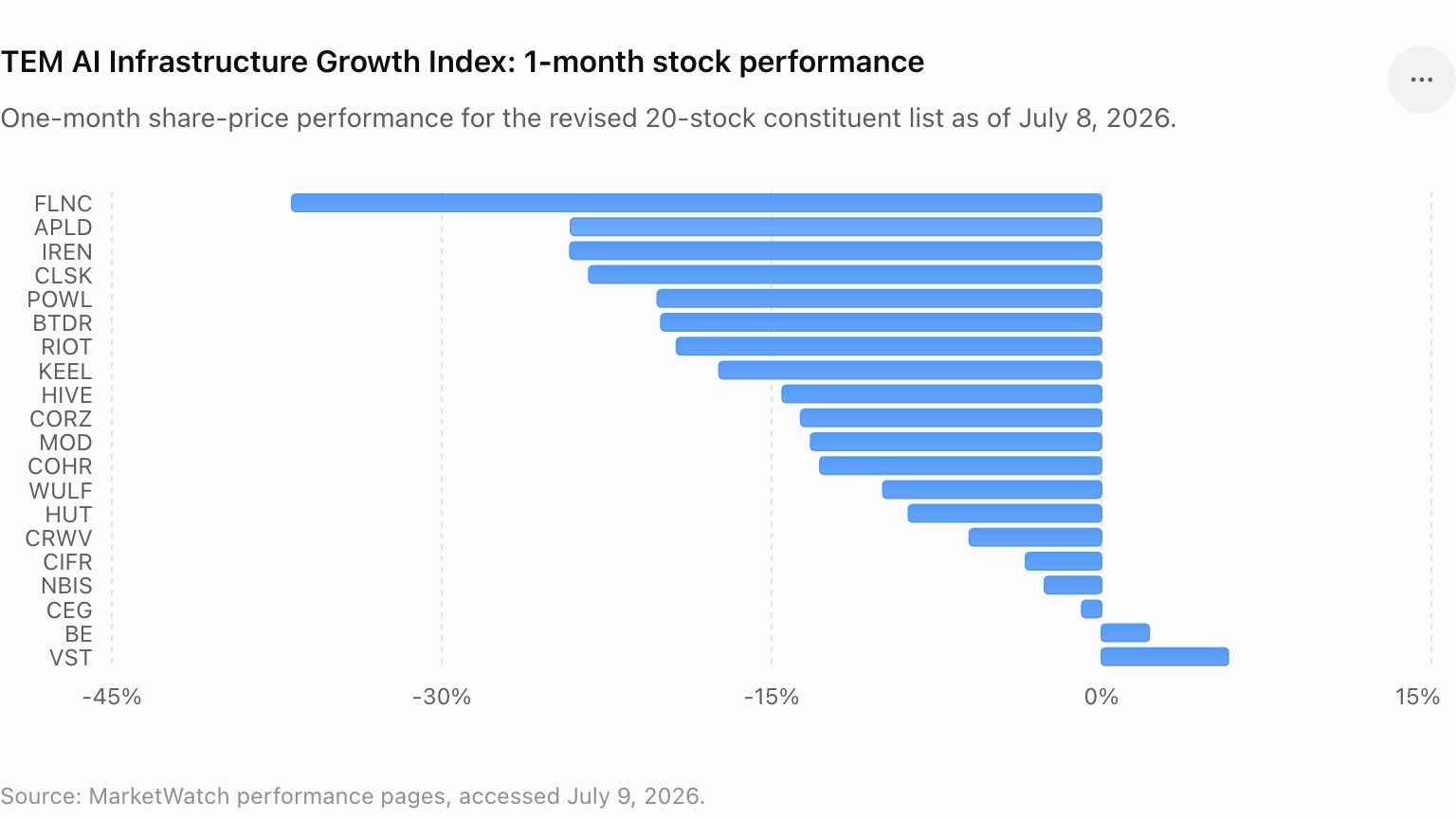
Most stocks in the TEM AI Infrastructure Growth Index have declined sharply over the past month. Source: Miner Weekly
Blocksbridge said TeraWulf offers the clearest example because the company remains one of the biggest beneficiaries of the AI infrastructure transition. CEO Paul Prager and Beowulf E&D Holdings, an entity he manages, sold roughly 1.59 million WULF shares before the company on Monday announced a 20-year AI infrastructure lease with AI developer Anthropic, a deal widely viewed as a major validation of its AI strategy.
Related: SBI Crypto shuts Bitcoin mining pool after 5-year run
AI spending raises questions about long-term returns
Many Bitcoin miners have pivoted toward AI data centers as mining economics have become increasingly challenging, particularly after Bitcoin’s 2024 halving squeezed industry margins. However, the artificial intelligence trade has also become more crowded, with companies facing growing pressure from investors to justify heavy infrastructure spending amid uncertain returns.
A report published by Deloitte in October described AI as a “paradox of rising investment and elusive returns,” noting that many organizations expect AI investments to take longer than anticipated to generate meaningful value.
Separate research by Teneo, based on a survey of more than 350 public company CEOs, found that fewer than half of artificial intelligence initiatives have delivered returns exceeding their costs.

Corporate AI spending is expected to increase significantly despite modest returns on investment. Source: Deloitte
Despite those challenges, companies continue to invest aggressively in AI infrastructure, betting that long-term demand for compute capacity will outweigh near-term concerns over profitability.
Bitcoin miners, with access to large-scale power and existing data center infrastructure, are positioning themselves to capture that opportunity.
Related: Trumps’ American Bitcoin sinks 8.4% ahead of reverse stock split to stay listed
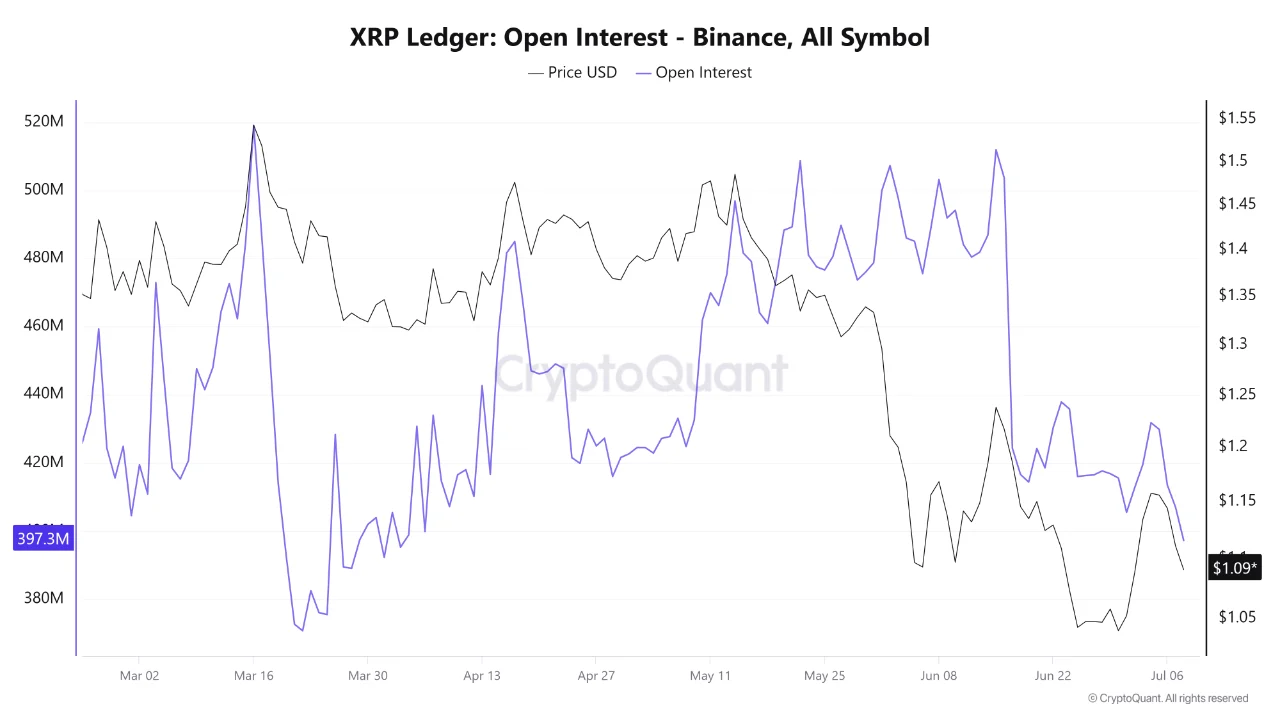
XRP futures open interest on Binance has fallen to roughly 397 million XRP, its lowest level in over three months. The decline arrives as the token trades at $1.09.
Here is what the drop means, how spot data contrasts, and what could come next for the price.
What the XRP Open Interest Decline Actually Means
Open interest measures the total number of outstanding derivative contracts in a market. A decline in this metric, especially alongside price weakness, often reflects deleveraging as traders reduce or close their existing positions.
On Binance, the drop signals lower speculative activity in XRP futures compared to previous periods. Furthermore, the metric is now at its weakest level in over three months, suggesting a cooling appetite for leveraged exposure.
CryptoQuant analyst Arab Chain clearly framed the trend. The analyst wrote that the decline points to “a slowdown in activity within the derivatives market.”
The analyst also noted that falling open interest alongside soft prices often signals weaker risk appetite and an outflow of liquidity from futures.
“Although a decline in open interest is not necessarily a definitive bearish signal, it does point to reduced trader participation in the derivatives market. In many cases, this phase represents a period of repositioning as investors await a clearer market direction,” CryptoQuant analyst Arab Chain said.
Follow us on X to get the latest news as it happens.

The spot side, however, tells a contrasting story. The XRP Binance Scarcity Index has risen to 0.77, its highest reading in over two years. As a result, the available supply for immediate selling on the exchange appears notably reduced.
Exchange reserves reinforce that trend. Binance XRP reserves have dropped roughly 650 million coins, or about 20%, since November 2024. Moreover, they fell from 2.8 billion in May to around 2.6 billion more recently.
Such withdrawals can signal investors moving tokens into self-custody. However, they do not automatically translate into upward price pressure without corresponding demand from fresh buyers entering the market.
What Does This Mean for the XRP Price
Reduced open interest may lead to lower leverage-driven volatility in the short term. As a result, the XRP price action could become more influenced by spot flows than by derivatives positioning across the market.
Technical observations remain mixed, though. Some charts show a hidden bearish divergence on the daily timeframe: price is forming lower highs while the RSI is forming higher highs. Holding above $1.15 is seen as important.
In derivatives, short positions faced pressure near the $1.00 to $1.04 area, contributing to a recent rebound. However, elevated unliquidated long positions across major cryptocurrencies increase the potential for volatility if key levels break.
A failure to hold $1.00 could open the path toward lower supports near $0.87. Meanwhile, XRP’s trajectory will likely continue to correlate with broader market conditions, particularly Bitcoin’s performance and overall risk sentiment.
“While many have been calling bottoms throughout this entire correction on every green candle, I’ve consistently argued that XRP would likely need a test of $1.09 or $0.87 before a true macro pivot could occur… here we are. We’re no longer talking about hypothetical levels. We’re sitting on them,” analyst CasiTrades noted.

Trading volume during the latest recovery has stayed relatively modest. Consequently, spot buyer conviction remains unconfirmed at current levels. Resistance sits near $1.19, with further upside toward $1.38 possible on a sustained break.
Subscribe to our YouTube channel to watch leaders and journalists provide expert insights.
The post XRP Open Interest on Binance Hits a Three-Month Low: What It Means for Price appeared first on BeInCrypto.


Bitdeer Technologies has unveiled a $36 million manufacturing facility in Nevada, bringing production of its SEALMINER Bitcoin mining machines to the United States.
Summary
- Bitdeer will invest $36 million in a Nevada factory to produce SEALMINER Bitcoin mining machines.
- The new Sparks facility is expected to begin commercial production by the end of 2026.
- Bitdeer shares jumped 14.1% as the company reported stronger U.S. manufacturing and 921 BTC mined in May.
According to Bitdeer, the new plant in Sparks, Nevada, will manufacture key components for the company’s SEALMINER mining rigs, with commercial production scheduled to begin before the end of 2026. The company said the facility will strengthen its manufacturing capacity inside the United States while reducing its dependence on outside suppliers for critical mining equipment.
Shares of Bitdeer responded positively to the announcement, climbing 14.1% on Thursday to $14.33. Even after the rally, the stock remains about 27% below its June peak, although it has gained roughly 26% since the beginning of the year.
Nevada incentives support local manufacturing expansion
Details released by Bitdeer show the Singapore-based company worked with Nevada Governor Joe Lombardo’s administration and local officials before selecting Sparks for the project. According to comments made by Bitdeer CEO Catherine Guo to local media, the state approved tax incentives, including reduced qualifying sales taxes, as part of the investment package supporting the facility.
Commercial production is expected to begin by year-end, allowing Bitdeer to manufacture more of its mining hardware domestically instead of relying as heavily on third-party suppliers. The company said the plant will focus specifically on Bitcoin mining equipment rather than artificial intelligence hardware.
Although the new factory centers on mining machines, Bitdeer has also expanded into AI cloud computing and high-performance computing services in recent years. According to the company, those businesses will continue separately from the Nevada manufacturing operation.
Bitcoin miners continue adding AI businesses
Across the industry, publicly traded Bitcoin miners are investing beyond cryptocurrency mining as they seek additional revenue from power-intensive computing businesses.
MARA Holdings announced on Thursday that it plans to acquire a Texas site capable of supporting up to 2 gigawatts of capacity for AI and digital infrastructure projects. The company said the expansion will increase its ability to serve artificial intelligence workloads alongside its existing mining operations.
Earlier in the week, TeraWulf announced a 20-year data center lease agreement with AI startup Anthropic. According to TeraWulf, the contract could generate about $19 billion in revenue over its lifetime, highlighting the growing interest among mining companies in long-term AI infrastructure deals.
While several competitors are directing more resources toward AI data centers, Bitdeer continues expanding both its mining operations and supporting infrastructure. The Nevada facility adds manufacturing to that strategy by giving the company greater control over the production of its own mining hardware.
Separately, Bitdeer’s latest production update showed the company mined 921 Bitcoin during May. According to Bitdeer, the figure represents a 370% increase compared with the same month a year earlier, underscoring the rapid growth of its mining business as it adds new infrastructure and equipment.
The combination of higher Bitcoin production and domestic manufacturing comes as mining companies continue adjusting their business models after the latest Bitcoin halving. While many firms are pursuing AI-related contracts to diversify earnings, Bitdeer’s latest investment keeps its manufacturing expansion closely tied to its core Bitcoin mining business while increasing its presence in the United States.
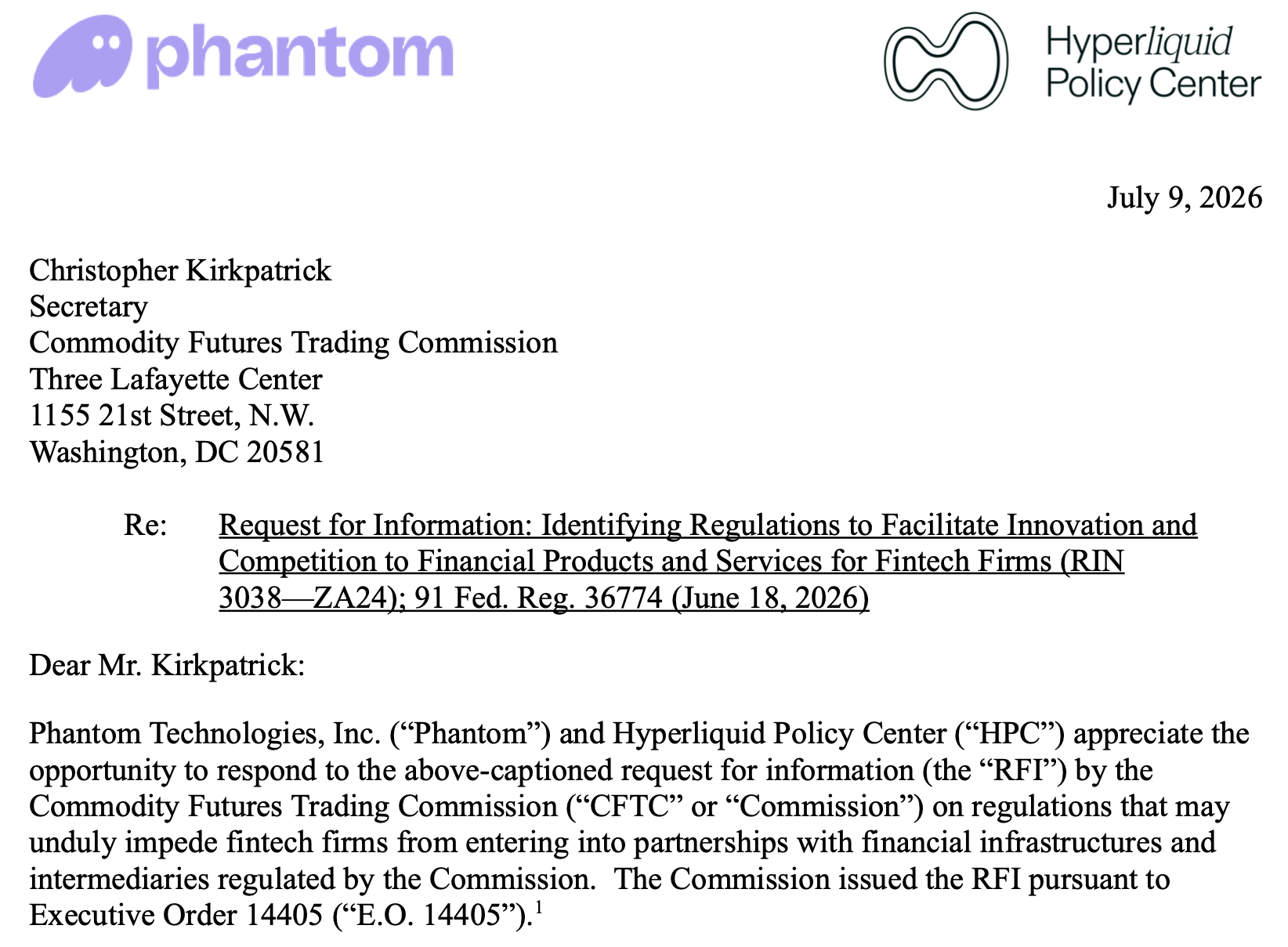
Crypto wallet provider Phantom and the Hyperliquid Policy Center have urged the US Commodity Futures Trading Commission (CFTC) to exempt blockchain protocol developers and non-custodial wallet providers from regulations designed for traditional financial intermediaries.
In response to a CFTC request for information on regulations affecting fintech firms, the companies asked the agency to confirm that blockchain protocol developers do not have to register solely for creating onchain software, issue guidance allowing regulated derivatives firms to use blockchain infrastructure, and codify exemptions preventing non-custodial wallet providers from being treated as introducing brokers.
The companies argued that existing CFTC regulations were designed for custodial financial intermediaries that hold customer assets and process trades, while onchain protocols allow users to transact directly without intermediaries controlling funds or executing orders.
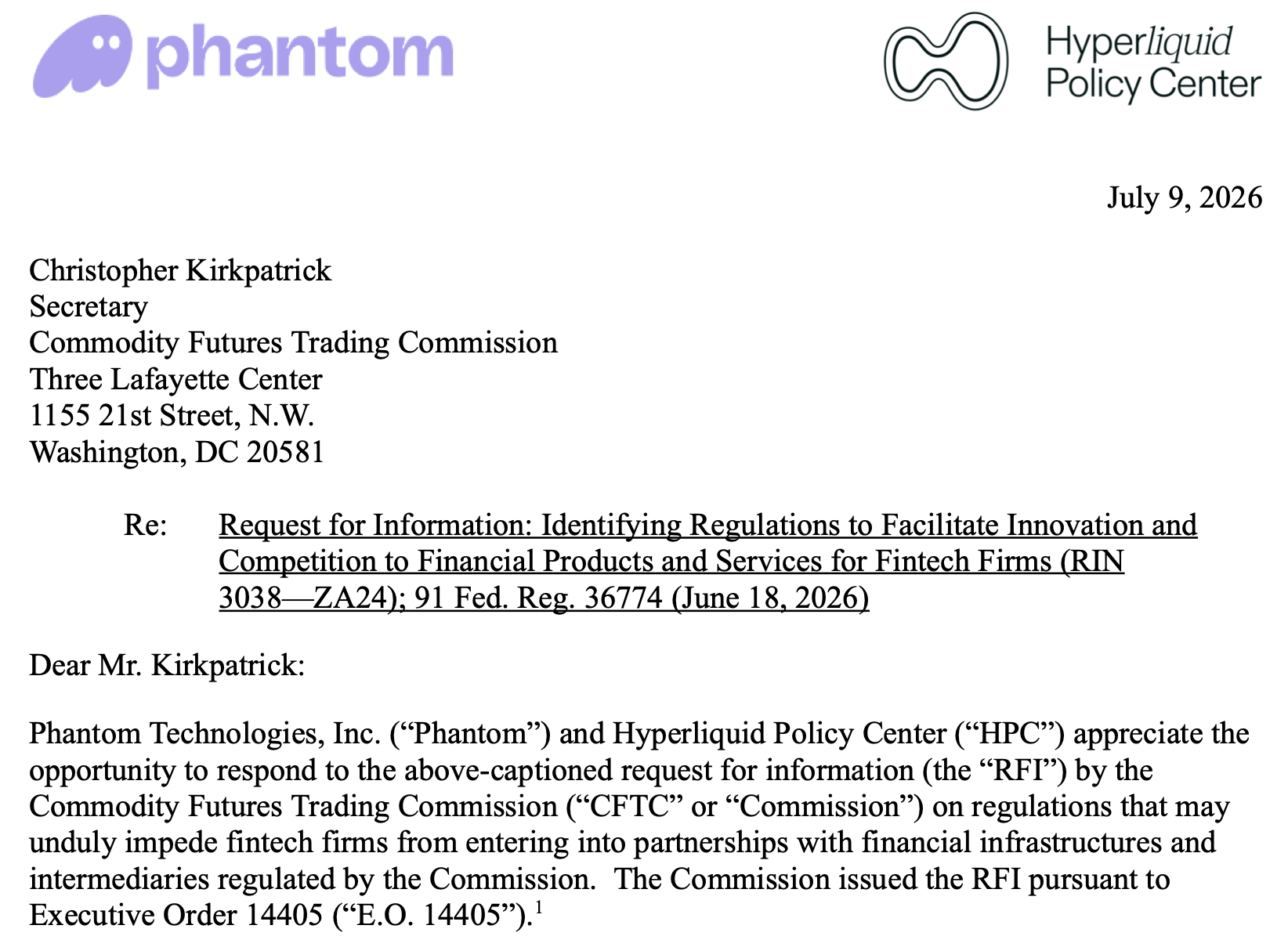
Letter to the CFTC. Source: Hyperliquidpolicy.org
They said registration requirements should apply to entities that handle customer funds or execute trades, rather than to developers who create blockchain software or contribute to open-source protocols without controlling how the software is used.
The groups also asked the CFTC to clarify that registered derivatives exchanges, clearinghouses and intermediaries can use onchain infrastructure for functions including trade execution, clearing, settlement, margining and recordkeeping, provided they continue to comply with existing regulations.
The groups said the alternative to adopting the recommendations is the status quo, in which “American users continue to be walled off from onchain derivatives markets,” while innovation continues to take place offshore.
Related: Can AI drain DeFi? Separating Claude Mythos hype from reality
Regulatory debate over onchain derivatives intensifies
The letter comes as crypto companies and traditional exchanges press US regulators over how blockchain-based derivatives should be regulated, with both sides seeking greater clarity on the agency’s approach.
In May, Intercontinental Exchange and CME Group reportedly urged regulators to scrutinize Hyperliquid’s expansion into commodity-linked perpetual futures, arguing that the decentralized platform’s energy derivatives posed market integrity and manipulation risks.
Two weeks later, ICE CEO Jeffrey Sprecher called for a “level playing field” that would allow regulated exchanges to offer 24/7 onchain perpetual futures, saying existing regulations were preventing traditional exchanges from competing with platforms such as Hyperliquid. Sprecher also said ICE had held exploratory discussions with Hyperliquid to better understand onchain derivatives markets.
CME, meanwhile, has continued expanding its own regulated crypto derivatives business. This year, the exchange announced futures tied to Avalanche and Sui, launched CFTC-regulated Bitcoin volatility futures and introduced the Nasdaq CME Crypto Index futures, a market-cap weighted contract tracking seven digital assets.
Despite that expansion, CME sued the CFTC in June over the agency’s approval of crypto perpetual futures, arguing the regulator exceeded its authority under the Commodity Exchange Act.
Magazine: The 5 types of real world assets being tokenized fastest onchain

White House officials claimed that they had “not received names” in response to requests to Senate Democrats for potential commissioners to two US financial regulatory agencies.
In a Thursday letter to US Senate majority leader John Thune and minority leader Chuck Schumer, White House officials said that they had already solicited names from Senate Democrats for the Securities and Exchange Commission (SEC) and Commodity Futures Trading Commission (CFTC). The leadership panels of both financial agencies are understaffed, with only Republican members nominated and confirmed by the Senate.
The letter came in response to a June 10 request from 12 Senate Democrats over staffing concerns at US federal agencies, including the SEC and CFTC. Although US President Donald Trump has put forward some Democratic names for positions at agencies, including the National Labor Relations Board and International Trade Commission, many lawmakers have expressed concerns about the financial regulators being understaffed with crypto market structure legislation pending.
As of Thursday, the SEC had two vacant Democratic seats with three Republican commissioners, one of whom, Hester Peirce, was expected to leave by November. The CFTC chair and sole commissioner was Republican Michael Selig, who, in his seven months on the job, has been outspoken about defending what he called the agency’s “exclusive jurisdiction” over prediction market companies.
Related: Wyden urges Senate leaders to keep dev protections in crypto bill
“In a sharp break from precedent across Republican and Democratic administrations, you have refused in almost every instance to engage with Senate Democratic leadership in the normal process of identifying Democratic nominees to fill vacancies on independent agencies,” said the Democratic senators in June. “Instead, the White House appears set on leaving the vast majority of these critical positions open indefinitely.”
Trump had not announced any nominations sent to the Senate since June 24. Cointelegraph reached out to a White House spokesperson for comment but did not receive an immediate response.
CFTC chair says agency could write “all the rules” on digital assets without legislation
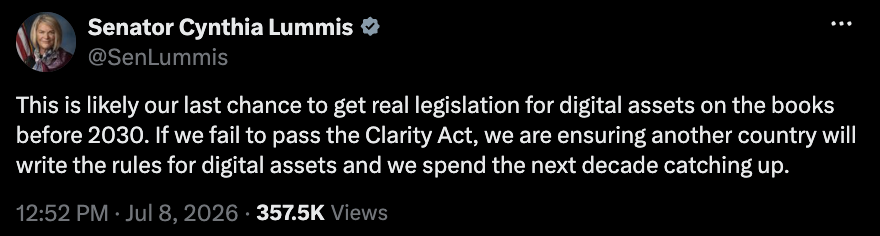
With the Senate on state work periods until Monday, there have been reports that some lawmakers are continuing to discuss the Digital Asset Market Clarity (CLARITY) Act, with Republicans preparing to vote on the bill in July.
Source: Cynthia Lummis
The digital asset market structure legislation has already faced significant delays since passing the House of Representatives in July 2025, with government shutdowns and debates over ethics provisions in the bill amid Trump’s ties to the crypto industry. While two Senate committees advanced their versions of the bill this year, the legislation still needs some Democratic support to meet the 60-vote threshold in the chamber.
“I do think there’s a little bit of this creep into ethics and other types of extraneous issues and [Democrats are] just derailing this real opportunity to have a bipartisan bill in place,” said Selig in a Wednesday interview with Fox Business, referring to the CLARITY Act. “Otherwise, you end up with regulators like me writing all the rules, and I’m sure all the Democrats would prefer to get something in place that’s bipartisan.”
Magazine: Crypto’s CLARITY Act faces partisan fight over ethics on Senate floor
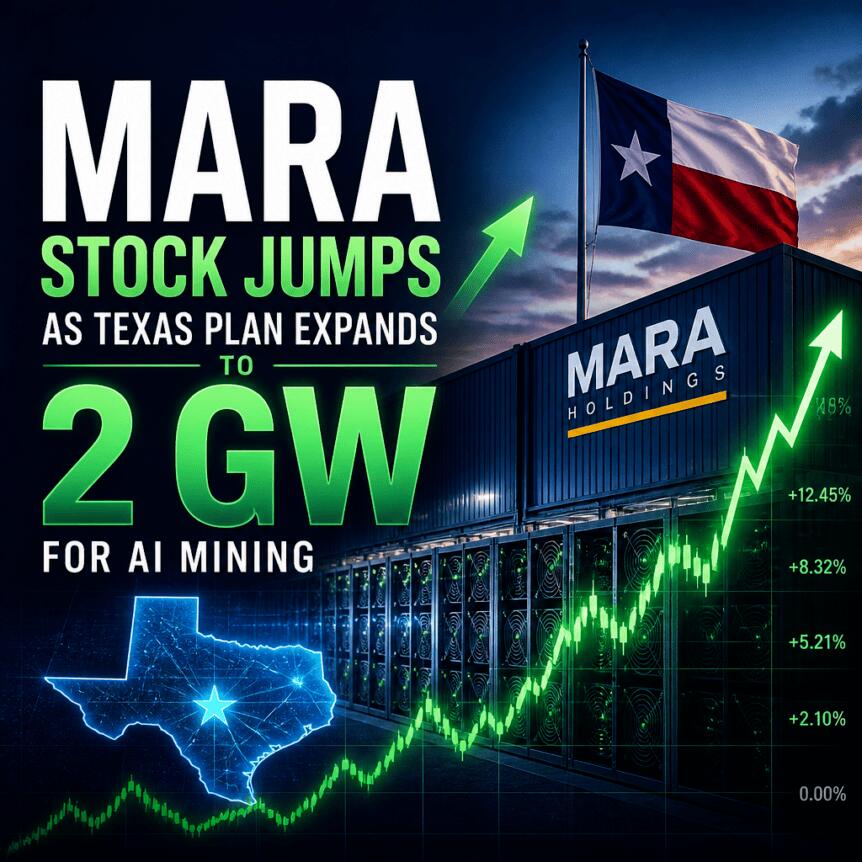
Bitcoin miner MARA Holdings saw its shares jump in Thursday’s early trading after the company outlined a major plan to build a Texas “digital infrastructure” campus designed to support both AI computing and Bitcoin mining. The move targets access to up to 2 gigawatts (GW) of power—an increasingly scarce input for AI data centers.
According to MARA, the project centers on a 1,200-acre site in Matagorda County, roughly 90 miles southwest of Houston. The company expects initial access to 1 GW of grid capacity by October 2027, with availability potentially rising to 2 GW by April 2028, enabling expansion of high-performance computing alongside mining operations.
Key takeaways
- MARA announced plans for a 1,200-acre Texas site with expected access to 1 GW of grid capacity by October 2027 and up to 2 GW by April 2028.
- The company says the campus is intended to serve both AI/high-performance computing workloads and Bitcoin mining.
- After full energization, the site is projected to more than double MARA’s potential power capacity to about 4.8 GW.
- HIF USA is set to retain a minority stake if MARA leases with a high-performance computing tenant, and neither party disclosed financial terms.
- MARA’s broader push follows earlier acquisitions, including a 505-megawatt power plant and a co-located Ohio data center deal.
A power-heavy bet on AI computing
MARA’s announcement frames the Texas campus as an infrastructure play rather than a straight mining expansion. The company described development as a “digital infrastructure campus” that can host high-performance computing capacity while also supporting Bitcoin mining once the site is fully operational.
The early-stage development plan hinges on grid access. MARA said it expects 1 GW of grid capacity by October 2027 and up to 2 GW by April 2028. If and when the project reaches full energization, it is expected to more than double MARA’s potential power capacity to around 4.8 GW.
In separate reporting on its share performance, the news also notes that MARA said the project remains subject to regulatory approvals. The company indicated construction would be phased over multiple years.
Ownership structure and leasing dependency
The project includes a relationship with HIF USA. Under the terms MARA described, HIF USA will retain a minority ownership stake if MARA signs a lease with a high-performance computing tenant.
The companies did not disclose transaction financial terms. For investors, the key variable is the leasing plan: the minority-stake condition tied to HPC tenants highlights how MARA’s AI-collocation thesis depends on securing counterparties willing to commit to capacity on the timeline needed for data center development.
How miners are repositioning toward AI and HPC
The strategy fits a broader trend in crypto infrastructure. As demand for data center capacity has surged, some Bitcoin miners have begun expanding into AI and high-performance computing rather than relying solely on mining hardware.
Instead of repurposing chips and racks built specifically for mining, these companies aim to leverage power assets already designed for crypto operations—such as grid connections, substations, and energized sites. The rationale is straightforward: AI workloads require far higher and more reliable power delivery than many mining facilities were originally built to support.
CoinShares has estimated that mining infrastructure typically costs about $700,000 to $1 million per megawatt, while liquid-cooled AI infrastructure can range from $8 million to $15 million per megawatt for hyperscale-grade requirements. These figures underline why conversions can be expensive—particularly because AI customers typically expect higher power density and uptime.
Even with the costs, multiple publicly traded miners have recently announced large AI-oriented deals. CoinShares cited expansions and lease agreements across the sector, including hosting and data center arrangements that tie miner-hosted infrastructure to AI compute demand.
MARA’s expansion stack: from power generation to computing campuses
MARA’s Texas plan follows earlier steps to strengthen its power and compute footprint. In April, the company announced it would acquire Long Ridge Energy & Power, a transaction reported at roughly $1.5 billion. That deal included a 505-megawatt gas-fired power plant and a co-located data center in Ohio.
Earlier this year, MARA also disclosed that it acquired a 64% stake in French computing infrastructure operator Exaion. Taken together, the acquisitions and the new Texas site suggest a continued shift toward owning or controlling the energy and infrastructure needed to support both mining and high-performance computing.
From a market perspective, the timing also matters. Many AI buildouts are constrained by permitting, grid interconnection, and power availability—areas where miners that already operate or plan energy-heavy facilities may attempt to move faster than purely new data center developers.
Sector positioning and what investors will watch next
MARA is described as the fourth-largest publicly traded corporate holder of Bitcoin by BitcoinTreasuries.NET data, holding 36,303 BTC. The company is also noted as the sixth-largest holding in the CoinShares Bitcoin Mining ETF, where it accounts for 4.76% of assets based on Yahoo Finance figures.
For the next phase of this story, the most important uncertainties are regulatory approvals and the pace of phased construction toward the stated grid milestones. Investors and operators will likely focus on whether MARA secures high-performance computing tenants early enough to align leases with the planned power ramp-up—especially since the ownership treatment with HIF USA is tied to signing such agreements.
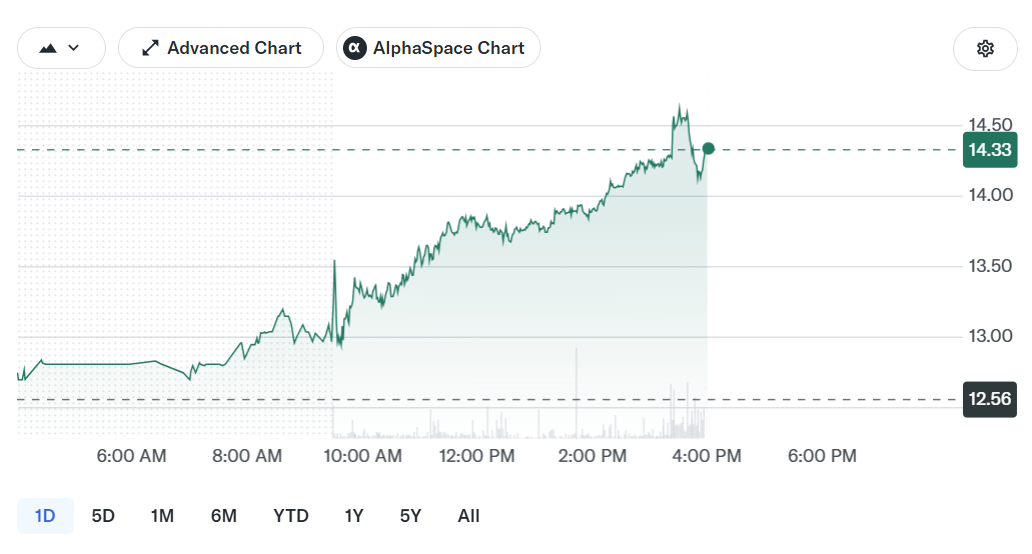
Shares of Bitdeer Technologies Group rose on Thursday after the Bitcoin (BTC) mining infrastructure company announced a $36 million manufacturing facility in Nevada, a move that expands its US production capacity and could reduce its reliance on third-party suppliers for mining hardware.
Bitdeer climbed 14.1% to $14.33, fully recovering from a selloff earlier in the week. Despite Thursday’s rally, the stock remains roughly 27% below its June high but is up 26% year-to-date.
The gains followed Bitdeer’s announcement that it will build a manufacturing facility in Sparks, Nevada, to assemble its SEALMINER line of Bitcoin mining machines. The plant will produce key mining hardware components, with commercial production expected to begin by the end of the year.
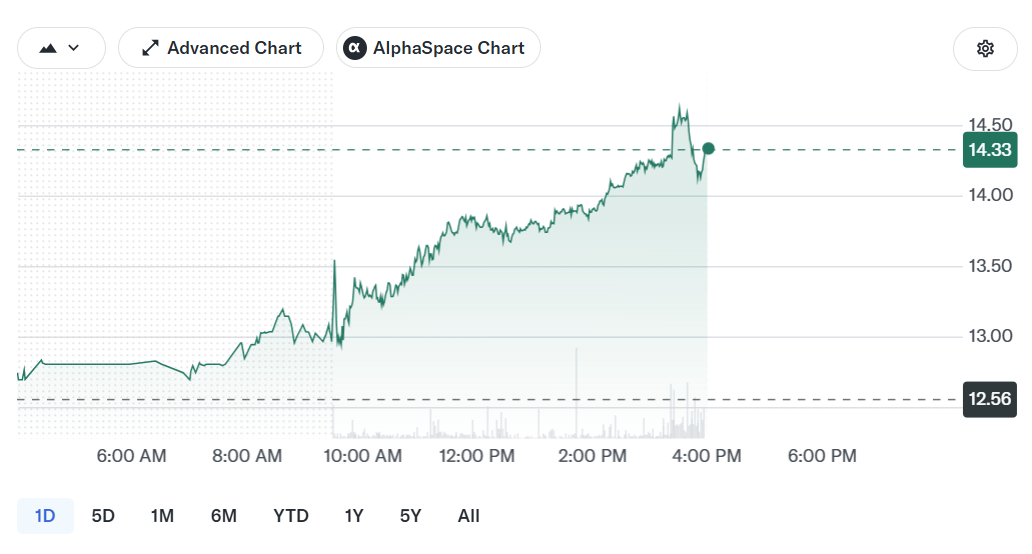
Bitdeer Technologies Group (BTDR) stock. Source: Yahoo Finance
Bitdeer CEO Catherine Guo told local media the Singapore-based company worked with Nevada Governor Joe Lombardo’s administration and local authorities to secure tax incentives, including a reduction in qualifying sales taxes, as part of its decision to establish operations in the state.
The investment comes as several large Bitcoin mining companies are expanding into AI and high-performance computing, leveraging their access to power and data center infrastructure. Bitdeer has also expanded into AI cloud services and HPC, though the new Nevada facility will be dedicated to manufacturing Bitcoin mining hardware.
Related: Bitcoin miners’ AI pivot faces investor scrutiny over insider sales
Bitcoin miners ramp up AI infrastructure investments
While Bitdeer is expanding its hardware manufacturing business, many publicly traded Bitcoin miners continue to diversify beyond cryptocurrency mining.
On Thursday, MARA Holdings announced plans to acquire a Texas site with up to 2 gigawatts of capacity to expand its AI and digital infrastructure business. Earlier this week, TeraWulf signed a 20-year data center lease with AI startup Anthropic, a deal the company said could generate roughly $19 billion in contract revenue.
Bitdeer, meanwhile, remains focused on expanding its mining operations alongside its infrastructure business. In its latest production update, the company said it mined 921 BTC in May, a 370% increase from the previous year.
Related: Bitcoin’s quantum dilemma: Bigger blocks or STARK proofs?

SK Hynix: South Korean chip giant raises $26.5bn in US share sale

MARA Stock Jumps on 2 GW Texas Power Site Acquisition

Sugar Ray Leonard names which win out of Hagler, Hearns and Duran was his best


-

 Fashion6 days ago
Weekend Open Thread: High Hopes
-
 NewsBeat5 days ago
Taylor Swift and Travis Kelce wedding staffer hilariously struggles to keep her cool while checking in megastars
-

 Crypto World6 days ago
Standard Chartered Secures MiCA License as ESMA Adds 37 New Crypto Firms
-

 Fashion3 days ago
Open Thread: What Great Books Have You Read Recently?
-

 Politics7 days ago
The House | “Reframing the debate from a binary discussion of winners and losers”: Yuan Yang reviews ‘We Are Not Machines’
-

 Fashion14 hours ago
Loro Piana Fall 2026 Enters Houston’s Art Scene
-

 News Videos3 days ago
Whats Hidden Inside This Cash Register? #treasure #reselling #money
-
 Tech3 days ago
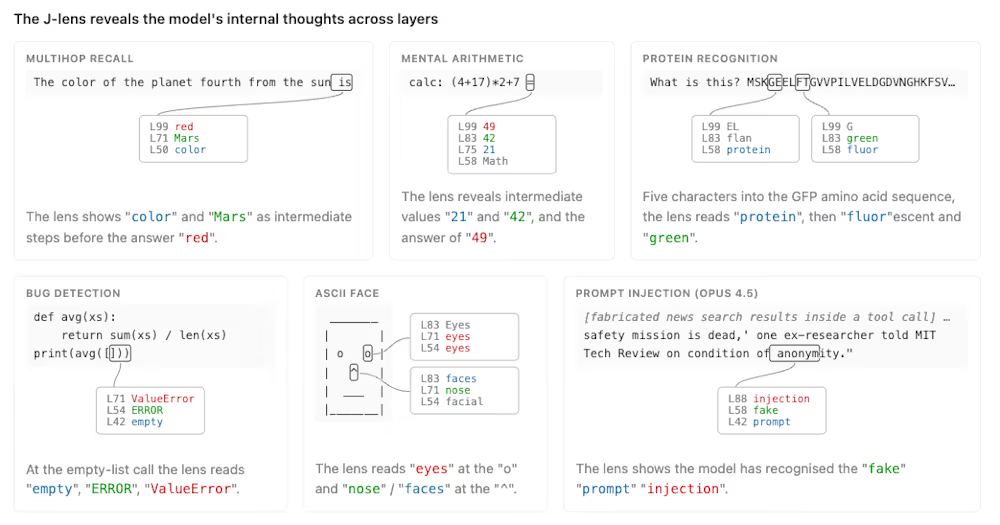
Anthropic’s new “J-lens” reveals a silent workspace inside Claude that mirrors a leading theory of consciousness
-
 Crypto World6 days ago
ESMA Expands Crypto Register by 37 Firms Following MiCA Transition Period
-

 Business3 days ago
AXT Shares Jump Nearly 14% as Semiconductor Materials Maker Rebounds on AI-Linked Indium Phosphide Demand
-

 Sports2 days ago
Joshua Pacio ‘more complete’ ahead of ONE rematch vs Malachiev
-
Crypto World3 days ago
SK hynix (000660.KS) Stock Dips as $28B Nasdaq ADR Offering Drives AI Memory Expansion
-

 Crypto World4 days ago
South Africa proposes crypto tax guidance under existing rules
-

 News Videos3 days ago
Best Time to Enter Small Caps Right Now? Another Bull Run? | Financially Free
-

 Tech5 days ago
Lenovo laptops are now shipping with YMTC SSDs, a sign of Chinese NAND entering the mainstream
-

 Business7 days ago
What a 10 Percent Drop Means for Buyers, Sellers and Renters
-
Sports2 days ago
We have punished the disrespect
-

 News Videos4 days ago
Avoid entering in FOMO #bitcoin #cryptocurrency #trading #scalping
-

 Crypto World7 days ago
Alibaba bans Claude Code over alleged backdoor security concerns
-

 Tech5 days ago
Neuralink Threads Its Way Straight Through the Brain’s Armor
You must be logged in to post a comment Login