
Business
SK Hynix: South Korean chip giant raises $26.5bn in US share sale

South Korean computer chip maker SK Hynix has raised $26.5bn (£19.8bn) in its New York share offering, marking the largest ever listing by a foreign firm in the US.
The company, a key supplier to artificial intelligence (AI) chip giant Nvidia, said on Thursday that it had sold 177.9 million American depositary shares for $149 each. The shares are set to begin trading on Friday on the Nasdaq.
In May, SK Hynix saw its market value top $1tn in its home country, lifted by the boom in demand for AI chips.
Its share price has more than tripled in South Korea this year, which along with Samsung Electronics has helped boost the benchmark Kospi index by more than 70% over the same period.
The offering gives US investors a way to buy SK Hynix shares without having to trade via an overseas stock exchange.
This gives the company easier access to the huge amounts of potential investment from the world’s biggest economy.
The company is one of the world’s biggest manufacturers of advanced memory chips used in AI infrastucture such as data centres.
Demand for the offering was reportedly over seven times more than the number of shares available, highlighting the strong investor appetite for a key company in the AI supply chain.

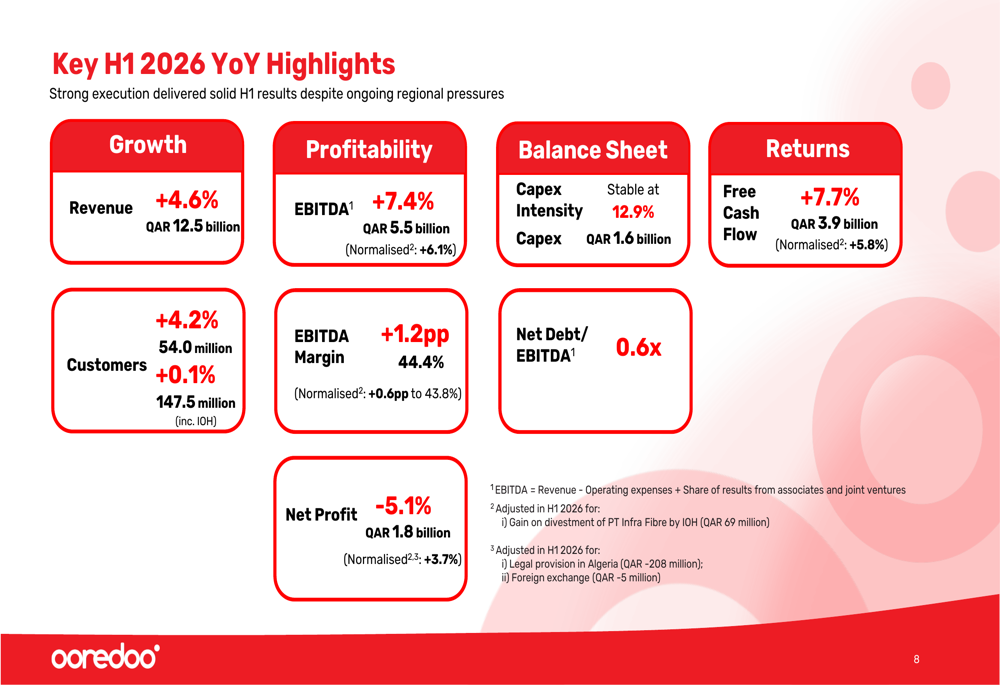
Ooredoo H1 2026 slides: margin expansion, strategic gains offset Q2 miss

Yes. Corporate subscriptions are available for teams and organisations, with discounted rates as user numbers increase. Pricing starts from $1,625 + GST per user.
Get in touch
to discuss the right option for your organisation.
Business News subscriptions are used by executives, investors, consultants and professionals who need to stay informed and make better decisions about the WA market. When you subscribe you’ll get
- Unlimited access to WA’s most trusted business journalism
- Data & Insights — detailed profiles of WA companies, people, projects and deals
- MyBN — a personalised feed based on the companies, people and sectors you follow
- Special publications and industry reports
- Daily and weekly email newsletters
Data & Insights is a research tool built specifically for the WA market. It draws on more than 30 years of Business News reporting, updated regularly to reflect what’s happening now. Use it to:
- Look up detailed profiles of WA companies, including financials, directors and ownership
- Find decision-makers and track their career movements
- Research live and completed projects across WA industries
- Monitor deals, appointments and market activity
- Access industry rankings and league tables
Data & Insights is updated daily by our dedicated research team, which uses the latest announcements, ASX filings and editorial coverage to keep our person, company, list and project records up to date.
Business News welcome all opportunities to make our dataset accurate, complete and current, so if you have an update request, please email the team at
general@businessnews.com.au, and we’d be happy to assist.
MyBN
is part of every subscription. It’s your personalised view of Business News. You can follow the companies, people, sectors and projects that matter to you, and get a news feed and alerts tailored to your interests. You can save articles to read later and retain only what you need.
Only subscribers have full access to all content on the Business News website.
If staying informed about the WA economy is part of your job, and/or you’re looking for networking opportunities in WA, Business News is built for you.
Business News subscribers are:
- Executives and directors tracking competitors, clients and market movements
- Investors and advisers researching companies, deals and industry trends
- Consultants and professionals staying across sectors relevant to their clients
- Business owners looking for leads, context and market intelligence
Most Business News publications cover national or global markets. Business News is focused entirely on Western Australia, which means the journalism, the data and the intelligence are all built around WA companies, people and projects — not adapted from a national feed. Data & Insights, included with every subscription, combines more than 30 years of WA-specific editorial research with live business data. There’s no comparable product for the WA market.
The Morning Digest Email provides a comprehensive wrap of the major headlines, relevant to WA business, and includes with a snapshot of the overnight news covering oil, gold and ASX-listed companies.
The Afternoon Wrap Email focuses on the news covered by our team of journalists during the course of the working day, including exclusive stories and analysis, all of which relates to WA business and the local economy.
The BN Weekender Email contains a wrap of the Business News from the week that was, highlighting the top stories in each area of WA business.
Sign up for free.
We’re happy to help.
Get in touch
and our team will come back to you.

ZoomInfo: Cheap On Earnings, Expensive On Enterprise Value
Business
Jio Financial Services shares rise 2% after firm sets record date for dividend. What to expect?

Jio Financial Services shares rose to Rs 262.65 apiece on Monday, extending a more than 10% jump in a week. The company paid a dividend of Rs 0.5 per share to its shareholders last year. After announcing the latest dividend in April this year, the stock currently has a dividend yield of 0.19%, according to data on Trendlyne.
Fixing the record date as August 10 means that only shareholders who own the company’s shares in their demat accounts as of August 10 (next Monday) will be eligible to receive the dividend, subject to shareholder approval at the upcoming Annual General Meeting (AGM).
Earlier this month, Jio Financial Services reported 155% year-on-year (YoY) jump in its consolidated net profit at Rs 830 crore in the first quarter of FY27, while revenue from operations increased 227% YoY to Rs 2,004 crore during the quarter under review.
Consolidated total income rose 141% YoY to Rs 1,496 crore from Rs 619 crore. It was up 47% from Rs 1,020 crore in the March quarter. Interest income grew 165% YoY to Rs 962 crore, while fees and commission income surged to Rs 325 crore from Rs 54 crore.

Also read | Jio Financial Services sets record date for dividend. Check details
Jio Financial Services share price
Jio Financial Services shares had jumped nearly 4% to close at Rs 256 apiece on Friday. The stock gained more than 10.5% in a week and over 9% in a month. However, it is down nearly 12% in 2026 so far.
In the longer term, the shares of the company have fallen around 21% in a year. The company currently has a market capitalisation of more than Rs 1.73 lakh crore.Motilal Oswal has a Buy rating on Jio Financial Services with a target price of Rs 315 apiece. The brokerage said the company delivered a healthy quarter, driven by strong growth in Jio Credit, whose assets under management (AUM) crossed Rs 300 billion.
It also highlighted steady progress across the payments, insurance, and asset management businesses, although operating expenses remained elevated due to continued investments in incubating new businesses and expanding existing operations. Motilal Oswal cut its FY27 and FY28 EPS estimates by 4% and 6%, respectively, to account for higher operating costs, but expects consolidated PAT to grow at a 46% CAGR between FY26 and FY28.
Also read | For investors with some patience: 6 mid-cap stocks from different sectors with upside potential of up to 20%
(Disclaimer: Recommendations, suggestions, views and opinions given by the experts are their own. These do not represent the views of The Economic Times)


I am a self-taught individual investor and I have been investing in stocks for over 25 years. I focus on dividend growth investing with a long-term horizon since I believe in the compounding power of dividend growth investing. I generally look for undervalued stocks with sustainable dividend growth and capital appreciation potential. I try to provide a little more in depth analysis weighing the positives and negatives. I am now in the Top 2.0% out of 28,000+ financial bloggers (February 2024) as tracked by Tip Ranks for my SA articles.Blog: www.dividendpower.orgWork/ associated with the existing authors James Marino and Ferdis.
Analyst’s Disclosure: I/we have no stock, option or similar derivative position in any of the companies mentioned, and no plans to initiate any such positions within the next 72 hours. I wrote this article myself, and it expresses my own opinions. I am not receiving compensation for it (other than from Seeking Alpha). I have no business relationship with any company whose stock is mentioned in this article.
Seeking Alpha’s Disclosure: Past performance is no guarantee of future results. No recommendation or advice is being given as to whether any investment is suitable for a particular investor. Any views or opinions expressed above may not reflect those of Seeking Alpha as a whole. Seeking Alpha is not a licensed securities dealer, broker or US investment adviser or investment bank. Our analysts are third party authors that include both professional investors and individual investors who may not be licensed or certified by any institute or regulatory body.
Business
10 Things to Know About Warren Buffett’s Famous S&P 500 Advice Amid Today’s Rising Concentration Risk
Warren Buffett’s decades-old advice to put money into low-cost S&P 500 index funds remains one of the most widely followed pieces of investment guidance in the world. But as the index has grown increasingly dominated by a small handful of technology giants, analysts say the strategy today carries different risks than when Buffett first popularized it. Here are 10 things to know about the guidance and how it applies to today’s market.
1. The advice traces back to Buffett’s 2013 shareholder letter. In that letter, Buffett instructed the trustee overseeing a bequest to his wife to allocate 90% of the funds to a low-cost S&P 500 index fund, with the remaining 10% directed toward short-term U.S. government bonds. He recommended Vanguard specifically, though he did not name a particular fund or ticker.
2. VOO is widely seen as the closest match to Buffett’s description. Vanguard’s S&P 500 ETF, trading under the ticker VOO, carries an annual expense ratio of just 0.03%, among the lowest available for a fund tracking the index, and aligns closely with the kind of low-fee vehicle Buffett described in his original guidance.
3. Technology now dominates the index far more than it once did. According to recent index weighting data, technology stocks make up roughly 37% of the S&P 500. Just three companies, Apple, Nvidia and Microsoft, together account for roughly 20% of the entire index’s value, meaning a large share of any S&P 500 index fund’s performance now hinges on the fortunes of a small handful of mega-cap technology firms.
4. That concentration has grown dramatically since Buffett first gave the advice. Ten years ago, the S&P 500’s 10 largest stocks represented just 15.3% of the index’s total market capitalization. Five years after Buffett’s 2013 letter, that figure had risen to 27.2%. Today, according to MacroMicro data, the top 10 stocks account for roughly 37.5% of the index, down slightly from an all-time high near 43% reached earlier this year, but still among the highest concentration levels in the index’s history.
5. Artificial intelligence spending is now a major driver of index-wide earnings. Goldman Sachs has forecast that companies tied to artificial intelligence could contribute roughly half of the S&P 500’s overall earnings growth in 2026. That dependence means a slowdown in AI-related capital spending or disappointing earnings from a handful of mega-cap technology companies could weigh disproportionately on the entire index, a risk that did not exist to the same degree when Buffett first offered his recommendation.
6. Long-term return expectations for U.S. stocks have moderated. Vanguard’s broad U.S. equity return model now projects 10-year annualized returns of between 4.2% and 6.2%, down from an earlier forecast range of 4.9% to 6.9%, reflecting the impact of higher current valuations on expected future returns. By comparison, the iShares Core S&P 500 ETF, trading under the ticker IVV, posted an annualized gain of 15.47% over the 10 years ending in June, a pace analysts generally view as unlikely to be sustained indefinitely.
7. Current valuations remain a point of debate among analysts. According to FactSet data, the S&P 500 currently trades at a price-to-earnings ratio of 19.6, a level some analysts view as elevated relative to historical averages, though others argue current earnings growth, particularly among AI-linked companies, helps justify the higher multiple.
8. Money continues flowing into S&P 500 index funds at record levels. Vanguard’s VOO recently became the first exchange-traded fund in history to surpass $1 trillion in assets under management. According to data cited by Reuters, the fund has attracted roughly $69 billion in net inflows so far in 2026, following $118 billion in 2024 and $138 billion in 2025, with no other ETF attracting more investor money this year.
9. Experts generally still endorse the strategy despite the added concentration risk. Analysts writing for outlets including the Motley Fool and 24/7 Wall St. have said Buffett’s underlying advice remains sound in principle, since S&P 500 index funds continue to offer low costs and broad exposure to the U.S. economy. But those same analysts caution that investors should understand the fund no longer provides the same level of diversification it once did, given how heavily its performance now depends on a small group of dominant technology companies.
10. Buffett himself has continued monitoring risk within specific holdings tied to his broader philosophy. In more recent commentary, Buffett has reportedly cautioned about the risks tied to specific high-profile stocks, including SpaceX, following sharp declines in that company’s share price after its public listing, reflecting his continued attention to volatility and valuation risk even within widely held names.
Analysts broadly agree that Buffett’s core message, favoring low fees, broad diversification and long-term patience over active trading, remains valid advice for the average investor. But they emphasize that today’s S&P 500 looks meaningfully different from the one Buffett first pointed to in 2013, and that investors relying on the index for diversification should understand just how concentrated their exposure to a handful of technology giants has become, particularly if they are also invested in other tech-heavy benchmarks such as the Nasdaq Composite.

Boliden: Finding The Entry For 2026-2028

Why is TG Therapeutics stock sliding today?

Yes. Corporate subscriptions are available for teams and organisations, with discounted rates as user numbers increase. Pricing starts from $1,625 + GST per user.
Get in touch
to discuss the right option for your organisation.
Business News subscriptions are used by executives, investors, consultants and professionals who need to stay informed and make better decisions about the WA market. When you subscribe you’ll get
- Unlimited access to WA’s most trusted business journalism
- Data & Insights — detailed profiles of WA companies, people, projects and deals
- MyBN — a personalised feed based on the companies, people and sectors you follow
- Special publications and industry reports
- Daily and weekly email newsletters
Data & Insights is a research tool built specifically for the WA market. It draws on more than 30 years of Business News reporting, updated regularly to reflect what’s happening now. Use it to:
- Look up detailed profiles of WA companies, including financials, directors and ownership
- Find decision-makers and track their career movements
- Research live and completed projects across WA industries
- Monitor deals, appointments and market activity
- Access industry rankings and league tables
Data & Insights is updated daily by our dedicated research team, which uses the latest announcements, ASX filings and editorial coverage to keep our person, company, list and project records up to date.
Business News welcome all opportunities to make our dataset accurate, complete and current, so if you have an update request, please email the team at
general@businessnews.com.au, and we’d be happy to assist.
MyBN
is part of every subscription. It’s your personalised view of Business News. You can follow the companies, people, sectors and projects that matter to you, and get a news feed and alerts tailored to your interests. You can save articles to read later and retain only what you need.
Only subscribers have full access to all content on the Business News website.
If staying informed about the WA economy is part of your job, and/or you’re looking for networking opportunities in WA, Business News is built for you.
Business News subscribers are:
- Executives and directors tracking competitors, clients and market movements
- Investors and advisers researching companies, deals and industry trends
- Consultants and professionals staying across sectors relevant to their clients
- Business owners looking for leads, context and market intelligence
Most Business News publications cover national or global markets. Business News is focused entirely on Western Australia, which means the journalism, the data and the intelligence are all built around WA companies, people and projects — not adapted from a national feed. Data & Insights, included with every subscription, combines more than 30 years of WA-specific editorial research with live business data. There’s no comparable product for the WA market.
The Morning Digest Email provides a comprehensive wrap of the major headlines, relevant to WA business, and includes with a snapshot of the overnight news covering oil, gold and ASX-listed companies.
The Afternoon Wrap Email focuses on the news covered by our team of journalists during the course of the working day, including exclusive stories and analysis, all of which relates to WA business and the local economy.
The BN Weekender Email contains a wrap of the Business News from the week that was, highlighting the top stories in each area of WA business.
Sign up for free.
We’re happy to help.
Get in touch
and our team will come back to you.
Business
LeBron James Could Be Worth Up to $430 Million to Philadelphia’s Economy, New Estimates Suggest This Year

LeBron James signed with the Philadelphia 76ers this summer for just $8 million over two seasons, a deep discount from the maximum contract he could have commanded elsewhere. But according to new economic projections, the true value of his arrival to the city of Philadelphia could dwarf his actual salary many times over.
Consulting firm The Boyd Company estimated that James’s first full season with the 76ers could generate between $250 million and $430 million in total regional economic activity, a figure the firm shared in a post on X. “A move to Philly is more than a blockbuster sports story — it reinforces one of America’s premier sports and business markets, generates enormous media attention, fan engagement, tourism and economic impact,” the firm wrote. “The Boyd Co. knows that the biggest location decisions — whether made by Fortune 500 companies or superstar athletes — can reshape regional economies and propel a city’s national profile.”
The Boyd Company’s projection does not represent direct revenue for the 76ers organization itself. Instead, it reflects the broader ripple effect James’s presence is expected to have across the wider Philadelphia regional economy, spanning everything from ticket sales and hotel stays to restaurant spending and retail purchases tied to increased tourism and fan travel throughout the season.
James signed a two-year veteran’s minimum contract worth a total of $8 million, walking away from what would likely have been a maximum contract paying him in excess of $50 million annually had he signed elsewhere. His salary for the 2026-27 season specifically will total $3.9 million, according to reporting on the deal. That stark gap between James’s modest actual salary and his projected economic value has led some analysts to describe the signing as potentially the biggest bargain in professional sports history, even before accounting for the on-court talent he brings to a Philadelphia roster that already included Joel Embiid, Tyrese Maxey, VJ Edgecombe and newly acquired forward Jaylen Brown.
Not every economist is comfortable putting a precise number on James’s expected impact this early. Ethan Conner-Ross, an economist with the Philadelphia-based consulting firm Econsult Solutions Inc., cautioned against overstating the certainty of any single projection. “It’s hard to precisely quantify, sitting here today, what that exact number is going to be,” Conner-Ross told The Philadelphia Inquirer. Conner-Ross pointed to several distinct components that would ultimately factor into James’s overall economic footprint in the region, including his own personal spending as a high-earning professional relocating to the area, any local and state taxes he would pay on his income, and the money he would spend on housing, whether renting or purchasing property in the Philadelphia region. That housing question remains unresolved, with some reports suggesting James might instead choose to commute to games from New York City rather than establish a primary residence in the Philadelphia area.
The largest single driver of the projected economic impact is expected to come from home game attendance. Thousands of fans are anticipated to travel to Philadelphia from across the United States, and potentially internationally, specifically to watch James play, a dynamic that would be further amplified if this proves to be the final season of his playing career. Beyond ticket purchases themselves, those visiting fans would generate additional spending on hotels, restaurants, transportation and other tourism-related activity throughout the city during game weekends.
Early evidence of James’s drawing power has already shown up in ticket pricing data. According to TickPick, the average purchase price for a 76ers game last season was $68. Following James’s signing, the cheapest available ticket for the team’s first preseason home game had already climbed to $283, according to the same source, illustrating the immediate shift in market demand tied directly to his arrival on the roster.
James’s move to Philadelphia is also expected to make him the league’s top-selling jersey this season, with fans expected to purchase his new No. 23 76ers jersey in significant numbers. While Milwaukee Bucks star Giannis Antetokounmpo’s new No. 7 jersey with the Miami Heat is also expected to sell well following his own offseason move, analysts do not expect it to match the demand generated by a new LeBron James jersey.
James’s arrival has also elevated Philadelphia’s championship odds for the coming season. With James joining an already talented core, the 76ers now hold the fourth-best odds to win the 2027 NBA championship, according to reporting on the team’s outlook, though economic projections tied to James’s presence remain far more certain than any on-court outcome, since a deep playoff run or championship, while not guaranteed, would likely add substantially to the economic activity already projected for his first season with the team.
James’s move to Philadelphia echoes a similar high-profile relocation from earlier in his career, when he left the Miami Heat in 2014 to return to the Cleveland Cavaliers, a decision that similarly generated significant economic attention and analysis regarding its impact on Cleveland’s local economy at the time. With James now beginning a new chapter of his career in Philadelphia, economists and city officials are likely to continue closely tracking ticket sales, tourism figures and broader regional spending data throughout the season to determine how closely the actual economic impact of his arrival ultimately aligns with the Boyd Company’s initial $250 million to $430 million projection.

Two Arrested in Bristol Illegal Casino Investigation

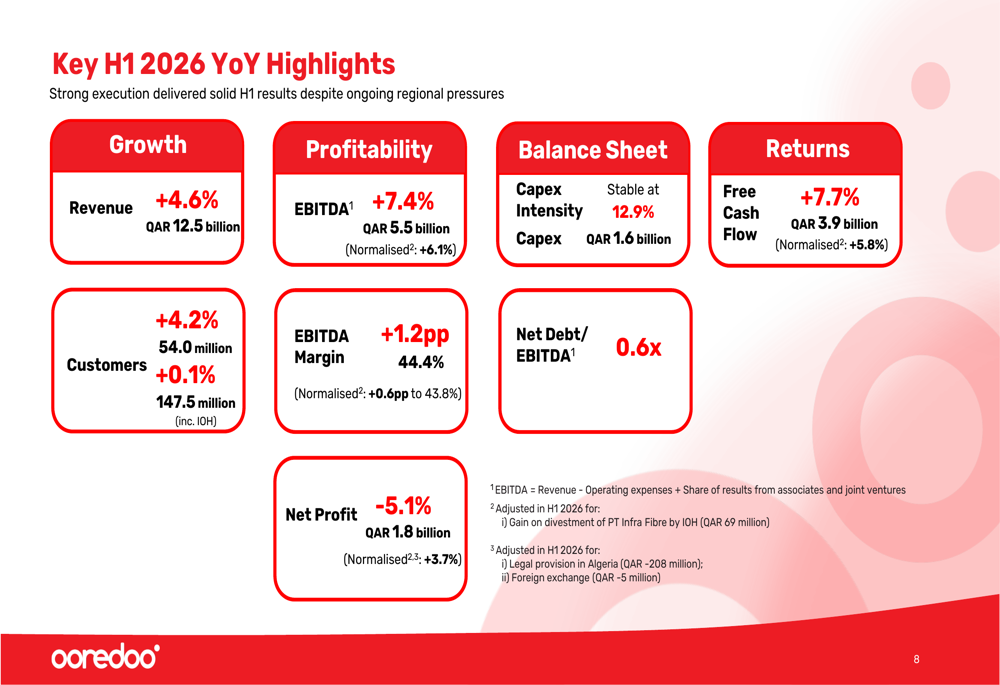
Ooredoo H1 2026 slides: margin expansion, strategic gains offset Q2 miss

Ethereum ETFs Post Best Month Since October 2025 but Fed Hold Chills Demand


-

 Business5 days ago
Why Trees Belong on the Risk Register
-

 Fashion3 days ago
Weekend Open Thread: Wit & Wisdom
-

 Politics3 days ago
Meta enters AI-training agreement with far-right ‘propaganda rag’ Newsmax
-
 Entertainment6 days ago
‘Stargate’ Creator’s New Sci-Fi Series Returns for Season 3 Tomorrow
-

 Crypto World2 days ago
MicroStrategy Post-Earnings CLARITY Act Push Could Add New Catalyst for Its Stock
-

 Politics6 days ago
The Part of the Electric Transition Nobody Wants to Discuss
-

 Business5 days ago
Major shareholder moves on Canyon
-

 Crypto World2 days ago
XRP Ledger v3.3.0 brings five institutional features
-

 News Videos4 days ago
Bitcoin Enters the 3rd Stage of the Bear Market
-

 Crypto World6 days ago
Kraken Enables Retail Access to Jersey Mike’s IPO via Tokenized Shares
-

 Tech6 days ago
New macOS Sequoia & Sonoma security updates for older Macs
-

 Politics4 days ago
Luke Littler’s dominance sparks GOAT debate
-

 News Videos6 days ago
Claude: Build Financial Dashboards in Minutes (2026)
-

 Business6 days ago
Johnson & Johnson agrees to $5.5B settlement over talc cancer claims
-

 Sports3 days ago
Seema Kaliramna Wins Discus Throw Bronze, Takes India’s CWG Medals Tally To 17
-

 Crypto World1 day ago
Crypto PAC spending tops $2M in Michigan House race
-

 Business3 days ago
Trump Announces Hamas Disarmament Agreement as Iran Strikes Kuwait Air Base and US Attacks Pause Overnight
-

 Tech5 days ago
Gemini can now summarize the messiest comment threads in Google Docs
-

 Tech1 day ago
ESET tracks rise in malicious AI skills and adaptable malware
-

 NewsBeat4 days ago
Four people die trying to cross Channel in small boats
You must be logged in to post a comment Login