

Crypto World
CASHCAT’s $226M question as NOXA launchpad goes dark

For five consecutive days, a launchpad that did not exist a month ago collected more protocol fees than Pump.fun. On its best day, NOXA took in $2.33 million while the Solana incumbent, the platform that has minted eleven million tokens and defined an entire market cycle, managed $575,500.
Summary
- NOXA briefly out-earned Pump.fun and became Robinhood Chain’s dominant launchpad before its website went offline.
- CASHCAT’s $226 million market capitalization depends less on token mechanics than on attention, discovery, and launchpad infrastructure.
- The outage did not stop CASHCAT from trading, but it threatened the interface that drives creator fees, discovery, and momentum.
- Locked liquidity protects against one kind of rug, but it does not protect a memecoin from losing attention.
- The real test is whether NOXA’s interface, fee claims, and market share recover before competitors absorb its launchpad flow.
NOXA had launched more than 60,000 tokens, captured roughly 75% of all deployments on Robinhood Chain, and pulled 267,642 unique wallets onto a network that went live on July 1. Its flagship asset, a cat themed memecoin named CASHCAT, had run to a market capitalization of $226 million.Then the website went down. It stayed down for two days.Not the chain. Not the pools. Not the tokens. The front end, the thing that made all of it legible, the interface where creators claimed fees and buyers found what was trending and the entire machinery of manufactured urgency lived. It returned an error, and it kept returning an error while the market it had built continued trading without it.
The official explanation is a Cloudflare problem. The team’s account remains active, telling users a new site is in testing and that creator fees will be claimable through the interface once it goes live. Nothing in the public record contradicts that account. Nothing in the public record confirms it either, and in a market where the base rate for launchpad tokens dying is somewhere around 98%, two days of silence from the infrastructure holding a nine figure ecosystem is not a neutral event. It is a live experiment in what a memecoin is actually worth when the machine that made it stops answering.That experiment has a number attached, and the number is $226 million.
What CASHCAT is, and why it exists
Cash Cat was the original name Robinhood’s founders considered for the company, a detail preserved in a decade old tweet from chief executive Vladimir Tenev and in an early mascot the brokerage used before it became a mainstream financial institution. When Robinhood launched its own layer 2 network on July 1, the mascot was sitting there, unclaimed, perfectly formed as a memecoin premise: the discarded name of a company now worth tens of billions, revived on that company’s own chain.
Somebody launched it on NOXA. It worked spectacularly. CASHCAT rose more than 5,530% over seven days and more than 1,400% in a single twenty four hour stretch, hitting an all time high near $0.1418 while bitcoin fell roughly 2% over the same window, which is the clearest possible evidence that nothing macro was driving it. Onchain analysts surfaced the trades that make these markets self sustaining: one wallet turned $838 into $1.05 million over twenty days, another converted $86 into $1.6 million. Tenev himself posted about the chain’s ability to host both memecoins and real world assets, and attention did the rest.
There were no exchange listings. There was no protocol upgrade, no partnership, no treasury, no roadmap, and no team in any conventional sense. There was a joke about a company’s abandoned name, deployed on that company’s chain, at the exact moment the chain became interesting. That is the entire fundamental basis of a $226 million asset, and stating it plainly is not a criticism. It is a description of the category, one that governs the whole meme coins sector and has for years. Attention was the product, and the product sold.
The launchpad that ate Robinhood Chain
NOXA’s rise is the more revealing half of the story, because it exposes how much of a memecoin ecosystem is infrastructure rather than tokens.NOXA Fun is a hybrid launchpad. Where Pump.fun runs a custom bonding curve and migrates liquidity to an open exchange at graduation, NOXA deploys an ERC-20 and adds single sided liquidity to a Uniswap V3 pool in one transaction, making the token tradable on a public exchange from its first block. The liquidity position is locked permanently in a locker contract that never moves and cannot be pulled, which removes the classic liquidity drain rug and eliminates the migration window that has historically been the riskiest moment in a bonding curve launch. On its own terms the design is more conservative than the model it competes with, and understanding why requires knowing how liquidity pools and automated market makers actually work.
The platform layered on protections as it scaled: anti-vampire measures, anti-bundling detection, multi wallet controls, iterating fast enough that observers noted it week by week. Its native token, deployed on a different chain entirely and pending migration, carried a fully diluted valuation of $11 to $12 million after the team burned about 40% of supply, against $11 million in cumulative fees across four days. Pump.fun’s fully diluted valuation, for comparison, sits near $1.5 billion.
That gap is the valuation paradox the market has been arguing about all week. A platform earning at the rate of the category leader, valued at under 1% of it. There are three readings and they cannot all be right. The bullish one says the market has not repriced yet and NOXA is the most obvious mispricing on any chain. The structural one says fee run rates from a chain in its second week are not a business, they are a spike, and pricing a spike at Pump.fun multiples would be insane. The dark one says the discount is the market’s estimate of how likely the whole thing disappears.
Two days of downtime moved that argument out of theory.It is worth noting how quickly the market found the argument in the first place. Traders were circulating the fee-to-valuation gap within days of NOXA’s rise, framing it as an obvious mispricing against Pump.fun. That enthusiasm is itself information: a discount this visible on an asset this liquid is rarely a gift. Markets price launchpad tokens cheaply for the same reason they price mining stocks cheaply during a boom, because everyone can see that the current rate of extraction has nothing to do with the durable rate.
The mechanics of a two week fee explosion
The scale of what NOXA collected deserves unpacking, because the number is doing something other than what it appears to do.Launchpads earn on activity. A creation fee when a token deploys, a share of trading fees on every swap through the pool, and in NOXA’s structure, fees flowing from Uniswap V3 positions at the 1% tier that the platform’s tokens use. None of that revenue depends on any token succeeding. It depends only on churn, and churn is exactly what a brand new chain with a retail audience and 19,000 daily deployments produces in abundance. Across four days the platform booked roughly $11 million against a token valued at $12 million, which reads as an obvious arbitrage until you ask the question underneath: is that four day rate a business or a weather event?
The comparison to Pump.fun cuts both ways here. Pump.fun’s $1.5 billion valuation rests on two years of proven durability across multiple attention cycles, a graduated exchange of its own, a completed billion dollar token sale, and a fee base that survived the collapse of the memecoin mania that created it. NOXA has a fortnight, on a chain with a fortnight, in the single most favorable conditions any launchpad will ever see: a novel network, a mainstream brand halo, no competitors holding entrenched positions, and a flagship token running 5,000% in a week. Annualizing that is not analysis. It is extrapolation from a peak.
Which is why the outage is such an efficient test. If the fee run rate was a business, it survives two days offline and resumes. If it was a weather event, the two days are the whole event, and the rate never returns because the conditions that produced it were never repeatable. The market gets its answer within a week, and it gets it cheaply, which almost never happens in this asset class.
What the outage actually threatens
Here is the part that matters for CASHCAT holders, and it is more subtle than it first appears.The tokens are fine. That is not a reassurance; it is a technical fact with sharp edges. CASHCAT is an ERC-20 on Robinhood Chain, trading against a Uniswap V3 pool whose liquidity is locked in a contract that operates whether or not anyone can load a website. Uniswap does not need NOXA. The chain does not need NOXA. Any wallet can interact with the pool directly, and any aggregator can route to it without the launchpad’s involvement or permission. In the strict sense, a launchpad outage cannot touch the assets it launched, and anyone claiming CASHCAT holders are trapped has confused the interface with the market.
What the outage threatens is everything around the token. Creator fees accrue through the platform, and the team’s own statement acknowledges that claiming them requires the interface, meaning revenue owed to thousands of token deployers currently sits behind a domain that does not resolve. Discovery collapses without the front end: new tokens launch elsewhere, existing tokens lose the trending feeds and progress bars that manufacture the urgency these markets run on. And the flywheel reverses. Onchain data already showed new memecoin creation on Robinhood Chain climbing past 19,500 in a day while competing launchpads including flap.sh, trensh.today, and bankr absorbed share that NOXA could not defend from behind an error page.
So the honest framing of the risk is not that CASHCAT stops trading. It is that CASHCAT stops mattering. A memecoin’s value is the attention flowing through it, the attention is manufactured by an interface, and the interface has been offline for the two most valuable days a two week old ecosystem will ever have.
Is this a rug?
The question is being asked openly, and it deserves a rigorous answer rather than a vibe.Take the case for calm first. The team is publicly communicating during the outage, which is close to disqualifying as rug behavior: the defining feature of an exit is silence, deleted accounts, and vanished channels, not status updates about a staging environment. Liquidity is locked by design and cannot be withdrawn, so the single most common rug mechanism is architecturally unavailable here. The platform burned 40% of its own token supply days before going dark, an odd move for anyone planning to sell the rest. Cloudflare outages are real, routine, and have taken down far larger properties than a two week old launchpad. And the underlying economics are absurd for an exit: a platform earning millions in fees per day has vastly more to gain from staying online than from disappearing with whatever sits in a fee contract.
Now the case for concern. Two days is a long outage for an infrastructure problem that the operator attributes to a third party content delivery network, and it is exactly as long as it takes for competitors to take a market. Creator fees being unclaimable during the outage means real money is unreachable for real users, whatever the cause, and the promise to make them claimable “once the new site goes live” converts a technical failure into a trust exposure with no deadline attached. The platform’s own token lives on a different chain pending migration, which is an added moving part at precisely the wrong moment. And the category’s history is unkind: the industry’s canonical rug taxonomy distinguishes hard rugs, where developers vanish, from soft rugs, where involvement gradually decays while the thing quietly dies, and soft rugs look exactly like an infrastructure problem that never quite resolves.
The evidence, weighed honestly, favors the boring explanation. A team executing an exit does not typically burn its own supply, lock its liquidity permanently, post status updates, and abandon a business printing seven figures a day. But the market is not pricing the probability of a rug. It is pricing the probability of irrelevance, which is a different and much higher number, and two days offline in a launchpad war is how irrelevance starts.
There is also a category error worth naming, because it is corrupting the discourse around this. A rug is an act by an identifiable party who takes something they controlled and should not have taken. A collapse is a market outcome in which nobody did anything wrong and the money disappears regardless. Memecoin markets produce collapses at overwhelming rates without any fraud involved, which means most tokens that go to zero were never rugged, they were simply correct valuations of nothing arriving on schedule. Applying the word rug to a launchpad outage flattens that distinction and, more practically, sets holders up to look for the wrong evidence. They watch for a villain when the thing actually killing their position is indifference.
What would settle it is specific and observable. Watch whether the new interface ships and creator fees actually become claimable. Watch whether NOXA’s fee share recovers or whether flap.sh and its peers keep the ground. Watch the team’s wallets. Watch whether Robinhood Chain’s daily token creation stays near Solana’s or reverts once the novelty burns off. None of those require trusting anyone’s statement.
What the numbers actually say about the ecosystem
Look past the fees at the composition of the activity, and a less flattering picture emerges.More than 60,000 tokens launched through NOXA. Of those, the platform’s own interface displays a handful with meaningful market capitalizations, headed by CASHCAT, with the rest of the visible field clustering in the hundreds of thousands or low millions and the long tail invisible entirely. Peak single day volume of $252.9 million across the platform, with a single project accounting for $224 million of a comparable day, means the flagship was not one asset among many. It was the market, and everything else was noise around it.
That concentration is the ecosystem’s actual risk profile. A launchpad whose fee base is one token’s trading is not a platform, it is a single asset’s plumbing, and its revenue lives or dies with the attention on that one asset. The 640,000 unique holder addresses and 267,000 wallets NOXA brought onto Robinhood Chain are impressive as a distribution achievement and mostly irrelevant as a durability signal, because holders of a token that ran 5,000% in a week are not users, they are a queue.
None of this is unique to NOXA. It describes Pump.fun’s first year, Four.Meme’s ascendancy, LetsBonk’s arrival, and every launchpad that has ever briefly topped a fee chart. What is unique here is the timing: a platform reached that concentration and then lost its interface, in the same fortnight, on a chain that had no proven alternative for anyone to fall back to. The stress test arrived before the structure was finished.
The dependency nobody priced
Strip the specifics away and the CASHCAT situation exposes a structural feature of this entire market that the fair launch ideology obscures.
The pitch for permissionless launchpads is that they remove intermediaries. No gatekeepers, no vetting, no company standing between a creator and a market. Bonding curves and locked liquidity mean the platform cannot rug you, which the industry has treated as the end of the argument about platform risk.
It is not. The platform cannot take your tokens, and it does not have to. It can simply stop generating the attention that gives them value, and the tokens will die exactly as thoroughly as if it had drained the pool. Locked liquidity protects the mechanism and does nothing for the market. A permanently locked Uniswap position holding a token nobody is looking at is a monument, not an asset. The lock guarantees you can always sell. It guarantees nothing about whether anyone will be there to buy, and those are the only two facts that matter, in that order.
This is the same lesson that keeps arriving in different costumes. When a DAO’s treasury drained through a governance process working exactly as designed, the failure was not in the code, a dynamic crypto.news traced in detail in its account of how BonkDAO lost $20 million in a single vote. When BNB Chain’s Four.Meme briefly flipped Pump.fun on daily revenue, the lesson was that launchpad dominance is a function of where attention currently lives and nothing more durable than that. Infrastructure risk in crypto is rarely custodial. It is attentional, and no audit measures it.
CASHCAT holders own an asset with permanently locked liquidity on a chain backed by a publicly traded brokerage, launched through a platform with better rug protections than the category leader, and every one of those facts is true and none of them answers the only question that determines their outcome, which is whether anyone is still looking in a month.
Robinhood’s problem, arriving on schedule
There is a second party to this that has said nothing, and its position gets more uncomfortable by the day.Robinhood Chain launched as infrastructure for onchain finance and real world asset tokenization. What it got in its first fortnight was a memecoin casino, more than $3 billion in decentralized exchange volume, honeypot tokens proliferating fast enough that cross chain provider Relay Protocol began publicly blocking them, and a scam token that used the hijacked accounts of SpaceX and Starlink to rob buyers on its rails, an episode that arrived within weeks of SpaceX joining the Nasdaq-100 with its trade already running on crypto rails. NOXA, the largest single application on the chain, states plainly in its own interface that it is an independent project not affiliated with Robinhood Markets.
That disclaimer is doing an enormous amount of work. It is legally accurate and commercially irrelevant. A retail brokerage’s brand is on the chain, retail users are the audience, and the flagship asset of the ecosystem is literally named after the company’s original name and modeled on its own former mascot. Robinhood did not build CASHCAT, did not endorse it, and under the architecture it chose, cannot remove it. It will nonetheless own every consequence in the public reading, and its silence through both the SCATMAN affair and the NOXA outage suggests a company that has not decided what it wants to say, or has decided that saying anything invites the responsibility it structured the chain to avoid.
The permissionless design that made the chain’s launch explosive is the same design that makes the next fortnight unmanageable. That is not a contradiction anyone has solved, on any chain, including the ones without a brokerage’s name on them.
Where this lands
Three outcomes are live, and the market is currently paying for the middle one.NOXA returns, ships the new interface, unlocks creator fees, and reclaims its share. The outage becomes a footnote, the valuation paradox resolves upward, and CASHCAT trades on whatever attention Robinhood Chain retains once its novelty is priced. This is the likeliest single outcome and the least interesting.
NOXA returns and the market has moved. The fees flowed to flap.sh and the rest during the blackout, the trending feeds rebuilt themselves elsewhere, and NOXA is a large historical fee number attached to a platform nobody defaults to anymore. CASHCAT survives as an artifact of a moment, drifting on whatever residual community persists. This is the outcome that history most often delivers, because attention is the least loyal asset in this market and switching costs between launchpads are effectively zero. A creator chooses a platform in seconds and abandons it just as fast.
NOXA does not return in a form anyone trusts. The creator fees stay unclaimed, the explanation stays thin, and a two week old chain learns that its dominant application was a single point of failure with a status page. CASHCAT’s locked liquidity keeps a market technically alive at a price that reflects nobody caring.
The tokens survive all three scenarios. That is precisely the point that the fair launch pitch never quite says out loud: survival of the contract and survival of the value are unrelated propositions, and the second one depends entirely on infrastructure that owes its users nothing and can go dark for two days without breaking a single promise it ever made.The $226 million question is not whether CASHCAT can still be traded. It is whether $226 million was ever a fact about the token, or a fact about the launchpad, briefly measured through it.
Disclaimer: This article is for informational purposes only and does not constitute investment advice. Figures on protocol fees, token counts, market capitalizations, and wallet activity derive from third party sources including DefiLlama, Dune, Lookonchain, and platform interfaces, not from audited disclosures. No rug pull has been confirmed and the platform attributes its outage to a third party service failure. Details reflect information current as of July 14, 2026, and are subject to change. Always do your own research.

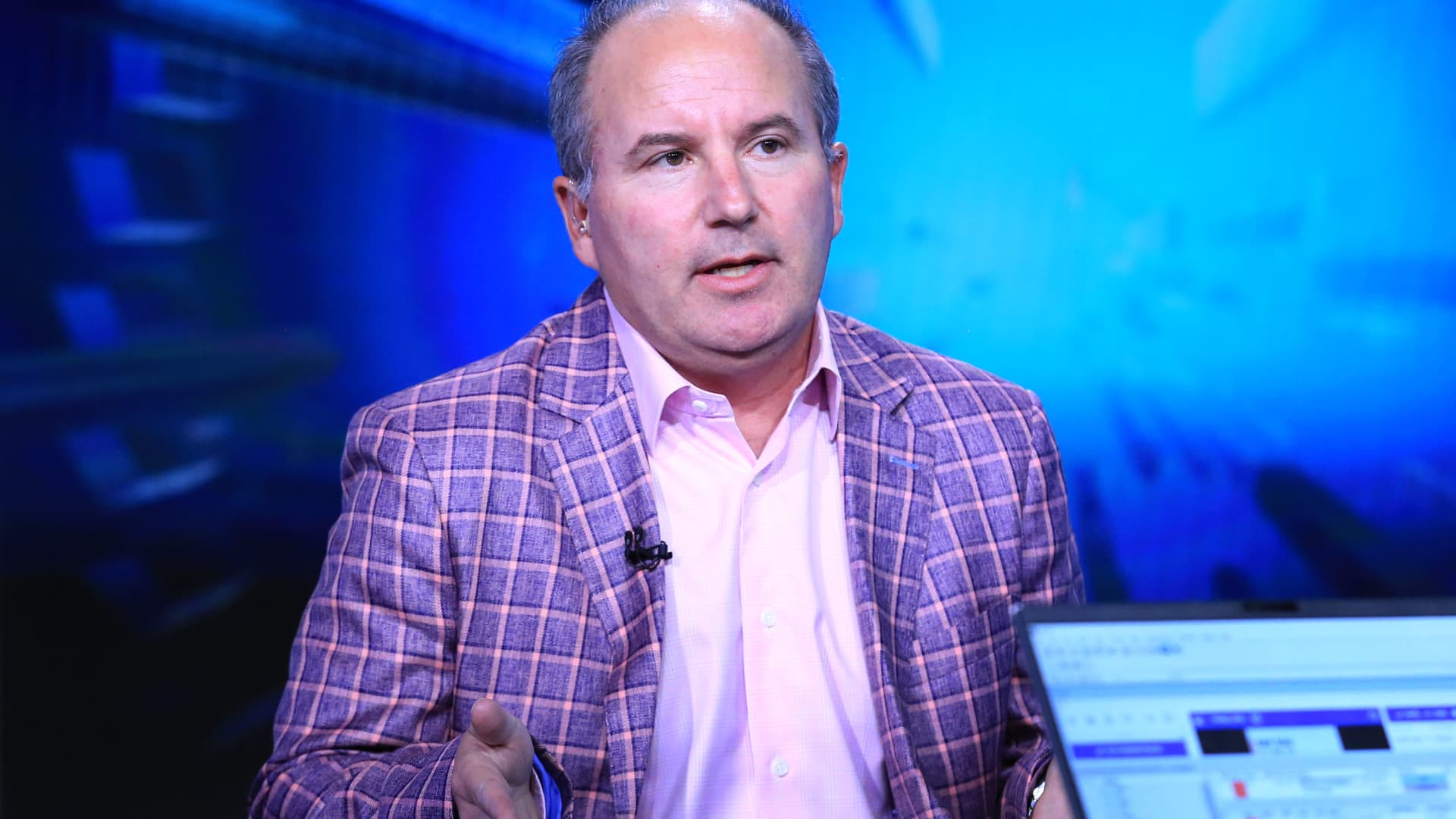
Dan Ives, Wedbush Securities
Scott Mlyn | CNBC
Dan Ives, one of Wall Street’s best-known technology analysts, is teaming up with Yorkville Securities to launch a new merchant banking firm.
The new firm, Yorkville Ives & Co., will combine investment banking, equity research, institutional trading and principal investing, with a focus on artificial intelligence, technology, industrials, energy transition and infrastructure, according to a statement Tuesday.
Ives, who built a large following for his bullish views on AI and major technology companies during more than two decades on Wall Street, will serve as partner and senior managing director. Roger Briggs will be chief executive officer.
Yorkville Ives said it will offer debt and equity capital raising in public and private markets, strategic advisory on mergers and acquisitions, capital structure and other corporate transactions, institutional trading and execution services, and independent equity research. The firm also plans to invest its own capital alongside clients and partners.
“The fourth industrial revolution is here, and it needs a new kind of bank, a modern merchant bank,” Ives said in the statement. “Research, banking, trading, and capital, all under one hood, all pointed at the biggest transformation the markets have ever seen.”
Ives, known for his colorful jackets and outspoken style, spent the past eight years at Wedbush Securities and more than 25 years covering technology stocks. He announced earlier this month that he was leaving the firm to pursue a new venture.
At Wedbush, Ives also took on roles uncommon for a sell-side analyst, serving on the advisory board of Zeta Global and briefly as chairman of Eightco Holdings. At Eightco, he helped oversee a crypto treasury strategy centered on Worldcoin, the digital token tied to Sam Altman’s identity venture, World.
The launch comes as Wall Street firms seek to capitalize on growing demand for AI-related financing and advisory work, with companies raising capital to fund data centers, computing infrastructure and other technology investments.
BNB Chain has completed its 36th quarterly token burn, permanently removing 1,615,827.795 BNB from circulation.
Summary
- BNB Chain burned 1.61 million BNB worth $932 million in its 36th quarterly burn event.
- BNB supply fell to 133.17 million after the burn, moving closer to 100 million target.
- Future quarterly burns will occur directly on BSC, sending tokens permanently to the blackhole address.
The tokens were worth about $931.7 million when the burn took place on July 15, according to the official BNB Chain announcement.
The transaction reduced BNB’s total supply to 133,166,127.91 tokens. BNB Chain’s Auto-Burn system will continue reducing supply until the total reaches 100 million BNB, or half of the token’s original maximum supply.
BNB Chain removes 1.61 million tokens
The latest burn removed more BNB than the previous quarterly event. The 35th burn in April destroyed 1,569,307.34 BNB worth about $1.02 billion at the time, leaving total supply at roughly 134.79 million tokens.
The dollar value of each burn changes with BNB’s market price, while the Auto-Burn formula determines the number of tokens removed. BNB Chain calculates the amount using BNB’s price and the number of blocks produced on BNB Smart Chain during the quarter. The mechanism operates independently from the Binance centralized exchange.
Future BNB burns move directly to BSC
The 36th burn also marks a change in how the quarterly process operates. BNB Chain said this burn and future quarterly burns will take place directly on BSC following the BNB Chain Fusion process.
The network will send the corresponding BNB to the 0x000000000000000000000000000000000000dEaD blackhole address. Tokens sent there cannot return to circulation. As previously explained, a genuine burn permanently removes tokens by sending them to an address with no usable private key.
BNB Chain also adjusted the Auto-Burn formula after its Lorentz, Maxwell and Fermi network upgrades increased block production speed. The project said the changes maintain the original design of the burn system despite the faster block schedule.
Real-time gas fee burns continue alongside quarterly cuts
The quarterly Auto-Burn operates alongside BNB Chain’s real-time burn mechanism. Under BEP-95, BSC validators burn a fixed portion of gas fees collected from each block. Around 291,000 BNB has been removed through that mechanism since its introduction, according to BNB Chain.
The two systems reduce supply through separate processes. The quarterly mechanism uses a formula linked to price and block production, while the real-time system burns part of transaction fees as users interact with BSC. Neither process guarantees changes in BNB’s market price because demand and wider market conditions also affect valuation.
BNB burn comes as institutional access expands
The supply reduction comes after new regulated investment products expanded access to BNB.As reported by crypto.news, VanEck launched the first U.S. spot BNB exchange-traded fund on Nasdaq in May under the VBNB ticker.
BNB also remains the native asset used for transaction fees, staking and governance across the wider BNB Chain ecosystem. The latest burn reduced its total supply to about 133.17 million, leaving roughly 33.17 million BNB to be removed before the network reaches its long-term 100 million supply target.
The move to direct BSC burns establishes the process that BNB Chain plans to use for future quarterly events. The next burn amount will again depend on the Auto-Burn formula and network activity during the coming quarter.

[PRESS RELEASE – Dubai, UAE, July 15th, 2026]
15th of July: The BNB Chain Foundation has officially announced the successful completion of the 36th quarterly BNB token burn by BNB Chain. This marks our third burn of 2026.
Here are the facts and figures from the latest burn:
- Auto-Burn (Total BNB burned): 1,615,827.795 BNB
- Approximate value in USD at the time of burn completion: ~$931,702,464
- Transaction ID (TXID) for BNB burn: View transaction
- Remaining to be burned: Check real-time data here
- Remaining total supply: 133,166,127.91 BNB
at time of writing 15 July, 2026 at 10:35AM UTC.
What You Need to Know About the BNB Burn
BNB is the native coin of the BNB Chain ecosystem, essential for powering its multifaceted Web3 environment. It supports transactions on the BNB Smart Chain (BSC), the opBNB L2s, and BNB Greenfield blockchain. Besides transaction fees, BNB serves as a governance token, granting holders the ability to participate in the BNB Chain’s decentralized on-chain governance. Additionally, BNB functions as a strategic reserve asset and enters the radar of more mainstream financial institutions, driving ecosystem growth and incentivizing adoption.
Following its mainnet launch on April 18, 2019, BNB transitioned from the Ethereum Network to BNB Chain. “Build and Build” is the philosophy behind BNB, reflecting its role in fostering development within the ecosystem. BNB employs an Auto-Burn system to gradually reduce its total supply to 100,000,000 BNB. The burn amount is adjusted based on BNB’s price and the number of blocks generated on BSC during a quarter, ensuring transparency and predictability.
BNB Auto Burn
The BNB Auto-Burn provides an independently auditable, objective process. The figures are reported quarterly, and the mechanism is independent of the Binance centralized exchange.
This quarter’s burn and future burns will occur directly on BSC due to the BNB Chain Fusion. The corresponding BNB amount will be sent to the “blackhole” address: 0x000000000000000000000000000000000000dEaD.
Note: Due to the recent Lorentz, Maxwell and Fermi upgrades, BSC is producing blocks more frequently, compared with the time when the Auto Burn formula was originally defined. The parameters used in the formula have been adjusted to keep the idea and spirit consistent.
BNB Real-time Burn
Additionally, BNB implements a real-time burning mechanism based on gas fees. BSC validators determine the ratio of gas fees collected in each block, which is burned at a fixed rate. Since the introduction of BEP95, roughly 291K BNB has been burnt under this mechanism.
About BNB Chain
BNB Chain is one of the largest and most active blockchain ecosystems in the world, supported by a global community of developers and users. With high throughput, low transaction costs, and full EVM compatibility, BNB Chain powers scalable applications across finance, gaming, and the broader Web3 economy. For more information, users can visit www.bnbchain.org.
The post BNB Chain Completes 36th Quarterly Token Burn, Marks Third Burn of 2026 appeared first on CryptoPotato.
Crypto World
DeFi as Critical Digital Infrastructure: Building the Financial Backbone of the Digital Age

Introduction
The internet transformed how the world communicates, shares information, and conducts business. Yet, despite these advances, financial infrastructure remains fragmented, permissioned, and heavily dependent on centralized institutions. Payments can take days to settle, billions remain unbanked, and access to financial services often depends on geography, identity, or institutional approval.
Decentralized Finance (DeFi) is changing that narrative.
Rather than simply offering an alternative to traditional banking, DeFi is evolving into critical digital infrastructure—a foundational financial layer that anyone can access, build upon, and integrate into the next generation of applications. Just as the internet became essential infrastructure for information, DeFi is becoming essential infrastructure for value.
What Makes Infrastructure “Critical”?
Critical infrastructure refers to systems that society depends on every day. Electricity grids, telecommunications networks, transportation systems, and cloud computing platforms all fall into this category because they enable countless services to function.
DeFi increasingly shares these characteristics:
- Operates continuously without business hours
- Accessible globally through an internet connection
- Open for developers to build on
- Resistant to single points of failure
- Transparent and verifiable
- Programmable by design
Instead of replacing banks outright, DeFi provides the financial operating system that applications, businesses, and even governments can leverage.
Financial Services Become Internet Primitives
One of DeFi’s greatest innovations is transforming financial functions into programmable building blocks.
Developers no longer need to build payment networks, lending systems, exchanges, or settlement infrastructure from scratch.
Instead, they can integrate existing DeFi protocols much like developers use cloud storage or payment APIs today.
These financial primitives include:
- Stablecoin payments
- Decentralized lending
- Automated exchanges
- On-chain collateral management
- Yield-generating vaults
- Cross-chain asset transfers
- Tokenized real-world assets
This composability dramatically accelerates innovation while reducing infrastructure costs.
Always-On Global Finance
Traditional financial infrastructure still operates within numerous constraints:
- Banking hours
- National borders
- Multiple intermediaries
- Settlement delays
- High remittance costs
- Manual reconciliation
DeFi removes many of these limitations.
Transactions settle around the clock.
Capital moves continuously.
Applications operate regardless of weekends or holidays.
This always-on availability is particularly valuable for global businesses, remote workers, digital creators, and international commerce.
Stablecoins: The Infrastructure Layer for Digital Payments
Stablecoins have quietly become one of DeFi’s most important components.
Rather than focusing on speculation, stablecoins enable:
- International payroll
- Merchant payments
- Cross-border settlements
- Treasury management
- E-commerce transactions
- Institutional liquidity
For many users, stablecoins represent their first interaction with blockchain technology—not because they are interested in crypto, but because they need faster, cheaper, and more reliable payments.
As adoption grows, stablecoins increasingly resemble digital public utilities for money movement.
Open Infrastructure Encourages Competition
Traditional financial systems often rely on closed networks where innovation depends on permission from intermediaries.
DeFi changes this dynamic.
Anyone can build:
- Wallets
- Trading platforms
- Lending markets
- Insurance protocols
- Payment applications
- Asset management tools
Developers compete on user experience rather than exclusive access to infrastructure.
This openness creates a healthier ecosystem where innovation moves faster, and users benefit from better services.
Programmable Money Changes Everything
Money is no longer limited to being stored or transferred.
With smart contracts, money becomes programmable.
Examples include:
- Automatic revenue sharing
- Instant royalty payments
- Escrow without intermediaries
- Streaming salaries by the second
- Automated subscriptions
- Conditional business payments
- Machine-to-machine commerce
As artificial intelligence and the Internet of Things expand, programmable financial infrastructure becomes increasingly important.
Machines will eventually need financial systems that operate autonomously.
DeFi is uniquely positioned to support this future.
Infrastructure for Tokenized Real-World Assets
Governments, financial institutions, and enterprises are exploring tokenization at an unprecedented pace.
Assets that can be represented on-chain include:
- Government bonds
- Treasury bills
- Corporate debt
- Real estate
- Commodities
- Private credit
- Carbon credits
DeFi provides the infrastructure where these assets can be:
- Traded
- Borrowed against
- Used as collateral
- Fractionalized
- Settled instantly
Rather than building entirely new financial rails, institutions increasingly connect to existing decentralized infrastructure.
Resilience Through Decentralization
Critical infrastructure must remain operational even under stress.
Traditional systems face risks such as:
- Data center outages
- Banking failures
- Political instability
- Regional disruptions
- Single points of failure
Public blockchain networks distribute operations across thousands of independent nodes worldwide.
Although no system is perfect, decentralization significantly reduces dependence on any single operator.
This resilience is becoming increasingly valuable in an interconnected global economy.
Challenges Before DeFi Can Become Global Infrastructure
Despite remarkable progress, several challenges remain.
Scalability
Infrastructure must support millions—or even billions—of users without sacrificing performance.
User Experience
Wallet management, onboarding, and security remain difficult for many newcomers.
Regulatory Clarity
Governments continue developing frameworks that balance innovation with consumer protection.
Security
Smart contract vulnerabilities, exploits, and protocol risks must continue to decline through better development practices and auditing.
Interoperability
The future financial system will likely span multiple blockchains rather than a single dominant network.
The Infrastructure We Don’t Notice
The most successful infrastructure often becomes invisible.
Few people think about:
- DNS when browsing websites.
- TCP/IP when sending emails.
- Cloud servers when using mobile apps.
Similarly, future users may never realize they’re using DeFi.
They’ll simply:
- Send money instantly.
- Receive salaries globally.
- Trade tokenized assets.
- Earn yield automatically.
- Purchase digital goods.
- Access financial services from any device.
The blockchain becomes invisible while the experience becomes seamless.
Conclusion
DeFi is evolving far beyond decentralized exchanges and yield farming. It is becoming the programmable financial infrastructure that can power digital commerce, tokenized assets, global payments, AI-driven economies, and next-generation internet applications.
The future of finance may not be defined by who owns the infrastructure, but by who can build on top of it. In that future, DeFi serves as the open, resilient, and interoperable foundation—enabling innovation at internet scale.
As digital economies continue to expand, the most important question may no longer be whether DeFi can compete with traditional finance, but whether tomorrow’s financial system can function efficiently without the open infrastructure that DeFi provides.
REQUEST AN ARTICLE
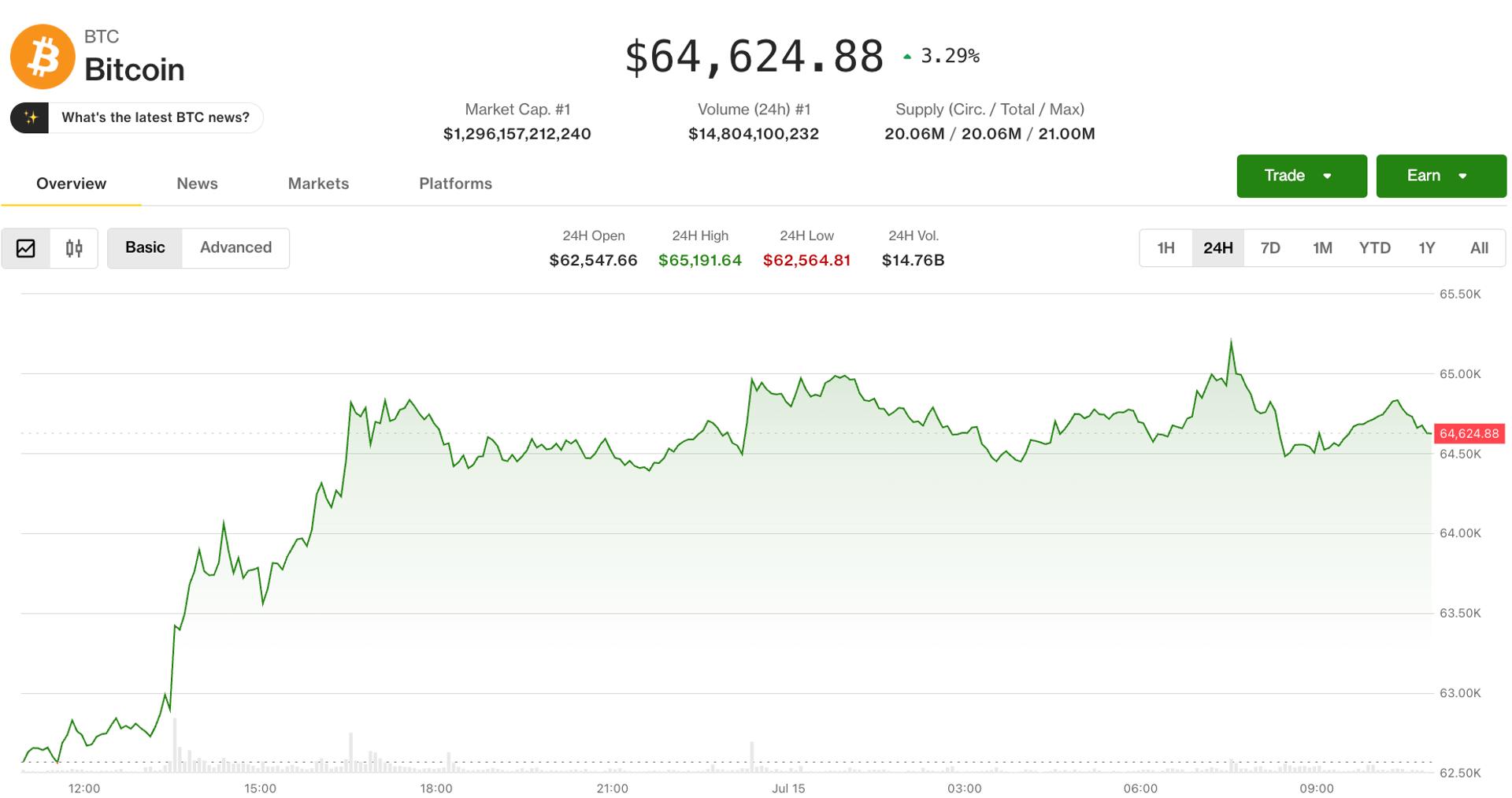
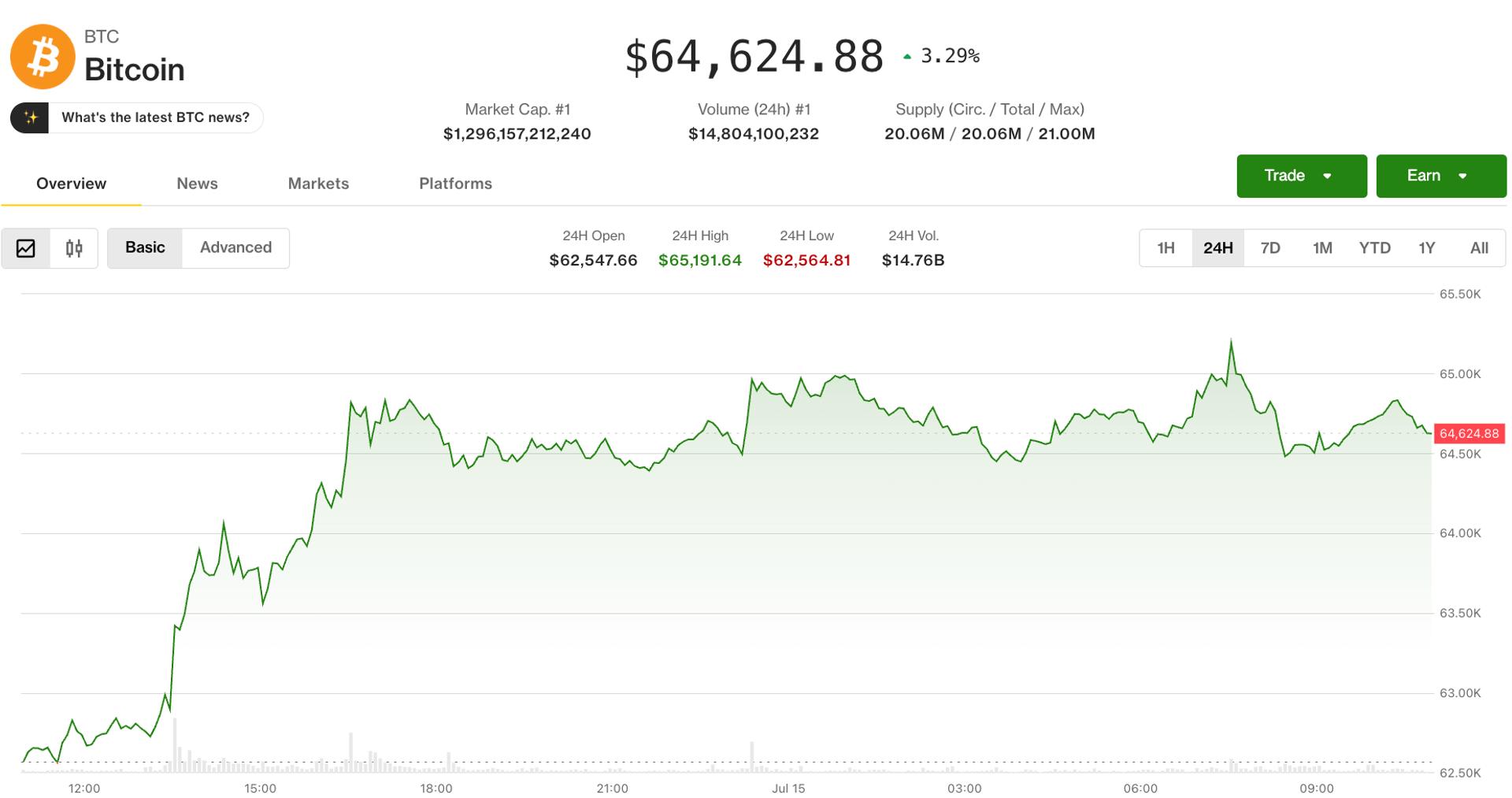
Bitcoin and ether (ETH) consolidated during Asian and European hours after rallying on Tuesday following a weaker-than-forecast U.S. inflation figure.
Bitcoin, while more than 3% higher over 24 hours, fell 0.6% since midnight UTC as tensions between Iran and the U.S. over tanker movements in the Strait of Hormuz ramped up. The largest cryptocurrency earlier touched a three-week high of $65,200.
Ether marked a similar trajectory, remaining 5% higher over 24 hours even after dropping 0.8% since midnight. It touched $1,895, the highest level since June 3, on Tuesday.
U.S. equities also rose in the period, with Nasdaq 100 futures and S&P 500 futures posting respective gains of 0.53% and 0.22%.
The altcoin market also showed pockets of strength; PUMP rose by 8.5% since midnight after a team and investor unlock was mopped up by investors, suggesting robust demand.
Derivatives positioning
- BTC derivatives positioning remains largely unchanged. Open interest ticked up to $17.3 billion, though the move is not meaningful, the three-month annualized basis held at 3.8% and funding rates remained broadly in the 0%-8% annualized range across multiple venues. In essence, the market continues to consolidate
- Options positioning tilted more bullish as the 24-hour call/put ratio moved to 66/34 following yesterday’s softer 58/42 read and the one-week delta skew held steady at ~15%. The ATM term structure remains in contango, with the front end around 32%–33% and the long end at ~42.5% out to mid-2027 – indicating a calm, non-stressed volatility environment with a renewed lean toward upside positioning.
- Coinglass data shows $357 million in 24-hour liquidations, with a 19-81 split between longs and shorts. ETH ($132 million) and BTC ($118 million) were the leaders in terms of notional liquidations.
- The Binance liquidation heatmap indicates $63,500 as a core liquidation level to monitor in the event of a price drop.
Token talk
- CoinMarketCap’s “Altcoin Season” indicator fell to 46/100 on Wednesday, likely due to the strength shown by the largest cryptocurrencies, bitcoin and ether.
- The indicator was also dragged down by , which lost around 1% since midnight UTC despite buoyancy in the broader market.
- Hyperliquid (HYPE) demonstrated its strength, adding 4% since midnight as it looks to extend May’s rally, which has been characterized by a series of higher highs and higher lows. The next target would be a record high above $78.00.
- HYPE’s rival token, LIT, stalled after a strong month, rising by just 0.5% as it started experiencing profit-taking and supply distribution as it neared its record high of $2.76.
- There was also a strong gain for zcash (ZEC), which surged by more than 10% over the past 24 hours before consolidating around $557.
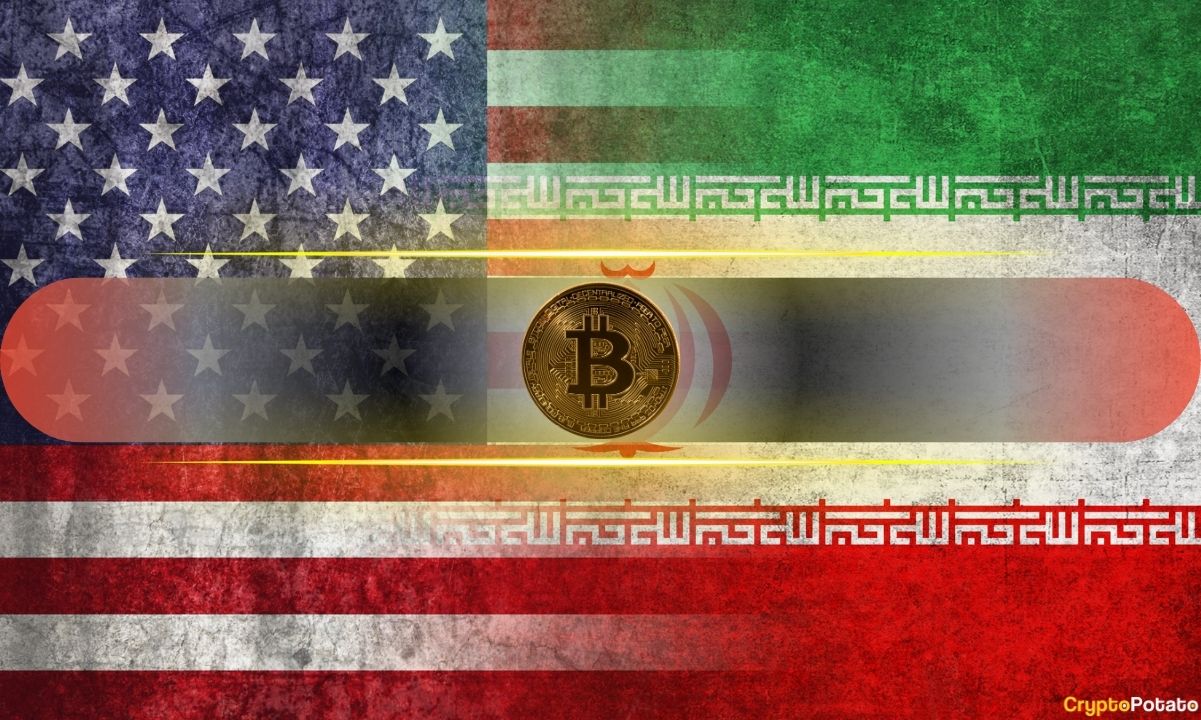
Bitcoin’s price charted impressive gains on Tuesday and Wednesday after the lower-than-expected US CPI numbers for June, spiking to a multi-week peak of $65,000.
However, this progress is in danger again due to the quickly escalating tension in the Middle East, especially since many reports outlined US President Donald Trump’s new attack strategy against Iran.
New Attack Strategy Revealed
The two sides sat in a fragile ceasefire for weeks but failed to reach a decisive deal to permanently end the conflict. Instead, the attacks resumed last week; Trump said the memorandum of understanding is over, and they have launched strikes against each other almost daily since then.
According to multiple reports, the POTUS held a meeting in the Situation Room on Tuesday to discuss a “massive offense” against the Middle Eastern country. Some of the details that went public include:
- The meeting was attended by Vice President JD Vance, Marco Rubio, Pete Hegseth, John Ratcliffe, Steve Witkoff, and other senior officials
- The new attack strategy will involve strikes with a wider scope than the current ones, which are mostly focused on the region around the Strait of Hormuz.
- Axios reported that one of the major conclusions of the meeting focused on new plans for “devastating strikes on strategic targets in Iran.”
Moreover, the report claimed that Trump claimed Iran should “better make a deal” or they are “not going to have anything left.” The good news in all of this could come from this particular sentence, as the POTUS has made similar threats in the past, which actually preceded major de-escalations.
Is BTC in Danger Again?
The timing of these new reported plans for mass attacks couldn’t come at a worse time for bitcoin. The primary cryptocurrency has finally shown some strength following a major macro reversal. The CPI data for June showed much lower inflation than expected, which could mean less chance for the US Fed to increase interest rates.
Bitcoin reacted with an immediate price pump that drove it to a multi-month peak at $65,000 after it slumped below $58,000 for the first time in almost two years on July 1. New negative developments on the war front have long harmed its trend reversal, as attacks typically lead to a BTC crash and a surge in oil prices.
Consequently, there’s a real threat that bitcoin can erase the recent gains if the US follows through on its plan and Iran starts to retaliate against many nations in the region as it did in the past.
The post Trump’s New Iran Strategy Revealed: Will Bitcoin Pay the Price Again? appeared first on CryptoPotato.
Crypto World
Warren Buffett calls Bill Gates’ actions with Epstein ‘distasteful,’ but people make mistakes
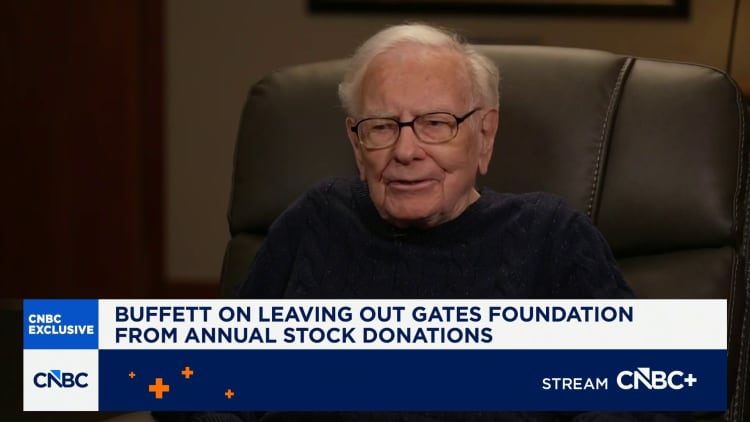

Warren Buffett called Bill Gates’ association with the late sex offender Jeffrey Epstein as “distasteful” after the Berkshire Hathaway chairman excluded the Gates Foundation from his sizable annual charitable donations.
“I read a great deal since January 1 in terms of what happened, with Bill and Epstein,” Buffett said in an interview with CNBC’s Becky Quick. “While it’s distasteful, while he made mistakes, I made mistakes, hiring all kinds of people, or choosing friends, and then finding out later that, one way or other, they weren’t what I thought they were. I found nothing in there that was beyond what I could picture myself doing.”
Buffett, who has been friends with Gates for more than three decades, said he extensively reviewed information about Gates’ relationship with Epstein before deciding to overhaul his charitable giving. The 95-year old Buffett directed all of this year’s donations to four family-linked foundations.
For years, the Gates Foundation was the largest recipient of his annual Berkshire donations. Since 2006, Buffett has donated more than $47 billion worth of Berkshire stock to the philanthropic organization founded by the Microsoft co-founder and his former wife, Melinda Gates.
Buffett said he and Gates remain in contact and recently spent several hours together in Omaha.
“He came by Omaha three weeks ago. I kind of lose track of time, but certainly not three months, and we spent three hours talking together,” Buffett said. “He intends to call me… He already proposed another meeting.”

In the hands of Buffett’s children
The Oracle of Omaha said his estate plan should place greater responsibility in the hands of his three children. He said he had gradually prepared them for that role over decades.
“I reevaluated my whole situation,” Buffett said. “What happened was that I gave the Gates Foundation a great deal of money. I thought that was a good decision. I think it was a decent decision, but I did not think my kids were in any way ready to give away vast sums of money.”
“I tell the three children that it is theirs, and it’s their responsibility to get it done well,” he said.
Buffett said in a statement earlier this week that his goal is to dispose of all of my Berkshire shares within about eight years as his children are “unfortunately growing older.”
This year, Buffett is giving the Susan Thompson Buffett Foundation, named for his late first wife, 9 million Class B shares with a current value of around $4.5 billion. The three foundations run by his children, Susie Buffett’s Sherwood Foundation, the Howard G. Buffett Foundation, and Peter Buffett’s NoVo Foundation, will each get 1 million Class B shares worth just under $500 million.
Buffett also said he recently underwent surgery after breaking his leg several weeks ago and is recovering well.

Ted Pick, CEO Morgan Stanley, speaking on CNBC’s Squawk Box at the World Economic Forum Annual Meeting in Davos, Switzerland on Jan. 18th, 2024.
Adam Galici | CNBC
Morgan Stanley is set to report second-quarter earnings before the opening bell Wednesday.
Here’s what Wall Street expects:
- Earnings per share: $2.94, according to LSEG
- Revenue: $19.64 billion, according to LSEG
- Investment banking: $2.17 billion, according to StreetAccount
- Trading: Equities of $4.41 billion, fixed income of $2.49 billion, according to StreetAccount
Morgan Stanley is expected to benefit from higher trading and investment banking revenue in the quarter, as rivals JPMorgan Chase and Goldman Sachs have shown in their reports.
Heightened activity fueled by the global artificial intelligence boom propelled JPMorgan and Goldman to beat estimates for equities trading by a combined $4.4 billion, while investment banking at the two firms topped estimates by a combined $1 billion.
Analysts will want to know what CEO Ted Pick has to say on the outlook for the rest of the year as geopolitical tensions remain high.
This story is developing. Please check back for updates.
Binance’s XRP reserves have fallen to about 2.61 billion tokens, their lowest level since February, and the balance has held there since the start of July.
And even though the Ripple token had been sliding toward $1.06 while those reserves were draining out, it reversed course in the last 24 hours, gaining over 3% in that period.
Exchange Reserves Shrink as Selling Pressure Lingers
According to CryptoQuant contributor Arab Chain, there have been no meaningful inflows to replenish Binance’s XRP stockpile in recent months, which is why the reserve figure has held near its February 2026 low instead of climbing back.
A falling exchange balance can be considered a bullish signal since it is often taken to mean that investors are moving their stash into private wallets instead of preparing to sell. That signal took a while to show up in price, with Arab Chain noting that XRP had been falling to around $1.06 while reserves were emptying out, suggesting that liquidity, trading activity and investor sentiment were outweighing the effect of declining exchange supply.
In another market update, the same analysts pointed to the Binance CVD Confirmation Score, which blends price with Cumulative Volume Delta to track whether buy or sell orders are winning out in the spot market. That CVD reading is at -6.93 million, meaning that sell orders have outweighed buys as XRP fell from above $2.00 earlier this year toward the $1.07 area.
Meanwhile, the 30-day Price-CVD Confirmation Score is holding near 0.84, a figure Arab Chain says, while reasonably healthy, still falls short of confirming a genuine shift in buying demand. According to them, only a sustained move into positive CVD territory alongside a stronger confirmation score would point to a real reversal in buying interest.
As noted earlier, XRP’s price action has nevertheless improved modestly, with data from CoinGecko at the time of writing showing the asset trading around $1.11 after gaining about 3.7% in 24 hours, having oscillated between $1.07 and $1.12 during that period. However, the world’s sixth-largest cryptocurrency by market cap is still down 7% over the past month and more than 61% across one year, despite daily trading volume jumping 31% higher than the previous day to hit $1.26 billion.
Analysts Divided On Where XRP Heads Next
Such is the state of XRP that market watchers are split on what comes next. For example, popular trader Diana has pointed to $1.08 as the level to watch and warned that losing it could send XRP toward the $0.90-$0.93 zone before one last flush to the $0.87 macro support. Fellow analyst CasiTrades holds a similar technical view but frames it as the tail end of a yearlong correction, telling followers on X that a drop toward $0.87 would “finish off the correction we’ve spent the last year building.”
But others are looking past the near-term chop, with one of them, Crypto Patel, arguing that XRP is tracing a pattern that has historically come right before rallies of more than 1,000%. On his part, crypto investor Celal Kucuker pointed to a 500% monthly gain two years ago as a reason not to dismiss $7 by the end of the year.
The post Binance XRP Reserves at Lowest Since February as Ripple Price Defends Key Support appeared first on CryptoPotato.
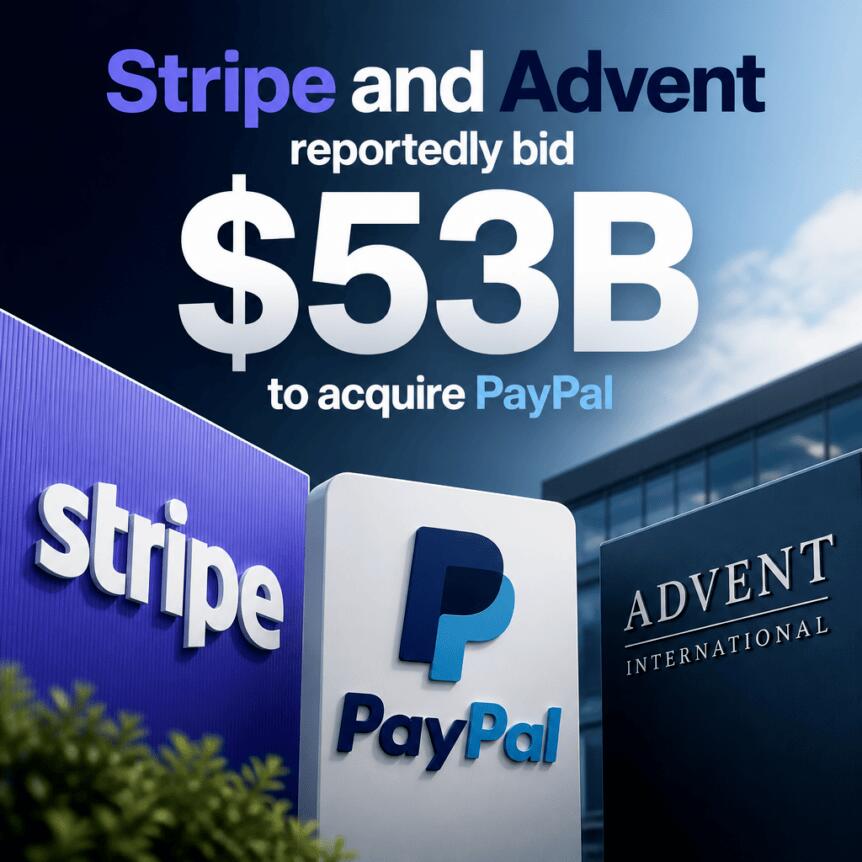
Stripe and private equity firm Advent International have reportedly made a joint bid to buy PayPal Holdings, putting a major payments player directly in the middle of a fast-consolidating digital payments race.
According to Reuters, the offer would include about $50 billion in committed financing and would value PayPal at $60.50 per share, a figure described by sources as representing a 28% premium to PayPal’s Tuesday closing price. Both PayPal and Stripe declined to comment.
Key takeaways
- Reuters reports Stripe and Advent International have made a joint offer to acquire PayPal at $60.50 per share.
- The bid reportedly comes with roughly $50 billion in committed financing.
- The proposal would represent about a 28% premium versus PayPal’s Tuesday closing price.
- Both companies have been expanding crypto and stablecoin-related capabilities, which could be strategically relevant if a deal advances.
- PayPal stock rose in Wednesday premarket trading on the news, but the longer-term outcome depends on regulatory and shareholder processes.
A potential reshaping of mainstream payments
At the center of the report is a classic strategic question: whether large-scale payments infrastructure and consumer payment reach can be combined under one umbrella to compete more effectively with mobile-first options.
Reuters said the offer was made by Stripe alongside Advent International and referenced sources familiar with the matter. The proposed per-share price would imply a significant premium, and PayPal shares reflected that immediately—rising 11.3% to $52.73 in Wednesday premarket trading, according to Yahoo Finance data. Still, PayPal is described as having gained about 14% over the past month while remaining down 35% year-over-year, underscoring how investors are still weighing turnaround risk against growth prospects.
Why PayPal is back in the acquisition spotlight
This would be Stripe’s second attempt to acquire PayPal. Earlier reporting by Bloomberg in February said Stripe held preliminary acquisition talks with PayPal as PayPal faced increased competitive pressure from smartphone-based payment services such as Google Pay and Apple Pay.
What’s notable here is the timing: instead of focusing only on traditional payment processing, the competitive landscape increasingly includes payment rails that can move quickly into new settlement and compliance frameworks. That environment raises the stakes for any acquirer—especially one with a track record of building payment infrastructure across different use cases, from merchant processing to stablecoin-enabled settlement.
Stablecoins as a shared strategic direction
The acquisition rumor lands at a moment when both PayPal and Stripe have been pushing deeper into stablecoin activity, a sector that is increasingly viewed as an extension of payment networks rather than a standalone crypto experiment.
PayPal introduced its PYUSD stablecoin in 2023. CoinMarketCap data cited in the report shows PYUSD peaked at a market capitalization of about $4.2 billion in February 2026 before falling to roughly $2.85 billion. While PYUSD is described as one of the 10 largest stablecoins, it remains far behind leaders including Tether’s USDt and Circle’s USDC.
Stripe, meanwhile, has been building stablecoin-related infrastructure for payments and accounts. The report notes that Stripe has offered stablecoin-based accounts globally since May 2025, and that its stablecoin infrastructure platform, Bridge, received conditional approval to operate as a federally chartered national trust bank under the US Office of the Comptroller of the Currency on Feb. 17.
Stripe has also accelerated adoption through partnerships. In March, Visa said it would expand its stablecoin card partnership with Stripe-owned Bridge to more than 100 countries across Europe, Asia-Pacific, Africa, and the Middle East by the end of the year—an expansion that signals how stablecoins are being positioned to integrate into broader consumer payment flows.
What investors should monitor next
Even if the offer progresses, the path from a reported bid to a completed acquisition depends on standard deal mechanics: due diligence, agreement on terms, shareholder approval, and regulatory review. For crypto-adjacent investors, the stablecoin angle adds another layer of uncertainty—whether a combined company would streamline stablecoin strategy, expand payment settlement capabilities, or maintain separate roadmaps.
In the near term, the most important question is whether PayPal’s board engages meaningfully with the proposal and how competitors and regulators respond to a transaction that would unite large consumer payment distribution with stablecoin-enabled infrastructure. Readers should also watch the market’s reaction for signs of whether investors treat the news as a genuine path to consolidation or as a typical M&A rumor that may not clear the next hurdles.

Taylor Swift’s Wedding Trash Sold Out In 24 Hours

Every Young Person Deserves Financial Education | RevestEdu

Person cut from vehicle and three injured in Stanley crash


-

 Fashion6 days ago
Loro Piana Fall 2026 Enters Houston’s Art Scene
-

 Fashion5 days ago
Weekend Open Thread: Nutriplenish Leave-In Conditioner
-
 Sports6 days ago
2026 Genesis Scottish Open Thursday TV coverage: Round 1
-

 Sports5 days ago
Super Eagles star Moses Simon opens up on Liverpool transfer regret
-

 Tech6 days ago
Character.AI enters the microdrama arena with its own productions, but there’s a twist
-

 News Videos16 hours ago
XRP BOMBSHELL… XRP OMBOARDED FOR TRANSACTIONS!!!
-

 Tech1 day ago
Get Your ESP32 Sunny Side Up With This Solar Dev Board
-

 Tech16 hours ago
Dark Secrets Emerge When Jailbreaking LLMs
-

 News Videos7 days ago
Crypto Just Entered Its Most Important 6-Month Candle (Could Decide Everything!)
-
 NewsBeat6 days ago
Major update after Huntingdon train attack as man enters plea
-

 News Videos2 days ago
how to make coin bank box with cardboard #scienceproject #money #diy #shorts
-

 Tech6 days ago
Level Infinite Launches Gangstar Mirage City in India with Pre-Registrations
-
 Sports7 days ago
39-year-old Djokovic wins five-hour thriller to enter Wimbledon semis | Other Sports News
-
 Tech2 days ago
Cloudflare Precursor Watches Your Mouse and Keyboard To Decide If You Are Human
-

 Tech6 days ago
Entra passkey enrollment vishing targets Microsoft 365 users
-
 Crypto World6 days ago
DeFi Dashboard Zapper to Shut Down After 7 Years
-
 Crypto World6 days ago
Mark Cuban-Backed DeFi Dashboard Zapper Shuts Down After 7 Years
-

 Tech6 days ago
Claude’s New Reflect Dashboard Wants To Help You Log Off Of Claude
-

 Crypto World7 days ago
Fed minutes June 2026: officials split on rates
-
 Tech6 days ago
Hackers can use 9 of the most popular AI tools to assemble massive botnets
You must be logged in to post a comment Login