
Crypto World
Casino Operators, Sportsbooks and Affiliates Get a Purpose-Built Media Distribution Service From Kooc Media

The online gambling ecosystem depends on three interconnected business types — casino operators who run the platforms, sportsbook brands who set the odds and gambling affiliates who connect players with both. Each one needs media visibility to succeed. Each one struggles to get it. Kooc Media, a PR distribution agency that has served the gambling and crypto industries since 2017, has launched a media distribution service that addresses all three at once.
The service gives casino brands, sportsbook operators and affiliate businesses guaranteed press coverage on established news publications, professional editorial support, global newswire distribution and transparent campaign reporting. It is the first time a single service has been designed to cover the full range of businesses that make the online gambling industry work.
A Shared Frustration Across the Industry
Spend enough time in online gambling marketing circles and a pattern becomes obvious. Whether someone runs an online casino, manages a sportsbook or owns an affiliate network, the frustration with PR is identical. They know press coverage would help their business. They have tried to get it. The results were either nonexistent or so poor that the entire exercise felt like a waste of money.
Casino operators have been told by agency after agency that gambling falls outside their acceptable client categories. Sportsbook brands have heard the same, sometimes with the added insult of being passed over during the exact sporting events when coverage would matter most. Affiliate businesses — despite producing editorial content as their core product — have found it almost impossible to secure press coverage that builds their own brand rather than the operators they promote.
The common denominator is an industry that generates enormous revenue but receives almost no attention from the mainstream media ecosystem. Publications that routinely cover fintech, gaming technology and digital entertainment draw a line at gambling. PR agencies that proudly serve controversial sectors in other industries refuse to touch betting or casino clients.
Kooc Media exists specifically because of this gap. The agency has provided gambling PR and crypto PR as core services since its founding and has built the distribution infrastructure needed to deliver results where other agencies consistently fail.
“Casino operators, sportsbooks and affiliates are three sides of the same industry,” said Michelle De Gouveia, spokesperson for Kooc Media. “They all need media distribution that actually works. We have built one service that handles all three.”
The Distribution Infrastructure
Kooc Media’s service runs on a combination of owned media and partner distribution that eliminates the uncertainty of traditional PR.
The agency owns and operates multiple established news websites including Blockonomi, CoinCentral, MoneyCheck, Parameter, Beanstalk and Computing. These publications have built strong domain authority and consistent readerships across finance, technology, cryptocurrency and iGaming through years of editorial output. Because Kooc Media controls these sites, every placement booked through the service is published. There is no editorial pitch. No third-party gatekeeper. No possibility of paying for coverage that never materialises.
Beyond the owned network, press releases are distributed through a partner system reaching hundreds of additional media outlets and thousands of syndication channels across multiple countries and content categories. Premium distribution packages extend reach to major international platforms including Business Insider, Bloomberg, Benzinga, MarketWatch and USA Today.
Content is produced by the agency’s in-house editorial team when clients need writing support. The writers understand the specific language, regulatory sensitivities and audience expectations of the casino, sportsbook and affiliate sectors. Clients who prefer to provide their own material can do so and use Kooc Media purely for placement and distribution.
The full cycle operates at the speed the gambling industry demands. Briefing to live publication can happen within a single day. After distribution completes, a detailed report containing live links to every published article is delivered to the client.
What Media Distribution Does for Casino Brands
The online casino market is saturated with operators competing for the same players through increasingly similar means. Bonus offers, game libraries, loyalty programmes and website designs have converged to a point where many casinos are virtually interchangeable from a player’s perspective.
Press coverage provides differentiation that product alone cannot. A casino brand covered by independent news publications carries a perception of legitimacy and establishment that uncovered competitors lack. Players searching for a new casino encounter that coverage during their research and factor it into their decision. The brand feels safer. The signup feels less risky. The deposit happens more readily.
Over time, the SEO value compounds. Each article on a strong domain generates a backlink that improves the casino’s organic search positioning. For brands targeting terms like “best online casino,” “new casino sites,” “top casino bonuses” or “online slots,” those accumulated backlinks provide a lasting competitive advantage in search rankings.
What Media Distribution Does for Sportsbook Brands
Sportsbooks face a unique combination of pressure. They need to build long-term brand trust while simultaneously capitalising on short-term windows of opportunity around sporting events. A sportsbook that is invisible during a major football tournament or boxing event misses the exact moment when potential bettors are most actively searching for a platform.
Kooc Media’s same-day distribution capability allows sportsbook brands to time PR campaigns precisely around these events. A press release can go live on the morning of a major match day, putting the sportsbook’s name in front of audiences when interest is at its peak.

Beyond event-driven campaigns, sportsbooks accumulate the same trust and search benefits as casino brands. Bettors research operators before committing funds. Coverage on trusted publications reduces hesitation. Backlinks from those publications help sportsbooks compete for terms like “best sportsbook,” “sports betting sites,” “football betting platform,” “live betting odds” and “online betting offers.”
For sportsbooks entering newly regulated markets, press coverage provides immediate positioning. A brand that arrives with published coverage across recognised publications starts ahead of competitors who enter with no media presence at all.
What Media Distribution Does for Affiliate Brands
Gambling affiliates occupy a peculiar position in the industry. They are media businesses whose entire model depends on producing content and attracting audiences. Yet most affiliates invest nothing in promoting their own brand through external media channels.
The missed opportunity is significant. An affiliate brand with press coverage on established publications gains credibility with both players and operator partners. Players encountering an affiliate’s comparison site or review platform are more likely to trust its recommendations if they have seen the brand mentioned elsewhere in independent media. The affiliate stops being just another faceless review site and becomes a recognised name in the space.
Operator partnerships benefit too. Casino and sportsbook companies evaluating potential affiliate relationships assess the affiliate’s brand strength, traffic quality and public profile. An affiliate with documented media coverage across credible publications presents a stronger case for favourable commercial terms than one with no presence beyond its own website.
The SEO advantages are particularly relevant for affiliates. The gambling affiliate market is one of the most competitive organic search environments in existence. Hundreds of sites target the same high-value keywords. Backlinks from authoritative publications built through consistent PR campaigns strengthen domain authority in ways that internal content strategies alone struggle to match.
Packages That Fit Each Business Type
Kooc Media offers standard packages and custom campaigns to suit the different needs of casino operators, sportsbook brands and affiliate businesses.
Standard packages deliver guaranteed placements across the agency’s owned sites and partner network with optional content creation and comprehensive reporting. They work for casino brands maintaining steady promotional coverage, sportsbooks keeping their name visible throughout the sporting calendar and affiliates building brand authority through regular media output.
Custom campaigns address specific strategic moments. A casino launching a new brand or entering a new market needs coordinated multi-publication coverage. A sportsbook timing a campaign around a major sporting event needs rapid distribution with precise scheduling. An affiliate network expanding its portfolio or rebranding needs press that introduces the new identity to the industry. Any of these businesses integrating cryptocurrency features needs content bridging traditional gambling and crypto audiences.
Kooc Media manages every campaign from planning through content production, distribution and final reporting.
About Kooc Media
Kooc Media is a PR distribution agency founded in 2017, specialising in online gambling, crypto, fintech and technology. The company operates its own network of news publications and distributes content through a broad global partner network to guarantee media placements. Services include press release writing, sponsored articles, homepage features, newswire distribution and complete campaign management.
Kooc Media’s gambling PR packages are available now through the company’s website at https://kooc.co.uk.
Disclaimer: This is a Press Release provided by a third party who is responsible for the content. Please conduct your own research before taking any action based on the content.


Crypto World
More Players Than Ever Are Exploring BetMGM Alternatives and ZunaBet Has Become the Most Compelling Option
The online gambling landscape is being reshaped by a force that no amount of brand heritage or advertising spend can fully contain — the informed consumer. Players have access to more comparison tools, more reviews, more community discussion, and more firsthand experience across platforms than at any previous point in the industry’s history. The result is an audience that evaluates rather than assumes, that compares rather than settles, and that moves when something demonstrably better presents itself. BetMGM, carrying the weight of the most legendary casino brand ever created, remains a significant force in this environment. Its product is professional, its financial backing is enormous, and its name carries cultural meaning that extends far beyond gambling. But the record number of players now exploring BetMGM alternatives confirms that cultural meaning and professional execution are no longer sufficient to hold every segment of the market. ZunaBet, a crypto-native casino and sportsbook that launched in 2026, has become the most compelling destination for those players — a platform whose product so directly addresses the shortcomings of the traditional model that its rise feels less like disruption and more like inevitability.
BetMGM: The Standard-Bearer Facing New Standards
The MGM name occupies a unique position in the cultural landscape of gambling. It represents the glamour of Las Vegas, the sophistication of world-class resorts, and the excitement of high-stakes gaming. BetMGM was designed to translate that identity into the digital arena through a venture between MGM Resorts International and Entain. The platform holds licenses across a substantial number of US states, ranks among the highest-profile online gambling brands in the American market, and carries brand recognition that decades of physical casino operation and entertainment excellence have built.
The sportsbook provides the level of coverage that a brand of this stature demands. NFL, NBA, MLB, NHL, college athletics, and a broad range of international events in football, tennis, golf, motorsports, and combat sports all receive thorough treatment. The casino section features a curated library of slots, table games, and live dealer experiences from trusted software providers. The mobile application is well maintained and delivers a smooth user experience. BetMGM’s connection to MGM Rewards gives online players access to a loyalty ecosystem that extends into the physical world — points earned through digital activity can be redeemed at MGM resort properties for hotel stays, dining experiences, entertainment, and other luxury perks.
Payments follow the traditional path. Bank accounts, debit and credit cards, PayPal, and similar methods manage financial transactions. These channels maximize accessibility for a mainstream consumer audience.
BetMGM set the standard for bringing a legendary physical casino brand into the digital world. The new standards being set by the market, however, are not about translating physical experiences into digital form. They are about building natively digital experiences that take full advantage of what modern technology makes possible. Game libraries measured in the tens of thousands rather than hundreds. Payments that settle in minutes at zero cost rather than days at accumulated expense. Loyalty systems that engage players through creative digital design rather than through connections to physical properties. These are the standards the market is now applying, and they require a different kind of platform than the one BetMGM was built to be.
ZunaBet: The Most Compelling Case for What Comes Next
ZunaBet was built to meet the standards the market is now setting rather than the standards it set a decade ago. Launched in 2026 by Strathvale Group Ltd, the platform is run by a team whose combined gambling industry experience exceeds 20 years. It holds an Anjouan gaming license and is registered in Belize. Cryptocurrency is not a feature within ZunaBet. It is the foundation beneath everything — the architectural principle that determined how every system was designed and how every feature was built.
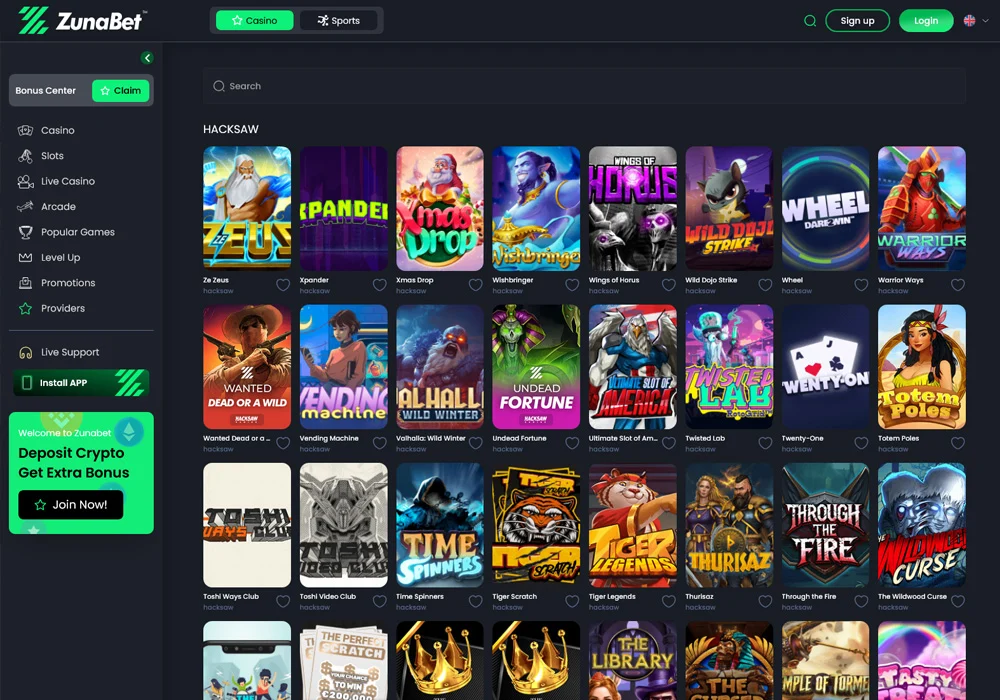
The game library makes the case for the platform more forcefully than any marketing message could. ZunaBet opened with 11,294 games from 63 distinct providers. That volume surpasses what most long-established operators have assembled across their full operational histories. Pragmatic Play, Evolution, Hacksaw Gaming, Yggdrasil, and BGaming lead a provider roster that extends through dozens of additional studios, each contributing content that ensures comprehensive coverage across every game type and style the industry offers.
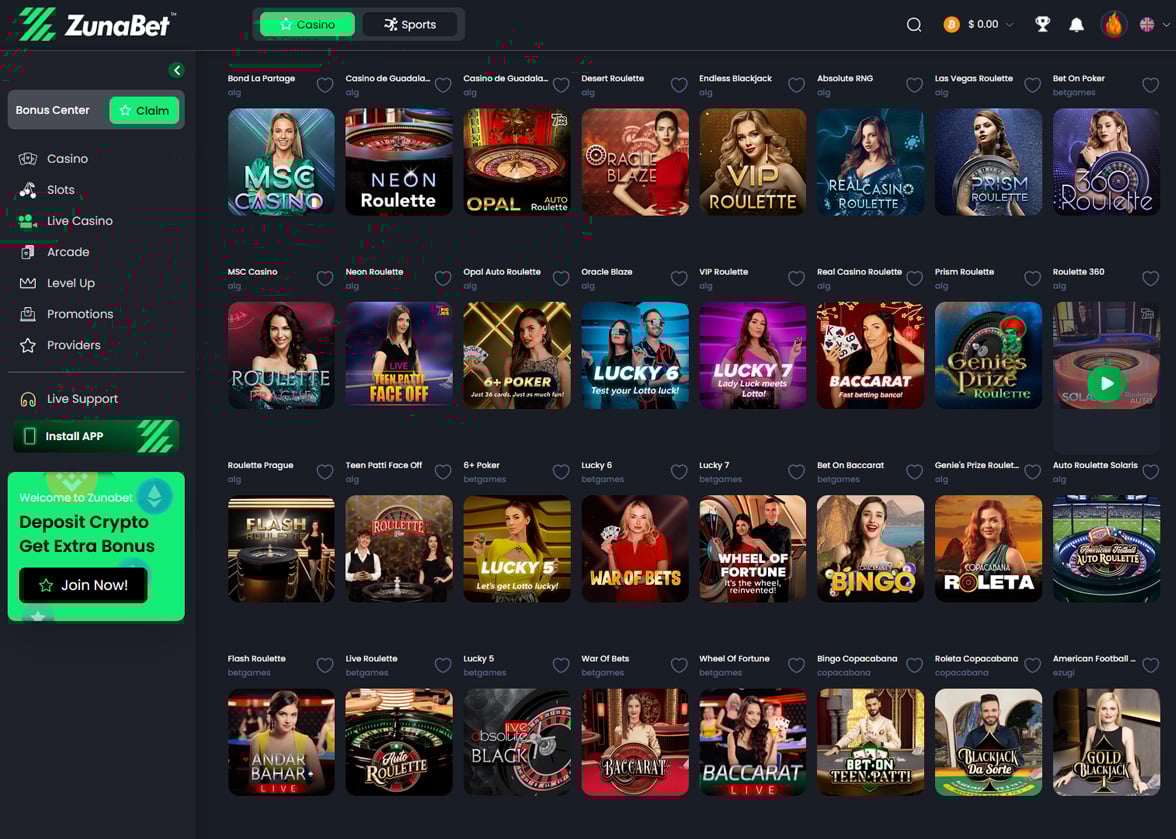
Slots form the largest portion of the catalog, as is universal across online casinos. The strength of ZunaBet’s library lies in the depth beyond slots. RNG table games deliver thorough coverage of blackjack, roulette, baccarat, poker across several variants, and specialty titles that add unexpected dimension to the catalog. The live dealer section provides premium high-definition real-time streaming from top production studios, creating immersive experiences that bring the energy of a physical casino into the digital environment. With 63 providers contributing distinct design philosophies, the catalog achieves a level of genuine diversity — across mechanics, visual identities, and gameplay approaches — that prevents the homogeneity which causes content fatigue on smaller platforms.
That diversity is what transforms a large number into a genuinely different player experience. Content fatigue is the quiet driver of player churn across the industry. It arrives when a player feels there is nothing left worth trying on their current platform. On ZunaBet, months of regular engagement leave the vast majority of the catalog unexplored. Discovery is not a brief phase that ends after the first week. It is a permanent characteristic of the platform that generates organic retention more powerful than any promotional campaign.
The sportsbook functions as a fully realized product alongside the casino. Football, basketball, tennis, NHL, combat sports, and virtual sports receive dedicated coverage. Esports is elevated to a core betting category with comprehensive markets on CS2, Dota 2, League of Legends, and Valorant. This commitment recognizes that competitive gaming has become a global entertainment force whose audience overlaps significantly with the crypto-native gambling demographic. ZunaBet serves both populations natively, creating immediate credibility with a player base that traditional operators have repeatedly overlooked.
Over 20 cryptocurrencies are accepted — Bitcoin, Ethereum, USDT across multiple blockchain networks, Solana, Dogecoin, Cardano, XRP, and more. Platform processing fees are zero across every transaction type. Withdrawals settle on continuously running blockchain networks, returning funds to player wallets within minutes regardless of time or day. The exclusively crypto architecture ensures no traditional fiat systems create inconsistency underneath. Every transaction follows one path — fast, free, and completely seamless.
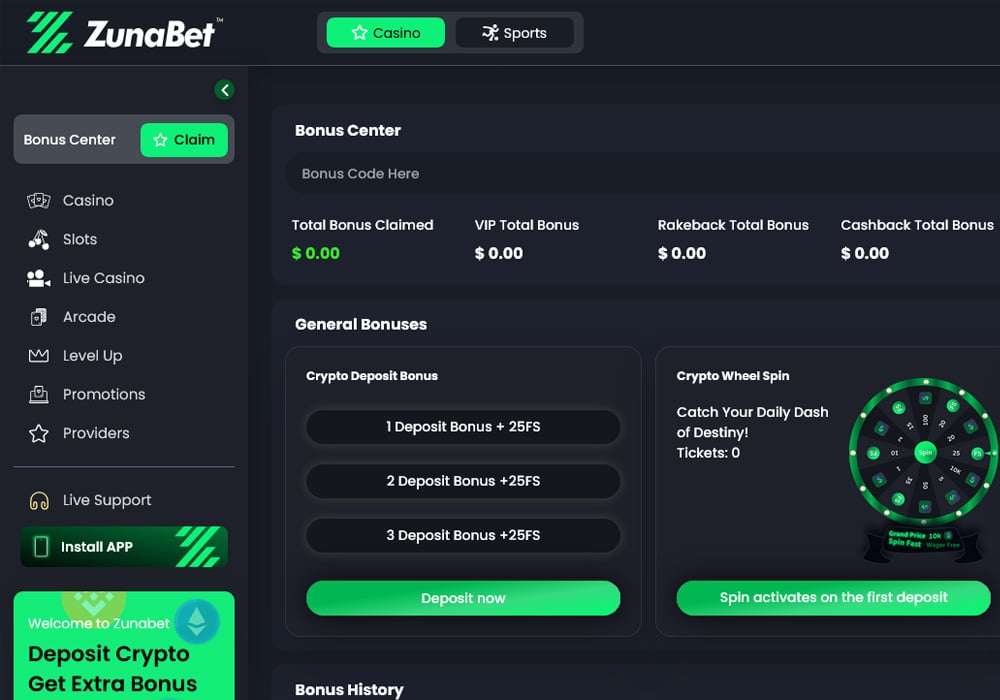
The welcome bonus reaches up to $5,000 plus 75 free spins over three deposits. First deposit receives a 100% match up to $2,000 with 25 free spins. Second deposit qualifies for a 50% match up to $1,500 with 25 spins. Third deposit delivers a 100% match up to $1,500 and 25 final spins. The three-deposit structure rewards continued engagement rather than single-visit bonus collection.
ZunaBet runs on HTML5 with a dark-themed responsive interface and fast loading on every device category. Native apps are available for iOS, Android, Windows, and MacOS. Live chat support operates at all hours every day.
Why the Crypto Payment Advantage Keeps Growing
The gap between crypto-native and traditional payment systems does not narrow over time. It widens, because the forces driving it — increasing crypto adoption, rising player expectations for transaction speed, and decreasing tolerance for unnecessary fees — are all accelerating simultaneously.
Traditional platforms process payments through layered networks of banks, card companies, processors, and wallet services. Each layer introduces potential time and cost. Deposits arrive at variable speeds depending on method. Withdrawals consistently involve extended processing — platform approvals, banking queues operating on business-day schedules, weekend and holiday interruptions. Total withdrawal time stretches from one to five business days. Fees appear at various stages from various institutions.
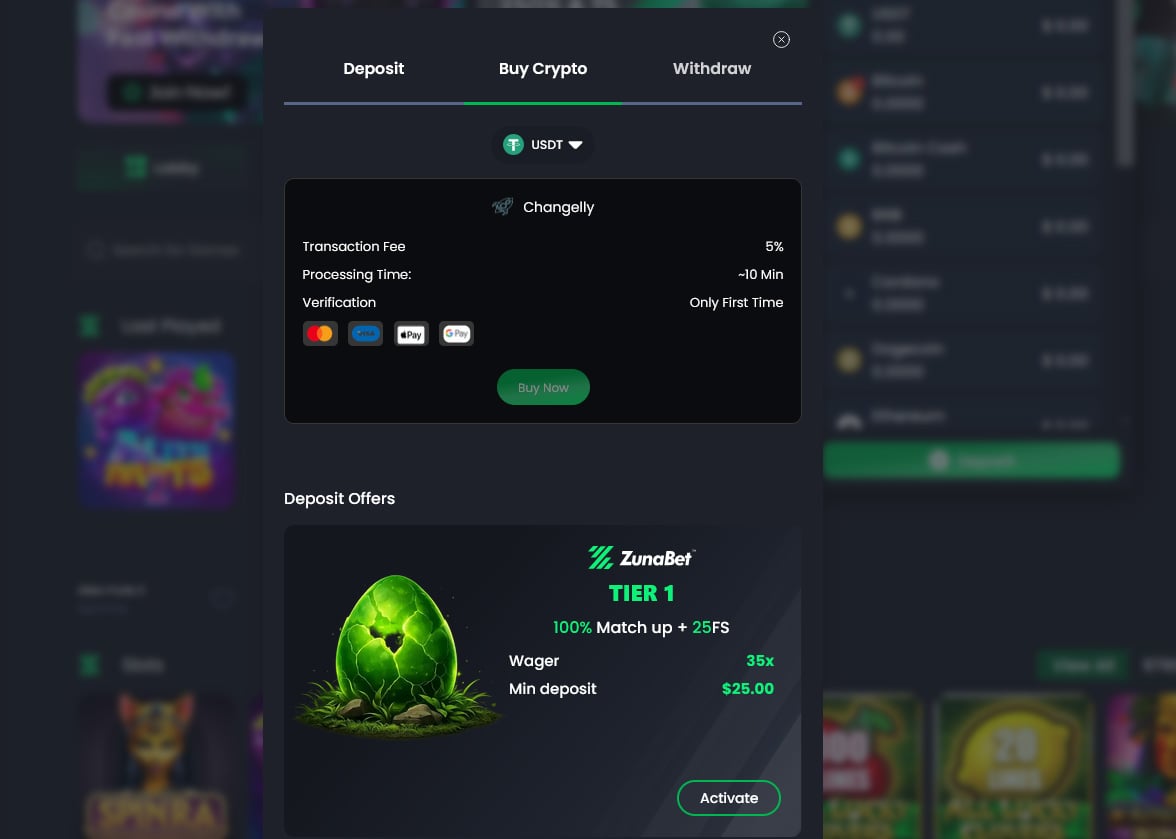
ZunaBet reduces every transaction to a single blockchain event. Initiation to completion takes minutes. No banking intermediaries intervene. No schedule governs when the process can occur. Platform fees are zero. The experience is identical at any hour of any day.
Over months of regular activity, the cumulative savings in time and money are substantial. These are structural advantages built permanently into the infrastructure. Every transaction benefits because the efficiency is foundational rather than promotional.
ZunaBet delivers this consistently because no traditional payment systems exist within the platform. No fiat architecture runs alongside the crypto infrastructure. No hybrid design creates inconsistency. One foundation produces one uniformly excellent payment experience for every player on every transaction.
Physical Resort Perks vs Digital Dragon Progression
BetMGM holds a unique loyalty position through MGM Rewards integration. Online gambling earns points redeemable for tangible luxury at physical MGM properties — hotel suites, premium dining, entertainment shows, and spa access. For players who visit MGM destinations, this adds real-world value no purely digital platform can directly offer.
For the expanding digital-only audience, resort-based loyalty holds limited practical appeal. Distance, lifestyle, and preference all reduce the relevance of physical rewards for players whose gambling never leaves a screen.
ZunaBet’s dragon evolution system was built for precisely this audience. Six tiers structure the journey — Squire at 1% rakeback, Warden at 2%, Champion at 4%, Divine at 5%, Knight at 10%, and Ultimate at 20%. Each tier adds escalating digital rewards — free spins building to 1,000 at the top, VIP club membership, and double wheel spins. A dragon mascot called Zuno evolves visually as the player progresses, giving the advancement personal narrative significance.
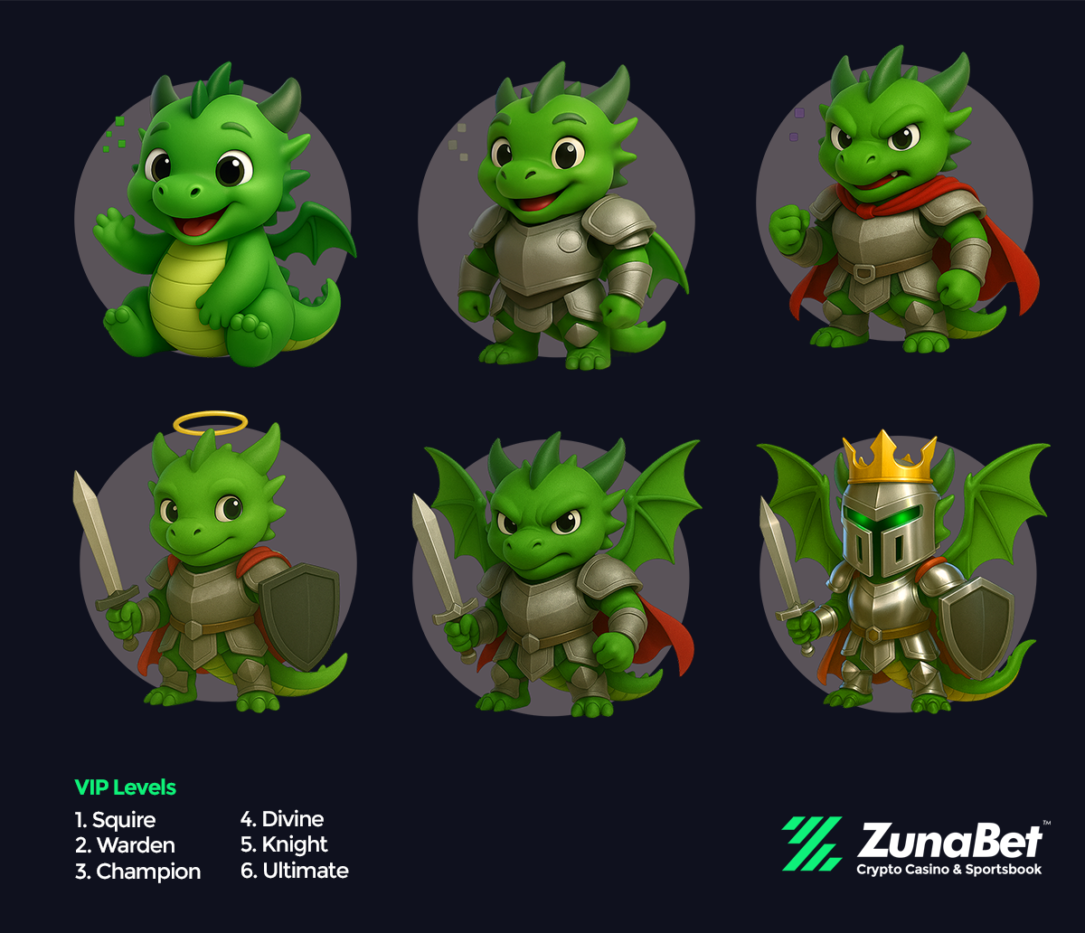
The design draws from video game progression mechanics. Defined levels with clear criteria. Meaningfully escalating rewards. Visual evolution that makes advancement personal and observable. Achievement dynamics that create genuine emotional investment. These principles have driven engagement in gaming for decades and connect deeply with the demographic most naturally drawn to crypto-native platforms.
ZunaBet players engage actively with their loyalty tier. They monitor progress. They plan around milestones. They feel genuine accomplishment upon advancing. That active emotional participation creates retention outcomes fundamentally different from passive point accumulation — even when those points connect to physical luxury. For digital-first players, a system delivering its rewards and engagement entirely within the platform they use daily holds more personal meaning than potential perks at destinations they may never visit.
Why ZunaBet Is the Most Compelling Option
The record number of players exploring BetMGM alternatives carries a message the industry cannot afford to ignore. BetMGM will continue thriving within its established markets. The MGM legacy, regulatory positioning, Entain partnership, resort integration, and financial depth provide enduring advantages. The platform serves its audience well.
But the market has expanded beyond that audience permanently. The fastest-growing segment expects instant fee-free crypto payments as standard. It expects game catalogs deep enough to sustain endless discovery. It expects esports treated as a genuine primary category. It expects loyalty designed for digital engagement rather than physical redemption. It expects platforms conceived for the world it inhabits today.
ZunaBet was engineered from nothing to meet every one of those expectations. Its game library ranks among the most expansive globally. Its payment system sets benchmarks that traditional infrastructure cannot approach. Its esports product serves a worldwide audience with genuine commitment. And its loyalty program replaced the industry’s most neglected feature with something players actively enjoy and talk about. That complete package is why ZunaBet has become the most compelling option for players looking beyond BetMGM. They are searching for the future of online gambling, and ZunaBet is the most fully realized version of that future that anyone has built.
Disclaimer: This is a Press Release provided by a third party who is responsible for the content. Please conduct your own research before taking any action based on the content.
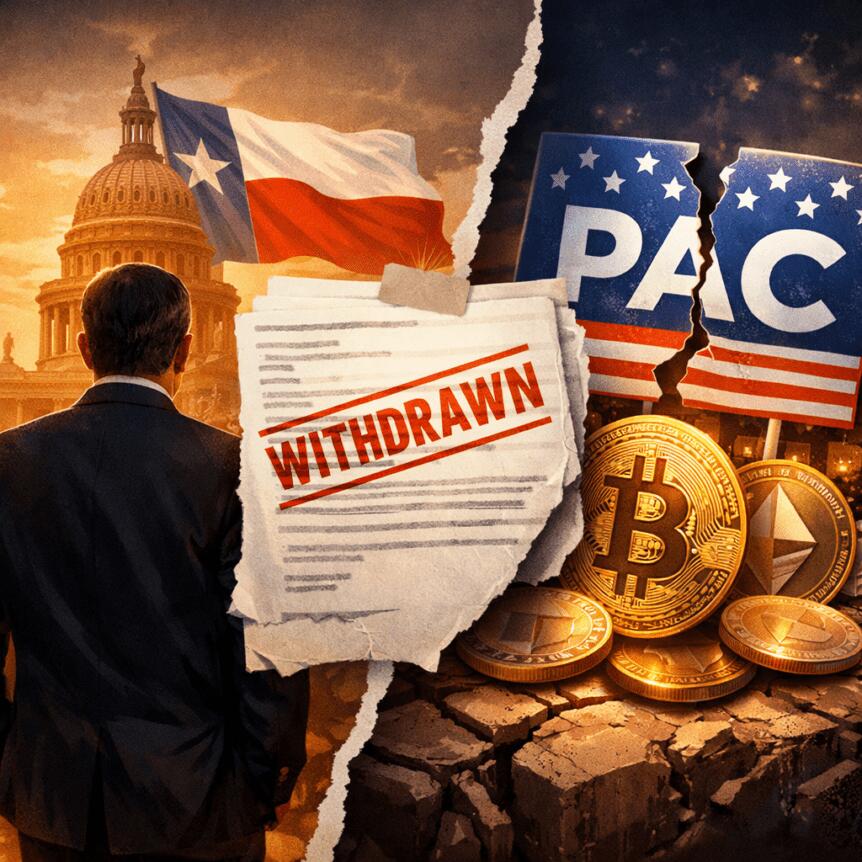
The Fellowship political action committee, a crypto-aligned fundraising group that had claimed more than $100 million in backing, has reportedly pulled back from a planned advertising push in support of Texas Attorney General Ken Paxton in a closely watched U.S. Senate race. Axios reported that Republican leaders reached out to Commerce Secretary Howard Lutnick over Fellowship’s ties, a connection that Cointelegraph previously traced to Cantor Fitzgerald, a firm with partial financial backing for the PAC. Lutnick’s past role as Cantor’s longtime president and CEO—and the fact that his sons now lead the firm—has heightened scrutiny of Fellowship’s influence as Paxton’s campaign and allied spending drew attention in a high-profile statewide contest. Fellowship’s disclosed ad buy, which amounted to about $1.75 million in supportive spending, was reported to the Federal Election Commission but was never executed; the filing remains publicly accessible as of Friday. Cointelegraph sought comment from Fellowship but did not receive an immediate response.
The episode underscores a broader, ongoing dynamic in U.S. politics where cryptocurrency-backed committees attempt to shape policy outcomes and voter sentiment amid intensified partisan scrutiny. While Fellowship paused its Paxton-related advertising, other crypto-linked PACs have signaled ongoing fundraising and expenditure in this cycle, reflecting a strategy that blends political advocacy with sector-specific messaging. The disclosure trail—tied to Nxum Group, the marketing firm listed in the FEC filing—illustrates how crypto-safe donors and marketing arrangements intersect with campaign finance compliance. The situation also spotlights a tension within Republican circles, where some leaders privately press for caution around high-profile crypto endorsements that could become political liabilities.
Key context for readers: Axios’s reporting notes that Republican leaders contacted Lutnick to question Fellowship’s influence and the group’s connections to Cantor Fitzgerald. Cantor Fitzgerald, a longstanding investment house with deep ties to markets and corporate funding, has previously been cited as a partial backer of Fellowship. The interplay between established financial institutions and a political action arm aligned with crypto interests is a theme that has recurred across several races, drawing attention from regulators, industry groups, and market watchers alike.
In parallel, the broader political environment for crypto remains active on Capitol Hill. Earlier coverage highlighted that crypto-focused PACs, including Fellowship, Fairshake, and others, are expected to deploy hundreds of millions of dollars in the upcoming midterms to shape narratives and voter decisions. The sector remains divided on strategy, with supporters arguing that targeted, policy-aligned messaging helps advance a pro-crypto regulatory framework, while opponents warn of potential overreach or misaligned spending that could invite tighter scrutiny.
The Paxton episode sits within a Texas-centric narrative. Paxton failed to secure an outright win in the March Republican primary against Senator John Cornyn and will contend with the incumbent in a May 26 runoff before the November general election. Depending on the runoff outcome, Paxton could face Democrat James Talarico in what is expected to be one of the nation’s most consequential Senate races this cycle. The campaign finance disclosures tied to Paxton’s race—alongside Fellowship’s public filings—illustrate how crypto-affiliated entities are attempting to influence down-ballot dynamics in states with large, highly competitive electorates.
Key takeaways
- The Fellowship PAC reportedly retracted an ad buy backing Ken Paxton in the Texas Senate race amid scrutiny from Republican leaders about its crypto ties and financing sources.
- Action around the PAC is linked to Cantor Fitzgerald, a partial financier of Fellowship, elevating questions about the role of established finance houses in crypto-backed political activity.
- A $1.75 million advertising expenditure was disclosed to the FEC but never placed; the filing remains accessible, underscoring the fragility of some crypto-driven political commitments.
- Crypto-aligned PACs are expected to spend heavily in the U.S. midterms, signaling continued industry involvement in political outcomes, even as individual campaigns navigate disclosures and regulatory risk.
- Legislative momentum on crypto market structure remains mixed, with policy grids and postponements in Washington, even as the industry presses for a faster markup of the CLARITY Act and related measures.
Fellowship’s pause and the scrutiny it invites
The Axios report situates Fellowship’s decision to pull back from Paxton ads within a broader pattern of Republican leaders seeking to temper high-profile crypto endorsements that could complicate electoral dynamics. By contacting Howard Lutnick, GOP aides highlighted the sensitivity surrounding Fellowship’s funding sources and potential conflicts of interest for a candidate in a high-stakes statewide race. The ties to Cantor Fitzgerald, as documented in prior Cointelegraph coverage, have intensified questions about the degree to which traditional financial powerhouses influence crypto-focused political operations.
Meanwhile, the FEC filing detailing a $1.75 million expenditure—submitted via the Nxum Group—offers a window into the mechanics of crypto-aligned political activity. While the money was allocated for supportive advertising, the purchase was not executed, and the status of the funds remains a matter of record. This nuance matters for readers tracking how campaign finance rules intersect with fast-moving political reporting in the crypto space. As with many such disclosures, the public record can lag behind private communications and negotiation dynamics that shape whether an ad buys materialize.
The broader takeaway is that crypto-backed PACs operate within a patchwork of party politics, regulatory expectations, and market sensitivities. The fact that Fellowship would back away from a specific candidate—despite publicly touting substantial backing—reflects the earned caution among some political actors who fear reputational or regulatory repercussions that could spill over into the broader crypto sector.
Texas race context and the pathway ahead
The Texas contest paints a portrait of a state-level race that has national implications given its size, political influence, and the symbolic weight of a U.S. Senate seat. Paxton’s runoff against Cornyn, set for May 26, remains a critical hurdle before a general election that could reshape the composition of the chamber. In a state where campaign finance is deeply scrutinized and where crypto donors have signaled interest in policy outcomes, the Fellowship episode adds another layer to the narrative about how blockchain and digital-asset interests engage in electoral politics. The outcome of the runoff and the ensuing campaign could influence not only Paxton’s political trajectory but also the posture of crypto-friendly policymakers as they seek clearer regulatory guardrails and a more predictable environment for innovation and investment.
As the campaign trail evolves, observers will watch how endorsements and spending by crypto-aligned committees translate into votes, and how the parties respond to questions about the sources of funding and the strategic aims behind high-profile ads. The episode also underscores the difficulty of mapping the intersection between crypto advocacy groups and mainstream political campaigns, where messages must navigate both ideological alignment and the optics of campaign finance disclosure.
Policy momentum versus political friction in Washington
Beyond Texas, the U.S. policy debate on crypto remains a central theme of congressional activity. Since July 2025, the Senate has been weighing a comprehensive crypto market structure bill, a package that many in the industry view as a potential watershed for regulatory clarity. While Republicans have held a narrow Senate majority in early 2025, enabling movement on the GENIUS Act and related measures, control of the chamber could shift with the 2026 midterms. The ongoing stalemate on market structure has been attributed to a combination of ethics questions, procedural delays, and ongoing debates over stablecoin yield and exemptions.
In response, more than 120 entities tied to the cryptocurrency and blockchain ecosystems joined forces to urge Senate Banking Committee leaders to advance the CLARITY Act. The push underscores a persistent demand from the industry for timely knowledge of how draft rules will apply to exchanges, wallets, custodians, and DeFi protocols. A markup in the Senate is typically a precursor to formal votes, so the industry’s call to accelerate action reflects a clear preference for progress over protracted deliberation.
For market participants, the policy arc matters because regulatory clarity can influence capital allocation, project timelines, and risk management. A swifter path to well-defined market structure standards could reduce uncertainty for issuers and investors, while delays may perpetuate a climate of intelligence-gathering and strategic positioning among market participants. The Fellowship episode, while centered on a Texas race, sits within this wider ecosystem narrative: political developments feed into regulatory expectations, which in turn shape corporate and investor behavior around crypto assets and related technologies.
As readers monitor these developments, the key questions remain: Will Fellowship or other crypto-linked committees adjust their strategies in light of political scrutiny, and how will the Senate’s handling of the market structure bill affect the trajectory of crypto regulation in the near term? Investors and builders alike should watch for progress on the CLARITY Act markup, potential changes in committee leadership, and any new disclosures that reveal how industry money is flowing into political campaigns as lawmakers refine the regulatory playbook for digital assets.
For readers looking to verify particulars or explore the source materials, Axios’s report on Lutnick’s connections and Fellowship’s activity offers a current snapshot, while the FEC form provides the public record of the $1.75 million expenditure that was disclosed but not executed. Earlier reporting from Cointelegraph documented Fellowship’s funding links to Cantor Fitzgerald and Anchorage Digital, which helps explain why the PAC’s activity has drawn attention in both crypto and political circles.
What remains uncertain is how much of the crypto industry’s political engagement will translate into tangible policy outcomes that reshape market dynamics, consumer protection, and innovation incentives. As midterm campaigns unfold and legislative sessions continue, readers should expect ongoing scrutiny of crypto-funded political activity and a continuing push for a clearer, more predictable regulatory framework that can guide growth without stifling innovation.
The story continues to unfold, with eyes on the Texas runoff, the next phase of campaign finance disclosures, and the Senate’s approach to market structure legislation. Watch for updates on whether Fellowship or similar entities renew targeted political advertising, and for any shifts in the regulatory timetable that could influence crypto markets and project timelines in the months ahead.

Key Highlights
- Alphabet, Google’s parent company, has unveiled plans to pour up to $40 billion into AI firm Anthropic
- The partnership begins with an immediate $10 billion injection based on Anthropic’s $380 billion valuation
- An additional $30 billion investment is contingent upon the company achieving specific performance benchmarks
- This announcement follows Amazon’s recent commitment of up to $25 billion to the same AI company
- Anthropic’s yearly revenue run rate has climbed past $30 billion, a significant jump from $9 billion recorded at 2025’s close
Alphabet is making a massive bet on artificial intelligence. The tech giant announced Friday its intention to invest as much as $40 billion in Anthropic, deepening a collaboration that began in 2023.
The arrangement kicks off with an immediate $10 billion capital infusion, calculated using Anthropic’s current $380 billion valuation. The additional $30 billion hinges on achieving specific performance targets and will fund substantial expansion of Anthropic’s computational infrastructure.
Google initially entered the Anthropic ecosystem in 2023 through a $300 million investment that secured approximately 10% ownership. A subsequent $2 billion investment followed soon after. Prior to Friday’s revelation, Google had already committed more than $3 billion and maintained roughly 14% equity in the AI startup.
The partnership contains an interesting dynamic of competition and collaboration. While Google’s Gemini platform competes directly with Anthropic’s Claude in serving enterprise clients, Google simultaneously supplies the cloud infrastructure powering Claude’s operations.
Anthropic Sees Unprecedented Investment Activity
This funding announcement arrives mere weeks following Amazon‘s disclosure of a potential $25 billion investment in Anthropic. Amazon delivered $5 billion immediately, structuring the balance around achieving commercial objectives. Combined, these two technology giants have pledged a staggering $65 billion in potential support.
Anthropic has been aggressively scaling to meet surging customer demand. The company secured a computing agreement with Google and Broadcom this month, locking in 5 gigawatts of AI processing power scheduled for next year’s deployment. Additional agreements include a long-term contract with CoreWeave and plans to access nearly 1 gigawatt of capacity via Amazon’s proprietary chips before year-end.
CEO Dario Amodei hasn’t minced words about the challenges ahead. “Our users tell us Claude is increasingly essential to how they work, and we need to build the infrastructure to keep pace with rapidly growing demand,” he stated during Amazon’s investment announcement.
Anthropic’s annualized revenue recently surpassed $30 billion. This represents dramatic growth from approximately $9 billion at 2025’s conclusion — momentum fueled primarily by Claude Code, its AI-powered coding tool, which has captured substantial enterprise market share.
Skyrocketing Company Valuation
Anthropic completed a $30 billion financing round in February, establishing a post-money valuation of $380 billion. Venture capital enthusiasm has reportedly driven informal valuation discussions even higher, with some sources citing figures approaching $800 billion.
Friday’s agreement with Google utilizes the $380 billion valuation for calculating the initial $10 billion investment.
Google distributes Anthropic’s Claude models through its cloud services division, directly challenging Amazon Web Services and Microsoft Azure for market dominance. The company also markets its proprietary tensor processing units (TPUs) as alternatives to Nvidia’s GPU offerings.
Anthropic emerged in 2021 from a group of former OpenAI researchers. Its Claude model family has achieved widespread acceptance among enterprise clients and software developers. The platform currently supports more than 100,000 developers building exclusively on AWS infrastructure.


The House Foreign Affairs Committee advanced two bipartisan bills on April 23 that would give Congress direct oversight authority over US AI chip exports to China and other adversaries, in a direct challenge to the Trump administration’s handling of advanced semiconductor sales.
Summary
- The House Foreign Affairs Committee advanced two bipartisan bills on April 23 targeting AI chip exports to China, including the AI Overwatch Act and the Chip Security Act.
- The AI Overwatch Act would give Congress 30 days to review and potentially block export licenses for advanced chips to adversarial countries, similar to existing arms sale review authority.
- The bills face resistance from both the White House AI czar David Sacks and Nvidia CEO Jensen Huang, who argue restricting chip exports to China would harm US companies more than China.
The House Foreign Affairs Committee advanced two bipartisan AI chip export bills on April 23, reflecting deepening congressional unease with the Trump administration’s approach to selling advanced Nvidia chips to China. The committee voted with all but two members in favor of the AI Overwatch Act, while also advancing the Chip Security Act, which targets hardware verification and diversion tracking.
AI Chip Export Bills Target Loopholes Congress Says the White House Has Left Open
The AI Overwatch Act, introduced by Foreign Affairs Committee Chair Brian Mast, would give the House Foreign Affairs Committee and the Senate Banking Committee a 30-day window to review and block export licenses for advanced AI chips issued to China, Russia, Iran, North Korea, Cuba, and Venezuela, mirroring the review authority Congress already holds over arms sales. The bill would also cancel all existing export licenses to countries of concern until the administration submits a detailed strategy explaining how those chips would not impact military or intelligence capabilities. “We are in an AI arms race, and it’s important that we know where the AI arms dealers are selling,” Mast said. A companion bill in the Senate already carries bipartisan support from Senators Jim Banks and Elizabeth Warren. As crypto.news reported, Nvidia CEO Jensen Huang had warned the prior week that China possesses ghost datacenters with sufficient infrastructure to match US frontier AI, a statement that has complicated Nvidia’s simultaneous lobbying against the export restriction bills.
The Chip Security Act Addresses Hardware Diversion
The second bill advanced by the committee, the Chip Security Act, takes a hardware-level approach to the same problem. It would require that exported advanced chips contain a technical mechanism capable of verifying the chip’s physical location, and would obligate exporters to notify the government if a chip turns up at an unauthorized location. Both provisions are designed to close what lawmakers describe as a fundamental verification gap in current export rules: the US can approve a chip sale to an approved buyer in a permissible country, but has no reliable mechanism to confirm the chip has not been subsequently diverted to a Chinese military or intelligence facility. As crypto.news documented, Nvidia disclosed $5.5 billion in expected charges in April 2025 when the government required export licenses for H20 chips sold to China, demonstrating how directly semiconductor export policy translates into market impact for AI-adjacent assets.
White House and Nvidia Push Back, but Congress Is Not Backing Down
The bills face serious resistance before they can reach a floor vote. White House AI czar David Sacks publicly opposed the AI Overwatch Act on X, reposting commentary arguing the bill handicaps Trump’s ability to strategically position the US favorably against China. Nvidia CEO Jensen Huang has personally lobbied lawmakers, arguing that the more US chips are used in China, the more US companies will dominate the global AI market. Mast pushed back directly, saying the talking points he heard from Sacks matched those Nvidia had been circulating. As crypto.news tracked, markets have already shown sensitivity to US-China chip export policy, with Nvidia shares dropping sharply each time restrictions tighten. If the bills advance through the full House and Senate, they would represent a significant transfer of export control authority from the executive branch to Congress.
Both bills still need to clear the full House, pass the Senate, and be signed by the president before becoming law, a path that faces considerable resistance from the White House despite strong bipartisan committee support.

Key Highlights
- Nvidia shares climbed as high as 5.2% Friday, driving market capitalization beyond the $5 trillion threshold.
- Intel’s impressive first-quarter results and robust CPU demand outlook fueled the semiconductor surge.
- Intel shares jumped 20% following its third straight quarter of revenue and earnings beats.
- AMD and Arm Holdings both posted gains of approximately 14% riding the Intel-fueled wave.
- The Philadelphia Semiconductor Index continues an 18-session winning streak.
Nvidia shares reached approximately $209 on Friday, approaching its record intraday peak of $212.19 achieved on October 29, 2025. This valuation pushed the chipmaker’s market capitalization back above the $5 trillion mark, establishing a $1 trillion lead over Alphabet, the second-largest company by market value.
If these gains persist through market close, Nvidia would secure a new record closing price.
The primary driver behind Friday’s surge wasn’t company-specific developments. Instead, Intel provided the momentum. Following a challenging period, Intel reported its third consecutive quarter beating both revenue and earnings per share expectations Thursday evening, sending its stock soaring 20% Friday — positioning it for a historic closing high.
Strong CPU Demand Commentary Energizes Chip Stocks
Investors weren’t merely impressed by Intel’s financial performance. CEO Lip-Bu Tan highlighted accelerating CPU demand driven by the transition from inference-focused AI to agentic AI applications.
“A shift from inference to agentic AI is significantly increasing the need for Intel’s CPUs,” Tan stated during the quarterly earnings call.
This demand commentary carries important implications for Nvidia as well. The graphics chip leader began offering standalone CPU products in early 2026, a strategic expansion CEO Jensen Huang discussed at Nvidia’s annual conference in March.
“We never thought we will be selling CPUs standalone, but we are selling a lot of CPUs standalone,” Huang explained. “This will for sure be a multi-billion dollar business for us.”
Nvidia touched an intraday peak of $210.95 Friday, marking its highest trading level since November 2025.
The semiconductor sector broadly capitalized on this momentum. AMD posted 14% gains, ranking among the top S&P 500 performers for the session. Arm Holdings matched that performance with a 14% advance.
April Rebound Follows Difficult First Quarter
Nvidia faced headwinds entering 2026. The stock declined 6.4% during the first quarter through March’s conclusion.
The April picture has reversed dramatically. Nvidia has surged 20% over the past month, benefiting from sustained strength in semiconductor equities.
The Philadelphia Semiconductor Index — commonly called the SOX — has posted gains for 18 consecutive sessions, representing one of its most extended winning periods on record. Broadcom, Taiwan Semiconductor, Micron, AMD, Intel, and Texas Instruments have all contributed to this rally.
Intel’s corporate recovery narrative added additional momentum Friday. The company weathered uncertainty surrounding former CEO Pat Gelsinger’s departure, but Lip-Bu Tan’s appointment has restored investor confidence. Intel’s successful on-schedule delivery of its 18A manufacturing process node has earned endorsement from industry collaborators and the U.S. government alike.
Nvidia shares traded at $209.56 as of Friday afternoon, representing a 4.97% daily gain.
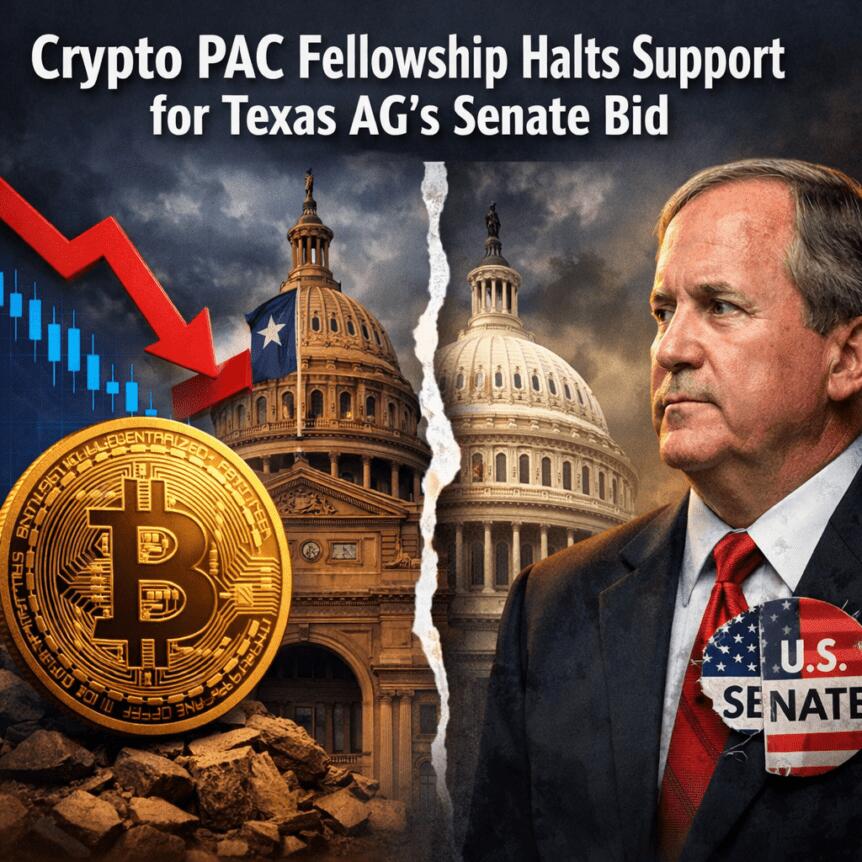
Fellowship, a political action committee aligned with cryptocurrency interests, reportedly withdrew from a paid advertising arrangement intended to bolster Texas Attorney General Ken Paxton in a pivotal U.S. Senate contest. The move, described by Axios, comes amid questions from Republican leaders about the PAC’s backers and its broader influence strategy in a high-stakes midterm cycle.
According to Axios, Republican lawmakers contacted U.S. Commerce Secretary Howard Lutnick over Fellowship’s links and funding sources. Fellowship has been described as having substantial financing from crypto-adjacent financiers, including partial backing from Cantor Fitzgerald. Lutnick—famed as a former president and CEO of Cantor Fitzgerald with his sons now leading the firm’s financial services arm—has faced inquiries about Fellowship’s role in pausing or altering support for Paxton, who recently disclosed spending of about $1.75 million on supportive advertising. The expenditure, disclosed through the marketing firm Nxum Group to the Federal Election Commission (FEC), apparently was never executed.
Cointelegraph’s coverage notes that Fellowship disclosed the $1.75 million advertising plan to the FEC, and that the filing remained publicly accessible as of the latest reporting. The PAC did not respond to requests for comment at press time. In the broader crypto-political arena, this episode underscores how crypto-linked fundraising networks can become focal points for intra-party pressure and regulatory scrutiny, even when those networks are reportedly in flux or retracting active advertising commitments.
Beyond Fellowship, other crypto-aligned committees—such as Fairshake and additional groups—are anticipated to deploy substantial sums in U.S. midterm campaigns as part of a sustained effort to influence policy outcomes. The evolving dynamic illustrates how crypto-interest groups participate in political advocacy across party lines, even as campaign financing disclosures remain a central compliance concern for firms operating under U.S. election laws.
In Texas politics, Paxton failed to secure the nomination outright in a March primary against incumbent Senator John Cornyn and will face a runoff in May before the November general election. The eventual Republican candidate will contest Democrat James Talarico for one of the state’s U.S. Senate seats, a race closely watched for its potential regulatory and policy implications for the crypto sector at the national level.
Key takeaways
- Fellowship reportedly halted a $1.75 million advertising commitment in support of Paxton, with the expenditure never placed as disclosed to the FEC.
- The PAC’s funding profile includes Cantor Fitzgerald connections, prompting questions from Republican leadership about the sources and influence of crypto-aligned financing.
- Public disclosures through the FEC and reporting by Axios highlight ongoing scrutiny of crypto-connected political committees and their coordination with party officials.
- Crypto-interest groups are anticipated to deploy substantial resources in U.S. midterm elections, reflecting a broader strategy to shape regulatory and policy outcomes.
- Separately, the regulatory landscape for crypto market structure remains contentious, with legislative action stalled amid procedural delays, ethics concerns, and questions about stablecoin yield.
Fellowship and the evolving crypto-political finance landscape
The Fellowship case sits at the intersection of campaign finance transparency and the broader push by crypto interests to influence public policy. The reported withdrawal from the Paxton ad buy, coupled with the disclosure of a sizable but possibly unexecuted expenditure, raises questions about how crypto-linked money is deployed in high-profile races and how party leadership responds when donors come under scrutiny. While crypto PACs historically fund candidates from both major parties, leadership in Congress has shown a renewed interest in ensuring that campaign contributions comply with legal standards and disclosure requirements. The underlying issue is less about partisan alignment and more about governance, accountability, and the risk profile associated with opaque funding streams in a rapidly evolving industry.
From a regulatory perspective, the episode underscores the ongoing need for robust AML/KYC controls and financing-disclosure frameworks within the crypto ecosystem and in relation to political contributions. For institutions embedded in or adjacent to crypto markets—exchanges, liquidity providers, and financial firms—these dynamics amplify the importance of transparent, auditable political-financial relationships and the potential implications for licensing, oversight, and compliance programs. The U.S. election-laws regime, enforced by the FEC and related bodies, governs such disclosures independently of the sector-specific regulatory agenda, but it interacts with broader policy initiatives that govern crypto market function and corporate governance standards.
Market-structure reform: momentum, obstacles, and policy context
Separately, the legislative trajectory of crypto market-structure reform remains a focal point for industry participants and policymakers. Since mid-2025, the Senate has contemplated a comprehensive market-structure bill that would shape how digital assets are traded, cleared, and regulated. The GENIUS Act, which addresses stablecoins and related settlement mechanisms, represents a key component of the broader policy framework. Delays have persisted due to government-operations constraints, ethics reviews, and unsettled questions around stablecoin yield models. No full-chamber vote has been scheduled for the principal market-structure package as of the latest updates.
In response, more than 120 entities affiliated with the crypto and blockchain sectors urged Senate Banking Committee leaders to expedite consideration and to proceed to a markup. A markup would be a critical step toward unlocking a formal debate and potential floor vote on the CLARITY Act, the overarching market-structure measure. The push reflects a broader and growing consensus among industry groups that timely legislative action is essential to provide regulatory clarity, preserve financial stability, and reduce legal risk for participants operating across borders and across banking rails.
The policy environment continues to be shaped by the balance of political power in Washington. With Republicans holding a narrow Senate majority since early 2025, the dynamic has favored quicker movement on certain pro-crypto measures, including stablecoins regimes and licensing frameworks. However, a shift in control after the 2026 midterms could alter the legislative calculus and affect how crypto markets are regulated, taxed, and integrated with traditional banking systems. The ongoing debate centers on how to harmonize innovation with consumer protection, systemic risk mitigation, and cross-border regulatory harmonization—issues that regulatory bodies and market participants monitor closely.
The current push to advance market-structure legislation sits within this broader regulatory landscape. If enacted, the package would influence not only trading venues and liquidity provisioning but also enforcement priorities for agencies such as the SEC, CFTC, and DOJ, and would feed into compliance frameworks for custodians, broker-dealers, and settlement infrastructures. The stakes extend to stablecoins and the broader issue of how crypto assets are treated for prudential supervision and retail protections, including the implications for banking relationships and access to traditional financial rails.
For observers, the convergence of political finance, regulatory advocacy, and legislative timing underscores the interconnectedness of policy design and market structure in crypto. The path forward will likely hinge on the ability of lawmakers to reconcile divergent views on risk, innovation, and enforcement while maintaining a transparent, predictable framework for industry participants and investors alike.
Cointelegraph is committed to independent, transparent journalism. This coverage reflects the outlet’s editorial standards and aims to present timely information that supports analysis, compliance review, and institutional decision-making. Readers should verify details through official filings and primary sources as developments unfold.

TLDR:
- TRON hosts over $85 billion in circulating USDT and processes $21 billion in daily transfer volume.
- LI.FI’s universal API now gives developers direct access to TRON’s deep stablecoin liquidity pools.
- The integration removes the need for separate bridge setups, cutting complexity for blockchain developers.
- TRON’s low transaction fees combined with LI.FI’s multichain reach strengthens global stablecoin payment flows.
TRON’s integration with LI.FI Protocol marks a notable step in cross-chain stablecoin infrastructure. The partnership connects TRON’s high-throughput blockchain to LI.FI’s universal liquidity layer.
Developers building on LI.FI can now access TRON’s deep stablecoin pools directly. This removes the need for managing separate bridge integrations. The move expands multichain access for both builders and end users globally.
TRON Brings Deep Stablecoin Liquidity to LI.FI’s Ecosystem
TRON has established itself as a leading settlement layer for stablecoin activity. The network currently hosts over $85 billion in circulating USDT.
It also processes more than $21 billion in daily transfer volume. These figures place TRON among the most active stablecoin networks in production today.
The LI.FI integration now channels that liquidity into a broader multichain framework. Applications using LI.FI can access USDT and other stablecoins moving in and out of TRON.
This comes with improved pricing, better liquidity access, and greater efficiency. The combination supports smoother stablecoin flows across both EVM and non-EVM networks.
TRON’s consistently low transaction fees make it a practical environment for high-frequency transfers. Paired with LI.FI’s multi-chain distribution, this creates strong infrastructure for remittances and payments.
Builders no longer need to manage separate integrations to tap into TRON’s ecosystem. End users can swap and bridge stablecoins directly within supported applications.
Sam Elfarra, Community Spokesperson for TRON DAO, addressed the development directly. “Connecting to LI.FI’s orchestration layer further strengthens access to TRON’s infrastructure across the entire blockchain ecosystem,” he said.
He added that the integration reduces friction for developers and users moving assets between TRON and other blockchains. Elfarra also noted it supports TRON’s standing as a leading settlement layer for global stablecoin activity.
LI.FI’s API Opens a Simpler Path to TRON’s Stablecoin Market
LI.FI’s universal API gives developers a single point of access to multiple blockchain ecosystems. With TRON now included, that access extends to one of crypto’s largest stablecoin markets.
Developers can integrate TRON’s liquidity without building and maintaining separate bridge connections. This reduces technical overhead and speeds up deployment timelines.
Philipp Zentner, CEO and Co-Founder of LI.FI, weighed in on the partnership as well. “As a market leader of global stablecoin infrastructure, integrating TRON into LI.FI’s orchestration layer is a natural next step,” he stated.
He noted that combining TRON’s deep stablecoin liquidity with LI.FI’s powerful API removes complexity for developers. Zentner added that this streamlines composability with one of the largest stablecoin markets in production today.
Stablecoins continue to grow in relevance for cross-border settlement and everyday payments. TRON’s position at the center of that activity makes this integration strategically sound.
As more developers adopt LI.FI, TRON’s ecosystem gains wider exposure across the decentralized finance landscape. The partnership supports broader interoperability goals for both networks going forward.
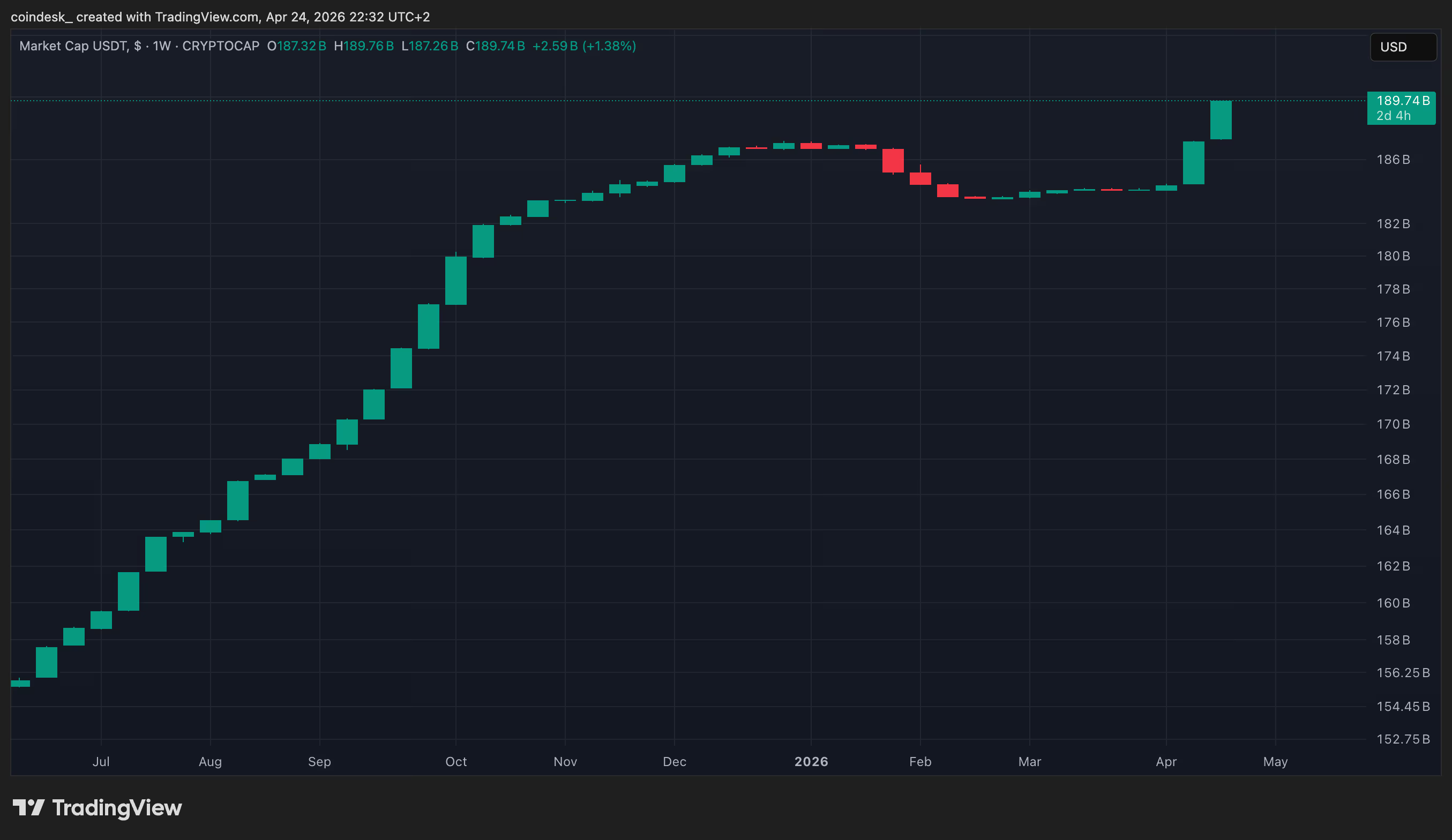
Bitcoin held above $77,000 on Friday, consolidating after hitting its strongest level since early February earlier in the week.
The largest cryptocurrency is up about 13.6% in April, putting it on track for its best monthly performance in a year, according to CoinGlass data. The rebound follows a rough stretch, with crypto markets logging their longest losing streak since 2018, posting consecutive monthly declines from October through February.
The turnaround comes as the broader macro backdrop has improved. U.S. equities have staged a strong recovery, with the S&P 500 and Nasdaq climbing back to record highs after briefly slipping into correction territory earlier this year.
But there’s a crypto-specific driver behind the move, too.
The supply of Tether’s USDT , the largest and most popular stablecoin, has surged to just under $150 billion, adding about $5 billion over the past two weeks after months of stagnation.
That matters because stablecoins — cryptocurrencies tied to fiat money like the U.S. dollar — act as liquidity in crypto markets, the capital traders use to buy digital assets in the blockchain economy. Analysts often interpret stablecoin growth as a cue for capital flowing to the crypto market, a healthy signal for asset prices.

Markets ‘stopped caring’ about Iran war
Still, the macro picture hasn’t cleared yet. Geopolitical tensions in the Middle East and uncertainty around the Iran war persist, keeping oil prices at elevated levels.
But for now, markets seem to be looking past it, said Jasper de Maere, OTC trader at Wintermute.
“The equities and crypto markets seem to have stopped caring about intricate headlines on the conflict’s direction,” de Maere. “This shows a certain level of fatigue and potentially complacency.”
He noted that strong corporate earnings and resilient equity markets are helping offset concerns about higher energy costs and geopolitical risks.
FOMC test coming
In that environment, bitcoin is hovering near the top of its trading range while the $79,000 level proved the be mighty cap with traders taking profits.
That level “matters structurally because heavy institutional overhead supply sits just above it,” said Adam Haeems, head of asset management at Tesseract Group.
Whether BTC can break through will depend on what drives the move and who’s doing the buying. Moves driven mainly by short covering tend to fade once momentum cools, while a breakout backed by sustained institutional demand can mark a more durable shift, he said.
The next test comes soon with the April Fed meeting that could determine whether the current rally holds, Haeems said.
If ETF inflows continue through that event, he said, $79,000 could turn from resistance into support, opening the door for a higher trading range. If flows fade, bitcoin may slip back into the $75,000–$77,000 range.

Nakamoto launched a Bitcoin derivatives program with Bitwise and Kraken, aiming to generate options premiums and hedge part of its BTC treasury exposure.
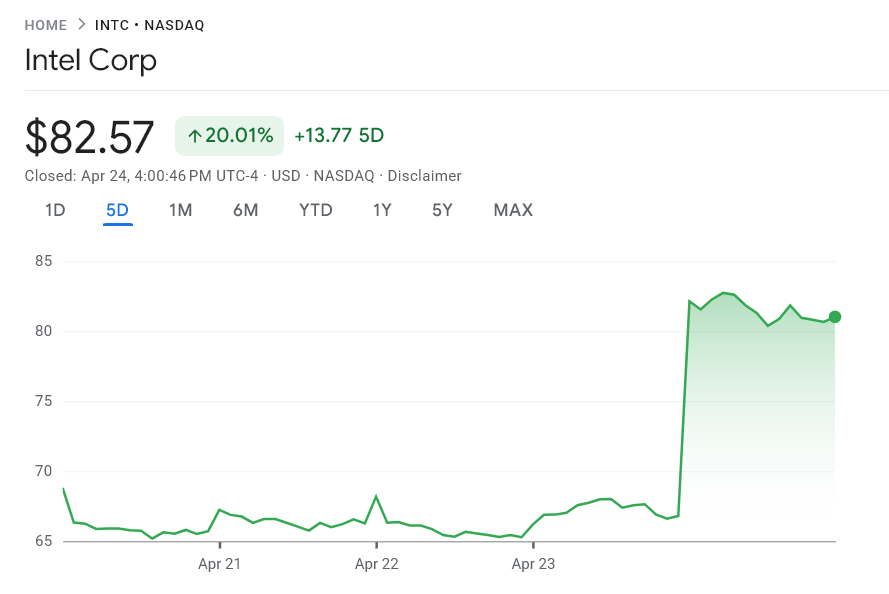
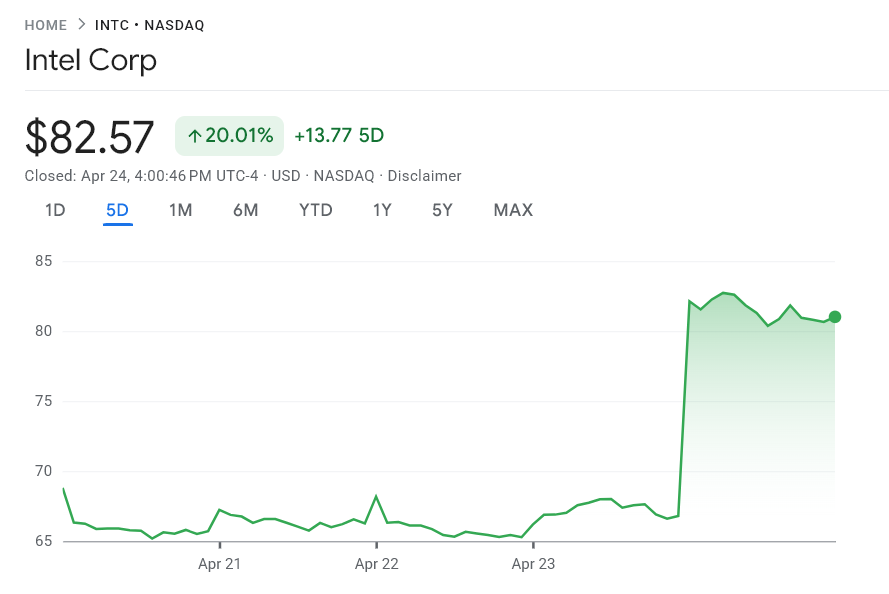
Intel shares surged to a new all-time high on April 24 after investors received the clearest sign yet that the company may finally be benefiting from the AI boom.
The stock jumped more than 24% to around $83 in early trading, passing its dot-com-era peak from 2000 and lifting Intel’s market value above $416 billion.
The rally followed stronger-than-expected earnings and guidance that suggested demand for Intel’s server CPUs is rising faster than Wall Street expected.
AI Demand Is Moving Back Toward CPUs
The main driver is a shift in AI infrastructure. The first phase of the AI boom centered on GPUs, led by Nvidia.
Now, more AI models are moving from training to deployment, where CPUs play a larger role.
Intel said demand from AI service providers was so strong in the first quarter that it sold chips it had previously written off.
CFO David Zinsner said tight supply also allowed the company to raise prices and sell older inventory it had not expected to move.
That changed the market’s view of Intel. Investors are starting to see the company as a direct beneficiary of AI inference, where models answer user queries and handle more complex workloads.
Earnings Gave the Rally Fuel
Intel reported first-quarter revenue of $13.58 billion, above estimates of $12.42 billion. Its data center and AI segment generated $5.1 billion, also ahead of expectations.
Guidance mattered even more. Intel expects second-quarter revenue between $13.8 billion and $14.8 billion, compared with Wall Street’s $13.07 billion estimate.
Analysts responded quickly. At least 23 brokerages raised their price targets after the results, with HSBC pointing to demand for Intel’s Xeon server CPUs.
Can the Rally Continue?
The rally can continue if Intel proves this demand is durable. The Tesla 14A manufacturing deal and growing AI CPU demand give investors a stronger turnaround story.
Still, the stock now trades at around 90 times forward earnings, far above AMD and Nvidia. That leaves little room for disappointment.
Intel has momentum. To keep it, the company must show that today’s surge was the start of sustained AI-driven growth, not a one-quarter inventory and pricing boost.
The post Why Intel Stock Hit an All-Time High Today appeared first on BeInCrypto.

More Players Than Ever Are Exploring BetMGM Alternatives and ZunaBet Has Become the Most Compelling Option
The Vikings’ Round 1 Pick Created One Clear Loser

Android wants to replace email verification codes with one-tap credentials

Manchester United reach agreement with Casemiro over contract clause amid transfer speculation

US brings back mandatory military draft registration

Steven Gerrard disagrees with Gary Neville over ‘shock’ Chelsea and Arsenal claim | Football

Financial Planning | Watch Full Video On Our YouTube Channel #shorts

XRP JUST IN! ELON MUSK AI JUST PREDICTED THE PRICE OF XRP AND IT WILL SHOCK YOU!

Financial Expert: 5 Stocks Under $100 That Could Make You Rich By 2030 (Buy TODAY!)
-

 Business5 days ago
Powerball Result April 18, 2026: No Jackpot Winner in Powerball Draw: $75 Million Rolls Over
-
Entertainment5 days ago
NBA Analyst Charles Barkley Chimes in on Ice Spice McDonald’s Fiasco
-

 Tech6 days ago
Auto Enthusiast Scores Running Tesla Model 3 for Two Grand and Turns It Into Bare-Bones Go-Kart
-

 Politics6 days ago
Zack Polanski demands ‘council homes not luxury flats for foreign investors’
-

 Politics4 days ago
Gary Stevenson delivers timely reminder to register to vote as deadline TODAY
-

 Crypto World7 days ago
Russia Pushes Bill to Criminalize Unregistered Crypto Services
-

 Politics2 days ago
Making troops accountable for war crimes threatens US alliance, ex-SAS colonel warns
-

 Business3 days ago
Rolls-Royce Voted UK’s Most Iconic Trade Mark as IPO Register Hits 150
-

 Politics2 days ago
Disabled people challenge government SEND proposals over segregation concerns
-

 Crypto World7 days ago
Russia Introduces Bill To Criminalize Unregistered Crypto Services
-

 Politics2 days ago
Zack Polanski responds to home secretary’s taser threat
-

 Politics2 days ago
Starmer handler McSweeney to be dragged from shadows by Foreign Affairs Committee
-
Politics2 days ago
Wings Over Scotland | How To Get Away With Crimes
-
Crypto World6 days ago
Kelp DAO rsETH Bridge Hack Drains $292M as DeFi Losses Top $600M in Two Weeks
-

 Politics2 days ago
‘Iran is still a nuclear threat’
-

 News Videos7 days ago
AP Politics, Buggana Analyzes Reasons For Financial Instability Due To Amaravati
-

 Crypto World3 days ago
New York sues Coinbase, Gemini over prediction market offerings
-

 Fashion4 hours ago
Weekend Open Thread – Corporette.com
-

 Business3 days ago
The Job Benefits Most Men Don’t Know to Negotiate
-

 Crypto World12 hours ago
Michael Saylor says BTC winter is over. Market analyst disagrees, says bitcoin was in a pullback
You must be logged in to post a comment Login