
Crypto World
CFTC Polymarket case paused over soldier’s $400K bets



A federal judge has paused the CFTC’s civil case against a US Army soldier accused of using classified information to earn more than $400,000 from Polymarket contracts tied to Nicolás Maduro’s removal.
Summary
- Judge Andrew Carter stayed the CFTC’s civil enforcement case until the related criminal proceeding concludes.
- Prosecutors allege Gannon Van Dyke earned about $409,881 from 13 Venezuela-related Polymarket trades.
- Van Dyke pleaded not guilty and has challenged whether the event contracts legally qualify as swaps.
- The prosecution could shape how US commodities and fraud laws apply to prediction-market insider trading.
CFTC case paused until criminal proceedings conclude
US District Judge Andrew Carter granted prosecutors’ request on Aug. 10 to stay the Commodity Futures Trading Commission’s civil case against Gannon Ken Van Dyke, an active-duty US Army Special Forces master sergeant.
The civil proceeding will remain paused while the Justice Department pursues its criminal case over substantially the same alleged conduct. Prosecutors asked for the stay in July, arguing that allowing both matters to advance could create complications because they involve overlapping evidence, witnesses, and legal questions.
Van Dyke opposed the request and sought to defend both cases at the same time. Carter nevertheless concluded that pausing the civil action pending the criminal case was appropriate.
A stay does not dismiss the CFTC’s claims or decide whether Van Dyke violated commodities law. It temporarily suspends the regulator’s lawsuit while the criminal case, which carries greater potential consequences for the defendant, moves forward.
The CFTC filed its complaint in April. It accused Van Dyke of fraudulently trading event contracts using material nonpublic information obtained through his military role.
The regulator seeks disgorgement, restitution, civil penalties, permanent trading restrictions, and an injunction against further violations of the Commodity Exchange Act.
Soldier allegedly made $409K from Maduro contracts
The Justice Department charged Van Dyke with unlawfully using confidential government information, theft of nonpublic information, commodities fraud, wire fraud, and conducting an unlawful monetary transaction.
Prosecutors allege that Van Dyke participated in planning and executing Operation Absolute Resolve, the US military operation that captured Maduro in January. His role allegedly gave him access to sensitive information about the operation before it became public.
Van Dyke allegedly created a Polymarket account on Dec. 26, 2025, and used a virtual private network with a foreign exit node to access the platform. Court filings say he spent approximately $33,934 on 13 trades between Dec. 27 and Jan. 2.
The positions included “Yes” contracts on whether Maduro would leave office by Jan. 31, whether US forces would enter Venezuela, and whether President Donald Trump would invoke war powers against the country.
According to prosecutors, Van Dyke bought more than 436,000 shares in the Maduro removal market before US forces captured the Venezuelan leader on Jan. 3. Several contracts subsequently resolved in his favor, leaving him with approximately $409,881 in profit.
Authorities also allege that Van Dyke moved the proceeds through a foreign crypto vault, an exchange and a newly opened brokerage account. He later asked Polymarket to delete his account after reports began circulating about suspicious trading on the Maduro contracts.
Van Dyke pleaded not guilty to the charges. crypto.news previously reported that his case represents the first US insider-trading prosecution involving a prediction market.
Defense challenges the CFTC’s event-contract theory
Van Dyke has filed a motion seeking dismissal of the criminal indictment on several grounds. One argument questions whether Polymarket’s binary event contracts can be treated as swaps under the Commodity Exchange Act.
His lawyers contend that the CFTC’s treatment of these contracts was legally ambiguous when the alleged transactions occurred. That challenge could force the court to examine whether existing derivatives laws clearly cover blockchain-based contracts that pay according to political or geopolitical outcomes.
The government relies partly on a provision known as the “Eddie Murphy Rule.” Congress adopted the measure to prohibit federal employees from using nonpublic government information for personal gain in commodity transactions.
The CFTC alleges that Van Dyke acquired information through his government position, owed a duty to keep it confidential and used it to trade swaps for profit. The defense disputes whether the contracts fall within the relevant statutory definition.
The dispute goes beyond Van Dyke’s alleged conduct. A ruling on the contracts’ legal classification could affect how the CFTC approaches future insider-trading cases involving Polymarket, Kalshi and other event-contract platforms.
“Prediction markets are not a haven for using misappropriated confidential or classified information for personal gain,” US Attorney Jay Clayton said when announcing the charges.
Polymarket faces wider insider-trading scrutiny
The case comes as prediction-market operators face growing pressure to identify users trading with confidential information.
Polymarket reportedly referred nearly 100 wallets to authorities after researchers identified suspicious activity across approximately $200 million in first-half 2026 trades. The platform has also said it cooperated with authorities in the Van Dyke investigation.
Congress has opened a separate inquiry into Polymarket and Kalshi, requesting information about surveillance systems, customer identification, and safeguards against trades based on classified material.
The CFTC has pursued similar misconduct on regulated platforms. Former US Representative George Santos recently agreed to return trading gains, pay a penalty, and accept a three-year ban following a CFTC case involving Kalshi contracts.
Van Dyke’s criminal trial could begin in late 2026 or early 2027, depending on the court’s consideration of his dismissal motion and other pretrial disputes. The CFTC’s civil case can resume after the criminal proceeding ends, leaving the regulator’s claims unresolved in the meantime.


Ripple’s cross-border token has retraced by 3% over the past week and 7% on a monthly scale, currently trading at around $1.03 (per CoinGecko).
However, the popular analyst Ali Martinez outlined two factors that could serve as catalysts for a potential upcoming rally.
Major Pump Ahead?
According to him, the first element is the Tom DeMark Sequential indicator, which has flashed a buy signal on XRP’s monthly chart, “hinting at a possible macro shift from bearish to bullish momentum.”
He noted that over the last six years, this metric has marked several major reversals, including a 1,074% price explosion in April 2020 and a 973% jump in August 2022. In contrast, XRP nosedived by 57% in April 2025 after the indicator flashed a sell signal.
The second reason is the whales’ buying spree. Martinez revealed that large investors have scooped up more than 380 million XRP (worth nearly $400 million) in the past seven days. Their total holdings have risen to approximately 8.2 billion tokens, representing 13.1 of the asset’s circulating supply.
This is an encouraging sign, which shows that this cohort of market participants is perhaps preparing for the next leg up. The accumulation might also boost overall enthusiasm across the community and prompt smaller players to jump in as well: a wave of fresh capital that may ultimately support the price.
It is important to note that at the end of his analysis, Martinez paid special attention to the key resistance level of $1.06, where nearly 3 billion XRP were transacted. He thinks that a monthly close above this zone could clear the way for $1.35 and even open the door to a pump to $1.64.
This isn’t the first time he has focused on that mark. Earlier this month, he argued that a plunge below could result in a massive collapse to as low as $0.62.
Additional Forecasts
Late last week, XRP slipped to around $1.02 after it became clear that the crypto regulatory framework in the US, the CLARITY Act, will be delayed until September. X user Dark Defender noticed that the plunge pushed the asset’s RSI into an extreme oversold area, anticipating “the strongest revival in history” once it climbs above $1.05.
The analyst who goes by Gerla also paid attention to the Relative Strength Index, claiming it has printed a bullish divergence and predicted that a reclaim of $1.08 could send XRP into “a serious reversal.”
For their part, X user ChartNerd issued a much more bullish forecast. They spotted the formation of a multi-year cup-and-handle pattern that could be a precursor to a rally to as high as $27. As of this moment, that target seems quite unlikely, yet no one truly knows what the future might bring.
The post 2 Big Reasons Why Ripple (XRP) May Be Ready for a Bull Run appeared first on CryptoPotato.
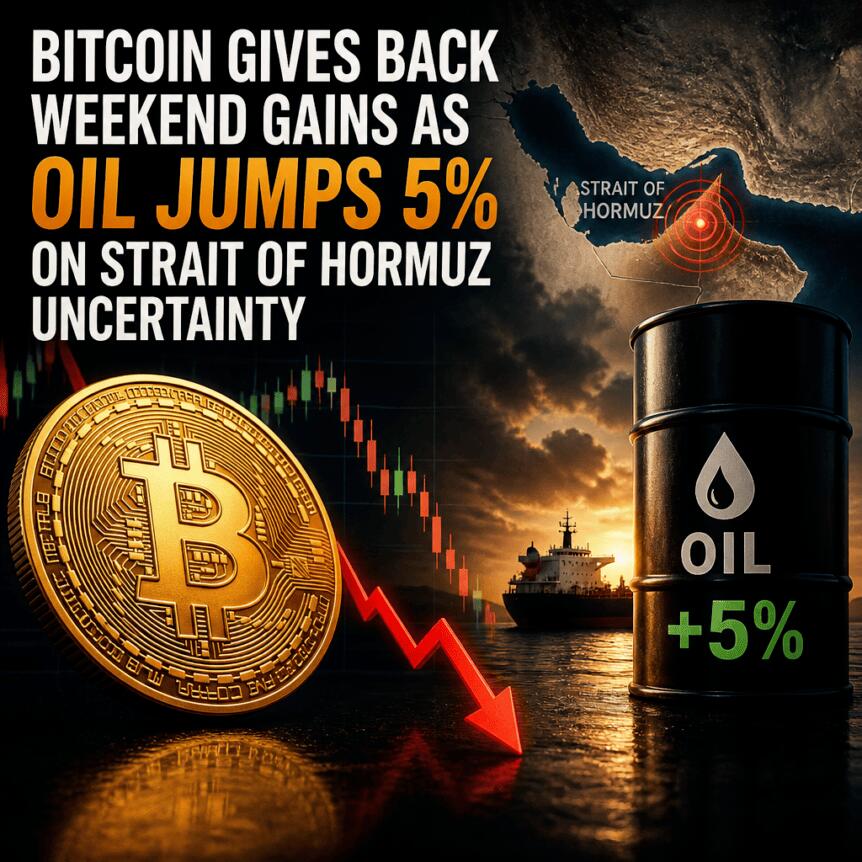
Bitcoin dipped below $64,500 on Monday after Wall Street’s open, tracking a broader risk-off mood tied to fresh uncertainty around US-Iran tensions and the Strait of Hormuz. While crude prices moved higher, equities failed to hold their early direction, and BTC’s early weakness underscored how quickly macro headlines can dominate crypto price action.
At the same time, market attention is being split between geopolitics and FX—particularly the Japanese yen. The yen continued to weaken against the US dollar even after a rare joint Japan-US intervention, putting additional pressure on liquidity-sensitive assets like bitcoin.
Key takeaways
- Bitcoin slid to around $64,447 on Bitstamp shortly after the US open, reflecting risk-off positioning alongside US stocks.
- Iran’s deputy speaker, Ali Nikzad, said reopening the Strait of Hormuz has “no military solution,” adding to uncertainty for energy markets.
- USD/JPY pushed toward 160 in early Asia trading, as the yen remained under pressure after the Japan-US FX intervention.
- On-chain and derivatives signals show stronger institutional demand, but analytics firms describe spot-market recovery momentum as still not fully confirmed.
- US spot Bitcoin ETFs logged net inflows of $865.3 million last week, yet analysts still characterize the rebound as tentative.
Geopolitical uncertainty and macro spillover into BTC
According to TradingView data cited in the report, BTC/USD touched $64,447 on Bitstamp—its lowest level since Friday—before recovering modestly. The move closely followed the pattern in US equities, which initially fell as traders reassessed the likelihood that the Strait of Hormuz oil route would reopen.
Iranian officials added to that caution. Addressing the Islamic Consultative Assembly, deputy speaker Ali Nikzad reportedly said that the “opening of the Strait of Hormuz has no military solution,” a statement quoted by Al Jazeera and other outlets.
Energy markets reflected the same tension. US WTI crude oil was up nearly 5% to about $80.90 per barrel at the time of writing, even as the S&P 500 managed to turn green after dipping—still below Friday’s all-time highs. For bitcoin, the takeaway is less about oil’s direction alone and more about how quickly broader macro uncertainty is feeding into risk appetite.
Yen weakness after Japan-US FX action raises liquidity questions
Beyond geopolitics, the yen remained a focal point for markets. The Japanese currency continued to slide against the US dollar despite a rare joint intervention by Japan and the United States earlier, with USD/JPY reaching 159 on Monday and edging toward the 160 threshold during the first Asia session.
Economist Mohamed El-Erian warned that Japan may need stronger or more decisive policy follow-through for the intervention to translate into sustained FX stabilization. On X, he wrote that the yen has been weakening gradually since the joint Japan-US FX intervention, calling it a reminder that correcting a “mispricing” depends on getting the policy mix right—and that delays could make the intervention’s goal “more elusive.”
For crypto traders, this matters because FX stress can alter global liquidity conditions and risk positioning. When the yen weakens rapidly, it can coincide with shifts in cross-asset funding and hedging behavior—dynamics that often spill into high-beta markets.
Institutional inflows support the backdrop, but analysts see uneven momentum
While bitcoin’s price action looked shaky, institutional and on-chain data offered a more constructive—though not fully decisive—picture. Glassnode’s latest Market Pulse update pointed to what it described as improving components that typically precede more sustainable uptrends, but it also highlighted a key missing piece: the overall momentum in the spot market.
Glassnode said momentum had returned toward neutral and that spot taker buying had accelerated sharply. However, it noted that centralized exchange turnover remained subdued. In the report, the firm interpreted the gap between stronger spot absorption and weaker exchange activity as indicative of demand improving within a broader consolidation environment rather than a broad-based speculative expansion.
ETFs and derivatives hint at accumulation—yet “tentative” remains the watchword
Institutional flows were among the clearest positives in the week’s data. The report cited Farside Investors data showing that US spot Bitcoin ETFs recorded net inflows of $865.3 million last week. Such inflows can matter because they represent steady demand from traditional capital channels, often helping stabilize sentiment during choppy periods.
On the derivatives side, CryptoQuant data referenced in the report indicated that hedge funds had flipped to net long CME bitcoin futures. The CEO of CryptoQuant, Ki Young Ju, characterized the shift as “rare,” arguing that the typical positioning behavior had structurally favored being short via basis trades—an approach he said cannot easily be carried into net long positions. In his framing, hedge funds betting on upside suggests more conviction than simple hedging.
Still, the overall conclusion from the analytics commentary is that bitcoin’s rebound attempts are not fully “locked in.” The report described the comeback as “tentative,” with Glassnode’s divergence between accelerating spot taker buying and subdued exchange turnover serving as a caution signal. In other words: inflows may be arriving, but market breadth and turnover are not yet confirming a full expansion cycle.
Going forward, traders are likely to keep a close eye on whether macro uncertainty around the Strait of Hormuz continues to dominate price action, and whether FX conditions—especially USD/JPY—stabilize or deteriorate further. On the crypto side, the next test is whether ETF-led demand and derivatives positioning can translate into stronger spot-market momentum, rather than staying confined to consolidation.
Crypto World
CoinFerenceX and The Best Event Join Forces to Launch “CoinFerenceX The Best Event Singapore,” the Decentralised Summit

SINGAPORE, CoinFerenceX, the Web3 conference series known for curating high-signal gatherings of founders, investors, and builders, today announced it has combined forces with The Best Event, the events production group behind 80+ live experiences across 10+ global cities, to launch CoinFerenceX The Best Event Singapore, the next tier of the world’s first Decentralised Summit. The event will take place 5-6 October 2026 at Gardens by the Bay, positioning it as a leading alternative during Singapore’s Token2049 and Asia Crypto Week.
The partnership pairs CoinFerenceX’s content curation and community depth with The Best Event’s large-scale production and sponsor-activation track record, creating what the two companies describe as “the event nobody else can build.”
What sets the conference apart is its decentralized summit model: a 2 day event shaped by the industry rather than dictated by an organizer. Where traditional conferences sell booths and speaking slots, CoinFerenceX and The Best Event will invite the founders, funds and ecosystem leaders who show up to help shape the agenda itself, deciding which conversations matter and which builders take the stage. While the organizers handle the production and logistics, the direction of the summit is set by the Web3 players with real skin in the game. It’s a gathering built by the people driving the ecosystem forward, for the people driving it forward.
The Best Event brings a track record of 80+ delivered events, a presence in more than 10 global cities, over 50 million annual organic impressions, and north of 1 billion in social reach. The group’s attendance has grown from 35,000 in 2025 to a projected 70,000 in 2026. Its sponsor case studies point to concrete ROI, including one partner that turned a $50,000 investment into $1 million raised, another that saw a $50,000 spend convert into $1 million in ROI, and a third that converted two leads into a $400,000 deal.
At CoinFerenceX, partners help shape the agenda itself rather than simply buying booth space and a speaking slot. CoinFerenceX’s community includes 7,500+ curated attendees from more than 70 countries, over 500 ecosystem and media partners, and more than 300 VCs and investment funds. Roughly 60% of its attendees are C-level executives or founders, and independent feedback shows 94% of past partners say they would return, with 89% rating CoinFerenceX among the top 25% of Web3 events globally.
The combined summit is designed around four experience tracks:
- The Leaders Summit: an invite-only, C-level gathering where governance decisions and strategic partnerships take shape.
- Protocol Deep Dives: technical workshops where protocols demonstrate what they are actually shipping.
- The Founders’ Den: a venue for early-stage builders to pitch directly to 200+ VCs and investors.
- The Innovation Showcase: live product demos from established players and emerging protocols alike.
Early figures for the Singapore edition point to more than 4,000 curated attendees, 500+ VCs and investors, 400+ ecosystem and media partners, 85+ C-level speakers, and more than 8,000 total event registrations. As with prior CoinFerenceX editions, roughly 60% of attendees are expected to be C-level executives or founders.
Organizers say the agenda will be co-created by founders and ecosystem leaders with skin in the game, focused on sessions that deliver actionable insight or substantive content over celebrity keynotes.
“We’re incredibly excited for this edition, it’s bigger, sharper and more ambitious than anything we’ve done before. With the whole industry in Singapore that week, we’ve curated a stage and an audience that turns that energy into real conversations and real deals. This is CoinFerenceX The Best Event at its strongest,” shared Prince Gupta, Co-Founder of CoinFerenceX
Tobias Bauer, Co-Founder of The Best Event, added, “This partnership is the best of both worlds: CoinFerenceX’s curated speaker line-ups meet The Best Event’s scale of 50,000 attendees a year, the largest Web3 event series globally. Together we’re bringing one of the biggest two-day conferences to Singapore, our home market, with frontier thought leadership and production quality unlike anything else in the space.”
Event Details
- Event: CoinFerenceX The Best Event Singapore
- Dates: 5-6 October 2026
- Venue: Gardens by the Bay, Singapore
- Tickets & partner applications:coinferencex.com/singapore
About CoinFerenceX
CoinFerenceX is a global decentralized Web3 summit connecting founders, investors, blockchain companies, developers, and industry leaders to accelerate innovation and collaboration in the digital economy. Through its ecosystem-driven approach, CoinFerenceX creates a platform for meaningful networking, knowledge exchange, startup opportunities, and strategic partnerships shaping the future of Web3. The summit brings together the brightest minds across blockchain, AI, DeFi, gaming, and emerging technologies to explore industry trends, showcase groundbreaking solutions, and build the next generation of decentralized ecosystems.
About The Best Event
TBE is the events arm of TBV, an early-stage venture capital fund backing web2.5 and web3 startups across Southeast Asia and North America. TBE curates high-caliber gatherings that anchor the biggest weeks in web3, with a track record of 80+ delivered events across 10+ global cities. Every event is built around one goal: putting the right founders, funds, and operators in the same room so real deals and partnerships can happen. That network runs deep, backed by a 10,000+ strong Telegram community and a social following north of 100,000.
Media Contact
Anmol Malviya
Head of PR
CoinFerenceX
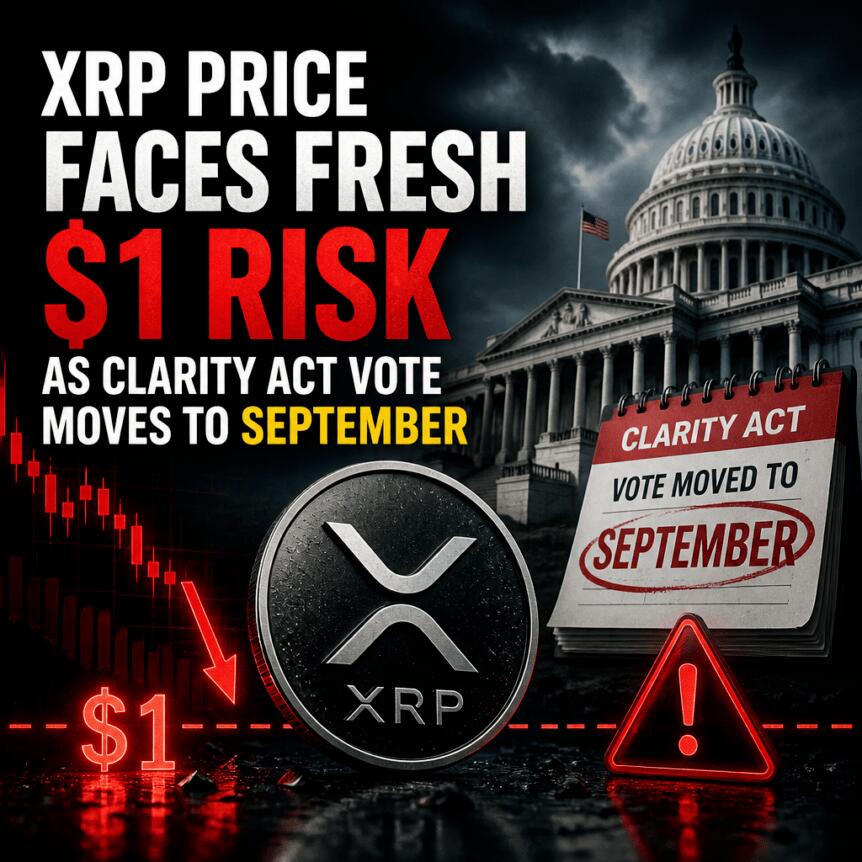
XRP faces renewed downside pressure as Polymarket traders assign strong odds to the token trading near the $1 level. The shift follows the delay of the CLARITY Act vote until September. Meanwhile, short-term markets show limited strength, while longer-term contracts signal weaker expectations for a major XRP recovery.
XRP Price Holds Near The $1 Support
Polymarket data shows a 71% probability that XRP will reach $1 on August 10. Another contract gives XRP a 99% chance of reaching the $1 to $1.10 range. However, the same market assigns only a 1% probability to the $0.90 to $1 range.
Separate contracts also show limited upside for XRP during the session. The token has a 28% probability of reaching $1.05, while another contract gives $1 a 5% probability. Therefore, current market activity places greater attention on the $1 area than higher price levels.
Short-term contracts remain stronger than daily and four-hour projections. Polymarket gives XRP a 96% chance of rising during the next hour, while 15-minute odds stand at 76%. However, five-minute odds fall to 50%, while daily and four-hour markets show only 10% and 7% chances.
XRP Faces Wider Weekly Price Pressure
Polymarket’s weekly contracts also show mixed expectations for XRP between August 10 and August 16. One contract assigns a 50% probability that XRP will not reach $0.90 during that period. Another standalone contract gives a 99% probability that XRP will reach $1.70.
These contracts measure separate price outcomes, so their probabilities do not represent a single price forecast. However, the data shows a wide range of possible outcomes as traders assess XRP’s near-term direction. At the same time, longer-term contracts show limited expectations for a new record high.
Polymarket places the probability of XRP reaching an all-time high by December 2026 at 5%. The probability for XRP reaching a record high by the end of September stands at 1%. Therefore, the market data points to restrained expectations despite possible short-term moves.
Clarity Act Delay Adds Pressure To XRP
The delayed CLARITY Act vote has added another source of uncertainty for XRP and the wider crypto market. Senate Majority Leader John Thune filed a cloture motion on the motion to proceed. The Senate now plans to consider the cloture vote on September 15 after the August recess.
The bill still faces disagreements over several provisions before lawmakers can advance it. Senators have raised concerns about stablecoin rules and provisions involving stablecoin yields. Meanwhile, law enforcement groups and prosecutors have objected to protections covering non-custodial blockchain developers.
The legislative outcome could influence XRP’s next major price move because the bill affects the broader digital asset framework. CoinGape analysis identifies $1.08 and $1.12 as key resistance areas for XRP. A stronger trading volume could push XRP toward $1.18, while a failed bill could send XRP back toward $1 and $0.95.
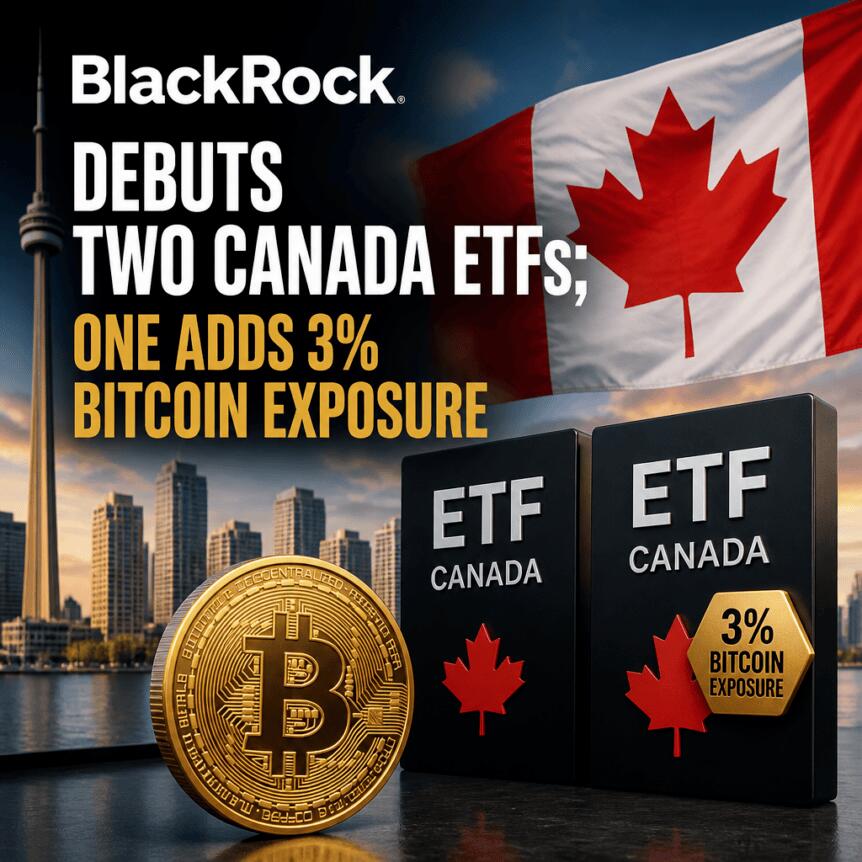
BlackRock is expanding its Canada-listed ETF lineup with two new iShares products that begin trading on the Toronto Stock Exchange (TSX) this week. The most notable addition blends traditional equities with a small, fixed allocation to Bitcoin exposure.
Both funds are managed by BlackRock Asset Management Canada under the RBC iShares alliance. They are designed for investors seeking diversified market exposure—either broadly outside North America, or a balanced mix that includes a Bitcoin sleeve.
Key takeaways
- BlackRock Canada launched two TSX-listed iShares ETFs: IBQT (equities plus a 3% Bitcoin allocation) and XINT (international equity exposure).
- IBQT’s structure targets a diversified equity core: 97% in equities via iShares ETFs, alongside 3% Bitcoin exposure via BlackRock’s Canadian iShares Bitcoin ETF (IBIT).
- XINT provides broad non-North America coverage: it tracks the MSCI ACWI ex North America IMI Index, spanning more than 5,000 companies across over 40 markets.
- BlackRock positions iShares as the platform: both funds rely primarily on other iShares ETFs rather than direct stock holdings.
- BlackRock’s US Bitcoin ETF scale remains a reference point: CoinMarketCap data shows its US-listed iShares Bitcoin Trust (IBIT) holds about $47.9 billion in assets under management.
What BlackRock launched on the TSX
On Monday, BlackRock Canada introduced two ETFs on the Toronto Stock Exchange: the iShares Equity + Bitcoin ETF Portfolio (IBQT) and the iShares Core MSCI All-International Equity Index ETF (XINT).
While both funds sit under the iShares brand and share a common management setup, they differ sharply in how they aim to deliver exposure. IBQT adds a defined Bitcoin component to an otherwise equity-focused portfolio, while XINT is a more traditional, index-tracking international equity fund.
IBQT: a “core equities + 3% Bitcoin” portfolio
The iShares Equity + Bitcoin ETF Portfolio (IBQT) is designed around a straightforward allocation framework. The fund allocates 97% of its portfolio to a mix of equities across Canada, the United States, international markets, and emerging markets. The remaining 3% is allocated to Bitcoin exposure through BlackRock’s Canadian iShares Bitcoin ETF (IBIT), which trades on Cboe Canada.
According to the launch details, IBQT does not seek to hold individual stocks directly. Instead, it primarily invests in other iShares ETFs to achieve both its diversified equity exposure and its Bitcoin sleeve.
This design choice matters for investors thinking about implementation. A fund-of-funds approach can make it easier to access multiple exposures within a single product, rather than requiring investors to combine separate equity and Bitcoin funds themselves—though investors will still want to review the underlying holdings and the total costs across the layered structure.
XINT: broad international equities outside North America
The second product, iShares Core MSCI All-International Equity Index ETF (XINT), is more conventional in its index approach. The ETF tracks the MSCI ACWI ex North America IMI Index.
Based on the provided index description, XINT offers exposure to more than 5,000 companies spread across over 40 developed and emerging markets, covering regions outside both Canada and the United States.
For investors who already hold North American equities and want a non-overlapping allocation, XINT’s benchmark selection is intended to fill that gap. By tracking a widely diversified index outside North America, it also reduces the need to make region-by-region allocation decisions, at least at the index construction level.
Why this matters for Canadian ETF investors
BlackRock’s move reflects a broader shift in how crypto exposure is being packaged for mainstream portfolios—often in small, rules-based allocations rather than all-in constructions. IBQT’s fixed 3% Bitcoin allocation is a concrete example of that approach: it aims to keep the portfolio heavily equity-oriented while adding a measured amount of BTC-linked exposure.
At the same time, BlackRock is keeping the rest of the implementation familiar. Both funds are described as relying primarily on iShares ETFs, which signals that BlackRock is leveraging its existing ETF ecosystem to deliver new outcomes—rather than creating a wholly separate investment framework for crypto-linked products in Canada.
BlackRock said its iShares business managed approximately $6.2 trillion in assets across more than 1,700 ETFs as of June 30. That scale can be relevant for Canadian investors because it suggests ongoing operational capacity and product development across the iShares range, including the integration of new crypto components into established ETF formats.
Bitcoin ETF momentum remains a key backdrop
The launch of IBQT also lands against ongoing momentum in BlackRock’s US Bitcoin ETF business. The US-listed iShares Bitcoin Trust (IBIT) is described as the largest US spot Bitcoin ETF by assets under management, with about $47.9 billion in AUM, according to CoinMarketCap.
While IBQT is a Canada-focused product and XINT is an equities-only index fund, BlackRock’s shared branding and ETF infrastructure underscore a key reality: the firm’s crypto products are increasingly becoming part of a broader ETF platform strategy, rather than operating as isolated experiments.
Going forward, investors should watch how IBQT’s trading and flows develop on the TSX, including whether the “small fixed Bitcoin sleeve” format draws demand from advisors and retail investors seeking easier portfolio integration. It will also be important to track how regulators and market participants continue to treat crypto-linked exchange-traded products in Canada, since that environment will shape how quickly similar portfolio-style offerings spread.

The Tom Lee-chaired former bitcoin miner turned ETH accumulator has officially pushed its Ethereum holdings beyond 5.8 million tokens, even if its accumulation pace has slowed down.
Bitmine Immersion Technologies acquired another 7,391 ETH over the past week, bringing the total to 5,805,238 tokens. At the reported price of $1,928 at the time of the PR publication, the stash was worth approximately $11.2 billion.
Another Purchase but Smaller
Earlier in the summer, Bitmine’s acquisition pace was significantly more impressive, with a few examples showing a purchase of over 42,000 in early July and more than 27,000 in another. However, the reduction started to become more visible over the past few weeks, as the one from late July was for fewer than 10,000 ETH and the one from last week was for 10,399 tokens.
During a modest acquisition of 7,430 ETH in mid-July, Chairman Tom Lee explained that Bitmine had redirected some of its capital toward repurchasing its own shares. The firm has done it again now, repurchasing another 3 million shares, taking the total buybacks since July 1 to 19.1 million shares under its $4 billion repurchase program.
Even though the latest ETH buy was rather identical to the aforementioned one, he remains bullish on the asset as its long-term outlook on Ethereum and the broader crypto market hasn’t deteriorated.
He also touched upon two of the hottest topics within the crypto market now – the delay in voting on the CLARITY Act in the US and the Fed’s expected next move:
“We are disappointed that the CLARITY Act will not see a Senate vote before the August recess, but financial markets seem more focused on the recent softer inflation and jobs data. The odds of a Sept. hike by the Federal Reserve have fallen to 40% from 75% two weeks ago. “We expect easing financial conditions to be a tailwind for crypto,” he commented.
The Streak
Although Bitmine has seemingly reduced its ETH accumulation spree, its impressive streak of consecutive weekly purchases continues ever since it launched its treasury strategy on June 30 last year. Moreover, the company now owns just over 4.8% of the asset’s 120.7 million-token supply and has inched closer to its long-standing goal of controlling 5%.
The post Bitmine Tops 5.8 Million ETH Even After Scaling Back Its Latest Buy appeared first on CryptoPotato.

The U.S. Senate is set to take up the Digital Asset Market Clarity (CLARITY) Act again after a month-long recess, with Majority Leader John Thune filing a cloture motion to move the bill toward a floor vote. The procedural step, reported by the Senate Daily Press, effectively ends speculation that lawmakers might bring the measure forward before September despite it already clearing the House more than a year ago.
If the bill reaches the chamber, the Senate will need a 60-vote threshold to advance CLARITY, meaning bipartisan support remains crucial. The push into mid-September is also landing with less time to build momentum as the 2026 midterm elections approach, a timing problem that has amplified frustration among crypto industry leaders and lawmakers who have backed the legislation.
Key takeaways
- Majority Leader John Thune filed a cloture motion for the CLARITY Act, setting the stage for consideration when the Senate reconvenes in mid-September.
- Passing CLARITY in the Senate would require 60 votes, leaving little room for partisan friction ahead of the 2026 midterms.
- Industry figures and crypto policy advocates called the delay disappointing, while urging lawmakers to “finish the job” in September.
- Bipartisan negotiations reportedly continued on broader crypto market-structure issues, but Senate action has not yet translated into CLARITY scheduling.
- Despite congressional delays, prediction market contracts still reflect meaningful odds that CLARITY could move toward passage in 2026, though timing uncertainty remains high.
Cloture filed as Senate delays become the new baseline
According to reporting cited by Cointelegraph, Thune’s cloture filing is intended to bring CLARITY to the Senate floor for consideration. That matters because cloture is a key procedural tool used to limit extended debate and overcome the likelihood of a filibuster-like stall—an especially relevant hurdle for legislation that relies on cross-party alignment.
CLARITY’s track record has made the delay feel more consequential to supporters. The bill already passed the House, so the Senate is effectively deciding whether to align with that earlier outcome. With the Senate now targeting mid-September, the question for investors, builders, and market participants is less whether the bill is “alive,” and more how quickly it can become predictable regulatory infrastructure—or whether uncertainty drags on.
As the clock tightens, the September timetable arrives with roughly 50 days before the 2026 midterm elections, a window that critics say makes legislative compromise harder to achieve.
Lawmakers and executives push back on the slowdown
Frustration has surfaced publicly from both lawmakers and industry leaders after the Senate did not schedule a vote before its recess. Senator Cynthia Lummis, referenced in the Senate reporting cycle, said she was “frustrated” that CLARITY had not been placed on the calendar and added that her work with colleagues would continue. Her statement is linked through her post on X: Sen. Lummis’ remarks.
On the industry side, Coinbase CEO Brian Armstrong and Coinbase chief policy officer Faryar Shirzad also criticized the lack of immediate Senate scheduling, while framing September as the moment to complete the legislative path. Armstrong’s comment is linked at this X post, and Shirzad’s “finish the job” framing appears in this X post.
Not all reactions centered on panic. Bitmine Chair Tom Lee, in a weekly report, suggested that broader market attention—such as recent softer inflation and jobs data—has dominated near-term financial headlines more than CLARITY’s status. The implication for market participants is that regulatory risk may remain real without necessarily driving immediate price action day-to-day, especially when macro catalysts are competing for attention.
Why ethics and stablecoin rules keep resurfacing
The House-passed momentum has not translated cleanly into Senate action, in part because the legislative effort sits alongside other disputes in the broader crypto market-structure debate. The article’s background indicates that Senate lawmakers did not announce solutions in response to Democrats pressing for stricter ethics provisions—particularly rules aimed at conflicts tied to U.S. President Donald Trump’s crypto investments, including the entities and projects associated with World Liberty Financial and a memecoin launched days before he took office.
Those ethics concerns highlight a recurring tension in crypto policy: even when the industry broadly supports regulatory clarity, the political conditions needed to reach final passage can depend on unrelated governance questions. In practice, that means CLARITY may be delayed not because of technical disagreements about token regulation, but because of the Senate’s broader tradeoffs on transparency and oversight.
At the same time, some banking advocates have raised questions about how CLARITY would intersect with stablecoin-linked interest mechanics. A Wall Street Journal editorial board op-ed referenced before Thune’s cloture motion argued that, under CLARITY, smaller banks would miss out on opportunities because they rely on interest payments to attract deposits. The editorial board’s critique appears in this Wall Street Journal op-ed.
“The Clarity Act can serve a useful purpose with some language changes. The crypto industry and its friends in Washington portray themselves as defenders of free markets. What they really want is to be quasi-banks without abiding by the same regulations.”
The policy implication is straightforward: debates about who can earn yield, and on what terms, can influence whether financial institutions see incentives to participate. That in turn affects how quickly mainstream infrastructure can integrate with stablecoins and related services.
Prediction markets keep odds alive, but timing is still a gamble
Even as CLARITY’s Senate schedule slips, prediction market platforms continue to offer contracts reflecting expectations that the bill could still clear major milestones within the 2026 calendar year—though the probabilities remain uncertain.
On Kalshi, an event contract that drew $1.23 million in wagers gave users an 88% chance that the Senate would vote on the CLARITY Act before Oct. 1. A related market on Polymarket, which received over $5.79 million in total wagers, showed a 26% chance that the bill would be signed into law in 2026. Both contracts are linked in the source coverage: Kalshi’s CLARITY vote contract and Polymarket’s 2026 signature contract.
Those numbers also reflect an important procedural reality. If CLARITY passes the Senate, it would likely need to return to the House for another vote before it can move to the president for signing. That extra step can be the difference between a clean legislative finish and another round of delay—especially if lawmakers try to adjust language during Senate consideration.
For traders and market participants using these markets as a sentiment proxy, the key watch item isn’t only “pass or fail,” but whether the timeline compresses the revision process enough to avoid a late-year procedural bottleneck.
As the Senate reconvenes in mid-September, the next signals to monitor are whether the cloture motion results in a scheduled floor vote and whether negotiations narrow the gap on unresolved issues—particularly ethics and stablecoin-related provisions—before midterm politics starts to dominate lawmakers’ agendas.
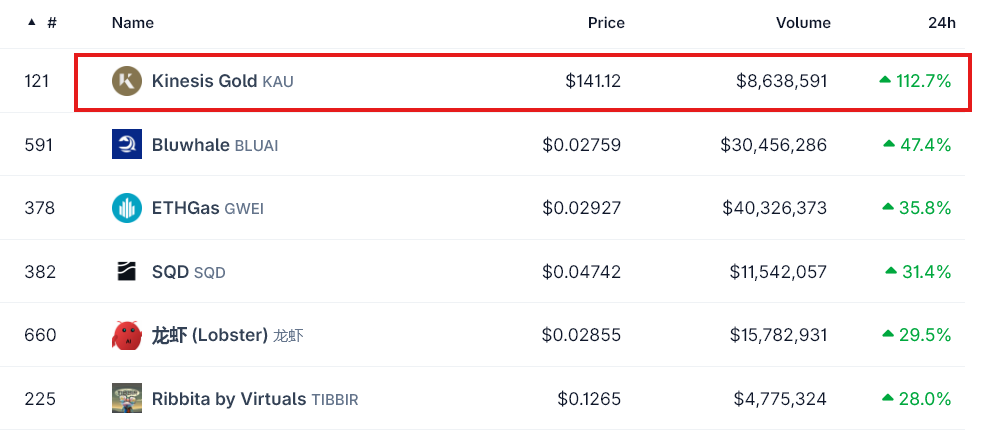
Kinesis Gold (KAU), a token backed by physical gold, appeared to surge more than 110% on CoinGecko on Monday.
The move looked dramatic. KAU briefly showed a 24-hour low near $66 before returning to around $140. Yet gold itself had not moved anywhere close to that amount.

The most likely explanation is a market data problem linked to Kinesis’ own dollar stablecoin, C1USD.
A New Tokenized Gold Coin
CoinGecko showed C1USD trading close to $1 while also recording a 24-hour low near $0.48. That created an apparent gain of more than 100% for the stablecoin.
The same pattern appeared in KAU.
One KAU represents one gram of gold. At current gold prices, a value close to $140 is reasonable. A price near $66 would imply that the token had suddenly lost more than half its value, even though the underlying gold had not.
The connection appears to come from the KAU/C1USD trading pair on the Kinesis exchange.
That pair accounted for almost all of KAU’s reported trading volume on CoinGecko at the time. Reported daily volume also jumped sharply to more than $8 million, far above levels seen on many recent days.
If CoinGecko temporarily valued C1USD at around $0.48 instead of $1, a KAU price of roughly 140 C1USD would convert to around $67. Once C1USD returned to $1, KAU would appear to double.
That would explain the unusual chart without any real 110% rally in gold.

What is Kinesis Gold?
Kinesis operates a wider ecosystem built around tokenized precious metals. Its main products include KAU, backed by gold, and KAG, backed by silver.
The company says physical bullion backing the tokens is stored in professional vaults and checked through regular independent audits. Users can also redeem larger amounts for physical metal.
However, Kinesis has faced some scrutiny over its corporate structure and regulation. The platform is operated through a Cayman Islands entity rather than an FCA-regulated UK company. Its related bullion business, Allocated Bullion Exchange, also shares management links with Kinesis.
Recent user reviews have also raised complaints about slow withdrawals and poor communication. For now, the 110% KAU move looks far more like a pricing glitch than a real market rally.

The bigger question is why the KAU/C1USD pair suddenly generated such a large share of reported volume, and whether that activity contributed to the distorted CoinGecko data.
The post Why Did a $330 Million Gold Token Suddenly Jump 110% on CoinGecko? appeared first on BeInCrypto.
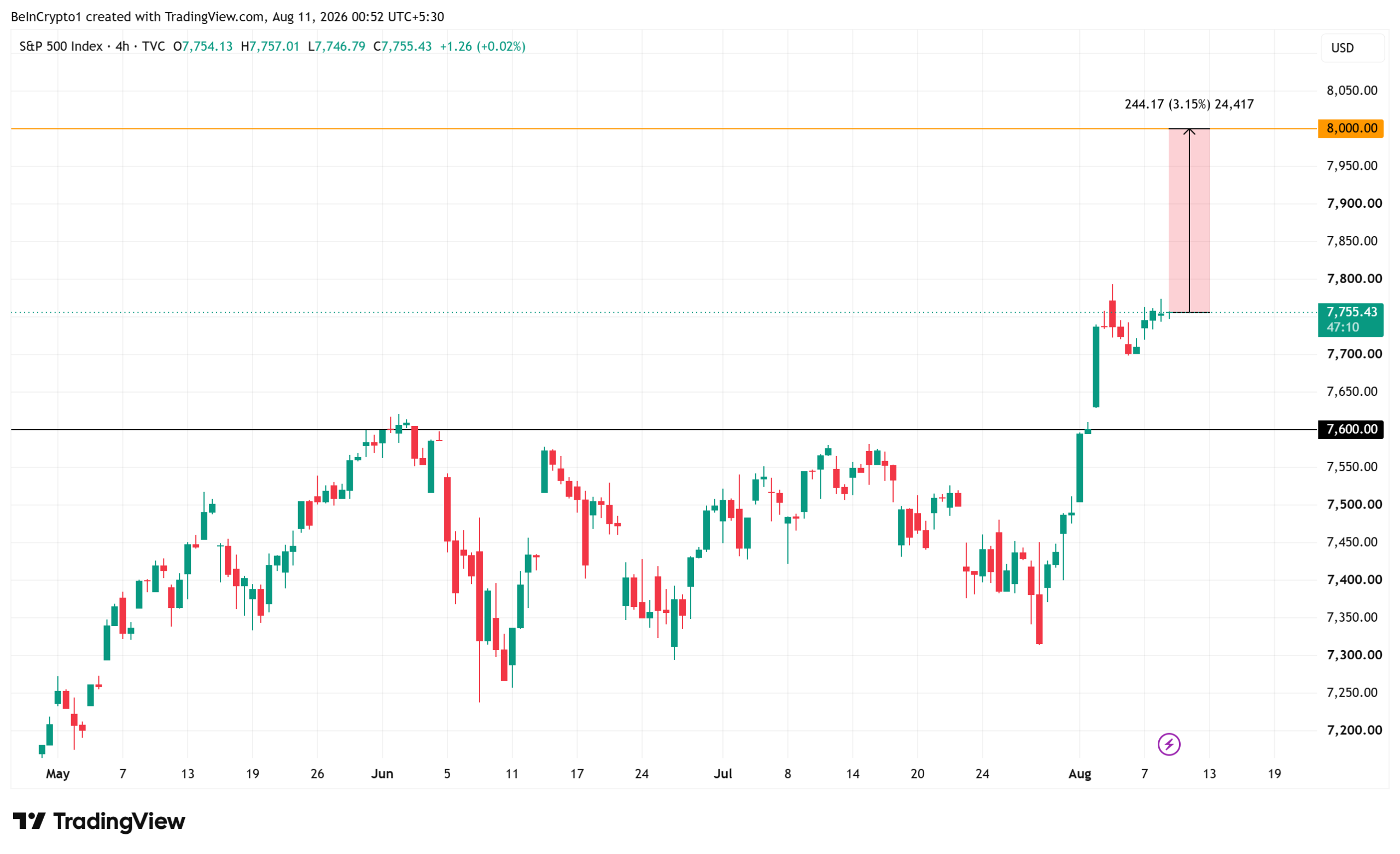
JPMorgan raised its year-end S&P 500 target to 8,000 on Monday, and research firm CFRA now sees 8,050. A new stock market risk is forming beneath the cheer, as investors abandon their downside hedges.
Wall Street keeps raising the bar. Almost nobody is paying for protection in case it misses.
JPMorgan and CFRA Raise S&P 500 Targets on AI Earnings
JPMorgan has now raised its call twice in two months. The bank went from 7,600 to 7,800 in June, then to 8,000 this week. The new target sits about 3% above Friday’s close of 7,757.64.
Strategist Dubravko Lakos-Bujas and his team now expect $365 in 2026 earnings per share (EPS). That is 35% growth in a single year. Notably, they left the valuation multiple flat at 20 times earnings. Profits, not a richer price tag, carry the entire upgrade.
The profits case rests on the cloud. Google Cloud grew 82% year over year last quarter, with Microsoft Azure up 43% and Amazon Web Services up 37%. JPMorgan expects artificial intelligence (AI) to soak up more than half of the index’s $1.5 trillion in capital spending this year.
CFRA, an independent Wall Street research firm, went further. It lifted its 12-month target to 8,650 from 7,730 on Monday, roughly 12% above the August 7 close. Its year-end call of 8,050, tops JPMorgan’s.
The crowd is moving the same way. Goldman Sachs sits at 8,000, Citi at 8,100, and the Street average near 7,854. Only Bank of America holds out at 7,100.

The calls follow a week in which the Dow and S&P 500 closed at records on AI earnings.
Nobody Wants to Hedge as FOMO Grips the Options Market
Put options work like crash insurance. Right now, almost nobody wants to pay the premium.
Hedging demand has sunk to lows last seen after President Donald Trump’s tariff retreat in 2025, Bloomberg reported Monday. The gauge is one-month put-to-call skew, which compares the cost of bearish puts against bullish calls. It now sits at a 16-month low.
“Demand for protection against a drop in stocks has fallen to the lowest level since US President Donald Trump’s capitulation on tariffs last year, as indexes rally to record highs,” Bloomberg analysts noted.
The echo matters. Skew was last this cheap in April 2025, just as that tariff selloff ended. Back then, protection stopped selling because the panic had passed. This time, it stopped selling because fear of missing out (FOMO) replaced fear itself.
Valuations flash the same complacency. The S&P 500 dividend yield fell to 1.04%, the lowest ever recorded, Barchart data shows. That is less than half its long-run average near 2.81%.

Michael Burry sees danger in the calm. The investor, famous for calling the 2008 collapse, issued a 1987-style crash warning last week as the index hit records.
Why Vanishing Hedges Could Become the New Stock Market Risk
A market without hedges has no shock absorbers. And the shock list is not short.
Even the bulls admit it. CFRA’s Sam Stovall raised his targets and still warned the rally may be nearing a peak. He points to rising margin debt, sticky inflation, and possible further Federal Reserve tightening.
JPMorgan expects the Fed to hold rates at 3.50% to 3.75% through 2026. It sees core personal consumption expenditures (PCE) inflation, the Fed’s preferred gauge, near 3.4% by December. That leaves little room for rate cuts to rescue stretched prices.
Heavy share and debt issuance plus Strait of Hormuz oil frictions round out the risk list. Weak September seasonality is three weeks away. First comes Wednesday’s US inflation report.
Crypto is watching from a distance. Bitcoin (BTC) traded near $63,955 on Monday, down 2% in a day, while the S&P 500 eased 0.1%.

The bulls’ math works as long as earnings keep beating. If even one flagged risk lands, an uninsured market takes the hit at full force.
The post JPMorgan and CFRA Raise S&P 500 Price Forecast as Nobody Wants to Hedge Anymore appeared first on BeInCrypto.
Crypto World
Argentina Turned $10,000 in Peso Savings Into $114. Steve Hanke Says the Fix is Incomplete
In Argentina, inflation has fallen sharply under Javier Milei. Yet a decade of destroyed savings and expensive long-term credit explains why Argentines continue to seek dollars.
Argentines borrow at 29.9% on a long-term mortgage. Ecuadorians, who use the US dollar, borrow at 7.5%.
Steve Hanke, the economist who helped Ecuador make that switch in 2000, reviewed BeInCrypto Intelligence’s new LATAM report ‘The Exodus Economy’ and says Argentina should follow, before the next government undoes Milei’s progress.

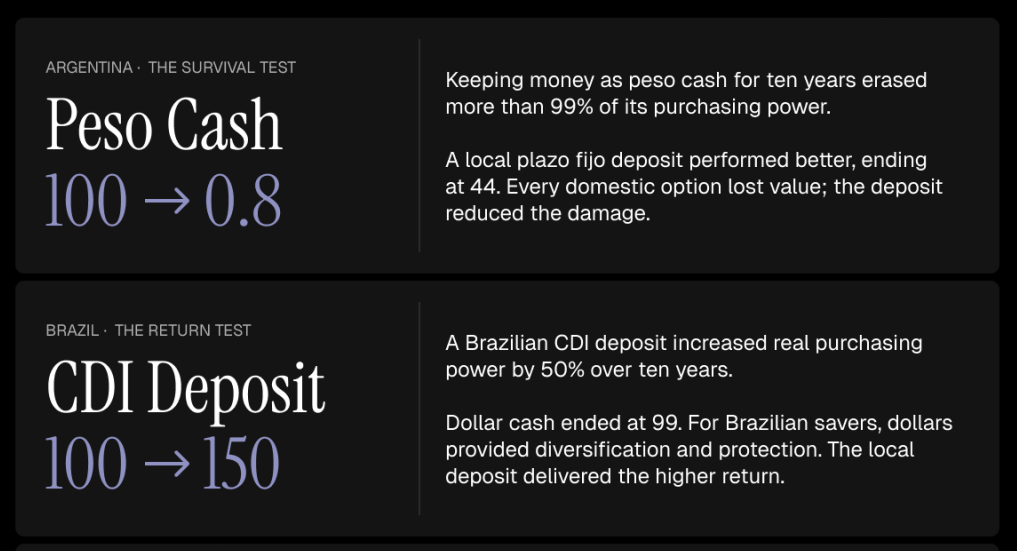
An Argentine who kept the equivalent of $10,000 in peso cash from June 2016 to June 2026 would have ended with about $114 in US-dollar value.
That is one of the starkest findings in BeInCrypto Intelligence’s new report, The Exodus Economy. Nearly 99% of the money’s dollar value disappeared over ten years as inflation and currency depreciation compounded.
The damage extended beyond cash. A local Argentine term deposit reduced the loss, but still preserved only 44% of its starting purchasing power. By comparison, a Brazilian CDI-linked deposit gained 50% in real terms over the same period. A Mexican deposit gained 30%.
The gap explains why dollar demand in Argentina has become a financial habit rather than a short-term response to one crisis.

Milei Has Slowed Inflation Sharply
Argentina’s immediate position has improved. Consumer prices rose 1.9% in June, the lowest monthly rate in ten months. Annual inflation stood at 33.5%, while prices increased 16.8% during the first half of 2026, according to INDEC.
The parallel-market premium for dollars has also fallen to around 2%, after exceeding 150% in 2023. The International Monetary Fund said recent fiscal, monetary and foreign-exchange reforms had strengthened Argentina’s reserve buffers and improved its ability to absorb shocks.
Steve Hanke, professor of applied economics at Johns Hopkins University, says the progress remains vulnerable.
“While President Milei’s extensive, but not full, liberalization of the foreign exchange market has allowed the parallel premium to collapse and inflation to fall, inflation is still too high for durable stabilization,” Hanke told BeInCrypto.
Hanke advised Ecuador when it adopted the US dollar in 2000 and previously developed an orthodox currency-board proposal for Argentina.

Mortgage Rates Reveal the Remaining Risk
Hanke points to long-term borrowing costs as a measure of confidence in Argentina’s monetary system.
“The current average interest rate for peso-denominated 20–30-year mortgages in Argentina is 29.9%,” he said. “In Ecuador, a country that I assisted in dollarizing in 2000, it is only 7.5% for similar mortgages.”
Monthly inflation can fall quickly after a major policy change. A long-term lender must consider what inflation and the peso could look like under several future governments. Argentina’s high mortgage rate shows that this political and currency risk remains expensive.
Hanke argues that the current framework leaves room for a future administration to reverse Milei’s reforms.
“Milei will not be in power forever,” he said. “Full dollarization would lock in stability in a way that current arrangements cannot.”
Official dollarization would replace the peso with the US dollar and remove the central bank’s ability to issue its own currency. Hanke believes this would impose tighter fiscal discipline and reduce lending risk.
The policy also carries costs. Argentina would lose control of its monetary policy, while its central bank would have less capacity to support banks during a crisis. IMF research has long treated these as central trade-offs in any move to full dollarization.
Argentines are Already Dollarizing Privately
Many households and businesses are no longer waiting for the state. They use dollar accounts and stablecoins to receive salaries, protect balances and make cross-border payments.
BeInCrypto’s on-chain analysis found that more than 99% of tracked stablecoin withdrawal volume moved again within 30 days. The time needed for half of a withdrawal cohort to move onward was 10.9 days in March 2026.

This suggests digital dollars increasingly function as working money. Contractors receive pay in stablecoins, while businesses use them to settle invoices and supplier costs.
“Unofficial dollarization allows Latin Americans to escape partly the poor monetary policies that many national central banks have,” Hanke said. “But it still misses some of the benefits that occur with full dollarization.”
A dollar balance can protect an individual from peso depreciation. It cannot lower mortgage rates across the economy or prevent a future government from changing monetary policy.
Argentina has made clear progress against inflation. The report’s ten-year results show why rebuilding trust will take longer. Savers who watched $10,000 become $114 have little reason to abandon the dollar after a few months of improving data.
Download ‘The Exodus Economy’ to explore the full purchasing-power analysis and Latin America’s shift into dollar accounts, offshore structures and stablecoin rails.
The post Argentina Turned $10,000 in Peso Savings Into $114. Steve Hanke Says the Fix is Incomplete appeared first on BeInCrypto.

Trump Media reports $238m loss as crypto falls
2 Big Reasons Why Ripple (XRP) May Be Ready for a Bull Run

Rangers place RHP Nathan Eovaldi (elbow) on injured list


-

 Fashion3 days ago
Weekend Open Thread: Mattifying Sunscreen
-

 Fashion4 days ago
Frugal Friday’s Workwear Report: Cap-Sleeve Pointelle Crewneck Sweater
-

 Sports5 days ago
Jordan Coyle & Cordiamo take Laya Arena Stakes at RDS
-

 News Videos3 days ago
Can Astrology Help Find Gold and Silver Trends? A Financial Astrology Guide
-
 Business5 days ago
US stocks: Dow closes at record on Mideast optimism; SpaceX, AMD drag Nasdaq
-

 Politics5 days ago
Reform UK And Greens Sink To Lowest Favourability Ratings To Date
-

 Tech6 days ago
OpenAI, Anthropic AI agents targeted real people and systems in cyber tests
-

 Business6 days ago
Nvidia Stock Climbs 2.5% as Chip Sector Rally Builds Ahead of AMD Earnings, Nvidia’s Own Report Looms
-

 Crypto World6 days ago
Polymarket targets $20 billion valuation as competition heats up in prediction market sector
-

 Business5 days ago
Supply chain issues impact Ingredion
-
 Crypto World7 days ago
CLARITY Act Senate Vote Locked In, But 60-Vote Hurdle Looms Large
-

 Tech3 days ago
Rinn Pharma & Biopharma to join NordicPharmaTrain network
-
 Crypto World6 days ago
Dow and S&P 500 Hit Records on AI Earnings: When Will the Bubble Burst?
-

 Business2 days ago
How to Start a Cleaning Business: A Step-by-Step Guide
-

 Crypto World7 days ago
The Senate has one week: CLARITY’s last August window
-

 Business2 days ago
Datadog: Best Of Breed For Multiple Reasons
-

 Business2 days ago
BDC Weekly Review: Private BDC Q2 Numbers Are Strong
-
 Crypto World6 days ago
Dollar Index Trapped at 100 as Hawkish Fed Meets Official Selling
-

 Crypto World7 days ago
New York sued, who is next
-

 Business6 days ago
McDonald’s (MCD) Q2 2026 earnings
You must be logged in to post a comment Login