
Crypto World
CFTC presses case that sports betting is finance, seeks to block Arizona enforcement

The U.S. government is making its clearest case yet that betting on sports can be regulated as finance, not gambling.
In a filing late Tuesday, the Commodity Futures Trading Commission and Department of Justice asked a federal court to block Arizona from enforcing its gambling laws against prediction market operator Kalshi. The agencies argue that contracts tied to sports, elections and other real-world events are financial derivatives known as “swaps,” placing them under federal oversight.
If the courts agree, it could shift control of a fast-growing market away from states and into Washington, allowing prediction platforms to operate nationwide under a single set of rules.
But at the center of the case is a simple question: what exactly constitutes a bet?
Arizona and a growing number of states say contracts on sports outcomes function just like traditional wagers and should be regulated as gambling, with licensing requirements, age restrictions, and consumer protections.
Arizona has gone further than most, however, filing criminal charges against Kalshi under state betting laws, with an arraignment scheduled for April 13.
Federal regulators see it differently. In their filing, they argue that what matters is how the contracts are structured, not what they track. Because the payouts depend on whether a future event happens, and that event can have economic consequences, the products fall under the same legal framework as derivatives tied to commodities or interest rates.
That interpretation would put prediction markets firmly under the Commodity Exchange Act, where the CFTC has what it describes as “exclusive jurisdiction.” It would also limit the ability of individual states to shut down or restrict these platforms, something regulators warn would otherwise create a fragmented, state-by-state system.
The legal fight has been building for months and is now starting to produce conflicting rulings. As CoinDesk previously reported, a federal appeals court in New Jersey recently sided with Kalshi, finding that its sports contracts are presumptively allowed under federal law unless the CFTC intervenes. But courts in other jurisdictions have been more receptive to state arguments, allowing enforcement actions to move forward.
In its filing, the government warned that allowing states to prosecute federally regulated exchanges would undermine a national market that Congress intended to oversee at the federal level.
If courts ultimately accept the CFTC’s position, prediction markets could operate nationwide under a single federal framework, effectively bypassing the state-by-state system that governs sports betting today. If they reject it, the products could be forced into existing gambling regimes or shut down altogether in key jurisdictions.
For now, the federal government is taking an expansive view of its authority, arguing that a contract on the Super Bowl is not fundamentally different from one tied to oil prices or interest rates.
Courts now have to decide if that comparison holds.

Grayscale Research has labeled Aave (AAVE) a potential “household name,” describing the Decentralized Finance (DeFi) lending protocol as “a bank without bankers” in a new blog.
“Aave is not yet a household name, but we think it will be eventually. Aave is essentially a bank without bankers—a decentralized lending marketplace on Ethereum and other blockchains that takes deposits and makes loans without any human operators,” Grayscale’s Head of Research Zach Pandl wrote.
Pandl pointed to the Bank of Canada’s report. Researchers found that Aave operates with a notably lower net interest margin (NIM) than leading US and Canadian banks, largely due to its lower intermediation costs.
“The Bank of Canada concluded that ‘lending without traditional intermediaries is viable in a technical and operational sense,’ and that Aave ‘operates continuously, transparently, and with minimal overhead, demonstrating the potential of protocol-based credit markets.’ The combination of lower operational costs, attractive rates, and ‘always on’ banking could be a powerful combination for adoption and long-term growth,” the blog added.
Pandl noted that Aave is still “young” and has yet to address complex challenges like credit scoring and undercollateralized lending. However, no lending system is flawless, as recent stress in private credit markets highlights.
“We believe that Aave, a leading onchain lending platform, and its native AAVE token, are poised for long-term growth,” he concluded.
Follow us on X to get the latest news as it happens
Analyst Nick highlighted the protocol’s strengths in a recent post. It generated approximately $142 million in net revenue in 2025, with cumulative lending volume surpassing $1 trillion. Fees reached over $885 million, putting it on track for a strong run rate into 2026.
Token Terminal data showed its TVL has declined since late 2025 to $42.6 billion in April. Despite this, Aave remains the top lending protocol, controlling around 50% of the market share.
“Aave is becoming the onchain credit layer that survives cycles and pulls in real-world capital imo,” he said.
However, on-chain data paints a more cautious picture. AAVE exchange reserves surged to 2.23 million tokens, reversing a year-long declining trend and signaling potential sell pressure.
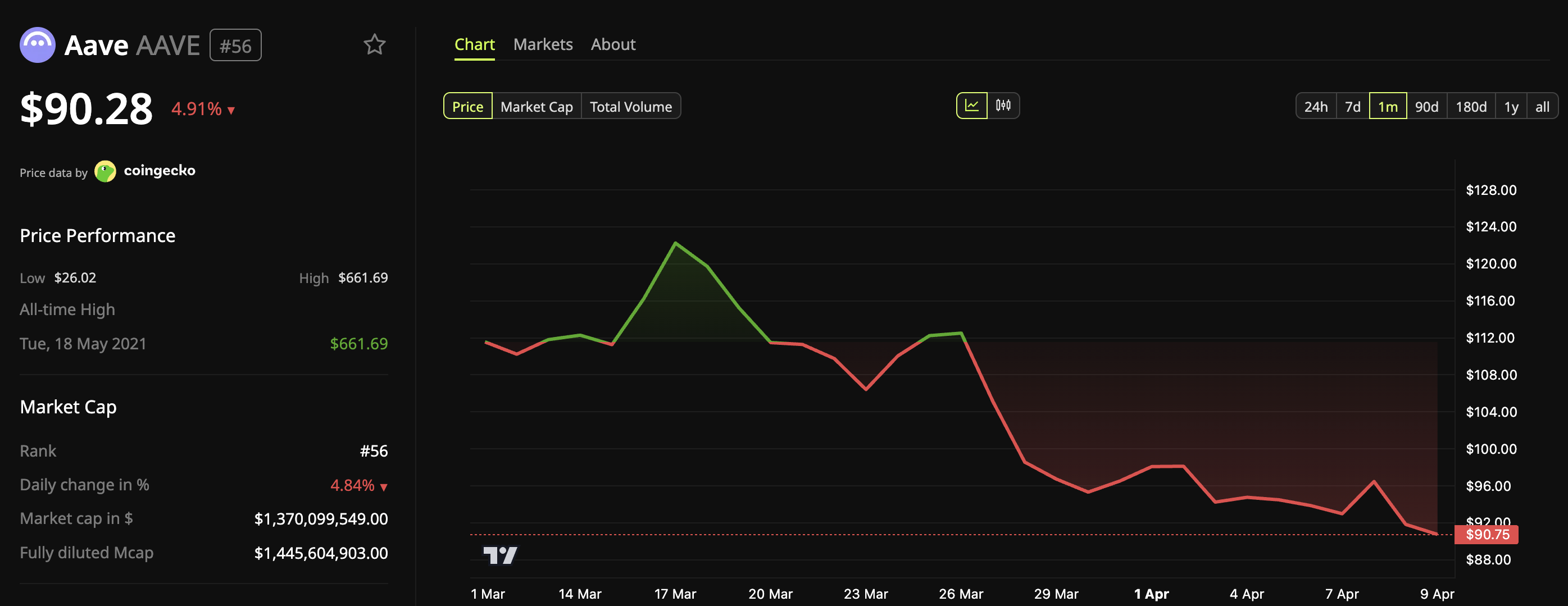
Whales have also been offloading the token this year, while recent contributor departures have impacted investor confidence. AAVE trades near $90, down roughly 5% over the past day amid a broader market downturn.
Whether Grayscale’s long-term thesis plays out may depend less on protocol metrics and more on whether market sentiment can catch up to the fundamentals.
Subscribe to our YouTube channel to watch leaders and journalists provide expert insights
The post Grayscale Predicts This DeFi Token Will Become a ‘Household Name’ in Crypto appeared first on BeInCrypto.
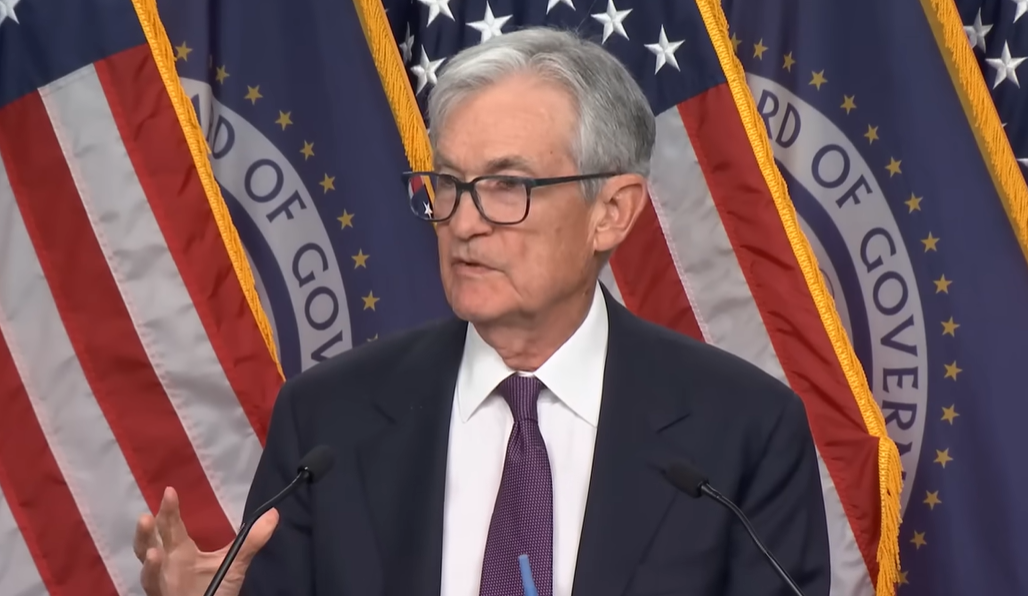
US Federal Reserve members were split on whether the war in the Middle East could spur further interest rate cuts before the end of 2026, according to minutes from the Federal Open Market Committee’s (FOMC) March meeting.
On Wednesday, the Fed released minutes from its last FOMC meeting on March 17 and 18. The meeting ended with an 11-1 vote to keep rates steady at 3.5% to 3.75%, with many officials cautious about the potential impacts of war and what it could mean for the economy.
Amid a risk of further conflicts, the official consensus pointed to a potential rate cut this year, but as Fed officials noted in the minutes, only if inflation does not get out of control.
“Many participants judged that, in time, it would likely become appropriate to lower the target range for the federal funds rate if inflation were to decline in line with their expectations,” according to the Fed minutes.
Rate cuts are generally seen as a positive catalyst for crypto as they free up investment liquidity and can spur demand for speculative investments. The last interest rate cut was Dec. 10, 2025, with the Fed slashing rates by 25 basis points.

While a cut may still be on the table for this year, the general feeling from the FOMC meeting was that it was “too early to know how developments in the Middle East would affect the U.S. economy.”
The FOMC’s next meeting is scheduled for April 28-29.
Cuts still possible, but so are hikes
While some officials were cautiously optimistic about a rate cut, others warned that the opposite might be necessary.
“Some participants judged that there was a strong case for a two-sided description of the Committee’s future interest rate decisions … reflecting the possibility that upward adjustments to the target range for the federal funds rate could be appropriate if inflation were to remain at above-target levels.”
Related: Iran weighing crypto tolls for ships using Strait of Hormuz: Report
Inflation was not the only concern, as many officials pointed to potential downside risks in the labor market, arguing that “in the current situation of low rates of net job creation, labor market conditions appeared vulnerable to adverse shocks.”
According to the CME Group’s FedWatch tool, there is currently a 75.6% chance that the Fed will keep rates at 3.5% to 3.75% during the Fed’s Dec. 8 meeting later this year.
Meanwhile, the chance of a rate cut is 20.4%, while the chance of a rate hike is 2.4% at the time of writing.
Magazine: AI agents will kill the web as we know it: Animoca’s Yat Siu
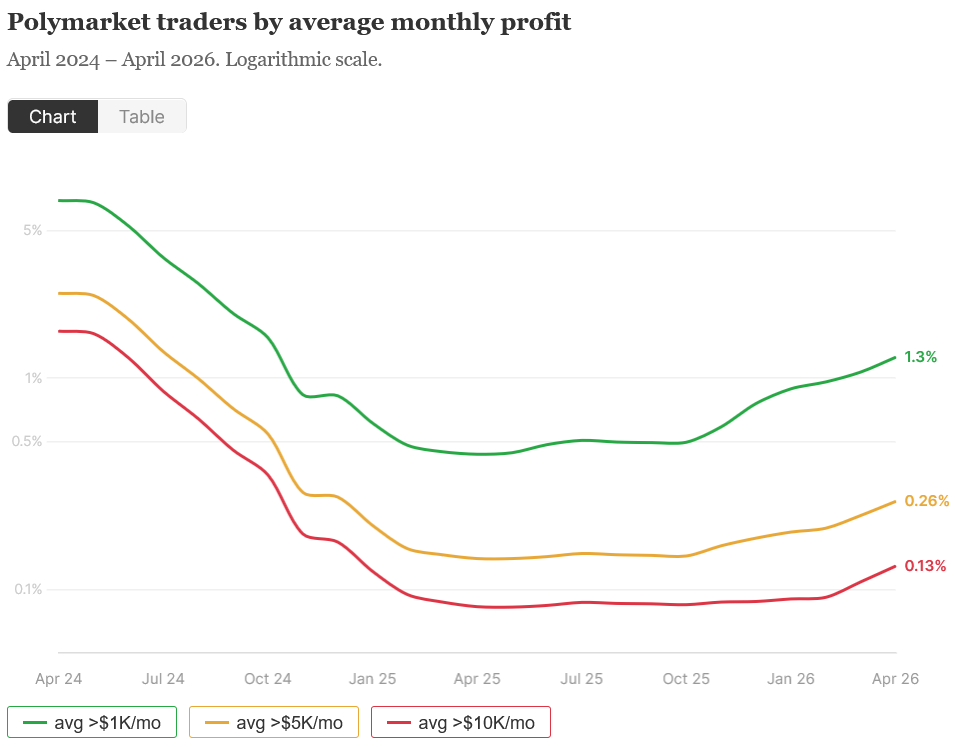
Just 0.015% of Polymarket traders can reliably make $5,000 or more a month, according to new data, meaning the idea of quitting a full-time job to trade prediction markets is unrealistic for most.
Data from crypto analyst Andrey Sergeenkov on Monday found that while nearly 1% of Polymarket traders earned more than $5,000 in a single month, only 0.1% managed to repeat that the following month and just 0.015% were able to sustain it for four consecutive months.

The average US monthly salary is around $5,220, according to Consumer Shield.

Prediction markets have become one of the fastest-growing use cases in crypto, enabling users to speculate on outcomes across politics, sports, finance and cultural events.
Most prediction markets use binary “yes” and “no” shares priced between $0 and $1 that reflect perceived probabilities. Traders can profit by buying undervalued shares and selling higher or holding winning outcomes that settle at $1 when the event has concluded.
Sergeenkov’s findings were framed alongside a report about Logan Sudeith, a former financial risk analyst who quit his job and turned to prediction markets, where he profited $100,000 in December.
Sergeenkov also highlighted an X post from former Messari analyst “Tulip King,” who claimed in November that “Polymarket is the easiest place in crypto to make six figures right now.”
Related: Three Polymarket traders made timely bets on US-Iran ceasefire
However, Sergeenkov’s data found that only 840 wallets (roughly 0.033% of Polymarket traders) have profited over $100,000.
Not all of these wallets would be retail traders, either, as professional traders working at hedge funds and other firms are also trading in prediction markets.
“Less experienced users tend to trade less successfully,” Sergeenkov noted.
Most successful traders make profits and bounce
The more successful traders don’t stick around long either, Sergeenkov said, pointing out that only 172 of 6,600 wallet addresses with average monthly profits above $5,000 remained active more than a year.
“That’s 2.6%,” Sergeenkov said. “Most traders show up, trade for a short period, and leave.”
Sergeenkov’s analysis didn’t come without limitations. The researcher noted that he only factored in realized profits and losses, though he claimed that 96% of trading volume comes from already resolved markets.
Data was taken from April 2024 through to April 1, 2026.
Magazine: Asia Express: Phantom Bitcoin checks, China tracks tax on blockchain

A single geopolitical policy announcement may have just rewritten Bitcoin price prediction. Iran is reportedly requiring ships transiting the Strait of Hormuz to pay tolls in Bitcoin, instantly transforming the world’s most critical oil chokepoint into a live crypto settlement corridor.
According to the Financial Times report confirmed by Bitcoin Magazine, Iran’s Oil, Gas and Petrochemical Products Exporters’ Union spokesperson Hamid Hosseini confirmed the toll is set at $1 per barrel, with a fully loaded supertanker could face a charge approaching $2 million per transit.
Vessels have only seconds to complete payment once approved; the compressed window is explicitly designed so transactions cannot be traced or seized under existing sanctions. The policy applies during a two-week ceasefire window, with empty tankers exempted.
JUST IN: — Watcher.Guru (@WatcherGuru) April 8, 2026
 Iran to require ships passing through the Strait of Hormuz to pay tolls in Bitcoin, FT reports. pic.twitter.com/6yoIEys139
BTC had already surged past $72,000 on ceasefire news alone, recovering sharply from the $67,000 range where it held during Trump’s April 4 ultimatum weekend. The Hormuz toll announcement adds a second, structurally different catalyst, adding Bitcoin’s role in geopolitical infrastructure.
Discover: The best pre-launch token sales
Bitcoin Price Prediction: Hormuz Toll and Geopolitical Tension
Bitcoin’s technical setup entering this week was already constructive. Price reclaimed $69,000 Monday after volatile swings between $65,000 and $74,000 tied to Operation Epic Fury strike updates and oil price moves.
Support is well-defined as institutional bids have clustered at the $65,800–$66,000 zone, which held during the worst of the escalation fear in early April. Resistance sits at $71,000–$75,000, a range BTC is currently pressing against.
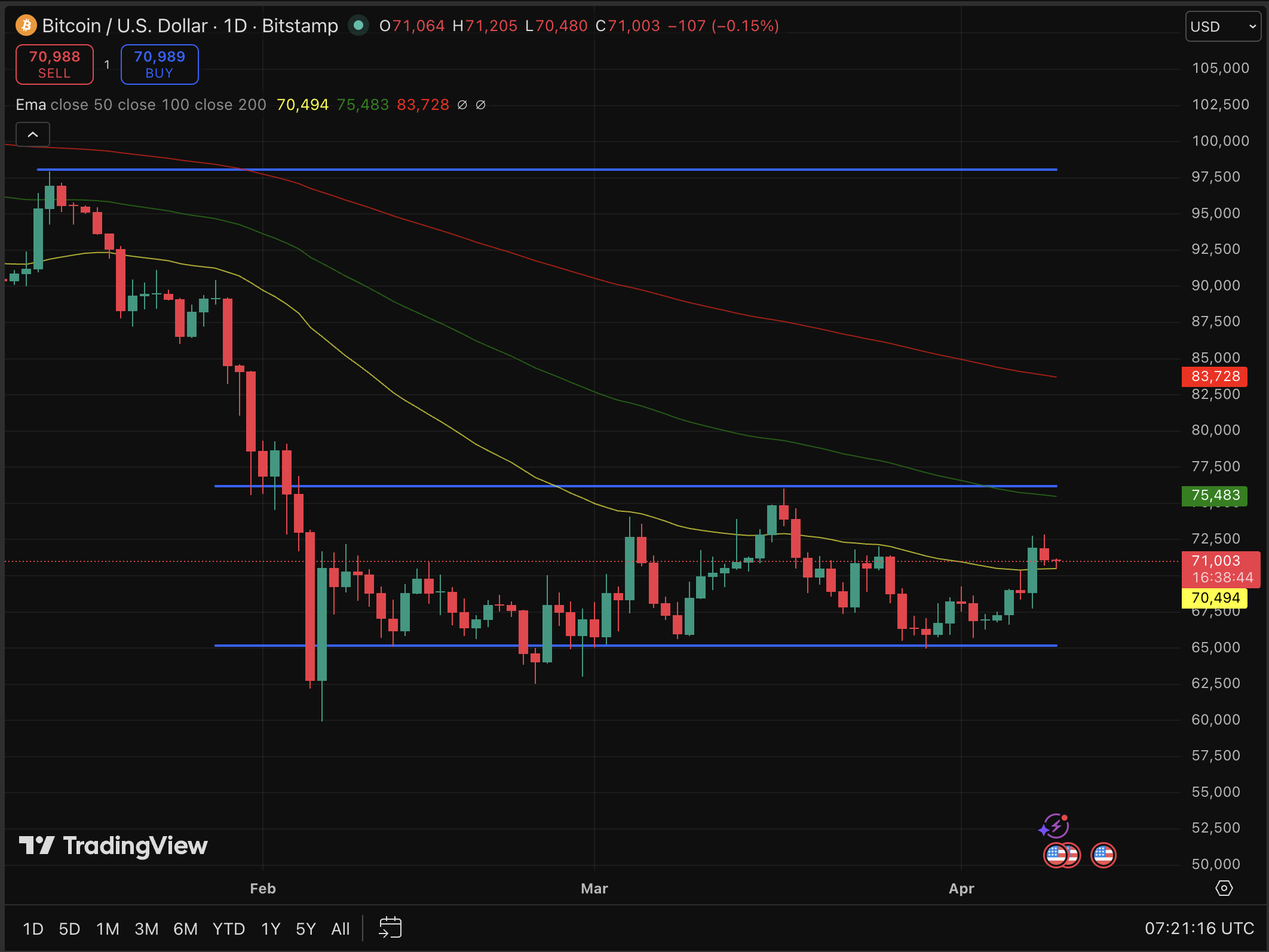
Oil crashed 16% from its $100+/barrel peak as ceasefire signals emerged, a deflationary impulse that historically benefits risk assets. Bitcoin’s resilience relative to equities during the Hormuz escalation period signals decoupling behavior in a bullish structural read.
If the ceasefire holds through the two-week window, Hormuz BTC tolls process live transactions, adoption narrative ignites, and the price can then target $100,000 after, with analysts flagging exactly this level on sustained risk-on sentiment.
The ceasefire expires in approximately 12 days. Every day it holds is a day BTC tolls process, and a day the “Bitcoin as sovereign payment rail” narrative compounds. Tick, tock.
Discover: The best crypto to diversify your portfolio with
Hyper Targets Bitcoin’s Bullish Outlook
Bitcoin at $71,000 is a strong position, but the math of a move to $100K from here represents roughly 40% upside for spot holders. For traders who missed the run from $65K, that asymmetry feels thinner than it looks. The rotation question becomes: where does the upside of early-stage Bitcoin infrastructure lie?
Bitcoin Hyper ($HYPER) is making a case for exactly that allocation. Positioned as the first-ever Bitcoin Layer 2 with Solana Virtual Machine (SVM) integration, the project targets Bitcoin’s core structural weaknesses. Bitcoin is known for slow finality, high fees, and the absence of programmable smart contracts.
The SVM integration is the technical differentiator: it delivers sub-second transaction processing, faster than Solana’s base chain itself, with low-cost execution and a Decentralized Canonical Bridge for native BTC transfers.
The presale has raised $32 million at a current price of $0.0136 per $HYPER, with staking available at a high APY during the presale window. If the Hormuz toll story accelerates institutional and retail focus on Bitcoin’s infrastructure layer, early-stage Layer 2 projects absorb that attention before spot BTC does.
Research Bitcoin Hyper here before the presale window closes.
The post Bitcoin Price Prediction: Iran Hormuz Toll Might Spark BTC USD Rally to $100K appeared first on Cryptonews.
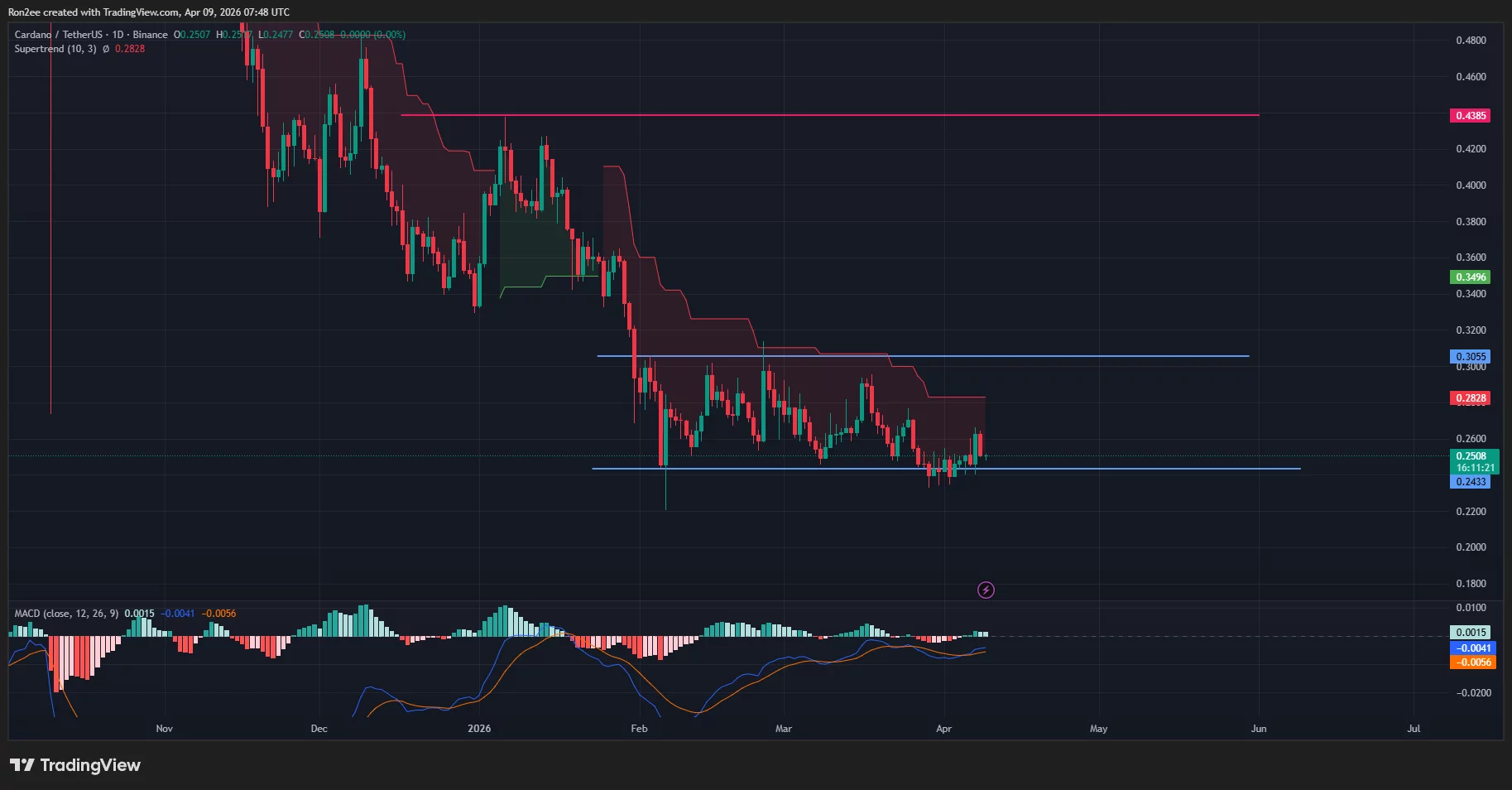
Cardano price fell over 5% towards $0.25 on Thursday, paring off a part of its gains seen on the previous day.
Summary
- Cardano price fell 5.7% to around $0.25 as a broader crypto market sell-off triggered profit-taking after the U.S. Iran ceasefire news.
- Nearly $545K in long positions were liquidated over 24 hours, significantly outweighing short liquidations and adding downward pressure.
- Whale wallets holding over 10M ADA rose to a four-month high, signalling continued accumulation despite recent price weakness.
According to data from crypto.news, Cardano (ADA) price fell 5.7% from $0.263 on Wednesday to $0.248 on Thursday morning before settling at the $0.25 mark.
This decline occurred amid a broader sell-off across the cryptocurrency market as investors booked profits after they sold the U.S.-Iran ceasefire news. Bitcoin (BTC), the bellwether asset, was down 1.2% below the $71,000 figure. Ethereum (ETH) fell by 3.4% while other major crypto assets, such as BNB (BNB), XRP (XRP), and Solana (SOL), were all in the red with even more significant losses.
As Cardano price fell, it caught highly leveraged long traders off guard across the derivatives market. Data from CoinGlass show that nearly $545K worth of long positions were liquidated in the past 24 hours, which is nearly nine times the amount of short positions liquidated in the same timeframe.
Long liquidations occur when traders who bet bullish are caught by falling prices and are forced to sell their positions to cover their margins. When long liquidations significantly outweigh short liquidations, the asset’s price often faces intense downward pressure as the forced selling creates a cascading effect.
Despite this volatility, reports indicate that whales are still betting on the token to go up. Notably, data from Santiment shows that the number of whales holding over 10 million ADA tokens has hit a four-month high of 424 at press time. That represents a 5.2% jump over the past nine weeks, a clear sign that whales have been accumulating the token during these dips.
As such, if the whale accumulation trend continues to gain strength, they could attract the attention of retail investors. This, in turn, could potentially change the course of ADA’s current price trajectory.
On the daily chart, Cardano price has entered a horizontal channel pattern where the price was previously trading since early February.
The altcoin broke below the pattern earlier on March 29 as risk-on sentiment withered from the crypto market amidst geopolitical concerns at that time. However, the recent Cardano rebound back into the channel suggests that bulls are attempting to reclaim control.
While the Supertrend indicator still points to some lingering bearishness as it remains red, the MACD line points to a slightly bullish momentum with a bullish crossover while still remaining under the zero line.
For now, the two trendlines of the channel mark the key resistance and support areas for the token. As such, a break below the lower trendline at $0.24 could signal a deeper correction, while if bulls manage to push the price above $0.30, it could spark a fresh rally toward previous highs.
Disclosure: This article does not represent investment advice. The content and materials featured on this page are for educational purposes only.
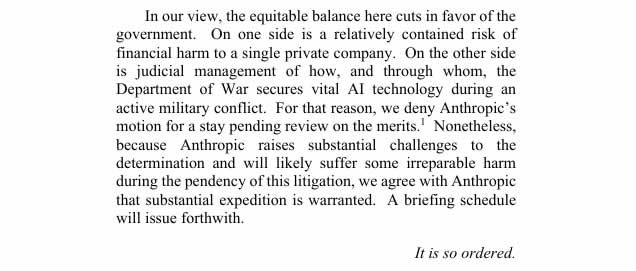
The US Court of Appeals for the DC Circuit rejected Anthropic’s request to pause a Pentagon designation labeling the firm a national security supply chain risk.
The three-judge panel denied the emergency motion for a stay on Wednesday, ruling that the government’s interest in controlling how it secures AI technology during active military conflict outweighed any financial or reputational harm Anthropic may suffer from the label.
The decision means that part of the US Department of Defense’s official designation of Anthropic’s products as a “supply-chain risk to national security” remains in place.
This designation has never been applied to an American company before and also restricts contractors who work with the Pentagon from using Anthropic’s AI models. It could set a chilling precedent for other tech companies that do not comply with government demands.
“In our view, the equitable balance here cuts in favor of the government,” wrote the three-judge panel.
“On one side is a relatively contained risk of financial harm to a single private company. On the other side is judicial management of how, and through whom, the Department of War secures vital AI technology during an active military conflict.”

Challenging the label in two courts
The dispute stems from a deal between the AI firm and the Pentagon in July 2025 on a contract to make Anthropic’s AI model Claude the first large language model approved for use on classified networks.
However, negotiations collapsed in February, with the government seeking to renegotiate and insisting that Anthropic allow military use of Claude without restrictions. Anthropic maintained that its technology should not be used for lethal autonomous weapons and mass domestic surveillance of Americans.
US President Donald Trump ordered all federal agencies to stop using Anthropic products in late February, stating that the company had made a “disastrous mistake trying to strong-arm the Department of War.”
Anthropic sued the Trump administration in March in what it termed an “unlawful campaign of retaliation.”
In late March, the District Court for the Northern District of California ordered a preliminary injunction against the Pentagon over the designation and temporarily halted Trump’s directive, branding it “Orwellian.”
Related: Anthropic limits access to AI model over cyberattack concerns
However, because of the way federal procurement law is written, Anthropic had to challenge the designation on two separate legal tracks — in a California district court on constitutional grounds and directly at the D.C. Circuit under the specific statute that authorized the designation.
The ruling acknowledged that Anthropic will “likely suffer some degree of irreparable harm absent a stay,” and stated that “substantial expedition is warranted.”
Acting US Attorney General Todd Blanche said on X that it was a “resounding victory for military readiness.”
“Military authority and operational control belong to the Commander-in-Chief and Department of War, not a tech company.”
Asia Express: Phantom Bitcoin checks, China tracks tax on blockchain
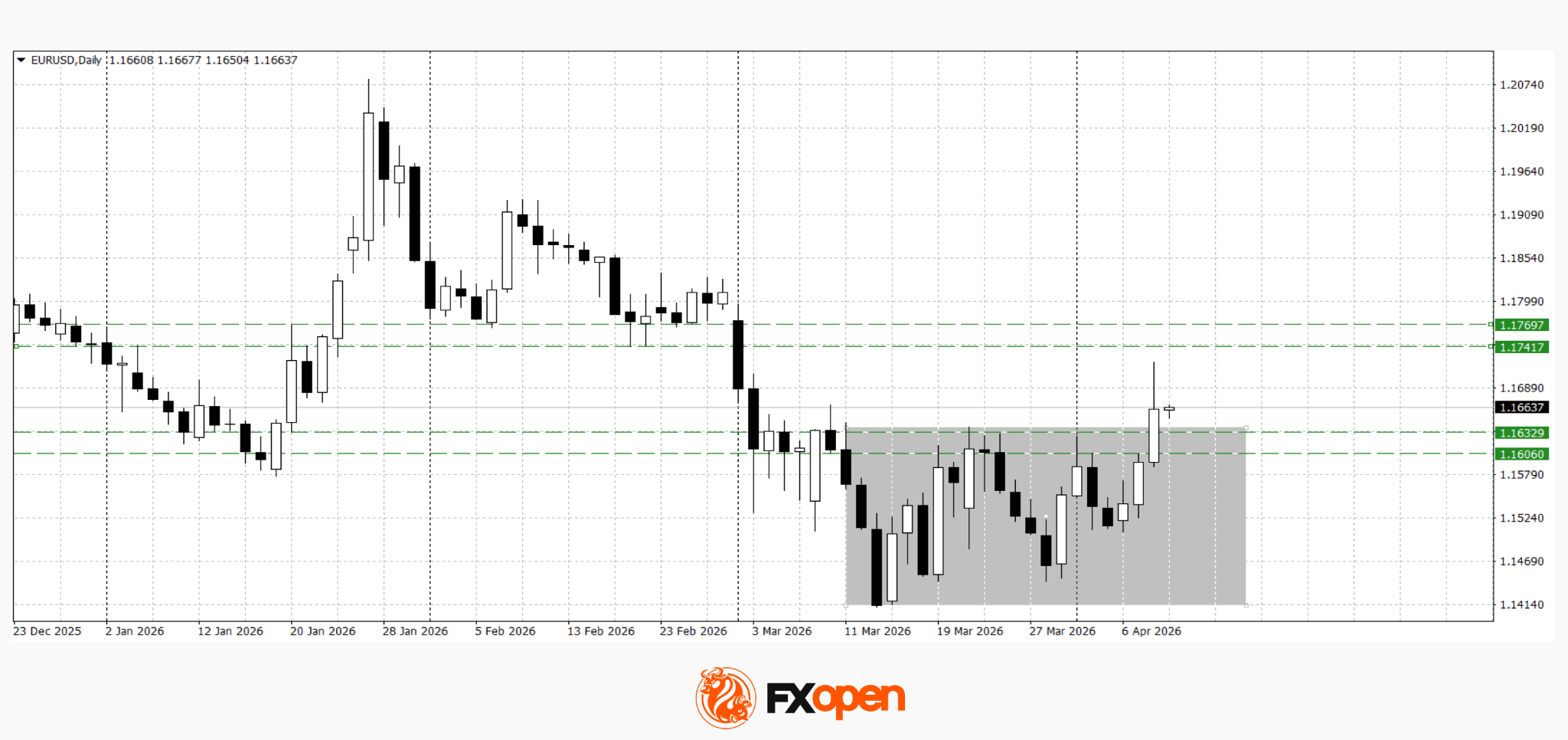
European currencies posted solid gains, while the US dollar came under pressure amid easing geopolitical tensions following reports of a two-week ceasefire agreement between the United States and Iran. Reduced demand for so-called safe-haven assets acted as the primary driver, prompting a reallocation of capital flows towards risk-sensitive instruments and developed market currencies.
Additional pressure on the dollar came from a sharp decline in oil prices, driven by expectations of stabilised supply through the Strait of Hormuz. This has lowered inflation risks and reinforced expectations of a more accommodative stance from the Federal Reserve. At the same time, US Treasury yields declined, further supporting a reassessment of the Fed’s policy outlook. Against this backdrop, money markets are once again pricing in the probability of rate cuts before year-end, limiting the dollar’s recovery potential and reinforcing the current downward momentum.
EUR/USD
The EUR/USD pair broke out of its recent range, moving higher in line with broad-based dollar weakness. The price could continue rising towards 1.1740–1.1770. However, a short-term corrective pullback towards former resistance at 1.1610–1.1630 could happen. A daily close below 1.1600 may signal a return to the previous consolidation range.
Key events for EUR/USD:
- Today at 09:00 (GMT+3): German industrial production
- Today at 15:30 (GMT+3): US Core PCE Price Index
- Today at 15:30 (GMT+3): US GDP
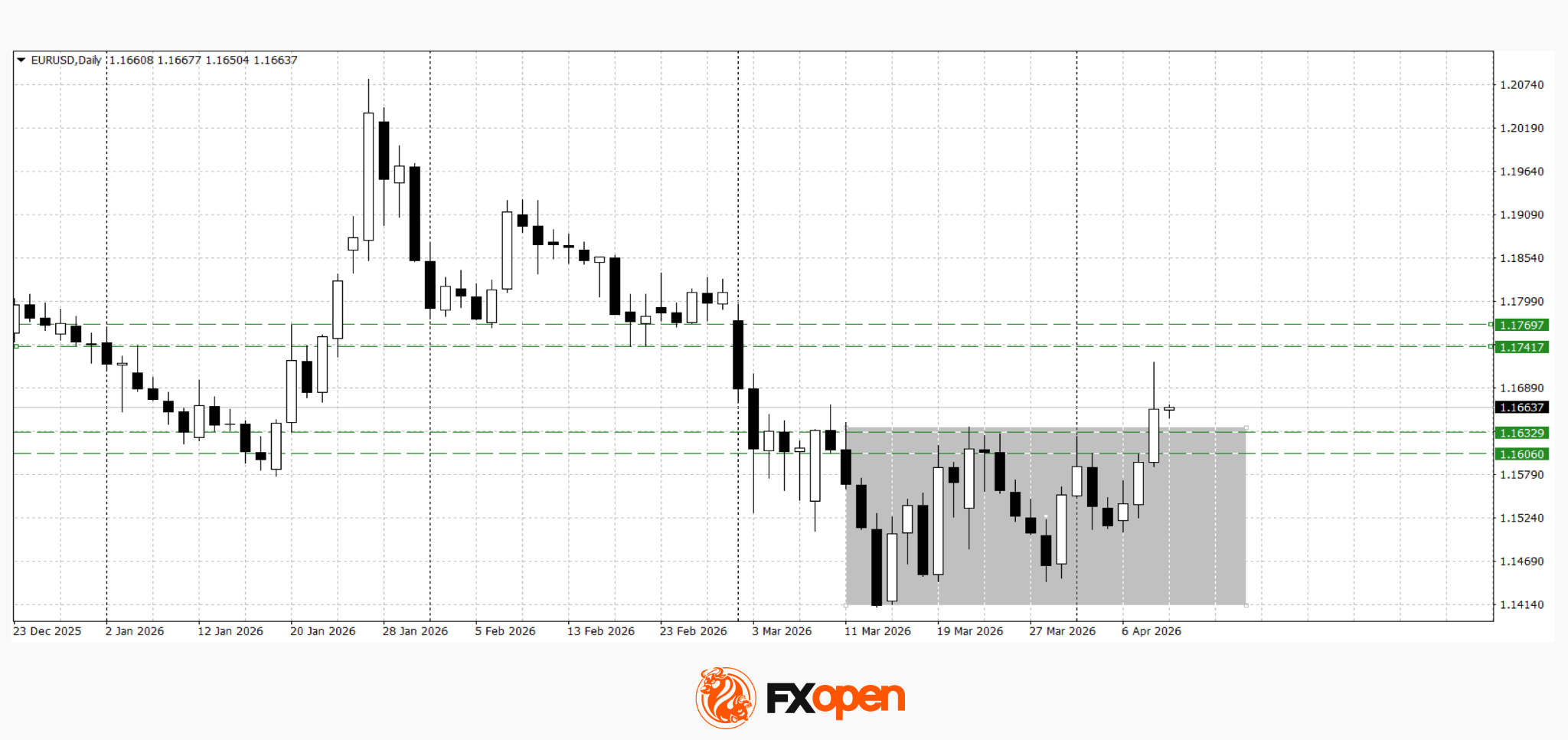
GBP/USD
The GBP/USD pair also broke out to the upside, following the broader trend of dollar weakness. After such a sharp move, a corrective pullback towards the recent highs at 1.3320–1.3350 might be possible. A sustained move above yesterday’s high could open the way for further gains towards 1.3510–1.3560.
Key events for GBP/USD:
- Today at 11:30 (GMT+3): Bank of England Credit Conditions Survey
- Today at 12:00 (GMT+3): UK mortgage rate data
- Today at 15:30 (GMT+3): US initial jobless claims
Summary
The appreciation of European currencies is being driven by a combination of easing geopolitical tensions, declining oil prices, and a reassessment of the Federal Reserve’s policy outlook. The upside breakouts in EUR/USD and GBP/USD reflect a shift in market balance towards risk assets. However, further direction will depend on confirmation from incoming US macroeconomic data. Should downward pressure on yields persist and rate cut expectations strengthen, the dollar may continue to weaken. Conversely, stronger-than-expected data could trigger short-term stabilisation and a return to consolidation.
Trade over 50 forex markets 24 hours a day with FXOpen. Take advantage of low commissions, deep liquidity, and spreads from 0.0 pips (additional fees may apply). Open your FXOpen account now or learn more about trading forex with FXOpen.
This article represents the opinion of the Companies operating under the FXOpen brand only. It is not to be construed as an offer, solicitation, or recommendation with respect to products and services provided by the Companies operating under the FXOpen brand, nor is it to be considered financial advice.
Asset management firm Canary Capital is looking to launch a spot exchange-traded fund (ETF) tied to the PEPE memecoin.
On Wednesday, Canary filed a Form S-1 for the CANARY PEPE ETF with the US Securities and Exchange Commission. The ETF would track the performance of Pepe (PEPE), with all of the trust’s PEPE held by a custodian.
It noted that the ETF trust may hold up to 5% of the trust’s assets in Ether (ETH) to pay the transaction fees on the Ethereum network.

Canary Capital, which also offers several other crypto ETFs tracking XRP (XRP), Solana (SOL), Hedera (HBAR) and Sei (SEI), has filed for several other niche crypto ETF products in recent months.
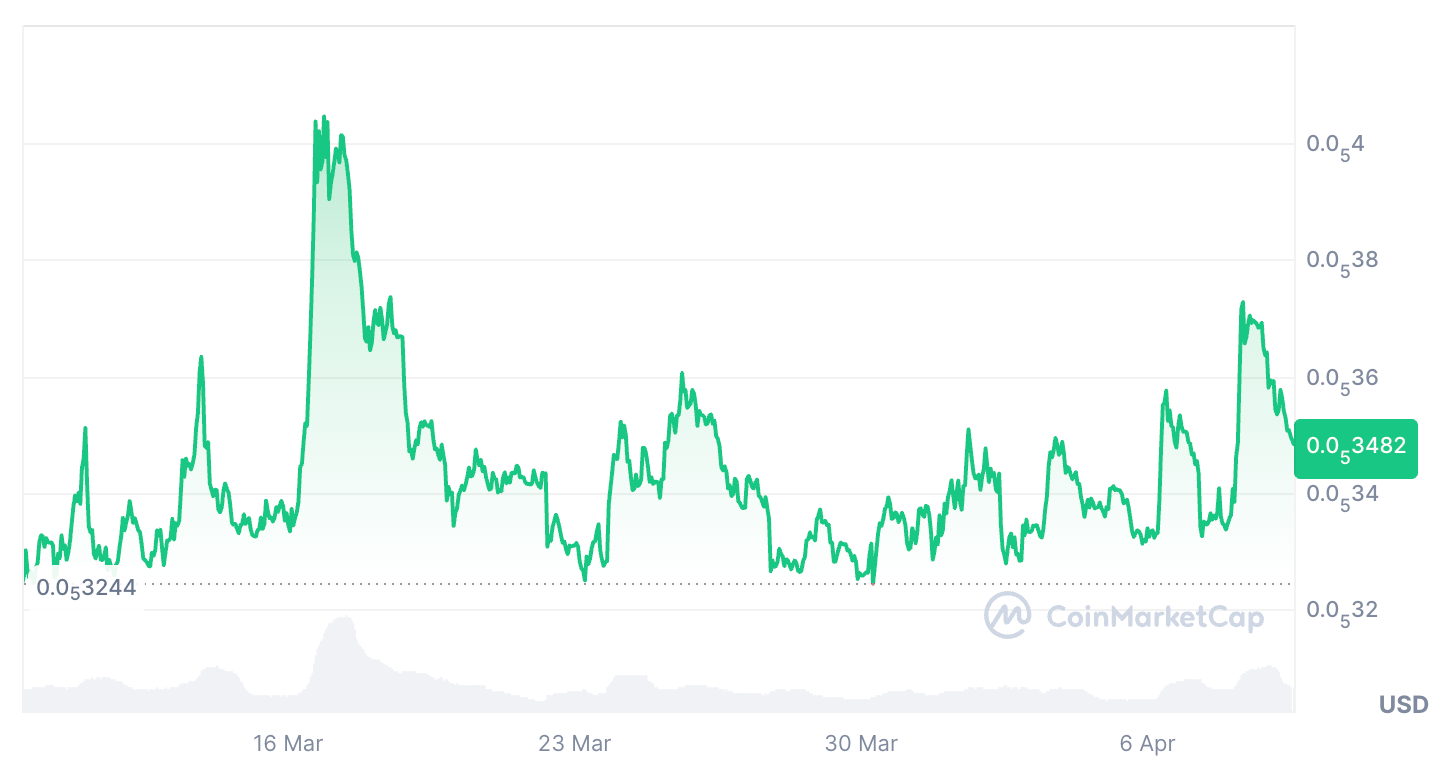
In November 2025, Canary Capital filed to launch an ETF tracking the price of a memecoin called Mog Coin, the 353rd-largest crypto token by market cap, far behind PEPE, which is ranked 45th.
PEPE, a memecoin based on Pepe the Frog, gained traction on social media in 2024. The token is roughly 9% the size of the largest memecoin by market cap, Dogecoin (DOGE).
Grayscale’s Dogecoin ETF made its debut in November but fell well short of initial volume expectations. ETF analyst Eric Balchunas predicted at the time that the ETFs would get at least $12 million in volume. However, the ETF only saw $1.4 million on its first day.
The proposed ETF also comes despite the Pepe token, which is down almost 85% from its December 2024 all-time high of $0.00002368, according to CoinMarketCap.
There are currently 513,392 holders of the PEPE, according to Etherscan data. Canary Capital warned investors that ownership of the token is “highly concentrated.” “As of January 2026, the ten largest PEPE wallet addresses collectively held approximately 41% of the total circulating supply,” the filing said.
Altcoin season may hinge on more ETFs launching
Analysts have previously said that the next altcoin cycle may hinge on more crypto ETFs launching further down the risk curve.
However, Matt Hougan, chief investment officer at investment firm Bitwise, said in March that traditional altcoin cycles are over, and that institutional investors are focused on yield-bearing digital instruments or crypto assets that capture revenue.
Fabian Dori, chief investment officer at Sygnum Bank, told Cointelegraph in December that the number of new ETF filings is expected to surge in 2026, driven by US crypto regulations.
Related: Spot Bitcoin ETF inflows top $471M but BTC is pinned under $70K: Here’s why
“On the basis of the potential passing of the Clarity Act, we would expect that new filings continue to go beyond BTC and ETH,” Dori said.
However, the US CLARITY Act has not passed as quickly as industry participants had hoped, largely due to an ongoing disagreement over stablecoin yields.
Canary’s filing warned that regulations in the US for the use of Pepe and the Ethereum network “continues to evolve,” which may impact the use of Pepe and its demand.
Magazine: Asia Express: Phantom Bitcoin checks, China tracks tax on blockchain
Bored Ape Yacht Club creator Yuga Labs has settled its long-running lawsuit with a pair of artists accused of profiting off lookalike NFTs.
According to documents filed in the District Court for the Central District of California on Tuesday, Yuga Labs and artists Ryder Ripps and Jeremy Cahen told the court they had reached a settlement agreement.
As part of the settlement, Ripps and Cahen are permanently banned from using Yuga Lab’s imagery and trademarks and will transfer control of the smart contracts, domains and any remaining NFTs associated with their RR/BAYC project to Yuga Labs within the next 10 days.
The court has also ordered the pair not to “transfer, assign, conceal, or otherwise dispose of any NFTs, domains, accounts, or other assets referenced in this Injunction, or cause any of the foregoing, for the purpose of avoiding or frustrating compliance.”

Legal saga ends after nearly four years
The matter was initially scheduled for a jury trial after a court ruled in favor of Yuga Labs, and Ripps and Cahen appealed the judgments.
Yuga Labs first filed a lawsuit in June 2022, accusing Ripps and Cahen of copying its Bored Ape Yacht Club cartoon ape images, selling lookalike NFTs, and profiting millions as users confused the two projects.
Lawyers acting for Ripps and Cahen argued the RR/BAYC NFTs, first minted in May 2022, were satire and a parody of the real Bored Ape Yacht Club collection and were protected under free speech laws.
Related: Judge tosses lawsuit against Yuga Labs over failure to satisfy Howey test
In April 2023, the court ruled in favor of Yuga Labs and found that Ripps and Cahen had violated copyright laws by creating unauthorized versions of Bored Ape Yacht Club NFTs and ordered them to pay $1.37 million out of their profits, plus an additional $200,000.
The penalty later grew to $9 million after Ripps and Cahen lost a counterclaim in 2024. An appeals court later tossed the judgment in 2025 and ruled that a jury trial was required to resolve the matter and decide whether Yuga’s trademarks were infringed.
Magazine: Asia Express: Phantom Bitcoin checks, China tracks tax on blockchain

Yuga Labs has brought a nearly four-year legal dispute to a close with a settlement that bars its rivals from using its imagery and trademarks and pivots control of the related assets back to the crypto creator. Court filings this week show that Yuga Labs and artists Ryder Ripps and Jeremy Cahen have reached an agreement, ending the long-running case over lookalike NFTs tied to the Bored Ape Yacht Club (BAYC) brand.
Under the settlement, Ripps and Cahen are permanently prohibited from using Yuga Labs’ imagery and trademarks. In addition, they will transfer control of the RR/BAYC smart contracts, domain names, and any remaining NFTs associated with the RR/BAYC project to Yuga Labs within the next 10 days. An injunction from the court also restricts the pair from transferring, concealing, or disposing of any linked assets to evade compliance.
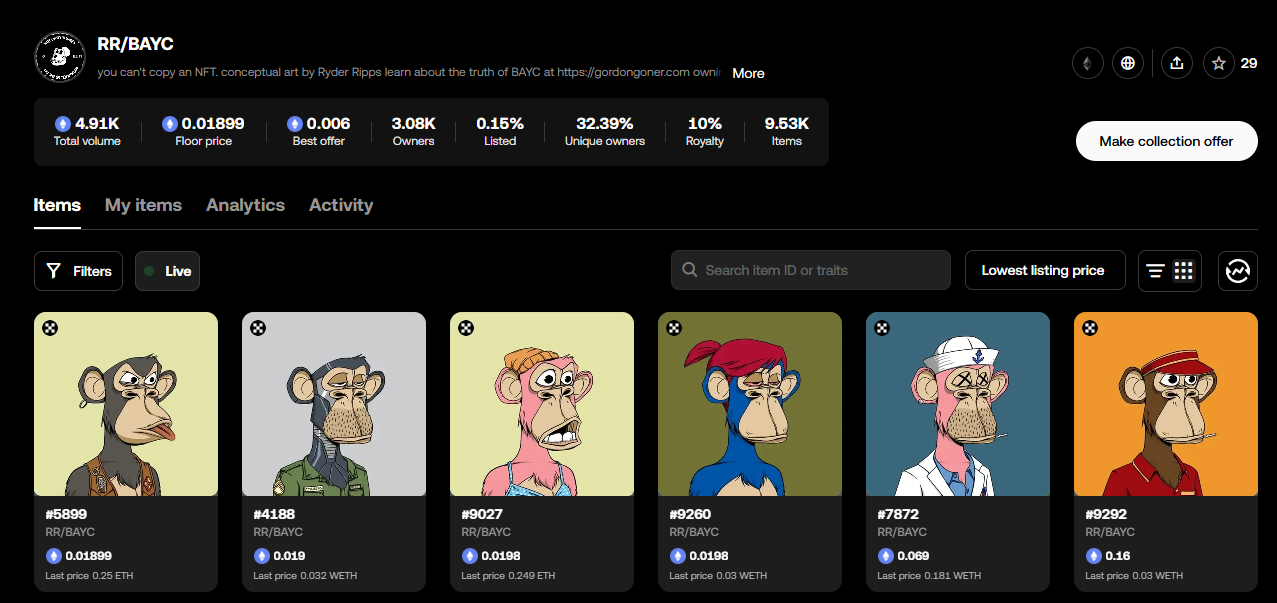
The RR/BAYC NFTs themselves remain accessible for holders and curious onlookers; as of this writing, they are still live on OKX Wallet, underscoring how the asset layer sits at the intersection of branding protection and active markets. OKX Wallet’s NFT collection page for RR/BAYC provides a live snapshot of those tokens still circulating in wallets.
Key takeaways
- The dispute over lookalike BAYC imagery ends with a settlement that imposes a permanent ban on using Yuga Labs’ branding and requires asset transfers to Yuga Labs within 10 days.
- The settlement closes a saga that stretched from a June 2022 filing through multiple court rulings, reversals, and appeals, including a 2023 ruling favoring Yuga and a subsequent shift in judgments on damages and trademark questions.
- Despite the injunction and transfers, RR/BAYC NFTs continue to function on live marketplaces, illustrating the persistence of lookalike projects in secondary markets even after legal action.
- The case highlights how IP enforcement plays out in NFT ecosystems, where branding and originality are central to project value and user trust.
Settlement marks a culmination of a high-stakes IP fight
The legal entanglement began when Yuga Labs filed suit in mid-2022, alleging that Ripps and Cahen copied BAYC’s distinctive ape artwork and sold lookalike NFTs to profit from brand confusion. The plaintiffs argued that the mimicry undermined Yuga Labs’ IP rights and damaged the value of the original BAYC ecosystem.
Earlier in the litigation, a court sided with Yuga Labs, finding that Ripps and Cahen had created unauthorized versions of BAYC NFTs and ordered the pair to pay damages. The initial judgment set damages at $1.37 million plus $200,000, tied to profits from the infringing NFTs. The post-judgment landscape grew more complex as outcomes from subsequent proceedings added layers of appeal and retrial expectations.
In 2024, the court’s order expanded the penalties, and the total rose to about $9 million after Ripps and Cahen lost a counterclaim related to the matter. An appeals court later tossed that judgment in 2025, ruling that a jury trial would be necessary to determine whether Yuga Labs’ trademarks had been infringed and to resolve related issues. The latest settlement then brings the case to a close, avoiding a further retrial while preserving the injunctions against the defendants.
What this means for IP in NFT ecosystems
The resolution underscores an important precedent for how branding and copyright claims are treated in the NFT space. Yuga Labs has repeatedly asserted that protecting its avatar-based IP is essential to maintain product integrity and user trust across a fast-evolving market. The settlement affirms that such protections can be backed by enforceable injunctions and asset transfers, even as markets continue to trade lookalike or derivative tokens in parallel to legitimate projects.
From an investor and builder perspective, the outcome reinforces a critical point: brand equity in digital collectibles matters as much as the underlying code and artwork. Projects seeking to capitalize on a well-known IP must navigate not only smart-contract functionality but also the legal boundaries of trademark and copyright. The case also demonstrates that even when a lookalike project garners attention and liquidity, the original IP owner may pursue a legal remedy that includes branding restrictions and asset handovers.
Transient markets meet durable rights
The fact that RR/BAYC NFTs remain visible on major wallets and marketplaces despite the injunction speaks to a nuanced dynamic in crypto markets. While the court order restricts the use of Yuga Labs’ branding and directs the transfer of domain and contract control, the assets already minted and circulating in wallets can continue to trade unless further restrictions are imposed by platform policies or additional court actions. This tension—between legal rights and ongoing market activity—illustrates how IP enforcement interacts with decentralized liquidity and public recordkeeping in real time.
For traders, holders, and creators, the settlement signals a potential re-emphasis on authenticating provenance and respecting IP boundaries before minting or marketing derivative projects. It also raises questions about how future settlements might structure ongoing obligations, such as royalties, licensing, or clear demarcations between parody, satire, and infringement in the NFT landscape.
What to watch next
With control of the RR/BAYC assets transferring to Yuga Labs within about a week, observers will want to track how the company integrates these elements back into its ecosystem. Will there be additional revivals or revocations tied to RR/BAYC tokens, and how will platforms handle branding-sensitive content tied to a well-known IP? The ongoing governance and ecosystem implications for BAYC’s broader community, as well as for other IP-heavy NFT projects, will be worth monitoring as more settlements of this type appear in the crypto legal arena.
Additionally, the market for lookalike NFTs in the wake of this case may reflect evolving risk assessments among buyers and traders. Even with a favorable outcome for IP owners, the persistence of lookalikes in wallets and marketplaces suggests a continuing need for diligence on authenticity and provenance in NFT collections.
As this saga concludes, investors can expect closer scrutiny of branding and copyright claims in NFT launches and a clearer path for IP holders to pursue enforcement when necessary. The case serves as a reminder that in the rapidly expanding NFT space, the boundaries of legal rights and market activity are increasingly intertwined, and that regulatory and judicial clarity will continue to shape how projects operate and compete.
Source data and developments referenced here draw on filings and reporting surrounding the settlement announced this week, including the permanent injunction barring use of Yuga Labs’ imagery and trademarks and the transfer timeline for RR/BAYC assets. The live RR/BAYC NFT collection, as noted, remains accessible on OKX Wallet during this transition.
18 most shocking moments from “Trust Me: The False Prophet”, Netflix's follow-up to groundbreaking “Keep Sweet ”docuseries

British boy, 9, stuck abroad after distraught family told he can’t return home with them

Rupee at risk? BOP pressure, oil shock and capital flows hold the key, says Rahul Bajoria


-

 NewsBeat7 days ago
Steven Gerrard disagrees with Gary Neville over ‘shock’ Chelsea and Arsenal claim | Football
-

 Business6 days ago
No Jackpot Winner and $194 Million Prize Rolls Over
-

 Fashion6 days ago
Weekend Open Thread: Spanx – Corporette.com
-

 Business5 days ago
Expert Picks for Every Need
-

 Business3 days ago
Three Gulf funds agree to back Paramount’s $81 billion takeover of Warner, WSJ reports
-

 Sports4 days ago
India men’s 4x400m and mixed 4x100m relay teams register big progress | Other Sports News
-

 Tech1 day ago
How Long Can You Drive With Expired Registration? What Florida Law Says
-
Business4 days ago
No Jackpot Winner, Prize to Climb to $231 Million
-

 Fashion3 days ago
Massimo Dutti Offers Inspiration for Your Summer Mood Board
-

 Tech7 days ago
Commonwealth Fusion Systems leans on magnets for near-term revenue
-

 Fashion2 days ago
Let’s Discuss: DEI in 2026
-
Politics6 days ago
Wings Over Scotland | The quality of mercy
-

 Business4 days ago
Akebia Therapeutics, Inc. (AKBA) Discusses Pipeline Progress and Strategic Focus on Kidney Disease Treatments at R&D Day – Slideshow
-

 Fashion6 days ago
Statement Sunglasses: The Accessory Shaping Modern Fashion
-
Sports7 days ago
Justin Jefferson’s Situation Remains Unchanged after JSN’s Deal
-

 Politics6 days ago
East Jerusalem Palestinian families eviction orders
-

 Crypto World18 hours ago
Bitcoin recovers as US and Iran Agree a Ceasefire Deal
-

 Fashion7 days ago
Thursday’s Workwear Report: Merino Wool Blend Short-Sleeved Sweater
-

 Fashion6 days ago
For Love & Lemons’ Spring 2026 Line is for the Romantics
-

 Fashion7 days ago
Coffee Break: Santa Croce Tote
You must be logged in to post a comment Login