
Crypto World
Chainalysis challenges ICE’s $94.7M TRM award



Chainalysis Government Solutions has expanded its legal challenge against a $94.66 million blockchain analytics contract that U.S. Immigration and Customs Enforcement awarded to TRM Labs.
Summary
- Chainalysis filed seven claims challenging ICE’s $94.66 million sole-source blockchain analytics award to TRM Labs.
- Seven claims challenge ICE’s evaluation, restrictive criteria, acquisition planning, and reliance on sole-source procurement authority.
- ICE gave interested vendors three days and one page to explain their relevant capabilities fully.
- Chainalysis alleges several requirements tracked TRM products but were omitted from the final needs statement.
- Oral argument is scheduled September 2, while the government has requested judgment by September 10.
A redacted complaint made public on Aug. 28 details seven claims against the U.S. government. Chainalysis alleges that ICE improperly avoided an open competition and evaluated potential suppliers against requirements that it did not fully disclose.
The filing represents Chainalysis’s account of the procurement. ICE and TRM Labs are contesting the case, and the U.S. Court of Federal Claims has not found that either party acted improperly.
Chainalysis says ICE changed its evaluation criteria
ICE awarded contract 70CMSD26C00000005 to TRM Labs on July 1. The one-year agreement runs through June 30, 2027 and covers forensic software and support for Homeland Security Task Force investigations.
The work includes blockchain tracing, scam disruption, cybercrime investigations and support for sextortion cases. TRM Labs later joined the lawsuit as a defendant-intervenor, allowing it to defend the award alongside the government.
Chainalysis’s first three claims focus on how ICE defined and evaluated its requirements. The company argues that its capability statement addressed every requirement in ICE’s final Statement of Need. It therefore disputes ICE’s determination that TRM was the only responsible source able to perform the work.
Chainalysis also alleges that ICE relied on an earlier Request for Information when deciding whether another supplier could qualify. The company says several requirements from that document did not appear in the final Statement of Need against which vendors were told to prepare their submissions.
Those disputed requirements included access to a proprietary scam-reporting database containing more than one million records, automated notifications to virtual asset service providers and operational partnerships with stablecoin issuers.
The seven claims target ICE’s sole-source process
The fourth claim alleges that ICE failed to give Chainalysis’s capability statement meaningful consideration. ICE published its notice of intent on June 8 and required responses by June 11.
Interested suppliers could submit only one page, although the Statement of Need itself ran for roughly one and a half pages and covered three operational areas. Chainalysis says ICE asked no follow-up questions before completing its market research report the following day.
The complaint states that ICE’s report recognized both companies as having mature investigative platforms and artificial intelligence integration. It also allegedly recognized that both could deploy cleared personnel. However, ICE concluded that Chainalysis lacked other capabilities needed for the program.
Chainalysis disputes that assessment. It argues that the short response period, one-page restriction and absence of follow-up questions turned the capability review into a “mere formality.” That wording reflects the company’s allegation, not a court finding.
The fifth claim concerns allegedly restrictive specifications. Chainalysis says questions about automated asset freezes, stablecoin partnerships and the size of a victim-reporting database closely matched TRM products or commercial arrangements.
Chainalysis claims it offered alternative methods that could achieve the same investigative goals. The complaint says ICE’s justification did not explain why those alternatives were insufficient.
Chainalysis challenges ICE’s legal authority
The sixth claim addresses ICE’s use of the federal government’s Revolutionary FAR Overhaul rules. Chainalysis argues that ICE relied on a “unique capabilities” rationale found in an older version of federal acquisition regulations but omitted from the rules governing this procurement.
Current acquisition rules allow an agency to avoid full and open competition when only one responsible source can meet its needs. They also require consideration of capability statements and prohibit agencies from using inadequate planning to justify limited competition.
Chainalysis’s seventh claim focuses on that planning requirement. The company notes that ICE issued its information request on May 28, received a 20-page response from Chainalysis on June 2 and announced its planned sole-source award six days later.
ICE then closed the capability-statement period on June 11 and completed its market research report on June 12. Chainalysis argues that this timetable left too little time to reconcile the different requirements or assess alternative suppliers.
The government may argue that ICE reasonably concluded TRM alone could meet its operational requirements. The merits of that position remain for the court to decide.
The September 2 hearing could determine the contract
Chainalysis wants the court to declare the award unlawful, permanently stop performance and direct ICE to conduct a full and open competition. It also seeks legal costs under the Equal Access to Justice Act.
A successful challenge would not automatically transfer the contract to Chainalysis. The court could instead require ICE to reconsider its analysis, reopen competition or prepare a legally sufficient sole-source justification. It could also deny the requested injunction and leave the TRM contract in place.
Judge Stephen S. Schwartz has placed the case on an expedited schedule. Oral argument is set for Sept. 2 at 10 a.m. EDT in Washington, D.C. The government has asked for a ruling by Sept. 10, although the court is not bound by that requested date.
As crypto.news previously reported, the contract supports a growing federal reliance on private blockchain-intelligence providers. Both companies have worked with law-enforcement agencies, and both contributed tracing support to a $701 million international asset-freezing operation.
In related coverage, Chainalysis recently produced 14,300 investigative leads from cryptocurrency activity connected to suspected child-abuse networks. The ICE dispute now asks the court to decide whether the government followed procurement law when choosing which provider would support another major investigative program.



Solana-based automated market maker Aquifer has lost roughly $2.5 million in an exploit involving wallets on Solana and Ethereum, with the protocol offering the attacker a 20% bounty for returning most of the funds.
Summary
- Solana based AMM Aquifer lost roughly $2.5 million in an exploit involving attacker addresses on Solana and Ethereum.
- Aquifer offered the attacker a 20% whitehat bounty if at least 80% of the assets are returned by Sept. 3.
- The exact point of compromise remains unclear, with no technical post mortem yet establishing how access to the affected wallets was obtained.
- Available information has not established that Aquifer’s smart contracts were exploited, leaving compromised wallet access as the main focus of the incident so far.
Blockchain security monitoring service Defimon reported the attack on Aug. 31, identifying separate Solana and Ethereum addresses controlled by the suspected exploiter. Aquifer later sent an on-chain whitehat offer seeking the return of at least 80% of the assets linked to the incident.
The offer gives the attacker until Sept. 3 at 14:00 UTC to transfer the assets, or their equivalent value, to recovery addresses provided by Aquifer. The person controlling the wallets may retain up to 20% of the funds as a whitehat bounty if the conditions are met.
Aquifer said it would not pursue civil claims arising from the exploit if the attacker complies with the terms, subject to applicable law. The agreement would not bind law enforcement agencies, regulators, sanctions authorities or other government bodies.
Aquifer exploit involves wallets on two chains
Aquifer operates as a proprietary automated market maker on Solana, where its liquidity is used to facilitate token swaps. DefiLlama describes the protocol as a prop AMM and currently lists its total value locked at around $2.8 million.
The addresses identified after the exploit show activity spanning Solana and Ethereum. Defimon linked the Solana address 7fTe9pvrwXJRBHq9MaSyVPR4PgEuhqLiA93Dxf4gRk7J and Ethereum address 0x2Dfe9e969796e2797278b02761dd9Ad6aE922746 to the attacker.
Aquifer’s whitehat message was authorized through the protocol’s Solana upgrade authority and published on-chain. The project supplied separate recovery addresses for Solana and Ethereum, allowing assets associated with the attack to be returned on either network.
Public information has not yet established exactly how the wallets were compromised. No technical post-mortem has been released explaining whether private keys, administrator credentials or another part of Aquifer’s operational infrastructure was exposed.
Available information similarly does not establish that Aquifer’s smart contract code was exploited. The use of addresses across Ethereum and Solana provides a trail for investigators tracking the assets, but does not by itself identify how access to the affected funds was obtained.
The incident follows several Solana-related attacks this year where the point of compromise was outside the underlying blockchain.
Solana protocols have faced different attack methods
In June, crypto.news previously reported that five legacy liquidity pools belonging to Raydium lost roughly $1.3 million after an attacker targeted retired AMM infrastructure.
On-chain investigator Specter said the Raydium attacker used a fake mint address to bypass validation checks in an older AMM program. The stolen assets included roughly 150,177 RAY, 5,603 SOL and 893,700 USDC.
Raydium said its active pools and current users were unaffected because the vulnerable infrastructure had already been phased out. The protocol committed to reimbursing the affected assets from its treasury.
A separate July incident involving Across Protocol produced losses of less than $4 million after an attacker fabricated Solana deposit events. The attacker created 1,627 fake deposits with a combined stated value of $41.7 million and requested payouts across 18 destination chains.
Risk Labs’ relayer processed 581 of the fraudulent requests before Solana operations were suspended, advancing approximately $4.5 million of its own capital. Around $500,000 belonging to the attacker remained trapped, bringing the net loss below $4 million.
Across later said the Solana attack stemmed from a flaw in Risk Labs’ off-chain event-reading software and not a vulnerability in its smart contracts or the Solana network. Legitimate user transfers were completed or refunded.
Operational security failures have produced losses elsewhere without attackers needing to exploit smart contract logic.
Wallet access has become a major attack route
Stablecoin payments company Triple-A confirmed in July that unauthorized access to its treasury wallets resulted in the theft of company-owned digital assets. On-chain researchers initially tracked suspicious withdrawals across Ethereum, Solana, TRON and TON, with some reports identifying activity on Polygon and Arbitrum.
Triple-A later said client funds remained unaffected because customer assets were segregated from the compromised treasury infrastructure. Researchers had estimated the loss at roughly $11.8 million before the company confirmed the breach.
The company did not disclose whether the attacker obtained private keys, credentials or another form of access. Triple-A said cybersecurity specialists and Singapore police were working on the investigation and asset tracing.
Private key and wallet compromises have accounted for a substantial portion of crypto thefts in 2026. CertiK reported in July that digital asset losses reached $1.32 billion during the first half of the year, down 46.8% from the same period in 2025.
Despite the lower total, the security firm said wallet compromises became the largest attack method during the second quarter, replacing phishing as the main source of losses.
Another Solana project, Step Finance, ultimately shut down its operations after an attack earlier this year targeted devices used by members of its executive team. Attackers gained access to treasury and fee wallets and moved approximately 261,854 SOL, while later estimates placed total losses across affected assets near $40 million.
Investigators determined that Step Finance’s smart contracts were not the point of entry. Compromised endpoints allowed the attackers to access wallets used by the project, and the financial damage later contributed to the decision to wind down the platform.
A similar distinction will depend on Aquifer publishing more details about its own breach. The protocol has not released a post-mortem identifying the initial point of access, the specific credentials involved or whether one compromised account provided control over multiple wallets.
For now, Aquifer’s recovery process centers on its whitehat proposal. The attacker has been offered the right to retain up to 20% of the assets associated with the exploit if at least 80% is returned to the designated recovery addresses by Sept. 3 at 14:00 UTC.


The magazine-cover indicator has a messy record, but TIME’s OpenAI cover checks the classic boxes: a mainstream publication, a widely understood theme and a multiyear run-up in investor enthusiasm.


CME Group has launched two multi-asset cryptocurrency benchmarks, including a 10-token index that leaves out Bitcoin and Ether and tracks assets such as BNB, XRP, Solana and Hyperliquid.
Summary
- CME launched two crypto benchmarks, including a 10 token index that excludes Bitcoin and Ethereum.
- The Emerging Crypto Index tracks BNB, XRP, SOL, HYPE, LINK, XLM, SUI, UNI, AVAX and AAVE.
- Both indexes use free float market cap weighting and are reviewed twice a year in June and December.
- Real time index values are calculated every second, while daily settlement versions are published across three regions.
- The benchmarks can be licensed for investment funds and derivatives, extending CME’s push into multi asset crypto products.
According to CME Group’s index documentation, the CME CF Emerging Crypto Index and CME CF Crypto Market Index went live Monday, giving market participants separate measures for large crypto assets outside Bitcoin and Ether and for the crypto market including the two largest cryptocurrencies.
The Emerging Crypto Index contains BNB, XRP, Solana, Hyperliquid, Chainlink, Stellar Lumens, Sui, Uniswap, Avalanche and Aave. Bitcoin and Ether are excluded by design, leaving the index focused on 10 of the largest qualifying crypto assets outside the two market leaders.
Its companion Crypto Market Index tracks 12 assets. It uses the same 10 tokens but includes Bitcoin and Ether, creating a separate benchmark for measuring the large-cap crypto market with BTC and ETH included.
CME crypto indexes provide real-time and daily benchmarks
CME calculates real-time versions of both indexes every second and operates them 24 hours a day, according to the exchange’s FAQ. Separate settlement versions are calculated once each day and published at 4 p.m. in London, New York and Singapore/Hong Kong.
Both benchmarks use free-float market capitalization to determine constituent weights. Under the system, cryptocurrencies with a higher market value of tokens considered available for trading receive a larger share of the index.
CME plans to review the baskets twice a year. Reconstitution and rebalancing take place on the first business day of June and December, allowing the constituent lists and their weights to change as qualifying assets move in market value.
The Emerging Crypto Index specifically seeks the 10 largest assets that meet its requirements after Bitcoin and Ether are removed from consideration. The Crypto Market Index targets 12 qualifying cryptocurrencies while keeping BTC and ETH eligible.
Eligibility goes further than market capitalization. Under the emerging index methodology, an asset must meet custody requirements, while meme coins are excluded. CME applies a protocol-use test based on total value locked relative to fully diluted market capitalization.
The methodology contains a separate provision for newly eligible assets when an index is first created. Cryptocurrencies that do not yet qualify under U.S. national stock exchange generic listing standards for crypto exchange-traded products can still enter if they are expected to comply within 30 days.
Such assets are limited to a combined maximum weight of 10% at inception. During later scheduled reviews, constituents are required to meet the generic listing standards in force at the time.
Emerging Crypto Index is designed for financial products
The Emerging Crypto Index was built to be investible and capable of supporting passive replication by funds, according to its methodology. It can serve as a settlement benchmark for derivatives, giving the index a potential role beyond measuring spot crypto prices.
CF Benchmarks lists the emerging index as available for licensing for financial products, investment funds and derivatives. The Crypto Market Index carries the same licensing option.
CME has already used a multi-token benchmark as the settlement basis for listed crypto derivatives.
As crypto.news previously reported, the exchange launched crypto index futures in June that give traders exposure to eight cryptocurrencies through a single cash-settled contract.
Trading in the Nasdaq CME Crypto Index futures began June 8. The underlying basket contained Bitcoin, Bitcoin Cash, Ether, Solana, XRP, Cardano, Chainlink and Stellar Lumens when the contracts were introduced.
The standard futures contract trades under the NCI ticker and represents $10 multiplied by the index value, while the micro MCI contract is sized at $1 times the index. Both settle against the Nasdaq CME Crypto Settlement Price Index instead of requiring delivery of the underlying cryptocurrencies.
Before trading began, CME described the product as its first market-cap-weighted cryptocurrency futures contract when it announced the planned June launch in May.
The two benchmarks introduced Monday are separate index families from the Nasdaq CME benchmark used by those futures. Their methodologies and constituent baskets differ, with the Emerging Crypto Index specifically removing Bitcoin and Ether from its eligible universe.
CME has expanded regulated altcoin products in 2026
CME’s crypto derivatives lineup has moved further into individual altcoins during 2026, placing several assets now represented in the new indexes within its existing regulated market infrastructure.
In May, the exchange introduced Avalanche and Sui futures, adding two assets that now sit inside both of the new CME CF index baskets.
Standard Avalanche futures were launched with a contract size of 5,000 AVAX, accompanied by micro contracts representing 500 AVAX. Sui contracts were sized at 50,000 SUI, while their micro versions represented 5,000 tokens.
Those products joined existing CME futures tied to Bitcoin, Ether, Solana, XRP, Cardano, Chainlink and Stellar. The exchange had progressively added single-asset contracts as its cryptocurrency derivatives business moved past its original Bitcoin and Ether products.
Access to the crypto derivatives market changed again at the end of May when CME moved crypto trading to 24/7 on its regulated platform.
More than 7,200 cryptocurrency futures and options contracts changed hands during the first weekend after continuous trading started May 29, generating roughly $50 million in notional volume.
The schedule covers CME’s cryptocurrency futures and options while retaining brief maintenance periods. The change brought trading hours closer to the continuous operation of underlying crypto spot markets and removed the regular weekend closure that had previously separated CME trading from round-the-clock cryptocurrency markets.
CME’s two new index families operate continuously as well, with their real-time benchmarks updating once per second across the full 24-hour day. Their settlement versions provide fixed daily reference points across London, New York and Singapore/Hong Kong, while constituent eligibility and weighting are reassessed during the June and December reviews.


Donald Trump Jr.’s 1789 Capital has agreed to lead a $1 billion Polymarket funding round with roughly $300 million that would value the prediction market platform at $21 billion.
Summary
- 1789 Capital is leading Polymarket’s $1 billion funding round with a planned investment of roughly $300 million.
- The financing would value Polymarket at $21 billion, up from its current valuation of close to $15 billion.
- 1789 Capital previously invested approximately $200 million in Polymarket, taking its disclosed commitments to roughly $500 million with the new round.
- Donald Trump Jr. advises Polymarket and rival Kalshi as prediction markets expand their regulated operations in the US.
- Polymarket returned to the US market through its acquisition of CFTC licensed QCEX after restricting American users under a 2022 settlement.
Bloomberg first reported the new financing, while 1789 Capital spokeswoman Alexa Henning confirmed the investment details on Monday. The venture capital firm previously put approximately $200 million into Polymarket, which is currently valued at close to $15 billion.
The proposed financing would give Polymarket another sharp valuation increase after the company spent the past year raising capital from investors ranging from venture firms to established financial market operators.
1789 Capital deepens its investment in Polymarket
The new $300 million commitment would take 1789 Capital’s total disclosed investment in Polymarket to roughly $500 million across its funding rounds.
Trump Jr. is a partner at 1789 Capital and joined Polymarket’s advisory board last year following the firm’s earlier investment. At the time, crypto.news reported that the appointment came as Polymarket was working to restore access to the U.S. market after years of regulatory restrictions.
His involvement extends across competing prediction market companies. Trump Jr. joined Kalshi as an adviser last year and received company shares worth more than $300,000, according to the New York Times.
Speaking to the Times this year about his investments, Trump Jr. said he was acting as a private citizen and had “no policy position and no role within the administration whatsoever.”
1789 Capital itself has expanded quickly. The investment firm managed a few hundred million dollars two years ago but now oversees more than $3 billion.
Its portfolio has included private companies such as SpaceX, defense technology company Anduril, AI chipmaker Cerebras and artificial intelligence startup Reflection AI. Some companies backed by the firm hold large U.S. government contracts, while Polymarket has operated during a period of major changes in the federal approach to prediction markets.
Polymarket valuation has climbed above $20 billion
The $21 billion valuation attached to the planned round comes less than two weeks after reports that Polymarket was seeking capital at a valuation exceeding $20 billion.
Intercontinental Exchange CEO Jeff Sprecher said in August that the New York Stock Exchange parent could consider joining another Polymarket financing. ICE had accumulated a $1.64 billion stake in the company by March, while Sprecher said its relationship with Polymarket involved exchanging information and expertise.
The potential new ICE investment followed several large commitments from the exchange operator.
ICE announced an investment of up to $2 billion in October 2025, initially valuing Polymarket at $8 billion before the investment. The agreement gave ICE rights to distribute Polymarket’s event-driven data to institutional clients around the world.
In March, the NYSE parent invested another $600 million as part of that commitment. ICE said at the time that the funding formed part of Polymarket’s fundraising round and would not have a material effect on the exchange operator’s financial results or capital return plans.
Polymarket’s latest proposed valuation would be more than twice the $9 billion post-money valuation attached to the ICE transaction announced in October 2025.
Rival Kalshi has attracted large amounts of capital during the same period. The company raised $1 billion earlier this year at a $22 billion valuation as trading activity across event contracts expanded into sports, politics and other categories.
Prediction markets allow traders to take positions on whether specified events will occur. Contracts can cover elections and economic decisions as well as sports, entertainment and statements made by public figures.
Trump administration backs federal prediction market oversight
The new Polymarket financing comes while federal and state authorities continue to contest how prediction markets should be regulated in the United States.
President Donald Trump has backed federal oversight through the Commodity Futures Trading Commission and said prediction markets would “thrive” under his administration.
Michael S. Selig, appointed by Trump to lead the CFTC, has supported the industry while the regulator has challenged attempts by states to impose their own restrictions on federally regulated prediction markets.
In May, crypto.news reported that a proposed CFTC rule covering prediction-market event contracts had entered White House review as federal and state officials disputed which authorities should police the sector.
Kalshi and other operators have argued that event contracts offered through CFTC-regulated exchanges fall under the Commodity Exchange Act. Several states have disputed that position and pursued enforcement under their gambling laws.
The disagreement has reached federal courts, where judges have issued differing decisions over whether CFTC jurisdiction prevents states from enforcing gaming laws against prediction market operators.
Trump Jr.’s financial connections to the industry extend to both sides of the main competitive pairing. Along with his investment and advisory role at Polymarket, he serves as a strategic adviser to Kalshi.
Polymarket built a regulated route back into the US
Polymarket’s fundraising has accelerated after the company spent several years working to restore U.S. operations.
The platform stopped serving U.S. users following a 2022 settlement with the CFTC over allegations that it offered unregistered event-based binary options. Polymarket paid a $1.4 million civil penalty and agreed to restrict domestic access.
Its route back into the market began with the $112 million acquisition of QCEX in July 2025. The transaction gave Polymarket control of a CFTC-licensed designated contract market and derivatives clearing organization, providing regulated infrastructure for U.S. operations.
The CFTC later issued a no-action letter covering QCX and QC Clearing, giving Polymarket regulatory relief involving certain reporting and recordkeeping requirements for event contracts.
Polymarket subsequently began rebuilding its domestic business, initially through a separate regulated operation. The company now runs an international blockchain-based venue alongside its regulated U.S. exchange, which operates through the infrastructure acquired from QCEX.
The international platform settles markets using USDC on Polygon, while the U.S. operation requires identity verification and settles in dollars through approved intermediaries.
Competition with Kalshi has intensified as both companies have expanded their event-contract businesses. Polymarket once controlled more than 90% of monthly prediction-market notional volume in November 2024, though its share declined as Kalshi gained ground from September 2025 onward.
1789 Capital, meanwhile, has continued building its investment portfolio as its assets under management climbed above $3 billion. Trump Jr. told the Times that his investment activities were separate from the administration and that he held no government policy role.


Crypto hacks increased sharply in August, although the estimated value stolen fell by nearly half compared with July, according to blockchain security company PeckShield.
Summary
- 50 major crypto hacks caused an estimated $136.3 million in losses during August, PeckShield reported.
- August’s incident count increased 67% from July, while estimated losses declined 49.5% month over month.
- Tectonic accounted for approximately $74 million, more than half of PeckShield’s estimated monthly losses overall.
- Cronos validators halted production before the attacker could move most identified assets onto Ethereum successfully.
- Cronos later resumed blocks after validators restored network state to before the Tectonic exploit occurred.
PeckShield eported on Sept. 1 that it recorded 50 major incidents during August. That was a 67% increase from the 30 incidents counted in July.
Estimated losses reached $136.3 million, down 49.5% from approximately $270 million in July. The figures represent PeckShield’s estimates and may change as affected projects investigate transactions, freeze assets or recover funds.
The Tectonic lending incident dominated the month, accounting for approximately $74 million, or more than half of PeckShield’s total.
Crypto hacks became more frequent but less costly
The August figures show a growing number of attacks with losses concentrated in one large incident. Excluding Tectonic, the remaining 49 incidents generated estimated combined losses of about $62.3 million.
PeckShield identified Moonwell as the second-largest incident at $8.7 million. Term Labs followed at $8.5 million, while Coinsbuy and TAC recorded estimated losses of $7.9 million and $7.5 million, respectively.
Other named incidents included Injective at $4.8 million, MANTRA at $3.6 million, BounceBit at $3 million and Cosmos Labs at $2.87 million. Aquifer completed PeckShield’s top ten with an estimated $2.47 million loss.
These figures should not be treated as final net losses. Security firms can classify incidents differently, particularly when funds remain traceable, frozen or recoverable. Projects may also revise their estimates after completing technical reviews.
A recent CoinGecko study found that crypto platforms lost $3.63 billion across 245 incidents between January 2025 and July 2026. The ten largest incidents accounted for more than 72.5% of that estimate, showing how a few major attacks can shape monthly totals.
Tectonic represented more than half of August losses
Tectonic disclosed an incident affecting its Cronos-based lending protocol on Aug. 30 and warned users not to interact with the platform while its team investigated.
Security researchers estimated that an attacker manipulated collateral pricing and borrowed assets worth approximately $74 million. Tectonic has not published a final loss figure or complete technical report, meaning the estimate remains subject to revision.
PeckShield classified the Tectonic incident as the fourth-largest cryptocurrency theft recorded during 2026. It ranked behind attacks involving Drift, KelpDAO and LayerZero, and hardware-wallet provider Coldcard.
Crypto.com CEO Kris Marszalek confirmed that the incident affected Tectonic rather than Crypto.com’s centralized exchange or app. He said the company’s security team was assisting the Cronos investigation.
As crypto.news previously reported, Crypto.com customer funds remained unaffected because the breach concerned a separate decentralized protocol operating on Cronos.
Cronos halted before most assets left the network
Cronos validators stopped block production after detecting the active exploit. Independent address analysis and PeckShield’s tracking indicated that the attacker moved approximately $6 million to Ethereum before the halt.
Most of the remaining identified assets stayed on Cronos. Funds remaining on the affected network were not necessarily recovered at that point, but the halt prevented additional transactions from receiving confirmation.
Cronos later resumed block production after validators restored the network to a state preceding the exploit. Blocks restarted at 23:49:01 UTC from block 90,896,189, according to the network’s update.
Node operators were directed to install Cronos version 1.7.8 and use a mainnet snapshot taken before the incident. The decision effectively removed transactions included during the discarded section of the chain.
The rollback raises questions about transactions made by unrelated users during that period. Cronos has not yet provided a complete accounting of which transfers, trades or liquidations were reversed.
PeckShield said the attacker had started moving part of the assets that reached other networks. The security company reported an initial conversion toward Bitcoin, but the amount remains small compared with the funds originally associated with the attack.
Investigations and recovery efforts remain open
Cronos and Tectonic are expected to publish a full post-incident report explaining the exploit, validator response and network restoration. Neither project has provided a publication date.
Tectonic has also not announced a repayment or compensation plan for affected depositors. Any recoverable amount will depend on the status of assets remaining on Cronos and whether exchanges or bridge operators can restrict funds moved elsewhere.
August also included network disruptions unrelated to Tectonic. MANTRA resumed block production after deploying a software update addressing a Cosmos-EVM vulnerability. The project said two team-managed wallets were affected while user balances remained unchanged.
PeckShield’s next monthly calculation could change if protocols recover assets or revise their reported exposure. For now, its dataset shows that attacks became more frequent in August even as the estimated amount lost declined sharply.


Cathie Wood’s Ark Invest has bought about $37.4 million worth of Block Inc. shares after the Jack Dorsey-led fintech company fell nearly 2% in Monday trading.
Summary
- Ark Invest bought 456,059 Block shares worth roughly $37.4 million across three of its ETFs after the stock fell 1.85% on Monday.
- Block raised its 2026 gross profit forecast to $12.51 billion after second quarter gross profit increased 25% year over year.
- Ark purchased another 35,192 Circle shares worth about $3.36 million as CRCL jumped 9.65% on Monday.
- Bernstein maintained an Outperform rating on Circle with a $140 price target, citing stablecoin payments and blockchain capital markets.
According to Ark Invest’s latest trading disclosure, the investment manager purchased 456,059 Block shares across three of its actively managed exchange-traded funds as it increased its exposure to the fintech company following another decline in its stock.
The shares were distributed across the Ark Innovation ETF, Ark Next Generation Internet ETF and Ark Blockchain & Fintech Innovation ETF. Block closed Monday at $82.02, down 1.85% for the session.
Ark’s latest purchase extends a series of investments in Block this year, including acquisitions made during earlier periods of weakness in the company’s stock.
Ark Invest adds to Block position after Monday decline
Ark’s actively managed ETFs follow portfolio limits designed to prevent individual positions from becoming too concentrated. Under the investment manager’s strategy, a single company generally cannot account for more than 10% of a fund’s portfolio.
The firm regularly adjusts positions as stock prices move, buying and selling shares to maintain its desired portfolio weights.
That approach has resulted in several purchases of Block during 2026. In June, Ark acquired 236,759 Block shares worth roughly $17.2 million through ARKK while making a series of changes to its crypto-related holdings.
Later, the investment manager added more Block shares in July alongside a larger purchase of Circle Internet Group stock. The firm bought 19,029 Block shares through ARKW and ARKF in that transaction, worth about $1.52 million based on Block’s $79.99 closing price at the time.
Ark has used periods of weakness across crypto-linked equities to build positions in several companies this year. Crypto.news previously reported that the investment manager bought crypto stocks including Coinbase, Circle, Bullish and Robinhood after all four declined during a June trading session.
Block has remained one of the companies included in those purchases, with Ark buying another batch following the fintech company’s second-quarter earnings in August.
Block raised its 2026 profit outlook
Block reported stronger-than-expected second-quarter results in August, with gross profit rising 25% from a year earlier to $3.17 billion.
Cash App accounted for $1.97 billion of gross profit, up 31% year over year, while Square generated $1.16 billion, an increase of 13%. Adjusted operating income reached $864 million, representing a 27% margin, according to Block’s shareholder letter.
Adjusted diluted earnings per share came in at $1.02.
Following the results, Block raised its full-year gross profit forecast to $12.51 billion, representing expected growth of 21% from 2025. The previous forecast stood at $12.33 billion, or 19% growth.
Adjusted operating income is expected to reach $3.47 billion for the year with a 28% margin, while adjusted diluted earnings per share are projected to increase 70%.
Cash App has remained one of the main contributors to the company’s financial performance. Monthly transacting active users increased 3% year over year in June, while Cash App Commerce Enablement volume rose 17% and consumer lending originations increased 59%.
Block has continued investing in artificial intelligence after reducing its workforce by roughly 40% in February. The company said agentic AI helped write and review nearly all production code changes during June as it increased the use of internally developed tools across its operations.
One of those tools, Builderbot, had already been handling about 15% of production code changes earlier in the year. As crypto.news reported in June, the system was running more than 200,000 operations per day and merging roughly 1,500 pull requests each week.
Mizuho analysts raised questions about Block’s operating costs following the second-quarter results despite the workforce reduction. The bank estimated adjusted operating expenses would increase from $4.48 billion in the first half of 2026 to $4.56 billion during the second half based on the company’s guidance.
Mizuho maintained an Outperform rating and a $100 price target while questioning whether Block would need further investment to increase Cash App monthly active users.
Block has continued expanding its Bitcoin exposure alongside its payments and AI businesses. In August, the company increased its Bitcoin treasury by 85 BTC to 9,117 BTC, placing it 15th among publicly tracked corporate Bitcoin holders at the time.
The purchase came weeks after Block entered the S&P 500 in July, replacing Hess Corp. following Chevron’s acquisition of the oil producer.
Ark Invest buys more Circle shares
Ark’s Monday trades extended beyond Block, with the investment manager buying another 35,192 shares of stablecoin issuer Circle Internet Group.
The Circle purchase was worth roughly $3.36 million based on Monday’s closing price of $95.55. Unlike Block, Circle finished the session sharply higher, gaining 9.65% after falling 7.5% on Friday.
The purchase continues Ark’s accumulation of Circle shares during 2026. In July, the firm bought 220,012 shares worth approximately $13.9 million after CRCL fell below $64, distributing the position across ARKK, ARKW and ARKF.
Ark returned to the stock later that month, purchasing 109,129 Circle shares worth approximately $6.83 million after the stablecoin issuer received a limited-purpose trust charter from the New York Department of Financial Services.
Circle’s shares have since recovered, gaining 52.6% over the past month.
Bernstein maintained an Outperform rating on Circle last week and set a $140 price target. The brokerage cited USDC adoption across stablecoin payments, blockchain-based capital markets and emerging agentic payment applications among the areas supporting its outlook.
The brokerage said USDC supply had increased by about $1.7 billion during the preceding week following nearly six months of mostly flat growth. Adjusted stablecoin transaction volume was running at an annualized pace of roughly $17 trillion through July, compared with roughly $11 trillion during 2025.
Bernstein estimated that Circle’s stablecoin accounts for roughly 80% of decentralized exchange trading and finance volumes. The company has expanded its payment infrastructure around USDC as well, with more than 900 paid services using Agent Stack and 99.3% of x402 agent payment volume settling in USDC, according to the brokerage’s latest Circle assessment.
Circle reported $701 million in second-quarter revenue, up 7% year over year, while USDC circulation reached $73.3 billion at the end of the period.
Asset manager Bitwise said that its XRP ETF (XRP) has crossed $500 million in assets under management (AUM) just nine months after launch. The fund’s page showed $502.7 million in net assets across 364.75 million XRP last Friday and $507.23 million after Monday’s close.
“14 years in, and the $XRP community continues to be unstoppable,” the firm wrote in its announcement on X, adding it was “grateful for the chance to expand mainstream access to XRP.”
14 years in, and the ripple:native community continues to be unstoppable.
The Bitwise XRP ETF (XRP) crossed $500,000,000 in AUM—just 9 months after launch.
Grateful for the chance to expand mainstream access to XRP and steward investors’ exposure to the opportunities in this… pic.twitter.com/sgeMDiY5ce
— Bitwise (@Bitwise) August 31, 2026
First Half Closed at $299 Million
The fund logged $25.9 million in trading volume on its first day on the New York Stock Exchange on November 20, one week after Canary Capital’s XRP ETF (XRPC) opened the US spot category with a nearly $60 million debut.
It was Bitwise’s 49th investment product at launch, and the new funds even outdrew Bitcoin and Ethereum products in their first weeks, with cumulative inflows reaching $756 million by December 1.
Net assets stood at $241.4 million at the end of December and $299.1 million on June 30, according to the trust’s 10-Q for the second quarter. Investors added roughly 181.5 million XRP worth $269.9 million through share creations over the first half, including 105.3 million XRP worth $137.9 million in the June quarter alone.
Bitwise charges a 0.34% sponsor fee, which it waived entirely on the first $500 million of trust assets through December 19, 2025.
Bullish Resilience
Over the same six months, the trust recorded a $176.6 million net decrease from operations, which the filing attributed primarily to “XRP price depreciation from $1.82 on December 31, 2025, to $1.04 on June 30, 2026.”
The token then climbed from $1.00 to a multi-month high of $1.70 between August 19 and 22, slid below $1.40 by Friday’s close, and changed hands at $1.38 on Monday, per CoinGecko.
US XRP funds took in $110.49 million last week, their best weekly haul since early December, pushing cumulative net inflows to a record $1.66 billion on Friday, according to SoSoValue data. Every trading day landed in double digits, topped by $28.14 million on Wednesday.
Bitwise’s fund leads that table with more than $600 million in cumulative net inflows, ahead of Canary’s XRPC at $483 million and Franklin Templeton’s XRP fund (XRPZ) at $462.86 million.
The post Largest XRP ETF Crosses $500 Million in Assets Just 9 Months After Launch appeared first on CryptoPotato.


The Monetary Authority of Singapore has proposed amendments to the Payment Services Act 2019 that would put its stablecoin framework into law while introducing rules for overseas issuers, interest payments and issuer wind-down plans.
Summary
- MAS has proposed Payment Services Act amendments that would put Singapore’s stablecoin regulatory framework into law.
- The framework would allow qualifying jointly issued foreign and Singapore stablecoins to receive the MAS regulated designation.
- MAS is considering recognition for a limited number of foreign stablecoins governed by comparable overseas regulatory frameworks.
- Proposed safeguards include an interest payment ban, stress testing, recovery plans and orderly wind down requirements for regulated issuers.
- Public feedback on the proposed amendments and related stablecoin policies is open until Oct. 16.
MAS published the consultation on Sept. 1, seeking feedback on how issuers can qualify under its Single-Currency Stablecoin framework and use the “MAS-regulated stablecoin” label. Responses are due by Oct. 16.
The proposals would implement a framework first finalized in 2023, while extending it to areas that have developed as stablecoins have gained a larger role in payments and tokenized financial markets.
MAS stablecoin rules could cover joint overseas issuance
One of the main proposals would allow a stablecoin jointly issued by a Singapore entity and a foreign issuer to qualify as an MAS-regulated stablecoin, provided risks linked to issuing the token across different jurisdictions are sufficiently addressed.
MAS is seeking views on how such multi-jurisdiction arrangements should operate under the framework.
The regulator is considering a separate route for a limited number of stablecoins issued entirely outside Singapore. Foreign tokens could be recognized when they are supervised under a regulatory framework that MAS considers comparable to Singapore’s regime.
Recognition would focus on cross-border wholesale uses, according to the consultation.
The proposals extend work that began in October 2022, when MAS first consulted on rules for single-currency stablecoins. The regulator published its response to industry feedback in August 2023 and established requirements covering reserve assets, capital, redemption and disclosure.
As crypto.news previously reported, the framework applies to single-currency stablecoins issued in Singapore and pegged to the Singapore dollar or a G10 currency. Issuers that meet the required standards can seek recognition for their tokens as MAS-regulated stablecoins.
Stablecoins outside that framework would continue to be treated as Digital Payment Tokens under the Payment Services Act. DPT consumer safeguards include restrictions on trading incentives, financing and leverage, along with limits on locally issued credit card payments.
Singapore has separately tightened rules for crypto businesses providing DPT services. MAS imposed restrictions on incentives and credit-funded crypto trading as part of consumer protection measures introduced after earlier consultations.
MAS proposes interest ban and stress testing
The Sept. 1 consultation proposes new safeguards for issuers seeking the MAS-regulated designation, including a prohibition on paying interest on regulated stablecoins.
Issuers would have to conduct stress tests and maintain plans for recovery and an orderly wind-down if their businesses encounter financial or operational problems.
MAS is seeking feedback on consumer safeguards covering money received from customers before stablecoins are issued. The proposed protections would be similar to requirements that already apply to licensees operating under the Payment Services Act.
Existing core requirements would remain part of the regime. Issuers would need to comply with standards covering value stability, capital, redemption at par and disclosures to users.
Only licensed issuers operating under the framework would be permitted to describe themselves as licensed MAS-regulated stablecoin issuers or market qualifying tokens as “MAS-regulated stablecoins.”
The designation is intended to distinguish qualifying tokens from other cryptocurrencies marketed as stablecoins without being subject to the same MAS requirements for maintaining their value.
MAS Deputy Managing Director for Financial Supervision Ho Hern Shin said the legislative changes would establish regulatory guardrails for stablecoins that meet the regulator’s requirements for value stability and governance.
“Trusted and well-regulated stablecoins can serve as a credible settlement asset in tokenised financial markets, while mitigating risks to users and the broader financial system,” Ho said.
Stablecoins are moving into Singapore payment systems
The legislative consultation comes as regulated stablecoins are being tested in payment and settlement projects involving financial institutions operating in Singapore.
On Aug. 25, Visa joined the MAS-led BLOOM initiative and selected Nium for a stablecoin settlement pilot involving regulated U.S. dollar and euro-backed tokens. The companies plan to test settlement seven days a week, including weekends and public holidays, across cross-border payment flows.
MAS introduced BLOOM in 2025 to develop settlement arrangements using tokenized bank liabilities and regulated stablecoins. The program covers domestic and cross-border payments, multi-currency settlement and institutional applications such as trade finance and corporate treasury operations.
The initiative followed Project Orchid, under which MAS explored programmable money and potential applications for a digital Singapore dollar through more than 10 trials. Participants in BLOOM have included Circle, DBS, OCBC, Partior, Stripe and UOB.
Stablecoins have moved into retail payment channels as well. OKX Singapore introduced a stablecoin payment service in September 2025 that lets customers use USDT and USDC at merchants accepting GrabPay.
Payments through the service are converted for settlement in Singapore dollars, with StraitsX’s XSGD used as a bridge. Merchants receive local currency while the corresponding amount is deducted from a customer’s stablecoin balance.
Singapore has spent years developing stablecoin oversight
MAS established the main structure of its single-currency stablecoin regime in 2023 after reviewing responses to its earlier consultation.
The framework set standards for reserve management and value stability while requiring issuers to maintain minimum capital and liquid assets. Redemption requirements were designed to allow users to redeem qualifying stablecoins at par, while disclosure rules covered matters including the mechanisms used to keep a token’s value stable.
Only issuers satisfying the full set of requirements can receive the MAS-regulated stablecoin designation.
Singapore has since licensed companies involved in digital asset payments under the Payment Services Act. Paxos Digital Singapore received full MAS approval in 2024, with DBS selected to provide stablecoin custody services for the company.
The regulator has continued granting licenses to crypto companies that meet its requirements while taking action against firms that fail to comply with local rules. Cumberland SG secured a Major Payment Institution license in July 2026, permitting the company to provide regulated digital payment token and cross-border money transfer services in Singapore.
Under the latest consultation, MAS is asking interested parties to submit comments on the proposed Payment Services Act amendments and related stablecoin policy positions by Oct. 16, 2026.


The SEC and FDA signed a three-year cooperation agreement on Aug. 31 that gives the agencies formal channels for exchanging nonpublic information about regulated products, public companies and potential legal violations.
Summary
- Three-year SEC-FDA agreement creates formal channels for exchanging information about regulated products and public companies.
- The SEC may use FDA information in filing reviews, investigations, proceedings, and civil enforcement actions.
- FDA referrals will involve its chief counsel, while two SEC divisions maintain designated contacts internally.
- Shared nonpublic records remain confidential and generally require written permission before any further external disclosure.
- Either agency may terminate the agreement with thirty days’ notice during its three-year operating period.
The MOU allows the Securities and Exchange Commission to use information obtained from the Food and Drug Administration during company filing reviews, enforcement investigations, administrative proceedings and civil actions.
The agreement takes effect immediately. It does not announce an investigation, new disclosure rule or enforcement case against any company. It instead creates procedures that could help the agencies compare corporate statements with information held by the FDA.
SEC and FDA cooperation targets conflicting disclosures
Public biotechnology, pharmaceutical, medical device and healthcare companies frequently release information about clinical trials, FDA submissions, regulatory reviews and product approvals. Those announcements can move stock prices because they affect a product’s commercial prospects.
The SEC reviews whether public companies provide complete and accurate information to investors. The FDA separately receives regulatory submissions, trial information and safety data that may not yet be public. Better coordination could help the SEC identify inconsistencies between corporate disclosures and regulatory records.
The MOU specifically mentions representations about FDA reviews, product approvals and clinical trial results. The agencies said their cooperation is “expected to bolster informed decision-making” and improve oversight, but the agreement does not guarantee more enforcement cases.
SEC Chairman Paul Atkins said FDA-related disclosures can materially affect financial markets. Acting FDA Commissioner Kyle Diamantas said faster information sharing should improve transparency across the life sciences sector while protecting patients and public trust.
Nonpublic records will receive confidentiality safeguards
Each agency will establish a mechanism for receiving information requests and transferring nonpublic material securely. Requests must describe the information sought, explain its intended use and carry authorization from the requesting office.
The SEC will appoint contacts from its Division of Enforcement and Division of Corporation Finance. The FDA will appoint contacts from its Office of the Chief Counsel and Office of Inspections and Investigations. The FDA chief counsel’s office will also lead referrals involving potential securities violations.
The MOU permits the FDA to share records that may otherwise be exempt from public disclosure, subject to federal restrictions covering trade secrets and confidential commercial information. The SEC cannot provide FDA information to an outside party without written FDA permission.
Likewise, the FDA must give confidentiality assurances before receiving nonpublic SEC records. Shared information does not become public merely because it passes between the agencies, and the exchange does not waive legal privileges.
The agreement does not cover requests for public records, subpoenas or testimony. It only applies to requests submitted after its Aug. 31 effective date.
The agreement strengthens an existing enforcement tool
The MOU does not give either regulator new statutory powers. Instead, it organizes how the agencies use their existing authority and establishes designated contacts to reduce delays when information is needed.
For the SEC, the most direct use may involve checking statements in earnings releases, securities filings or investor presentations against FDA records. If those statements appear materially false or incomplete, the information could support further questions, a filing review or an enforcement investigation.
The same disclosure principle remains relevant across the SEC’s wider jurisdiction. As crypto.news reported, the SEC’s proposed crypto offering exemptions retain antifraud liability when issuers make materially misleading statements, even if an offering does not require full registration.
Interagency information sharing also appears elsewhere in financial oversight. In related coverage, the SEC and Commodity Futures Trading Commission maintain an information-sharing arrangement covering private fund data, reducing the need for duplicate reporting while preserving regulatory access.
Both agencies can modify or end the MOU
The SEC and FDA may extend or modify the agreement through mutual written consent. Either agency may terminate it by providing 30 days’ advance notice.
Implementation remains subject to available staff, funding and other resources. The document states that it represents the agencies’ intentions and does not create legally enforceable obligations against either regulator.
The next step is operational. Both agencies must maintain designated contacts and may develop standard procedures and templates for handling nonpublic information requests. No separate implementation deadline was announced.
The MOU will expire in August 2029 unless the agencies extend it. Until then, its practical reach will depend on how frequently regulators use the new channels during filing reviews and investigations.
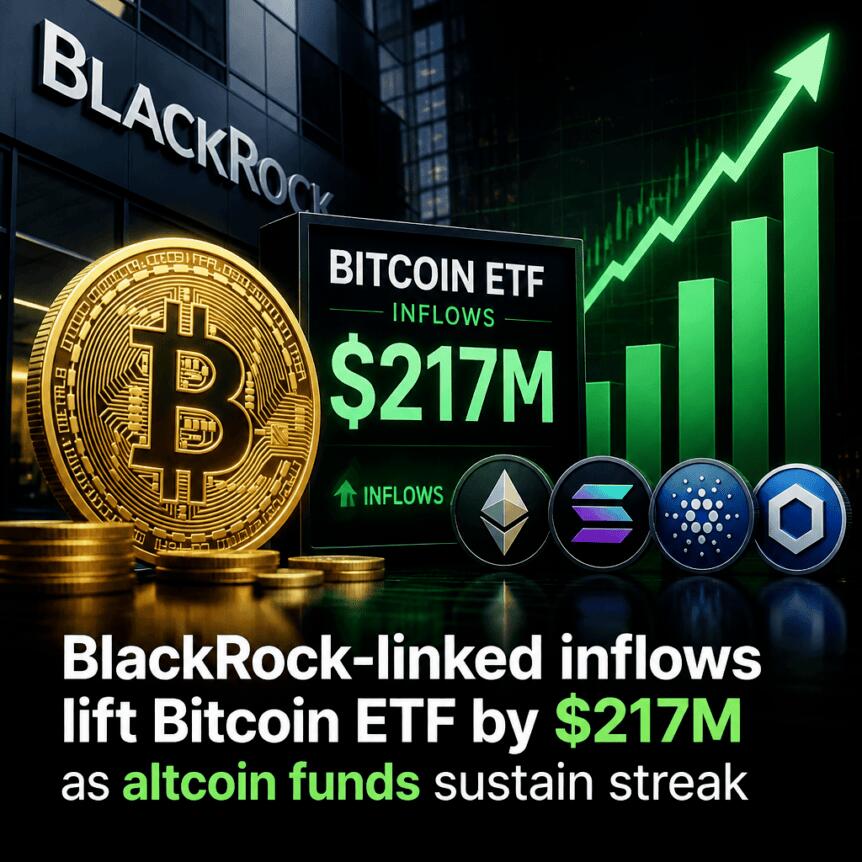
US-listed spot Bitcoin ETFs rebounded on Monday, shifting back to net inflows after two sessions of withdrawals, with inflows concentrated heavily in BlackRock’s iShares product. At the same time, spot Ether, XRP and Solana ETFs all continued adding new capital, extending their recent run of positive sessions.
SoSoValue data shows US spot Bitcoin ETFs recorded $216.7 million in net inflows on Monday, reversing $201.8 million in withdrawals logged on Friday. The prior outflow day ended a nine-session streak that brought more than $3 billion into the complex, according to Cointelegraph’s earlier coverage. Bitcoin was trading near $78,700 at the time of writing, up roughly 1.5% over 24 hours, according to CoinGecko.
Key takeaways
- Bitcoin ETF inflows returned: US spot Bitcoin ETFs added $216.7 million net on Monday after $201.8 million in Friday outflows.
- BlackRock dominated the rebound: iShares Bitcoin Trust (IBIT) accounted for about 95% of daily inflows, with $205.9 million net.
- Ether ETFs kept streak alive: Spot Ether ETFs posted $87.7 million net inflows, extending to 11 consecutive sessions.
- XRP and Solana stayed positive: XRP ETFs reached 10 consecutive inflow sessions, while Solana ETFs logged their 10th consecutive positive day.
BlackRock leads the Bitcoin ETF rebound
Monday’s reversal was driven almost entirely by BlackRock. Farside Investors data indicates iShares Bitcoin Trust (IBIT) generated $205.9 million in net inflows, representing roughly 95% of the category’s total daily inflows.
Other issuers still contributed, though at a much smaller scale. Fidelity’s Wise Origin Bitcoin Fund (FBTC) added $6.9 million, Bitwise’s Bitcoin ETF (BITB) brought in $4.3 million, and Morgan Stanley’s Bitcoin Trust recorded $3.6 million in net inflows. Grayscale’s Bitcoin Mini Trust attracted $9.4 million.
Despite the broad positive shift, not every product participated in the rebound. VanEck’s Bitcoin ETF (HODL) was the lone fund to report net withdrawals, with $13.4 million outflows on the day. The remaining funds recorded no net flows.
For investors, the concentration of Monday’s inflows matters because it highlights how day-to-day changes in the US spot Bitcoin ETF complex can be heavily influenced by a single issuer’s flows rather than by uniform demand across the market. That dynamic can affect how quickly sentiment translates into measurable net purchases.
Ether ETFs extend an 11-session inflow streak
Spot Ether ETFs continued building on their recent momentum, recording $87.7 million in net inflows on Monday. According to Farside, this marked the 11th consecutive trading session with net inflows.
BlackRock’s iShares Ethereum Trust (ETHA) led with $59.9 million. Grayscale’s Ethereum Mini Trust followed with $13.5 million, while Fidelity’s Ethereum Fund added $9.3 million.
The steady pattern of inflows suggests persistent allocator interest in regulated ether exposure rather than a one-off move tied to a single market catalyst. Traders may still watch for any sudden turn in the flow data, but the multi-week streak indicates demand has been sustained through multiple trading cycles.
XRP ETFs hit 10 straight inflow days
XRP ETFs also extended a streak of positive sessions. SoSoValue data shows the category recorded $5.64 million in net inflows on Monday, keeping the count at 10 consecutive trading sessions.
SoSoValue adds that XRP ETFs have seen capital inflows during every US trading session since Aug. 18. That kind of uninterrupted run is notable because it implies consistent participation across days, rather than intermittent buys followed by pauses.
While daily inflow totals for XRP remain far smaller than for Bitcoin or Ether in absolute terms, the consistency can still be meaningful for market structure—especially for funds that are still establishing longer-term investor habits.
Solana ETFs stay in positive territory, but inflows cooled
Solana ETFs continued their own stretch of gains, posting a 10th consecutive positive session. SoSoValue reports Monday’s inflows totaled $925,010, bringing the category’s weakest daily inflow so far during its current run.
The contrast is stark when compared with Friday’s higher number. The source notes that daily inflows slowed to $925,010 on Monday from $18.1 million on Friday.
That shift raises an important nuance for readers: while the category remains net positive, the pace of buying is not accelerating in tandem. For traders, decelerating inflows during an otherwise positive streak can sometimes be an early signal that momentum is cooling, even if it hasn’t turned into sustained outflows yet.
With Bitcoin ETFs returning to net inflows and Ether, XRP, and Solana all maintaining positive streaks, the next thing to watch is whether Monday’s rebound sustains across subsequent sessions—particularly whether BlackRock continues to account for a similar share of inflows or if demand broadens across other Bitcoin funds.

Mom Stole The Money I’d Saved For My House. She Smiled, Thanks For Paying Your Brother’s Debts!

Braintree ‘shooting’ injures three as boys ‘flee town centre scene’

Scarborough B&B boss fears ‘uneven playing field’ tourist tax

Weekend Open Thread – Corporette.com

Weekend Open Thread: Brooks Brothers

London Mayor Sadiq Khan handed a peerage by Keir Starmer alongside 15 other Labour figures… just days before the PM leaves No10
Mom Stole The Money I’d Saved For My House. She Smiled, Thanks For Paying Your Brother’s Debts!

Starting at 35? Financial Freedom Starts in Your 40s! #shorts

IT HAPPENED! LARGEST XRP MOVE INCOMING.. $80K BITCOIN! (WHAT YOU MUST DO NOW)
-

 Crypto World6 days ago
SpaceX stock could rise 75% to $240, JPMorgan says
-

 Fashion4 days ago
Weekend Open Thread: Maeve – Corporette.com
-

 Crypto World4 days ago
Bitcoin’s 22% rally now needs real demand to outlast Treasury liquidity boost
-

 Crypto World6 days ago
Warsh Jackson Hole keynote puts financial innovation first
-

 Business4 days ago
Salesforce Stock Soars 19% as Blowout Earnings and Agentforce AI Growth Silence Software Skeptics
-

 Crypto World5 days ago
Elon Musk Grok Bot Promise: We Will Make You Whole if AI Loses Your Money
-
 Crypto World6 days ago
Did Trump Just Move SpaceX Stock With One Truth Social Post?
-

 Business4 days ago
Apple Confirms September 9 Keynote and Reveals Its Full Pre-Order Schedule
-

 Business3 days ago
Onto Innovation Stock: AI’s Next Bottleneck Is Yield (NYSE:ONTO)
-
 NewsBeat5 days ago
Lindsay Clancy jury braces for closing arguments as judge tells court: ‘You’ve heard all the evidence’ – Live updates
-

 Business6 days ago
Walmart takes aim at younger shoppers with new fashion brand
-

 Crypto World3 days ago
Bitcoin price tests $82K resistance as Brandt stays long
-

 Business6 days ago
Thailand’s Eastern Economic Corridor Capital City (EECiti): Key Developments and Investment Opportunities
-

 Crypto World5 days ago
NVIDIA revenue hits $96.2B as AI demand doubles
-

 Business4 days ago
iPhone 18 Pro Pre-Orders Could Shift to Saturday as Apple Reportedly Avoids September 11 Anniversary
-

 NewsBeat6 days ago
Trump’s trade truce with China faces test with Iran effort
-
 Crypto World5 days ago
Nvidia Q2 Earnings Reveal $96.2 Billion Beat, So Why Is NVDA Falling?
-

 Tech5 days ago
Claude Cowork gets its own browser that doesn’t touch your tabs, bookmarks, or saved passwords
-
 Tech2 days ago
Hugging Face built a $4.5 billion empire on free AI models. Now Nvidia is buying it for $12.9 billion
-

 Crypto World4 days ago
Truflation calls for Fed rate cut after PCE forecast
You must be logged in to post a comment Login