
Crypto World
China Metals Futures Jump 86%, Retail Frenzy Triggers 38 Rule Changes

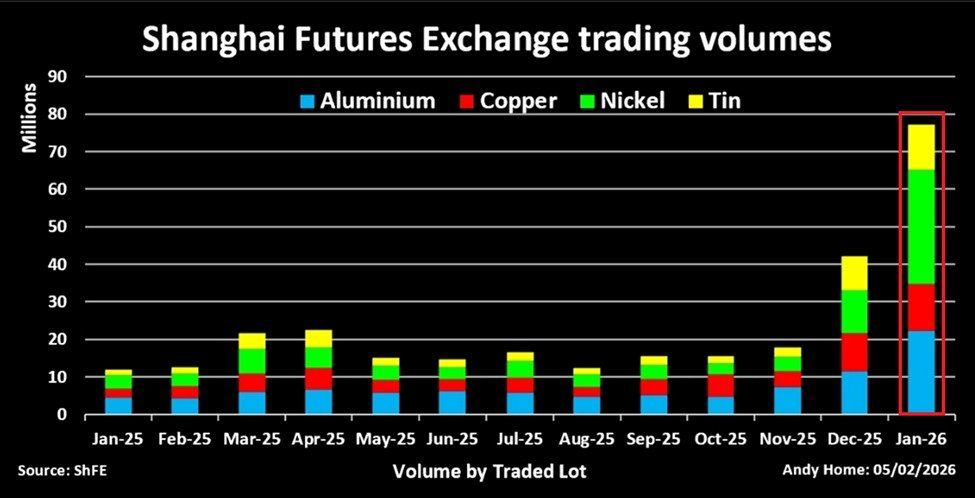
Industrial metals have suddenly become one of the most crowded trades in China, with futures volumes in aluminum, copper, nickel, and tin surging as retail traders pile into the market.
The spike in activity has pushed exchanges and regulators to intervene repeatedly, raising concerns that a wave of speculation—rather than fundamentals—is driving prices and volatility.
Recent market data shows trading activity in key base metals accelerating at an exceptional pace. Combined futures volumes in aluminium, copper, nickel, and tin on the Shanghai Futures Exchange surged sharply month-over-month, reaching levels far above the recent average.
Sponsored
Sponsored
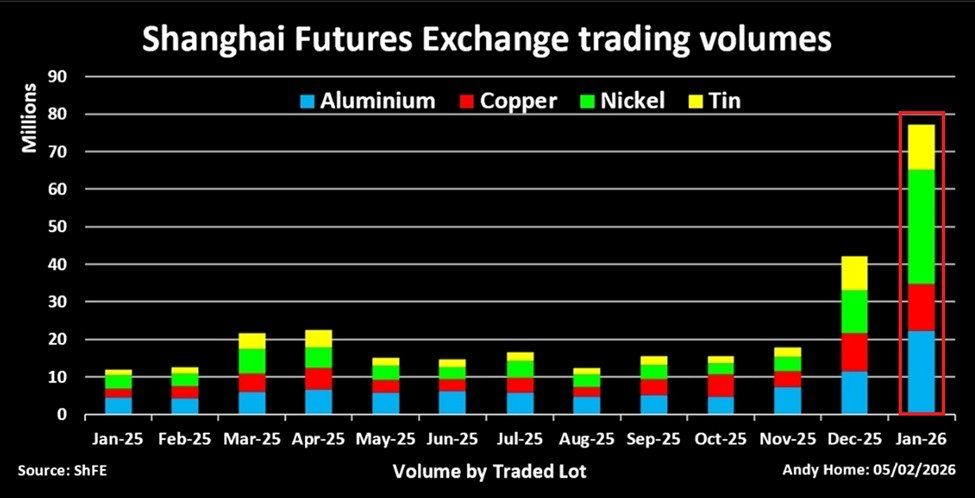
Nickel contracts led the rally, with trading volumes jumping several-fold in a single month. Tin markets also saw extraordinary activity, with daily trading volumes at times exceeding levels that dwarf typical physical consumption benchmarks.
The turnout points to derivatives speculation, not industrial demand, dominating flows, with retail participation being a key catalyst.
Metals trading has become a trending topic across Chinese social media platforms and WeChat trading groups.
“…short-term momentum strategies and leverage are increasingly popular among individual investors,” the Kobeissi Letter indicated.
This pattern mirrors earlier speculative episodes seen in equities, crypto, and commodities, where retail enthusiasm quickly amplified price swings.
The rally’s speed has forced exchanges to step in. Both Shanghai and regional futures markets have repeatedly raised margin requirements and tightened trading rules in recent weeks.
Sponsored
Sponsored
“As a result, the Shanghai and Guangzhou Futures Exchanges have raised margins and tightened trading rules 38 times over the last 2 months to try to contain the speculation. The metals rush is far from over,” Markets Today reported.
This unusual but frequent set of interventions may signal mounting concern about excessive leverage. Historically, such measures have been used to slow speculative inflows and stabilize markets when price movements become detached from underlying supply-and-demand fundamentals.
However, repeated tightening also shows:
- How quickly trading volumes have expanded
- How difficult it may be to contain momentum once retail participation reaches critical mass.
Periods of rapid speculative growth often precede sharp corrections, particularly in highly leveraged derivatives markets.
At the same time, the broader metals complex is sending mixed signals. Silver, in particular, has experienced one of the strongest rallies in its history, climbing sharply over the past year before entering a more volatile consolidation phase.
Sponsored
Sponsored
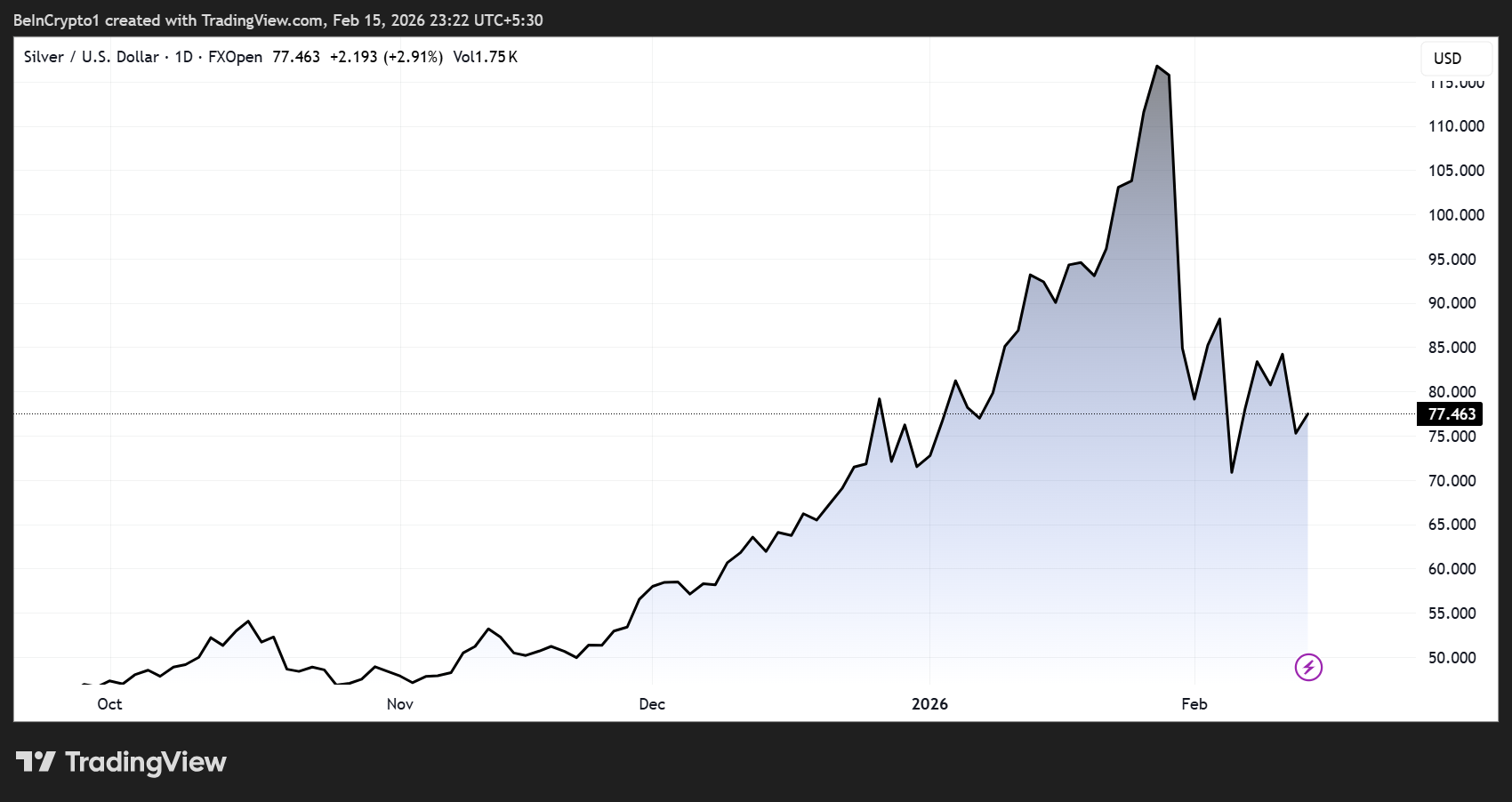
Against this backdrop, some strategists argue that silver and other metals have become stretched relative to broader commodity indices. In previous cycles, such conditions sometimes preceded cooling price action.
Others counter that structural supply constraints and strong industrial demand, especially from energy transition technologies, could continue to support elevated prices over the longer term.
The divergence in views reflects a market struggling to distinguish between structural trends and speculative excess.
Sponsored
Sponsored
Macro Forces Lurking Behind the Rally
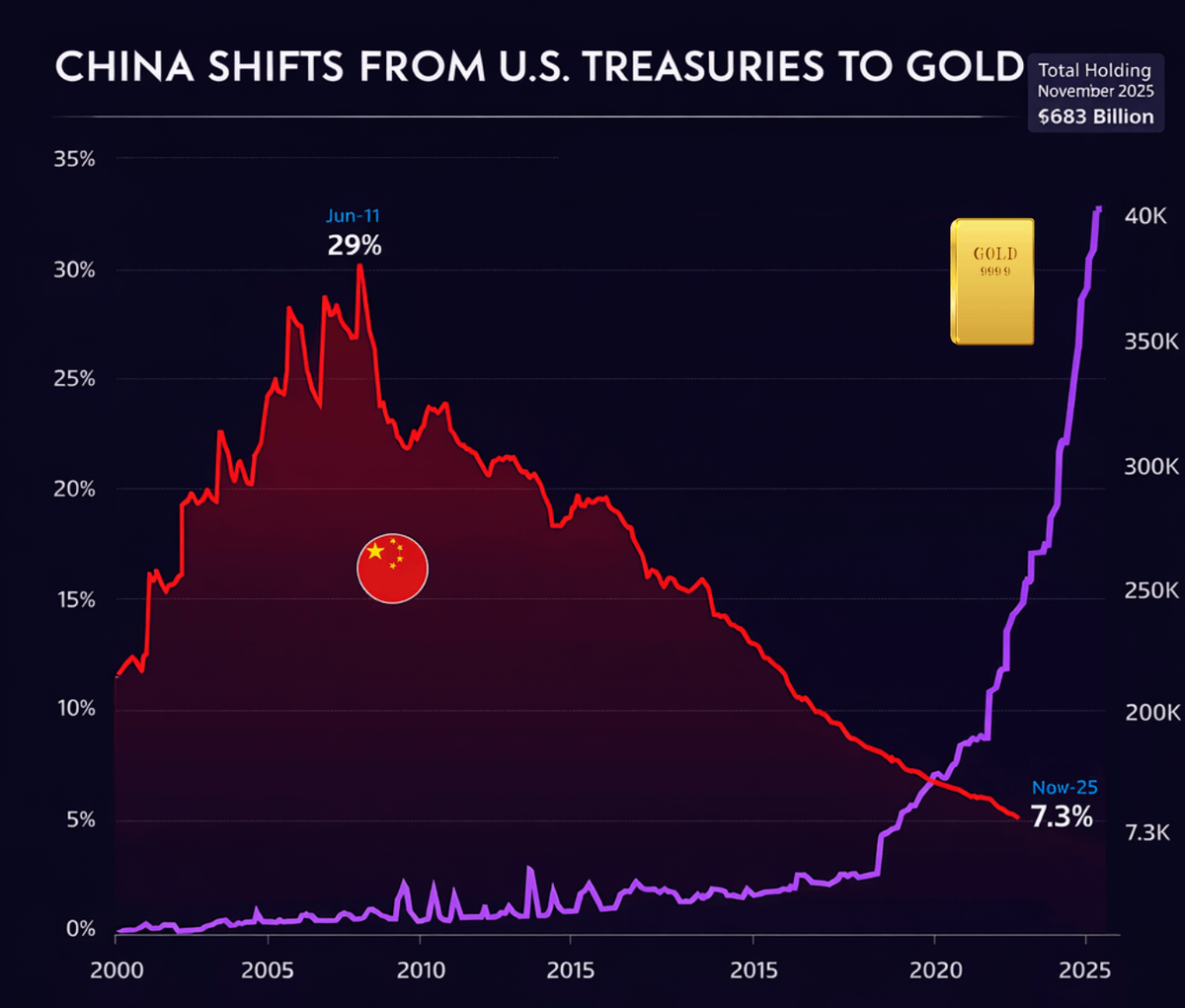
Beyond retail speculation, the metals surge comes amid broader macroeconomic shifts. China has been steadily reducing its holdings of US Treasuries while increasing gold reserves.
This reinforces the perception that global capital is increasingly seeking diversification away from TradFi assets.
The People’s Bank of China has reported consecutive months of gold accumulation, a trend mirrored by several other central banks in recent years.
While these macro trends do not directly explain the retail-driven surge in industrial metals trading, they contribute to a wider narrative that investors at multiple levels—from individuals to sovereign institutions—are reassessing risk, liquidity, and the role of hard assets in portfolios.
The combination of retail speculation, tightening exchange controls, and mixed macro signals suggests volatility is likely to remain elevated in the months ahead.

Crypto World
Ethereum’s stablecoin dominance declines to 65% as other chains gain ground: Dune and Visa report
Ethereum’s share of non-USD stablecoin supply has fallen from 90% in early 2023 to 65% as of February 2026, though it remains the primary issuance chain.
Ethereum’s dominance in non-USD stablecoin supply has shrunk to 65% as of February 2026, down from 90% in early 2023, according to data published by Dune and Visa on Thursday. Despite the decline, Ethereum remains the default chain for stablecoin issuance, though other blockchains are catching up in market share.
While Ethereum leads in issuance, it ranks only fifth by unique senders across stablecoin networks. The absolute growth in activity has been significant, with unique senders increasing from 2,000 to 12,000 year-over-year as of February 2026, indicating expanded user adoption across the stablecoin ecosystem.
Sources: Dune
This article was generated automatically by The Defiant’s AI news system from publicly available sources.
Kraken introduces rewards up to 1% for users holding xStocks, extending yield opportunities beyond traditional dividend structures.
Kraken launched an opt-in rewards program for xStocks on Thursday, offering users up to 1% rewards by holding tokenized U.S. equities and ETFs. The rewards program addresses a gap in traditional equities markets, which typically lack accessible yield mechanisms beyond dividends. xStocks, Kraken’s 24/7 permissionless onchain equities products, enable crypto-native investors to access U.S. stocks and ETFs outside traditional market hours.
The opt-in structure allows users to choose participation in the rewards program without mandatory enrollment. xStocks were designed to bring familiar equity products into decentralized ecosystems where many investors already transact, extending traditional market access into crypto environments that operate around the clock.
Sources: Kraken Blog | Kraken Support | Kraken xStocks
This article was generated automatically by The Defiant’s AI news system from publicly available sources.
Crypto World
Solana Price Prediction: BNB and SOL See Strong Inflows, but Pepeto Offers Potential Large Caps Cannot Match
The March jobs report drops today on Good Friday, and because stock markets are closed, crypto is the only major market open to react. While some investors wait for the macro picture to clear, institutions have been adding positions for weeks.
For traders watching the solana price prediction, that backdrop matters, but it is presale tokens like Pepeto that stand to gain the most when confidence spreads into broader sentiment.
The March employment report lands today with equity exchanges shut for the holiday, meaning Bitcoin and altcoins will be the only liquid markets reacting in real time according to Reuters. After February’s loss of 92,000 jobs, analysts expect a rebound near 57,000.
CoinDesk noted that crypto could overshoot without the usual equity anchor to steady prices. For anyone tracking the solana price prediction, a weak number could open the door for a broader risk rally.
Solana Price Prediction and the Best Presale Picks as Institutions Return
Is Pepeto the best presale before the Binance listing?
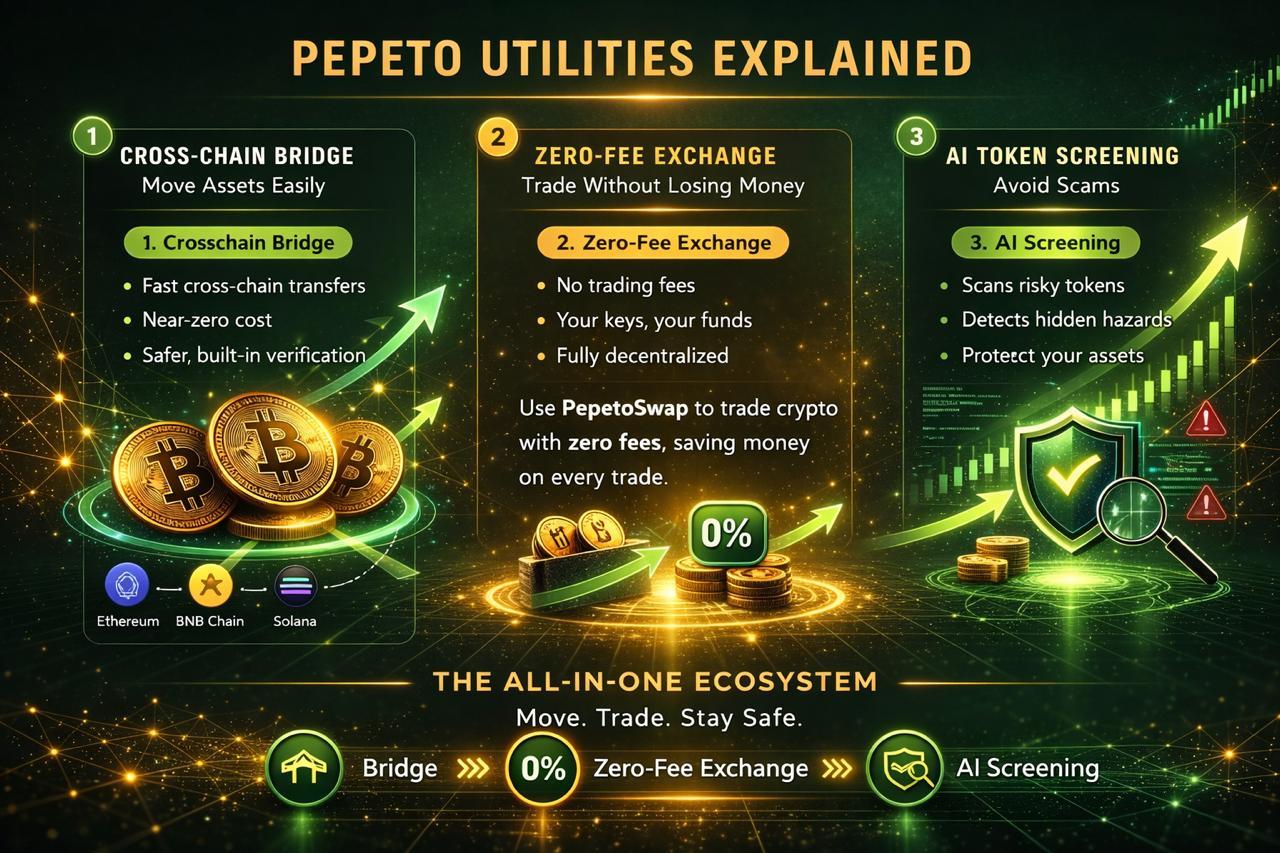
While institutional money keeps flowing into large caps, Pepeto is positioned to ride that wave straight into a Binance listing that approaches fast. The cross chain bridge connects every major network so your capital can follow the best trade no matter which chain it lives on. The PepetoAI risk scorer evaluates the threat level of every trade before your money moves, giving you a clear read on what could go wrong before it does.
Both tools are already built and working, which puts Pepeto ahead of most presales that ask buyers to trust a promise. The developer who launched the original Pepe project is part of the team, and a former Binance expert handles the architecture.
At $0.000000186 the presale entry is a fraction of what listing day will cost. The presale has cleared above $8.1M, and a $50,000 position earns 189% APY through staking, which means $98,000 in yearly returns just for holding while the listing approaches. Every exchange listing after Binance adds a fresh wave of buyers competing for a fixed supply, and that pressure only moves in one direction.
Each day that passes without entering is money left on the table, another round filling without you, and the listing one step closer while your position is still zero.
Solana price prediction: SOL recovers from $78 low but return math stays capped
Solana currently trades at $78.95 after today’s sharp drop, a drop that hit all of the crypto market due to the current geopolitical situation according to CoinMarketCap.
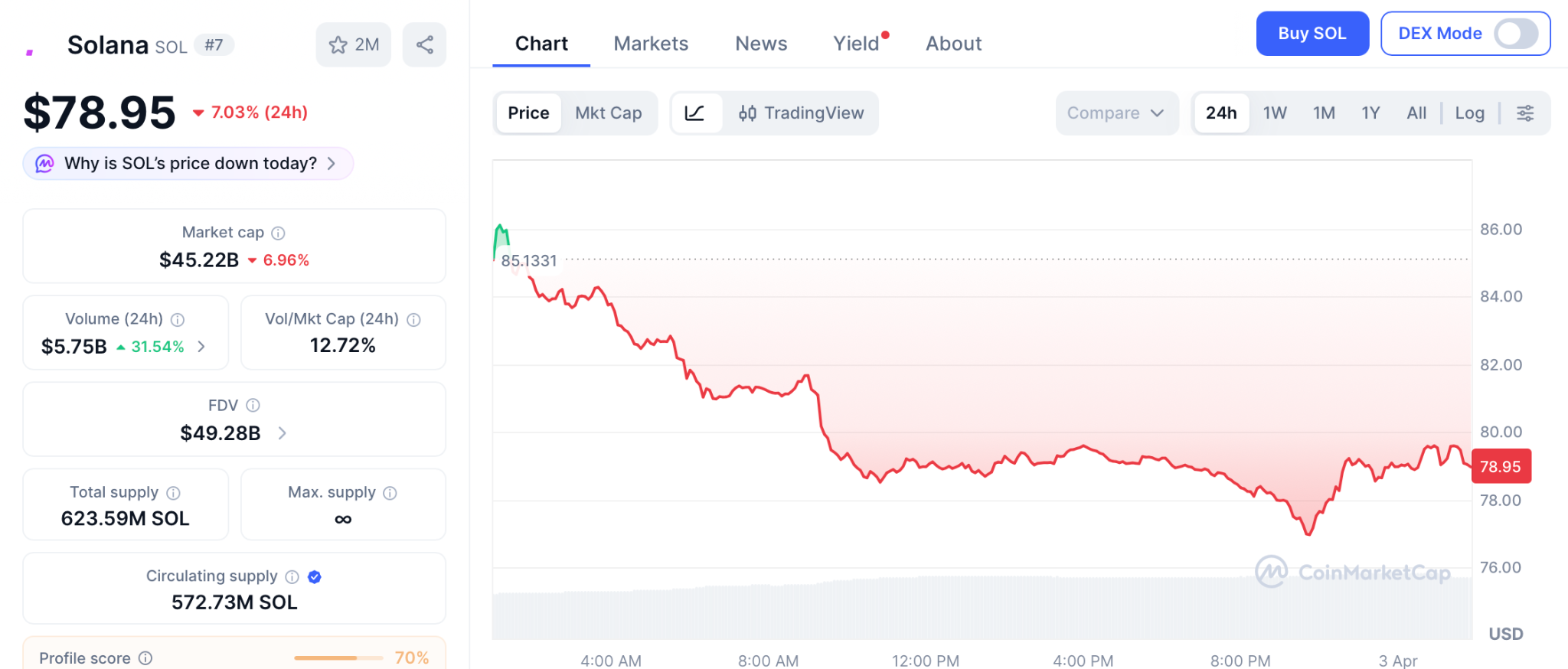
Institutional interest remains, with recent inflows confirming larger wallets still believe in the long term case. If SOL reclaims $100, the solana price prediction opens toward $110. But even a move to $200 from here delivers a little over 2x, solid but not the kind of return that changes a portfolio overnight.
BNB holds $580 but large cap returns stay limited
BNB is trading near $580 and benefits from Binance’s dominance in global exchange volume according to CoinMarketCap.
The token held up better than most altcoins in the recent selloff. A move from $580 to $900 represents roughly 45% growth, meaningful but far from the multiples presale entries deliver when a project lists on a major exchange.
The Bottom Line: Presale Windows Beat the Crowd
The jobs report landing today shows that macro data still drives crypto, and the solana price prediction benefits from that backdrop along with BNB. But presale projects with live products deliver the biggest returns when institutional confidence spreads into wider sentiment.
Solana and BNB can be bought any day at market price, but the Pepeto presale has a closing date and the Binance listing is locked in, which you can verify at the Pepeto official website. Every day you wait is a day of returns gone, another round filling without you, and the listing getting closer while your wallet sits empty.
Click To Visit Pepeto Website To Enter The Presale

FAQs
What is the solana price prediction for 2026?
SOL is trading near $78.95 after the Drift hack, with $100 as key resistance. A break above opens the path toward $110, with a strong scenario pushing SOL toward $200 in 2026.
What does the April jobs report mean for the crypto market?
The jobs data dropping on Good Friday means crypto is the only market reacting live, and a weak number could push rate cut expectations forward and spark a rally.
Why does Pepeto compare favorably to the solana price prediction right now?
The solana price prediction is constructive but caps gains at around 2x. Pepeto offers a fixed presale entry with a confirmed Binance listing and a live product, and details are at the Pepeto official website.
Disclaimer: This is a Press Release provided by a third party who is responsible for the content. Please conduct your own research before taking any action based on the content.



The U.S. Department of Justice will be helmed by Todd Blanche, the deputy attorney general, President Donald Trump announced Thursday, after removing Attorney General Pam Bondi from the position.
Blanche represented Trump in his criminal case in New York prior to Trump’s reelection as U.S. President in 2024. Trump named him deputy attorney general after retaking office.
As deputy attorney general, Blanche ordered the disbanding of the DOJ’s National Cryptocurrency Enforcement Team, which was formed in 2022 under former President Joe Biden, and signed a four-page memo ordering prosecutors not to pursue regulatory violation cases in the crypto industry.
The document was referenced in the Southern District of New York office’s case against Tornado Cash developer Roman Storm, eventually leading that office to drop a charge against Storm (Storm was later convicted on another charge, and faces a retrial on two more later this year).
According to Blanche’s most recent government ethics disclosure, dated July 10, 2025, Blanche transferred his crypto asset holdings to his children and a grandchild, including Bitcoin , Solana (SOL), and Ethereum (ETH). His disclosure form also noted that he’d held Polygon (MATIC), and Quant (QNT), as well as Coinbase (COIN) stock.
According to ProPublica, he still held these cryptos — somewhere between $159,000 and $485,000 in total — when he signed the enforcement memo, which violated ethics rules and his pledge to divest prior to working on crypto-related matters.

Bitget, the world’s largest Universal Exchange (UEX), in partnership with Visa and DCS, launched the Bitget Card across selected markets in Asia Pacific (APAC), extending crypto out of exchanges into everyday spending and marking another step toward a more unified financial experience where digital assets work quietly in the background of daily life.
The initial rollout makes a virtual Bitget Card available to APAC users, with a physical card set to follow in the coming months. Issued in collaboration with DCS and powered by Visa’s global payments network, Bitget Card enables users to convert crypto into fiat for everyday spending across merchants across APAC. Payments are processed instantly and feel no different from a standard card transaction, removing the friction typically associated with off-ramping or manual conversion. Crypto operates quietly in the background while users transact through familiar payment rails, supporting seamless everyday adoption
“Partnerships across the ecosystem are key to bringing digital assets into everyday payments,” said Joan Han, COO of DCS and DeCard.
“By combining Bitget’s ecosystem with DCS’s issuing infrastructure and Visa’s global acceptance network, the Bitget Card enables users to move from crypto holdings to everyday spending through a familiar card experience.”
To accompany the launch, Bitget Card offers one of the most competitive reward structures in the region, with up to 20% cashback on eligible spending, capped at $800. Low foreign exchange fees further position the card for globally mobile users who expect spending tools to work across borders without friction.
“For crypto to become truly mainstream, it can’t ask people to constantly think about it,” said Gracy Chen, CEO of Bitget.
“It should operate quietly in the background while people go about living their lives. Bitget Card reflects the shift where crypto becomes infrastructure, not an interruption.”
The launch aligns with Bitget’s Universal Exchange vision, which brings crypto, derivatives, and tokenised traditional assets into a single ecosystem. By extending that framework into payments through partnerships with Visa and DCS, Bitget is narrowing the gap between digital assets and real-world commerce, allowing users to move between markets and everyday spending without switching contexts.
Additional features include enhanced benefits for VIP members, including higher rebates and complimentary physical card issuance once available.
“As digital assets become more widely held, consumers increasingly expect simple and reliable ways to use that value in everyday life,” said Adeline Kim, Country Manager for Singapore & Brunei at Visa.
“The Bitget Card reflects how payments are evolving — enabling a seamless move from digital assets to everyday spending through a familiar Visa card experience, at scale and across borders.”
Looking ahead, Bitget plans to expand the Bitget Card with premium physical designs, fee-free ATM withdrawals of up to $100 per month, and access to a global network of airport lounges, reinforcing its positioning as a long-term lifestyle payment tool.
As financial systems continue to converge, the line between crypto and traditional finance is becoming less visible to consumers. With Bitget Card, digital assets integrate seamlessly into everyday payments, allowing users to spend, travel, and move globally through familiar card experiences.
To apply for a Bitget card, please visit here.
Disclaimer: This is for information only, not investment advice or solicitation to trade or use any service. Our services may not be available in certain jurisdictions or for users in certain regions.
About Bitget
Bitget is the world’s largest Universal Exchange (UEX), serving over 125 million users and offering access to over 2M crypto tokens, 100+ tokenized stocks, ETFs, commodities, FX, and precious metals such as gold. The ecosystem is committed to helping users trade smarter with its AI agent, which co-pilots trade execution. Bitget is driving crypto adoption through strategic partnerships with LALIGA and MotoGP™. Aligned with its global impact strategy, Bitget has joined hands with UNICEF to support blockchain education for 1.1 million people by 2027. Bitget currently leads in the tokenized TradFi market, providing the industry’s lowest fees and highest liquidity across 150 regions worldwide.
For more information, visit: Website | Twitter | Telegram | LinkedIn | Discord
Risk Warning: Digital asset prices are subject to fluctuation and may experience significant volatility. Investors are advised to only allocate funds they can afford to lose. The value of any investment may be impacted, and there is a possibility that financial objectives may not be met, nor the principal investment recovered. Independent financial advice should always be sought, and personal financial experience and standing carefully considered. Past performance is not a reliable indicator of future results. Bitget accepts no liability for any potential losses incurred. Nothing contained herein should be construed as financial advice. For further information, please refer to our Terms of Use.
The post Bitget Brings Crypto Into Everyday Spending With APAC Launch of Bitget Card appeared first on BeInCrypto.
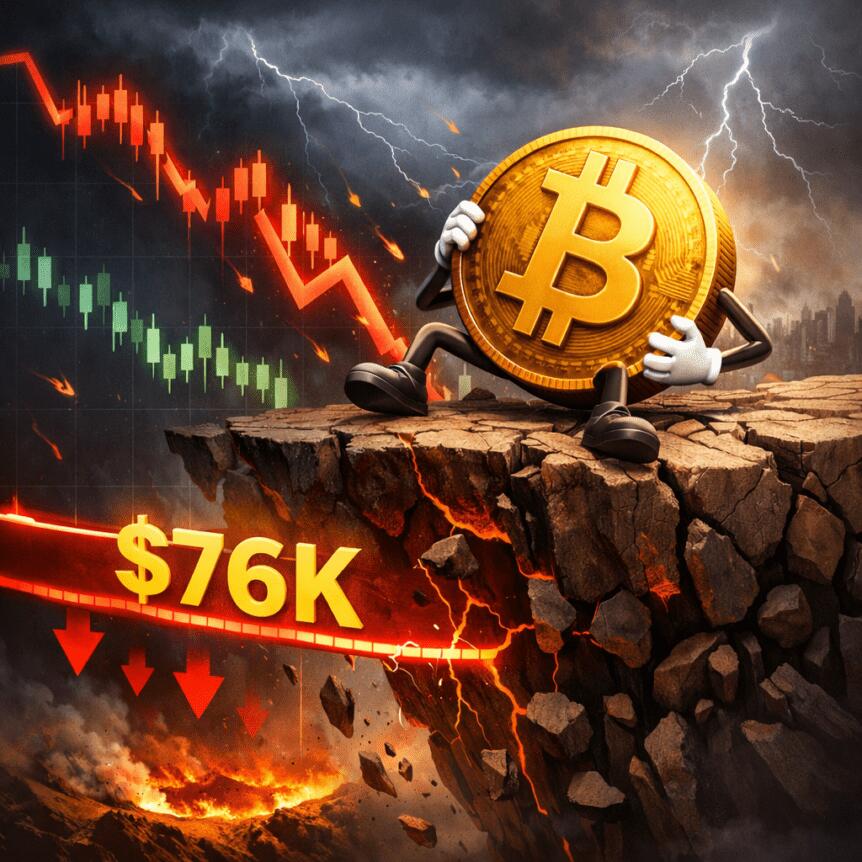
Bitcoin has stubbornly maintained a 60,000 to 73,000 USD trading band as macro headwinds intensify. Oil prices hover at levels not seen since 2008, geopolitical tensions flare across the US, Israel and Iran, and stock markets remain volatile after a choppy start to the year. In this environment, BTC has drawn steady bids on pullbacks toward the 60k mark, but the path forward remains uncertain as traders weigh whether a breakout or deeper correction lies ahead.
Analysts point to a technical setup that could tilt the risk balance either way. A rising wedge and a bear-flag pattern have been in focus, with a key stake on whether Bitcoin can sustain a rally above a critical resistance area. Market technicians stress that a daily close above roughly 76,000 USD would be necessary to invalidate the current bearish configuration and shift the narrative toward a potential fresh leg higher. Until such a breakout occurs, the market may remain in a waiting game as traders seek a catalyst to unlock capital and directional bets.
Key takeaways
- Bitcoin remains range-bound between 60,000 and 73,000 USD despite challenging macro conditions, with support at 60k and resistance nearer 70k–73k.
- A bear-flag/bearish continuation pattern dominates near-term view, requiring a close above 76,000 USD to negate the setup; a breakdown could push toward the mid-50k to 52,500 USD area per some scenarios.
- Trading activity shows subdued demand and a cautious stance, as aggregated open interest stays below 20 billion USD and negative funding rates are treated as opportunistic signals rather than reliable catalysts for rallies.
- Liquidity dynamics hint at risk for leveraged longs if BTC weakens toward 63–65k USD, with a liquidity gap below and another cluster of longs starting around 57,500–56,000 USD.
- Market participants await a clear catalyst—whether a macro shift or a technical breakout above 76k—before the next sustained move, keeping the focus on the 60k–70k range until then.
Bearish patterns and the price action
Bitcoin’s recent price action has framed a cautious setup. A correction to 60,014 USD occurred on Jan. 20 as BTC traded within the broader range, reinforcing a bearish continuation narrative. Since February 8, attempts to break past the bear-flag’s overhead trendline have failed, reinforcing the view that the pattern remains intact unless a decisive breakout occurs.
Technical observers underscore that clearing 76,000 USD on a multi-day basis is the prerequisite for negating the current bearish configuration. In practical terms, a rally to that level would need to sustain for two or three consecutive daily candles and then retest the trendline at around 75,000 USD to confirm a change in role from resistance to support.
“Breakdown of the lower boundary will be the signal for a possible move toward 52,500 USD.”
That outlook aligns with a broader sentiment among some technicians who monitor price channels and chart patterns for guidance on possible trajectories. While not a guaranteed forecast, the emphasized level of 52,500 USD sits as a potential magnet in a scenario where downside momentum intensifies.
Liquidity, funding and risk in the wings
Across spot and futures markets, demand appears relatively flat by several market-tracking measures. Data suggests that traders still view episodes where the funding rate turns negative as potential buying opportunities, but such signals have not reliably translated into sustained upside as Bitcoin tests the bear-flag resistance.
Aggregated open interest provides a corroborating view: it has remained below 20 billion USD, a threshold last associated with BTC trading near 79,000 USD earlier in February. The muted open interest implies that traders are selectively taking on risk, rather than piling into directional bets with high leverage.
In the options and futures space, risk dynamics show a clustering of leveraged long positions vulnerable to liquidation if price declines into the 63,000–65,000 USD range. A liquidity gap exists below, with the next sizable block of long positions projected around 57,500–56,000 USD. These pockets of risk hint at how quickly sentiment could shift if Bitcoin breaks lower and triggers cascading liquidations in highly leveraged positions.
Market path to watch
The prevailing mood appears to be one of consolidation, with market participants waiting for a meaningful trigger to re-accelerate volatility in either direction. Traders are watching for catalysts—whether from macro data, geopolitical news, or a fresh technical breakout—that could reallocate capital and tip BTC out of its current range.
Absent such catalysts, the price action is likely to continue trading within the 60,000–70,000 region, with 60,000 acting as a stubborn floor and 70,000 representing a more challenging hurdle for those hoping to reestablish momentum above the long-standing resistance area. The broader picture suggests that the market is seeking a narrative or data point that justifies larger bets, rather than reacting to mid-cycle noise alone.
What readers should watch next
As the market evolves, key milestones to monitor include a sustained break above 76,000 USD on a multi-day basis, followed by a confirmatory retest of the 75,000 USD level. If the price fails to clear this zone, attention will likely shift back to the lower boundary near 60,000 USD and the risk of a renewed test of the bears’ target around 52,500 USD. On the funding and liquidity front, any meaningful shifts in open interest and leverage dynamics—especially a surge in long liquidations around the 63–65k window—could catalyze sharper moves. The coming weeks will be telling as macro headlines and on-chain signals converge to redefine BTC’s trajectory.
According to analysts like Aksel Kibar, who shared charts and commentary on X, the path of least resistance will hinge on whether the support and resistance lines hold or give way. For now, Bitcoin’s fate rests on whether buyers can step forward with conviction above the critical 76k level or whether a fresh wave of selling drives the market toward mid- to low-50k territory. Readers should stay tuned to both price action and the evolving liquidity landscape, as these are the levers most likely to determine the next leg in BTC’s ongoing range-bound saga.


Summary
- YZi Labs has made a strategic follow-up investment in prediction market protocol Predict.fun after its EASY Residency accelerator.
- The round includes participation from Susquehanna Crypto, the digital asset arm of quantitative trading giant Susquehanna International Group.
- Since graduation, Predict.fun has processed over 4 million orders and more than $1.8 billion in trading volume on BNB Chain.
YZi Labs has announced a strategic additional investment in prediction market platform Predict.fun following the second season of its EASY Residency program, according to an official update from the firm. The follow‑on round brings in Susquehanna Crypto, the digital asset trading arm of global quantitative trading firm Susquehanna International Group, signaling growing institutional interest in on‑chain prediction markets.
The Predict.fun team graduated from YZi Labs’ EASY Residency Season 2 cohort, unveiled during Binance Blockchain Week, where the incubator highlighted the protocol’s blend of DeFi yield, self‑custody and gasless UX as the basis for “mainstream prediction markets.” YZi Labs described Predict.fun as enabling a new class of event trading by routing user collateral into DeFi strategies while positions are open, turning predictions into a yield‑generating primitive rather than idle bets.
Since its launch in December 2025, Predict.fun has processed more than 4 million orders and surpassed $1.8 billion in cumulative trading volume, according to figures shared by YZi Labs and third‑party coverage. Trust Wallet, which recently integrated Predict.fun, said the protocol has handled over $1.7 billion in volume across roughly 125,000 users and 3.7 million transactions, underscoring the pace of adoption on BNB Chain.
Built as a self‑custodial app on BNB Chain, Predict.fun lets users trade on outcomes across crypto prices, sports, politics and macro events using USDT, while their collateral earns DeFi yield in the background. The platform resolves markets using a combination of AI‑assisted proposals, human verification against reputable data sources and UMA’s Optimistic Oracle, a design YZi Labs says balances automation with accountability for high‑stakes outcomes.
Susquehanna Crypto’s participation aligns Predict.fun with one of the world’s largest options and ETF market makers, adding credibility as prediction protocols vie to become institutional‑grade trading venues. Data from YZi Labs shows that the EASY Residency network now backs multiple prediction and trading projects, with Predict.fun singled out as BNB Chain’s “dominant prediction market” and a core beneficiary of the firm’s $1 billion Builder Fund for the ecosystem.
For YZi Labs, doubling down on Predict.fun fits a strategy of investing at the intersection of Web3 and AI, with on‑chain markets framed as both retail‑facing products and data feeds for more advanced models. If the protocol can sustain multi‑billion‑dollar volumes while keeping slippage low and resolutions trusted, the latest round positions it to compete with centralized prediction venues and emerging rivals across other L1s and L2s.


The integration launches with more than a dozen U.S. stocks, major equity indices, and commodity contracts resolved using Pyth’s real-time price data.
Polymarket has expanded beyond crypto and event-based contracts into traditional financial assets, integrating oracle provider Pyth Network as the resolution source for a new suite of equity, index, and commodity markets.
The collaboration, announced on Wednesday, launches with daily up/down and daily close markets for major equity indices, commodities including gold, silver, WTI crude, and natural gas, and more than a dozen U.S. equities such as TSLA, COIN, PLTR, NVDA, and AAPL.
Alongside the integration, Pyth unveiled Pyth Terminal, a live data interface that allows traders to explore and verify price feeds in real time. The tool includes benchmark comparisons for U.S. equities and foreign exchange, publisher-level transparency for each feed, and free API key access for new sign-ups.
Polymarket traders can follow a live “price to beat” chart that updates every second as markets move, with the Terminal serving as the public source of truth for how each market resolves.
Over 125 leading trading firms, exchanges, and market makers publish first-party price data directly to Pyth, creating what the network describes as a price discovery system rooted in real trading activity rather than a single exchange or market window.
“Millions of dollars can hinge on a single price point, and that demands absolute confidence in the source of truth. Pyth delivers that assurance, enabling Polymarket to expand into high-stakes financial markets,” said Mustafa Aljadery, Product Lead at Polymarket.
The launch significantly deepens Polymarket’s push into finance-related markets. The prediction market already hosts 138 active commodities markets and a finance category covering earnings, Fed rate decisions, IPOs, and forex.
Polymarket’s monthly volumes have surged from roughly $1 billion in mid-2025 to over $8 billion by March 2026, with weekly notional volume consistently exceeding $1 billion through the first quarter.
The expansion comes as Polymarket continues to deepen its institutional and mainstream partnerships, having recently been named MLB’s exclusive prediction market partner.
For Pyth, the Polymarket deal adds to a string of recent product launches, including a 24/7 oil index designed to fill pricing gaps left by traditional commodity markets that shut down overnight and on weekends.
This article was written with the assistance of AI workflows. All our stories are curated, edited and fact-checked by a human.

SpaceX appears poised to launch what could become the largest initial public offering in history, with a potential valuation above USD 1.75 trillion and up to USD 75 billion in proceeds. If confirmed, the listing would give public investors exposure to SpaceX’s broader space ecosystem, including Starlink’s connectivity and launch capabilities, while funding the continued development of Starship and expansion into new verticals such as AI infrastructure, including space-based data centres. The move follows SpaceX’s merger with xAI, creating a vertically integrated platform that blends space and artificial intelligence and invites scrutiny of how such a multi‑line business should be valued. The prospect of retail ownership, potentially up to 30%, adds another near‑term dynamic.
Key points
- Possible largest IPO ever with valuation above $1.75 trillion and up to $75 billion in proceeds.
- Public exposure to SpaceX’s ecosystem, including Starlink connectivity and launch capabilities.
- Proceeds earmarked for Starship development, Starlink expansion, defence initiatives, and AI infrastructure, including space-based data centres.
- SpaceX-xAI merger introduces vertical integration spanning space and AI, raising valuation questions for investors.
- Retail share allocation expected to be up to 30% of the offering.
Why it matters
If SpaceX moves forward with a valuation in this range, it would set a new benchmark for mega-tech listings tied to space, infrastructure, and AI. The IPO would broaden public exposure to a space-based ecosystem beyond traditional hardware, while the xAI tie-in signals a broader ambition that spans multiple high-capital segments. For investors, the arrangement raises questions about how to price a company with profitable space operations alongside capital-intensive AI ventures, and how share distribution to retail participants could influence demand and pricing.
What to watch
- Final confirmation of IPO details: valuation, proceeds, and timing.
- Retail investor share allocation up to 30%.
- Impact of SpaceX-xAI merger on valuation and strategy.
- Near-term signals on Starship and Starlink funding implications.
Disclosure: The content below is a press release provided by the company or its PR representative. It is published for informational purposes.
SpaceX IPO Set to Become Largest in History, Marking a Defining Moment for Global Markets
Abu Dhabi, UAE – April 01, 2026
SpaceX is reportedly preparing to go public in what could become the largest IPO in history, with a potential valuation exceeding USD $1.75 trillion and plans to raise up to USD $75 billion. If confirmed, this would surpass Saudi Aramco’s 2019 listing, which raised USD $29.4 billion.
The listing would mark the first opportunity for public market investors to gain exposure to Elon Musk’s space ecosystem. SpaceX has established itself as a global leader, with its Starlink broadband network generating significant revenue and its launch capabilities dominating the commercial space sector.
Proceeds from the IPO are expected to fund the continued development of Starship, expand Starlink into new verticals, support defence-related initiatives, and accelerate investments in AI infrastructure, including the concept of space-based data centres.
The company’s recent merger with xAI introduces an additional dimension for investors. While the move creates a vertically integrated innovation platform spanning space and artificial intelligence, it also raises questions around valuation, given xAI’s capital-intensive nature.
Josh Gilbert, Market Analyst at eToro, commented: “SpaceX’s IPO represents a watershed moment for global markets. It’s not just about gaining exposure to a leading space company, but about investing in a broader ecosystem that spans connectivity, defence, and artificial intelligence. However, the complexity of the business model — combining a highly profitable space and broadband operation with a capital-intensive AI venture — means investors will need to carefully assess whether the proposed valuation is justified.”
The IPO also has implications for Tesla investors, as Tesla holds a stake in SpaceX following its USD $2 billion xAI investment. Increasing operational ties between the companies have fuelled speculation about a potential future merger, which could create a new type of multi-sector technology conglomerate.
Notably, SpaceX is expected to allocate a significant portion of shares to retail investors, potentially up to 30%, signalling a shift in how major IPOs engage with individual market participants.
As anticipation builds, the key question for investors remains whether the scale, ambition, and integration of SpaceX’s business lines can support what would be one of the most ambitious valuations ever seen in public markets.
Crypto World
Wirex and Ultra Stellar Launch Native Stellar Payment Infrastructure to Power Millions of Users and AI Agents

Wirex, a leading stablecoin payment infrastructure provider serving over 7 million users globally, and Ultra Stellar, the company behind Stellar’s largest wallet LOBSTR and leading decentralized exchange StellarX, today announced the launch of a native Stellar payment infrastructure, built directly on Soroban, Stellar’s smart contract platform.
This first-of-its-kind initiative establishes a fully integrated, blockchain-native payment layer that enables wallets, fintech platforms, and developers across the Stellar ecosystem to offer stablecoin bank accounts, global card issuance, payouts, and yield — all settled directly on Stellar.
By combining Wirex’s global payment connectivity, licensing coverage, and integration with Visa and banking rails, with Ultra Stellar’s deep expertise in Stellar infrastructure and millions of active users, the partnership brings real-world financial capabilities directly on-chain.
Rather than a traditional integration model, Wirex and Ultra Stellar will jointly develop and evolve this infrastructure, combining their respective strengths to build a unified, Stellar-native payment layer for the ecosystem.
The infrastructure is designed to support the next generation of financial applications — including those used by millions of users and autonomous AI agents, enabling seamless global transactions powered entirely by stablecoins.
A Complete Payment Stack Built Natively on Stellar
The new infrastructure introduces production-ready financial capabilities for the Stellar ecosystem, including:
- Stablecoin-Powered Virtual Bank Accounts.
Fully functional accounts enabling users and businesses to store, receive, and manage stablecoins with real-world financial usability.
- 1:1 Fiat–Stablecoin Conversion
Instant conversion between fiat and stablecoins at true 1:1 value, removing spreads and friction.
- Global Co-Branded Card Issuing
Stablecoin-powered cards accepted at over 80 million merchants worldwide, enabling direct spending from Stellar-native balances.
- Global Payouts and Settlement
Seamless transfers via major global payment rails including ACH, SEPA, PIX, FPS, SWIFT, and Push-to-Card, bridging on-chain assets with traditional finance.
- Native Stablecoin Yield
Up to 6% APY on stablecoin balances through secure, on-chain yield infrastructure with full liquidity and no lock-ups.
Connecting Stellar to Global Financial Rails
Unlike traditional blockchain payment integrations that rely on external infrastructure, this solution is built directly on Soroban, ensuring seamless interoperability with Stellar wallets, tokens, and applications.
This allows developers and platforms to embed fully functional financial services natively — transforming Stellar into a complete payment ecosystem capable of supporting real-world financial use cases at scale.
With Ultra Stellar powering millions of users through LOBSTR and StellarX, and Wirex providing global payment connectivity and regulatory coverage, the infrastructure is positioned to onboard millions of new users, applications, and AI-driven financial agents.
Both companies will continue to co-develop and expand the infrastructure, ensuring it evolves in line with the needs of the Stellar ecosystem and its growing developer and user base.
Leadership Commentary
Pavel Matveev, CEO and Co-Founder of Wirex, said:
“This partnership goes beyond integration — together with Ultra Stellar, we are building a native payment layer for the entire Stellar ecosystem. By combining Wirex’s global payment connectivity with Ultra Stellar’s deep expertise in Stellar, we’re creating infrastructure that allows developers, businesses, and future AI agents to access real-world financial services directly on-chain.
Our goal is to make Stellar one of the leading ecosystems for stablecoin-powered payments — where cards, bank accounts, payouts, and yield are all seamlessly connected through a unified, on-chain financial layer.”
Gleb Pitsevich, Founder of Ultra Stellar, added:
“Ultra Stellar has helped scale Stellar through applications like LOBSTR and StellarX, which serve millions of users worldwide. Together with Wirex, we are building and evolving native payment infrastructure on Stellar, enabling developers, platforms, and users to access real-world financial capabilities directly on-chain.”
Powering the Next Generation of Financial Applications
This launch positions Stellar among the first blockchain ecosystems with fully native payment infrastructure capable of supporting global cards, bank accounts, payouts, and yield — all powered by stablecoins.
As stablecoins become the backbone of global finance, Wirex and Ultra Stellar are building the infrastructure that will enable millions of users and autonomous agents to transact seamlessly across borders, networks, and applications.
About Wirex
Wirex is a leading stablecoin payment infrastructure provider connecting blockchain networks to real-world financial systems. Serving over 7 million users across 130+ countries, Wirex enables stablecoin-powered bank accounts, global card issuing, and payment connectivity through direct integration with Visa, Mastercard, and global banking rails.
Learn more here | https://www.wirexapp.com/developers
About Ultra Stellar
Ultra Stellar builds core infrastructure and applications for the Stellar ecosystem. The company is behind LOBSTR, the largest Stellar wallet with millions of users, and StellarX, the leading decentralized exchange on Stellar. Ultra Stellar focuses on building scalable, user-friendly financial infrastructure and accelerating global adoption of Stellar.
Learn more:https://UltraStellar.com/
The post Wirex and Ultra Stellar Launch Native Stellar Payment Infrastructure to Power Millions of Users and AI Agents appeared first on BeInCrypto.

Pharmaceuticals face 100% tariffs in US – unless firms strike a deal

Ethereum’s stablecoin dominance declines to 65% as other chains gain ground: Dune and Visa report

Final Four a reality thanks to ‘International Illini’


-

 NewsBeat6 days ago
The Story hosts event on Durham’s historic registers
-

 Sports6 days ago
Sweet Sixteen Game Thread: Tide vs Michigan
-

 NewsBeat6 hours ago
Steven Gerrard disagrees with Gary Neville over ‘shock’ Chelsea and Arsenal claim | Football
-
Entertainment3 days ago
Fans slam 'heartbreaking' Barbie Dream Fest convention debacle with 'cardboard cutout' experience
-
 Entertainment5 days ago
Lana Del Rey Celebrates Her Husband’s 51st Birthday In New Post
-
Crypto World3 days ago
Dems press CFTC, ethics board on prediction-market insider trades
-

 Crypto World1 day ago
Gold Price Prediction: Worst Month in 17 Years fo Save Haven Rock
-

 Tech4 days ago
The Pixel 10a doesn’t have a camera bump, and it’s great
-

 Sports2 days ago
Tallest college basketball player ever, standing at 7-foot-9, entering transfer portal
-

 Tech3 days ago
EE TV is using AI to help you find something to watch
-

 Fashion5 days ago
Amazon Sundays: Soft Spring Layers
-

 Tech3 days ago
Apple will hide your email address from apps and websites, but not cops
-

 Politics3 days ago
Should Trump Be Scared Strait?
-

 Tech3 days ago
How to back up your iPhone & iPad to your Mac before something goes wrong
-

 Business50 minutes ago
No Jackpot Winner and $194 Million Prize Rolls Over
-

 Crypto World3 days ago
U.S. rule change may open trillions in 401(k) funds to crypto
-

 Tech3 days ago
Flipsnack and the shift toward motion-first business content with living visuals
-

 Tech4 days ago
Avatar Legends: The Fighting Game comes out in July and it looks pretty slick
-

 Tech5 days ago
Elon Musk’s last co-founder reportedly leaves xAI
-

 Business7 days ago
Chinese universities with military links bought Super Micro servers with restricted AI chips
You must be logged in to post a comment Login