
Crypto World
Circle Buys IBM Blockchain Patent Portfolio



Circle Internet Group, the issuer of the USDC stablecoin, has acquired fundamental assets from IBM's blockchain patent portfolio, the company said in a press release dated July 27. The portfolio comprises over 680 patent families and nearly 1,000 issued patents worldwide, spanning foundational… Read the full story at The Defiant



In the opening episode of Netflix Korean drama Our Sticky Love, Go Eun-sae (Ha Young) wakes up in a rural hospital with no memory of how she got there or what her prior life was like. When local boxing coach Jang Tae-ha (Jung Hae-in) shows up at the hospital claiming to be her devoted boyfriend, she is immediately suspicious. Tae-ha is much scruffier and less professionally ambitious than Eun-sae thinks her ideal type might be, but she doesn’t have much choice but to go with him to the taffy-making village he claims they both call home.
Is Tae-ha telling Eun-sae the truth? And, if he is lying—as Eun-sae suspects—to what end? By the end of Our Sticky Love’s 12-episode run, all is revealed. Here’s everything that goes down in the Overboard-esque Netflix K-drama that combines smalltown romance and crime drama for a satisfying tale of love against all odds.
Is Tae-ha really Eun-sae’s boyfriend?
Eun-sae’s instincts are good. Though Tae-ha and Eun-sae do share a past, he was not her boyfriend prior to the accident that caused Eun-sae’s amnesia. Eun-sae is actually a successful prosecutor who works in Seoul’s anti-corruption office. In the months before the action of the show, Eun-sae had been investigating a case of bribery and murder involving crime boss and company chairman Baek Sang-gil (Heo Sung-tae) and the Seoul mayor. When she records damning evidence of their crimes, Sang-il orders her killed. His goons start the job, but Sang-il sends in one of his best men, Jang Tae-ha, to finish the job.
Tae-ha’s gangster past
While Tae-ha may have a heart of gold, he has spent the past 14 years working as a violent yes man for Baek Sang-gil’s criminal enterprise. As a teenager and young adult, Tae-ha had a bright future as one of South Korea’s best young boxers. He was on track to go to the Olympics for his country, but when his grandmother fell sick, he chose to leave it all behind. In order to earn enough money for his grandmother’s cancer treatments, Tae-ha accepted a job with Sang-gil.
For his final job as one of Sang-gil’s most trusted men, he is tasked with killing Eun-sae and disposing of the body. He accepts the job, eager to get back to life with his grandmother and his friends and neighbors in Taffy Village, where he grew up. However, when he realizes the identity of his target, he can’t go through with it. Instead, he risks everything by staging Eun-sae’s fake death and whisking her away to the small town he calls home.
What caused Go Eun-sae’s amnesia?
Prior to Tae-ha’s arrival, Eun-sae was tortured by Sang-gil and his men. They burned off her fingerprints to make her body unidentifiable and beat her badly. The injuries lead to Eun-sae’s amnesia. The amnesia is inconvenient for Tae-ha, who feels he cannot risk telling Eun-sae the truth about the danger she is in. He fears that, rather than lay low in Taffy Village, Eun-sae will go back to Seoul in an effort to corroborate Tae-ha’s story. While Tae-ha waits for Eun-sae’s memory to return, he solicits the help of everyone in Taffy Village to go along with the story that they are a happy couple and have been living together in town since their move from Seoul two months ago. Meanwhile, Tae-ha uses his own contacts to arrange a boat to Japan for Eun-sae a month later. In the meantime, he must convince a confused and suspicious Eun-sae that they have been dating for two years.

Why does Tae-ha save Eun-sae?
Tae-ha’s task is made easier by the fact that he has real feelings for Eun-sae. He first met Eun-sae in 2010, when the first-year college student and aspiring prosecutor exposed Tae-ha’s boxing opponent for cheating. Years later, Eun-sae saves Tae-ha from a yakuza attack while she happens to be on vacation in Japan. Tae-ha, who is in Japan on business for Sang-gil, is ambushed by a bunch of men. Eun-sae, who has heard Tae-ha speaking Korean, speeds up on her motorbike to whisk Tae-ha away from danger. Tae-ha instantly recognizes Eun-sae as his “first love,” aka the girl who helped him win a boxing medal, but Eun-sae does not recognize him.
Still, the two spend the night together, walking the streets of the city and falling asleep on the beach together. Eun-sae asks for Tae-ha’s number so they can stay in contact, but Tae-ha declines to give it to her. He doesn’t want to reveal his gangster status to prosecutor Eun-sae, and he knows a relationship between them could never work. When Tae-ha sees an unconscious Eun-sae years later, he knows exactly who she is. After 14 years of loyal service to Sang-gil, he disobeys a direct order and saves Eun-sae.
Why does Eun-sae also go by Ji-won?
When Eun-sae wakes up and Tae-ha informs the hospital and Eun-sae herself of her name, it is different from the one she has been going by as a prosecutor: Go Ji-won. However, Tae-ha isn’t lying. When they bonded in Japan, Eun-sae told Tae-ha that Eun-sae was the name her mother gave her before she left her at an orphanage as a baby. However, it was only after the orphanage registered her birth as Go Ji-won that the original name was discovered. Years later, Eun-sae tells Tae-ha that she prefers to go by the beautiful name her mother gave her rather than her legal name.
Does Eun-sae recover her memories?
Eun-sae recovers her memories at the end of Episode 8, after she has been rushed onto the boat to Japan by Tae-ha’s colleague Kaito. She watches from afar as Tae-ha faces off against Sang-gil and his goons. When Tae-ha starts a fire that erupts into an explosion, a horrified Eun-sae begins to remember her life before amnesia.

Our Sticky Love’s ending explained
Through much of Our Sticky Love, Tae-ha is the one protecting Eun-sae from Sang-gil. However, with her memories recovered, Eun-sae springs into action to bring Sang-gil down herself, and save Tae-ha from his former boss’ revenge. Though the trick watch that recorded Sang-gil’s incriminating meeting with the mayor has been destroyed, Eun-sae backed up the footage. She uses it to arrest both powerful men, seeking 15 years in prison for the mayor and life in prison for Sang-gil, who has murdered multiple people in his efforts to secure a lucrative construction project for his company.
However, before Sang-gil can be properly sentenced, he escapes from his transport. He immediately travels to the Taffy Village and takes Tae-ha’s grandmother hostage. He plans to kill Tae-ha for his betrayal, but is thrown for a loop when he sees baby pictures of Tae-ha with his mom.
Tae-ha’s young mother was taken in by Go Yeong-hong, the woman we know as Tae-ha’s grandmother, when Tae-ha was just a baby. She died shortly after, and Go Yeong-hong decided to raise Tae-ha herself, despite not having a biological relation to him. As we learn through flashbacks, Sang-gil is Tae-ha’s biological father. Tae-ha’s mom left him after Sang-gil, who was also a boxer prior to becoming a thug, cheated in a match. When Sang-gil realizes that he is a father, he wants nothing to do with Tae-ha’s mom or baby Tae-ha, but he does offer them money. Tae-ha’s mom refuses, saying that she does not want to raise her son with dirty money.
Sang-gil has spent 14 years with Tae-ha as a right-hand man, never once guessing that he is his biological son. He only realizes the connection when he sees the baby pictures in Tae-ha’s grandmother’s house. When Tae-ha comes to save his grandmother, Sang-gil is still processing the reveal. He runs from the house, with Tae-ha hot on his heels. Tae-ha tackles Sang-gil, and takes his gun, pointing it at the man he doesn’t know is his father.
When Eun-sae and the police show up, Sang-gil realizes that Tae-ha might actually kill him, which would ruin his life. Rather than letting this happen to Tae-ha, Sang-gil wrestles the weapon from his son’s grip and uses it on himself instead. He dies in front of a shocked Tae-ha, who will never know the truth about the man who caused him so much pain.
Does Our Sticky Love have a happy ending?
Yes, Our Sticky Love ends with protagonists Eun-sae and Tae-ha together. Though Eun-sae is initially angry with Tae-ha for lying to her, she has fallen in love with him during their time together. The two marry in Taffy Village, amongst the family they have found there.

MARA Holdings, the largest publicly traded Bitcoin miner, reported a net loss of over $611 million for the second quarter of 2026, as revenue fell 27%, the company said in a shareholder letter released August 6.
The quarter shows a widening gap between MARA’s growing computing capacity and the falling value of the Bitcoin on its balance sheet, with holdings down nearly a third even as the company mined more units than a year ago.
Bitcoin Price Decline Hits MARA’s Quarterly Results
According to MARA, revenue in Q2 2026 fell 27% year over year to $174.9 million from $238.5 million. The company posted a net loss of $611.3 million, compared with net income of $808.2 million a year earlier, while adjusted EBITDA dropped to a loss of $360.9 million from a positive $1.2 billion.
The company attributed much of the decline to Bitcoin’s lower price. Revenue benefited from higher production, but a 28% year-over-year drop in Bitcoin’s average price reduced revenue by about $65.9 million.
MARA also posted an unrealized loss of $343 million on its digital holdings as BTC fell about 45% from the same period last year, moving from a large mark-to-market gain in 2025 to a large paper loss in Q2 2026.
Operationally, the miner continued to expand. Energized hashrate climbed 22% to 70.3 EH/s, while production rose 3% to 2,422 BTC, and total blocks won increased to 700. Cost per petahash per day improved by 4%, although purchased energy cost per Bitcoin increased to $38,690 as power expenses and network difficulty rose faster than the company’s hashrate growth.
MARA ended June with 35,577 BTC worth about $2.1 billion, down 29% from a year earlier. The holdings included 9,270 BTC that were either loaned or pledged as collateral.
During the quarter, the company mined 2,422 BTC, sold 2,213 BTC at an average price of $73,078, and generated about $4.3 million in interest income by lending 4,742 BTC. Management said it expects to continue selling the flagship cryptocurrency opportunistically to support liquidity and capital projects when market conditions warrant.
Company Presses Ahead With AI Infrastructure Strategy
Spot On Chain’s Hupzy flagged the results, writing that MARA is “liquidating its BTC treasury to fund operations.” The account called it a supply overhang rather than a one-time event, noting production rose just 3% while holdings fell close to a third, and said the firm’s approximately $2.5 billion in combined cash and Bitcoin sets a ceiling on how much more it can sell.
Recall that between March 4 and 25, the miner sold 15,133 BTC for about $1.1 billion, using most of the proceeds to repurchase around $1 billion in convertible notes due in 2030 and 2031, alongside a roughly 15% workforce cut. It also moved 200 units valued at about $12.86 million to NYDIG yesterday.
The company is now focusing on building infrastructure beyond Bitcoin mining, noting in the shareholder letter that it is awaiting regulatory approval for its Long Ridge acquisition and recently secured rights to a powered land site in Matagorda County, Texas.
If approved, those projects could expand its power portfolio to as much as 4.8 gigawatts as the company continues directing more capital toward AI and high-performance computing alongside its core Bitcoin mining business.
The post Bitcoin Miner MARA Posts $611M Loss as Revenue Falls 27% appeared first on CryptoPotato.


Justin Mateen, a director of the board at American Bitcoin (ABTC), the mining company backed by U.S. President Donald Trump’s family, purchased nearly $1.93 million worth of the company’s stock over two consecutive trading sessions this week, following the company’s latest earnings report.
According to regulatory filings, Mateen bought about 145,000 Class A shares on Aug. 5 for roughly $925,000 at an average price of $6.40 per share. He followed that with the purchase of about 162,000 shares on Aug. 6 for approximately $1 million at an average price of $6.19 per share.
Combined, the purchases amounted to 306,981 shares for approximately $1.93 million.
Following the transactions, Mateen beneficially owns 492,297 shares of American Bitcoin’s Class A common stock, reflecting adjustments made after the company’s recent reverse stock split.
Mateen is a co-founder of Tinder and an ABTC board member since March 2025.
The US Senate is preparing for a possible September vote on the CLARITY Act, even as lawmakers remain short of the support needed to move the crypto market structure bill forward.
Senate Majority Leader John Thune still intends to file cloture on the motion to proceed before lawmakers leave for the August recess, according to journalist Eleanor Terrett, citing multiple sources.
The move would put the CLARITY Act in position for a procedural vote when the Senate returns in September. It would also signal that Republican leadership plans to prioritize the bill despite unresolved disagreements.
However, the votes are not there yet.
60 Votes are Still Not There for CLARITY
The Senate would likely need 60 votes to move the legislation forward. Republicans do not have enough support on their own, while several GOP senators have also raised concerns about parts of the bill.
One of the biggest disputes is over stablecoin rewards.
Banks have stepped up lobbying against rules that would allow crypto companies to offer rewards linked to stablecoin use. They argue these products could draw deposits away from traditional banks.
Crypto companies, including Coinbase, have pushed back against tighter restrictions.
The issue has become increasingly important in recent days. It could make it harder for Republican leaders to keep their own members together while also attracting enough Democratic votes.
Another major obstacle is ethics.
Ethics Remain the Chokepoint
Democrats have demanded stronger rules around elected officials benefiting financially from crypto businesses. The issue has become particularly sensitive because of President Donald Trump’s extensive crypto interests.
In a recent podcast with BeInCrypto, Satoshi Action Fund co-founder Dennis Porter said these disagreements have left the bill facing an increasingly difficult path through the Senate.
Porter also pointed to uncertainty among Republican senators, saying lawmakers including Rand Paul, Thom Tillis, Josh Hawley, James Lankford and Bill Cassidy were not guaranteed votes for the bill. That could force Republicans to find considerably more Democratic support.
Crypto Markets Expect CLARITY Act to Fail
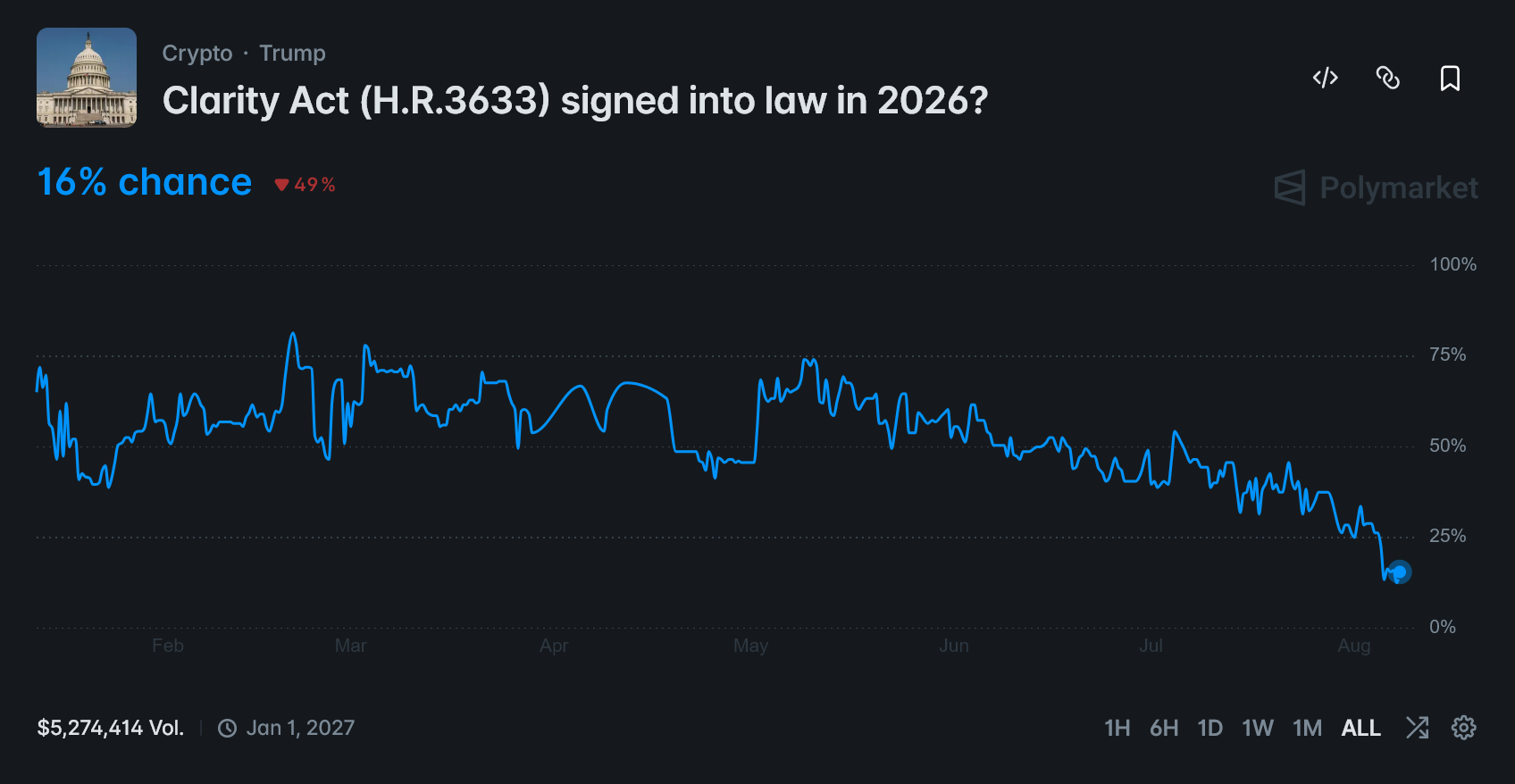
On prediction market Polymarket, the odds of the CLARITY Act becoming law in 2026 have dropped to around 16%.

That pessimism could also change how crypto markets react if the bill fails.
“I think failure is priced in right now,” Porter told BeInCrypto. He argued that a failed vote may therefore have less impact on crypto prices than many investors expect.
However, passage could produce a different reaction.
Porter said clear rules written into law could give larger investors more confidence to make long-term crypto investments. He cautioned that any effect would likely develop over time rather than trigger an immediate Bitcoin rally.
For now, September is shaping up as the next major test. Senate leaders appear willing to force a vote, but negotiators have several weeks to find support that currently does not exist.
The post CLARITY Act Likely To Fail in September. Will Crypto Prices React? appeared first on BeInCrypto.
Crypto World
Bitcoin Taps $65K Despite CLARITY Act Setback and Lack of US-Iran Deal: Weekly Crypto Recap
After last week’s Federal Reserve FOMC meeting, all crypto eyes remained on the US, but this time it was focused on whether the Senate will vote on the highly anticipated CLARITY Act before the August recess. The decision became known on Thursday evening.
But before that, let’s rewind the clocks to last Friday when bitcoin tried to take down the $65,000 resistance in the morning. The rejection was swift, and the bears pushed it south to $62,400 within hours. The rebound attempt on Saturday was halted, and the next leg down drove it to a monthly low at $62,200.
A bigger relief rally followed on Sunday morning when US President Donald Trump canceled the planned strikes against Iran and suggested that both sides might announce a permanent deal soon. Something that the Middle Eastern country denied. BTC jumped to $63,800, dipped back down to $62,200, and rocketed on Monday to $64,000 almost immediately.
The hopes of a deal intensified in the following days, with some reports claiming that it could be announced on Wednesday. Although this never materialized, BTC still kept itching higher and tapped $65,000 yesterday.
It was stopped there and dipped toward $64,000 on Friday morning after the CLARITY Act bill faced a major setback as the Senate delayed voting on it. Nevertheless, BTC rebounded during the day and touched $65,300 minutes ago, where it was stopped, at least for now.
It now sits inches below $65,000, with a market cap of $1.3 trillion and a 57% dominance over the alts. Many of them have actually posted more impressive gains over the past week, including ADA (19%), ZEC (11.5%), and XMR (6.5%).
Market Data

Market Cap: $2.295T | 24H Vol: $50B | BTC Dominance: 57%
BTC: $64,750 (+3.1%) | ETH: $1,910 (+3.4%) | XRP: $1.03 (-2.6%)
This Week’s Crypto Headlines You Can’t Miss
XRP Price Slides on CLARITY Delay as Analyst Flags Weak August Trend. The aftermath of the delayed voting on the CLARITY Act resulted in a major leg down for XRP, which dipped to just over $1.00. Meanwhile, Strategy’s Michael Saylor said Bitcoin doesn’t need CLARITY, but America does.
Chainlink Just Saw Its Biggest Exchange Outflow Since June – Bulls Are Watching. Investors pulled out over 1.25 million LINK tokens from cryptocurrency exchanges in just 24 hours, which was the single-highest withdrawal since June. Whale activity has surged as well, suggesting increased confidence among major holders.
Bitcoin Flashes Rare Bullish Divergence – Déjà Vu for BTC? A popular analyst claimed that BTC has bottomed out during this cycle after observing the formation of a bullish divergence similar to past cycles. However, other market commentators warned that there’s still a lot of leverage in the market, which signals instability.
Analyst Forecasts Ethereum Rally to $3K After Key On-Chain Breakout. Ethereum has outperformed BTC and some other larger-cap alts lately, which immediately prompted well-known analysts to speculate about its next big leg up. According to this analysis, the asset’s path toward $3,000 has begun.
Bitcoin Active Addresses Surge to 8-Month High After Coldcard Panic. The other big news over the past week or so was the Coldcard fiasco, which led to millions and millions of dollars worth of BTC being stolen from users keeping their holdings on the hard wallet. Meanwhile, the number of active BTC addresses has rocketed to a multi-year high, in what Glassnode described as a “fear-driven on-chain activity.”
Strategy Sold Over $100 Million in Bitcoin, Buys Back More STRC. The world’s largest corporate holder of bitcoin announced its third BTC sale of the year, disposing of over $100 million worth of the asset. The company used the proceeds to repurchase $81 million worth of STRC and also increased its USD reserve by $250 million.
Charts
This week, we have a chart analysis of Ethereum, Ripple, Cardano, Binance Coin, and Hyperliquid – click here for the complete price analysis.
The post Bitcoin Taps $65K Despite CLARITY Act Setback and Lack of US-Iran Deal: Weekly Crypto Recap appeared first on CryptoPotato.
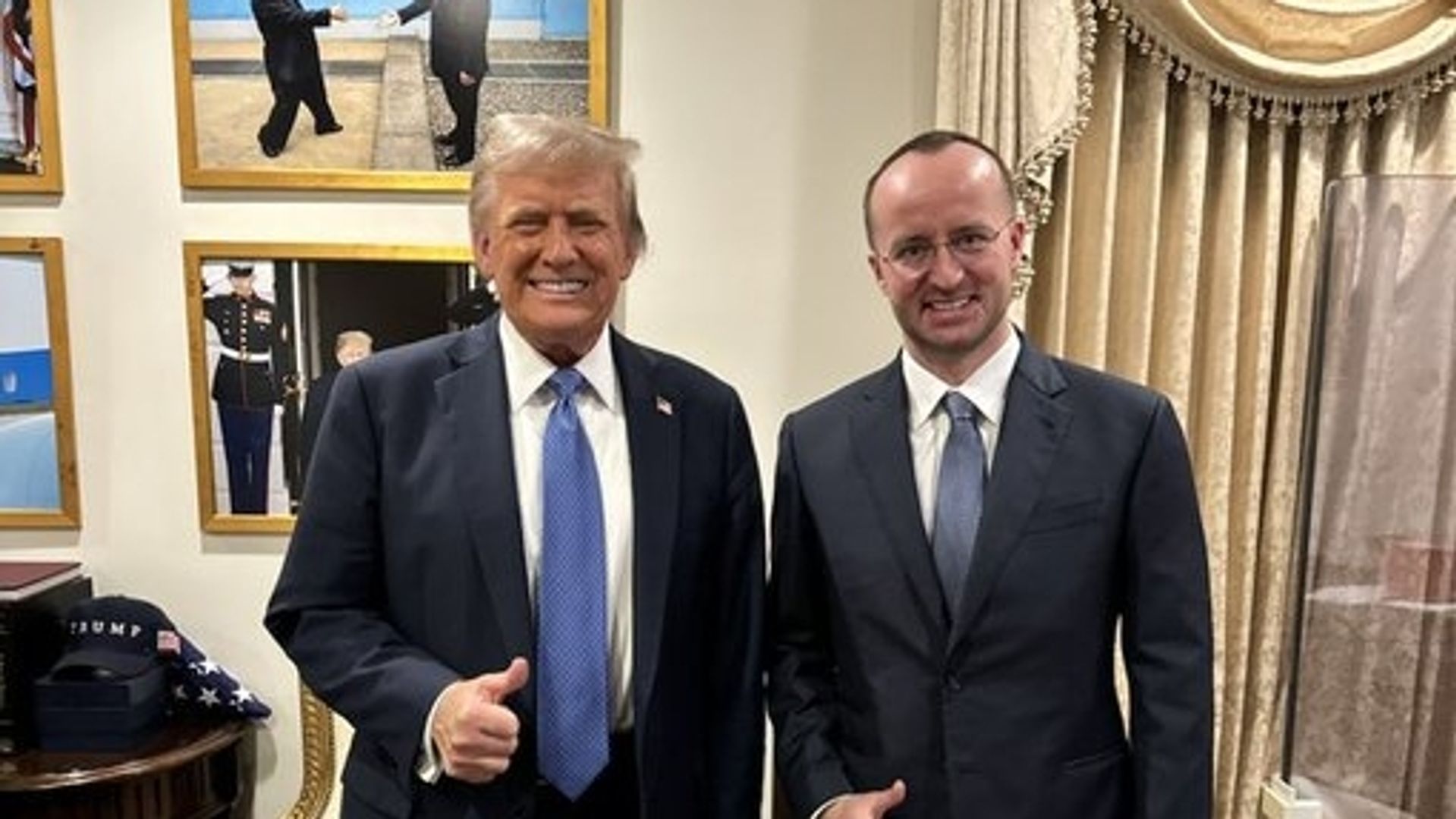
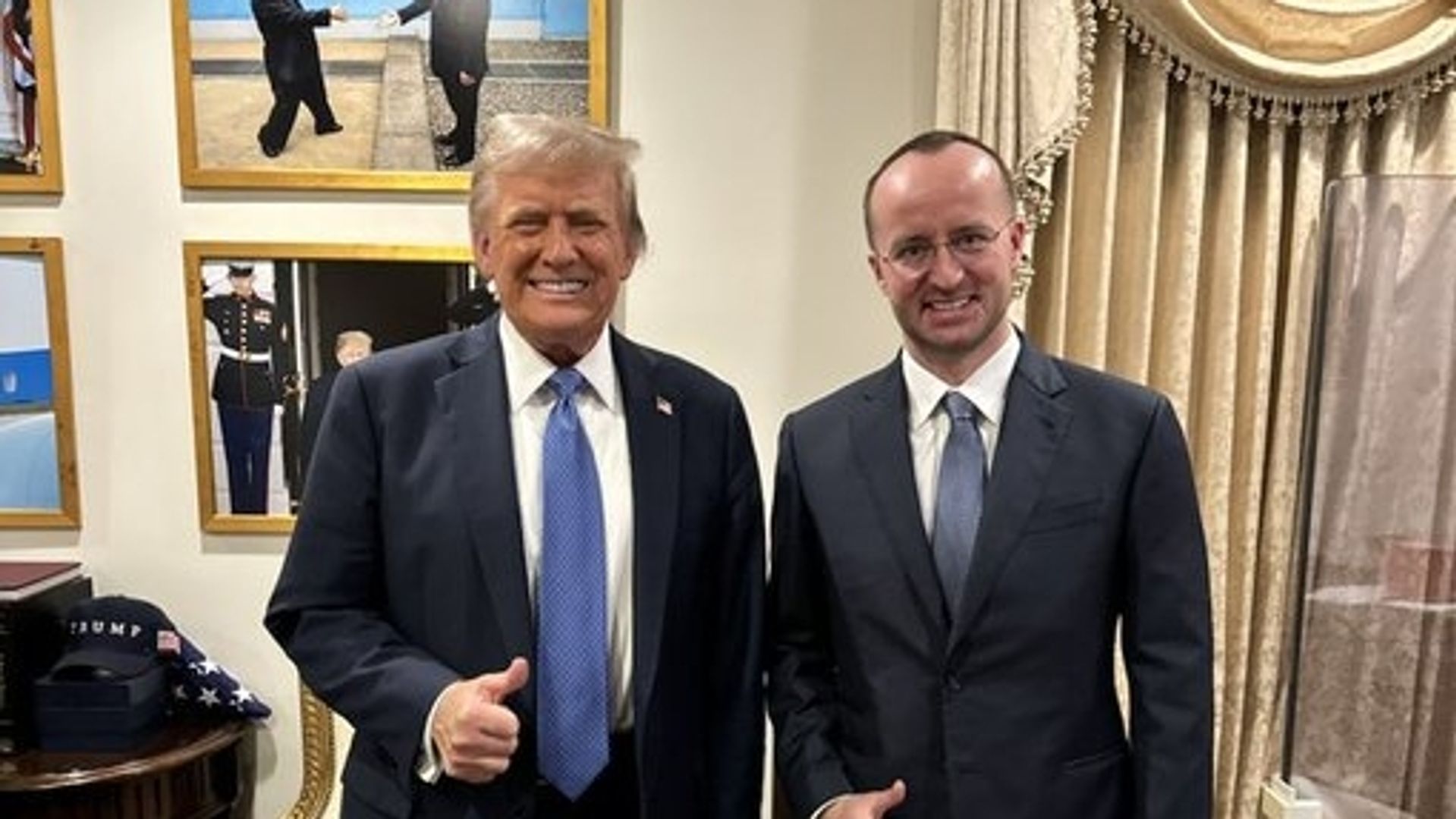
Trump Media (DJT) is unwinding parts of its crypto push, including scrapping plans to establish a publicly traded CRO token accumulation company, which it unveiled near the height of last year’s digital asset treasury boom.
Trump Media, Crypto.com and special purpose acquisition company Yorkville Acquisition mutually terminated plans for Trump Media Group CRO Strategy, the firms said Friday, citing “prevailing market conditions, and shifting business and stakeholder priorities.”
The proposed venture would have created a publicly traded company focused on accumulating the native token of Cronos and earning additional returns by staking those holdings. Trump Media itself bought $105 million of CRO in September 2025 as part of a broader partnership with Crypto.com that included plans to integrate token rewards into its products.
CRO fell as much as 5% following the news.
The companies are also walking away from a separate partnership under which Crypto.com would have serviced certain planned exchange-traded funds (ETFs), from Yorkville America. Trump Media is also scaling back plans to build Crypto.com-powered prediction markets directly into Truth Social, Axios reported earlier.

Software stocks sold off on Thursday amid disappointing second quarter earnings reports and guidance from Datadog (DDOG) and HubSpot (HUBS). Software companies with “consumption”-based business models like Datadog, including Snowflake (SNOW) and MongoDB (MBD), were among the losers. Traditional software-as-a-service vendors, led by Salesforce (CRM), charge fixed monthly or annual subscription fees based on the number of users. Newer players,…
Copyright ©2026 Investor’s Business Daily, LLC. All rights reserved. 87990cbe856818d5eddac44c7b1cdeb8
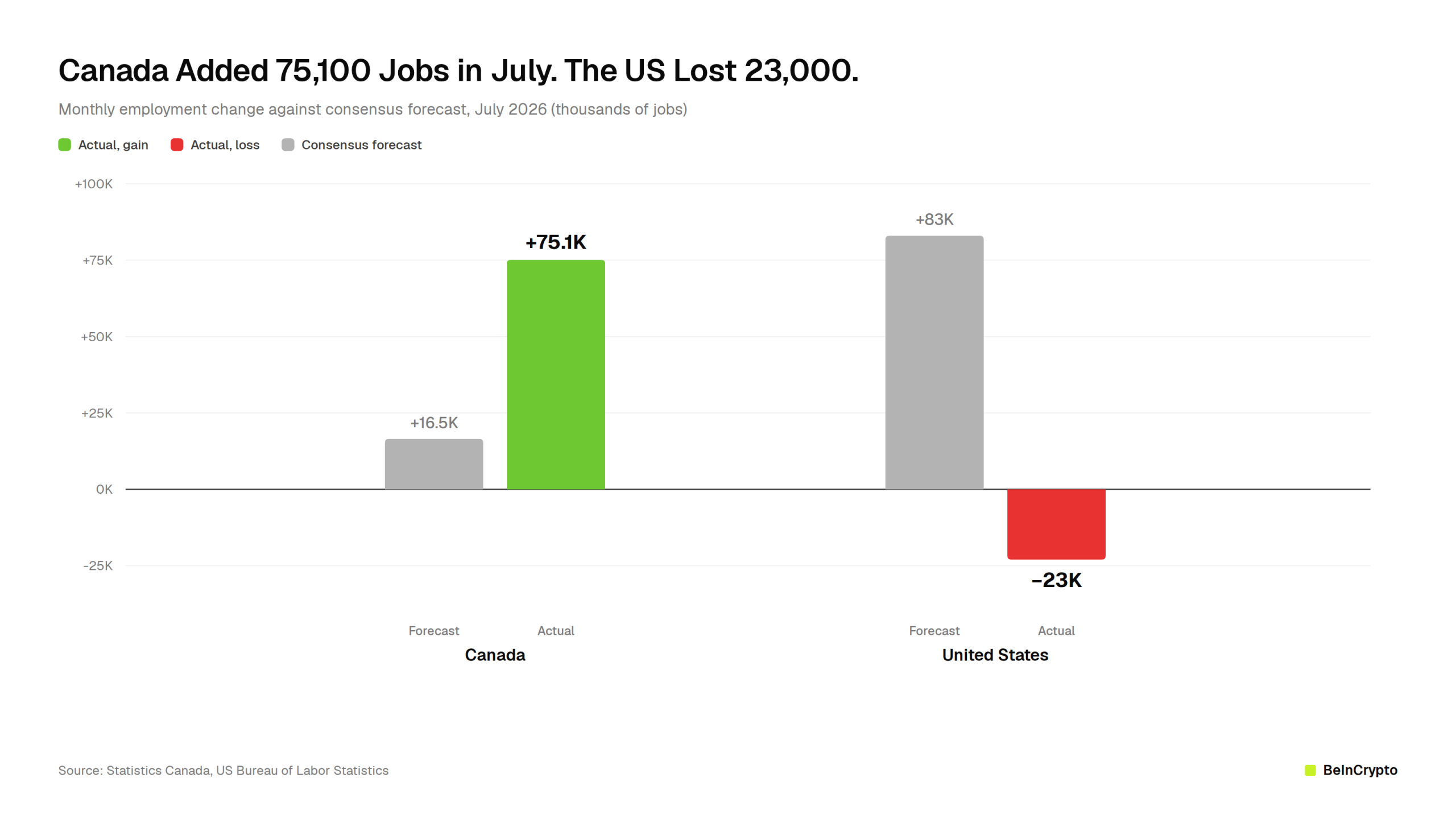
Canada added 75,000 jobs in July, about five times forecasts, while the US economy shed 23,000. The split hands the Canada crypto industry a stronger home market than American firms have seen all summer.
Statistics Canada put unemployment at 6.4% on Friday, a two-year low. US payrolls, meanwhile, missed forecasts by more than 100,000 positions after steep revisions.
A Five Times Beat Meets a US Contraction
Economists expected Canada to add about 15,000 jobs. It added 75,000. The gains split almost evenly between full-time and part-time work, according to the labour force survey.

Ontario did the heavy lifting with 52,000 new positions. Finance, insurance, and real estate added 18,000 jobs. Professional, scientific, and technical services added 17,000 more. Those two sectors matter here. They are where digital asset firms hire.
Canada has now added 181,000 jobs since April. That makes three straight months of gains.
“Three straight months moving in the right direction is exactly how turning points begin. And if the breadth we saw in July holds into the fall, stabilization could quietly become the momentum Canada has been waiting for,” Laura Ulrich, director of economic research at recruitment firm Indeed, said in a statement.
Follow us on X to get the latest news as it happens
The American report read like a different economy. The Bureau of Labor Statistics reported a 23,000 payroll decline. Economists had expected gains of 80,000 to 90,000. Worse, revisions erased another 103,000 jobs from May and June. US hiring has averaged just 34,000 a month over the past year.
One caveat keeps the contrast honest. America’s 4.1% unemployment rate still sits well below Canada’s 6.4%. However, the US rate held flat while jobs vanished. Canada’s fell while hiring boomed. Direction, not level, is the story.
Central Bank Paths Split as Bitcoin Holds $65,000
The divergence pulls the two central banks apart. Royce Mendes, managing director at Desjardins, said a Bank of Canada rate hike remains unlikely before 2027. BMO chief economist Douglas Porter flagged the reason. Wage growth cooled to 2.8%, the slowest in four years.
Strong hiring without wage pressure gives the Bank of Canada room to wait. The Federal Reserve has the opposite problem. A shrinking payroll makes further tightening hard to defend.
Within hours, the miss sent Fed expectations spinning as traders repriced US rates. Crypto markets, which rallied after June’s report, once again read weak US data as a liquidity signal.
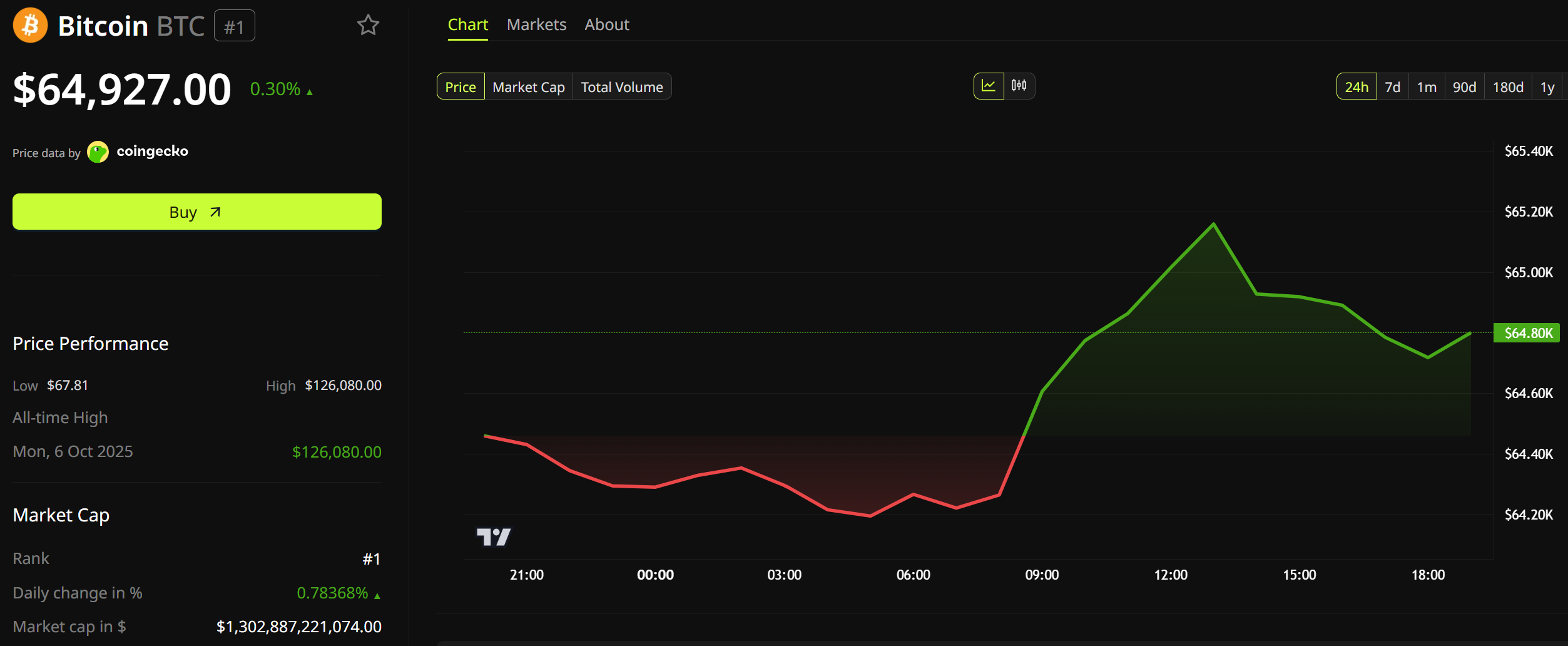
Bitcoin (BTC) traded near $65,000 on Friday, up 0.8% over 24 hours, according to BeInCrypto Markets data. Its market capitalization stood at roughly $1.31 trillion.

Can the Canada Crypto Industry Capitalize?
Canada has moved first before. The Toronto Stock Exchange listed the world’s first spot Bitcoin exchange-traded fund (ETF) in February 2021. That fund, the Purpose Bitcoin ETF, today holds about 18,500 BTC worth $1.7 billion CAD. US regulators needed almost three more years to approve rival spot products.
The rulebook is growing too. The Stablecoin Act, passed through Budget 2025’s Bill C-15, puts fiat-backed stablecoin issuers under Bank of Canada oversight. Issuers must hold one-to-one reserves and redeem at par. The rules should take force in 2027.
Major players are already positioning for that date. Coinbase Canada CEO Eric Richmond said in July the firm wants to build an “everything exchange” for Canadians. The plan spans crypto, stocks, and prediction markets. He tied the full rollout to those same stablecoin rules.
Nevertheless, the headwinds are real. British Columbia permanently banned new grid connections for crypto mining in October 2025. The province is steering its clean power toward AI and industry instead.
US venues still command far deeper liquidity. And CIBC senior economist Andrew Grantham noted Canadian unemployment sits about half a point above full employment.
The next tests come fast. Draft stablecoin rules are due in the Canada Gazette. August payrolls land on both sides of the border within a month. Together, they will show whether July’s divergence was a trend or a blip.
The post Canada Economy Just Outran America: Is Its Crypto Industry Next? appeared first on BeInCrypto.

This week’s most important crypto business developments all point in the same direction: more of the industry’s value is being routed through financial infrastructure rather than pure onchain speculation. BlackRock, for example, has introduced tokenized money market products aimed at stablecoin reserve use under the US GENIUS Act framework.
At the same time, tokenized real-world assets are proving their resilience in volatile markets, even if their decentralized finance (DeFi) adoption still looks modest. Elsewhere in the sector, Tether reported a sharp rise in profits tied to US Treasury income, while a public Bitcoin miner linked to the Trump family posted improved production and narrower quarterly losses.
Key takeaways
- BlackRock launched two tokenized money market products designed to help stablecoin issuers satisfy reserve requirements under the US GENIUS Act.
- RedStone data suggests tokenized gold performed relatively well during a sharp gold sell-off, but only a small fraction of tokenized gold supply is used as DeFi collateral.
- Tether reported $1.5 billion in second-quarter net operating profit, supported primarily by interest from US Treasury holdings and related arrangements.
- American Bitcoin reported record second-quarter production of 932 BTC, improving revenue and narrowing losses, though it remains unprofitable.
BlackRock moves to tokenize stablecoin reserves
BlackRock introduced two tokenized money market products intended to support stablecoin issuers with reserve requirements under the US GENIUS Act, expanding its involvement in tokenized financial infrastructure. According to earlier coverage by Cointelegraph, one product tokenizes exposure to BlackRock’s existing Treasury liquidity strategy on Ethereum, allowing approved investors to transfer ownership onchain while the underlying assets stay invested in cash and short-term US government securities.
The second product is described as a new institutional money market vehicle for digital asset markets. It is positioned as compatible with multiple blockchains and designed to automatically reinvest income—an approach that aligns with how reserve managers typically seek operational continuity rather than manual redemptions and reinvestment cycles.
For market participants, the practical significance goes beyond the novelty of tokenization. Stablecoins need credible, auditable reserves, and a product built around short-term government assets creates a clearer bridge between traditional compliance expectations and blockchain-based settlement. It also reinforces BlackRock’s growing footprint in tokenized Treasurys, where it already runs BUIDL, described as the industry’s largest tokenized Treasury fund.
This launch also reflects a broader institutional trend: Wall Street firms are increasingly entering tokenized markets not only as issuers, but as infrastructure providers for the assets that underwrite onchain finance. With GENIUS establishing a federal framework for payment stablecoins, the demand for reserve-grade solutions is likely to become more structured—potentially benefiting tokenization platforms that can translate “what reserves should be” into “how those reserves can be managed on-chain.”
Tokenized gold shows stress tolerance, but DeFi use is still limited
Tokenized bullion continues to draw attention, but its DeFi footprint remains small relative to its overall market. A report by RedStone, referenced in earlier Cointelegraph coverage, found that tokenized gold held up during periods of sharp price movement—specifically during gold’s sell-off.
RedStone’s analysis points to a key asymmetry in the sector: trading activity can surge while borrowing and lending adoption lag. While spot trading volume reportedly reached $90.7 billion in Q1 as gold futures rallied above $5,600 per troy ounce, RedStone estimated that only about $63 million of Tether Gold and PAX Gold is used as collateral on Aave v3 and Morpho. That figure is roughly 1.5% of their combined $4.2 billion market cap, indicating that most tokenized gold remains outside major onchain collateral pipelines.
The report also highlighted how collateral behaved during stress. On March 23, Aave processed what it described as its largest cluster of XAUT liquidations without disruption after gold dropped roughly 10% in a week—an event characterized by JPMorgan’s Greg Shearer as an “extremely brutal flush.” RedStone’s broader takeaway was that tokenized gold looked resilient, even as the findings underscored an infrastructure gap as tokenized real-world assets scale.
Since that period, gold futures have fallen more than 20% from January peaks, influenced by expectations of higher US interest rates. In that environment, the value proposition for tokenized gold is partly about reliability during volatility: the question for investors and DeFi builders now is whether liquidity and collateral usage can grow fast enough to match the expanding market for tokenized bullion itself.
Tether’s Treasury-linked earnings power another strong quarter
Tether reported a second-quarter performance that is closely tied to US Treasury income. According to its latest quarterly attestation, Tether generated $1.5 billion in net operating profit, driven primarily by interest earned on its US Treasury holdings and repurchase-related arrangements.
The attestation also points to reserve strength. As of June 30, Tether reported a reserve buffer of $4.11 billion, with assets exceeding liabilities by that margin. In parallel, even as the broader stablecoin market contracted, USDT circulating supply increased by $446 million to $184.6 billion. The result preserved Tether’s market share—DeFiLlama data cited in the earlier reporting placed USDT’s market value around $307 billion and suggested Tether still accounts for more than 60% of global stablecoin supply.
From an investor perspective, the most important implication is that stablecoin profitability continues to depend heavily on short-term interest rates. When Treasury bill yields and cash-equivalent returns are elevated, reserve-based income can become a major earnings driver, which is what appears to have happened in this quarter.
However, the same dynamic also raises a forward-looking risk: if rate expectations change or stablecoin demand slows further, Tether’s income could face pressure. This quarter’s stronger profit and reserve surplus therefore doesn’t eliminate near-term uncertainty for the stablecoin sector—it clarifies what factors are currently supporting earnings, and what could reverse them if macro conditions shift.
American Bitcoin improves production and reduces losses
Bitcoin mining remains highly sensitive to production economics and balance sheet decisions, and the latest quarterly results from American Bitcoin reflect that reality. In earlier Cointelegraph coverage, the company—linked to the Trump family and Nasdaq-listed—reported record second-quarter production of 932 BTC, improving mining revenue compared with the first quarter.
American Bitcoin reported mining revenue of $67 million in Q2, up from $62.1 million in Q1. The company also narrowed its net loss to $57.2 million, improving from an $81.8 million loss in the previous quarter. The production milestone matters because it is one of the few levers miners can control in the short term—hash rate and operational efficiency translate directly into how much Bitcoin is produced, even when market prices are volatile.
But the company’s financial picture is still constrained. American Bitcoin remains unprofitable, and it recently completed a 1-for-15 reverse stock split to maintain its Nasdaq listing after its share price fell below the exchange’s minimum bid requirement. Its balance sheet also includes pledged Bitcoin: the miner held roughly 8,002 BTC as of June 30 and had pledged about 3,090 BTC as collateral under equipment purchase agreements with Bitmain.
That pledge introduces additional sensitivity to Bitcoin price movements. Even when production improves, a decline in BTC could complicate collateral dynamics and funding conditions—an issue that investors should keep watching as the company attempts to stabilize its public-market footing.
Across these stories, a shared theme emerges: crypto businesses are increasingly evaluated on how they monetize financial assets—Treasury exposure, tokenized reserves, tokenized collateral, and operational production—rather than on token price narratives alone. The next watchpoints are straightforward: whether stablecoin-related tokenized reserve products expand beyond pilots, whether tokenized gold’s DeFi collateral usage grows beyond its current small share, and how earnings trajectories for issuers like Tether and miners like American Bitcoin respond if interest-rate and Bitcoin-price assumptions turn.
Senate Majority Leader John Thune reportedly still plans to file Clarity Act cloture before lawmakers leave for the August recess, Eleanor Terrett reports. The move would lock in a September vote on the crypto bill.
The Clarity Act, formally the Digital Asset Market Clarity Act, would set clear rules for how the US regulates digital assets. It needs 60 Senate votes, and those votes are not there yet.
Why the Clarity Act Cloture Filing Matters
Cloture is a procedural step that starts the countdown to a floor vote. Filing it now would queue the bill for action soon after the Senate returns on September 11.
Thune’s office delivered the message to crypto industry leaders on Friday, according to Eleanor Terrett, host of Crypto America podcast. Industry figures read it as a sign the bill sits at the top of the September agenda.
Follow us on X to get the latest news as it happens
The timing is tight. The Senate’s recess begins on August 10, leaving only days to file. A vote before the break is already off the table after Senate Democrats refused to fast-track the bill.
“The Dems insisted on no Clarity vote. We’re getting that queued up first thing [when] we come back in September,” Politico reported, citing Thune.
Big hurdles remain. Republicans need roughly seven Democratic votes, and fights over stablecoin yield and ethics rules are unresolved. Banks’ lobbying against stablecoin yield has won over several Republicans. Polymarket puts the odds of passage this year near 15%.
Why Bitcoin Could Move Fast This Weekend
Bitcoin (BTC) traded near $65,000 on Friday, up 0.3% over the past day.

The filing window is short. It runs from Friday night through Monday morning, when the Senate’s recess formally begins. A quiet weekend of private talks remains the most likely outcome.
Still, crypto markets never close. A surprise filing, a late deal on yield or ethics, or a White House comment could move Bitcoin fast. Weekend trading is often thinner, so prices can swing harder.
The next test comes in September, when Thune must turn a procedural promise into 60 actual votes.
The post Thune Still Plans Clarity Act Cloture: What a Weekend Surprise Could Mean for Bitcoin appeared first on BeInCrypto.

Breaking Down the Sweet Ending of Romantic K-Drama Our Sticky Love

Where Antonio Banderas, Melanie Griffith Stand After Divorce

UEFA ‘paid off’ Gianni Infantino’s alleged lover as pressure grows on FIFA president


-

 Politics5 days ago
Zack Polanski: an incitement to murder Nigel Farage?
-

 Crypto World6 days ago
MicroStrategy Post-Earnings CLARITY Act Push Could Add New Catalyst for Its Stock
-

 Crypto World7 days ago
XRP Ledger v3.3.0 brings five institutional features
-

 Crypto World7 days ago
New York sues Kalshi over prediction market gambling
-

 Crypto World6 days ago
Crypto PAC spending tops $2M in Michigan House race
-

 Business5 days ago
DTCR: Deleveraging And A Hedge Fund Collapse Point To A Possible AI Bottom
-

 Tech6 days ago
ESET tracks rise in malicious AI skills and adaptable malware
-

 Sports6 days ago
France Cricket implodes: letters hidden in a drawer and a board at war
-
Crypto World5 days ago
XRP Ledger urges node upgrade after manifest flood
-

 Crypto World7 days ago
Moneyflip CEO charged in $40K murder-for-hire plot
-
 Sports7 days ago
Bruno Fernandes decision made as Man United ‘discuss’ striker transfer option
-
Business7 days ago
FIFA has scrapped $20 billion World Cup sell-off plan, New York Post reports
-

 News Videos6 days ago
Financial Crash Expert: The 90-Day Collapse Timeline They Are Desperately Hiding.
-

 Sports2 days ago
Jordan Coyle & Cordiamo take Laya Arena Stakes at RDS
-
 Crypto World4 days ago
US Tech Stocks See Largest 5-Week Inflow in History: Can Nasdaq Break Its Downtrend?
-
 NewsBeat6 days ago
Tourist plane on sightseeing flight in Peru crashes into a field, killing all 13 people on board
-

 NewsBeat6 days ago
Arsenal reach full agreement with Newcastle over Bruno Guimaraes transfer | Football
-

 Tech6 days ago
Page Not Found | WIRED
-
 NewsBeat6 days ago
Bikini-clad Jennifer Aniston, 57, kisses hypnotist boyfriend Jim Curtis as they enjoy a romantic getaway aboard a luxury yacht in Spain
-

 Fashion10 hours ago
Frugal Friday’s Workwear Report: Cap-Sleeve Pointelle Crewneck Sweater
You must be logged in to post a comment Login