

Crypto World
CLARITY Act News: Trump Administration Confronts Banks Over Crypto Banking Access

President Donald Trump has issued a direct warning to the banking industry: stop blocking crypto or face consequences. This came as the CLARITY Act is currently at a standstill, with the President now blaming the banks.
In a late Tuesday statement (March 3), Trump accused major financial institutions of undermining his administration’s digital asset agenda.
This news broke as the crypto market moved higher overnight, surging 2.6% and pushing the total crypto market cap over $2.4 trillion.
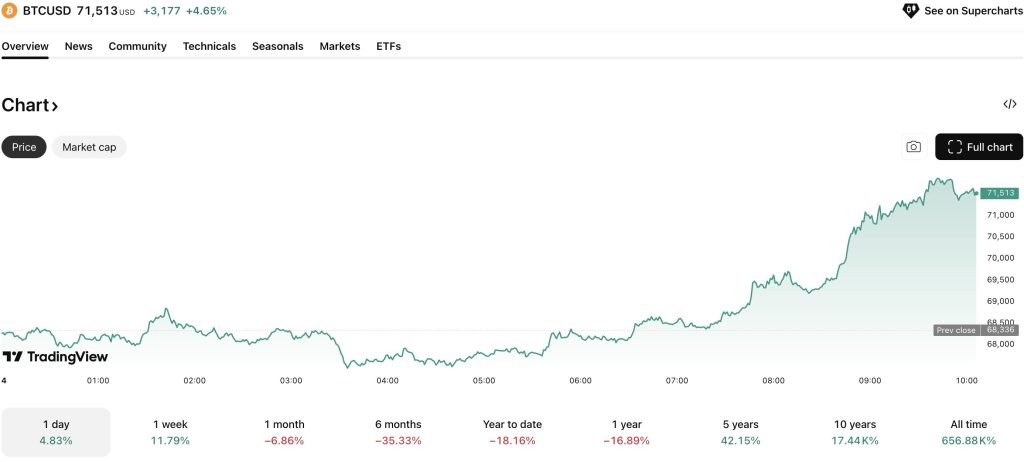
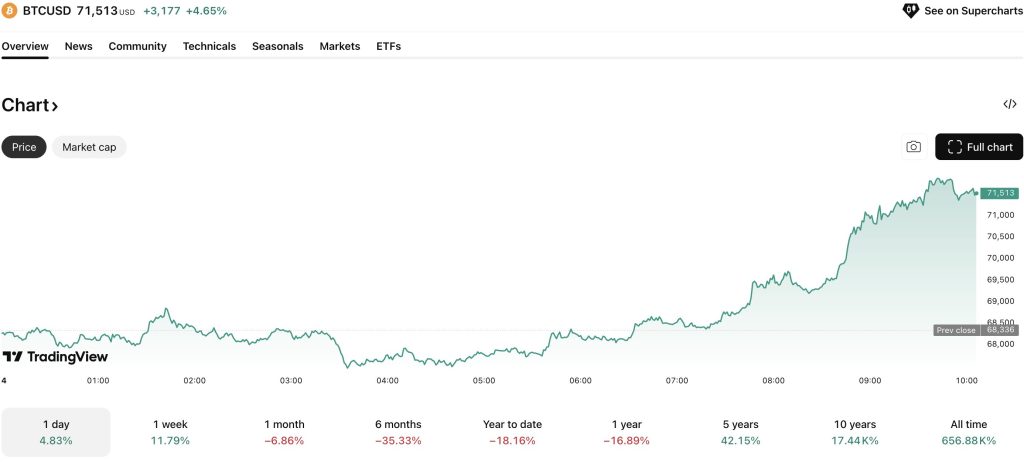
Bitcoin USD has surged in the European morning trading session, flying back above $71,000 with a +6% move, one of its best days in recent weeks.
The Battle for the Clarity Act: Trump Vs. The Banks
The immediate trigger for this confrontation is the stalled CLARITY Act. This market-structure bill, designed to reshape how digital assets are regulated in the US, passed the House last year but has hit a wall in the Senate.
Trump took to his Truth Social platform late on Tuesday to frame the delay as a national security failure:
“The Banks are hitting record profits, and we are not going to allow them to undermine our powerful Crypto Agenda,” Trump wrote. He argued that inaction would cede ground to China, framing the Trump crypto policy as vital to maintaining US financial dominance.
Banks are specifically opposing provisions that would allow crypto exchanges to pay yield to users holding stablecoins. Traditional finance institutions argue this could trigger a deposit flight, draining capital from retail bank crypto accounts into higher-yielding digital asset platforms.
This follows the administration’s earlier legislative win, the Genius Act, signed in July. That law created a framework for issuers but remained silent on whether intermediaries could offer yield. The CLARITY Act aims to close that loop, and banks are scared.
BILLIONAIRE KEVIN O'LEARY SAID THE CLARITY ACT WILL PASS AND SEND BITCOIN TO $200,000 — Crypto Fergani (@cryptofergani) March 3, 2026
TRILLIONS INCOMING  pic.twitter.com/FffPLwwXSv
EXPLORE: Best Crypto Presales to buy in 2026
Reversing Operation Choke Point
The administration is not relying solely on legislation. The White House is actively moving to dismantle the legacy of Operation Choke Point 2.0.
This informal regulatory strategy, utilized during the previous administration under Joe Biden, pressured banks to sever ties with crypto clients under the guise of risk management.
On March 1, the OCC repealed Interpretive Letter #1179. This removed the requirement for banks to seek pre-approval before engaging in crypto activities. Yet, industry reports suggest that despite the regulatory green light, banks remain hesitant.
Trump’s latest comments signal he could be set to go on the offensive to push the CLARITY Act through once and for all. And by now, we all know what Donald wants; he seemingly gets it.
The stakes for the industry are existential. Without reliable banking rails, crypto firms face higher operational costs and settlement risks. While the US struggles with basic access issues, other nations are integrating blockchain at the central bank level.
A similar contrast is evident globally, as the Bank of Japan explores blockchain-based reserve settlement, highlighting that traditional institutions elsewhere are adapting rather than obstructing.
As the CLARITY Act Nears, the Bitcoin Price Surges Past $70,000: What Next for BTC USD?
Bitcoin has resumed its rally, pumping more than 6% overnight and now trading at $71,200, even though sentiment across global equity markets remains risk-averse, as evidenced by falling precious metal prices.
There is a possibility that capital leaving the lagging silver market may be partially rotating into the surprisingly resilient BTC. Since the US attack on Iran, the Bitcoin price has risen by around 10%, after initially dropping to roughly $63,000 in the immediate aftermath.
At the same time, USD strength has not triggered declines in the crypto market, as it often does, potentially signaling renewed belief in crypto as a store-of-value amid growing global tensions.
BTC/USD now needs to hold above $70,000 to signal further upside. A loss here would signal weakness, and a drop back toward support at $66,000 becomes likely.
However, holding $70,000 and a fresh injection of volume could see Bitcoin revisit its February high of $78,600. Macroeconomic news and volume are the two key indicators to watch when plotting BTC’s next move.
DISCOVER: Next Crypto to Explode in 2026
The post CLARITY Act News: Trump Administration Confronts Banks Over Crypto Banking Access appeared first on Cryptonews.



After weeks of steady withdrawals, investors are beginning to allocate fresh capital to U.S. spot bitcoin exchange-traded funds (ETFs).
The shift follows a difficult start to the year for the products. From mid-October, when bitcoin’s price began its downfall, through late February, spot bitcoin ETFs recorded cumulative outflows of about $9 billion, according to data from Bloomberg Intelligence ETF analyst James Seyffart. The category still shows $1.1 billion in net outflows for 2026, but flows have shifted in recent days. Since Feb. 24, investors have added roughly $1.7 billion.
The rebound suggests some investors believe bitcoin may have found at least a short-term floor.
“It was surprising to me that there was basically no dip buying when bitcoin was a falling knife to start the year,” Seyffart said. At the time, software stocks and crypto assets were both sliding, yet investor behavior split. Software ETFs pulled in record inflows as traders tried to time a bottom while bitcoin ETFs continued to see steady withdrawals.
Those withdrawals were not dramatic, but they persisted.
Now the pattern appears to be reversing. Seyffart said recent price action may have helped restore confidence. Over the weekend, bitcoin held above its recent lows despite geopolitical tensions tied to Iran.
“I think investors are likely feeling a bit more comfortable that we have hit at least a near-term bottom,” Seyffart said. “That higher low this weekend on such massive news had to be a comfort to some.”
The inflows also appear to reflect outright bullish positioning rather than market-neutral trading strategies. Some institutional investors use ETFs and futures together in what is known as a basis trade, where they capture yield from price differences between spot and futures markets.
But that setup does not appear attractive right now.
Yields tied to those trades remain relatively low, while open interest across CME’s crypto futures and options markets has declined. That drop suggests fewer traders are putting on large derivatives positions that typically accompany arbitrage strategies.
Instead, the ETF inflows look more like straightforward bets on bitcoin’s price direction.
Despite bitcoin falling about 16% this year, nearly all spot bitcoin ETFs still show net positive flows for 2026, with BlackRock’s iShares Bitcoin Trust (IBIT) adding roughly $300 million in capital year-to-date. That dynamic highlights how investors continue to allocate through regulated fund structures even during downturns.
Nate Geraci, president of the ETF Store, said the flows also reflect growing conviction among large asset managers promoting the funds.
“It’s easy to frame this as BlackRock simply promoting its highest-revenue product,” Geraci said. “But I see it more as the firm doubling down on its conviction that bitcoin belongs in diversified portfolios.”
Geraci noted that BlackRock has many higher-fee ETFs it could spotlight instead. Meanwhile its spot bitcoin ETF, IBIT, is down about 4% this year. Asset managers rarely highlight lagging funds unless they believe strongly in the long-term case, he said.
PI’s price has rocketed to its highest levels in about two weeks.
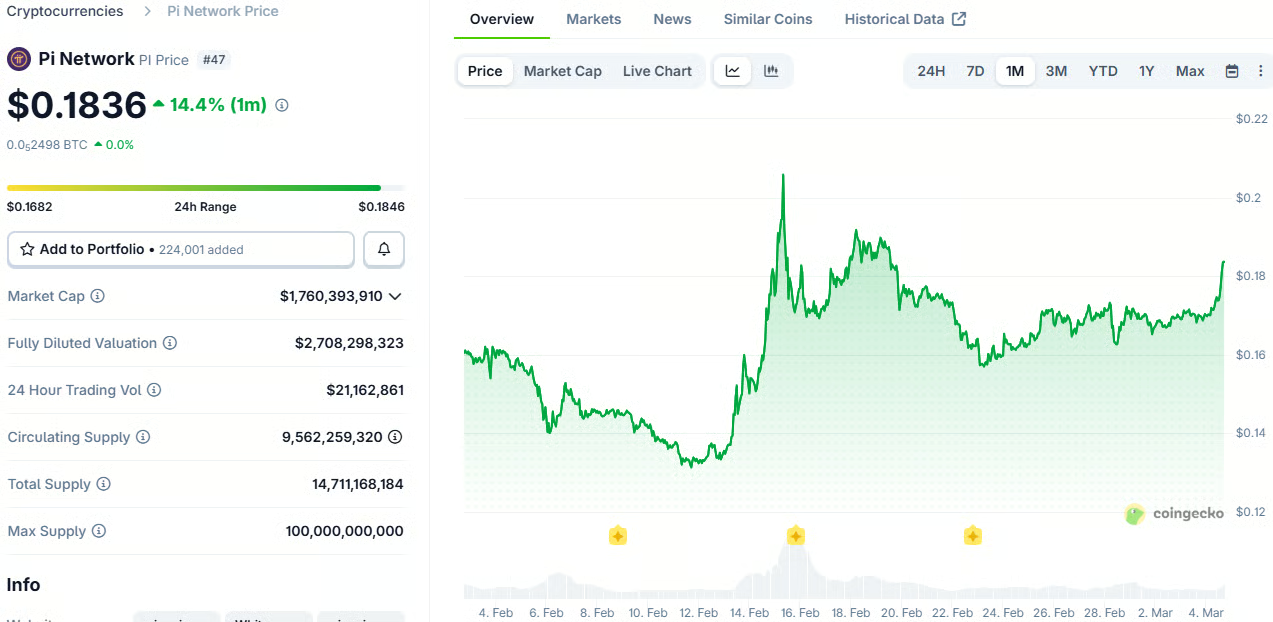
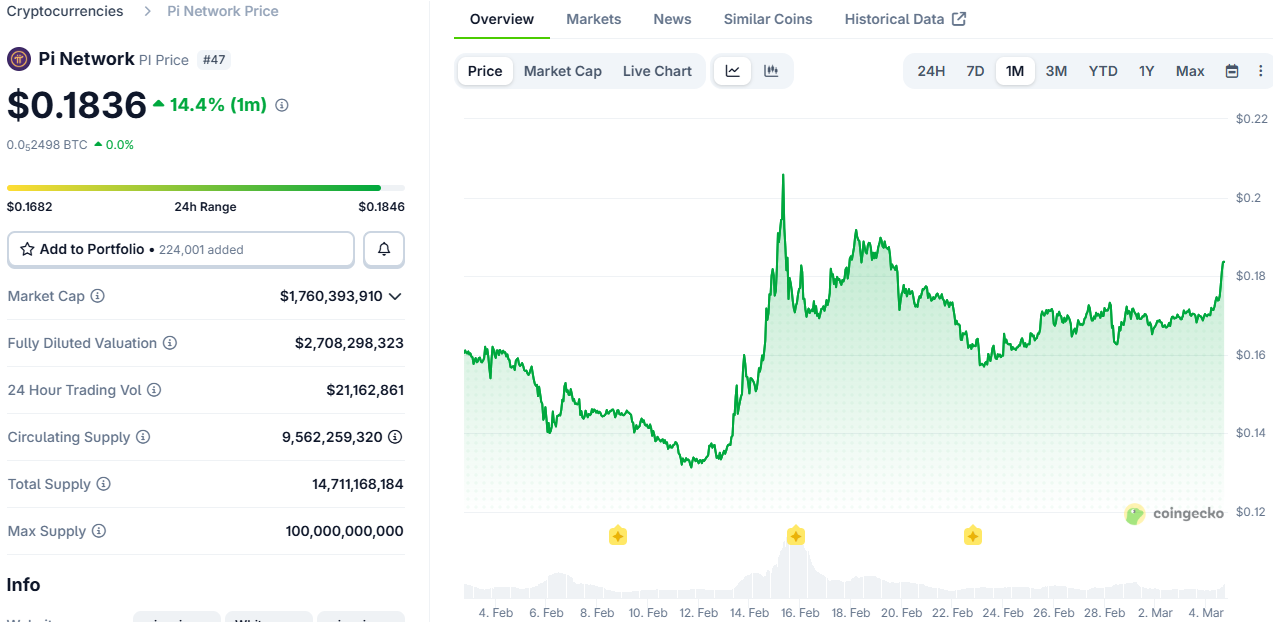
Although the entire cryptocurrency market has been charting gains in the past 12 hours or so, some assets have performed better than others. Pi Network’s native token is among those, as the popular alt has taken advantage of the market-wide rally and now trades at a multi-week peak of almost $0.185.
Despite the upcoming massive token unlocks scheduled for the next week or so, PI’s gains today put it among the top-performing alts. Naturally, this surge could be driven by other factors, such as the most recent updates, which we reported earlier today.
More specifically, the Core Team indicated that the protocol v19.9 migration was successfully completed, which was a major milestone announced just a couple of weeks after the project was updated to v19.6.
This means that the next protocol version is v20.2, which the team hopes will be implemented before the 2026 Pi Day – March 14.
The team reminded once again that all node operators who must use desktop computers and laptops instead of mobile devices have to upgrade to the current protocol version. Otherwise, they could be disconnected from the network.
PI’s surge to a two-week high now means that the asset has gained over 14% in the past month. This is in stark contrast to most other larger-cap cryptocurrencies, including BTC, ETH, SOL, and XRP, all of which are down monthly. In some cases, such as BNB, XRP, and SOL, the monthly declines are by double digits.
What could be a worrying sign for the PI bulls is the rising number of tokens scheduled to be unlocked in the next couple of weeks. Data from PiScan shows that the average number of coins to be released daily will be around 6.8 million, but several days will see more than 11 million.
You may also like:
March 7 will be a record-setting day, with almost 21 million coins to be unlocked. This could intensify the immediate selling pressure on the asset if investors decide to dispose of their long-awaited tokens.
Binance Free $600 (CryptoPotato Exclusive): Use this link to register a new account and receive $600 exclusive welcome offer on Binance (full details).
LIMITED OFFER for CryptoPotato readers at Bybit: Use this link to register and open a $500 FREE position on any coin!
Disclaimer: Information found on CryptoPotato is those of writers quoted. It does not represent the opinions of CryptoPotato on whether to buy, sell, or hold any investments. You are advised to conduct your own research before making any investment decisions. Use provided information at your own risk. See Disclaimer for more information.
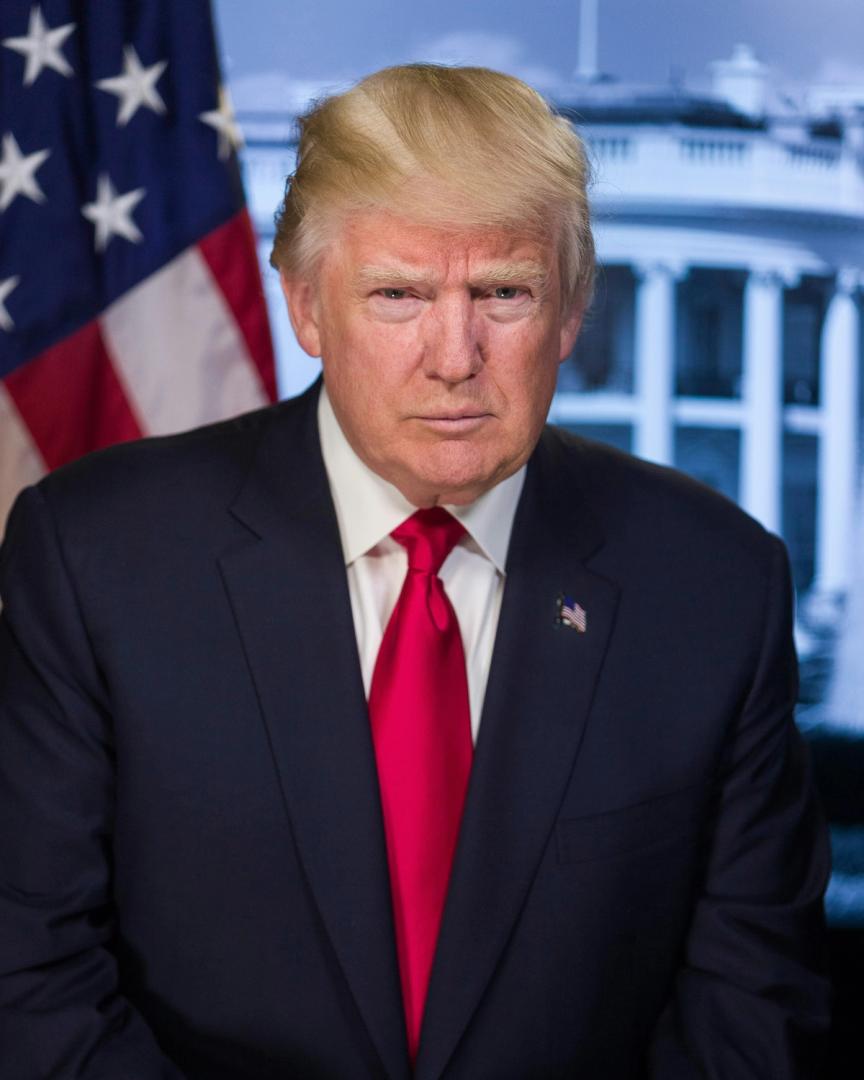
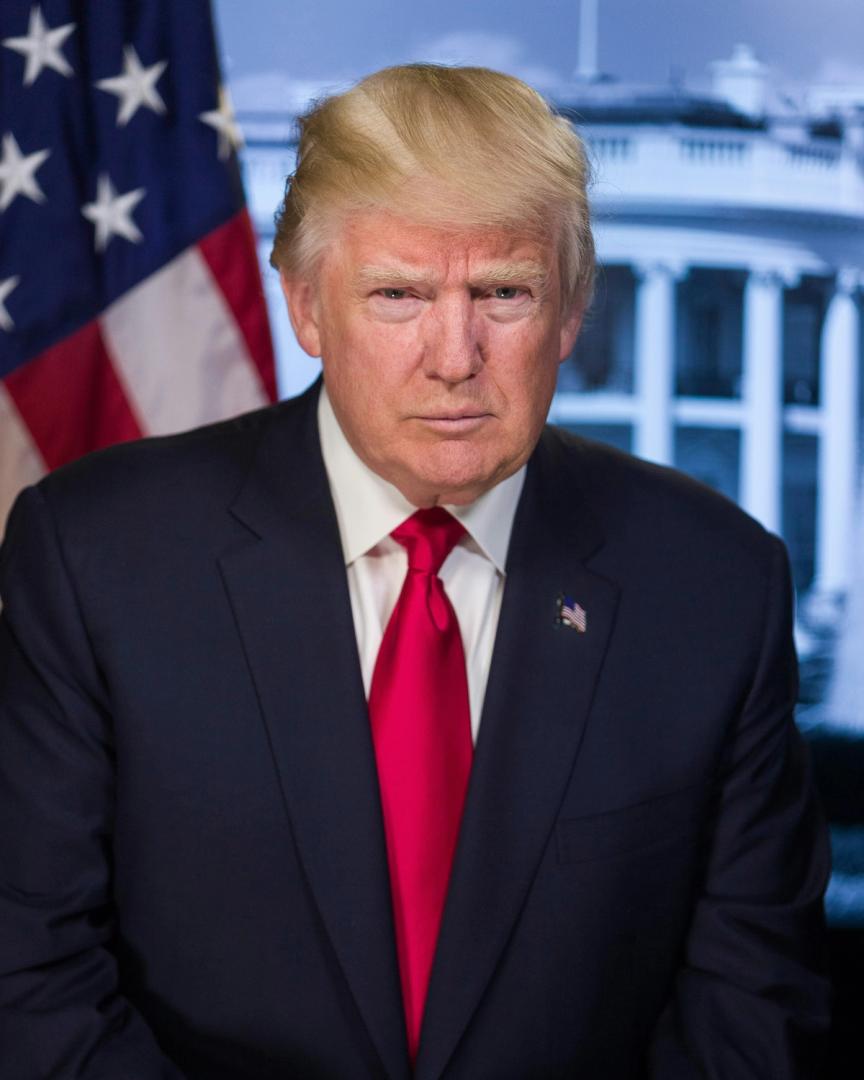
U.S. President Donald Trump and Coinbase CEO Brian Armstrong met behind closed doors shortly before the president said bankers are trying to undermine the GENIUS Act in a Truth Social post, CoinDesk confirmed.
“The U.S. needs to get Market Structure done, ASAP. Americans should earn more money on their money,” Trump said in the post on Tuesday. “The Banks are hitting record profits, and we are not going to allow them to undermine our powerful Crypto Agenda that will end up going to China, and other Countries if we don’t get The Clarity Act taken care of.”
Politico first reported the meeting between Armstrong and Trump. Afterward, the president publicly backed Coinbase’s “position in [the] ongoing lobbying clash with banks that has derailed a major cryptocurrency bill.”
The news outlet cited “two people with knowledge of the matter who were granted anonymity to discuss a closed-door matter” as the source of the meeting between Trump and Armstrong. It also said it was unclear what they both discussed during the meeting.
However, it reiterated, “it came just before Trump wrote on social media that banks ‘need to make a good deal with the Crypto Industry’ in order to advance digital asset legislation that has stalled on Capitol Hill.”
The White House and Coinbase have not responded to a CoinDesk request for comment.
The market structure bill has been stalled since the Senate Banking Committee lawmakers were set to debate and vote on it. The point holding back the passage of the crypto bill is that banks argue stablecoin interest rates could affect bank deposits and therefore, particularly, their lending ability. Crypto exchanges say individuals should be able to earn rewards on their stablecoins holdings, which they say the GENIUS Act allows.
JPMorgan CEO Jamie Dimon Tuesday said that stablecoin issuers that pay interest on customer balances should be regulated like banks. Patrick Witt, the executive director of the President’s Council of Advisors for Digital Assets, pushed back against Dimon, saying “the deceit here is that it is not the paying of yield on a balance per se that necessitates bank-like regulations, but rather the lending out or rehypothecation of the dollars that make up the underlying balance.” Witt also said the GENIUS Act “explicitly forbids stablecoin issuers from doing the latter. Stablecoins ≠ Deposits.”
Crypto-related stocks, including COIN, jumped Wednesday amid a broader surge in crypto prices. COIN climbed above $200, seeing its highest price since late January.
While ADA rebounds, whale dumping keep it on shaky ground.
The cryptocurrency market witnessed a notable resurgence over the past 24 hours, with Cardano’s ADA following the green wave.
Nonetheless, the whales’ recent actions signal that a new correction might be knocking on the door.
The Bears Remain in Charge
ADA climbed above $0.27 today (March 4), gaining about 3% on a daily scale, though it remains down roughy 2% over the past week. Its decline during that period coincides with a sell-off by large investors.
The renowned analyst Ali Martinez revealed that whales have ‘redistributed’ 230 million tokens: a stash currently valued at around $63 million. This cohort of investors now controls less than 13.7 billion ADA, or roughly 37% of the asset’s circulating supply.
Since his graph shows a sizeable reduction in their holdings, it could be regarded as a significant sell-off that might weigh on the price for several reasons. They boost the amount of ADA available on the open market, and without a matching rise in demand, that extra supply can suppress the valuation. Whale distribution also signals weakening conviction among large holders, a shift that smaller investors may find worrying and cause them to cash out as well.
It is important to note that the behaviour of the big investors over the past week contrasts with their buying spree in recent months. As CryptoPotato reported, they purchased almost 820 million ADA between August 2025 and February this year.
Despite its daily resurgence, Cardano’s native token is still struggling to break out of its broader bearish pattern. Earlier this week, Martinez outlined $0.245, $0.112, and $0.051 as the next three lines of defense for the asset should it head south again.
You may also like:
Meanwhile, the popular trader Jake Gagain described ADA as one of his worst investments since entering the crypto market. His remarks sparked a heated debate, with some X users sharing his thesis, while others argued that his timing was bad and insisted that “the best is yet to come.”
The Bullish Signs
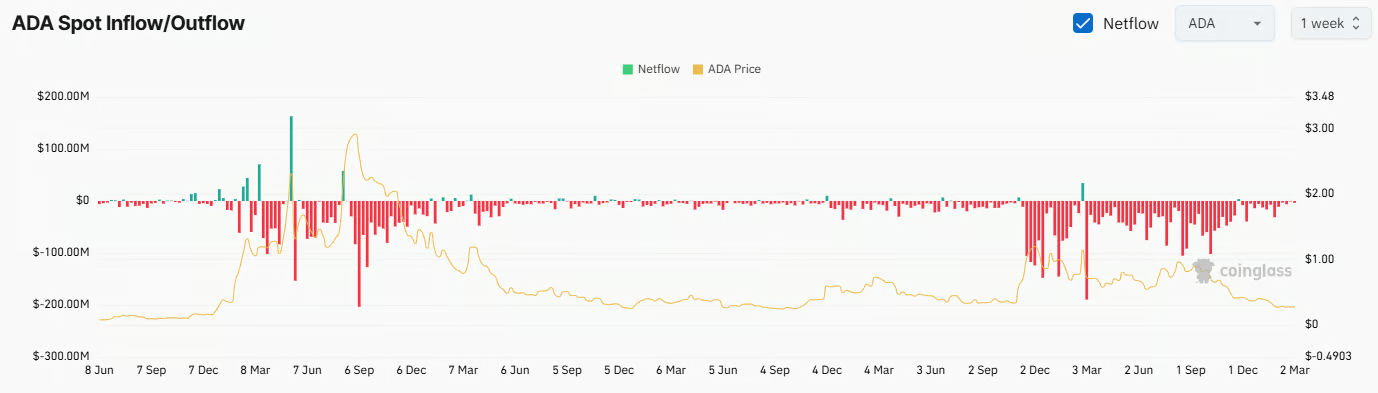
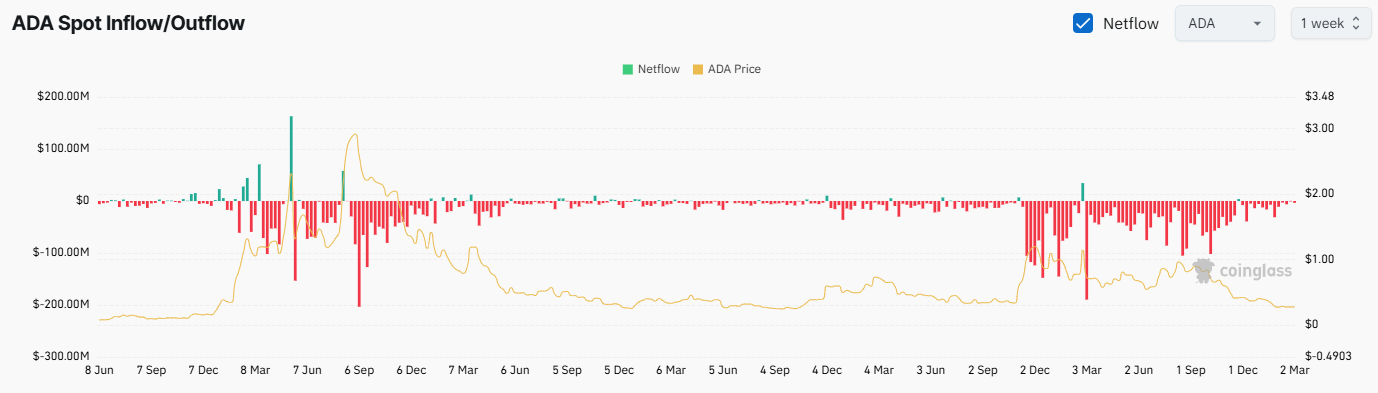
On the other hand, some technical indicators suggest Cardano’s native cryptocurrency could make a decisive comeback soon. For instance, ADA’s exchange netflows have been predominantly negative over the last few months. This means that investors continue to move coins from centralized platforms to self-custody, thereby reducing immediate selling pressure.
Next on the list is ADA’s Relative Strength Index (RSI), which has fallen below 30 on a weekly scale. The technical analysis tool ranges from 0 to 100, and readings above 70 signal that the asset is overbought and due for correction. Conversely, anything beneath 30 is considered a buying opportunity.

X user Sssebi noted the development, saying that “historically ADA has never been this oversold, which makes it one of the most undervalued projects.”
Binance Free $600 (CryptoPotato Exclusive): Use this link to register a new account and receive $600 exclusive welcome offer on Binance (full details).
LIMITED OFFER for CryptoPotato readers at Bybit: Use this link to register and open a $500 FREE position on any coin!
Disclaimer: Information found on CryptoPotato is those of writers quoted. It does not represent the opinions of CryptoPotato on whether to buy, sell, or hold any investments. You are advised to conduct your own research before making any investment decisions. Use provided information at your own risk. See Disclaimer for more information.


Bitcoin should be trading higher than it is today.
That’s the view of Kevin de Patoul, CEO and co-founder of crypto investment firm Keyrock, who argues that the market is misreading both macro conditions and structural progress in digital assets.
The world’s largest cryptocurrency was trading around $73,000 at the time of publication. Bitcoin is down about 18% year-to-date, having reached an all-time high of around $125,000 in early October last year.
“If you go back to early 2025 through 2026 and look at all the positive developments such as regulatory progress and institutional adoption, most people would have said that should make the price explode,” de Patoul said. “Increasing macro uncertainty should increase bitcoin demand, and yet it hasn’t.”
Instead, BTC has spent much of the past nine months under pressure, still behaving like a risk-on asset rather than the risk-off hedge many proponents claim it to be. Capital that flowed aggressively into bitcoin over the past 18 months, largely institutional, now appears more tactical than ideological.
“It’s still priced as a risk-on asset. Last in, first out in terms of capital allocation,” he said. “If investors perceive it that way, then in periods of stress they reduce exposure.”
Crypto assets have delivered a muted performance over the past six months, with bitcoin drifting well below its prior highs and much of the altcoin market struggling to sustain momentum. Trading volumes have thinned, volatility has compressed and broad-based rallies have failed to materialize, marking a sharp contrast to the speculative surges of previous cycles. Even as institutional adoption and tokenization efforts advance in the background, price action has remained subdued, reflecting cautious capital flows and a market searching for its next catalyst.
De Patoul stops short of saying the market is wrong. But he struggles to reconcile the pullback with the broader backdrop. “Nothing really explains the recent drop unless there’s a misunderstanding of the type of asset it’s supposed to be.”
That disconnect is emblematic of what he sees as crypto’s current moment: not a breakout cycle, but a structural transition.
“We’re not issuing stablecoins or taking retail deposits, but we’re connected to everything and provide liquidity across all venues,” de Patoul said. “That gives us a front-row seat to the evolution, and lets us participate in the market as it shifts toward digital assets and tokenized infrastructure.”
A tale of two markets
From Keyrock’s vantage point, working with banks, asset managers, issuers and exchanges, 2026 feels less like stagnation and more like rewiring.
“2026 feels like a transition year rather than a breakout one,” de Patoul said. “A lot of what defined crypto in previous cycles is dying out faster than expected, while the parts that actually make sense are still being built, like real finance moving onchain.”
In his view, two largely uncorrelated markets are developing in parallel.
The first is the crypto-native ecosystem: decentralized finance (DeFi), altcoins and the familiar cycle of liquidity and hype. Here, sentiment is subdued. The rising tide that once lifted all tokens has receded. Broad-based speculative rallies are harder to sustain, replaced by “very precise opportunities that make sense,” he said.
The second is the digitization of traditional finance. Tokenized money market funds, stablecoins, onchain funds and new market infrastructure. On that side, he says, he remains as enthusiastic as ever.
“When I speak to institutions, nothing has changed. The level of enthusiasm, the level of building, none of that drive has slowed,” de Patoul said. “The aim is to make crypto assets more accessible to clients and to rewire parts of financial markets.”
These institutional efforts are less sensitive to bitcoin’s price swings. Stablecoins, tokenized funds and settlement rails are about upgrading financial plumbing, not speculating on crypto’s next rally. Circle’s (CRCL) IPO and partnerships like Apollo’s tie-up with DeFi protocol Morpho reflect multi-year commitments, he noted.
But while the assets have been tokenized, the utility layer is still under construction.
Built, but not yet useful
The past 18 months marked a leap from concept to product. Funds were tokenized. Stablecoins proliferated. Infrastructure was deployed.
Yet liquidity remains thin in many tokenized money market funds and real-world assets (RWAs). The tokens exist, but often function as wrappers rather than transformative instruments.
“They’ve built the token. Now the question is: where can it be used? Who accepts it? Can it be used as collateral? Can it bring liquidity at scale?” de Patoul said.
Tokenizing a fund can, paradoxically, cut it off from traditional capital pools without immediately unlocking digital-native benefits. The bridge between traditional institutions and onchain markets, the ability to use tokenized assets seamlessly across both worlds, takes time.
“We’re stuck in an in-between phase,” he said. “The pieces are there. The next step is putting them together to bring liquidity at scale.”
That’s why he sees 2027 and 2028 as the real inflection point.
Traditional capital markets are orders of magnitude larger than crypto. Even a small percentage migrating onchain could eclipse crypto’s previous peak.
“In the course of 2027, we could get to a situation where RWAs grow to be as big as the whole of crypto was in the past,” de Patoul said. “It’s going to play out over the next two to three years.”
Digital finance, in other words, may outgrow crypto, though not necessarily in the form of a price-led boom.
“If the utility were fully there today, we’d probably have a booming market,” he said. “But it’s not. This is a transition phase.”
Keyrock’s bet
Founded eight years ago on the thesis that all assets would eventually be digital and onchain, Keyrock is positioning itself as a bridge between traditional and digital finance.
Historically rooted in capital markets and market-making, the firm continues to expand its crypto-native offerings, derivatives trading, liquidity provision and tailored strategies for investors. In September, it launched Keyrock Asset Management, adding a second pillar to the business. Assets under management remain modest given the recent launch, de Patoul said.
The broader ambition is to evolve from tokenization toward functionality: making digital assets genuinely useful at scale.
“A very big focus for us is how you move from tokenizing products to making those assets useful, and tokenizing at scale,” he said.
Regulatory clarity remains a gating factor. De Patoul points to the proposed Clarity Act as a “yellow flag,” not because he doubts its eventual passage, but because timing matters. “If it’s derailed for two years, it will have a meaningful impact,” he said. “Regulations getting passed is a massive deal for institutions. That’s when they can invest at scale.”
For now, crypto’s price action may feel uninspiring. But from de Patoul’s vantage point, the quiet build-out of digital market infrastructure is far more consequential than a short-term rally.
“The foundations are going in,” he said, “but the scale is yet to come.” This is why he sees “2027 and 2028 as the real inflection point for digital markets.”
Read more: JPMorgan bullish on crypto for rest of year as institutional flows set to drive recovery


A sharp volatility spike has triggered $521m in crypto liquidations over 24 hours.
Summary
- About $521m in crypto futures positions were liquidated in the past 24 hours.
- Bitcoin (BTC) led with more than $200m wiped out, followed by major altcoins.
- Over 120,000 traders were liquidated as leverage reset across major derivatives venues.
A fresh volatility burst across digital assets has erased roughly $521m in crypto futures positions over the past 24 hours, according to derivatives data aggregators that track liquidations across major exchanges.
The wipeout was concentrated in overleveraged long positions, which had built up during the latest push higher in prices before the market abruptly turned. Bitcoin (BTC) accounted for more than $200m of the total, with Ethereum and other large-cap altcoins making up much of the remainder as cross-market selling cascaded through order books. In total, more than 120,000 individual trader accounts were liquidated, underscoring how quickly aggressive use of leverage can backfire when volatility picks up.
The pattern of the move fits a now-familiar script in crypto derivatives markets. In the days leading up to the liquidation spike, open interest in bitcoin and ether futures rose alongside gradually improving sentiment, while funding rates signaled traders were paying premiums to maintain long exposure. When prices reversed, margin buffers proved insufficient on many accounts, prompting automated risk engines to close positions into a falling market, which in turn deepened the sell-off and triggered further forced unwinds. Exchanges with large derivatives footprints reported the bulk of the notional hit, though no major venue reported systemic issues or outages, suggesting that risk systems functioned as designed even as traders absorbed heavy losses.
Leverage reset and market outlook
In the aftermath of the $521m flush, analysts are focused on how much speculative leverage has been cleared from the system and whether conditions are now in place for a more stable trend to emerge. On one hand, large, concentrated liquidation events can mark local turning points, especially if funding normalizes and open interest rebuilds more slowly on the back of spot demand rather than aggressive perpetuals.
On the other, repeated liquidation waves in recent weeks signal that positioning remains fragile, with traders quick to reapply leverage whenever prices recover. For BTC and other majors, the coming sessions will test whether ETF inflows, corporate treasury interest, and long-only buying can offset any renewed deleveraging pressures. Until leverage metrics settle into more conservative ranges, market participants may favor tighter risk limits, greater use of options hedges, and closer monitoring of liquidation heatmaps provided by analytics platforms such as CoinGlass.

Tokenized equities are gaining traction on crypto trading venues as MEXC deepens its collaboration with Ondo Finance, expanding on-chain access to mainstream U.S. stocks. In a March 3 update, the exchange said it would list 17 additional spot tokenized stock pairs and seven new tokens tied to defense and energy firms, all trading against USDT on its platform. The underlying equities remain held in regulated trust accounts and are subject to quarterly audits, designed to mirror ownership of the corresponding shares. The expansion marks the ninth wave of listings since the product’s initial rollout in September 2025, underscoring the accelerating push into tokenized traditional assets.
Key takeaways
- The MEXC–Ondo Finance partnership adds 17 new tokenized stock pairs and seven defense/energy-linked tokens, broadening on-chain exposure to U.S. equities.
- Tokens are issued as ERC-20 assets on Ethereum and trade against USDT (CRYPTO: USDT) pairs on the exchange, with the underlying shares held in regulated trusts and audited quarterly.
- Trading fees for the 17 new pairs are waived for the first 30 days, a post-launch incentive designed to spur onboarding and liquidity.
- Among the newly listed tokens are representations tied to Lockheed Martin (EXCHANGE: LMT), RTX (EXCHANGE: RTX), ConocoPhillips (EXCHANGE: COP) and Occidental Petroleum (EXCHANGE: OXY); withdrawals for the new tokens are set to commence on March 5.
- This expansion continues a multi-month cadence of tokenized-equity launches, illustrating sustained interest from exchanges in on‑chain access to traditional assets.
Tickers mentioned: $LMT, $RTX, $COP, $OXY, $USDT
Sentiment: Neutral
Price impact: Neutral. The piece centers on new listings and fee waivers rather than explicit price movements or market reactions.
Market context: Tokenized equities are increasingly appearing across crypto venues as platforms seek to bridge traditional asset access with on-chain infrastructure, even as regulatory guidance remains nuanced in the United States. The trend is underscored by multiple exchanges expanding their tokenized stock catalogs and by ongoing industry chatter about how on-chain representations can coexist with conventional securities frameworks.
Why it matters
The MEXC–Ondo Finance collaboration is emblematic of a broader push to tokenize traditional assets and to deliver them in a blockchain-native format. By representing ownership of real shares as ERC-20 tokens, the partners aim to offer investors near-instant settlement, programmable governance features, and 24/7 trading availability across global markets. The underlying shares are held in regulated trust accounts and are subject to quarterly third-party audits, offering a degree of regulatory comfort that is often cited as a barrier in earlier tokenized-stock experiments.
Significantly, the expansion includes defense and energy sector equities. The addition of tokens tied to Lockheed Martin, RTX, ConocoPhillips and Occidental Petroleum alongside broader tech, healthcare and financials exposure broadens the potential use cases for tokenized assets—from hedging and diversification to access for non-traditional audiences who prefer crypto-friendly platforms. For participants, the ability to trade tokenized stock pairings against USDT on an exchange known for its liquidity could reduce the friction and settlement times historically associated with traditional stock trading venues.
Ondo Finance’s role as the on-chain issuer remains central. Based in New York, Ondo focuses on bringing traditional financial assets on-chain, and its current asset base totals around $2.66 billion in tokenized value. This scale underscores the practical viability of maintaining regulated custody and audits while delivering on-chain representations. The partnership’s track record—nine expansions since the product’s September 2025 launch—signals a deliberate strategy to normalize tokenized equities as a complement to, rather than a replacement for, conventional stock markets. In the broader market, such expansions occur amid rising interest in tokenized assets, even as market participants monitor regulatory developments and the potential implications for liquidity, custody, and investor protections.
Additionally, the initiative sits within a backdrop of exchanges experimenting with tokenized-stock pipelines beyond the United States. Other platforms have rolled out tokenized stock trading or perpetual futures tied to US-listed equities, illustrating a growing ecosystem of on-chain representations that appeal to crypto-native traders seeking cross-asset exposure. The combination of regulated custody, periodic audits and 30-day fee waivers creates a practical path for onboarding new users who may be evaluating the stability and reliability of tokenized equities as part of diversified crypto portfolios.
What to watch next
- Withdrawals for the seven new tokenized equities, including LMT, RTX, COP and OXY, begin on March 5, opening the door for user-access and potential liquidity ramps.
- The ongoing cadence of tokenized-equity expansions—now at nine total—could foretell further category diversification, including additional sectors or international listings.
- Regulatory developments in the U.S. and elsewhere could influence product design, custody standards, and eligibility for retail participation in tokenized securities.
- Any updates on trading volumes, liquidity metrics, or auditing cadence could shape investor confidence and platform competitiveness relative to other tokenized-equity offerings.
Sources & verification
- PR Newswire: MEXC and Ondo Finance expand tokenized stock partnership with 17 new spot pairs and zero-fee trading (March 3)
- Newswire Canada: MEXC partners with Ondo Finance to launch tokenized U.S. equities in defense and energy sectors (seven new equities)
- RWA.xyz: Ondo platform data showing tokenized asset totals
- CoinMarketCap: Exchange data corroborating MEXC’s ranking and activity
- Cointelegraph coverage on related tokenized-equity developments (Kraken) for context on industry movements
Expanded tokenized equities deepen MEXC-Ondo collaboration
On March 3, MEXC, a centralized crypto exchange founded in 2018, announced a widened on-chain representation of U.S. equities through its partnership with Ondo Finance. The update confirms 17 additional tokenized stock pairs and seven new tokens connected to the defense and energy sectors. Trading occurs as ERC-20 tokens on Ethereum and exchanges against USDT (CRYPTO: USDT) pairs on the platform, with the underlying shares held in regulated trust accounts and subjected to quarterly audits to help ensure parity with the actual securities. The issuance framework emphasizes custody and compliance, distinguishing it from more speculative on-chain assets by anchoring tokens to registered equities.
The new batch expands a product line that Ondo and MEXC have iterated since September 2025, reflecting a deliberate effort to scale tokenized equities across multiple sectors. The seven defense- and energy-linked tokens—led by shares tied to major names such as Lockheed Martin, RTX, ConocoPhillips and Occidental Petroleum—underscore a broadening approach to sectoral diversification. Investors will see these tokens trade on the same venue as other tokenized assets, with withdrawals scheduled to start on March 5, a procedural milestone that enables on-exchange redemption and on-platform liquidity adjustments. The first appearances of these equities are designed to resemble the same ownership logic that governs traditional shares, backed by regulated custody, audit regimes and outside oversight.
From a structural standpoint, Ondo Finance positions itself as a New York–based firm focused on bringing traditional assets on-chain. Its portfolio footprint—about $2.66 billion in tokenized value—serves as a crucial reference point for the perceived reliability of tokenized equities in live markets. By modularizing the tokenization process (ERC-20 representations) and integrating with established exchanges that already handle high trading volumes, the collaboration aims to deliver familiar equity exposure through the lens of decentralized finance rails. While the technology stack enables on-chain settlement and programmable features, the governance and compliance layers remain anchored in traditional regulatory or custodial frameworks, an arrangement designed to reassure participants wary of unregulated digitized securities.
For observers, the expansion highlights a broader trend: crypto venues are increasingly courting mainstream assets via tokenization, even as the regulatory climate remains a work in progress. The combination of regulated trust custody, periodic audits, and time-bound promotional incentives (such as 30-day trading-fee waivers) signals a practical approach to onboarding a broader audience—investors who want the flexibility and 24/7 access of crypto platforms while still acknowledging the underlying equity rights. In this evolving landscape, the MEXC–Ondo collaboration stands as a notable example of how traditional finance and blockchain-enabled markets are converging, with the potential to redefine liquidity access and cross-asset trading strategies for retail and institutional participants alike.


Almost four months have passed since the devastating disassembly of a DeFi daisy chain, which saw the value of the so-called “yield vault” sector drop by over $4 billion.
Since then, many of the “risk curators” involved have kept a low profile, while others are keen to rebuild confidence.
Last week, it became clear that one such curator hadn’t managed to weather the storm.
MEV Capital dissolves
Last week, The Big Whale reported that MEV Capital would be taken over by one of its partners, Belem Capital. Citing DeFiLlama figures, the article highlights an 80% drop in MEV Capital’s assets under management, dropping from $1.5 billion to $300 million.
The drop-off was sparked by the firm’s exposure to looped-leverage yield strategies involving deUSD, which depegged in early November in response to the collapse of Stream Finance (not, as the article claims, in the infamous October 10 market crash).
Elixir announced it would discontinue deUSD shortly thereafter.
MEV Capital’s CEO Laurent Bourquin, “seems to have abruptly stepped back,” according to the article.
Additionally, asset tokenization platform Midas Capital disclosed that it had “concluded all business” with MEV Capital, handing management of mMEV and mevBTC to RockawayX.
DeFi’s ‘risk curator reckoning’
In late October, worries began to circulate over the integrity of a number of high-yield vault tokens across the DeFi sector.
Days later, one of these risk curators, Stream Finance, collapsed spectacularly after admitting it had lost $93 million. With the quality of its backing exposed, Stream’s vault token, xUSD, lost 75% of its value.
Other assets in the “daisy chain” of recursive lending followed suit, notably Elexir’s deUSD.
The resulting domino effect saw a scramble to unwind leverage across a handful of projects. In all, almost half of the sector’s $10 billion in total value locked was wiped out over the following month.
It’s since recovered slightly, sitting at around $6 billion.
Some handled it better than others, with users often waiting weeks with no news. Risk curator Re7 Labs even made legal threats to a self-styled “whistleblower” who had publicly complained on behalf of depositors.
‘Any curators reading these reports?’
November’s yield vault apocalypse hinged on recursive lending and borrowing of vault tokens between interconnected projects.
More sustainable projects, however, went unscathed. They’ve increasingly leaned into “institutional-grade” offerings of on-chain, but somewhat more tangible, real world assets (RWA).
The aforementioned Midas Capital tokenizes off-chain funds such as Fasanara’s F-ONE (as mF-ONE), for example. These come with regular reporting on the state of off-chain assets.
However, some remain unconvinced, asking “any curators reading these reports?” in response to Midas’ recent disclosure of an inaccuracy in their mF-ONE reporting. Another X user called the reporting “trash,” pointing to delays and missing information.
It should be noted that both accounts are contributors at Yearn, a fully on-chain yield aggregator platform.
Read more: Yearn hacker loses $2.4M of $9M loot as tokens burned from wallet
Off-chain risk, now on-chain
DeFi is often seen as plenty risky enough, but it’s certainly not immune from outside risks.
A detailed December report from curator Steakhouse Financial drew attention to a 2% drop in Midas-tokenized fund mF-ONE, in line with the real-world version.
The dip wasn’t enough to cause any mF-ONE collateralized positions to be liquidated, but still raised eyebrows as a novel asset class in DeFi.
Last week, risk management firm Chaos Labs revisited the episode, pointing to “a bankrupt auto-parts supplier” as the source of the shortfall.
It makes the case that “yield is risk,” and that “off-chain doesn’t mean safe by default.”
Steakhouse, whose high-yield vault is exposed to mF-ONE, said the post contained “inaccuracies and selective presentations” and accused Chaos Labs of “plagiarismgooning and fudmaxxing.”
Founder of Steakhouse, Sébastien Derivaux, insisted that mF-ONE is “fit for high yield vaults as collateral.”
Worth it?
The mechanics of bringing RWAs into DeFi are complex. They also make adhering to the maxim “don’t trust, verify,” reliant on issuers’ reporting on off-chain assets.
Even stranger, their use as collateral may even see lenders receiving lower yield than the collateral itself. Whilst assuming both counterparty and underlying asset risk.
Got a tip? Send us an email securely via Protos Leaks. For more informed news and investigations, follow us on X, Bluesky, and Google News, or subscribe to our YouTube channel.
Crypto exchange MEXC has expanded its tokenized equities offering through its partnership with Ondo Finance, listing new onchain representations of US stocks that trade against Tether on its platform.
According to company announcements this week, the expansion includes 17 newly listed tokenized stock pairs and seven additional tokens tied to US defense and energy companies.
The tokens are issued as ERC-20 assets on Ethereum and trade against Tether (USDT) pairs on the exchange. The underlying shares are held in regulated trust accounts and subject to quarterly third-party audits, with the tokens designed to represent ownership of the corresponding underlying equities.
A March 3 announcement introduced 17 additional tokenized stock pairs spanning sectors such as technology, healthcare and finance.
Trading fees for the 17 newly listed tokenized stock pairs will be waived for the first 30 days. The companies did not disclose the names of the individual companies included in the batch.
A separate release on Wednesday added seven tokenized equities tied to defense and energy companies, including Lockheed Martin (LMT), RTX (RTX), ConocoPhillips (COP) and Occidental Petroleum (OXY). Withdrawals for the newly listed tokens are scheduled to begin March 5.
The partnership builds on a series of tokenized equity listings MEXC has introduced with Ondo Finance since launching the product in September 2025. The 17 new pairs are the ninth expansion of the offering.
MEXC is a centralized cryptocurrency exchange founded in 2018 and offering spot and derivatives trading for digital assets. According to CoinMarketCap data, it is the ninth-largest exchange by spot trading volume.
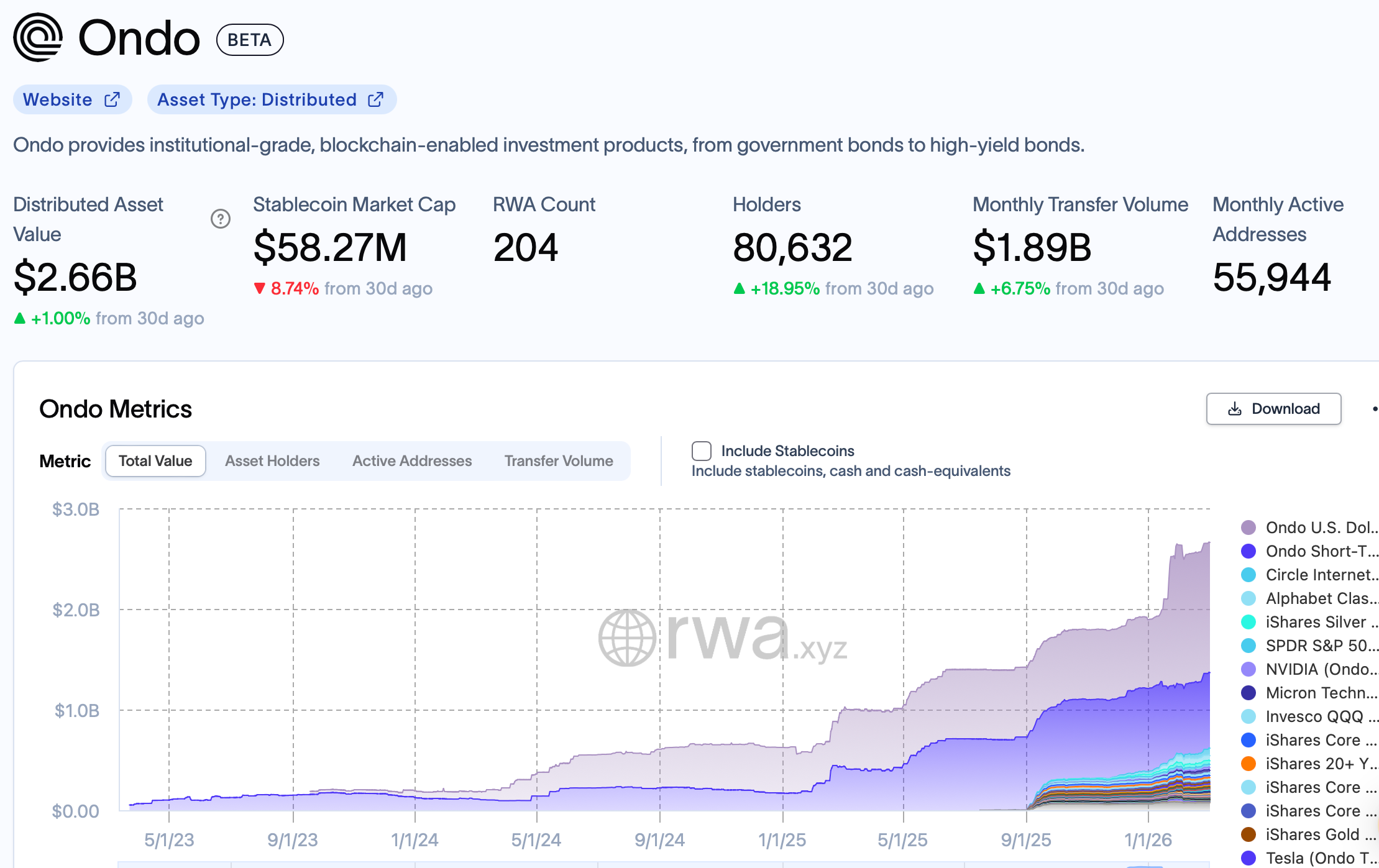
Ondo Finance is a New York–based blockchain company that focuses on bringing traditional financial assets onchain through tokenization. At the time of writing, assets issued through Ondo total about $2.66 billion in tokenized value, according to RWA.xyz data.

Related: Kraken debuts tokenized stock perpetual futures for non-US traders
Crypto exchanges move to tokenize assets
The race among crypto exchanges to tokenize stocks has been gaining momentum.
In June, more than 60 tokenized equities became available on exchanges including Kraken and Bybit through Backed Finance’s xStocks product. The lineup included major companies such as Apple, Amazon, Nvidia, Tesla, Meta and Netflix.
Gemini has also moved into the sector through a partnership with Dinari. In July, the exchange said customers in the European Union could trade a growing list of tokenized US stocks on its platform, including shares tied to companies such as Exxon, Sony, BlackRock and Visa.
To be sure, tokenized equities remain largely unavailable to US users as the industry awaits clearer regulatory guidance for blockchain-based securities.
In the meantime, several exchanges are expanding into traditional equities through brokerage-style services. In April, Kraken said it would begin offering trading in about 11,000 US-listed stocks and exchange-traded funds as part of a phased rollout across the United States.
Over the past few months, Coinbase and Bitpanda have also announced stock trading features that allow users to buy and sell equities alongside cryptocurrencies on the same platforms.
Magazine: Bitcoin may face hard fork over any attempt to freeze Satoshi’s coins

“With each ETF that’s gone live, the money’s a lot more sticky,” in the words of Canary Capital’s CEO Steven McClurg.
This idea represents one of the clearest takeaways from Consensus Hong Kong this year: we’ve finally reached the era of long-term allocation.
Consensus Hong Kong 2026 (Feb 10-12, 2026) brought 11,000 registered attendees from 122+ countries and regions to the Hong Kong Convention and Exhibition Centre. Senior leadership made up a significant share of the audience, along with allocators, operators, and infrastructure builders.
“Digital Assets. Institutional Scale.” was reflected in the programming, and met well on the ground. Panels centered on institutional adoption, stablecoin infrastructure, and the architecture of internet capital markets. There was also a visible attempt to connect blockchain infrastructure with AI agents and robotics, but even those discussions returned to the same constraint: execution and reliability.
What stood out early was how consistently conversations returned to market infrastructure. Across the Future of Finance Summit, the Global Bitcoin Summit, and the Advanced Trading track, it’s clear that the next phase in Web3 is about proving it can operate at scale, under real capital, without breaking.

Sticky money, soft regulation and a dominant U.S. narrative
McClurg used Canary’s own XRP product to illustrate what he meant by ‘stickier’ capital.
“We launched an XRP ETF last year, and even on the biggest down days of the market, we were still getting inflows – meaning that people see an opportunity, they’re buying it.”
Of course, if capital continues to flow in during drawdowns, the market dynamic changes.
The mood at Consensus was the product of such a change, beginning in earnest with the SEC’s approval of spot Bitcoin ETFs in January 2024. Naturally, once exposure could be accessed through a familiar asset, things were shaken up.
As ETF pipelines expanded in the U.S., so did the institutional looking glass. Liquidity quality started to matter more than raw volume, hedging tools became part of the discussion, and market structure moved from the periphery to the center.
Regulation came up repeatedly in Hong Kong, but in a specific tone.
McClurg described the U.S. shift as real, though not fully codified into statute.
“Most of it’s happened, but it’s soft regulation… not necessarily laws that are being passed. It’s via executive orders. It’s via appointments.”
In other words, posture and precedent are shaping the environment as much as formal legislation.
That aligns with developments in Washington since early 2025: executive actions outlining national digital asset frameworks and a reshaped SEC leadership publicly signaling a more workable approach to crypto oversight.
The result is a market that feels more procedural and predictable. That’s what institutions require before size follows – a topic also well discussed at Consensus’ “The Regulatory Shift” panel at the Convergence Stage.
Institutional anxiety about whether the infrastructure is real
Volatility no longer seems to scare serious allocators. At the event, this idea felt like a misconception for the first time.
Cory Loo, Head of APAC at Douro Labs and lead for APAC business development for Pyth Network, commented on this point:
“Institutions understand volatility. What still quietly worries them is whether crypto’s infrastructure and business models are actually institutional-grade – not in marketing language, but in measurable terms. They want to see real revenue, real customers, real compliance, real uptime.”
The hesitation, in his view, is that parts of the industry can still look larger than they are: activity that appears significant on the surface, but doesn’t hold up when institutions pressure-test durability, unit economics, and operational maturity.
That framing matched the agenda-level emphasis at Consensus. The “Advanced Trading” programming was positioned around liquidity mechanics, security considerations, and a shifting regulatory landscape, including the role of cross-chain solutions and emerging protocols in making markets more transparent and efficient.
It felt as though being ‘institutional-grade’ has become a default requirement for projects in the space. Uptime, incident response, governance, and compliance aren’t secondary concerns anymore.
That is also why infrastructure providers that can point to hard usage metrics have gained an edge in these conversations. Pyth Network, for instance, publicly says it has integrated 600+ protocols across 100+ blockchains and delivers thousands of price feeds, with a growing share tied to real-world assets.
Self-custody, the education gap, and why aggregation is becoming the default
One of the more useful signals at Consensus came from Andrey Fedorov, CMO & CBDO of STON.fi Dev, in an exclusive interview with BeInCrypto. He spoke to a product-design tradeoff, where DeFi teams either optimize for user acquisition speed or for principles that hold up when capital and scrutiny arrive:
“We could grow faster if we compromised on custody. But then we wouldn’t be building DeFi infrastructure – we’d be building another fintech layer.”
As more regulated capital comes into the market, the bar rises for what counts as acceptable custody, acceptable risk, and acceptable operational responsibility. A self-custody-first posture is not always the easiest route to distribution, but it seems from the event that that’s what the industry is focusing on building.
Fedorov also put a spotlight on an interesting adoption blocker:
“If someone loses their seed phrase, we can’t restore access. We don’t have it. We’ve never had it. But quite often users still come to us expecting support, like they would from a bank or centralized exchange.”
Essentially, the industry is still training users to understand what self-custody means. It’s clear that work on education is part of the cost of building non-custodial systems at scale.
Fedorov came prepared with a solution, however – distribution and aggregation:
“Make things easier for those who don’t want to think about technical stuff. Get wider distribution by integrating into all the apps. And aggregate liquidity from multiple blockchains, not just one. That’s the roadmap. Now it’s about scaling it.”
That’s also exactly how Consensus framed advanced trading this year – with cross-chain solutions and new protocols positioned as drivers of efficiency and accessibility.
Here, in STON.fi’s case, we could highlight Omniston, which the team positions as a liquidity aggregation protocol designed for TON, connecting multiple liquidity sources through a single integration.
Hong Kong’s welcomes institutional scale, with training wheels
Of course, many of the conference’s institutional conversations centered on the U.S. ETFs, precedent, and what McClurg called “soft regulation”. However, Consensus Hong Kong also had a clear local narrative running through the main stage. Hong Kong wants to be a global hub for digital assets, but it wants that growth routed through licensing, investor protection, and risk management.
In his opening address, John Lee (Chief Executive of the Hong Kong SAR) pitched Hong Kong’s approach as deliberately “steady and sustainable,” pointing to an actively built regulatory framework and a policy direction aimed at turning Web3 potential into real financial-market outcomes.
This all became a little more concrete in remarks by Paul Chan (Financial Secretary), who laid out what the government sees as the major institutional-facing trends: tokenization of real-world assets moving from proof-of-concept to deployment; deeper interaction between TradFi and DeFi (with DeFi also facing growing regulatory pressure); and the accelerating overlap between AI and digital assets, including early ‘machine economy’ concepts where autonomous systems transact on-chain.
Consensus 2026 proved that capital is willing to engage, but it demands environments where rules are legible, and intermediaries are accountable.
Stablecoins and tokenization
Lee also tied Hong Kong’s “hub” ambition directly to its new stablecoin regime. He pointed to the Stablecoins Ordinance and said the HKMA was already processing applications, with the first batch of fiat-referenced stablecoin issuer licences expected “within the next month.”
Eddie Yue, the HKMA’s Chief Executive, separately told lawmakers the first batch is expected in March 2026, and that only a “very small number” of licences will be granted initially. The emphasis is on use cases, risk controls, AML, and reserve backing.
Chan used his keynote to explain what this approach means for institutions. Tokenization is moving from proof-of-concept to deployment, led by on-chain versions of familiar instruments such as government bonds and money market funds.
He supported that framing with local metrics. These included Hong Kong’s tokenized green bond programme, banks holding over HK$14 billion in digital assets under custody by the end of 2025, and tokenized deposits reaching HK$29 billion.
Separately, a main stage conversation on RWA tokenization brought together senior leaders from Securitize, Ondo, and J.P. Morgan’s Kinexys dove deep into how Real World Assets are increasingly being treated as part of familiar institutional categories.
From the event, it was clear that payments, settlement, and regulated issuance are now the main competitive arena. Even the “Machine Economy” discussions (AI agents, robotics, on-chain execution) kept coming back to licensed issuers, enforceable AML and controls, and auditability, among other things.
Risk appetite is back, but it’s not unconditional
The simplest way to describe where the market is heading is that institutional adoption is becoming a procurement game. The checks are on compliance posture, governance, uptime, incident response, and whether the business model survives scrutiny once you strip out cyclical volume.
Two signals made the direction clear. The agenda leaned hard into market structure (liquidity, security, regulation, and cross-chain execution) and made the point that enterprise-grade crypto infrastructure only works with regulatory backing, with Hong Kong’s stablecoin licensing push as the clearest example.
Indeed, risk appetite is returning, but it’s conditional. Capital will move faster when the foundations behave predictably. After all, that’s what makes crypto legible to investment committees and survivable under stress.
Looking ahead to Consensus Miami (May 5-7, 2026), the agenda is set to dive further into stablecoins, tokenization, capital markets, and regulation, with dedicated programming for Bitcoin (including mining and institutional strategy) plus formats like Wealth Management Day, Stablecoin University, PitchFest, and the Hackathon.
Katie Holmes and Meghan Markle Wear These Spring Blazer Looks

Apple updates iOS, macOS Tahoe to 26.3.1 to support new Studio Displays

Why Europe is finally standing up to Donald Trump | US News


-

 Politics6 days ago
ITV enters Gaza with IDF amid ongoing genocide
-

 Politics1 day ago
Alan Cumming Brands Baftas Ceremony A ‘Triggering S**tshow’
-

 Fashion5 days ago
Weekend Open Thread: Iris Top
-

 NewsBeat7 days ago
Cuba says its forces have killed four on US-registered speedboat | World News
-

 Tech4 days ago
Unihertz’s Titan 2 Elite Arrives Just as Physical Keyboards Refuse to Fade Away
-
Sports5 days ago
The Vikings Need a Duck
-
 NewsBeat4 days ago
Dubai flights cancelled as Brit told airspace closed ’10 minutes after boarding’
-

 NewsBeat3 days ago
‘Significant’ damage to boarded-up Horden house after fire
-
 NewsBeat7 days ago
Manchester Central Mosque issues statement as it imposes new measures ‘with immediate effect’ after armed men enter
-
 NewsBeat4 days ago
The empty pub on busy Cambridge road that has been boarded up for years
-

 NewsBeat4 days ago
Abusive parents will now be treated like sex offenders and placed on a ‘child cruelty register’ | News UK
-

 Entertainment2 days ago
Baby Gear Guide: Strollers, Car Seats
-

 Business7 days ago
Discord Pushes Implementation of Global Age Checks to Second Half of 2026
-

 Business6 days ago
Only 4% of women globally reside in countries that offer almost complete legal equality
-
 Tech5 days ago
NASA Reveals Identity of Astronaut Who Suffered Medical Incident Aboard ISS
-
 NewsBeat3 days ago
Emirates confirms when flights will resume amid Dubai airport chaos
-
Politics4 days ago
FIFA hypocrisy after Israel murder over 400 Palestinian footballers
-

 Crypto World6 days ago
From Crypto Treasury to RWA: ETHZilla Retreats and Relaunches as Forum Markets on Nasdaq
-

 NewsBeat2 days ago
Is it acceptable to comment on the appearance of strangers in public? Readers discuss
-

 Tech4 days ago
Viral ad shows aged Musk, Altman, and Bezos using jobless humans to power AI