
Crypto World
CME’s share of XRP futures jumps as token rallies 40% in a week

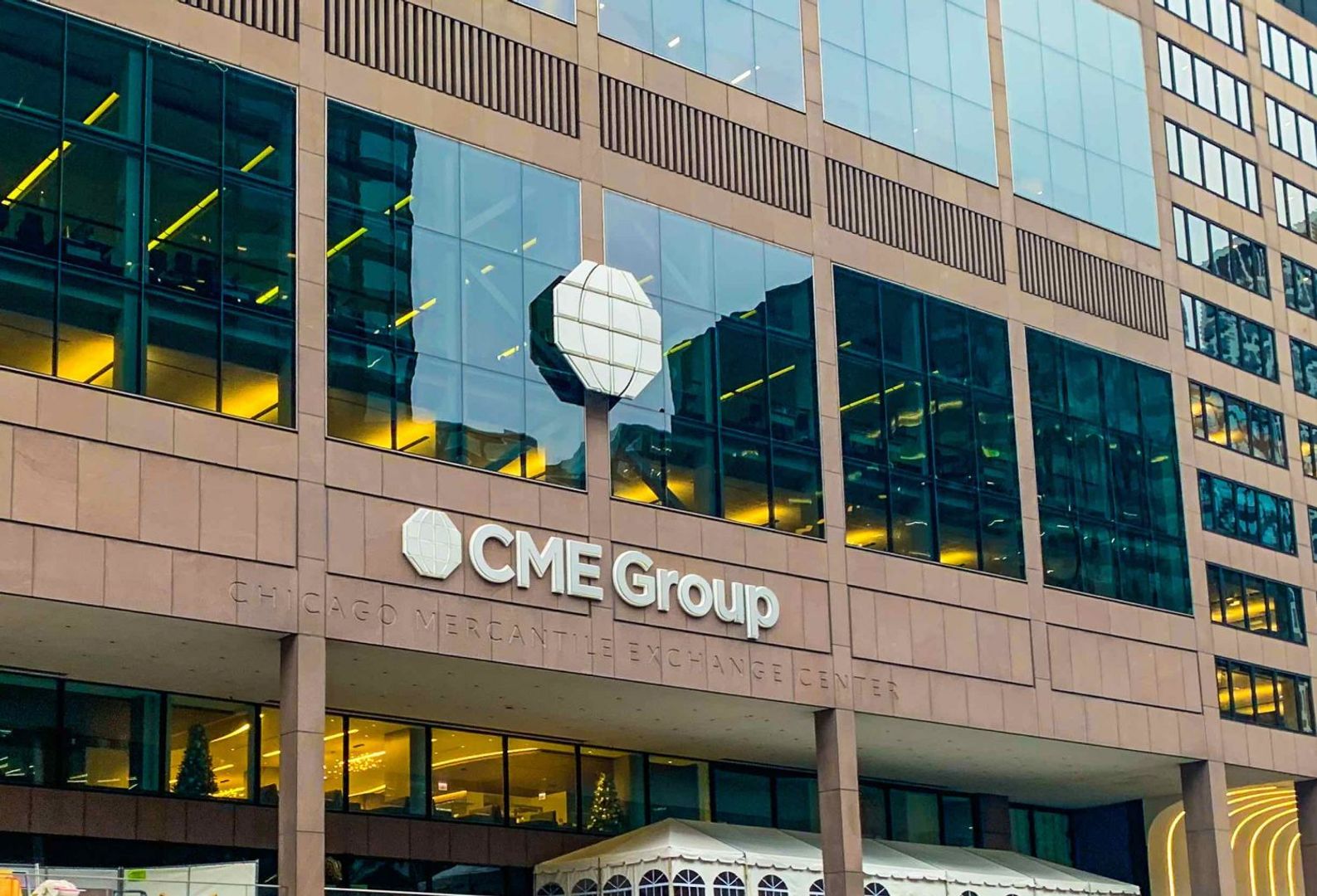
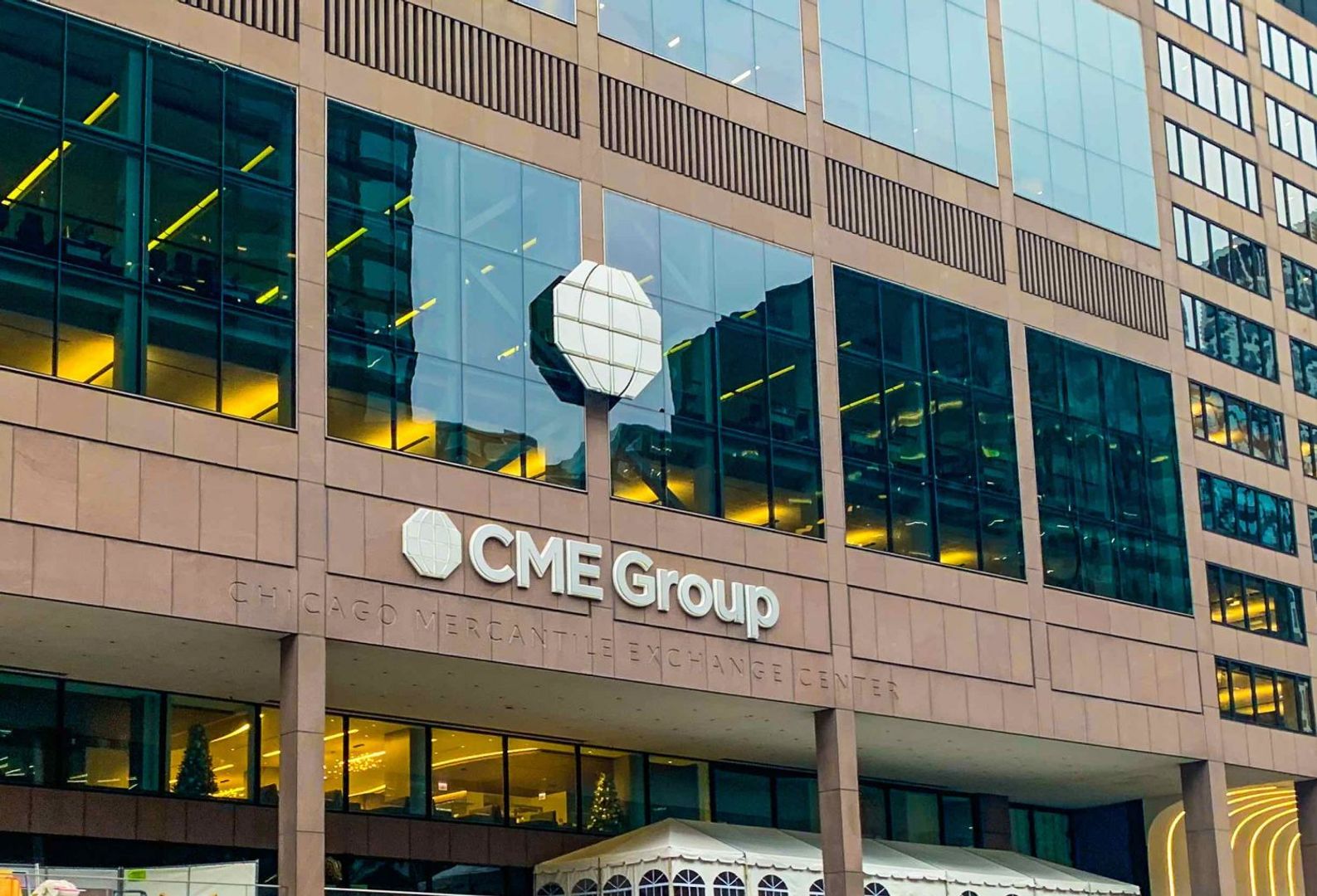
Outstanding XRP futures positions outside CME fell by more than 500 million tokens in two weeks, while exposure on the regulated U.S. exchange climbed about 36% as XRP rallied toward $1.40.

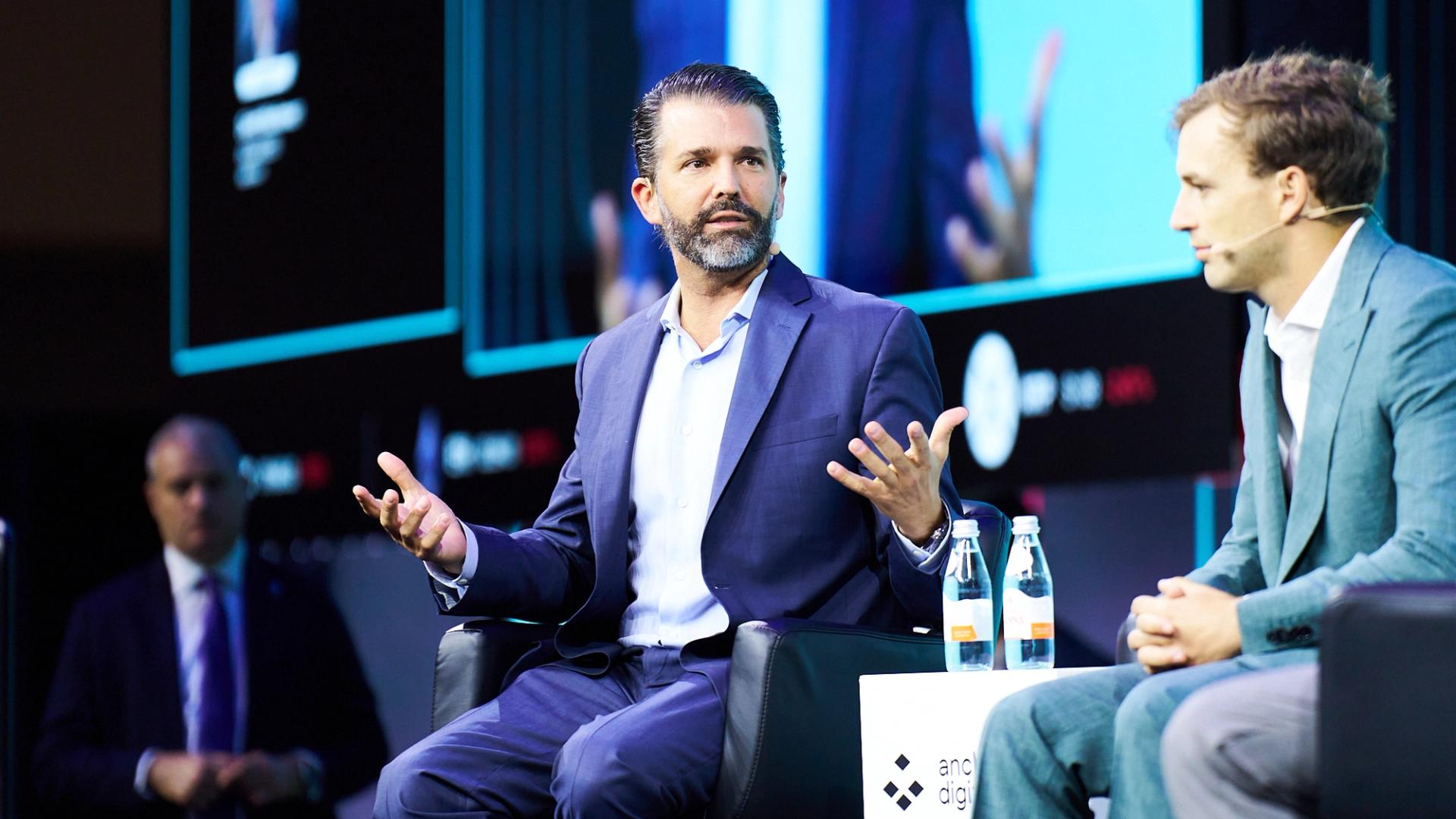
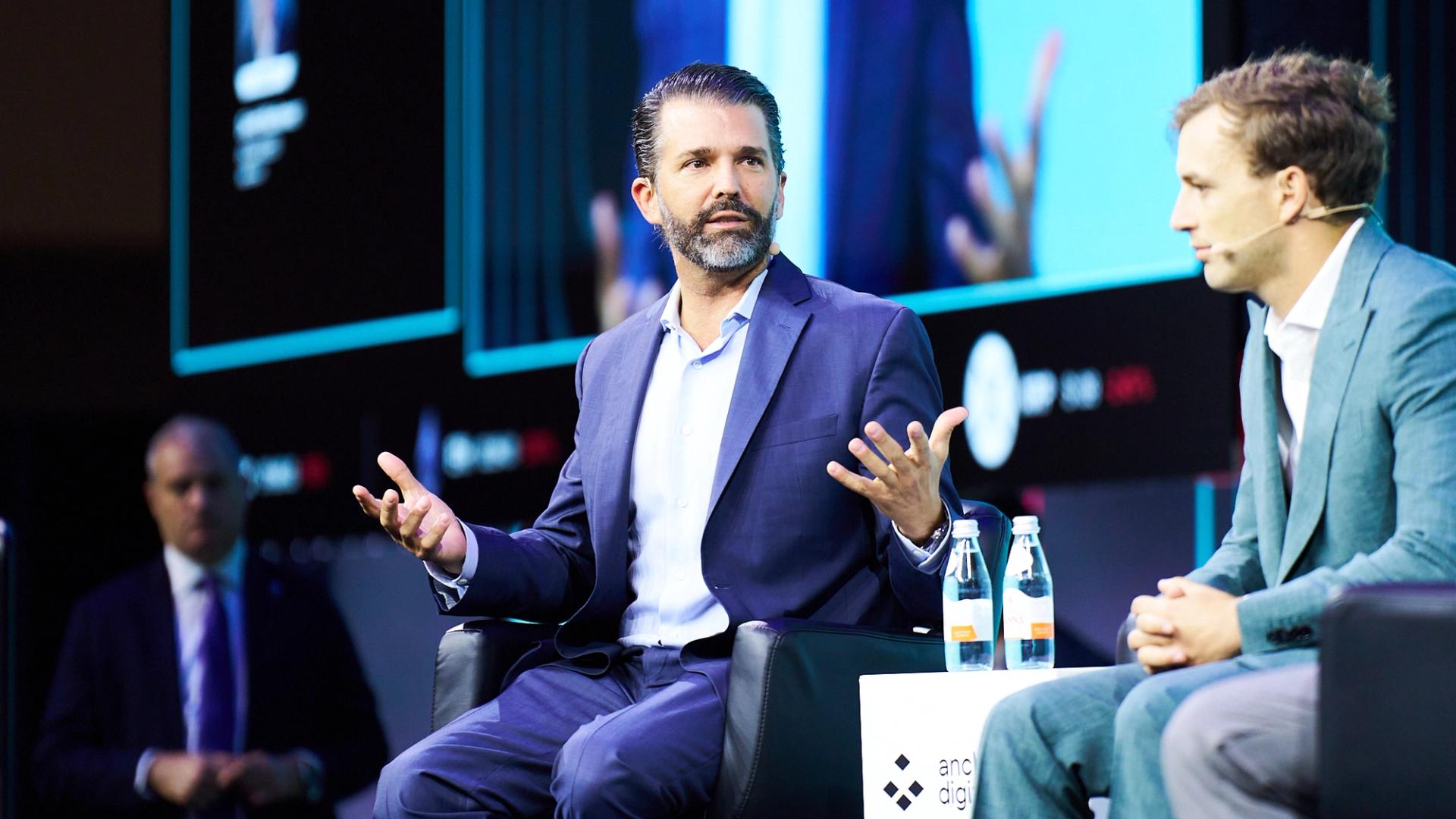
1789 Capital is putting in about $300 million, adding to a roughly $200 million stake, as the prediction market’s valuation rises from $15 billion.


John Ternus becomes Apple’s chief executive on Tuesday as AAPL stock fell slightly. Marketing veteran Phil Schiller also stepped back from his last major roles this week.
Ternus, a 25-year Apple veteran, replaces Tim Cook, who becomes executive chairman after 15 years as CEO. The transition puts artificial intelligence at the center of Ternus’s agenda.
A Reshuffled Leadership Team
Schiller, 66, gave up oversight of the App Store and Apple’s product events. Those duties now sit with services chief Eddy Cue and communications head Kristin Huguet Quayle.
Schiller keeps his Apple Fellow title, but colleagues see the move as a step toward retirement. It adds to a broader wave of veteran departures Ternus must manage as he rebuilds Apple’s leadership bench.
Selling iPhones Comes First
Big Technology founder Alex Kantrowitz told CNBC’s Closing Bell that Ternus’s most immediate job has nothing to do with artificial intelligence.
Number one is sell iPhones. He’s got to sell iPhones.
Alex Kantrowitz, CNBC
Kantrowitz pointed to 21% iPhone revenue growth last quarter as the driver behind Apple’s 37% stock gain over the past year. He also flagged rising memory chip costs as a margin risk Ternus cannot ignore.
Longer term, Ternus is betting on a foldable iPhone and a revamped Siri assistant, built on Google’s Gemini model, to prove Apple can still innovate in hardware and catch up in AI.
AAPL Dips on Transition Day
AAPL fell as low as $313 during Monday’s session before paring losses in after-hours trading. Shares changed hands at $316.85, down 0.89% from Friday’s $319.70 close, according to TradingView data.
Investors on X flagged volatility tied directly to the leadership handoff.
Despite the dip, Apple shares remain up about 36% over the past year. The stock still sits below the record high it touched in July, when the company’s market capitalization briefly neared $5 trillion.
Whether Ternus can convert Apple’s hardware discipline into an AI turnaround will face its first public test at the September 9 event, where a foldable iPhone is widely expected to debut
The post New Apple CEO John Ternus Inherits AI Test as AAPL Stock Slips appeared first on BeInCrypto.
Ripple’s cross-border token has declined by nearly 7% over the past week, yet numerous analysts remain optimistic that a renewed uptrend could be on the horizon.
Many believe the price could shift into an “up-only” phase from here, while others expect a substantial pullback before any major increase.
‘Breakout Confirmed’
As of press time, XRP trades at around $1.38 (per CoinGecko), boasting a market capitalization of approximately $86 billion. While the current level marks a clear drop from the local top seen earlier in August, Ali Martinez still views it as a constructive development.
The popular analyst observed the asset’s price action and assumed that the breakout was confirmed after XRP supposedly “cleared resistance.” He thinks the next target is $1.70.
Shortly after, Martinez touched on the token again, praising the solid institutional interest, which signals “a notable increase in demand.” Spot XRP ETFs have indeed attracted significant capital lately. Last week, for instance, the inflows exceeded $110 million for the first time since December, 2025. Moreover, the ETFs have recorded nine consecutive green days, something last observed eight months ago.
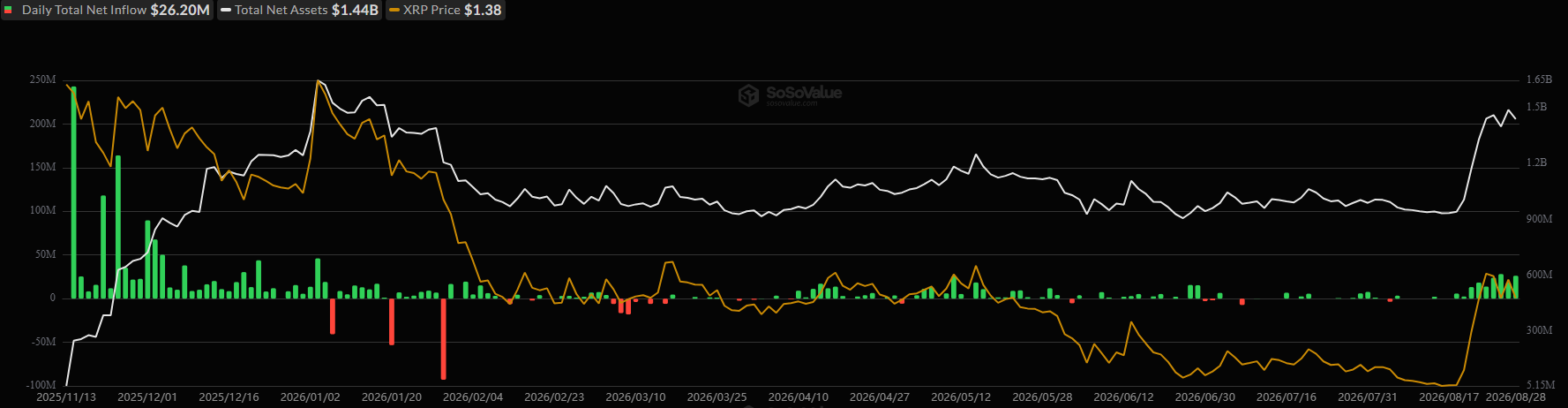
Other analysts recently making XRP bets include X users Diana and XRP Update. The former claimed that the asset currently sits directly on the $1.38 support and the next Elliot wave targets point to a short-term surge to $1.88 and an eventual explosion to $7.07.
“There’s another interesting signal on the 4H chart: RSI has recovered to roughly 47.5 and moved back ABOVE its signal line near 44.7. That means momentum is attempting to turn bullish again while XRP is STILL sitting near support – very different from chasing the move when RSI was above 80,” the analyst added.
For their part, XRP Update opined that the token has broken out of a downtrend and could now be gearing up for a wild rally toward $2.50, $3.50, $6, and finally $13.
Going South?
It is important to note that some analysts, like Crypto Lens, expect XRP to tumble before posting new gains. In their view, the asset may first retreat to $1.17, then begin a new bull run toward $1.90, $3.10, and $5.20. For their part, ChartNerd opined that XRP failed to reclaim its 50-week EMA for the second week in a row.
“I warned that consecutive weekly closes below the 50 could trigger a deeper correction, and we have retraced 22% thus far. The 20 EMA sits below as a short-term support floor ($1.27),” they added.
The post Ripple (XRP) Breakout Confirmed? Analyst Sets the Next Big Target appeared first on CryptoPotato.


Cointelegraph is committed to providing independent, high-quality journalism across the crypto, blockchain, AI, and fintech industries.
All news, reviews, and analyses are produced with full journalistic independence and integrity. For more details on our standards and processes, please read our Editorial Policy.
Wallets tied to North Korea’s Lazarus Group moved more than $30 million in Bitcoin (BTC) through Hyperliquid over three weeks. The activity raises sanctions questions as the exchange pursues US market access.
Emmett Gallic, an analyst at blockchain intelligence firm Arkham, identified the wallets. He cited a 2024 attribution by investigator ZachXBT. The funds converted to Ether (ETH) and Solana (SOL) before reaching centralized exchanges including Kraken, LBank, and KuCoin.
Trump Name-Drops Hyperliquid for US Entry
President Trump named Hyperliquid directly at an August White House event. He credited Commodity Futures Trading Commission (CFTC) Chairman Michael Selig with leading the effort.
“I understand that Mike is also working to bring Hyperliquid into the United States in a fully compliant and legal fashion, working very hard on that,” Trump said at the event.
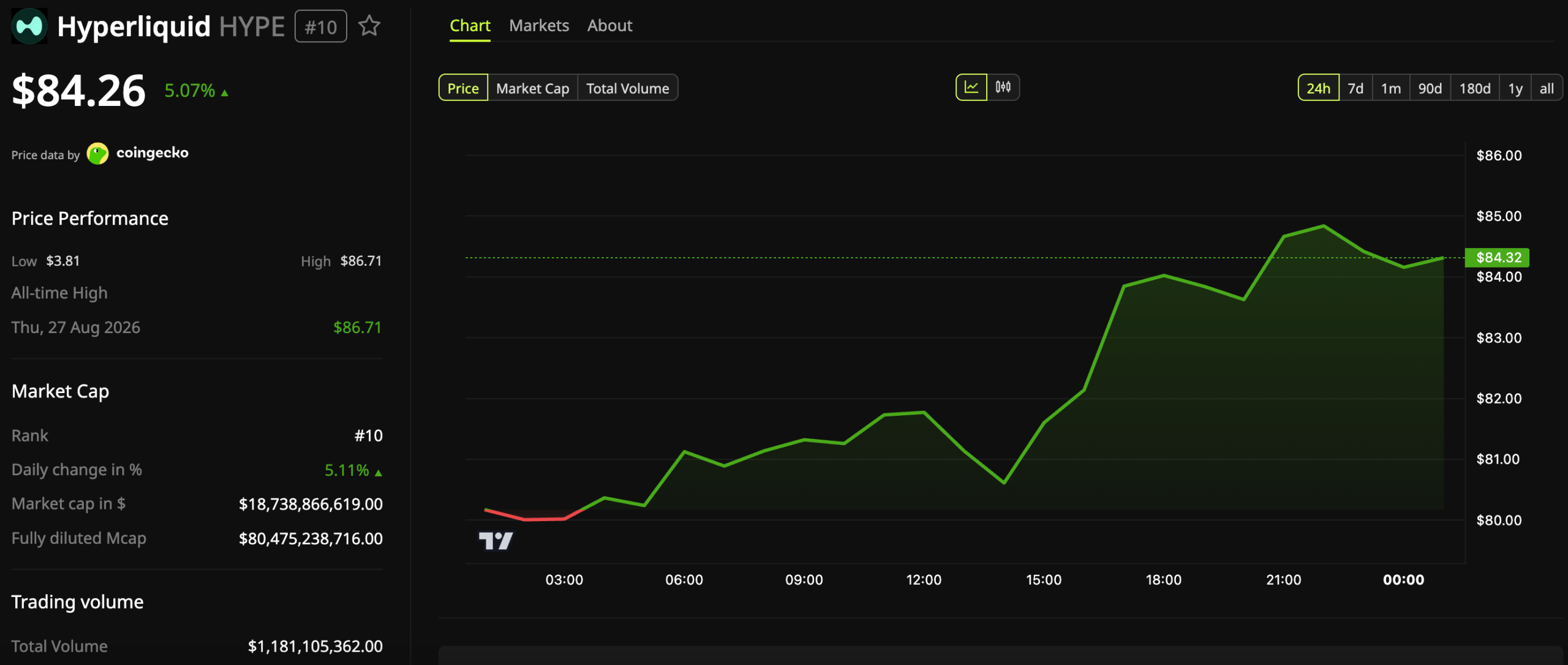
HYPE, Hyperliquid’s native token, traded at $84 on the BeInCrypto Markets page. That reflected a 5% gain over 24 hours. The muted move suggests traders have not priced in sanctions risk yet. The token set a record high of $86.71 on August 27, just days before the wallet activity surfaced.

Whether the CFTC treats this as a compliance red flag could shape how quickly Hyperliquid secures a US foothold.
Selig’s CFTC already cleared a Bitcoin perpetual product on a registered exchange this year. That precedent could inform how regulators treat Hyperliquid’s application.
Sanctions Risk Meets a US Regulatory Push
The US Treasury’s Office of Foreign Assets Control (OFAC) sanctioned the Lazarus Group in 2019. It has been tied to billions of dollars in stolen crypto, including the 2022 Ronin Network breach.
The group has also been linked to the $1.5 billion Bybit hack in 2025, the largest crypto theft on record. BeInCrypto has reported that North Korea-linked actors stole roughly $1.6 billion in crypto in the first half of 2025. That represented roughly 70% of global crypto losses during that period.
The disclosure surfaced as Kraken parent Payward negotiates a regulated US pathway for Hyperliquid through its Bitnomial subsidiary. Payward closed its $550 million Bitnomial deal in May, gaining three CFTC-registered licenses at once.
The post Will North Korea Allegations Derail Hyperliquid's US Entry Plans? appeared first on BeInCrypto.
Healthcare stocks wrapped up their best quarter yet, and UBS says the rally still has room to run. President Trump added nine more pharmaceutical firms to his drug-pricing deal on Monday.
Michael Yee, UBS’s global head of biotechnology equity research, told CNBC the advance reflects a stack of major clinical wins. He said new pricing deals have also calmed fears of a broader industry crackdown.
Nine New Agreements
Trump announced the nine new agreements at the White House on Monday. He said the combined pricing deals struck over the past year would save Americans more than $600 billion.
The nine additional firms are mostly midsize drugmakers, including Alcon, Astellas Pharma, and Teva Pharmaceuticals. The companies pledged $19.6 billion combined toward U.S. manufacturing, according to a White House fact sheet.
They also agreed to offer their drugs to every state Medicaid program at discounted prices.
The White House said 17 companies had already joined the pricing framework over the past year.
“With today’s announcement, we now have 26 companies representing 90% of the domestic pharmaceutical market, and the other 10% are also coming in. They have no choice.”
President Trump, via CBS News
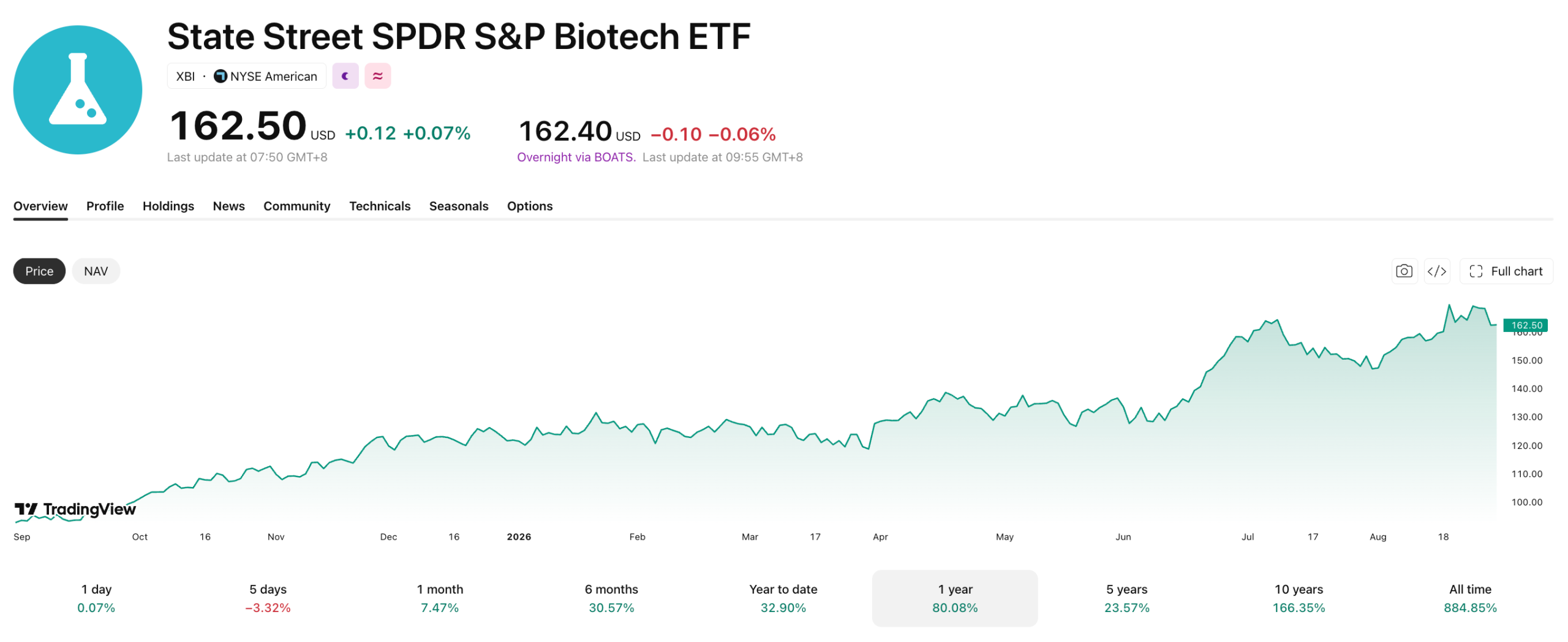
The SPDR S&P Biotech ETF, XBI, has climbed 80% in the last 12 months. That run has outpaced most other equity sectors.

Yee said the pricing deals have proven less onerous than feared, and that they have removed a major source of uncertainty for the sector.
Merck and Revolution Medicines Lead the Charge
Yee named Merck as one of his top picks. The company’s melanoma vaccine, developed with Moderna, met its main trial goals in a large trial. The study included more than 1,100 patients and reported results on August 19.
He also flagged Merck’s antibody-drug conjugate sacituzumab tirumotecan. The drug posted a positive lung cancer trial readout earlier this year. It is now being tested across 17 late-stage studies.
Revolution Medicines was another name Yee highlighted. The Food and Drug Administration approved its pancreatic cancer drug daraxonrasib on August 26. The therapy nearly doubled median survival in a late-stage trial compared with chemotherapy.
Yee also named Bristol Myers Squibb. UBS carries a Buy rating on the stock and expects several late-stage trial readouts before year-end. Those catalysts could help offset revenue lost to patent expirations.
Yee said pharmaceutical companies are sitting on record cash piles. They are pushing more of it into research and development after a multiyear stretch of cheap valuations. Valuations are still not stretched, and Washington’s pricing overhang is easing. Yee said the current move looks more like the start of a longer re-rating than a short-lived bounce.
The post Trump's Pharma Pricing Deal Expands as Healthcare Stocks Keep Climbing appeared first on BeInCrypto.


Kalshi has secured an exclusive partnership with the U.S. Tennis Association to become the US Open’s prediction market platform partner as the tournament’s main draw gets underway in New York.
Summary
- Kalshi has secured an exclusive deal with the USTA to become the US Open’s prediction market platform partner.
- The agreement took effect immediately after being finalized following the tournament’s qualifying rounds, with financial terms undisclosed.
- The deal restricts rival prediction market platforms from advertising at the US Open venue and across tournament television coverage, according to Front Office Sports.
- Kalshi continues to expand its sports business while fighting state regulators over whether its federally regulated event contracts fall under state gambling laws.
Front Office Sports reported on Aug. 30, citing two people familiar with the agreement, that the partnership took effect immediately after being finalized following last week’s qualifying rounds. Financial terms and other parameters of the agreement were not disclosed.
The deal gives Kalshi an official role at one of tennis’s four Grand Slam tournaments and was completed later than initially planned. The US Open, owned and operated by the USTA, had previously considered waiting until 2027 or later before entering a prediction market partnership.
Kalshi becomes US Open prediction market partner
Discussions in recent weeks had involved multiple prediction market platforms and focused partly on match integrity and potential partnerships beginning next year, Front Office Sports reported.
Plans changed after Craig Tiley took over as USTA CEO on July 20. Tiley played a major role in pushing for an agreement covering the 2026 tournament, according to the report.
One source told Front Office Sports that the arrangement would prevent competing prediction market companies from advertising at the US Open venue and across television coverage of the tournament, including ESPN broadcasts.
The agreement had not yet been fully reflected across the organizations’ public materials when the main draw started Sunday. Kalshi was absent from the US Open’s official partner list as of Sunday afternoon.
A Kalshi blog post published earlier that day analyzing the women’s singles tournament still carried a disclaimer saying the company was “not affiliated with the U.S. Open or WTA,” according to Front Office Sports.
Kalshi already offers a large number of contracts tied to US Open matches. Its tennis markets on Sunday included individual men’s and women’s singles matches, with some contracts recording more than $1 million in trading volume.
The US Open agreement expands a sports strategy that has increasingly put prediction market platforms alongside leagues, teams and major events.
In June, crypto.news previously reported that Kalshi had secured World Cup branding exposure through a partnership with ADI Predictstreet, FIFA’s official prediction market partner for the 2026 tournament. The arrangement placed Kalshi branding alongside ADI Predictstreet across stadium, television and digital coverage beginning with the knockout stage.
Sports partnerships have spread across the prediction market industry. Kalshi and Polymarket have partnerships with the NHL, while Polymarket has worked with Major League Baseball and the New York Yankees. Kalshi has separately announced relationships with MLB clubs including the Atlanta Braves, Boston Red Sox, Los Angeles Dodgers, San Diego Padres and San Francisco Giants.
Novig has moved into the same market through a partnership with the New York Mets, becoming the first prediction market platform to sign an individual MLB team.
Sports contracts drive Kalshi’s expansion
Sports have become a central source of trading activity for Kalshi as the platform expands beyond the political and economic event contracts that helped prediction markets gain attention.
The company’s sports strategy was particularly visible during the FIFA World Cup. Weekly Kalshi trading volume reached a record $5.1 billion in June as activity tied to the tournament increased, while sports-related contracts had become its largest product category, according to previous coverage.
Kalshi has developed compliance systems alongside the expansion. Its sports-market surveillance includes IC360 screening and a prohibited-persons system designed to identify athletes, coaches, referees and league personnel who should not trade certain contracts. The company has paired those controls with its proprietary Poirot detection engine and Solidus Labs’ HALO surveillance platform, as detailed in crypto.news’ examination of prediction market surveillance in July.
The commercial push has continued while courts consider whether sports event contracts offered on federally regulated prediction markets can remain outside state gambling regimes.
Kalshi faces conflicting rulings over sports contracts
Two days before the US Open partnership emerged, Kalshi suffered a setback in its dispute with Nevada gaming regulators.
The Ninth U.S. Circuit Court of Appeals ruled on Aug. 28 that Kalshi had not shown that the Commodity Exchange Act was likely to preempt Nevada gaming regulations as applied to its sports event contracts. The three-judge panel affirmed in part a lower court order dissolving a preliminary injunction that had prevented Nevada from enforcing its laws against Kalshi.
Nevada’s Gaming Control Board had sent Kalshi a cease-and-desist letter alleging that it was operating a sports betting platform in violation of state laws and gaming regulations.
Kalshi argued that it operates as a designated contract market under the Commodity Exchange Act and that the Commodity Futures Trading Commission therefore has exclusive authority over its sports contracts.
The Ninth Circuit rejected Kalshi’s request for preliminary protection from Nevada enforcement. Its ruling found that the sports event contracts at issue did not qualify as swaps under the relevant Commodity Exchange Act definition because they were sports bets. The court remanded issues involving Kalshi’s election contracts to the district court for further consideration.
The decision came after Kalshi and Polymarket had already lost separate efforts connected with state gambling enforcement. In May, a Ninth Circuit panel denied emergency motions involving disputes in Nevada and Washington, finding that a Commodity Exchange Act preemption defense did not by itself establish federal jurisdiction.
Kalshi received a different result in the Third Circuit, which previously upheld preliminary relief preventing New Jersey regulators from enforcing state gambling laws against its sports contracts. The court found Kalshi had demonstrated a reasonable chance of succeeding on its argument that the contracts were swaps covered by federal derivatives law.
New York has produced another unfavorable ruling for the company. A federal judge in July rejected Kalshi’s injunction bid, leaving the state’s gambling-law claims against its sports event contracts in place while the litigation proceeds.
State and local challenges have continued during August. Baltimore sued Kalshi and Polymarket on Aug. 13 over alleged unlicensed sports betting, with the Kalshi complaint naming Coinbase, Robinhood and Webull because the platforms distribute its event contracts to their customers.
Baltimore alleged that contracts covering game winners, point spreads and player performances operate like sports wagers without the licenses and consumer protections required under state law. Kalshi rejected that characterization and maintained that its federal regulatory status permits it to offer the contracts.
The city is seeking statutory penalties, customer restitution and disgorgement of proceeds it alleges came from unlawful activity, along with an order preventing the companies from offering unauthorized sports betting to Baltimore residents.
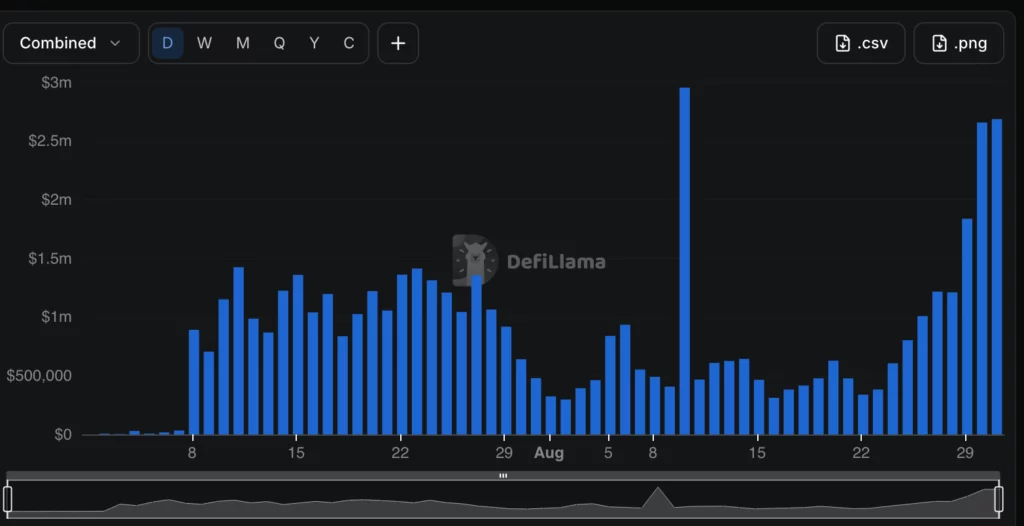
Robinhood Chain recorded $2.66 million in application revenue over 24 hours on Aug. 31, according to a rolling DeFiLlama dashboard.
Summary
- Robinhood Chain recorded $2.66 million in rolling daily app revenue during the cited DeFiLlama snapshot.
- That snapshot placed Robinhood Chain above Hyperliquid, Ethereum and Base for aggregated application revenue temporarily.
- GMGN, Pons and Uniswap generated approximately 93% of Robinhood Chain’s measured daily application revenue combined.
- Rolling twenty-four-hour figures change continuously as new activity enters and older transactions leave calculation windows.
- App revenue measures earnings retained by protocols, not revenue received directly by Robinhood’s corporate business.
The reading placed the network above Hyperliquid L1 at $1.71 million, Ethereum at $1.57 million and Base at approximately $439,252. Robinhood Chain’s total was roughly 6.1 times Base’s figure during the same snapshot.
The dashboard had shown lower totals earlier in the day. That difference reflects the rolling measurement window rather than a correction or separately reported financial result.
Robinhood Chain app revenue led the snapshot
DeFiLlama’s dashboard aggregates revenue retained by applications operating on each network. Its Robinhood Chain reading increased 201% from the previous week and reached $23.23 million over 30 days.
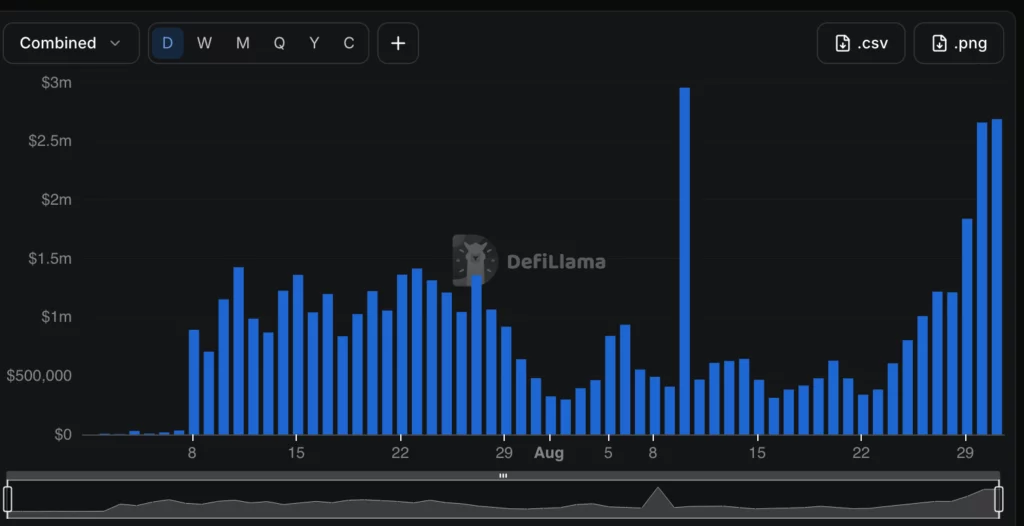
However, the 30-day comparison presented a different ranking. Hyperliquid L1 recorded $53.6 million, while Ethereum generated $52.03 million. Robinhood Chain therefore led the daily snapshot but remained behind both networks over the longer period.
The comparison also does not mean Robinhood Markets earned more revenue than Ethereum or Hyperliquid. Application revenue belongs to individual protocols and may include several measurement methods, depending on how each service collects fees.
Three applications generated about 93% of revenue
GMGN led Robinhood Chain applications with approximately $1.11 million in 24-hour revenue. DeFiLlama defines that figure as trading fees retained by GMGN after referral commissions. Its EVM referral deduction is partly estimated using the rate measured on Solana.
Pons followed with approximately $1.03 million. Its total includes launch fees and portions of swap fees retained by the protocol. Uniswap ranked third with about $327,707.
Together, the three applications generated nearly $2.47 million, equivalent to approximately 93% of Robinhood Chain’s reported total. The concentration shows that the daily result depended heavily on trading bots, token launches and decentralized exchange activity.
Pons has been expanding its Robinhood Chain presence through an ETH-based bonding curve and Uniswap v4 integration
App revenue differs from blockchain revenue
Application revenue measures fees retained by protocols after payments to liquidity providers, referrers or other participants. It differs from gross user fees, transaction volume and revenue retained by the underlying blockchain.
DeFiLlama separately estimated Robinhood Chain’s own 24-hour revenue at about $963,612. Its definition covers transaction gas fees after Ethereum execution costs, blob costs and the Arbitrum Expansion Program share.
The distinction matters because Robinhood Chain is an Ethereum-compatible Layer 2 built with Arbitrum technology. Robinhood launched its public mainnet on July 1 for tokenized assets and decentralized financial applications.
Uniswap became one of its main liquidity venues at launch. In related coverage, crypto.news reported that cumulative tokenized-stock trading through Uniswap had surpassed $1 billion by Aug. 21.
Longer data will test whether the lead continues
Robinhood Chain would need to maintain stronger seven-day and 30-day results before the daily reading could indicate a sustained change in network rankings. Daily revenue can rise sharply during token launches or periods of concentrated speculative trading.
Future assessments should examine whether revenue spreads across more applications, whether active users continue returning and whether transaction activity persists without short-term incentives. GMGN and Pons currently account for most of the total, making the network sensitive to changes in either platform.
The earlier $1.84 million reading and the later $2.66 million total demonstrate how quickly a rolling dashboard can change. Articles comparing networks should therefore identify the measurement time and avoid presenting the figure as a completed financial period.


Polygon Labs has patched several security flaws across its proof-of-stake network through two coordinated hard forks, including a vulnerability that could have forced the full validator set to perform costly processing from a single crafted transaction.
Summary
- Polygon patched several PoS security vulnerabilities through the Austin and Kyoto hard forks before publicly disclosing the fixes.
- The Austin fork closed two denial of service paths, including one that could let a malicious block producer crash peer nodes.
- The Kyoto fork fixed a flaw that could force Polygon’s validator set to perform costly processing from a single crafted transaction.
- Polygon said none of the vulnerabilities were exploited on mainnet, while both upgrades are now mandatory for node operators.
Polygon’s Validators Support Team disclosed the fixes in an Aug. 27 forum post after the Austin and Kyoto hard forks had already been tested and activated. The team said consensus-affecting security fixes were deployed privately, validated on the Amoy testnet and disclosed only after the mainnet fleet was protected.
The vulnerabilities affected Bor, Polygon PoS’s execution client, and Heimdall, which handles validator coordination and other consensus functions. Polygon said it found no evidence that any of the issues had been exploited or caused disruption on mainnet.
Polygon hard forks close block processing flaws
The Austin hard fork upgraded Bor to version 2.10.0 and addressed two denial-of-service paths tied to block processing.
One involved state-sync events used for L1-to-L2 bridge deposits. Such events can execute contract code and precompiles, but their execution was not subject to an effective per-block gas bound. Austin introduced a limit on how much gas state-sync events can consume within a block, preventing them from exhausting processing resources.
A separate weakness involved TxDependency data used during block processing. A malicious block producer could supply an oversized data field, potentially causing excessive memory allocation and crashing peers processing the block.
Polygon described both issues as block-processing denial-of-service vectors instead of consensus-correctness flaws and said neither had caused known disruption before the patches were deployed.
The Kyoto hard fork, which moved Heimdall to version 0.11.0, covered a larger group of input-validation and consensus-hardening fixes.
Among them, Polygon identified deeply nested google.protobuf.Any fields as the most severe vulnerability in the batch. Heimdall transactions can wrap messages inside Any fields, which in turn can be nested inside one another.
Without a depth limit, an attacker could construct a transaction containing deeply nested fields at relatively little cost while forcing every validator processing it to carry out substantial decoding work. Polygon said the flaw provided a permissionless route for imposing costly, coordinated processing across the validator set.
Kyoto added a byte-level scan that rejects transactions once nesting exceeds a defined threshold. The check applies at both mempool admission and the consensus processing stage so the same transaction cannot be accepted through one path and rejected through another.
Other Heimdall fixes covered milestone accounting, checkpoint processing and L1 event replay. Failed future-span creation can now degrade and retry at the next boundary instead of blocking a milestone commit, while new replay keys address an edge case in which distinct L1 events could otherwise collide.
Older Polygon nodes have fallen out of consensus
Both hard forks are mandatory for operators that want to remain on the canonical Polygon PoS network.
Bor v2.10.0 is required for all nodes, while Heimdall v0.11.0 applies to validators and full nodes. Polygon said operators running versions from before the activation heights have already forked away from canonical consensus and must update their software to rejoin the network.
The changes were delivered as binary upgrades, meaning operators do not need to migrate state, modify the genesis configuration or perform a full resync. Nodes that have fallen out of consensus can upgrade and roll back to the appropriate pre-hard-fork height before catching up with the canonical chain.
Polygon has previously used hard forks to address problems affecting its PoS infrastructure. In September 2025, developers executed a hard fork after a software bug caused transaction finality delays of as much as 15 minutes.
The earlier incident affected validator synchronization and local fast finality while block production and Ethereum checkpointing continued. Bor and Heimdall updates were deployed to restore milestone processing, state synchronization and consensus finalization.
A month later, the Rio mainnet upgrade introduced witness-based stateless validation and a Validator-Elected Block Producer model as Polygon continued changing how its PoS network processes and verifies transactions.
Polygon has continued changing its PoS infrastructure
Network performance remained another focus in 2026. In May, crypto.news previously reported that Polygon had reduced block time to an average of 1.75 seconds, its first block-time reduction since launch.
Polygon software engineer Lucca Martins said at the time that the change raised theoretical throughput to roughly 3,260 transactions per second and allowed the network to process about 14% more payments per second. The work formed part of Polygon’s push to support higher transaction volumes from stablecoin payments and decentralized finance activity.
The latest security fixes arrived after Polygon completed the replacement of MATIC with POL as the native gas and staking token on its PoS network. The migration began in September 2024 as part of the Polygon 2.0 roadmap, with MATIC held directly on Polygon PoS converted to POL at a one-to-one ratio.
The original MATIC-to-POL plan designated POL as the token used for gas payments and staking, while its proposed functions were expected to expand as Polygon developed its staking and aggregated-chain architecture.
Changes have extended to Polygon Labs itself. In July, the company cut another round of jobs while completing the integration of crypto exchange Coinme. CEO Marc Boiron said the restructuring was designed to support profitability by 2027 as Polygon Labs moved toward a payments-focused business model.
POL showed little positive reaction to the security disclosure. The token was trading near $0.09983 on Aug. 30, down about 2.3% over the previous 24 hours and 6.8% over seven days, according to CoinGecko data provided with the report. Its price remained about 60.8% lower than a year earlier, giving the token a market capitalization of roughly $1.07 billion.
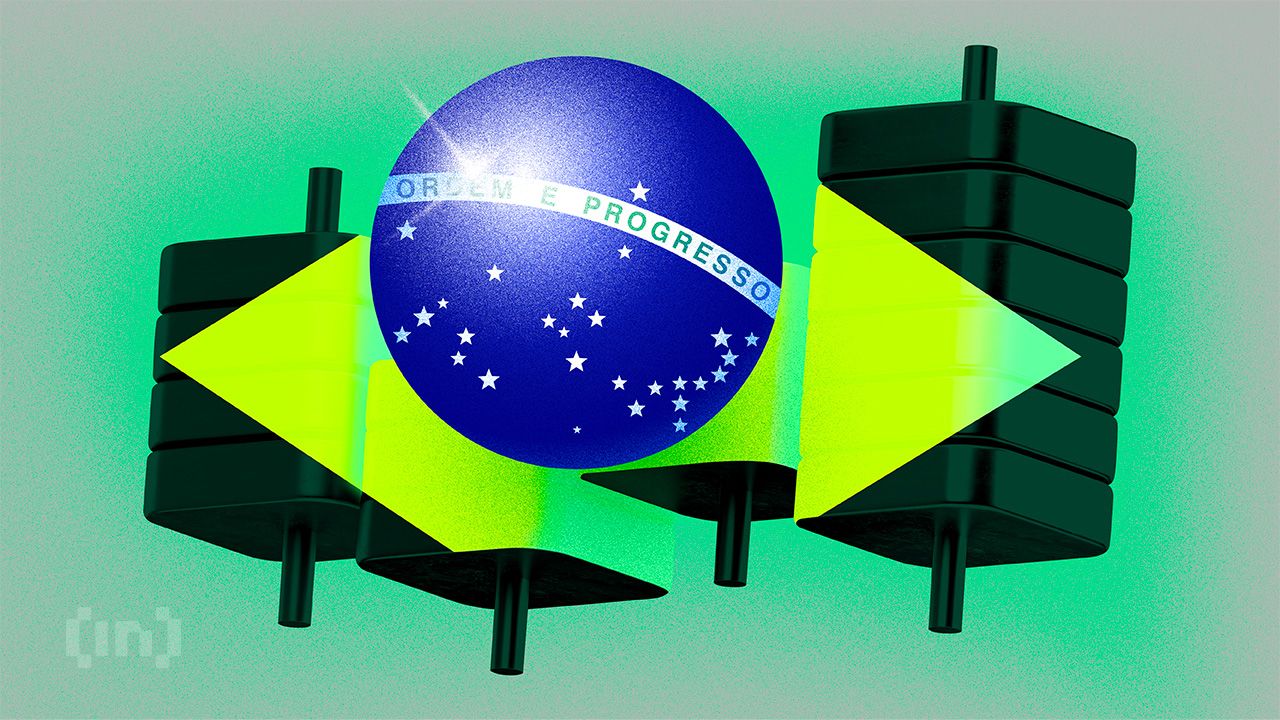

Brazil’s top electoral court, the Tribunal Superior Eleitoral (TSE), suspended presidential candidate Renan Santos’s digital campaign and froze R$3.3 million (roughly $640,000 USD) in public funds on August 31, weeks after he became the only contender to publicly back a national Bitcoin reserve.
Justice Dias Toffoli barred Santos and running mate Aroldo Medina from debates and ruled that 16 campaign social media profiles, declared 12 days after the campaign’s registration filing, cannot carry paid political ads.
The Bitcoin pledge behind the ruling
Santos, 42, made the Bitcoin reserve pledge on August 13 at Blockchain Rio 2026. He also promised to make Rio de Janeiro “crypto friendly” and to scrap the Tax on Financial Operations (IOF). He called Brazil’s crypto rules outdated and overly centralized.
The pitch puts him in company with Bukele’s Bitcoin-reserve model in El Salvador and Milei’s crypto embrace in Argentina. It also echoes Colombia’s recent election of a pro-crypto president, part of a broader rightward, crypto-friendly shift across Latin America.
Santos called the ruling against his campaign censorship and said his lawyers would seek an injunction from TSE president Nunes Marques.
The suspension landed the same morning The Economist profiled his candidacy as a possible Milei-style moment for Brazil.
What the ruling blocks
The order, signed Sunday and released Monday, halts new disbursements from the Special Campaign Financing Fund (FEFC), Brazil’s public election-financing pool, and bars the ticket from radio, television, and podcast debates.
Violations carry a R$50,000 (just under $ 10,000 USD) fine per ad or debate appearance. Toffoli also ordered platforms to pull the 16 profiles from recommendation algorithms or pay R$10,000 ($2,000 USD) per hour, per profile.
Officially declared digital campaign accounts are excluded from recommendation algorithms during the race, but his party’s (Missão’s) undeclared profiles remained eligible. One account with 2.4 million followers kept appearing in suggested-profile feeds alongside other candidates, Toffoli said.
Street campaigning continues, and the single website and X account Santos originally registered remain active. The candidacy itself was not thrown out.
The Mission Party, formed in 2025, is also fielding 57 congressional candidates alongside Santos.
Brazilians vote on October 4.
The post Brazil Suspends Pro-Bitcoin Candidate Renan Santos's Campaign, Freezes R$3.3M Fund appeared first on BeInCrypto.

RFK Jr. Goes Full Anti-Vaxxer Conspiracy Theorist Over 2 PA Measles Deaths

Stupid Financial Trap Middle Class People Fall Into

Lionel Richie rushed to hospital after falling ill during concert





-

 Crypto World6 days ago
SpaceX stock could rise 75% to $240, JPMorgan says
-

 Fashion3 days ago
Weekend Open Thread: Maeve – Corporette.com
-

 Crypto World4 days ago
Bitcoin’s 22% rally now needs real demand to outlast Treasury liquidity boost
-

 Crypto World6 days ago
Warsh Jackson Hole keynote puts financial innovation first
-

 Business4 days ago
Salesforce Stock Soars 19% as Blowout Earnings and Agentforce AI Growth Silence Software Skeptics
-

 Crypto World5 days ago
Elon Musk Grok Bot Promise: We Will Make You Whole if AI Loses Your Money
-

 Crypto World6 days ago
Did Trump Just Move SpaceX Stock With One Truth Social Post?
-

 Business4 days ago
Apple Confirms September 9 Keynote and Reveals Its Full Pre-Order Schedule
-

 Business3 days ago
Onto Innovation Stock: AI’s Next Bottleneck Is Yield (NYSE:ONTO)
-
 NewsBeat5 days ago
Lindsay Clancy jury braces for closing arguments as judge tells court: ‘You’ve heard all the evidence’ – Live updates
-

 Business6 days ago
Walmart takes aim at younger shoppers with new fashion brand
-

 Crypto World3 days ago
Bitcoin price tests $82K resistance as Brandt stays long
-

 Business6 days ago
Thailand’s Eastern Economic Corridor Capital City (EECiti): Key Developments and Investment Opportunities
-

 Crypto World5 days ago
NVIDIA revenue hits $96.2B as AI demand doubles
-

 Business4 days ago
iPhone 18 Pro Pre-Orders Could Shift to Saturday as Apple Reportedly Avoids September 11 Anniversary
-

 NewsBeat6 days ago
Trump’s trade truce with China faces test with Iran effort
-
 Crypto World5 days ago
Nvidia Q2 Earnings Reveal $96.2 Billion Beat, So Why Is NVDA Falling?
-
 Tech5 days ago
Claude Cowork gets its own browser that doesn’t touch your tabs, bookmarks, or saved passwords
-

 Crypto World4 days ago
Truflation calls for Fed rate cut after PCE forecast
-
 Tech2 days ago
Hugging Face built a $4.5 billion empire on free AI models. Now Nvidia is buying it for $12.9 billion
You must be logged in to post a comment Login