
Crypto World
Corn launches private members club for digital asset holders after Bitcoin L2 pivot



Corn has launched a private members club for digital asset holders after closing its Bitcoin layer-2 network, as a third investment from Polychain Capital has taken its total funding to $19 million.
Summary
- Corn’s former Bitcoin layer 2 ceased operations on June 30 after holding around $1 billion at its peak.
- Polychain has invested three times, though Corn has not disclosed the size of its latest contribution.
- Members can deposit USDC and USDT, with card balances settling in USDC on Base.
- Rain issues and processes the card, which will be available in over 50 countries, including the United States.
Corn closed its Bitcoin layer 2 after deposits fell
Corn said in a statement shared with crypto.news that its new club combines a stablecoin payment card with a named concierge, private events and travel services for digital asset holders.
The launch follows Corn’s decision to retire the Bitcoin layer-2 network on which the company was originally built. Although the network held around $1 billion in deposits at its peak, founder Chris Spadafora said much of the capital had arrived to collect incentives rather than use the network over time.
“We built serious infrastructure and it worked. At peak the network held around a billion dollars in deposits. What it taught me is the difference between usage and demand,” Spadafora said.
According to the founder, much of the capital moved elsewhere once the incentives returned to normal. Watching the deposits leave changed how the team assessed product demand and eventually led it to reconsider Corn’s business.
The network ceased operations on June 30, 2026, Spadafora said. Corn notified its community in advance and provided an extended withdrawal period before the shutdown.
Step-by-step guides explained how users could bridge assets out of the network, close protocol positions, and claim locked tokens. Withdrawals remained available through Corn’s self-service bridge until the sequencer went offline.
Spadafora said the experience also showed the team that Bitcoin had settled into a role as an asset people saved, while stablecoins had become a tool for transfers, spending and settlement.
“Private banks don’t recognize self-custody. Concierge services don’t take stablecoins. So instead of shipping more rails, we built what sits above them: a private members club purpose-built for digital asset holders.”
Corn’s new model replaces blockchain infrastructure with a service business built on existing payment and stablecoin systems. Every member receives one assigned concierge who keeps track of their preferences, portfolio, and priorities, according to the company.
Polychain’s third investment takes funding to $19M
Polychain Capital has invested in Corn for a third time, bringing the company’s total funding to $19 million. Corn declined to break out the amount supplied through the latest investment.
Before securing the new backing, Corn told Polychain that the thesis behind its original funding had not found product-market fit, Spadafora said. The company then presented its findings on how crypto holders store and use their money, along with a plan for a membership club tied to a stablecoin card.
“Their latest investment shows their conviction not only in our new direction, but in our team as a whole. Funds don’t make a third investment out of politeness,” Spadafora said.
According to the founder, the money will support the concierge operation, card rollout, and member experience. He described the spending plan as focused on “depth, not reach,” with personal service forming the main product.
Polychain co-chief investment officer Luke Pearson said:
“We’re deepening our support for Corn because we believe their approach stands out from the rest. They’ve taken the private-client service and concierge relationship only found at the top tier of traditional finance products, and are building and reimagining it for people whose money lives in stablecoins and whose lives operate around the world.”
Corn has positioned the club as an alternative to crypto cards that compete mainly through fees, rewards, and interest rates. Instead, the company is pairing stablecoin spending with invitation-only services and direct support from a named concierge.
Applications can be submitted through Corn’s website, but the company will review each request before granting membership. A prospective member’s holdings form part of the assessment, although Corn has no published asset threshold or fixed approval formula.
Corn stablecoin card provides variable limits based on member holdings
Approved members receive a Visa card with variable spending limits based on the digital assets they hold. Corn said the assets are not pledged as collateral because spending settles against the member’s stablecoin balance.
Members can deposit USDC and USDT from major blockchain networks, according to Spadafora. Regardless of the deposit network or supported stablecoin, balances settle in USDC on Base.
Corn said members place their stablecoins in an embedded wallet controlled by the user rather than a pooled company account. The available balance determines the card’s spending threshold, while the funds remain in the wallet until a purchase occurs.
“Corn never holds the balance and there’s no pooled account anywhere in the system,” Spadafora said. “Spend settles against the member’s own balance, which stays in their wallet until the moment of spend.”
A card transaction is authorized through Visa in real time against a limit linked to the deposited balance. Settlement then draws from the member’s stablecoins through the infrastructure operating behind the card.
Rain, a regulated card platform, issues and processes Corn’s cards, Spadafora said. Members must complete full know-your-customer checks through a regulated identity provider before using the product.
According to the founder, identity documents do not touch Corn’s servers. Withdrawals from the card path require authorization from the member and a co-signature from the card platform, meaning neither party can move funds alone.
The card will be available to members in more than 50 countries, including the United States. Corn plans additional market-by-market rollouts through the fall.
Demand for stablecoin-linked cards has risen alongside their availability. As crypto.news reported in August, tracked crypto card spending reached $759 million in July, up from $306 million a year earlier.
Cardholders completed nearly 9 million purchases during the month, with an average value of about $86, according to Paymentscan data cited by a16z crypto. USDC accounted for 58% of the tracked volume, while USDT handled another 26%.
Optimism processed about 29% of the tracked blockchain settlement, followed by Solana and Base at 19% each. Corn’s use of Base for USDC settlement places the card on one of the three largest networks in Paymentscan’s July dataset.
A separate August report on stablecoin card forecasts cited a Paymentscan headline total of about $1.04 billion for July. Variations in reporting methods can produce different totals, particularly when datasets combine transactions observed onchain with figures supplied by card providers.
Corn membership adds concierge and quarterly programs
Alongside the card, Corn’s membership includes private dinners and events in cities where members live or travel. Requests go through the member’s assigned concierge rather than a general support channel.
The company is also introducing two quarterly programs. Impossible Moments will present private openings, limited seats, and other experiences that are not ordinarily available for public booking, with each listing offered at a stated price.
Under Corn Curated, a guest tastemaker will select restaurants, hotels, and travel experiences for the following three months. Members can arrange items from the list through their concierge, while each curator will introduce the person responsible for the next quarter.
The first program experiences will roll out this quarter, according to Corn. Future offerings will cover sporting events, travel, private dining and cultural experiences arranged through the company’s network.
For US users, Corn enters a market where stablecoin infrastructure now operates under a federal framework created by the GENIUS Act. An earlier report on the Open USD initiative noted that the law established national rules for payment stablecoin issuers after President Donald Trump signed it in 2025.
Visa said at its June 2026 Payments Forum that its stablecoin settlement run rate had reached about $7 billion as of March. More than 160 stablecoin-linked card programs were live or under development at the time, according to figures included in the same report.



Existing holdings would keep the current tax treatment, which can allow tax-free sales after a 12-month holding period.
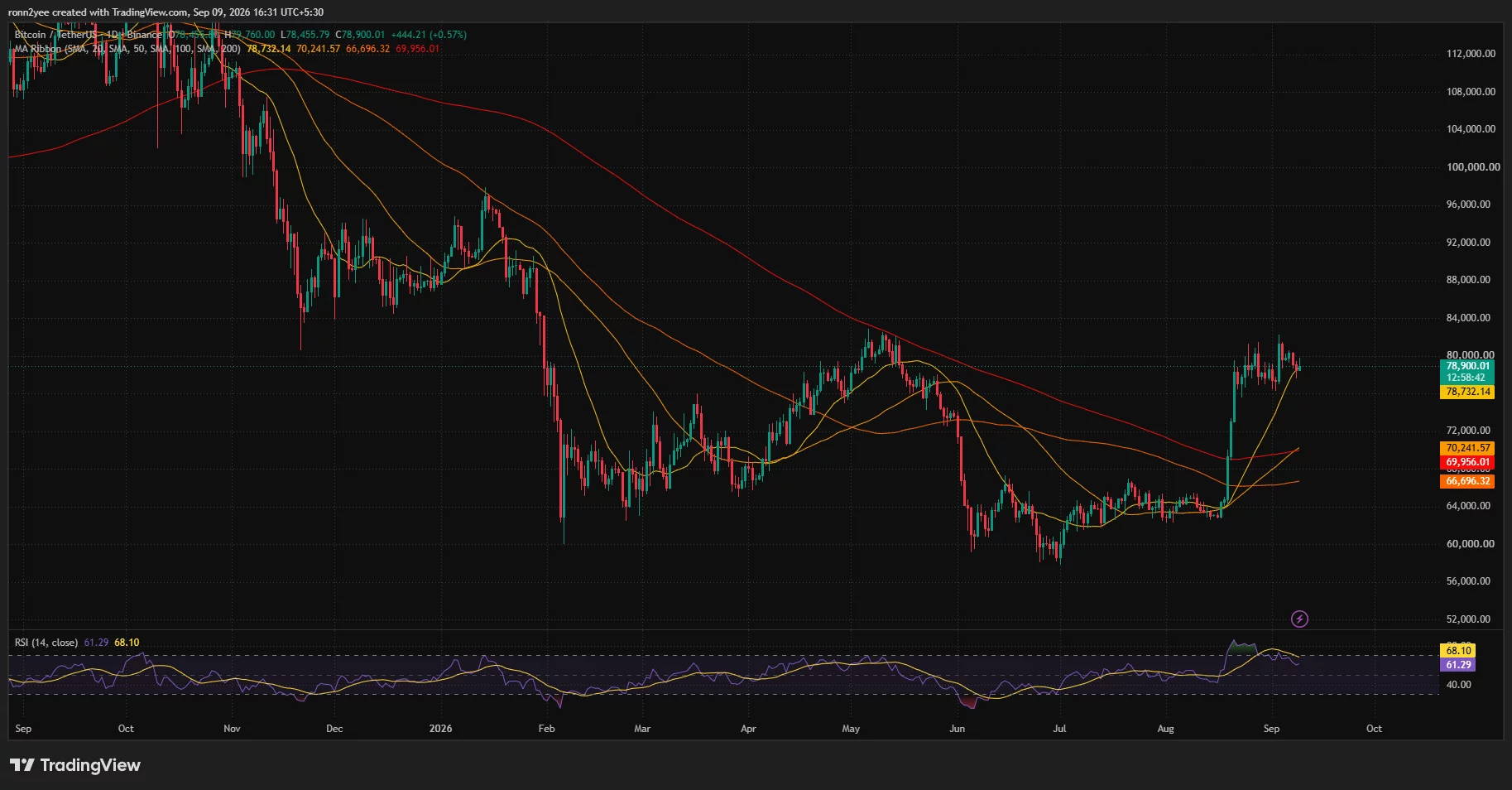
Bitcoin price slipped below $79,000 on Sep. 9 as weakening short-term momentum and liquidity clusters on both sides of the market raised the risk of a sharper move.
Summary
- Bitcoin price traded near $78,900 after falling from above $81,000 on Sep. 4.
- The 4-hour price dropped below its Bollinger Band midpoint at $79,188.
- An ADX reading of 18.31 points to weak short-term trend strength.
- Liquidation liquidity is concentrated near $80,000 above and $77,000–$78,000 below.
Bitcoin price struggles to hold $79,000
According to data from crypto.news, Bitcoin (BTC) price traded near $78,900 at the time of writing, down from an opening price of $81,271 on Sep. 4. The asset briefly fell to $78,455 during the latest daily session before buyers pushed it back toward $79,000.
The six-day pullback followed Bitcoin’s failed attempt to extend its rally above $81,000. Price reached a local high above $82,000 earlier in the period but could not hold those gains as macro concerns and leveraged liquidations weighed on demand.
Bitcoin’s broader daily structure remains constructive despite the decline. BTC is trading slightly above its 10-day simple moving average at $78,732, while the 20-day SMA is much lower at $70,242.
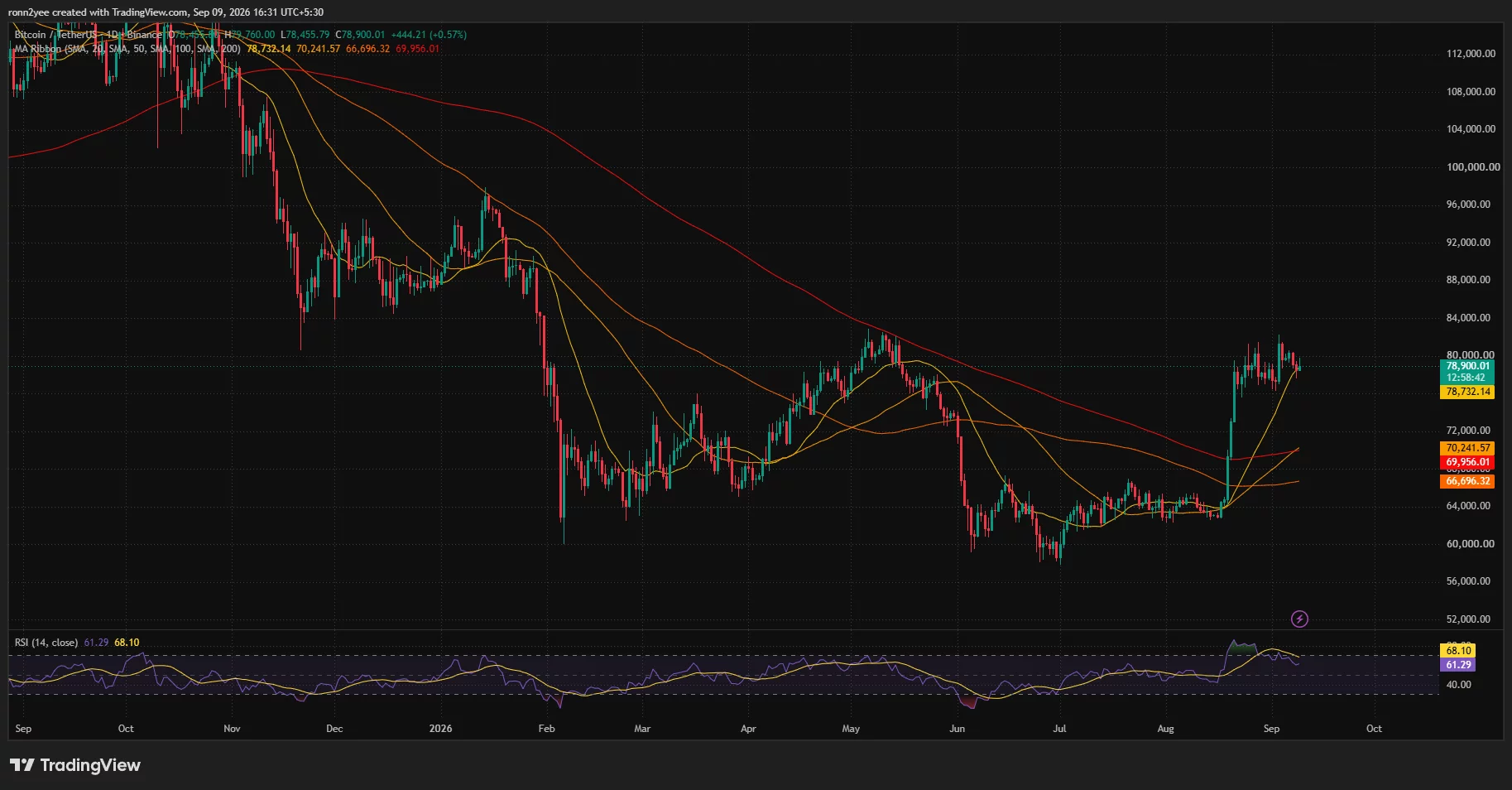
The 50-day, 100-day, and 200-day averages are grouped between approximately $66,700 and $70,000. Bitcoin’s position above those longer-term indicators shows that the larger recovery has not broken down, even as short-term momentum cools.
Daily relative strength has also weakened. The RSI stands at 61.29, down from recent highs and below its signal average of 68.10. The reading remains above the neutral 50 level, but the decline suggests buyers have lost some momentum since BTC tested $82,000.
4-hour indicators show weak momentum
Bitcoin’s 4-hour chart presents a less favorable picture. BTC is trading below the Bollinger Band midpoint at $79,187, which now acts as immediate resistance.
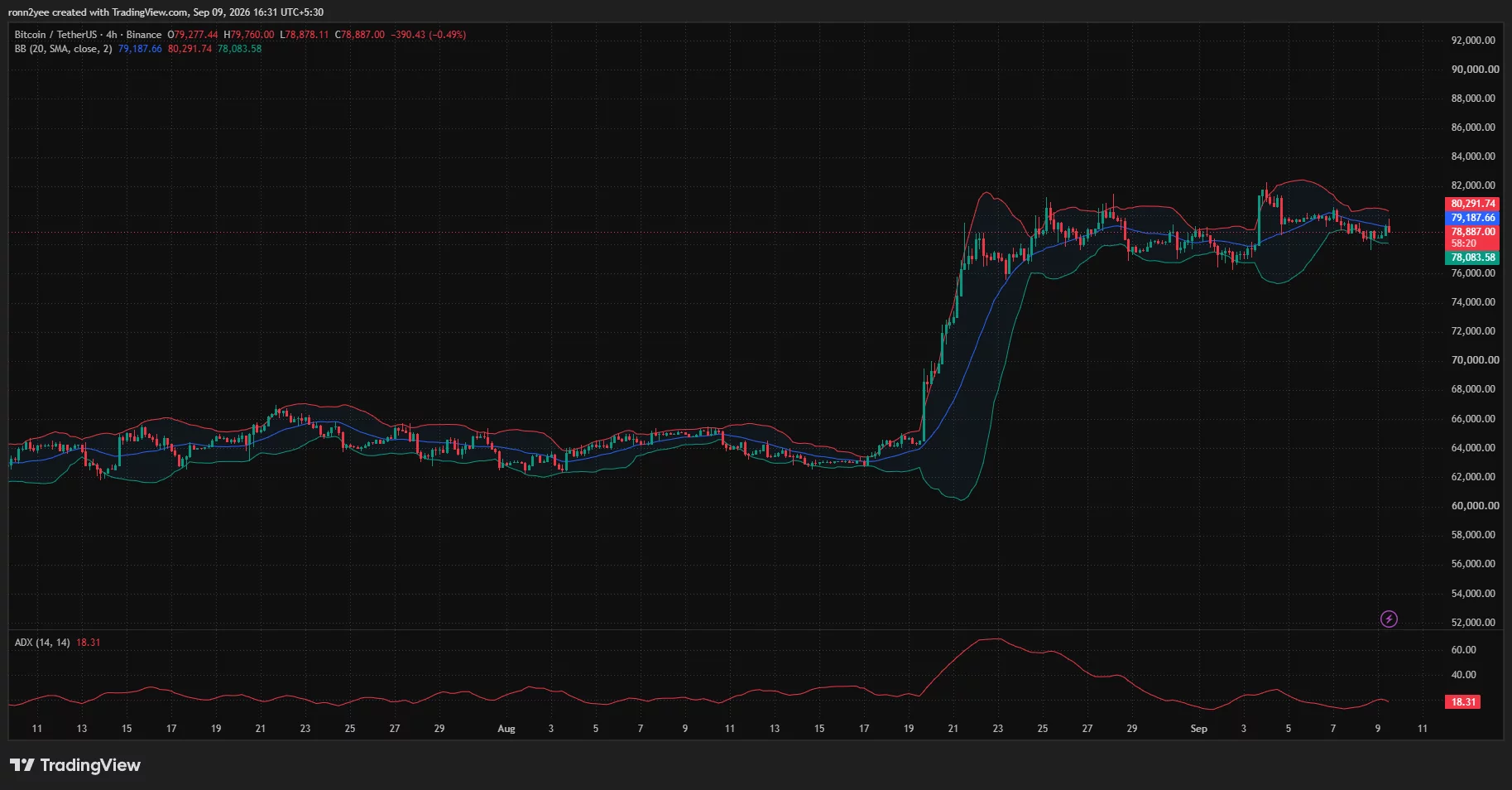
The upper band is near $80,292, while the lower band sits at approximately $78,084. Price has moved toward the bottom half of the range after repeatedly failing to establish support above the midpoint.
A break below the lower band could expose the intraday low around $78,450, followed by the psychological $78,000 level. Buyers would need to reclaim $79,200 before attempting another move toward the upper band and the $80,000 mark.
The average directional index stands at 18.31 on the 4-hour chart. ADX readings below 20 generally indicate that the market lacks a strong trend, which supports the possibility of further sideways movement before a larger breakout.
Low trend strength does not identify the direction of the next move. However, it can leave Bitcoin vulnerable to sudden volatility when the price reaches concentrated areas of leveraged positions.
Liquidation heatmap puts $77,000 and $80,000 in focus
CoinGlass’ 24-hour liquidation heatmap shows several liquidity bands around Bitcoin’s current price. The nearest concentrations above the market appear between approximately $79,200 and $80,000.
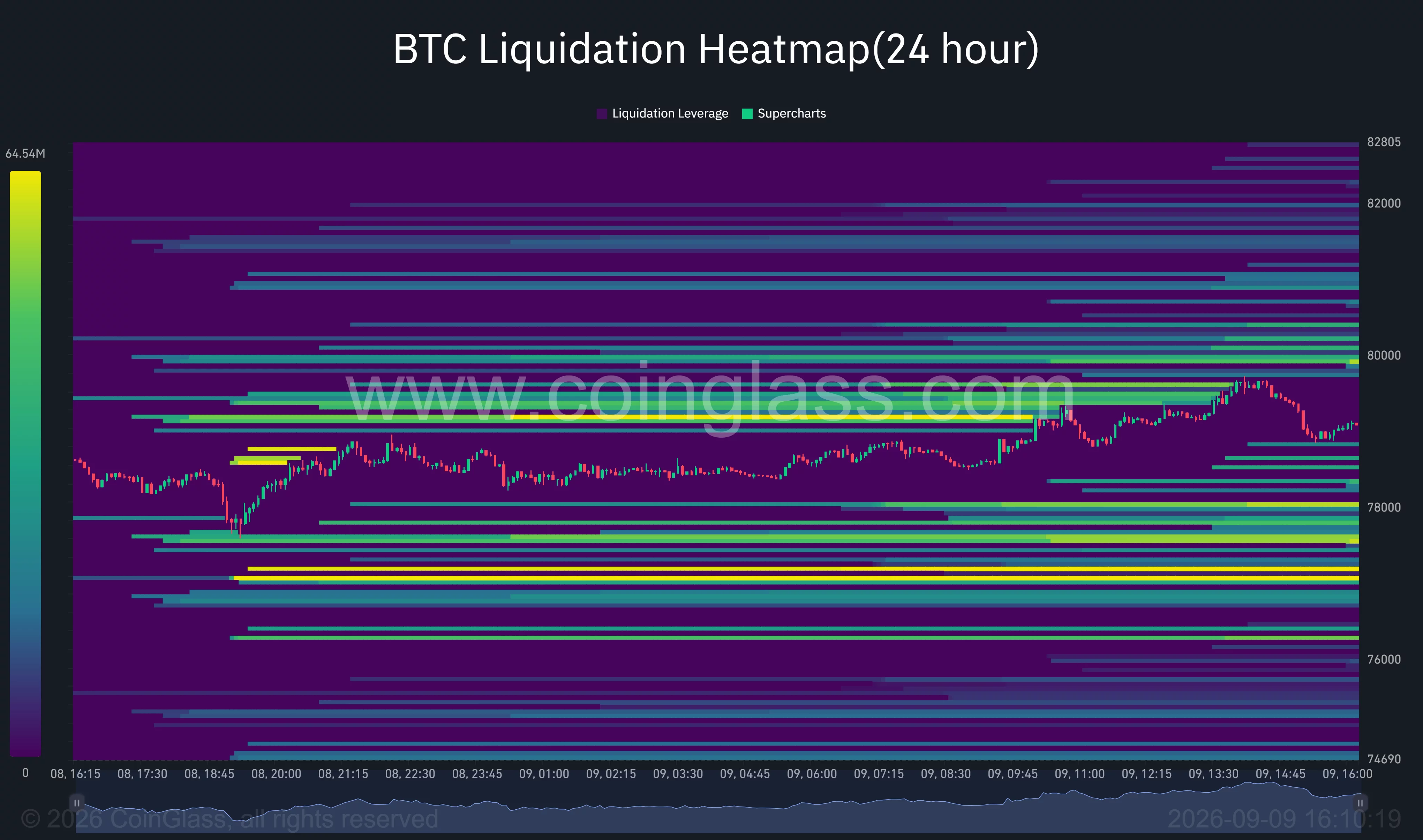
A move into that area could force leveraged short positions to close, adding buy pressure and helping BTC retest $80,300. Further liquidity is visible around $80,500 and between $81,500 and $82,000.
Liquidity is also stacked below the market. The heatmap shows a large concentration near $78,000, followed by a brighter and potentially larger band around $77,000.
A break below $78,000 could therefore trigger long liquidations and accelerate a fall toward $77,000. Additional liquidity appears near $76,300, making that level relevant if the $77,000 area fails.
Market commentator Whale Factor also pointed to a “tug of war” around $80,000, citing a separate 30-day liquidation map. The analyst noted that leveraged positions are concentrated both above and below Bitcoin, creating conditions for a cascade in either direction.
Bearish divergence raises risk of a $76K retest
Crypto analyst Gerla identified a bearish divergence between Bitcoin’s price and RSI. According to the analyst, BTC may still sweep the $82,000 region and form a higher high, but RSI has recorded lower highs at the market’s recent peaks.
A bearish divergence forms when price reaches higher highs while a momentum indicator moves lower. Traders often view the pattern as a warning that an advance is losing strength, though it does not confirm a reversal by itself.
Gerla said the bearish setup would activate only after a confirmed break below channel support near $76,000. A move above $84,000 would weaken the bearish view, according to the analyst.
The chart levels create three immediate scenarios. Holding $78,000 could keep Bitcoin inside its current range, while a recovery above $79,200 would put $80,000–$80,300 back in play. A daily or sustained 4-hour break below $78,000 would increase the chance of a liquidity-driven move toward $77,000 and then $76,000.
For US traders, Treasury yields and expectations for Federal Reserve policy remain important external factors. Higher yields can reduce demand for risk assets, while any shift in rate expectations could add volatility to Bitcoin’s densely positioned derivatives market.
Bitcoin is therefore caught between long-term technical support and fading short-term momentum. The next confirmed break outside the $78,000–$80,300 range could determine whether BTC revisits $82,000 or extends its correction toward $76,000.
Disclosure: This article does not represent investment advice. The content and materials featured on this page are for educational purposes only.
Crypto World
Tehran Targets U.S. Base in Jordan In Retaliation for U.S. Destroying Iranian Oil Tankers


Iran said it targeted a U.S. base in Jordan with a series of missiles overnight after the U.S. military struck five Iranian oil tankers amid renewed hostilities in the region.
“The defeated and aggressor U.S. terrorist military, out of desperation, attacked several Iranian commercial and oil vessels,” said the Islamic Revolutionary Guard Corps (IRGC), according to Iranian state media.”This powerful battle will continue.”
A spokesperson for the Jordanian Armed Forces said a barrage of “20 ballistic missiles” had been launched towards its territory. The country’s air defense system successfully intercepted and destroyed 18 of the missiles, while the remaining two” fell in areas devoid of population centers.”
The IRGC on Wednesday claimed to have targeted two U.S. vessels and eight oil tankers in the Strait of Hormuz as part of its wider retaliatory operations, as reported by Iranian state media.
U.K. Maritime Trade Operations said it had received reports involving several merchant vessels in the region that were subject to “disabling fire,” but it was unable to confirm the nature or impact of the disturbances.
U.S. Central Command (CENTCOM), in response, denied the IRGC’s claims, saying that “no U.S. Navy warship has been struck” as “all IRGC attempted attacks failed.”
The escalation comes after CENTCOM on Tuesday said it destroyed five Iranian crude oil tankers in response to Iran targeting U.S. Navy ships with ballistic missiles over the previous two days.
“The U.S. warship successfully evaded the attempted Iranian attacks and continued to patrol regional waters. No American personnel were harmed,” said the U.S. defense force.
The active hostilities and attacks on shipping mark a serious escalation in the reignited war, which experienced a brief respite before flaring up again last week.
The U.S. and Iran are trading retaliatory attacks as President Donald Trump pursues a campaign of military and economic pressure on Iran, with Tehran threatening it could escalate the conflict further by targeting U.S. oil and gas interests in the Gulf.
Iran has specifically denounced the U.S. attacks on its oil shipments, with the Iranian Foreign Ministry on Wednesday insisting the strikes are “not only a dangerous escalation of tensions in the region, but also a clear threat to regional and international peace and security.”
Iran-backed Houthis escalate regional instability with attacks on Saudi oil infrastructure
Meanwhile, the Iran-backed Houthi militia in Yemen contributed to the regional instability by launching attacks on four cities in Saudi Arabia on Tuesday, with the aim of targeting oil infrastructure.
Saudi Arabia’s Ministry of Foreign Affairs said 73 people had been injured in the strikes.
The attacks came after weeks of escalation between the Houthis and the Saudi-backed government of Yemen, shattering a four-year informal cease-fire in the country’s civil war.
“The U.S. has a very strong defensive military relationship with Saudi Arabia, and we’re watching those events very closely. It’s been going on for some time,” Secretary of State Marco Rubio said Tuesday.
The renewed fighting threatens to further disrupt shipping through the Bab al-Mandeb strait, a critical trade route off the Arabian Peninsula for oil and global commerce.

Japan’s Bitcoin treasury-focused firm Metaplanet is facing renewed scrutiny from shareholders after controversy erupted around the company’s “10th Series” executive option pool and the dilution mechanics tied to its ongoing BTC accumulation.
The dispute centers on how the pool was structured—set at 20% of fully diluted shares and designed to expand automatically as Metaplanet issued new shares to finance additional Bitcoin buys—prompting critics to argue that management’s incentives increased at the expense of existing holders.
Key takeaways
- Shareholders have challenged Metaplanet’s 10th Series executive option pool, arguing its built-in expansion led to significant dilution.
- Metaplanet says the pool was frozen at 319.5 million shares on Aug. 18, but critics claim the earlier growth still magnified dilution for existing shareholders.
- Bitcoin Magazine CEO David Bailey defended the incentive design in posts on X, while pseudonymous shareholder “Bitcoin Pharaoh” alleged personal benefit from options and raised concerns about fairness.
- Metaplanet CEO Simon Gerovich said the company would review governance and compensation policies, after an update that the CEO exercised 92,000 shares from the 10th Series pool.
- Industry commentator Matthew Sigel said further exercise rights from the 10th Series should be frozen and replaced with a shareholder-approved plan tied primarily to BTC per fully diluted share.
Why the 10th Series option pool became contentious
Backlash intensified as multiple Metaplanet shareholders questioned the design and outcomes of the company’s 10th Series executive option pool. According to the dispute described by shareholders on X, the pool was established to represent 20% of fully diluted shares and to automatically expand as new shares were issued to fund Metaplanet’s Bitcoin accumulation.
Critics point to the scale of the growth. One shareholder claim summarized the change as the pool expanding from roughly 46 million shares to 319.5 million shares. While that characterization reflects the objections raised in social posts, Metaplanet’s response provides the key operational detail: the company said it froze the pool at 319.5 million shares on Aug. 18.
In a Tuesday X post, Bitcoin Magazine CEO David Bailey defended the model, arguing that allowing management a 20% slice of the cap table over five years “isn’t some crazy number.” Bailey also wrote that he has been invested in Metaplanet “since day zero,” framing his support as long-term alignment rather than short-term compensation.
Responses from Metaplanet and shareholder pressure for transparency
Following the public debate, some shareholders said they are asking Metaplanet to cancel additional shares created from the 10th Series changes and to provide more transparency around future decisions. The criticism is not only about dilution in theory, but about the sequence of how the pool expanded while new share issuance financed Bitcoin purchases.
Metaplanet acknowledged in an Aug. 18 notice that expanding the share pool “amplifies the dilution borne by existing shareholders.” That admission is central to the contention: even if a freeze stops further automatic expansion, shareholders argue the damage had already accrued.
One pseudonymous shareholder, “Bitcoin Pharaoh,” also alleged that Bailey personally benefited from Metaplanet stock options, claiming Bailey received 300,000 options at a strike price of 105 Japanese yen when Metaplanet’s stock was reportedly trading at 510 yen. The allegation was presented as part of the shareholder critique, emphasizing perceived incentive misalignment and potential conflicts around board-related roles. Bailey did not provide a detailed rebuttal within the text provided, but he did publicly defend the overarching executive option structure.
CEO Gerovich: governance review and the 10th Series exercise update
Metaplanet CEO Simon Gerovich said the company would review governance and compensation policies and share updates once the work is complete. In a Sunday X post, Gerovich also sought to distance himself from shareholder discussions tied to MMXX Ventures, explaining that he is a significant but non-majority shareholder in MMXX’s parent company and that he does not hold an executive role.
Separately, on Aug. 31, Metaplanet revealed that the CEO exercised 92,000 shares from the 10th Series executive options pool. The exercise detail matters in this context because it illustrates that the incentive program in question moved from a theoretical cap-table mechanic into completed transactions tied to company performance and/or capital-market actions.
As the controversy escalated, Metaplanet’s earlier documentation and the Aug. 18 freeze appear to be the company’s attempt to address the immediate dilution concern by halting further pool expansion. However, critics continue to argue that transparency and fairness still require broader remedy—particularly if earlier expansions increased dilution beyond what holders expected.
External calls to freeze remaining rights and replace the structure
Outside commentary has added pressure by reframing what a better incentive approach could look like. VanEck’s head of digital asset research, Matthew Sigel, argued in a Wednesday X post that Metaplanet should “freeze” further exercise rights from the 10th Series option pool. Sigel also suggested holders voluntarily surrender the excess rights and weigh additional options tied to shares that were already exercised.
Most notably, Sigel proposed replacing “Series 10” with a shareholder-approved five-year incentive plan tied primarily to BTC per fully diluted share. That suggestion speaks directly to the core criticism: that tying the incentive to a cap-table percentage, rather than directly to Bitcoin ownership metrics normalized by fully diluted share count, can create outcomes where management’s equity gain does not map cleanly to shareholders’ contribution after dilution effects are considered.
At the time of Cointelegraph’s report, it indicated a request for comment from Metaplanet on whether the company would consider freezing remaining shares in the executive pool. The market also appeared to react to the debate and corporate updates: Metaplanet shares closed higher in Wednesday’s Tokyo trading, trimming their five-day decline to roughly 16.3%, according to Yahoo Finance.
For investors, the next key signal to watch is whether Metaplanet’s announced governance review results in concrete changes—particularly around whether any remaining 10th Series rights will be frozen and whether a new, shareholder-approved incentive framework is put forward and clearly tied to Bitcoin per fully diluted share rather than automatic cap-table expansion.



Malone Lam, a 22-year-old Singaporean and recent Miami resident, pleaded guilty in a Washington, D.C. federal court to one count of participating in a RICO conspiracy tied to the theft and laundering of more than $245 million in Bitcoin and cryptocurrency. He faces a maximum sentence of 20 years, according to court proceedings before U.S. District Judge Colleen Kollar-Kotelly.
The case centers on an August 2024 theft of more than 4,100 Bitcoin from a Washington-area victim, executed not through a protocol exploit but through impersonation and credential theft.
According to prosecutors, two alleged co-conspirators posed as representatives of Google and the Gemini cryptocurrency exchange to manipulate the victim into granting access to his Google Drive and revealing security codes. That access allegedly let Lam siphon off the Bitcoin holdings in one move.
No wallet was cracked; no private key was brute-forced. The attackers simply talked their way past the human layer that sits in front of every custody setup.
Lam is one of 18 defendants charged in the case and the 11th to plead guilty. Prosecutors describe him as an organizer for a network of young men who ran a string of cryptocurrency scams starting in 2023.
Trade Crypto on Bybit and Get a Chance to Win Our $1,000 USDT Airdrop
From Bitcoin Laundering to a Month-Long Spending Spree
Authorities say Lam helped launder and convert the stolen cryptocurrency into cash, which then funded a fleet of more than 30 cars, including custom Porsches, Lamborghinis, and Ferraris, a $2 million watch, and rented mansions in Miami. Nightclub spending alone reportedly hit $569,000 in a single evening at one Los Angeles club.
— AlphaWire (@AlphaWireHQ) September 8, 2026
 BREAKING: Malone Lam is expected to plead guilty today in connection with one of the largest crypto thefts in U.S. history.
Prosecutors say Lam and his associates impersonated Google and Gemini representatives to socially engineer a victim and steal more than 4,100 BTC, later… pic.twitter.com/sno0sEe9xs
The run lasted a month before FBI agents arrested Lam in Miami. Per the indictment, an off-duty law enforcement officer had tipped him off that agents were en route, though the arrest went ahead regardless. In a recorded jailhouse call cited in the indictment, Lam told associates the outcome had exceeded even their own worst-case scenarios for what getting caught might look like.
The mismatch between the crime’s technical simplicity and its financial scale is the real story here. Social engineering doesn’t require exploiting Bitcoin’s underlying protocol. It requires exploiting the people and institutions standing between a holder and their keys. Google Drive access and a leaked security code did more damage here than any blockchain-level attack could.
Discover: The Best Token Presales
What Comes Next
Judge Kollar-Kotelly had not immediately scheduled Lam’s sentencing hearing at the time of the plea. He faces up to 20 years in prison on the single racketeering-conspiracy count, with the remaining defendants in the 18-person case still working through their own proceedings.

For traders and holders, the takeaway isn’t abstract: large balances sitting behind cloud-linked recovery methods, reused security codes, or support channels vulnerable to impersonation remain the softest target in the ecosystem.
Recovery of stolen funds, when it happens at all, typically comes through law enforcement asset forfeiture rather than any on-chain remedy, a process illustrated by past cases involving long-delayed Bitcoin recovery efforts tied to historic exchange failures.
The Lam case is a reminder that the weakest link in crypto security is rarely the cryptography.
Earn $50 and Enter $300K Prize Draw on EdgeX
The post Bitcoin Thief Pleaded Guilty: The $245M Social Engineering appeared first on Cryptonews.
Crypto World
U.S. Bank takes next step towards launching its stablecoin with cross-border payment test
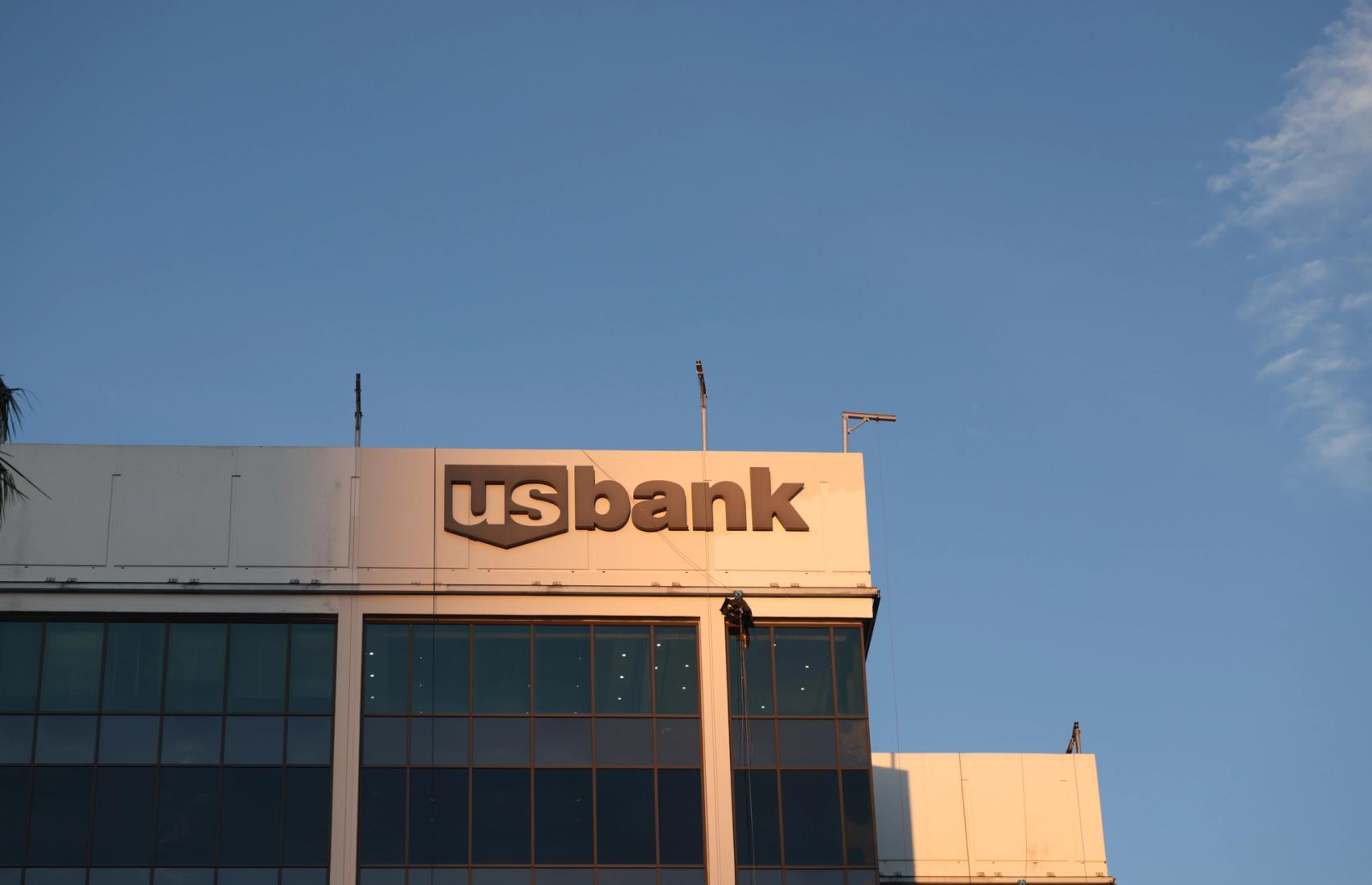
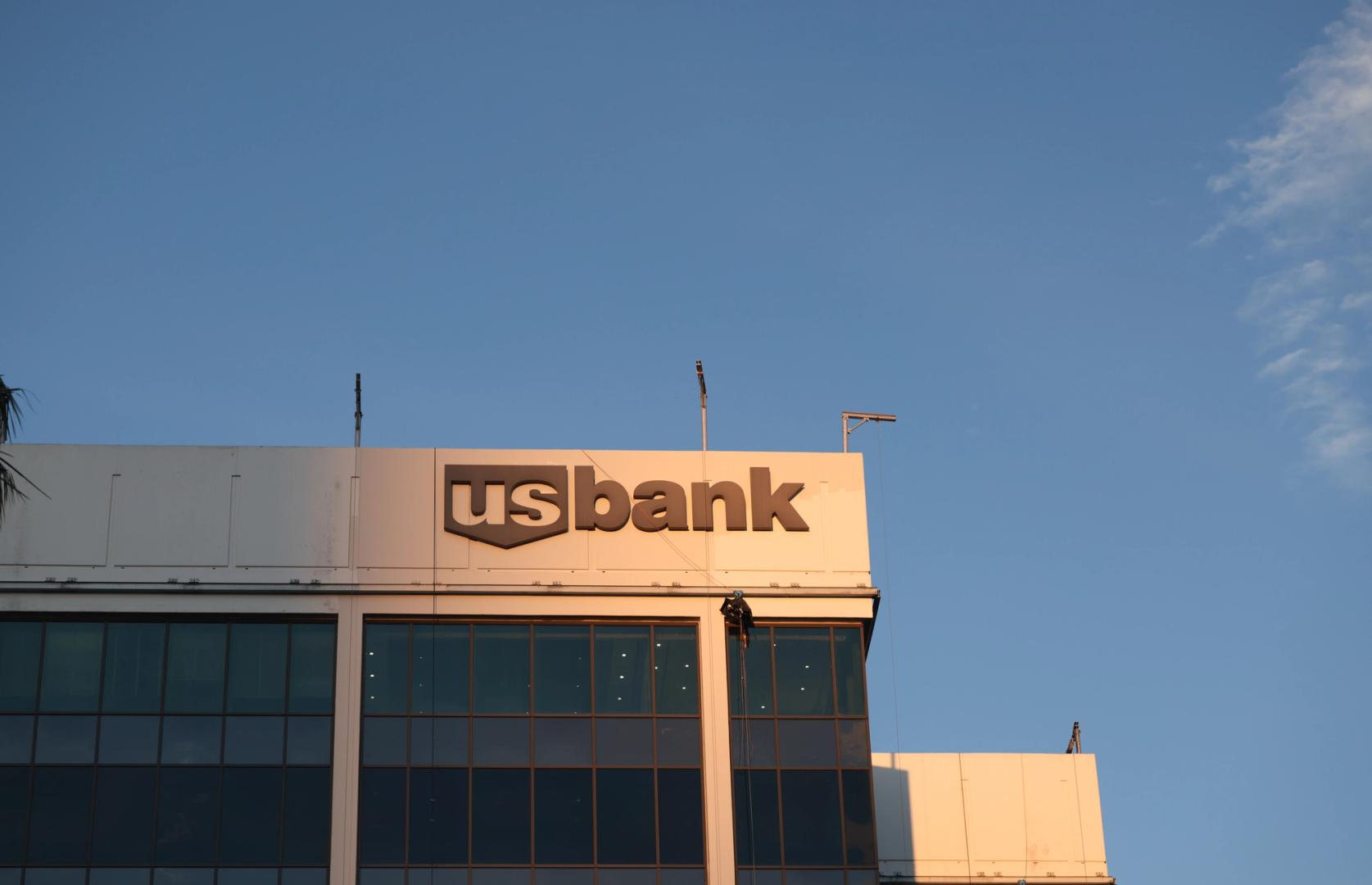
The fifth-largest U.S. commercial bank said it is exploring USBDC stablecoin for treasury payments, liquidity management and collateral after completing a live transaction.

Bitcoin appears to be showing signs of a recovery in on-chain profitability despite the broader market still wrestling with uncertainty around where this cycle’s lows may ultimately form. A widely watched measure—spent output profit ratio (SOPR)—has remained above its breakeven level for an unusually long stretch in 2026, echoing patterns typically seen earlier during bull-market rebounds.
At the same time, analyst David Puell cautioned in a recent interview that SOPR’s improvement may not be enough by itself to conclude a bear-market floor is already in place. His view suggests that investors should respect the possibility of additional downside even as on-chain behavior turns more constructive.
Key takeaways
- According to CryptoQuant, Bitcoin’s SOPR has stayed above the breakeven threshold of 1 since Aug. 19, currently around 1.002.
- The current three-week run is the longest bullish SOPR streak of 2026, a pattern often associated with early bull-market recovery conditions.
- Checkonchain’s wallet cohort analysis suggests UTXO profitability is beginning to resemble bull-market dynamics, including more profit-taking that doesn’t immediately flip back to losses.
- Despite the SOPR rebound, David Puell says investors still need more evidence before assuming the next bear-market floor is already set.
SOPR’s longest bullish streak in 2026
Crypto analytics platform CryptoQuant reports that Bitcoin’s SOPR has been above its breakeven level of 1 since Aug. 19. SOPR evaluates whether coins spent on-chain are moving at a gain or a loss relative to the price basis at their prior transaction—so values above 1 generally indicate that spent outputs are more often being realized in profit.
In the current reading, SOPR sits near 1.002, a level slightly above breakeven but important because the metric tends to oscillate tightly around 1 for extended periods. What stands out here is duration: the measure has remained bullish for three full weeks, marking the longest such streak recorded so far this year.
That timing matters for traders because SOPR doesn’t just reflect a one-off bounce—it can signal whether the market is transitioning from “rally then sell” behavior typical of bear phases to “buy-the-dip” patterns often observed in earlier bull recoveries.
Wallet cohort analysis points to a profit-taking shift
SOPR can be further divided by wallet cohort, helping distinguish whether profitability is improving primarily among newer participants or whether longer-term holders are also spending in ways that suggest broad-based recovery. As noted by CryptoQuant-linked commentary, breaking SOPR down by investor groups can clarify whether on-chain gains are being concentrated or becoming more generalized.
Building on this type of analysis, Checkonchain highlighted short-term holder (STH) SOPR—tracking profitability for coins held for up to six months without selling. In a weekend post on X, Checkonchain said the market’s structure is starting to resemble early bull-market recovery behavior:
“In bear markets, rallies back into profit tend to get sold. In bull markets, short sharp moves below break-even tend to become buy-the-dip setups. The current structure is starting to look more like those early bull-market recoveries.”
The implication is not that drawdowns are impossible, but that the market may be failing to revert quickly to loss-making conditions after moving back toward profitability. If that continues, it can strengthen the case that the market is shifting toward more sustainable accumulation rather than transient bounce dynamics.
David Puell: SOPR helps, but downside risk remains
Even with the improving SOPR trend, David Puell—an investor and portfolio manager known for creating the Puell multiple indicator—stressed in an interview with CryptoQuant released on Sept. 4 that investors should not assume the next bear-market bottom has already been established.
Puell’s stance came as the BTC/USD market has been holding a local range around $80,000. He argued that more evidence is required before changing his long-term bias toward an already-confirmed recovery. When asked about how Bitcoin’s 25% August upside might play out heading into Q4, Puell suggested further upside is the less likely outcome and framed his position as a downside risk.
In his words, “In our view, as of now, we leave it as a downside risk.” He also emphasized what he sees as the key prerequisite for altering his outlook: SOPR needs to remain above 1 for a longer period, alongside the broader requirement that investors are “realizing profits consistently without price going back to a new low.”
Importantly, Puell’s thesis doesn’t rely solely on on-chain profitability. He pointed to a technical requirement as well—Bitcoin needs to start printing a sequence of higher highs and higher lows on weekly time frames. Cointelegraph previously reported that this pattern remains absent on weekly charts, reinforcing the idea that on-chain improvement may currently be running ahead of price structure.
From “bear market over” to “prove it”: what to watch next
The SOPR recovery also follows earlier comments from CryptoQuant CEO Ki Young Ju, who—based on readings from the platform’s Bull/Bear Market Cycle Indicator—described the bear market as already “over.” That earlier claim, contrasted with Puell’s more cautious requirements, highlights a recurring tension in crypto market analysis: on-chain signals can improve before price confirms the new regime, and different indicators can lead at different speeds.
What readers should focus on now is whether the SOPR streak turns into a sustained shift rather than a temporary excursion. Puell effectively sets a bar: SOPR must hold above breakeven for longer while price does not revisit fresh cycle lows. Traders and investors should also watch for whether weekly price action begins to display the higher-highs and higher-lows structure Puell says is still missing.
If SOPR remains bullish and weekly structure eventually strengthens, the current on-chain pattern could transition from “early recovery resemblance” to a stronger confirmation of a cycle change. If instead SOPR fades back toward losses while price fails to build trend, the market may be demonstrating the kind of bear-market volatility where profit-taking doesn’t last.

Bitcoin price prediction shows BTC is trading around $79,000, up about +0.5% today, and the chart just confirmed what the market has been waiting for since November 2025: a golden cross.
The 50-day moving average has crossed above the 200-day. Historically, that’s not a subtle signal; the last three occurrences preceded rallies of 50%, 45%, and 60%, respectively. But there’s a catch nobody’s shouting about yet.
JUST IN: Bitcoin crosses the golden cross formation, which previously led to the $126,200 all-time high in May 2025 — Bitcoin Magazine (@BitcoinMagazine) September 8, 2026

Bullish!  pic.twitter.com/KrzKN4Kk7b
The setup arrives alongside nearly $3.8Bn in fresh ETF inflows, a genuinely bullish flow signal. Yet BTC remains boxed in, facing hard resistance in the $79,000–$82,000 band that’s held for weeks.
Meanwhile, Fed Chair Kevin Warsh’s hawkish Jackson Hole remarks on inflation, plus a soft August jobs print, have traders pricing in a possible 25-basis-point hike, the kind of macro headwind that’s capped rallies before.
So which force wins: the golden cross’s historical pull, or the rate-hike ceiling? The technical structure below suggests the answer isn’t binary.
Bitcoin Price Prediction: Can BTC Hit $100k in September?

BTC’s move to $79,278 puts it in the transition zone that technicians have flagged as decisive: the $78,800–$79,000 area that needs to hold as support before any push higher.
Volatility has been unusually compressed, a pattern analysts attribute to long-term holders simply refusing to sell despite the price sitting near multi-week highs.
Immediate support sits at $76,000–$77,600, an on-chain cost basis zone that’s repeatedly absorbed selling pressure. Below that, deeper support clusters at $71,781–$75,674. On the upside, resistance stacks at $79,730–$79,920, then the heavier ceiling at $80,000–$82,793.
Bull case: a confirmed daily close above $82,300 opens a path toward $85,000–$86,000, with $95k–$100k the next supply zone if momentum holds.
Base case: continued chop between $76k and $82k while the market digests Fed signals.
Bear case: a hawkish rate decision pushes BTC back toward $75,674 support, invalidating the near-term golden-cross momentum. None of this is investment advice; treat these levels as a map, not a guarantee.
Earn $50 and Enter $300K Prize Draw on EdgeX
Bitcoin Hyper Targets Early Mover Upside as Bitcoin Tests Key Levels
A golden cross with historical 45-60% rally precedent is exactly the kind of setup that gets a trader’s pulse up, and rightly so. But here’s the disappointing math.
Even a 60% BTC move from here lands around $127,000, solid for holders, unremarkable for anyone chasing asymmetric upside at this market cap. That’s pushed capital rotation toward earlier-stage infrastructure plays sitting closer to the ground floor.
Bitcoin Hyper ($HYPER) is building the first Bitcoin Layer 2 with native SVM integration, smart contracts that run faster than Solana itself, and a decentralized canonical bridge to Bitcoin’s base-layer security.
The presale has raised $33,116,236.62 at a current token price of $0.0136859, with staking rewards on offer for early participants. The pitch is straightforward: Bitcoin can secure trillions but can’t run an app; Hyper aims to fix that without touching BTC’s trust model.
Gain Access to New Bitcoin Layer 2 Early Here
Discover: The Best Token Presales
The post Bitcoin Price Prediction: Golden Cross Hints at $100K Surge appeared first on Cryptonews.

Trump is not deterred by the environment even as he seems oblivious to it. He is sitting on a $400 million political warchest that Republicans are eyeing as it, well, just sits there. While Trump will never again appear on a ballot, he has readied campaign-style ads highlighting what he sees as his accomplishments.
As Democrats are stopping just short of measuring the drapes to take the majority in the House and perhaps the once-unthinkable Senate, Trump is helping them make every race about him through a convention that is siphoning donor cash away from imperilled candidates, sidelining battleground contenders off the field in the fourth quarter, and drawing focus from local issues.
With all objective measures pointing toward a Democratic wave, Republicans are huddling amongst themselves in Texas. Many have little optimism that two nights of Trump-centered entertainment will persuade voters who are clearly unhappy with how GOP control of Washington has operated for the last two years. A made-for-TV infomercial is unlikely to provide the course correction Republicans need.

2026 NFL predictions: Projecting the 14 teams that will make the playoffs and Super Bowl LXI winner

ASUS Is Launching Colorful New Vivobook Laptops in India on September 16

Cardi B – Money | Lyrics

Memory prices are slowing because buyers ran out of money

Phones confiscated, players sent home: Pakistan’s England tour turmoil revives memories of Mohammad Amir, Salman Butt and Mohammad Asif’s 2010 Lord’s spot-fixing scandal | Cricket News

England up in reading, maths and science rankings as Scotland and Wales dip


-
Tech1 day ago
Memory prices are slowing because buyers ran out of money
-
Sports1 day ago
Phones confiscated, players sent home: Pakistan’s England tour turmoil revives memories of Mohammad Amir, Salman Butt and Mohammad Asif’s 2010 Lord’s spot-fixing scandal | Cricket News
-
 NewsBeat23 hours ago
England up in reading, maths and science rankings as Scotland and Wales dip
-

 Business1 day ago
Egyptian TV Presenter Sarah Khalifa, 11 Others Sentenced To Death In Major Drug Trafficking Case In Cairo
-
 Crypto World12 hours ago
Bitcoin price risks $76K drop as $78K support weakens
-
 Crypto World12 hours ago
Ethereum price stalls below $2,500 as ADX drops to 11
-

 Crypto World1 day ago
Visa expands stablecoin card network to 160 programs
-
 Tech1 day ago
Strong Password Policy and Password Manager Guide
-

 Crypto World20 hours ago
Robinhood Stock: How To Take Advantage With Reduced Risk
-
 Crypto World22 hours ago
Brent Crude Oil Moves Above $100 for the First Time in 3 Months
-
 NewsBeat22 hours ago
Tehran’s assertive rhetoric signals a new and dangerous phase in conflict
-

 Tech21 hours ago
Google’s revived nuclear power plant gets $1.9B loan from US government
-

 Sports18 hours ago
Ballon d’Or 2026 Nominees: Lionel Messi In, Cristiano Ronaldo Out; Erling Haaland Included In Top 30
-

 Business10 hours ago
Meta debuts long-awaited personal AI agent, Muse
-
 Business15 hours ago
Oil Higher on Hormuz Escalation, Weighing on Sentiment
-
 Crypto World20 hours ago
Intel Stock Jumps 9% on Chip Price Hike Report, US Stake Gains $36 Billion
-

 Business1 day ago
Claim Your Share Of $50 Million Disney Streaming Price Settlement By Sept. 8 Tonight
-

 Politics1 day ago
Critics Rip Trump After He Revives His Most Dubious 9/11 Claim
-

 Politics21 hours ago
The Ultimate September Reset Guide: How To Refresh Your Mind And Life This Autumn
-

 Fashion20 hours ago
How to Safeguard Your Small Business Against Emerging Cyber Threats
You must be logged in to post a comment Login