
Crypto World
Crypto Advocacy Groups Challenge Illinois’ 0.2% Digital Asset Tax in Court


Two major crypto industry advocacy groups have taken legal action against Illinois over a newly enacted digital asset tax that is scheduled to take effect in January 2027. The Crypto Council for Innovation (CCI) and the Blockchain Association (BA) filed a lawsuit in Sangamon County, arguing that the measure runs afoul of the U.S. Constitution and other legal protections.
Illinois’ policy imposes a 0.2% tax on cryptocurrency based on transaction volume, which the state described as a “privilege tax.” The groups say the tax’s structure and administration create constitutional problems, including claims that the law is too vague and risks duplicative taxation for cross-border activity.
Key takeaways
- CCI and BA sued Illinois officials over a 0.2% cryptocurrency tax tied to transaction volume, effective January 2027.
- The complaint argues the tax violates multiple constitutional and legal provisions, including due process and the Commerce Clause.
- Opponents contend the rules are “unconstitutionally vague,” placing compliance burdens on residents and brokers under penalty threats.
- The lawsuit follows earlier Illinois crypto tax litigation from the Digital Chamber in July.
- Illinois’ broader regulatory posture also includes prediction market restrictions, alongside separate related legal challenges.
What Illinois’ crypto tax requires—and what challengers object to
The lawsuit was filed Friday in the Circuit Court of the Seventh Judicial Circuit for Sangamon County. According to the court filing, CCI and BA challenge Illinois’ digital asset tax on constitutional grounds, including claims involving due process and the Commerce Clause.
Illinois Governor JB Pritzker signed the measure into law in June as part of the state’s fiscal year 2027 budget. The tax is framed as a “privilege tax,” and it is designed to apply to transaction volume rather than income.
CCI and BA argue the tax creates uncertainty for market participants because it requires residents and brokers to determine what qualifies and how assets are taxed, while simultaneously exposing them to “serious civil and criminal penalties.” Their due process argument centers on alleged vagueness—essentially, that the law does not provide sufficiently clear guidance to comply safely.
Commerce Clause and the “risk of duplicative taxation” claim
Beyond due process, the complaint asserts that the Illinois tax implicates the U.S. Constitution’s Commerce Clause, which governs regulation of interstate commerce. In the filing, the groups contend the state tax creates a “specter of duplicative taxation,” a point aimed at the risk that crypto transactions spanning multiple jurisdictions could face overlapping tax obligations.
The core logic is that crypto activity is not confined to a single state boundary in the way traditional in-state commerce might be. If multiple jurisdictions try to levy comparable taxes based on transaction activity, the result—according to the lawsuit’s framing—could be inconsistent treatment and uncertainty for businesses and consumers operating across state lines.
“States have an important role in fostering innovation, but that authority has constitutional limits,” said Summer Mersinger, CEO of the Blockchain Association and a former commissioner at the U.S. Commodity Futures Trading Commission. She added that Illinois cannot impose a “novel tax regime” that discriminates against digital commerce, creates uncertainty for consumers and businesses, and threatens to fragment what she described as a rapidly growing national market.
How this fits into a wider pattern of Illinois crypto and prediction market scrutiny
The CCI/BA legal challenge is not the first court fight over Illinois’ approach. In July, the Digital Chamber filed a separate lawsuit against the same state crypto tax. That earlier case argued that the measure “discriminates against people who transact in digital assets,” aligning with the broader theme in the new complaint: that the tax places crypto users and related businesses under a regulatory burden not matched by other forms of commerce.
These lawsuits also arrive during an election year cycle in which crypto policy can become politically consequential. The filings and related actions point to how industry groups are mobilizing to challenge state laws that they say could reshape the compliance landscape well before the provisions take effect.
Illinois’ regulatory efforts extend beyond crypto taxation. The background includes Kalshi’s lawsuit against Illinois officials over legislation that took effect July 1 and, according to Kalshi, “expressly bans sports event contracts” in violation of federal law by requiring state licensing. Separately, Pritzker signed an executive order in April barring state employees from betting on prediction market platforms, explicitly aimed at preventing insider trading concerns amid the growth of event-based gambling contracts.
What to watch next
As the case moves forward, the key issue will likely be how courts evaluate the law’s clarity and enforcement mechanics—particularly the alleged vagueness and the constitutional concerns tied to interstate activity. With the tax slated for January 2027, businesses and brokers will be watching whether the litigation leads to court-ordered changes, delays, or a clearer interpretation of how Illinois intends to apply the 0.2% levy.



Visa has joined Singapore’s BLOOM initiative and selected Nium for a pilot testing seven-day settlement with regulated U.S. dollar and euro-backed stablecoins across cross-border payment flows.
Summary
- Visa has joined Singapore’s BLOOM initiative to test stablecoin settlement with Nium.
- The pilot will explore settlements seven days a week, including weekends and public holidays.
- Regulated stablecoins backed by the U.S. dollar and euro will be supported.
- Nium is Visa’s first partner for a stablecoin settlement pilot under BLOOM.
Visa said in an announcement that the Monetary Authority of Singapore-led program will test how financial institutions can connect traditional payment systems with stablecoin payment rails while retaining existing security and compliance controls.
Nium will serve as Visa’s first partner under the framework, with the companies examining whether stablecoins can settle payment obligations throughout the week, including weekends and public holidays. Traditional payment settlement often remains tied to banking days, creating periods when institutions cannot complete parts of the settlement process.
Under the pilot, Visa and Nium will study how regulated stablecoins backed by major currencies can reduce such delays and give participating financial institutions faster access to funds. The initial scope includes dollar and euro-denominated stablecoins, though the companies did not identify individual tokens that would be used.
Visa stablecoin settlement pilot targets seven-day payments
For financial institutions, the test focuses on the settlement layer behind payments instead of changing how customers initiate transactions. Visa said stablecoins could make payment flows more programmable and allow institutions to manage settlement outside normal banking hours while using its network, security systems and compliance controls.
Adeline Kim, Visa’s group country manager for Regional Southeast Asia and senior vice president for Global Clients and Acquirers in Asia Pacific, said different forms of money will increasingly need to operate across connected payment networks.
“The future of payments will be shaped by how different forms of money and payment networks work together for different use cases,” Kim said.
Visa’s work under BLOOM follows several stablecoin settlement projects that have moved beyond tests focused only on public blockchain transfers.
In June, crypto.news reported on a private settlement test involving Visa, Brale and the Canton Network. The proof of concept used Brale’s U.S. dollar-backed SBC stablecoin to examine whether institutions could settle transactions onchain while limiting the public visibility of sensitive payment and settlement data.
Privacy was central to that project because regulated financial institutions often need blockchain infrastructure that can preserve transaction confidentiality while keeping records available for compliance and audit requirements.
BLOOM expands Singapore’s tokenized settlement work
The Monetary Authority of Singapore introduced BLOOM in 2025 as a framework for developing settlement systems based on tokenized bank liabilities and regulated stablecoins.
As previously covered on crypto.news, BLOOM was designed around cross-border and domestic payments, multi-currency settlement and institutional applications including corporate treasury, trade finance and automated payments. Participants named at the time included Circle, DBS, OCBC, Partior, Stripe and UOB.
BLOOM also built on Project Orchid, MAS’s earlier work on programmable money and a potential digital Singapore dollar. More than 10 Project Orchid trials were used to study practical digital-money applications before parts of that work were carried into commercial projects.
One BLOOM test announced in March involved Ripple and supply-chain finance company Unloq using RLUSD on the XRP Ledger. The companies were testing a trade-finance system in which settlement could be linked with shipment verification and financing conditions.
Visa’s pilot adds a global card network and a cross-border payments provider to the program, with the focus placed specifically on interoperability between conventional payment infrastructure and stablecoin settlement.
Kim said Visa is examining how stablecoins can complement existing payment systems while preserving “the security, resilience and compliance standards that underpin global commerce.”
Nium adds BLOOM to its stablecoin payment work
For Nium, the Singapore pilot follows its previous work using stablecoins for international business payments.
In April, the company announced a USDC payout integration with Coinbase that brought stablecoin-based cross-border payments into Nium’s network spanning more than 190 countries. The setup allows businesses to fund payouts using USDC and settle in either stablecoins or local currencies.
Coinbase provides custody, liquidity and wallet infrastructure for the service. Nium said at the time that clients could fund payouts on demand instead of maintaining prefunded balances for each market, addressing one of the liquidity requirements associated with conventional international payment systems.
The BLOOM pilot tests another part of the process by focusing on settlement between participating financial institutions and Visa.
Amaresh Mohan, Nium’s chief risk and compliance officer, said the companies are building infrastructure connecting established payment networks with stablecoin rails.
“This convergence is not only inevitable, it’s essential,” Mohan said, adding that combining established payment networks with programmable digital currencies could provide new settlement options for financial institutions.
Visa has expanded onchain settlement across nine networks
Visa already runs stablecoin settlement infrastructure across several blockchain networks.
An April stablecoin settlement expansion added Base, Polygon, Canton, Arc and Tempo to its pilot, bringing the total number of supported networks to nine alongside Ethereum, Solana, Avalanche and Stellar. Visa reported an annualized stablecoin settlement run rate of about $7 billion at the time, up 50% from the previous quarter.
By June, Visa said issuing banks participating in its onchain programs could already settle with the network seven days a week. The company was also working to extend seven-day settlement to acquirers, which receive funds on behalf of merchants after card transactions are processed.
Visa has also added support for multiple stablecoins and currencies to keep its settlement system from depending on a single token. Its infrastructure has supported assets including USDC and euro-backed EURC, while the company has continued adding blockchain networks based on institutional settlement requirements.
During Visa’s July fiscal third-quarter earnings call, Chief Executive Ryan McInerney described the company’s stablecoin strategy as “multi-coin, multi-chain” and said Visa did not intend to select a single stablecoin winner. The company reported $11.63 billion in quarterly net revenue, while payment volume and processed transactions each rose 10% year over year and cross-border volume increased 13%.
For the Singapore test, Visa and Nium have not disclosed a launch timetable, expected transaction volume, or the financial institutions that could participate beyond the two companies. Mohan said the BLOOM work is intended to establish interoperability between traditional and stablecoin-based rails while keeping compliance requirements embedded in the settlement process.


More than 87% of the Bitcoin attributed to the Coldcard hack has remained unmoved, leaving 1,561 BTC under attacker control after researchers linked the exploit to $114.7 million in losses.
Summary
- Galaxy Research traced 1,789 BTC stolen from 8,865 addresses to the Coldcard hack.
- About 1,561 BTC, or 87.3% of the attributed losses, remains unmoved.
- Some Bitcoin from later attacks has moved through CoinJoin transactions and peel chains.
- Galaxy has shared identified attacker addresses with exchanges, compliance firms and law enforcement.
Galaxy Research has traced 1,789.28 BTC stolen from 8,865 addresses to the Coldcard exploit, according to a Monday X post from Alex Thorn, the firm’s head of research. The Bitcoin was worth $114.7 million when it was taken, while Thorn put its current value at about $138.8 million.
Of the total, 1,561 BTC, or 87.3%, has not been spent and remains in collection or holding addresses controlled by the attackers. All Bitcoin tied to the first three identified attack waves has also remained unmoved, giving researchers an onchain record of where a large portion of the stolen funds is being held.
Some funds from later attacks have started moving. Thorn said attackers have used CoinJoin transactions, peel chains and other methods designed to make the movement of Bitcoin harder to follow across addresses.
Most Bitcoin from the Coldcard hack remains traceable
Galaxy’s latest figures include both address-level analysis and information submitted directly by victims as researchers continue mapping wallets connected to the exploit.
Across the 8,865 addresses identified by the firm, the median loss was 0.00152 BTC and the average stood at 0.20184 BTC, according to figures shared by Thorn. The affected Bitcoin had also remained dormant for long periods before being stolen, with median address dormancy of 3.2 years and an average of 3.6 years.
Victim reports show heavier losses on an individual basis. Galaxy has received 221 reports covering 790.72 BTC, equivalent to 44.2% of the total Bitcoin attributed to the exploit. The median reported loss was 1.04272 BTC and the average was 3.57792 BTC.
Thorn clarified separately that the median means at least half of the 221 reporting victims lost 1 BTC or more. Bitcoin covered by those reports had remained dormant for a median of 3.25 years before the theft, while the average dormancy period was 2.99 years.
The confirmed tally may not account for every loss linked to the incident. Thorn said that including medium-confidence addresses not yet confirmed would increase the estimate to about 1,824 BTC, worth roughly $140 million at the time of the respective thefts.
Earlier estimates changed as researchers identified additional victim addresses and attack patterns. TRM Labs said on Aug. 5 that the incident had involved several waves beginning July 30 and traced the thefts to a firmware problem that weakened the randomness used when generating some Coldcard wallet seeds.
According to TRM Labs, a build configuration error introduced through firmware in March 2021 caused affected devices to fall back on a weaker software random number generator instead of relying fully on hardware-generated entropy. The security firm said the resulting key strength could fall low enough for private keys to be recovered through brute-force computing without physical access to the wallet.
Attackers have started obscuring some later thefts
While the largest holdings remain parked, Galaxy has found different transaction behavior among funds taken during later attacks.
CoinJoin can combine transactions from multiple participants to make it more difficult to connect individual inputs with their eventual outputs. Peel chains involve repeatedly moving smaller amounts from a larger balance into new addresses, creating longer transaction trails for investigators to follow.
Galaxy has continued tracking those movements while sharing identified attacker addresses with cryptocurrency exchanges, compliance companies and law enforcement. Thorn said the effort could allow centralized platforms to identify and potentially freeze stolen Bitcoin if attackers eventually send funds into services where accounts or transactions can be intercepted.
The lack of movement across the first three waves is particularly important to the tracing effort because the corresponding Bitcoin has not yet passed through the obfuscation techniques observed in later activity. Researchers can therefore continue monitoring known addresses for outgoing transactions.
Earlier in August, TRM Labs also reported that most stolen funds were pooling in a limited number of attacker-controlled addresses with little onward movement at the time. Differences between transaction structures across the attack waves led the company to say multiple attackers could have been involved, although it did not attribute the exploit to any specific actor.
Coldcard security had focused on offline key storage
The incident has put attention on a hardware wallet brand built specifically around Bitcoin self-custody.
In May, crypto.news previously reported that Coinkite had released the Coldcard MK5, its first hardware revision to the flagship MK line since the MK4 arrived in 2022. The device retained a dual secure-element design using components from two chip manufacturers and continued supporting air-gapped transaction workflows.
The MK5 also introduced a larger Gorilla Glass display, redesigned physical buttons and improved NFC functionality. Coinkite said at the time that the device continued using open-source firmware while keeping its Bitcoin-only design.
Wallet security had already faced increased attention before the Coldcard losses surfaced. In July, Coinspect disclosed a weakness it called “Ill Bloom,” which involved poor randomness during recovery-phrase generation across several software wallets. The security company said about $5 million had moved from exposed wallets by early July, although hardware wallets appeared unaffected by that particular issue.
Weak randomness can become especially dangerous in cryptocurrency wallets because seed phrases ultimately determine the private keys controlling the assets. If the random input used to create a seed contains too little entropy, an attacker with enough computing resources may be able to search the reduced range of possible combinations.
Hardware wallet risks have drawn fresh scrutiny
Other wallet security incidents this summer have involved different attack methods.
Ledger’s Donjon researchers in July demonstrated a laser attack against a Tangem wallet card that could reset its password and potentially allow transactions to be signed. Tangem said the method required physical possession of the card, specialist knowledge and laboratory equipment costing around $250,000, making the attack different from a remotely exploitable wallet weakness.
Onchain investigator ZachXBT had also criticized hardware wallets in July, saying he did not consider existing devices suitable for signing critical transactions or holding large amounts of cryptocurrency. His comments represented a personal assessment and were not tied to evidence of a new hardware compromise at the time.
The Coldcard incident involves a different failure point because researchers linked the thefts to seed generation on affected devices. TRM Labs said installing updated firmware does not repair a seed that was originally created with weak randomness, meaning users with affected wallets would need to generate a new seed on secure hardware and transfer their Bitcoin to addresses derived from it.
For investigators, the stolen Bitcoin itself remains the main source of evidence. Galaxy has continued distributing confirmed attacker addresses to exchanges, compliance firms and law enforcement while monitoring the 1,561 BTC that has yet to leave attacker-controlled collection and holding wallets.
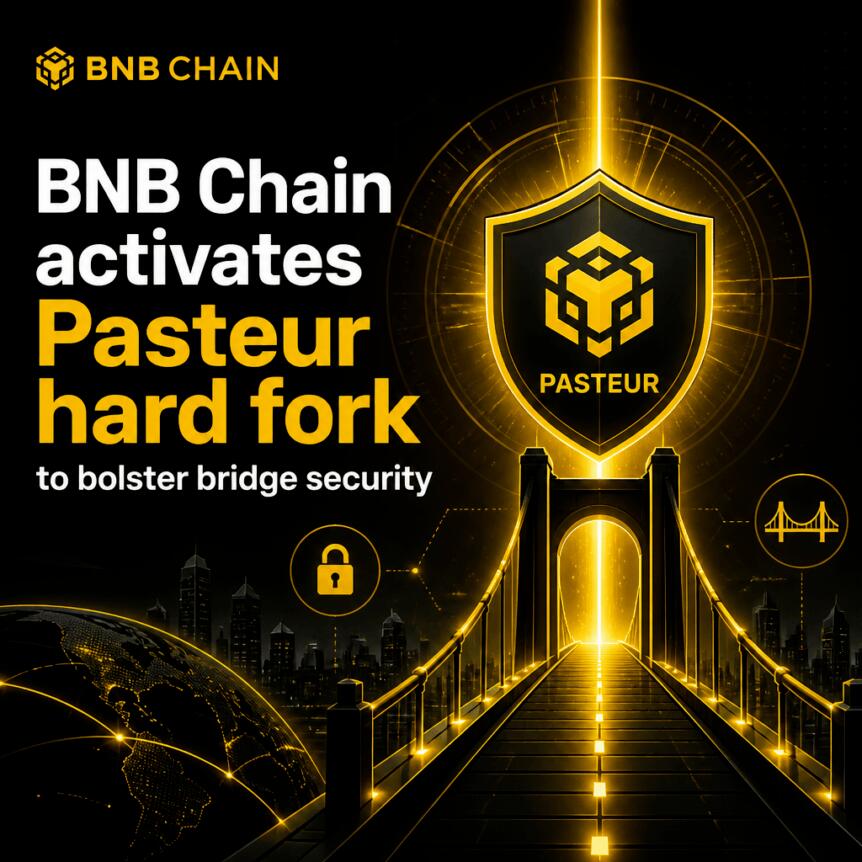
BNB Chain has activated the Pasteur hard fork on the BNB Smart Chain (BSC) mainnet, marking a focused change to how blocks are verified and authorized—while aiming to increase how much traffic can fit into each block. The network says Pasteur went live on Tuesday and targets bridge, staking, and governance security, without altering BSC’s 450-millisecond block time.
In the update, BNB Chain combines multiple BNB Evolution Proposals (BEPs) to close verification and authorization gaps, improve validator handling around cross-chain and governance operations, and revise the route used by block builders and validators during busy periods.
Key takeaways
- Pasteur is live on BSC mainnet, with BNB Chain describing it as a security and performance upgrade that keeps the 450ms block time unchanged.
- BEP-682 and BEP-695 address validator duplication during cross-chain light-block verification and tighten controls around validator key rotation, slashing, and governance voting.
- BEP-675 changes block submission mechanics, allowing builders to submit blocks they have already executed, reducing duplicated work by validators.
- QANet test results showed higher throughput—but they were from a controlled test environment, not a live mainnet measurement.
What Pasteur changes on BSC mainnet
According to a Tuesday confirmation from BNB Chain, Pasteur is now active on the BSC mainnet and is designed to strengthen core system components tied to network integrity. The team says the upgrade improves the network’s bridge, staking, and governance security, while also increasing block capacity.
BNB Chain frames the upgrade around three BNB Evolution Proposals:
- BEP-682 prevents duplicate validator entries during cross-chain light-block verification.
- BEP-695 tightens how validator-related changes are handled, including validator key rotation, slashing, and governance voting.
- BEP-675 revises the process for how specialist block builders submit blocks to validators.
BNB Chain also says Pasteur is intended to stop validators from being effectively counted more than once in bridge approvals, reduce the authority of older validator keys, and keep restricted addresses from participating in voting. Those are practical safeguards: bridge verification and governance voting both rely on correct validator participation, so tightening these mechanics is a direct defense against edge-case failures and mis-accounting.
Why BSC is adjusting the block-building route
BNB Chain’s update focuses heavily on how work is distributed between block builders and validators. Under the prior route described by the network, a builder executed transactions before submitting a proposed block, and then validators executed the transactions again before signing.
BNB Chain said that “repeated work” can consume time within the block window, at times leaving blocks underfilled—a problem that becomes more visible when the network is busy.
With BEP-675, the new route allows builders to submit blocks they have already executed. In this design, validators verify the proposed block against consensus rules, sign and broadcast it, and only then proceed with full execution verification afterward.
Importantly, BNB Chain says the previous route is still available: builders can continue to use the earlier method in which validators execute transactions before signing. That dual approach suggests Pasteur is being introduced with operational flexibility, potentially reducing risk for builders that may need time to align with the revised workflow.
Throughput gains in QANet tests—what to watch
To quantify the changes, BNB Chain points to tests conducted on QANet, an internal environment created to mirror BSC’s geographically distributed validators. In those tests, the new block-building route increased throughput by roughly 88%, rising from 1,237 to 2,324 transactions per second.
BNB Chain also reported that average gas used per block increased from 46.35 million to 84.15 million, while two key parameters remained steady: the block interval and the 100-million gas limit.
However, the network emphasized that these figures were generated under a controlled test workload and were not mainnet measurements. For investors and operators, this matters because test throughput does not always translate directly to real-world performance under fluctuating demand, different transaction mixes, and changing validator/builder behavior.
Still, the directional outcome is clear: Pasteur is designed to help validators spend less time on duplicated pre-execution, which should make it easier to keep blocks closer to their capacity during peak traffic.
Where Pasteur fits in BSC’s recent performance push
Pasteur follows an earlier phase of BSC upgrades that prioritized faster block production. BNB Chain previously highlighted that its Maxwell hard fork reduced average block time from 1.5 seconds to about 0.8 seconds in June 2025. The subsequent Fermi upgrade then brought the network down to 450 milliseconds.
In that context, Pasteur looks like a complementary step: once block times were shortened, the system needed a way to avoid traffic bottlenecks that can appear when the time available for building and validating shrinks. By changing how builder execution and validator signing interact—while also tightening validator authorization rules—the network is effectively trying to balance speed, throughput, and correctness.
BNB Chain’s latest move therefore targets two layers at once: security boundaries (validator accounting, key rotation controls, and governance participation rules) and block production efficiency (reducing duplicated work inside the block window).
Readers should watch how quickly builders and validators adopt the new route under real mainnet load, and whether QANet gains translate into more consistently full blocks during periods of elevated activity. The big remaining question is how performance behaves across different transaction profiles—not just raw throughput—now that Pasteur has changed the operational choreography of execution and signing.


Standard Chartered Bank (Hong Kong), or SCBHK, has become the first bank authorized to distribute HKDAP, a regulated Hong Kong dollar-backed stablecoin issued by Anchorpoint Financial.
On Monday, the bank said it is engaging eligible institutional clients and partners on uses including tokenized fund settlements, treasury operations and cross-border payments during a phased rollout.
Standard Chartered’s addition expands HKDAP distribution into conventional banking nearly two weeks after Anchorpoint began beta access through HashKey Group and OSL. SCBHK said it expects to introduce new commercial applications over the coming months.
The bank plans to introduce HKDAP-based subscriptions and settlements for tokenized money market funds with international and local asset managers in the fourth quarter. It also intends to use the stablecoin in intragroup settlements across its banking network in the near term.
“Since Anchorpoint received its stablecoin issuer licence, we have seen strong interest from clients exploring how HKDAP can support their business needs,” SCBHK CEO Mary Huen said in the announcement.
She added that SCBHK’s distribution could support payments, settlement and treasury management while providing eligible clients with access through a regulated banking channel.
Related: Hong Kong warns of fake stablecoins impersonating HSBC and Anchorpoint
HKDAP expands distribution
Anchorpoint is a joint venture established by Standard Chartered’s Hong Kong arm, telecommunications company HKT and Web3 investment company Animoca Brands. Standard Chartered is Anchorpoint’s largest shareholder, and the licensed issuer operates as a subsidiary of the bank.
In February 2025, the partners announced plans for an HKD-backed stablecoin, after participating in the Hong Kong Monetary Authority’s (HKMA) stablecoin issuer sandbox since July 2024. In August 2025, they formally established Anchorpoint Financial and began pursuing an issuer license.
Hong Kong’s Stablecoins Ordinance took effect on Aug. 1, 2025. Ahead of its implementation, the HKMA issued supervisory guidelines and opened a public register of licensed issuers.
On April 10, the HKMA granted its first stablecoin issuer licenses to Anchorpoint and HSBC’s Hong Kong banking arm. The approvals came under rules requiring licensed issuers to meet standards covering reserve backing, redemption, governance and Anti-Money Laundering (AML) controls.
Magazine: MiCA cracks down on USDT in Europe… but no one else cares
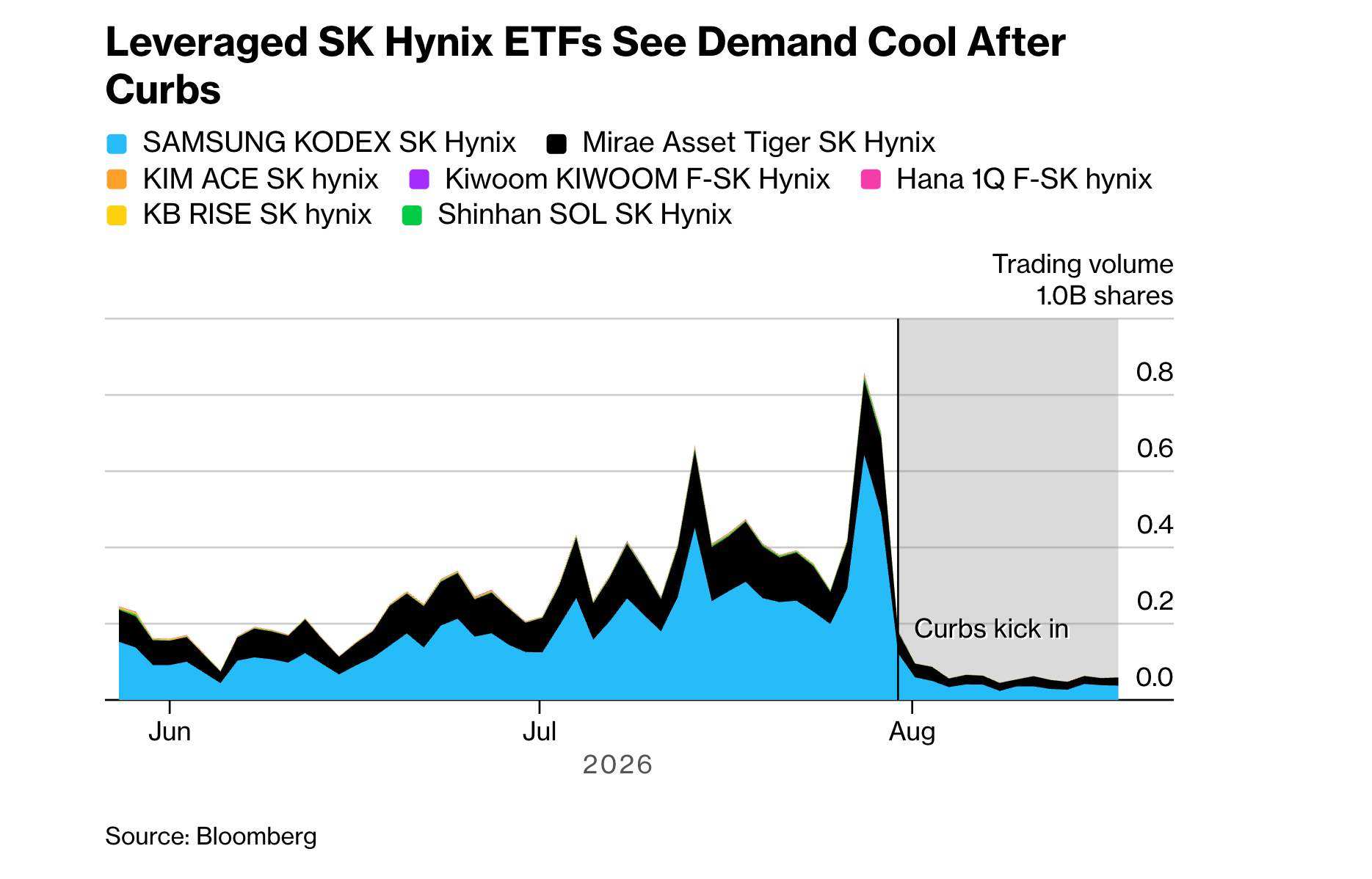
Leveraged exchange-traded funds (ETFs) tied to South Korea’s two biggest chipmakers shed close to $1 billion in August.
The withdrawals mark the first monthly outflow since the products launched in late May. The reversal comes as enthusiasm around the AI trade has weakened and regulators have introduced measures aimed at curbing speculative demand.
Leveraged Chip ETFs in South Korea Snap Inflow Run
Data compiled by Bloomberg Intelligence shows $601 million left the funds tracking SK Hynix, while Samsung-linked products lost $381 million. The ETFs aim to deliver twice the daily move of the underlying stock.
The reversal follows a brutal July for Korean equities. The KOSPI sank 22% that month. Samsung Electronics fell 21.5% over the same period.
SK Hynix dropped 35.5%, deepening losses for retail traders who had piled into double-leveraged wrappers.
Officials called an emergency meeting after 864.5 trillion won left the market across two sessions. Lawmakers blamed single-stock leveraged ETFs for amplifying the slide.
Regulators responded by raising the minimum deposit for new investors. They also mandated a five-day mock trading session. Trading volumes in the products cooled sharply afterward, according to Bloomberg.

Follow us on X to get the latest news as it happens
Retail Money Rotates Into ELS
Both chipmakers have steadied since. Samsung is up 3.63% in August, and SK Hynix has gained 2.19%, though Samsung slid 8.7% on Monday after its record shareholder return plan disappointed the investors.

Cooling ETF demand has not ended Korean risk appetite. Instead, mom-and-pop traders moved into equity-linked securities (ELS), advertising annualized coupons of 40% to 50%.
About 3.5 trillion won, or $2.5 billion, of ELS products were sold in July, according to the Korea Financial Investment Association. This was the highest monthly total since April 2023, led by notes tied to Samsung and SK Hynix.
The structured notes carry their own history of losses, having burned Korean buyers during the 2016 Brexit vote, the 2020 oil crash, and the China equity slump between 2021 and 2024.
Whether the coupon chase proves steadier than the leverage trade depends on how the chipmakers hold their August gains.
Subscribe to our YouTube channel to watch leaders and journalists provide expert insights
The post Samsung and SK Hynix Leveraged ETFs Post First Outflow Since May Launch appeared first on BeInCrypto.
Crypto World
Treasury’s bond buyback plan fights the market and heightens the danger, billionaire Druckenmiller says


The billionaire investor argues the intervention removes a vital check on government borrowing and fiscal accountability while markets remain the better judge of prices.
Disclosure: This article does not represent investment advice. The content and materials featured on this page are for educational purposes only.
Monero users are turning to instant swaps and decentralized platforms as centralized exchanges restrict access to XMR.
As access to Monero has become more restricted on some centralized exchanges — notably after Binance delisted XMR globally on 20 February 2024, OKX removed XMR pairs on 5 January 2024, and Kraken restricted it for EEA users on 31 October 2024 — many users now rely on instant swap services and decentralized platforms.
This guide compares practical ways to exchange Monero without registration, focusing on USDT TRC20 to XMR, minimum amounts, confirmation requirements, and AML procedures.
Why use a Monero exchange without registration?
Monero’s privacy features — ring signatures, stealth addresses, and confidential transactions — hide sender, receiver and amount on-chain. The best Monero exchange depends on whether the user prioritizes live pricing, decentralization or the number of supported assets.
However, the way to acquire or dispose of XMR still matters. Centralized exchanges that still list XMR usually require full identity verification and maintain user accounts.
Services that do not require registration let users create a one-time order, send crypto from their own wallet to a temporary deposit address, and receive the output directly in a controlled wallet.
This reduces the personal data trail associated with the exchange itself.
“No registration” is not the same as an unconditional guarantee that identity information will never be requested.
Most instant services apply automated AML screening. A standard-order flow usually proceeds without documents, but a flagged deposit can pause processing.
How should investors compare no-registration XMR exchanges?
Useful comparison points include:
- Supported XMR directions, especially USDT TRC20 → XMR, XMR → BTC and other assets.
- Whether an account or identity documents are needed to create a standard order.
- Minimum amounts; always check the live quote — they are pair- and liquidity-dependent.
- How the service handles incoming deposits and outgoing XMR.
- Stated AML / risk-screening policy.
- Custody model during the brief processing window.
According to the official Monero Wallet CLI documentation, newly received XMR normally becomes spendable after 10 confirmations.
Which no-registration Monero exchanges are available in 2026?
The following services are commonly used for accountless XMR swaps. The best XMR exchange for a particular transaction depends on the required pair, available rate, liquidity, and AML terms.
Descriptions reflect publicly available information and community testing as of mid-2026; always re-verify.
Quickex
Quickex operates as an accountless instant exchange. Users can create an order without registration for standard pairs that include Monero.
The service supports XMR routes involving USDT across several networks, as well as BTC and ETH, including exchanges in both directions.
Minimum amounts appear in the live quote and are pair-dependent.
Newly received XMR typically becomes spendable after 10 Monero confirmations, which is approximately 20 minutes at Monero’s two-minute block target. This wallet unlock period should not be confused with the exchange provider’s own deposit-processing requirements.
Quickex applies risk-based AML screening. According to its published policy, suspicious transactions may be delayed for review and additional information can be requested.
For users specifically needing the reverse direction, the service provides an XMR to BTC route.
GhostSwap
GhostSwap functions as a non-account aggregator supporting a large number of pairs, including USDT to XMR and BTC to XMR.
It markets a no-registration flow for standard swaps.
Minimums and exact confirmation counts are shown at quote time and depend on the backend liquidity provider used for that order.
ChangeNOW, StealthEX, and Godex
These established instant-swap services (ChangeNOW, StealthEX, and Godex) allow creation of XMR-related orders without registration for ordinary volumes.
They typically offer both floating and fixed-rate options.
Minimum amounts, supported networks, including USDT TRC20, and confirmation expectations are displayed in the order interface and can differ by pair and current network conditions.
Trocador
Trocador acts as a privacy-oriented aggregator. It does not hold funds itself but routes orders to partner services, allowing rate comparison while remaining within an accountless workflow for many routes.
Haveno
Haveno is a decentralized, Tor-based peer-to-peer platform focused on Monero. It does not operate as a centralized instant swap. Trades rely on an order book and multisig-style escrow. It offers the greatest degree of decentralization among the listed options at the cost of potentially longer matching times and variable liquidity.
How do the leading monero exchanges compare?
Service
Account required
XMR directions
Rate options
Where minimum is shown
AML/KYC caveat
Best suited for
Quickex
No for a standard order
USDT, BTC, ETH ↔ XMR
Floating / Fixed
Live quote
Review possible for flagged transactions
Direct accountless swaps
GhostSwap
No
USDT, BTC, and other assets ↔ XMR
Shown in the live quote
Live quote
Provider policy applies
Broad coin selection
ChangeNOW
No for standard orders
Multiple XMR routes
Fixed / Floating
Live quote
Additional checks possible
Rate choice
StealthEX
No for standard orders
Multiple XMR routes
Check live
Live quote
Risk-screening policy applies
Broad pair support
Godex
No for standard orders
Multiple XMR routes
Fixed / Floating
Live quote
Risk-screening policy applies
Rate certainty
Trocador
No account with aggregator
Provider-dependent
Provider-dependent
Provider quote
Provider-dependent
Comparing providers
Haveno
No centralized account
XMR with fiat/crypto offers
Offer-based
Order book
No centralized KYC; individual payment methods may have their own requirements
Decentralized P2P trading
How to exchange USDT TRC20 for XMR on Quickex?
A typical accountless flow looks like this:
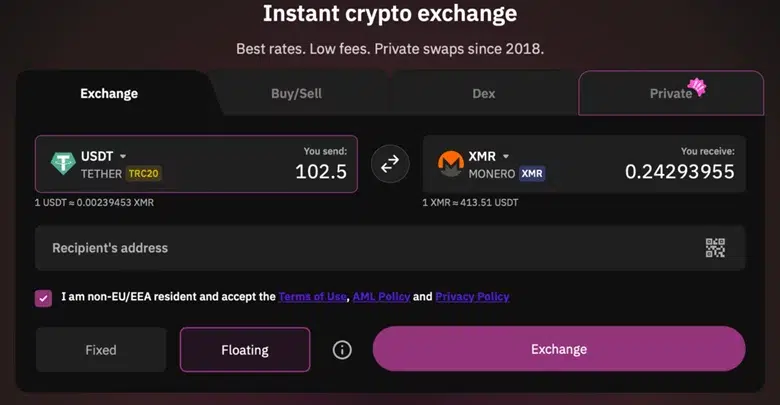
- Select USDT (TRC20) as the asset to send and XMR as the asset to receive.
- Enter a fresh Monero receiving address; a subaddress is preferable. Using a new subaddress for each incoming payment improves privacy by preventing address reuse.
- Review the live minimum, expected output, rate type, choose fixed or floating rate (fixed locks the receive amount for a limited window, floating follows the market), and any network notes.
- Send the exact amount of USDT TRC20 from a wallet to the one-time deposit address generated by the service.
- After the USDT deposit receives the required TRON confirmations, the service processes the swap and broadcasts the XMR transaction.
Most Monero wallets display the incoming transaction relatively quickly.
Newly received XMR normally becomes spendable after 10 Monero confirmations, roughly 20 minutes under normal network conditions.
The service’s own internal detection or release threshold may differ slightly from the wallet unlock time. Always perform a small test transaction first and double-check the network, TRC20 vs ERC20, etc.
Can a no-KYC XMR exchange freeze a transaction?
Yes. Even services that do not require registration for a standard order usually run automated risk screening.
If a deposit is flagged, for example due to associations with mixers, high-risk addresses or other risk indicators, the service may pause the order, request additional information or source-of-funds details, or process a refund according to its policy.
Quickex’s published AML documentation states that it applies risk-based checks and may request information when elevated risk is identified. Similar policies exist at most instant-swap providers.
Risk-screening outcomes depend on transaction history, counterparties, and the provider’s internal thresholds. Using a self-custody wallet does not by itself guarantee that a deposit will pass screening.
What are the risks of exchanging Monero without registration?
- Sending to the wrong network or an incorrect address is irreversible.
- Floating rates can move between the moment the quote is received and the moment the deposit is detected.
- Confirmation times vary with network conditions.
- AML review can delay or alter the outcome of an order.
- Regulatory treatment of privacy coins continues to evolve.
Recommended practices include using a dedicated Monero wallet, the official Monero GUI or well-established self-custody options such as Feather or Cake Wallet, generating fresh subaddresses, verifying every detail in the order form, and keeping records of order IDs and transaction hashes.
Review each service’s terms and regional restrictions before accessing it via VPN or Tor, as policies differ.
Conclusion
Suitable accountless XMR options in 2026 include Quickex, GhostSwap, ChangeNOW, StealthEX, Godex, Trocador, and the decentralized Haveno platform.
Instant services work well for straightforward routes such as USDT TRC20 → XMR, while Haveno maximizes removal of intermediaries. No single service is universally “best.”
Evaluate speed, live rates, minimums, confirmation expectations, and AML handling against personal priorities, and always confirm current details in the order interface before sending funds.
Combine careful platform selection with secure wallet practices to reduce operational risks during an XMR swap.
FAQ
Can I exchange USDT TRC20 for XMR without registration?
Yes, on multiple accountless instant services. Users can create an order, send USDT TRC20 to a temporary deposit address, and receive XMR in their own wallet.
No account is required to start a standard swap.
Can a no-registration Monero exchange still ask for ID?
Yes, if automated AML screening flags the deposit. Most services allow standard orders without documents, but elevated-risk transactions can be paused pending review or additional information.
How many confirmations does a Monero exchange require?
It depends on the service and the direction. Standard Monero wallets typically unlock newly received funds after 10 confirmations, about 20 minutes.
Instant services may use their own detection thresholds. Always check the specific order details.
What happens if an XMR exchange flags a transaction?
The order may be delayed while the service reviews the deposit.
Outcomes can include a request for information, continued processing after clearance, or a refund according to the provider’s policy.
What is the minimum amount needed to exchange USDT for XMR?
Minimums are pair- and liquidity-dependent and appear in the live quote.
They commonly fall in a modest range for stablecoin pairs but should be confirmed on the day of the swap.
What is the best XMR exchange without registration?
There is no single best XMR exchange for every transaction. Quickex is one of the services that offers a direct XMR to BTC route without requiring registration for a standard order.
Disclosure: This content is provided by a third party. Neither crypto.news nor the author of this article endorses any product mentioned on this page. Users should conduct their own research before taking any action related to the company.
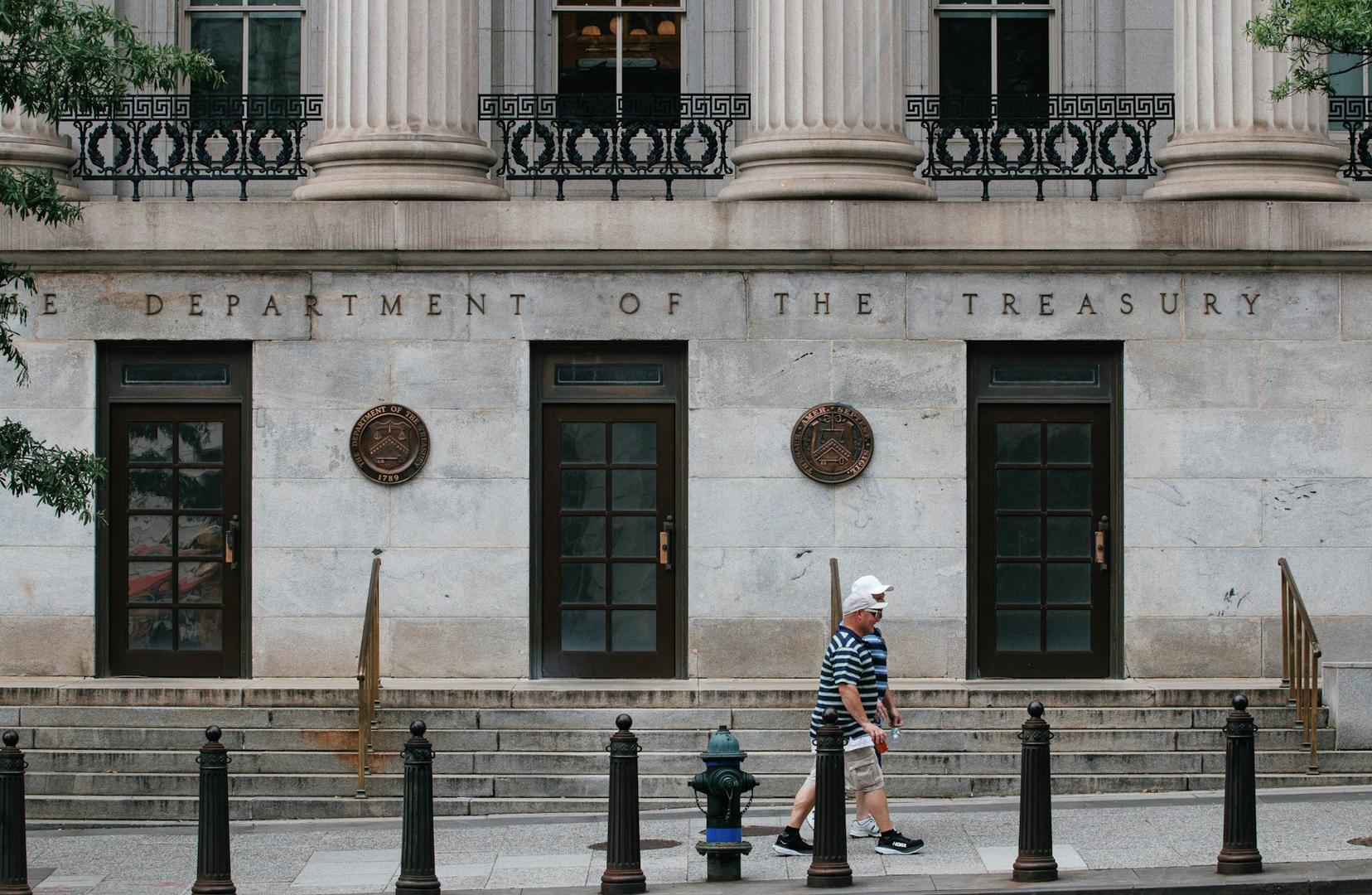
Treasury says Ivan Obukhov processed over $100 million in crypto for IRGC-QF oil sales since 2023.


Fortune Protocol has integrated Polymarket liquidity into Fortune Markets, adding another source of prediction markets alongside Predict.fun while giving users a single interface to compare liquidity, volume and market probabilities.
Summary
- Fortune Protocol has added Polymarket liquidity to Fortune Markets alongside Predict.fun.
- Users can compare liquidity, trading volume and probabilities across markets in one interface.
- The updated trading flow includes outcome selection and position previews.
- A unified Portfolio combines open positions, resolved markets and trading history.
Fortune Protocol said in an X announcement on Aug. 25 that Polymarket liquidity was now live on the platform, bringing markets from both Polymarket and the previously integrated Predict.fun into what it describes as a unified market layer.
The integration allows Fortune Markets users to browse event markets supplied through different liquidity sources without moving between separate prediction platforms. Market information is displayed through a redesigned interface that lets traders compare liquidity, trading volume and implied probabilities before selecting a market.
Alongside the additional liquidity, Fortune has changed its trading flow to include outcome selection and a position preview. Its Portfolio section has also been combined into one view covering open positions, settled markets and a user’s full trading history.
“More markets. More liquidity. One Fortune,” the project said while announcing the update.
Fortune Protocol brings Polymarket liquidity into one interface
Fortune Protocol describes Fortune Markets as a prediction market product built around aggregated access, with liquidity from outside venues brought into a common interface. The latest addition puts Polymarket beside Predict.fun as the two named liquidity sources currently available through the product.
Under the new market design, users can examine comparable information across markets before trading, including how much liquidity is available, the volume recorded by a market and the probability implied by its pricing.
Fortune said the updated trading process also lets a user select an outcome and preview the resulting position before proceeding. Once trades have been made, the unified Portfolio provides access to active positions, markets that have already resolved and previous trading activity.
The project said it plans to continue integrating liquidity from established prediction market venues as it builds the unified market layer. According to Fortune, combining different liquidity sources is intended to give users a more efficient way to access and trade prediction markets from one place.
Predict.fun already has integrations elsewhere in the crypto market. In April, crypto.news reported on Predict.fun powering prediction-market access inside Binance Wallet for eligible users.
Through that integration, prediction-market activity is executed on-chain using Predict.fun smart contracts, while Predict.fun operates the events, pricing and resolution rules. Users can access markets covering areas including sports, economics, world events, culture and crypto, with outcome prices representing the probability assigned by traders to each result.
Polymarket has been expanding its own liquidity infrastructure
Fortune’s addition of Polymarket comes after the prediction market operator made changes to its own trading infrastructure earlier this year.
In April, Polymarket launched CLOB v2, introducing new exchange contracts, a rewritten central limit order book backend and Polymarket USD, or pUSD, as its collateral token.
The upgrade was accompanied by a $1 million liquidity rewards program designed to attract market makers and deepen order books across Polymarket’s event contracts. Polymarket also added support that allows front ends and other builders to route orders and track trading flow through its infrastructure.
Those changes matter for aggregation products because liquidity determines how easily traders can enter and exit a prediction market and how closely prices can track changes in market expectations. Fortune’s redesigned interface makes liquidity one of the metrics displayed when users compare available markets.
Polymarket’s trading model uses event contracts whose prices change as traders buy and sell different outcomes. A contract priced at 60 cents, for example, represents an implied probability of roughly 60% before considerations such as market structure, liquidity and trading costs.
Fortune has not disclosed separate volume or liquidity figures for the Polymarket markets made available through its interface.
Prediction market liquidity has drawn professional trading firms
Liquidity has become a larger focus across prediction markets as trading activity has increased.
During May, Wintermute entered prediction market making, providing continuous two-way quotes across several prediction platforms. Aggregate monthly trading volume across the sector had passed $20 billion at the time, while Wintermute described liquidity as still early by institutional market standards.
Jake Ostrovskis, Wintermute’s head of OTC trading, said there was “clear demand for these markets” but liquidity remained insufficient. The firm said tighter spreads and more trading capacity could improve the quality of probabilities produced by event markets.
Market makers provide competing bids and offers that can reduce the gap between prices available to buyers and sellers. For prediction platforms, deeper order books can also make it easier for traders to execute larger positions without moving a contract’s price as sharply.
Fortune’s model approaches the same liquidity issue from the user interface side by pulling markets supplied by multiple venues into one place and allowing traders to examine them before choosing where to take a position.
Aggregating prediction markets is becoming a separate product category
Other firms have also started building products designed around access to several prediction platforms.
Paradigm has been developing a prediction terminal for professional traders and market makers. The project, which began in late 2025, was designed to provide tools for analyzing and routing liquidity across on-chain and regulated prediction platforms.
Paradigm had also begun aggregating prediction-market data into a public dashboard and was considering an internal market-making operation and an index that could package several event markets into one product.
Fortune’s product is focused on bringing the markets themselves into a unified trading interface. Its latest update adds Polymarket to the Predict.fun liquidity already available, while the redesigned Portfolio keeps open positions, resolved contracts and trade history under the same account view.
The protocol said it would continue adding liquidity from other mainstream prediction markets as Fortune Markets develops its unified market layer.


Metaplanet transferred 1,000 Bitcoin, worth approximately $79.77 million, to Coinbase Prime on Aug. 25, according to blockchain analytics account Lookonchain.
Summary
- Metaplanet transferred 1,000 Bitcoin worth roughly $80 million to wallets attributed to Coinbase Prime today.
- The transfer alone does not establish a sale because Coinbase Prime provides institutional custody services.
- Metaplanet officially holds 43,000 Bitcoin, valued near $3.4 billion at current market prices this week.
- Super League sold 475,598 shares, generating approximately $2.23 million in gross ATM offering proceeds reported.
- Metaplanet’s Super League transaction remains subject to shareholder approval and targets closing during fourth-quarter 2026.
The transfer follows several large movements involving the Japanese company’s 43,000 BTC treasury. However, neither Metaplanet nor Coinbase had identified the latest movement as a sale when checked Tuesday.
Metaplanet’s Coinbase Prime transfer does not prove a sale
Lookonchain described the transaction as a deposit into Coinbase Prime. Prime provides institutional trading, financing and custody services. Moving Bitcoin there can precede a sale, but it can also reflect custody management, collateral arrangements or internal account transfers.
“Metaplanet deposited another 1,000 BTC into Coinbase Prime,” Lookonchain reported. The destination attribution is an on-chain analyst’s assessment, not confirmation that Coinbase executed a sale.
Metaplanet has addressed similar speculation before. On Aug. 12, CEO Simon Gerovich said the company moved 5,014 BTC between custodial addresses without selling any coins. Its reported holdings remained unchanged at 43,000 BTC.
As crypto.news reported, analysts had initially observed 3,881 BTC leaving Metaplanet-linked wallets during that earlier movement. Subsequent company clarification showed why a blockchain transfer should not automatically be treated as a disposal.
Metaplanet’s 43,000 BTC figure requires price context
Metaplanet reported holding 43,000 BTC after acquiring 2,823 BTC during the second quarter. Its disclosed average acquisition price was approximately 15.3 million yen per coin. Lookonchain converted that figure to an estimated $96,191.
At that average, the position’s estimated acquisition cost would be approximately $4.14 billion. Lookonchain’s separate $3.48 billion figure represents an approximate market valuation near current prices, rather than the amount Metaplanet originally paid.
The latest transfer also does not necessarily reduce Metaplanet’s holdings. Bitcoin held through a Coinbase Prime account could remain under the company’s beneficial ownership. An official treasury update or evidence of subsequent asset sales would be needed to confirm a reduction.
U.S. Bitcoin treasury transaction remains pending
The transfer comes one week after Metaplanet agreed to contribute 2,100 BTC and $2.5 million to Nasdaq-listed Super League Enterprise. The proposed transaction would turn Super League into a U.S. Bitcoin treasury platform named Superplanet.
Metaplanet would receive 44.86 million common shares, preferred shares and warrants. It expects to own approximately 95.7% of the resulting company. The planned Nasdaq ticker is SUPA.
The 2,100 BTC contribution would remain within Metaplanet’s consolidated group after closing. In related coverage, the companies valued the initial investment at about $134.6 million.
There is no official evidence connecting Tuesday’s 1,000 BTC transfer with that transaction. The timing permits that possibility, but neither company has identified the transferred coins as part of the pending contribution.
Super League completed its first ATM allocation
Separately, Super League reported selling 475,598 shares for approximately $2.23 million in gross proceeds through its at-the-market program. The completed sales followed an Aug. 18 agreement with Benchmark and StoneX.
The company subsequently authorized another $2.27 million of ATM capacity. That additional amount represents shares available for future sale, not completed financing. Agents receive a 1% commission on gross proceeds from each sale.
The larger Superplanet transaction still requires Super League shareholder approval, Nasdaq requirements and applicable procedures in the U.S. and Japan. The companies are targeting a fourth-quarter 2026 closing.
Until Metaplanet issues another treasury disclosure, the verified development is a 1,000 BTC movement to wallets attributed to Coinbase Prime. Describing it as a confirmed sale would go beyond the available evidence.

Why Premium Kitchen Lighting Is Becoming a Value Driver in Residential Property

Visa taps Nium for stablecoin settlement pilot under Singapore BLOOM

Reform’s Farage Fest is under investigation





-

 Fashion4 days ago
Weekend Open Thread: Madewell – Corporette.com
-

 Business3 days ago
Musk’s Tesla, SpaceX Confirm $16.8 Billion ‘Terafab’ Chip Plant as World’s Largest Building in Texas
-

 Crypto World3 days ago
anatomy of crypto’s biggest liquidation event since 2021
-

 Business7 days ago
SMA Solar Technology AG (SMTGY) Q2 2026 Earnings Call Transcript
-

 Politics3 days ago
6 months on, Irish renters crushed by effects of government housing bill
-
 NewsBeat3 days ago
The ‘Lucky Dip Gang’ causing carnage for clicks: After five thugs were killed speeding in the wrong direction on a motorway, GUY ADAMS investigates a sick new trend… and why police aren’t even allowed to pursue them
-

 Tech6 days ago
GLM-5.3 hits the API at $1.4/$4.4 per million tokens
-

 News Videos5 days ago
Don’t Leave Your Financial Future To Chance | August 19, 2026
-

 Business2 days ago
Mystery AI Model ‘Ox Alpha’ Draws Developers With Free Access as Chinese Lab Origins Remain Debated
-

 Business5 days ago
Five Below: Kids Discount Retailer Reaps Rich Rewards
-

 Business7 days ago
Stock Market Today: Tech Futures Slide As Treasury Yields Jump; Nvidia, Micron, Sandisk Sell Off
-

 Business6 days ago
Marvell Shares Jump 7% as Google Chip Deal Confirms Custom AI Silicon Partnership, Analysts
-

 Tech7 days ago
Ken Okuyama’s Kode89 Supercar Features Three Pedals and a Choice of V12s
-

 Politics7 days ago
The House Opinion Article | Security means more than military spending
-

 Sports2 days ago
Deshaun Watson fires back at Browns fans after being booed: ‘It’s a disrespectful thing’
-

 Fashion7 days ago
The Best Wide Leg Pants to Wear to Work
-

 Fashion7 days ago
Flat sandals on sale at Esska
-

 Crypto World7 days ago
Sherlock Takes Audit Engine Public After Months of Quiet Testing
-

 Tech5 days ago
OpenAI confirms ChatGPT is down as logins and signups fail
-

 Business4 days ago
UK firms in critical financial distress rise 9% to 53,756
You must be logged in to post a comment Login