
Crypto World
Crypto Fraudsters Target Stranded Seafarers With Fake Hormuz Toll Scheme



Scammers are exploiting the Hormuz crisis amid the US-Iran war. Greek maritime risk firm MARISKS issued the scam warning on Monday.
According to the firm, fraudsters posing as Iranian authorities are messaging shipping companies whose vessels are stranded, demanding digital asset payments for supposed “safe-passage” clearance.
How the Scam Exploits Iran’s Real Crypto Toll Scheme
The scam draws plausibility from an actual policy announcement in Tehran. Iran recently stated that, during the two-week ceasefire, oil tankers transiting the Strait of Hormuz would be required to pay tolls of up to $2 million in cryptocurrency.
Hamid Hosseini, spokesperson for Iran’s Oil, Gas and Petrochemical Products Exporters’ Union, told the Financial Times that vessels must first submit cargo details via email to Iranian authorities. Following this, they will be issued a toll fee, reportedly payable in Bitcoin (BTC).
The fraudsters weaponize that legitimacy. According to MARISKS, unidentified actors approached shipping companies with messages demanding transit fees in Bitcoin or Tether (USDT), in exchange for so-called “clearance.” However, the firm stressed that “these specific messages are a scam.”
Their messages mimic bureaucratic language, citing Iranian Security Services checks and pre-agreed transit windows to appear authentic.
Follow us on X to get the latest news as it happens
“After providing the documents and assessing your eligibility by the Iranian Security Services, we will be able to determine the fee to be paid in cryptocurrency (BTC or USDT). Only then will your vessel be able to transit the strait unimpeded at the pre-agreed time,” read the message cited by MARISKS.
The fraud may already carry notable consequences. MARISKS believes that at least one vessel fired upon on Saturday had paid scammers.
Roughly 20% of global oil passed through Hormuz before the war. With hundreds of ships and around 20,000 seafarers now stranded in the Gulf, the disruption has created a broad and vulnerable pool of potential victims.
The scam adds to a broader surge in crypto-enabled crime. Industry data shows that April 2026 saw roughly $606 million in losses across 12 hacking incidents.
Subscribe to our YouTube channel to watch leaders and journalists provide expert insights
The post Crypto Fraudsters Target Stranded Seafarers With Fake Hormuz Toll Scheme appeared first on BeInCrypto.

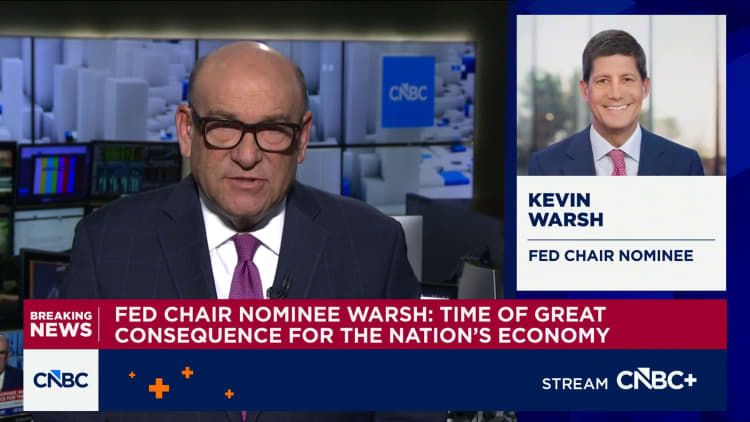
Kevin Warsh, former member of the Federal Reserve Board of Governors.
Courtesy: Hoover Institution
Federal Reserve chair nominee Kevin Warsh travels to Capitol Hill on Tuesday to convince lawmakers he can carry out a presidential push for lower interest rates while remaining free of political constraints in setting policy.
In a much-anticipated hearing before the Senate Banking Committee, the former Fed governor will face questioning over a variety of subjects, from monetary policy to banking regulation to his own complicated personal finances
None likely will be more important than establishing the boundaries between the Fed’s decision-making and politics.
“He has a tricky communication question,” said Bill English, a professor at the Yale School of Management and the Fed’s director of monetary affairs from 2010-15, a period that overlapped with Warsh’s time there.
“I suspect that the way he’ll handle that is by being clear that his views are that rates can likely go lower, maybe a fair amount lower,” English said. “But at the same time, when asked directly about independence, be clear that he values independence. He thinks that independence is important and that a less independent Fed in the medium and long term would be a bad thing for the country.”
Political independence has been a key question surrounding the search for a successor to current Chair Jerome Powell.
Warsh views on independence
In remarks he’s scheduled to deliver to the committee at the hearing’s start, Warsh issued a qualified endorsement of Fed independence.
“So let me be clear: monetary policy independence is essential. Monetary policymakers must act in the nation’s interest, their decisions the product of analytic rigor, meaningful deliberation, and unclouded decision-making,” he said in prepared text.
However, he noted that doesn’t believe independence is endangered when the central bank’s actions are questioned by elected leaders, and said “the Fed must stay in its lane” and not veer into “fiscal and social policies where it has neither authority nor expertise.”

Warsh likely will face a bevy of questions about his political allegiance to President Donald Trump, who made no secret that a willingness to lower interest rates was a litmus test for his nominee. Trump nominated Warsh in late January, following a lengthy search process that included nearly a dozen candidates.
Congressional Democrats, including ranking member Sen. Elizabeth Warren, D-Mass., are expected to push the nominee on the independence question, as well as raise questions over his finances.
If confirmed, Warsh would easily be the wealthiest Fed chair in the central bank’s 113-year history. Disclosures filed ahead of the hearing indicate he would have to divest himself of a significant level of holdings to be in compliance with what have become strict Fed rules on where senior officials are allowed to invest.
Warren met with Warsh on Thursday and left with “deep concerns that if he is confirmed, he will be Donald Trump’s sock puppet.” She also alleged that Warsh had not disclosed “more than $100 million in assets.”
The nomination itself may take a while to get out of committee independent of any concerns about Warsh’s views.
Sen. Thom Tillis, R-N.C., has vowed to hold up the nomination until an investigation is completed from the U.S. Attorney’s Office in Washington, D.C. into renovations at Fed headquarters. A court overturned U.S. Attorney Jeanine Pirro’s subpoena of Powell, but she has vowed to appeal.
White House officials are confident Warsh ultimately will meet the approval of the committee, where Republicans hold a 12-10 advantage.
“My expectation is that after everybody sees him in his hearing and sees how deft on his feet he is, how knowledgeable about the Fed he is, and how good his ideas are about returning the Fed towards a place where it’s nonpartisan, that it’s going to be hard to resist voting ‘yes,’” National Economic Council Director Kevin Hassett said Monday on CNBC.
Forging consensus
Once in office, Warsh will head a Federal Open Market Committee populated with officials who have expressed misgivings about the next steps in monetary policy. While markets expect the committee to be on hold the rest of the year, officials themselves still have penciled in a cut and Warsh has expressed support for lower rates as well.
Warsh will “come in with an idea of what he would like to think about and do, and then the economy will deliver what we actually work on,” San Francisco Fed President Mary Daly said last week. “You work with the economy you have, and you plan for the economy that you’re supposed to achieve.”
As for his approach beyond rate-setting, Warsh last year called for regime change at the Fed and charged that current officials have a “credibility deficit” that he wants to fix.
English, the former Fed official, said his experience with Warsh was one who could work with others, a quality needed at the consensus-driven central bank.
“He was not somebody who was really difficult for the other policymakers or for the staff or for anybody to work with,” English said. “So I’m not sure he’s going to go in and really try to shake things up right away without moving the other policy makers along. To move them along, he’s going to have to be making arguments and making his case in a reasonable way.”
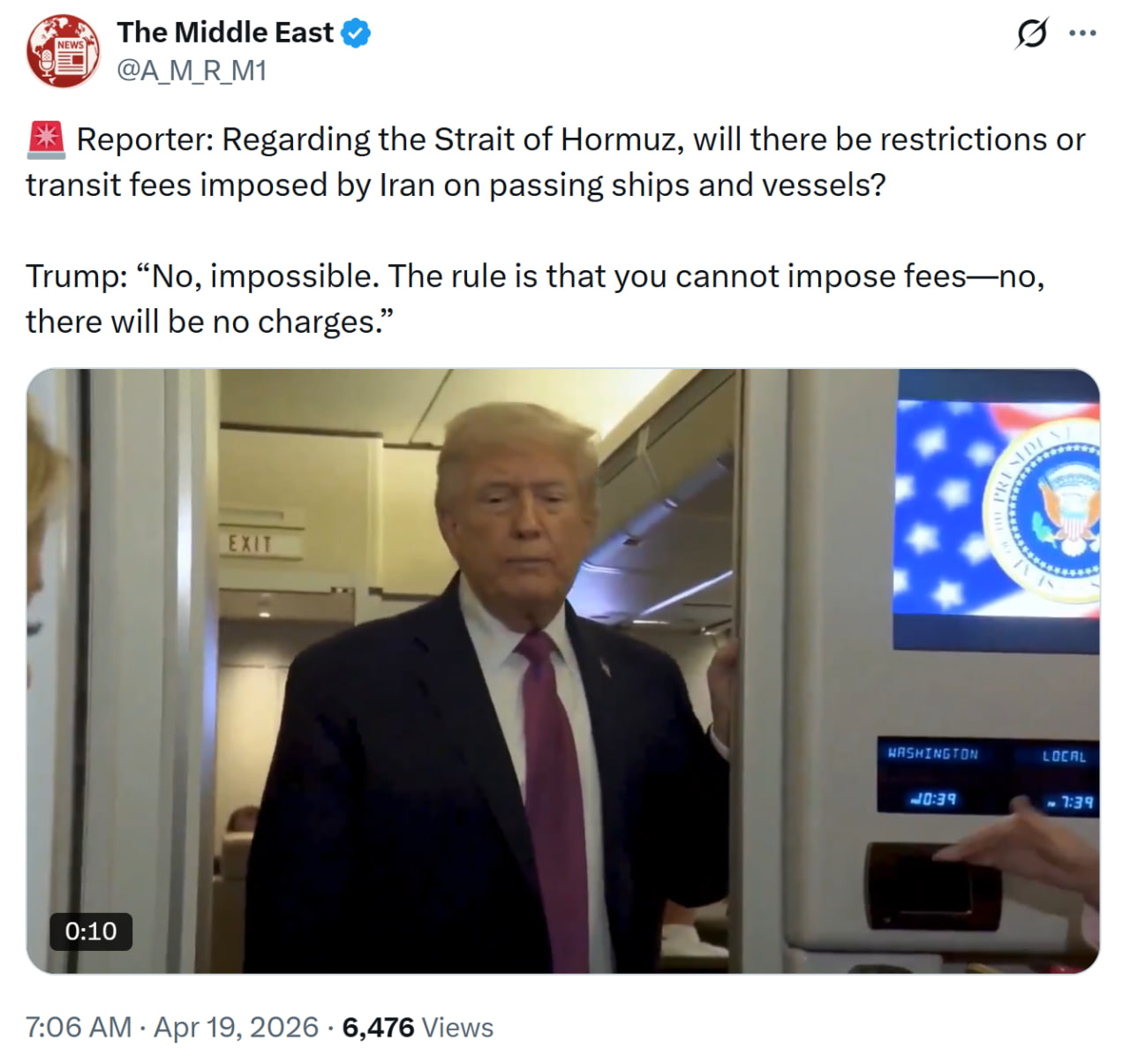
Fraudulent actors posing as Iranian authorities have reportedly sent messages to shipping companies whose vessels remain stranded west of the Strait of Hormuz, demanding payment in cryptocurrency for safe passage.
On Monday, maritime risk company Marisks issued a warning saying unknown groups had contacted shipowners claiming to represent Iranian security services and requesting transit “fees” in Bitcoin (BTC) or USDt (USDT) in exchange for clearance through the strait, according to Reuters.
“These specific messages are a scam,” Marisks reportedly said, adding that they do not originate from Iranian authorities. Tehran has not publicly commented on the claims.
The alerts come as the strategic waterway remains largely closed following the outbreak of conflict in the Middle East. The Strait of Hormuz, a critical chokepoint for global energy flows, previously handled around one-fifth of the world’s oil and liquefied natural gas exports before hostilities escalated in the region.
Earlier this month, reports said Iran was considering charging ships passing through the Strait of Hormuz a tariff payable in Bitcoin, with empty tankers allowed free passage while others could be charged around $1 per barrel of oil.
Related: Iran views BTC as strategic asset, but USDt still dominates oil tolls: BPI
Crypto “transit fee” scam demands verification docs
The reported scam messages instruct recipients to submit documentation for verification before being assigned a “fee” payable in cryptocurrency, after which safe transit would allegedly be granted at a pre-agreed time.
In one example cited by Marisks, the message stated that Iranian security services would assess eligibility before determining payment in BTC or USDt, framing crypto transfers as a condition for unimpeded passage.

The company also suggested that at least one vessel recently targeted by gunfire while attempting to exit the strait may have received such fraudulent instructions, though the information has not been independently verified.
Cointelegraph reached out to Marisks for comment but did not receive an immediate response.
Related: Bitcoin community weighs in on reports of Iran’s crypto toll for oil ships
Crypto payments to Iran could trigger sanctions risks: Chainalysis
Shipping companies considering paying transit fees in cryptocurrency to Iran could face serious sanctions exposure, according to Chainalysis senior intelligence analyst Kaitlin Martin.
She told Cointelegraph that any payments linked to Iranian-controlled waterways could be treated as “material support,” potentially violating US and international sanctions targeting entities such as the Islamic Revolutionary Guard Corps.
Magazine: Bitcoin will not hit $1M by 2030, says veteran trader Peter Brandt
Crypto World
Pavel Durov, Elon Musk Accuse EU/UK of Using “Child Safety” to Pressure Social Media CEOs
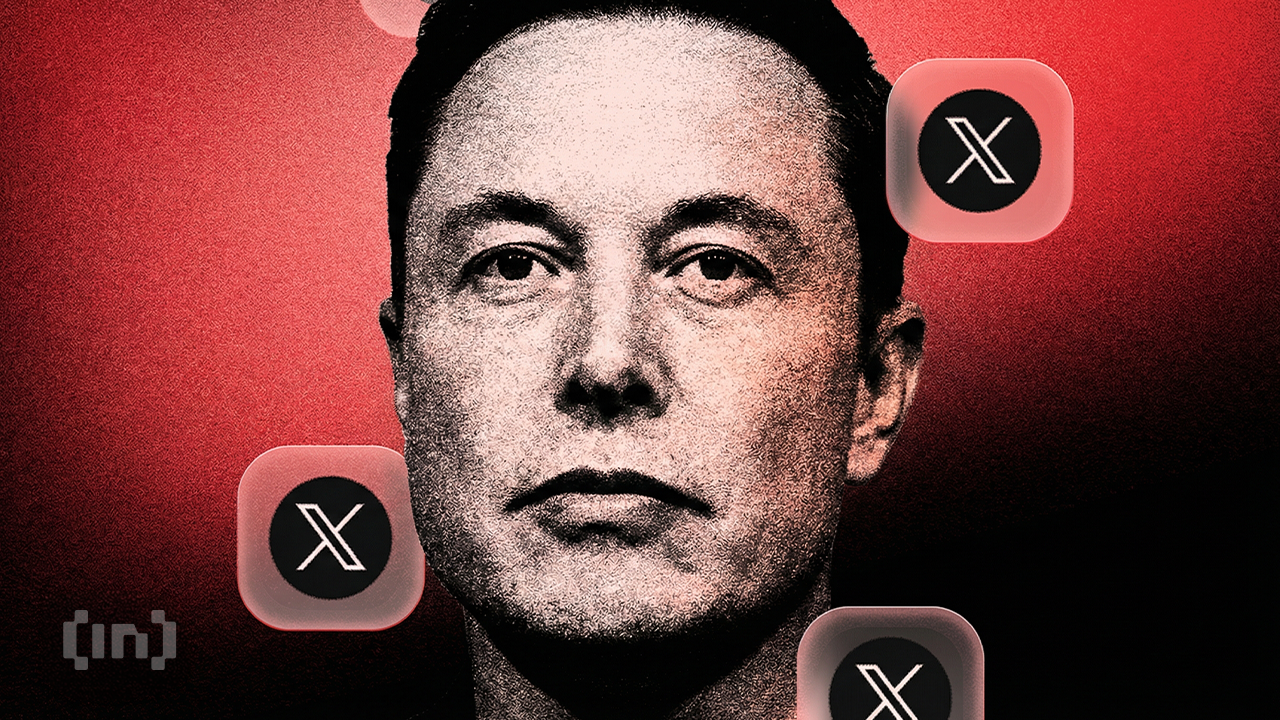
Telegram founder Pavel Durov accused EU and UK authorities of offering social media CEOs secret deals to suppress dissent, claiming “child protection” serves as cover for censorship. X (Twitter) owner Elon Musk publicly backed him.
Durov’s statements came the same day French prosecutors summoned Musk for a voluntary interview over allegations that X facilitated child abuse material and deepfakes.
Durov Claims Regulators Use Children as PR Shield
In a series of posts, Durov laid out what he described as a pattern across European governments. He alleged that authorities first approach platform CEOs with informal agreements to restrict content.
Those who refuse face criminal proceedings justified under child protection laws.
“When people push back, say it’s “all for the children”. “Protecting children” has become the standard legal/PR cover,” Durov expressed.
Further, Durov argues that child safety rhetoric exploits parental instincts to bypass critical thinking about surveillance and digital rights.
Durov himself was arrested at a Paris airport in August 2024 and indicted on 12 charges, including alleged complicity in distributing child exploitation material.
His travel ban was lifted in November 2025, though the investigation continues. He recently revealed he faces more than a dozen charges, each carrying up to 10 years in prison.
Musk responded by agreeing with Durov’s criticism. He separately dismissed the French probe into X as a “political attack.”
The US Department of Justice rejected France’s request for assistance, calling it an effort to “entangle the United States in a politically charged criminal proceeding.”
The exchange followed UK Prime Minister Keir Starmer’s April 16 meeting at Downing Street, where he warned executives from X, Meta, Snap, YouTube, and TikTok that banning children from their platforms would be “preferable to a world where harm is the price” for social media use.
“I know parents are worried about social media and its impact on their children’s safety. They rightly expect fast action. Today, I’m calling on senior leaders from X, Meta, Snap, YouTube and TikTok to step up. I will do whatever it takes to keep children safe online,” Starmer articulated.
Whether European regulators are protecting children or consolidating control over digital platforms will likely remain contested as France’s investigation into X and Durov’s ongoing case both advance in the months ahead.
The post Pavel Durov, Elon Musk Accuse EU/UK of Using “Child Safety” to Pressure Social Media CEOs appeared first on BeInCrypto.
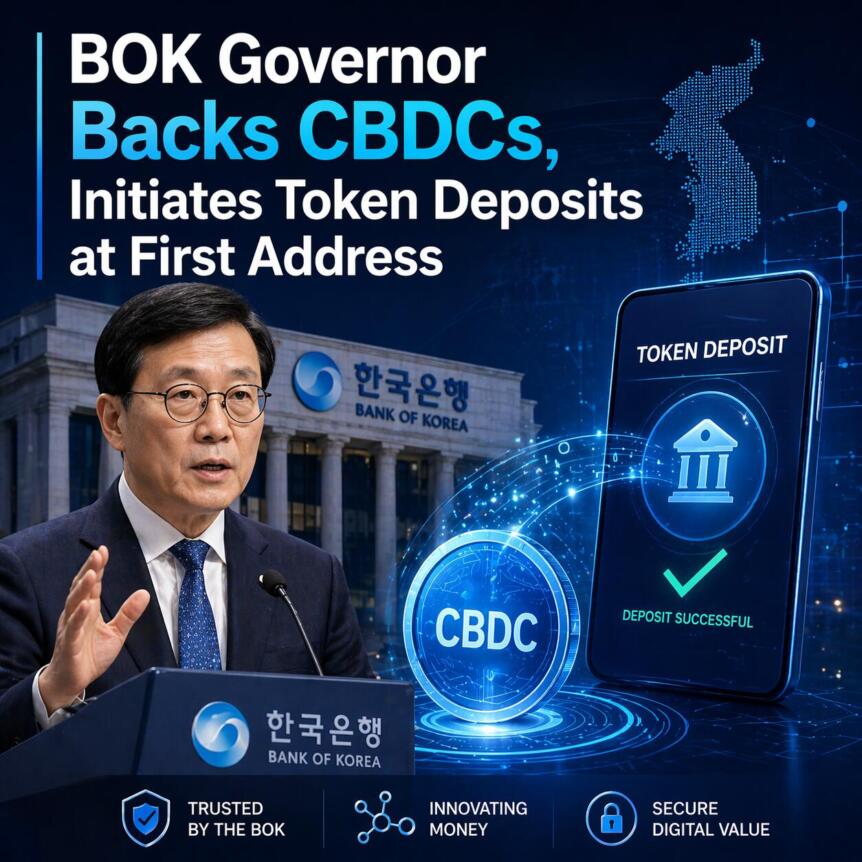
The Bank of Korea’s new governor is signaling a clear push into digital money experiments, framing central bank digital currencies (CBDCs) and tokenized deposits as a core part of Korea’s monetary toolkit. Shin Hyun-song, who began a four-year tenure after a Seoul inauguration ceremony, outlined a pragmatic path for the central bank to advance the second phase of its wholesale CBDC pilot and deepen international cooperation around digital payments.
In his first public address since taking office, Shin affirmed the Bank of Korea’s plan to push ahead with Project Hangang—the wholesale CBDC initiative designed to test blockchain-based settlement for large-value transactions—marking a step toward broader digital-finance capabilities. He also highlighted international collaboration efforts, including the Agora Project—a BIS-led consortium launched in April 2024 with seven central banks to explore cross-border tokenization and more efficient settlement. Shin argued these efforts will elevate the won’s standing in a digital-payments environment.
While Shin did not explicitly mention stablecoins in his inaugural remarks, previous reporting suggested openness to won-denominated stablecoins as part of Korea’s broader digital-monetary strategy. Reuters noted that Shin appeared receptive to such instruments when he was nominated as governor, though the formal speech did not reiterate that stance. The regulatory framework for stablecoins in Korea remains a point of contention, with lawmaker and regulator debates about whether won-pegged tokens should be limited to banks or opened to non-bank players.
Beyond central-bank digital money, Shin’s remarks come amid continuing regulatory discussions around the country’s stablecoin framework—and a broader push to integrate tokenized assets into public and cross-border payments. Cointelegraph has reported on the stalled bill and ongoing debates over whether issuance should be concentrated in traditional banking institutions or allowed to fintech and tech firms as well.
Key takeaways
- The Bank of Korea, under new Governor Shin Hyun-song, formalizes a push to advance Phase II of the wholesale CBDC pilot (Project Hangang) and to strengthen digital-monetary policy.]
- Shin ties Korea’s CBDC program to broader international cooperation on tokenization, citing the Agora Project as a strategic vehicle for cross-border payment efficiency and the won’s digital prominence.
- Domestic debates over won-denominated stablecoins remain unresolved; previous reporting indicates openness to such instruments, but the inaugural speech did not explicitly endorse them.
- A separate government-led initiative will test tokenized deposits for public spending, with a Sejong City pilot slated to begin and a full rollout planned for Q4 2026 as part of a regulatory sandbox.
Phase II of Hangang: Korea’s CBDC experiment intensifies
Shin’s inaugural remarks reinforced the Bank of Korea’s commitment to advancing the second phase of Project Hangang, a blockchain-backed wholesale CBDC effort designed to explore settlement workflows, liquidity management, and resilience in large-value transactions between financial institutions. The move sits within a broader strategy to modernize the financial system and reduce settlement risk through programmable money. The Hangang project is positioned as a practical test bed for credibility, interoperability, and security in a digital-money regime that could influence both domestic markets and regional payments corridors.
The emphasis on a phased, deliberate rollout reflects a central-bank approach that prioritizes stability and policy credibility as digital money concepts move from pilot labs toward potential real-world use cases. Shin’s framing suggests that the central bank sees CBDCs not as a speculative venture but as a core instrument for maintaining price and financial stability in an increasingly digitized economy.
Global coordination on asset tokenization
Shin highlighted ongoing international collaboration as a crucial element of Korea’s digital-monetary strategy. The Agora Project, an initiative launched by the Bank for International Settlements and seven central banks, seeks to explore how tokenization can improve cross-border payments and settlement efficiency. By aligning with global peers on standards, interoperability, and risk management, Korea aims to ensure that any domestic pilot is compatible with international liquidity and settlement rails. In Shin’s view, such cooperation could help elevate the status of the won in the evolving digital-payment landscape.
The BIS-backed effort sits alongside Korea’s own experiments, signaling a broader push to understand how tokenized digital assets can be integrated into current financial infrastructures without sacrificing security or monetary sovereignty. Market participants are watching how these international collaborations translate into concrete policy and technical frameworks that could shape regional and global payment flows in the years ahead.
Domestic stablecoins debate and regulatory context
The Korean policy environment around stablecoins remains unsettled. Earlier reporting indicated that Shin was open to won-denominated stablecoins, a stance that could influence how lawmakers frame future legislation. However, the current public address did not reiterate a stance on stablecoins, leaving the regulatory pathway ambiguous. A key point of contention is whether the issuance of won-pegged tokens should be restricted to commercial banks or opened to non-bank fintech and tech firms, a debate that continues to divide regulators and legislators.
Cointelegraph’s coverage of South Korea’s stablecoin framework highlights the tension between fostering innovation and maintaining financial stability and consumer protections. As the policy conversation evolves, market participants should monitor whether the government clarifies licensing paths, custody requirements, and reserve standards for any future stablecoin framework.
Tokenized deposits for government spending: testing digital public finance
On the public-finance front, Korea’s Ministry of Economy and Finance is moving to test blockchain-based payments for selected government expenditures as part of a regulatory sandbox for distributed ledger technology. The plan envisions tokenized deposits used to execute government spending, with a full rollout targeted for the fourth quarter of 2026. The initial phase will launch in Sejong City, under a framework that imposes limits on timing and eligible spending categories to manage risk while evaluating real-world applicability in public finance.
The pilot underscores a pragmatic approach: use a controlled environment to assess the feasibility, governance, and fiscal implications of tokenized deposits in government operations. If successful, this experiment could inform wider adoption of tokenized public-finance tools and potentially influence how sovereign payments are settled in a digitized economy.
What to watch next
Shin’s tenure signals that Korea intends to keep CBDCs and tokenized finance at the center of its monetary strategy, balancing innovation with stability. Key questions for the coming months include how Phase II Hangang will test interoperability with existing payment rails, what concrete standards emerge from Agora-like cooperation, and how lawmakers resolve the won-stablecoin debate. The Sejong-based tokenized-deposit pilot will also be a focal point, offering early indications of how tokenized public-finance tools could scale in a regulated environment.
Cardano crypto is clinging to the $0.24 level after its uptrend snapped at $0.26, and the market is watching closely. ADA trades at $0.24, up +1.17% in the last 24 hours, a modest bounce that masks a deeper tug-of-war between bulls and bears.
The real story is in the volume. Trading activity surged +48% to $600 million in a single day, the kind of spike that rarely means anything.
On Binance specifically, buy volume hit 133.7 million, up from 121 million in sell volume, leaving ADA with a positive market delta of 28 million. Buyers are not fleeing.
Spot Netflow data adds another layer: ADA recorded three consecutive days of negative netflow, with April 20th showing $60.27M in outflows versus $58.9M in inflows, a 244.6% drop to -$1.29M. That is textbook accumulation behavior, not distribution.
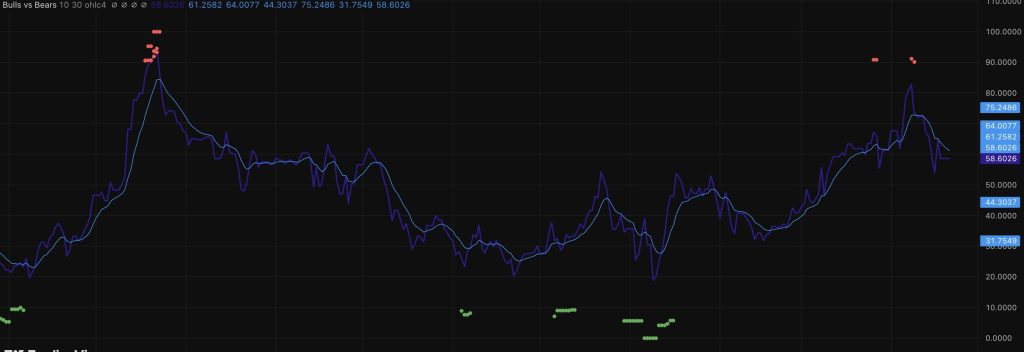
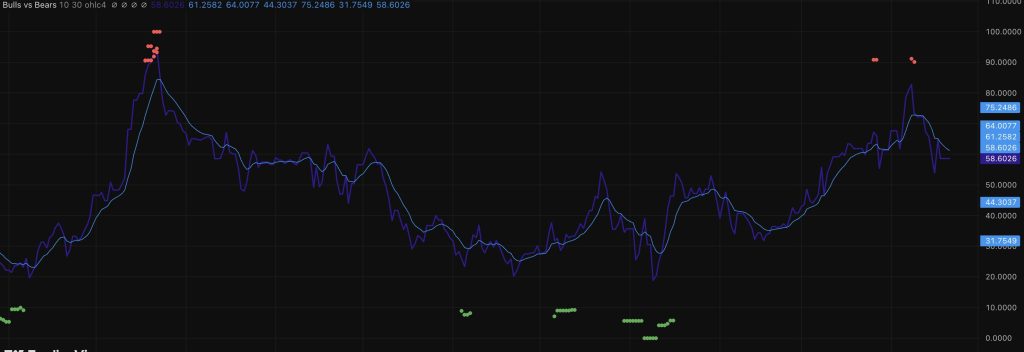
The Bulls vs. Bears indicator sits at a 58, and Cardano crypto Modified DMI has climbed to 5.1, holding bullish territory. Whether that’s enough to reclaim $0.26 depends heavily on macro conditions still pressuring the broader crypto market.
Can Cardano Crypto Price Reclaim $0.26 This Week?
ADA’s technical structure tells two stories depending on which timeframe you’re reading. Short-term, the setup is constructive.
The Modified DMI at 5.1 signals momentum hasn’t fully rolled over, and the sustained positive delta on Binance confirms demand is absorbing sell pressure at current levels.
Technical charts show $0.24 functioning as a near-term floor, a level that has held despite three days of net outflows from exchanges (which, counterintuitively, reinforces accumulation rather than abandonment).
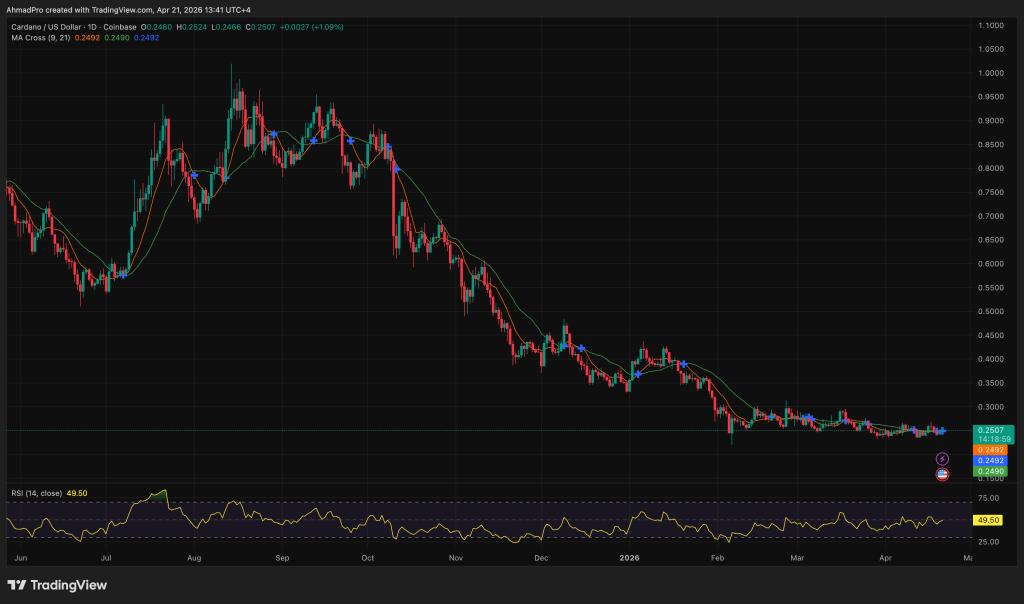
ADA is basically stuck waiting on macro direction, and right now it is sitting right under the $0.25 to $0.26 zone, which flips momentum if it’s reclaimed with strong volume.
If that happens and liquidity conditions improve, that is where the price can actually start trending higher instead of just reacting.
For now, though, it looks like a grind, with ADA likely moving between $0.23 and $0.25 while the market waits on bigger players to decide direction, so no real breakout yet.
The level underneath to watch is $0.24, because if that cracks, it signals weakness returning, and that is where price can slide back toward the $0.21 to $0.22 area where stronger support sits.
So this is another range setup, and until one side breaks, it is just chop driven by macro, not conviction.
LiquidChain Targets Early Mover Upside as Cardano Tests Key Levels
ADA’s recovery, even in the bull case, is capped at single-digit percentage moves from a multi-billion dollar market cap. That’s the reality of trading established large-caps in a sideways market; the risk-reward compresses fast.
Traders hunting for asymmetric exposure are increasingly scanning for earlier-stage infrastructure plays where price discovery hasn’t yet occurred.
LiquidChain is one project generating attention in that category. It’s a Layer 3 infrastructure protocol positioning itself as a cross-chain liquidity layer. Specifically, it fuses Bitcoin, Ethereum, and Solana liquidity into a single execution environment.
The architecture includes a Unified Liquidity Layer, Single-Step Execution, Verifiable Settlement, and a Deploy-Once structure that lets developers access all three ecosystems without rebuilding for each chain. The presale has raised $690,005.61 at a current price of $0.01451.
With Ethereum and altcoin infrastructure narratives gaining traction, the cross-chain liquidity angle has clear tailwinds, though presales carry execution risk and remain highly speculative.
Research LiquidChain if early-stage L3 infrastructure fits your risk profile.
The post Cardano Crypto Holds $0.24 as ADA’s Volume Jumps 48%: Recovery Ahead? appeared first on Cryptonews.
Key Insights
- ARB price witnessed a rise of more than 10% with an almost 80% jump in trading volumes.
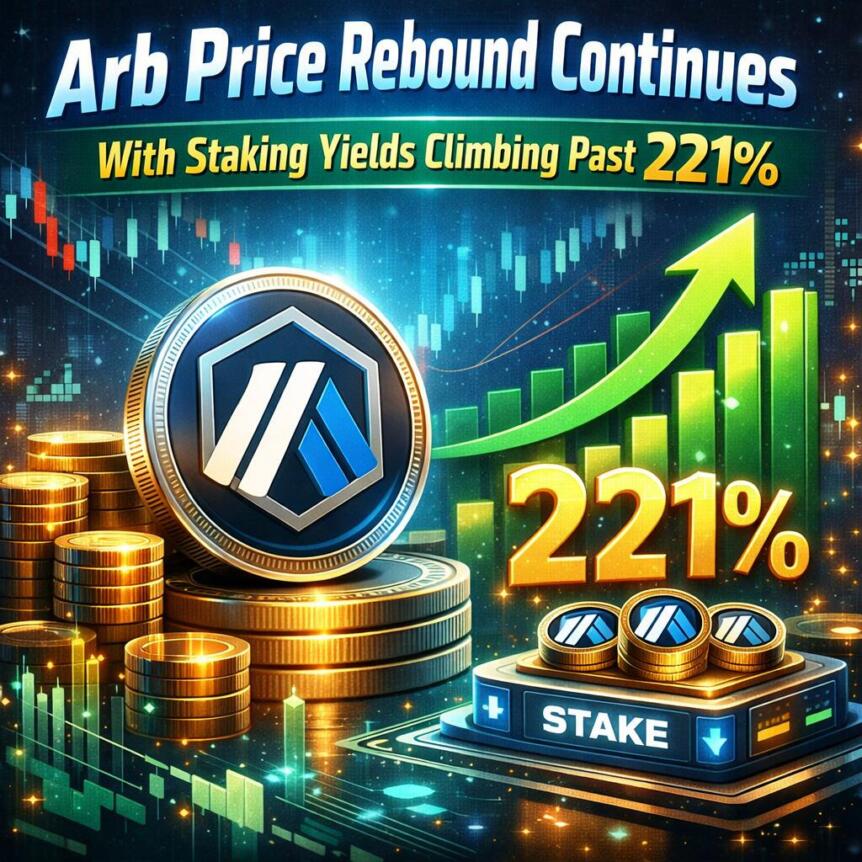
- The staking yield has risen above 221% to attract yield-driven investors.
- Resistance around $0.14 is crucial, and liquidity zones below the price make it volatile.
Recovery Strengthens as Volume Surges
After experiencing some impressive gains,
⚡️ UPDATE: Starknet, Aztec, and Arbitrum rank among the top Layer 2 projects by development activity, according to Santiment. pic.twitter.com/ceks121KIw
Arbitrum (ARB) tokens have demonstrated new signs of strength as bulls have become increasingly confident.
In fact, the tokens have seen a recovery of about 10% from their latest lows thanks to an uptick in trading activity. Specifically, there was a jump in volume of around 80% as new funds were flowing into the token.
When there is an uptick in volume and price at the same time, this is generally a positive signal. It seems that ARB tokens are now moving on to the next phase. Indeed, this comes after a long consolidation phase.
ARB’s Strength in the Face of Staking Yields Above 221%
An important factor that has contributed significantly to ARB’s current momentum is the increased yields from staking, which now exceed 221%. This factor adds another layer to the appeal of the asset in addition to its price performance, presenting itself as an attractive option to yield-seeking traders.
It should be noted that high staking yields typically play an important role in luring investors into buying an asset, especially in the current environment when traders are continuously seeking ways to boost their returns. Currently, increasing yields are one of the important factors that help sustain the demand for ARB despite volatility.
However, at the same time, the state of the ecosystem remains positive, as evidenced by the continuous development of the Arbitrum network.
Bullish Momentum Forms As Buyers Gain the Upper Hand
Analyzing the situation technically, there is now a stronger market structure formed in ARB. This is evident by the recovery of the price from the $0.088 support region as it rose towards the resistance level at $0.128, all while forming higher lows on the way up.
There are also indications in terms of the directional movement indicator. For one thing, the +DI is currently above -DI, reflecting the fact that there is more buying than selling activity in the market. The ADX, for its part, is hovering around 27.
Overall, these factors suggest a bullish scenario despite there being resistance levels left unbroken thus far.
Crucial Resistance Zone at $0.14 Important
Even amid the encouraging developments, ARB must navigate a vital hurdle in the form of the $0.14 resistance zone. This resistance area has previously posed significant challenges, leading to selling actions and breakdowns. The market participants are keeping a close eye on this level, as a clear breakout would potentially open the doors for the following target at $0.18.
Nevertheless, the approach towards the resistance level brings a series of mixed indicators. According to the latest reports, there has been a positive inflow into exchanges, amounting to around $207.81K worth of ARB being transferred to the exchanges. The emergence of such activity implies that there might be plans for profit-taking after the recent recovery.
It is worth noting that such an indicator usually creates some selling momentum, particularly when approaching important levels of resistance.
Liquidity Zones Indicate Possible Volatility
The liquidity indicator shows that there are more threats hidden behind the price. Large clusters of liquidity are found near $0.12 and even lower. They usually serve as magnets in case of volatility, particularly for leveraged trades.
If the coin gets rejected from the resistance line, there is an increased probability of fast movement towards the clusters of liquidity. The process of liquidation becomes fast and efficient, resulting in a fast fall in the price.
Currently trading at $0.128, ARB is caught in-between the important resistance on the top and the high liquidity clusters on the bottom side. Such conditions create a high possibility of volatility in either direction.
Outlook: A Balanced Mix of Opportunity and Risk
The resurgence of ARB is attributable to factors such as improvements in technical structure, increases in yields, and investor interest. The cryptocurrency is proving to be an asset for investors interested in profit-making and earning some income from yield-generation.
That said, future projections are still unclear in the near future. Whether or not ARB succeeds in its rally will depend on whether the coin can break through the resistance point at $0.14. Meanwhile, the liquidity factors prevailing below the current levels imply that volatility is set to define the trend. Currently, ARB sits at a very interesting junction.
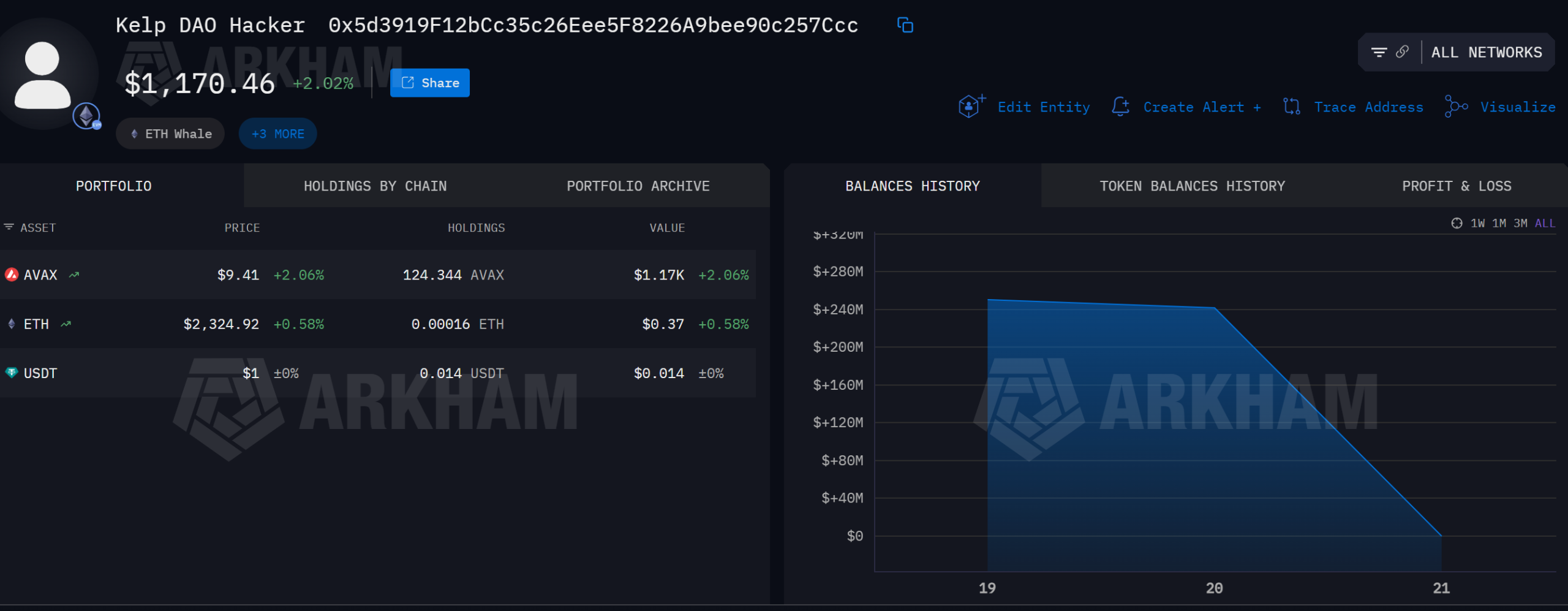
The attacker behind the $292 million KelpDAO exploit has begun laundering roughly 75,700 ETH, worth about $175 million, on Ethereum after the Arbitrum Security Council froze 30,766 ETH on Arbitrum One.
The freeze appears to have rattled the hacker into accelerating fund movements on the Ethereum mainnet.
Hacker Accelerates ETH Transfers Through UmbraCash
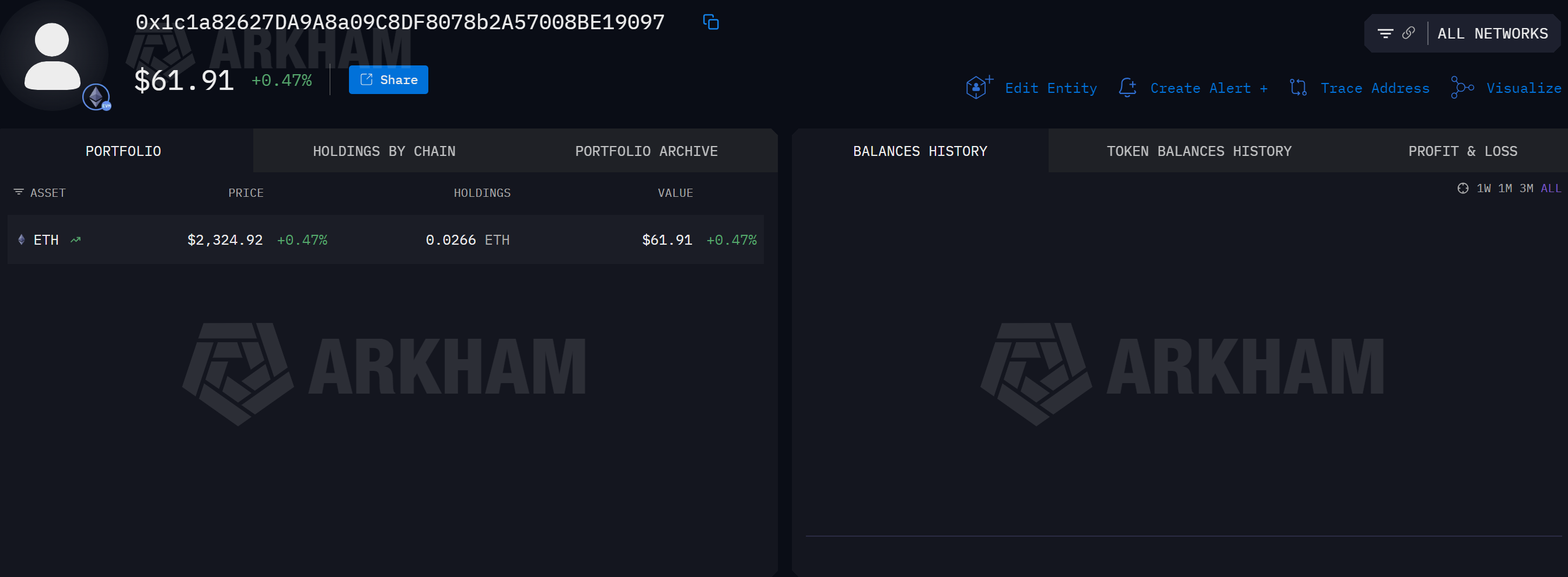
On-chain analyst EmberCN reported that several small ether (ETH) transfers have already gone through UmbraCash, a stealth address privacy protocol.
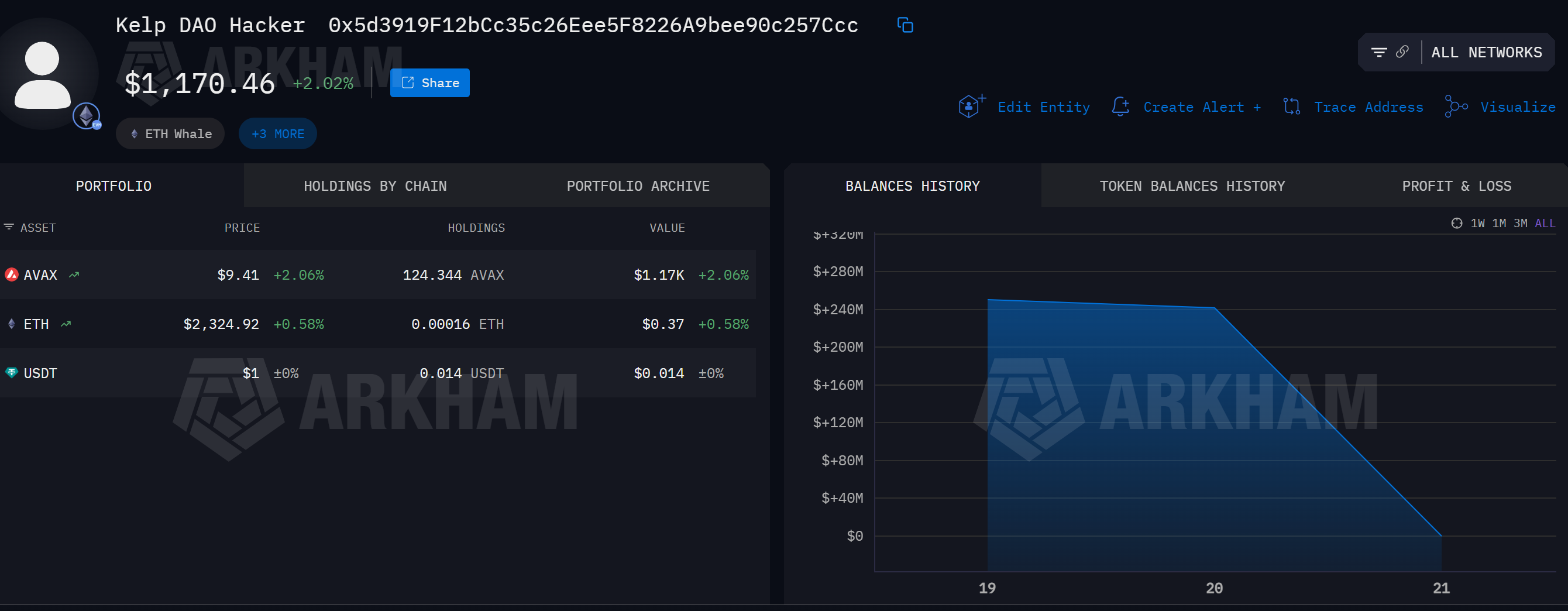
The fund-splitting strategy suggests the attacker is trying to obscure the trail before more assets can be frozen.
Arkham Intelligence data shows the hacker’s primary wallet still holds a significant ETH balance, with outflows routing through a secondary address tied to UmbraCash transfers.
Security Council Decision Draws Mixed Reactions
Offchain Labs co-founder Steven Goldfeder defended the council’s action, noting that the elected 12-member body required nine votes to act.
He stressed that the sequencer itself has no power to move funds and that the council operated independently from Offchain Labs and the Arbitrum Foundation.
However, some community members raised concerns. One user questioned whether a compromised council could seize any on-chain funds, highlighting the tension between emergency powers and decentralization.
“If i understand correctly, if the arbitrum security council gets compromised they can just do whatever they want to all of the funds on chain?” they posed.
In the same tone, crypto executive Justin Sun trolled the Arbitrum governance debate, highlighting the Tron DAO as the most decentralized blockchain.
Notwithstanding, KelpDAO thanked the council and credited SEAL 911 for coordinating the response. The protocol said its focus remains on supporting rsETH holders affected by the April 18 exploit.
The post Arbitrum Freeze Sparks $175 Million Laundering Frenzy on Ethereum appeared first on BeInCrypto.
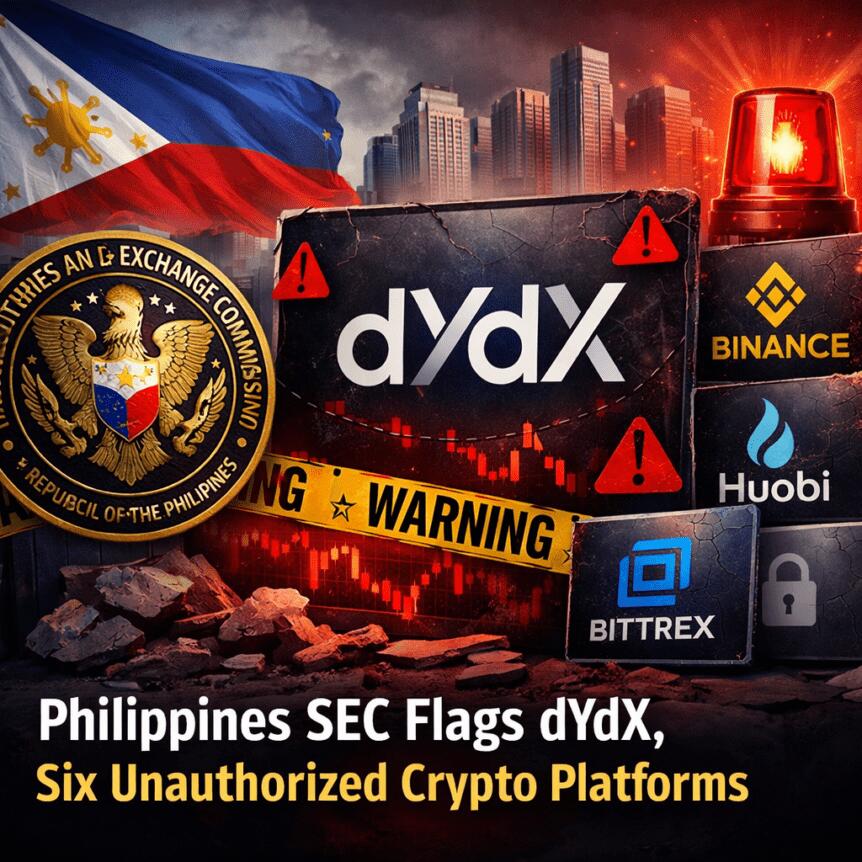
The Philippine Securities and Exchange Commission (SEC) has issued a public investor alert cautioning Filipinos against investing in dYdX and six other crypto trading platforms. The regulator stated that these platforms are not registered or authorized to solicit investments in the country, raising concerns about investor protection and regulatory compliance.
In a Facebook post on Tuesday, the SEC named dYdX, Aevo, gTrade, Pacifica, Orderly, Deriv and Ostium, asserting that, based on its findings, the platforms appear to be offering investments to the public in exchange for promised returns, profits or interest. The commission emphasized that none of the listed entities are registered or authorized under the Philippines’ crypto-asset service provider (CASP) framework, which requires firms offering crypto-related services to obtain licenses and meet capital and operational requirements.
The SEC warned that individuals promoting any of the listed platforms in the Philippines may face criminal liability under the Securities Regulation Code. Under Sections 28 and 73 of the law, violators could be fined up to 5 million Philippine pesos (about $89,000) or imprisoned for up to 21 years, or both.
The advisory underscores a broader shift toward stricter enforcement in the Philippines, where regulators have increasingly moved from warnings to access restrictions. As part of this trend, regulators blocked access to Coinbase and Gemini on December 24, 2025, as part of their broader crackdown on unlicensed CASPs. This moment marked a significant escalation in the country’s approach to crypto-market oversight.
Key takeaways
- The SEC warns that dYdX, Aevo, gTrade, Pacifica, Orderly, Deriv and Ostium are not registered or authorized to solicit investments in the Philippines.
- Compliance with the CASP framework is mandatory for firms offering crypto-related services, including licensing and meeting capital and operational requirements.
- Violations carry potential criminal penalties under the Securities Regulation Code, including fines up to PHP 5 million and imprisonment up to 21 years.
- The case reflects a broader enforcement shift within the Philippines, moving from advisory warnings to direct access restrictions on unlicensed platforms.
- Regulatory tension in the region continues to shape the operating environment for both unregistered operators and licensed players seeking to serve Filipino investors.
Regulatory framework and CASP licensing in the Philippines
The SEC’s CASP framework regulates entities that provide crypto-asset services within the Philippines. Under this regime, platforms must secure the appropriate licenses and satisfy capital adequacy, governance, and operational standards before offering services to the public. The current advisory reiterates that the listed platforms have not demonstrated compliance with these requirements, creating a clear risk posture for investors who engage with them. The Securities Regulation Code, particularly Sections 28 and 73, governs the liability of individuals and entities that promote or solicit investments in unregistered offerings, reinforcing the bounds of permissible activity for crypto platforms in the country.
In this context, the Philippine authorities have signaled a tightening of enforcement that aligns with global regulatory intent to reduce unregistered or non-compliant crypto operations. The SEC’s release also underscores the need for rigorous vetting by market participants and third-party promoters to ensure that offerings meet local legal and prudential standards before presenting them to Filipino residents.
Enforcement actions and investor protection concerns
The advisory comes amid an active enforcement posture designed to safeguard investors from unregistered and potentially risky platforms. By warning promoters of criminal liability and detailing possible penalties, the SEC aims to deter both direct solicitations and ancillary marketing that could mislead the public into engaging with non-compliant services. The regulatory approach reflects a preference for robust licensing and oversight to mitigate systemic risks associated with crypto trading and investment schemes lacking proper registration.
The Philippines’ enforcement trajectory has included high-profile actions targeting unlicensed platforms. In 2024, regulators moved to block access to Binance after a compliance deadline expired and directed app stores to remove the trading platform’s mobile app from local devices. The pattern continued into 2025, with further advisories naming major exchanges such as OKX, Bybit, KuCoin and Kraken for offering crypto services without registration. These measures illustrate the authorities’ willingness to restrict access and sanction non-compliant operators, reinforcing the importance of licensing as a prerequisite for market participation.
For legitimate players, the landscape remains one of continued growth within a regulated framework. Examples include PDAX’s partnership with Toku to enable stablecoin salary payouts, and GoTyme Bank’s digital banking initiative that expanded into crypto services with Alpaca, signaling a bifurcated market where compliant firms can innovate under regulatory supervision while unregistered platforms face increasing scrutiny and enforcement risk.
According to Cointelegraph, regulators have broadened the crackdown to encompass unlicensed virtual-asset service providers and established crypto exchanges, underscoring a pervasive policy shift toward greater accountability and consumer protection in crypto markets.
Broader policy context and international implications
The Philippines’ enhanced enforcement stack sits within a broader global push to codify crypto-asset activities through licensing, reserve capital requirements, and transparent operations. While the specifics of each jurisdiction differ, the trend toward stricter control—especially over platforms that solicit investments or promise returns—has become a common feature of regulatory narratives in many markets. In this environment, policymakers are balancing innovation with investor protection, financial stability, and anti-money-laundering (AML) objectives.
From a policy and market-structure perspective, the Philippines’ actions may influence cross-border service models and partner ecosystems. For institutions operating in or contemplating entry into the Philippine market, the CASP licensing regime creates a clear compliance highway: robust governance, capital adequacy, and ongoing regulatory reporting. As global standards evolve, the Philippine approach also interacts with broader conversations around licensing equivalence, cross-border enforcement cooperation, and the alignment of local rules with regional and international AML/KYC norms, as well as potential synergies or frictions with frameworks such as MiCA in the European Union.
For investors and corporate users, the evolving landscape emphasizes due diligence and validation of licensure status, functional licensing, and the governance posture of entities offering crypto-related services in the Philippines. It also highlights the importance of internal compliance programs, risk assessments, and clear communication channels to ensure alignment with local securities laws and crypto-asset regulations.
Closing perspective: the SEC’s public advisory marks a continuing phase of regulatory consolidation in the Philippines, with further guidance and potential licensing clarifications likely to follow as authorities refine the CASP regime and solidify enforcement norms. Market participants should monitor forthcoming regulatory filings and policy updates to anticipate changes in licensing criteria, enforcement timing, and permissible product offerings.


Key takeaways
- DOGE is up 1% and is now trading at $0.095.
- The memecoin could rally towards the $0.10 psychological level in the near term.
Dogecoin (DOGE), Shiba Inu (SHIB), and Pepe (PEPE) are all displaying signs of renewed strength on Tuesday, as bullish technical setups emerge across major meme coins.
DOGE and SHIB are testing key resistance zones, with a close above these levels potentially signaling further upside. Meanwhile, PEPE continues its recovery, finding support near the crucial 50-day Exponential Moving Average (EMA), setting the stage for a potential rally continuation.
Derivatives data support a bullish outlook for Dogecoin
Dogecoin is up 1% in the last 24 hours and could rally higher in the near term amid a bullish outlook from the broader crypto market.
Bitcoin has reclaimed the $76,000 level, while Ether is now trading above the $2,300 mark once again.
Meanwhile, Dogecoin is looking to embark on a breakout above the $0.10 psychological level if the bullish trend persists.
Dogecoin’s derivatives data suggests that the bulls are currently in control of the market. The futures Open Interest (OI) now reads $1.23 billion, up from the $986 million recorded on Monday.
The increase in OI suggests that retail traders are opening more positions in anticipation of a bullish move by Dogecoin.
Dogecoin could extend gains with a close above the 50-Day EMA
Similar to other leading cryptocurrencies, the DOGE/USD 4-hour chart remains bearish and efficient. It has surpassed the 50-day EMA at $0.95 following its 2.4% rally on Monday.
DOgecoin been consolidating beneath this resistance for over a month and briefly broke above it last week, but struggled to maintain support.
If DOGE closes its daily candle above the $0.095 level and holds, the altcoin could extend its rally toward the 100-day EMA at $0.105.

The Relative Strength Index (RSI) on the daily chart is at 52, above the neutral level of 50, signaling weakening bearish momentum. Furthermore, the Moving Average Convergence Divergence (MACD) indicator shows green histogram bars, reinforcing the positive outlook.
On the downside, if DOGE fails to hold above the 50-day EMA, it could face a potential correction, bringing the price back toward the February 6 low of $0.080.
Crypto World
Bitcoin, USDT ‘safe passage’ scam hits Hormuz as one ship reportedly duped and fired upon


Shipowners are receiving fraudulent messages asking for crypto payments in exchange for safe passage across the Strait of Hormuz, and at least one may have been taken in, Reuters reported Tuesday.
Marisks, a Greek maritime risk services company, issued a warning saying several shipping companies had received messages from scammers posing as Iranian authorities and asking for bitcoin or USDT. The firm said it believed at least one ship fell victim to the scam and was fired upon while trying to pass through the strait over the weekend, Reuters said.
Shipping traffic through the strait has largely been blocked by Iran since Feb. 28, when the U.S. and Israel initiated a war on the Middle East country. According to Reuters, there are roughly 20,000 oil tankers and other freighters stranded in the Gulf.
A week ago, U.S. President Donald Trump ordered a naval blockade of the Strait of Hormuz and has since seized one Iranian vessel trying to evade the operation.
On April 9, Tehran, which controls the chokepoint, proposed crypto tolls on vessels in exchange for safe transit. Hamid Hosseini, spokesperson for Iran’s Oil, Gas and Petrochemical Products Exporters’ Union, said the crypto fees would likely be charged in bitcoin.
Marisks issued its alert on Monday. Iran has not made any comment, Reuters added.
“These specific messages are a scam,” Marisks said, assuring the messages did not come from official Iranian sources.
“After providing the documents and assessing your eligibility by the Iranian Security Services, we will be able to determine the fee to be paid in cryptocurrency (BTC or USDT). Only then will your vessel be able to transit the strait unimpeded at the pre-agreed time,” said the fraudulent message cited by Marisks, according to Reuters.
The shipping company did not immediately respond to a CoinDesk request for comment.

UK universities hired military intelligence firm to spy on pro-Palestine students

Nvidia research promises 2x to 3x faster path tracing with better visuals

Cardi B – Money (Official Audio)

Manchester United reach agreement with Casemiro over contract clause amid transfer speculation

Steven Gerrard disagrees with Gary Neville over ‘shock’ Chelsea and Arsenal claim | Football

US brings back mandatory military draft registration


-

 News Videos6 days ago
Secure crypto trading starts with an FIU-registered
-

 Fashion4 days ago
Weekend Open Thread: Theodora Dress
-

 Sports4 days ago
NWFL Suspends Two Players Over Post-Match Clash in Ado-Ekiti
-

 Politics4 days ago
Palestine barred from entering Canada for FIFA Congress
-

 Business2 days ago
Powerball Result April 18, 2026: No Jackpot Winner in Powerball Draw: $75 Million Rolls Over
-

 Crypto World4 days ago
Russia Pushes Bill to Criminalize Unregistered Crypto Services
-

 Politics14 hours ago
Gary Stevenson delivers timely reminder to register to vote as deadline TODAY
-
 Business5 days ago
Creo Medical agree sale of its manufacturing operation
-

 Tech2 days ago
Auto Enthusiast Scores Running Tesla Model 3 for Two Grand and Turns It Into Bare-Bones Go-Kart
-

 Politics2 days ago
Zack Polanski demands ‘council homes not luxury flats for foreign investors’
-

 Tech5 days ago
‘Avatar: Aang, The Last Airbender’ Leaked Online. Some Fans Say Paramount Deserves the Fallout
-

 Crypto World4 days ago
Russia Introduces Bill To Criminalize Unregistered Crypto Services
-

 Tech6 days ago
Microsoft adds Windows protections for malicious Remote Desktop files
-
 Entertainment6 days ago
Dave Portnoy Slams Dianna Russini: ‘Makes Zero Sense’
-

 Crypto World6 days ago
X Launches New Cashtag Feature for Stocks and Crypto: X
-

 Sports5 days ago
British climbers complete new route in Swiss Alps
-

 Sports7 days ago
Younger Than Sachin Tendulkar: Vaibhav Sooryavanshi Set To Make Historic India Debut
-

 Entertainment7 days ago
Prince Carter Brings Fans Front Row and Backstage at Boys 4 Life Tour
-
 Crypto World6 days ago
Bitcoin surpasses halfway mark in current halving cycle
-
 Crypto World7 days ago
Paxos Labs Raises $12M to Launch Crypto Yield and Lending Platform
You must be logged in to post a comment Login