
Crypto World
Crypto wrench attacks steal $30M in first half of 2026: Chainalysis

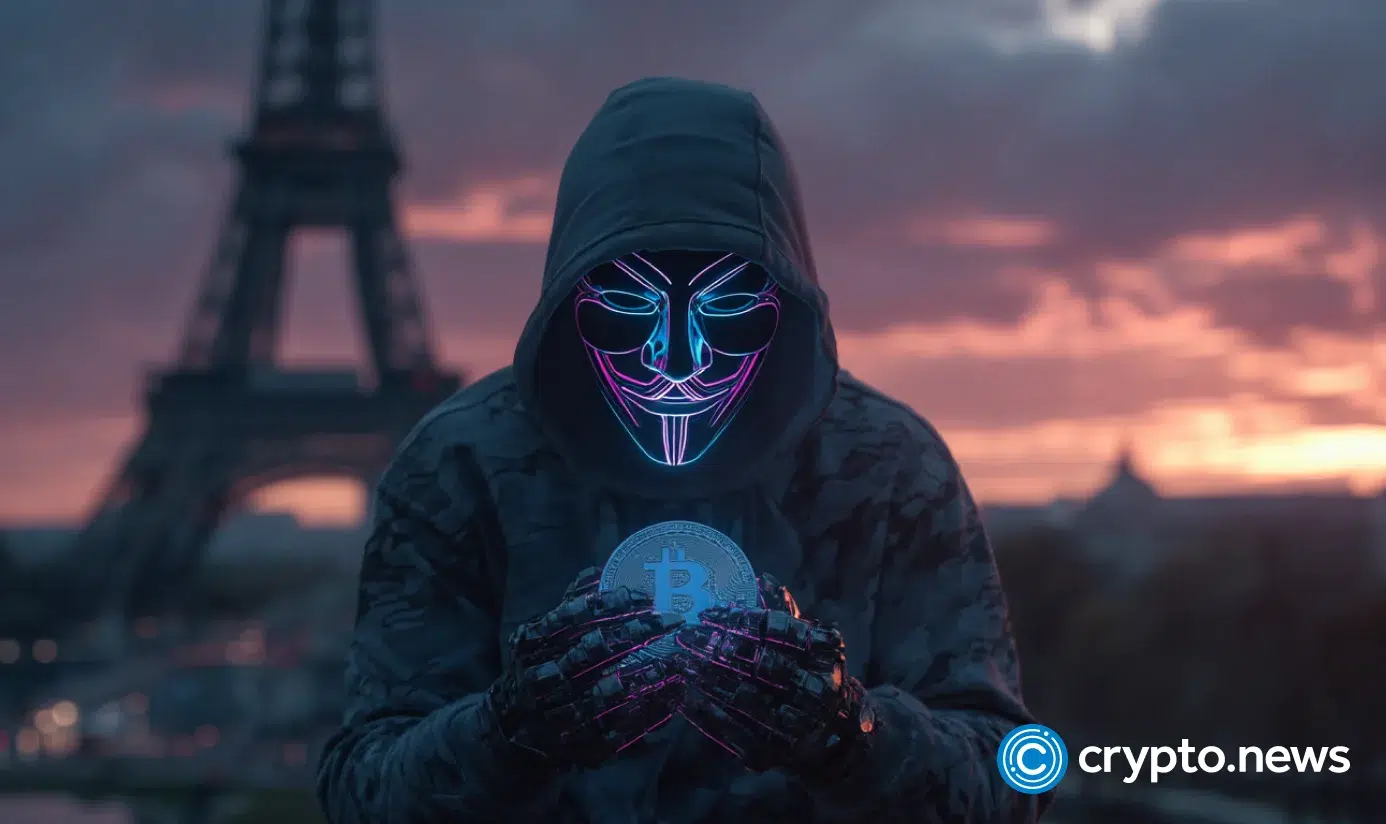
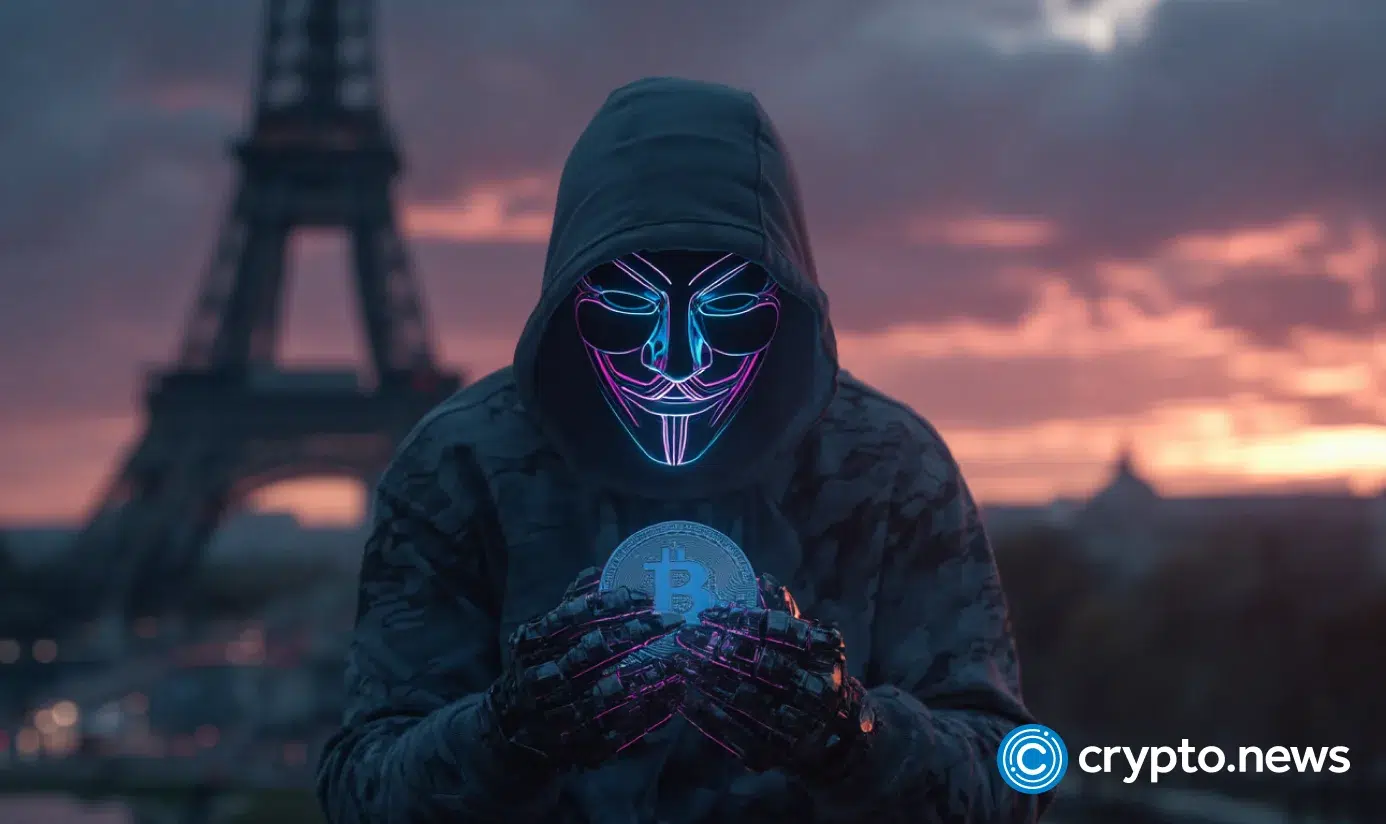
Violent attacks against crypto holders extracted more than $30 million worldwide through late June 2026, according to an Aug. 6 report.
Summary
- Crypto wrench attacks stole more than $30 million globally during 2026’s first half, Chainalysis estimates.
- Only 12 of 46 documented attacks produced payments, cutting attackers’ success rate to 26% worldwide.
- France recorded 30 publicly known incidents, while officials counted 77 crypto-linked kidnappings and detentions nationally.
- Home invasions represented 37% of documented attacks, rising sharply from 14% during 2025 worldwide overall.
- Family members or acquaintances became targets in roughly 25% to 30% of documented cases globally.
The firm documented 46 kidnappings, home invasions, hostage situations and related attempts, compared with 40 during the same period in 2025.
The total places 2026 on pace to challenge the record $58 million stolen during 2025. However, Chainalysis said its figures cover reported cases and likely undercount the true scale. Attempted extractions, including blocked transfers, unpaid ransom demands and recovered funds, reached an estimated $107 million during the first half.
Crypto wrench attacks put 2026 on record pace
Only 12 of the 46 documented attempts resulted in payment, producing a 26% success rate. That was down from 49% in 2025 and 67% in 2024, even as the number of known attacks increased.
Chainalysis said 2026 “could become the single-worst year” for violent crypto theft if the first-half pace continues.
The projection is conditional rather than a confirmed year-end outcome. The report covers known cases through late June, and both reporting rates and the size of individual thefts can change sharply during the second half.
The attack mix also changed. Home invasions represented 37% of incidents, up from 14% in 2025. Kidnappings accounted for 52%. Chainalysis said some cases overlap because an intrusion can develop into detention or forced movement, so classification depends on the dominant outcome.
France’s surge points to data exposure and organized crime
France recorded 30 publicly known cases by midyear, compared with 19 throughout 2025. French authorities have counted a much larger total. The national Gendarmerie said on July 7 that 77 crypto-linked kidnappings and detentions had been recorded since January.
As previously reported in France’s crypto kidnapping crackdown, authorities have expanded intelligence sharing and coordination with digital asset companies. Chainalysis said the French response had produced roughly 200 arrests, 88 indictments and 75 suspects held before trial by midyear.
Official case records show the size of individual investigations. In March, more than 450 officers arrested 18 people over a 2025 kidnapping, with 12 suspects later indicted. Three were placed in pretrial detention and nine under judicial supervision.
In May, authorities detained three additional suspects after a victim was forced to transfer about €68,000 in crypto. One suspect allegedly described being recruited by the DZ Mafia criminal organization. The suspects were indicted and held in pretrial detention, while the investigation remained open.
Chainalysis called compromised personal data the “likeliest culprit” behind the French surge. It cited allegations that a tax official sold dossiers containing investors’ identities, addresses, holdings and tax information. Those claims remain allegations and have not been established by a final judgment.
The report also cited Waltio’s January security breach, which it said affected about 50,000 users. Waltio confirmed unauthorized access to data connected to 2024 tax reports, but said the exposed information excluded names, postal addresses, phone numbers, passwords, wallet addresses, API keys and detailed transaction histories. A direct causal link between that breach and physical attacks has not been proven.
Relatives and homes become bigger targets
Attackers increasingly target people close to crypto holders. Relatives or acquaintances represented about 25% to 30% of documented cases by early 2026, up from almost none in 2021. In France, more than 40% of incidents targeted a relation rather than the holder directly.
In related coverage of a failed family kidnapping, neighbors disrupted an attempt involving the wife of a Sandbox cofounder. Earlier, Ledger cofounder David Balland’s kidnapping showed how attackers may use relatives, executives and public visibility to identify targets.
Most victims were local residents, suggesting prior reconnaissance rather than opportunistic attacks on tourists. Chainalysis said known-residency cases involved locals in 93% of French incidents and 77% of U.S. incidents. It identified the U.S. as a long-running outlier for home invasions.
Onchain trails give investigators leverage
Chainalysis divided attackers into three broad groups based on how they moved stolen assets. Less experienced criminals sent funds directly to centralized exchanges, creating clear compliance and subpoena points. More capable groups used bridges, decentralized exchanges and intermediary wallets to delay identification.
The most advanced cases appeared connected to wider criminal networks and laundering services. One traced flow reached an alleged over-the-counter laundering service that had interacted with cartel-linked wallets, terrorist financing clusters and Southeast Asian laundering networks. These connections describe blockchain exposure, not proof that every connected party participated in the original attack.
The next focus will be whether France’s rapid-alert system, industry coordination and organized-crime prosecutions reduce the attack rate. Investigators will also watch whether centralized exchanges freeze funds quickly and whether cross-chain tracing can identify local crews and their organizers.
For holders, Chainalysis recommended limiting public disclosure of wealth, separating real-world identities from onchain activity and strengthening physical security alongside wallet custody. The report also called for wider blockchain training among frontline police because these cases often begin as conventional kidnappings, home invasions or extortion investigations.



Morpho, the DeFi lending protocol with about $7.6 billion in total value locked, will complete a full deployment on HashKey's HSK Chain and become the network's official onchain credit partner, HSK Chain said in a post on X on Tuesday. The deal gives Morpho its first anchor in Hong Kong, one of the… Read the full story at The Defiant


Upbit will add Block Street (BSB) to its Korean won, Bitcoin and USDT markets on Aug. 7, giving the token three new spot pairs in South Korea.
Summary
- Upbit will open Block Street trading across KRW, BTC and USDT markets on August 7.
- BSB deposits and withdrawals will use Ethereum, with other networks unsupported for Upbit transfers initially.
- Upbit will restrict buy orders for five minutes and non-limit orders for roughly two hours.
- Block Street says BSB supports governance, staking and incentives across its tokenized asset infrastructure ecosystem.
- Block Street documentation fixes BSB supply at one billion tokens across Ethereum and BNB Chain.
According to Upbit’s official listing notice, the exchange scheduled trading for 3:00 p.m. Korea Standard Time and said deposits and withdrawals would initially be supported only through Ethereum.
Upbit also warned that the trading start could be delayed if adequate liquidity is not secured. The exchange said users should verify the supported network before transferring BSB because deposits sent through unsupported networks may require a lengthy return process.
Upbit will impose temporary BSB trading limits
Upbit plans several restrictions during BSB’s opening period. Buy orders will be blocked for about five minutes after trading begins. During the same period, sell orders priced more than 10% below the previous day’s closing price will also be restricted.
In addition, Upbit will allow only limit orders for roughly two hours after trading support starts. The exchange cited a previous closing price of 211.09 KRW and a recent reference price of 222.34 KRW at 11:45 a.m. KST on Aug. 7. Those figures were published before Upbit trading opened and therefore do not represent a post-listing market reaction.
The listing notice identified BSB’s supported Ethereum contract as 0xdb6ba5d510f114f9b2ea08bea7d30e32eee33411. Users are expected to verify that contract before making deposits or withdrawals.
The structure resembles other recent Upbit additions. Upbit added Derive’s DRV token to KRW, BTC and USDT markets while also applying temporary trading controls around the launch.
Block Street targets tokenized asset liquidity
Block Street describes itself as infrastructure for on-chain capital markets focused on tokenized equities and real-world assets. According to the project’s official documentation, its architecture is intended to connect fragmented liquidity across issuers, blockchains and trading venues.
The protocol calls this infrastructure a “Unified Liquidity Layer.” Block Street says the system is designed to improve execution and capital efficiency for tokenized assets while supporting functions such as borrowing, margin, hedging and arbitrage.
BSB serves as the protocol’s utility and governance token. According to Block Street’s BSB documentation, holders can use the token for governance participation, staking and ecosystem incentives.
The project’s whitepaper fixes total BSB supply at 1 billion tokens. Block Street said 207.75 million BSB, equivalent to 20.775% of supply, were expected to circulate around the token generation event.
The project has also raised outside capital to build its infrastructure. Block Street announced an $11.5 million strategic funding round in October 2025, led by Hack VC with participation from Generative Venture, DWF Labs, StudioB and Bridge34.
Meanwhile, tokenized equities have become a broader market theme. In related coverage, tokenized equity activity increased as crypto companies and traditional market participants expanded blockchain-based stock infrastructure.
What happens when BSB trading opens
The immediate event to watch is Upbit’s planned 3:00 p.m. KST trading start on Aug. 7. Because the exchange made the launch conditional on sufficient liquidity, the announced time remains subject to change.
Once trading begins, Upbit’s initial restrictions will expire in stages. The five-minute controls on buy orders and low-priced sell orders will end first, while the exchange plans to maintain its limit-order-only restriction for roughly two hours.
At the time covered by the announcement, there was no verified Upbit market reaction because trading had not yet begun. As a result, price movements on other exchanges before the scheduled launch should not be described as an Upbit listing reaction without time-matched market data.
For deposits, users must continue using the Ethereum network and verify the contract address specified in the Upbit announcement. Although Block Street’s whitepaper describes BSB deployments across Ethereum and BNB Chain, Upbit’s listing notice supports Ethereum only.
That distinction will remain important once deposits, withdrawals and trading are active because transfers made through unsupported networks may not be automatically credited.
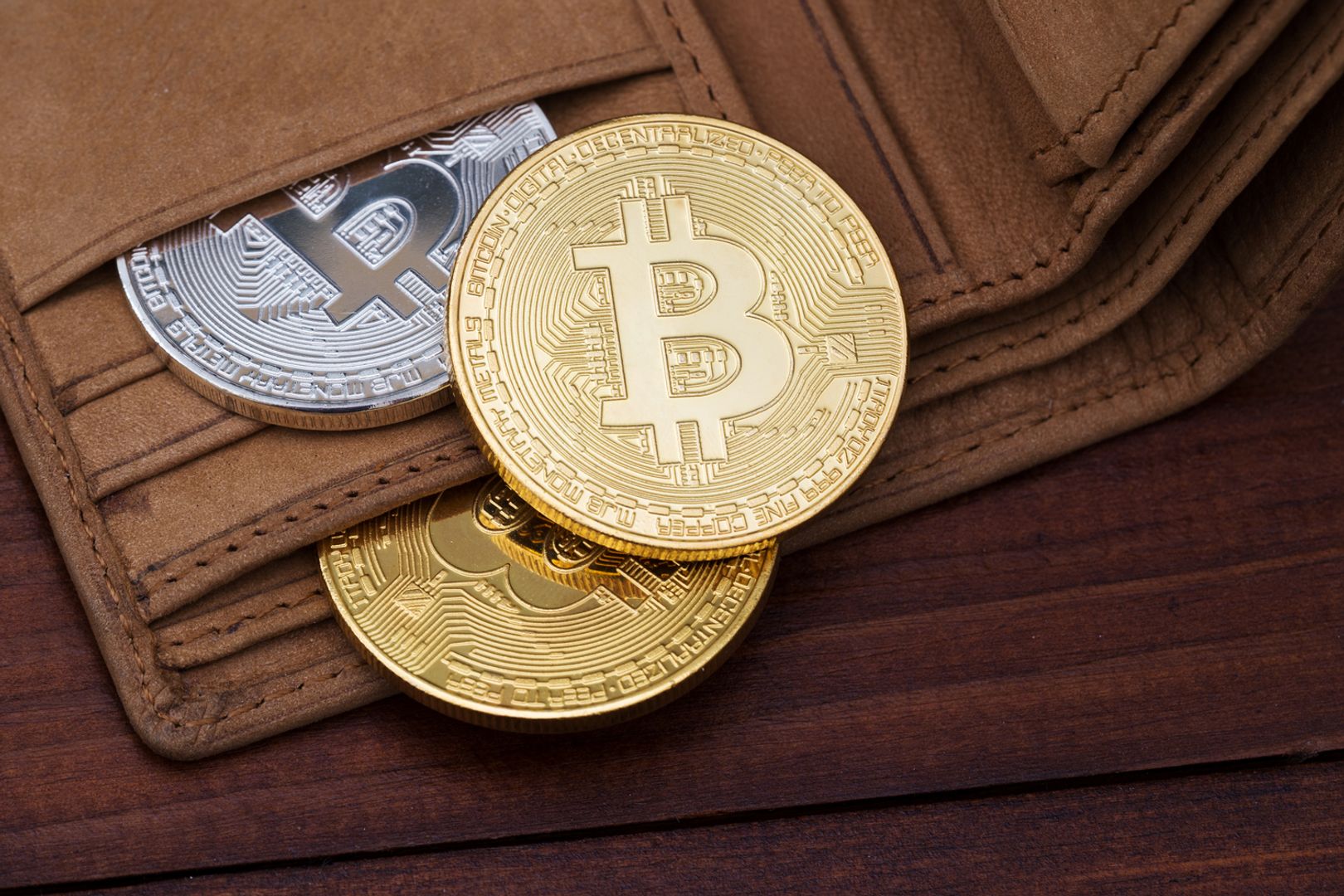
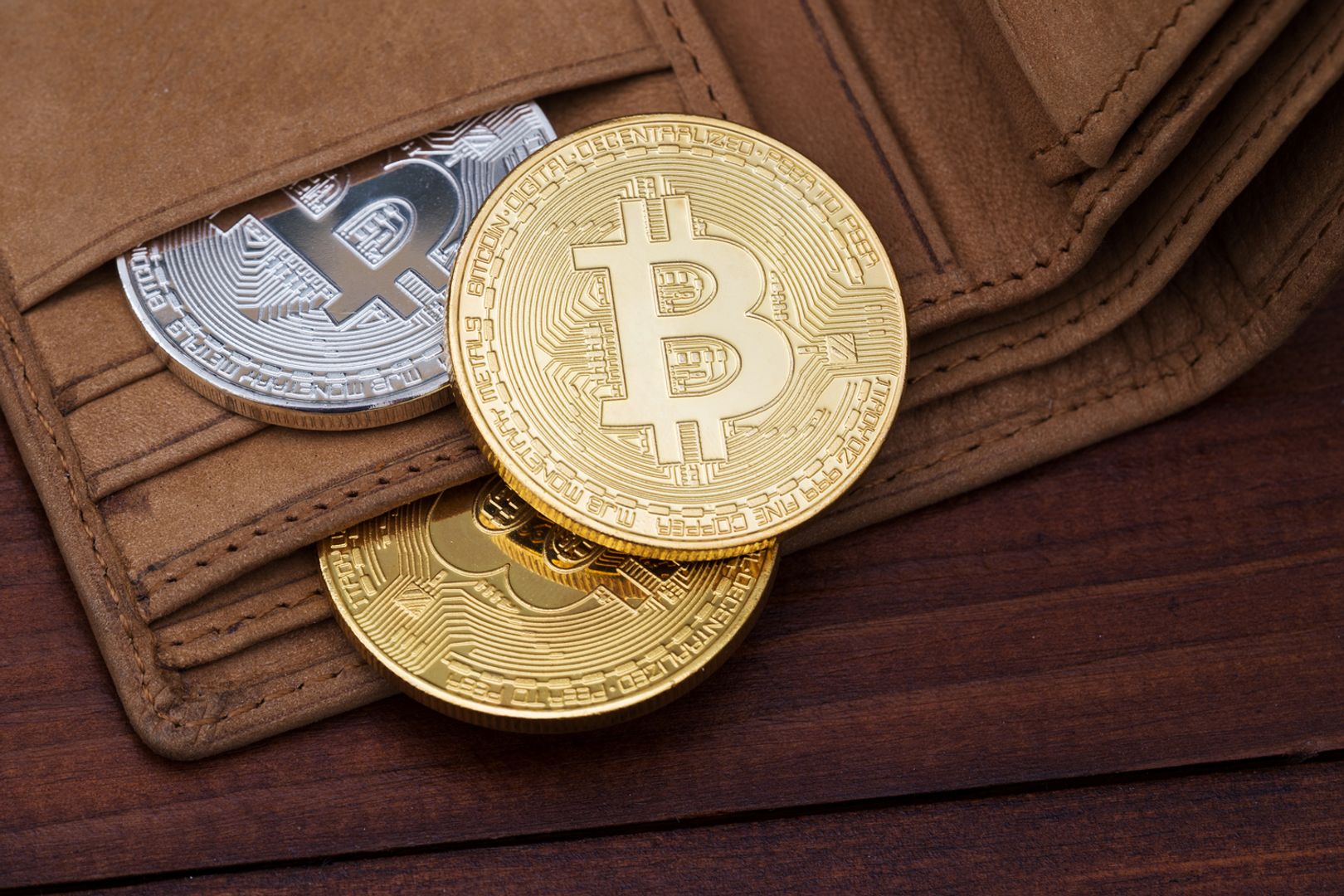
A bitcoin wallet that had been dormant since 2011 moved nearly 50 BTC worth about $3.2 million on Thursday, shifting the coins to an address with a history of sending bitcoin to institutional crypto brokerage FalconX.
The wallet received the coins on July 16, 2011, when bitcoin traded around $10, and had not spent them since, according to Galaxy Research. The 49.97 BTC position is now worth roughly $3.2 million after surviving more than a decade of bitcoin booms, crashes and exchange failures.
The transaction, included in block 961331 at 20:14 UTC on Aug. 6, combined four inputs from the dormant address totaling 49.97 BTC with two smaller inputs from other addresses. Exactly 50 BTC was sent to a SegWit address, while a second output received about 0.00116 BTC after fees.
SegWit is a newer Bitcoin address format that makes transactions more space-efficient and generally cheaper to send. Addresses beginning with bc1 use it.
The destination is not a fresh wallet, however. Arkham data show the address has been active for several years and previously sent 6.336 BTC and 16.131 BTC to addresses the analytics platform labels as FalconX deposits.


SoFi Technologies, the digital bank with 15.8 million members, said commercial clients have begun settling transactions in real time through its SoFiUSD stablecoin, according to the company's second-quarter results published Wednesday. The milestone moves SoFiUSD from launch announcement to… Read the full story at The Defiant
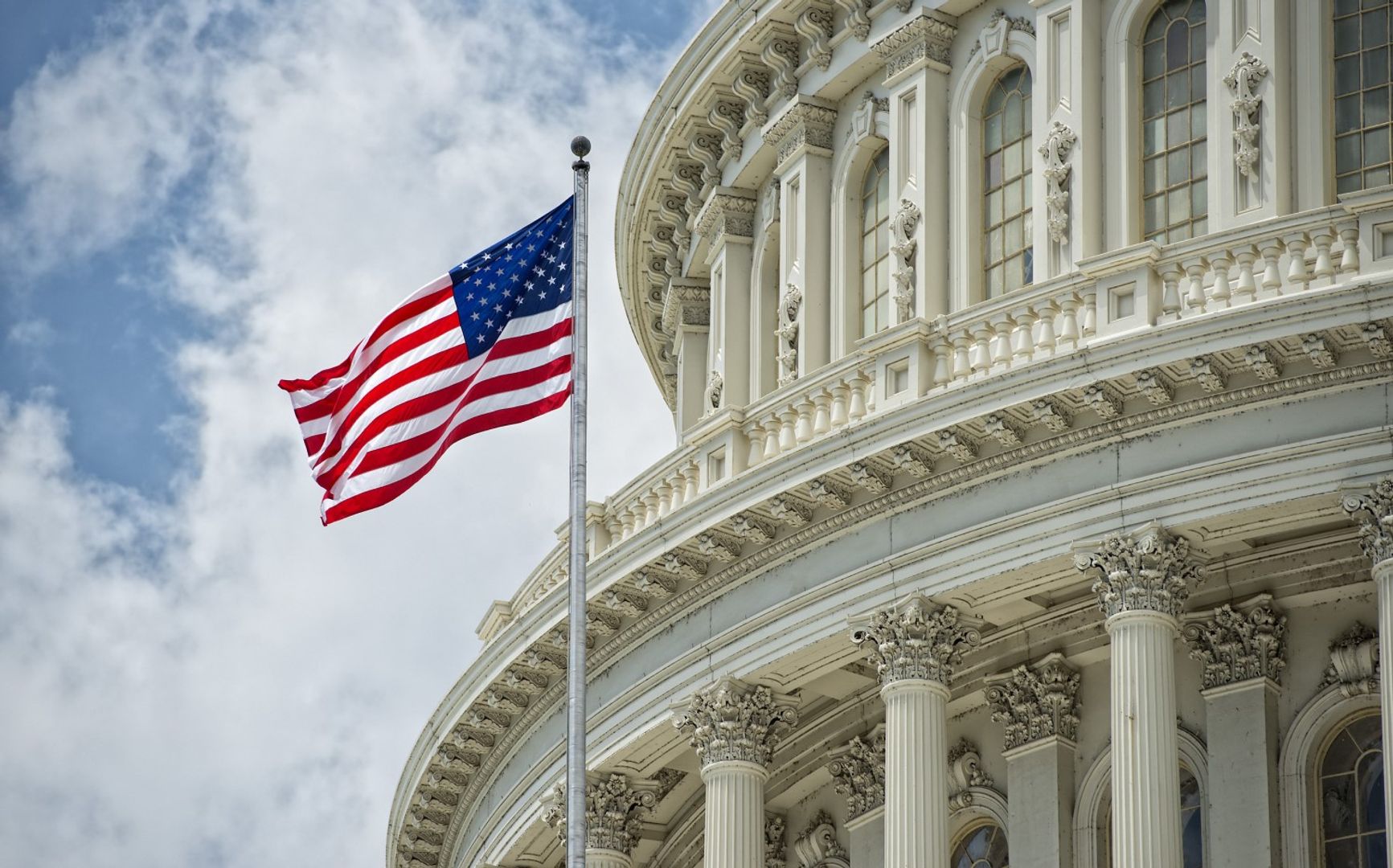
Trump disclosed more than $1 billion in income from his crypto ventures in 2025. Senate Majority Leader John Thune said a vote would come in September, when lawmakers return on Sept. 14 with three weeks to work through a backlog that also includes government funding and a Russia sanctions bill.
Spot bitcoin funds took in about $626 million between Aug. 3 and Aug. 5, enough to defend the $63,000 to $64,000 area but not enough to push through resistance between $66,000 and $66,600.
Next week brings the U.S. employment report and July inflation data. The Federal Reserve held rates at 3.50% to 3.75% in July, though three officials voted to raise them. A strong jobs number or sticky inflation would strengthen the case for tighter policy, which typically weighs on bitcoin.
Bitcoin has not managed to break $66,000 even with money coming in all week. Next week’s jobs and inflation reports decide whether it gets another try or slips back toward $63,000.
Bitcoin’s recent price action has been unremarkable and boring, the kind that sends traders looking for excitement elsewhere.
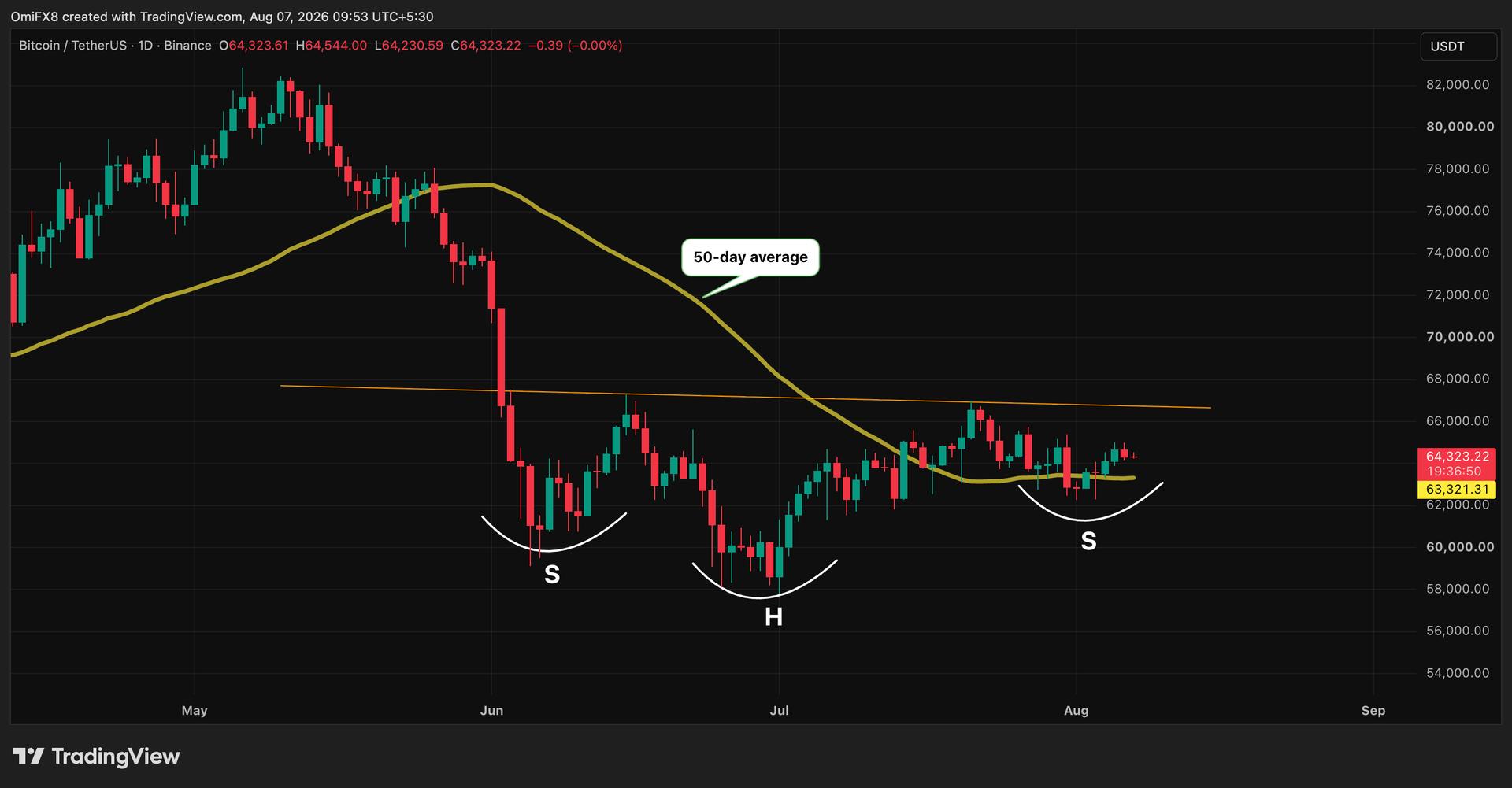
But look closer, through a technical analyst’s lens, and the token appears to be hammering out a bullish pattern, which, if confirmed, could suggest a rally to $76,000.
That pattern is the popular inverse head-and-shoulders (H&S) setup, typically seen at the end of a downtrend rather than in the middle of one. It involves three troughs separated by temporary price recoveries. The middle trough is the deepest, marking peak bearishness or selling, while the shallower trough that follows is the first sign of seller, or downtrend, exhaustion.
A completed pattern, marked by prices rising through a line connecting the interim recoveries, called the neckline, is said to confirm a bullish trend revival.
The pattern is visible on bitcoin’s daily chart: a low near $60,000 in early June formed the left shoulder, a deeper trough near $57,700 in late June or early July marked the head, and the recent bounce from around $62,500 formed the right shoulder. Each trough was followed by a rebound toward a similar resistance zone.
The US Treasury sold euros, not dollars, to help prop up the Japanese yen last week. The European Central Bank only learned about the trade after it had already closed.
Christine Lagarde and Scott Bessent only spoke about the move a day later. However, by then, the New York Federal Reserve had already executed the sale for the US Treasury.
Why Washington Reached for Euros Instead of Dollars
Historically, Western central banks have relied on mutual consultation since World War II. They typically planned currency interventions together in advance.
Washington broke that pattern this time. In contrast, it notified the ECB only after completing the trade.

The choice of euros was deliberate, not accidental. Selling dollars might have signaled a retreat from Bessent’s strong-dollar policy, so the Treasury tapped its euro reserves instead.
Some analysts argue the yen carry trade rule no longer holds, adding pressure to defend the currency through other means. Bessent has since addressed the intervention directly in his own yen intervention explanation.
Meanwhile, economists have linked the move to concerns that Japan could sell US Treasuries in response.
Europe Reacts to Being Left Out
Senior ECB officials called the episode a break from decades of coordination. One person close to the discussions called the moment unprecedented.
A Treasury spokesperson defended the decision.
“Decisions regarding the allocation of the Exchange Stabilization Fund are made by the US Treasury, taking into account assessments by the Treasury and the Federal Reserve of market liquidity, valuations and other relevant considerations.”
However, a senior Trump administration official pushed back on the criticism. The official said Washington respects the confidentiality of talks with foreign counterparts and contrasted that approach with the ECB’s handling of the matter.
Market Fallout and What Comes Next
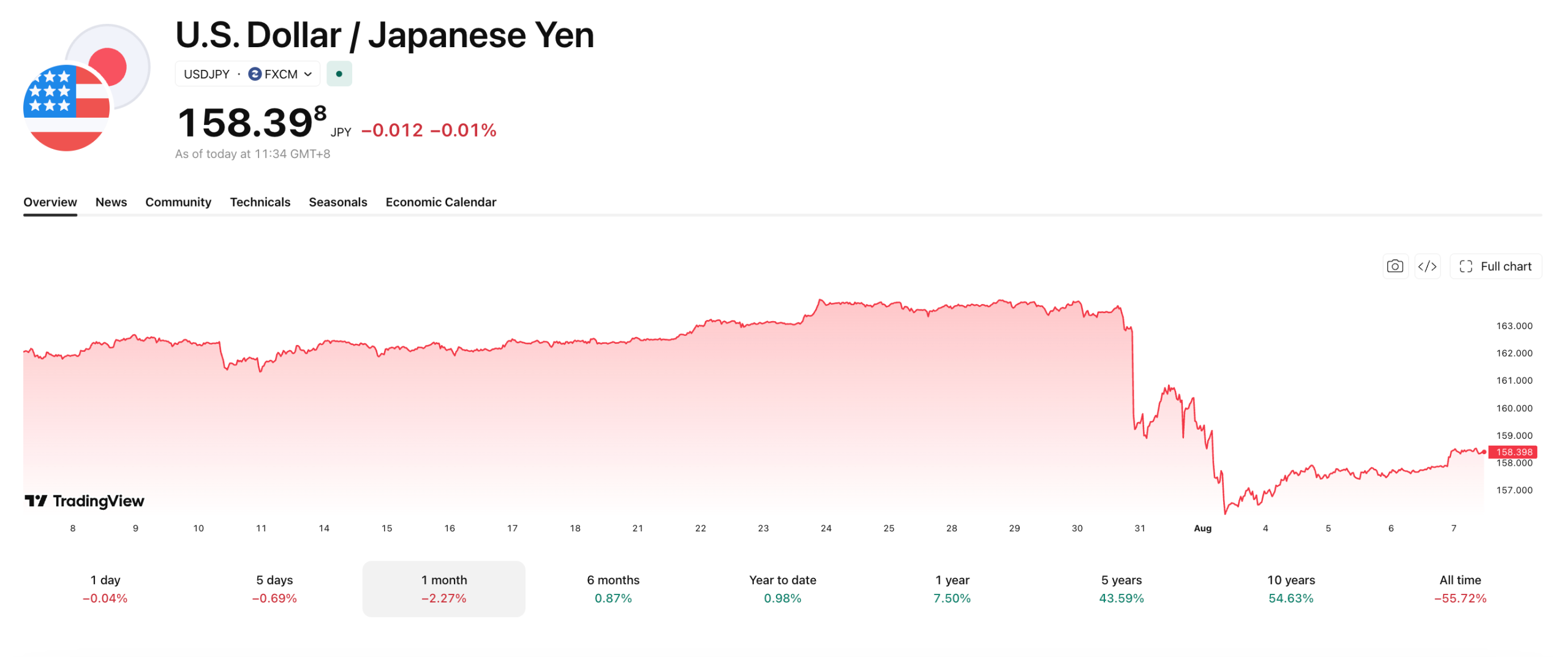
The intervention pushed the yen from roughly ¥164 to about ¥158 against the dollar. Japanese equities absorbed the shock with only modest losses.
Traders now price in a 44% chance the Bank of Japan raises rates in September. BoJ Governor Kazuo Ueda has flagged rising inflation risks as a reason for caution.
The episode leaves European policymakers wondering whether this was a one-off. It could also preview how the Trump administration handles currency defense with allies going forward.
The post US Sold Euros to Save the Yen, Europe Found Out After appeared first on BeInCrypto.


Zeus Wallet has taken its infrastructure offline after mitigating a cybersecurity incident, saying no customer funds have been lost or placed at risk while it completes a full systems audit before restoring services.
Summary
- Zeus Wallet has taken its infrastructure offline after mitigating a cybersecurity incident.
- The company said no customer funds were lost and no Lightning node software vulnerability has been identified.
- Users with closed Lightning Service Provider channels will receive replacement channels after services resume.
- Zeus is auditing its systems before restoring operations and has not provided a timeline.
- The incident comes as Bitcoin developers expand security reviews following the recent Coldcard wallet attacks.
Zeus Wallet announced the incident in an Aug. 5 update, saying the attack had been contained within hours but that infrastructure would remain offline until a comprehensive review of its systems is completed. The self-custodial Bitcoin Lightning Network wallet said its investigation has so far found no evidence that the incident stemmed from a vulnerability in Lightning node software.
Founder Evan Kaloudis said in a company blog post that investigators currently believe the attack was limited to Zeus’ own infrastructure. He added that the company has not identified any impact on customer funds and is continuing to audit its systems before bringing services back online.
No timeline has been provided for restoring operations.
Zeus says customer funds remain safe
While infrastructure remains unavailable, Zeus said customers whose Lightning Service Provider (LSP) channels were closed during the incident will receive replacement channels once services resume and requests can be processed.
The company also asked affected users to contact support through the help section of the Zeus mobile wallet, while warning that response times may be longer than usual as support requests increase during the outage.
Kaloudis said the incident has reinforced Zeus’ ongoing work on trusted execution environments, also known as enclaves, together with the Validating Lightning Signer (VLS) project. According to the company, the planned infrastructure design is intended to mitigate this category of attack.
Although Zeus described the incident as a cybersecurity attack, it did not disclose how the attackers gained access or whether any internal systems outside its infrastructure were affected.
Previous service disruption followed Boltz shutdown
The infrastructure outage comes only days after Zeus announced another service change affecting users.
On Monday, the wallet said it would disable swap functionality after non-custodial Bitcoin swap provider Boltz suspended its own platform until further notice. Zeus linked the decision directly to Boltz’s shutdown, although the swap suspension and the cybersecurity incident have been announced separately.
The company has not indicated that the two events are connected.
For now, Zeus’ current priority remains completing its internal audit before restoring infrastructure and processing replacement Lightning channels for affected customers.
Bitcoin security reviews have accelerated after Coldcard attacks
The Zeus incident arrives during a period of heightened security reviews across the Bitcoin ecosystem following the recent Coldcard wallet attacks.
Earlier this week, Bitcoin developer Calle said the volunteer-led Bitcoin Red Team had begun reviewing Bitcoin wallets, libraries, infrastructure software and other open-source projects using AI-assisted analysis combined with manual verification after the Coldcard incident.
According to data shared by the group, reviewers examined 390 Bitcoin-related repositories during the first 29.8 hours of the initiative, identifying 4,962 potential security issues. The team classified 720 findings as high or critical severity, while reporting that 21.4% of identified issues had already been reproduced through follow-up verification.
Calle said several critical vulnerabilities had already been privately disclosed to affected project maintainers rather than released publicly while software fixes are being prepared.
The volunteer effort includes AnchorWatch CEO Rob Hamilton and other Bitcoin contributors. Calle also said the initiative is consuming about $10,000 per day in computing costs, with OpenSats funding the effort and Kimi Moonshot providing AI accounts and access to its Kimi K3 model.
Coldcard investigation continues as affected users migrate wallets
Security reviews intensified after investigators linked recent Bitcoin thefts to a flaw in certain Coldcard hardware wallet firmware versions.
As previously reported by crypto.news, Galaxy Research confirmed that attackers stole 1,596 BTC from roughly 7,300 addresses across three confirmed attack waves. The research firm has also identified a suspected fourth coordinated wave involving another 448.7 BTC from 709 likely victim addresses, although it has not yet added those losses to its confirmed figures because additional victim verification remains ongoing.
Investigators have separately reported that roughly 90% of the stolen Bitcoin has not moved on-chain. At the same time, analysts observed one attacker routing 64 BTC through a Bitcoin mixer, while the largest identified attacker continues holding about 1,159 BTC across seven addresses.
According to hardware wallet maker Coinkite, the underlying Coldcard vulnerability originated from a firmware modification introduced in March 2021 while integrating a new cryptographic library. Instead of relying on the intended hardware random-number generator during wallet creation, affected firmware versions used a deterministic pseudo-random generator supplied by MicroPython.
Block’s Bitcoin engineering and security team reached the same conclusion after independently reviewing the firmware. Although the company said it had not completed empirical testing across every affected device, its analysis found that vulnerable firmware relied on the deterministic fallback during seed generation instead of the STM32 hardware random-number generator.
Coinkite has since released emergency firmware updates for affected devices but warned that installing patched software alone does not protect wallets created with vulnerable firmware. Users have instead been instructed to generate completely new seed phrases on updated devices and transfer their Bitcoin to addresses derived from those new wallets.
The company added that wallets originally created using at least 50 private dice rolls are not affected by this specific random-number-generation flaw, though it continues recommending migration to newly generated seeds.
The CLARITY Act’s chances of receiving a weekend Senate vote faded Thursday after leadership took no procedural action to advance the crypto market structure bill.
Summary
- No CLARITY Act cloture filing appeared on the Senate’s Thursday schedule.
- The Senate instead prioritized a funding measure, nominations and the Protect College Sports Act.
- Cynthia Lummis continues to push for action before lawmakers begin their August recess.
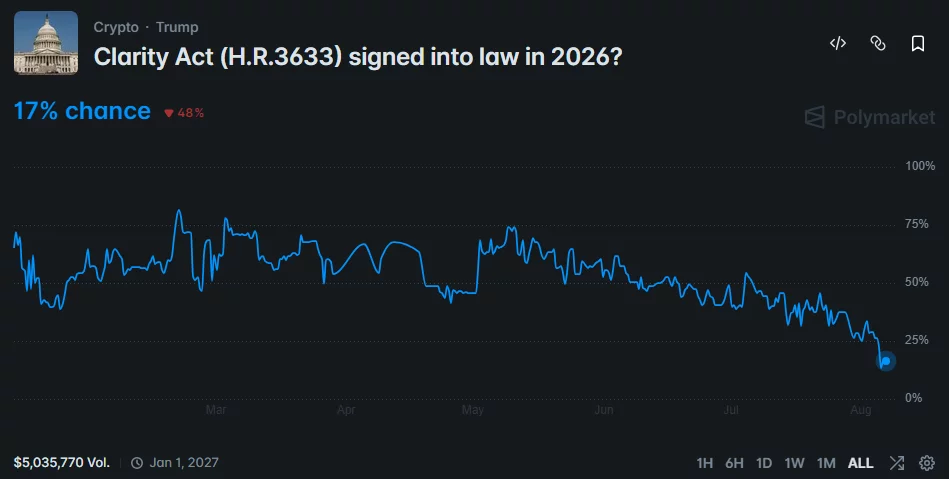
- Polymarket traders cut the bill’s odds of becoming law in 2026 to 17%.
CLARITY Act misses another procedural opening
Senate Majority Leader John Thune did not file cloture on the motion to proceed to the CLARITY Act on Wednesday, leaving the bill without the procedural countdown needed for an initial vote.
The U.S. Senate Daily Press said the chamber would reconvene at 10:00 a.m. Thursday and resume consideration of a group of nominations under Senate Resolution 817. Roll-call votes were expected but had not been scheduled.
Thune filed cloture on a substitute amendment to H.R. 6500, the underlying continuing-resolution vehicle, the motion to proceed to S. 4668 and Todd Blanche’s nomination to be attorney general. S. 4668 is the Protect College Sports Act of 2026.
The CLARITY Act was absent from that list. Without a cloture filing, Senate leaders cannot begin the standard process of limiting debate and moving the bill toward floor consideration. The omission made a weekend procedural vote increasingly difficult, even if senators remain in Washington beyond Friday.
Bipartisan negotiations remain active
The delay came despite signs that Republicans, Democrats and the White House were continuing to negotiate unresolved provisions.
Sen. Thom Tillis told reporters that administration officials had begun examining parts of the proposed language.
“We’ve got people working with the White House right now… they’re going through some of the lines right now,” Tillis said.
Ethics restrictions involving senior federal officials have remained one of the largest barriers to an agreement. Lawmakers have also discussed provisions covering illicit finance, decentralized finance, stablecoin rewards and the Commodity Futures Trading Commission’s authority.
The Senate would need 60 votes to invoke cloture and advance the legislation. Republicans cannot reach that threshold without Democratic support, making a bipartisan agreement necessary before leadership puts the measure on the floor.
Even if senators agree on the disputed language, the bill must still compete with government funding legislation, nominations and other measures already placed in the procedural queue.
Lummis keeps pressure on Senate leaders
Sen. Cynthia Lummis has continued pressing for a vote before the August recess. The Wyoming Republican said earlier this week that lawmakers could remain in Washington through the weekend.
“I don’t think we’ll be leaving on Friday. I think we’ll go into the weekend,” Lummis said.
“There are other bills in addition to the CLARITY Act that we need to take votes on before we leave for the August recess.”
Lummis previously said Thune had reserved space for the legislation on the Senate agenda for several weeks. However, her comments described her expectation for the bill rather than confirming that leadership had scheduled a procedural vote.
Negotiators have worked on the measure for nearly 11 months. Lummis said she had recently focused on its CFTC provisions while lawmakers attempted to resolve differences between the two parties.
The senator has argued that Congress needs to clarify federal oversight of digital assets to prevent crypto companies from moving operations outside the United States.
Polymarket odds fall to 17%
Prediction-market traders have become increasingly doubtful that the legislation will clear Congress this year.
Polymarket placed the probability of the CLARITY Act being signed into law in 2026 at approximately 17% on Thursday, down 48% over the period displayed in the supplied chart. The contract has attracted more than $5 million in cumulative volume.
The odds had traded above 70% at several points earlier in the year before declining through June and July. They fell more sharply as unresolved negotiations and the crowded Senate calendar narrowed the available legislative window.
The Polymarket contract resolves “Yes” only if H.R. 3633 passes both chambers and receives the president’s signature by Dec. 31.
A bipartisan agreement could revive the bill after the recess, but the Senate would still need to complete its procedural votes, consider amendments and approve the legislation. Any changes to the House-passed text could also require further action in the House before the measure reaches the president.


Optimism published its Year 4 budget update and Year 5 outlook on Aug. 6, forecasting that circulating supply will reach 2.504 billion OP by April 2027.
Summary
- Optimism forecasts circulating supply reaching 2.504 billion OP, or 58.3% of total, by April 2027.
- Year 5 forecasts include 200 million ecosystem tokens and 47.6 million contributor tokens entering circulation.
- Optimism committed roughly 150 million OP during Year 4, one third below the previous year.
- No airdrops or Retro Funding releases are forecast in Year 5 under the current outlook.
- OP Mainnet monthly transactions grew over 60%, while buybacks acquired more than nine million tokens.
That would equal 58.3% of the project’s reported 4.295 billion total supply.
The Foundation’s stated figures imply that approximately 343 million OP could enter circulation from May 2026 through April 2027. Optimism said in the official update that it had not requested a new token allocation and would continue working within the original distribution framework.
Optimism budget directs 200M OP toward its ecosystem
The Ecosystem Fund represents the largest listed Year 5 category, with 200 million OP forecast to enter circulation. Optimism also expects releases of 47.6 million OP for early core contributors, 15.3 million for investors and 10 million from the Governance Fund.
No OP circulation is forecast from airdrops or Retro Funding during the period. However, the figures are not final.
The Foundation described them as “directional estimates” that are “subject to adjustment” based on program performance and governance input.
The listed Year 5 categories total 272.9 million OP. Yet the increase from the reported 2.161 billion starting supply to the 2.504 billion target equals roughly 343 million. The post does not identify the remaining 70.1 million OP or reconcile that difference.
A second discrepancy also requires clarification. The budget post lists 2,160,975,703 circulating OP as of Aug. 6, while Optimism’s linked public tracker displayed 2,286,467,356 OP when accessed the same day. The post does not explain the difference of approximately 125.5 million OP.
Year 4 spending fell as broad incentives paused
Optimism said it made about 150 million OP in new commitments during Year 4, around one third below the 229.92 million committed in Year 3. Governance Fund tokens entering circulation fell 53% to 13.4 million, while Retro Funding releases declined 30% to 14.2 million.
No user airdrops occurred during the period. Retro Funding also paused after the final Season 7 mission payments. The Foundation said 777.6 million OP, or 90.5% of the program’s original allocation, remains available for possible future rewards.
Ecosystem Fund circulation rose 53% to 208.5 million OP. However, the Foundation said the increase did not represent equivalent new spending. It attributed most releases to previously approved partner grants reaching vesting dates or completing required milestones.
As previously reported in OP token unlock coverage, tokens entering circulation can increase available supply. However, an unlock does not establish that recipients will sell their tokens.
OP Enterprise becomes the main spending strategy
The Foundation said future deployment would concentrate on growing OP Mainnet and acquiring OP Enterprise customers. The institutional service launched in January with Fully Managed, Self Managed and OP Mainnet tiers for exchanges, payment businesses and financial institutions.
The strategy has produced agreements involving Bitpanda’s Vision Chain, Kraken-backed Ink and Dunamu’s GIWA Chain. Bitpanda plans to launch Vision Chain through the Fully Managed service, while Ink is scheduled to complete its Fully Managed transition in August.
As crypto.news reported in related GIWA Chain coverage, Upbit operator Dunamu selected the Self Managed tier. The structure allows Dunamu to operate the network while receiving support from Optimism.
Optimism also cited ether.fi’s deployment on OP Mainnet, reporting more than 70,000 active cards and $220 million in total value locked. Those figures come from the Foundation and should be treated as company-reported metrics.
Buybacks remain smaller than projected circulation
Optimism governance approved a 12-month program that directs 50% of eligible Superchain revenue toward monthly OP purchases. The budget update said the program had acquired more than nine million OP by Aug. 6.
As crypto.news reported in its OP buyback approval, governance approved the program in January. The first disclosed purchase used 95.8 ETH to acquire approximately 1.57 million OP.
The purchased tokens are held in the Collective treasury rather than permanently destroyed. The proposal leaves future governance to decide whether repurchased OP will be burned, used for ecosystem funding or assigned another function.
More than nine million OP in buybacks remains well below the 343 million circulation increase implied by the budget’s starting and ending figures. The comparison does not establish future price performance, because circulation, treasury holdings and market sales measure different token flows.
What happens next for OP supply
The Foundation will continue assessing spending against OP Mainnet growth and enterprise customer acquisition. It plans to publish its next annual budget update and Year 6 outlook by June 2027.
Before then, investors will need a reconciled supply schedule. The category forecasts, stated starting supply and live tracker currently produce different totals. Until Optimism provides further clarification, the 2.504 billion endpoint should be treated as a directional Foundation forecast rather than a fully reconciled unlock schedule.

Ouster, Inc. (OUST) Q2 2026 Earnings Call Transcript

Joe Amabile’s Brain Surgery Update and More Us Top Stories

The 8 Best Coffee Machines To Impress Espresso Addicts, From Sage To Nespresso


-

 Fashion6 days ago
Weekend Open Thread: Wit & Wisdom
-

 Politics6 days ago
Meta enters AI-training agreement with far-right ‘propaganda rag’ Newsmax
-

 Politics5 days ago
Zack Polanski: an incitement to murder Nigel Farage?
-

 Crypto World6 days ago
MicroStrategy Post-Earnings CLARITY Act Push Could Add New Catalyst for Its Stock
-

 Crypto World6 days ago
XRP Ledger v3.3.0 brings five institutional features
-

 Crypto World6 days ago
New York sues Kalshi over prediction market gambling
-

 Crypto World5 days ago
Crypto PAC spending tops $2M in Michigan House race
-

 Business7 days ago
Trump Announces Hamas Disarmament Agreement as Iran Strikes Kuwait Air Base and US Attacks Pause Overnight
-

 Business4 days ago
DTCR: Deleveraging And A Hedge Fund Collapse Point To A Possible AI Bottom
-
 Crypto World6 days ago
3 Fed Officials Just Explained Their Rate Hike Vote: Is Inflation Winning?
-

 Tech5 days ago
ESET tracks rise in malicious AI skills and adaptable malware
-
Crypto World5 days ago
XRP Ledger urges node upgrade after manifest flood
-

 Tech7 days ago
Gemini Spark can now use Chrome logins and saved passwords to run errands on your behalf
-
 Tech7 days ago
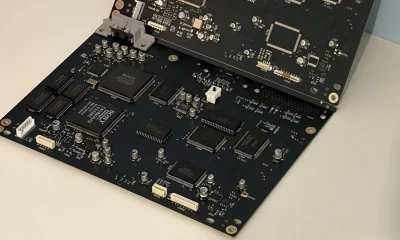
Building A Reproduction PlayStation Motherboard
-

 Sports6 days ago
France Cricket implodes: letters hidden in a drawer and a board at war
-

 Crypto World6 days ago
Moneyflip CEO charged in $40K murder-for-hire plot
-
 Sports6 days ago
Bruno Fernandes decision made as Man United ‘discuss’ striker transfer option
-

 News Videos5 days ago
Financial Crash Expert: The 90-Day Collapse Timeline They Are Desperately Hiding.
-

 Sports6 days ago
Commonwealth Games 2026 Live Updates | Day 9 CWG 2026: Lovlina Borgohain, Sachin Siwach Enter Final After Indian Judokas Script History
-

 Sports1 day ago
Jordan Coyle & Cordiamo take Laya Arena Stakes at RDS
You must be logged in to post a comment Login