

Crypto World
Custodia Bank Takes Fed Master Account Fight Toward Supreme Court

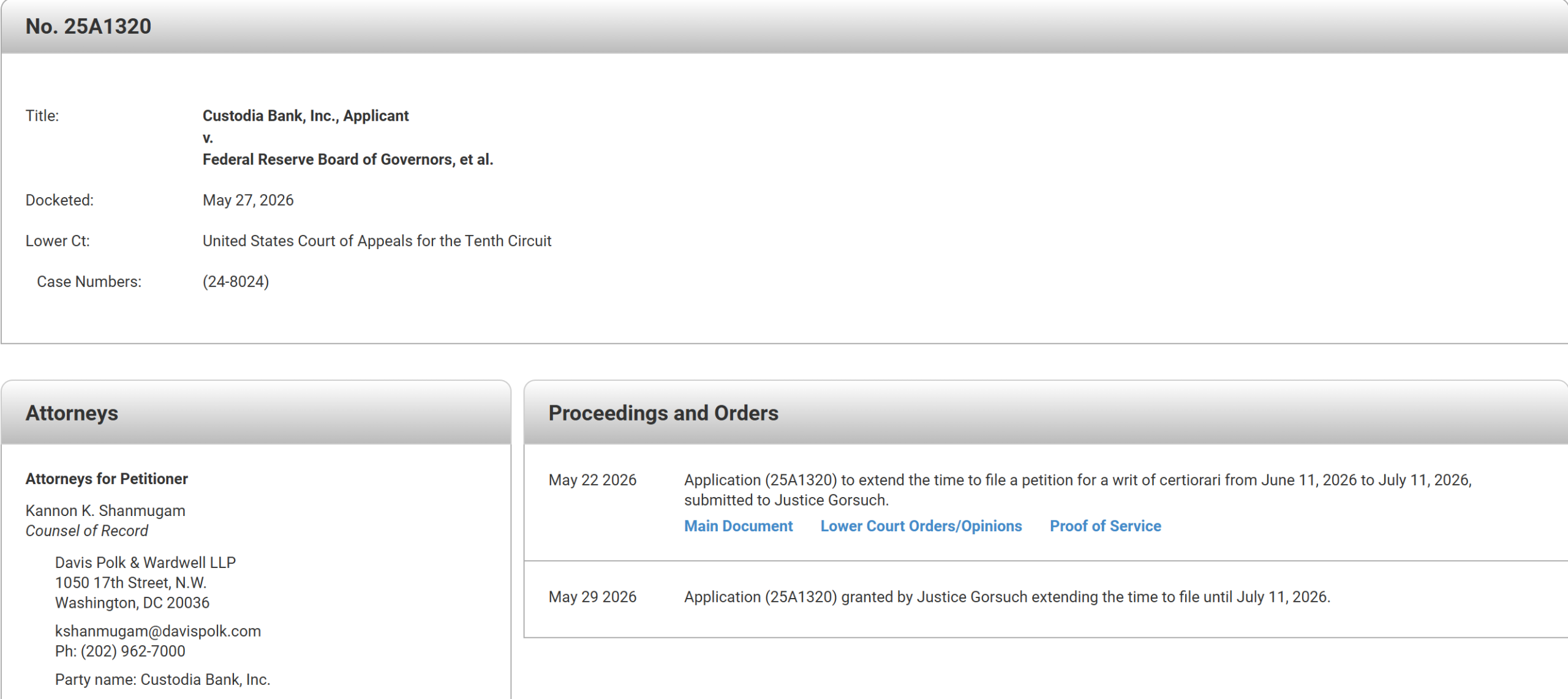
Custodia Bank has secured additional time to bring its dispute with the Federal Reserve before the US Supreme Court. Justice Neil Gorsuch granted the bank’s motion for an extension of time to file its certiorari petition.
The Wyoming-chartered digital asset bank now has until July 11, 2026, to file its appeal. The petition challenges the Federal Reserve’s denial of a master account, per Supreme Court docket 25A1320.
Background to the Fed Account Denial
Custodia, founded by Caitlin Long, applied for a Kansas City Fed master account in October 2020.
The Fed formally denied the application in January 2023. Officials cited safety and soundness concerns tied to the crypto-focused business model.
A divided 10th Circuit panel ruled 2-1 in October 2025 that Reserve Banks retain discretion over master account access.
The decision interpreted the Federal Reserve Act as granting the Federal Reserve authority to approve or deny eligible institutions.
A 7-3 vote denied en banc rehearing in March 2026, prompting Custodia to seek Supreme Court review.
What a Supreme Court Review Would Decide
At stake is the Monetary Control Act of 1980. Custodia argues it requires Reserve Banks to provide equal payment access to eligible nonmember institutions.
The Fed counters that the statute addresses pricing once services are provided, not entitlement to accounts. Banking trade groups have supported the Fed’s reading in amicus filings before the lower courts.
A Supreme Court decision in Custodia’s favor could limit the Fed’s ability to deny master accounts to statutorily eligible institutions.
The outcome would carry implications for fintech firms and crypto-native banks seeking direct access to Fedwire and ACH.
A denial of certiorari would instead affirm the Federal Reserve’s broad authority over payment system entry.
Custodia is represented by Kannon K. Shanmugam of Davis Polk.

Whether the Court grants review remains uncertain, given the high bar that statutory interpretation cases face.
The post Custodia Bank Takes Fed Master Account Fight Toward Supreme Court appeared first on BeInCrypto.


A new Ethereum funding proposal would allow validators to redirect up to 10% of staking rewards toward ecosystem development if a majority of validators agree to the change.
The idea has reopened debate over how Ethereum should pay for public goods as concerns grow around shrinking funding sources for core development.
Proposal Looking to Solve Ethereum’s Funding Problem
The proposition, published by Ethereum contributor Clément Lesaege in a personal capacity, introduced what he called “Validator Redirected Revenue.” The framework would let validators signal both how much of their staking rewards should be diverted and which recipients should receive those funds.
According to him, Ethereum is facing a coordination problem, with infrastructure projects often benefiting the whole network but many people showing little incentive to help pay for them.
Per the motion, if more than 51% of validators support a redirect rate above zero, the selected contribution level would apply to all validators, with Lesaege’s plan capping the amount at 10% of staking rewards while keeping the option to pull the rate back to zero.
It also allows validators to select those they prefer to receive the funding, with execution clients then aggregating those preferences and determining a distribution contract through a voting mechanism. At current levels, we have about 39.8 million ETH staked, and using the proposal’s estimated 1.91% annual staking reward rate, it means that even a 5% redirect would channel approximately 38,000 ETH per year into ecosystem development, while 10% would take that figure to 76,000 ETH.
The proposal did identify cartel formation as its most serious risk, as according to Lesaege, a 51% majority of validators could theoretically vote to redirect the maximum 10% back to themselves. However, he argued that the chances of that actually happening were low because the gains made from such an attack would not be worth the reputational and price consequences that come with it.
Critics Question Governance and Incentives
Fellow developer Micah Zoltu also claimed that unlike existing attack vectors, Lesaege’s idea can create a specific pile of money up for grabs, which is a materially different incentive to attack.
“I’m not aware of any solution to this,” he wrote, calling it the reason other blockchains have not tried this kind of mechanism. But Lesaege responded, pointing out that both Bitcoin and Ethereum already carry theoretical cartel risks that have never materialized and that the social layer, including the ability to fork, was still a meaningful deterrent.
There were also others who questioned whether protocol-level funding was really necessary, with pseudonymous developer señor doggo saying that Ethereum already supports smart contract-based revenue sharing. They argued that any funding mechanism should compete voluntarily instead of becoming part of the protocol.
But some community members supported voluntary contributions, one of them being DeFi builder S. More, who said they would donate part of their staking yield to development groups they support, although they suggested that such donations should remain optional.
The proposal has come at an interesting time, considering comments made recently by former Ethereum Foundation insider Trent Van Epps, warning that the network could face funding pressure within the next few months as existing support programs expire and the Foundation reduces spending.
The post New Proposal Redirects 10% of Staking Rewards to Fund Ethereum Ecosystem appeared first on CryptoPotato.
Key takeaways:
- The Bitcoin funding rate climbed to 7%, showing confidence, but spot ETF outflows keep a $70,000 breakout on hold for now.
- Strong order-book bids and lower oil prices helped, but weakness across stocks, bonds, and gold signals a preference for cash.
Bitcoin (BTC) flirted with the $65,500 level on Monday after US Vice President JD Vance said that the Strait of Hormuz remains open amid “encouraging progress” on talks with the Iranian delegation in Switzerland. Bitcoin traders showed signs of optimism through growing demand for bullish leveraged positions, raising the question of whether $70,000 is next.
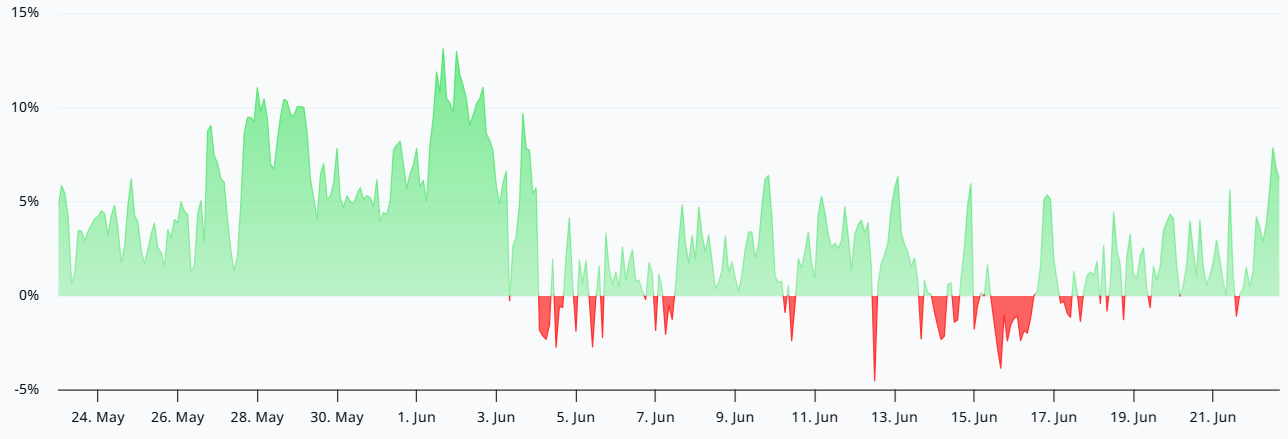
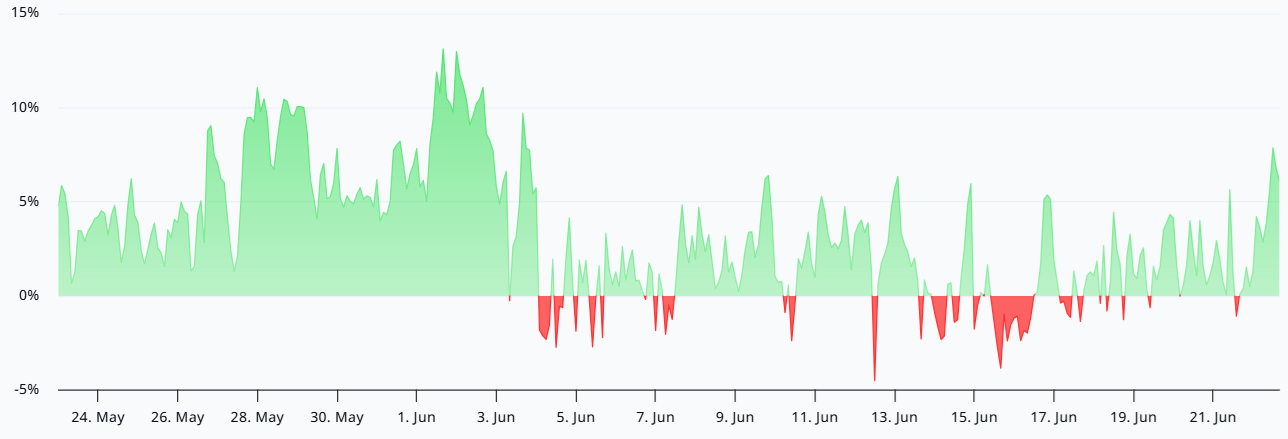
Bitcoin perpetual futures annualized funding rate. Source: Laevitas
The Bitcoin perpetual futures annualized funding rate jumped to 7% on Monday, its highest level in nearly three weeks. Although still within the neutral 6%-12% range, the indicator reflects growing confidence among bulls. Part of the optimism likely stemmed from Brent crude oil prices declining to $77.50, their lowest level since March.
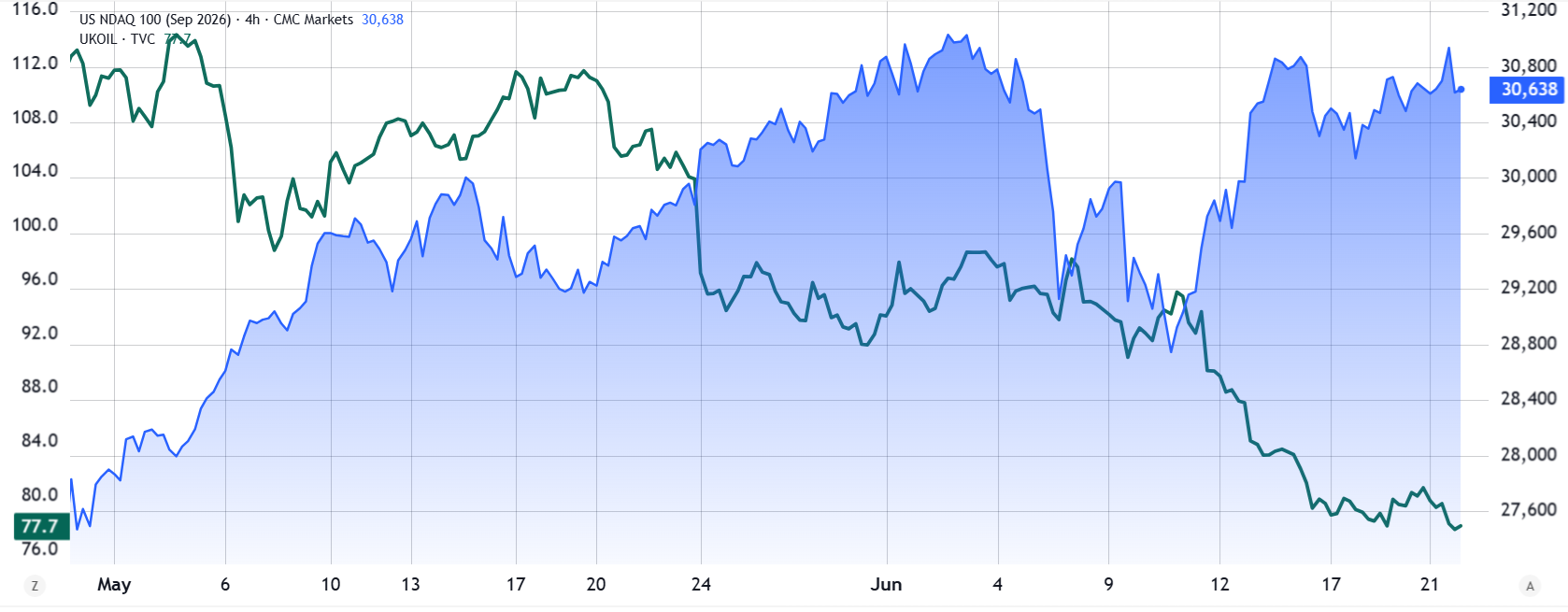
Crude Brent oil, USD (left) vs. Nasdaq 100 futures (right). Source: TradingView
The Nasdaq 100 Index posted a modest 1% decline as artificial intelligence stocks weakened. SpaceX (SPCX US) shares dropped 13% after the company announced plans to raise debt despite holding more than $100 billion in cash. Investors fear the sector will need higher investments for longer before turning profitable.
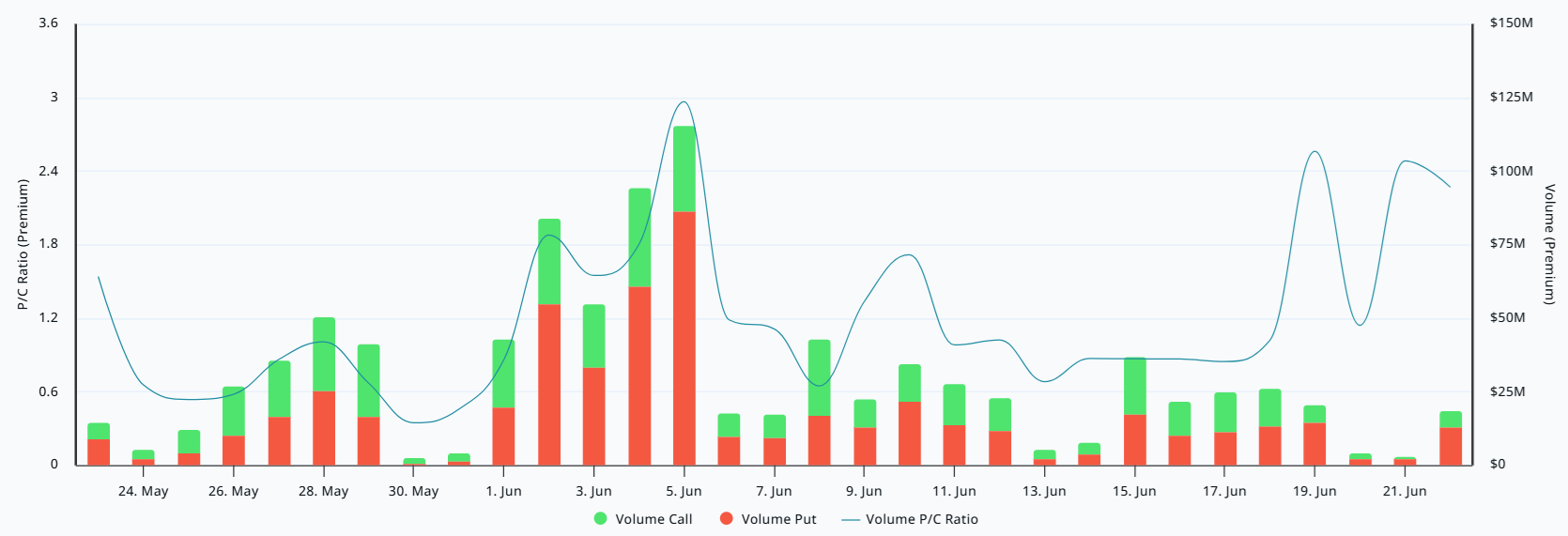
Bitcoin options premium put-to-call ratio at Deribit, USD. Source: Laevitas
Demand for put (sell) options outpaced call (buy) instruments by over two times on Monday, signaling stronger demand for downside price protection. The indicator has leaned toward bearish strategies since Friday, reversing the trend from the prior week.
Strategy eases concerns, but stocks and bonds signal increased risk
Part of traders’ concerns stemmed from weakness in Strategy’s (STRC US) valuation. Shares of Strategy traded 13% below the $64.1 billion cost to acquire BTC 847,363. Despite holding a comfortable $6.75 billion in debt, investors feared the company would need to sell reserves. Those concerns eased somewhat as Strategy announced a $300 billion additional cash position.
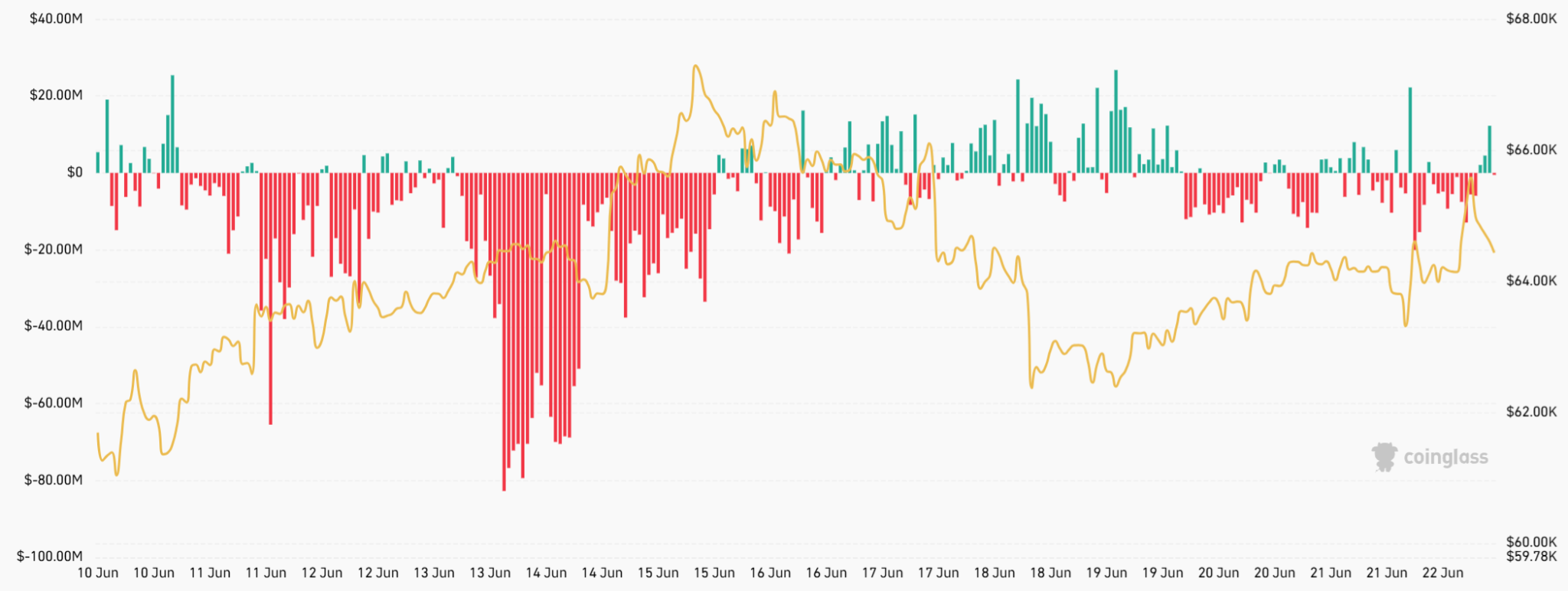
Aggregated Bitcoin orderbook 1% liquidity delta, USD. Source: CoinGlass
Bids on major exchanges’ Bitcoin order books exceeded offers by $12 million on Monday, reversing the weekend trend. Consequently, Bitcoin’s failure to hold the $65,000 level should not signal weakness, especially since gold traded down 0.9% on Monday while investors sold US government bonds.
Related: Bitcoin tipped for $66K top as trader flags ‘suspicious’ BTC price gains
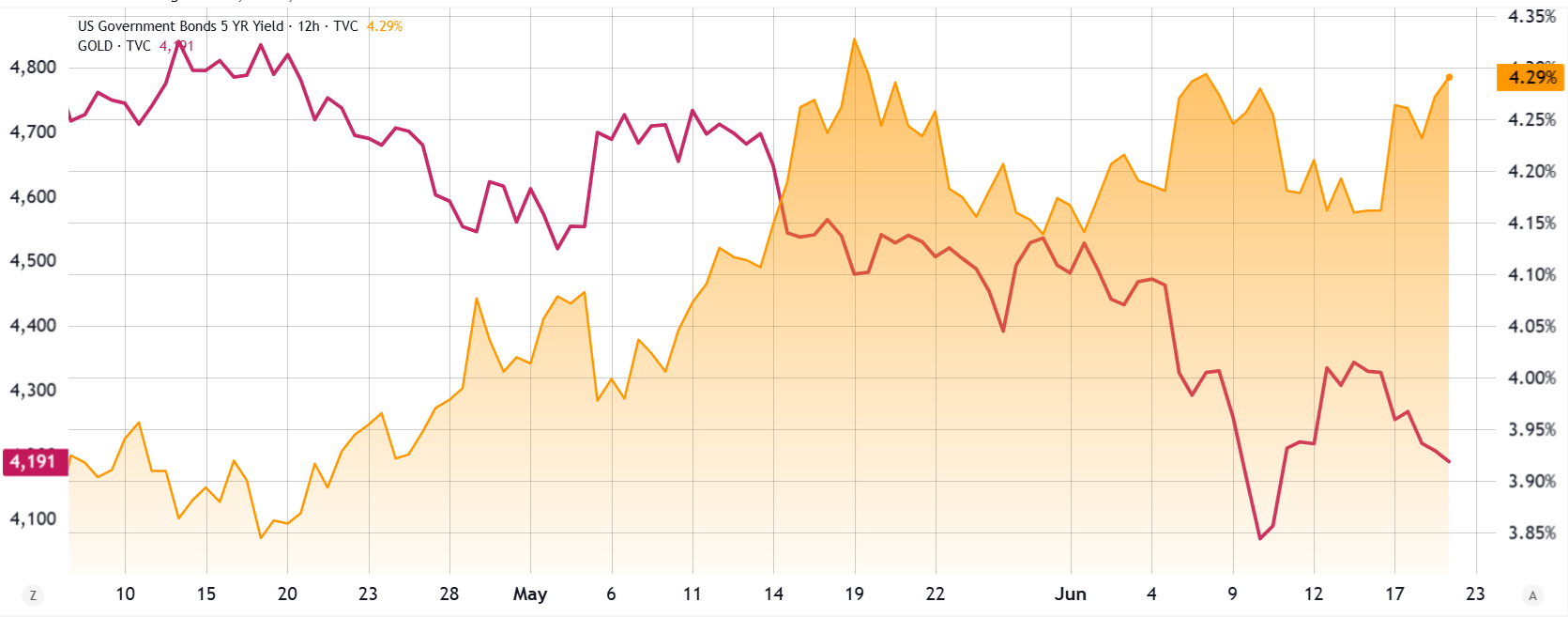
Gold/USD (left) vs. US 5-year Treasury yield (right). Source: TradingView
Higher yields on US Treasuries signal that investors demanded higher returns to hold those bonds, whether driven by inflation or by the anticipation of dilution from rising US government debt levels. The simultaneous weak performance across stocks, bonds, and gold points to a preference for cash positions, creating a cautious backdrop for Bitcoin.
Weak demand for US-listed Bitcoin exchange-traded funds (ETFs) continues to weigh on investor sentiment after six weeks of outflows. Bitcoin spot ETFs saw $228 million in net outflows the prior week, according to CoinGlass data. Consequently, the odds of a short-term Bitcoin rally to $70,000 look limited.


Bitmine has purchased another 52,203 ETH worth about $90 million, bringing its holdings to 4.7% of Ethereum’s total supply.
Summary
- Bitmine purchased 52,203 ETH worth about $90 million, lifting its holdings to 4.7% of Ethereum’s supply.
- Tom Lee said the company remains close to its 5% ETH ownership target despite challenging market conditions.
- Staked ETH has increased projected annualized revenue to $223 million, with potential rewards reaching $268 million.
According to a company update released on Monday, Bitmine’s latest purchase increases its exposure to Ethereum despite continued weakness in the broader crypto market and repeated rejections at key price levels for the asset.
The company said its balance sheet now includes approximately $10.7 billion in crypto assets, cash, marketable securities, and strategic investments, including stakes in Eightco and Beast Industries. With the latest acquisition completed, Bitmine remains one of the largest corporate holders of Ethereum.
Commenting on the company’s outlook, Bitmine chairman Tom Lee said he expects tokenization and advances in artificial intelligence to drive future demand for blockchain networks and digital assets. Lee also reiterated his view that the crypto market remains in the early stages of what he previously described as a “crypto spring.”
Ethereum purchases continue as holdings approach target
Less than a year after launching its Ethereum treasury strategy, Bitmine has accumulated enough ETH to control 4.7% of the asset’s supply, according to the company. The latest purchase leaves the firm roughly 94% of the way toward its publicly stated goal of holding 5% of all Ethereum.
Recent fundraising efforts have helped finance that expansion. Earlier, crypto.news reported that Bitmine’s board approved a cash dividend of $0.1056 per share for holders of its 9.50% Series A Perpetual Preferred Stock, which trades on the New York Stock Exchange under the ticker BMNP.
The company said the dividend will be paid on July 10 to shareholders of record as of June 30.
Introduced in June to support the Ethereum treasury business, the preferred stock offering consisted of 3.5 million shares sold at $80 each on June 10. Bitmine reported net proceeds of approximately $273.8 million after fees and expenses.
At the time of the offering, Lee stated that the proceeds would be used to fund additional Ethereum purchases, while income generated from staking activities would help cover dividend payments.
Staking revenue rises despite unrealized losses
While Bitmine remains underwater on its overall Ethereum position, the company reported that staking has become a growing source of revenue.
According to Bitmine, 4,718,677 ETH valued at more than $8.2 billion at current prices has already been staked. Based on current yields, the company said annualized staking revenue has increased to approximately $223 million.
Providing additional projections, Lee stated that annualized staking rewards could rise to about $268 million once all of Bitmine’s Ethereum is fully staked through MAVAN and its staking partners. He attributed the estimate to a 2.73% seven-day BMNR yield.
The latest figures represent an increase from Lee’s earlier estimate of roughly $219 million in annualized staking rewards, which he discussed when the preferred stock offering was announced.
Bitmine’s accumulation strategy continues to place it among the largest corporate crypto holders. According to the company, only Michael Saylor’s Strategy currently holds a larger overall cryptocurrency treasury.
Strategy disclosed another Bitcoin purchase this week, adding 520 BTC to its reserves, although the acquisition was significantly smaller in dollar terms than Bitmine’s latest Ethereum buy.
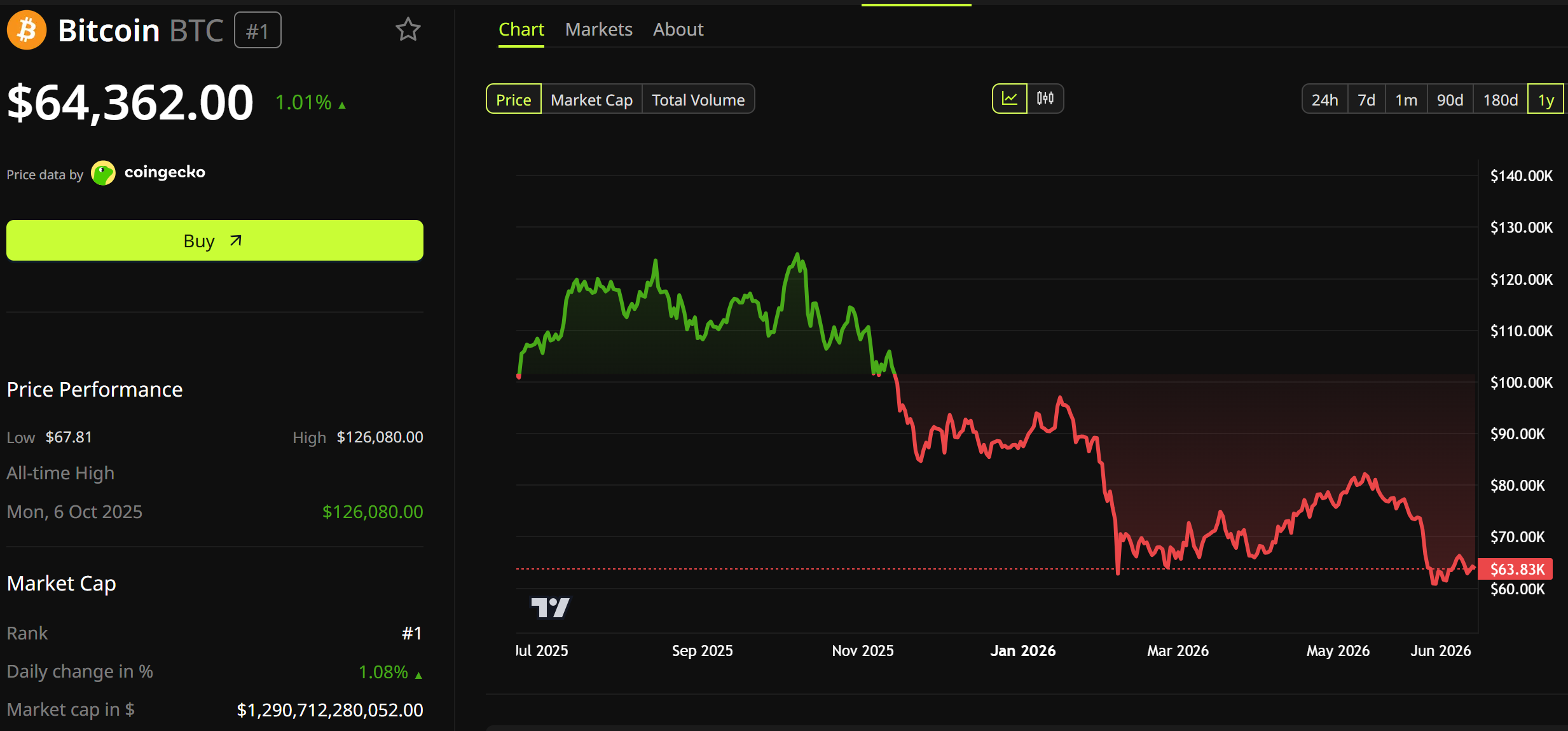
Wall Street’s biggest names disagree over a simple choice, Bitcoin or AI. BlackRock expects fiscal fear to lift Bitcoin (BTC) while JPMorgan’s Jamie Dimon backs an AI-led stock rally.
The split sets up a defining question for the rest of 2026. Investors must decide whether AI momentum or Bitcoin’s macro hedge case wins the next wave of capital.
BlackRock Ties Bitcoin to US Debt Fears
Robert Mitchnick, BlackRock’s head of digital assets, said Bitcoin has lagged because AI absorbed investor attention. He expects that to shift as US deficits return to focus near the midterms.
Bitcoin trades near $64,360, down about 49% from its October 2025 record of $126,080. BlackRock’s iShares Bitcoin Trust anchored that earlier rally as the largest spot Bitcoin ETF.

“And the more fear there is over the borrowing level and the risk of money printing, that is ultimately the most important, I think fundamental driver ahead,” Robert Mitchnick, BlackRock, via Yahoo.
Follow us on X to get the latest news as it happens
Dimon Sees an AI Tsunami
JPMorgan chief Jamie Dimon takes the other side. He points to AI spending on track for roughly $700 billion this year, unemployment at 4.3%, and steady growth.
The S&P 500 cleared 7,600 for the first time in early June, led by AI names.

“We’re in a bull market. It’s like a little tsunami. When that kind of thing happens, it’s very hard to stop,” Jamie Dimon, JPMorgan, via Fortune.
Dimon has long dismissed Bitcoin, once calling it a fraud. He still warned that geopolitical and fiscal risks are building beneath the surface over the next year or two.
Bitcoin or AI for the Next Capital Wave
Research firm NYDIG flagged the strain on Bitcoin demand. Spot Bitcoin ETFs have shed $6.4 billion since May 7, with only two positive flow days since.

Stablecoin balances have also dropped $8 billion since May 22. Those redemptions show where institutional money flows.
Analyst Greg Cipolaro added that Bitcoin’s weakest months historically fall in August and September.
That window arrives before the midterm debate BlackRock is counting on. For now, AI keeps drawing capital that once chased Bitcoin and gold.
The coming months will test both views. If deficits dominate headlines near the November vote, Bitcoin’s hedge case could return. Until then, AI holds the money.
The post Bitcoin or AI? BlackRock and JPMorgan Split Over Where Capital Flows Next appeared first on BeInCrypto.

TLDR:
- Ethlabs was founded by five former Ethereum Foundation researchers focused on core protocol work.
- The nonprofit will research scalability, settlement efficiency, interoperability, and economics.
- Backers include Bitmine, SharpLink, Joe Lubin, Anchorage, Octant, and SNZ contributors.
- Ethlabs says funders will not influence research priorities or technical development decisions.
Ethlabs launched with backing from major Ethereum ecosystem participants, marking a new phase in Ethereum’s research and development landscape.
The nonprofit organization was founded by five former Ethereum Foundation researchers and will focus on advancing Ethereum’s core protocol.
Ethlabs aims to support faster settlement, scalability, interoperability, data availability, and protocol economics as institutional adoption of blockchain technology continues to expand.
The organization stated that research priorities will remain independent, with funders not influencing technical decisions.
Ethlabs Begins Independent Ethereum Research Mission
Ethlabs was officially introduced as a nonprofit research and development organization dedicated to Ethereum’s long-term growth.
The initiative was founded by former Ethereum Foundation contributors Ansgar Dietrichs, Barnabé Monnot, Caspar Schwarz-Schilling, Josh Rudolf, and Julian Ma.
The organization was established with financial backing from Bitmine, SharpLink, Ethereum co-founder Joe Lubin, Anchorage, Octant, and SNZ.
According to the announcement, Ethlabs will operate independently while focusing on critical areas of Ethereum protocol development.
Its research agenda includes settlement efficiency, scalability improvements, cross-chain interoperability, data availability, and protocol economics. These areas are considered central to supporting increased activity across the Ethereum network.
The launch comes as Ethereum continues attracting activity from stablecoins, tokenized real-world assets, decentralized finance applications, and emerging AI-driven commerce systems. Ethlabs stated that its objective is to help prepare Ethereum for growing demand from institutions and developers.
In the official announcement, Ethlabs explained that Ethereum’s position as a neutral and permissionless settlement layer makes it a key infrastructure network for the evolving on-chain economy. The organization plans to contribute to technologies and standards that strengthen Ethereum’s core foundation.
Backers Emphasize Institutional Adoption and Network Growth
Statements from Ethlabs supporters focused on Ethereum’s expanding role in institutional finance and digital asset markets.
Bitmine Chairman Tom Lee said the network could see increasing adoption from institutions and AI agents, creating demand for additional research and technical talent.
SharpLink Chief Executive Officer Joseph Chalom described the formation of Ethlabs as a step toward supporting Ethereum’s next stage of institutional growth. He noted that the founding researchers have contributed to Ethereum development for nearly a decade.
Ethereum co-founder Joe Lubin also commented on the launch. He said Ethereum is entering a new stage where multiple independent organizations can serve as stewardship nodes while helping advance the network’s technology and values.
The announcement noted that Ethlabs emerged as the Ethereum Foundation continues focusing on its core responsibilities while encouraging a broader ecosystem of independent contributors. Ethlabs is expected to operate alongside other organizations working on Ethereum development.
Ansgar Dietrichs, Executive Director of Ethlabs, said Ethereum’s decade-long operational history and commitment to credible neutrality have helped establish trust among users and institutions.
He stated that Ethlabs was created to advance Ethereum’s technology, standards, and infrastructure while supporting the network’s role as a shared foundation for the on-chain economy.
To preserve independence, Ethlabs said funding contributions will pass through an independent grants administrator responsible for screening, valuation, and distribution.
Research priorities and technical direction will remain under the control of Ethlabs leadership, while funders will be provided with transparency through quarterly reporting and annual audits.

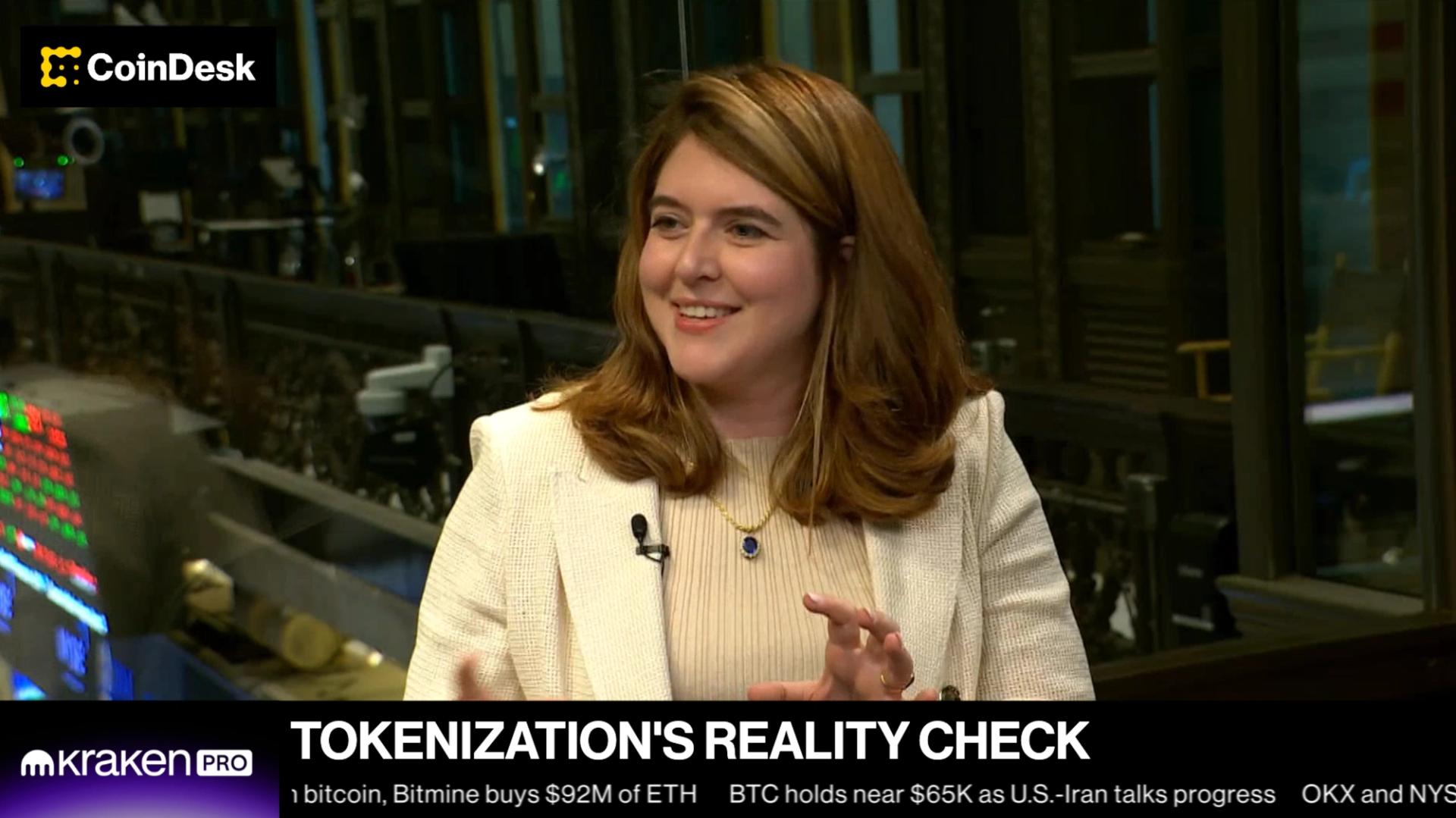
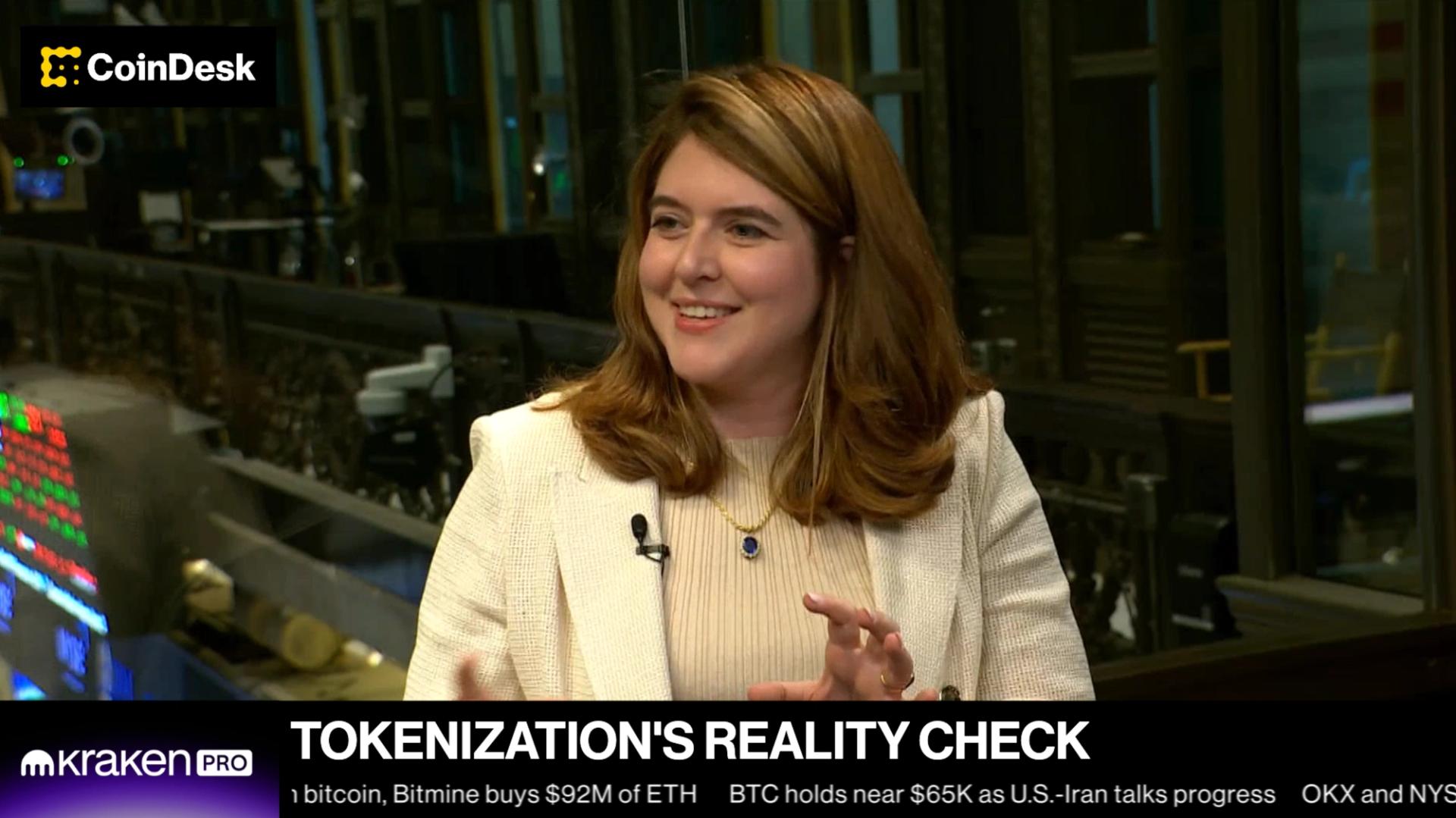
What she’s saying: Former 21Shares co-founder Ophelia Snyder argues that crypto and traditional finance are talking past each other when it comes to tokenization.
- Tokenization solves real problems around settlement rails and moving assets, Snyder said.
- The larger challenge is integrating blockchain-based assets with the systems banks, brokerages and asset managers already use.
- Existing discussions often overlook the operational processes that occur after a trade is executed and before assets are fully settled.
- Snyder joined CoinDesk’s Jennifer Sanasie on Public Keys.
The gap: Snyder said blockchain firms have largely addressed transaction throughput but not the broader operational requirements of financial institutions.
- Questions remain about how tokenized assets fit into books and records systems, compliance workflows and regulatory reporting.
- Financial institutions also must rethink risk management frameworks if tokenized assets can trade around the clock.
- Many firms rely on third-party software providers that have not yet adapted their systems for blockchain-native transactions.
Why it matters: Snyder believes the industry’s biggest challenge is scale, not functionality.
- A tokenization project can work at a limited scale and still struggle to support the volume of U.S. capital markets.
- “A billion dollars is nothing when it comes to traditional financial flows,” Snyder said.
- Moving large amounts of digital bearer assets on behalf of clients requires significantly more oversight and controls than existing book-entry systems.
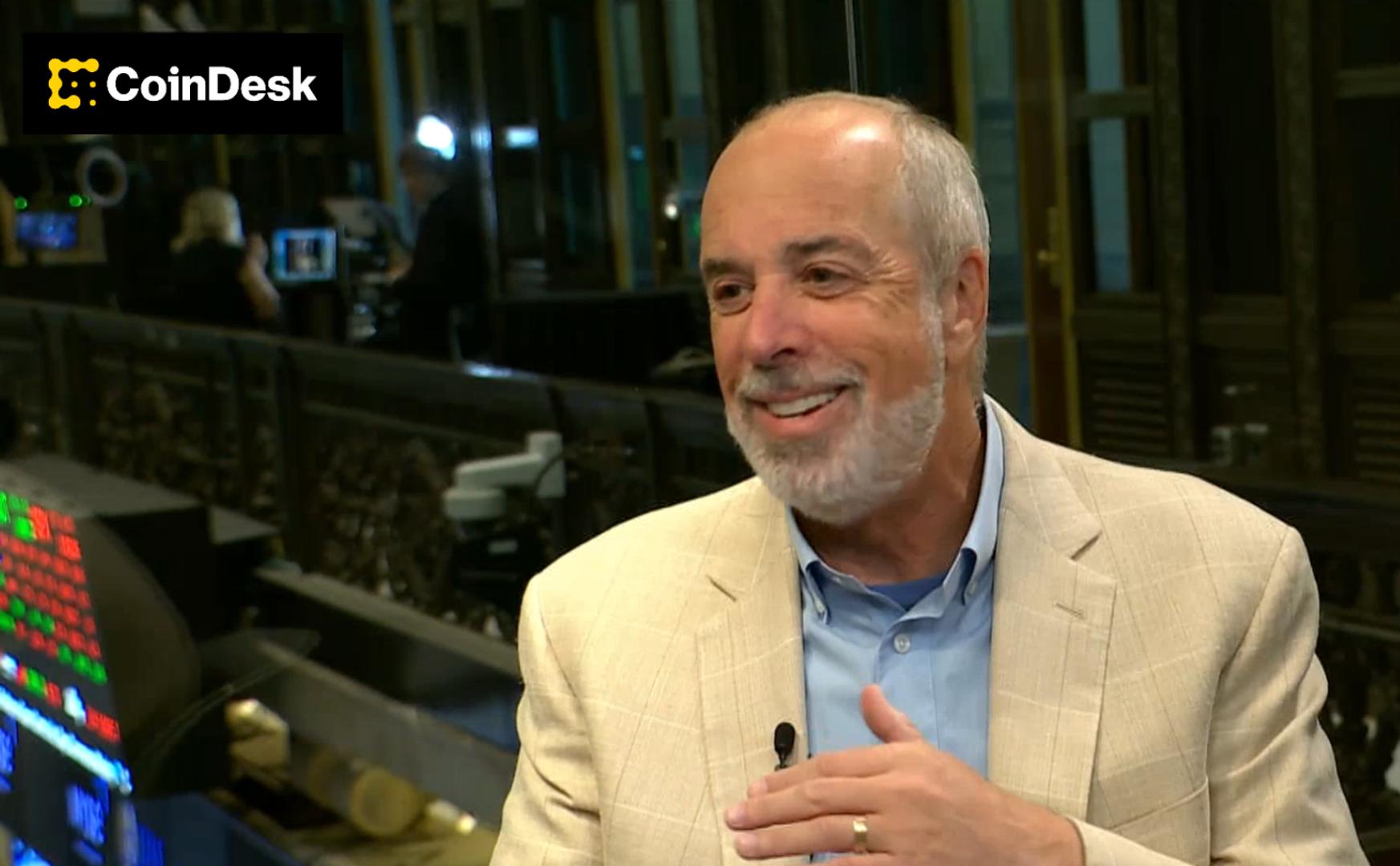
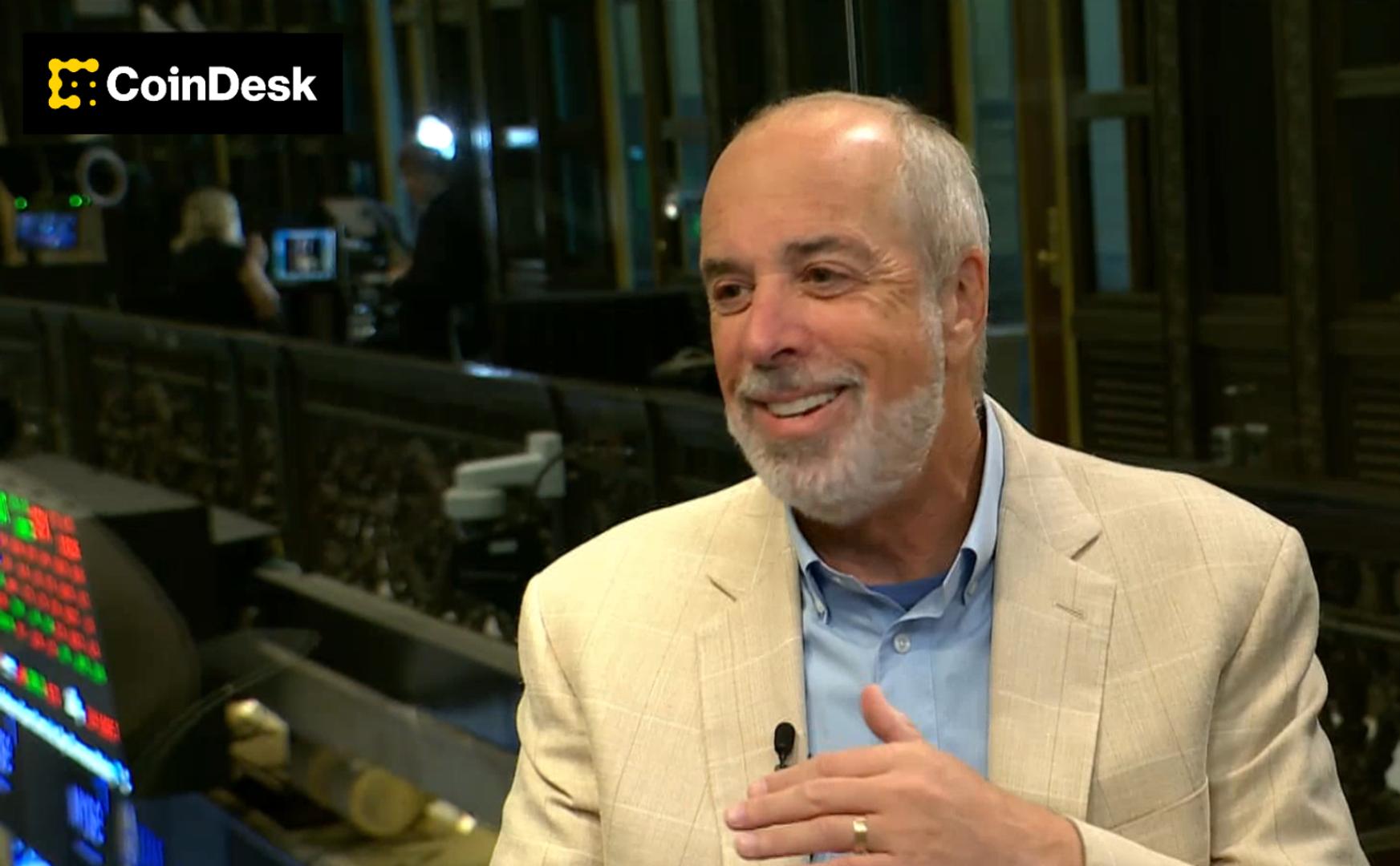
Latest developments: Edelman argues investor sentiment and industry fundamentals are moving in opposite directions.
- Bitcoin ETF investors have pulled billions from funds in recent days, while market fears have risen amid concerns about Mt. Gox wallet movements and regulatory uncertainty, Edelman said.
- Debate around the CLARITY Act has added to uncertainty, with lawmakers including Sen. Bernie Sanders and Sen. Elizabeth Warren pushing for additional provisions related to crypto oversight, according to Edelman.
- The result is a market focused on negative headlines even as major financial institutions continue expanding crypto-related initiatives.
- Edelman joined CoinDesk’s Jennifer Sanasie on Public Keys.
The contrast: Wall Street firms are increasing their involvement despite weak market sentiment.
- BlackRock, JPMorgan, Morgan Stanley, Franklin Templeton, Fidelity, State Street and Invesco are all advancing tokenization efforts, Edelman said.
- Tokenization is expanding beyond crypto assets into equities, cash and ETFs, according to Edelman.
- Institutional investors are showing growing interest in crypto exposure, with many firms planning first-time allocations or increasing existing positions, he said.
Worth watching: The fate of the CLARITY Act could shape crypto markets in the months ahead.
Crypto World
Ethereum Price Analysis: ETH Technical Aspects Quietly Improve, but These Hurdles Remain
Ethereum has staged a notable recovery after its sharp selloff toward the $1.5K region earlier this month. While the broader market structure remains bearish on the higher timeframe, buyers have managed to defend a major demand zone and are now attempting to build a short-term recovery. At the same time, derivatives data shows improving buying pressure, which could support further upside if key resistance levels are reclaimed.
Ethereum Price Analysis: The Daily Chart
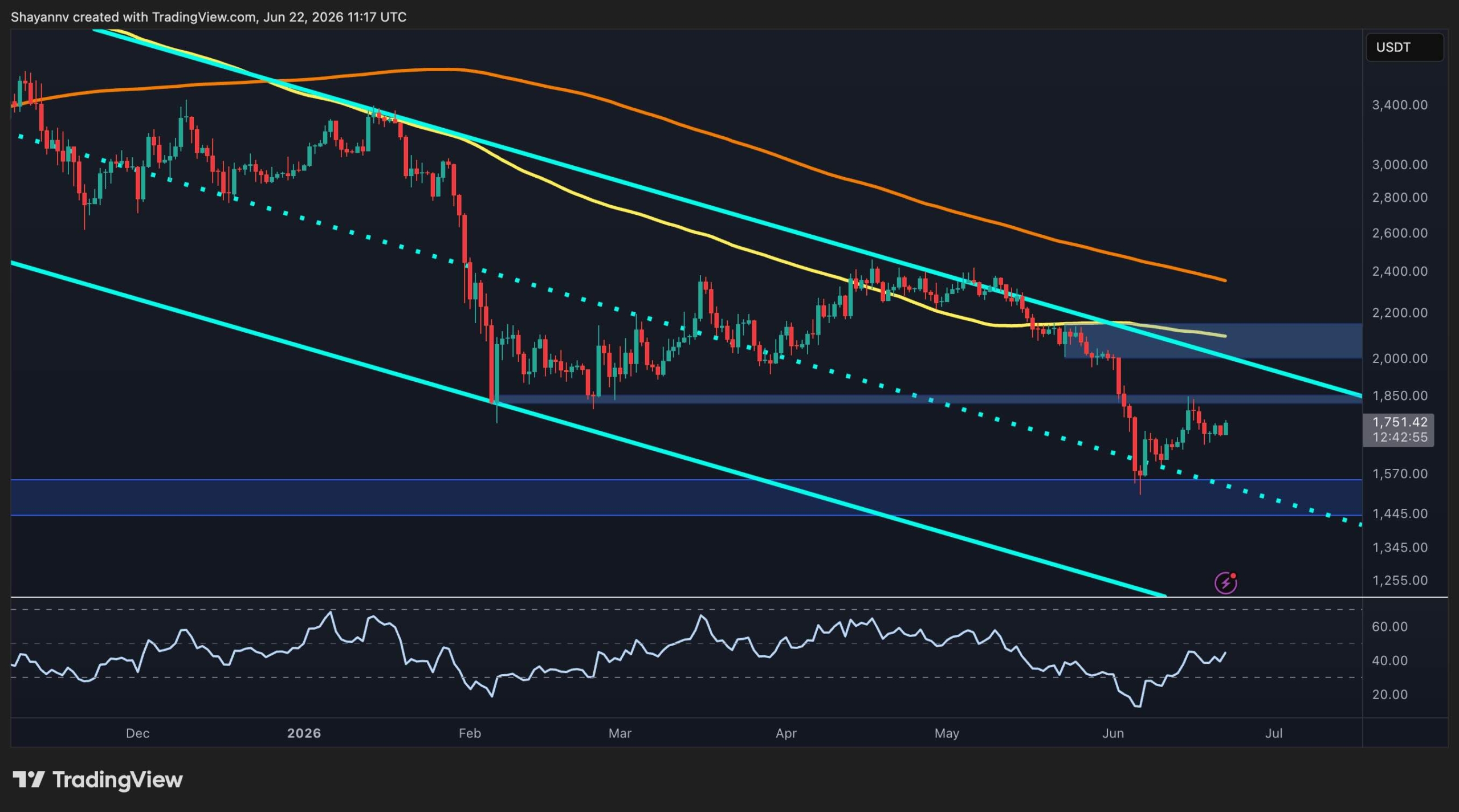
On the daily timeframe, ETH remains trapped within a well-defined descending channel that has governed price action for several months. The recent decline pushed the asset into the major support zone at $1.5K, where buyers stepped in aggressively, triggering a rebound.
Following the bounce, Ethereum recovered toward the $1.85K resistance area, which coincides with a former horizontal support-turned-resistance level. Yet, the price was rejected from this area and is currently trading around $1.75K, just beneath it.
Despite the recovery, the broader structure still favors sellers. Price remains well inside the descending channel, while also being below the major 100-day and 200-day moving averages, located around $2.1k and $2.3k levels, respectively. The next major resistance zone is located at $2.1k, where horizontal resistance aligns closely with the descending trend structure and moving averages.
A breakout above $1.85K would likely open the path toward this region. Conversely, rejection from current levels could send ETH back toward the $1.5K support zone, with a breakdown there exposing the lower boundary of the channel.
ETH/USDT 4-Hour Chart
The 4-hour timeframe presents a more constructive picture. After forming a local bottom near $1.5K, ETH developed an ascending channel and advanced toward the $1.85K resistance area. The rally tested the resistance zone but failed to secure a breakout. Since then, the price has dropped and broken the lower boundary of the channel.
Yet, the key support area remains at $1.50K, which served as the origin of the current recovery. As long as this level holds, buyers can still maintain control of the short-term structure.
On the upside, the first major hurdle remains at $1.85K. A decisive breakout above this resistance could accelerate bullish momentum toward the larger supply zone at $2.1K. However, continued failure beneath $1.85K may keep Ethereum locked in a consolidation phase before another attempt higher.

Sentiment Analysis
The Ethereum Taker Buy Sell Ratio from all exchanges provides an important view into aggressive market participation. Values above 1 indicate that market buy orders dominate, while readings below 1 suggest stronger selling pressure.
The chart shows that the 30-day moving average of the ratio has remained below the neutral 1.0 threshold for an extended period, reflecting the broader weakness that accompanied Ethereum’s decline from above $4K toward the recent lows near $1.5K. However, a notable shift has emerged in recent sessions.
After reaching one of its lowest readings of the cycle near 0.96, the indicator has begun to recover sharply and is now just above the neutral 1.0 level. This rebound suggests that aggressive buyers are gradually returning to the market after months of seller dominance.
While the metric has not yet confirmed a sustained bullish regime by moving decisively above 1, the recent improvement aligns with Ethereum’s defense of the $1.5K support area and strengthens the case for a continued relief rally. A continued rise in the Taker Buy Sell Ratio above 1 would provide additional confirmation that demand is returning and could support a move toward and even beyond the $1.85K and $2.1K resistance zones.

The post Ethereum Price Analysis: ETH Technical Aspects Quietly Improve, but These Hurdles Remain appeared first on CryptoPotato.


Franklin Templeton has completed its acquisition of crypto asset manager 250 Digital, adding new cryptocurrency investment strategies to its platform as the firm manages $1.78 trillion in assets worldwide.
Summary
- Franklin Templeton has completed its acquisition of 250 Digital and launched a new crypto-focused division called Franklin Crypto.
- The asset manager continues expanding across crypto markets through Bitcoin-linked ETF filings and tokenized fund partnerships.
- RWA.xyz data shows Franklin Templeton’s tokenized assets have grown from $768 million to over $2.5 billion in a year.
According to Franklin Templeton, the deal has resulted in the creation of a new division called Franklin Crypto, which combines the investment team and crypto strategies previously operated by 250 Digital with Franklin Templeton’s existing digital asset capabilities.
Former 250 Digital executives Christopher Perkins and Seth Ginns will lead the unit alongside Franklin Templeton digital assets executive Tony Pecore. The financial terms of the transaction were not disclosed.
The acquisition closes a transaction first announced in April and comes after CoinFund spun out its liquid strategies business into 250 Digital earlier this year as the investment firm concentrated on venture-focused activities.
Franklin Crypto expands institutional investment offerings
Within the newly established division, Franklin Templeton said institutional investors will gain access to actively managed cryptocurrency strategies supported by the former 250 Digital team and the asset manager’s global distribution network.
Alongside the acquisition, Franklin Templeton continues to add crypto-related products across several parts of its business.
Earlier this month, the company integrated its BENJI tokenized money market fund with MoonPay Trade, allowing institutional clients to exchange stablecoins such as USDC and USDT for BENJI through MoonPay’s on-chain trading infrastructure.
Days later, Franklin Templeton filed to launch two exchange-traded funds that would automatically direct stock dividend income into Bitcoin-linked investments, according to previous crypto.news reporting.
Those developments follow several initiatives announced this year. In February, Franklin Templeton unveiled a partnership with Binance that enables institutional investors to use tokenized money market fund shares as collateral for cryptocurrency trading while maintaining regulated custody of the underlying assets.
Soon after, the company partnered with Ondo Finance to make tokenized exchange-traded funds available on blockchain networks, extending access to selected investment products beyond traditional brokerage platforms.
Tokenized asset growth accelerates across the market
Growth in Franklin Templeton’s tokenization business has accompanied its expansion into crypto investing.
According to data from RWA.xyz, the firm’s tokenized assets have increased from roughly $768 million in June 2025 to more than $2.5 billion today, more than tripling over the past year.
Industry-wide figures reported by RWA.xyz show similar momentum. The value of on-chain real-world assets has climbed from approximately $11.8 billion a year ago to $32.2 billion, highlighting continued adoption of tokenized financial products across blockchain networks.
Existing digital asset operations remain an important part of Franklin Templeton’s strategy. Beyond launching investment products, the company maintains a dedicated digital assets unit focused on research, portfolio construction, and institutional risk management.
Operating in more than 35 countries, Franklin Templeton said the addition of 250 Digital strengthens its ability to serve institutional clients seeking cryptocurrency exposure while expanding the range of digital asset products available through its platform.
Crypto World
Tokenization pioneers Securitize and tZERO clash over patents as Wall Street moves onchain

Market forecasts have ballooned in recent years. Citi has estimated tokenized assets could reach a $5 trillion market capitalization by 2030, while a report from Boston Consulting Group and Ripple projected a market worth $18.9 trillion by 2033.
Patent battle over tokenization infrastructure
At the center of the dispute are patents covering compliance systems for tokenized securities, digital asset issuance and redemption technology and blockchain-based trading infrastructure.
tZERO said its investigation concluded that products including Securitize’s DS Protocol and Vault Registrar infringe patents covering self-enforcing compliance controls for security tokens and crypto integration systems.
The company said it is also investigating potential infringement by at least six other firms across tokenization, institutional crypto infrastructure and decentralized finance.
Securitize rejected the claims.
“tZERO’s allegations are without merit and run counter to the spirit of fair play that defines our industry at its best,” the company said in a statement posted on X.
Early pioneers clash amid growing stakes
The dispute pits two pioneers of tokenization against each other.
tZERO launched in 2014 and has spent more than a decade building technology for regulated digital asset markets and says it holds 105 patents globally across 23 patent families related to tokenized capital markets. NYSE parent Intercontinental Exchange made a strategic investment in the company in 2022, and tZERO unveiled plans last year to go public.

Bruce Willis’ Unfairly Forgotten Heist Comedy Is Indiana Jones Meets Die Hard

Stress main reason for sickness absence among West Lothian Council staff
Form 144 Aura Minerals Inc. For: 22 June


-

 Fashion3 days ago
Weekend Open Thread: Miami – Corporette.com
-

 Tech6 days ago
The Adder At The Heart Of Intel’s 8087 FPU
-

 Entertainment2 days ago
Renter of Home in Anne Heche Crash Denies Settlement With Son
-

 Tech10 hours ago
Microsoft accidentally kills epic Outlook email threads
-

 Business2 days ago
Soccer-U.S. defends Iran World Cup travel restrictions, says discussions ongoing
-
 Business3 days ago
Wall Street Week Ahead: Investors see Micron earnings as pulse check of AI rally momentum
-

 Politics4 days ago
BBC Reporter Discusses Cross Party Criticism Of Trumps Iran Deal
-

 Tech4 days ago
AWS enters the context layer race with a graph that learns from agents, not manual curation
-

 Crypto World3 days ago
HIVE shares jump as $220M AI deal speeds Bitcoin mining pivot
-

 Crypto World2 days ago
Jake Chervinsky accuses CME of protecting derivatives monopoly
-
 Crypto World2 days ago
Can Charles Hoskinson Really Rescue Cardano?
-

 Tech3 hours ago
Nearly 7,000 fake Amazon domains registered ahead of Prime Day 2026, researchers warn
-

 Sports4 days ago
FIFA World Cup 2026: Canada beat 9-men Qatar 6-0 to register first ever win | FIFA World Cup 2026
-

 Business2 days ago
MHP SE 2026 Q1 – Results – Earnings Call Presentation (OTCMKTS:MHPSY) 2026-06-20
-

 Business4 days ago
Brexit cost 6% of UK economy, Bank of England company data suggests
-

 Politics3 days ago
Andy Burnham and the meaning of Makerfield
-

 Crypto World5 days ago
Anthropic’s Dario Amodei Urged AI Unity at G7, Even as US Banned His Models
-
 Tech1 day ago
Signal’s Meredith Whittaker says AI chatbots ‘are not your friends’ and calls Copilot agents a backdoor
-

 Crypto World7 days ago
Robinhood opens AI-powered trading to all users, sending HOOD stock past $100
-

 Tech5 days ago
Weeks Of In-The-Field Testing And A Verdict
You must be logged in to post a comment Login