
Crypto World
Digital wealth needs safer paths to liquidity, XPlace CEO says



XPlace CEO Artem Ponomarev has called for safer crypto-backed borrowing tools as DeFi lending protocols hold more than $42 billion in total value locked.
Summary
- DeFi lending protocols currently hold about $42.06 billion in total value locked.
- Ponomarev said investors should be able to access liquidity without selling long-term digital-asset positions.
- Tokenized stocks have reached $2.34 billion in distributed value, according to RWA.xyz.
- SEC guidance says tokenized securities remain subject to federal securities laws.
Artem Ponomarev, founder and CEO of digital-wealth platform XPlace, told crypto.news that digital-asset services must move beyond helping people acquire wealth and give them responsible ways to use it.
“I think we’re moving into a stage where the question is no longer simply whether people will own digital assets, but what they can actually do with the wealth they’ve built,” Ponomarev said.
His comments focus on collateralized borrowing, which allows an investor to pledge Bitcoin, another crypto asset, or a tokenized security in exchange for liquidity. Unlike a direct sale, the arrangement lets the borrower keep exposure to the pledged asset unless its value falls far enough to trigger liquidation.
Digital wealth needs tools already common in finance
Ponomarev compared the model with borrowing against property or securities, a common service in traditional wealth management. Investors use securities-backed credit when they need cash but do not want to sell positions held for long-term returns.
“In traditional finance, borrowing against assets is completely normal,” he said. “Investors borrow against securities or property because they don’t necessarily want to sell a long-term position every time they need liquidity.”
The US Financial Industry Regulatory Authority describes a securities-backed line of credit as a loan that uses assets held in an investment account as collateral. According to FINRA’s investor guidance, the lender may demand additional collateral or sell pledged securities when their value falls below the required level.
Ponomarev expects digital-asset holders to seek similar flexibility as more personal wealth moves into Bitcoin, other crypto assets, and tokenized equities. Instead of maintaining separate systems for crypto holdings, stocks, and routine spending, he said investors should be able to manage the assets as parts of one financial position.
“If someone holds Bitcoin alongside tokenized equities, those assets should be able to form part of the same financial picture and provide access to liquidity without requiring the user to sell each time they want to spend.”
Market data indicate that crypto-backed credit already has considerable activity. DefiLlama’s lending dashboard showed about $42.06 billion locked across 571 tracked protocols, with Aave holding approximately $14.74 billion. Active loans on Aave stood at about $11.26 billion.
New assets are also entering on-chain credit markets. In August, XRP entered Ethereum lending through Flare’s FXRP and a Morpho vault curated by Sentora, allowing holders to borrow Ripple USD without selling their XRP exposure.
Tokenized equities could expand available collateral
Tokenized stocks add another potential source of collateral by placing representations of equities on blockchain networks. RWA.xyz recorded $2.34 billion in distributed tokenized stock value as of Aug. 18, while its total distributed real-world asset value stood at $38.21 billion.
Products within the category do not always give buyers the same legal rights. Some tokens represent direct or beneficial ownership of securities, while others provide synthetic exposure that only follows an asset’s price.
US transfer agents raised that distinction in July when they sought tighter SEC rules for third-party tokens. Continental Stock Transfer & Trust and the Securities Transfer Association argued that products created without an issuer’s involvement could leave holders without voting rights, ownership claims, or standard investor protections.
Ponomarev’s proposal would require lending systems to determine which assets can serve as collateral and how their ownership, custody, and market value should be verified. A token that only tracks a stock may carry different legal and liquidity risks from a tokenized share connected to the issuer’s official shareholder register.
The Securities and Exchange Commission addressed the distinction in January. In its tokenized securities statement, the agency said stocks, bonds, notes, options, and other securities can be tokenized, but their digital format does not change the application of federal securities laws.
Regulated US market operators have since moved tokenized securities closer to existing trading systems. The SEC approved Nasdaq’s tokenized securities framework in March, allowing eligible securities and their tokenized forms to share the same ticker, CUSIP, shareholder rights, and order book.
NYSE has also proposed rules for tokenized securities under a Depository Trust Company pilot. Under the exchange’s filing, eligible tokens would retain the rights and privileges of the conventional securities they represent while continuing to use existing clearing and settlement arrangements.
Crypto-backed loans depend on liquidation controls
Access to liquidity introduces losses when collateral values fall, according to US regulators and international financial institutions. FINRA warns that securities-backed borrowers may face maintenance calls, forced asset sales, and variable interest expenses.
Crypto collateral adds round-the-clock price changes and automated liquidation. The Bank for International Settlements said in a report on risks in DeFi that decentralized loans tend to be overcollateralized because borrowers may be anonymous and the pledged assets can be highly volatile.
Under such systems, a protocol can sell collateral automatically when its value drops below a specified ratio. The sale repays lenders but can leave borrowers with losses, fees, and no remaining exposure to an asset they intended to hold.
Ponomarev said collateralized credit should give investors controlled access to existing wealth rather than encourage maximum leverage. For the model to work, he called for conservative loan-to-value limits, continuous collateral monitoring, and plain disclosure of interest charges and liquidation terms.
“A user should understand exactly what happens if the value of their collateral falls before they borrow,” he said.
Warnings before a position reaches its liquidation level could give borrowers time to repay part of a loan or provide more collateral. Conservative lending ratios would also leave more room between the initial loan value and the price at which pledged assets are sold.
Oracle design presents another risk because DeFi protocols rely on external pricing systems to value collateral. Stale or manipulated prices can affect a position’s recorded health, while rapid market declines can cause several loans to be liquidated together. A July guide to crypto liquidation explained that forced sales can push prices down and trigger another group of leveraged positions.
US rules leave custody and tax questions
American investors also face custody risks when pledging digital assets. SEC staff guidance states that non-security crypto assets are not protected by the Securities Investor Protection Act and may lack protection under another specific insolvency system.
According to the SEC’s crypto custody guidance, customers could lose assets if a broker-dealer becomes insolvent, depending on how the assets are held and whether they become part of the firm’s bankruptcy estate.
US capital rules present a separate limit for lenders. An August analysis by Crowell & Moring found that digital-asset collateral does not receive credit-risk mitigation recognition under current bank capital rules. The law firm also said nonbank lenders may need state licences, depending on their activities and the borrowers they serve.
Tax treatment can vary with the structure of a crypto-backed loan. The Internal Revenue Service treats digital assets as property and generally applies capital-gains rules when an owner sells or otherwise disposes of them. IRS regulations also require brokers to report covered digital-asset sales under rules taking effect in stages.
Borrowing does not itself involve an asset sale when the transaction operates as a genuine loan, but a forced disposal of collateral may create a reportable transaction. The IRS states that the fair market value of a digital asset is generally determined at the date and time of its sale or disposition.

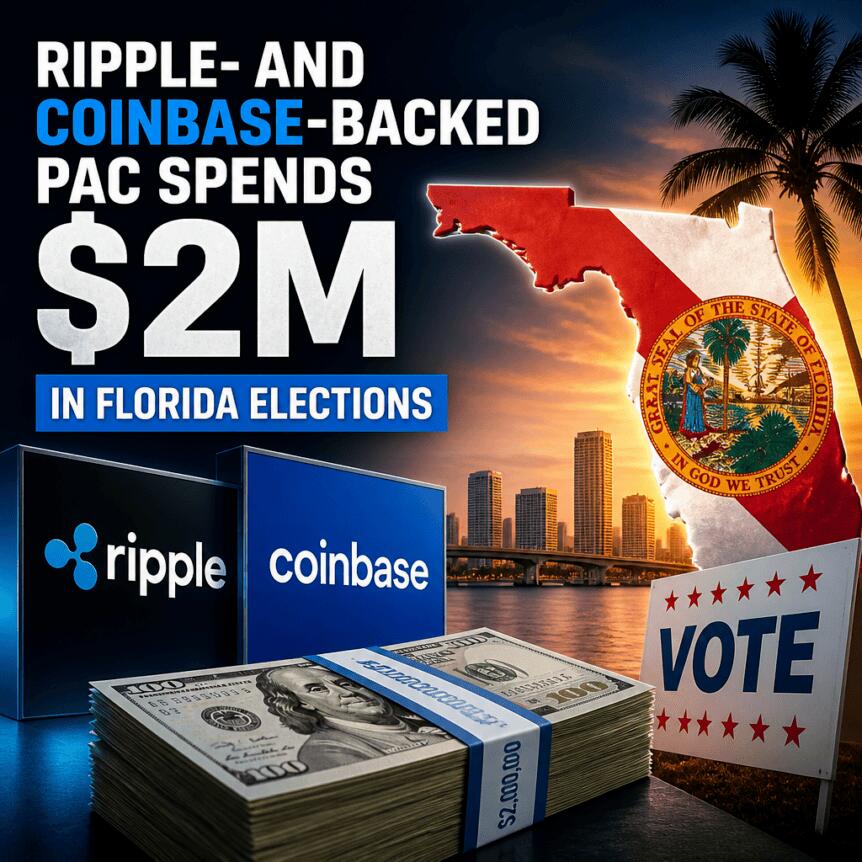
A crypto-focused political spending wave is targeting Florida’s 24th congressional district primary, with a PAC affiliate of Fairshake investing more than $2 million in ads attacking Democratic frontrunner Oliver Gilbert. The development underscores how digital-asset policy is increasingly intertwined with mainstream political races ahead of key votes in Congress.
According to Federal Election Commission (FEC) records filed as of Tuesday, Protect Progress PAC—an affiliate linked to the political action committee Fairshake and funded primarily by Coinbase and Ripple Labs—has spent more than $2 million on media opposing Gilbert in Florida’s 24th district. The record also highlights that, before the PAC’s ads were released, none of the candidates in the Democratic primary appeared to have taken a prominent public stance on digital assets within their campaigns.
Key takeaways
- FEC filings show Protect Progress PAC spent over $2 million on ads opposing Democratic primary candidate Oliver Gilbert in Florida’s 24th district.
- The PAC is affiliated with Fairshake, which has been funded primarily by Coinbase and Ripple Labs.
- Oliver Gilbert’s campaign has faced accusations that the ads are designed to influence the primary rather than debate digital-asset policy substantively.
- Protect Progress and Fairshake-affiliated groups are also spending across multiple races, including additional Florida contests.
- Congressional legislative momentum for digital-asset bills like the CLARITY Act remains an external pressure point as lawmakers return from recess.
How Protect Progress entered the Florida primary
Protect Progress PAC’s spending in Florida’s 24th district comes as the seat currently held by Representative Frederica Wilson becomes a focal point. Wilson endorsed Oliver Gilbert at a June 22 event, according to reporting referenced by Cointelegraph.
Wilson’s congressional record on digital assets has drawn attention. She voted against the Digital Asset Market Clarity (CLARITY) Act and the Guiding and Establishing National Innovation for US Stablecoins (GENIUS) Act while serving in Congress—positions that align with the broader legislative agenda championed by crypto industry advocates.
In the Democratic primary race, State Senator Shevrin Jones—who had been ahead of Gilbert in an early August poll, as noted by Florida Politics—completed a questionnaire with the advocacy organization Stand With Crypto. That submission earned him a “strongly supports” rating from the group, per information on Stand With Crypto’s politician page.
The Protect Progress ads reportedly framed Gilbert’s candidacy in terms of digital-asset politics, with Gilbert accusing the operation of being driven by wealthy allies of former President Donald Trump. The ads included fake Miami Herald-style headlines that were not tied to specific digital-asset policy positions, according to reporting referenced in the article.
Fairshake affiliates expand spending beyond one race
Protect Progress is only part of a larger network of activity connected to Fairshake and its related political committees. The article notes that Fairshake reported a $193 million war chest as of January, and it has deployed funds through affiliates to support both Democratic and Republican candidates for the 2026 midterm elections.
Cointelegraph reported that, as of June, the PACs had already poured more than $82 million into primaries and special elections to influence voters through advertising. That level of spending indicates that digital-asset political outreach has moved beyond a single targeted campaign, with resources being deployed across multiple competitive contests.
Protect Progress also put additional money into Florida’s 23rd district. The PAC spent more than $150,000 on media supporting the re-election of Lois Frankel, according to the same reporting context. Meanwhile, Defend American Jobs—another Fairshake-affiliated committee—reported a combined $1.5 million on ads backing candidates in Alaska, Florida, and Wyoming.
Those races include support for Representative Nick Begich in Alaska’s at-large district, Republican candidate Sydney Gruters in Florida’s 16th district, and Representative Harriet Hageman for one of the US Senate seats representing Wyoming, as described in the article.
Why these ads matter to crypto investors and policy watchers
Even when campaign spending appears localized, its implications often extend to broader regulatory outcomes. Digital-asset policy in the US has frequently advanced through legislative bargaining, where the credibility of candidates on specific bills can influence committee dynamics and future priorities after elections.
The mention of CLARITY and GENIUS is important because it frames the ads as more than generic political marketing. CLARITY and GENIUS are positioned in the article as central legislative efforts affecting how digital assets could be regulated and how stablecoins might be treated under US law. For investors and developers, the practical question is not just who wins, but who is likely to support or oppose the next wave of digital-asset legislation once Congress moves again.
FEC filings also suggest an asymmetry that political observers may find meaningful: if none of the Democratic primary candidates had clearly established a strong digital-asset platform before the ads, the PAC’s messaging can effectively determine the issue salience for voters. That creates a strategic incentive for industry-aligned groups to influence primary outcomes early—particularly when general election dynamics are harder to predict.
What to watch next as lawmakers return
The immediate next milestone highlighted in the article is the legislative calendar. Both the US House and Senate are on recess until September, when the Senate is expected to hold a vote on the CLARITY Act. As that timeline approaches, the interaction between political spending and digital-asset voting becomes even more consequential.
Readers should watch how these Florida primary outcomes affect candidate momentum heading into November and whether further PAC spending narrows the policy debate to specific digital-asset bills—especially as Congress prepares to advance CLARITY and related measures.


The Financial Accounting Standards Board, a nonprofit that governs accounting practices, proposed that certain stablecoins should fit the bill as cash-like.


The US Securities and Exchange Commission (SEC) has proposed new rules that could affect the cryptocurrency industry after lawmakers in Congress failed to pass a market structure bill before breaking for a month-long recess.
In a Tuesday notice, the SEC said that the agency proposed rules to create a “clear and fit-for-purpose framework for certain investment contracts involving crypto assets.” According to the regulator, the “tailored securities offering regime” would allow entities to raise capital while preserving investor protections.
The agency’s rules did not include an “innovation exemption” for crypto-based stocks, which had also been expected to be announced. Notably, the proposed rules came just days after the US Senate failed to advance the Digital Asset Market Clarity (CLARITY) Act, a bill expected to clarify the roles federal agencies would have in overseeing and regulating crypto.
“[L]egislation remains indispensable to enacting ‘future-proofed’ rules of the road that are durable enough to protect the work we are undertaking today from being unwound by a future rogue regulator,” said SEC Chair Paul Atkins. “The SEC has and will continue to support Congress in delivering the CLARITY Act to President Trump’s desk.”
According to the proposed rules, crypto companies would be offered exemptions allowing the issuance of up to $5 million in tokens during a four-year period and up to $75 million during a 12-month period, as well as a safe harbor exempting cryptocurrencies from being treated as ”investment contracts.” Token issuers would be required to make financial statements and “would be subject to ongoing reporting requirements.“
The public will have 60 days to comment on the proposal after publication in the Federal Register.
Related: CLARITY or not, crypto isn’t going back in the bottle: Bitwise
The SEC’s proposed rules in the absence of legislation from Congress came ahead of a scheduled Thursday meeting of the US Commodity Futures Trading Commission (CFTC) on crypto, AI and prediction markets. The commodities regulator said it planned to address “areas where regulatory action can complement future congressional legislation.”
Atkins had been scheduled to speak at the Wyoming Blockchain Symposium on Tuesday, but canceled amid the SEC announcement. White House crypto adviser Patrick Witt said at the event that US regulators would “let loose” on crypto regulation if Congress was unable to move forward on the CLARITY Act.
CLARITY’s chances before a new Congress is sworn in?
Before the Senate broke for its August state work periods, Majority Leader John Thune filed cloture on a motion to take up the CLARITY crypto bill when lawmakers return in mid-September.
Following the August recess, senators only have 14 days in session before breaking again ahead of the November election. If Thune and Republican lawmakers can’t get a floor vote before then, the Senate has another 22 days in session before 2027, when new members of Congress will be sworn in.
Magazine: Will the crypto lobby’s $189M campaign get CLARITY over the line?


Robinhood CEO Vlad Tenev called on US policymakers to modernize securities rules so tokenized stocks can trade in America, in a long post published Tuesday that named the absence of US Stock Tokens as “one glaring gap” in the company’s tokenization push. The post landed five days after the SEC… Read the full story at The Defiant
Crypto World
Ripple- and Coinbase-funded PAC Spends $2M in Florida Race with Little Mention of Crypto


An affiliate of political action committee (PAC) Fairshake, funded primarily by Coinbase and Ripple Labs, has poured more than $2 million into media opposing a Democratic candidate who did not appear to have taken any prominent position on digital assets before the ads were released.
According to records with the Federal Election Commission (FEC) as of Tuesday, the Protect Progress PAC had spent more than $2 million on ads opposing Democratic candidate Oliver Gilbert in Florida’s 24th congressional district. Notably, no candidate in the Democratic primary appeared to have taken a strong position on digital assets as part of their campaigns before the PAC’s involvement.
The Democratic candidate is running for the seat currently occupied by Representative Frederica Wilson, who, in addition to voting against the Digital Asset Market Clarity (CLARITY) Act and Guiding and Establishing National Innovation for US Stablecoins (GENIUS) Act while serving in Congress, endorsed Gilbert. Shevrin Jones, a Florida state senator and Democratic candidate who was ahead of Gilbert in an early August poll, has completed a questionnaire with Stand With Crypto, earning him a “strongly supports” rating from the advocacy organization.
Gilbert reportedly said “[Donald] Trump’s tech billionaire buddies” were behind the “crypto con artists trying to buy a Democratic primary” through the ads, which included fake Miami Herald headlines unrelated to digital asset policy. Wilson endorsed Gilbert at a June 22 event. Cointelegraph reached out to Gilbert’s campaign for comment but did not receive an immediate response.
“The facts are the facts, and, as the Miami Herald stated, the underlying facts in our ad are true,” a Fairshake spokesperson told Cointelegraph. He did not comment on reason for the PAC expenditures.
Fairshake reported holding a $193 million war chest as of January, which it has used through affiliates like Protect Progress and Defend American Jobs to support Democratic and Republican candidates, respectively, for races in the 2026 midterm elections. As of June, the PAC had already poured more than $82 million into primaries and special elections to influence voters through ads.
Related: Crypto PAC pours another $1M into Michigan House race
Primary races to impact party control in 2027
On Tuesday, voters in Alaska, California, Florida and Wyoming will decide on congressional candidates to face off in the general election in November.
The Protect Progress PAC has also spent more than $150,000 on media supporting the re-election of Lois Frankel in Florida’s 23rd district. Defend American Jobs reported a combined $1.5 million on ads in favor of Representative Nick Begich in Alaska’s at-large congressional district, Republican candidate Sydney Gruters in Florida’s 16th district and Representative Harriet Hageman for one of the US Senate seats representing Wyoming.
The 2026 primary races will help determine whether Democrats retake control of the US House of Representatives and Senate starting in the next session of Congress in January, or Republicans remain the majority. Both chambers are on recess until September, when the Senate is expected to hold a vote on the CLARITY Act.
Magazine: Bitcoin to $1M by 2030 is ‘mathematically impossible’ says Markus Thielen
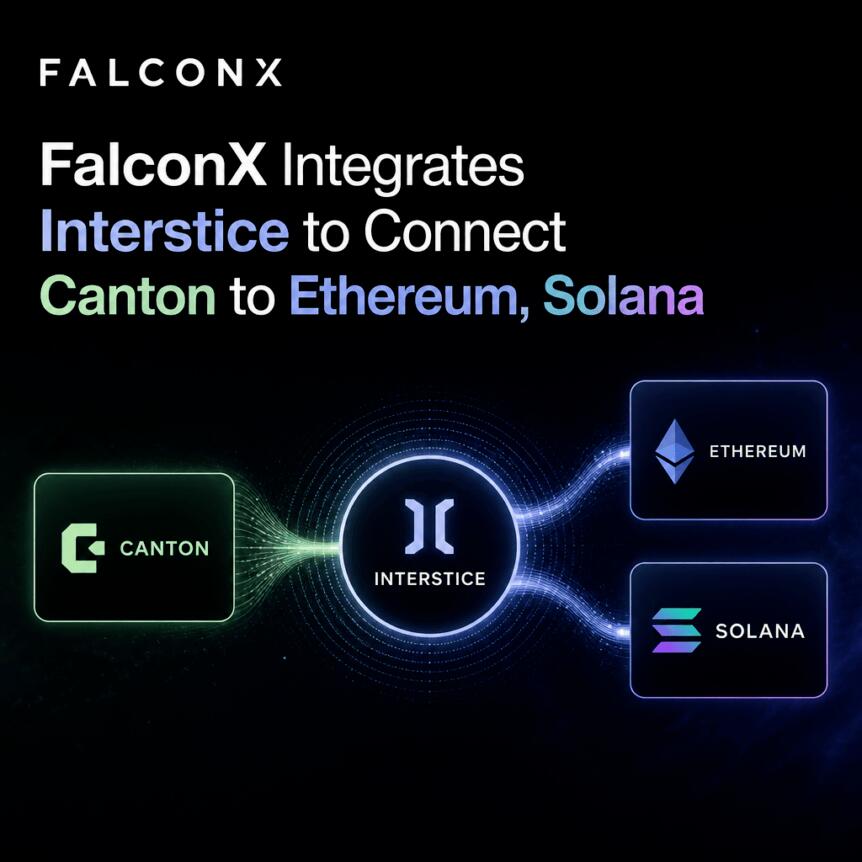
Interstice Digital has launched a non-custodial cross-chain swap engine intended to move tokenized assets between the Canton institutional blockchain and major public networks, including Ethereum and Solana, with support for Robinhood Chain. The company says the system is designed so Interstice does not take custody of users’ funds and does not submit transactions on their behalf.
Instead, the announcement highlights FalconX, a digital asset prime brokerage for institutional clients, as the liquidity provider behind the engine. Interstice frames the integration as a way to connect Canton’s institutional tokenization activity with on-chain liquidity and trading access on public blockchains.
Key takeaways
- Interstice’s cross-chain swap engine is described as non-custodial, with users retaining control rather than Interstice executing trades.
- FalconX is positioned as the liquidity layer supporting swaps between Canton and public networks such as Ethereum and Solana.
- Canton is built for regulated, institutional use, with privacy and permissioning controls aimed at compliant tokenized settlement.
- The launch does not specify which assets are supported initially or provide usage or transaction-volume figures.
A non-custodial route between Canton and public liquidity
According to Interstice’s Tuesday announcement, the swap engine is intended to enable asset transfers across four networks: Canton, Ethereum, Solana, and Robinhood Chain. The core promise is operational: swaps can be performed without Interstice taking custody of assets or acting as the direct transaction executor for users.
For institutions and tokenization platforms, that distinction matters because custody and execution control can shape risk management requirements, compliance reviews, and operational workflows. While the announcement confirms Interstice’s role is limited to providing the infrastructure, it does not disclose further implementation details such as the exact mechanism by which routing and execution occur or which asset types are immediately supported.
FalconX’s involvement is central to Interstice’s approach. The prime brokerage is described as providing liquidity for the engine, with the stated aim of giving users a path between tokenized assets on Canton and liquidity available on public chains. In practice, this kind of integration can reduce friction for moving exposure between an institutional settlement environment and the broader, liquid ecosystems of public blockchains—particularly where counterparties and market makers operate primarily outside permissioned networks.
Canton’s institutional positioning is expanding
Canton is a public blockchain built with institutional finance in mind, featuring privacy and permissioning controls for regulated transactions and tokenized assets. Interstice’s announcement connects the swap engine to this broader Canton narrative: bringing more access to tokenized assets and settlement while enabling interaction with the trading activity of public chains.
The ecosystem has already attracted traditional financial institutions. The article notes that Canton’s partners include major banks and market participants such as JPMorgan, Goldman Sachs, and BNP Paribas.
Interstice’s integration arrives alongside additional signals that institutional tokenization activity on Canton is accelerating. In July, electronic trading platform Tradeweb executed an onchain US Treasury trade on Canton, according to earlier coverage. The described transaction involved Franklin Templeton transferring a tokenized Treasury security to Virtu Financial in exchange for tokenized cash. Tradeweb said it was the first real-time purchase and sale of a tokenized US Treasury settled against USDCx—a USDC-backed stablecoin issued on Canton—with other participants including Societe Generale, Digital Asset, and Blockdaemon. Tradeweb’s role was execution and price discovery, while Canton synchronized settlement between the two tokenized assets in real time.
Additional deployments mentioned in the coverage include Societe Generale’s euro- and dollar-denominated stablecoins on Canton for tokenized collateral, repo financing, and institutional settlement. Separate reporting also indicates Visa has tested private stablecoin settlement on the network, and other efforts include a Japanese government bond collateral pilot involving Mizuho and Nomura, along with S&P Dow Jones Indices placing its iBoxx US Treasuries Index on Canton.
Why the swap engine matters for tokenized markets
Cross-chain capability is increasingly important to institutional tokenization because value often needs to move between different environments—permissioned settlement rails on one side and public-chain trading venues on the other. Interstice’s swap engine is designed specifically to address that gap by providing a “route” between Canton tokenized assets and liquidity on chains like Ethereum and Solana.
The announcement’s non-custodial framing also reflects a practical concern for regulated users: who controls assets during exchange. Even when cross-chain tools are technically capable, the operational control model can be a deal-breaker for institutions that must satisfy internal risk committees. By stating that Interstice does not hold custody and does not execute transactions on users’ behalf, the company is signaling a reduced intermediary role compared with custodial bridge designs.
Still, readers should note what remains missing from the public description. Interstice did not disclose which assets are supported at launch, and it did not provide transaction volume figures. Those details can heavily influence how quickly liquidity fragments or how the system behaves under real market conditions, especially if initial support is limited to a small set of tokenized instruments or stablecoins.
Another factor to watch is how liquidity provided through FalconX translates into effective pricing and routing across chains. While the announcement confirms FalconX is supplying liquidity, it does not specify whether the liquidity model is tied to specific market makers, whether swaps are routed through particular venues on public networks, or how spreads may vary depending on supported pairs.
What to watch next
The next checkpoints are likely to be practical rather than theoretical: which assets Interstice supports first on the engine, how users integrate it into existing Canton workflows, and whether the system expands institutional tokenization’s reach into public-chain liquidity without introducing new operational complexity. For now, the launch adds another infrastructure layer to Canton’s institutional ecosystem—but the market will want clarity on real-world usage and supported token coverage.

After several days of trading mostly sideways, or even charting new losses, bitcoin’s price finally headed in the opposite direction at the start of the new business week, topping $64,500 for the first time in 7-8 days.
However, this rather minor rally has been jeopardized long before it had the opportunity to grow into something more spectacular, as the selling pressure has mounted on several fronts. There’s also a dark horse outside the on-chain data, showing another threat.
Bull Trap in the Making?
Starting with miners, popular analyst Ali Martinez outlined the growing concern within the community about the increasing selling pressure. The backbone of the Bitcoin network has been taking profits lately as BTC rose to $64,600 earlier. Data from CryptoQuant shows that they have disposed of 1,648 BTC over the past ten days or so, which, according to the analyst, adds “roughly $106 million in potential selling pressure.”
Second, he listed the spot Bitcoin ETFs. As recently reported, investors gaining exposure to BTC through these financial vehicles withdrew almost $400 million worth of the cryptocurrency last week, in stark contrast to the over $850 million in net inflows the previous week.
Third, Martinez referred to Strategy’s recent behavior. The company has not only paused its BTC purchases indefinitely, but it has also made multiple sales over the past few months. Its total holdings have declined by more than 3,300 in just weeks.
The analyst noted that a worrisome portion of BTC’s supply has hit exchanges recently, as their balances have increased by 24,700 units over the past ten days. This means that $1.6 billion worth of BTC has increased the potential sell-side liquidity.
Lastly, he outlined the Coinbase Premium metric, which continues to be in the negative for well over three months now. Such a reading means that “BTC is trading cheaper on Coinbase than Binance, signaling weaker US demand or active selling from US-based participants.”
Consequently, Martinez believes BTC’s rally toward $64,600 won’t last long and brought up the next potential support zones that could halt a potential nosedive. The first is located between $63,110 and $61,850, where more than two million BTC were previously transacted, and makes it a notable support. If it breaks, though, Martinez warned that the next one could be all the way down at $54,300.
The Dark Horse
There’s no need to sugarcoat this – it’s the war in the Middle East and the volatile developments. Whenever something big happens, it tends to impact the crypto market. However, there have been conflicting announcements and reports from both sides (as usual) lately.
For instance, reports claimed yesterday that the US and Iran had extended their ceasefire on the day it was supposed to expire. Meanwhile, Trump reportedly threatened to bomb Oman, which is a US ally.
More recent information on the matter came from the POTUS himself, who just claimed that there are no ongoing or scheduled peace talks between the two. Moreover, he added that the Naval Blockade remains in full force, while the Strait of Hormuz, which he also said is now a US territory, is “open and operating.”
For now, BTC remains calm around $64,000, but these developments could quickly increase the volatility.
The post Bitcoin Surges Past $64K as Warning Signs Mount: Is This a Bull Trap? appeared first on CryptoPotato.
Interstice Digital has launched a cross-chain swap engine with FalconX connecting the Canton Network with Ethereum, Solana and Robinhood Chain.
According to Tuesday’s announcement, the non-custodial engine allows assets to be swapped across the four networks without Interstice taking custody or executing transactions on users’ behalf.
FalconX, a digital asset prime brokerage serving institutional investors, provides liquidity for the engine, which is designed to connect Canton’s institutional markets with assets and trading activity on public blockchains, giving users a route between tokenized assets on Canton and liquidity on networks such as Ethereum and Solana.
Canton is a public blockchain built for institutional finance, with privacy and permissioning controls designed for regulated transactions and tokenized assets. Its ecosystem includes major financial institutions such as JPMorgan, Goldman Sachs and BNP Paribas.
Interstice is a wholly owned subsidiary of Everyrealm and is backed by investors including a16z Crypto, Coinbase Ventures, Galaxy and Brevan Howard. The company did not disclose which assets are initially supported or provide transaction volume figures for the swap engine.
Related: FalconX cuts 10% of workforce amid prolonged crypto market slump: Report
Canton expands institutional tokenization activity
The integration comes as more traditional financial institutions use Canton for tokenized assets and blockchain-based settlement.
In July, electronic trading platform Tradeweb executed an onchain US Treasury trade in which Franklin Templeton transferred a tokenized Treasury security to Virtu Financial in exchange for tokenized cash.
Tradeweb provided execution and price discovery, while Canton synchronized settlement between the two assets in real time. Tradeweb said it was the first real-time purchase and sale of a tokenized US Treasury settled against USDCx, a USDC-backed stablecoin issued on Canton, with other participants including Societe Generale, Digital Asset and Blockdaemon.
Societe Generale has also deployed its euro- and dollar-denominated stablecoins on Canton for tokenized collateral, repo financing and institutional settlement, while Visa has tested private stablecoin settlement on the network.
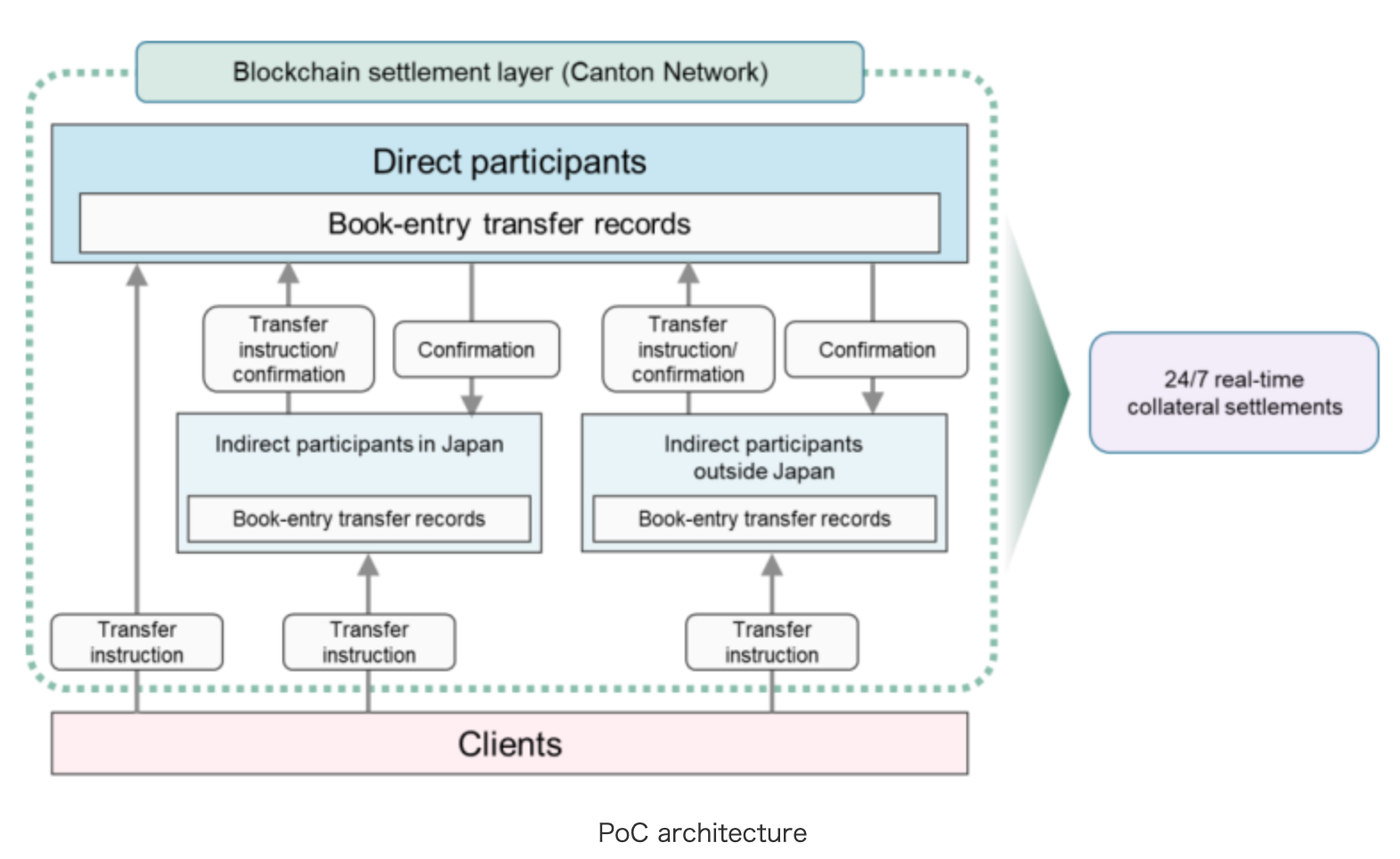
Other initiatives include a Japanese government bond collateral pilot involving Mizuho and Nomura and S&P Dow Jones Indices placing its iBoxx US Treasuries Index on Canton.
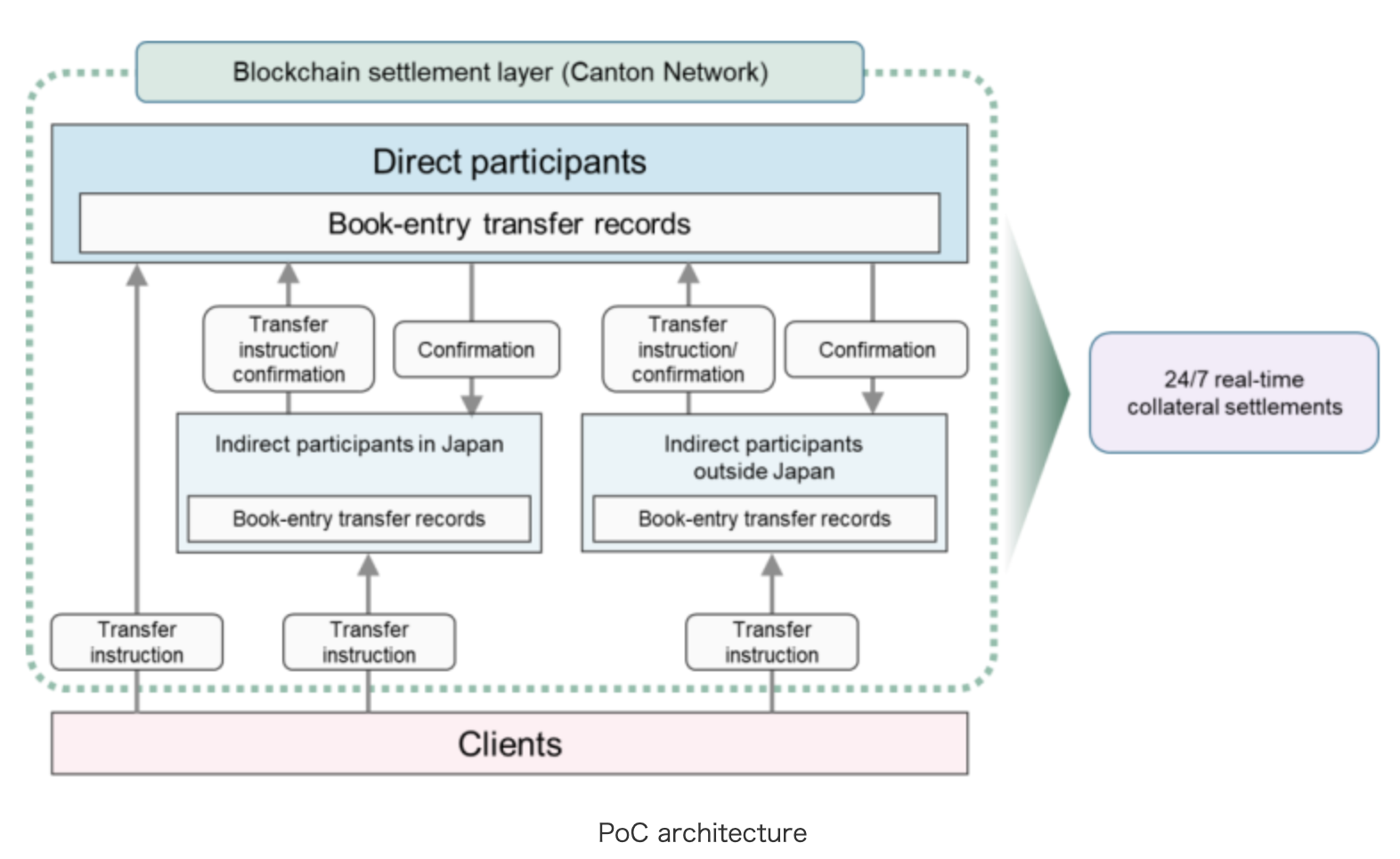
PoC trial for digital collateral management using Japanese government bonds. Source: JPX
Magazine: Solana’s fee overhaul increases burn and makes resource hogs pay

[PRESS RELEASE – Dubai, UAE, August 18th, 2026]
BNB Chain, one of the largest blockchain ecosystems worldwide, today announced BNB Agent Studio v2, an update to its AI agent development platform. The release expands what autonomous agents can do with money, from earning their own income to operating inside owner-defined financial limits enforced onchain.
BNB Agent Studio launched in July, allowing developers to describe an AI agent in a single prompt and deploy it to BNB Smart Chain (BSC). In its initial release, agents could spend but not earn. v2 closes that gap: agents can now be hired and paid directly, with funds settling to their wallet through a standard receiving interface that completes the ERC-8183 commerce flow end to end.
The update also introduces Altana, a new self-custodial wallet option built to resolve one of the central constraints in agent design: how much authority an agent should hold over a user’s funds. Agents using Altana operate through scoped session keys governed by spending limits, allowlists, and time bounds set by their owner in advance. These permissions are recorded onchain, allowing anyone to verify what a given agent is authorized to do, and can be revoked instantly without key rotation or downtime.
Altana joins TWAK (Trust Wallet AgentKit), the platform’s existing wallet option for agents that require continuous, autonomous signing without a person in the loop. With both options now available, builders can match the wallet architecture to the agent’s purpose: TWAK for always-on autonomous operation, or Altana for agents that require clear, verifiable boundaries around fund access. A yield agent, for instance, can harvest and restake earnings without holding access to principal; a lending agent can top up collateral without the ability to withdraw it.
v2 also adds TypeScript support alongside the platform’s existing Python SDK, and introduces a Paymaster that covers gas on BSC Testnet, removing the manual funding step previously required to begin testing an agent.
Key updates in v2:
- Agents can now be paid for their work, completing the ERC-8183 commerce flow end to end.
- Altana, a new self-custodial wallet option, enforces spending limits, allowlists, and time bounds onchain.
- TypeScript is now supported alongside Python.
- A Paymaster covers testnet gas, removing manual wallet funding for testing BNB Agent Studio.
- A standard provider interface replaces per-provider integration work for cloud deployment.
BNB Agent Studio v2 is live now, with existing agents continuing to run without migration. BNB Chain currently hosts more registered AI agents than any other network.
BNB Agent Studio is available at bnbchain.org/en/bnb-agent-studio.
About BNB Chain
BNB Chain is one of the largest and most active blockchain ecosystems in the world. Its multi-chain architecture spans BNB Smart Chain (BSC), opBNB, and BNB Greenfield, giving developers the flexibility to choose the environment best suited to their application. With high throughput, low transaction costs, and full EVM compatibility, BNB Chain is built for high-speed trading, AI agents, privacy, and instant payments. It is the blockchain with superior distribution and deep liquidity, built for global markets and the next billion users. For more information, users can visit www.bnbchain.org.
The post BNB Chain Launches BNB Agent Studio v2, Giving AI Agents the Ability to Earn appeared first on CryptoPotato.

Beyond the supply of drones, the British government has also provided long-range Storm Shadow missiles during the conflict. These stockpiles were reportedly replenished in November, according to Bloomberg.
Ukraine’s Armed Forces have used such missiles for strikes within both Russia and Russian-occupied areas of eastern Ukraine in recent months.
Following a Ukrainian strike on Russia’s Bryansk region with the use of Storm Shadow missiles in March, the Russian Foreign Ministry said that the U.K. was complicit in the attacks and that there was blood “on the hands of the British military.”
Russian authorities said that the latest round of overnight strikes saw over 600 drones launched toward Moscow between Monday evening and early Tuesday, while the city’s mayor Sergei Sobyanin said that air defenses took down 180.
In Ukraine, 10 people were killed Tuesday morning following a Russian strike on a “busy intersection” in Pechenihy, Kharkiv, according to President Volodymyr Zelenskyy. “We will definitely respond to this Russian strike,” said Zelenskyy, calling on allies to “complement our just kinetic responses with their own actions to put pressure on Russia and support Ukraine.”

Shoreham-by-Sea live: Man, woman and girl from same family die in sea tragedy

IDEXX Laboratories, Inc. (IDXX) Analyst/Investor Day Transcript

Ripple- and Coinbase-Backed PAC Spends $2M in Florida Elections





-

 Fashion4 days ago
Weekend Open Thread: Ann Taylor
-
 NewsBeat7 days ago
Communication cards help banking customers access services or report scams
-
 Sports5 days ago
This U.S. Amateur is a glimpse into golf’s future in more ways than you think
-

 Sports4 days ago
Birmingham 2026: Day 6 Timetable for Irish Athletes
-
 NewsBeat4 days ago
Myanmar says over 300,000 Rohingya refugees verified for repatriation as exodus enters ninth year
-
 Tech5 days ago
11 Ways to Rank Your Videos
-

 Politics3 days ago
SEQ Code: The Three Letter Boarding Pass Code That Could Give You The Worst Seat
-
 Entertainment6 days ago
Keke Palmer Subtly Hints At Sean Evans Drama With Cryptic Post
-
 Crypto World7 days ago
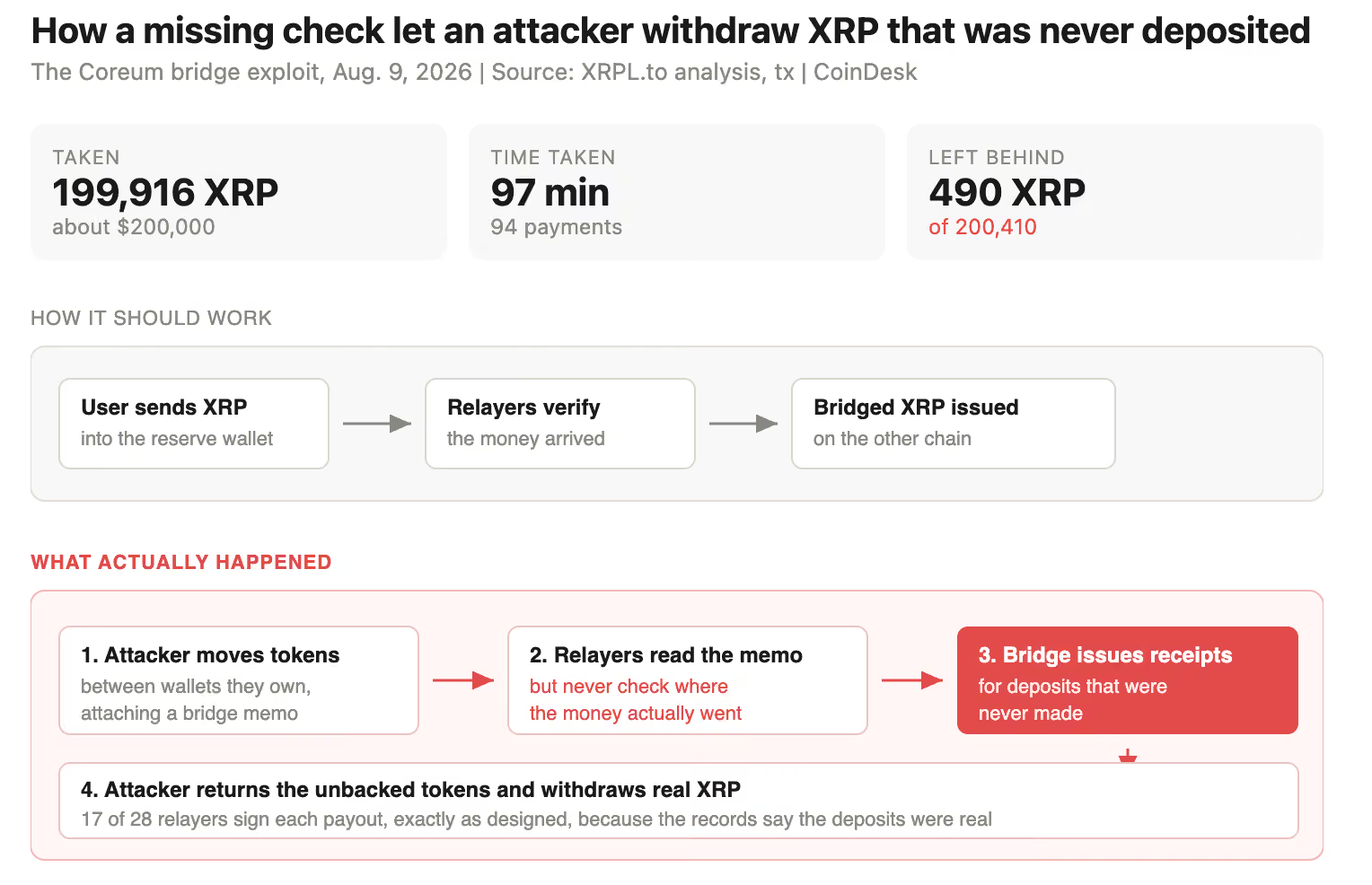
XRP bridge drained after software mistook fake deposits for real ones
-

 Tech5 days ago
DeepSeek Harness launches as open source rival to Claude Code, alongside V4-Pro on API with higher prices
-

 Sports6 days ago
DeQuan Jones in ‘high spirits’ after successful leg surgery
-
 Crypto World6 days ago
Perplexity AI Predicts an XRP Scenario Few Analysts Are Discussing
-

 Tech7 days ago
SpaceXAI’s Grok Bot turns agents into persistent digital coworkers that can operate your apps for $120-per-month
-

 Politics7 days ago
How Average Are You In The UK?
-
 Entertainment6 days ago
2026’s Most Ambitious Fantasy Movie Officially Scores Sequel Update
-
 Business7 days ago
Evolv Technologies Holdings, Inc. (EVLV) Q2 2026 Earnings Call Transcript
-
 Tech7 days ago
A Zoom Screen-Sharing Bug Let Anyone Take Over Other Devices On a Call
-

 Fashion6 days ago
Wednesday’s Workwear Report: Stretch-Cotton Pleated-Waist Top
-
 Entertainment6 days ago
All 10 Hayao Miyazaki Fantasy Movies, Ranked
-
 Entertainment6 days ago
Travis Kelce Breaks Silence On ‘Crazy’ Taylor Swift Wedding
You must be logged in to post a comment Login