
Crypto World
‘Dollar Smile’ Creator Says Yen Intervention Marks the Peak: Is 125 Next?

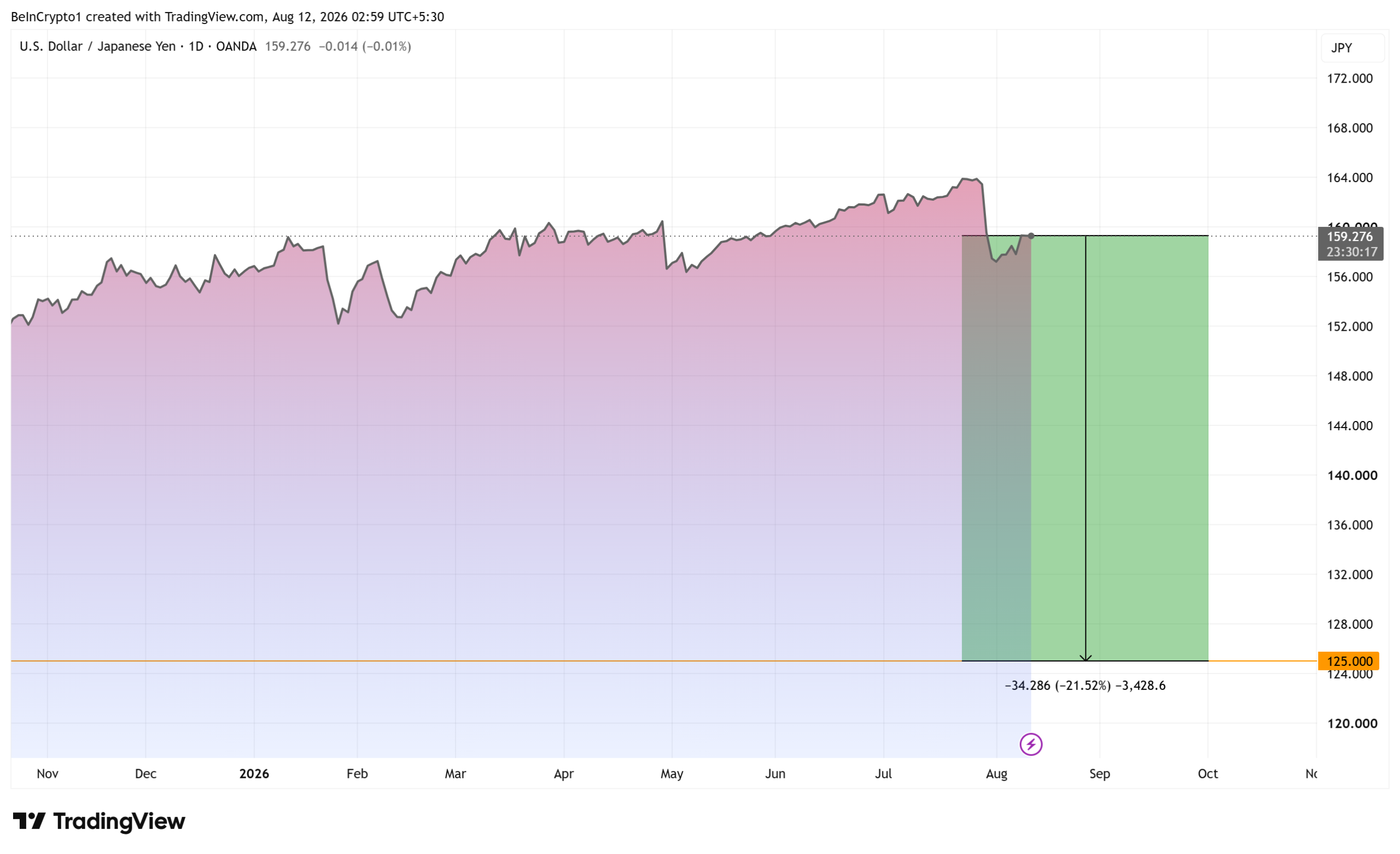
Eurizon SLJ Capital says the dollar has peaked against the yen after the joint US-Japan yen intervention. The firm sees the yen reaching 125 per dollar, a gain of more than 20% from today.
The market is not listening yet. The yen fell 1% on Monday to 159.27 per dollar, the weakest of the Group-of-10 (G10) major currencies.

Follow us on X to get the latest news as it happens
Why Eurizon Believes Dollar-Yen Has Peaked
Stephen Jen, Eurizon SLJ Capital’s chief executive, made the call in a Tuesday note with portfolio manager Joana Freire. Jen created the ‘dollar smile’, the theory that the dollar rises in US booms and global crises but sags in between.
The name comes from the U-shaped curve this traces. His logic here is simple. Both governments have spent real money on the defense, and neither can afford to lose.

“Dollar-yen has most likely peaked, as neither the US nor Japan would give up or concede to the market. … Resistance is futile,” Bloomberg reported, citing Eurizon.
Washington and Tokyo spent roughly $87 billion buying yen on July 30 and 31. It was their first joint yen purchase since 1998. Only the 2011 Fukushima response was bigger.
Speculators noticed. Hedge funds cut their yen short bets in the week through August 4, Commodity Futures Trading Commission (CFTC) data show.
Yen Intervention Gains Are Already Half Gone
The problem is what happened next. Dollar-yen dropped from nearly 164 to 155.2 on the intervention. It now trades near 159.3. In under two weeks, the yen has given back half its intervention gains.
The reason has not changed. US interest rates still sit far above Japan’s, so Japanese money keeps flowing abroad. Goldman Sachs data show Japanese investors bought foreign bonds at a strong pace through July.
Japan’s finances make the defense harder. Government debt hit a record 1,346.7 trillion yen at the end of June, about $69,000 per resident. Bond yields sit at 31-year highs, and the four largest insurers hold about 14.5 trillion yen in unrealized bond losses.
Treasury Secretary Scott Bessent says the US remains willing to support Japan. Markets price roughly 63% odds of a Bank of Japan (BOJ) rate hike in September. At least three of nine board members pushed for faster increases in July, the bank’s summary showed Monday.
Skeptics See a Trap, Not a Turning Point
Robin Brooks is not convinced. The Brookings Institution senior fellow and former Goldman Sachs currency strategist spoke in a Channel 4 News interview on Tuesday. He argued no yen recovery can last while BOJ bond buying holds long-term yields artificially low.
Michael Gayed, publisher of the Lead-Lag Report newsletter, expects something more sudden.
“Yields are spiking because Japan is dumping Treasuries. The mother of all short squeezes is coming for the Yen. Crash stocks. Save bonds. The reverse carry trade. The Godzilla Margin Call,” he laid it out in a post on X.
History offers both sides a lesson. The 1998 intervention did not stop the yen’s slide either. The turn came in October that year. A sudden unwind of the yen carry trade lifted the currency about 15% in one week. In that trade, investors borrow cheap yen to buy assets abroad.
A September hike would shrink the rate gap that keeps today’s yen carry trade alive. Closing those positions forces selling worldwide. The BOJ meeting is the real test. It could hand the yen the support that $87 billion could not buy, or start the unwind the skeptics describe.
The post ‘Dollar Smile’ Creator Says Yen Intervention Marks the Peak: Is 125 Next? appeared first on BeInCrypto.


Ethereum has declined by more than 2% over the past 24 hours, but still holds a small weekly gain. ETH is currently at $1,875, while many traders are waiting for a deeper flush to $1,475 before buying.
But the latest analysis by trader Nonzee indicates that such a move may not come, as the main shakeout already took place in June and July.
Final Trap
The leading altcoin swept below the range twice during that period and recovered within days, although the quiet moves did not look like a typical market bottom. The next move is expected to come in October, when ETH pulls back to $1,537. The market expert explained that this pullback will mark a retest and a higher low, not a new low.
According to Nonzee, ETH would move back above $2,203 and test the $2,872 range high. The 2027 target is $4,500, with a full measured target of $4,500 to $4,700. That makes the October dip a major buying opportunity, even though it would be about 15% above the $1,475 level many traders are waiting for.
Last week, Crypto Patel said Ethereum was showing one of its strongest high-timeframe bullish structures. The asset had reclaimed its long-term descending trendline after several failed attempts and was consolidating above it. The structure remained valid above $1,510 on daily closes. The analyst identified upside targets at $2,400, $3,000, $3,600, $4,200, and $5,000.
Beyond these targets, Crypto Patel also outlined a much bigger Ethereum move playing out through 2030. The analyst mapped a long-term roadmap that puts the ETH accumulation zone at $1,000-$1,600, followed by targets of $10,000 and eventually $20,000.
“If this HTF roadmap plays out, today’s ‘fear’ could look like the best entry of the decade.”
Mixed Picture
On the corporate side of things, Bitmine expanded its Ethereum holdings beyond 5.8 million tokens after acquiring another 7,391 ETH. Its total stash is now worth approximately $11.2 billion at the reported price. However, the accumulation pace has slowed compared with earlier purchases exceeding 27,000 and 42,000 units.
The company has also repurchased 19.1 million shares since July 1, while Bitmine Chairman Tom Lee remains optimistic about the asset’s long-term potential, even as he expressed disappointment that the CLARITY Act will not see a Senate vote before the August recess.
Meanwhile, US-based spot Ethereum ETFs saw $14.59 million in net withdrawals, ending a four-day streak of inflows. So far in August, these funds have attracted around $230 million in net investment.
The post The Ethereum (ETH) Chart Everyone Is Watching Has a Problem: $1,475 May Never Come appeared first on CryptoPotato.
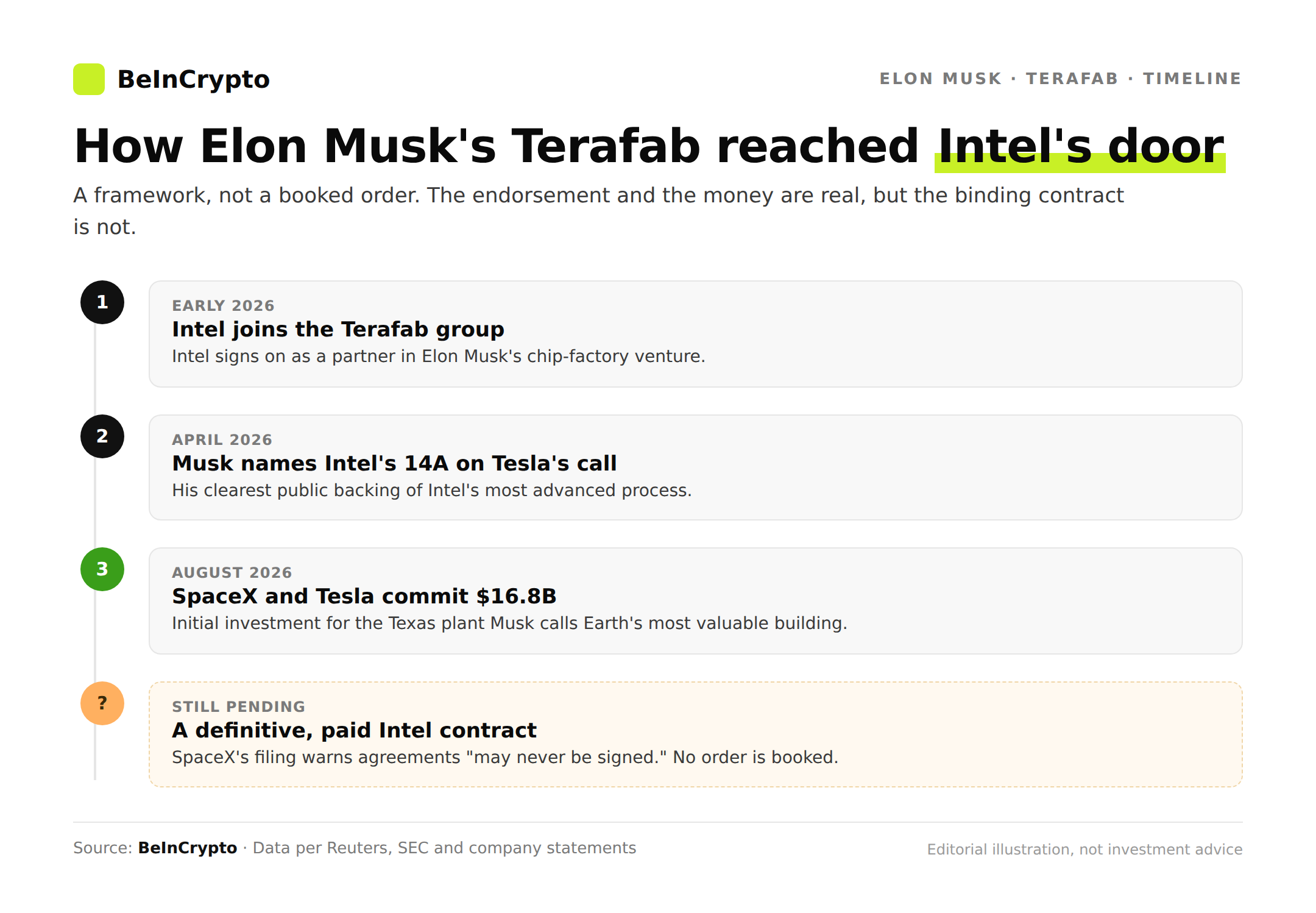
Elon Musk’s Terafab chip project is suddenly real, and it has dragged one US stock back into focus. Months ago Musk tied the giant plant to Intel (INTC) and its most advanced technology, and now that Terafab is funded, that endorsement matters again.
Intel stock still slipped about 4% on August 10 to near $97, tracking a fresh share sale, not the Terafab news. No binding deal exists, and Wall Street’s biggest banks cannot agree on what Elon Musk’s interest is worth.
What Elon Musk Said About Intel and Terafab
Terafab is Elon Musk’s plan to build one of Earth’s largest chip factories, the plant he calls the world’s most valuable building. He first named Intel’s 14A process on Tesla’s first-quarter call in April, its next-generation recipe for the smallest, fastest transistors. That would make Terafab the first major customer for 14A, a process Intel has not even finished building.
Then it went quiet. By the next quarter, Musk’s chip spotlight had swung to NVIDIA’s newest processor, and Intel slipped from the story. It roared back this month, once SpaceX and Tesla funded Terafab.
Want more insights like this? Sign up for Editor Harsh Notariya’s Daily Newsletter here.
Intel had joined Elon Musk’s Terafab group in April, and the warmth runs both ways. Intel posted that it was “proud to join” the project alongside SpaceX, xAI, and Tesla, and CEO Lip-Bu Tan praised Musk’s “proven track record of reimagining entire industries.”
Musk’s word carries weight, too. His record personal fortune was built on bets exactly like this, so naming Intel is no idle comment.
The money is serious. In August, SpaceX and Tesla committed $16.8 billion to build the Texas plant.
The catch is the contract. SpaceX’s filing warns that the Terafab partners, Intel among them, are not obligated to stay and that definitive agreements may never be signed. So Musk’s 14A endorsement is a framework, not a booked Intel order.

That gap is why the endorsement matters more as validation than as revenue.
Why It Means Validation, Not Revenue Yet
Intel has told regulators it may pause or discontinue 14A without a major outside customer. A name like Elon Musk is exactly the vote of confidence it needs.
But it is not near-term money. The 14A process reaches high-volume manufacturing in 2028, the point of full commercial scale. External foundry revenue was just $293 million last quarter, against a $2.1 billion foundry loss.

Wall Street is just as split. On July 28, the two biggest banks landed on opposite calls the same day, JPMorgan a sell at $85 and Bank of America a buy at $160. No major analyst has moved a rating since, even as Terafab won its funding (August 6) and Intel launched a $15 billion share sale, the sale of new stock that dilutes existing holders and drove the August 10 dip.

The wider business is healthier. Q2 revenue rose 25% to $16.1 billion. Investors are still pricing a broad turnaround, including bets like Trump’s Intel stake, not a Terafab order book.
That optimism is already priced in. Intel has soared this year despite a recent pullback.

Intel Stock Price Levels to Watch
The chart is where the bull case lives. Since mid-July, Intel has traced an inverse head-and-shoulders, a bullish reversal shape, a dip, a deeper dip, then a shallower dip, that hints sellers are losing their grip. However, the seller-side volume seems to be rising near the right shoulder.

But the conviction behind it looks thin. Since Intel’s July 23 earnings, options traders have leaned bearish, buying more puts, bets the stock falls, and fewer calls, bets it rises. The put/call volume ratio has climbed to 0.79 and open interest to 1.01, a less bullish tilt just as the pattern needs buyers.

The left shoulder of the bullish pattern sits near $89, the head near $81, the right shoulder near $96, under a neckline around $104.
The price action is the tie-breaker. A close above the $104 neckline, roughly 7% away, confirms the breakout and opens $109, $113, and $118, near the average analyst target near $119. A confirmed move points to $126 and then $132. Below $96, the $89 left shoulder is first support, the $81 head the last line.

So Elon Musk’s Terafab hands Intel stock a real option on 14A validation, bullish in shape but short on conviction. It becomes a breakout only above $104 on rising volume (which isn’t there now), and a bankable Terafab story only when a paid deal appears.
The post The Quiet Winner of Elon Musk’s $16.8 Billion Terafab Bet Is a US Chipmaker Stock appeared first on BeInCrypto.


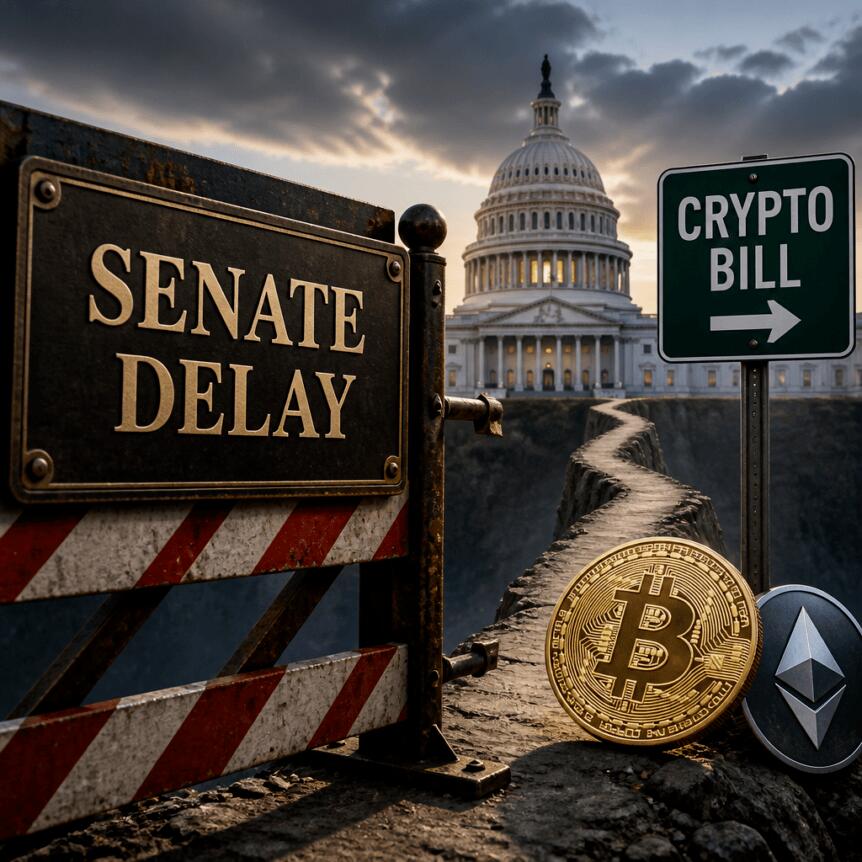
Majority Leader John Thune has moved the US Senate toward a potential September vote on the Digital Asset Market Clarity (CLARITY) Act, using a cloture filing that would allow the sweeping crypto market-structure bill to be considered on the Senate floor. The measure is now set to face a tight procedural and legislative timeline once lawmakers return from a month-long recess.
However, the path to final passage remains uncertain. Senate Democrats and industry stakeholders have flagged key sticking points—including proposed ethics-related language tied to President Donald Trump’s digital-asset connections and additional limits on how crypto firms may offer stablecoin rewards. Even if cloture happens in September, the Senate could still have only limited time to resolve outstanding disputes before the chamber breaks again ahead of the November election.
Key takeaways
- Thune filed for cloture on the CLARITY Act shortly before the Senate’s August recess, setting up a possible September floor push.
- After lawmakers return on Sept. 14, they would have 14 scheduled session days before another recess tied to the November election calendar.
- Major unresolved issues include ethics provisions involving President Trump’s digital-asset ties and restrictions on stablecoin-reward offerings.
- If the Senate misses its window, election-year dynamics could further complicate negotiations during the next Congress.
A narrow procedural window after the September return
The Senate is expected to return from recess on Sept. 14, with only 14 days scheduled to be in session before the chamber breaks again ahead of the November election. After that pre-election recess, lawmakers would face another gap—followed by additional time before the end of the year—meaning the practical window for resolving disputes over the CLARITY Act could be measured in weeks rather than months.
Thune’s cloture filing is a procedural step that can bring a bill closer to floor consideration, but it does not settle the substantive questions that have delayed action. According to reporting referenced by Cointelegraph, lawmakers had not publicly announced deals on several provisions that remain contentious.
The stakes for market participants are straightforward: CLARITY is intended to create clearer market-structure rules for digital assets by setting out how responsibilities should be allocated across regulators. Without the bill’s passage, companies and exchanges are left navigating a patchwork of existing regulatory approaches and enforcement-driven expectations.
Why the Senate’s unresolved provisions matter
At the center of the political friction are provisions that would shape the compliance landscape and business models for parts of the crypto industry.
Cointelegraph’s coverage notes that the Senate version of the CLARITY Act has drawn attention to ethics language linked to President Trump’s digital-asset ties. Opponents have previously described the measure as enabling “crypto corruption,” a critique that contributed to scrutiny of earlier versions and broader resistance from many Democrats during the bill’s protracted journey.
Another major point of contention involves additional restrictions for crypto companies offering stablecoin rewards. Stablecoin incentives have become a common customer-acquisition and retention tool in parts of decentralized and centralized finance, and limits in this area could affect how issuers and platforms structure programs, marketing, and risk disclosures.
Even if cloture is secured in September, lawmakers would still need time to address these unresolved elements before a potential floor vote—and the calendar may not provide enough runway to find compromises acceptable to both chambers.
How election-year uncertainty could reshape negotiations
The CLARITY Act has already taken more than a year to travel through Congress after the House passed it last year. During that period, the Senate faced multiple disruptions, including more than one government shutdown, along with sustained pushback from within the political system and from industry leaders. Opposition has also been fueled by concerns about conflicts of interest and the ethics framework attached to the legislation, as described in earlier coverage referenced by Cointelegraph.
Looking ahead, a procedural setback in September could carry consequences beyond simple delay. After November, 33 Senate seats and all 435 House seats would be up for election. Election outcomes can significantly affect committee priorities, legislative bandwidth, and which members remain in office—potentially slowing or resetting negotiations into the next Congress.
For investors and operators, election-year uncertainty can be more than a political inconvenience. Regulatory clarity delays often translate into longer periods of compliance experimentation, more reliance on legal interpretations and agency guidance, and greater sensitivity to enforcement risk—even when market activity continues.
Regulators may fill the gap if Congress stalls
With the legislation back in limbo, some market participants are turning their attention to federal agencies—particularly the Commodity Futures Trading Commission (CFTC) and the Securities and Exchange Commission (SEC)—for regulatory signals and rulemaking momentum.
Cointelegraph’s cited reporting indicates that the legislation would be expected to give the CFTC more authority to oversee and enforce rules affecting digital assets. Still, the broader point for the crypto sector is practical: if lawmakers do not finalize CLARITY, agencies have indicated they can move forward through their own rulemaking or enforcement frameworks.
In a July interview highlighted by Cointelegraph, SEC Chair Paul Atkins said the agency was “ready, willing, and able to come out with rules” to address crypto if Congress failed to pass CLARITY. Separately, Cointelegraph cited statements from CFTC Chair Michael Selig in April indicating that the commission was “ready to take responsibility” for oversight—referring to the expectation of legislative passage that would clarify roles.
Both agencies have also reportedly taken steps to coordinate oversight of financial markets, according to Cointelegraph’s reference to a memo describing efforts to align regulatory approaches. That coordination matters because market structure rules can otherwise become fragmented—leading to inconsistent treatment depending on which regulator asserts primary jurisdiction.
In other words, even without CLARITY, market participants may not be waiting in a vacuum. The question is whether agencies’ actions will provide the kind of stability that a comprehensive market-structure law is designed to deliver.
For now, the most important thing to watch is whether the Senate can convert Thune’s cloture filing into actual floor movement during the post–Sept. 14 schedule—while negotiations continue over ethics and stablecoin-reward provisions; if that narrow window closes, both the political calendar and regulator-driven rulemaking could become the main determinants of how quickly compliance expectations evolve.


The US Securities and Exchange Commission (SEC) and Commodity Futures Trading Commission (CFTC) filed separate civil lawsuits against Goliath Ventures and founder Christopher Delgado over an alleged crypto Ponzi scheme that raised about $400 million.
The SEC said Goliath raised at least $425 million from more than 1,300 investors through an unregistered securities offering. Investors were told their money would be placed in crypto liquidity pools, but the agency alleged none of the funds or crypto assets were invested and Delgado diverted at least $51 million for personal use.
In a separate action, the CFTC said approximately 1,600 customers contributed at least $397 million after Goliath solicited funds for crypto trading in Bitcoin and Ether. The agency is seeking restitution, disgorgement, civil penalties, trading and registration bans, and a permanent injunction.
The actions add securities and commodities-law consequences to a criminal case that has already produced a guilty plea, allowing the agencies to seek investor compensation, penalties and market bans beyond the consequences available through Delgado’s plea.
Delgado agrees to settle SEC case
According to the SEC, Goliath promised monthly returns of 3% to 10%, generated from fees paid by traders using its liquidity pools, while guaranteeing investors’ principal. The complaint alleges the company instead used funds and crypto assets from new and existing investors to pay earlier investors and fabricated account balances and performance metrics.
The SEC said Goliath paid commissions to sales agents who recruited investors. By November 2025, the company could no longer raise money quickly enough to meet obligations, stopped making monthly distributions and collapsed, according to the agency.
Related: ‘I failed them’: Goliath Ventures CEO charged with crypto Ponzi apologizes
Delgado agreed to a bifurcated settlement, subject to court approval, that would permanently bar him from violating the securities-law provisions charged in the complaint. He would also be barred from participating in securities transactions outside personal-account activity and from associating with a broker or dealer. The court will determine disgorgement, prejudgment interest and a civil penalty.
Delgado previously pleaded guilty to conspiracy to commit wire fraud, wire fraud and money laundering. On June 30, the US Department of Justice said at least $400 million was paid to Goliath and that Delgado admitted causing at least $250 million in investor losses. He also agreed to forfeit properties, vehicles, luxury goods, bank accounts and crypto wallets traceable to the scheme.
Magazine: Japanese pension fund tips 1% in crypto, G7 urges action on NK hackers: Asia Express
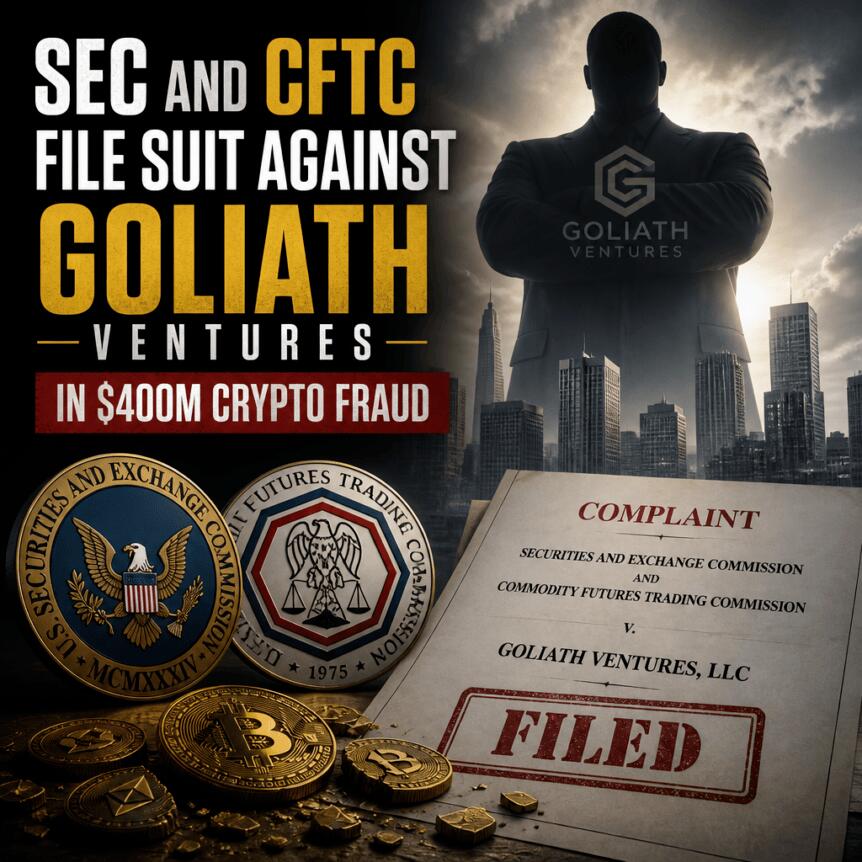
The U.S. Securities and Exchange Commission (SEC) and the Commodity Futures Trading Commission (CFTC) have filed separate civil lawsuits targeting Goliath Ventures and its founder, Christopher Delgado, accusing the firm of running a crypto-linked Ponzi scheme that raised roughly $400 million from investors.
The SEC alleges an unregistered securities offering that raised at least $425 million from more than 1,300 investors, while the CFTC says approximately 1,600 customers deposited at least $397 million after Goliath solicited funds for crypto trading in Bitcoin and Ether. The civil actions broaden the regulatory and financial consequences beyond Delgado’s already-entered guilty plea in a related criminal case, potentially enabling additional compensation efforts and market bans.
Key takeaways
- The SEC claims Goliath raised at least $425 million through an unregistered offering, with customer funds allegedly misused rather than invested as promised.
- The CFTC alleges around $397 million was solicited for Bitcoin and Ether trading, with the agency seeking restitution, disgorgement, and penalties.
- Delgado has agreed to settle the SEC case in a way that could impose long-term restrictions tied to the securities-law violations in the complaint, pending court approval.
- Both agencies’ civil suits aim to expand consequences beyond the criminal case outcome, including investor compensation tools and trading or registration bans.
SEC’s allegations: unregistered offering and diverted funds
According to the SEC, Goliath collected at least $425 million from more than 1,300 investors through what the agency characterizes as an unregistered securities offering. In the SEC’s account, investors were told their capital would be placed into crypto liquidity pools. The SEC alleges that no funds or crypto assets were actually invested in the way described to investors, and that Delgado diverted at least $51 million for personal use.
The SEC further alleges that Goliath told investors it would generate returns of 3% to 10% each month, purportedly funded by fees from traders using its liquidity pools, while also guaranteeing investors’ principal. Instead, the complaint states that the firm used money and crypto assets from newer and existing investors to pay earlier participants and that it allegedly fabricated account balances and performance figures to sustain the scheme.
The SEC also claims Goliath paid commissions to sales agents who recruited investors. It says that by November 2025, the company could no longer raise funds quickly enough to meet its obligations, stopped making monthly distributions, and ultimately collapsed.
The SEC’s case was filed in a civil posture, and it points to securities-law violations that go beyond what a criminal plea alone may fully address for market conduct and investor remedies. The SEC’s litigation release is available at SEC enforcement documentation.
CFTC case: alleged solicitation for Bitcoin and Ether trading
In a separate action, the CFTC said it received allegations that Goliath solicited funds from about 1,600 customers for crypto trading in Bitcoin and Ether. The CFTC stated that those customers contributed at least $397 million.
The CFTC’s complaint seeks restitution, disgorgement, civil penalties, trading and registration bans, and a permanent injunction. Those remedies are aimed at both financial recovery for affected customers and preventing continued misconduct or re-entry into regulated trading activity.
The CFTC announcement is posted at the CFTC press room.
Settlement terms in the SEC case, pending court approval
The SEC states that Delgado agreed to a bifurcated settlement—meaning parts of the agreement are subject to court approval. The proposed resolution would permanently bar him from violating the securities-law provisions charged in the SEC complaint. It would also bar him from participating in securities transactions outside personal-account activity and prohibit him from associating with a broker or dealer.
Under the SEC’s description, the court will determine the remaining components including disgorgement, prejudgment interest, and civil penalties. While settlements in these cases can limit certain future disputes, the ultimate financial numbers still depend on what the court orders.
The settlement agreement matters to investors because a court-ordered civil remedy can create a pathway for recovery and impose enforceable restrictions that reduce the risk of similar conduct returning through related entities or roles.
How the civil suits build on the criminal case
The civil filings come after Delgado previously pleaded guilty to conspiracy to commit wire fraud, wire fraud, and money laundering. The SEC and CFTC actions add securities and commodities-law consequences that can be pursued even when criminal proceedings already concluded certain issues through a plea.
Earlier coverage cited the role of the U.S. Department of Justice in the criminal matter, including a statement that at least $400 million was paid to Goliath and that Delgado admitted causing at least $250 million in investor losses. That same DOJ process included a forfeiture agreement covering properties, vehicles, luxury goods, bank accounts, and crypto wallets traceable to the scheme. These details underscore the breadth of alleged harm and the government’s view that the misconduct involved significant investor funds.
Viewed together, the SEC and CFTC suits reflect how U.S. regulators typically seek to address both investor protection failures and ongoing market integrity risks: criminal cases can punish wrongdoing, while civil actions can impose longer-lasting bans, restrict future participation in regulated activities, and pursue restitution-focused remedies.
What to watch next
The immediate next step is court approval of Delgado’s proposed settlement terms in the SEC case, along with the final determination of disgorgement, prejudgment interest, and civil penalties. For affected investors, the larger open question is how the SEC and CFTC remedies translate into compensation and whether the civil findings strengthen broader efforts to freeze or recover misappropriated assets.
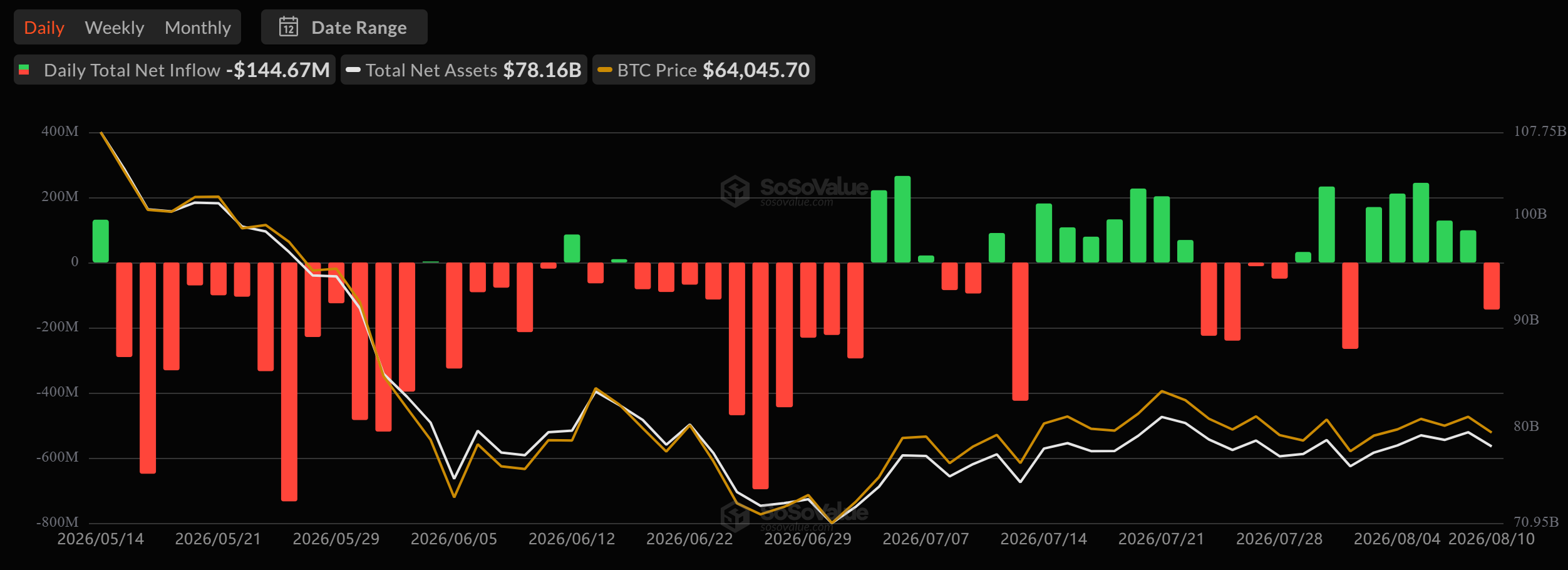
Bitcoin holders no longer need $25 million to swap coins into the BlackRock Bitcoin ETF. The minimum just fell to $1 million, opening a direct route into iShares Bitcoin Trust (IBIT) without selling first.
Robbie Mitchnick, BlackRock’s head of digital assets, revealed the cut on Bloomberg’s ETF IQ show on August 10. He said the firm wants to push the bar even lower over time.
A Lower Bar for the BlackRock Bitcoin ETF
Bloomberg ETF analyst Eric Balchunas flagged the change after the broadcast. Until now, the door stood open only to the very largest holders.
The swap runs through authorized participants, the big trading firms that create and redeem ETF shares. A holder hands over Bitcoin and receives IBIT shares in return. No sale takes place. The route also works in reverse.
The option itself is young. Spot Bitcoin ETFs launched in January 2024 on a cash-only model. The SEC only permitted in-kind swaps for crypto ETFs in July 2025. BlackRock’s cut now pushes that plumbing far down-market.
The timing is striking. US spot Bitcoin ETFs drew more than $850 million last week, their best week since April, according to SoSoValue. The funds now hold about $78 billion in bitcoin.

Fear did some of the pushing. Hackers drained roughly $116 million in Bitcoin from over 5,200 Coldcard hardware wallets, per a TRM Labs analysis. The exploit shook faith in self-custody.
Flows stay choppy, though. The funds shed $145 million on August 10 alone. Still, renewed BlackRock client demand suggests the appetite runs deeper than one red day.
Swap Now, Pay Taxes Later
The bigger prize sits in the tax code. IBIT runs as a grantor trust. In plain terms, the IRS treats shareholders as still owning the Bitcoin inside the fund.
That detail changes the math. Selling Bitcoin for cash triggers capital gains. Swapping it into IBIT may not. Clinton Donnelly, the crypto tax specialist behind the CryptoTaxFixer account, spelled out the position in a post.
“Not 100%, but the current tax position is that an in-kind contribution of Bitcoin to IBIT is non-taxable, with your basis and holding period carrying over. The caveat is that this relies on IBIT’s grantor trust treatment, and the IRS has not formally ruled on it.”
Balchunas backed that reading. The tax bill is delayed, not erased, because the original cost basis carries over.
Stock and bond funds cannot copy the move. Most run as open-end funds, not grantor trusts.
Bitcoin (BTC) traded near $63,602 on Tuesday, down 1.2% in a day. If the bar keeps falling, upcoming flow reports may show how much cold-storage bitcoin moves into the wrapper.
The post Bitcoin Holders Get 96% Cheaper Entry Into BlackRock’s ETF Without Selling appeared first on BeInCrypto.

CNN anchor Jake Tapper emphasized on Tuesday the extraordinary circumstances of the clandestine operation in Turkey.
“Obviously the life of the president is paramount, and previous White Houses have used deception to protect the president’s life,” he said in a post on X. “But no officials I’ve spoken to have ever before heard of using an [Air Force One] full of [White House] staff and journalists as a decoy during an imminent threat.”
Ronald L. Rowe Jr., a former acting director of the Secret Service, told the Post that, if the President’s location is kept secret, it is for a reason.
“We need to keep the ‘secret’ in Secret Service,” Rowe told the news outlet. “The public should know what the president is doing on a daily basis, but when it comes to the methods by which the Secret Service keeps the president safe, that should remain out of public view.”
Robert McDonald, who worked with the Secret Service for more than two decades, told TIME that the operation in Turkey appears to be a result of real-time improvisation by the President’s security team. He also cast doubt on the idea that the journalists who were on the former Air Force One were left at risk.
The U.S. Securities and Exchange Commission (SEC) said Monday it will hold an open meeting this Friday, August 14, to consider proposing new rules that would create a tailored offering path for certain crypto investment contracts.
The announcement lands just days after the Senate pushed its next procedural vote on the CLARITY Act to mid-September, leaving federal regulators to press ahead on their own while lawmakers work out what’s left of the bill’s disputes.
What the SEC Is Weighing
Friday’s vote only decides whether the agency issues a proposal, not whether it becomes law. Attorney Anne Kelley pointed out that a formal proposal would still need to clear a public comment period, economic analysis, possible revisions, and a separate final vote, a process that has typically taken major SEC rules somewhere between twelve and eighteen months from start to finish.
Still, she called it “welcome progress,” noting the agency is choosing to act rather than sit and wait on Congress.
In March, the SEC and CFTC issued a joint interpretation that set out a five-category token taxonomy and defined when a crypto investment contract begins and ends.
And while the meeting notice did not mention the interpretation, crypto investor Mark Chadwick believes it will eventually lead to rules that would let projects sell tokens to buyers expecting profit from the team’s work without going through the full weight of IPO-style registration.
Coinbase’s chief policy officer, Faryar Shirzad, wrote that the effort shows “the work of bringing clear rules to digital assets isn’t waiting on Congress.”
Separately, the CFTC said its new Innovation Advisory Committee, with representatives from Coinbase, Ripple, Robinhood, Kraken, Gemini, Polymarket, Kalshi, CME, and Nasdaq, holds its first meeting on August 20.
The CLARITY Act’s Longer Road
Senate Majority Leader John Thune filed cloture early Saturday on the motion to proceed to the CLARITY Act, setting up a procedural vote for September 15, the day after the chamber returns from recess. It’s a test of whether the bill can formally move forward, not a vote on its contents, and it still needs 60 votes to clear.
Bill sponsor Cynthia Lummis didn’t hide her exasperation after the earlier delay, saying, “You all know me and how long and hard I’ve fought for this bill, so you know how frustrated I am.”
Negotiators still have to sort out disagreements over the bill’s stablecoin yield language, an issue that resurfaced after banks pushed to change the wording, plus a bipartisan ethics agreement tied to Trump’s crypto holdings. The President told Punchbowl News he wasn’t against a blind trust but objected to being treated differently from other lawmakers.
Michael Saylor, never one to stray from his usual talking point, said Bitcoin doesn’t need CLARITY even if the country does. Meanwhile, Grayscale has floated its own plan, arguing regulators can still tackle custody, tokenized securities, and trading rules on their own if Congress can’t get the bill done this year.
The post SEC Plans Vote on New Crypto Investment Contract Rules as CLARITY Act Stalls appeared first on CryptoPotato.
Every American knows the popular Fort Knox conspiracy. The US government says hundreds of billions of dollars’ worth of gold is sitting inside it, but skeptics believe some or all of it may no longer be there. But Republican Senator Rand Paul says he verified it.
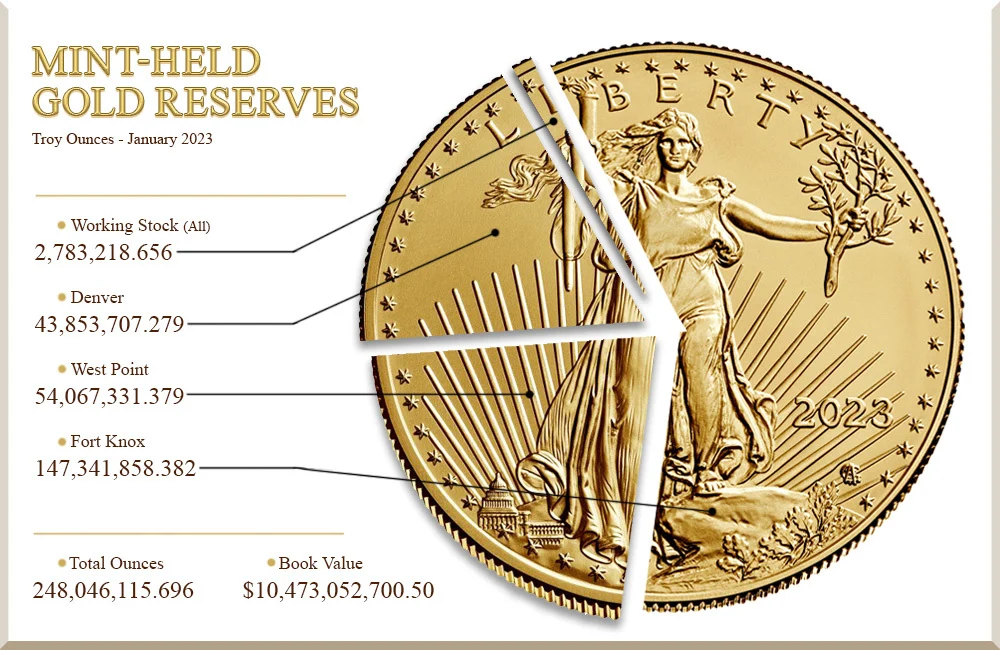
The Kentucky Senator reportedly had a vault tour on Monday, August 10. He says all the Fort Knox gold is there, roughly 147 million ounces.
Fort Knox Gold is There, Rand Paul Says After Going Underground
Almost nobody gets inside Fort Knox. The US Mint says outsiders have seen the vault roughly twice since it opened in 1937. Journalists and lawmakers toured it in 1974 to bury rumors of missing gold. Treasury Secretary Steven Mnuchin looked in 2017.
The Kentucky senator became the latest exception on August 10.
He posted his verdict the same day, then turned the tour into an argument about the dollar itself.
“Gold does not expand when Congress spends. Paper does. That is the difference,” Paul said in the post.
He wrote that the dollar has lost 97% of its purchasing power since the Federal Reserve opened in 1913. By his count, it has also shed 85% since 1971, when President Richard Nixon cut its final tie to gold.
He further claimed the Fed absorbs a third of Washington’s $2 trillion annual deficits.
Official records add a sharper number. The Mint lists 147,341,858 ounces at Fort Knox. The books still value them at $42.22 per ounce, a price frozen in 1973.

That makes the hoard worth $6.2 billion on paper and about $644 billion at today’s roughly $4,372 gold price. The gap between those figures is the core of Paul’s argument and also fueled Trump’s earlier calls for a Fort Knox audit.
How the Fort Knox Gold Conspiracy Ignited Again in 2025
Elon Musk revived this conspiracy in February 2025, publicly asking, essentially: who has actually confirmed the gold wasn’t stolen?
Trump then said his administration wanted to check Fort Knox and suggested going there with Musk. Treasury Secretary Scott Bessent responded that the gold was accounted for.
Then Trump brought the subject back again in May 2026. He said he still wanted to visit Fort Knox and “see if the gold is there,” while suggesting that theft was something worth considering.
Then came another interesting development last month. Bessent said he himself had not visited Fort Knox, although members of his staff had, including the US Treasurer, and said the gold was “present and accounted for.”
It seems that Senator Rand Paul has now assured Republican supporters that the Fort Knox gold is all there, but skeptics will still have a hard time believing such claims without a transparent audit.
The post Does Fort Knox Really Hold America’s Gold? Senator Says He Saw All 147 Million Ounces appeared first on BeInCrypto.

Linux Desktop Use Surged To 22% On One Workday, Cloudflare Data Shows

Forget ‘The Night Agent,’ Netflix’s Best Spy Series Is Officially Returning

50000 Salary Plan | Budget your monthly income. #shorts #savings #investment #personalfinance #viral

Renter of Home in Anne Heche Crash Denies Settlement With Son

No Jackpot Winner as $257 Million Prize Rolls Over to $269 Million Monday Draw

Weekend Open Thread: Staud – Corporette.com
50000 Salary Plan | Budget your monthly income. #shorts #savings #investment #personalfinance #viral

Crypto Report: CLARITY Act “Pretty Much Dead”

My life after start reselling @JedyHustles #wealth #success #money #motivation
-

 Fashion4 days ago
Weekend Open Thread: Mattifying Sunscreen
-

 Fashion5 days ago
Frugal Friday’s Workwear Report: Cap-Sleeve Pointelle Crewneck Sweater
-

 Sports6 days ago
Jordan Coyle & Cordiamo take Laya Arena Stakes at RDS
-

 News Videos4 days ago
Can Astrology Help Find Gold and Silver Trends? A Financial Astrology Guide
-
 Business6 days ago
US stocks: Dow closes at record on Mideast optimism; SpaceX, AMD drag Nasdaq
-

 Politics6 days ago
Reform UK And Greens Sink To Lowest Favourability Ratings To Date
-

 Tech7 days ago
OpenAI, Anthropic AI agents targeted real people and systems in cyber tests
-

 Business6 days ago
Supply chain issues impact Ingredion
-

 Tech4 days ago
Rinn Pharma & Biopharma to join NordicPharmaTrain network
-

 Business3 days ago
How to Start a Cleaning Business: A Step-by-Step Guide
-
 Crypto World7 days ago
Dow and S&P 500 Hit Records on AI Earnings: When Will the Bubble Burst?
-

 Business3 days ago
BDC Weekly Review: Private BDC Q2 Numbers Are Strong
-

 Business3 days ago
Datadog: Best Of Breed For Multiple Reasons
-

 Business7 days ago
McDonald’s (MCD) Q2 2026 earnings
-

 Fashion7 days ago
The Bright Side of Black and White
-

 Fashion6 days ago
Suit of the Week: Me + Em
-
Sports6 days ago
Spider-Man: Brand New Day ending explained: Is Peter Parker alive?
-
 NewsBeat2 hours ago
Communication cards help banking customers access services or report scams
-

 Crypto World7 days ago
Robinhood files $200M second venture fund focused on YC startups
-
 Fashion6 days ago
Birthstone pendant necklaces for women by ottomanhands – 18ct gold plated
You must be logged in to post a comment Login