

Crypto World
Enjoy Bitcoin’s Rally Now, but Brace for a Painful August: Analyst

Although it was stopped at its monthly peak of $67,000 earlier this week, July has gone quite favorably for the primary cryptocurrency for now, showing a double-digit surge from its early low of under $58,000 to roughly $65,000 as of press time.
However, popular analyst Ali Martinez brought up a painful historical pattern suggesting that the bears are about to return in August.
Good July, Bad August?
We know that historical performance rarely translates into successful price predictions. However, BTC’s moves in July have largely aligned with almost all previous Julys. As such, the warning from Martinez should be taken under careful consideration. The analyst noted that investors should “enjoy the current rally,” but stop and take a look at the seasonal trend.
He added that every single August since 2022 has been in the red, which is confirmed by data from CoinGlass. This streak of four consecutive Augusts with retracements brought some violent declines, such as the 14% drop in 2022 and the 11.3% dip a year later.
If we go back further in history, though, we can see that there have been some quite promising exceptions during the eighth month of the year. Back in 2013, BTC rose by 30%, while the 2017 edition brought a massive 65% surge. However, only three out of the last 12 Augusts have been in the green.

Weakening Support
Fellow analyst Rekt Capital also weighed in on BTC’s performance in July but outlined a different perspective. He acknowledged that the cryptocurrency has risen by double digits (even though his percentage differs from the one on CoinGlass), but argued that it’s a “far cry from previous rebounds.”
This is because even though bitcoin has defended the $60,000 support and now sits at around $65,000, the double-digit price pump in July came after a significantly more painful June, in which the asset tumbled by more than 20%. Consequently, the 11%-14% surge now can’t even offset the previous month’s losses. The analyst determined that this is a clear sign of “progressively weakening support over time.”
The upcoming Monthly Candle Close is slowly approaching
And as things stand Bitcoin has only rallied +14.5% from the ~$60k historical demand area
That’s a far cry from previous rebounds which is a sign of progressively weakening support over time$BTC #Crypto #Bitcoin https://t.co/Hu8UEadXjI pic.twitter.com/9K4cgPJQNl
— Rekt Capital (@rektcapital) July 24, 2026
The post Enjoy Bitcoin’s Rally Now, but Brace for a Painful August: Analyst appeared first on CryptoPotato.

After gaining several grand and peaking at $67,000 earlier this week, bitcoin faced an immediate rejection and dipped below $64,000, where it currently struggles.
Most larger-cap alts are also in the red on a daily scale now, with ETH slipping to $1,850, XRP fighting for the $1.10 support, and ZEC dropping by 6%.
BTC Falls to $64K
On the surface, the past week appeared quite positive for the primary cryptocurrency given the overall market sentiment. After dipping to $63,750 on Monday, the asset went on a highly successful run and soared to $67,000 on Tuesday evening for the first time in over a month. Some of the reasons behind this jump included renewed ETF net inflows and new purchases from whales.
However, the fragile market state failed to provide more rally support, and BTC went downhill in the following days. It dropped to $64,750 on Thursday, before it jumped by a grand on Friday morning. However, another rejection followed, which is rather typical for Fridays in the past several weeks, and BTC dipped by $2,000 after US President Trump warned the EU about a new set of tariffs.
Bitcoin has been unable to stage a notable recovery since then and remains struggling at around $64,000 as of press time. Its market capitalization has dipped to $1.285 trillion, while its dominance over the altcoins has rebounded slightly to 56.3%.

WLD Dumps
Worldcoin’s native token is the poorest performer today, plunging by over 10% to $0.34. Interestingly, this major decline comes after the project announced a successful fundraiser for $52.5 million to expand its World ID infrastructure. The other big losers today are ONDO (-7%), LIT (-6.3%), and ZEC (-6%). The privacy coin has dropped further away from the $500 mark.
The larger-cap alts are also in the red, albeit in a 1-2% manner. ETH is below $1,860, XRP is beneath $1.10, SOL is down to $74, while HYPE has slipped to $57. XMR continues to be among the few altcoins charting some gains. A 2.4% jump has pushed it to $365.
The total crypto market cap has lost around $20 billion daily and is down to $2.280 trillion on CG.

The post WLD Plunges 10% Despite $52.5 Funding Round, BTC Struggles at $64K: Weekend Watch appeared first on CryptoPotato.


Chinese courts have sentenced five Sifang payment platform operators to between three and six years in prison over a gambling network that processed more than 2.95 billion yuan, or about $428 million, through USDT, bank cards and third-party payment accounts.
Summary
- Chinese courts sentenced five Sifang operators to between three and six years.
- The network processed about $428 million through USDT, bank cards and payment accounts.
- Investigators used Tether wallet data and OKX records to trace crypto transactions.
The Paper reported that the Intermediate People’s Court of Xilin Gol League in Inner Mongolia upheld Ma’s conviction for illegal business operations on June 26, leaving his four-and-a-half-year prison term and 3 million yuan fine in place.
Ma’s case was the last judgment in a group of prosecutions linked to Sifang, a fourth-party payment operation that supplied payment channels to online gambling businesses. The court also ordered authorities to recover 2.95 million yuan in illegal income from Ma.
Court records cited by The Paper showed that Ma and four other defendants processed illegal payments between May 24, 2022, and Oct. 18, 2023. The operation moved funds through 105 merchant accounts connected to 10 third-party payment companies.
Some defendants received commissions or rebates through USDT wallets, while other payments went through bank cards, according to the records. Prosecutors treated their work as unlicensed payment settlement activity and charged them with illegal business operations.
Zhu received a five-year prison term and an 800,000 yuan fine, while Zhang was sentenced to six years and fined 850,000 yuan. The other defendants received terms ranging from three to six years, The Paper reported.
Sifang linked gambling sites to payment channels
According to the first judgment in the series, Zhu, Zhang, Tang, Du and Ma began building the operation in May 2022 after learning that payment services for gambling platforms could generate large profits.
Court documents said the group commissioned 32 collection and payment platforms, rented servers outside China and contacted people running overseas gambling websites. Those systems connected the gambling businesses with merchant accounts held at established third-party payment companies.
Sifang operated as a fourth-party, or aggregated, payment service rather than a licensed payment provider, according to The Paper. Such platforms combine payment interfaces supplied by banks and third-party processors, allowing merchants to collect funds through several channels from one system.
Investigators said Zhu and Zhang managed payment routes, coordinated with third-party providers, handled complaints and arranged profit distribution. Ma introduced payment channels, supplied merchant registration materials and helped merchants open accounts with third-party payment companies.
Ma also introduced intermediaries and dealt with problems that arose while merchant applications and fund transfers were being processed, according to the court findings.
Prosecutors initially alleged that the group earned 42.85 million yuan by taking a 1.45% commission from merchant transfers linked to overseas gambling websites. However, the courts attributed much smaller final profit amounts to several defendants.
Judicial records showed that one wallet associated with Zhang received 4.146 million USDT through 485 deposits between July 2022 and October 2023. The same records valued those deposits at about 26.95 million yuan.
Another wallet sent out 4.097 million USDT through 497 transfers, while Zhu, Zhang and Du also converted 1.905 million USDT into cash through 11 offline transactions. The court valued those cash conversions at roughly 12.38 million yuan.
For Ma, records obtained from the OKX application showed 152 transfers totaling 719,176.7 USDT into a wallet he supplied. The court valued those tokens at approximately 4.67 million yuan and deducted 1.72 million yuan returned by a co-defendant, leaving Ma with 2.95 million yuan in recognized illegal proceeds.
USDT records test China’s evidence rules
Investigators in Erenhot obtained wallet addresses from Tether and transaction details from OKX while building the case, The Paper reported. Wang Xiaohua, an associate professor at East China University of Political Science and Law, told the publication that linking traceable blockchain transfers to real people remains difficult when tokens do not pass through an exchange with identifying records.
Ma’s lawyer argued that investigators had not established how many payment accounts Ma handled or explained the purpose of more than 100 USDT transfers. The Paper said it sought comment from the Xilin Gol court on the evidence, valuation and cross-border data collection questions but received no response before publication.
The ruling follows calls from Chinese legal scholars and prosecutors for clearer rules on crypto-related money laundering cases. As crypto.news previously reported, a July 13 article in the People’s Procuratorate Daily identified criminal liability, evidence collection and asset recovery as three persistent problems under China’s current framework.
Prosecutors from Xiangtan’s Yuhu District and a Xiangtan University law professor argued that crypto’s anonymous, decentralized and cross-border features have complicated investigations. They also pointed to inconsistencies between China’s revised Anti-Money Laundering Law and Article 191 of its Criminal Law.
China’s Supreme People’s Procuratorate disclosed in June that authorities prosecuted more than 1,200 people for drug-related money laundering between January 2025 and May 2026. In one case, a court sentenced drug trafficker Li Mobo to death after authorities found that he laundered more than $7 million through cryptocurrency, although officials made clear that the combined sentence covered several drug trafficking convictions and was not imposed for money laundering alone.

Ripple has rolled out Ripple Mint, a new institutional platform designed to make it easier for regulated organizations to interact with the company’s US dollar-pegged stablecoin, Ripple USD (RLUSD). The release centers on a single workflow layer for tasks like minting, redeeming, and managing RLUSD—either through a web interface or through direct API integrations.
Ripple Mint was announced on Thursday, with the company presenting the product as a “unified platform” that can support both manual operations and automated connections. The emphasis reflects a broader shift in stablecoin adoption: beyond experimentation, more institutions are seeking stablecoin rails for payments, trading execution, and treasury functions.
Key takeaways
- Ripple Mint is intended to streamline institutional access to RLUSD for minting, redemption, and ongoing management.
- The platform supports access via web workflows as well as API integrations for automation.
- Ripple launched RLUSD in December 2024 with an institutional focus, while later adoption has also included retail usage.
- RLUSD has grown into a major USD-pegged stablecoin by market cap, with CoinGecko data cited by earlier reporting.
A unified workflow for RLUSD
According to Ripple’s announcement, Ripple Mint is built to fit different operational needs within financial institutions. The company says the platform offers flexible access to “digital dollars through the workflows that fit their needs,” allowing organizations to manage RLUSD either by using a web interface or by connecting through APIs.
That distinction matters for how institutions typically deploy blockchain-based infrastructure. Manual workflows can be useful for smaller-scale operations, testing, or internal controls. API-based integration, by contrast, is generally required for high-throughput environments where stablecoin actions need to be connected to broader systems such as trading platforms, payment engines, or treasury management tools.
From RLUSD launch to institutional tooling
RLUSD itself was launched in December 2024, and earlier coverage described the stablecoin as initially geared toward institutional use. Over time, reports also indicated that RLUSD has seen some retail traction, suggesting the product is not limited purely to enterprise channels—even if its infrastructure direction remains institutional.
Market capitalization has followed that scaling narrative. Earlier reporting from Cointelegraph noted RLUSD moving into the ranks of the larger US dollar-backed stablecoins by market cap, and reaching the top 10 less than one year after launch. CoinGecko charts cited in that prior coverage show the token’s market cap growth culminating in a peak on June 1, 2026, when it reportedly surpassed $1.8 billion.
That timing is particularly relevant in the context of Ripple Mint. A stablecoin’s market size can influence the perceived readiness of a given ecosystem for broader institutional deployment. While market cap alone doesn’t determine adoption quality, it can reflect liquidity and accessibility—two factors institutions frequently consider when integrating stablecoins into operational workflows.
What the rollout could change for enterprise adoption
Stablecoin infrastructure for institutions is often defined by friction: onboarding processes, integration complexity, reconciliation requirements, and operational tooling. Ripple Mint’s pitch targets that friction by providing what Ripple describes as a single management layer for RLUSD, with multiple access modes (web and API).
For institutions, this kind of consolidation can reduce time-to-integration by limiting the number of bespoke systems required to mint, redeem, or manage stablecoin balances. It can also support internal compliance workflows by giving teams a consistent interface for operational actions—especially when stablecoin use expands into treasury and trading settlement activities.
At the time of publication, earlier data referenced by Cointelegraph indicated that RLUSD was ranked ninth among USD-pegged stablecoins by market capitalization. Prior coverage also cited a short-lived market cap rise around the Ripple Mint launch window, when RLUSD’s market cap reportedly moved from about $1.54 billion to $1.64 billion before settling closer to $1.59 billion, using CoinGecko figures.
Even if price movements around announcements are not a direct measure of enterprise traction, they can signal market attention. The more meaningful indicator will be whether Ripple Mint translates into new institutional integrations, increased transaction activity, and recurring usage patterns through automated API connections.
Where RLUSD sits in the broader stablecoin landscape
RLUSD is part of the competitive set of USD-pegged stablecoins, where adoption is shaped by trust, liquidity, and the usability of the surrounding infrastructure. Cointelegraph previously reported on RLUSD’s progress into the top tiers by market cap and highlighted its positioning as a US dollar-based stablecoin with an evolving user base.
Ripple Mint adds another layer to that positioning by focusing on the operational side of stablecoin access. Instead of treating stablecoin minting and redemption as separate, fragmented processes, the platform frames RLUSD management as a unified workflow—an approach that may appeal to institutions seeking predictable processes and smoother integration into existing systems.
Importantly, this does not eliminate the need for due diligence. Institutions still need to evaluate issuer and platform controls, counterparty and custody arrangements, and compliance alignment. But tooling that reduces integration overhead is often a prerequisite for stablecoins to move from pilot programs into routine usage.
Going forward, the key question for RLUSD users and potential institutional partners is whether Ripple Mint leads to measurable increases in automated adoption—especially through API-based integrations—and how quickly the platform’s capabilities expand beyond basic mint/redeem management into deeper payment and treasury workflows.

Pi Network’s team announced earlier today that it has completed the distribution of its second testnet token, called Slice, through the Pi Launchpad.
The statement also outlined how users (known as Pioneers) can take advantage of and explore its functionalities.
SLICE Distributed
Recall that the initiatives around testnet tokens began on PiDay 2026 (March 14), and nearly 480,000 users took part in the Launchpad testing. According to the team, they generated “valuable feedback on the Launchpad mechanism,” which was incorporated into a simpler participation flow, updated mechanics, and an improved user experience.
To build on top of the initial progress, Pi Network launched a second testnet token called Slice in June. Testing began on June 12 and remained open until June 28 (Pi2Day). Although it has been almost a month since then, the team remained quiet on the SLICE front until earlier this morning.
In a post on X, they announced the successful distribution of the testnet token and urged users to explore the “post-launch experience and see how liquidity pools work through the new price tracking feature.” They explained that the Launchpad app in the Pi Browser shows individual allocation details, the launch and effective token prices, access to the SLICE liquidity pool, and a chart tracking changes in the asset’s price relative to test-Pi (the other testnet token).
PI’s Weird Price Moves
The official native token of the project has been quite volatile lately, mostly heading downhill. It plunged to a new all-time low of $0.07 a couple of weeks ago after it lost the coveted $0.10 support. After a few unsuccessful breakout attempts, it finally rocketed by 20% daily last Sunday and challenged the same level but from the downside.
However, the resistance now was too strong, and PI failed in its tracks. Another major leg down came yesterday when it plummeted by over 10% to $0.082 after some warning signs hinted at an upcoming rejection.
Meanwhile, some users have complained online that they have detected strange activity in their Pi Wallets, including missing tokens and countless failed transactions to unknown addresses.
The post Pi Network Unveils Major Token Distribution: What Pioneers Need to Know appeared first on CryptoPotato.

Hyperliquid’s decentralized perpetuals market has hit a notable milestone as trading in tokenized real-world assets (RWAs) started to dominate the platform’s week-over-week activity. According to Blockworks analytics, RWAs generated $25.1 billion in trading volume from July 13 to July 19—first time they have exceeded the combined volume of Hyperliquid’s other asset categories.
That $25.1 billion accounted for 52% of Hyperliquid’s total weekly trading volume of $48.2 billion, based on Blockworks data. ARK Invest research director Lorenzo Valente highlighted the scale in an X post, saying Hyperliquid’s RWA market alone was larger than the combined crypto perpetual volume of every other DEX.
Key takeaways
- RWA trading on Hyperliquid reached $25.1B in a single week (July 13–July 19), surpassing all other asset categories combined on the platform.
- RWAs represented 52% of Hyperliquid’s weekly total volume of $48.2B, per Blockworks.
- RWA adoption appears to be accelerating: RWA holder users rose 32% to 1.25 million, while tokenized RWA value increased to $36.7B (+3.5%) according to RWA.xyz.
- Revenue signals remain strong: Hyperliquid generated $7.6M in weekly revenue, placing it third among crypto apps by that metric (behind Tether and Circle).
- Executives increasingly frame perps on-chain as infrastructure: Circle CEO Jeremy Allaire called the shift a “major structural shift” toward RWA-driven trading.
RWA volume surpasses every other asset category on Hyperliquid
The shift is specific to Hyperliquid’s perpetual exchange (perps) activity, where traders transact continuously rather than relying on dated contract expirations. Blockworks’ weekly figures show that, for July 13–July 19, tokenized RWAs became the largest driver of Hyperliquid’s marketplace by volume—an inflection point for a category that has been steadily gaining attention across crypto.
Valente’s comparison—RWA volume on Hyperliquid exceeding the combined crypto perpetual volume of other DEXs—underscores how concentrated the activity is becoming around tokenized, off-chain-linked instruments on a perps venue. While DEX perps are not new, this particular weighting toward RWAs suggests that capital and liquidity are being pulled toward tokenized claims on real assets rather than limiting trading interest to native crypto commodities.
Adoption metrics point to a broader RWA pull
The volume milestone is occurring alongside growth in the underlying RWA market. RWA.xyz data cited in the report indicates that RWA holders expanded by 32% over the past month to 1.25 million users. Over the same period, the total value of tokenized RWAs rose by 3.5% to $36.7 billion.
For investors and market participants, the key question is whether Hyperliquid’s RWA outperformance reflects a one-week anomaly or a sustained change in liquidity preferences. The combination of weekly trading dominance and month-over-month growth in both holders and total RWA value makes the case for sustained demand—at least in the near term.
Revenue and relative standing among crypto applications
Volume growth often attracts scrutiny, but revenue helps clarify whether activity is translating into sustainable economic impact. DefiLlama data indicates Hyperliquid generated $7.6 million in revenue over the past week.
DefiLlama also places Hyperliquid third among crypto applications by weekly revenue, behind stablecoin issuers Tether and Circle, which generated $112 million and $45 million respectively. That ranking matters because it places an RWA-focused perps venue in direct competition for economic relevance with the dominant parts of the stablecoin ecosystem—segments that many market observers view as foundational to on-chain trading.
In practical terms, the implication is that traders are not just moving around capital for speculation: the perps market is producing measurable platform earnings at a time when RWAs are becoming a majority share of activity.
Industry executives link the trend to a “structural shift”
Beyond raw market statistics, prominent crypto and traditional finance figures are increasingly framing RWA growth on-chain as an ecosystem-level change rather than a niche experiment. Circle co-founder and CEO Jeremy Allaire said growing RWA trading on Hyperliquid marks a “major structural shift” in crypto markets. In a Friday X post, he characterized the move as departing from “speculating on endogenous digital commodities” toward trading linked to external real-world assets.
Other industry commentary supports a similar direction of travel for perpetual futures as an instrument. Earlier in July, Pantera Capital suggested that perpetual futures could become a dominant trading tool beyond crypto. The argument emphasized structural advantages of perps versus traditional derivatives, including 24/7 trading, the absence of contract expiries, simpler position management, and continuous price discovery.
Regulatory and competitive pressure is also emerging. The report references NYSE parent Intercontinental Exchange (ICE) and its chief executive Jeffrey Sprecher urging regulators to establish a “level playing field” for launching 24/7 on-chain perpetual futures contracts. The underlying tension is clear: if on-chain perps continue to attract mainstream liquidity, market participants will want consistent rules across venues that provide continuous trading and automated settlement.
At the same time, broader tokenization efforts are already integrating traditional market infrastructure concepts into blockchain settings. The report notes that in March, the NYSE partnered with tokenization platform Securitize to develop blockchain-based stock trading infrastructure aimed at 24/7 trading and settlement.
While these initiatives are not the same as Hyperliquid’s perps market, together they show a pattern: tokenized assets are moving from “possible future use” toward active trading and infrastructure design across both crypto-native and legacy finance channels.
Traders and builders should watch whether Hyperliquid’s RWA share holds beyond the July 13–July 19 window and whether revenue continues to scale as RWA holders and total tokenized value rise. The sustainability of the shift—and how regulators respond to 24/7 on-chain derivative trading—will likely determine whether this becomes a durable market structure or a temporary liquidity rotation.

US spot Bitcoin exchange-traded funds extended their inflow run this week, adding $203.1 million over six consecutive trading days—its longest streak since April. At the same time, crypto-linked equities rose as investors leaned into improving US regulatory prospects and a possible cooling of the AI-driven “speculative capital” trade.
Beyond crypto’s own momentum, the market narrative is starting to shift: after powering rally after rally for nearly two years, AI stock enthusiasm appears to be becoming more selective. Analysts point to a pullback in semiconductor sentiment—measured by the Philadelphia Semiconductor Index (SOX)—as investors differentiate between companies with durable earnings and those still priced primarily on growth promises.
Key takeaways
- US spot Bitcoin ETFs pulled in $203.1 million during six straight sessions, totaling roughly $930 million since the streak began.
- The ETF demand rebound coincided with broader sentiment improvement, with the Crypto Fear & Greed Index moving from “extreme fear” to “fear.”
- Rising hopes for US crypto regulation and a cooling AI equity narrative helped lift crypto-linked stocks.
- Bitcoin mining equities benefited from disclosures tied to AI infrastructure—cloud and data-center deals that signal a diversification of revenue models.
- Bernstein expects Robinhood’s next growth phase to be driven more by tokenization and prediction markets than by traditional crypto trading.
Spot Bitcoin ETF inflows revive a key institutional signal
According to earlier coverage from Cointelegraph, US spot Bitcoin ETFs extended their inflow streak to six consecutive trading days. The most recent additions brought fresh capital of $203.1 million, with the six-day total reaching about $930 million. The renewed bid came as Bitcoin briefly moved above $67,000 and overall market mood improved.
Separately, the Crypto Fear & Greed Index reportedly recovered from “extreme fear” to “fear,” suggesting less pervasive risk-off behavior among retail and sentiment-driven participants. While the inflow streak is still not a full reversal of earlier weakness, it marks the funds’ longest positive run since April—an important benchmark for traders watching whether institutional demand is stabilizing.
Data cited from the source notes that, since launching in January 2024, US spot Bitcoin ETFs have accumulated $51.8 billion in cumulative net inflows and hold $80.9 billion in net assets. However, they still show a $4.84 billion year-to-date net flow deficit, underscoring that the recovery remains uneven and could quickly fade if inflows stop.
Analysts quoted in the article also highlighted a level traders are watching: Bitcoin likely needs to sustain trading above the $65,000 to $65,500 zone to strengthen the case for a durable bullish move rather than another short-lived bounce.
Crypto rallies alongside regulatory optimism and a selective AI bid
The broader digital asset rally reportedly tracked two themes: progress toward clearer US regulation and signs that the AI trade may be cooling. Cointelegraph coverage linked the move to optimism around US crypto legislation, including remarks from US Treasury Secretary Scott Bessent that lawmakers were at the “1-yard line” on the CLARITY Act—a bill intended to establish a regulatory framework for digital assets.
In the equities space, the article points to double-digit gains among crypto-adjacent stocks, including Coinbase, American Bitcoin, and Cipher Digital. This matters because equity participation often reflects how quickly investors are willing to extend risk beyond pure crypto exposure—suggesting they see a credible path for continued participation in the sector rather than treating it as a one-off momentum event.
At the same time, the source argues that the AI narrative is becoming more discriminating. FRNT Financial CEO Stephane Ouellette attributed part of the potential opportunity to slowing enthusiasm for AI stocks and improving confidence around interest-rate expectations. These conditions can matter for crypto because it often competes for the same pool of speculative and risk capital, especially when markets are rewarding “growth at any price” themes.
The SOX index decline illustrates the point. The article notes SOX has slipped into a technical bear market, falling more than 20% from a recent high, even though it remains above year-ago levels. The implication for investors: when AI infrastructure sentiment softens, capital may look for alternative narratives—including crypto—where expectations and valuations may be less stretched or closer to improving fundamental demand signals.
Miners lean into AI infrastructure as deal flow changes the sector’s story
While Bitcoin’s spot-market performance is often treated as the dominant driver of mining equities, the source emphasizes that deal announcements are becoming central to investor attention in this cycle. Bitcoin mining stocks reportedly surged after Hut 8 and IREN disclosed large AI infrastructure agreements.
Cointelegraph coverage cited several movers: Hut 8, IREN, Cipher Digital, CleanSpark, and MARA Holdings all gained after Hut 8 announced a 15-year, $9.8 billion lease for its AI data center campus. The article also states that IREN disclosed $2.8 billion in cloud services contracts with AI developers.
These announcements reinforce a broader market shift: miners are increasingly framing themselves not just as Bitcoin production businesses, but as compute and data-center operators positioned for demand tied to AI workloads. The source further notes that IREN is projecting more than $4 billion in annual recurring AI cloud revenue by the end of 2026, highlighting how the sector is trying to translate infrastructure buildouts into longer-term cash-flow expectations.
Still, the pivot introduces a new set of concerns. The article reports Blocksbridge Consulting’s estimate that the sector may require roughly $50 billion in additional capital to carry out its AI ambitions. It also mentions increased scrutiny around insider stock sales—an angle that can influence investor confidence when companies are simultaneously expanding balance-sheet exposure and asking the market to value future AI-linked revenue streams.
Robinhood’s next phase: tokenization and prediction markets, Bernstein says
Outside direct spot Bitcoin and equities, the source also highlights a separate institutional view of how crypto-related business models may evolve. Bernstein reportedly raised its price target on Robinhood shares to $160 from $130 while keeping an Outperform rating, arguing that the brokerage’s longer-term growth could be driven by tokenized assets and prediction markets rather than traditional crypto trading alone.
According to the article, Bernstein expects prediction markets to become Robinhood’s fastest-growing business line, projecting $1.7 billion in revenue by 2028. It also pointed to tokenized equities as a major opportunity, citing Robinhood’s Arbitrum-based layer-2 infrastructure as an enabling component for bringing real-world assets on chain.
The bullish framing aligns with a broader push across Wall Street toward tokenization infrastructure, as the source notes expanding blockchain-based securities efforts by companies such as Broadridge, Alpaca, Securitize, and Cantor Fitzgerald. While these initiatives are not the same as spot-market adoption, they represent another pathway through which regulated digital finance use cases may expand—potentially broadening demand for crypto-adjacent services even if retail trading enthusiasm fluctuates.
For the next few weeks, investors will likely watch whether the ETF inflow streak extends beyond six days and whether Bitcoin can hold the $65,000–$65,500 area consistently. At the same time, traders may track whether the rotation away from the most crowded AI expressions continues—because a sustained easing in AI equity sentiment could keep loosening the speculative grip that has previously crowded out other risk assets.
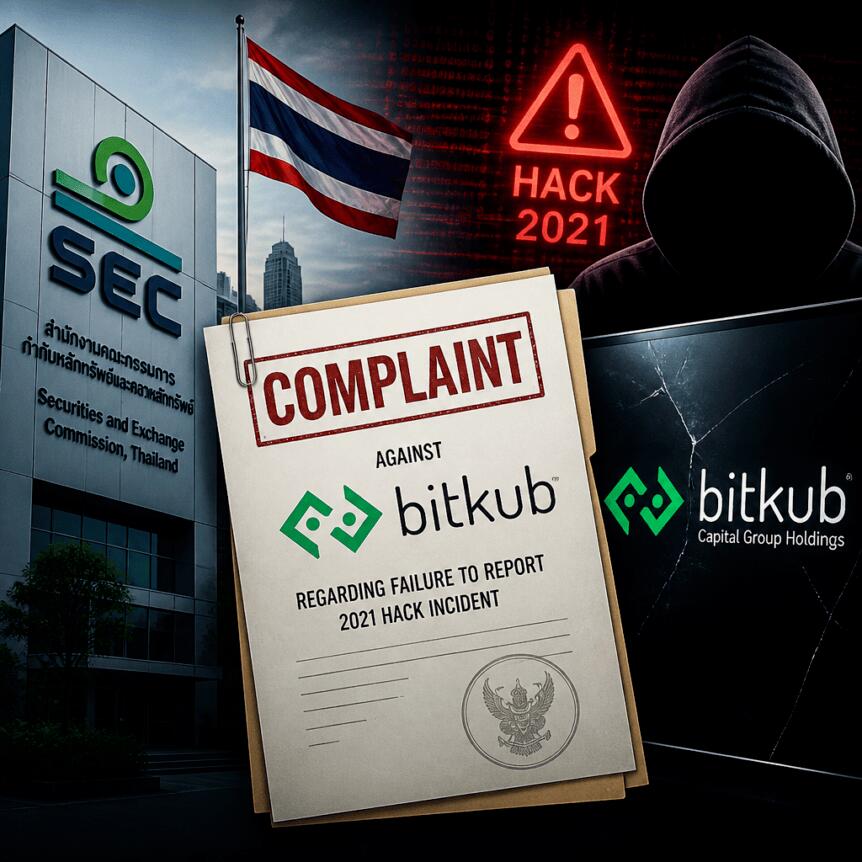
Thailand’s crypto market is facing renewed regulatory pressure after the country’s Securities and Exchange Commission (SEC) filed a criminal complaint against Bitkub and two former directors over allegations of inaccurate disclosures tied to a 2021 cyberattack.
In a report released Thursday, the Thai SEC said it has brought the case against Bitkub Online along with former executives Sakolkorn Sakavee and Thaweesap Rawan, accusing them of submitting company reports that misrepresented the impact of the hack during the period under investigation. The matter comes at a sensitive time for Bitkub, as its parent company has been weighing a potential public listing—an issue that typically brings stricter expectations around transparency and governance.
Key takeaways
- The Thai SEC filed a criminal complaint against Bitkub Online and two former directors for alleged false reporting connected to a May 2021 cyberattack.
- The SEC claims Bitkub failed to reflect the full impact of the theft in daily net liquid capital reports between May 10 and Oct. 30, 2021.
- The regulator estimates the stolen crypto assets at 16 types worth about 1.7 billion baht (around $50 million).
- Bitkub disputes the SEC’s allegations, saying disclosures were delayed to avoid a bank-run and that it later covered the stolen assets with equivalent holdings.
- The case will proceed through Thailand’s investigation and possible prosecution process, while Bitkub’s broader corporate plans remain in focus.
SEC alleges Bitkub understated losses in capital reporting
At the center of the complaint is the SEC’s contention that Bitkub did not accurately disclose the consequences of the May 2021 hack. According to the SEC, the incident led to the theft of 16 categories of digital assets from the exchange, with a stated value of approximately 1.7 billion baht (about $50 million).
The SEC further alleged that Bitkub replaced the stolen assets by Oct. 31, 2021. However, it said the exchange’s daily net liquid capital reports did not show a significant reduction in assets during the period from May 10 through Oct. 30, 2021.
In the SEC’s view, this reporting gap could have created the impression that customer assets remained effectively unchanged and that the exchange had not suffered meaningful losses from the attack.
The complaint accuses Bitkub and the former directors of violating multiple provisions of Thailand’s digital asset regulations in connection with the alleged false disclosures. The SEC said the matter will move forward through investigation and, if warranted, prosecution and court proceedings.
Bitkub counters: disclosure timing aimed to prevent a bank run
Bitkub rejected the SEC’s claims in a post on X, describing the complaint as stemming from disclosure decisions made after the May 2021 cyberattack rather than from fraudulent intent.
The exchange said it delayed disclosing the wallet compromise to help prevent a bank run while it worked to address the loss. Bitkub also stated that its co-founders later purchased digital assets equivalent to the stolen funds, arguing that neither the company nor its customers ultimately experienced financial losses.
Alongside the rebuttal, Bitkub said it has since strengthened governance, compliance, and security systems. The exchange did not indicate that it will change or reverse its position, but its response frames the controversy as a risk-management dispute over timing and communication rather than a concealment of ongoing damage.
Why this case matters as Bitkub eyes a listing
Beyond the immediate legal process, the SEC complaint arrives as Bitkub’s ownership group considers a potential public listing. In December 2025, Bitkub confirmed to Cointelegraph that it was considering an initial public offering, with a potential listing in Hong Kong.
That context matters because public-market pathways generally increase pressure on disclosure quality, internal controls, and auditability—particularly for regulated exchanges. Even if Bitkub’s parent company proceeds with fundraising or an IPO plan, regulatory scrutiny of past reporting practices can influence investor sentiment, due-diligence findings, and the scrutiny applied by prospective underwriters or listing authorities.
At the same time, the case highlights an underlying tension that has appeared in crypto regulation across multiple jurisdictions: whether a firm’s attempts to stabilize conditions after an incident justify delayed or incomplete public disclosures, and what regulators consider “accurate” reporting in the interim.
Bitkub’s scale in Thailand and what to watch next
Founded in 2018, Bitkub has become one of Thailand’s best-known crypto exchanges. According to CoinGecko, it ranks first among Thai exchanges by trust score and had about $712 million in daily trading volume at the time of publication for the referenced data.
For market participants, the SEC complaint may affect how counterparties and users evaluate compliance and reporting standards—especially for an exchange that already holds significant market share. While Bitkub disputes the allegations, the next phase will be driven by Thailand’s investigation process and any subsequent prosecution decisions.
Readers should watch for whether regulators can show that the disputed reports materially misled stakeholders, how Bitkub substantiates its claim of later compensation, and whether additional documents surface regarding the timeline of disclosures around the May 2021 hack. As the legal process develops—and with IPO plans still part of the background—clarity around internal controls and incident communications could become a defining factor in how Bitkub is judged by both regulators and investors.

India’s Internet Freedom Foundation (IFF) has condemned a government order requiring GitHub to remove repositories linked to Jack Dorsey’s decentralized messaging app, BitChat, calling the action unconstitutional and a threat to both free speech and open-source development.
The dispute centers on how the Indian government justified the takedown. According to IFF, the order used Section 79(3)(b) of India’s Information Technology Act rather than the country’s formal website-blocking route, a process IFF says includes procedural safeguards. The group urged authorities to withdraw the notice and disclose all takedown orders issued under the same provision.
Key takeaways
- IFF says the BitChat-related GitHub removal order should have followed India’s formal website-blocking process rather than Section 79(3)(b).
- The cybercrime agency’s directive reportedly demanded GitHub disable access to three BitChat repositories within three hours.
- Iff argues the order fails to identify unlawful content, instead targeting BitChat’s decentralized design as the basis for removal.
- BitChat routes encrypted messages between nearby devices via Bluetooth without relying on internet connectivity or centralized servers.
- Adoption of BitChat has reportedly increased during internet shutdowns and unrest in multiple countries since its release in July 2025.
GitHub repositories ordered removed over “internet shutdown” concerns
A day before IFF’s public response, India’s cybercrime agency ordered GitHub to disable access to three BitChat repositories within a three-hour window. The rationale provided, according to IFF’s account, was that the decentralized messaging app could be used to circumvent internet shutdowns, evade lawful surveillance, and enable unlawful activity.
BitChat’s core design is meant to reduce dependence on the public internet. Instead of routing messages through centralized servers or requiring continuous connectivity, the app can relay encrypted communications between nearby devices over Bluetooth. In practical terms, that means it can function even when mobile networks or internet service are disrupted—an attribute that has historically drawn both interest from users in restrictive environments and scrutiny from authorities concerned about oversight.
IFF challenges the legal route and the lack of identified unlawful content
In its statement posted on X, IFF argued that the government’s approach exceeded its legal authority. The group said the order was issued under Section 79(3)(b) of India’s Information Technology Act, rather than through India’s formal website-blocking mechanism, which IFF says includes procedural safeguards.
IFF’s position is that this difference in process matters, because the method chosen can affect transparency and the ability to contest a removal. The organization also asked the government to withdraw the notice and to publish all takedown orders made under the provision, framing the request as a transparency measure rather than a technical objection.
Just as importantly, IFF disputed the substance of the justification. The group said the order did not point to specific unlawful content inside the repositories. Instead, IFF claimed the government’s case treated BitChat’s decentralized architecture itself—particularly its ability to support peer-to-peer communication over Bluetooth without internet access—as grounds for removal.
That framing has wide implications for open-source ecosystems. When takedowns are based on functionality rather than identifiable prohibited material, developers and maintainers may face broader uncertainty about what features are permissible to publish.
Why decentralized messaging has become a flashpoint during shutdowns
Since its release in July 2025, BitChat has reportedly seen rising adoption during periods of unrest, natural disasters, and internet outages. Earlier coverage from Cointelegraph described how the app’s Bluetooth-relay approach can help communities communicate without relying on internet infrastructure. According to Cointelegraph’s reporting cited in the original coverage, adoption surged in countries including Madagascar, Nepal, Uganda, Jamaica, and Iran.
That pattern is notable because it illustrates the tension between emergency communications and state control. In scenarios where networks fail or governments restrict connectivity, tools that operate without centralized infrastructure can become valuable—especially for coordination when traditional channels are unreliable. At the same time, governments often view the same resilience as a way for users to evade monitoring and shutdown measures.
For investors and builders in crypto-adjacent infrastructure—particularly those focused on privacy, censorship resistance, and decentralized networking—the BitChat dispute underscores a broader regulatory reality: decentralization can increase both technical robustness and legal risk, depending on how authorities interpret existing cyber and communications laws.
While this case concerns GitHub repositories rather than a blockchain protocol directly, it sits within a familiar policy theme affecting the wider decentralized tech stack: when software can keep working despite shutdown attempts, regulators may treat the code as part of the threat model.
What to watch next after the GitHub order
For now, the immediate question is whether GitHub access to the affected repositories remains disabled and whether the government provides further specificity on what it considers unlawful. IFF’s demands for withdrawal and transparency—especially publication of all takedown orders under Section 79(3)(b)—could determine how quickly this dispute escalates into a wider debate about constitutional limits and administrative procedure.
Beyond the legal arguments, readers should watch for how this case influences developer practices—particularly how open-source teams decide what to publish, document, or mirror when their tools may be interpreted by regulators as enabling circumvention during shutdowns.
Earlier reporting on BitChat’s launch and design is available via Cointelegraph, and context on adoption during protests and outages was also covered by Cointelegraph in articles including Nepal-related coverage, Jamaica-related coverage, and global unrest adoption coverage.


Lombard Finance has launched its Bitcoin Onchain Credit Strategy with Flow Traders as an early institutional participant.
Summary
- Flow Traders can borrow stablecoins while Bitcoin Earn deposits provide collateral coverage through Cap’s platform.
- Bitcoin holders receive underwriting premiums alongside vault returns, linking yield directly to institutional borrowing demand.
- Chainlink CCIP moves BTC.b from Avalanche into Ethereum, widening cross-chain access to the credit strategy.
The product lets the market maker borrow stablecoins without posting its own collateral directly onchain. Instead, Bitcoin supplied through Lombard’s Bitcoin Earn vault provides separate collateral coverage through Cap’s credit platform.
The model connects Flow Traders’ demand for stablecoin financing with Bitcoin holders seeking yield. Borrowing premiums paid by the trading firm flow to depositors whose assets support the credit. Lombard said the new allocation sits inside Bitcoin Earn, which has recorded more than $1 billion in deposits from over 38,500 users.
Flow Traders borrows through Bitcoin depositors
Flow Traders accesses stablecoins through Cap’s automated credit marketplace on Ethereum. Bitcoin Earn depositors supply the assets that cover the loan, while Symbiotic provides the shared-security layer. Cap’s documents say approved operators can borrow reserve assets after receiving enough collateral from delegators. Each operator receives isolated coverage rather than sharing the same collateral across several borrowers.
If a covered loan falls below its required safety level, Cap can liquidate or slash the delegated assets to repay debt. Lombard CEO Jacob Phillips said, “By separating the borrower from the collateral provider, the parties involved have made it possible for regulated, institutional trading firms to tap into onchain credit for the first time.”
Flow Traders executive Michael Lie said the strategy links Bitcoin holders with financing demand that is “less correlated to DeFi market conditions.”Flow Traders has traded digital assets since 2017 and provides liquidity across exchange-based and bilateral institutional markets.
Bitcoin Earn adds institutional credit premiums
Bitcoin Earn operates as a managed meta-vault. Users can deposit LBTC, BTC.b, WBTC or native Bitcoin and receive BTCe receipt tokens. Professional managers allocate the pooled assets across several strategies rather than one lending market. Sentora manages the initial vault, while Veda supplies its infrastructure.
Lombard launched Bitcoin Earn in February 2026 as a managed Bitcoin yield product. The new credit strategy becomes one allocation within that structure. Flow Traders’ fixed annualized premium adds another source of return alongside other vault strategies, whose yields can change with market conditions.
Lombard’s documentation says BTCe withdrawals may take up to 14 days and settle in LBTC, regardless of the asset originally deposited. The company also lists smart contract, strategy and liquidity risks. Audits may reduce technical risk, but they cannot remove the chance of code failures, losses or delayed withdrawals.
Cap also states that delegators face slashing risk if an operator becomes undercollateralized. The yield therefore reflects defined credit and technical exposure rather than a guaranteed return. Cap’s risk disclosures warn that malicious or undercollateralized operators may put delegated assets at risk.
Chainlink moves BTC.b into the Ethereum vault
Lombard uses Chainlink’s Cross-Chain Interoperability Protocol to move BTC.b from Avalanche into the Ethereum vault used by the strategy. CCIP lets supported applications transfer tokens and messages between blockchains. This allows the credit product to draw Bitcoin liquidity from Avalanche while Cap manages borrowing on Ethereum.
The cross-chain step follows Lombard’s May decision to use CCIP for more than $1 billion in LBTC and BTC.b assets. The company said the change aimed to standardize transfers as its Bitcoin products expanded across more networks.
As crypto.news reported, Lombard moved LBTC and BTC.b to Chainlink CCIP as its exclusive cross-chain infrastructure after reviewing its bridge setup. Lombard said the migration replaced LayerZero across several networks.
The BTC.b route follows Lombard’s acquisition of the asset and its infrastructure from Ava Labs in October 2025. As previously reported, the deal included BTC.b’s existing Avalanche integrations and user base. Lombard planned to expand the 1:1 Bitcoin asset to Ethereum, Solana and other networks.
Pilot tests a different lending structure
Traditional DeFi loans usually require borrowers to post more collateral than they receive. Lombard’s structure separates the borrower from the collateral provider. Flow Traders receives stablecoins, Bitcoin Earn depositors provide coverage, and Cap’s contracts track the loan, collateral level and possible liquidation.
The setup does not remove lending risk. It depends on Lombard’s vaults, Cap’s credit contracts, Symbiotic’s collateral system, Chainlink’s cross-chain service and Flow Traders meeting its repayment duties. Problems in any connected system could affect returns, withdrawals or deposited assets.
Lombard has not disclosed the pilot loan’s size, duration, stablecoin type or interest rate. It has also not named other borrowers. The launch extends Lombard’s Bitcoin products beyond staking and standard DeFi lending, while testing whether Bitcoin depositors can support institutional stablecoin credit through an onchain structure.


ICBC has completed China’s first digital yuan cross-border payment with Singapore through the newly upgraded Digital Currency Express platform, settling nearly 10 million yuan in import shipping fees with same-day fund delivery.
Summary
- ICBC has completed China’s first digital yuan cross border payment with Singapore through the CBETS platform, settling nearly 10 million yuan in shipping fees.
- The payment reached the Singapore recipient on the same day as China expands the use of its digital yuan for cross border trade settlements.
- The transaction builds on China’s push to strengthen digital yuan payment infrastructure alongside ongoing cross border CBDC and stablecoin initiatives.
According to Mobile Payment Network, the transaction was jointly completed by the Shanghai branch of the Industrial and Commercial Bank of China (ICBC) and ICBC Singapore, becoming the first China-Singapore cross-border payment to run through the Digital Currency Express (CBETS) comprehensive settlement platform.
The payment covered nearly 10 million yuan in import shipping costs and was settled entirely in digital renminbi, with the funds reaching the Singapore recipient’s account on the same day.
The report said the transaction was completed for W Company, a subsidiary of a centrally owned enterprise’s trading platform that regularly imports iron ore and pays overseas shipping charges.
Because the company frequently handles large-value cross-border settlements, it previously relied on conventional international transfers that involved multiple intermediary banks, longer processing times and foreign exchange costs.
ICBC Shanghai introduced the company to the Digital Currency Express platform as an alternative settlement method before working with its Singapore branch to complete the payment. According to the report, the transaction demonstrates how digital yuan settlement can shorten payment processing while providing direct visibility into cross-border fund transfers.
Beyond the individual payment, the development expands ICBC’s use of China’s international digital yuan infrastructure. Mobile Payment Network said the bank has now established integrated digital yuan payment and collection services with both Singapore and Laos through the CBETS platform, creating a unified cross-border settlement framework linking its domestic and overseas branches.
CBETS expands China’s digital yuan payment network
The Digital Currency Express platform was built by the International Operation Center of the digital renminbi under the guidance of the People’s Bank of China’s Digital Currency Research Institute. According to Mobile Payment Network, the platform was upgraded in 2026 after China’s digital yuan infrastructure was reorganized, combining the previous cross-border payment platform, blockchain service platform, and digital asset platform into a single settlement network.
Overseas financial institutions can connect through a Hong Kong access point known as “One Point Access,” allowing participants to access multiple services through a single gateway. The platform supports both centralized and blockchain-based systems while using ISO 20022 messaging standards, making it compatible with existing international payment infrastructure.
Its design also allows financial institutions to process barcode payments, remittances, trade settlements and investment-related transactions while supporting additional digital financial services. According to the report, the modular architecture combines retail and wholesale payment functions with on-chain and off-chain settlement services to reduce integration costs for participating institutions.
The platform has continued to add financial institutions since its launch. On June 16, 2026, the International Operation Center signed direct participant service agreements with the first group of 26 financial institutions, including ICBC Asia, Bank of China Hong Kong, Standard Chartered China and several overseas ICBC branches operating in Singapore, Thailand, Laos, Macau and Qatar.
Digital yuan cross-border expansion continues
The latest transaction builds on China’s efforts to expand digital yuan use beyond domestic payments. Last year, the People’s Bank of China established the Digital RMB Operation and Management Center alongside the International Operation Center to separately oversee domestic adoption and international infrastructure for the currency. Officials said at the time that the two institutions would support both local deployment and overseas connectivity for the digital yuan.
Since then, authorities have steadily expanded cross-border applications. Beginning Jan. 1, 2026, banks were allowed to pay interest on verified digital yuan wallets as part of the transition from electronic cash to an interest-bearing digital deposit currency. At the same time, the central bank announced plans to widen cross-border pilots involving Singapore, Hong Kong, Thailand, the United Arab Emirates and Saudi Arabia.
ICBC has also introduced several cross-border payment services over the past year. According to Mobile Payment Network, the Shanghai branch previously launched the “Hu e Hui” international remittance service using the multilateral central bank digital currency bridge, reducing processing times for eligible transfers from about one hour to five minutes.
The bank has also extended digital yuan settlement to offshore trade transactions in Shanghai’s Lingang New Area and introduced a cross-border e-commerce payment solution with Yiwu Pay.
Elsewhere in China, ICBC’s Inner Mongolia branch recently completed the region’s first large-value digital yuan cross-border transfer to Hong Kong worth 220 million yuan using the multilateral CBDC bridge, according to the report.
Mobile Payment Network said ICBC plans to continue working with the International Operation Center to expand standardized digital yuan settlement services across cross-border e-commerce, offshore trade, commodity financing and international logistics payments as more foreign trade companies adopt the platform.
The transaction also comes as Chinese policymakers continue to position digital currencies as part of future international payment networks.
Speaking at the Lujiazui Forum in June, Wang Xin, director-general of the People’s Bank of China’s Research Bureau, said stablecoins could play a larger role in cross-border payments while policymakers continue monitoring their impact on the international monetary system and payment infrastructure.
Wang also said central bank digital currencies deserve continued international cooperation as countries explore new cross-border payment technologies.

Selling spree! Ace investor Dolly Khanna likely exited these 5 stocks in Q1. Do you own any? – Portfolio Shake-Up

Courtney Stodden Reveals Truth Behind Marital 911 Scare

Struggling with ageing skin? This personalised skincare plan is now 75% off


-

 Crypto World7 days ago
Ripple Payments Joins MiCA With 14 Firms, Does It Mean Anything For XRP?
-

 Politics7 days ago
The House | The City of London can help the new chancellor deliver growth in every postcode
-

 Fashion13 hours ago
Weekend Open Thread: Brooks Brothers
-

 Politics6 days ago
Democrats look to World Cup watch parties to register thousands of voters
-

 Crypto World4 days ago
Grayscale Files For Worldcoin ETF, WLD Registers Sharp Rise
-

 Tech4 days ago
Sail Virtually Aboard The “Itanic” With IA-64 Emulator
-

 NewsBeat5 days ago
Unregistered fitter used Gas Safe logo on business flyers
-
 Tech4 days ago
Turtle Beach Command Series KB7 review: a nifty screen-equipped gaming keyboard
-
 Business3 days ago
New Jersey voter registration controversy explained: How 6,600 noncitizens got on the rolls, and what happens next
-

 News Videos6 days ago
Big Money Is Entering XRP
-

 Crypto World7 days ago
Kaspersky exposes OkoBot’s 20-module crypto wallet attack
-
 Entertainment3 days ago
Johnny Depp’s R-Rated Gothic Cult Classic Gets New Release Ahead of Sydney Sweeney Remake
-

 Crypto World2 days ago
Ethics, other provisions in crypto Clarity Act to be further discussed
-

 Tech5 days ago
Watch Flock Safety CEO Garrett Langley discuss the future of surveillance at TechCrunch Disrupt 2026
-
 NewsBeat4 days ago
Shanghai science forum photos show China’s AI and robotics advances in rivalry with US
-

 Crypto World7 days ago
Chip Stocks Enter Bear Market After Moonshot Ai Unveils Kimi K3 Model
-

 Crypto World5 days ago
Circle’s President Sold Over 360,000 Shares, The Filings Explain Why
-

 Tech5 days ago
Subway Sandwich Computers Get a Second Life as Gaming Machines
-

 News Videos1 day ago
The Peugeot Family: How 200 Years of an “Old Money” Dynasty Died in A Boardroom
-

 Tech5 days ago
The 35 Best Board Games for Family Game Night
You must be logged in to post a comment Login