


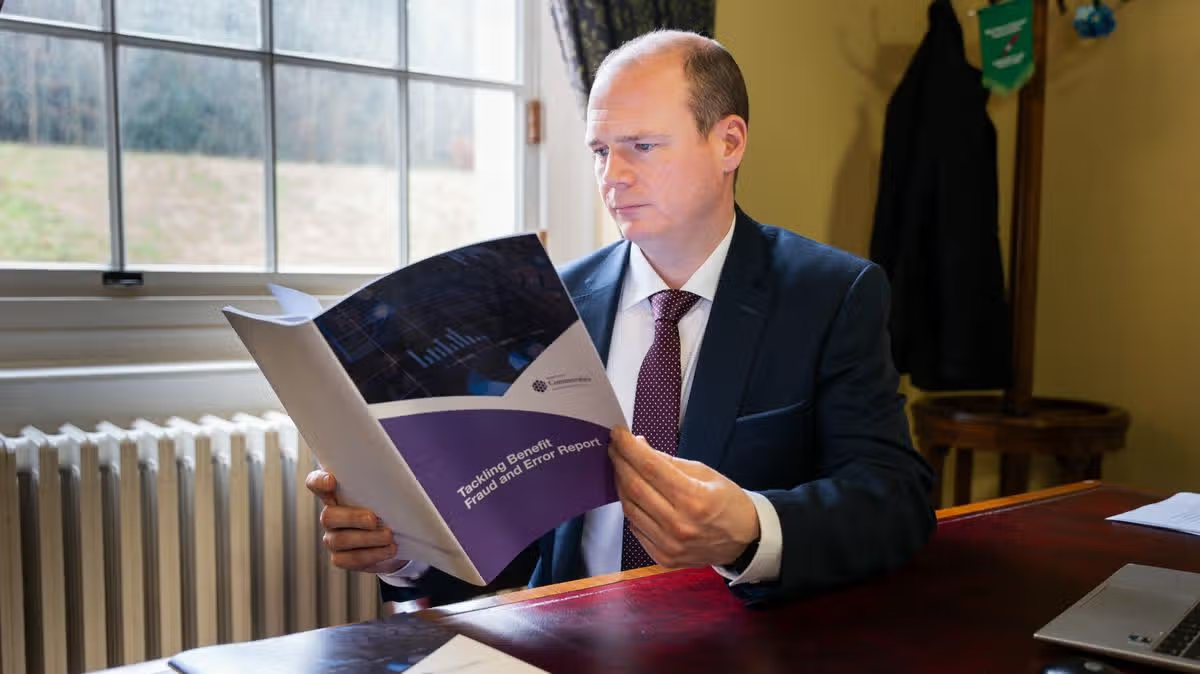
“Our welfare bill is too high. It’s now over £10 billion a year for people in Northern Ireland,” the Minister said.
Communities Minister Gordon Lyons has claimed his department’s crackdown on benefit fraud has reduced losses by more than £60 million over the past year, while calling on Sinn Féin to back proposals he says could deliver £100 million to Northern Ireland over the next five years.
Speaking to Belfast Live, the DUP minister said estimated losses to benefit fraud have fallen from around £230 million to £170 million annually, which he attributed to a combination of increased enforcement, greater public awareness and additional investigative work carried out by his department.
Mr Lyons also defended his controversial decision to reintroduce the publication of the names of people convicted of benefit fraud, insisting it had formed part of a wider strategy to deter offending and encourage members of the public to report suspected fraud.
“Unfortunately, benefit fraud has a huge impact in Northern Ireland. The year before last, it was £230 million a year that we lost to fraud alone. Think of how that could be spent on public services in Northern Ireland because of the action that we’ve taken, that has now reduced by £60 million, so that’s welcome,” he said.
“It’s great that that has happened, but there’s more work to do. But I think it’s really sensible that we take this approach, where we say, this shouldn’t happen and there will be consequences for those who are committing this fraud, because ultimately, we’re talking about public money.
“Money that is raised through taxes by people who go out and work hard every day, and so it’s right that we make the best use of public money and that it should only go to those who need it.
“That’s why I’ve put a focus on tackling benefit fraud, and that’s why we’re in this position now, where there has been that reduction by over £60 million.”
Asked whether the publication of convicted benefit fraudsters’ names had contributed to the reduction, the minister said it had played an important role but stressed there was no single measure responsible for the improvement.
He said the increase in public reporting, alongside enhanced investigative work by departmental staff, had all contributed to the decline in fraud rates, which he said had fallen from 2.5 per cent to 1.7 per cent.
Mr Lyons said the reduction should be welcomed, given the scale of welfare spending in Northern Ireland, but insisted there remained significant work to do.
He said: “I think it has, first and foremost, because it’s been part of a wider campaign that I have been working on to ensure that we deal with this issue. It’s only one part of it, however, I think one of the reasons why we’ve been so successful is that we’ve raised awareness of this as an issue, the public are more aware.
“And the public being more aware helps to hopefully crack down on those and prevent those from taking part in fraud, but also encourages the public to report those who have been taking part in what are essentially criminal activities. So, I’m not going to attribute it to one piece; it’s a collective effort that has been going on.
“So yes, we named and shamed people. We brought it up the agenda. As a result, we got more people reporting incidences of benefit fraud, as well as the resource that we have put in to increase the number of checks that we do and to make sure that a good comparison is done between what people’s circumstances actually are and what they’re purporting them to be.
“So, as I’ve always said, there’s no silver bullet in any of this, but it’s the work that we have done collectively across all of these areas and the hard work of staff within the department as well, and it has made a material change. We’ve gone from fraud of about 2.5 per cent down to 1.7 per cent.
“That’s welcomed, that should be welcomed by people, because of the huge amounts of money that we spend on welfare in Northern Ireland. It equates to a significant sum of money, but going from 233 to £170 million a year is good progress, but there’s more to do. 170 million pounds. Think of what we could spend that on. It’s really important that we actually get that money back that we save.”
The Communities Minister also revealed he wants to introduce additional anti-fraud measures, but argued progress has been hampered by the absence of a funding agreement with the Treasury.
He claimed that while Westminster provides money intended to tackle benefit fraud, it is not ring-fenced once it reaches the Executive, meaning resources are often directed elsewhere.
Mr Lyons also criticised Sinn Féin, claiming the party has yet to approve an Executive paper he submitted more than a year ago that would allow Northern Ireland to retain a proportion of savings generated through anti-fraud work.
He said: “I do want to introduce further measures, and the Treasury sends us money every year to tackle this, but through our system, that money doesn’t come specifically ring-fenced, so what the executive has done has spent it on other things, and that’s why for a while we were starting to fall back there and we weren’t in a position where we could spend it.
“So if I had that additional resource, we could train more staff. There’s some incredible work that is going on. I’ve been behind the scenes, behind multiple layers of security, and I’ve seen those investigators at work.
“It is really, really intricate work that they do, really good work that they do. I want to see more of them because of the money that we invest; we can get the savings back, and we can save the taxpayer money.
“Unfortunately, that money is all retained by the Treasury at Westminster at this moment in time. I wanted to have an agreement in place with the Treasury so that we could move forward on that. I had a paper with the executive which would mean for every £1 that is saved, Northern Ireland gets to keep 50 per cent.
“And that equates to millions of pounds. In fact, it would be a saving of around £100 million for Northern Ireland alone over the next 5 years if we had that agreement in place and we invested in that way. I’ve had that paper at the Executive since May 2025.
“Sinn Féin have not agreed to my proposal that’s on the table, and I’m hoping that they will now see the benefits that we could have been reaping from this, and they will change their mind and get on board with us because I want to save that money because it’s the right thing for us to do. Morally it’s the right thing to do, but I also want to get the financial saving so that we can take that 100 million pounds over the next 5 years and put it into the things that will actually make a difference in Northern Ireland.”
Looking ahead, Mr Lyons said he hopes to work with the new Prime Minister and Treasury ministers to maximise the financial return Northern Ireland receives from tackling fraud.
The minister also broadened the discussion to the overall welfare budget, arguing that reducing long-term economic inactivity would not only lower public spending but also improve health and well-being outcomes for those currently out of work.
He said Northern Ireland’s welfare bill now exceeds £10 billion annually and described its continued growth as “not sustainable”.
“I want to see that agreement in place first and foremost. And then I also want to make sure that we maximise that as much as possible because the money is there. The money is being spent. 170 million was spent this year, but it was spent giving money to those who deliberately misrepresented their circumstances and got money that they didn’t deserve.
“So I want to invest as much as we can so that we can keep as much of that money as we can and ensure that it goes on the things that will actually make a difference and help even further, so help reduce the rate of economic inactivity and bring the benefit bill down even more, because that’s a huge problem we have at the minute.
“I get criticised whenever I say this, but I’m gonna say it again, our welfare bill is too high. It’s now over £10 billion a year for people in Northern Ireland. Some of that is for people who desperately need it.
“Some of it is for our pensioners who have earned it through the work and the contributions that they have made. But there are huge numbers of economically inactive people who could be in work and want to be in work in many cases as well.”
He added: “I think the problem that we have in Northern Ireland is that we have politicians who trip over themselves to appear compassionate, but the problem is they’re not prepared to actually grasp the nettle, which is taking the time and the money to help people get well and get back into, to work, rather than paying people to stay sick, to stay sick or stay where they are right now.
“That’s a different approach that I’m trying to take. To this, and it will help society overall, but importantly, if we really want to be compassionate and we want to help people who are in this situation, we need to make them well and get them back into work.”
On working with Westminster, Mr Lyons said greater cooperation could help reduce welfare dependency while freeing up funding for public services.
“I’ve been working alongside the former Labour minister Alan Milburn to ensure that we can do just that. We’ve got our transformation funding in place, and what we’re trying to do is tackle those long-term issues and do what we can to get people back into work,” he said.
“So, the return that you can get on your money is incredible. For every person that you can take off welfare and get into work, you can save between £15,000 and 20,000 a year. That’s the money that you save on no longer paying benefits and the money then that the Treasury gets in, that will come from tax and national insurance contributions.
“We need to do something about that, and I would appeal to the Westminster government and indeed to those politicians in Stormont who think that the most compassionate thing that we can do is just keep the welfare bill increasing more and more. Let’s ask the question: where does that money come from? It comes from those that are working and it’s not sustainable. This is real politics. These are real pressing issues, and I hope that the Westminster government will recognise that under the leadership of the new Prime Minister.”
For all the latest news, visit the Belfast Live homepage here and sign up to our daily newsletter here.


















































You must be logged in to post a comment Login