
Crypto World
Ether ETFs Pull $104M, Tripling Bitcoin's Weekly Inflows

Spot ether ETFs took in $103.8 million in the week ended July 24, roughly triple the $33.9 million that flowed into spot bitcoin funds, according to Farside Investors data. It is the second consecutive week ether products have out-raised bitcoin's, extending a rotation that began when both… Read the full story at The Defiant


GPT-5.3 Codex, a model released in February, was the first to have a significant hand in its own development “from start to finish,” Amelia Glaese, OpenAI’s vice president of research, told TIME that month. By July, the number of experiments per researcher had doubled, according to the company.
Newer entrants are chasing the same prize. Recursive Superintelligence, founded by former Google, Meta, and OpenAI researchers, also hopes to create AI systems that can rebuild themselves. The months-old startup has raised $650 million.
“The idea that the wealthiest companies in the world, employing some of the smartest people on the planet, are trying to fully automate AI R&D deserves a ‘what the f-ck’ reaction,” Toner told TIME in February.
Yet the chief scientists of Anthropic and OpenAI agree on one thing. Left unchecked, this race ends badly. “We actually believe this should be slowed down … We need some sort of international norm to be able to control this,” Pachocki said. Kaplan says that once AI can train a successor largely autonomously, “I think it would be best for the world if there was coordination to make this go slower,” he says.
Crypto World
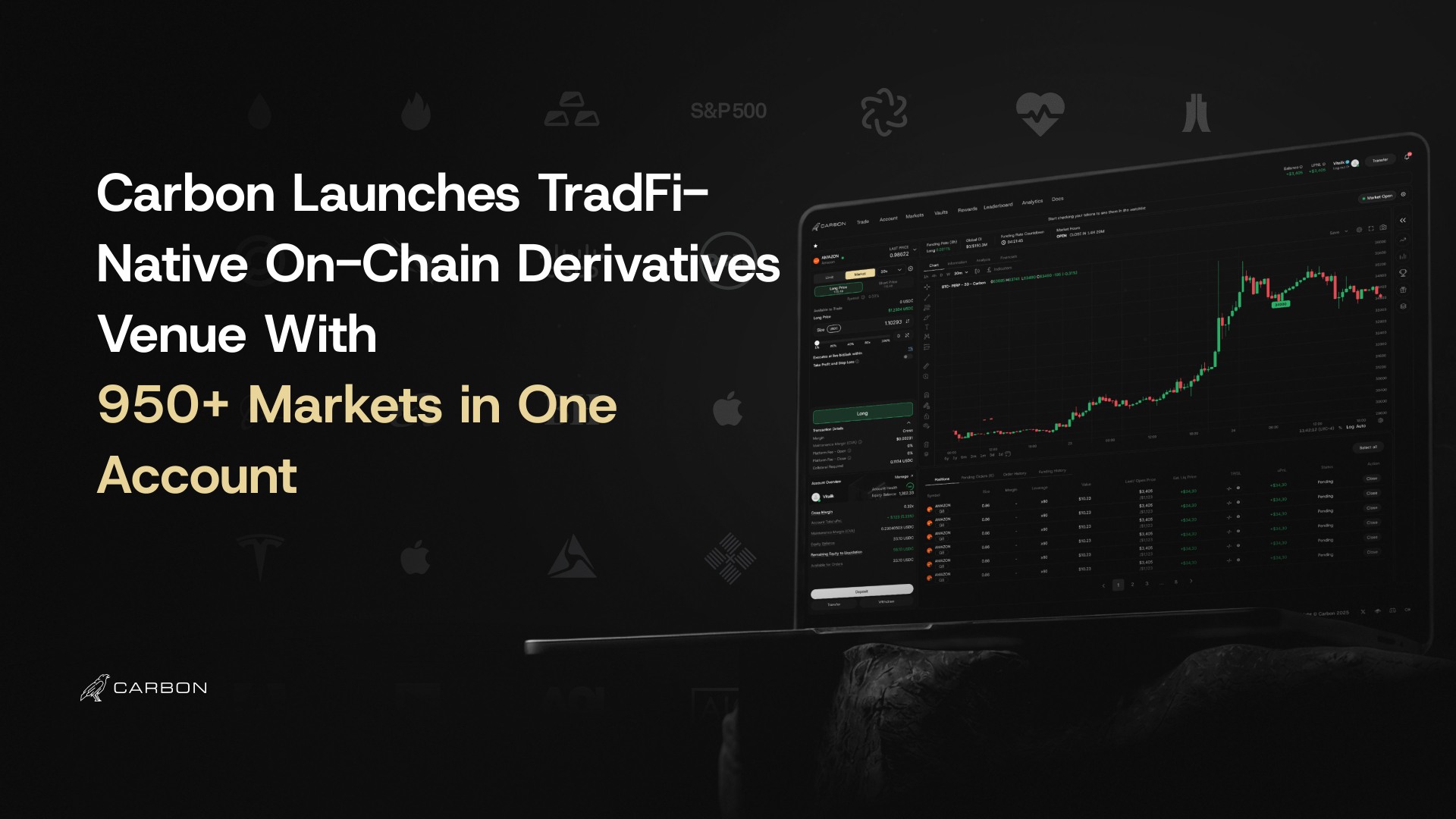
Carbon Launches TradFi-Native On-Chain Derivatives Venue With 950+ Markets in One Account
[PRESS RELEASE – Road Town, British Virgin Islands, August 7th, 2026]
250+ TradFi markets join Carbon’s 530+ crypto perpetuals & 150 24/7 RWAs in one venue. Wall Street depth at listing, stable overnight rates, and on-chain settlement.
Carbon, the on-chain prime broker for global markets, today opened public trading on 250+ Carbon TradFi markets spanning equities, indices, forex, and commodities. Each position is hedged 1:1 at regulated TradFi venues, making Carbon the largest TradFi-native on-chain derivatives venue. Alongside 530+ crypto perpetuals and 150 24/7 RWAs, total tradeable instruments now exceed 950 in one account.
Carbon TradFi is Carbon’s own on-chain instrument. A trader opens a position on-chain, in their own wallet, and Carbon’s solver architecture hedges it 1:1 at a regulated broker off-chain. The trader never leaves self-custody, and the price and depth they receive are the underlying market’s, not bootstrapped on-chain order books.
That structure removes the cold-start problem that has constrained real-world assets on-chain. Every Carbon TradFi market opens at full institutional depth on its first day, because the depth is inherited rather than manufactured. There is no per-market incentive program to run and no waiting period while liquidity accumulates.
Carbon now offers traders both in one account. Its 150 24/7 real-world markets trade around the clock, for traders who want access at any hour. Its 250+ Carbon TradFi markets track market hours with carry prices from the underlying, for traders who want institutional depth and predictable holding costs. Roughly 30 assets are live as both, letting a trader hold one against the other and capture the difference between the two financing rates without leaving the account.
The global market Carbon connects to is substantial. TradFi clears over $1.5 trillion daily in CFDs across thousands of markets, liquidity that until now had no direct route on-chain.
Carbon TradFi coverage at launch:
- 200 stocks across US, EU, and Asia markets
- 62 forex pairs
- 12 indices
- 8 commodities
Carbon can list a trending name within the same week it begins moving in Seoul, Tokyo, or Hong Kong, a cadence order-book venues cannot match because they lack the off-chain rails to stand up a new market that quickly. A further 150 listings are scheduled.
The launch also opens the Carbon Liquidity Provider (CLP) vault to public deposits. The CLP is a delta-neutral yield product: it funds the hedge behind trader flow rather than taking directional positions, earning from the difference between on-chain demand and off-chain liquidity. Modeled APY is illustrative and ranges from 20.3% at launch utilization to 57.1% at maturity, depending on flow and capital utilization.
“Traders have had to choose between the assets they want and the execution they need. Carbon ends that trade-off. Every position is hedged into the deepest liquidity in the world and settles in the trader’s own wallet, with 950+ markets in a single account. This is what global markets look like when they finally arrive on-chain properly.” – Levy, Co-founder and CEO of Carbon
“One of the biggest challenges for bringing traditional financial assets onchain has been delivering deep liquidity. Carbon is operating an architecture that connects onchain trading with established market infrastructure while preserving self-custody. We want Arbitrum to be home to teams building this next generation of financial infrastructure” – David Garcia, Ecosystem Lead at Arbitrum Foundation
About Carbon
Carbon is the on-chain prime broker for global markets, combining crypto perpetuals and Carbon TradFi in one venue. Carbon’s solver architecture connects on-chain traders to institutional liquidity through bilateral 1:1 hedging, delivering Wall Street-grade depth and stable carry with on-chain settlement and self-custody. Live since 2023, Carbon has processed $20B+ in cumulative trading volume across 36K+ unique traders. Carbon operates on Arbitrum. Users can learn more at carbon.inc.
The post Carbon Launches TradFi-Native On-Chain Derivatives Venue With 950+ Markets in One Account appeared first on CryptoPotato.

The idea of a digital nation once sounded like science fiction.
Today, governments, businesses, and online communities are increasingly experimenting with digital identities, programmable money, decentralized organizations, and blockchain-based records. As these technologies mature, blockchain could become more than a tool for cryptocurrencies—it could become part of the infrastructure that allows nations to deliver services, manage identities, verify information, and coordinate economic activity in a digital world.
The real question is no longer whether governments will use blockchain.
It is how deeply blockchain could become embedded into the architecture of the modern nation-state.
What Is a Digital Nation?
A digital nation is not necessarily a country without physical territory.
Instead, it is a society where many of the functions traditionally associated with a nation—identity, governance, commerce, records, payments, credentials, and public services—can operate through digital infrastructure.
Imagine being able to:
- Carry a cryptographically verifiable digital identity
- Access government services from anywhere
- Prove ownership without relying on paper documents
- Verify educational or professional credentials instantly
- Receive government payments through programmable digital money
- Vote or participate in governance through secure digital systems
- Move assets across borders without traditional intermediaries
Blockchain can provide an important foundation for these systems because it creates a shared infrastructure for verification, ownership, and coordination.
Blockchain as a Digital Trust Layer
One of the biggest problems facing digital governments is trust.
A digital document can be copied. A database can be altered. A credential can be forged. A centralized platform can experience downtime or become compromised.
Blockchain introduces a different model.
Instead of asking citizens and institutions to trust a single database, blockchain networks can provide cryptographically verifiable records distributed across multiple participants.
This does not make every piece of information automatically true. Instead, it can make certain claims easier to verify.
For example, a university could issue a blockchain-based credential. An employer could independently verify that credential without contacting the university directly.
The blockchain becomes the verification layer, while the institution remains responsible for the underlying claim.
That distinction is critical.
Digital Identity Could Become the Foundation
A functioning digital nation needs a reliable way to answer a basic question:
Who are you?
Traditional identity systems often depend on physical documents, centralized databases, passwords, and government-issued credentials.
Blockchain and decentralized identity systems could create a more flexible model where individuals control cryptographically secured credentials that can be presented when needed.
Instead of revealing an entire identity profile, citizens could potentially prove specific facts.
For example:
“I am over 18.”
without revealing:
“Here is my full identity, address, birth date, and other personal information.”
Zero-knowledge technologies could make this approach even more powerful by allowing someone to prove that a statement is true without revealing the underlying data.
This could transform digital identity from a simple login mechanism into a privacy-preserving layer for digital citizenship.
Government Services Could Become Programmable
Blockchain’s programmability introduces another major opportunity.
Government services today often depend on complicated administrative processes involving forms, databases, approvals, and intermediaries.
Smart contracts could automate certain processes when predefined conditions are satisfied.
Consider a government grant.
Instead of manually processing every stage, a programmable system could:
- Verify eligibility.
- Approve the recipient.
- Lock allocated funds.
- Release payments according to predefined milestones.
- Record the transaction transparently.
- Generate an auditable history.
This doesn’t mean every government function should become a smart contract.
But where rules are clear and repetitive, programmable infrastructure could reduce administrative friction.
Blockchain-Based Public Records
Public records are another natural application.
Property ownership, business registrations, professional licenses, permits, certificates, and other documents require reliable records.
Blockchain could provide tamper-evident histories for these assets and credentials.
A property registry, for example, could maintain a transparent record of ownership transfers while keeping sensitive personal information outside the public ledger.
This could make processes such as property transactions faster and easier to audit.
The important design principle is not putting everything on-chain.
Sensitive information can remain off-chain while blockchain stores proofs, timestamps, permissions, and references that allow authorized parties to verify it.
Digital Money and the Programmable State
Money may become one of the most significant components of digital nations.
Stablecoins, central bank digital currencies, and tokenized deposits are already pushing payments toward programmable infrastructure.
For governments, programmable money could enable more targeted distribution of public funds.
Imagine disaster assistance being distributed digitally and becoming immediately available to verified recipients.
Or infrastructure budgets being released in stages as independently verifiable project milestones are completed.
The same technology could also support automated taxation, cross-border settlements, and government-to-citizen payments.
But programmable money introduces serious questions around privacy and government control.
A digital financial system must balance efficiency with individual financial freedom.
Technology should make payments easier—not turn every transaction into a surveillance mechanism.
Voting and Digital Governance
Governance is another area where blockchain attracts significant attention.
Blockchain-based voting systems could potentially provide verifiable records of ballots while reducing some forms of manipulation.
However, voting is much more complicated than simply putting ballots on a blockchain.
A secure voting system must address:
- Voter privacy
- Coercion
- Identity verification
- Accessibility
- Ballot secrecy
- Device security
- Authentication
- Vote verification
Blockchain can help with some of these problems, but it cannot solve all of them by itself.
The broader opportunity may therefore be verifiable digital governance, rather than simply blockchain voting.
Citizens could use cryptographic credentials to participate in consultations, proposals, community decisions, and decentralized governance systems.
Digital Nations Could Become Borderless Economies
Perhaps the most interesting possibility is that digital nations could operate across traditional geographic boundaries.
A digital community could have:
- Members distributed around the world
- A blockchain-based treasury
- Digital credentials
- Tokenized assets
- Online governance
- Programmable payments
- Shared economic incentives
This begins to resemble a nation in terms of coordination, even though its members may never share the same physical territory.
Decentralized autonomous organizations already demonstrate parts of this concept.
The next evolution could involve communities combining blockchain governance with real-world institutions, businesses, legal structures, and public services.
The result would not necessarily replace traditional countries.
Instead, it could create new layers of digital citizenship and economic participation that exist alongside them.
Blockchain Could Make Governments More Auditable
Transparency is one of blockchain’s strongest potential advantages.
Government spending is often difficult for ordinary citizens to track.
A blockchain-based public finance system could make selected transactions independently verifiable.
Citizens could potentially follow:
Budget → Allocation → Contract → Payment → Project
with each stage producing a verifiable record.
This could make corruption and financial mismanagement easier to detect.
But transparency must be designed carefully.
A completely transparent government ledger could expose sensitive information about individuals.
The goal should therefore be verifiable transparency without unnecessary personal exposure.
The Biggest Challenge: Governance
Blockchain can provide infrastructure.
It cannot decide what society should value.
Who controls the network?
Who can update the rules?
Who resolves disputes?
What happens when a smart contract contains a bug?
How does someone appeal an automated decision?
What happens when a citizen loses access to their private keys?
These are governance questions, not purely technical problems.
A digital nation therefore needs a combination of:
Blockchain + Law + Institutions + Privacy + Human Governance
Technology alone is not enough.
The Risk of Creating Digital Authoritarianism
There is also a darker possibility.
The same infrastructure that can create efficient digital government can create extremely powerful surveillance systems.
If identity, payments, healthcare, mobility, communications, and public services are connected without appropriate safeguards, governments could gain unprecedented visibility into citizens’ lives.
Blockchain does not automatically prevent this.
In fact, an immutable ledger can create new privacy challenges if sensitive information is permanently exposed.
The future of blockchain-based nations must therefore prioritize:
- Privacy by design
- Selective disclosure
- Zero-knowledge proofs
- User-controlled identity
- Strong legal protections
- Open standards
- Transparent governance
- The right to challenge automated decisions
A digital nation should empower citizens—not simply make citizens more trackable.
From E-Government to On-Chain Government
The first phase of digital government was essentially about putting existing processes online.
Forms became websites.
Documents became PDFs.
Government offices became portals.
The next phase could be fundamentally different.
Instead of simply digitizing bureaucracy, blockchain could make government services programmable, interoperable, and independently verifiable.
That means the digital government of the future may not simply be a website citizens visit.
It could become an infrastructure layer that wallets, applications, businesses, institutions, and citizens interact with directly.
What Could a Blockchain-Powered Digital Nation Look Like?
Imagine a citizen opening a digital wallet.
Inside it are cryptographically verifiable credentials representing identity, education, professional qualifications, licenses, and other permissions.
The citizen can selectively share those credentials with businesses or government agencies.
Government benefits arrive through programmable payment infrastructure.
Property ownership is represented through verifiable digital records.
Businesses register and interact with government services through automated systems.
Public spending is auditable.
Citizens participate in digital governance.
And cross-border transactions settle almost instantly.
The result would be a government that operates less like a collection of disconnected databases and more like an interoperable digital network.
The Future Is Not About Putting the Government on a Blockchain
This distinction matters.
The future is unlikely to be:
“Everything must move onto a blockchain.”
Instead, it may be:
“Blockchain becomes one of the trust layers connecting digital society.”
Some information will remain private.
Some databases will remain centralized.
Some decisions will always require humans.
Some services will use traditional infrastructure.
Blockchain’s role may be to connect these systems through verifiable ownership, credentials, transactions, and state changes.
That is a much more realistic—and potentially much more powerful—vision.
Final Thoughts
Digital nations are not necessarily about replacing physical countries.
They are about rethinking how identity, money, governance, ownership, and public services operate in an increasingly digital world.
Blockchain provides something the internet historically lacked: a native infrastructure for verifiable ownership and coordinated state.
Combined with decentralized identity, zero-knowledge proofs, smart contracts, stablecoins, tokenization, and interoperable digital credentials, it could help create governments and digital communities that are faster, more transparent, and more accessible.
But the technology must remain subordinate to the people it serves.
The ultimate measure of a blockchain-powered digital nation will not be how many transactions it processes.
It will be whether citizens gain more control, stronger privacy, better access, and greater trust in the systems that govern their digital lives.
The next generation of nations may still have borders.
But their most important infrastructure could increasingly exist on-chain.
REQUEST AN ARTICLE


Russia’s Federal Security Service (FSB) said Friday it detained more than 20 people it claims worked for unregistered crypto exchange offices used to move money stolen from Russian scam victims to Ukraine.
The arrests took place at Moscow City, the capital’s high-rise business district, the security agency said. It also said that the FSB and the Interior Ministry had shut down nine channels used to transfer funds abroad through cryptocurrency.
“Young people from the Russian regions who are looking for easy money are remotely recruited to work at these crypto exchanges despite having limited financial literacy,” the FSB said.
Authorities explained that the ring it busted relied on call centers in Ukraine that targeted Russians remotely, including pensioners. Victims were allegedly kept on the phone and told in detail how to proceed before being sent to the crypto exchange offices to buy crypto and transfer it to accounts controlled by the alleged criminals.

The Dow Jones Industrial Average and other major stock indexes started mixed Friday, with the U.S. July jobs report unexpectedly showing losses in the labor market. Meanwhile, artificial intelligence cybersecurity leader Cloudflare (NET) was a big earnings winner on the stock market today. Just after Friday’s open, the Dow Jones industrials slipped 0.1%, while the S&P 500 gained 0.3%. The tech-heavy…
Copyright ©2026 Investor’s Business Daily, LLC. All rights reserved. 87990cbe856818d5eddac44c7b1cdeb8
World, the iris-scanning identity project co-founded by OpenAI CEO Sam Altman, said on July 24 it has entered "Phase 3" of its five-stage roadmap, shifting the network's focus from bootstrapping signups with WLD token rewards to selling proof-of-human verification — including to AI agents acting on… Read the full story at The Defiant
Crypto World
Bitcoin hovers below $65,000 as Middle East tensions escalate further: Crypto Markets Today
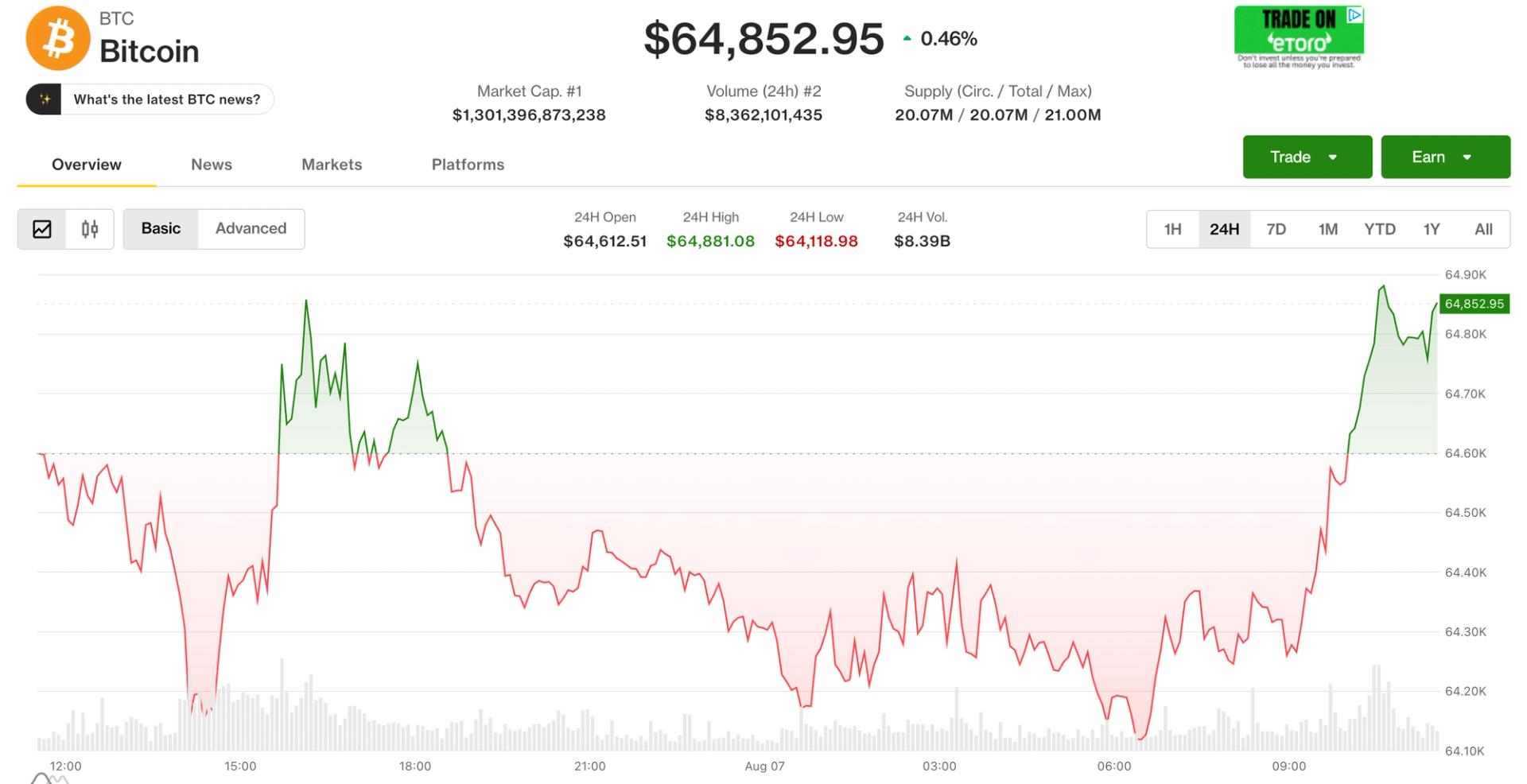
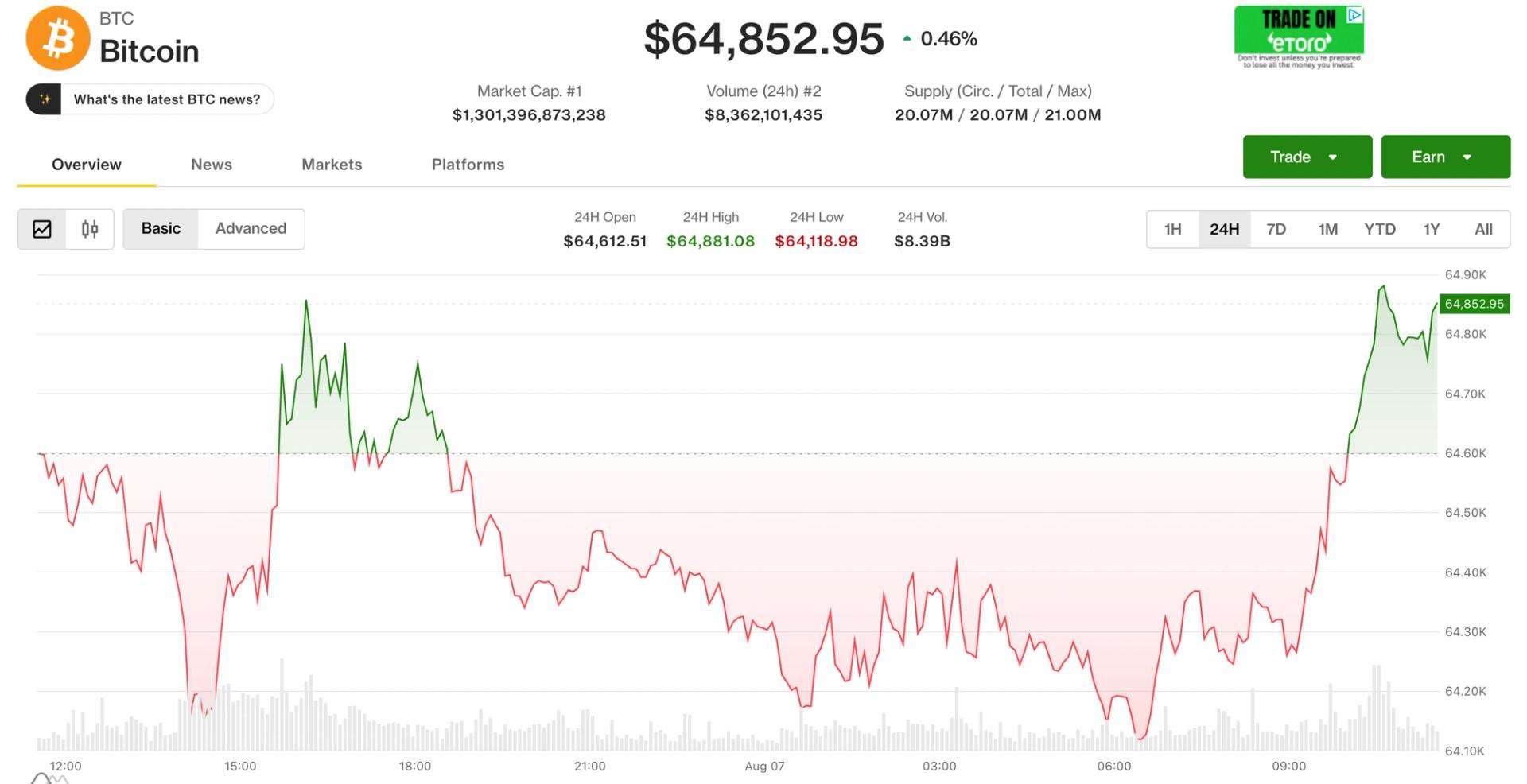
Bitcoin is holding near $64,700 Friday, barely changed over the last 24-hour period, while the broader CoinDesk 20 (CD20) index is down 0.2% over the period.
Brent crude has meanwhile moved to over $83 a barrel after Yemen’s Iran-linked Houthis attacked Saudi Arabia, further escalating tensions in the Middle East.
Treasury yields have seen a slight correction, but remain at 4.67% for the 10-year note, a level Fidelity’s Director of Global Macro Jurrien Timmer said “history suggests that nothing good happens.”
Higher oil could add to inflation pressure if sustained, while elevated Treasury yields tighten financial conditions. Together, they could limit expectations for near-term rate cuts and weigh on bitcoin and other risk assets.
Gold has meanwhile maintained its recovery, moving up 1.5% to now trade at $4,300 per ounce as investors move toward safety in the face of uncertainty.
Derivatives positioning
- Long-short taker ratio: The crypto futures market’s long-short taker ratio has returned to neutral after leaning bullish on Thursday, suggesting traders may be adopting a more cautious stance ahead of the U.S. payrolls report.
- CC token leads OI growth: Canton Network’s CC token is down 13% in 24 hours, yet its futures open interest (OI) has surged over 5%. The combination is said to validate the downtrend, especially as the 24-hour OI-adjusted cumulative volume delta remains negative, indicating sellers are more aggressive by shorting futures via market orders rather than passive limit orders.
- Open Interest Movers: DOGE, XRP, and SUI are open interest gainers, while SHIB has seen a drop.
- CVD Indicator: The CVD indicator paints a bearish picture for the market, as most majors (excluding ADA, HBAR, and ETH) show negative CVD readings.
- Volatility Indexes: The BVIV index, representing BTC’s annualized 30-day implied volatility, remains near a long-held floor of 36%, showing little signs of stress despite the Clarity Act delay and the impending U.S. jobs report. The same holds true for ether’s volatility index (EVIV).
- Options Activity: In Deribit-listed options, puts (bearish bets) at the $60,000 and $62,000 strikes dominate the 24-hour volume rankings for BTC, while the $2,000 call is the most popular for ETH.
Token Talk
- Sui is adding quantum-resistant security to its accounts, integrating two post-quantum signature schemes approved by the U.S. standards body NIST, per The Block. The upgrade lets users optionally adopt quantum-safe keys derived from their existing recovery phrases, so nobody has to generate a new seed or move funds to a new address to be protected.
- The threat it’s guarding against is specific to crypto. In most systems an attacker has to break in before they can go after a key. Onchain, the public key is exposed permanently the moment an account transacts, which opens the door to “harvest-now, forge-later,” where attackers collect exposed keys today and crack them once quantum computers are capable enough to run Shor’s algorithm, the technique that could break the elliptic-curve cryptography securing most wallets. No quantum hardware is needed to start collecting.
- Sui is using two schemes for two risk levels. ML-DSA-65 covers everyday accounts at the protocol level, and the hash-based SLH-DSA-SHA2-128s runs inside Move smart contracts for high-value vaults. The two rest on different math, so a weakness in one doesn’t compromise the other. Sui went with a higher security tier after a July incident where an AI model halved the effective strength of a different post-quantum candidate, a reason to carry margin rather than pick the cheapest option.
- It’s a feature add, not a rebuild. Sui says it was built for “cryptographic agility,” meaning new signature schemes slot in without touching consensus or existing balances, so this ships as a routine protocol update. That contrasts with bitcoin and ethereum, where quantum-proofing is a heavier lift, and lands the same month Strategy and BlackRock formed a consortium to prepare bitcoin for the same threat. SUI traded around [X], per CoinDesk data.

An eagle is seen framed though construction fence on the Marriner S. Eccles Federal Reserve Board Building, the main offices of the Board of Governors of the Federal Reserve System on September 16, 2025 in Washington, DC, U.S.
Kevin Dietsch | Getty Images News | Getty Images
The U.S. economy surprisingly shed jobs in July, and it’s leading investors to think that an interest rate hike by the Federal Reserve in September is increasingly unlikely.
After the jobs report was revealed on Friday morning, odds on prediction market platform Kalshi that the central bank holds rates steady at its meeting next month jumped to 65%. Before the report, odds were about 50-50 for a hike or maintaining the status quo, and just after the Fed’s last meeting at the end of July odds of a hike were at almost 58%.
On CME’s FedWatch tool, odds that the Fed will maintain rates are now at 60%, based on trading in Fed funds futures. On Thursday, those chances were at 45%, and a week ago they were just one-in-three.
The weaker-than-expected jobs report sent Treasury yields lower and stocks higher, as investors priced in the new outlook for the rate path.
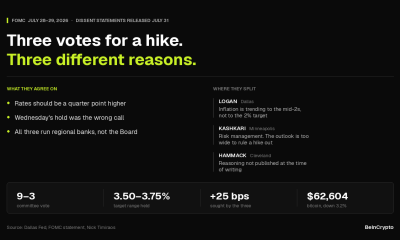
If the labor market is weakening, that may change how the central bank thinks about rate hikes, which some members of the Fed have called for amid higher energy prices due to the U.S.-Iran war. At the bank’s July meeting, three members of the Federal Open Market Committee dissented, arguing the bank should have raised interest rates rather than held them steady.
However, those calls have come after the labor market showed resiliency in 2026 with consistent job growth, after a more mixed picture in 2025. If the job market is showcasing weakness, raising interest rates to slow down the economy may be viewed as more risky.
Investors’ eyes will now be on what the inflation picture in July looked like, and the Consumer Price Index for the month is set to be released next week on Aug. 12. In June, prices posted their biggest month-over-month fall in six years as energy prices fell, though oil rose in July amid renewed tensions in the Middle East.
“Today’s weak payrolls print may ease the pressure on the Fed to raise rates at its September meeting, but next week’s inflation data will still likely be the deciding factor,” said Ellen Zentner, chief economic strategist at Morgan Stanley Wealth Management. “If those numbers come in hotter than expected, a cooler labor market may not be enough to quiet the calls for hikes inside the Fed.”
And rate hikes this year still aren’t out of the question. Even after the report, CME’s FedWatch tool still sees a 55% chance of a hike in October, and an almost 75% chance in December.
— CNBC’s Sean Conlon contributed reporting
Disclosure: CNBC and Kalshi have a commercial relationship that includes customer acquisition and a minority investment.
This Friday, we examine Ethereum, Ripple, Cardano, Binance Coin, and Hyperliquid in greater detail.
Ethereum (ETH)
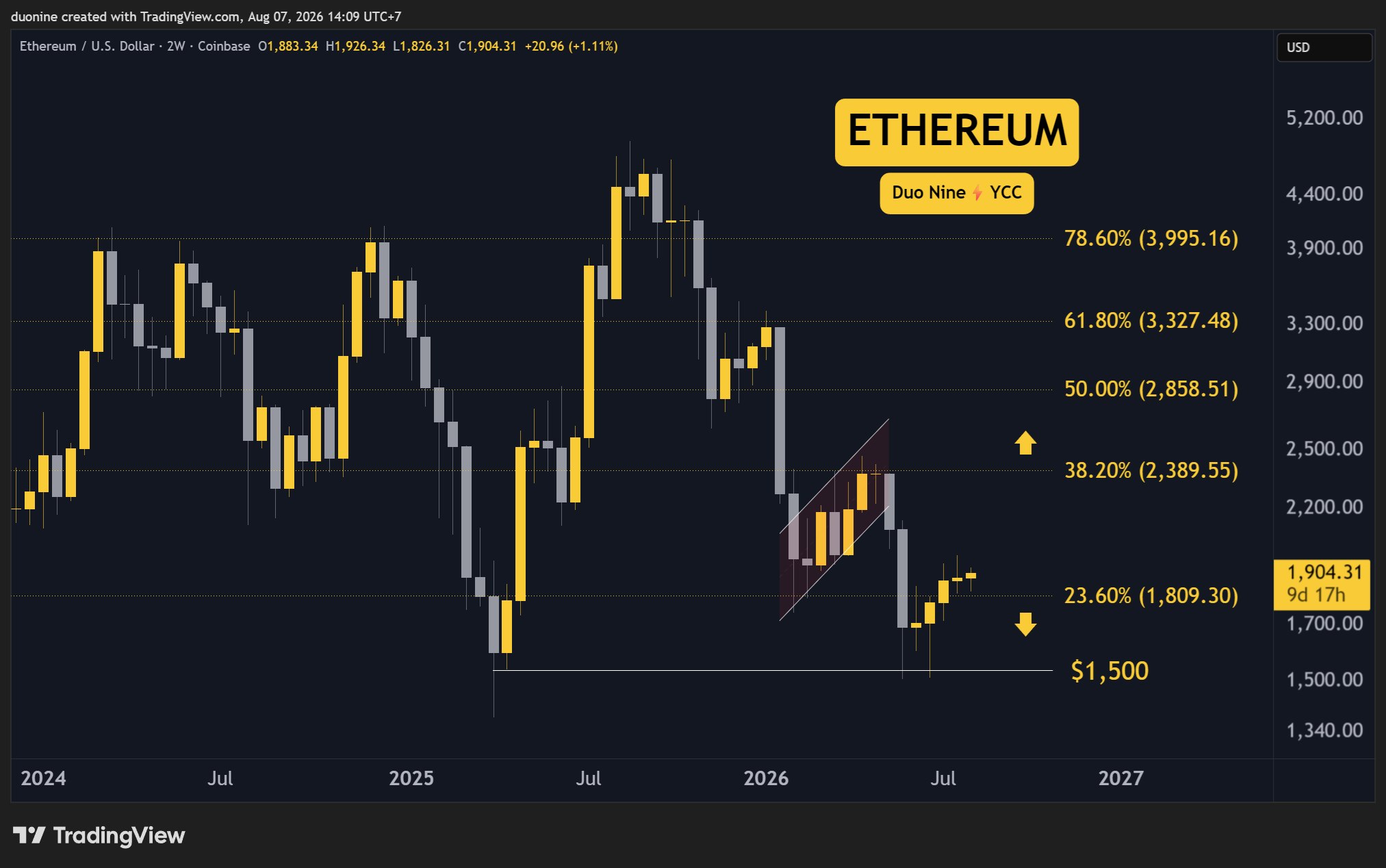
This week, Ethereum continued to range without any significant volatility. This has allowed the price to consolidate under the $2,000 resistance. At the time of this post, the support at $1,800 is holding well and was recently re-confirmed.
The concern, based on this price action, is that ETH does not have the strength to break above $2,000. Any attempts in the past few weeks were rejected and sellers could speculate on an opportunity to take over.
Looking ahead, Ethereum remains in a macro downtrend, and this will only change once the price makes a higher low and high. Ideally, ETH secures $2,000 as support and aims for $2,400 next to escape the current downtrend.
Ripple (XRP)
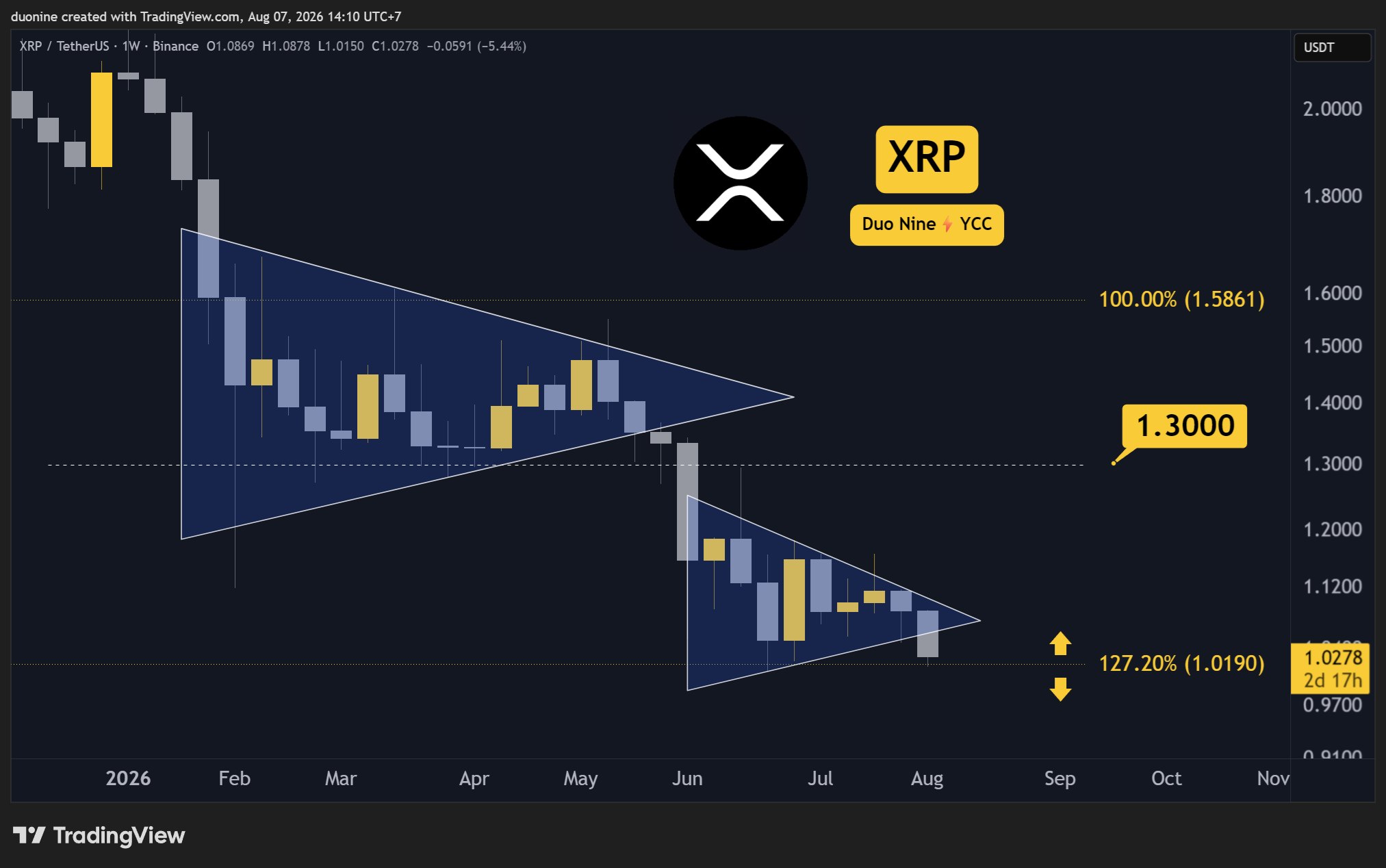
As expected, XRP broke below its latest pennant (in blue on the chart) to re-test the key support at $1. It is critical for buyers to hold here, as otherwise, the price may end up in a nosedive.
Because sellers have the advantage at the moment, the price closed the week 4% lower. Hopefully, buyers return here to send XRP higher, but even if they try that, it could end up as a dead cat bounce.
Looking ahead, the price action remains bearish with a lower low more likely than a reversal. If $1 turns into a resistance, then XRP will have a difficult time stopping its downtrend in the future.
Cardano (ADA)
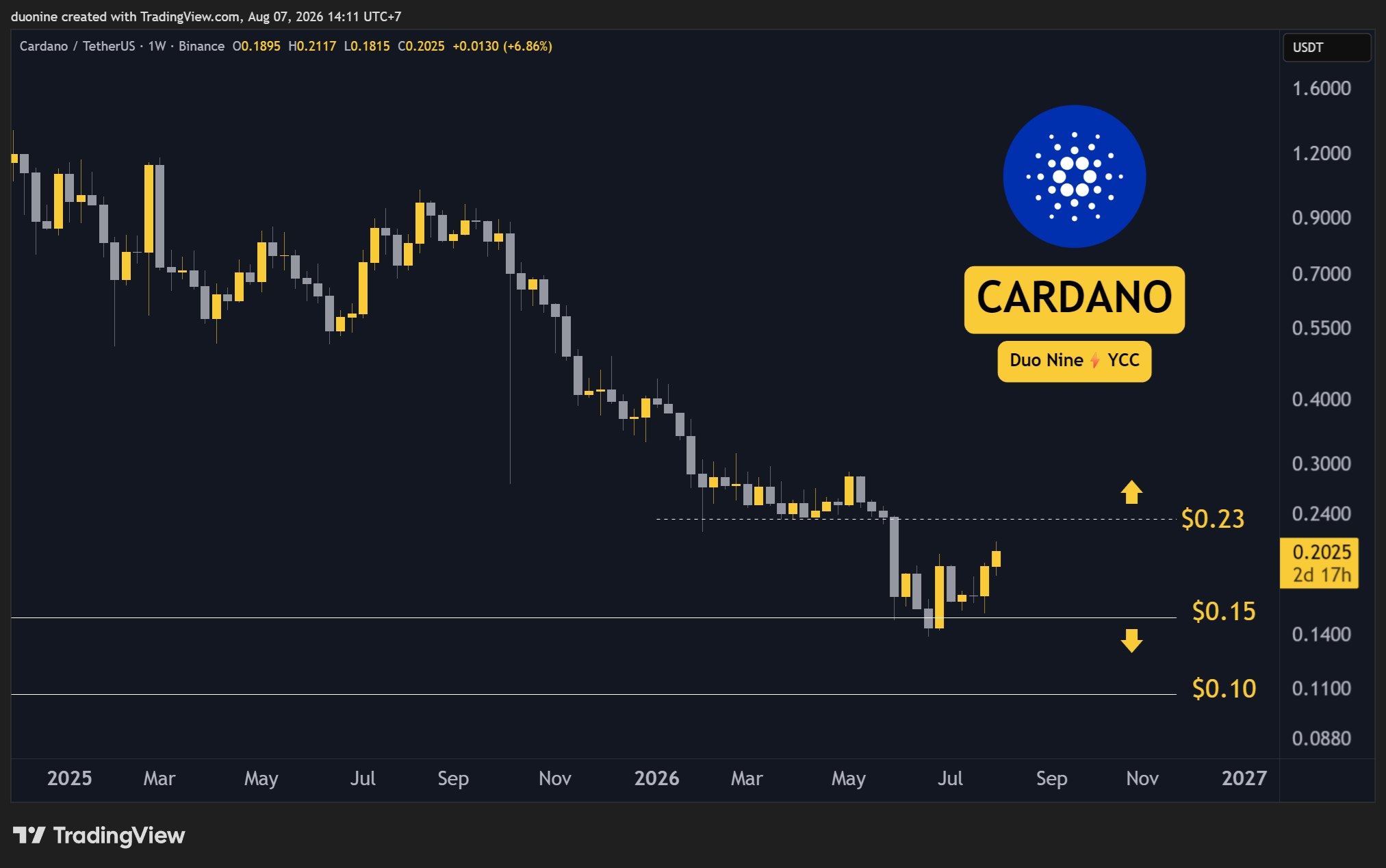
Cardano is one of the few major altcoins closing in double-digit gains this week with an impressive 18% pump. This has allowed the price to move to $0.20 and may go all the way to $0.23, where there is major resistance.
With the current support at $0.15 secured, ADA has good momentum and buyers to sustain this uptrend. The biggest question is how sellers will react at the key resistance. Best to be patient and wait for a reaction at $0.23 first.
Looking ahead, Cardano has a major opportunity to break away from its multi-year downtrend. Moreover, this is the first time in months when the price action turned positive. However, bulls will need to turn $0.23 into support if they want to sustain this uptrend.
Binance Coin (BNB)
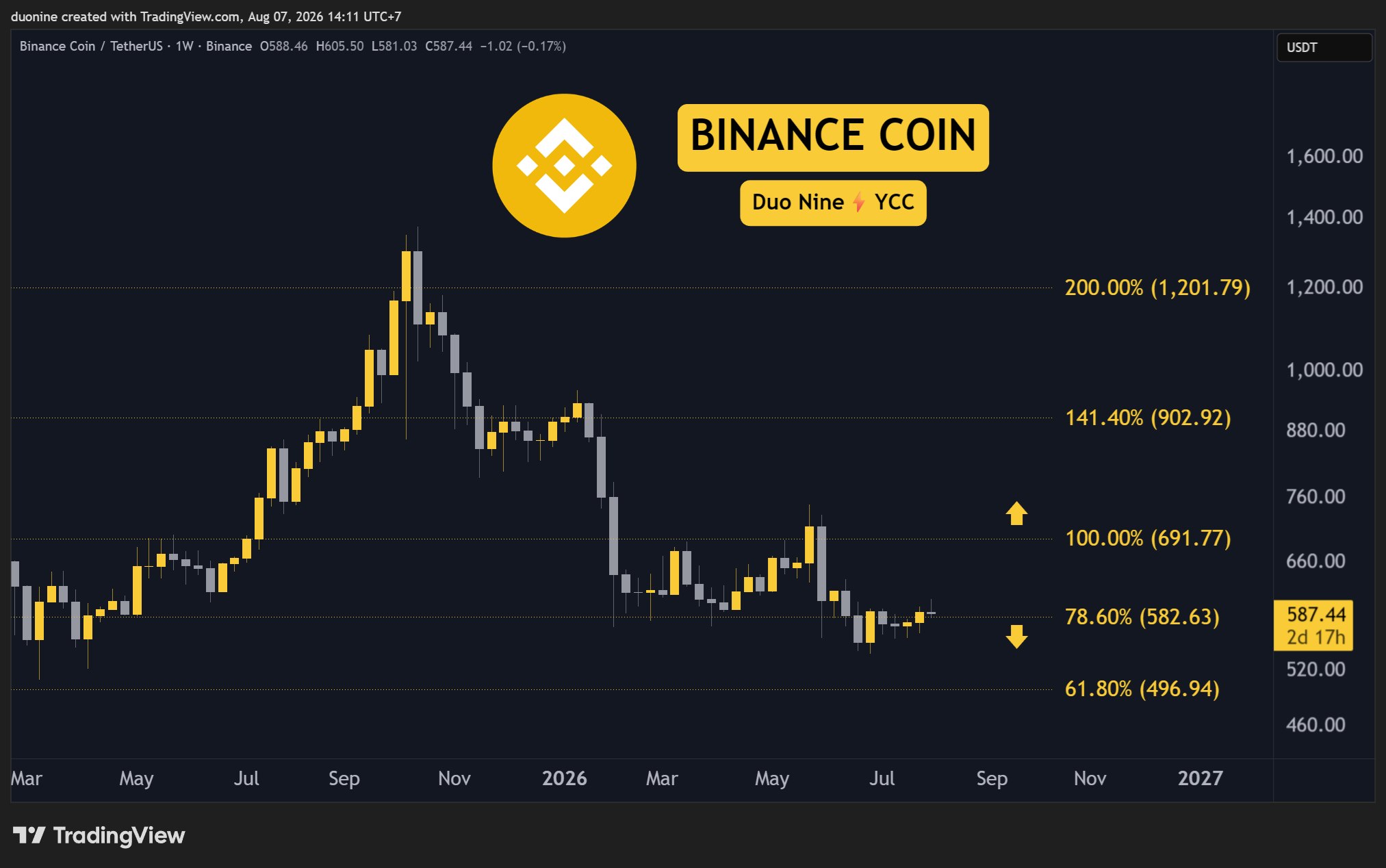
Binance Coin was flat this week and mirrors ETH’s price action, but in a more toned-down way. On the positive side, the price appears to hold above the support at $580. However, buyers did not push much beyond this level, which shows a lack of conviction.
Since sellers are also absent, the price was forced to move sideways and did not give any hints at a decisive direction. Best to watch closely how the $580 level is resolved before picking a side.
Looking ahead, BNB has been moving around the $600 level since the start of the year without any major breakout. While the price remains in a downtrend, this has been less aggressive lately which may hint at a possible reversal later this year.
Hype (HYPE)
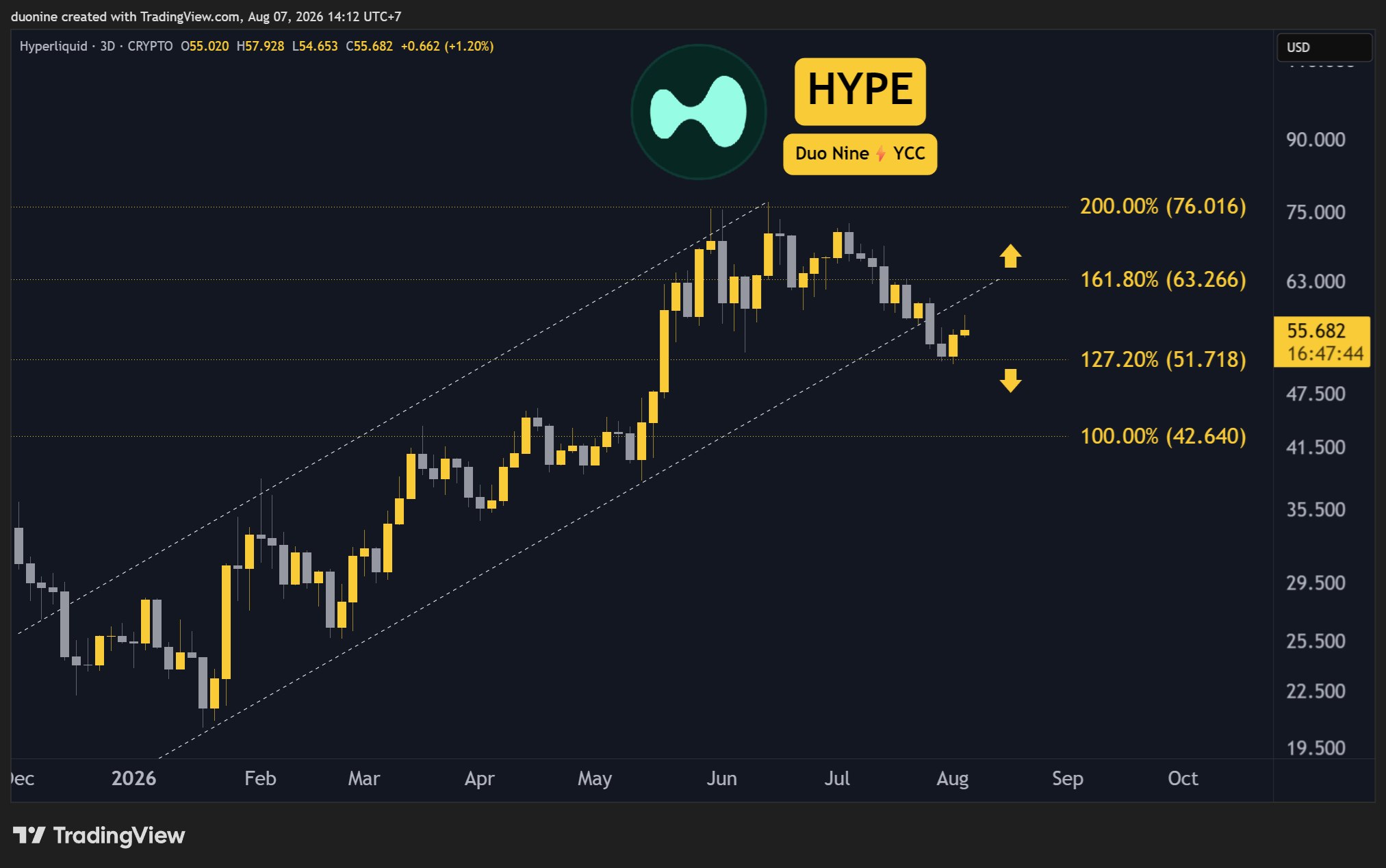
HYPE managed to close 3% higher this week after a successful test of the $52 support level. However, this could end up as a temporary bounce before sellers return to push against the key support again.
On higher timeframes, Hyperliquid has lost its uptrend, and the price is making lower lows. This is bearish. If buyers cannot reclaim $64 in the future, which is also a major resistance, then sellers could take this cryptocurrency much lower.
Looking ahead, the battle will be decided at the $52 support level. So far, this has held against the pressure from bears, but a renewed push later in August may see HYPE make new lows. Best to be cautious here as the price continues to show weakness.
The post Crypto Price Analysis August-07: ETH, XRP, ADA, BNB, and HYPE appeared first on CryptoPotato.


Ondo Finance, a tokenization company, launched the Ondo Network, an execution layer it describes as the evolution of its vision for Ondo Chain, the blockchain it had planned to build for real-world assets. Ondo said the first version is live. In its own announcement, Ondo said the network is not a… Read the full story at The Defiant

Manchester Airport security expert lists three common items that could stop your suitcase from making it into the plane

Nintendo Shares Jump 5% as Profit Surges on Strong Switch 2 Software Sales Despite Weak Hardware

What Happens When AI Starts Building AI? Inside Recursive Self-Improvement


-

 Fashion7 days ago
Weekend Open Thread: Wit & Wisdom
-

 Politics7 days ago
Meta enters AI-training agreement with far-right ‘propaganda rag’ Newsmax
-

 Politics5 days ago
Zack Polanski: an incitement to murder Nigel Farage?
-

 Crypto World6 days ago
MicroStrategy Post-Earnings CLARITY Act Push Could Add New Catalyst for Its Stock
-

 Crypto World6 days ago
XRP Ledger v3.3.0 brings five institutional features
-

 Crypto World7 days ago
New York sues Kalshi over prediction market gambling
-

 Crypto World5 days ago
Crypto PAC spending tops $2M in Michigan House race
-

 Business5 days ago
DTCR: Deleveraging And A Hedge Fund Collapse Point To A Possible AI Bottom
-

 Tech5 days ago
ESET tracks rise in malicious AI skills and adaptable malware
-
 Crypto World7 days ago
3 Fed Officials Just Explained Their Rate Hike Vote: Is Inflation Winning?
-

 Sports6 days ago
France Cricket implodes: letters hidden in a drawer and a board at war
-
Crypto World5 days ago
XRP Ledger urges node upgrade after manifest flood
-

 Crypto World6 days ago
Moneyflip CEO charged in $40K murder-for-hire plot
-
 Sports7 days ago
Bruno Fernandes decision made as Man United ‘discuss’ striker transfer option
-
Business7 days ago
FIFA has scrapped $20 billion World Cup sell-off plan, New York Post reports
-

 News Videos6 days ago
Financial Crash Expert: The 90-Day Collapse Timeline They Are Desperately Hiding.
-

 Sports2 days ago
Jordan Coyle & Cordiamo take Laya Arena Stakes at RDS
-

 Sports7 days ago
Commonwealth Games 2026 Live Updates | Day 9 CWG 2026: Lovlina Borgohain, Sachin Siwach Enter Final After Indian Judokas Script History
-
 Crypto World4 days ago
US Tech Stocks See Largest 5-Week Inflow in History: Can Nasdaq Break Its Downtrend?
-
 NewsBeat6 days ago
Tourist plane on sightseeing flight in Peru crashes into a field, killing all 13 people on board
You must be logged in to post a comment Login