
Crypto World
ether.fi Migrates to Optimism’s OP Mainnet from Scroll

ether.fi, a crypto neobank, is migrating its services from the Scroll blockchain to Optimism’s OP Mainnet to leverage enhanced payment capabilities and enterprise-grade support.
ether.fi, a crypto neobank with $5.7 billion of total-value locked, said in an X post it’s migrating from the Scroll blockchain to Optimism’s OP Mainnet.
The move aims to capitalize on Optimism’s OP Enterprise to enhance global payment capabilities, access established liquidity and users, and provide enterprise-grade support, according to the company’s blog post.
The migration is significant given ether.fi’s substantial user base, boasting approximately 50,000 active cards, according to Cipher Research.
ether.fi offers a digital cash account and card product known as ether.fi Cash, which integrates DeFi features such as fiat-to-crypto flow, yield earning, and a non-custodial wallet.
Previously, ether.fi was hosted on Scroll, the 12th largest Layer 2 solution for Ethereum, with about $100 million of TVL.
Scroll’s SCROLL token is down 2.3% and Ether.fi’s ETHFi is down 3.6%.
This article was generated with the assistance of AI workflows.



Federal Reserve Chair nominee Kevin Warsh filed a 69-page financial disclosure with the US Office of Government Ethics on April 14, revealing assets worth well over $100 million across crypto, AI, and private equity.
The filing clears the last major bureaucratic step before the Senate Banking Committee can schedule his confirmation hearing.
Warsh’s Disclosure Reveals Wide-Ranging Portfolio
The document lists two investments valued at over $50 million each in the Juggernaut Fund LP and $10.2 million in consulting fees from the investment office of billionaire investor Stanley Druckenmiller.
It also includes approximately two dozen positions held through THSDFS LLC, with some individually worth up to $5 million. Those holdings’ details were withheld under confidentiality agreements.
Dozens of additional assets went unlisted by value but appear concentrated in AI and crypto sectors, according to Reuters.
Among the named crypto-related holdings is Blast, an Ethereum (ETH) layer-two network. Warsh has also previously invested in Bitwise Asset Management, the firm behind a spot Bitcoin (BTC) ETF.
Warsh pledged to divest his Juggernaut Fund and THSDFS positions if confirmed. OGE analyst Heather Jones approved the filing, stating he would be in compliance once those divestitures are complete.
What Comes Next for Warsh’s Confirmation
The Senate Banking Committee has yet to formally schedule his hearing, though it could come as early as next week. The committee had initially targeted April 16 but delayed due to incomplete disclosures.
However, Senator Thom Tillis (R-NC) has said he will block a final vote on Warsh until a federal criminal probe involving current Fed Chair Jerome Powell is resolved. Powell’s term expires May 15.
“I will oppose the confirmation of any Federal Reserve nominee, including for the position of Chairman, until the DOJ’s inquiry into Chairman Powell is fully and transparently resolved,” Senator Tillis articulated in a late January post.
The post Trump’s Fed Nominee Warsh Discloses Over $100 Million Holdings in Crypto and AI appeared first on BeInCrypto.
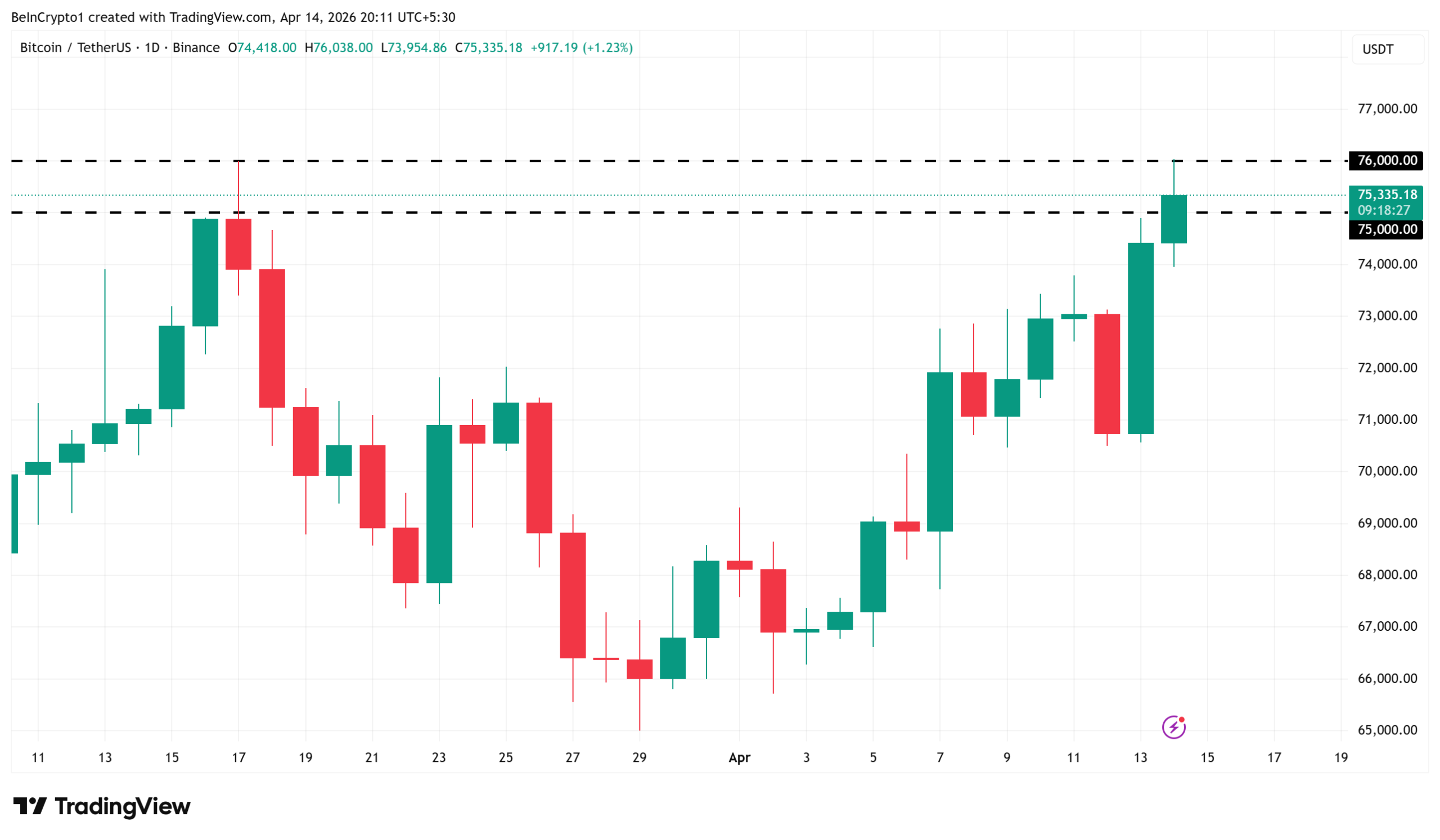
Bitcoin (BTC) climbed above $76,000 on April 14 after the Bureau of Labor Statistics reported March producer prices well below Wall Street estimates.
The data marked a sharp reversal from months of hotter-than-expected wholesale inflation prints, lifting risk assets and pushing BTC past a key institutional benchmark.
March PPI Misses on Every Measure
The Producer Price Index for final demand rose 0.5% month over month in March, less than half the 1.1% consensus forecast. Core PPI, which strips out food and energy, increased just 0.1% against a 0.4% estimate.
On a year-over-year basis, headline PPI printed 4.0% versus the 4.6% expected. Core came in at 3.8%, also below the 4.1% projection.
The miss followed back-to-back hot readings in January and February that had fueled stagflation concerns across macro and crypto markets.
Energy drove most of the remaining price growth. Final demand energy prices jumped 8.5%, with gasoline alone rising 15.7%. Meanwhile, food prices fell 0.3%, and goods excluding food and energy rose a modest 0.2%.
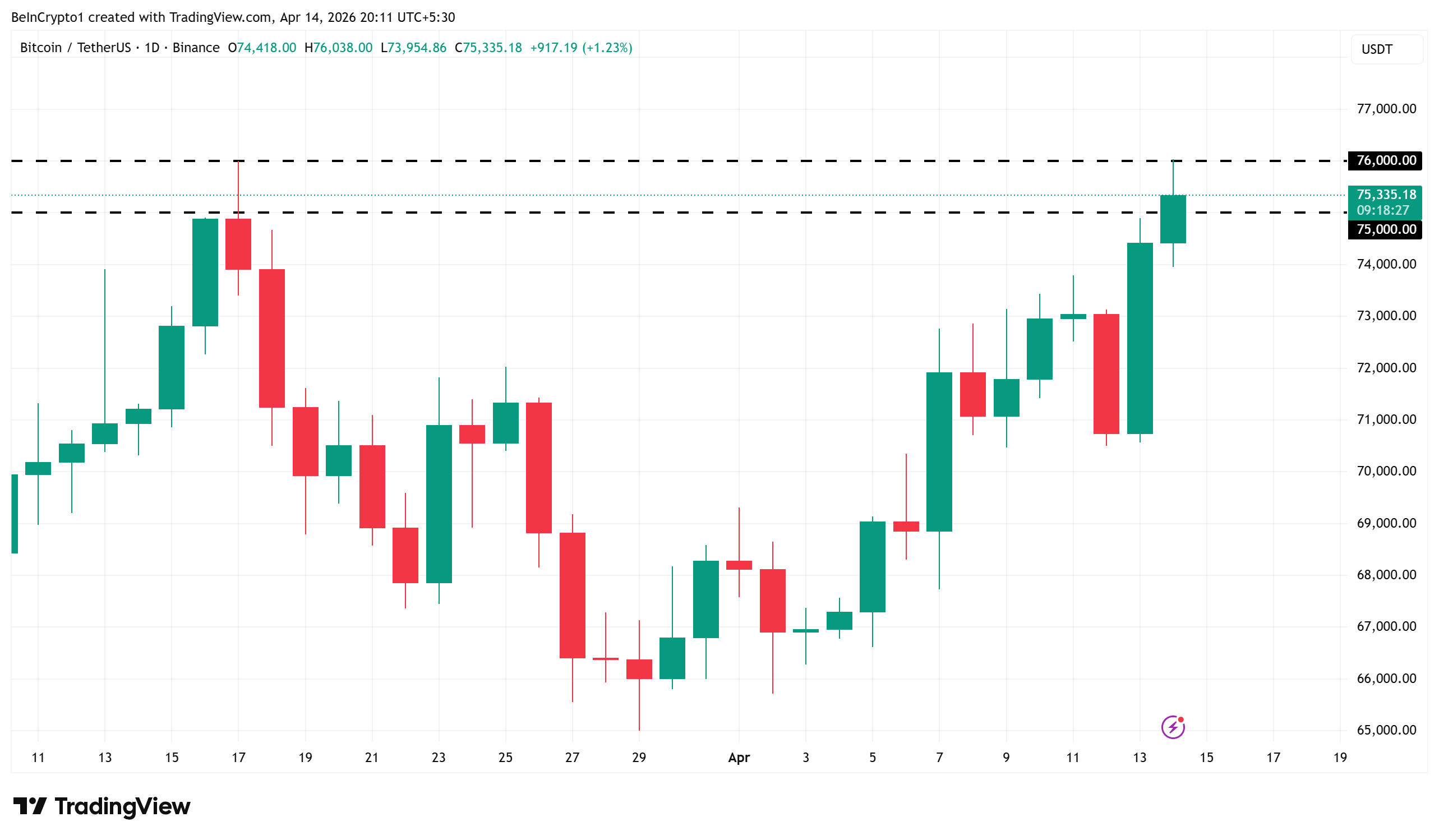
Bitcoin rallied past the $75,000 threshold to record an intra-day high of $76,038. As of this writing, BTC was trading at $75,335, up by almost 5% in the last 24 hours.
Strategy’s BTC Holdings Flip Profitable
The price move carried significance beyond spot traders. BTC’s push to $76,038 took it above MicroStrategy’s average purchase price of roughly $75,580 per coin, turning the firm’s entire position profitable for the first time since late March.
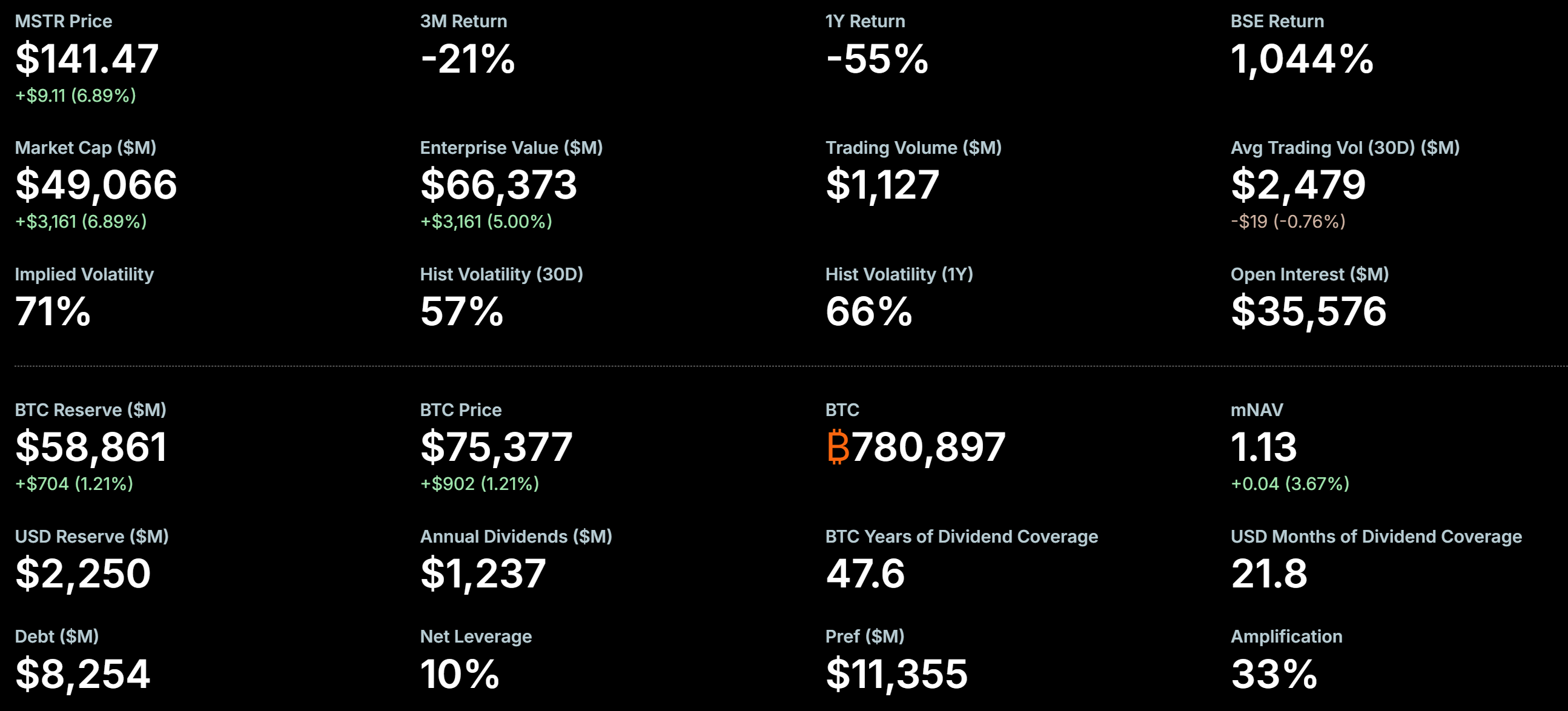
Strategy holds approximately 780,897 BTC, making it the largest corporate Bitcoin holder. The company’s stock (MSTR) rallied 6.97% on the session to $141.58, and its Bitcoin reserve now carries a market value above $58.9 billion.
The firm had continued buying through April’s volatility, adding 4,871 BTC between April 1 and April 5 at an average price of $67,718 per coin.
That dip-buying strategy lowered its blended cost basis and positioned the portfolio for a quicker return to profitability.
Traders will now turn to Wednesday’s retail sales report and upcoming Federal Reserve commentary for signals on whether the cooler wholesale inflation trend will carry into consumer prices and rate-cut expectations.
If March CPI follows PPI lower, the case for a mid-year Fed pivot could strengthen considerably.
The post Bitcoin Hits $76,000 After Shock US PPI, MicroStrategy Shares Rally appeared first on BeInCrypto.
Japan’s largest e-commerce platform is bringing Ripple XRP into its payments stack on April 15, 2026, listing it on Rakuten Wallet for spot trading and wiring it into Rakuten Pay, the app that 44 million users already use to buy coffee, groceries, and bullet train tickets.
The headline number is large enough to matter.
The analytical question is harder: does XRP utility inside a closed loyalty ecosystem constitute retail adoption, or is this a product feature update that happens to use crypto infrastructure most users will never see?
- Integration date: XRP goes live on Rakuten Wallet for spot trading April 15, 2026, with XLM, DOGE, SHIB, and TON listed alongside it.
- User scale: Rakuten Pay has 44 million users; Rakuten’s broader Japan ecosystem covers over 100 million member IDs.
- Mechanism: Users convert Rakuten Points directly into XRP, then fund Rakuten Cash – usable at over 5 million merchant locations – meaning XRP functions as a bridge asset, not a directly held consumer token in most transactions.
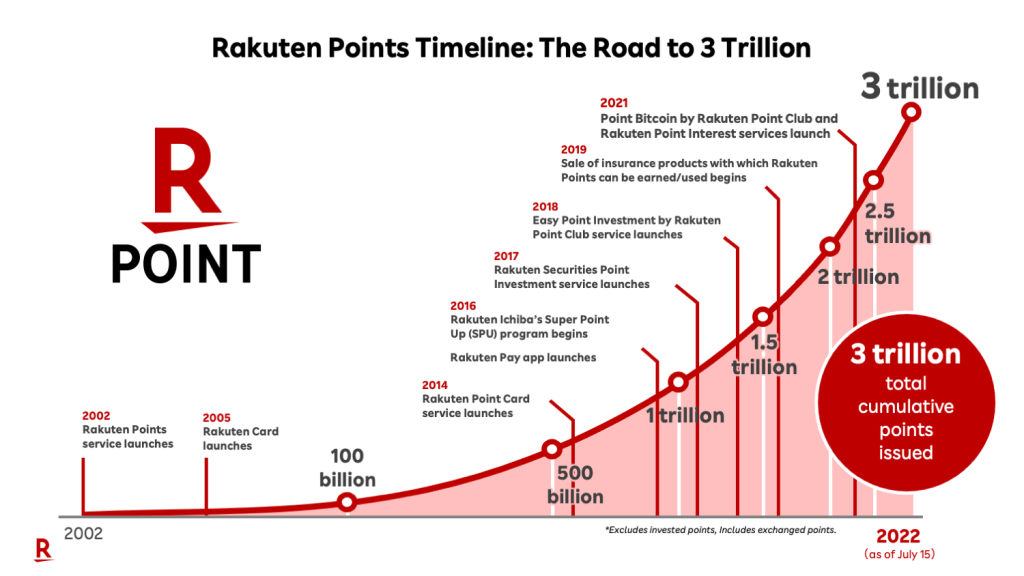
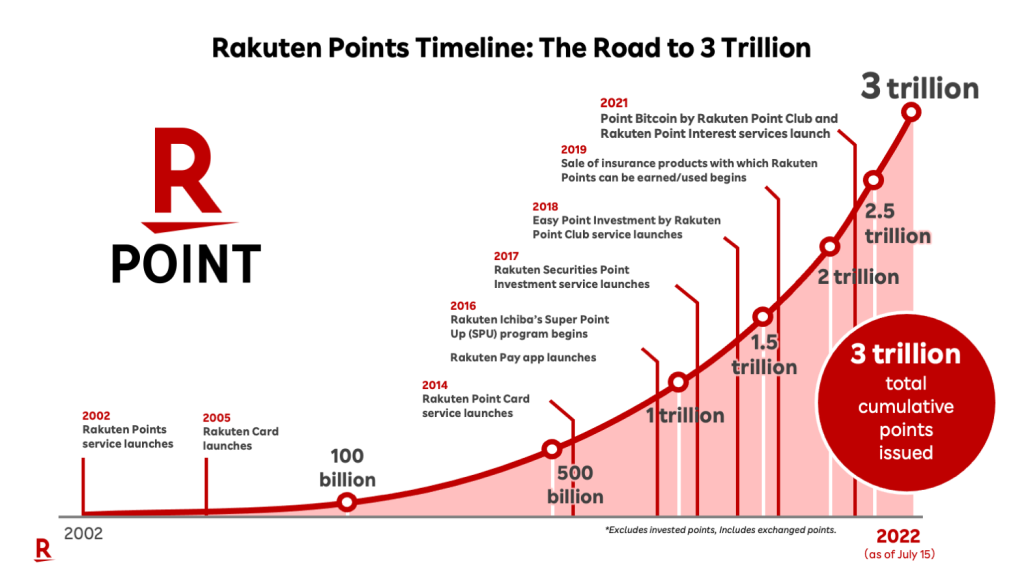
- Points pool: More than 3 trillion Rakuten Points, valued at approximately $23 billion USD, are eligible for conversion – creating a large but loyalty-locked source of potential XRP demand.
- Regulatory footing: Rakuten Wallet operates under FSA licensing and JVCEA membership, giving the rollout compliance cover in one of the world’s most structured crypto jurisdictions.
- What it does not do: This is not an open XRP wallet; it does not give users direct custody of XRP outside the Rakuten ecosystem, and merchants receive fiat – not XRP – at point of sale.
- Watch: Whether Rakuten Bank’s planned FinTech integration (flagged at its March 27, 2026 AGM) enables seamless fiat-to-XRP conversion across its 17 million banking accounts by Q3 2026.
How the Rakuten-Ripple XRP Integration Actually Works – and What It Doesn’t
Rakuten Points are not a crypto asset. They are a proprietary loyalty currency issued by Rakuten at a rate of roughly one point per yen spent across its ecosystem – shopping, travel, streaming, banking.
The company issued approximately 620 billion points in 2022 alone. The total outstanding balance exceeds 3 trillion points, worth around $23 billion USD at current exchange rates. That is a significant pool of locked consumer value.
What the April 15 integration does is open a conversion path: users can take those points, convert them into XRP through Rakuten Wallet, and then load the resulting balance into Rakuten Cash, the platform’s e-money layer, for spending at over 5 million merchant locations.
The Rakuten Pay app handles the front end. Rakuten Wallet, an FSA-licensed and JVCEA-registered exchange, handles the crypto backend.
Here is the part that matters for how you read the adoption headline: merchants receive fiat. When a user pays with XRP-funded Rakuten Cash, the conversion to yen happens in the background.
The retailer has no Ripple XRP exposure. The user, in most cases, is interacting with a points-to-payment flow that happens to route through XRP infrastructure. That is not the same as 44 million people buying and holding XRP.
Japan’s regulatory architecture makes this structure possible. The FSA has established a clear legal classification for XRP as a cryptocurrency, distinct from a security, a framework that Japan’s evolving crypto regulatory environment has been building toward through successive Payment Services Act amendments.
Rakuten is not pioneering the regulatory path; it is walking one that SBI Holdings and others have already cleared.
Liquidchain Targets Early-Mover Upside as XRP Tests Key Levels
Liquidchain (LQC) is one project drawing attention in this context, a Layer-3 execution environment designed to aggregate liquidity across Ethereum and its rollup ecosystem, with a technical architecture specifically targeting the throughput bottlenecks that Glamsterdam addresses at the base layer.
The presale has raised over $660K at a current token price of $0.0147, with staking rewards available to early participants.
The project’s core differentiator is its unified liquidity routing across fragmented L2 environments, a structural problem that grows in relevance as Ethereum’s rollup ecosystem expands post-Glamsterdam. Presale investments carry real risk, and this is an early-stage L3 infrastructure project with meaningful execution uncertainty. DYOR applies unconditionally.
Explore the Liquidchain presale here
The post Rakuten Expands Ripple XRP Utility for 44M Users: Mass Adoption or Incremental Update? appeared first on Cryptonews.
Kraken confirmed Monday it is being extorted by a criminal group holding videos of internal systems containing customer data, and the crypto exchange has publicly refused to comply.
Chief Security Officer Nick Percoco disclosed the threat via X on April 13, 2026, stating the firm is working with federal law enforcement across multiple jurisdictions to pursue arrests.
The refusal is the right call. It’s also a calculated institutional signal at a moment when exchange trust is structurally fragile.
Key Takeaways:
- What was breached: Internal systems containing customer data were accessed via insider recruitment – no full system compromise and no customer funds were at risk, according to Kraken.
- Scope: Approximately 2,000 individuals potentially had their information viewed, representing roughly 0.02% of Kraken’s total user base; all affected users have been contacted.
- Extortion mechanism: Criminals are threatening to release videos of Kraken’s internal systems and distribute customer data fragments to media and social platforms unless demands are met.
- Kraken’s response: Percoco stated publicly: “We will not pay these criminals; we will not ever negotiate with bad actors” – and confirmed active federal law enforcement engagement across multiple jurisdictions.
- Insider pattern: A February 2025 incident involved a similar video shared on a criminal forum; in both cases, an individual from within the company was identified.
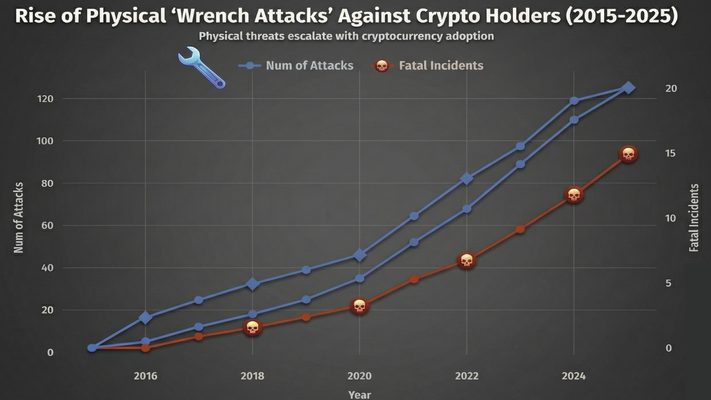
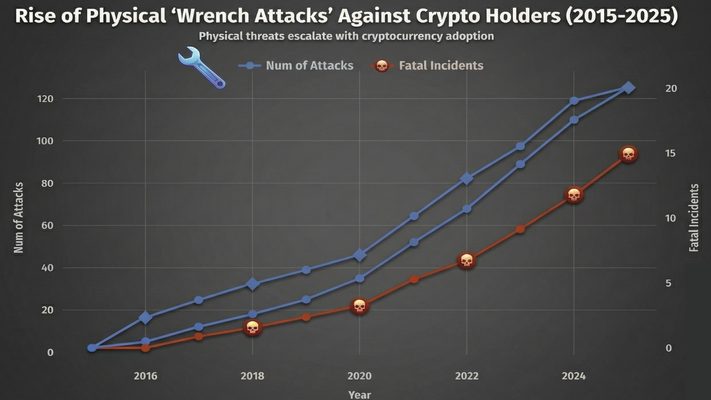
- Sector context: Wrench attacks on crypto industry personnel increased more than 75% year-over-year, with CertiK attributing over $40 million in confirmed losses to such attacks last year.
- Watch: Whether law enforcement arrests materialize and how Kraken’s delayed IPO timeline absorbs the reputational exposure from a second consecutive security incident.
How Kraken Crypto Breach and Extortion Mechanics Actually Worked
This was not a credential-scraping exploit or a protocol vulnerability. The entry point in both the February 2025 incident and the current extortion threat was insider recruitment; compromised individuals within Kraken’s organization granted access to internal systems, enabling reconnaissance rather than a full breach.
The access appears to have been read-only, sufficient to capture customer data on video without triggering immediate detection.
Percoco confirmed that Kraken received a tip about a video showcasing sensitive customer information from its internal crypto systems, the same mechanism used in the February 2025 case, when a similar video surfaced on a criminal forum.
In both instances, an internal actor was identified. The criminals are now threatening to distribute those videos and associated customer data to local media and across social networks unless Kraken complies with unspecified demands. The precise dollar figure of the extortion demand has not been publicly disclosed.
The pattern Percoco described is deliberate and scalable. “We have been collaborating with industry partners and law enforcement to investigate and disrupt insider recruitment efforts targeting not only crypto companies, but also gaming and telecommunications organizations,” he said.
That’s not opportunistic hacking. That’s a coordinated recruitment infrastructure operating across high-value data sectors, and Kraken is explicitly naming it as such, which matters for how the industry should respond.
Emerging crypto theft vectors increasingly target infrastructure access rather than on-chain exploits, and insider recruitment fits that same threat profile.
Discover: The best pre-launch token sales
What User Data Was Actually Exposed – and What That Enables
Kraken crypto has not publicly specified which data categories were captured in the videos, including KYC documentation, wallet addresses, transaction history, or account metadata.
What is confirmed: approximately 2,000 individuals had their information viewed, and Kraken states it has already contacted everyone at risk. The access was read-only, and internal systems were not breached in the fuller sense of data being exfiltrated at scale.
The practical risk for affected users is not account takeover; no funds were accessed. The risk is targeted social engineering and physical exposure.
(Source – TRM Labs)
With names, addresses, and account-level data in criminal hands, affected users become targets for the same wrench attack vector that CertiK tracked, resulting in over $40 million in losses last year.
That figure is almost certainly undercounted, given the norms of underreporting. Kraken’s outreach to affected users is the right procedural step; whether that outreach included specific security guidance, hardware key recommendations, address changes, or heightened vigilance is not confirmed.
Discover: The best crypto to diversify your portfolio with
The post Kraken Says It Is Being Extorted Over Stolen Crypto User Data and Refuses to Pay appeared first on Cryptonews.


High Roller Technologies Inc. (ROLR) stock more than doubled after the online casino operator said it planned to introduce an event-based prediction market in the U.S. in conjunction with Crypto.com.
The Las Vegas-based company said Tuesday it will initially offer its customers Crypto.com Derivatives North America (CDNA) event contracts in the U.S. across finance, sports and entertainment. CDNA is a CFTC-registered exchange and clearinghouse and affiliate of Crypto.com. It didn’t say when the planned market would start operating.
The company’s share rose as much as 130% and were recently 65% higher at $8.32. Crypto.com’s CRO token gained 3% after the announcement to 7 cents.
Prediction markets have quickly gone from being niche betting platforms to a growing sector of sophisticated trading platforms that aggregate real-world event probabilities. Leading participants include Kalshi, a CFTC-regulated U.S. exchange for event contracts, and Polymarket, one of the largest decentralized markets covering politics, sports and economics. The market is expected to mature into one with trading volume in excess of $1 trillion by 2030, according to High Roller.
Prediction markets are running at an annualized revenue rate above $3 billion, up from about $2 billion in December, and could reach $10 billion by 2030, according to a recent report by U.S. bank Citizens.
Crypto World
Binance Wallet perps debut as on-chain BNB flows and Binance Life whale moves draw scrutiny
Binance’s on‑chain perps launch collides with big BNB and Binance Life outflows.
Summary
- Binance Wallet adds perpetual futures trading with an Alpha Points rewards push.
- A suspected Binance Life whale amasses nearly 20% of supply after multimillion‑dollar withdrawals.
- Newly created wallets pull $30.78 million of BNB off Binance, signaling shifting positioning.
Binance Wallet has rolled out perpetual futures trading on its app and web interface, tying the launch to an “exclusive Alpha Task Points campaign” that rewards users who generate at least $1,000 in cumulative perpetual volume with 3 Alpha Points during an April 14–28 event, with rewards due by May 12. According to the official Binance announcement, the feature, powered by derivatives venue Aster, lets users trade leveraged perpetuals directly from their keyless wallet on BNB Smart Chain, with markets covering “crypto pairs, blue‑chip stocks, popular ETFs, and commodities.”
In its notice, Binance said the upgrade brings “the same seamless and powerful on-chain trading experience from website to app,” emphasizing that only trades executed via the Binance Wallet keyless interface count toward Alpha rewards and that each user ID can only claim the 3‑point bonus once. Binance’s Alpha Points program, previously scrutinized in a crypto.news story on bot abuse and reward gaming, has become a key funnel for access to early airdrops and listings on the exchange’s Alpha platform.
On-chain, analyst Yu Jin has highlighted heavy accumulation of Binance Life (Binance‑linked memecoin BNB Life) by a suspected controller address cluster that withdrew 57.88 million tokens (about $9.37 million) from Binance in 20 hours via six wallets, after earlier pulling 59 million tokens in February. PANews, citing Yu Jin’s monitoring, reported that the entity now holds roughly 116.9 million Binance Life on-chain—around 11.7% of total supply and worth approximately $21.71 million at recent prices—after the token’s price jumped sixfold in two weeks from $0.037 to $0.22.
Foresight News, referencing data from analytics platform Onchain Lens, separately noted that 15 newly created wallets withdrew about 138.26 million Binance Coin from Binance over three days, worth roughly $30.78 million, underscoring sizable positioning shifts across the exchange’s native asset stack. While large BNB outflows have previously coincided with accumulation trends tracked by Onchain Lens and others, the current pattern unfolds as Binance Wallet leans harder into on‑chain derivatives and Alpha‑driven incentives, deepening the feedback loop between exchange‑adjacent tokens, reward schemes and speculative flows.
Crypto World
Coinbase (COIN) and Robinhood (HOOD) best positioned in prediction market space, says Cantor


Trading venues Robinhood (HOOD) and Coinbase (COIN) could emerge as the main public-market beneficiaries of the rapid rise in prediction markets, according to a new report from Cantor Fitzgerald.
The report argues that while leading platforms like Kalshi and Polymarket remain private, listed companies are already tapping into the trend by integrating event-based trading into their apps.
These markets let users buy contracts tied to real-world outcomes, from elections to economic data, with prices reflecting the crowd’s view of probability.
“Prediction markets have exploded onto the scene,” Cantor Fitzgerald analyst Ramsey El-Assal wrote, noting that contract volumes are expected to continue their “impressive recent growth trend.”
For firms like Robinhood and Coinbase, the appeal is straightforward. Prediction markets generate revenue through trading activity, not by taking the other side of bets. That model mirrors equities and crypto trading, where both companies already operate at scale.
Robinhood, in particular, has seen strong early traction. The company launched its prediction markets hub following the 2024 U.S. election cycle, and the product quickly became one of its fastest-growing business lines by revenue. Since launch, users have traded billions of contracts tied to sports, politics and macro events.
Coinbase has taken a similar approach but is earlier in its rollout. Its prediction market offering, powered by Kalshi’s infrastructure, is now available across its user base. While still in its early stages, the product spans categories such as crypto, economics and global events.
Cantor frames the opportunity as a function of scale. Platforms with large retail audiences and existing trading infrastructure have a built-in advantage, allowing them to drive liquidity and participation quickly.
The report also pushes back on the idea that prediction markets are simply gambling. “A common misunderstanding about prediction markets is that they are gambling platforms in disguise,” it said. Instead, users “trade against other participants by buying contracts they believe are ‘underpriced’ and selling ‘overpriced’ contracts,” similar to equities markets.
That structure means platforms earn fees from activity, not losses. Prices update in real time as new information enters the market, creating what the report describes as “continuously updated forecasts” driven by financial incentives.
Beyond retail use, Cantor sees longer-term applications in hedging and forecasting. “Prediction markets will emerge as a versatile tool for institutional investors,” the report said, pointing to potential use in risk management and macro hedging.
Still, regulation remains the key uncertainty. The report describes the current environment as “messy,” with federal and state authorities split on whether prediction markets fall under derivatives law or gambling rules.
Cantor’s bottom line is that prediction markets are unlikely to fade. As the regulatory picture becomes clearer, firms with large user bases and strong distribution, such as Robinhood and Coinbase, could be in the best position to capitalize.

Key Insights
- Charles Hoskinson suggests community centers as the way to achieve sustainable growth instead of expensive crypto conferences.
- The Cardano (ADA) community declined a plan to spend 14 million ADA on hosting large-scale international events.
- ADA lacks momentum even amid constant efforts of ecosystem expansion and cross-chain integrations.
Cardano Moves Away from Media Attention Towards Long-Term Growth
Cardano (ADA) becomes the focus point for a discussion on governance, with the coin’s creator, Charles Hoskinson, questioning the necessity of major crypto conferences.
As ADA has been struggling to make any significant progress in price action terms, the topic of discussion has moved away from media appearances to the issue of the optimal use of funds accumulated in the treasury to achieve the greatest possible growth of the ecosystem.
According to Hoskinson, appearances at conferences and participating in cryptocurrency-related events is not what can help users develop their interest in the project. He claims that, at this stage of Cardano’s development, there is nothing more important than fostering regular and valuable participation in the community.
This comes against the backdrop of ADA trading near $0.2383 as the bearish sentiment persists in the market.
Hoskinson Proposes Development of Community Hubs Instead of Global Events
Instead of investing money in costly global events, Charles Hoskinson has started a new initiative of developing community hubs across many cities around the world. The main aim behind such an initiative is that the developer community can get together on a consistent basis to foster innovations and learning.
As per the initiative, there would be regular meetups, hackathons, and startup incubation camps organized to create a pipeline of developers and startups. Already one example of such a community hub is in the city of Buenos Aires where there are about 100-200 participants every single event.
As the community hubs have been planned to be hosted bi-monthly, there would be no shortage of activities at all for interested participants. Such events can provide sustainable benefits compared to global events which cannot offer any long-lasting connections and benefits.
Community Rejects Proposing Spending of 14 Million ADA on Event
A more heated discussion began following the community vote on allocating 14 million ADA on hosting crypto events. These included attendance at international conventions such as TOKEN2049 in Singapore and upcoming Cardano summits.
Nonetheless, this proposal was eventually voted against by the community. This was because the representatives in charge of governance had raised objections regarding the ROI of investing in such events.
Many agreed that such money could have been much more wisely spent on activities fostering ecosystem development. It is worth noting that this trend signifies an increase in decentralized governance among the Cardano (ADA) blockchain platform.
Expansion of the Ecosystem via Cross-Chain Strategy
Even amid the current difficulties, Charles Hoskinson still sees a bright future for Cardano. The founder has not stopped talking about the importance of increasing the number of users and introducing new features such as cross-chain connections.
One of the projects which is expected to be a part of the cross-chain strategy of Cardano is Midnight. The goal of the protocol is to attract people who currently use other blockchains, including Bitcoin, Solana, and XRP.
Such an initiative might lead to the further development of decentralized finance solutions and improve adoption rates.
Prospects: Adoption vs Price Growth
Despite efforts directed at expanding the ecosystem, the prices of ADA have demonstrated poor results compared to those of the competition. In general, analysts have different expectations regarding the future of this project.
There are those who think that the current strategies related to infrastructure development and increased participation in it from developers are bound to eventually boost prices. At the same time, others have their concerns regarding lackluster metrics and overall market environment.
Crypto World
Treasury Secretary Bessent now says it’s OK for the Fed to wait to lower rates amid oil surge
U.S. Treasury Secretary Scott Bessent waits for the first meeting of U.S. President Donald Trump’s anti-fraud task force convened by U.S. Vice President J.D. Vance at the Eisenhower Executive Office Building on the White House campus in Washington, D.C., U.S., March 27, 2026.
Jonathan Ernst | Reuters
U.S. Treasury Secretary Bessent said the Federal Reserve could wait to lower interest rates amid the oil spike, in a departure from his previous stance on monetary policy.
“Do I think rates should be lowered? Eventually. I think now that we have to wait and see,” Bessent told Semafor Editor-in-Chief Ben Smith at the Semafor World Economy conference in Washington, DC.
Bessent has previously said that Fed Chair Jerome Powell should hasten cutting interest rates, saying in January that reductions are “the only ingredient missing for even stronger economic growth. Which is why the Fed should not delay.”
But the change in thinking comes amid the ongoing war in Iran, which has driven up oil prices to above $100 a barrel.
That complicates the Fed’s mandate, as it eyes rising inflation alongside slowing growth. The central bank was last expected to hold rates steady this year, with the slimmest possibility of a hike, according to fed funds futures pricing.
Coming out of “January and February — the economy was very strong,” Bessent told Semafor.
Powell’s term as chair is up in May, but he could have to stay on longer if Trump’s chair nominee which Bessent helped select, Kevin Warsh, can’t get confirmed by the Senate by the time. Sen. Thom Tillis has vowed to block a Warsh vote until U.S. Attorney Jeanine Pirro ends her criminal probe into Powell related to Fed building cost overruns. Powell has said the probe is designed to put pressure on him by the Trump administration for not cutting rates more.
See the full Semafor story here.
— CNBC’s Jeff Cox contributed to this report.

Crypto has a capital efficiency problem.
For all the innovation we’ve seen in DeFi, a huge amount of onchain capital still sits idle. It’s staked, it’s locked, and it’s largely cut off from the rest of the financial system we’ve been building. That might have been acceptable a few years ago, but it doesn’t work for institutions.
Idle capital isn’t just inefficient, it’s incompatible with how modern financial systems operate.
Institutions don’t separate staking and markets in their thinking. They look at capital in terms of how hard it can work. Can it move? Can it generate yield? Can it be deployed across strategies without friction? If the answer is no, that capital becomes less attractive.
The same is increasingly true in payments. Once money moves onchain, it shouldn’t just sit idle between transactions. It should be programmable, composable, and capable of generating yield even while it’s waiting to be used.
That’s the gap we’re focused on solving at Polygon Labs.
With the launch of sPOL, we’re introducing a canonical liquid staking standard for POL. In simple terms, it allows users to stake POL while still keeping that capital liquid and usable across onchain markets. You continue earning staking rewards, but you also gain the ability to deploy that same capital in trading, lending, and collateral strategies.
This is especially powerful in payments contexts, where capital often sits at rest between settlement cycles, treasury rebalancing, or cross-border flows. Instead of remaining idle, that capital can stay productive without sacrificing availability.
That combination is what makes capital actually competitive.
If you look at Ethereum, liquid staking has already become a core part of the ecosystem. More than 40 percent of staked ETH is used in this way. On Polygon, it’s closer to 4 or 5 percent. That gap isn’t about demand. It’s about infrastructure.
Without a clear standard, liquidity fragments. Without liquidity, institutions don’t show up in size.
sPOL is designed to change that.
When you stake POL, you receive sPOL, which represents your position and continues to earn yield. At the same time, it can be used across DeFi just like any other liquid asset. That means funds, market makers, and treasury teams can run more sophisticated strategies without giving up staking rewards or waiting through unbonding periods.
It also means payment providers, fintechs, and onchain businesses can treat idle balances not as dead weight, but as yield-generating assets that remain fully usable.
It turns staking from something passive into something you can actively manage.
But usable capital only matters if markets can support it.
From day one, we’re seeding deep liquidity so sPOL is immediately functional at scale. We’re also integrating with venues like Uniswap v4 to ensure efficient execution and real market depth. At the same time, validator incentives are being structured to deliver more competitive yields, aligning participants across the network.
This is about building the conditions institutions expect as a baseline.
The impact is straightforward. There are billions of POL already staked. Even partial adoption of sPOL significantly expands the amount of capital actively participating in the ecosystem. That leads to deeper markets, better pricing, and more resilient liquidity.
It also strengthens the network itself. As more POL moves into productive staking positions, supply tightens and incentives align more clearly with long term participation.
Stepping back, this is part of a broader shift.
Crypto is moving from experimentation to infrastructure. Stablecoins are becoming settlement layers. Real world assets are coming onchain. Institutions are no longer just watching, they’re allocating.
And as payments infrastructure moves onchain, expectations change. Capital isn’t just meant to move faster, it’s meant to work continuously, even in the moments between movement.
But they will only scale into systems that meet their standards.
They need liquidity. They need composability. And they need capital that can be both productive and flexible at the same time.
That’s what we’re building with sPOL.
It’s not just an upgrade to staking. It’s a step toward making Polygon a place where capital behaves the way modern markets expect it to.
Because ultimately, the question isn’t how much capital is onchain.
It’s how much of it is actually working, and where it chooses to work.
The post Polygon Is Fixing Crypto’s Idle Capital Problem appeared first on BeInCrypto.

Trump’s Fed Nominee Warsh Discloses Over $100 Million Holdings in Crypto and AI

Wrinkles Between Your Brows? This 3-Minute Fix Takes Years Off

On the Scene at the Netflix “Roommates” Premiere: Eddie Murphy, Chris Rock, Adam Sandler, and Their Daughters in ABL Studio, Tom Ford, Self-Portrait, and House of CB


-

 Politics4 days ago
US brings back mandatory military draft registration
-
 Sports4 days ago
Man United discover Nico Schlotterbeck transfer fee as defender reaches Dortmund agreement
-

 Fashion4 days ago
Weekend Open Thread: Veronica Beard
-

 Tech7 days ago
How Long Can You Drive With Expired Registration? What Florida Law Says
-

 Politics4 days ago
Malcolm In The Middle OG Turned Down ‘Buckets Of Money’ To Appear In Reboot
-

 Politics2 days ago
World Cup exit makes Italy enter crisis mode
-

 Crypto World5 days ago
Canary Capital Files SEC Registration for PEPE ETF
-

 Business4 days ago
Tesla Model Y Tops China Auto Sales in March 2026 With 39,827 Registrations, Beating Cheaper EVs and Gas Cars
-

 Fashion7 days ago
Let’s Discuss: DEI in 2026
-

 Crypto World21 hours ago
The SEC Conditionalises DeFi Platforms to Be Avoided for Broker Registration
-

 Crypto World6 days ago
Bitcoin recovers as US and Iran Agree a Ceasefire Deal
-

 Crypto World17 hours ago
SEC Signals Exemption for Crypto Interfaces From Broker Registration
-
 NewsBeat2 days ago
Pep Guardiola and Gary Neville agree over Arsenal title problem that benefits Man City
-

 Business4 days ago
OpenAI Halts Stargate UK Data Centre Project Over Energy Costs and Copyright Row
-

 Business3 days ago
Ireland Fuel Protests Enter Day 5 as Blockades Spark Shortages and Government Prepares Support Package
-

 Politics4 days ago
LBC Presenter Mocks Trump Over Iran War Failures
-

 Tech5 days ago
A version of Windows 10 released a decade ago is now eligible for additional security patches
-

 Crypto World4 days ago
Federal judge blocks Arizona from bringing criminal charges against Kalshi
-
 NewsBeat2 days ago
JD Vance announces ‘no agreement’ with Iran over nuclear weapons fear
-

 Business4 days ago
IMF retains floor for precautionary balances at SDR 20 billion
You must be logged in to post a comment Login