
Crypto World
Ethereum price breakout could open a move toward $2,800

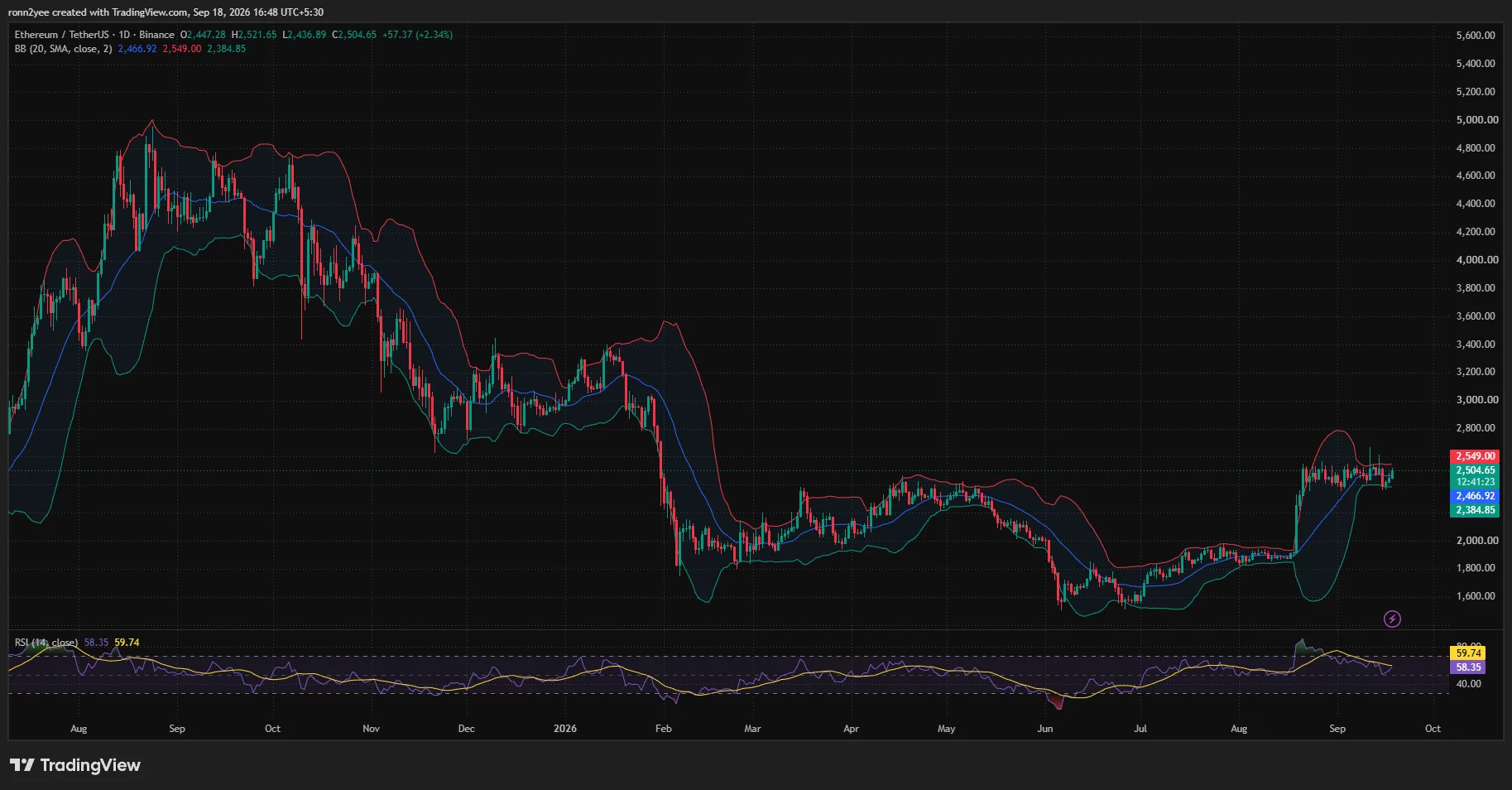
Ethereum price recovered toward $2,500 on Sep. 18 as buyers defended support near $2,400, but daily and 4-hour charts show that the $2,550 area remains the main barrier to a larger breakout.
Summary
- Ethereum price rose about 3% in 24 hours, trading close to $2,500.
- Daily Bollinger Bands place immediate resistance at $2,549 and support near $2,467.
- 4-hour momentum has improved, but the Supertrend remains bearish below $2,527.
- Liquidation clusters between $2,630 and $2,650 could attract price if ETH clears resistance.
Ethereum (ETH) price traded around $2,500 at the time of writing, up nearly 3% over the previous 24 hours. Its intraday range stretched from approximately $2,427 to $2,518.
The rebound followed a decline toward $2,385 earlier in the week. Buyers have since pushed ETH back above $2,500, but the move has not produced a confirmed breakout from the range that has controlled price since late August.
US macro and regulatory conditions also remain mixed. The Federal Reserve raised interest rates by 25 basis points this week amid persistent inflation concerns, while the Senate failed to advance the CLARITY Act.
Bitcoin and crypto-related stocks have nevertheless rebounded since the events, suggesting both outcomes were at least partly reflected in prices before the decisions. Ethereum’s next move may therefore depend more heavily on whether buyers can convert the latest bounce into a technical breakout.
Ethereum price approaches the upper Bollinger Band
The daily chart shows ETH rising from an opening price near $2,447 to approximately $2,505. The session recorded a high of $2,522 and a low of $2,437.
Ethereum is now trading above the Bollinger Band midpoint at $2,467. That level could serve as the first dynamic support if the recovery loses momentum.
The upper Bollinger Band stands at about $2,549, placing it close to the psychological $2,550 resistance. ETH has repeatedly struggled around this region since its sharp August advance.
A daily close above $2,550 would move price outside the upper part of its recent range. The next visible resistance sits around $2,600, followed by a broader supply zone between $2,700 and $2,800.
Failure to clear $2,550 would keep ETH inside its existing consolidation. Under that scenario, the Bollinger midpoint near $2,467 would become the first level to watch, followed by the lower band around $2,385.
Daily relative strength remains positive but is not overextended. The relative strength index stands at 58.35, while its signal line is slightly higher at 59.74. A reading above 50 points to stronger buying momentum, though the RSI’s position below its signal line shows that the breakout has not yet gained full confirmation.
4-hour momentum improves below $2,527
Ethereum’s 4-hour chart shows a recovery from the Sep. 16 sell-off, when price briefly moved below $2,400. ETH has since formed a series of higher short-term lows and returned to the upper end of its range.
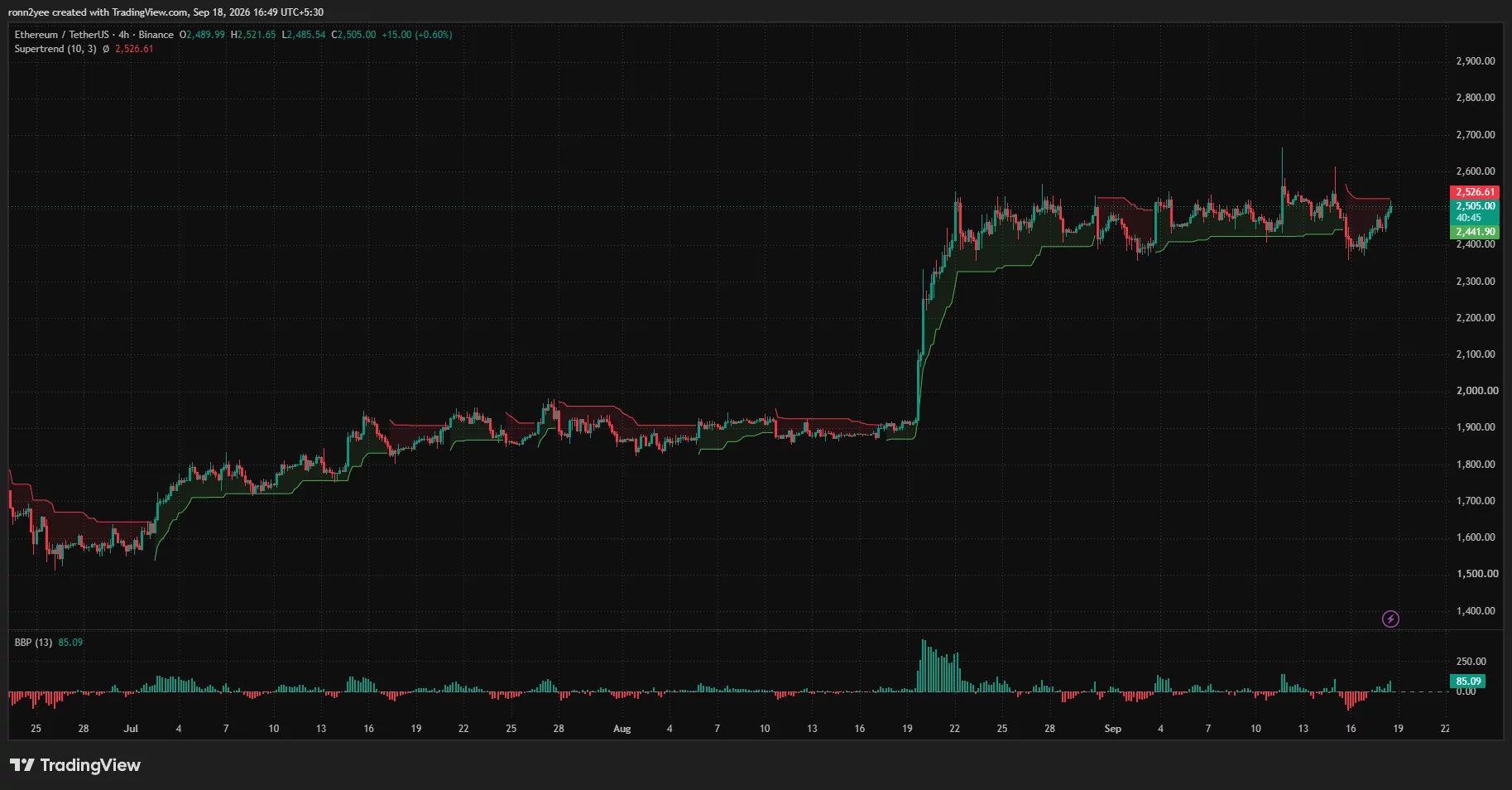
The Bull Bear Power indicator has climbed to 85.09, reflecting renewed strength among buyers. Positive histogram bars have also expanded during the latest rebound.
The 4-hour Supertrend remains bearish, however, with its resistance line positioned at $2,526.61. Ethereum must close above that level before the indicator changes in favor of buyers.
A successful move above the Supertrend would place the daily Bollinger resistance near $2,549 within reach. Because the two levels sit only about $23 apart, the $2,527–$2,550 region represents a wider resistance zone rather than one precise price.
Support on the 4-hour chart has risen to approximately $2,442. A break below that level would weaken the higher-low structure and expose the $2,400–$2,385 area again.
ETH liquidation map points to $2,630–$2,650
CoinGlass’s one-week liquidation heatmap shows several leverage clusters surrounding Ethereum’s current price.
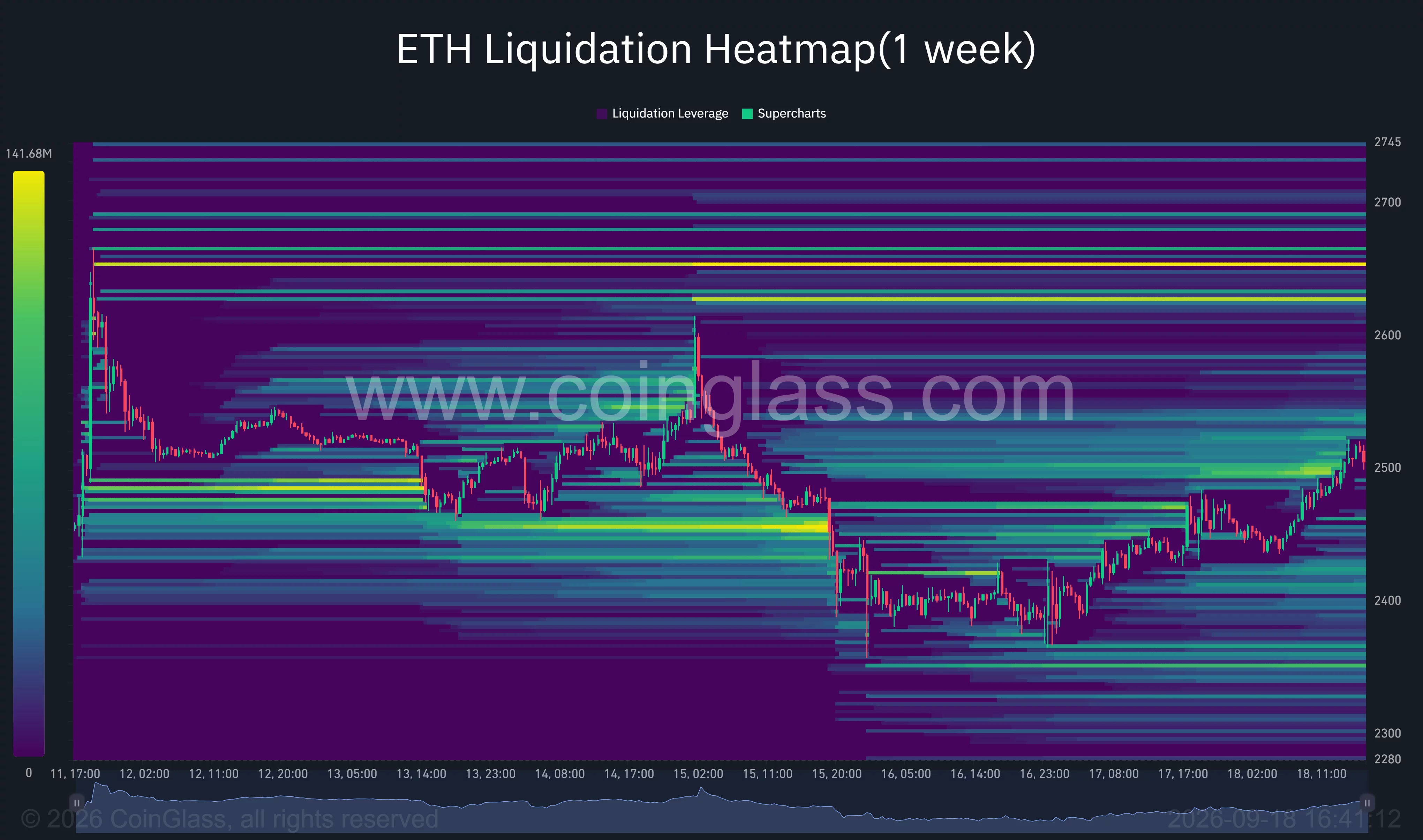
The closest liquidity is concentrated around $2,490–$2,520, matching the area where ETH is currently trading. Larger concentrations appear above price near $2,630 and $2,650, with the latter forming the brightest band on the chart.
Liquidation heatmaps indicate where leveraged positions may face forced closure, but they do not predict that price will reach those levels. If ETH breaks through $2,550, the overhead clusters could add volatility as short positions come under pressure.
Liquidity also appears below the market around $2,440 and $2,410. Those areas overlap with the 4-hour Supertrend support and the broader base formed during the past several sessions.
A rejection at $2,550 followed by a loss of $2,440 could therefore accelerate movement toward $2,400. Conversely, a confirmed breakout may open a path toward $2,600 and the larger liquidation pools above it.
Analysts watch $2,550 for a larger breakout
Pseudoanonymous trader Batman described Ethereum’s structure as a “rally-base-rally” setup, citing the consolidation that formed after ETH’s August advance. His chart places the base near $2,385 and the top of the range around $2,550–$2,600.
Analyst Ted Pillows also identified $2,550 as the immediate resistance. He argued that a weekly close above the level could support an advance toward $3,000, though his chart places another major resistance zone near $2,800.
Both outlooks depend on ETH closing above its current ceiling. Until then, price remains inside a range bounded by support around $2,385–$2,440 and resistance between $2,527 and $2,550.
The short-term setup favors buyers while ETH remains above $2,467. A close above $2,550 would strengthen the bullish case, while a reversal below $2,442 would shift attention back to $2,400 and $2,385.

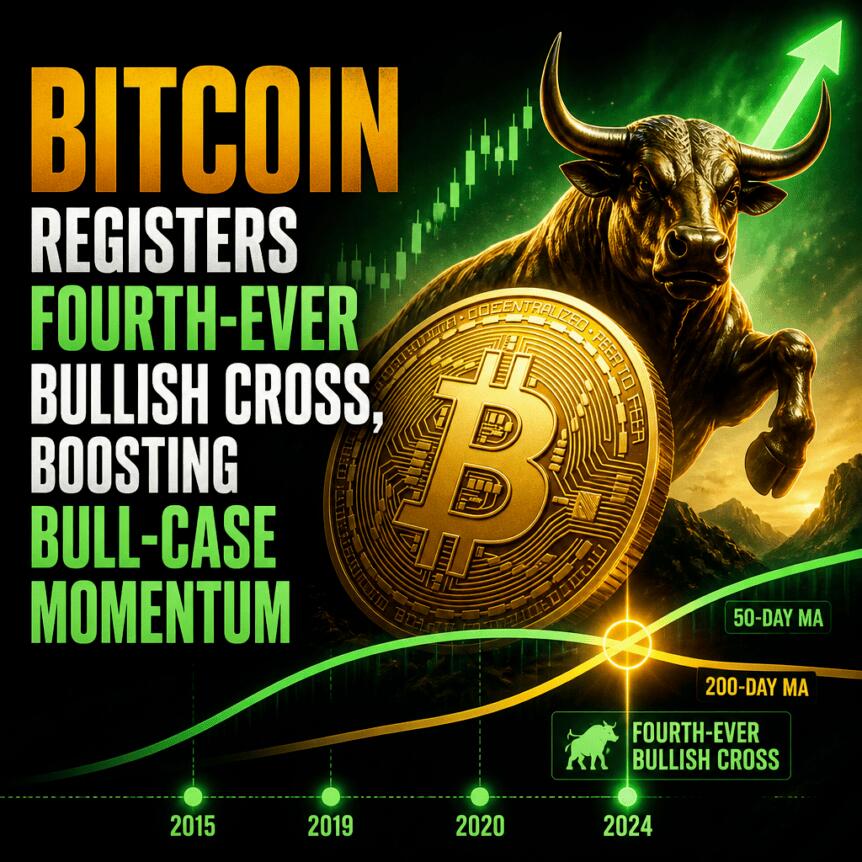
Bitcoin’s longer-term price structure is starting to look more stable, with analyst Willy Woo pointing to a well-known technical setup that historically has aligned with major bear-market endings. Woo argues that Bitcoin’s latest monthly “Fisher Transform” signal marks a new phase of trend reversal—though he also cautions that clean bottoms are not guaranteed and some consolidation is still possible.
Writing in a Friday update on X, Woo highlighted that the Fisher Transform indicator produced a monthly bullish crossover in August—only the fourth time this has happened in Bitcoin’s history—suggesting the market may have already formed its next macro floor.
Key takeaways
- Willy Woo says Bitcoin’s Fisher Transform produced a monthly bullish crossover in August—only the fourth such event on record.
- Woo links prior monthly crossovers to bear-market bottoms, citing late 2022 as an example when the indicator reached about -3.83.
- A weekly bullish divergence in Fisher continues to develop, echoing the pattern seen during the final six months of Bitcoin’s 2022 bear market.
- Woo notes the signal tends to be more reliable near bear-market bottoms because speculative churn is typically lower than during bull phases.
Why the Fisher Transform matters for market timing
Woo used the Fisher Transform, a trend-strength indicator developed in 2002, to assess whether Bitcoin’s broader trajectory has shifted. The Fisher Transform works by smoothing price action into a form that is easier to interpret as trend conditions change.
The method applies a log-based transform to correct for the way raw price tends to linger near extreme values. In practice, the Fisher Transform is plotted as two lines: the Fisher line and a trigger line derived from it, delayed by one period. Both lines oscillate around a central zero line, with crossovers between the Fisher and trigger lines typically interpreted as a signal of regime change.
According to Woo, when these two trend lines cross upward on monthly time frames, the occurrence has repeatedly coincided with bear-market bottoms—events that historically precede larger macro uptrends.
August’s monthly crossover: “3 for 3” with a fourth added
In Woo’s read-through, the key development is the timing and frequency of Bitcoin’s monthly Fisher bullish crossover. He states that a sharp upward reversal—where the Fisher and trigger lines intersect—has matched bear-market bottoming phases on monthly charts, and that the latest August cross appears to extend this track record.
Woo specifically points to the crossover occurring during July at around -2.26 on the Fisher Transform scale, stating that it would represent the fourth recorded bullish monthly crossover if it plays out as history suggests. He also frames the pattern as “3 for 3 without fake out,” before adding the newest event as a potential extension rather than a one-off.
Importantly, Woo does not claim that the crossover automatically prevents additional volatility. He notes that even when the indicator turns, price can still consolidate and potentially test lower levels before a more durable macro advance takes hold. He compares this to other cycles where Fisher showed a bearish crossover during bull markets—followed later by a fresh bullish signal—implying that the macro signal can precede full directional confirmation.
Bear-market signals may be “cleaner” than bull-market ones
Woo’s reasoning goes beyond chart math. He argues that the reliability of the Fisher Transform’s reversal timing depends on market participants. In his view, long-term bull phases often include more speculative activity—traders reacting aggressively to short-term swings—creating choppier conditions and increasing the odds of “fake out” signals.
By contrast, in bear-market bottom zones, he says speculative participation is largely reduced. When buy pressure returns because value buyers step in, the price reversal becomes less noisy, which can make trend signals such as Fisher crossovers easier to interpret.
That distinction is central to how Woo frames the current setup: even if the indicator has turned, investors should still expect that a bottom can involve time-consuming stabilization rather than an immediate straight-line recovery.
Weekly bullish divergence mirrors 2022’s late-stage pattern
Alongside the monthly crossover, Woo also emphasized a bullish divergence developing on weekly time frames. In this setup, Fisher continues to form higher lows while Bitcoin’s price prints lower lows—an often-cited sign that downward momentum is weakening even as the market remains trapped in a drawdown.
Woo says Fisher hit a swing low near -2.85 at the end of December last year, when BTC/USD was around the $90,000 area. Since then, he reports that Fisher has produced a series of higher lows while price has not followed suit. The divergence matters because it suggests deterioration in selling pressure may be occurring underneath the surface.
Critically, Woo links this current divergence structure to what was seen during Bitcoin’s 2022 bear market. He notes that a similar Fisher bullish divergence appeared as the prior bear market moved into its final months—then proceeded to coincide with the eventual transition out of the downtrend.
What remains uncertain: July’s $57,000 area and buyer behavior
Even with the technical backdrop improving, Woo and other onchain-driven observations leave room for doubt. The article points to ongoing uncertainty about whether recent lows near $57,000 on July 1 truly marked a full cycle bottom. Earlier onchain analysis referenced in the coverage suggested that while some metrics have produced bear-market reversal signals, there may not yet be consistent confirmation from traditional “buyer interest” behavior.
Woo himself previously flagged a “lack of typical buyer interest” at those lows, arguing that accumulation appeared dominated by a smaller set of large-volume investors rather than broad-based demand. That matters for how traders interpret reversals: a market can bounce on limited buying, but more durable cycle transitions usually require sustained participation across the market.
For now, the key question is whether the monthly Fisher crossover will translate into a macro uptrend rather than only a temporary turn. Readers should watch whether Fisher continues to confirm on higher time frames and whether price action starts to align with the divergence signals on weekly charts—especially if Bitcoin tests deeper support before any sustained break higher.


Banks are rapidly expanding their presence in Europe’s regulated crypto market, with traditional lenders now accounting for nearly one in four providers listed under the European Union’s Markets in Crypto-Assets framework (MiCA).
The number of banks on the EU’s MiCA crypto provider list doubled to about 80 from roughly 40 between June 26 and Sept. 16, according to a Cointelegraph analysis of MiCA register data from the European Securities and Markets Authority (ESMA).
The overall number of listed crypto-asset service providers (CASPs) rose from 243 to 349 over the period, but non-bank providers lost ground in relative terms, with their share falling from about 84% to 77%.
While non-bank providers still dominate the register and grew in absolute numbers, banks expanded much faster, increasing their share from around 17% in late June to nearly 23% in September.
German banks pile into crypto
Germany drove much of the banking expansion, with dozens of cooperative and commercial banks appearing on ESMA’s MiCA register.
New names include Deutsche Bank, Germany’s largest lender, which on Wednesday announced plans to launch digital asset custody services for institutional and corporate clients in Europe. A Deutsche Bank spokesperson told Cointelegraph that the bank expects to receive regulatory approval for the offering under MiCA in October.
Related: Binance brushes off Lagarde MiCA speculation, reaffirms Europe commitment
The trend extends beyond Europe’s biggest banking groups. Germany’s additions include numerous Volksbank, Raiffeisenbank and VR Bank institutions, showing that regulated crypto services are spreading into the country’s regional cooperative banking network rather than remaining limited to large international banks.
Banks have a different route into MiCA
Unlike crypto companies that must apply for CASP authorization, banks can provide crypto services under MiCA through a separate notification procedure.
Under Article 60 of MiCA, a credit institution may provide crypto-asset services if it submits the required information to its home regulator at least 40 working days before providing those services for the first time.
The notification route gives banks a way to expand into crypto without going through the standard CASP authorization process.
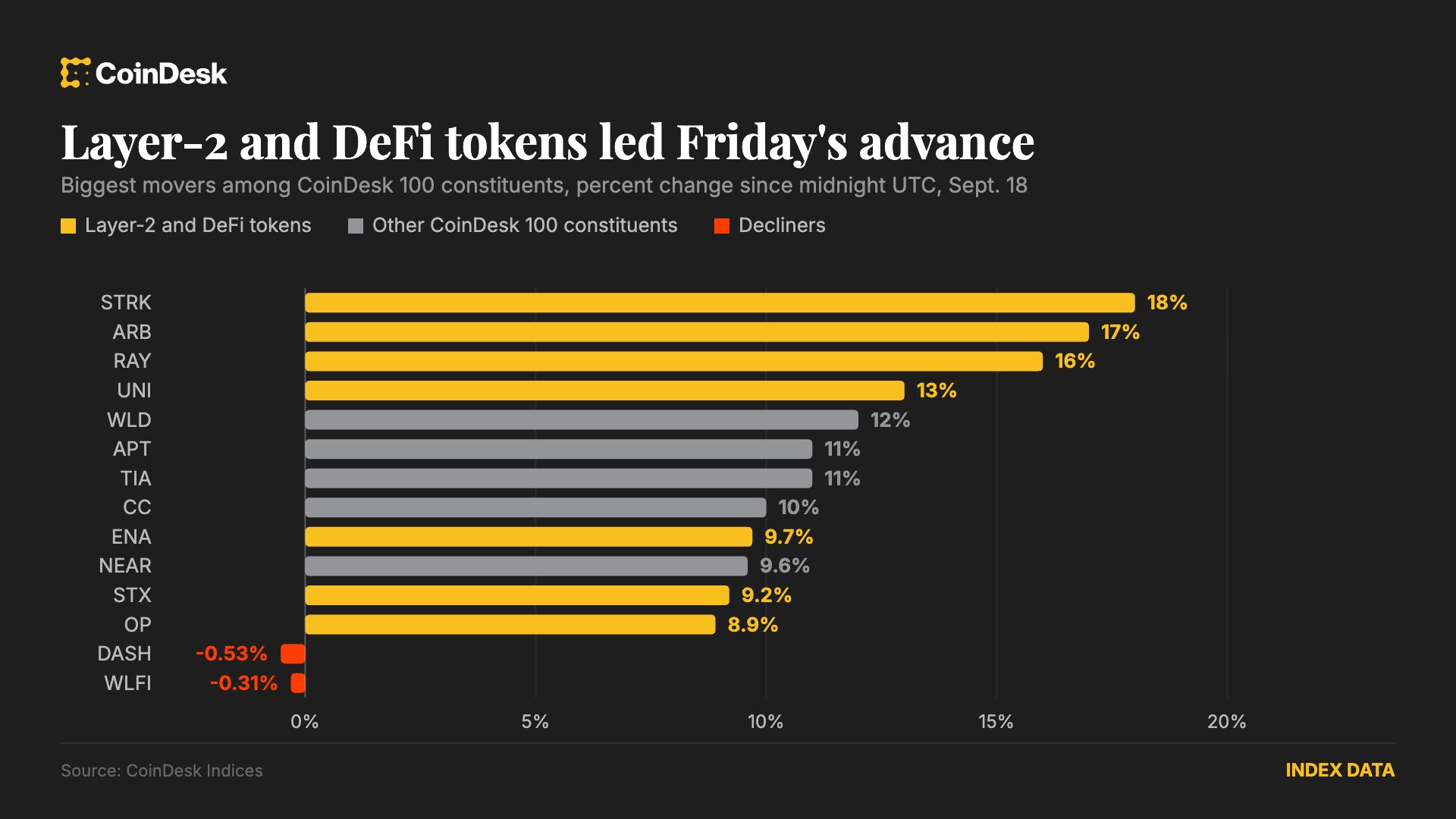
Crypto’s post-Fed hike bid extended into Friday, with decentralized finance (DeFi) and layer-2 tokens taking over from privacy and haven assets that led Thursday’s gains, a rotation that demonstrates a return to risk-on trading.
Bitcoin rose above $78,000 during the European morning, adding 2.1% since midnght UTC and 1.9% over the past 24 hours. It’s still 5% below the Sept. 4 monthly high of $82,284 after two weeks of range-bound price action.
While all but two CoinDesk 100 constituents were higher on the day, the focus is on the DeFi Select Index (DFX). That accelerated the fastest, surging by 8.3% since midnight and 16% over the past 24 hours.
Market gains follow a more conducive macro backdrop. The 10-year Treasury yield slipped back under 5% and Brent crude eased below $103 after trading as high as $109 earlier in the week, taking some of the heat out of the inflation scare that followed the rate increase.
Equity index futures also showed strength, with S&P 500 and Nasdaq 100 futures rising 0.3% and 0.6%, respectively, while gold and silver added 1.1% and 2.8% apiece.
Derivative positioning
- Futures market signals positional trading revival: The crypto futures market is signaling a revival in positional trading. This shift is underscored by a nearly 5% expansion in cumulative open interest (OI) to $141.2 billion, which contrasts with a 3% dip in daily trading volume to $95 billion. The taker buy-sell volume remains balanced, suggesting capital is entering the market structurally rather than through aggressive momentum chasing.
- Bitcoin open interest builds as the price gains: OI in bitcoin futures ticked up to 680K BTC from 670K BTC since midnight UTC, a slight increase alongside BTC’s advance. This combination is typically taken to represent a build-up of long, or bullish, positions. However, the increase is quite small, and the OI tally remains well below the peak of 800K BTC hit early this year. In other words, overall positioning remains light.
- Binance trader ratios show institutional conviction: Binance’s top trader long-short accounts ratio has pulled back to 1.52, still bullish, but lower than Wednesday’s high of nearly 2. Meanwhile, the long-short positions ratio remains elevated at 2.36. That means fewer individual “whales,” or large holders, are leaning long, but the ones who are have greatly increased their bet sizes, indicating strong institutional conviction.
- UNI futures open interest surges to near record: Among altcoins, open interest (OI) in futures tied to Uniswap’s UNI surged to 86.61 million tokens — flirting with an all-time high, up from 76.89 million tokens yesterday. This expansion highlights substantial capital inflows, which are moving in tandem with a 30% explosion in the token’s spot price. This renewed appetite for major DeFi altcoins stems from mounting market optimism surrounding friendly, coordinated crypto regulations from the SEC and CFTC.
- Bullish momentum dominates major tokens’ volume delta: The bullish mood is also reflected in the 24-hour OI-adjusted cumulative volume delta, which is positive for most major tokens, excluding GRAM, SHIB, HBAR and BNB. A positive reading means bulls are being more aggressive by trading longs at market orders rather than passive limit orders.
- Implied volatility drops to May’s lows: With major events such as the Clarity Act vote, and the Fed and Bank of Japan interest-rate meetings out of the way, bitcoin’s annualized 30-day implied volatility index, BVIV, dropped to 36%. That level has been a floor since May. The decline points to expectations for near-term market calm.
- Options skew turns short-term bullish for BTC and ETH: In options listed on Deribit, BTC’s one-week put-call skew has turned positive, pointing to relative richness of calls, or bullish bets, over puts. However, one- and two-month skews still show a slight put bias. ETH’s one-week skew also shows bullishness. The 24-hour volume rankings, however, show a mixed sentiment, with both BTC call and puts featuring in the most active list.
Token talk
- The DeFi Select Index’s advance on Friday rested largely on uniswap (UNI), up 13% since midnight UTC and 25% over the past 24 hours, with ethena (ENA) gaining 9.6% and liquid-staking token lido adding 6.6%.
- Layer-2 tokens matched DeFi’s strength, led by starknet at 18% on the day and 21% over 24 hours, with arbitrum up 17% and 25%, stacks up 9.2% and optimism up 8.9%. STRK is now at its highest since June 19 while ARB, at 20.9 cents, hasn’t been this pricey since January.
- Solana (SOL) added 4.5% to $106.14, but the sharper move sat in its ecosystem, where solana-based DEX token raydium rose 16% to $1.71 and liquid-staking token jito lagged at 1.6%, a split that points at DEX volume rather than a blanket bid for the chain.
- Thursday’s leader stalled. Zcash (ZEC) traded at $1,490.10 for a gain of 1.6% on the day against 7.6% over 24 hours, meaning almost all of the advance took place on Thursday. Rival privacy token dash was one of only two CoinDesk 100 constituents in the red, losing 0.53%, alongside world liberty financial , which fell 0.31%.
- CoinMarketCap’s “Altcoin Season” index is now at 44/100 have risen from Tuesday’s low of 32/100, a sign that speculation is the overarching theme on Friday.


Public blockchains create a privacy problem. Paying from a visible address can expose its balance, previous transactions and links to other addresses. A shielded Zcash payment hides the sender, recipient and amount from the public record, allowing a customer to pay without handing the merchant or anyone watching the blockchain a searchable trail into their finances.
Zcash block times
Blocks are batches of transactions that miners add to a blockchain, and a payment receives its first confirmation when it appears in one. Cutting Zcash’s target block time would let an exchange or bridge that waits for a fixed number of confirmations release ZEC in about one-third the time.
At a shop counter, it would still be slower than tapping a card, but the shorter wait makes a direct private payment more practical, in the view of Zcash’s developers.
Producing three times as many blocks would not create three times as much ZEC, however. The proposal divides the reward paid with each block by three and extends the halving interval from 1.68 million blocks to 5.04 million, leaving issuance over time largely unchanged.
NU7 would also introduce Zcash’s Network Sustainability Mechanism.
Roughly 60% of transaction fees would be temporarily removed from circulation, rather than paid to miners, under ZIP-235. Those coins are intended to return through block rewards beginning in February 2031, adding to miner income as Zcash’s regular issuance falls through successive halvings.

Ethereum-related non-profit Ethereum Institutional has publicly backed Ethlabs’ push to make the network faster by reducing block times. In a Friday post on X, the group argued that shorter blocks will help Ethereum keep up as more institutional activity continues to move on-chain.
The proposal at the center of the debate is EIP-8198, also referred to by supporters as “Quick Slots.” Ethlabs says it is working to align the proposal’s specifications with Ethereum’s main codebase and assess downstream dependencies so the change can fit into the upcoming Hegotá upgrade cycle.
Key takeaways
- Ethereum Institutional backed EIP-8198’s “Quick Slots” concept, citing growing on-chain institutional usage.
- EIP-8198 targets reducing Ethereum block times from 12 seconds to an initial 10 seconds.
- Ethlabs says it is merging the proposal into the main codebase and investigating dependencies to qualify for Hegotá.
- Other networks—such as Zcash and Solana—have already moved toward faster block/slot timing, highlighting competitive pressure.
Why EIP-8198 is back in the spotlight
Ethlabs’ effort focuses on a straightforward performance lever: reduce the time between Ethereum blocks. Ethereum Institutional’s support reinforces that framing. According to the organization’s X post, the motivation is not only technical improvement but also timing relevance—“more institutional activity moves onchain,” and therefore the network’s responsiveness matters.
Support for the change is also being presented as broad-based within DeFi. Ethlabs published an article quoting 20 decentralized finance founders who said they support EIP-8198. Their message is consistent with the idea that faster block production can improve the user experience and potentially reduce the friction created by slower transaction finality dynamics.
The next question for investors and ecosystem participants is what “faster” means in practice. EIP-8198’s specific initial target is to bring Ethereum’s block time down to 10 seconds from 12 seconds. That is a measurable shift, but whether it materially changes higher-level outcomes—such as execution quality, latency-sensitive trading, or DeFi responsiveness—will depend on implementation details and how other protocol components behave alongside block timing.
From proposal to Hegotá: what Ethlabs says it is doing
EIP-8198 was authored in March and was proposed for inclusion in the Hegotá upgrade at an Ethereum core developers meeting on Aug. 6. The proposal is now associated with a concrete implementation pathway through Ethlabs’ work.
Ethlabs stated that it is merging the proposal’s specifications with Ethereum’s main codebase and investigating potential downstream dependencies. That wording matters: reducing block times is not simply a parameter change. Dependencies can include how other parts of the client and protocol schedule operate, which can affect performance stability and compatibility as the network approaches Hegotá.
If everything aligns, Ethereum developers could begin implementing Hegotá in late 2026 after Glamsterdam. While the exact sequencing and final scope of any upgrade always depend on ongoing engineering review, the timeline provides a framework for how quickly stakeholders may see this debate translate into code.
A broader industry trend: faster slots and blocks
Ethereum’s push is happening amid comparable efforts across other networks. The motivation is widely shared: lower timing intervals can improve latency and confirmation speeds, which tends to matter for both retail users and institutions that require more predictable execution.
On Monday, Cointelegraph previously reported that the majority of Zcash token holders backed a move to cut the network’s target block time to 25 seconds, down from 75 seconds. In August, Cointelegraph noted that Solana reduced its slot time from 400 milliseconds to 350 milliseconds. Earlier, in June, the Solana Foundation shared plans to reduce slot times further—from 400 ms to 200 ms—arguing that this change would improve latency and accelerate confirmations.
These initiatives illustrate a market-wide dynamic: networks are competing not only on features, but on how quickly users can get from submission to confirmation. For Ethereum, which often emphasizes long-term stability and careful upgrade coordination, the question is how to deliver speed without undermining reliability.
What to watch as implementation approaches
Support from Ethereum Institutional and DeFi founders may help generate ecosystem momentum, but the timeline still hinges on engineering. Readers should focus on whether Ethlabs’ dependency work confirms the path to inclusion in Hegotá, and whether implementation begins in late 2026 as expected after Glamsterdam.
As the industry continues to compress block and slot timing, Ethereum’s next milestone will be translating EIP-8198 from advocacy into dependable client behavior—where the benefits of “Quick Slots” can be measured against any trade-offs that emerge during testing and upgrade planning.
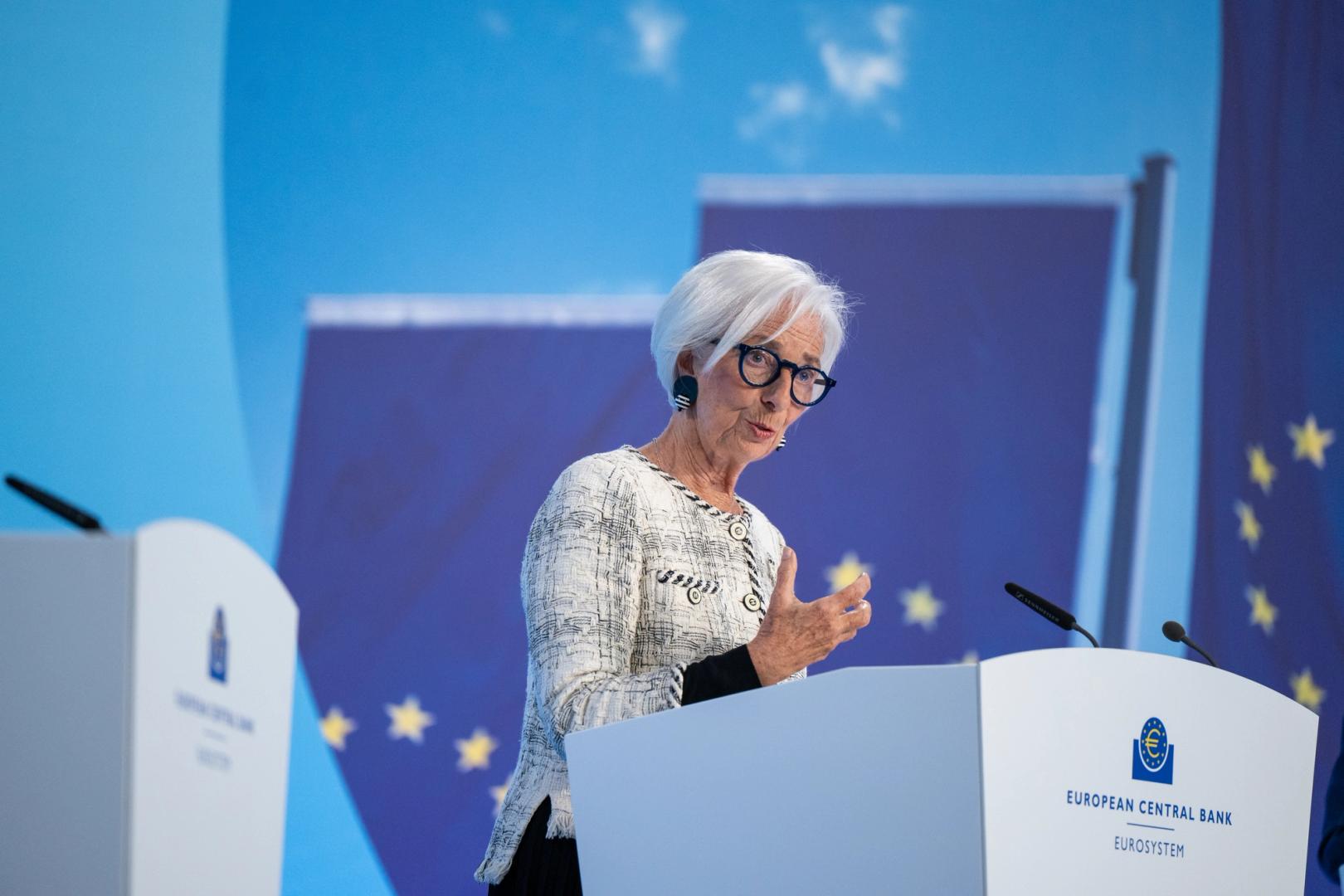
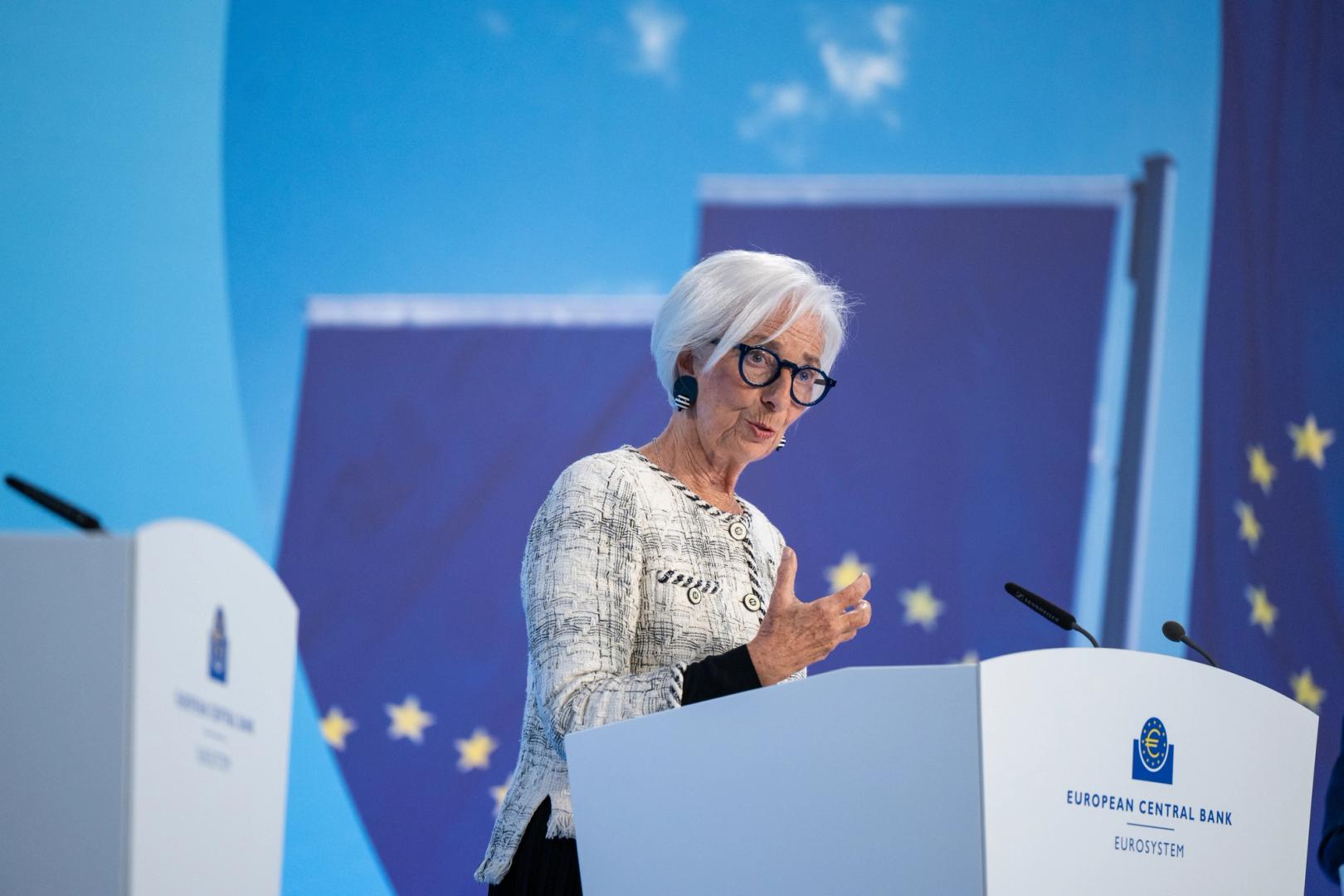
“We are actively working toward becoming MiCA-authorised and view this as an important step in providing users with a consistent, regulated, and trusted service across the European market,” the spokesperson said.
Binance withdrew its Greek application in mid-June and began winding down operations after officials at the Hellenic Capital Market Commission (HCMC) decided not to approve Binance’s MiCA license request at the last minute.
Gillian Lynch, Binance’s head of Europe, told CoinDesk in early July that the exchange had met all of the HCMC’s requirements.
“We were deemed to have a complete application,” Lynch said. “Nothing was missing, nothing material was outstanding.”
The WSJ also reported ESMA privately advised national financial regulators to reject Binance’s MiCA applications over concerns with the exchange’s past compliance issues.
Changpeng “CZ” Zhao, the founder of Binance, pleaded guilty in the U.S. in 2023 to violating the Bank Secrecy Act (BSA) and agreed to pay $4.3 billion in fines. He served a four-month prison sentence in California in 2024 and was pardoned by President Donald Trump in October 2025.
An ECB spokesperson declined to comment when contacted by CoinDesk. The ECB has no institutional role in authorizing crypto-asset service providers (CASPs), they said. That remains the jurisdiction of national competent authorities, in this case, the Hellenic Capital Market Commission (HCMC).


Predictive-policing is wrong, but it stems from the long-time surveillance of the American people. It is these various surveillance mechanisms that have empowered the state to target anyone for anything, even before they commit a crime — if they were going to commit a crime at all. Thus, DHS should end PITT’s use of financial information and other data for predictive-policing. Congress should direct the Government Accountability Office (GAO) to independently audit the DHS’s data sources, targeting criteria, retention practices, false-positive rates, and information-sharing, and assess the program’s compliance with the Fourth Amendment and other applicable laws. The GAO should be required to publish its findings for further action.
Congress must ensure that federal agencies cannot circumvent any Fourth Amendment protections by using secret profiles to manufacture suspicion. Judicial authorization should be required before the DHS can use sensitive financial records in an investigation of a specific suspected crime, and full disclosure whenever federal data analysis triggers a traffic stop.
Surveillance places all of us at the judgment and mercy of the state, where our activities, associations, or beliefs can easily be deemed criminal — or potentially criminal — and we have no way of defending ourselves. This is deeply un-American. The state should not be leveraging information to decide whether or not you may be a criminal and then tipping local law enforcement based on their judgment. The American people should be free to live authentically and with dignity without fear of wrongful prosecution. It is within our constitutional rights, and it is time the federal government be reminded of the
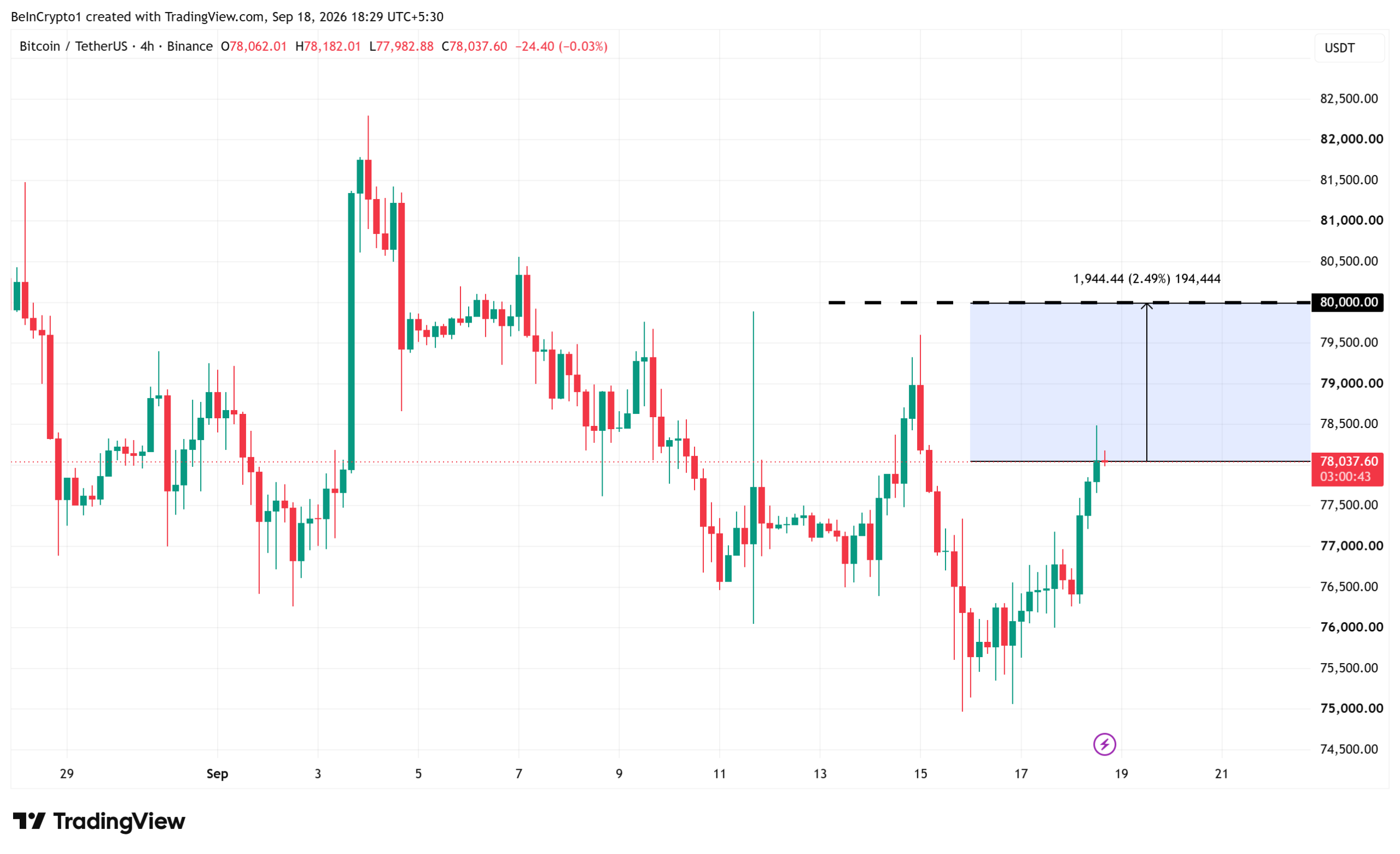
CoinShares does not expect Bitcoin price (BTC) to break above $80,000 this year. The firm blames a hawkish Federal Reserve and the stalled CLARITY Act, the US bill setting crypto market rules.
Bitcoin trades near $78,040, about 2% below that level. VanEck expects $100,000 within a year, which turns the forecast into a test of whose macro read holds.
Why CoinShares Sees Bitcoin Capped Below $80,000
The Federal Reserve raised rates a quarter point on Wednesday to a range of 3.75% to 4.00%. It was the first increase since 2023. Projections released with the decision also removed expected easing through 2027.
James Butterfill, head of research at CoinShares, set out the firm’s view in a Friday update. A decisive break above $80,000 is unlikely without better inflation data or a clear shift in policy expectations.
He tied much of that to Iran. Higher energy prices keep feeding inflation, leaving the Fed little reason to soften.
Butterfill added that Bitcoin is shielded from the regulatory setback because its legal status is already settled. Ether and altcoins are not, since much of the stablecoin payment infrastructure runs on those networks.

VanEck Sees $100,000 While On-Chain Data Weakens
VanEck’s Matthew Sigel told CNBC on Friday he expects Bitcoin to reach $100,000 by next year. The head of digital assets research argues government debt burdens are propping the asset up.
CoinShares treats that same bond-market pressure as a tail risk rather than its base case. A forceful liquidity response, it says, would lift both Bitcoin and gold.
Near-term data leans the other way. Glassnode figures showed Bitcoin closing below its True Market Mean this week, an on-chain average of what holders paid.
BeInCrypto reported in August that the bill was likely to fail in September. Senators rejected it 49-50 on September 15, and stablecoin issuer Circle saw its stock fall 11%.
CoinShares expects a revised version as early as next year. Until inflation cools, the ceiling on Bitcoin’s current price rests on the Fed, not on Washington.
The post CoinShares Says Bitcoin Won't Hit $80,000. Is It Correct? appeared first on BeInCrypto.


The balance sheet of Amazon carries $190 billion worth of an investment partially tied to none other than Sam Bankman-Fried of FTX infamy.
Not only did Bankman-Fried invest in Anthropic — in which Amazon now owns $190 billion worth of equity — he also funded an entity that became Model Evaluation and Threat Research (METR), an ostensibly independent evaluator with direct ties to the Effective Altruism movement.
METR, which has provided safety assurances for Amazon and Anthropic’s AI models, checks frontier AI companies like Anthropic and Amazon for safety, and is concerned about a “fast takeoff” of models with human “misalignment” that might hide “recursive” self-coding capabilities to achieve “superintelligence” and kill humans.
The “p(doom)” or probability of doom among METR workers is high. The buzzwords above are real jargon among AI security workers and if their concerns sound bizarre, there’s precedent for those beliefs: the effective altruism movement.
Specifically, METR’s predecessor took $1.25 million from Bankman-Fried’s effective altruism charity, FTX Foundation. METR is also staffed and funded today by effective altruists.
That $1.25 million donation arrived in July 2022, four months before FTX went bankrupt because Bankman-Fried was stealing FTX customers’ money.
As part of the budget that allowed the Alignment Research Center to operate for over a year before it renamed to METR in 2023, METR eventually returned the $1.25 donation it received from FTX in 2024, because “we now believe that this money morally (if not legally) belongs to FTX customers or creditors.”
FTX also funded Anthropic directly. Bankman-Fried bought a $500 million Anthropic stake using FTX customers’ funds in April 2022.
Nowadays, METR also receives financial support from Good Ventures Foundation and Coefficient Giving, two other effective altruism entities.
Amazon has historical ties to effective altruism
Effective altruism has been trending recently, so much so that a US Department of War account posted its view that effective altruism is misaligned with Americanism.
Amazon’s second quarter 10-Q filing discloses the company’s equity holdings in Anthropic. Amazon owns about $98 billion worth of Anthropic convertible notes plus roughly $92 billion in non-voting preferred stock.
Read more: Viral report alleges Anthropic’s AI safety watchdog conflicted
METR spun out of the Alignment Research Center, led by Paul Christiano who was a former housemate of Anthropic CEO Dario Amodei. Christiano also hired METR’s CEO Beth Barnes, who’s been tied to effective altruism since college.
Other METR staff members share ties to the University of Oxford, a hub for the effective altruism movement.
Amodei’s sister, Daniela Amodei, is also Anthropic’s president. Her husband is Holden Karnofsky, an Anthropic staffer who co-founded two effective altruism foundations, GiveWell and the group now called Coefficient Giving.
Even David Sacks, the former White House “AI czar” appointed by Donald Trump, told Amodei to “stop pretending METR is independent.”
In all, Amazon certainly has financial ties to Anthropic and its METR safety team. Worth $190 billion and rising with each subsequent valuation increase, Amazon’s stake is certainly noteworthy.
Amazon has even worked with METR directly. In 2025, METR piloted a review of Amazon’s own in-house, frontier AI model.
Got a tip? Send us an email securely via Protos Leaks. For more informed news and investigations, follow us on X, Bluesky, and Google News, or subscribe to our YouTube channel.


HYPE hit a record $90.92 after Hyperliquid opened manual borrowing, letting users borrow stablecoins against HYPE and Bitcoin collateral.
The 6 Best SAD Lamps To Save Your Energy And Your Mood This Winter

FTSE 100 Drops 1.25% as Middle East Tensions and BoE Rate Worries Erase Much of Thursday’s Sharp Rally

Bitcoin Registers Fourth-Ever Bullish Cross, Boosting Bull-Case Momentum



-

 Fashion7 days ago
Weekend Open Thread – Corporette.com
-

 Tech5 days ago
The Latest Weird Thing to Play Doom Is the Mapped-Out Brain of a Fruit Fly
-

 Crypto World4 days ago
Kraken Lets xStocks Holders Earn Yield Through DeFi
-

 Crypto World2 days ago
US Charges Robinhood Engineers Over Crypto Listing Trades
-

 Entertainment7 days ago
News Specials, Movies, Shows, More
-

 Crypto World6 days ago
Can AI Build a Startup in 72 Hours? Elon Musk's Team Will Livestream the Test
-

 Crypto World4 days ago
Elon Musk Drops a Bombshell: Grok 5 Could Be the AGI Breakthrough
-

 Business5 days ago
Rivals Sam Altman and Elon Musk Rally Behind Dario Amodei’s Call for a Slowdown in AI Development
-
 NewsBeat4 days ago
‘Sick conspiracy’: Trump says only guardrails AI needs is ‘a strong and smart (High IQ!) president’ in all-caps rant
-
 Crypto World5 days ago
New Tesla Roadster Uses SpaceX Tech. Will It Impact the Stock Price?
-

 Crypto World6 days ago
Robinhood Chain Never Stopped But its Blobs Did Stop Reaching Ethereum For 14 Minutes
-

 Crypto World3 days ago
What Is the Status of the U.S.-Iran Peace Talks? Here's What Both Sides Are Saying
-
 Entertainment7 days ago
New Horror Movie Officially Earns a Rare Stephen King Recommendation
-

 Crypto World3 days ago
NVIDIA Analysis: Attempted Rising Wedge Breakout Amid Pressure on the AI Sector
-

 Business6 days ago
Marvell: Most Potent Setup Of The AI Factory Decade
-

 Crypto World4 days ago
DOJ Seeks to Seize $61M in Iran Oil Funds From Binance Accounts It Vouched For
-

 Crypto World6 days ago
Bitcoin ETFs lose $462.7M as Ethereum funds gain $196.9M
-
 Crypto World4 days ago
3 Token Unlocks to Watch in the Third Week of September 2026
-

 Crypto World4 days ago
Revolut Attackers Warn of Ongoing Daily Customer Data Leaks
-
Business4 days ago
SK Hynix ADRs Fall More Than 6% as Memory Rally Breaks on Fears of Slower AI Spending
You must be logged in to post a comment Login