
Crypto World
Fake Wasabi Wallet app steals 6 BTC after landing on Apple Store

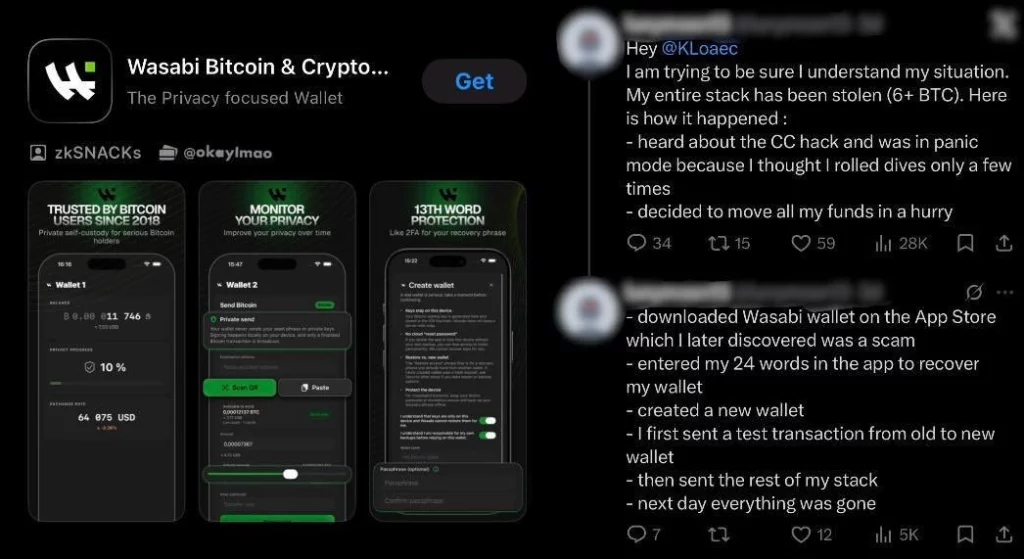
A fake Wasabi Wallet application has appeared on Apple’s App Store and has already been linked to the theft of roughly 6 BTC from one user, according to crypto security monitoring reports.
Summary
- A fake Wasabi Wallet app on Apple’s App Store has been linked to the theft of about 6 BTC from one user.
- The fraudulent Wasabi Wallet listing is the 27th reported crypto wallet clone on the App Store this year.
- A fake Ledger app remains the largest reported case, with about $9.3 million stolen.
According to Com Feed monitoring, the malicious application was presented as Wasabi Wallet, with reports circulating on X showing that one victim lost about 6 BTC after encountering the fraudulent software. The listing has also been identified as the 27th crypto wallet clone found on Apple’s App Store so far this year.
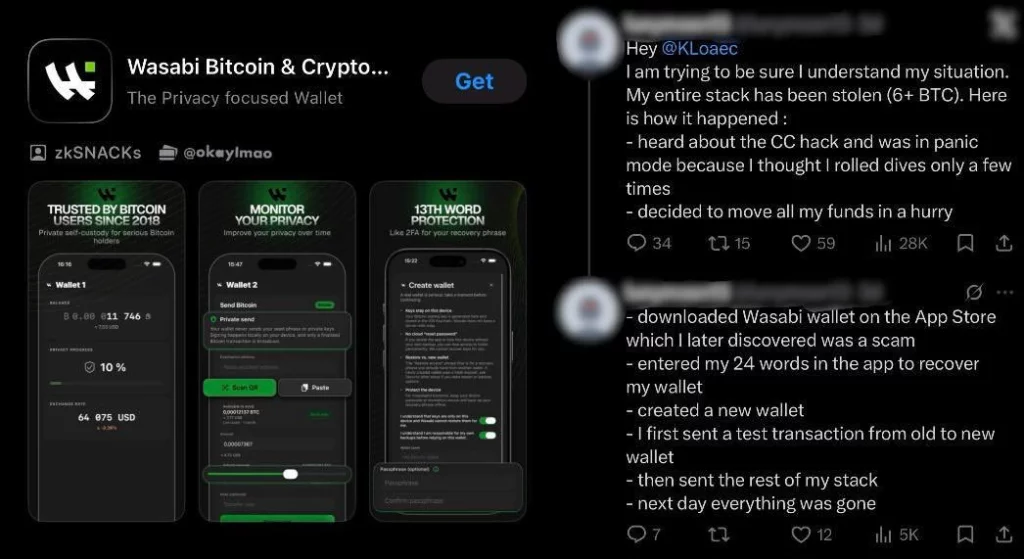
Fake Wasabi app on the Apple App store. Source: X/thecomfeed
Details about how the victim interacted with the application, including whether a recovery phrase was entered or another method was used to drain the wallet, have not been disclosed in the initial reports. Com Feed warned users to verify the Wasabi Wallet application carefully before downloading software presented under the wallet’s name.
Fake Wasabi Wallet becomes 27th reported App Store clone
The reported Wasabi Wallet impersonator adds to a series of fraudulent crypto applications that have passed through Apple’s App Store review process in 2026.
According to the monitoring report, 27 wallet clones have now been identified on the App Store since the beginning of the year. The fake Ledger application remains the largest case among the reported clones, with approximately $9.3 million linked to thefts.
Fraudulent wallet applications commonly imitate the branding and interface of established crypto products, making it difficult for users to distinguish them from legitimate software based on appearance alone. In the current case, the initial report specifically identified the application as a fake Wasabi Wallet drainer rather than an official release from the wallet project.
The reported loss of about 6 BTC also places the latest case among the larger individual thefts tied to wallet impersonation apps this year. The exact dollar value depends on Bitcoin’s price when the assets were taken, while the initial monitoring report quantified the victim’s loss in BTC rather than providing a confirmed dollar figure.
No information in the initial report identified the developer behind the application or explained how long the listing had been available through Apple’s marketplace. Details about whether Apple had removed the application were also not included in the information available at the time of the report.
Fake Ledger app previously drained musician’s 5.9 BTC
A similar incident in April showed how fraudulent applications can obtain control of crypto wallets by convincing users to disclose their recovery credentials.
On April 20, American musician Garrett Dutton, known professionally as G. Love, said he had lost 5.9 BTC worth about $420,000 at the time, after downloading software disguised as the Ledger Live manager from Apple’s App Store.
Dutton said he installed the malicious program on a new MacBook Neo and entered his seed phrase after the application prompted him to do so. The attacker subsequently emptied a Bitcoin stash that Dutton said he had accumulated for nearly a decade and intended to use for retirement.
On-chain investigator ZachXBT later tracked the stolen funds and reported that they had been transferred to addresses associated with KuCoin through nine transactions.
KuCoin told crypto.news at the time that it maintained procedures for monitoring and addressing potentially suspicious activity in line with regulatory requirements. The exchange disputed any characterization that it had allowed illicit activity and said the matter was under review, while declining to discuss specific details because of security, privacy and investigative considerations.
The April incident followed earlier cases involving software impersonating hardware wallet companies. In 2023, a fake Ledger application appeared on Microsoft’s store and was linked to nearly $600,000 in losses before Microsoft acknowledged that the program had passed its review process.
Crypto wallet impersonation has extended beyond app stores
Wallet owners have also faced impersonation attempts through physical mail, with scammers using leaked customer information to send letters carrying forged Ledger and Trezor branding.
As previously reported by crypto.news, some letters instructed recipients to complete a supposed mandatory authentication process before a stated deadline. QR codes included in the mail directed users to malicious websites where they were asked to provide 12-word or 24-word recovery phrases.
Once entered, the recovery phrases could give attackers control over the corresponding wallets, allowing them to transfer assets without requiring further authorization from the victim.
The FBI has separately documented rising losses from cryptocurrency-related fraud in the United States. Crypto-related losses reached approximately $11 billion in 2025, compared with about $9 billion a year earlier.
The latest fake Wasabi Wallet report concerns an impersonation application and does not indicate that Wasabi Wallet itself was compromised. The reported theft is instead tied to software presented to users under the wallet’s identity.

For years, banks ignored stablecoins. Then they tried to regulate them. Now they’re buying them for $1.8 billion. That’s not adoption. That’s capitulation.
The Acquisition Nobody’s Framing Correctly
Mastercard just acquired BVNK for $1.8 billion.
The headlines called it a “strategic move into digital payments.” A “bold bet on stablecoins.” An “expansion of Mastercard’s crypto infrastructure.”
All technically accurate. All missing the point.
Here’s the correct framing: one of the most powerful financial institutions on the planet just paid $1.8 billion to buy something it spent years trying to make irrelevant.
That’s not a strategic move. That’s a surrender with a press release.
What BVNK Actually Is
BVNK is a stablecoin infrastructure company. It allows businesses to send, receive, and settle payments using stablecoins, without the friction of traditional banking rails.
It’s fast. It’s global. It settles in seconds, not days. It doesn’t close on weekends. It doesn’t charge $25 wire fees. It doesn’t require the sender and receiver to have accounts at the same institution or even the same country.
In other words: it does everything that Mastercard’s network does, but without Mastercard.
That’s what Mastercard just paid $1.8 billion for.
Not to build better technology. To eliminate a competitor before it eliminated them.
The Timeline Of Denial
To understand what this acquisition means, you have to understand how long it took the traditional finance world to take stablecoins seriously.
2018-2019: Stablecoins are dismissed as a crypto curiosity. Useful for traders to park funds between positions. Not a real payments threat.
2020: USDC and Tether volumes start growing. Banks notice but frame it as a niche use case. “Real businesses use real banks.”
2021: Stablecoin transaction volumes surpass Visa’s annual volume for the first time. Banks start paying attention, not to adopt, but to lobby against.
2022-2023: Regulatory pressure mounts. Banks argue stablecoins are unsafe, unregulated, a systemic risk. The implicit message: regulate them out of existence.
2024: Stablecoins settle $46 trillion annually. The regulatory campaign fails. Congress starts moving toward legitimizing stablecoins rather than banning them.
2025: JPMorgan, Citigroup, and others begin building their own stablecoin products. The strategy shifts from “kill it” to “become it.”
2026: Mastercard pays $1.8 billion for BVNK.
That’s not a story about innovation. That’s a story about an industry losing a war and buying peace.
Why $1.8 Billion Is An Admission
Every acquisition has a story underneath the press release. Usually it’s one of three things:
Acqui-hire: We want your team. The product is secondary.
Market access: We want your customers. Cheaper to buy than build.
Threat elimination: You were going to hurt us. Now you won’t.
The BVNK acquisition is the third.
BVNK wasn’t just building a payments product. It was building a payments product that didn’t need Mastercard. Its infrastructure routes around the card networks entirely, no interchange fees, no network rails, no Mastercard.
Mastercard paying $1.8 billion for BVNK doesn’t add BVNK’s technology to Mastercard’s arsenal. It removes BVNK’s technology from the competitive landscape.
That’s what $1.8 billion buys: the absence of a threat.
What Mastercard Is Actually Afraid Of
Mastercard’s business model is elegant and simple: sit between buyers and sellers, charge a small percentage of every transaction that crosses your network, and collect that fee billions of times per day.
The model has worked for 60 years because there was no alternative. If you wanted to accept payments, you needed a card network. Period.
Stablecoins are the first credible alternative.
A merchant who accepts USDC doesn’t pay interchange fees. A business that settles invoices in stablecoins doesn’t need a correspondent bank. A company that pays international contractors in stablecoins bypasses the entire wire transfer system.
Every transaction that settles on stablecoin rails is a transaction that doesn’t cross Mastercard’s network.
At $46 trillion in annual stablecoin volume and growing, this isn’t a rounding error. It’s an existential question about whether the card network model survives the next decade.
Mastercard’s answer: buy the infrastructure before it scales beyond reach.
The Pattern Across Financial Services
Mastercard isn’t alone. The pattern is consistent across traditional finance:
JPMorgan spent years dismissing Bitcoin, then launched its own blockchain (JPM Coin), then integrated crypto products for wealth clients.
BlackRock called Bitcoin a “money laundering index” in 2017. It now manages $175 billion in Bitcoin ETF products.
PayPal fought crypto regulation for years. Now it issues its own stablecoin (PYUSD).
Visa called Bitcoin “not a payment system.” Now it runs stablecoin settlement pilots.
The sequence is always the same: dismissal → regulation attempts → failed regulation → build your own → acquire the competition.
Every institution eventually reaches the same conclusion: the technology works. The users want it. You can’t stop it. So you buy it.
BVNK at $1.8 billion is just the latest data point in a pattern that’s been playing out for five years.
What This Means For Crypto’s Future
The BVNK acquisition has implications beyond a single deal.
Stablecoins are no longer a crypto product. When Mastercard pays $1.8 billion for stablecoin infrastructure, stablecoins become financial infrastructure. The distinction between “crypto” and “payments” collapses.
The regulatory argument shifts. Banks argued that stablecoins were dangerous because they were unregulated. Now that banks are buying stablecoin companies, that argument becomes self-undermining. You can’t argue an asset class is too dangerous to exist while simultaneously acquiring it.
The innovation cycle accelerates. When incumbents start buying challengers, the challengers that weren’t acquired build faster. BVNK being acquired doesn’t eliminate the threat; it signals to every stablecoin startup that they’re worth acquiring. That’s fuel for more innovation, not less.
The price of independence goes up. Every stablecoin startup just got a new benchmark. If BVNK is worth $1.8 billion to Mastercard, what’s the next one worth? The acquisition creates a market for exactly the kind of infrastructure banks are trying to buy.
The Irony Worth Noting
The entire premise of crypto was disintermediation. Remove the middlemen. Let value move directly between people without banks taking a cut.
Now Mastercard, the quintessential financial middleman, owns a stablecoin company.
The technology that was supposed to eliminate Mastercard is now inside Mastercard.
That’s not a failure of crypto. That’s what happens when technology works well enough that the incumbents can’t ignore it. They integrate it, wrap it in their existing infrastructure, and charge for access.
This is what happened to the internet. The open web became the platform economy. Free communication became mediated by Google, Facebook, and Amazon. The technology remained. The disintermediation didn’t.
Stablecoins are following the same path. The technology is real. The utility is proven. And now the institutions are buying it, which means they’ll also control access to it.
Whether that’s good or bad depends on what you thought stablecoins were for.
The Question Crypto Has To Answer
If Mastercard owns BVNK, and JPMorgan owns its blockchain, and PayPal issues its own stablecoin, at what point does “crypto” just become “finance with better infrastructure”?
That’s not a rhetorical question. It has real implications for everyone who believed in the original premise: a financial system that doesn’t require institutional permission.
Every acquisition of a crypto company by a traditional institution is a step toward a world where the technology is decentralized but the access is not.
You can use stablecoins, as long as you use the ones Mastercard controls. You can hold Bitcoin, as long as you hold it through a BlackRock ETF. You can access DeFi, as long as you access it through a compliant on-ramp.
The rails are being bought. One acquisition at a time.
What Comes Next
Expect more acquisitions. Not because traditional finance suddenly loves crypto. Because the alternative, competing against it, is increasingly expensive.
BVNK at $1.8 billion is a bargain compared to what it would cost Mastercard to lose 10% of global payment volume to stablecoin rails over the next five years.
This is how incumbent industries absorb disruption: not by fighting it, but by buying it.
The crypto industry should take note. Because every acquisition is also a validation and a warning.
Validated: the technology works. The use case is real. The value is undeniable.
Warning: the infrastructure you built to escape the system is being bought by the system.
The question is whether there’s enough left outside the perimeter to still call it a revolution.
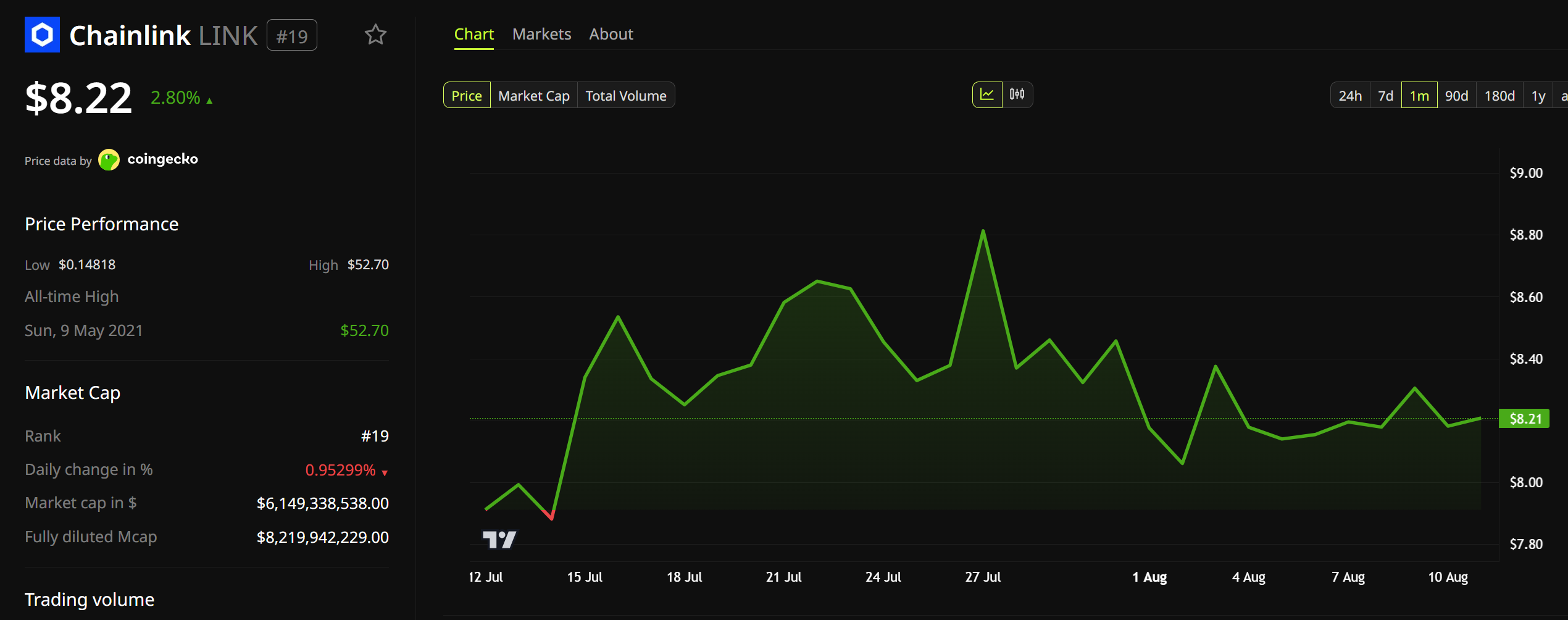
Standard Chartered has initiated coverage of Chainlink (LINK) with a price forecast of $200 by the end of 2030. With LINK trading near $8.22 on Monday, the target implies a 24x rally.
The call comes from a note titled “Chainlink – Owning the rails” by Geoff Kendrick, the bank’s digital assets research head. It extends his continuing search for winners of the tokenization trade.

A $4 Trillion Tokenization Bet
Kendrick expects tokenized assets on-chain to grow from around $340 billion today to $4 trillion by end-2028. He also sees $2.7 trillion of assets active in decentralized finance (DeFi) by end-2030, a 37-fold jump.
The Chainlink call fits a pattern in the bank’s recent research. Standard Chartered previously published a 50x Aave forecast and a 33x Morpho target built on the same DeFi growth thesis.
According to Kendrick, tokenized assets cannot scale on issuance alone. Once on-chain, they still need trusted data, secure transfers between networks, and compliance tooling to reach institutional use.
In effect, the thesis reads like a toll road argument. If tokenized assets must cross Chainlink’s rails, each crossing generates fees, and those fees feed LINK demand.
Why Standard Chartered Says Chainlink Owns the Rails
The bank calls Chainlink the market leader in bringing data on-chain through decentralized oracles. Oracles feed outside information, such as prices, to blockchains. Per the note, the network secures around 70% of DeFi markets globally and more than 80% on Ethereum.
Standard Chartered also credits Chainlink with enabling over $32 trillion in transaction value across seven years of operation. The bank argues this track record creates network effects that competitors struggle to match.
Meanwhile, the project has expanded beyond data feeds into interoperability, compliance, and privacy services for traditional finance (TradFi). Chainlink already works with Fidelity on a project to tokenize fund data covering $6.9 billion in assets.
“These assets will require trusted data, secure interoperability between networks, privacy-preserving compliance, and integration with existing financial systems; only Chainlink is currently equipped to provide all of these,” Kendrick wrote in the note.
Follow us on X to get the latest news as it happens
The Risks Behind the 24x Target
For LINK holders, the thesis converts network usage into fees and, in turn, token demand. However, LINK still trades near $8.22, close to the $8 reference price Kendrick used in the note.
The bank’s coverage can move prices in the short term. For instance, Aave jumped 15% after Standard Chartered’s earlier DeFi call, even as the broader market weakened.
Kendrick also flags clear risks. Slower institutional tokenization, competition from specialist providers, and technical setbacks could each derail the path to $200.
Therefore, the long-term LINK outlook rests on tokenization moving from pilots into production at scale.
The debate this note opens is a sharper one. Does Chainlink become the SWIFT of tokenized finance, collecting a fee on every crossing, or another bold bank call the market never validates?
The post Chainlink Trades at Just $8.22, but Standard Chartered Sees a 24x Rally appeared first on BeInCrypto.
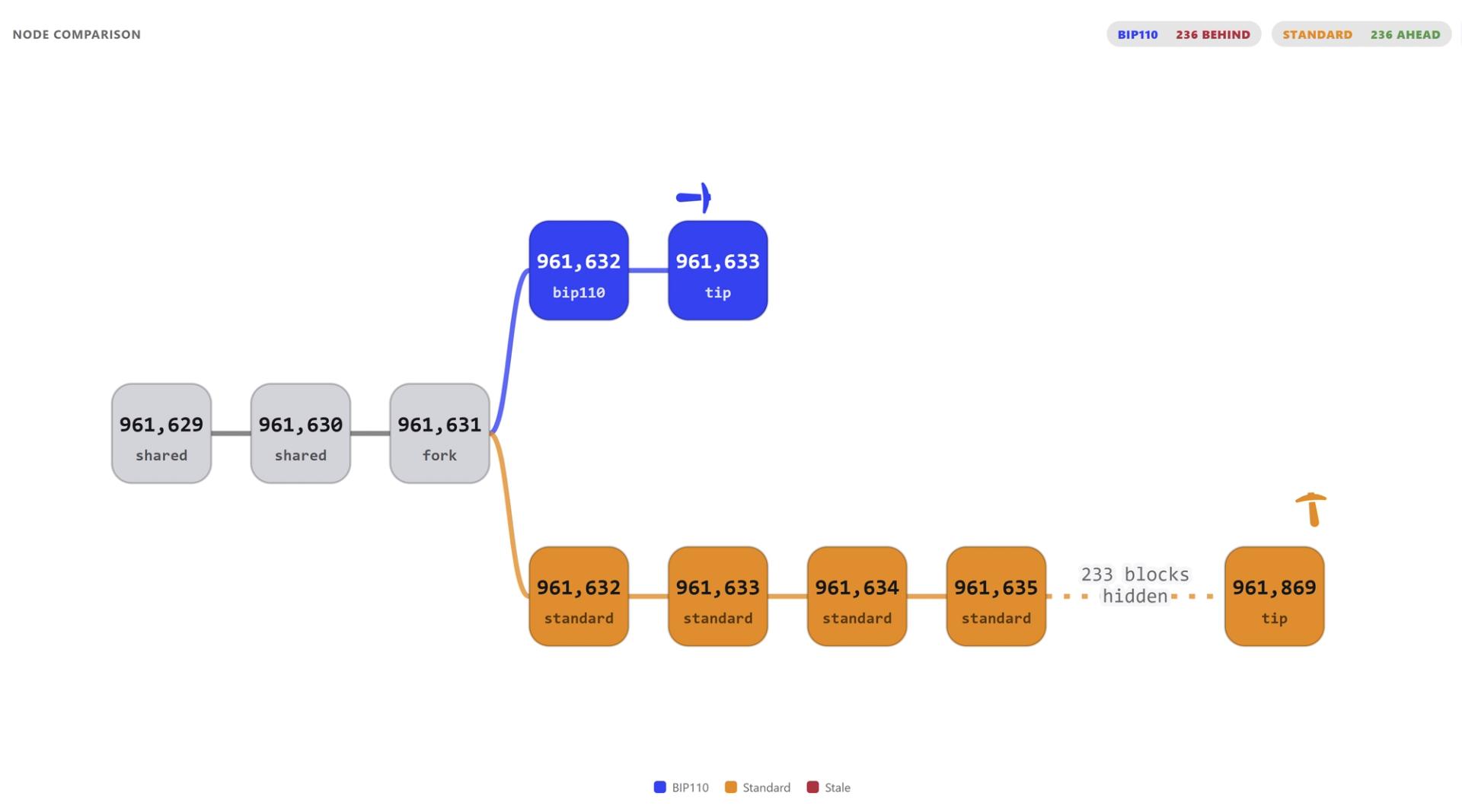
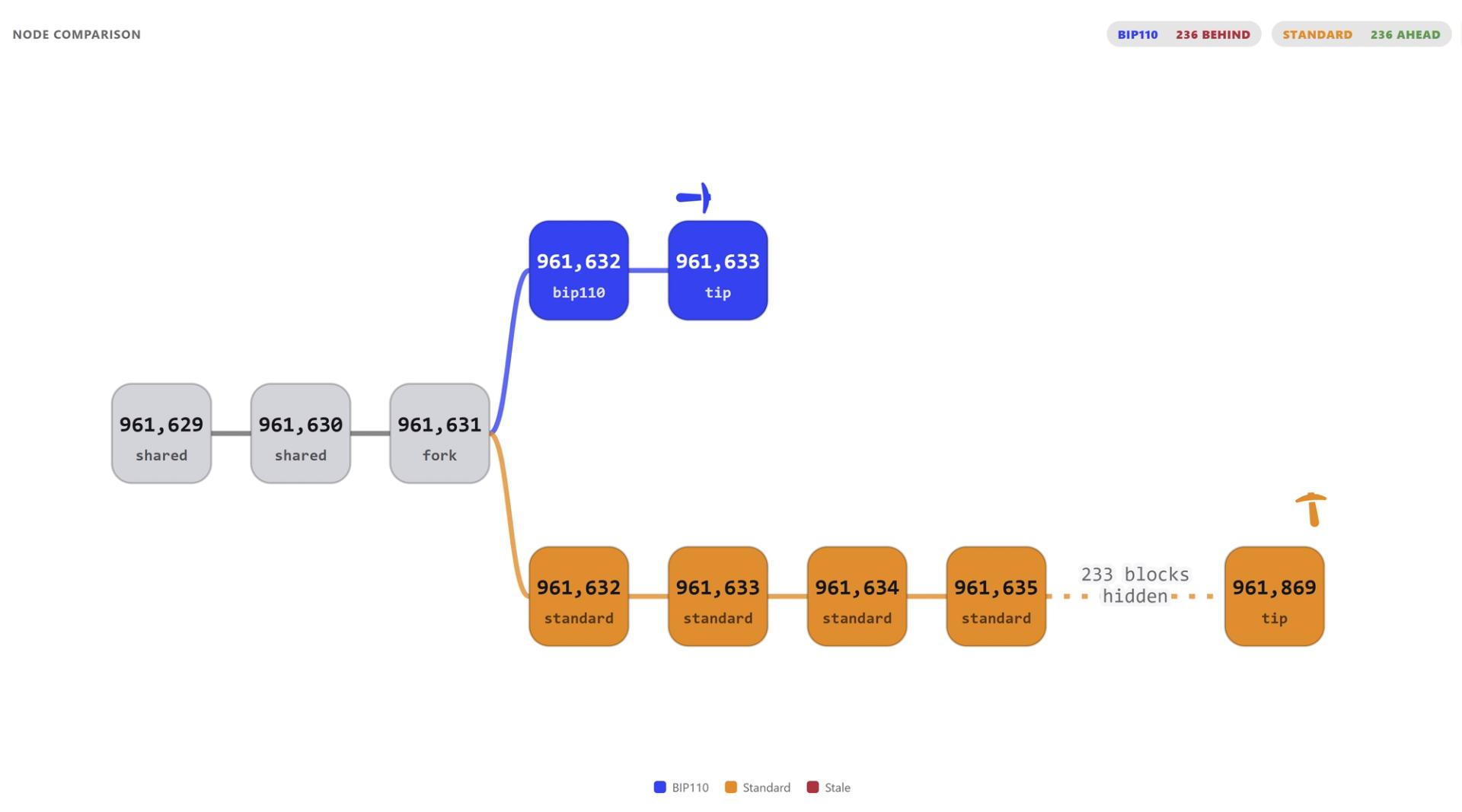
Miners quickly chose the more profitable version, the original Bitcoin. The new chain, which inherited Bitcoin’s massive mining difficulty, attracted only a tiny fraction of hashpower and produced just two blocks before grinding to a halt. Meanwhile, the original Bitcoin network continued uninterrupted, retaining virtually all activity, liquidity and security.
“Bitcoin worked exactly as designed,” Michael Saylor, the founder of BTC-holding company Strategy (MSTR), said on X.
Contrast that with the so-called free-market economies of the world. Falling corporate profitability should trigger cost-cutting and layoffs, but electoral politics often leads governments to block that adjustment, resulting in prolonged industrial sickness. Or, when high inflation hits, governments issue subsidies that artificially prop up demand, fueling even higher inflation. The usual free-market response of reduced consumption and price discipline never gets a chance to play out.
Bitcoin’s takeaway for the real economy is clear. The free market economy works when you let it run its course.
As for the coin’s spot price, it continues to trade near $65,000 alongside a continued demand for downside protection. This week’s U.S. inflation data is expected to influence the price trajectory.
Stay alert!
Read more: For analysis of today’s activity in altcoins and derivatives, see Crypto Markets Today . For a comprehensive list of events this week, see CoinDesk’s “Crypto Week Ahead.”

A.I. Data Center Backlash
Take the open question of data centers. Wisconsin’s cooler climate and hardened infrastructure make it an attractive location for the A.I. hubs. But it’s a clunker with the public, especially among Democrats. Marquette Law School’s polling has been instructive for candidates in the region. Among Wisconsin Democrats, the notion that the costs outweigh the benefits of data centers has grown from 56% in October of last year to 88% last month. Among all voters in Wisconsin, that shift has been from 55% to 76%.
Hong, recognizing the potency of the issue, has called for a statewide moratorium on data centers, branding her policy “Control-Alt-Delete.” That position may be the key to her surprising strength heading into Election Day.
Crowley’s position, meanwhile, is less restrictive but still skeptical.
“All data centers are not all created equal,” Crowley says. “Our job is to make sure that these data centers are paying their way, that they’re paying for the full energy costs, that they’re paying for the infrastructure and grid upgrades. Heck, I think that they should be subsidizing our energy users across the entire state.”
A prediction market now gives the XRP price a 65% chance of falling below $1 before the end of August. The technical picture is leaning the same way.
The call comes from Polymarket, a platform where traders bet real money on outcomes. Its odds line up with a weakening chart, softening demand, and traders who are positioned for more downside.
XRP’s Chart Builds a Bearish Pattern on Fading Volume
The alarm started with a live betting market putting XRP below $1 this month. The daily chart gives that bet a reason to exist.
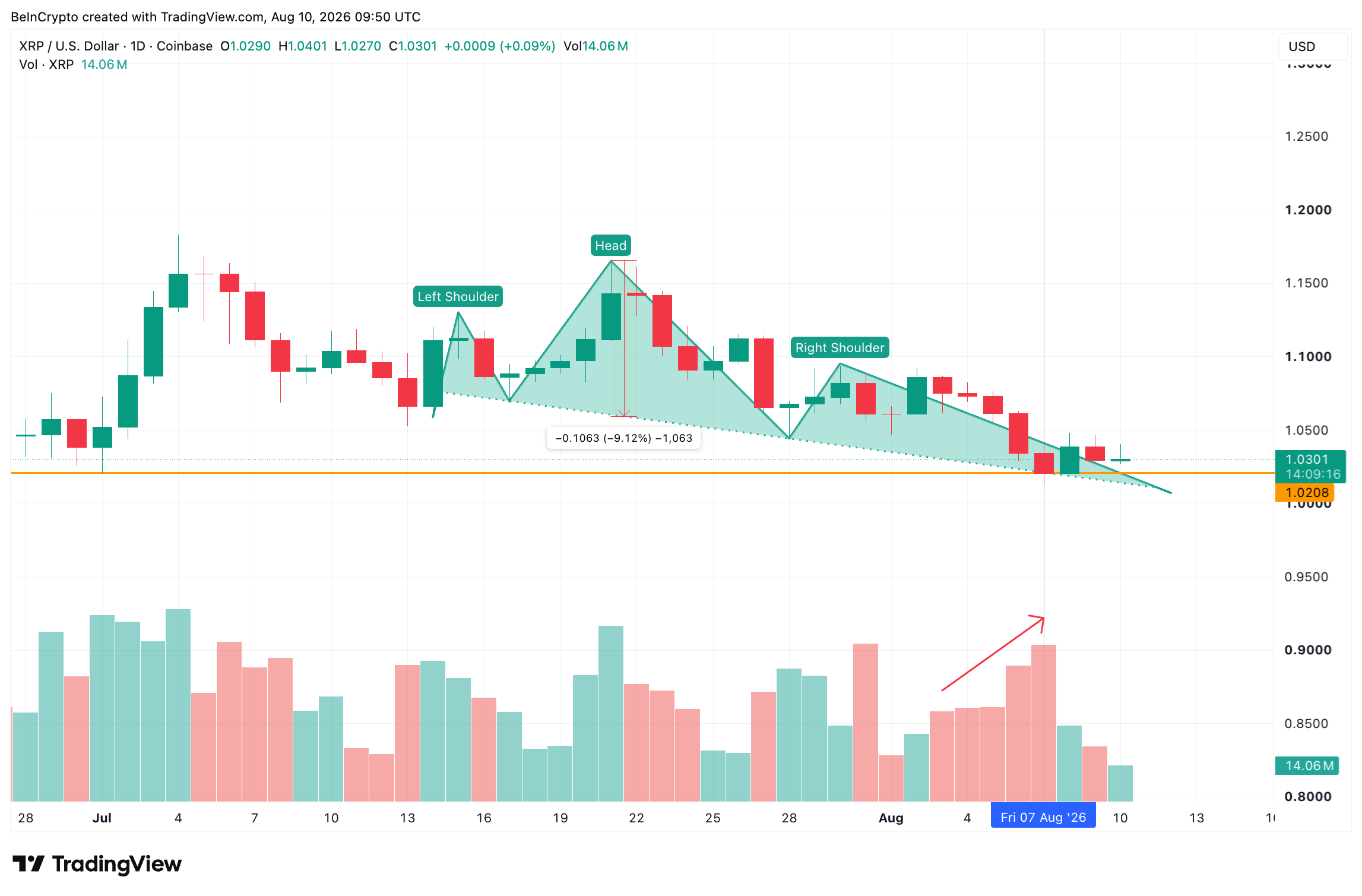
XRP has traced a head-and-shoulders pattern, a bearish reversal shape with two lower peaks around a higher middle peak. The pattern sits on a descending neckline that slopes down as support.
Volume tells the rest of the story. Sell volume surged between Aug 3 and Aug 7 as sellers pressed the neckline hard. Yet, buyers managed to hold the line on Aug 7. However, the defense was not convincing. The bounce came on weaker buy volume, which leaves the support looking fragile.

A shaky pattern only matters if the money behind it agrees, so positioning comes next.
Whales and Retail Are Both Leaning Short
The people trading XRP are not signaling confidence. A whale-retail divergence gauge reads -6.3 and sits in its aligned zone. It compares how the biggest traders are positioned against retail.
That reading shows top traders are 96% more short than retail. In plain terms, professionals lean bearish, and retail appears to be drifting toward the same stance rather than holding above $1.

Spot demand echoes that caution. XRP spot outflows across all exchanges have shrunk from about $56 million on Aug 3 to $4.3 million for the week ending Aug 10. That’s a 92% drop in retail-specific buying optimism.
The netflow stays negative but the fading size suggests fresh buyers are not stepping in with force. That leaves the support breakdown risk firmly in play.

With sentiment and flows both bearish, the XRP price chart and its levels become the decider.
The XRP Price Levels That Decide the Next Move
The neckline sits near $1.02, and that level is not random. It lines up with the 0.618 Fibonacci level, also at $1.02. That overlap makes $1.02 one of the strongest support zones on the chart. XRP trades near $1.03 at press time, just above that floor after surviving the August 7 test.
Want more token insights like this? Sign up for Editor Harsh Notariya’s Daily Crypto Newsletter here.
A clean break of $1.02 would confirm the bearish pattern. The measured move points about 9% lower, toward roughly $0.92, a zone that sits below $1 and matches the outcome Polymarket is pricing. A deeper flush opens the 1.618 extension near $0.89.

The bearish read is not automatic. Head-and-shoulders setups can fail when the neckline holds on repeated tests, and a low-volume break often traps early sellers.
For strength to return, XRP needs to reclaim about $1.09. Only a move back above $1.16 would fully cancel the setup and hand control to buyers. This XRP price prediction for the month lays out that case. Until then, the XRP price stays pinned to its floor.
The $1.02 line separates XRP holding the $1 level from the slide toward $0.92 that Polymarket is betting on.
The post The 65% XRP Price Warning on Polymarket Now Has the Charts Agreeing appeared first on BeInCrypto.


North Korea’s Kimsuky hacking group has established and tested local artificial intelligence (AI) tools as it researches ways to integrate the technology into malware development and attack techniques, South Korean cybersecurity firm Genians said Monday.
The group appears to have used generative AI to create decoy documents. Genians said Kimsuky is developing capabilities to incorporate existing AI models into its attack activities.
Inside Kimsuky’s Local AI Tools
Kimsuky is a threat group operating under North Korea’s Reconnaissance General Bureau. The US Treasury sanctioned it in 2023 as a state-controlled espionage unit.
Investigators found evidence that Kimsuky had installed and configured several tools for running AI models locally, including Ollama, GPT4All, and Msty.
Genians said local processing could reduce the risk of sensitive or stolen material being sent to external AI services. The researchers also identified retrieval-augmented generation, or RAG, which allows AI models to retrieve information from selected documents.
Genians also identified AI-agent frameworks, speech-to-text software, and Cursor, an AI-assisted coding tool, on related infrastructure. The company said the collection could support efforts to integrate AI into malware development, data analysis, and attack automation.
“Based on these findings, the threat actor associated with the state-sponsored hacking group Kimsuky is assessed to have continuously researched ways to actively incorporate AI technologies into actual threat activities, including malware development and the advancement of attack techniques, rather than merely experimenting with them,” the report read.
Follow us on X to get the latest news as it happens
From Crypto Decoys to Automation
The group reportedly used financial and cryptocurrency decoy documents that appeared to be AI-generated. The files mimicked investment reports.
Other North Korea-linked operations have paired AI with crypto-focused attacks on executives and engineers. Such groups stole a reported $2.02 billion in crypto during 2025, according to one industry estimate on theft.
Genians identified two potential risks. RAG could help retrieve useful information from stolen documents, while speech-to-text tools could convert stolen audio into searchable text.
Nonetheless, Genians assessed that Kimsuky’s local AI efforts remained focused on research and acquiring knowledge about how the technology could support its operations. The researchers found no evidence that the group had trained its own AI models.
Subscribe to our YouTube channel to watch leaders and journalists provide expert insights
The post North Korean Hackers Test AI to Advance Their Cyberattacks appeared first on BeInCrypto.


Standard Chartered has initiated coverage of Chainlink with a $200 LINK price target for the end of 2030, a roughly 25-fold increase from its current price near $8, as the bank expects tokenization and decentralized finance activity to drive higher demand for Chainlink’s services.
Summary
- Standard Chartered has set a $200 LINK price target for the end of 2030.
- The bank expects Chainlink fees to increase about 25 times as tokenization and DeFi expand.
- Chainlink secures more than $110 billion in value and about 70% of oracle dependent DeFi value globally.
- CCIP volume reached $4.9 billion in Q2, up 353% from a year earlier.
- Standard Chartered expects LINK to reach $13 by the end of 2026.
According to Standard Chartered Global Head of Digital Assets Research Geoff Kendrick, LINK could rise to $13 by the end of 2026 before reaching $41, $82 and $133 in the following years and eventually hitting $200 by the end of 2030.
The forecast would put LINK ahead of the bank’s expected returns for Bitcoin and Ethereum over the same period. Standard Chartered has projected Bitcoin at $500,000 and Ethereum at $40,000 by the end of the decade.
LINK was trading around $8.25 at the time of the report, down 0.8% over the previous 24 hours, according to CoinGecko data.
Standard Chartered sees Chainlink fees rising 25-fold
Kendrick’s Chainlink valuation rests partly on the bank’s expectations for tokenized assets and decentralized finance. Standard Chartered expects the value of tokenized assets held on blockchains to increase from roughly $340 billion currently to $4 trillion by the end of 2028.
For DeFi, the bank expects deployed assets to increase 37-fold to $2.7 trillion by 2030. Chainlink could benefit from both markets because its infrastructure supplies blockchain applications with external data and supports transfers between different networks, according to the report.
Based on those projections, Standard Chartered estimated that fees generated by Chainlink could increase about 25 times by 2030. The bank’s LINK valuation assumes the token price will broadly track that increase in fees.
The forecast also depends on Chainlink retaining its position in the oracle market. Standard Chartered estimated that Chainlink currently secures more than $110 billion in value, representing roughly 70% of oracle-dependent DeFi value globally and more than 80% of such value on Ethereum.
Aave V3 alone accounts for about 44% of the value secured by Chainlink, according to the bank.
Kendrick has used the same 37-fold DeFi growth forecast in several recent digital asset research notes. In June, he set a $100 target for Uniswap’s UNI and a $3,500 target for Aave’s AAVE, followed by a $60 target for Morpho in July.
UNI recorded a double-digit gain after Standard Chartered published its coverage, while LINK’s reaction to the latest report has remained more limited.
Institutional clients support the Chainlink thesis
Standard Chartered also based part of its forecast on Chainlink’s work with traditional financial institutions, where the network can provide data needed to operate tokenized funds, bonds and other financial products.
The bank identified Swift, DTCC, Euroclear, JPMorgan, Mastercard, UBS, Fidelity and S&P Global among institutions using Chainlink services. Kendrick expects customers outside crypto-native markets to account for an increasing portion of Chainlink fees as tokenization projects move into production.
Unlike many crypto assets, tokenized financial products can require recurring access to information such as net asset values, interest rates and reserve attestations. Standard Chartered expects those requirements to increase demand for oracle services if more securities and funds move on-chain.
The institutional argument follows several Chainlink projects involving banks and financial market infrastructure.
In June, Chainlink joined Project Pangea alongside FairSquareLab, UniKA and Qivalis to test stablecoin-based foreign exchange settlement between Europe and South Korea. Chainlink said the initiative involves more than 50 banks representing over $10 trillion in assets under management.
The project combines blockchain infrastructure with ISO 20022 messaging and existing Swift systems to test payment-versus-payment settlement using compliant euro and South Korean won stablecoins.
Chainlink CCIP has gained assets from rival bridges
Cross-chain infrastructure forms another part of Standard Chartered’s valuation case, although the bank said Chainlink continues to trail LayerZero in interoperability.
Kendrick reported that more than $7 billion in token value has migrated from legacy bridge infrastructure to Chainlink’s Cross-Chain Interoperability Protocol following a $292 million exploit in April. CCIP quarterly volume reached $4.9 billion during the second quarter, an increase of 353% from a year earlier, according to the note.
Some of those migrations have involved major DeFi protocols and token issuers.
On Aug. 4, BitGo selected Chainlink CCIP as the exclusive cross-chain infrastructure for Wrapped Bitcoin, replacing LayerZero for WBTC transfers. WBTC had a market capitalization of roughly $7.4 billion at the time, making the change one of the largest announced migrations involving Chainlink.
BitGo said it would standardize WBTC deployments around Chainlink’s Cross-Chain Token standard and use CCIP as the default interoperability infrastructure for future digital assets it issues. The structure allows BitGo to retain control over token contracts, transfer limits and operational settings.
Including earlier announcements from Mantle, Lombard, Aave and Kraken, publicly announced migrations from LayerZero to Chainlink infrastructure had reached roughly $14.6 billion after BitGo’s decision.
The migration activity followed the $292 million exploit involving KelpDAO’s LayerZero-powered bridge. KelpDAO blamed LayerZero for the incident and said it planned to rebuild using Chainlink, while LayerZero disputed that characterization.
Aave and stablecoins have expanded Chainlink usage
Chainlink has also added usage through existing DeFi relationships rather than relying only on projects switching infrastructure providers.
In July, Aave expanded its use of CCIP by making it the default cross-chain infrastructure for activity across the Aave App and Stable Vaults. The integration extended an existing setup under which CCIP already handled transfers of Aave’s GHO stablecoin and cross-chain governance messages.
Aave said the expanded deployment allows CCIP to process deposits, withdrawals, vault rebalancing, yield optimization and asset transfers. Stable Vaults use the infrastructure to move deposits between Ethereum, Base and Arbitrum without requiring users to manually bridge assets.
GHO and Savings GHO also use Chainlink’s Cross-Chain Token standard. Aave said GHO was available across eight blockchain networks in July, with CCIP responsible for transfers between supported chains.
United Stables adopted Chainlink infrastructure the same month after its U stablecoin surpassed $1 billion in circulating supply and $2.5 billion in daily trading volume.
Chainlink Data Feeds and Proof of Reserve went live for U, while United Stables said it planned to integrate CCIP for future cross-chain transfers. The company said its Data Feeds support pricing information used across more than 20 lending protocols, while Proof of Reserve lets users and applications verify U’s collateral on-chain.
Standard Chartered’s projections assume deployments of this type continue expanding as tokenized assets and DeFi grow. However, the bank identified several conditions that could prevent LINK from reaching its targets.
Kendrick said institutional tokenization could develop more slowly than the bank expects, while pilot projects may fail to become recurring production workflows. Standard Chartered also identified competition from specialist data and interoperability providers as a risk to Chainlink’s market position.
Technical failures could also damage confidence in Chainlink’s infrastructure, according to the report, particularly as more financial assets depend on its oracle and cross-chain services.
Under Kendrick’s staged forecast, LINK would first need to reach $13 by the end of 2026 before advancing to $41, $82 and $133 on the path to Standard Chartered’s $200 target in 2030.
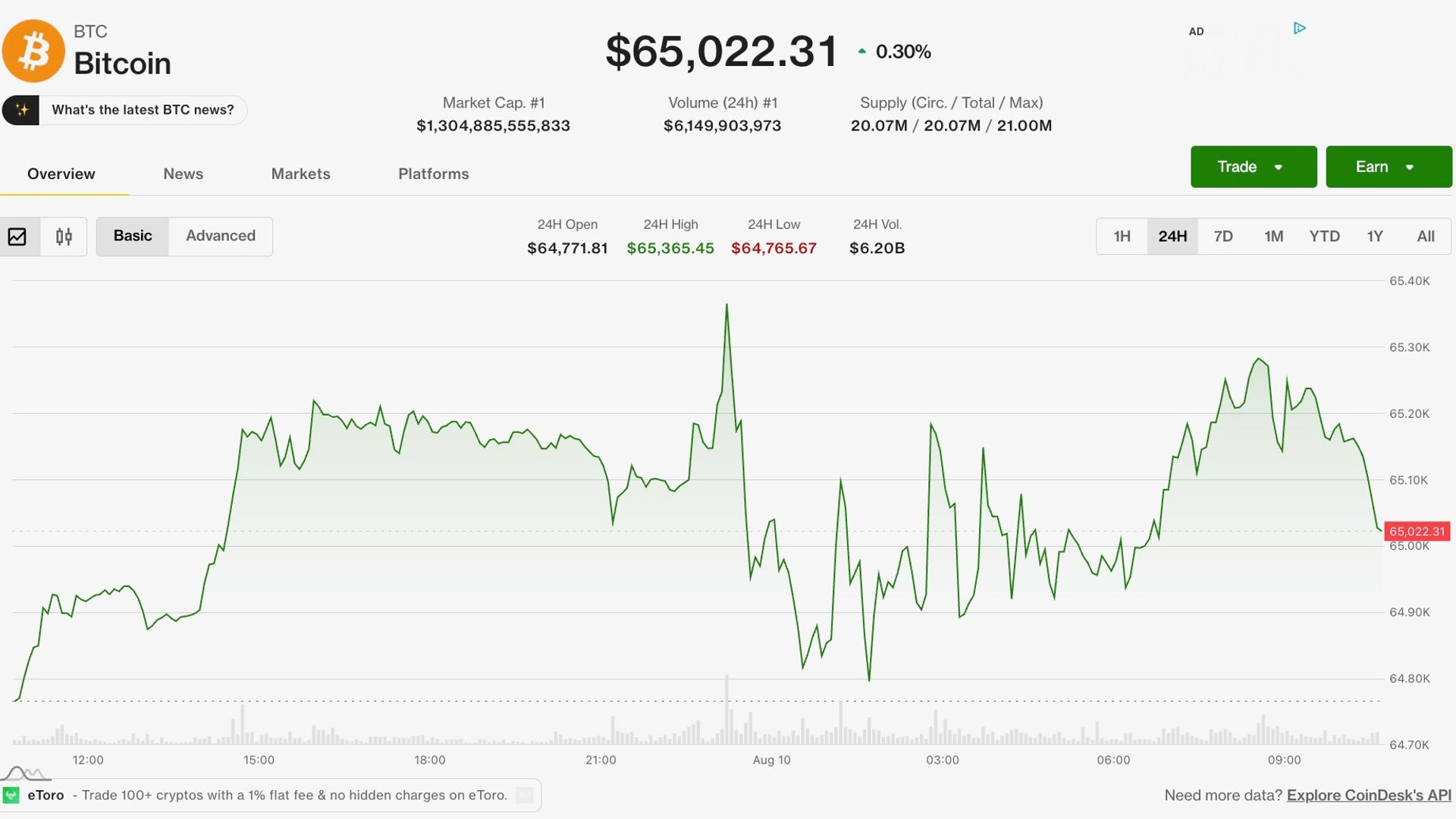
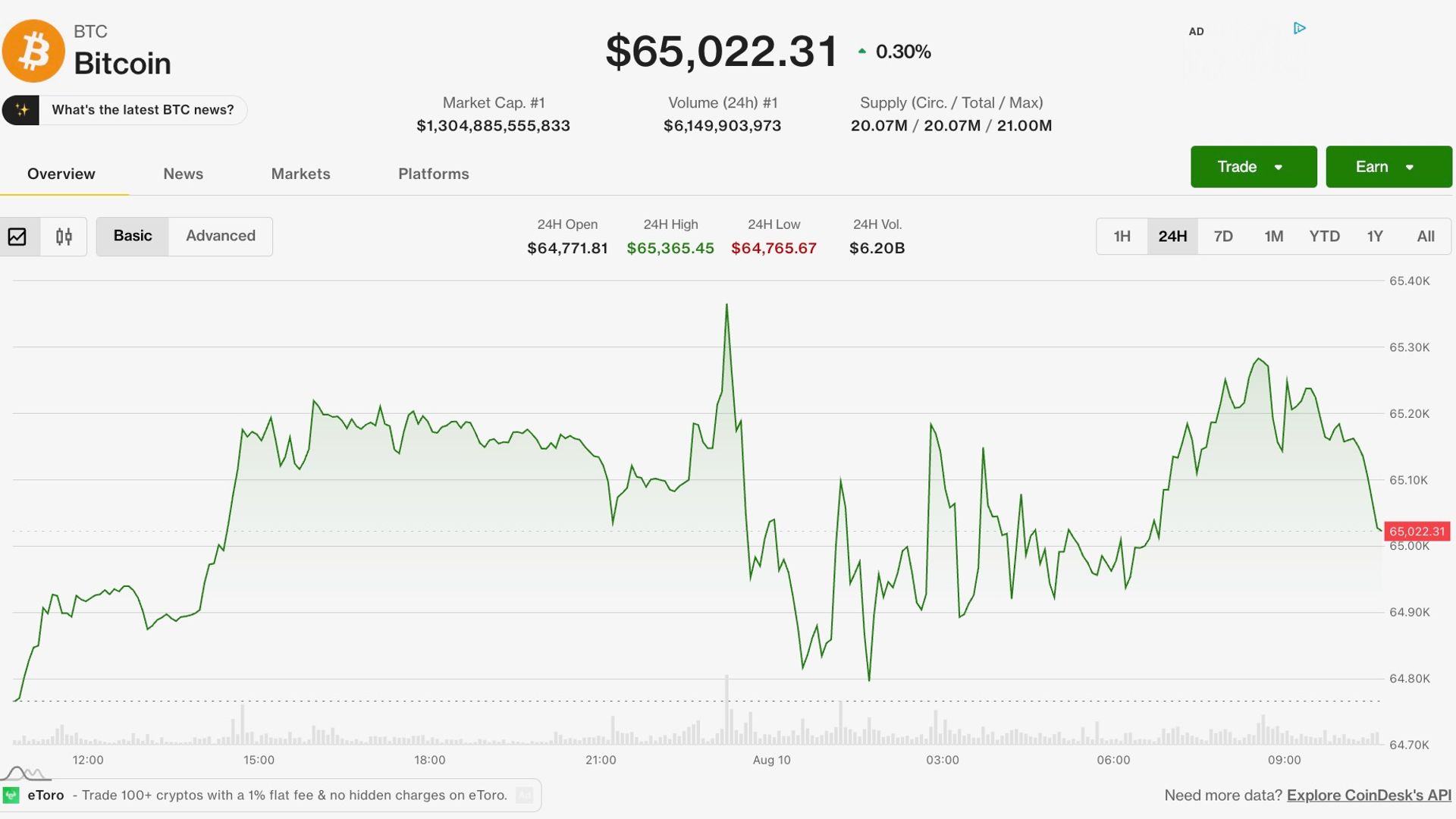
The crypto market opened the week on a positive note, with bitcoin up 0.54% since midnight UTC at $65,209 and ether gaining 0.86% to $1,925 as sentiment stabilized following a turbulent July.
The move was correlated with Nasdaq 100 index futures, which rose by 0.45% since midnight, buoyed by speculation from the Middle East that Iran is ready to strike a deal with Oman to open the Strait of Hormuz.
The altcoin market is delicately poised, waiting to see if bitcoin can drive higher into the $68,000 to $72,000 range before benefiting from capital rotation.
Derivatives positioning
- Long-short ratio flips bullish: The long-short ratio for taker volume in crypto futures has flipped bullish, with longs accounting for 52% of the flow. A taker is an entity that removes liquidity from the order book by trading at available prices.
- BTC OI growth remains elusive: Bitcoin futures market activity remains subdued as BTC attempts to hold above $65,000 amid cooling bets on Federal Reserve rate increases. Open interest (OI) slipped back below 750K BTC. However, annualized funding rates and 24-hour OI-adjusted CVD remain positive, indicating that the limited interest present in the market is leaning bullish.
- ETH OI slides: De-risking continues in ETH futures, with open interest falling to 13.35 million tokens, the lowest level since May 3, and a significant drop from the late-May peak of 15.98 million tokens.
- Activity picks up in SOL futures: Renewed activity is appearing in SOL futures, as open interest rebounds to 64.60 million tokens from a recent low of around 60 million. This points to fresh capital inflows, coinciding with the token’s price recovery from nearly $70 to over $76 and a break above the widely tracked Ichimoku cloud, signaling a potential short-term bullish trend reversal.
- Monero leads OI growth: Privacy-focused coin Monero (XMR) has surged 5% over the past 24 hours, briefly topping $400 for the first time since June 12. The rally appears to have staying power, with futures open interest jumping 6% alongside the price gains. The 24-hour CVD is the most positive among major cryptocurrencies, indicating that buyers are acting more aggressively through market orders rather than passive limit orders. In addition, annualized funding rates stand at the highest level among majors at 28%, underscoring growing demand for upside exposure.
- BVIV hits 2026 lows: Bitcoin’s 30-day implied volatility index, BVIV, fell to a year-to-date low of 35.59% over the weekend. The drop shows expectations for market calm, although some traders warn that put options offering protection from price losses in BTC are still trading at a premium to calls.
- Calls dominate volume: The 24-hour volume ranking in options shows increased investor bias for bitcoin calls at strikes $68,000 and $70,000. Ether options show a similar profile.
Token talk
- Pump.fun led the altcoin market with a 5.39% gain since midnight UTC, extending a 24-hour run that has pushed its market cap above $1.1 billion.
- Ethena (ENA) rose 4.84% to $0.0907, continuing a steady recovery that has seen it gain ground in most sessions over the past two weeks. Still, it remains more than 90% below its all-time high.
- NEAR protocol gained 3.79% as AI tokens broadly recovered, with FET adding 2.10% after weeks of underperformance against the wider market.
- Lighter (LIT) slipped 0.94%, one of the only notable altcoins in the red as its slide following July’s 200%-plus rally continues to grind lower.
- Woldcoin posted a 13% gain over the past 24 hours but remains in a deep downtrend, down 91% from its record high one year ago.
- CoinMarketCap’s “altcoin season” indicator is at 37/100, down significantly from last week’s peak of 51/100 as investors focus on bitcoin’s potential move higher.


Sweden’s H100 more than tripled its Bitcoin holdings to 3,506 BTC after completing an acquisition involving 2,455 BTC.

La is one of more than 30 people who have died in ICE detention since October amid a surge in fatalities that has raised alarm from experts and left rights groups and a growing number of families searching for answers—and, perhaps, a measure of accountability.
The fatality rate in ICE custody reached a 22-year high in the opening months of this fiscal year, according to a report published in the medical journal JAMA earlier this year. Between the beginning of October and Jan. 19, the latest date in the report’s analysis, 18 immigration detainee deaths were reported; since then, at least 17 other people have died while being held by ICE.
By comparison, 3 people died in ICE detention in the full 2022 fiscal year, per the report.
A spokesperson from the Department of Homeland Security (DHS), which houses ICE, maintained in a statement to TIME that “there has been NO spike in deaths.”
“Consistent with data over the last decade, as of May 29, death rates in custody under the Trump administration are 0.009% of the detained population,” the spokesperson said. “As bed space has rapidly expanded, we have maintained a higher standard of care than most prisons that hold U.S. citizens—including providing access to proper medical care. For many illegal aliens this is the best healthcare they have received their entire lives.”

Mastercard Just Paid $1.8 Billion For A Stablecoin Startup

Dukes of Hazzard’s Ben Jones Dead at 84 After Heart Attack

UK Solar Eclipse And Meteor Shower: Where And When To Watch


-

 Fashion3 days ago
Weekend Open Thread: Mattifying Sunscreen
-

 Fashion3 days ago
Frugal Friday’s Workwear Report: Cap-Sleeve Pointelle Crewneck Sweater
-

 Sports4 days ago
Jordan Coyle & Cordiamo take Laya Arena Stakes at RDS
-

 News Videos2 days ago
Can Astrology Help Find Gold and Silver Trends? A Financial Astrology Guide
-
 Business5 days ago
US stocks: Dow closes at record on Mideast optimism; SpaceX, AMD drag Nasdaq
-
 Crypto World6 days ago
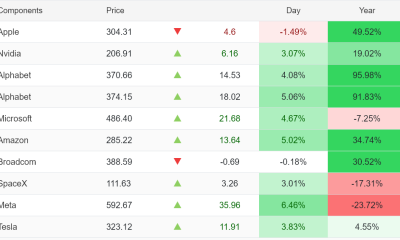
US Tech Stocks See Largest 5-Week Inflow in History: Can Nasdaq Break Its Downtrend?
-

 Politics4 days ago
Reform UK And Greens Sink To Lowest Favourability Ratings To Date
-

 Business5 days ago
Nvidia Stock Climbs 2.5% as Chip Sector Rally Builds Ahead of AMD Earnings, Nvidia’s Own Report Looms
-

 Crypto World6 days ago
Polymarket targets $20 billion valuation as competition heats up in prediction market sector
-

 Tech5 days ago
OpenAI, Anthropic AI agents targeted real people and systems in cyber tests
-

 Business5 days ago
Supply chain issues impact Ingredion
-
 Crypto World6 days ago
CLARITY Act Senate Vote Locked In, But 60-Vote Hurdle Looms Large
-

 Tech3 days ago
Rinn Pharma & Biopharma to join NordicPharmaTrain network
-

 Crypto World6 days ago
The Senate has one week: CLARITY’s last August window
-
 Crypto World5 days ago
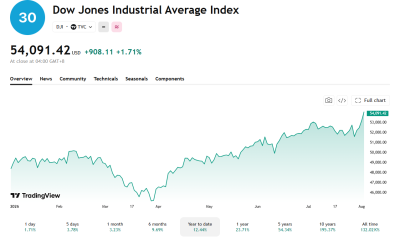
Dow and S&P 500 Hit Records on AI Earnings: When Will the Bubble Burst?
-
 Crypto World7 days ago
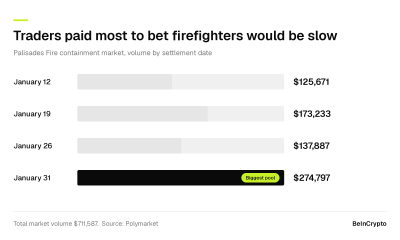
California Wildfire Bets Expose Polymarket’s Dark Side
-

 Business1 day ago
How to Start a Cleaning Business: A Step-by-Step Guide
-

 Business1 day ago
Datadog: Best Of Breed For Multiple Reasons
-

 Business6 days ago
CNH Industrial Shares Jump Over 15% After Beating Estimates and Raising Full-Year Earnings Guidance
-

 Crypto World6 days ago
New York sued, who is next
You must be logged in to post a comment Login