
Crypto World
Fed stays on hold as expected as Kevin Warsh moves closer to confirmation

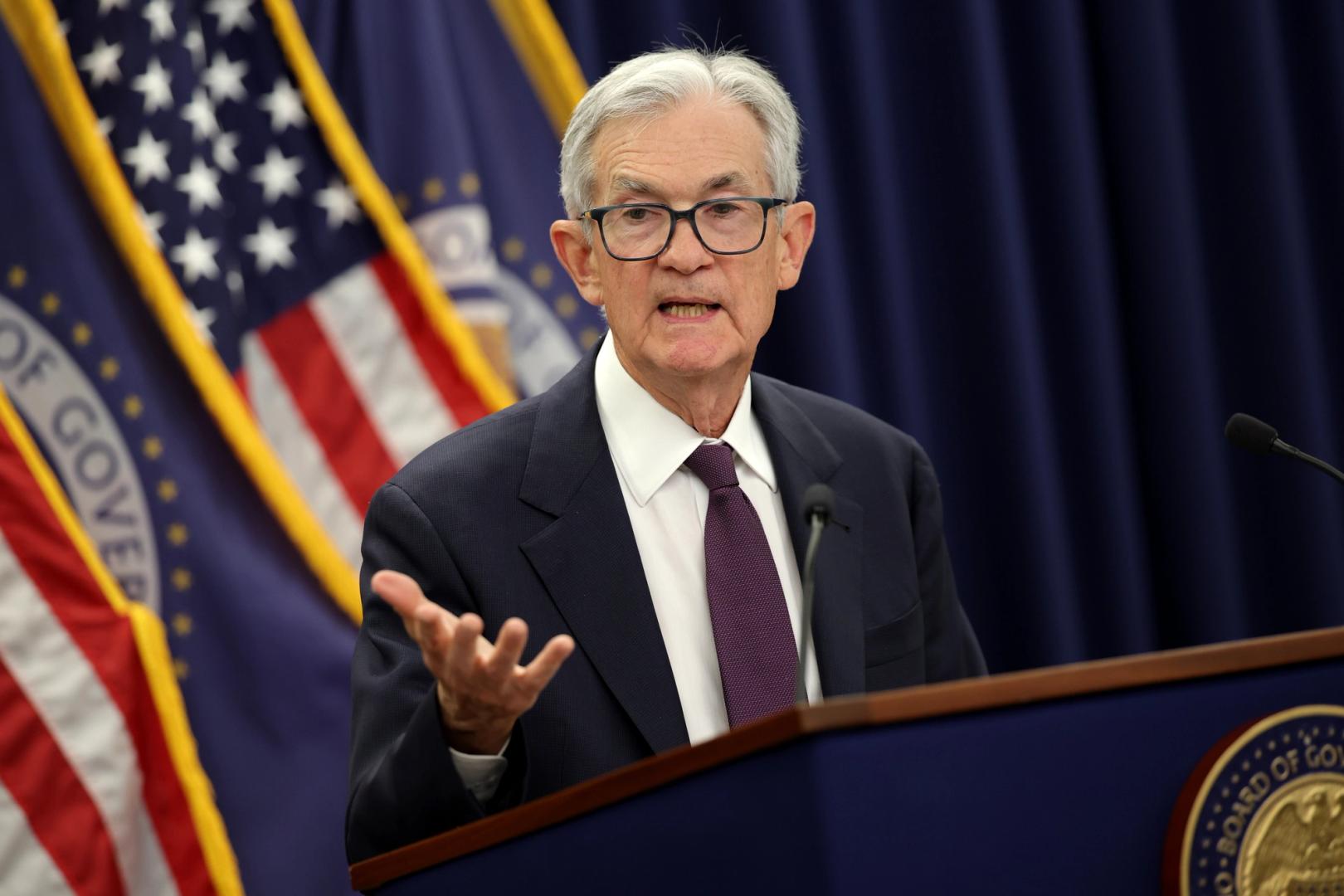
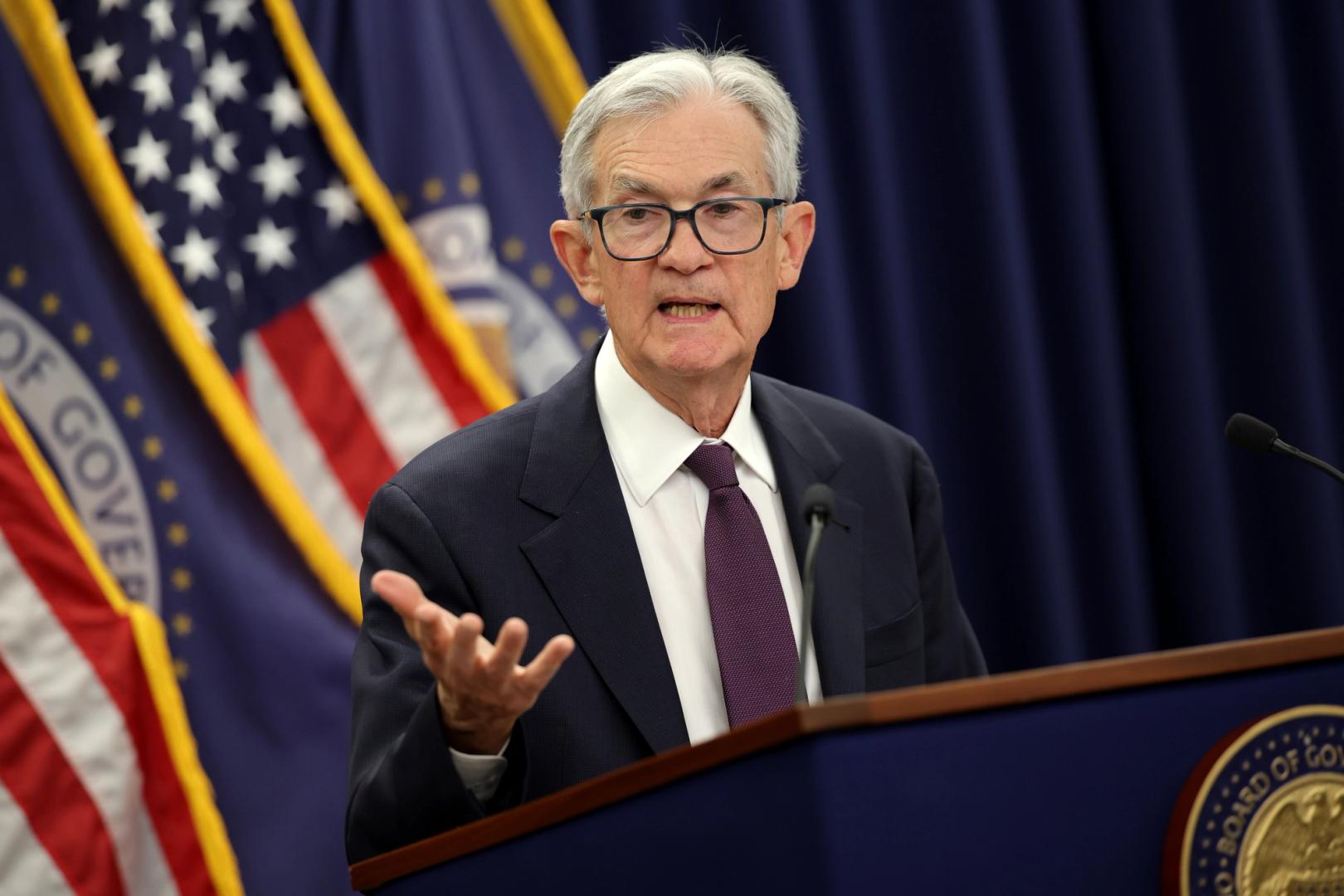
As fully expected by markets, the U.S. Federal Reserve held its benchmark fed funds rate range steady at 3.50%-3.75% on Wednesday, marking the fourth straight meeting without a change as officials weigh persistent inflation risks against signs of slowing economic growth.
“In considering the extent and timing of additional adjustments to the target range for the federal funds rate, the Committee will carefully assess incoming data, the evolving outlook, and the balance of risks,” said the Fed in its policy statement.
There were four dissents to the rate decision, one dovish and three hawkish. Fed Governor Stephen Mirran preferred trimming rates by 25 basis points, while Beth Hammack, Neel Kashkari, and Lorie Logan wanted to hold rates steady while removing any easing bias.
Under pressure ahead of the news, bitcoin remained about 0.5% lower over the past 24 hours, trading just below $76,000. U.S. stocks continued with modest declines, the Nasdaq down 0.35%. Yields are shooting higher, the two-year Treasury up 9 basis points to 3.93% and the 10-year up 5 basis points to 4.40%.
Today’s central bank meeting is likely to be the last to be presided over by Jerome Powell, whose term as chairman ends on May 15. His replacement, Kevin Warsh, passed a Senate Banking Committee vote earlier Wednesday, putting him on track to take over as Powell steps down. The three hawkish dissents suggest that Warsh will have a difficult task to push through rate cuts even if that is the direction he would like to go.
Attention will next turn to Powell’s post-meeting press conference as traders look for clues on the path forward for monetary policy.
After pulling back sharply earlier this month amid hopes for a lasting peace between the U.S. and Iran, oil prices have rebounded to near their post-war highs, with WTI crude trading just shy of $105 per barrel.
Higher energy costs naturally feed through to headline inflation numbers, but they can also slow economic activity. It puts the U.S. central bank in a difficult position: which of its mandates — prices or economic growth — should it prioritize?


Shares of SoFi plunged more than 15% Wednesday after the company declined to raise its full-year outlook — a move CEO Anthony Noto said reflects macro reality, not weakening fundamentals.
“We did not raise the full-year guidance because when we originally gave the full-year guidance, we were anticipating at least two Federal Reserve rate cuts,” he told Jim Cramer. “And now we’re assuming that there will be no rate cuts.”
The digital finance company reported results that were largely in-line with expectations, posting earnings of 12 cents per share and $1.09 billion in net revenue. Despite what Noto described as a “remarkable” quarter — including meeting its “Rule of 40” target for the 18th consecutive quarter — investors focused on the unchanged outlook.
Noto said the decision underscores a shift in macro assumptions rather than any deterioration in the business itself.
“To raise the bar in an environment that was uncertain on the interest rate front and what’s going on with the Middle East, we just didn’t see it as a prudent thing to do,” he said.
The more cautious stance comes even as SoFi continues to deliver strong growth, including 41% revenue growth and 31% margins, alongside continued gains in members and product adoption. The company also generated more than $1 billion in cash revenue for the second consecutive quarter.
“We’re really hitting on all cylinders,” Noto said.
Welcome to our institutional newsletter, Crypto Long & Short. This week:
- Jordan Brewer on the missing piece in token markets: institutional-grade investor relations.
- Martin Burgherr on crypto markets maturing, becoming more efficient and lower risk for institutions.
- Top headlines institutions should pay attention to by Francisco Rodrigues.
- Collector Crypt: revenue recovery meets token re-rating in Chart of the Week.
Expert Insights
Guide, deliver, repeat: the hidden driver of token performance
By Jordan Brewer, investment analyst, Runa Digital Assets
In early March, just three months after a Solana Breakpoint mainstage appearance by Ranger Finance co-founder Fathur Rahman, and two months post-ICO, tokenholders forced the liquidation of the protocol’s treasury. How does a 14x oversubscribed ICO unravel so quickly? The answer: poor investor relations.
Institutional-grade investor relations remains the missing piece in token markets. Crypto has spent years in a venture-style framework, but protocols now seek public market investors to provide more durable capital. A key part of investor relations is a regular investor call where management walks through forward guidance — teams at Maple Finance and EtherFi are leading here. These calls are solid, but this is just the start, and the stakes are high. Done well, token valuations are rewarded; done poorly, the downside is steep.
It pays to give guidance (as long as you beat it)
Research shows the value of forward guidance isn’t just in providing it, it’s in its accuracy. Bartov, Givoly, and Hayn (2002) found that firms that consistently meet or beat their own guidance enjoy a measurable stock price premium over firms that don’t. This premium compounds for “habitual beaters,” meaning the market increasingly trusts and rewards management teams that repeatedly deliver. Additionally, beating guidance is a leading indicator of future stock performance, regardless of whether the beat was genuine or a result of earnings or expectations management. Skinner and Sloan (2002) also demonstrated the inverse: growth stocks that disappoint on earnings expectations experience an asymmetrically large negative price response, far exceeding the upside reward of a positive surprise. Guidance accuracy is a proxy for management credibility, and credibility is a direct input to valuation multiples.
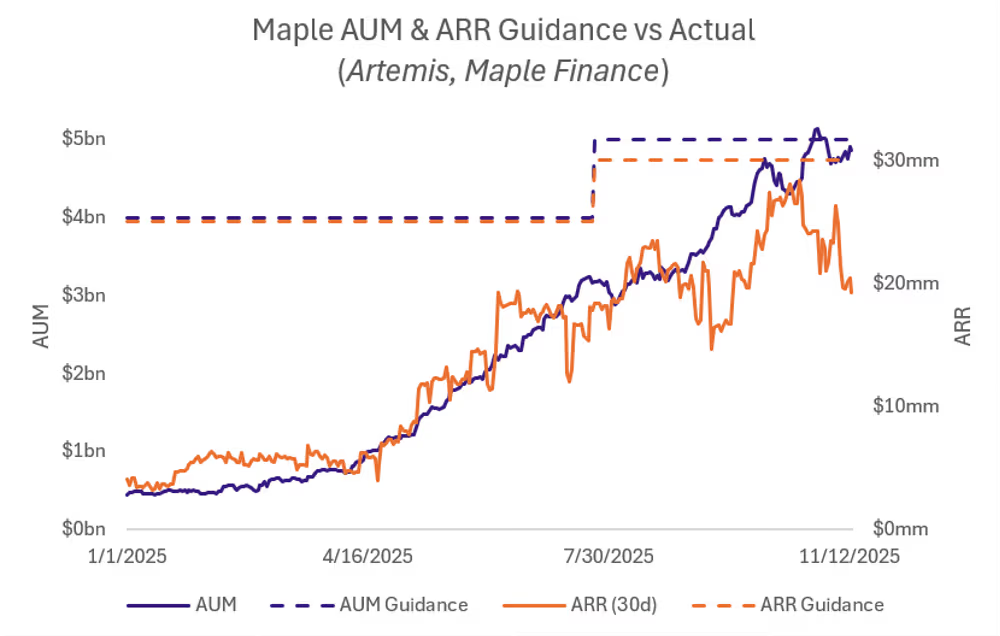
Crypto is beginning to produce its own version of this dynamic. In December 2024, when Maple’s AUM was $460 million and their ARR was $4 million, Maple set guidance of $4 billion in AUM and $25 million in ARR for 2025 and later raised guidance to $5 billion in AUM and $30 million in ARR. Maple delivered, hitting $5 billion in AUM and $28 million in 30 day annualized revenue in October (see table below). That’s a guide-and-deliver cadence that any public market investor would recognize and reward. From December 2024 to June 2025, the SYRUP token price rose from $0.10 to a high of $0.60, outperforming competitors like AAVE by 475%.


EtherFi is a good example of this dynamic. On their March 2026 tokenholder call, the team projected a 55% reduction in customer acquisition cost while raising their advertising budget 420% throughout 2026, which would imply 11x year over year customer growth. That’s the kind of specific guidance that gives investors something concrete to hold them to.
However, guidance without delivery is just marketing. Investor relations in crypto doesn’t end with a dashboard, that’s where it starts. Guidance and accountability are at the heart of credibility for protocol teams, and it is credibility that builds conviction in public investors.
Principled Perspectives
Institutions are separating custody from execution in crypto
By Martin Burgherr, chief clients officer, Sygnum Bank
There is a quiet but significant shift underway in how institutional capital moves through crypto markets. Major trading firms are increasingly separating where they hold assets from where they execute trades. More than a tactical change, it signals a broader evolution in digital asset market structure.
For most of crypto’s institutional history, there has been a basic architectural assumption: to access liquidity, you keep capital on the exchange. Historically, if you want to trade on an on-chain options exchange or run strategies across multiple venues, you wire the collateral to each exchange and leave it there. The model works, until you ask what it costs.
That cost is not just counterparty risk, though that matters too. It is capital inefficiency. Every dollar posted as margin on an exchange sits idle, earns nothing and cannot be redeployed. For an institutional trading desk managing hundreds of millions in positions, the opportunity cost is enormous — and in a rising-rate environment, it is getting harder to justify.
The infrastructure is catching up
The separation of custody and execution is not theoretical. Firms including Wintermute and Nomura’s digital asset arm Laser Digital are already operating this way, using collateral held in regulated bank custody while maintaining full access to exchange liquidity. BlackRock’s BUIDL tokenized money market fund, which sits at roughly $2.5 billion AUM, is now accepted as off-exchange collateral. The infrastructure is not being built by startups. It is being built by the institutions that intend to use it.

When collateral moves into regulated custody, it can take a different form. U.S. Treasuries or tokenized money market fund shares can serve as trading collateral while earning yield. The collateral does not just sit in a vault — it remains productive while still backing trading activity. Capital that previously sat inert can now generate returns, reducing the effective cost of maintaining trading positions. This is not a marginal efficiency gain. It fundamentally changes the economics of running an institutional crypto trading operation.
A maturing market structure
Crypto is beginning to follow a familiar pattern. Traditional finance solved this problem long ago — equities trade on exchanges, assets settle through custodians. The two functions live in different places, governed by different entities. That separation is what makes institutional participation possible at scale.
According to EY-Parthenon’s 2026 institutional investor survey, 73% of institutional investors plan to increase their digital asset allocations this year, with respondents getting more selective about counterparty risk. The infrastructure is scaling to meet them. The migration is already underway.
Headlines of the Week
This week’s headlines highlight that while the bridges between traditional finance and the crypto sector keep on growing, the devastation caused by smart contract exploits is hitting the market.
- U.S. military runs a Bitcoin node, sees crypto as ‘power projection’ vs China: Admiral Samuel Paparo, head of U.S. Indo-Pacific Command, told Congress that INDOPACOM is operating a live node on the Bitcoin network for cybersecurity testing and views the protocol as a tool of American power projection against China.
- Aave raises nearly 80% of the $200 million it needs to cover bad debt left by Kelp DAO exploit: The DeFi United recovery initiative has gathered roughly $160 million of the $200 million needed to recapitalize rsETH and erase the bad debt, with Mantle and the Aave DAO supplying 55,000 ETH, around $127 million, of the total.
- More than 100 crypto firms urge Senate to move on U.S. market structure bill: A coalition including Coinbase, Ripple, Kraken, Andreessen Horowitz and Paradigm wrote to the Senate Banking Committee pressing for a markup of the Clarity Act, warning that without a federal crypto framework, investment and jobs will move offshore to jurisdictions like the EU that already have one.
- JPMorgan says persistent security flaws curb DeFi’s institutional appeal: Wall Street’s largest bank told clients that repeated bridge and infrastructure exploits, headlined by the KelpDAO attack that wiped roughly $20 billion in TVL within days, and flat ETH-denominated growth are pushing capital toward Tether’s USDT and keeping institutions on the sidelines.
- EU’s largest measures against Russia yet include escalation of crypto sanctions evasion: Brussels’ 20th sanctions package imposes a sectoral ban on all Russia-based crypto service providers and DeFi platforms, prohibits transactions in the digital ruble and the RUBx stablecoin, and designates the Kyrgyz exchange TengriCoin, the first time a third-country VASP has been hit for facilitating the Garantex–Grinex–A7A5 evasion network.
Chart of the Week
Collector Crypt: revenue recovery meets token re-rating
After peaking in September 2025, Collector Crypt’s weekly revenue pulled back sharply before grinding back to ~$1 million/week since March — with the CEO’s revenue-funded buyback programme providing a mechanical bid under CARDS throughout the recovery. The recent price spike was then turbo-charged by a community update on April 24 claiming $146.9 million Q1 revenue and $8.6 million profit, though the token remains 73% below its all-time high.

Listen. Read. Watch. Engage.
- Listen: Did you hear? Consensus Miami is heating up. Recently added speakers include: U.S. Senator Kirsten Gillibrand, U.S. Senator Ashley Moody, and Donald Trump Jr., Co-Founder, World Liberty Financial. Grab 20% off your ticket today!
- Read: In Crypto for Advisors, Vincent Chok from First Digital unpacks the rise of “agentic finance,” where #AI agents are moving beyond advice to execute financial transactions.
- Watch: CoinDesk’s Public Keys from NYSE with host Jennifer Sanasie. Brett W. Redfearn, President of Securitize, joins to discuss the $30 billion in tokenized assets on chain, Michael Reinking from NYSE gives a digital assets macro outlook, and AVAX One CEO Jolie Kahn explains a treasury strategy around Avalanche.
- Engage: David LaValle will be speaking at June’s ICI Conference in Nashville. Let’s connect onsite!
Looking for more? Receive the latest crypto news from coindesk.com and market updates from coindesk.com/institutions.
Note: The views expressed in this column are those of the author and do not necessarily reflect those of CoinDesk, Inc., CoinDesk Indices or its owners and affiliates.


Hyperliquid has published the fee structure for its outcome tokens, the assets that underpin prediction market-style trading on the platform, in a sign that a mainnet launch is getting closer.
Prediction markets have become one of crypto’s fastest-growing areas, with trading volume surging more than 300% in 2025 to $63.5 billion, and Hyperliquid is building the infrastructure to compete with incumbents such as Kalshi and Polymarket.
The key detail in the structure is that opening a position costs nothing. Fees only apply when closing or settling a trade. The document outlines six scenarios covering minting, trading, burning and settlement.
Traders using Hyperliquid’s “aligned quote tokens” get better rates, with taker fees 20% lower and maker rebates 50% higher than standard. The full fee formula has been published for developers.
The broader significance is that HIP-4, the upgrade introducing outcome tokens, would let users trade binary contracts on real-world events alongside Hyperliquid’s existing perpetuals and spot positions in a single account as it looks to compete with platforms like Polymarket, which said earlier this week that perpetual trading is “coming soon.”
Hyperliquid’s previous upgrade, HIP-3, which opened permissionless perpetuals to developers, has grown to more than 35% of all platform trading volume since its introduction in October 2025.
Outcome tokens are currently on testnet only. No mainnet date has been confirmed.
Crypto World
RealOpen and TRON Verify $9.4M in USDT Across Crypto-Enabled U.S. Real Estate Transactions

TLDR:
- RealOpen and TRON’s Holiday Campaign verified approximately $9.4M in USDT from 27 KYC-verified users.
- A total of 69 real estate agents were onboarded through the 2025 TRON Real Estate Challenge program.
- TRON processes over $22B in daily transfer volume, supporting 376 million self-custodial accounts globally.
- TRON handles roughly 65% of global USDT retail transfers under $1,000, making it a leading stablecoin network.
RealOpen and TRON have wrapped up their “Fast Moves, Fast Payments” Holiday Campaign, verifying approximately $9.4 million in USDT.
The campaign ran from November 17, 2025, through February 28, 2026. It offered eligible U.S. homebuyers up to 50,000 USDT in rewards.
Buyers had to purchase property through RealOpen using USDT on the TRON blockchain. The campaign showed how blockchain can support both everyday and high-value transactions.
Campaign Results Show Growing Crypto Adoption in Real Estate
The campaign recorded 343 user sign-ups on the RealOpen platform overall. Out of those, 27 users completed KYC verification successfully.
Those verified users accounted for the $9.4 million in USDT on TRON. Additionally, 69 real estate agents joined through the 2025 TRON Real Estate Challenge. This shows a rise in industry participation in crypto-enabled property deals.
RealOpen allows buyers to purchase any property currently on the market. Buyers can fund purchases directly using digital assets without complication.
The platform combines traditional real estate reliability with crypto speed and efficiency. This approach makes blockchain-powered homebuying accessible to a wider audience.
Johnny Schiro, Executive Vice President at RealOpen, spoke on the campaign’s outcome. “The Fast Moves, Fast Payments campaign showed why TRON is such a strong settlement layer for real-world assets,” Schiro said.
He noted that hundreds of new users engaged and dozens of agents came on board. He added that “modern capital needs modern payment rails – and TRON is well-positioned to power that shift.”
According to TRON DAO, the collaboration showed TRON’s real-world use across different payment types.
It covered everything from small retail transfers to large real estate closings. This range further supports TRON’s standing as a versatile settlement layer.
TRON’s Infrastructure Backs Large-Scale Stablecoin Transactions
TRON processes more than $22 billion in daily transfer volume across its network. The network has a circulating USDT supply of $86 billion currently active.
Over 376 million self-custodial accounts use the TRON network globally. It also handles around 65% of global USDT retail transfers under $1,000.
The network’s near-instant finality makes it suitable for time-sensitive transactions. Low transaction costs further support its use in real estate closings.
These features position TRON as a practical settlement layer for high-value deals. Earlier in 2025, RealOpen already closed multiple real estate deals funded in USDT on TRON.
Pearl Homes’ Hunter’s Point development in Florida also promoted crypto acceptance via RealOpen. The net-zero master-planned community on Florida’s Gulf Coast accepted blockchain-based payments.
This expanded crypto settlement into broader residential real estate markets. It reflected a shift toward stablecoin use in mainstream U.S. housing transactions.
As demand for faster and more transparent capital movement grows, stablecoins are gaining traction. The RealOpen and TRON campaign demonstrated this trend in the U.S. housing market. USDT on TRON is proving to be a workable settlement option at scale.



Former acting CFTC Chairman Caroline Pham will run the new business, which bundles key management, custody, execution, and white-label stablecoin issuance into a single stack.
MoonPay on Wednesday said it has acquired Israeli key management infrastructure firm Sodot and launched MoonPay Institutional, a new business targeting financial institutions, asset managers, trading firms, and exchanges moving into digital assets.
The unit will be led by Caroline D. Pham, the former acting Chairman of the U.S. Commodity Futures Trading Commission, who joined MoonPay as CEO of Moon Global Markets and also serves as the company’s Chief Legal Officer and Chief Administrative Officer.
Sodot, founded in 2023 by Ido Sofer, Shalev Keren, Matan Hamilis, and Elichai Turkel, builds self-hosted multi-party computation (MPC) and trusted execution environment (TEE) products for managing private keys and API credentials. The company says its platform has secured more than $50 billion in transactions and protected over 10 million wallets.
The full Sodot team, technology, and customer base are moving over, and MoonPay said it intends to expand the company’s Israeli operations.
Institutional Stack
MoonPay Institutional combines wallet infrastructure and key management built on Sodot’s MPC and TEE stack, custody through MoonPay Trust Company (a New York Limited Purpose Trust Company regulated by the NYDFS), a Crypto API Vault for managing exchange and venue credentials, on-chain trade execution and cross-chain collateral mobility, and aggregated OTC and DeFi liquidity across Ethereum, Solana, Base, Arbitrum, BSC, Hyperliquid, Uniswap, and what MoonPay describes as more than 200 additional networks and protocols.
The stablecoin and payments layer offers white-label issuance, reserve management, and cross-border settlement in over 120 fiat currencies, with existing integrations spanning PayPal, Paysafe, and Deel. MoonPay’s payments network reaches over 7,500 merchants, wallets, and apps and an estimated 100 million users, building on a string of recent moves, including its acquisition of stablecoin infrastructure firm Iron in March 2025, the USDT Mastercard launch with Tether, and the PYUSDx app-specific stablecoin platform with M0.
“We built MoonPay to be the world’s leading crypto payments network. Our institutional arm is the next stage, and together with Sodot’s infrastructure, it will allow us to bring this platform to financial services firms now entering the digital asset space,” said CEO and founder Ivan Soto-Wright in a press release.
Demand for Infrastructure
MoonPay framed the launch against a sharp pickup in institutional demand for digital asset infrastructure.
Citing Federal Reserve research, the company said stablecoin transaction volume reached $33 trillion in 2025, with Q1 2026 alone topping $28 trillion, and total stablecoin market capitalization has crossed $317 billion, up more than 50% since early 2025.
It also pointed to Nomura Securities data showing that more than two-thirds of institutional investors now want exposure to DeFi yields, and to a Goldman Sachs survey indicating that 71% of institutional asset managers plan to increase digital asset exposure over the next 12 months.
This article was written with the assistance of AI workflows. All our stories are curated, edited and fact-checked by a human.
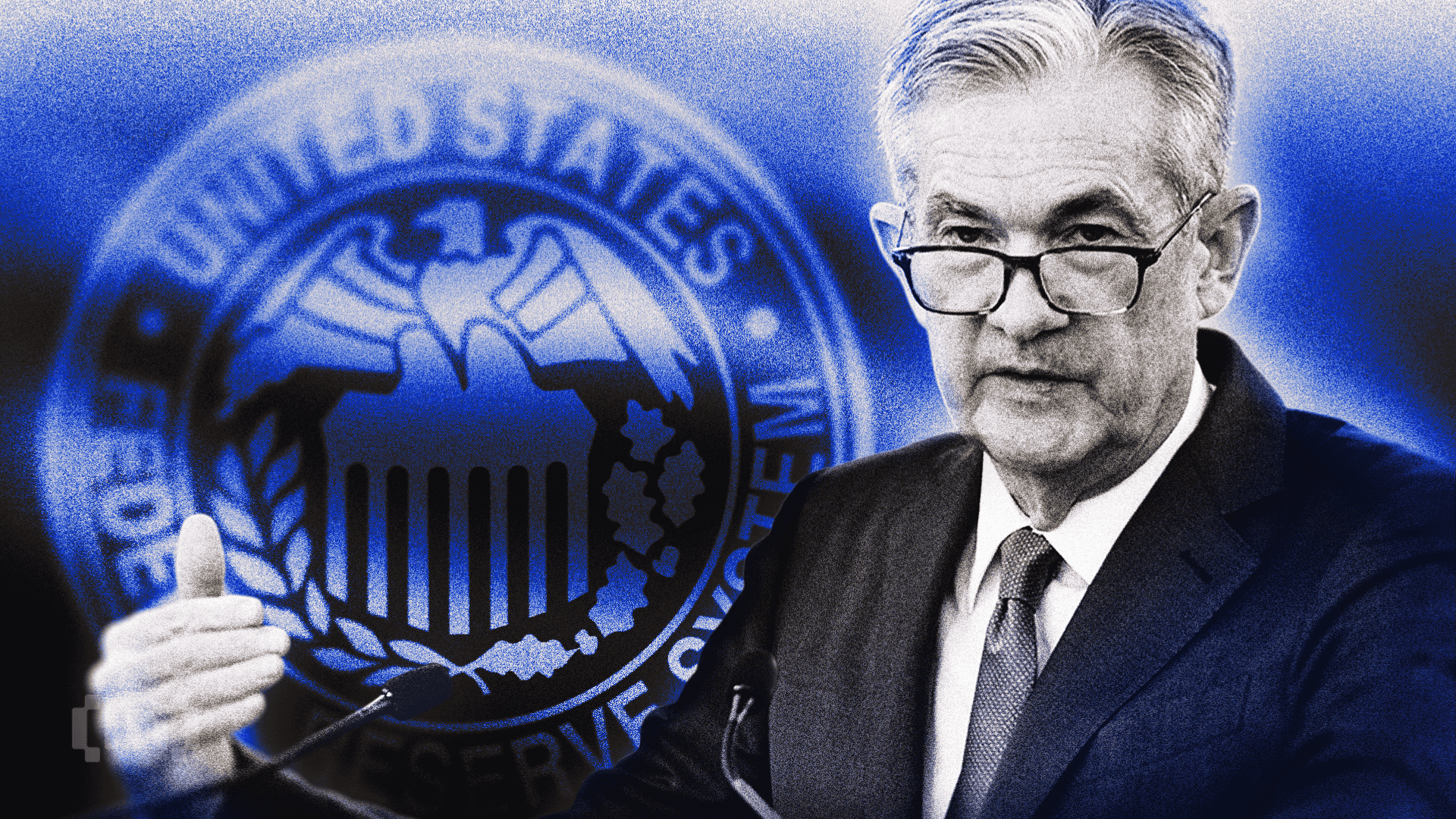
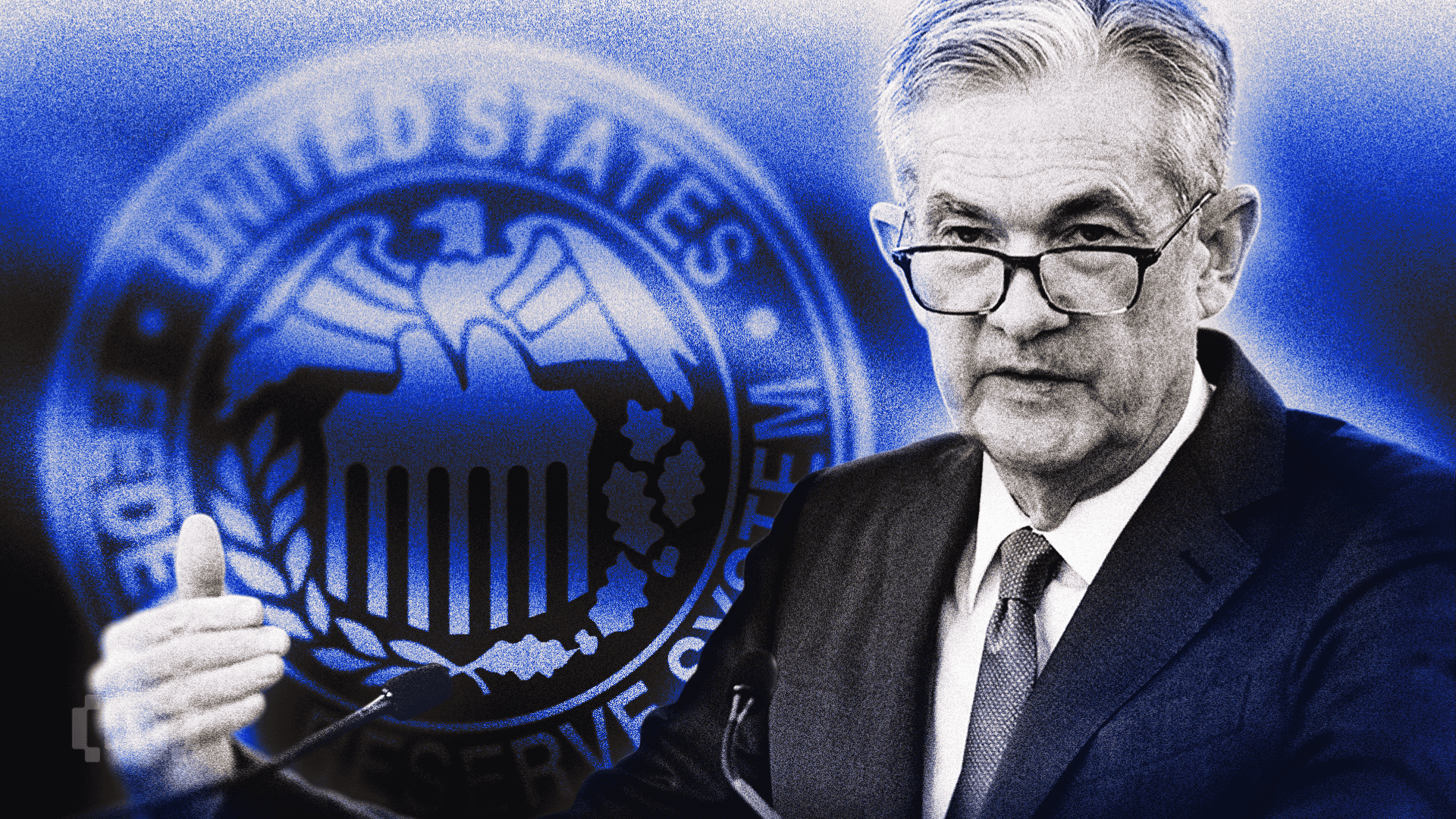
Federal Reserve Chair Jerome Powell announced he will stay on the Fed Board of Governors after his term as Chair ends on May 15, 2026, citing an ongoing Department of Justice (DOJ) investigation as the reason he cannot retire.
The decision keeps Powell in his governor seat through January 2028 and prevents President Donald Trump from filling a fourth Board of Governors slot, a move that would have given the administration tighter influence over monetary policy votes.
Powell Stays on as Fed Governor
Powell delivered the announcement at what he confirmed was his final press conference as Fed Chair. He told reporters he had planned to retire when his current term ended, but legal pressure from the Trump administration had altered that calculation.
Powell said he would wait until the active Department of Justice investigation reached its conclusion before stepping away from the Board.
He also rejected the idea that he would operate as a “shadow chair” from his governor seat.
“I would never do the ‘shadow chair thing’. I propose to be constructive participant on board,” he stated.
Powell also congratulated Kevin Warsh, the Trump nominee expected to take over as Chair on May 15.
Trump Loses Path to 4-Seat Board Majority
Three of the seven seats on the Board already belong to Trump appointees from his prior term. A vacated Powell seat would have opened the door for a fourth ally, giving the administration a working majority on FOMC votes.
Powell’s decision to stay through January 2028 closes that opening. Trump can still install Warsh, but the broader vote balance on the Federal Open Market Committee (FOMC) remains intact for now.
Notably, Powell is the only current governor appointed by presidents of both parties. At first, former US President Barack Obama appounted him, then as chair by Trump, and later reappointed by Joe Biden.
Trump already appointed Michelle Bowman and Christopher Waller, and is expected to fill another seat with Kevin Warsh, potentially tipping control of the board.
Some see the move as resistance rather than confrontation, while others described the decision as a quiet power move that limits how quickly the administration can reshape rate-cut policy.
Warsh Advances as Markets Eye Faster Cuts
The Senate Banking Committee cleared Warsh in a 13-11 vote earlier today, putting him in line for a full Senate confirmation ahead of the May 15 transition.
Trump nominated Warsh on a platform of lower interest rates, a stance that has drawn enthusiastic responses from crypto markets in recent weeks.
Powell himself acknowledged Wednesday that internal projections had shifted, with the number of FOMC participants seeing a rate hike now roughly equal to those expecting a cut.
That divergence could complicate the runway for the aggressive easing Trump has pushed for.
“I’ll take him at his word,” Powell responded when asked if he was confident that Kevin Warsh would stand up to political pressure from President Trump.
Whether Powell’s continued presence slows that path to rate cuts moving forward will depend on how the remaining Board seats vote on each meeting agenda.
The first FOMC under Warsh’s leadership will offer the earliest test of whether the new Chair can build consensus for the cuts the administration wants.
The post Powell to Stay on Fed Board as Governor, Blocking Trump’s Path to Majority appeared first on BeInCrypto.


The shares of Twenty One Capital (XXI), the bitcoin-focused firm, are up over 8% in after-hours trading on Wednesday, after majority shareholder Tether Investments proposed a merger with Strike and Elektron Energy.
Tether Investment, the independent investment arm of the stablecoin issuer, said it intends to vote its shares in favor of combining XXI with Strike, a global bitcoin financial services company founded by Jack Mallers and Elektron Energy, according to a press release. Mallers is also the CEO of XXI.
“If completed, these transactions would position XXI to become the premier listed Bitcoin company in the world: a public company that combines Bitcoin treasury, mining, financial services, lending, capital markets, and strategic consolidation into one integrated platform,” according to the press release.
No terms of timelines were disclosed for the merger.
Led by Raphael Zagury, Elektron Energy manages approximately 5% of the current bitcoin network’s computing power with all-in production costs below $60,000 per bitcoin.
Tether also proposed that Zagury serve as President of the combined entity, pairing his mining and capital markets experience with Mallers’ product and consumer bitcoin leadership.
XXI went public in December of last year through a SPAC merger with Cantor Equity Partners. The company entered the market as a bitcoin treasury firm with 43,514 BTC and is backed by Tether, Bitfinex and Strike CEO Jack Mallers. At the time, it said it would focus on “capital-efficient bitcoin accumulation.”
If the new merger takes place, the company will expand on this previous treasury commitment into other parts of bitcoin services, the press release said.
“The combined transactions would move XXI beyond treasury exposure alone and toward a platform with operating businesses, recurring revenue opportunities, and long-term Bitcoin accumulation capabilities,” the statement added.
Crypto World
Polymarket Hit $25.7B in March Volume as Retail Traders Bet on Sports, Politics and Crypto


A study of 1.29M wallets shows users returning more often and trading across more categories, with sports leading at $10.1B and crypto serving as the main onboarding gateway.
Polymarket processed $25.7 billion in trading volume in March, with retail traders driving consistent, repeated activity across an expanding set of real-world markets, according to a new joint report from Bitget Wallet and Polymarket.
The study, based on 1.29 million wallets active in Q1 2026, found that 82.3% of users traded under $10,000, indicating that the platform is overwhelmingly retail-driven. Active days per user rose from 2.5 to 9.9 over the study period, while the average number of categories each user traded expanded from 1.45 to 2.34.
The report frames the shift as behavioral rather than capital-driven, with users returning more frequently and rotating between categories rather than concentrating on one-off events. That tracks with earlier findings from Keyrock and Dune Analytics, which pegged on-chain prediction market monthly volumes as having grown 130-fold since early 2024.
Sports emerged as the largest category on Polymarket in Q1, generating $10.1 billion in volume as the constant cadence of global matches drove recurring engagement. The trend mirrors the broader sports-betting surge that lifted prediction market activity through late 2025 and into the2026 Super Bowl.
Politics generated $5 billion in Q1 volume, including $2.41 billion tied to geopolitics. Unlike past election-driven cycles, the report describes activity as continuously distributed across global news flow, with traders responding to real-time developments rather than discrete events.
Crypto remained the primary entry point for new users, accounting for roughly 40% of early activity. Familiar price action and 24/7 markets make it a natural starting category, though participation broadens as users return. Polymarket recently leaned further into that funnel, launching 5-minute Bitcoin candle markets while teasing a long-rumored POLY token airdrop.
“Prediction markets are becoming less about capital and more about consistent, repeated actions,” noted Bitget Wallet COO Alvin Kan. “What we’re seeing is a behavioral shift: the market is scaling with more taps per day, not bigger trades.”
Elden Mirzoian, director of growth and partnerships at Polymarket, said distribution is becoming as important as the underlying markets, citing the sector’s shift “from episodic trading to more continuous engagement.”
The report cites industry projections of $240 billion in annual volume by year-end 2026, with a longer-term trajectory toward $1 trillion.
Polymarket’s growth has accelerated through a series of structural catalysts. The platform secured CFTC approval to operate in the U.S. in November 2025 and rolled out its U.S. app shortly after, following a $2 billion strategic investment from Intercontinental Exchange. In March, it became MLB’s exclusive prediction market partner. Distribution has also broadened through a native integration in MetaMask, which began routing user bets to Polymarket late last year.
This article was written with the assistance of AI workflows. All our stories are curated, edited and fact-checked by a human.

Los Angeles, California, April 29, 2026 – RealOpen, the leading platform for buying real estate with crypto, today announced the conclusion of its collaborative “Fast Moves, Fast Payments” Holiday Campaign with TRON, the leading settlement layer for stablecoin transactions. The campaign, which ran from November 17, 2025, through February 28, 2026, offered eligible U.S. homebuyers up to 50,000 USDT in rewards for purchasing property through RealOpen using USDT on the TRON blockchain, illustrating the network’s real-world use across both everyday payments and high-value transactions.
RealOpen combines the reliability of traditional real estate with the speed and efficiency of crypto. Through its platform, buyers can purchase any property on the market and fund the purchase directly with digital assets, making blockchain-powered homebuying accessible without sacrificing the familiarity of conventional real estate transactions.
Over the course of the campaign, RealOpen recorded 343 user sign-ups, with 27 completing KYC verification, and approximately $9.4 million in USDT on TRON verified by new users. A total of 69 real estate agents were onboarded through the accompanying 2025 TRON Real Estate Challenge, signaling increased industry participation in crypto-enabled property transactions.
“The Fast Moves, Fast Payments campaign showed why TRON is such a strong settlement layer for real-world assets. We saw hundreds of new users engage, dozens of agents onboard, and nearly $10M in USDT on TRON verified through RealOpen. Modern capital needs modern payment rails – and TRON is well-positioned to power that shift,” said Johnny Schiro, Executive Vice President at RealOpen.
The campaign builds on a proven track record. Earlier in 2025, RealOpen successfully closed multiple real estate transactions funded directly in USDT on TRON. Developments such as Pearl Homes’ Hunter’s Point, a net-zero master-planned community on Florida’s Gulf Coast, also promoted crypto acceptance via RealOpen, expanding blockchain-based settlement into broader residential markets.
TRON’s infrastructure underpins the campaign’s viability. The network processes more than $22 billion in daily transfer volume, with a circulating supply of $86 billion in USDT. The network is leveraged by over 376 million self-custodial accounts and accounts for approximately 65% of global USDT retail transfers under $1,000 – making it one of the largest resources for stablecoin liquidity across blockchain networks. Its near-instant finality and low transaction costs make it a practical settlement layer for time-sensitive, high-value transactions like real estate closings.
The TRON and RealOpen collaboration reflects the increasing role of stablecoins in real-world financial activity. As demand grows for faster, more transparent capital movement, the campaign demonstrates how blockchain infrastructure is already supporting practical use cases in the U.S. housing market, positioning USDT on TRON as a viable settlement rail for real estate transactions at scale.
About RealOpen
RealOpen is the easiest and most efficient way for high-net-worth crypto holders to purchase real estate. The company bridges digital assets and property transactions, validating on-chain funds, converting crypto to fiat for closing, and enabling fast, seamless funding. RealOpen partners with leading builders, brokers, and crypto ecosystems to bring real-world asset ownership into the Web3 era– where buying a home can move as fast as the blockchain itself.
Media contact
John Bauer
About TRON DAO
TRON DAO is a community-governed DAO dedicated to accelerating the decentralization of the internet via blockchain technology and dApps.
Founded in September 2017 by H.E. Justin Sun, the TRON blockchain has experienced significant growth since its MainNet launch in May 2018. TRON hosts one of the largest circulating supply of USD Tether (USDT) stablecoin, which currently exceeds $86 billion. As of April 2026, the TRON blockchain has recorded over 378 million in total user accounts, more than 13 billion in total transactions, and over $26 billion in total value locked (TVL), based on TRONSCAN. Recognized as the global settlement layer for stablecoin transactions and everyday purchases with proven success, TRON is “Moving Trillions, Empowering Billions.”
TRONNetwork | TRONDAO | X | YouTube | Telegram | Discord | Reddit | GitHub | Medium | Forum
Media contact
Yeweon Park

The U.S. Federal Trade Commission has reached a settlement with Celsius Network founder Alexander Mashinsky that imposes a permanent ban on promoting asset-related products and requires a $10 million payment tied to a larger, largely suspended civil judgment of $4.72 billion. The stipulated order was entered by Judge Denise L. Cote in the Southern District of New York this week, marking another milestone in the regulatory fallout from Celsius’s 2022 collapse.
The order states that Mashinsky is “permanently restrained and enjoined” from advertising, marketing, promoting, offering or distributing any product or service that can be used to “deposit, exchange, invest, or withdraw assets.” It also preserves the FTC’s ability to pursue the full monetary judgment if Mashinsky misstates or omits assets in disclosures related to the case, keeping open the potential for additional consumer redress or enforcement if new material misstatements emerge.
The $4.72 billion monetary judgment in favor of the FTC remains largely suspended, with Mashinsky required to pay $10 million to the FTC. The order also provides for a potential alternative payment path: the $10 million obligation could be satisfied by delivering at least that amount to the U.S. Department of Justice under the forfeiture order in Mashinsky’s criminal case. This structure is designed to balance immediate consumer redress with ongoing enforcement leverage should disputes over asset disclosures arise.
The settlement extends the legal consequences stemming from Celsius’s 2022 failure, even as Mashinsky faces broader penalties from other proceedings. In May 2025, Mashinsky was sentenced to 12 years in prison after pleading guilty to commodities fraud and securities fraud, with prosecutors contending that he misled Celsius customers about the company’s profitability, investment risks, and the safety of customer funds.
Excerpt from the court filing. Source Court Listener
Suspended judgment can be revived
The order clarifies that while the majority of the judgment remains suspended, the suspension is conditional. The Federal Trade Commission can seek to lift the suspension if it proves that Mashinsky failed to disclose a material asset, misstated the value of an asset, or made another material misstatement or omission in his financial disclosures. If the suspension is lifted, the full $4.72 billion judgment would become immediately due, subject to credits for payments already made under the FTC order, amounts paid to consumers through the DOJ forfeiture order in the criminal case, or payments demonstrated by Mashinsky to consumers via other defendants, including through the Celsius bankruptcy process.
The arrangement is notable for its attempt to preserve a broad consumer-redress milestone while avoiding an immediate, large liquidity demand on Mashinsky. It also signals a persistent regulatory emphasis on ensuring that asset-related advertising and fundraising activity by figures associated with failed crypto ventures remains under close scrutiny.
Regulatory and policy implications for the crypto sector
From a regulatory perspective, the case underscores the escalating use of civil enforcement tools to address consumer harms tied to asset-related claims in the crypto space. The FTC’s settlement with Mashinsky complements existing criminal and civil proceedings, illustrating how monetary, injunctive, and forfeiture pathways can be combined to deter misleading representations and to constrain the promotion of financial products tied to digital assets.
For exchanges, wallets, and other market participants, the decision reinforces the expectation of robust disclosure controls and clear boundaries around endorsing or promoting products that touch on deposits, exchanges, investments, or withdrawals of assets. Institutions operating in the U.S. market—ranging from fintechs to traditional banks engaging with crypto custody or liquidity facilities—may find themselves reinforcing AML/KYC diligence, asset disclosures, and governance practices to align with evolving enforcement expectations. The case also sits within a broader policy landscape that includes ongoing debates about licensing frameworks, consumer protection standards, and cross-border coordination in crypto regulation.
Although the action originates in the United States, commentators and policymakers frequently view it within a global context of converging standards. The Celsius matter intersects with discussions around compliance obligations for asset-backed activities, the delineation of security versus non-security crypto offerings, and the balance between enforcement jurisdiction and international cooperation. In parallel, regulators continue to refine rules around stablecoins, banking access, and the treatment of customer funds in insolvency and bankruptcy scenarios, all of which influence how firms plan product design, disclosures, and risk management.
Notably, the case is tied to a broader enforcement trajectory involving Celsius and its executives, including the criminal charges and the related DOJ forfeiture framework. For research and compliance teams, the evolving posture of the FTC, DOJ, and SEC (where applicable) highlights the importance of risk-based monitoring for asset-related promotions, disclosures, and marketing claims across corporate entities associated with crypto platforms.
Closing perspective
As authorities maintain a multimodal enforcement approach, the Mashinsky settlement serves as a reference point for risk assessment, governance, and compliance in the crypto ecosystem. Analysts and compliance officers will be watching for any revival of the suspended judgment and for further actions linked to asset disclosures or other material misstatements, signaling how regulators calibrate redress against ongoing penalties in high-profile industry cases.

NYT Strands hints and answers for Thursday, April 30 (game #788)

Amazon beats quarterly cloud growth estimates on strong AI demand; AWS revenue jumps 28%

Atletico Madrid 1-1 Arsenal: Mikel Arteta ‘fuming’ with officials

Manchester United reach agreement with Casemiro over contract clause amid transfer speculation

US brings back mandatory military draft registration

Steven Gerrard disagrees with Gary Neville over ‘shock’ Chelsea and Arsenal claim | Football


-

 Tech2 days ago
Register Renaming | Hackaday
-

 Fashion5 days ago
Weekend Open Thread – Corporette.com
-
Crypto World4 days ago
Hyperliquid $HYPE Rally Builds Momentum as AI Sector Enters Prove-It Phase
-

 Business6 days ago
Patterson-UTI Energy, Inc. (PTEN) Q1 2026 Earnings Call Transcript
-
 Sports3 days ago
IPL 2026: Ruturaj Gaikwad registers slowest fifty of the season, enters all-time unwanted list | Cricket News
-

 Politics2 days ago
Drax board avoid their own AGM, accused of greenwashing & environmental racism
-

 NewsBeat4 days ago
LK Bennett closes all stores after entering administration
-

 Crypto World6 days ago
Michael Saylor says BTC winter is over. Market analyst disagrees, says bitcoin was in a pullback
-
 Sports7 days ago
Tim Bradley names the current best in the world: “Better than Inoue and Usyk”
-

 Fashion1 day ago
Kylie Jenner’s KHY Enters a New Era with ‘Born in LA’
-
Entertainment7 days ago
Michael B. Jordan and Austin Butler's “Miami Vice” movie will bring the action back to the '80s
-
 Entertainment4 days ago
Mariah Carey Slams Deposition Claims In Brother’s Lawsuit
-
Business7 days ago
Altimmune prices $225 million public offering at $3 per share
-
Entertainment7 days ago
Russell Brand Had Sex With 16 Year Old When He Was 30
-
Crypto World6 days ago
Is Algorand One of the Few Quantum-Resistant Blockchains? Here’s What the Data Shows
-

 Business1 day ago
Most Commercial Energy Audits Miss the Real Losses
-
 NewsBeat6 days ago
Trump threatens to review UK’s claim to Falkland Islands and punish Nato allies over Iran war disagreement
-

 Business7 days ago
SL Green Realty: Dividend Cut And Record Leasing Fuel Their Potential Recovery
-

 Sports6 days ago
2026 NFL Draft tonight: Time, TV channel, where to watch, order
-

 Tech2 days ago
Images of Samsung’s rumored smart glasses have leaked
You must be logged in to post a comment Login