

Crypto World
Fed’s Goolsbee says he’s worried about inflation in ‘fraught but intense’ climate

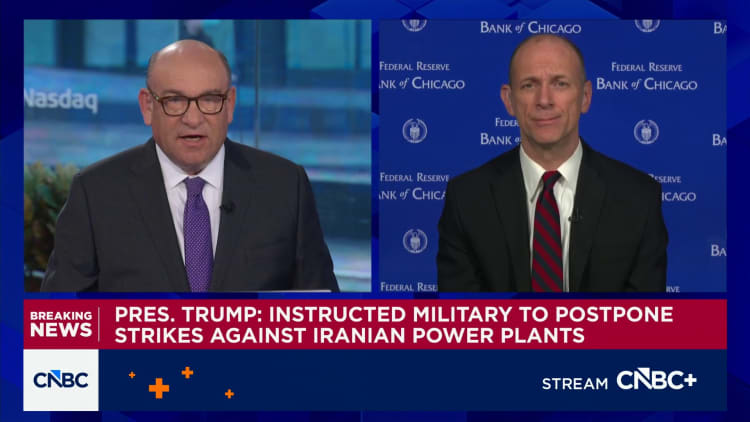

Chicago Federal Reserve President Austan Goolsbee said Monday that he’s more worried about inflation now than he is unemployment, even with apparent progress made on the war with Iran.
In a CNBC interview, the central banker said policymaking is difficult in the current environment. He spoke shortly after President Donald Trump announced that progress had been made in negotiations with Iran and that further attacks on energy infrastructure would be halted for five days as talks continue.
“The most important thing is to figure out the through line of what is happening,” Goolsbee said in a “Squawk Box” interview. “What makes this a fraught but intense moment is nobody can tell us what is going to happen on the ground in the conflict in the Middle East, and how long that lasts.”
Goolsbee had dissented on a rate cut in December and said he agreed with the majority to hold short-term rates steady at the January and March meetings of the Federal Open Market Committee. He is not an FOMC voter this year but will vote again next year.
Following Monday’s war news, traders, in volatile market action, upped bets of a rate hike by the end of the year but still expect a cut in 2027. Stocks spiked higher and oil prices plunged.
FOMC officials last week indicated a majority still expect a cut this year and another the next. However, Goolsbee said that his inclination will depend on the progress of inflation, and he cautioned against “a repeat of the team-transitory mistake” where the Fed underestimated the severity of inflation in 2021.
“I remain fairly optimistic that by the end of ’26 rates could go down, but I wanted to see proof that we’re back on an inflation headed to 2%. This [war] definitely throws a wrench into the plans. We do need to see progress,” he said.

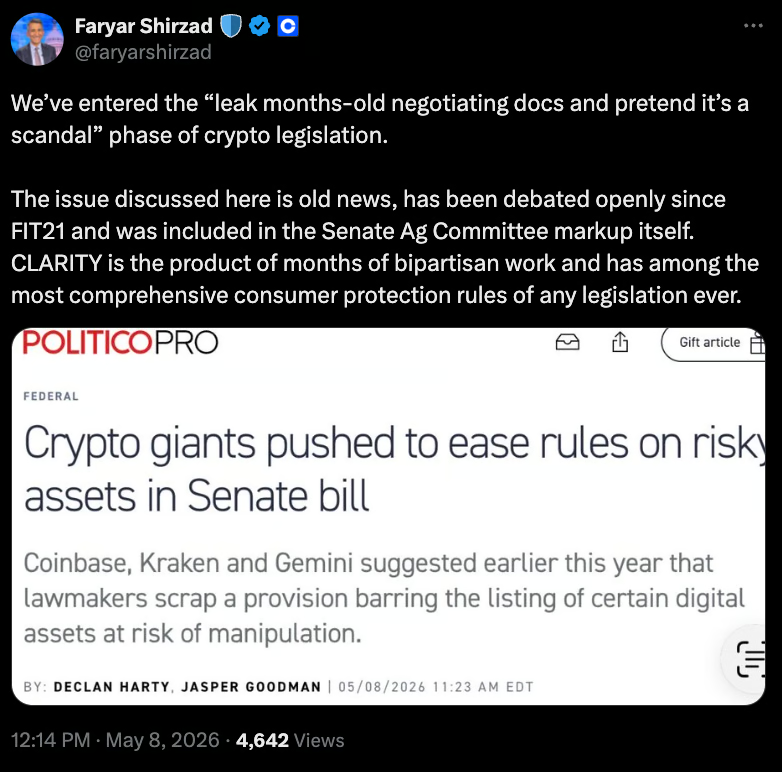
Earlier in 2026, as a digital asset market structure bill was under consideration in the US Senate, cryptocurrency exchanges Coinbase, Kraken and Gemini reportedly pressed to remove language in the legislation that could have affected their token listings.
According to a Friday Politico report, the three exchanges asked US lawmakers to scrap a provision in the market structure bill that would have required platforms to only offer trading on digital assets “not readily susceptible to manipulation.” The companies reportedly pressed senators to remove the language as it could have made it difficult for exchanges to list smaller tokens.
The edit, which the news outlet reported occurred after the US Senate Agriculture Committee voted to advance its version of the bill in January, signaled the influence crypto companies in communication with the Trump administration and lawmakers could have in legislation affecting the industry. The US Senate Banking Committee postponed its markup on the bill hours after Coinbase CEO Brian Armstrong said that the exchange could not support the legislation “as written,” citing concerns with tokenized equities.
Under the market structure bill, called the CLARITY Act when it passed the US House of Representatives in July 2025, the Commodity Futures Trading Commission (CFTC) would be given more authority in overseeing and regulating digital assets. Both US financial regulators, the CFTC and Securities and Exchange Commission (SEC), announced their intention to coordinate oversight of the crypto industry in March, even in the absence of action from Congress.
Related: US Senator questions Mark Zuckerberg on Meta’s stablecoin plans
Coinbase chief policy officer Faryar Shirzad responded to the report on social media, calling it “old news” and an issue that was included in the markup by the Senate Agriculture Committee.

Source: Faryar Shirzad
Industry leaders, lawmakers speculate on timeline for market structure bill
Last week, two US senators announced a compromise deal on stablecoin yield between representatives of the crypto and banking industries that could allow the CLARITY Act to advance in the banking committee. Although some lawmakers said they intended to push for ethics language on potential conflicts of interest to be included in the bill, many are speculating that passage could be in a matter of weeks.
Coinbase‘s US policy vice president, Kara Calvert, said on Thursday that the exchange expected a markup in the banking committee by next week. Other lawmakers predicted that the bill would become law before the Senate broke for August recess, while White House crypto adviser Patrick Witt said that the administration was aiming for a July 4 deadline for the bill to pass the House after a June Senate vote.
Magazine: XRP ‘probably going to $12,’ Bitcoin ETFs add $1B: Market Moves
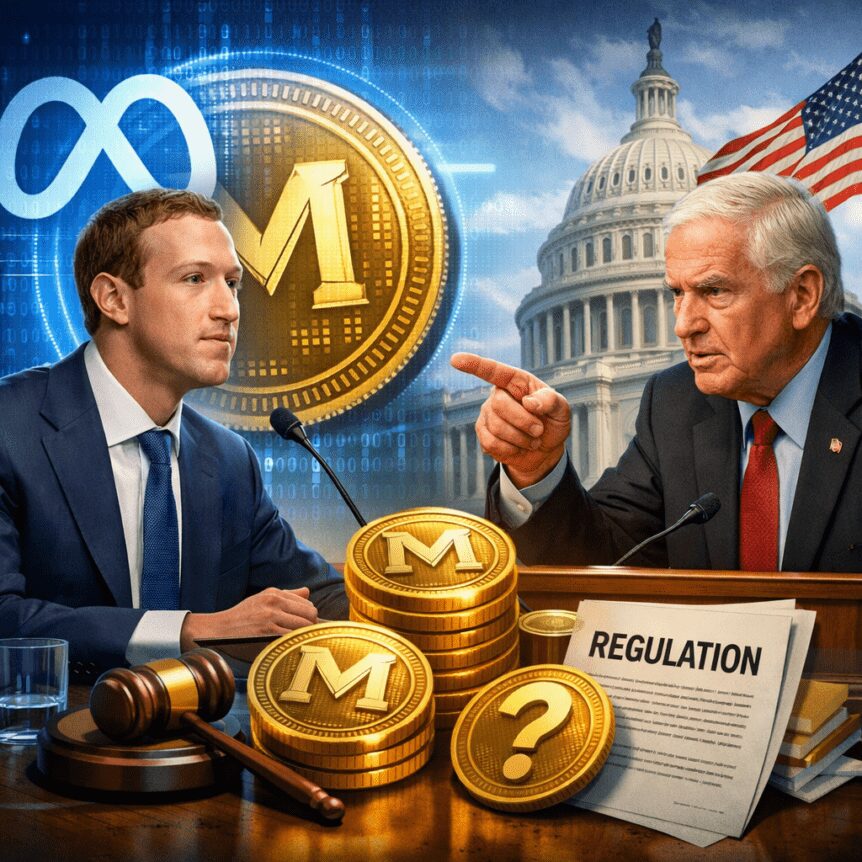
Massachusetts Senator Elizabeth Warren used a letter to Meta CEO Mark Zuckerberg to press for answers on the social media giant’s planned stablecoin integration, signaling ongoing regulatory scrutiny over guardrails, transparency, and consumer protections. The request comes as Congress weighs a broader digital asset framework that could shape stablecoin issuers and on-platform payments for years to come.
In the letter dated midweek, Warren described Meta’s stablecoin plans as “deeply troubling” given the company’s prior attempt to launch a global private currency and the ongoing challenge of offering safe, compliant products. She urged Meta to be more transparent with Congress and the public, arguing that any new payments-related offerings should be treated with heightened skepticism until robust safeguards are in place. The letter emphasizes that Congress is actively considering a comprehensive rule set for digital assets, including stablecoins, under the CLARITY Act and related regulatory initiatives.
According to Cointelegraph, Meta previously rolled out stablecoin payouts in USDC for select creators in the Philippines and Colombia in April, illustrating a tangible deployment of crypto-based payments on the platform. Warren’s correspondence signals that lawmakers will seek further detail on Meta’s strategic roadmap, clouding any perception of a straightforward, low-risk rollout.
The senator sits on the Senate Banking Committee as ranking member, overseeing agencies including the U.S. Securities and Exchange Commission. Her inquiry aligns with the committee’s ongoing effort to understand how digital assets should be regulated and how oversight should be structured as the U.S. contemplates a formal framework for stablecoins and related payment services. The CLARITY Act has been stalled in the Senate for months, but recent discussions about stabilizing the regulatory environment signal a potential path forward for a broader market structure bill.
Key takeaways
- Deadline for detailed disclosure: Warren requests a written update from Zuckerberg by May 20 detailing Meta’s “small and focused trial” for stablecoin integration, including launch timing, third-party stablecoins involved, and privacy guardrails.
- Transparency and guardrails in focus: The letter emphasizes the need for clear governance, safety measures, and privacy protections before any expanded payments functionality is deployed.
- Historical context underlines caution: Warren references Meta’s past attempt to issue a global private currency (Libra, later rebranded as Diem) to frame the current inquiry within a pattern of regulatory concerns surrounding large tech platforms’ forays into payments.
- Regulatory momentum around digital assets: The CLARITY Act and related yield-compromise discussions reflect a broader push to finalize a U.S. regulatory framework, including how stablecoins interact with banking, securities, and consumer protection regimes.
- Practical deployment vs. policy risk: Meta’s live use of USDC payouts for creators demonstrates real-world use cases, yet regulators will assess whether similar programs meet legal standards and risk controls across jurisdictions.
Meta’s stablecoin plans under regulatory scrutiny
The central issue in Warren’s letter is governance and transparency. While Meta’s public-facing messaging has stressed the potential for enhanced payments and financial-service capabilities on its platforms, the policymaker argues that meaningful checks and balances must accompany any movement toward on-platform stablecoins. The request for information by May 20 covers several core questions: the scope and design of a “small and focused trial,” anticipated launch dates, the specific stablecoins involved (including whether third-party stablecoins will be integrated), and the privacy safeguards planned to protect user data.
The broader regulatory backdrop is evolving. In the United States, lawmakers are pursuing a structured approach to digital assets that could determine how stablecoins are issued, how reserves are managed, how customer funds are safeguarded, and how on-ramp and off-ramp functionality interacts with traditional banking systems. The CLARITY Act remains a focal point in negotiations, with lawmakers examining a comprehensive framework that could shape licensing, enforcement, and consumer protections across financial services and digital assets. Meanwhile, industry participants have signaled cautious optimism that a yield-focused compromise on stablecoins could unlock progress toward a markup in the banking committee, potentially paving the way for floor action. Yet critics warn that ethics concerns and conflicts of interest must be resolved before broader policy moves are approved.
From a compliance perspective, the questions Warren raises touch on several persistent issues: how platform operators balance customer privacy with Know-Your-Customer (KYC) and anti-money-laundering (AML) obligations; how stablecoins issued by or integrated with large tech companies would be regulated under existing securities or payments laws; and how cross-border operations are treated in a patchwork of U.S. and international rules. As regulators weigh these questions, the risk calculus for technology platforms expanding into payment services will increasingly hinge on demonstrable risk management, independent third-party assurances, and transparent governance structures.
Regulatory and policy implications for institutions
The potential regulatory consequences extend beyond Meta itself. If a global platform of Meta’s scale becomes a de facto gateway for stablecoins and digital payments, banks, payment processors, and crypto firms may face heightened compliance requirements, particularly around customer due diligence, data protection, and reserve adequacy. The interaction between stablecoins on major social platforms and traditional banking rails could have far-reaching implications for licensing regimes, settlement finality, and cross-border payment flows. In parallel, the EU’s MiCA framework has already established a structured regime for crypto-asset issuers and stablecoins, providing a contrasting regulatory approach that could influence U.S. policy debate and international best practices. Institutions operating across multiple jurisdictions will need to map these frameworks and adapt their AML/KYC controls, data governance, and risk management programs accordingly.
From a governance perspective, the ongoing discourse emphasizes the need for clear accountability mechanisms when technology platforms integrate financial services. If Meta proceeds with a stablecoin trial, banks and fintechs involved in settlement, custody, or wallet infrastructure will need to verify compatibility with regulatory expectations, consumer disclosures, and safeguarding standards. The potential introduction of on-platform stablecoins also raises questions about the lines between social media services and financial services, and whether such products should be subject to independent audits, reserve adequacy testing, or third-party risk assessments as part of ongoing regulatory oversight.
Closing perspective
As Warren’s letter articulates a measured demand for clarity, the coming weeks will reveal how Meta and other large platforms address regulatory guardrails around stablecoins. The May 20 deadline for information, the stalled CLARITY Act process, and evolving cross-border considerations together establish a critical inflection point for how digital assets are governed in 2026 and beyond. Analysts and compliance teams should monitor not only Meta’s disclosed plans but also the evolving policy landscape, including potential updates to privacy protections, licensing standards, and supervisory expectations for platform-based payments.
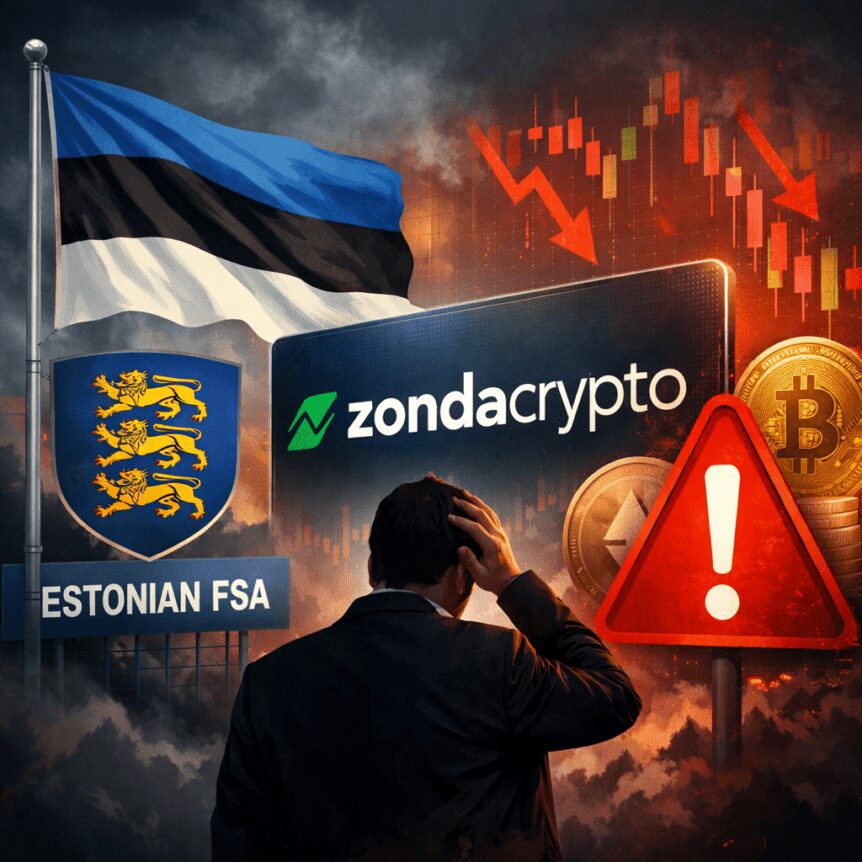
Estonia’s financial regulator has issued an investor warning against BB Trade Estonia OÜ, the operator of the Zondacrypto digital asset exchange, for listing the TeamPL token without a published white paper.
The Financial Supervisory and Resolution Authority (FSA) said the company did not have a white paper listed on its website for the TeamPL token, a requirement under the European Union’s Markets in Crypto-Assets (MiCA) framework. According to the FSA, this constitutes a breach of MiCA’s stipulations that crypto-asset white papers remain accessible on the website of the offeror or of those seeking admission to trading as long as the assets are held by the public.
“This action violates Article 9, Section 1 of [MiCA], according to which crypto-asset white papers shall remain available on the website of the offerors or persons seeking admission trading for as long as the crypto-assets are held by the public.”
The investor warning, issued against Zondacrypto and its parent company, was noted by the FSA in documents published this week. Cointelegraph reached out to Zondacrypto for comment but did not receive a response by publication time.
The alert from Estonia arrives amid broader scrutiny of Zondacrypto, the platform at the center of withdrawal frictions reported by users and an ongoing Polish law-enforcement investigation. In April, Zonda’s chief executive, Przemysław Kral, publicly said the exchange did not have access to a cold wallet holding approximately 4,500 Bitcoin (BTC), which at that time valued the stash at about $360 million.
Kral contended that the wallet’s private keys had never been handed over by Sylwester Suszek, the founder and former chief executive who has been missing since 2022. He also rejected rumors of insolvency, insisting the company would meet all customer obligations.
Kral’s assertions followed a wave of withdrawal-related concerns that prompted Polish authorities to open a probe into the company in April. Since then, Kral has been largely silent on social media, with his last post on X dated April 16, 2026. Local media outlets have reported that he traveled to Israel, where he holds citizenship, amid the investigation.
In a February interview, Kral told Cointelegraph that Zondacrypto operates outside of Poland because, in his view, the country has not aligned its crypto regulations with the EU’s MiCA framework. He described the Polish roots of the business as “the largest player in the crypto industry on the Polish market,” but noted that the company had operated from abroad for years.
The regulatory action in Estonia and the unfolding investigations in Poland highlight the intensified regulatory environment that MiCA is introducing for smaller exchanges across Europe. While MiCA aims to standardize disclosure, governance, and consumer protections, its application to non-EU or cross-border operators remains a focal point of ongoing enforcement and policy discussions. For investors and users, the developments underscore the importance of verifying that token projects have credible, publicly accessible documentation and of remaining cautious in periods of operational uncertainty at exchanges.
Related reporting over the past months has shown that MiCA’s regime continues to place pressure on smaller crypto firms, prompting some operators to reassess structures, domicile choices, and disclosure practices as they navigate additional regulatory requirements across the EU.
Key takeaways
- The Estonian FSA issued an investor warning to BB Trade Estonia OÜ for listing the TeamPL token without a publicly available white paper, citing MiCA Article 9, Section 1.
- The move follows withdrawal problems at Zondacrypto and a Polish probe, with Zonda’s CEO signaling a significant loss of access to a multi-hundred-million-dollar BTC wallet tied to the exchange.
- CEO Przemysław Kral has claimed the wallet’s private keys were not handed over by the founder, Sylwester Suszek, who has been missing since 2022, and he denied insolvency concerns.
- Kral’s communications have halted since mid-April 2026, with reports that he traveled to Israel amid the investigation; the company says it remains committed to customer obligations.
- The episodes illustrate MiCA’s growing influence on smaller exchanges and the broader regulatory risk landscape facing EU crypto firms operating across borders.
Regulatory pressure and cross-border implications
Estonia’s warning is part of a broader pattern as regulators begin to enforce MiCA’s disclosure standards more aggressively, particularly for assets that have been publicly traded on exchanges. The emphasis on keeping white papers accessible aligns with a wider push to improve transparency and investor protections in a market where tokenized offerings can outpace traditional disclosures. For investors and users, this means greater scrutiny of project documentation and the reputational risk that accompanies non-compliant listings.
Meanwhile, the Polish investigation into Zondacrypto adds a practical dimension to the regulatory framework. When authorities probe the flow of assets, access to private keys, and the movement of executives during periods of distress, it underscores the operational fragility that can accompany rapid growth in the crypto sector. As Zondacrypto navigates these tensions, observers will be watching to see how the company addresses customer obligations and whether any regulatory actions at the EU level translate into concrete safeguards for users.
For market participants, the episodes offer a reminder of the realities facing smaller exchanges as MiCA matures: compliance costs rise, disclosures must be robust, and cross-border enforcement becomes a daily consideration. The pressure is not only on liquidity and custody practices but also on corporate governance and the credibility of project documentation that underpins token offerings.
What remains unclear is how Zondacrypto will resolve the immediate investor concerns and whether the Estonian authorities will extend scrutiny to additional tokens or offerings listed on the platform. As regulators across Europe continue to map MiCA’s practical implications, observers will be eager to see whether other platforms facing similar warning signs take corrective steps or pause certain listings to align with longer-term regulatory expectations.
Readers should monitor forthcoming updates from the FSA and any official statements from Zondacrypto or its legal representatives. The evolving picture will help gauge not only the immediate risk to Zondacrypto customers but also the pace and direction of MiCA’s enforcement for smaller market participants.
Crypto World
Anodos Finance Builds the Missing Link in Modern Banking With One Unified Financial Platform

TLDR:
-
- Anodos uses Passkey authentication to eliminate seed phrases, making self-custody accessible without any technical knowledge.
- The global fintech market hit $394.88B in 2025, yet users still manage up to five separate financial apps daily.
- Traditional banks offer just 1–3% interest while DeFi protocols deliver 5–10%, a gap Anodos bridges automatically for users.
- The tokenized assets market reached $30B in April 2026, and Anodos aims to give retail users direct access through one platform.
Anodos Finance has introduced a neobank designed to bridge the gap between traditional banking, crypto, payments, and investments.
The platform aims to replace the multiple apps consumers currently use. With the fintech market valued at $394.88 billion in 2025, fragmentation remains a core user pain point.
Anodos positions itself as the connective layer that unifies these separate financial systems into one seamless experience for everyday users.
The Problem With Five Apps Doing One Job
Most consumers today manage their financial lives across several disconnected platforms. There is a banking app, an investment platform, a crypto exchange, a budgeting tool, and a payments service.
Each performs its function well, but none communicates with the others. The result is a fragmented experience that wastes time and creates confusion.
The numbers reinforce this frustration. There are currently 7,570 fintech SaaS platforms operating globally as of early 2026.
Meanwhile, 80% of clients now expect a personalized digital experience as a baseline standard. More than half would consider switching providers if that expectation is not met.
Institutional investors are not immune to this issue either. According to available data, 69% of institutional investors prefer firms offering advanced digital investment platforms.
Yet the retail experience has not kept pace with those standards. The gap between what institutions access and what retail users get remains wide.
PwC’s Financial Services Survey found that 90% of respondents agreed financial firms need to become technology companies.
However, 40% are cutting investment in major technology projects. Integration issues and disappointing returns on investment are the primary reasons cited for those cuts.
What Anodos Is Building to Close the Gap
Anodos is constructing what it calls horizontal infrastructure, covering traditional banking, crypto, payments, and identity in one application.
The platform uses Passkey authentication, removing the need for seed phrases entirely. A user’s fingerprint serves as their financial authority, making self-custody accessible without technical barriers.
The platform also addresses specific market gaps that currently cost users money. Traditional banks offer 1–3% interest, while DeFi protocols deliver 5–10% or more.
Anodos routes funds automatically across options to optimize yield without requiring manual action from users.
On the payments side, the GENIUS Act passed in July 2025, and stablecoin transaction volumes reached $10 billion by August.
Despite that growth, converting digital assets back to traditional payment rails for everyday expenses remains difficult. Anodos builds on-and-off ramps directly into the platform to remove that friction.
The tokenized assets market reached $30 billion in April 2026, a 300x increase since 2020. Retail users have largely been excluded from those opportunities due to fragmented access points. Anodos aims to bring those investment options within reach of everyday users through one unified interface.

Crypto World
Coinbase CEO Confirms AWS Cooling Fault Downed Exchange, Pledges Latency-Resilience Trade-Off Review
TLDR:
- Multiple AWS chiller failures caused a data center room to overheat, triggering the Coinbase exchange outage.
- Coinbase’s exchange architecture prioritizes low latency and client co-location over fault tolerance and redundancy.
- Most Coinbase systems survived the AWS Availability Zone failure, but the centralized exchange was not resilient.
- CEO Brian Armstrong confirmed a full infrastructure review to reduce outage duration and reassess exchange trade-offs.
Coinbase experienced a major exchange outage after an AWS data center room overheated due to multiple chiller failures.
The disruption exposed a structural tension in exchange architecture — the trade-off between low latency and fault tolerance.
CEO Brian Armstrong confirmed the incident publicly, noting that while most Coinbase systems recovered through built-in redundancy, the centralized exchange did not. The company has pledged to review its infrastructure approach.
AWS Chiller Failure Triggers Coinbase Exchange Collapse
The outage stemmed from a cooling failure inside an AWS data center. Multiple chillers failed simultaneously, causing a room to overheat and triggering a cascade of service disruptions.
Coinbase had designed most of its systems to withstand failures in a single AWS Availability Zone (AZ). That design held for the majority of services during the incident.
However, the centralized exchange was the exception. It failed to recover because of how it is architected. Armstrong addressed the situation directly on X, writing that the company’s exchange has a “unique architecture that optimizes for latency and co-location of clients.” This design prioritizes speed over resilience.
Co-location means client systems are placed physically close to the exchange’s matching engine. That proximity reduces trading delays to microseconds. For professional and institutional traders, such speed is a competitive requirement, not a preference.
The trade-off, as Armstrong acknowledged, is vulnerability. Making an exchange resilient to AZ failures is technically achievable.
However, doing so introduces latency and breaks co-location setups that clients depend on. That is why many exchanges accept this risk as a calculated decision.
Coinbase Commits to Infrastructure Review After Outage
Armstrong used the incident as an opening to reassess those trade-offs. He confirmed on X: “Given this incident, we’ll revisit these tradeoffs to ensure we’re giving you the best possible venue to trade.” A detailed technical post-mortem is expected once the internal review is complete.
He also noted that the duration of future outages could be reduced substantially. Even if AZ-level resilience remains too costly in latency terms, faster failover procedures could shorten downtime. That alone would be a meaningful upgrade for traders caught in the next disruption.
AWS and Coinbase teams worked through the night to resolve the issue. Armstrong expressed gratitude to both teams for their response.
The collaborative recovery effort points to the operational dependency crypto exchanges have built on major cloud providers.
The incident adds to a broader industry conversation about crypto infrastructure reliability. Centralized exchanges remain attractive targets for disruption, whether from hardware failures, cyberattacks, or traffic surges.
For Coinbase, the AWS chiller failure is now a documented case study in the real cost of optimizing for speed above all else.
This Friday, we examine Ethereum, Ripple, Cardano, Binance Coin, and Hyperliquid in greater detail.
Ethereum (ETH)
Unfortunately, Ethereum was rejected at the $2,400 resistance this week. Bulls did not manage to break this key level, and now the price appears to be curving down towards the support at $2,000.
While the price is in the same spot as last week, the weakness over the past few days suggests sellers could be returning, and momentum is shifting bearish again. This is bad news for those who hoped ETH could reach higher highs.
Looking ahead, ETH will have to complete its current pullback before any renewed attempt at the current resistance. That means a price around $2,000 in the coming week becomes likely. If that support holds, then bulls could have another go at the key resistance.

Ripple (XRP)
XRP also closed the week flat, having been unable to break above its current pennant. While buyers tried to hold it above the $1,4 support, it appears this level is being challenged by sellers at the time of this post.
If this cryptocurrency cannot stay above $1.4, then the bias shifts bearish with a higher probability that the price will fall under the pennant, which could open the way for XRP to revisit the support at $1 in the future.
Looking ahead, XRP remains in a macro downtrend even if the price took a pause and moved sideways since February, which has created the current pennant. Ideally, we want a clear breakout from this formation, but this seems a big ask now.

Cardano (ADA)
Surprisingly, ADA had a good week with a 5% gain. This also allowed the price to test the key resistance at $0.28. However, sellers did not allow it to break that level and pushed back. At the time of this post, this cryptocurrency is in a pullback.
Nevertheless, Cardano made a higher high, which brings optimism that another go at the key resistance could be successful. Should bulls manage to hold the price above $0.25, this appears likely.
Looking ahead, this is the first time in over a month when ADA shows potential for a breakout. Even the buy volume has picked up, which confirms buyers are returning to this cryptocurrency.

Binance Coin (BNB)
BNB also closed the week with a 3% gain after it managed to make a higher high at around $660. However, this was not enough to test the key resistance at $690. For that, buyers will have to work harder and sustain the current buy volume.
Since the resistance at $580 was tested several times and held well, the price had no other choice but to start trending higher. However, for a breakout to happen, the momentum needs to pick up.
Looking ahead, Binance Coin appears to be consolidating in a flat range between $580 and $690. This has been ongoing since late February. Hopefully, bulls can take charge of the price and put pressure on the resistance in the coming days and weeks.

Hype (HYPE)
HYPE closed the week in green with a 6% gain. While this is encouraging, it’s likely not enough to really challenge the resistance at $43, which continues to hold buyers in place. That level has to break and turn into a support if HYPE wants to make new highs.
Considering that this cryptocurrency has struggled to break the key resistance for over three weeks, this could be interpreted as a sign of weakness. In the past, the bullish momentum was much more aggressive and this lack of conviction could allow sellers to take advantage.
Looking ahead, HYPE is found at a crossing point. Either it breaks above $43 soon or the price may fall into a corrective move that can revisit the support at $36 and $30 in the future.

The post Crypto Price Analysis May-08: ETH, XRP, ADA, BNB, and HYPE appeared first on CryptoPotato.
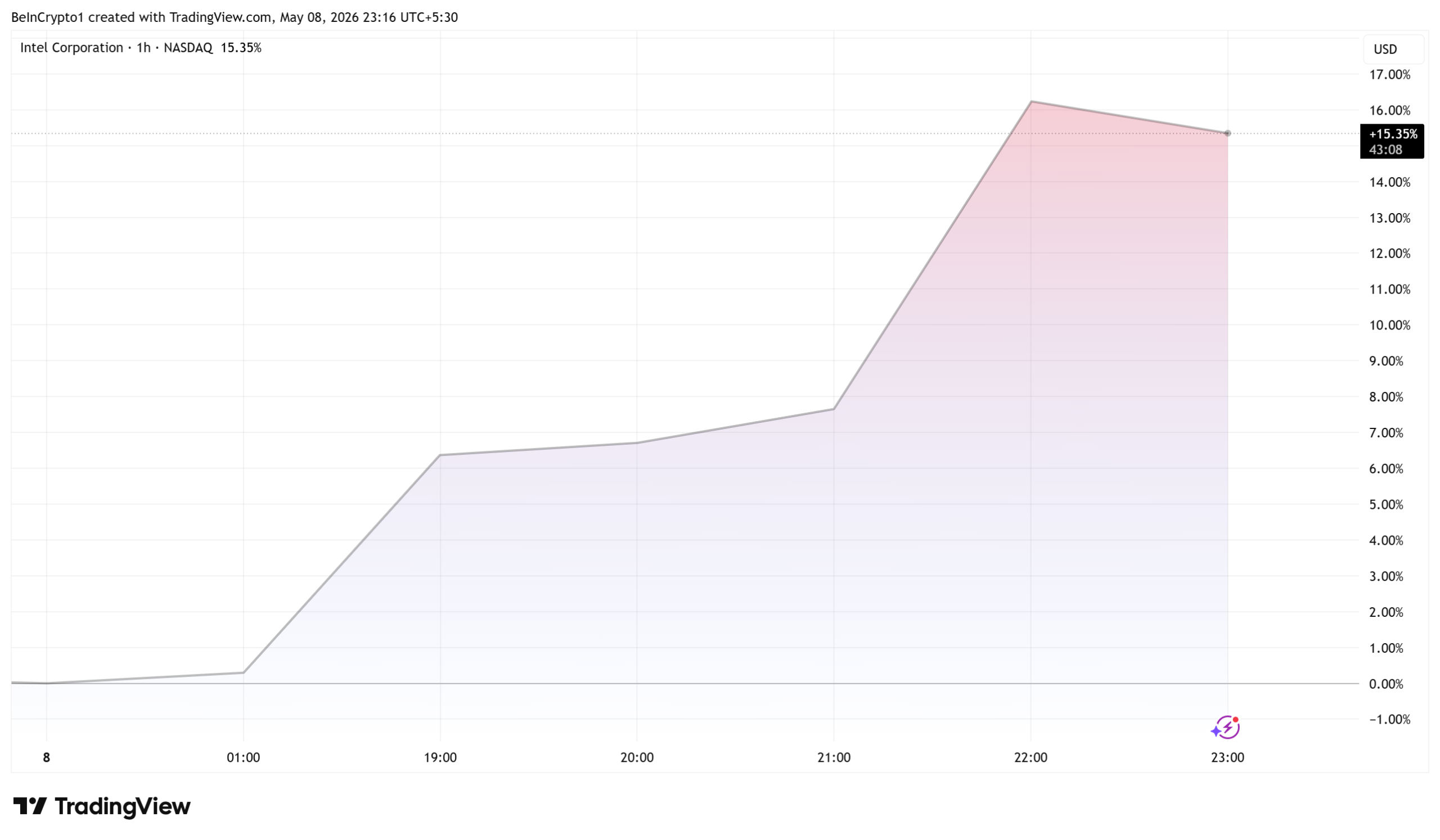
Intel (INTC) shares hit a record on May 8 after a preliminary deal to manufacture silicon for Apple. The rally lifted the Trump-era U.S. government Intel stake from $8.9 billion to $56.5 billion.
Washington paid $8.9 billion for the 9.9% position eight months ago. The Treasury now sits on roughly $47.6 billion in unrealized gains, according to The Kobeissi Letter. Intel shares climbed about 18% intraday to around $129, an all-time high.
How the Trump-era Intel stake was built
In August 2025, the Trump administration converted unpaid federal funding into 433.3 million Intel shares at $20.47 each.
The deal repurposed $5.7 billion in CHIPS and Science Act grants. It also drew $3.2 billion from the Defense Department’s Secure Enclave program.
President Trump publicly claimed credit for the move, telling supporters the country now owned 10% of Intel.
“The United States paid nothing for these Shares, and the Shares are now valued at approximately $11 Billion Dollars. This is a great Deal for America and, also, a great Deal for INTEL,” Trump wrote on Truth Social at the time.
The position is held by the U.S. Treasury as a passive investor, with no board seats. The structure tied the stake to a broader chip tariff agenda.
Following news that Apple and Intel had reached an agreement for the semiconductors and chip builder to make chips in Apple devices, INTC stock jumped 15%, pushing Trump’s investment to a valuation of $56.5 billion.

“That’s a gain of +$47.6 BILLION in less than 8 months. Truly unprecedented,” analysts at the Kobeissi Letter commented.
Why the Apple deal matters for Intel
The Wall Street Journal first reported the deal, the first time Apple has agreed to use Intel for production silicon. Apple has historically depended on Taiwan Semiconductor Manufacturing Company for its custom chips.
Commerce Secretary Howard Lutnick had met repeatedly with CEO Tim Cook to push the partnership forward.
Intel’s foundry business has spent more than a year searching for an anchor customer. Microsoft signed on for the 18A process earlier this year.
April 2026 was Intel’s strongest month on record with a 114% gain. The Apple deal adds another major customer to a foundry roadmap once viewed as struggling. It feeds the broader push to onshore semiconductor manufacturing.
The $47.6 billion gain remains on paper. Any sale will hinge on market conditions. It also depends on political appetite for booking a profit on what was framed as industrial policy.
The equity-for-grants formula has drawn Senate scrutiny over Trump policy windfalls.
Subscribe to our YouTube channel to watch leaders and journalists provide expert insights
The post Trump’s 10% Intel (INTC) Stake Gains $47 Billion After Apple Chip Deal appeared first on BeInCrypto.
The Senate Banking Committee plans to hold its long-awaited markup hearing for the Digital Asset Market Clarity Act of 2025 (otherwise known as the Clarity Act) on Thursday, May 14 at 10:30 a.m.
The Clarity Act was largely in limbo after Coinbase CEO Brian Armstrong announced the exchange was pulling its support over stablecoin yield and other provisions in January. Last week, Senators Thom Tillis and Angela Alsobrooks released a compromise text addressing yield, which would prohibit crypto companies from offering yield on static stablecoin reserve holdings but allowing rewards for stablecoins involved in activities, seemingly resolving one of the key issues blocking the bill from advancing.
The committee did not release the full text of the updated bill publicly as of press time.
The banking industry groups said they had issues with this compromise text and would provide feedback. A letter published by multiple banking trade associations, including the American Bankers Association, Bank Policy Institute, Independent Community Bankers of America, National Bankers Association and Consumer Bankers Association on Friday said “additional work is needed to arrive at text that embraces the innovation represented by digital assets while also protecting consumers.”
The letter includes recommendations with specific edits to the text of the provision released last week.
The scheduling of a markup hearing suggests lawmakers are ready to move ahead with the current version of the text regardless of these concerns.
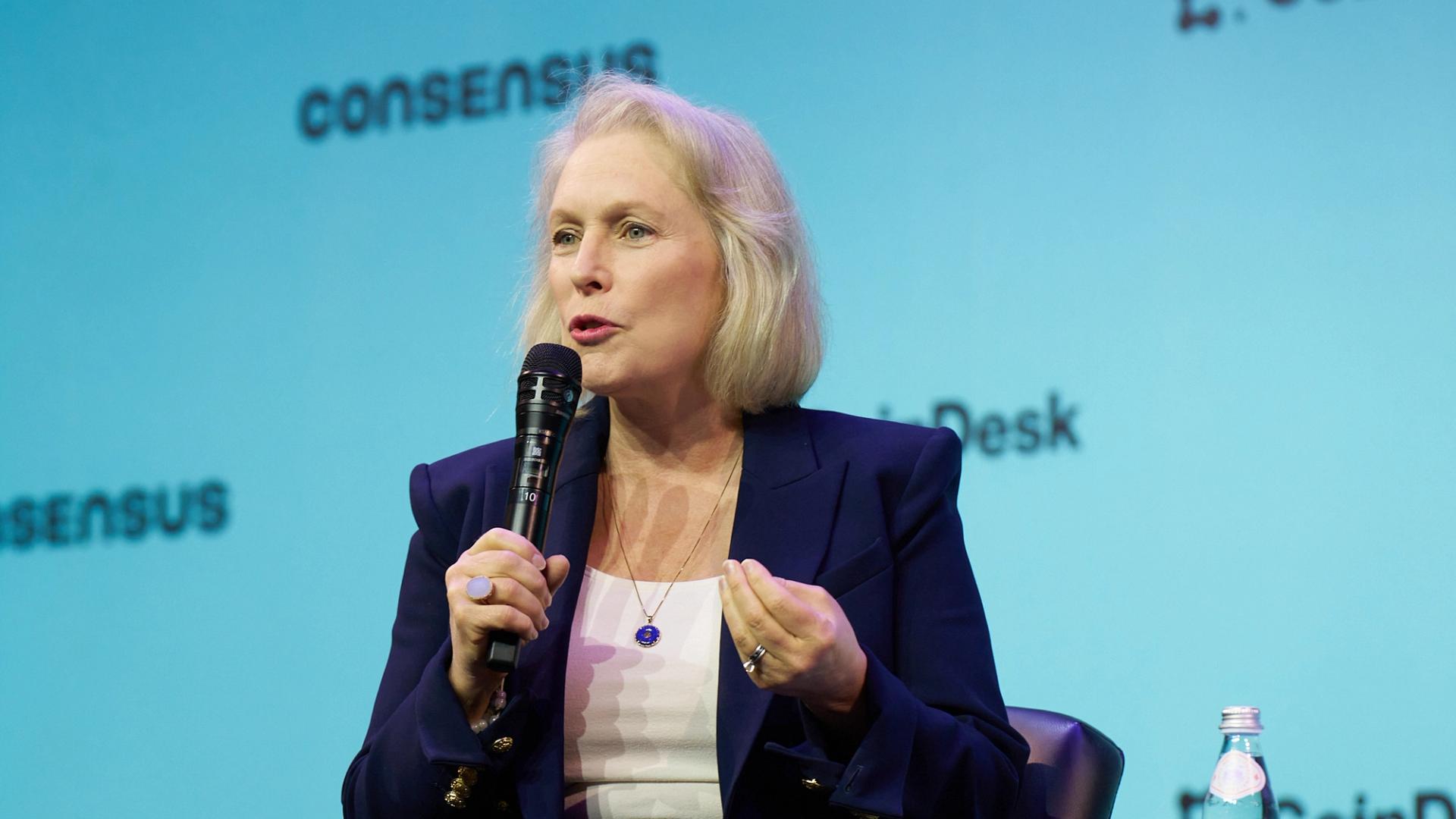
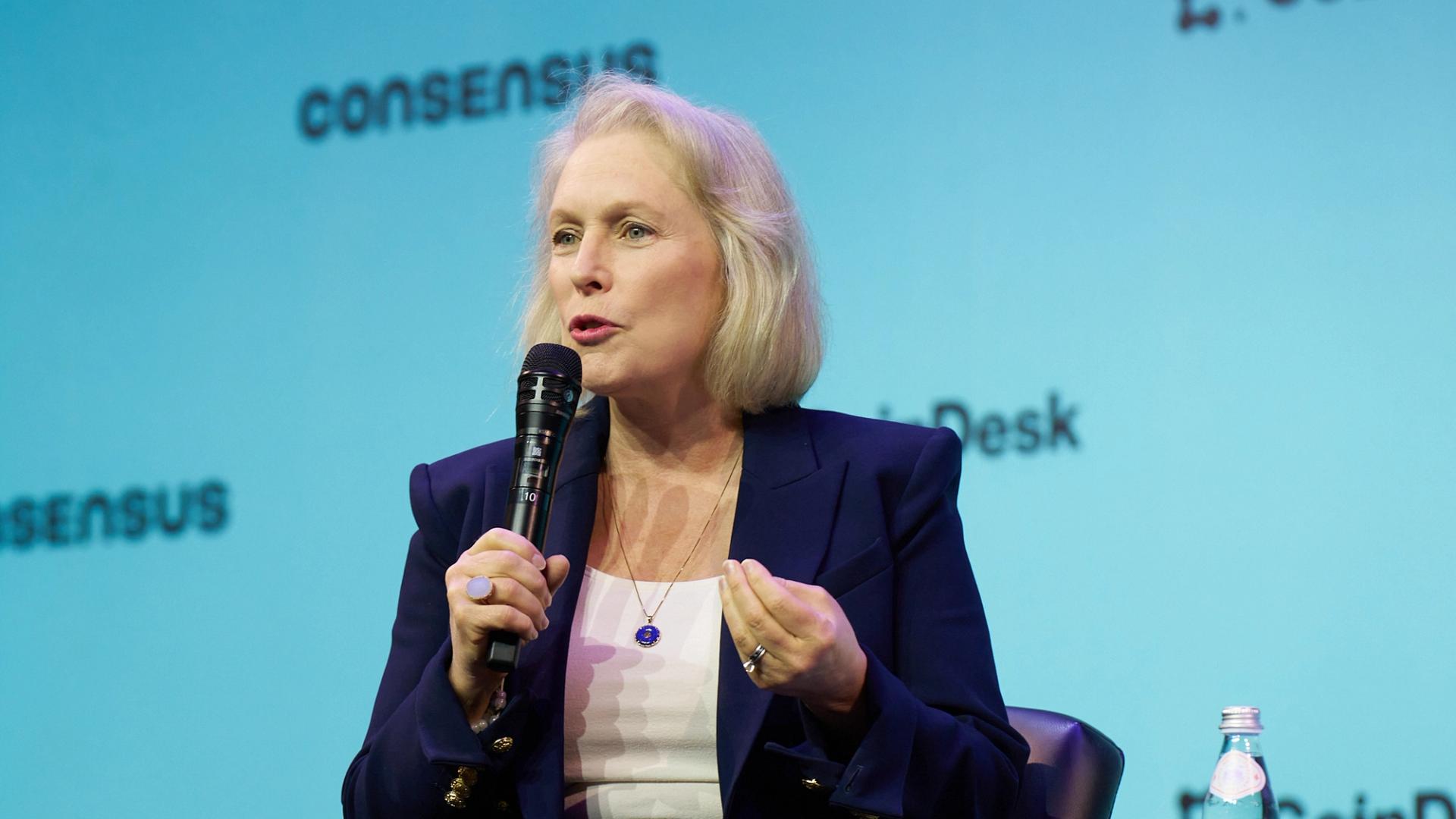
There are still other outstanding issues — Senator Kirsten Gillibrand, a longtime champion of the crypto industry, told the audience at Consensus Miami this past week that the Clarity Act needs an ethics provision barring senior government officials from profiting off of the crypto industry while regulating it. Her office reiterated that position in a press release on Thursday, which cited CoinDesk-commissioned polling data which found that 73% of registered voters believe senior government officials should not have business ties to the industry.
However, this issue may not be addressed in the Senate Banking version of the bill; after the Banking markup, the Senate will need to merge this version of the bill with the Senate Agriculture Committee’s version before the overall Senate can vote to advance the bill.
Economist Steve Hanke says his bubble detector shows the US stock market in clear bubble territory, even as Big Tech powers one of the fastest equity rallies on record.
His warning lands as five mega-cap tech stocks pull the S&P 500 to fresh highs. Traders are also piling into call options at a pace never seen before in modern markets.
Steve Hanke Flags Bubble Territory as Warning Signs Stack Up
The Johns Hopkins applied economics professor pointed to the bond-stock yield spread as a second confirmation signal alongside his bubble model.
“My Bubble Detector says the US stock market is in bubble territory. So does the bond-stock yield spread. Buckle up,” he warned.
Hanke previously served as a senior economist for President Ronald Reagan and has flagged similar overvaluation through 2025 and 2026.
The warning arrives during a historic reversal. Analysts at Bull Theory said US equities added roughly $10 trillion in 39 days. The Nasdaq topped 29,000 for the first time, and the index reached 7,400.
Five Tech Stocks Carry the Rally
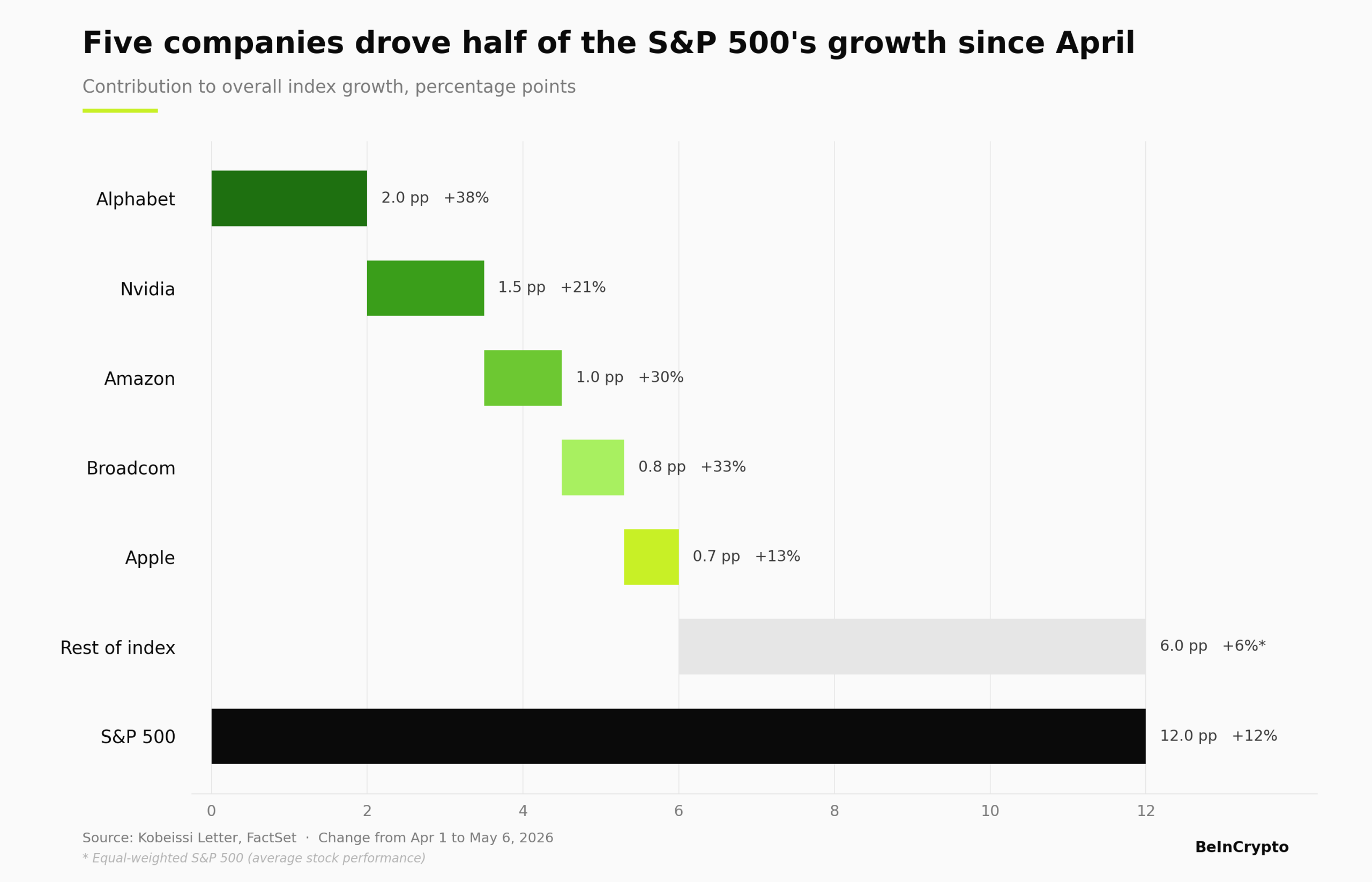
Five companies, comprising Alphabet, Nvidia, Amazon, Broadcom, and Apple, drove roughly half of the S&P 500’s gains since April 1.
The five stocks added about six percentage points to the index’s 12% climb over that stretch. Alphabet led with a 38% advance, followed by Nvidia at 21%, Amazon at 30%, and Broadcom at 33%. The equal-weighted S&P 500 has risen only 6% in the same window.

Mark Newton, head of technical strategy at Fundstrat, told Milk Road that the Magnificent Seven traded sideways for months before this leg higher.
He said strong earnings and heavy AI capex gave investors confidence that tech could keep carrying the broader market.
Call Options and Retail demand push risk appetite to records
Call option volume on the S&P 500 hit a record $2.6 trillion in notional value on Wednesday, per Kobeissi Letter. Calls now account for around 58% of all S&P 500 options traded, the highest share on record.
Retail buying mirrors that mood. Individual investors bought $1.1 billion of tech hardware stocks in the week ending May 6. That marked the second-largest weekly figure on record and the fifth straight week of net inflows.
SanDisk has surged 3,731% over the past year, outpacing Qualcomm’s 2,620% gain in 1999.
Whether Professor Hanke proves early or wrong will depend on how long AI revenue can justify these valuations.
The post Steve Hanke Warns Stock Market Bubble as Big Tech Fuels $10 Trillion Frenzy appeared first on BeInCrypto.

The company behind the popular cryptocurrency XRP made a prestigious list alongside major private companies such as SpaceX.
The news has failed to trigger a price resurgence in its native token, which remains in the red for the day. However, certain indicators suggest it might be gearing up for a rally.
Another Acclamation for Ripple
Ripple has earned recognition as one of the top 10 entities included in the Prime Unicorn Index, highlighting its strong position in the private-company landscape. Specifically, it ranks sixth on the list with a valuation of over $26 billion.
The undisputed leader is Space Exploration Technologies Corporation (better known as SpaceX), which is valued at more than $1.2 trillion. The second position goes to OpenAI, with a valuation of around $917 billion, while Anthropic comes in third at roughly $332 billion. It is important to note that Ripple is the only crypto company part of that prestigious club.
The index tracks the performance of US private companies valued above $1 billion. It uses a modified capitalization model and serves as a benchmark for financial products tied to such entities. Currently, the index includes 232 companies with a combined valuation of more than $3.4 trillion.
This is hardly the first time Ripple has been featured in a prestigious ranking. In 2024, CNBC and Statista ranked it among the top 250 fintech companies worldwide. In 2022, People’s Magazine positioned Ripple as the 4th Best Workplace for Parents and the 21st Best Workplace in Technology.
No Reaction From XRP
The company’s cross-border token experienced little to no volatility following the disclosure and has been trading at around $1.40, representing a 1.5% daily decline.
At the same time, the solid institutional interest signals that the asset could be on the verge of a price increase. Inflows into spot XRP ETFs have dominated outflows over the last few weeks, indicating that pension funds, hedge funds, and other investors have increased their exposure to the asset, which could support a potential bullish momentum.
For his part, the renowned analyst Ali Martinez claimed that XRP’s TD Sequential indicator has flashed a new buy signal on the four-hour chart.
“I pay close attention to this setup because it has accurately anticipated every major trend shift in XRP recently. For instance, on May 6, I noted the indicator flashed a sell signal at the $1.46 high. That call perfectly timed the local top, leading to the 5.5% correction we’ve seen over the last 48 hours. Today, the indicator has flipped to a buy signal. To me, this suggests the local exhaustion is over, and XRP is ready to rebound,” he said.
Earlier this week, Martinez argued that a confirmed close above $1.45 could open the door to a rise to as high as $1.80.
The post Ripple (XRP) Joins an Exclusive Club Next to SpaceX, OpenAI: Details Inside appeared first on CryptoPotato.

Hilary Duff Announces Major 2026 World Tour, Embraces Music Comeback After Decade-Long Hiatus
Crypto Exchanges Pushed US Lawmakers to Bar Provision on Risky Tokens: Report

Novak Djokovic Dumped Out Of Italian Open In Second Round By Qualifier Dino Prizmic

Manchester United reach agreement with Casemiro over contract clause amid transfer speculation

US brings back mandatory military draft registration

Steven Gerrard disagrees with Gary Neville over ‘shock’ Chelsea and Arsenal claim | Football


![Cardi B - Money [Official Music Video]](https://wordupnews.com/wp-content/uploads/2026/02/1770603085_hqdefault-80x80.jpg)
-
 Crypto World15 hours ago
HarrisX Poll Found 52% of Registered Voters Support the CLARITY Act
-

 NewsBeat5 days ago
Channel 5 – All Creatures Great and Small series 7 new post
-

 Crypto World2 days ago
Upbit adds B3 Korean won pair as Base token gains Korea access
-

 Tech4 days ago
Image AI models now drive app growth, beating chatbot upgrades
-
 NewsBeat2 days ago
NCP car park operator enters administration putting 340 UK sites at risk of closure
-

 Sports6 days ago
Five killed in Texas plane crash identified as Amarillo pickleball players
-

 Entertainment7 days ago
Young and the Restless Next Week: Cane Arrested & Matt’s Deadly New Scheme!
-
Entertainment6 days ago
New Netflix Movies in May 2026 — My Top 3 Picks to Stream
-

 Entertainment6 days ago
Melissa Joan Hart and More Stars Attend 2026 Kentucky Derby
-
 Sports7 days ago
David Benavidez responds to team Canelo saying the fight will never happen
-
 Sports7 days ago
IPL 2026: ‘Love you darling’- Hardik Pandya’s reaction to MS Dhoni steals the show |Watch | Cricket News
-
Entertainment6 days ago
Anna Nicole Smith’s Daughter Attends 2026 Kentucky Derby
-

 Crypto World6 days ago
Bitcoin mining equities rise in 2026 as BTC lags behind
-

 Fashion6 hours ago
Weekend Open Thread: Marianne Dress
-
Crypto World6 days ago
Pi Network Mandates Protocol 23 Upgrade for All Mainnet Nodes Before May 15 Deadline
-

 Business6 days ago
Luka Doncic Injury Update: Doncic’s Hamstring Recovery Slows Lakers’ Hopes Against Thunder: Can He Run Yet?
-

 Business7 days ago
Can Victor Wembanyama Bring the NBA Ring to Spurs in 2026? Historic Playoff Run Fuels Title Dreams
-
Entertainment6 days ago
Venus Williams’ Best Met Gala Looks Over the Years
-
 Entertainment6 days ago
Netflix’s 10-Part Miniseries Based on a True Story Is a Perfect Weekend Binge
-

 Sports6 days ago
Is Man United v Liverpool on TV? Channel, streaming and how to watch Premier League fixture
You must be logged in to post a comment Login