
Crypto World
Fed’s Powell Soothes Bonds but Rising Oil Pressures Crypto and Stocks

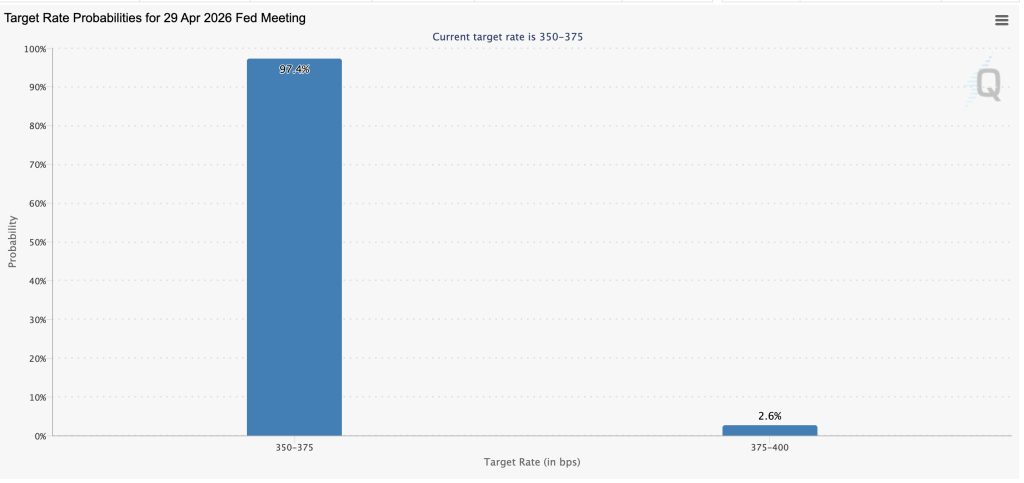
The U.S. 10-year Treasury yield dropped nine basis points to 4.35% Monday after Fed Chair Jerome Powell told a Harvard University audience that inflation expectations remain “well anchored” – enough to pull rate-hike odds from 25% to 5% in a single session.
What it wasn’t enough to do was stop WTI crude from closing at $104.80, its first settle above $100 since 2022, dragging the Nasdaq down 0.75% and Bitcoin back to $66,500 after briefly threatening a breakout.
The market is being pulled in two directions simultaneously. Powell is telling it rates are fine. Oil is telling it inflation isn’t over. One of those signals will break first, and which one it is determines the next directional leg for crypto.
- Fed Signal: Powell’s Harvard comments sent CME FedWatch rate-hike odds tumbling from 25% to 5% for 2026, with the 2-year yield sliding eight basis points to 3.83%.
- Oil Level: WTI crude rose 5.3% Monday to close near $105 per barrel – the first close above $100 since 2022, sustained by the ongoing US-Iran conflict.
- Crypto Impact: Bitcoin shed early gains and settled around $66,500, roughly flat on the 24-hour, as risk appetite compressed across equities and digital assets.
- Rate Path: The March 18 FOMC held the federal funds rate at 3.5%–3.75% for a second consecutive meeting, with the SEP projecting one quarter-point cut in 2026.
Powell Buys the Bond Market Time – But the Oil Clock Is Still Running
Powell’s Harvard remarks landed precisely where the bond market needed them. The Fed, he said, is looking past near-term oil shocks and anchoring policy to inflation expectations rather than headline energy prints – which is exactly what traders positioning for imminent rate hikes did not want to hear.
The 10-year yield’s nine-basis-point decline and the 2-year’s eight-basis-point drop confirm the message sent clearly.
The mechanism is straightforward: lower rate-hike odds reduce the opportunity cost of holding zero-yielding risk assets, which is structurally supportive for Bitcoin.
When CME FedWatch reprices from 25% to 5% hike probability, that is a material shift in the discount rate applied to speculative assets. Under normal conditions, that move alone would have sent BTC meaningfully higher.
But rising U.S. real yields on 10-year TIPS remain an active headwind. Even with nominal yields falling Monday, the structural argument that Powell is merely deferring a harder decision – not resolving it – kept institutional desks cautious.
As Powell himself acknowledged at Harvard, “We will eventually maybe face the question of what to do here. We’re not really facing it yet because we don’t know what the economic effects will be.” That framing is honest. It is also, in trader terms, a conditional green light with an expiration date attached.
Lon Erickson of Thornburg Investment Management noted the Fed “appears comfortable with current economic conditions, higher oil prices, and geopolitical concerns notwithstanding” – a comfort level that looks reasonable until energy markets force a reassessment.
Discover: The best pre-launch token sales
Oil at $105 Is Hitting Crypto Through Three Compounding Channels
The oil pressure is not a single variable – it operates through three simultaneous transmission channels, and that is what makes the current setup more dangerous than the headline WTI print suggests.
First, inflation re-acceleration. WTI above $100, sustained by the US-Iran conflict blocking normal Middle East supply flows, directly pressures headline CPI.
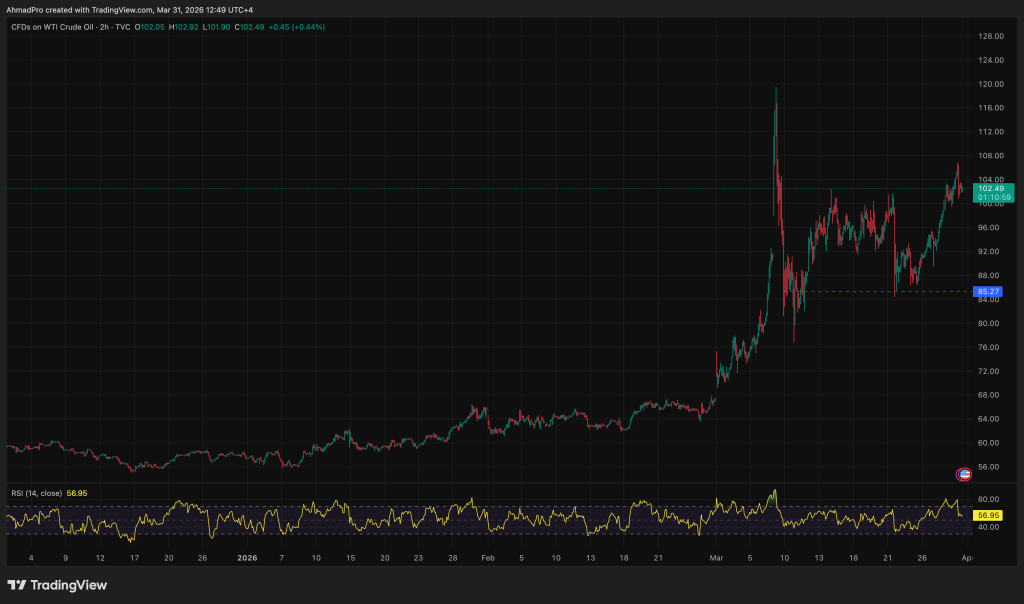
The Fed’s stated comfort with “anchored expectations” depends on those expectations not moving – and energy at these levels historically tests that anchor. Powell has already acknowledged inflation has lingered above 2% for five years post-pandemic without fully stabilizing. A persistent $100-plus oil regime challenges the assumption that the current rate hold is sufficient.
Second, delayed rate cuts. The FOMC’s March SEP projected one quarter-point cut in 2026. When oil is running a macro shock through the system, that single projected cut starts to look optimistic. Every week WTI holds above $100 extends the timeline for easing, which extends the drag on leveraged long positioning in crypto.
Third, geopolitical risk premium. The Iran conflict is not a clean supply shock with a visible resolution timeline. It is an open-ended variable that keeps institutional desks in defensive positioning. Bitcoin ETF outflows have already signaled that capital is rotating defensively – and sustained geopolitical uncertainty gives institutions no reason to reverse that posture.
That combination – inflation re-acceleration risk, delayed easing, and persistent geopolitical drag – is the one traders are underweighting when they read Powell’s Harvard comments as categorically bullish.
Bull and Bear: What Bitcoin Needs to Resolve This Setup
Right now the whole market is stuck in a tug of war between Powell and oil, and Bitcoin is just reacting to whoever wins that fight.
If Powell leans soft at the late April FOMC meeting and oil cools off, especially if it drops back under $95, that takes pressure off inflation and gives Bitcoin room to breathe, which is where a move back toward $70K starts to make sense, especially if ETF flows pick up again.
But that is not the reality yet. What we have instead is mixed signals everywhere, oil holding elevated levels, the Fed staying vague, and Bitcoin chopping in a wide range between roughly $63K and $68.5K with no real direction.
That $63K level is the one that matters. As long as it holds, this is just consolidation. If it breaks, things can slide fast.
The real trigger now is inflation data and oil. If rising oil starts feeding into inflation again, the Fed gets pushed back into a tighter stance, and that is where risk assets struggle. If oil cools and inflation stays under control, the pressure eases, and Bitcoin gets its shot higher.
So it all comes down to one thing, oil versus the Fed, and until that tension breaks, everything else is just noise.
Explore: Best crypto assets to diversify your portfolio
The post Fed’s Powell Soothes Bonds but Rising Oil Pressures Crypto and Stocks appeared first on Cryptonews.

European currencies continue to weaken against the US dollar amid rising geopolitical tensions and increased demand for safe-haven and liquid assets. Market participants are reducing exposure to riskier instruments, putting pressure on both the euro and the pound. Additional support for the dollar comes from expectations surrounding upcoming US macroeconomic data, which may confirm economic resilience and reinforce the Federal Reserve’s hawkish stance.
Escalating tensions in the Middle East remain a key driver for the FX market. Intensifying conflict, risks of disruptions to energy supplies, and rising oil prices are fuelling inflation expectations and boosting demand for the dollar. In such conditions, European currencies remain under pressure as investors favour safer assets over risk-sensitive ones.
EUR/USD
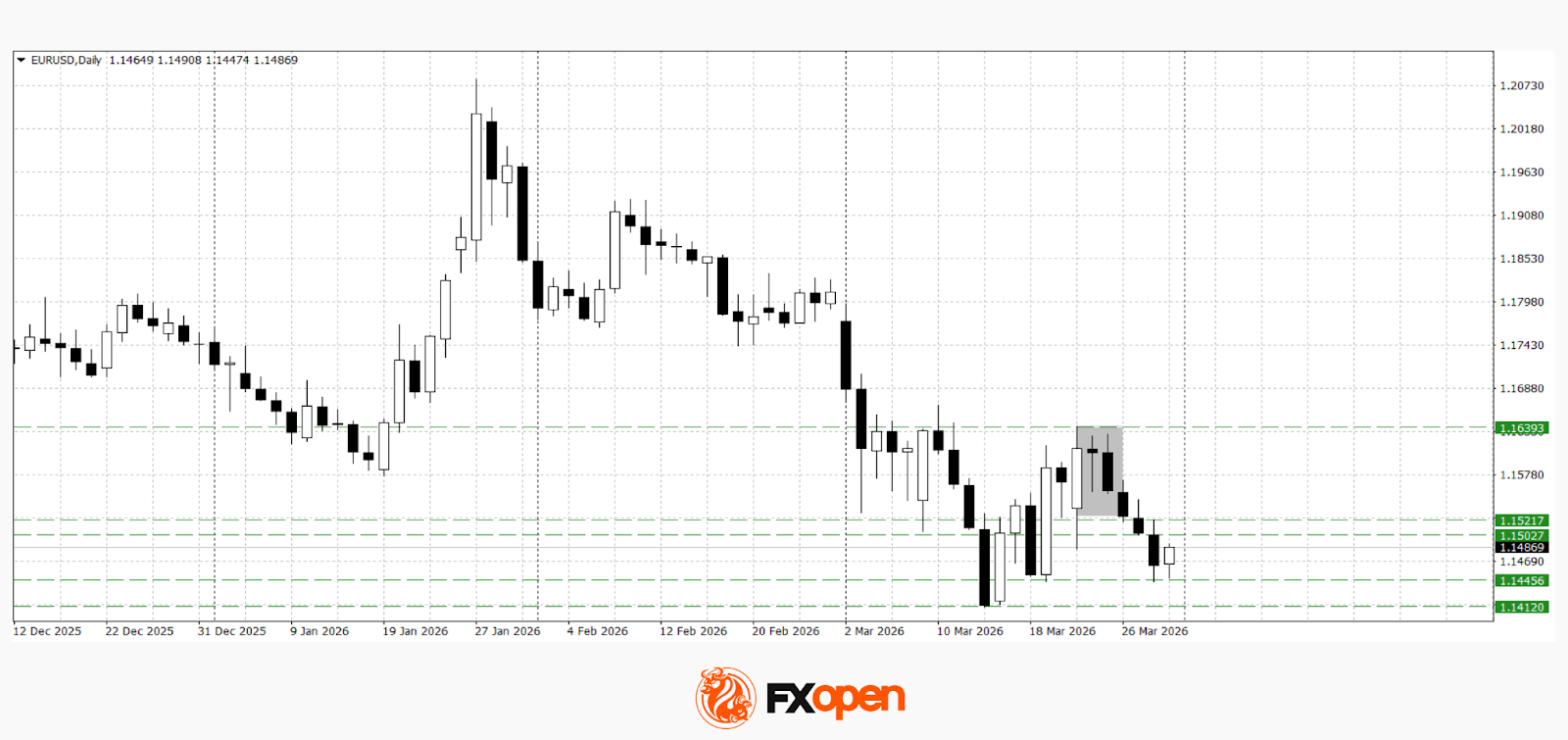
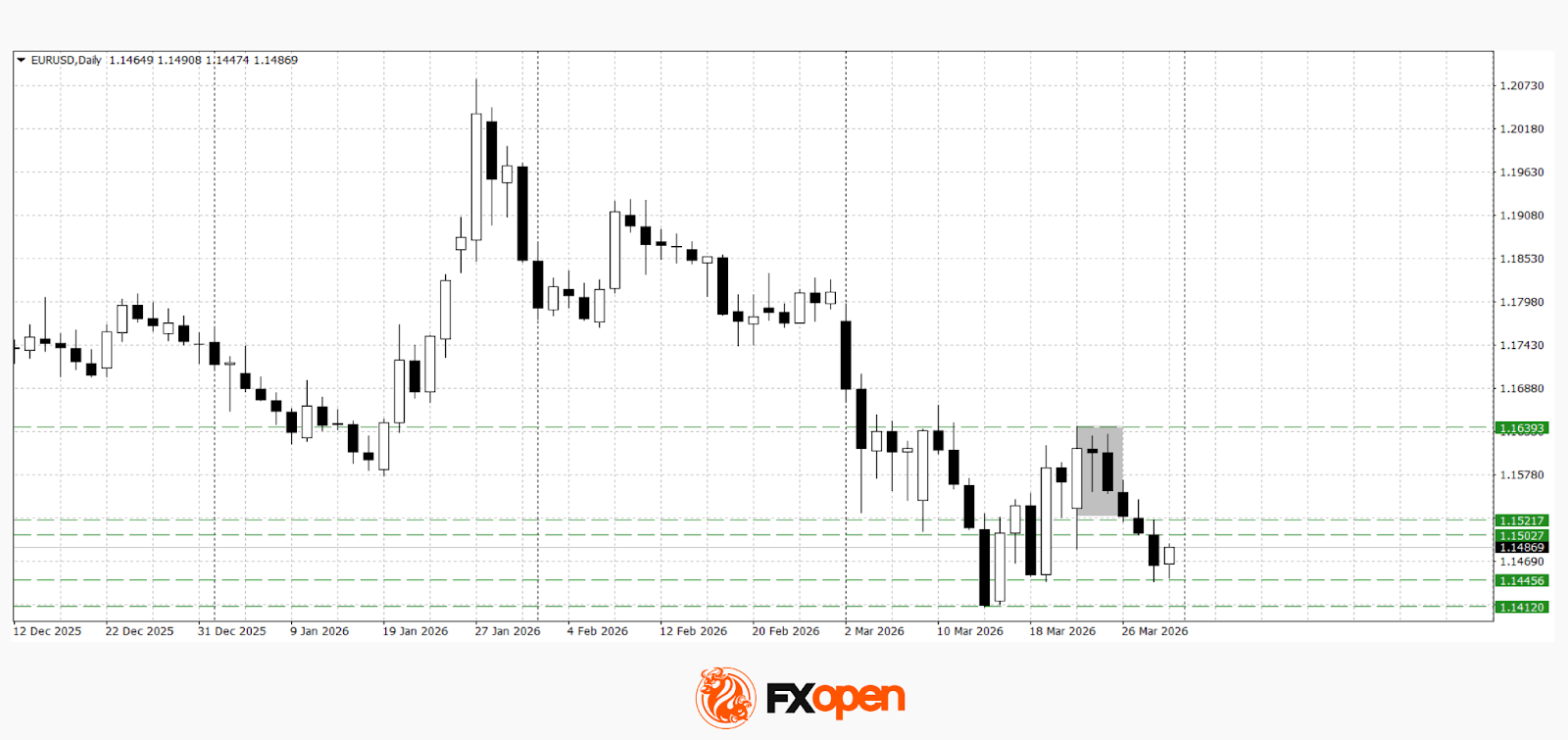
EUR/USD continues to decline and is approaching its yearly lows, remaining under pressure following the recent bearish impulse. The failure of buyers to secure a foothold above 1.1640 last week allowed sellers to regain control and push the pair towards the recent low near 1.1440. Yearly lows are now within close reach, and weaker eurozone data or stronger US figures could intensify the downside, potentially leading to a break below 1.1400.
At the same time, if 1.1440 holds as support, a corrective rebound towards 1.1520–1.1540 may unfold.
Key events for EUR/USD:
- today at 09:00 (GMT+2): German retail sales
- today at 10:55 (GMT+2): change in German unemployment
- today at 17:00 (GMT+2): US CB consumer confidence index
GBP/USD
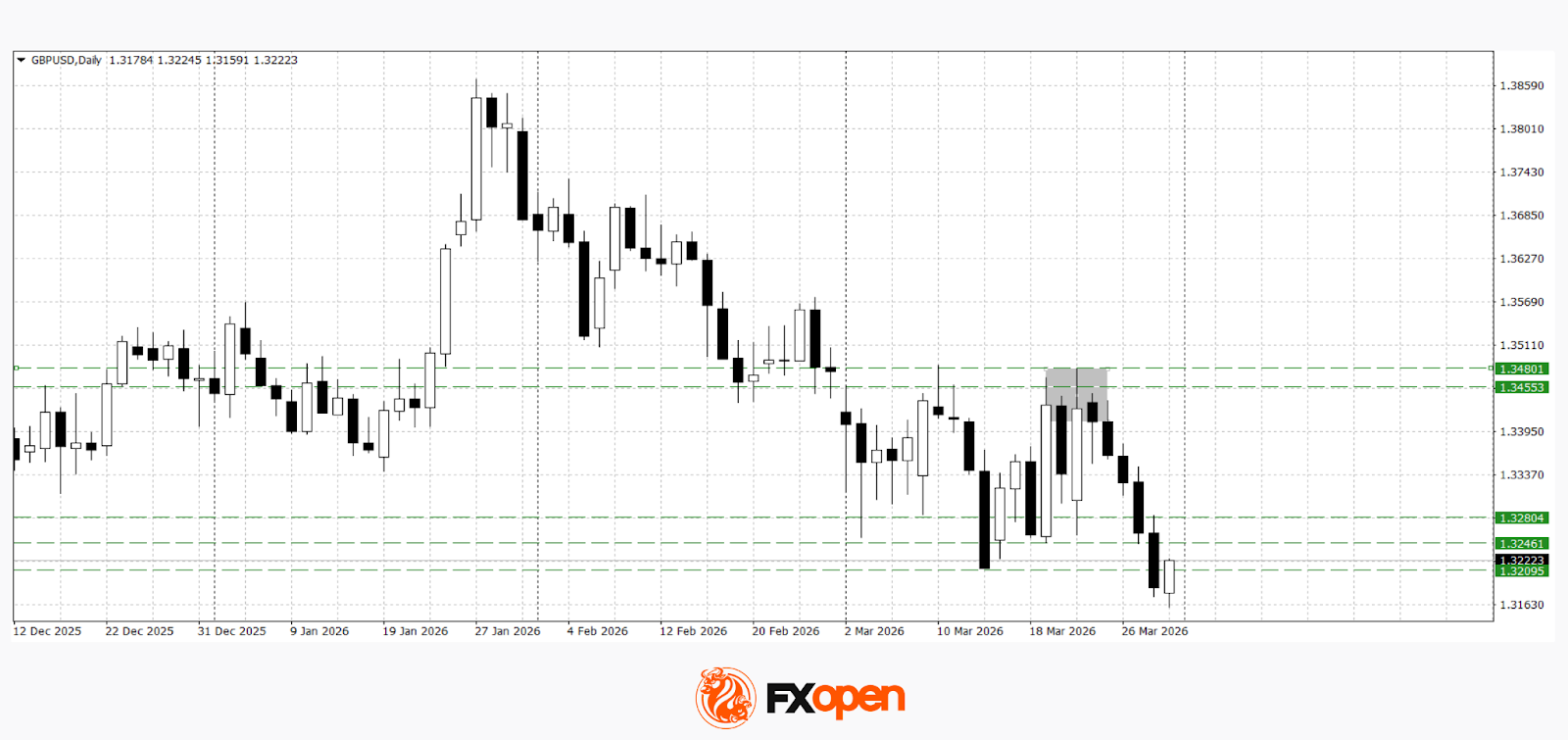
GBP/USD is showing more pronounced weakness, having already refreshed its yearly lows amid impulsive selling pressure. The pound is weighed down by a combination of external factors, including US dollar strength, and domestic uncertainty related to the outlook for Bank of England monetary policy.
Technical analysis suggests the possibility of a corrective move higher towards 1.3250–1.3280; however, under current conditions such a recovery is likely to be limited ahead of a potential resumption of the downward move.
Key events for GBP/USD:
- today at 09:00 (GMT+2): UK GDP
- today at 09:00 (GMT+2): UK current account balance
- today at 14:30 (GMT+2): US JOLTS job openings
Trade over 50 forex markets 24 hours a day with FXOpen. Take advantage of low commissions, deep liquidity, and spreads from 0.0 pips (additional fees may apply). Open your FXOpen account now or learn more about trading forex with FXOpen.
This article represents the opinion of the Companies operating under the FXOpen brand only. It is not to be construed as an offer, solicitation, or recommendation with respect to products and services provided by the Companies operating under the FXOpen brand, nor is it to be considered financial advice.

Archblock, TrustToken, and TrueCoin, the firms originally behind stablecoin TrueUSD, have declared Chapter 11 bankruptcy protection, citing Techteryx’s failure to pay invoices and Archblock being defrauded by “a sophisticated criminal enterprise working out of Eastern Europe.”
This comes after Archblock and its sister firms became embroiled in a series of calamities and legal disputes and sold several key parts of its business.
Techteryx and Justin Sun
The affidavit of Michael Blank, the current general counsel for Archblock, claims that in 2020, Archblock committed to “a significant downsizing, materially reducing its burn rate and extending its operational runway.”
In order to achieve this, it made the choice to sell TrueUSD.
Specifically, it chose to sell it to Justin Sun-connected Techteryx.
Read more: The legal battles of Justin Sun
This sale, according to the affidavit, was completed in December 2020.
However, despite the sale, Archblock was going to help Techteryx operate the stablecoin. The two firms entered into “an ongoing services agreement with revenue-sharing components,” which Archblock believed would “provide a stable and predictable revenue stream.”
This revenue stream would eventually become something that Archblock was “almost entirely reliant on.”
This sale was for “approximately $28 million.”
However, according to the affidavit, in 2024, Techteryx “ceased paying several million dollars in outstanding invoices.”
First Digital Trust/Legacy Trust/Aria Commodity Finance Fund
Techteryx ceased paying after a series of extended legal disputes involving Legacy Trust, First Digital Trust, the Aria Commodity Finance Fund, and the Archblock firms.
The firms had originally contracted with Legacy Trust to provide escrow services, which were later transferred to First Digital Trust. Eventually, First Digital Trust negotiated for the right to manage some of the funds and placed them in the Aria Commodity Finance Fund.
This was marketed as a supposedly low-risk fund.
Read more: TUSD up to 99.7% backed by speculative assets despite SEC settlement
It wasn’t.
Instead, the firm invested the funds in much more speculative activities and eventually stopped responding to redemption requests.
This led, in part, to a Securities and Exchange Commission (SEC) lawsuit against the firm, which was settled.
Despite that settlement, TrueUSD is still substantially reserved by these assets and by the creditworthiness of Sun, who’s reportedly provided a $500 million line of credit to the beleaguered stablecoin.
There are still ongoing disputes in several jurisdictions related to these agreements.
Prime Trust and Crypto Banking disappeared
In addition, the Archblock firms were pushed closer to bankruptcy with the downfall of various cryptocurrency banking partners and payment processors.
The affidavit claims that in 2023, “several critical banking and trust company partners collapsed or were shut down, including Silvergate Bank, Signature Bank, and, most significantly, Prime Trust.”
These failures, specifically Prime Trust’s insolvency, “created potential liabilities to end users of the TrueCurrency stablecoin products.”
$1.3 million in IRS Taxes
Besides these difficulties, a failure to adequately manage tax liabilities has also contributed to the Archblock firms’ bankruptcy.
According to the affidavit, there was a problem with Archblock’s fiscal year 2021 tax payment.
Specifically, the affidavit claims that “in February 2025 the IRS began making inquiries as to an apparent processing error at the IRS where a FY 2021 tax payment made by Archblock was incorrectly processed and mistakenly issued back to Archblock as a refund.”
This has resulted in an estimated total liability of $1.3 million.
Eastern European “sophisticated criminal enterprise”
Placing the straw on this camel’s back was Archblock’s most recent failed fundraising.
After Prime Trust’s failure and Techteryx’s so-called “nonpayment” as well as TrustToken and TrueCoin’s 2024 settlement with the SEC, Archblock committed to a new direction for the firm: “the development of a new stablecoin platform and the resolution of ongoing legal disputes.”
In order to support this new direction, Archblock sought out additional fundraising.
Read more: What’s up with TrueUSD and the rest of TrustToken’s stablecoins?
As part of this process, “one promising primary funding lead emerged.”
Unfortunately, “this investment lead turned out to be a sophisticated criminal enterprise working out of Eastern Europe.”
This sophisticated criminal enterprise “ultimately defrauded Archblock of approximately $3 million.”
This resulted in changes to “Archblock’s financial position that could not be remedied through further cost reductions or asset sales.”
As such, “throughout 2025, Archblock focused on ceasing remaining activities, resolving obligations where possible, and selling any non-liquid assets.”
Ongoing disputes
There are a substantial number of ongoing legal disputes that involve the Archblock firms.
These include its claims against the Prime Trust estate and Prime Trust’s claims against Archblock.
Archblock is seeking approximately $9 million it had deposited with Prime Trust at the time of bankruptcy, and the Prime Trust estate has claimed that Archblock benefited from preferential and fraudulent transfers.
It also includes the lawsuits it has engaged in against First Digital Trust, Techteryx, Aria Commodity Finance Fund, and other related entities.
These suits center around the permissions that the Archblock firms gave to the Trust firms, what representations were made by the Trust firm and the Aria Commodity Finance Fund, and at what time individuals became aware of problems.
They also include Celsius’ and FTX’s claims against Archblock.
Celsius alleges that Archblock “promised customers that their deposits would be held securely and risk-free by ‘fiduciary partners’ in cash or cash-equivalent” but actually “gambled their customers’ deposits on risky offshore investments with partners who disclaimed any fiduciary duties.”
Allegations from Celsius are based on the funds that were invested in the Aria Commodity Finance Fund and its apparent failure.
Additionally, “The FTX Recovery Trust alleges that Archblock LLC owed the Trust $8,512,910.”
Briefly, it’s important to remember that Archblock had a relationship with Alameda Research, a lead investor in TrustToken and the TRU token.
Additionally, Alameda was a user of the TrueFi platform and defaulted on approximately $7.3 million in loans it obtained through this platform and is mentioned as a creditor in other documents filed in this bankruptcy.
Alameda is also listed as a possible creditor on the Creditor Mailing Matrix.
Additionally, the schedules of assets and liabilities of Archblock (Cayman) lists an “Alameda Loan Receivable” with a “total face amount” of $7,508,173.15.
This same document notes that Archblock claims to have held digital assets on FTX, and it’s requested $530,472.07.
Furthermore, the former Chief Executive, Daniel Jaiyong An, has been engaged in a years-long legal dispute with these firms.
Who’s on the Archblock bankruptcy creditor list?
Besides Alameda Research, there are a few other interesting names on the creditor matrix.
One of these is Finder Wallet, a brief-lived Australian firm that offered yield on the TrueAUD (TAUD) stablecoin.
This firm was led by Australia’s so-called “crypto king” Fred Schebesta, who notably sold his over-the-counter trading firm, HiveEx, to Alameda Research.
Read more: Finder Wallet sued by Australian regulators for unlicensed Earn product
Several firms related to Crypto.com also show up in the creditor matrix.
The SEC is also still listed on this creditor matrix, raising interesting questions about whether or not Archblock had paid the amount specified in its settlement with the regulator.
Protos reached out to Archblock with questions related to this ongoing bankruptcy, but it didn’t provide comment before publication.
Got a tip? Send us an email securely via Protos Leaks. For more informed news and investigations, follow us on X, Bluesky, and Google News, or subscribe to our YouTube channel.


More than 40 Democratic lawmakers have pressed U.S. regulators to step in as concerns mount over potential misuse of sensitive government information in prediction markets. In a letter sent to the Commodity Futures Trading Commission and the Office of Government…
Decentralized Finance (DeFi) has built its reputation on one core promise: trustless security powered by cryptography. From smart contracts to cross-chain bridges, the entire ecosystem assumes that today’s encryption standards are unbreakable.
That assumption may not age well.
A silent disruption is approaching—not from regulators, not from hackers, but from quantum computing. And if DeFi doesn’t evolve fast enough, the very foundations of its security model could crack.
The Quantum Threat to DeFi
At the heart of DeFi lies public-key cryptography—specifically systems like the Elliptic Curve Cryptography used in wallets and transactions. Today, it’s virtually impossible for classical computers to reverse-engineer private keys from public ones.
Quantum computers change that equation.
Algorithms like Shor’s Algorithm could theoretically break ECC and RSA encryption in a fraction of the time. This means:
- Wallet private keys could be derived from public addresses
- Signed transactions could be forged
- Entire blockchain histories could be manipulated
Suddenly, “not your keys, not your coins” becomes “your keys aren’t safe anymore.”
The Timeline Problem: It’s Not If, It’s When
Here’s where things get tricky: quantum computers capable of breaking modern cryptography aren’t fully here yet—but progress is accelerating.
Organizations like IBM Quantum and Google Quantum AI are pushing the boundaries every year. While estimates vary, many experts believe that cryptographically relevant quantum computers could emerge within the next decade or two.
And here’s the real danger:
Attackers don’t need to break DeFi today—they can harvest data now and decrypt it later.
This is known as the “harvest now, decrypt later” strategy.
Why DeFi Is Uniquely Vulnerable
Unlike traditional finance, DeFi operates in a fully transparent environment:
- Public wallet addresses
- Open transaction histories
- Immutable smart contracts
Once quantum decryption becomes viable, all previously exposed public keys become attack vectors.
Even worse, many DeFi protocols are not easily upgradeable. If a smart contract wasn’t designed with post-quantum migration in mind, it may be permanently vulnerable.
The Shift Toward Post-Quantum Cryptography
The solution isn’t to panic—it’s to prepare.
Enter Post-Quantum Cryptography (PQC): a new generation of cryptographic algorithms designed to withstand quantum attacks.
These include:
- Lattice-based cryptography
- Hash-based signatures
- Multivariate polynomial schemes
Governments and institutions (like the National Institute of Standards and Technology) are already working to standardize these approaches.
But integrating PQC into DeFi isn’t plug-and-play—it requires deep protocol redesigns, wallet upgrades, and coordinated ecosystem migration.
Validator Networks + Checkpointing: A Practical Defense Layer
While full quantum resistance is still evolving, hybrid solutions are emerging—and this is where things get interesting.
Concepts like validator networks combined with checkpointing mechanisms offer a bridge between current security and future resilience.
Here’s the idea:
- Independent validator networks continuously monitor blockchain states
- They embed post-quantum hashes as checkpoints
- In case of a quantum-induced attack (e.g., chain reorg), the network can revert to a verified state
This is similar to emerging designs like the QUIP concept, where:
- Multi-party computation ensures distributed validation
- Post-quantum signatures secure state checkpoints
- Recovery mechanisms allow restoration after malicious interference
Think of it as a time-anchored safety net for DeFi systems.
The Migration Challenge
Upgrading DeFi to a post-quantum world isn’t just technical—it’s social and economic.
Key challenges include:
- User migration: Convincing users to move funds to quantum-safe wallets
- Protocol upgrades: Redeploying or migrating liquidity across new contracts
- Backward compatibility: Ensuring legacy systems don’t become instant liabilities
- Coordination: Aligning thousands of decentralized teams and communities
In a space that struggles to agree on governance proposals, this is no small feat.
So… Are We Ready?
Short answer: Not yet.
Long answer: We still have time—but not as much as we think.
DeFi today is like a fortress built with the strongest locks of its era. But quantum computing isn’t a better lockpick—it’s a completely different game.
The projects that start preparing now—by experimenting with post-quantum cryptography, hybrid security models, and checkpointing systems—will define the next era of decentralized finance.
Final Thought
DeFi solved trust by removing intermediaries.
Now it faces a deeper challenge: removing assumptions about the future of computation itself.
Because in a post-quantum world, security won’t be about what worked yesterday—it’ll be about who prepared for tomorrow first.
REQUEST AN ARTICLE

Keyrock, a Brussels-based digital asset services firm, has raised a Series C round led by SC Ventures, the venture arm of Standard Chartered, at a valuation of $1.1 billion, the company said in a press release Tuesday.
Ripple, which provides blockchain-based enterprise infrastructure, also participated in the fundraising as an existing backer. The funding round remains open and could total up to $100 million.
Keyrock said in the release that the new capital will be used to strengthen its balance sheet, expand its suite of services and pursue acquisitions.
Founded in 2017, the firm offers market making, asset management, over-the-counter (OTC) trading and options services across digital asset markets. It positions itself as a bridge between traditional financial institutions and crypto-native markets.
“In 2026, we’re pushing for more growth in our services, client base, and geographic reach, as we look to gain greater market share and reinforce our position as a leading player,” Keyrock CEO Kevin de Patoul said in the release.
Keyrock operates across more than 80 centralized and decentralized trading venues and has a workforce of over 200 employees globally.
The firm expanded into asset and wealth management by acquiring Turing Capital, a Luxembourg-registered alternative investment fund manager, in September last year.
That deal marked the launch of Keyrock’s Asset and Wealth Management division, a new business unit dedicated to institutional clients and private investors.
Read more: CEO of crypto investment firm Keyrock says bitcoin is undervalued, entering ‘transition year’


- Bitmine has increased its Ethereum (ETH) holdings to over 4.73 million.
- The company is adding to its ETH treasury strategy despite market struggles.
- Ethereum price holds near $2,000.
Bitmine Immersion Technologies, led by Tom Lee, has accelerated its Ethereum acquisitions, marking its largest purchase of 2026 so far.
According to a company update, Bitmine’s total Ethereum holdings have risen to more than 4.73 million ETH, while its combined crypto and cash reserves now exceed $10.7 billion.
The firm has also expanded its staking activity, even as Ethereum trades near the $2,000 level amid broader weakness in the crypto market.
The downturn has prompted notable capital outflows from ETH-focused investment products.
Largest weekly purchase lifts holdings
In a Monday update, Bitmine said it executed its biggest weekly Ethereum purchase of the year, acquiring 71,179 ETH.
The transaction lifted its total ETH treasury to 4.73 million tokens, representing about 3.92% of Ethereum’s total supply.
The latest purchase significantly exceeds the firm’s recent weekly average of 45,000–50,000 ETH, underscoring a more aggressive accumulation strategy.
This contrasts with broader market behavior, where many digital asset treasuries have either paused purchases or liquidated holdings amid declining prices.
Crypto outperforms despite macro headwinds
Ongoing macroeconomic and geopolitical pressures have weighed on risk assets.
Commenting on the trend, Bitmine chairman Thomas Lee said:
“As the Iran war enters its fifth week, ETH and crypto have outperformed the broader market, with ETH outperforming equities by 1,160 basis points. This stands in contrast to gold, which has underperformed by more than 750 basis points. Crypto is demonstrating its potential as a wartime store of value.”
Bitmine remains one of the few large corporate buyers maintaining a consistent accumulation strategy despite market headwinds.
In contrast, Michael Saylor’s Strategy—the world’s largest corporate holder of Bitcoin—recently paused its 13-week buying streak.
Ethereum holds above $2,000 despite outflows
Ethereum has remained resilient around the $2,000 level and is up nearly 10% over the past month, although upside momentum remains limited.
The asset has held near this range despite persistent exchange outflows and cautious institutional sentiment.
Data from CoinShares showed that ETH investment products recorded $222 million in net outflows last week.
Bitcoin products also saw outflows of more than $194 million, contributing to a broader $414 million withdrawal across crypto investment vehicles.
Long-term conviction persists
Despite these outflows, Bitmine’s continued accumulation highlights strong long-term conviction among select institutional players.
The Ethereum Foundation also signaled a similar stance, staking more than $46 million worth of ETH on Monday.
Looking ahead, Ethereum prices could benefit from underlying resilience and potentially move higher in the coming weeks or months.
However, a break below the $2,000 level remains a risk if negative sentiment intensifies.

Ex-Blackstone staffers raised $25M for Valinor, a startup using smart contracts to move private credit workflows on-chain and lend first to crypto firms.
Summary
- On-chain private credit startup Valinor has closed a $25 million seed round led by Castle Island Ventures, according to Fortune.
- The firm, founded by ex-Blackstone private credit staff, wants to replace spreadsheet-based workflows with smart contracts that automate fund routing and loan execution.
- Valinor has already originated loans to several fintech and crypto companies and plans to expand its book, client base and six-person team with the new capital.
Valinor, an on-chain private credit startup co-founded by former Blackstone employees, has raised $25 million in seed funding to move the mechanics of private lending onto public blockchains. Fortune reports that the round was led by Castle Island Ventures, with participation from the crypto arm of trading giant Susquehanna, venture firm Maven11 and the founder of bitcoin miner TeraWulf, which is currently pivoting part of its business toward artificial intelligence. The capital will go toward scaling Valinor’s loan book, broadening its customer base and hiring beyond its current six-person team.
In its current form, Valinor’s core pitch is straightforward: take the revolving credit lines and structured loans that dominate traditional private credit, and transplant the back-office process onto smart contracts. As Fortune explains, conventional lenders still lean heavily on “manual verification and spreadsheet collaboration” to manage covenants, drawdowns and repayments, a structure that is slow, opaque and operationally brittle. Valinor plans to replace those workflows with contracts that “automate routing of funds and condition-triggered execution,” essentially turning legal and operational terms into on-chain logic that runs by itself once parameters are met.
Both Valinor co-founders come out of traditional finance, having worked in banking and in Blackstone’s private credit division before moving into crypto in 2022. That background gives them familiarity with how large allocators think about risk, documentation and recovery—skills they now want to port into a blockchain-native environment. In its first phase, the company is focusing on lending to crypto companies rather than trying to underwrite the entire corporate universe at once, using the sector it knows best as a testing ground for its on-chain underwriting and servicing rails.
Fortune notes that Valinor “has completed lending for several fintech and crypto companies through blockchain technology,” suggesting that the platform is already live with real borrowers rather than just in pilot mode. Over time, the founders say they intend to introduce more of the loan lifecycle—origination, servicing, covenant monitoring—onto the chain, with the goal of improving efficiency and transparency for both lenders and borrowers. That aligns with a broader tokenization and real-world-asset push in credit markets, where other projects have started to bring trade finance, consumer loans and SME receivables on-chain under regulated structures.
The timing of Valinor’s raise underscores how quickly private credit has become a focal point for both traditional funds and crypto-native investors. In earlier crypto.news coverage of real-world-assets, asset managers described private credit as one of the most promising use cases for blockchain rails, precisely because of its fragmented data and heavy operational burden. A separate crypto.news story on tokenization highlighted how on-chain structures can give lenders near real-time visibility into collateral and payment flows, a sharp contrast with quarterly PDF reports and email chains. Another crypto.news story on institutional DeFi noted that some of the most active experiments now pair off-chain underwriting with on-chain execution, a model Valinor appears to be embracing.
For now, the startup’s immediate challenge is execution: proving that smart contracts can handle the messy edge-cases of private credit as reliably as seasoned back offices, and convincing conservative allocators that on-chain rails reduce, rather than add, operational risk. If it can do that at scale, the $25 million seed round led by Castle Island may look less like a niche crypto bet and more like an early stake in a new operating system for private lending.
Crypto World
Democrats urge warnings to federal officials against insider bets on prediction markets
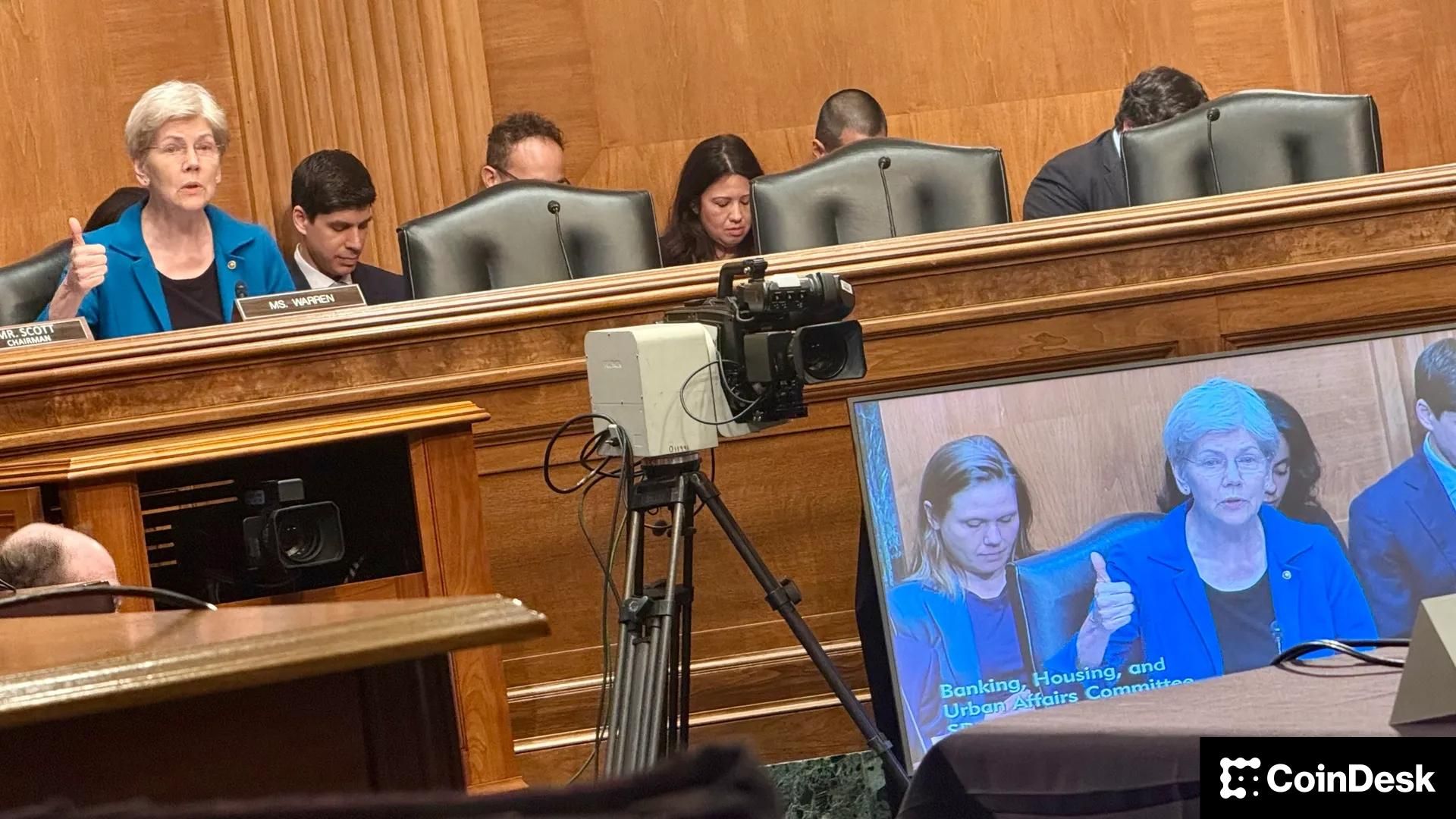
More than 40 Democrats in the U.S. Senate and House of Representatives sent a letter to a federal regulator and to ethics officials to ask them to warn government officials that insider trading in derivatives is illegal and that bets they make on prediction markets firms like Polymarket and Kalshi qualify under that category.
The ranking Democrats on the Senate Banking Committee (Senator Elizabeth Warren) and Senate Agriculture Committee (Cory Booker) joined dozens of their colleagues in asking Chairman Mike Selig, chief of the Commodity Futures Trading Commission, and the leaders of the U.S. Office of Government Ethics to “circulate executive branch-wide guidance explaining that federal employees must refrain from insider trading in prediction markets.”
The request was spurred by the eruption of suspicious reports that recent event contracts on government or military action seemed to draw bets from people with special insight into the outcomes, leading many to believe that government officials — or people associated with them — may have made such bets. U.S. derivatives laws state the illegality of government officials making trades based on non-public information they got on the job. Since the CFTC has declared the contracts at such firms are regulated derivatives, the ban should hold true, the lawmakers contended.
“We ask that the CFTC and OGE issue guidance reminding federal employees of their existing legal obligation to refrain from using their insider governmental information to profit from prediction market trades,” said the letter, dated March 29
The instances of potential insider trading outlined in the letter included contracts on military actions in Venezuela and Iran, the length of a speech from President Donald Trump’s press secretary and the firing of former Department of Homeland Security Secretary Kristi Noem.
The letter was also signed by the top Democrats on the House Agriculture Committee, Representative Angie Craig, and the House Financial Services Committee, Representative Maxine Waters. The agriculture panels in both chambers are the ones that directly oversee the CFTC.
Selig’s CFTC has been working on a new set of policies to govern the prediction markets. Those businesses are closely related to the crypto industry, which is a current focus of many of the lawmakers on this letter, who are also working on the Digital Asset Market Clarity Act that’s been hung up in the Senate.
Also on Monday, news emerged that federal prosecutors reportedly spoke to prediction market firms about whether certain instances could trigger insider-trading cases.

The DeFi curator says existing deposits and smart contracts are unaffected, but asked users to avoid the platform until the front-end is restored.

ETH gained 2% as BitMine extended its buying streak.
NBA roundup: Shai Gilgeous-Alexander-led Thunder top Pistons in OT
Columbia Small Cap Value And Inflection Fund Q4 2025 Commentary

Starmer’s Chagos deal dealt major blow as judge rules Chagossians have right to live on disputed islands


-
 NewsBeat6 days ago
Manchester United reach agreement with Casemiro over contract clause amid transfer speculation
-

 News Videos5 days ago
Parliament publishes latest register of MPs’ financial interests
-

 NewsBeat4 days ago
The Story hosts event on Durham’s historic registers
-
 Tech5 days ago
Intercom’s new post-trained Fin Apex 1.0 beats GPT-5.4 and Claude Sonnet 4.6 at customer service resolutions
-

 Business5 days ago
Instagram, YouTube Found Responsible for Teen’s Mental Health Struggle in Historic Ruling
-
 NewsBeat6 days ago
Tesco is selling new Cadbury Dairy Milk bar and people can’t wait to try it
-

 Fashion7 days ago
Does It Matter What You Wear When You’re Laid Off and Looking?
-

 NewsBeat7 days ago
Entrepreneurs Forum survey reveals optimism in North East
-
 Entertainment3 days ago
Lana Del Rey Celebrates Her Husband’s 51st Birthday In New Post
-

 Sports4 days ago
Sweet Sixteen Game Thread: Tide vs Michigan
-

 Business7 days ago
More women enter wealth management, but few in advisory roles: study
-

 Crypto World7 days ago
BTC gives up $70,000 level as markets mull higher interest rates
-

 Sports6 days ago
Fantasy Baseball Week 1 Preview: Top sleeper hitters for both five- and 12-day period led by Munetaka Murakami
-
Entertainment20 hours ago
Fans slam 'heartbreaking' Barbie Dream Fest convention debacle with 'cardboard cutout' experience
-

 Tech7 days ago
Embedding compliance in AI adoption
-

 Tech6 days ago
US FCC Prohibits Approval Of New Foreign-Made Consumer Routers
-

 Fashion7 days ago
Coffee Break: Korean Skincare Set
-
Sports6 days ago
One Team in Particular Is Monitoring Kirk Cousins
-

 Fashion7 days ago
Althea Mink: Patrice Taylor’s Atlanta Couture Brand Built on Legacy, Resilience, and Architectural Glamour
-
 Fashion6 days ago
How to Style Spring Like WeWoreWhat: Easy Outfit Ideas for 2026
You must be logged in to post a comment Login