
Crypto World
Fuller wins Greene’s old seat



The election results in Georgia’s 14th Congressional District on Tuesday confirmed Republican Clay Fuller as the winner of the special election runoff — but the margin told a different story: Fuller defeated Democrat Shawn Harris by roughly 12 points in a district Donald Trump carried by 37 points just 18 months ago.
Summary
- The Associated Press called the race after 8 p.m. with approximately 56% for Fuller and 44% for Harris; the race only fills the remainder of Greene’s term through January 2027, meaning both candidates have already qualified for the May 19 primary to compete for a full two-year term
- Fuller, a district attorney and Air National Guard lieutenant colonel, received Trump’s endorsement in February and ran a campaign of total alignment with the president on every issue including the Iran war; Harris, a retired Army brigadier general and cattle farmer, raised $6.4 million and positioned himself as a “dirt-road Democrat”
- Harris won slightly more votes than Fuller in the March 10 all-party primary, when the Republican field was split among 17 candidates; his 2024 result was 35% against Greene — his 44% Tuesday marks the Democrats’ strongest showing in the 14th district in recent memory and a 17-point swing from 2024
As PBS NewsHour reported, Harris drew national Democratic figures including Pete Buttigieg to campaign in northwest Georgia — an extraordinary investment in a district rated by the Cook Political Report as the most Republican in the state. Greene resigned in January after falling out with Trump over his handling of the Epstein files. Fuller backed Trump on every issue at a March 23 debate, and the president made his support visible with a February rally at Coosa Steel in Rome, Georgia.
The headline result is a Republican hold. Fuller will be sworn in and will vote with the GOP caucus, giving Speaker Mike Johnson a slightly larger margin — important for a speaker who can only afford to lose one vote on party-line legislation. But the underlying math is what the Democratic Party has seized on. Charlie Bailey, chair of the Georgia Democratic Party, called Harris’s performance “a jaw-dropping overperformance in Marjorie Taylor Greene’s backyard.” Whereas Greene won by nearly 29 points in 2024, Fuller won by approximately 12. That is a 17-point shift in a single cycle, in a district where Republicans outperform the national average by 19 points. Harris told supporters after the result: “Tonight, we start campaigning for November.”
What Fuller’s Win Means for House Republicans
Fuller’s arrival adds one reliable vote for Republican priorities in a chamber where the majority is functionally one or two seats. The full-term primary on May 19 means Fuller faces a new Republican field immediately — six other Republicans have qualified — before he must campaign against Harris again in November. That compressed timeline makes the 14th district a repeated test of whether Trump’s direct endorsement continues to be the decisive factor it was Tuesday.
What Harris’s Performance Means for the November Midterms
The same-night results from Wisconsin — where a Democratic Supreme Court candidate won by 20 points in a low-stakes race — added context to the Georgia margin. Both results, in different states and different contests, pointed to Democratic enthusiasm running ahead of what 2024 results would predict. As crypto.news has reported, the composition of the House after November directly determines the pace of US crypto regulatory implementation, including GENIUS Act rulemaking deadlines. As crypto.news has noted, a narrower Republican House majority — or a Democratic flip — would materially change the landscape for stablecoin legislation, market structure bills, and the broader digital asset regulatory agenda that has advanced through the current Congress.



The US Senate voted unanimously to bar all senators and their staff from placing bets on political prediction market platforms including Polymarket and Kalshi, with the resolution authored by Republican Senator Bernie Moreno, who also set the end-of-May CLARITY Act deadline.
Summary
- The Senate ban passed unanimously, a notable bipartisan outcome that reflects shared concern about insider information advantages after prediction market trading by political figures drew increasing scrutiny in 2025.
- Kalshi said it already proactively blocks members of Congress from using its platform and described the Senate vote as “a great step to increase trust in markets,” suggesting the resolution formalises existing industry practice.
- Senator Moreno’s authorship of the ban is significant in context: he is the same senator who warned most publicly that the CLARITY Act must pass by the end of May or be shelved until 2030.
The Senate voted unanimously to pass the Senate ban on prediction market trading by senators and staff on May 1. As crypto.news reported, the CFTC has been simultaneously locked in a legal battle with New York, Illinois, Arizona, and Connecticut over prediction market jurisdiction, making the unanimous Senate vote a significant political signal that Congress views political event trading as categorically different from the commercial prediction market activity the CFTC has been defending. Kalshi confirmed its response to the resolution by saying it already proactively blocks members of Congress, adding: “This is a great step to increase trust in markets.” Crypto Integrated reported that the resolution bars senators and their staff from betting on political events on platforms like Polymarket and Kalshi, which had become a visible flashpoint after prediction market data was shown to move in ways that correlated with legislative outcomes before their public announcement.
As crypto.news documented, the CFTC has been arguing that prediction markets on political events are legitimate financial instruments subject to its jurisdiction rather than gambling. As crypto.news tracked, the resolution emerged from a broader political conversation about whether legislators with access to non-public information have an unfair advantage on prediction platforms, a dynamic that undermines the credibility of markets designed to aggregate distributed knowledge.
Tether posted $1.04 billion in Q1 2026 net profit and a record Tether profit reserve buffer of $8.23 billion, backed primarily by $141 billion in US Treasuries, in a quarterly attestation published May 1 by accounting firm BDO, its most detailed financial disclosure to date.
Summary
- Tether profit of $1.04 billion in Q1 represents a buffer growth of 47% year on year, with excess reserves rising from $5.6 billion in Q1 2025 to $8.23 billion in Q1 2026 and total assets reaching $191.77 billion against $183.54 billion in liabilities.
- The $141 billion US Treasuries position makes Tether the 17th-largest holder of American government debt globally, with $20 billion in physical gold and $7 billion in Bitcoin rounding out the reserve base.
- A formal KPMG audit commenced in March 2026, moving Tether toward a full Big Four audit for the first time after years of relying on attestations from BDO and a previous Italian accounting firm.
Tether profit and reserve figures were published in the company’s Q1 2026 attestation on May 1. The official Tether press release confirmed that the attestation was prepared by BDO and showed a net profit of approximately $1.04 billion and an excess reserve buffer of $8.23 billion. “Our responsibility is to make sure USDT works without compromise,” said CEO Paolo Ardoino. “That means building a system that behaves the same way in any market condition, not just when things are stable.” The Q1 profit is driven by Tether’s $141 billion Treasury position, which at prevailing Treasury bill rates above 4% would generate approximately $4 billion in annualised interest income.
The timing of the disclosure is politically consequential. As crypto.news reported, US banks have been pushing hard to slow the GENIUS Act rulemaking, partly because the act would require stablecoin issuers to hold fully verified dollar reserves. Tether has long resisted full disclosure and has never produced a Big Four audit. The KPMG engagement announced in March 2026 is the clearest sign yet that the company is preparing for the formal audit standard the GENIUS Act is expected to require. As crypto.news documented, the FDIC proposed GENIUS Act rules requiring stablecoin issuers to maintain 1:1 reserves backed by cash or highly liquid instruments, a standard Tether’s reserve breakdown technically meets but which requires full audit verification rather than an attestation to satisfy regulators and institutional counterparties. As crypto.news tracked, the GENIUS Act was signed into law in July 2025 and is scheduled to take full effect no later than January 18, 2027, giving Tether a finite runway to produce verified compliance.


President Trump signed an executive order on April 30 directing the Labor Department to allow Trump retirement account access to cryptocurrency, private equity, and other alternative assets inside US 401(k) plans, targeting the roughly $12.5 trillion defined-contribution market that has been largely closed to digital assets under existing ERISA guidance.
Summary
- The executive order instructs the Labor Department to revisit Employee Retirement Income Security Act guidance and coordinate with the Treasury Department.
- Trump retirement policy also launches TrumpIRA.gov next year, a site where workers without employer-sponsored plans can access retirement accounts and receive up to $1,000 annually in matching federal contributions.
- Labor Secretary Lori Chavez-DeRemer praised the order, saying “the federal government should not be making retirement investment decisions for hardworking Americans, including decisions regarding alternative assets.”
President Trump signed the Trump retirement executive order on April 30, directing the Labor Department and other federal agencies to revise ERISA guidance to allow retirement plan fiduciaries to offer cryptocurrency and alternative assets as investment options. CNBC reported that the order follows the Labor Department’s earlier rescission of Biden-era guidance that had discouraged crypto in retirement plans, calling the prior stance one that “placed a thumb on the scale.” Trump said at a White House press conference: “Low-income Americans will be eligible to receive up to $1,000 per year in matching funds deposited directly into their accounts.” Chavez-DeRemer said in a statement that “the federal government should not be making retirement investment decisions for hardworking Americans, including decisions regarding alternative assets.”
The policy targets the $12.5 trillion sitting in defined-contribution plans. Under the order, the Labor Department must revisit how plan fiduciaries are permitted to evaluate alternative assets, the SEC must assess enabling access for 401(k) investors, and the agencies must coordinate before issuing new guidance. As crypto.news reported, Coinbase’s research head David Duong had projected in January that stablecoins and tokenised products would become central to institutional crypto adoption in 2026, with regulatory clarity from the GENIUS Act the key enabling condition. A retirement account opening for crypto products directly extends that narrative by targeting retail savers rather than institutional allocators. As crypto.news documented, the Trump administration has been systematically building its institutional position in Bitcoin throughout 2026, with the strategic reserve, classified Pentagon programs, and now the retirement account access order representing three separate policy vectors aimed at embedding Bitcoin and crypto into the mainstream US financial system. As crypto.news tracked, ERISA rules could still create implementation delays, as employers will need time to revise plan options and fiduciaries will need guidance on how to meet their duty of prudence when offering volatile alternative assets alongside traditional stock and bond funds.
Pi Network (PI) has set a May 15 deadline for mainnet nodes to complete the Protocol 23 upgrade. The release will introduce full smart contract support to the Stellar-based blockchain for the first time.
The mandate arrived just hours after the Pi Core Team confirmed Protocol 22 had successfully gone live. The back-to-back rollout aims to expand scalability and prepare the chain for Web3 features.
Why the Protocol 23 Upgrade Matters for Pi Network
Protocol 23 marks the biggest technical step for Pi Network since its open mainnet launched in February 2025. Built on Stellar Core 23, the release lays the groundwork for native smart contracts and decentralized applications on the chain.
Node operators that fail to update by the deadline will be cut from the mainnet. They will lose the ability to validate transactions or earn participation rewards.
Protocol 22, completed earlier this week, moved the network onto Stellar Core 22. Nodes were required to install version 0.5.4 software.
The Pi Core Team warned that Protocol 23 takes longer than past releases.
“The Pi Mainnet is upgrading to Protocol 23 – Deadline: May 15. All Mainnet nodes are required to complete this step before the deadline… This upgrade takes longer to complete, so plan accordingly,” they said in the post.
What It Means for Price
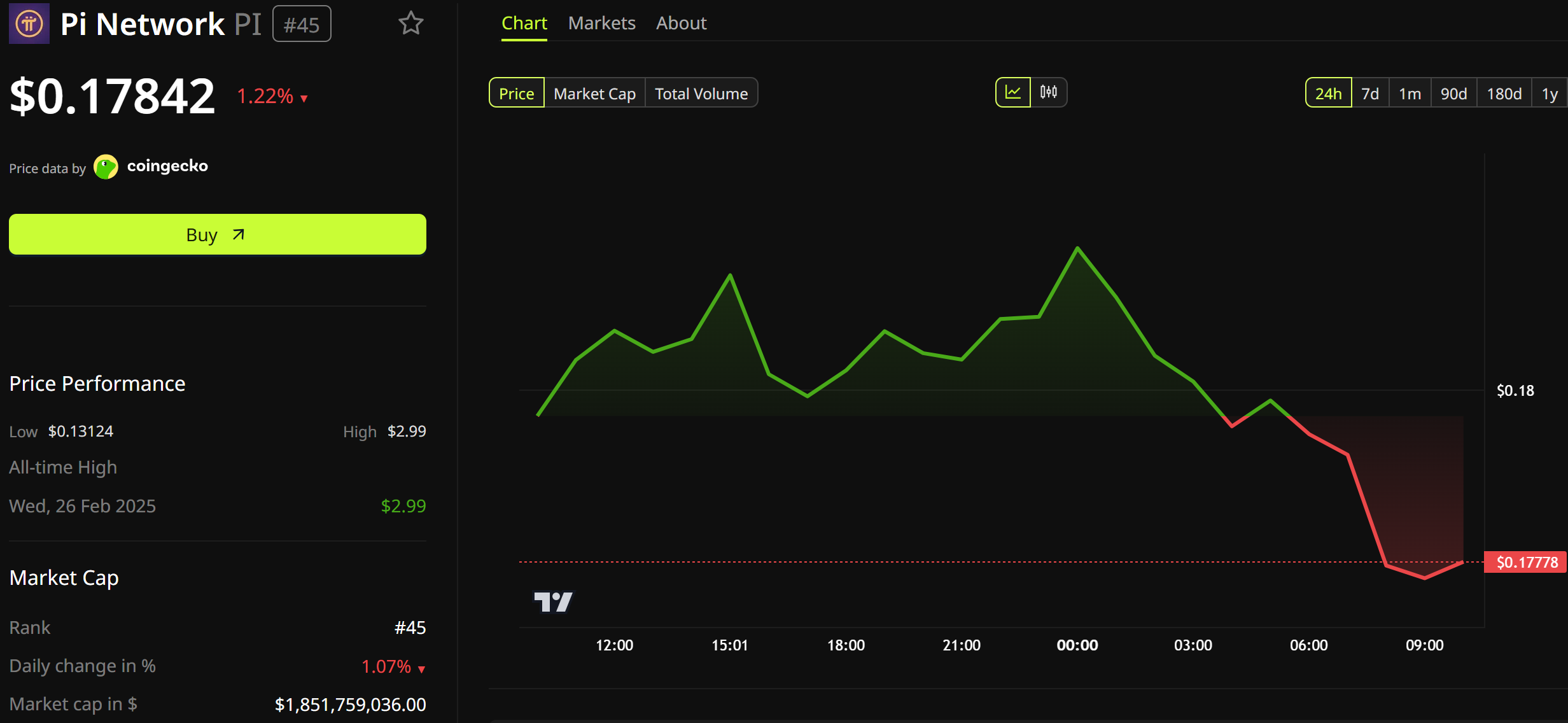
PI traded near $0.178 on Saturday, down 1.22% on the day. The token climbed close to 9% into the Protocol 22 deadline. Profit takers then stepped in, per CoinGecko data.
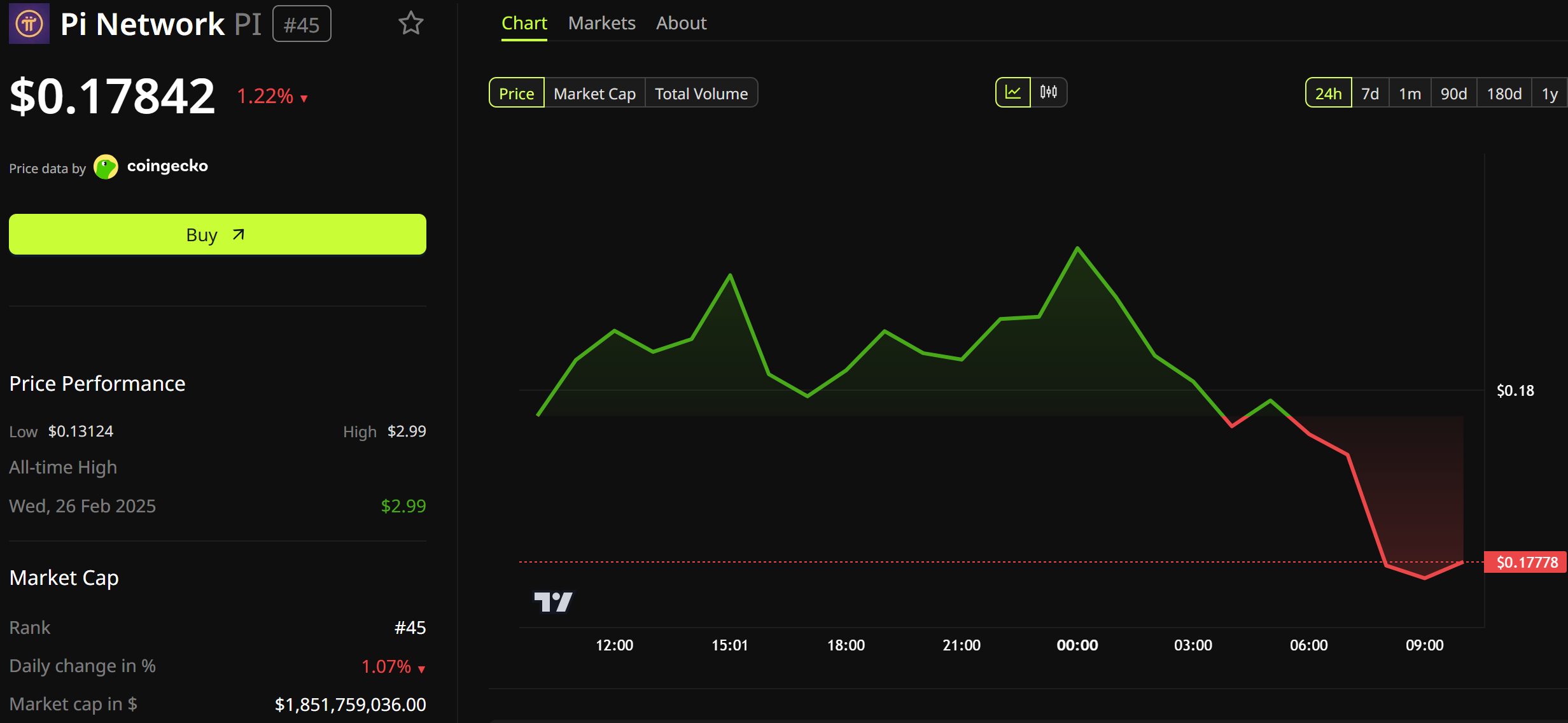
Historically, Pi upgrades have produced short bursts of volatility followed by sharp pullbacks, often coinciding with token unlocks.
Whether the May 15 deadline triggers a sustained move depends on broader sentiment and supply pressure. The upgrade alone has rarely been enough to drive durable price action.
Pi Network is condensing two major infrastructure jumps into a single month. Traders are watching whether the May 15 deadline sparks another short-term spike. The alternative is the familiar pattern of post-upgrade fades, blocking a durable recovery.
The post Pi Network Sets Deadline for Protocol Upgrade as Price Slips Near All-Time Low appeared first on BeInCrypto.

Pump.fun just rewrote its playbook, and the meme coin market is paying attention to which are the best meme coins for May 2026.
The Solana-based launchpad unveiled Charity Coins within the last 48 hours, routing creator fees directly to verified nonprofits, while simultaneously torching 36% of PUMP’s circulating supply.
PUMP jumped roughly 6% to $0.0019 on the news, but then retraced. The broader meme sector added approximately 5% in total market cap week-over-week, with Dogecoin leading the charge, up more than 10% and adding over $1 billion in market value.
What happens next depends entirely on whether Pump.fun’s structural moves translate into sustained buying pressure, or whether this is another launchpad headline that fades by Friday.
Top Charity Coins by creator fee donation amount so far
pic.twitter.com/8AUHxvje2r
— Pump.fun (@Pumpfun) April 30, 2026
The Charity Coins feature was built through an exclusive partnership with donate.gg, which handles compliant crypto transfers to more than 10,000 charities, eliminating the admin risk, tax complications, and vampire attack exposure that plagued previous on-chain donation models.
Creators simply select a charity in Pump.fun’s fee settings. Simultaneously, the platform executed a $370 million PUMP token burn and locked in a 1-year automated buyback-and-burn program: 50% of all net revenue from bonding curves, PumpSwap, and Terminal will permanently remove PUMP from circulation via smart contract.
The remaining revenue funds platform expansion.
Community response has been notably positive, framing Charity Coins as “a much-needed solution for charities and traders alike.” The setup across the meme sector is consolidating, but one or two catalysts could break it wide open.
Can PUMP Price Break Out Above $0.0020 This Week?
PUMP is sitting right at $0.0018, and that level is doing double duty as both resistance and a recent high, making it a key decision point.
The burn narrative is strong on paper, especially with real revenue behind it, but the price reaction shows the market is not fully convinced yet. A quick spike followed by a stall usually means buyers need more confirmation.
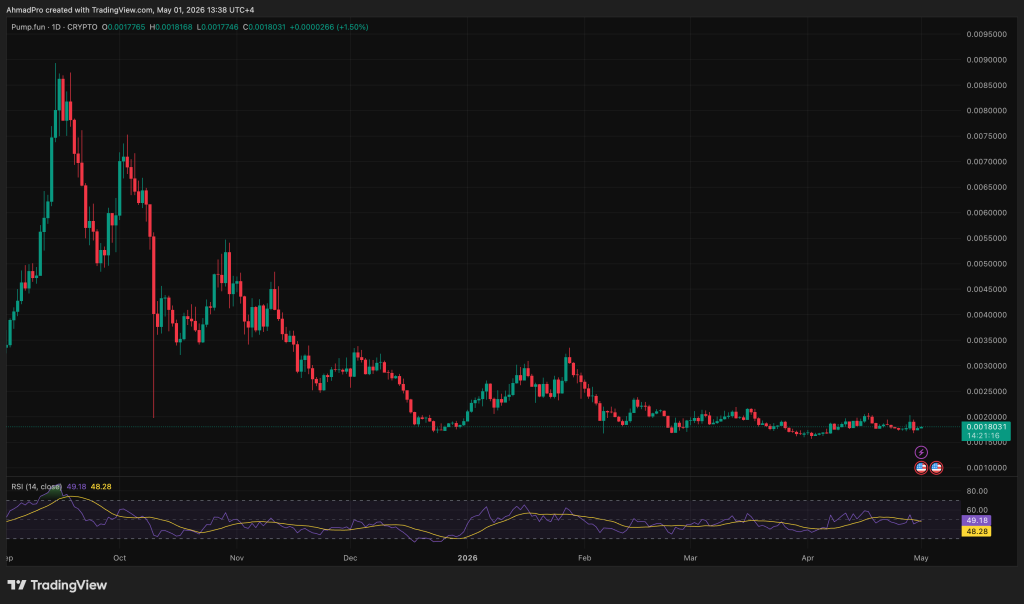
If PUMP can break and hold above $0.0019, that is where momentum builds, opening a move toward $0.0025 and higher.
More likely, it consolidates in the short term between $0.0016 and $0.0019 while the market processes the burn and waits for proof of sustained buybacks.
The risk is losing $0.0015, because that would signal demand is not keeping up and could drag PUMP price lower despite the supply reduction.
So the setup is structurally bullish, but still needs confirmation, because burns only matter if consistent demand follows.
Here is Why The Best Meme Coin To Get Could Be Maxi Doge
Maxi Doge is getting traction in that space. It leans heavily into meme culture and high-risk trading energy, but it also builds engagement through staking, competitions, and a treasury aimed at supporting liquidity and growth.
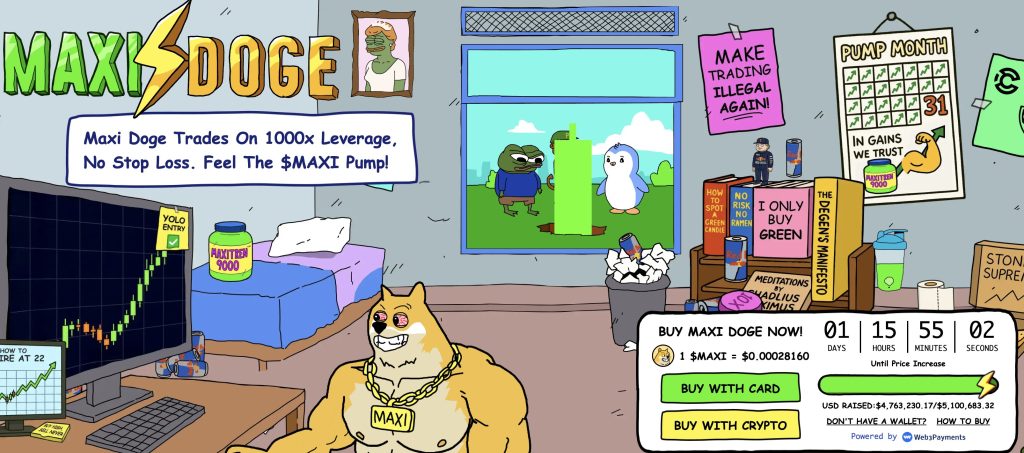
The presale is around $0.0002816 with roughly $4.76M raised, showing steady inflows as it approaches the next milestone.
The appeal is clear; it is early, narrative-driven, and positioned where traders look when they want asymmetric setups.
But it is still a presale, and that comes with real risks. Liquidity is not guaranteed; execution matters, and price can move aggressively in either direction after launch.
So the shift is simple, PUMP already had its move, while something like Maxi Doge is where traders look when they want earlier positioning, with higher potential but higher risk.
The post Pump.Fun Launch Charity Coins Redemption Arc: What Is The Best Meme Coin to Buy? appeared first on Cryptonews.


Defense Secretary Pete Hegseth told the House Armed Services Committee on April 30 that the Pentagon is running classified Bitcoin programs on two operational tracks — enabling the technology and countering it — and that those efforts provide the United States leverage against China “in a lot of different scenarios.”
Summary
- Hegseth said “I am a long enthusiast of Bitcoin and crypto potential,” making him the first sitting Defense Secretary to confirm classified government Bitcoin programs in a national security context before Congress.
- INDOPACOM Commander Admiral Samuel Paparo separately confirmed earlier in April that US Indo-Pacific Command operates a live Bitcoin node and tests the protocol in operational settings, describing Bitcoin as able to impose real-world costs in cybersecurity environments.
- Russia controls approximately 16% of global Bitcoin mining hashrate, making it the second-largest mining hub globally, while China accounts for roughly 12% through underground and offshore operations despite its 2021 domestic ban.
Pete Hegseth made the remarks at an April 30 House Armed Services Committee hearing in response to questions from Texas Republican Rep. Lance Gooden about whether the US is securing a strategic advantage in Bitcoin. Crypto Integrated confirmed the confirmation of the classified effort, with Hegseth telling lawmakers: “I am a long enthusiast of Bitcoin and crypto potential. A lot of the things we are doing, enabling it or defeating it, are classified efforts that are ongoing inside our department, which do provide us a lot of leverage in a lot of different scenarios.” Gooden said Bitcoin has “evolved from a fringe asset into a matter of national security,” pointing to Iran’s Bitcoin toll at the Strait of Hormuz, North Korean ransomware activity, and China’s accumulation strategies.
As crypto.news reported, INDOPACOM Admiral Paparo confirmed in earlier Senate testimony that US Indo-Pacific Command is running a live Bitcoin node and conducting operational protocol tests, describing Bitcoin as a computer science system built on cryptography and proof-of-work with potential to impose costs in cybersecurity environments. The joint Hegseth-Paparo picture represents the most explicit public framing of Bitcoin as a defense instrument that the US government has produced. As crypto.news documented, Trump signed an executive order establishing a US strategic Bitcoin reserve earlier in 2026, seeded with approximately 200,000 government-held coins from forfeitures. As crypto.news tracked, Iran’s decision to demand Bitcoin for Strait of Hormuz transit directly linked the cryptocurrency to the active military conflict that has been Hegseth’s primary operational theatre throughout 2026. DL News noted that Russia now accounts for approximately 16% of global Bitcoin mining hashrate, while China retains roughly 12% through offshore operations, positioning Bitcoin mining geography as a direct strategic variable in the US-China competition Hegseth described.

Pi Network confirmed its sponsorship of Consensus 2026 in Miami on May 5 to 7, with co-founders Dr. Chengdiao Fan and Nicolas Kokkalis each scheduled to speak at the Convergence Stage, marking the project’s most prominent mainstream industry appearance as its Protocol 23 smart contract launch on May 11 approaches.
Summary
- Dr. Chengdiao Fan speaks May 6 on aligning Web3, AI, and blockchain for utility, while Nicolas Kokkalis joins a May 7 panel titled “How to Prove You’re Human in an AI World (Without Doxing Yourself)” at the Convergence Stage.
- Pi Network has completed over 526 million human KYC validation tasks across 18 million verified users, positioning it as one of the largest proof-of-personhood networks in crypto and a direct competitor to Worldcoin and Humanity Protocol.
- The Consensus sponsorship and founder appearances land six days before Protocol 23 activates on May 11, the most significant upgrade in Pi’s history, introducing full smart contract functionality.
Pi Network confirmed it is an official sponsor of Consensus 2026 in Miami. As crypto.news reported, both co-founders are scheduled as named speakers at the Convergence Stage, with Dr. Fan addressing the intersection of verified identity and the AI era and Dr. Kokkalis joining a panel directly on the problem of distinguishing real humans from AI-generated accounts online. The event runs May 5 to 7 and is expected to draw over 20,000 attendees including institutional investors, developers, and government representatives.
The Pi Core Team posted on April 28: “526 million human KYC validation tasks have already been completed on Pi. By over 1 million verified people. AI is advancing quickly. But the hardest part of building reliable systems is still deeply human.” Fan’s Consensus session positions that verified infrastructure as a direct answer to one of the most pressing AI governance challenges of 2026.
As crypto.news documented, Protocol 22.1 deadline passed April 27, disconnecting non-compliant nodes and laying the technical foundation for Protocol 23. The May 11 Protocol 23 date creates a concentrated sequence: the largest public stage appearance in Pi’s history on May 6 and 7, followed four days later by the upgrade that transforms Pi from a mobile mining network into a programmable blockchain. As crypto.news tracked, PI climbed more than 5% on April 29 as traders positioned ahead of the Consensus week, with the token’s pattern of conference-driven price moves followed by selloffs a recurring dynamic the Protocol 23 substance will need to break.

Riot Platforms posted $167.2 million in revenue for the first quarter of 2026, with its newly launched data center segment contributing $33.2 million. The results show a company pivoting from a pure-play Bitcoin miner to a revenue-generating data center operator, even as its core mining business faced pressure from weaker Bitcoin prices and a stronger global hash rate. Riot produced 1,473 BTC in the quarter, while mining costs rose slightly as the company navigates a shifting profitability landscape.
The quarterly results also highlighted a strategic partnership expansion with AMD, which doubled its contracted capacity to 50 megawatts during Q1, after initially contracting 25 megawatts. Riot described this as validating its ability to execute at institutional scale as it scales its data center footprint.
Key takeaways
- Total Q1 2026 revenue: $167.2 million, with data center revenue contributing $33.2 million and engineering services at $22.2 million.
- Bitcoin mining revenue declined to $111.9 million from $142.9 million a year earlier, amid lower BTC prices and a 24% increase in the global network hash rate; Riot produced 1,473 BTC in the quarter.
- Mining costs rose, with the all-in cost to mine one BTC at $44,629 versus $43,808 in Q1 2025.
- Riot’s Bitcoin treasury remained sizable, ending the quarter with 15,679 BTC valued at roughly $1.1 billion (based on March 31 pricing). The company held $282.5 million in cash, with $76.9 million restricted, and said it sold more than $250 million of Bitcoin during the quarter.
- Riot’s stock moved higher on the earnings release, closing up 7.3% intraday; the company continues to diversify revenue through its data-center strategy as the mining environment evolves.
Riot redefines its growth engine around data centers
In its quarterly update, Riot outlined a clear shift in its business mix. While Bitcoin mining remains a core activity, the company emphasized that its data center unit is now a substantive revenue stream. Riot’s engineering services, which cover infrastructure support and related deployments, grew to $22.2 million, underscoring a diversification away from solely mining hardware economics toward a more balanced services and capacity play.
CEO Jason Les framed Q1 2026 as an inflection point: “The first quarter of 2026 marks a definitive inflection point for Riot, as we officially transitioned into an active, revenue-generating data center operator.” The announcement also confirmed AMD’s expansion of contracted capacity to 50 megawatts, following an option exercise that increased the installed capacity Riot can utilize to service its AI, HPC, and general data-center workloads.
The emphasis on data centers aligns Riot with a broader industry trend where Bitcoin miners are repurposing assets to host AI infrastructure. Industry peers have moved along similar lines, with Core Scientific converting part of its Pecos site into an AI-focused data center campus and other players such as MARA Holdings broadening exposure to AI infrastructure firms like Exaion.
Bitcoin mining metrics and treasury posture in flux
Riot ended the quarter holding 15,679 BTC, valued at roughly $1.1 billion based on March 31 pricing, with 5,802 coins pledged as collateral. The company also noted it held $282.5 million in cash, of which $76.9 million was restricted. Riot disclosed it had sold more than $250 million of Bitcoin during the quarter, a move that reflects ongoing treasury management in a volatile macro environment.
From a mining perspective, Riot’s quarterly Bitcoin production of 1,473 coins came as the company faced a tougher margin backdrop. The all-in cost to mine a single BTC rose to $44,629, up from $43,808 a year earlier, while the price environment and a roughly 24% uptick in global hash rate applied ongoing pressure on mining revenue, which totaled $111.9 million for the quarter.
Riot’s broader cash and liquidity stance remained solid, with a substantial Bitcoin treasury and a sizable cash position. The company’s data center push is intended to diversify revenue streams and offer more stable, contract-backed income as the economics of dedicated Bitcoin mining continue to vary with price cycles and network competition.
Industry backdrop: miners gravitate toward AI-scale infrastructure
The Riot narrative sits within a wider industry drift as miners explore AI-centric data centers to stabilize revenue across cycles. Reports have highlighted efforts by Core Scientific to convert significant mining capacity into AI-ready capacity, including a plan to repurpose hundreds of megawatts of power and thousands of acres for AI workloads. Other miners, including MARA Holdings and Hive, have pursued similar transitions, acquiring stakes in AI infrastructure ventures or expanding data-center footprints to host AI workloads. This trend underscores a broader market reallocation of physical assets from purely crypto-mining to AI-enabled computing.
Related reporting in industry coverage emphasizes how these shifts could redefine the sector’s profitability envelope and bias eventual investor returns toward durable, contract-backed data-center revenue rather than naked mining margins. For further context, readers may review Cointelegraph’s reporting on the CoreWeave infrastructure shift and related industry moves.
Investors will want to watch how Riot’s data center initiatives perform in the coming quarters, especially as AMD capacity comes online and as Bitcoin price dynamics and network hash rate continue to influence mining economics. The convergence of mining and AI data centers could set the tone for how crypto miners monetize physical assets in an era of tighter margins and rising equipment costs.
For additional context on the broader market dynamics driving these shifts, see Riot Platforms’ quarterly results and strategic highlights from their official release and coverage of peer activity in the sector.
Looking ahead, readers should monitor Riot’s ability to scale its data-center operations, the utilization of the 50 MW AMD capacity, and how treasury management strategies evolve alongside crypto price trends and network activity.
Senators Thom Tillis and Angela Alsobrooks have finalized a bipartisan compromise on stablecoin rewards, removing the biggest obstacle to the Digital Asset Market Clarity Act and clearing a path toward Senate Banking Committee markup.
The new text blocks payouts that function like bank deposit interest while preserving rewards tied to genuine platform activity. Coinbase executives publicly endorsed the outcome and urged the broader bill to advance.
Compromise Bans Bank-Like Stablecoin Yield
The agreement prohibits rewards offered “in a manner that is economically or functionally equivalent to the payment of interest or yield on an interest-bearing bank deposit.”
Stablecoin balances can still factor into reward calculations if they pass that equivalence test.
The bill instructs federal regulators to draft a stablecoin disclosure framework and publish a list of permissible reward activities.
That guidance will determine how exchanges and brokers structure customer incentives, building on the Senate fight over what counts as activity-based participation.
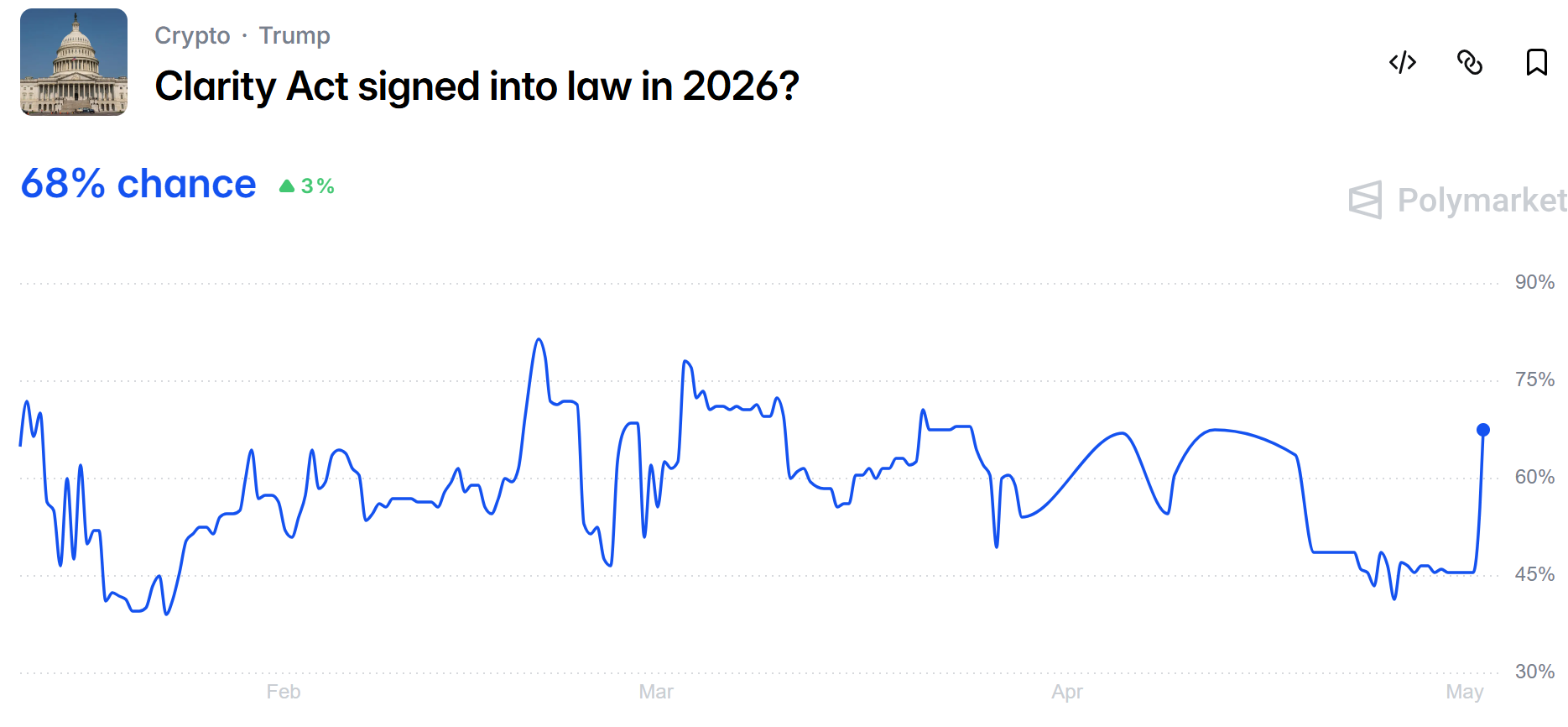
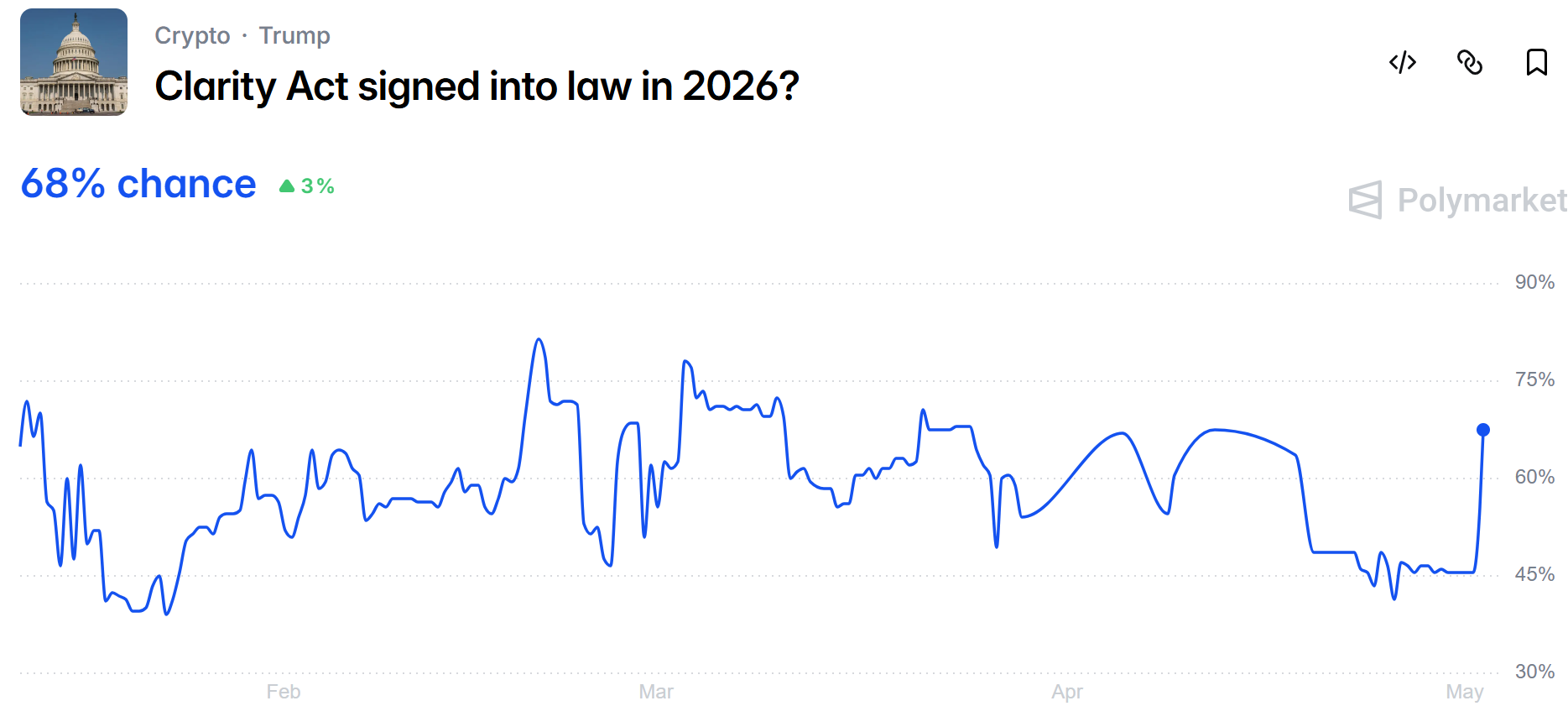
Senate Banking is expected to schedule a markup as early as the week of May 11. Polymarket traders price the probability of the CLARITY Act being signed into law this year at 68%, after a missed deadline and concentrated bank-lobby pressure on Tillis.
Coinbase Calls Outcome a Win for Crypto
Coinbase Chief Legal Officer Paul Grewal said the months of meetings produced text that should not derail the broader bill, arguing public debate had overstated the actual risks.
“This outcome preserves activity-based rewards tied to real participation on crypto platforms and networks, which is what the bank lobby said they wanted,” he wrote in a post.
Faryar Shirzad, Coinbase’s chief policy officer, separately credited progress on token classification, DeFi safe harbors, and tokenization in the broader deal.
With yield resolved, attention shifts to jurisdictional clarity between the SEC and CFTC, staking protections, and capital formation rules.
These provisions holding through floor consideration will shape the timeline into summer.
The post Coinbase Backs CLARITY Act Compromise Banning Passive Stablecoin Yield appeared first on BeInCrypto.


The US Securities and Exchange Commission has scheduled a CLARITY Act roundtable for May, bringing together SEC and CFTC officials with crypto industry representatives to debate digital asset market structure jurisdiction, one of the final regulatory steps before the Senate Banking Committee’s expected markup the week of May 11.
Summary
- The SEC roundtable on the CLARITY Act is set for May 2026 and will address the central jurisdictional question of whether specific digital assets are regulated by the SEC or the CFTC under the proposed market structure framework.
- Senator Tim Scott confirmed he has now secured Tillis and additional Republican votes for the markup, but Senator John Kennedy continues to withhold support, leaving the goal of 13 of 13 Republican votes unmet.
- Senator Thom Tillis separately raised a new hurdle: law enforcement groups oppose a DeFi provision in the bill that would protect developers from liability for users’ illicit activities on their platforms, adding a fresh unresolved issue to the calendar.
The SEC roundtable follows the agency’s March 17 joint taxonomy with the CFTC, which named 16 digital assets as commodities and provided the framework that the CLARITY Act would convert into permanent federal statute. CoinGape reported that the SEC plans to host the roundtable in May 2026, with the Senate Banking Committee simultaneously targeting a markup the week of May 11 — the first legislative action on the bill since the Senate returned from recess. As crypto.news reported, the April markup deadline was missed because the Warsh confirmation consumed the Banking Committee’s calendar, compressing the remaining window to eight working days before the May 21 Memorial Day recess.
As crypto.news documented, Senator Lummis warned at the Bitcoin 2026 Conference that the current political alignment enabling the CLARITY Act is rare and fragile, and that failure before May 21 pushes the next opportunity to 2030. That framing makes the SEC roundtable not just an informational exercise but a public signal from the regulator that it is ready to implement the legislation, which is one of the conditions Senate Republicans cite for moving forward. Senator Scott said on Fox Business that he now has Tillis and additional Republicans on board and is targeting 13 of 13 Republican votes, though Senator Kennedy remains a holdout. As crypto.news tracked, Tillis added a new hurdle on May 1 by saying lawmakers must address law enforcement concerns about the DeFi developer liability provision before a markup can proceed — a complication that was not publicly flagged until this week.

The best kids’ theatre shows in London to book now

Twilio: Voice AI Leader Now Too Expensive – Breakout Rally Overdone

Senate bans senators from prediction market bets

Manchester United reach agreement with Casemiro over contract clause amid transfer speculation

US brings back mandatory military draft registration

Steven Gerrard disagrees with Gary Neville over ‘shock’ Chelsea and Arsenal claim | Football

Samay-Ranveer’s UNEXPECTED Reunion, Rahul Roy Faces Financial ISSUES, Ranveer QUITS Pralay? | Top 10

The Investing & Crypto Expert: “We Only Have 6 Years Until Everything Changes!” – Raoul Pal

Financial Management Marathon 2026 | Section C 15 Marks Must Do Questions & Answers | B.Com 6th Sem
-

 Tech5 days ago
Register Renaming | Hackaday
-
 Crypto World7 days ago
Hyperliquid $HYPE Rally Builds Momentum as AI Sector Enters Prove-It Phase
-

 Politics5 days ago
Drax board avoid their own AGM, accused of greenwashing & environmental racism
-

 Tech5 days ago
Why Blue Badges Disappeared From Toyota Hybrids
-

 Tech5 days ago
Images of Samsung’s rumored smart glasses have leaked
-
 Sports6 days ago
IPL 2026: Ruturaj Gaikwad registers slowest fifty of the season, enters all-time unwanted list | Cricket News
-
 Tech18 hours ago
Trump’s 25% EU auto tariff breaches Turnberry Agreement that also covers semiconductors and digital trade
-

 NewsBeat6 days ago
LK Bennett closes all stores after entering administration
-

 Fashion4 days ago
Kylie Jenner’s KHY Enters a New Era with ‘Born in LA’
-
 Entertainment7 days ago
Mariah Carey Slams Deposition Claims In Brother’s Lawsuit
-

 Business4 days ago
Most Commercial Energy Audits Miss the Real Losses
-

 Crypto World4 days ago
CFTC’s AI will review U.S. crypto registration applications, chairman tells CoinDesk
-

 Business5 days ago
(VIDEO) Charlize Theron Climbs Times Square Billboard to Promote New Netflix Thriller ‘Apex’
-

 Business3 days ago
Barclay Brothers Avoid Bankruptcy: HSBC Drops High Court Petitions After IVA Deal
-
 Sports18 hours ago
Paul Scholes issues Marcus Rashford reality check as agreement emerges over Man United star
-

 Tech6 days ago
Microsoft to roll out Entra passkeys on Windows in late April
-

 Tech6 days ago
OpenAI’s Sam Altman apologizes for not reporting ChatGPT account of Tumbler Ridge suspect to police
-
 Business3 days ago
Tesla Officially Registers Elon Musk’s Stock: What Investors Need to Know
-

 Tech6 days ago
OpenAI CEO apologizes to Tumbler Ridge community
-

 Tech4 days ago
Get Ready for More Brain-Scanning Consumer Gadgets
You must be logged in to post a comment Login