

Crypto World
Germany’s 2027 Budget Targets the Crypto Tax Exemption

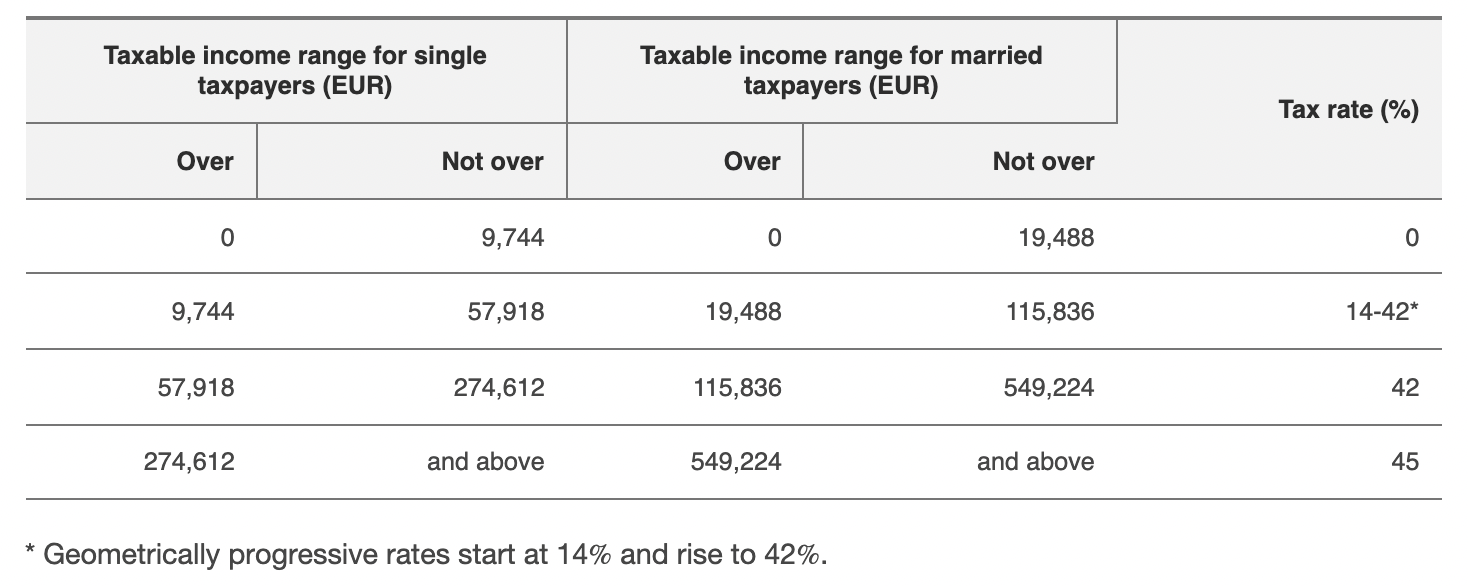
The German government has placed crypto taxation on its savings list for the 2027 federal budget. The move could end the crypto tax exemption that investors currently earn after a one-year holding period.
The Federal Ministry of Finance detailed the plan in its monthly report. An adjustment of cryptocurrency taxation for 2027 appears among the consolidation measures agreed by the governing coalition.
Crypto Taxes Join Germany’s Budget Consolidation List
The cabinet approved the key figures for the 2027 budget. The Ministry set a spending frame of €543.3 billion, with net borrowing of €110.8 billion.
Consolidation carries much of the load. The coalition agreed on structural savings of roughly €4 billion per year, alongside a package of revenue measures. That package includes new plastic and sugar levies, higher alcohol and tobacco taxes, a tougher fight against tax crime, and a change to how cryptocurrencies are taxed.

Why the Crypto Tax Exemption Is Under Pressure
German law treats crypto as a private asset under Section 23 of the Income Tax Act. Gains become tax-free once coins have been held for more than 12 months. Sales within a year face personal income tax rates of up to 45%, while total annual gains below €1,000 stay untaxed.
Calls to scrap the rule have grown louder since late 2025.
“in future, capital gains should be taxed uniformly regardless of the holding period,” The SPD’s Seeheimer Kreis demanded in a position paper, cited by the Bitcoin Bundesverband.
Industry voices pushed back hard. Bundesverband board member Matthias Steger warned that taxing every disposal would turn each everyday payment into a tax event and push firms to friendlier countries such as Portugal.
Parliament has resisted similar moves before. In May 2026, the Bundestag Finance Committee rejected a comparable bid by the Green Party to abolish the exemption.
A Signal for the Rest of the EU
Germany is not the only EU country with such a rule, but it is close. Portugal is the sole other member state that fully exempts crypto gains after a one-year holding period. Austria, by contrast, scrapped its holding period in 2022 and now taxes new holdings at a flat 27.5%.
The stakes reach beyond national borders. As the EU’s largest economy and its leader in MiCA license approvals, Germany often sets the template that other member states follow.
That influence matters now more than ever. Because one in four European investors has invested in cryptocurrency, and new tax reporting rules under CARF and DAC8 are already in force. If Germany exits the exemption, it could reshape the debate in Brussels and beyond.
Whether the rule survives should become clearer once the Bundestag takes over the draft. A regime that made Germany one of Europe’s friendliest places to hold Bitcoin (BTC) long term now depends on how much revenue lawmakers believe they can raise from it.
The post Germany’s 2027 Budget Targets the Crypto Tax Exemption appeared first on BeInCrypto.



Key takeaways
- Bitcoin is trading below $64,000 after rallying more than 6% last week.
- U.S. spot Bitcoin ETFs recorded $526.64 million in net outflows, marking an eighth consecutive week of withdrawals.
- Renewed geopolitical concerns surrounding the Strait of Hormuz are limiting demand for risk assets.
Bitcoin (BTC) is trading slightly lower on Monday after climbing more than 6% last week, with buyers struggling to push the cryptocurrency above the key $64,000 resistance level.
Although last week’s rebound improved short-term sentiment, persistent institutional selling and renewed geopolitical uncertainty continue to cap upside momentum.
For now, Bitcoin remains caught between improving technical conditions and cautious macroeconomic sentiment.
Spot Bitcoin ETFs extend historic outflow streak
Institutional demand for Bitcoin remains under pressure. According to CoinGlass data, U.S. spot Bitcoin exchange-traded funds (ETFs) recorded $526.64 million in net outflows during the previous week.
The withdrawals mark the eighth consecutive week of net redemptions, extending the longest outflow streak since spot Bitcoin ETFs began trading.
If institutional investors continue reducing exposure this week, Bitcoin could face renewed selling pressure despite last week’s rebound.
Global geopolitical uncertainty remains another obstacle for Bitcoin. The cryptocurrency rallied last week after easing tensions between the United States and Iran briefly improved investor sentiment.
However, optimism has faded as concerns surrounding the Strait of Hormuz resurfaced.
Reports that Iran may introduce new service fees for vessels passing through the strategically important shipping route have renewed uncertainty, while the United States and several Gulf allies continue opposing such measures.
The lingering geopolitical risks have kept investors cautious, limiting demand for higher-risk assets such as cryptocurrencies.
Bitcoin price outlook: Bulls defend long-term support
From a technical perspective, Bitcoin continues to trade above a critical long-term support level.
Last week’s rally allowed BTC to reclaim the 200-week Simple Moving Average (SMA) at $62,867 after bouncing from an ascending trendline that has supported prices since early 2023.
Holding above this level keeps the broader recovery intact. If buyers maintain control above the 200-week SMA, Bitcoin could extend its advance toward the 78.6% Fibonacci retracement level at $65,520, measured from the August 2024 low to the October 2025 record high.
On the daily timeframe, Bitcoin continues to trade below its major moving averages. The cryptocurrency remains beneath the 50-day EMA at $65,744, the 100-day EMA at $69,455, and the 200-day EMA at $75,471, leaving the broader trend tilted to the downside despite recent gains.
Immediate resistance is located around $64,004. A successful breakout above that level could allow Bitcoin to challenge the 50-day EMA, with additional upside targets at the 100-day EMA, the 200-day EMA, and eventually the major resistance area near $84,410.
While momentum has improved, the daily RSI near 49 and a positive MACD crossover indicate buyers are gradually regaining strength, although confirmation of a sustained uptrend is still lacking.
The 200-week SMA at $62,867 remains the most important support level in the near term.
A sustained move below that area would weaken the current recovery and expose the long-term ascending trendline near $58,000. If selling pressure intensifies further, Bitcoin could revisit its yearly low around $57,800.
Bitcoin has recovered significantly from recent lows, but the rally is encountering resistance just below $64,000.

Persistent ETF outflows, geopolitical uncertainty, and overhead technical resistance continue to limit upside potential.
As long as BTC holds above its 200-week SMA, the recovery remains intact. However, buyers will need to reclaim $64,004 and then $65,744 to build momentum for a broader move higher.


SpaceX (SPCX) is set to officially join Wall Street’s tech-heavy Nasdaq 100 index on July 7 after raising $75 billion in the largest iPO of all time in mid-June.
The stock immediately surged to as high as $225 in the days after the June 12 IPO,only to deflate to $162 last week. Now the big question is what happens after it is included in the Nasdaq index.
The answer is not necessarily bullish when viewed through the lens of history.
Past data suggests that index inclusion, often viewed as a positive milestone, is not a reliable bullish signal, particularly after a stock has already experienced a significant rally.
That’s because, in many cases, investor optimism is already elevated and peaked, passive fund buying has largely been anticipated, and expectations are priced in.
The two most notable recent additions to the Nasdaq 100 highlight this pattern.
Palantir (PLTR), the software giant, joined the index on Dec. 23, 2024, but the stock peaked around the time of its inclusion and declined roughly 25% in the weeks that followed.


Non-qualified investors will be allowed to trade under testing requirements and limits capped at roughly 300,000 rubles (around $3,800) per year, while market participants will have until July 1, 2027, to enter the official registry.
Russia’s complicated crypto history
The developments follow years of resistance from the Bank of Russia. In January 2022, the central bank called for a broad ban on crypto trading, mining, and usage, citing risks to financial stability and monetary policy.
Russia’s government was less hostile. The Finance Ministry pushed a regulatory bill over the central bank’s objections, keeping crypto payments prohibited while creating a path for licensed trading.
After the country’s invasion of Ukraine started, President Vladimir Putin signed a law in 2022 tightening the ban on using cryptocurrencies to pay for goods and services in Russia.
Cross-border use became the exception after sanctions cut Russian banks off from parts of the global payments system. Russia legalized crypto mining and an experimental cross-border settlement regime in 2024, giving the central bank authority to approve selected firms for foreign trade transactions.
The Moscow Exchange (MOEX) has also been moving into the cryptocurrency space, with the rollout of cash-settled futures contracts tied to various coins.
VTB and T-Bank, two other major financial institutions, are working on digital depositories after the law takes effect, RBC’s report added.


Bitmine Immersion (BMNR), the largest Ethereum (ETH) treasury company, stepped up its buying pace last week, purchasing 42,197 ether (ETH) as chairman Thomas Lee pointed to improving prospects for U.S. crypto legislation as a catalyst for the asset.
The latest purchase, worth roughly $74 million based on ether’s current price of around $1,750, lifted the company’s holdings to 5.74 million ETH, according to a Monday update. The stash is now worth about $10 billion and represents 4.8% of Ethereum’s circulating supply, inching closer to the firm’s goal of cornering 5% of the asset’s supply.
The company also held 206 bitcoin, $527 million in cash and marketable securities, plus stakes in Beast Industries and Eightco Holdings, bringing its total crypto, cash and investment holdings to $11.1 billion.
The acquisition marks an increase from the prior week’s purchase of 27,084 ETH, though it remains below the six-figure weekly buying pace BitMine maintained earlier this year.
Bitmine buys as Strategy sells
Bitmine’s continued buying contrasts with a shift at Strategy (MSTR), the largest digital asset treasury and corporate bitcoin holder, which sold about $216 million worth of BTC to raise cash. The sale marked a rare reduction in Strategy’s bitcoin holdings and underscored the funding pressures the company faces amid the crypto market downturn and increased dividend obligations.
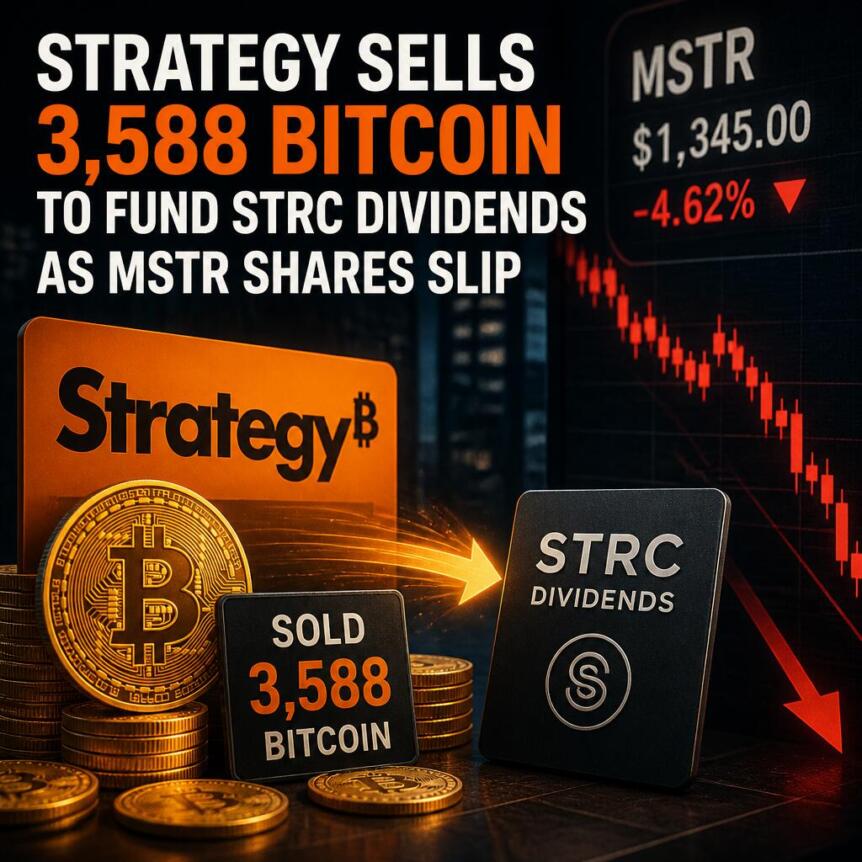
Strategy sold 3,588 Bitcoin worth $216 million during the past week to support dividend payments on its STRC preferred securities. The transaction marked the company’s largest Bitcoin sale so far this year and reduced its total holdings to 843,775 BTC. Meanwhile, MSTR shares declined in premarket trading, while Bitcoin also traded lower after the disclosure.
Strategy Uses Bitcoin Sale to Support STRC Dividend Payments
Strategy completed two Bitcoin sales between June 29 and July 5 and raised about $216 million. The company disclosed the transactions through a filing with the U.S. Securities and Exchange Commission. Therefore, the move confirmed its decision to use Bitcoin reserves for funding preferred stock obligations.
The company sold 1,363 BTC between June 29 and June 30 for approximately $80.8 million. It then sold another 2,225 BTC between July 1 and July 5 for about $135.2 million. Together, both transactions represented the company’s largest Bitcoin sale to date.
Following the transactions, Strategy held 843,775 Bitcoin and maintained approximately $2.55 billion in U.S. dollar reserves. The filing stated that the proceeds would fund dividend payments linked to its digital credit securities. As a result, the company continued executing the financing framework introduced through its preferred securities programme.
STRC and MSTR Shares React After Latest Company Update
The latest filing also showed that Strategy did not issue common shares through its at-the-market programme during the reporting period. In addition, the company did not repurchase any common stock under its authorised buyback programmes. Therefore, the update focused attention on the Bitcoin sale instead of equity activity.
STRC shares remained below their $100 par value despite recent market activity. However, the preferred security recorded modest gains after Binance introduced continuous 24-hour trading support. The stock traded near $88 in premarket trading and posted a gain of less than 1%.
Meanwhile, MSTR shares moved lower after the disclosure reached the market. Premarket data showed the stock trading around $98 with a decline approaching 2%. At the same time, Bitcoin traded near $61,700 and lost more than 2% during the session.
Bitcoin Holdings Record Quarterly Loss Despite Long-Term Treasury Strategy
Strategy also reported an $8.32 billion loss on its Bitcoin holdings for the quarter ended June 30. The filing separated the total into an unrealised loss of about $8.31 billion and a realised loss of approximately $900 million. Consequently, accounting adjustments reflected weaker Bitcoin valuations during the reporting period.
The company reported a carrying value of approximately $49.67 billion for its Bitcoin holdings as of June 30. However, the filing stated that the cost basis exceeded the fair value of the digital assets. Therefore, Strategy expects to recognise a valuation allowance against deferred tax benefits connected to the unrealised losses.
Strategy has continued building one of the world’s largest corporate Bitcoin treasuries despite recent market volatility. Earlier this year, the company indicated that it could sell portions of its Bitcoin holdings to support obligations tied to its digital credit products. The latest transaction followed that framework and demonstrated how Strategy plans to balance treasury management with commitments to preferred security holders.


Decentralized finance protocol Summer.fi has paused its Lazy Summer vaults after an exploit that drained about $6 million from the Ethereum-based yield platform, according to the project and several blockchain security firms.
Lazy Summer is an automated yield platform that routes deposits across lending markets such as Aave and Morpho in search of higher returns while handling rebalancing on behalf of users.
The incident was first flagged by blockchain security firm Blockaid, with PeckShield and CertiK also reporting suspicious activity. Summer.fi later confirmed it was investigating the attack and said protocol guardians had paused affected vaults to prevent additional losses.
Early analyses suggest the attacker leveraged a large flash loan attack, reportedly sourced through Morpho, to manipulate the accounting logic of Lazy Summer’s automated USDC vaults.
DeFi security researcher Bhari noted that the exploit took advantage of a flaw in the code to inflate total assets, which they were then allowed to redeem for a net profit. The stolen funds were apparently converted to DAI on Curve before being transferred to the attacker’s wallet.
The protocol had $22 million in total value locked before the exploit, according to DeFiLlama data. The protocol’s SUMR token lost more than 18% of its value after the exploit was uncovered.


Russia’s largest lender, Sberbank, has confirmed plans to launch a cryptocurrency wallet and digital asset depository within months after the country’s proposed digital asset law takes effect on Sept. 1.
Summary
- Sberbank plans to launch a crypto wallet and digital asset depository after Russia’s new digital asset law takes effect on Sept. 1.
- Russia’s largest bank is also considering providing access to foreign crypto exchanges, subject to the final regulatory framework.
- The planned launch comes as Russia prepares to roll out both its digital asset rules and the digital ruble from Sept. 1.
According to local news outlet RBC, Sberbank expects to integrate a crypto wallet into its mobile applications shortly after the legislation comes into force, while its digital asset depository infrastructure is scheduled to be ready by Dec. 1.
First Deputy Chairman Kirill Tsarev said the rollout timeline depends on the publication of the final version of the law and the availability of updated Sberbank mobile apps through online app stores. He added that Android users could receive the updated interface earlier than iPhone users.
Sberbank, which holds about one-third of Russia’s banking assets and is majority-owned by the Russian government, is also considering becoming an intermediary that would allow Russians to trade on foreign cryptocurrency exchanges under a proposed amendment to the legislation. Tsarev said the decision will depend on domestic regulatory requirements and the rules governing foreign exchanges.
Sberbank has steadily expanded its digital asset activities in recent years. In December, Deputy Chairman Anatoly Popov said the bank was exploring crypto-backed lending and was working with regulators on the legal and technical infrastructure needed to support such products.
He also disclosed that Sberbank had completed more than 160 digital asset issuances on its proprietary platform since the beginning of 2025 while continuing to evaluate decentralized finance applications and asset tokenization within Russia’s regulated financial system.
Banking sector prepares for new crypto rules
The planned launch follows comments from First Deputy Chairman of the Central Bank Vladimir Chistyukhin, who has said the new digital asset framework is expected to take effect on Sept. 1. Under the legislation, companies offering cryptocurrency custody, trading services and cross-border settlements would be required to operate under a licensing regime.
Separately, Russia’s second-largest lender, VTB, and T-Bank Group have also announced plans to establish digital asset depositories after the law comes into force, RBC reported. Moscow Exchange has likewise said it intends to begin crypto-related operations before the end of 2026.
The preparations come as Russia also moves ahead with its digital ruble rollout. Earlier this month, Bank of Russia Governor Elvira Nabiullina said the central bank remains on track to launch the central bank digital currency on Sept. 1, with major banks expected to begin offering digital ruble services through their applications from the same date.


The firm is not interested in buying rivals, Domingo said. “They’re not going to bring anything to me that I don’t have in terms of tech.”
Instead, Domingo said Securitize is looking at businesses that complement its institutional tokenization offering, aiming to build a broader “one-stop shop” for customers.
“We’re going to look at what things are adjacent to tokenization that either our existing customers from the tokenization space,” he said.
Tokenization of public markets
The broader tokenization market has grown rapidly as banks, asset managers and exchanges embrace blockchain-based financial infrastructure. Tokenized real-world assets now exceed $32 billion, RWA.xyz data shows. Citi has projected tokenized securities could grow into a $5.5 trillion market by 2030, while Boston Consulting Group and Ripple estimate the sector could reach $18.9 trillion by 2033.
Much of that momentum is now shifting beyond tokenized Treasury funds toward public markets.
Earlier this year, NYSE parent Intercontinental Exchange (ICE) partnered with Securitize to develop infrastructure for tokenized equities. The company also teamed up with transfer agents Computershare and Continental to enable public companies to issue shares directly on blockchain rails.
Elsewhere, Nasdaq has publicly explored tokenization initiatives, while DTCC, the backbone of U.S. securities settlement overseeing more than $114 trillion in assets, recently unveiled plans to introduce a tokenized securities platform targeting an October launch.


Key takeaways
- Bitcoin, Ethereum, and XRP started the week holding onto last week’s strong gains.
- Ethereum is approaching its 50-day EMA near $1,806, a key hurdle for extending its recovery.
Bitcoin (BTC), Ethereum (ETH) and Ripple (XRP) began the week on a constructive note after surging over 6%, 13% and 10% in the previous week.
BTC holds steady below $63,000, ETH approaches a key technical resistance at $1,800, while XRP has broken above the upper boundary of a falling channel, strengthening the bullish outlook.
Ethereum tests key resistance near the 50-Day EMA
Ethereum (ETH) is also extending last week’s recovery after climbing more than 13%, trading near $1,784 on Monday.
The cryptocurrency is approaching a significant technical hurdle at the 50-day EMA around $1,806, which currently serves as the first major resistance level.
Despite the recent rebound, Ethereum remains below the 100-day EMA near $1,972 and the 200-day EMA around $2,241, leaving the broader trend tilted to the downside.
However, technical momentum continues to strengthen. The RSI is hovering near 57, indicating healthy buying momentum, while the MACD remains firmly positive, suggesting bulls continue to regain control after recent weakness.
If ETH successfully breaks above the 50-day EMA, attention would shift toward resistance near $1,972, followed by the psychologically important $2,000 level and the 200-day EMA around $2,242.
On the downside, the strongest support remains near $1,385, where buyers previously stepped in to defend the market.
Bitcoin, Ethereum, and XRP have all entered the new week with improving momentum following strong performances last week.

While each asset faces important technical resistance, bullish indicators continue to strengthen.
A decisive move above $64,000 for Bitcoin, $1,806 for Ethereum, and continued strength above XRP’s channel breakout could reinforce the recovery across the broader cryptocurrency market and set the stage for further gains.
The world’s largest corporate holder of bitcoin made the headlines earlier today by making its second BTC sale in just a few months.
Aside from the immediate effect on the asset’s price, it also coincided with a popular technical tool turning bearish and suggesting another move lower soon.
The Significance of This Sale
It was just over a month ago when Strategy announced its first sale in four years. It was a rather small one of just 32 BTC – nothing compared to its 840,000+ fortune. However, the first week after the news went live painted a very clear picture: the company’s moves, being the largest corporate holder of the biggest cryptocurrency, could have a major impact on the perception and performance of the underlying asset.
BTC nosedived from $74,000 at the time of the sale’s announcement to under $60,000 in less than a week. Yes, there were other factors at the time, but Strategy’s move was widely considered arguably the most significant. And that was a sale of just 32 BTC.
Earlier today, the firm’s co-founder and former CEO, Michael Saylor, highlighted another bitcoin distribution. This time, it was substantially bigger as Strategy disposed of 3,588 BTC worth $216 million. It said the sale was to fund dividends on its Digital Credit securities, which was aligned with the previous week’s announcement about the creation of the Digital Credit Capital Framework.
There was an immediate impact on bitcoin’s price as the asset, which had already retraced from $64,000 to $63,000, dipped below $61,500, where it found some support. However, there could be more pain ahead, at least according to one popular metric.
TD Sequential Says Sell
Ali Martinez was quick to flag that the TD Sequential, a metric used to determine the underlying asset’s market exhaustion in either direction, had flashed a sell signal amid Strategy’s announcement.
He believes the combination of these two factors is not something the “bulls want to see,” as they open the door for a more profound correction. Given the June developments and subsequent crash for BTC after the 32-unit sale, it’s safe to assume there’s merit to his prediction.
Bitcoin just flashed a TD Sequential sell signal as Michael Saylor’s Strategy sold $215 million worth of $BTC.
Not exactly the combination bulls want to see. https://t.co/9h2D9lgvuj pic.twitter.com/UcQoiem7d3
— Ali Charts (@alicharts) July 6, 2026
The post Sell Signal Flashes: What Strategy’s Massive $216M Sale Means for Bitcoin’s Price appeared first on CryptoPotato.

Henderson Hospitalized With Serious Injury After Falling During Celebration

Bitcoin dips below $63K amid ETF outflows and geopolitical risks

Two New ‘Harry Potter’ Books Officially Release Next Month


-

 Fashion3 days ago
Weekend Open Thread: High Hopes
-

 Politics3 days ago
The House | “Reframing the debate from a binary discussion of winners and losers”: Yuan Yang reviews ‘We Are Not Machines’
-

 Crypto World7 days ago
Strategy authorizes up to $1.25B in Bitcoin sales under new capital plan
-

 News Videos6 days ago
How to Build INSANE Live Financial Dashboards With Claude
-

 Tech7 days ago
Anonymous researcher drops 0-day ‘exploitarium’ repo
-

 Business6 days ago
Australia treasurer says alleged access of prime minister’s bank data ’incredibly concerning’
-
 NewsBeat1 day ago
Taylor Swift and Travis Kelce wedding staffer hilariously struggles to keep her cool while checking in megastars
-
 Crypto World5 days ago
Airdrop Registration Becomes Key Focus For Remittix As RTX Launch Updates Approach
-

 Sports5 days ago
Broncos roster: OL Ben Powers (No. 74) entering final year of contract
-
 Business7 days ago
The AI boom won’t burst all at once. It will pop in ‘rolling bubbles’: Macquarie
-

 Crypto World4 days ago
Binance stock trading tops $1B in first month after launch
-

 NewsBeat6 days ago
Presenter Caroline Flack’s brother Paul Flack dies aged 55
-

 Crypto World5 days ago
Alibaba-affiliate Ant Group enters the humanoid robot market with 12 deals
-
 NewsBeat4 days ago
New exhibition reflects five decades of movement between island of Ireland and GB
-

 Crypto World3 days ago
Standard Chartered Secures MiCA License as ESMA Adds 37 New Crypto Firms
-

 Crypto World1 day ago
South Africa proposes crypto tax guidance under existing rules
-

 Tech1 day ago
Lenovo laptops are now shipping with YMTC SSDs, a sign of Chinese NAND entering the mainstream
-

 Business5 days ago
Meta Platforms Stock Jumps 7% Today as Bloomberg Reports Company Plans to Enter the Cloud Business
-

 Business3 days ago
What a 10 Percent Drop Means for Buyers, Sellers and Renters
-

 Crypto World4 days ago
Binance Re-Enters Philippines As EU MiCA Rules Restrict Access
You must be logged in to post a comment Login