
Crypto World
Germany’s AllUnity expands EURAU to Solana as euro stablecoins gain traction



AllUnity, a joint venture backed by DWS, Flow Traders and Galaxy Digital (GLXY), took its euro-backed stablecoin, EURAU, to the Solana blockchain, extending the token’s reach to a high-speed network often used for payments and trading.
EURAU, which debuted last July on Ethereum, is fully reserved and issued under a regulated e-money framework aligned with the European Union’s MiCA rules, the company said in an emailed statement. By adding Solana, AllUnity aims to offer faster settlement and lower transaction costs for euro-denominated transfers.
The setup allows businesses and developers to move euros onchain in seconds. Payments firms, for example, could send cross-border payouts to contractors in real time instead of waiting days for bank transfers, and the same mechanism can also support trading, lending or treasury management using a stable euro unit.
The move reflects growing interest in non-dollar stablecoins, especially in Europe, where firms seek digital assets that meet regulatory standards. While U.S. dollar tokens dominate the $300 billion stabelcoin market, euro-pegged tokens have seen rapid growth, doubling since the start of 2025 to almost $1 billion.
The S&P projected the market could reach 570 billion euros ($672 billion) by 2030. French Finance Minister Roland Lescure called for more euro-denominated stablecoins and urged EU banks to explore tokenized deposits.
AllUnity also highlighted that demand for regulated euro stablecoins is rising, and that expanding across multiple blockchains could help drive broader adoption in both finance and corporate payments.
“As demand for compliant euro stablecoins accelerates, Solana’s speed and scalability make it a natural environment for institutional-grade settlement and cross-border payments,” said Peter Grosskopf, CTO and COO of AllUnity.
AllUnity said several partners, including Bullish (owner of CoinDesk), Privy, Hercle and Transak, are preparing to use EURAU on Solana for payments, trading and fiat onramps.
Read more: Europe’s banks are going all in on crypto


Key Highlights
- IBM has joined forces with Dallara Group to create physics-informed AI solutions for automotive aerodynamic engineering
- Preliminary AI testing reduced simulation duration from multiple hours to approximately 10 seconds while maintaining comparable precision
- The partnership will additionally investigate quantum computing capabilities for aerodynamic modeling
- IBM shares declined 2.55% Wednesday, settling at $227.10, hovering close to its 52-week minimum
- Analyst consensus stands at Moderate Buy for IBM with a mean price objective of $298.44
IBM has announced a strategic alliance with Italian motorsport engineering firm Dallara Group to develop artificial intelligence models designed to accelerate automotive aerodynamic development. The initiative also explores potential quantum computing integration for future simulation applications.
The collaboration leverages Dallara’s extensive aerodynamic database, accumulated through decades of competitive racing experience, to educate the AI system. This real-world foundation provides the model with immediate practical relevance.
The initial findings demonstrate remarkable efficiency gains. A conventional computational fluid dynamics (CFD) analysis requiring multiple hours was executed by the AI platform in roughly 10 seconds. The precision matched traditional methodologies almost perfectly.
International Business Machines Corporation, IBM
The proof-of-concept trial concentrated on rear diffuser configurations for a Le Mans Prototype 2 race vehicle. The artificial intelligence assessed numerous geometric variations, pinpointing the identical optimal configuration as CFD analysis with comparable accuracy thresholds.
The commercial benefits are clear. Engineers can now evaluate significantly more design alternatives during preliminary development stages — prior to investing in costly, comprehensive simulations — potentially reducing expenses and accelerating project completion.
Alessandro Curioni, IBM Fellow and VP of Algorithms and Applications at IBM Research, stated: “Some of the hardest engineering challenges come down to accurately simulating the physical world.”
Dallara CEO Andrea Pontremoli described the collaboration using racing metaphors: “Racing has taught Dallara that there are two possible outcomes: you either win or are forced to learn.”
Exploring Quantum Computing Applications
In addition to artificial intelligence development, both organizations are exploring quantum and hybrid quantum-classical methodologies for integration into automotive design processes. While still experimental, these efforts aim to address computational challenges beyond current technological capabilities.
Research findings appeared in an arXiv preprint publication dated April 20, expanding upon IBM’s Gauge-Invariant Spectral Transformers (GIST) framework introduced in a March 17 preprint. The teams presented their discoveries April 26 at the International Conference on Learning Representations hosted in Rio de Janeiro.
Future development plans include broadening the AI models to encompass additional performance scenarios, such as various driving conditions and vehicle passing maneuvers.
IBM Shares Face Downward Pressure
IBM stock retreated 2.55% Wednesday, finishing at $227.10. Shares currently trade near their 52-week bottom, declining approximately 25% across the previous six-month period.
The decline followed IBM’s latest quarterly earnings disclosure, where results exceeded analyst projections for both profit and revenue, yet management maintained existing forward guidance. Investor response proved lukewarm, driving shares down 9.25% on the earnings release date.
HSBC elevated IBM to Hold from Reduce following the post-earnings pullback, establishing a $231 price objective and attributing a $35 billion valuation to its quantum computing operations. Stifel maintained its Buy recommendation with a $290 target, highlighting expansion momentum in IBM’s Red Hat and Data and AI divisions.
The Street consensus registers as Moderate Buy across 19 analyst evaluations. The average price forecast stands at $298.44, suggesting potential upside of 31% from present trading levels.
IBM recently unveiled IBM Bob, an AI development framework targeting enterprise software engineering teams, and strengthened its collaboration with MIT via the newly established MIT-IBM Computing Research Lab.

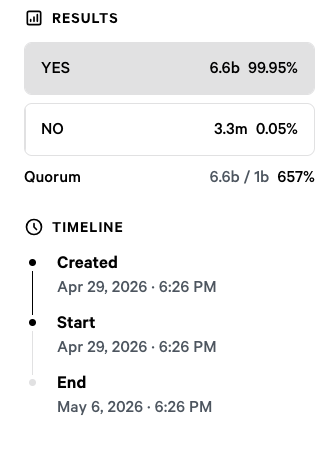
The price of World Liberty Financial’s (WLFI) token has fallen 18% after the Trump-linked firm successfully passed its token locking proposal. However, the vote, which passed in just 15 minutes, has drawn criticism with suspicious onlookers claiming that it was rigged.
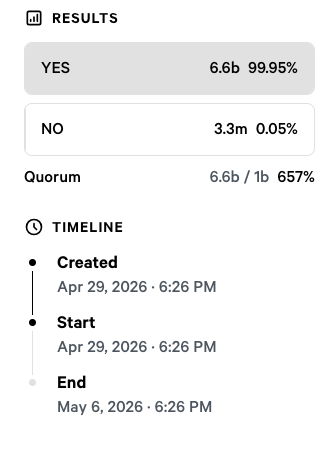
While the vote passed with 6.6 billion WLFI tokens, only 3.3 million WLFI tokens were attributed to “No” votes.
The largest No voter held 569,900 WLFI tokens. The largest four Yes voters together held 2.5 billion WLFI tokens, almost 40% of the entire vote.
Onlookers noted that the vote passed within minutes, and that by the 15-minute mark, it had achieved 1.5 billion votes and passed with a 148% Quorum, beating its May 6 deadline.
Read more: Justin Sun goes to war with World Liberty Financial
The proposal will keep 17 billion early supporter WLFI tokens from being tradeable for another two years. After this, a two-year “linear vest” will take place, where the tokens will be gradually unlocked for the market.
This means some early investors will have to wait another four years to see the entirety of their WLFI tokens unlocked.
Yes votes were also practically coerced into voting, as WLFI stated that token holders voting against “will continue to be locked indefinitely,” and restricted to just governance vote participation.
The vote wasn’t well-received
In the WLFI forum, there’s a mix of support and discontent over the two-year locking schedule and two-year vesting period.
Some outright called WLFI a “scammer.” This response was also common across X in response to WLFI’s announcement.
Indeed, some users implied that the vote wasn’t democratic and that it was already predetermined. One user mocked the project for suggesting it was “community governance.”
As crypto trader White Whale said, “Proposal: agree with our absurd plan or lose your tokens forever.”
Read more: WLFI investor offers to help Justin Sun to avoid ‘lengthy litigation’
One of WLFI’s biggest former supporters, Tron CEO Justin Sun, is now suing the firm over its blacklisting of his tokens.
Earlier this month, Sun said, “This proposal is bad for the community, but because World Liberty has frozen my early investor tokens, I cannot vote them for or against the proposal.”
The crypto billionaire wants WLFI to stop blacklisting his tokens, and he’s also worried that the project will burn his tokens.
WLFI has got even more problems
Beyond investor contempt for its token unlocking schedules, WLFI was also recently linked to a Southeast Asian criminal syndicate.
Last year, WLFI partnered with crypto firm AB, which was overseeing a blockchain-themed resort in East Timor that was being led by two sanctioned men.
The resort’s controlling shareholder Yang Jian and its General Manager Yang Yanming were sanctioned by the US last October as part of a crackdown on the billion dollar overseas crypto scam industry and the Prince Group conglomerate.
Read more: Cambodia has deported 48K foreigners since scam center crackdown began
The pair is no longer a part of AB. WLFI told The Wall Street Journal that it never held a relationship with the pair, nor did it know about the resort.
WLFI also downplayed the partnership to a “limited non-exclusive technology integration,” and claimed that its due diligence was proportional to its arrangement.
Got a tip? Send us an email securely via Protos Leaks. For more informed news and investigations, follow us on X, Bluesky, and Google News, or subscribe to our YouTube channel.
A wallet that turned a $13,760 entry into one of crypto’s most extraordinary fortunes just offloaded 800 billion Shiba Inu tokens for $4.9 million, with the total gain now past $660 million, having bought the token at an early price level and hitting his prediction right.
Shiba Inu trades at roughly $0.00000659 right now, flat to slightly negative over the past 24 hours against a market backdrop of cautious consolidation. Now, is this another trim or the beginning of a full exit from the largest non-deployer SHIB position in existence?
The real risk isn’t the $4.9 million sale. It’s what comes next from a wallet still sitting on 99.27 trillion tokens.
Discover: The best pre-launch token sales
Shiba Inu Price Prediction: Can SHIB Hold $0.0000060 After the 800 Billion Token Dump?
SHIB is grinding sideways in a tight range, unable to generate conviction in either direction. The key support level is $0.0000060, a zone that has absorbed selling pressure multiple times since late March 2026. The key resistance is $0.0000072, which capped the most recent rally attempt and aligns with previous consolidation highs.
If $0.0000060 holds, the price structure stays intact, and the whale sale gets absorbed into normal crypto liquidity without structural damage. If $0.0000060 breaks, the next meaningful support doesn’t appear until $0.0000048, and that move could open quickly given the thin order book at current levels.
The concern isn’t today’s $4.9 million offload; crypto liquidity across CEXs and DEXs can handle that. The concern is acceleration. A sustained push of exchange reserves above 83-84 trillion SHIB would signal that distribution pressure is building beyond what passive absorption can offset.
Maxi Doge: The Dog To Watch This Cycle
When capital rotates back into meme coins, momentum almost always circles back to one high-beta pick. Shiba Inu is between a rock and a hard place, having whale exiting at the moment. For those watching Shib: Why buy now? Why not be the whale?
History makes the pattern clear: Dogecoin started the trend, Shiba Inu ran with it in 2021, followed by Floki, Bonk, Dogwifhat, and Neiro. Every bull cycle eventually crowns a new Doge-inspired frontrunner.
This time around, Maxi Doge ($MAXI) is tapping into those early Dogecoin vibes with a community built around sharing early alpha, trading ideas, and competitive engagement. Participation is at its core. Weekly Maxi Ripped and Maxi Pump competitions reward top performers with leaderboard recognition, incentives, and bragging rights.
The hype is already showing in the numbers. The $MAXI presale has raised more than $4.7 million, while early backers are earning up to 65% APY through staking rewards.
For those who missed the Doge wave before, Maxi Doge could be the next chance to catch a meme coin before it enters the mainstream.
Discover: The best crypto to diversify your portfolio with
The post Shiba Inu Price Prediction: SHIB Super-Whale Offloads $4.9M appeared first on Cryptonews.

Key Takeaways
- Tesla’s first Semi truck emerged from its mass production facility on Wednesday
- The automaker aims to produce 50,000 Semi trucks annually; the combined U.S. and European market totals approximately 500,000 units
- Electric powertrains in the Semi could slash fuel expenses by 40–70% compared to diesel, with crude oil trading around $116/barrel
- TSLA shares climbed a modest 0.2% in premarket trading to $373.48 — market attention stays locked on autonomous technology and robotaxis
- The stock has declined 17% year-to-date in 2026 while posting a 28% gain over the trailing twelve months
Tesla achieved a significant manufacturing benchmark on Wednesday, yet market participants showed minimal enthusiasm.
The automaker’s first Semi truck completed its journey through the company’s mass production assembly line. This achievement represents the culmination of years of development — the electric vehicle maker originally revealed the Semi concept in 2017.
Shares registered a mere 0.2% increase during premarket sessions, touching $373.48. The tepid response reveals exactly where market focus currently lies.
The company acknowledged the development through a post on X, keeping the message brief: “First Semi off high volume line.” No fanfare, just facts.
The Semi represents Tesla’s entry into commercial freight transportation with a fully electric platform. The extended-range variant delivers up to 500 miles per charge, though actual performance varies based on charging station availability throughout the route.
The anticipated price point hovers around $290,000 — representing a premium over conventional diesel alternatives, though the gap narrows when operational expenses enter the calculation.
Rising Crude Prices Amplify Economic Benefits
This is precisely where Tesla’s value proposition strengthens. Traditional diesel operators typically allocate roughly $100,000 annually for fuel expenditures. Transitioning to electric power could reduce those costs by 40% to 70%, contingent on regional electricity rates.
With crude oil trading near $116 per barrel — substantially higher than the $70 range before tensions escalated in Iran — the economic argument for electrification becomes more compelling. Diesel costs continue climbing.
Bernstein’s Harry Martin observed that elevated oil prices “dramatically improves relative total cost of ownership and may drive incremental demand,” while acknowledging important qualifiers: charging network development and regional electricity pricing remain critical variables.
The company’s production objective stands at 50,000 Semi units annually. To put that in perspective, U.S. and European markets combined move roughly 500,000 semi-trucks each year, suggesting substantial growth potential — assuming infrastructure development keeps pace.
Manufacturing operations are geographically distributed: Cybercab production occurs in Texas, while Semi assembly takes place in Nevada.
Market Attention Remains on Autonomous Technology and Robotics
The stock’s subdued response to this production milestone speaks volumes. Tesla has transformed into an artificial intelligence and autonomy play in investors’ minds, and the Semi doesn’t advance that narrative.
Market participants are hungry for robotaxi developments and Optimus humanoid robot announcements. The company launched its autonomous taxi service in Austin during June, subsequently expanding operations to Dallas and Houston, with San Francisco trials currently underway.
Assembly line production of humanoid robots is scheduled to commence this summer. When that announcement arrives, it will likely generate substantially more market momentum than Semi-related news.
The electric vehicle manufacturer plans to expand capital expenditures beyond $20 billion this year, more than doubling previous levels. This investment covers manufacturing facilities for Semi trucks, Cybercab autonomous vehicles, Optimus robots, and battery production capacity.
Heading into Thursday’s session, TSLA has retreated 17% in 2026 and fallen approximately 7% since conflict began in Iran — underperforming the S&P 500 by roughly 11 percentage points during that period.
Despite escalating gasoline prices that typically enhance electric vehicle appeal among consumer car buyers, Tesla shares haven’t captured the expected upward momentum.
Over the past year, TSLA has still delivered a 28% return.
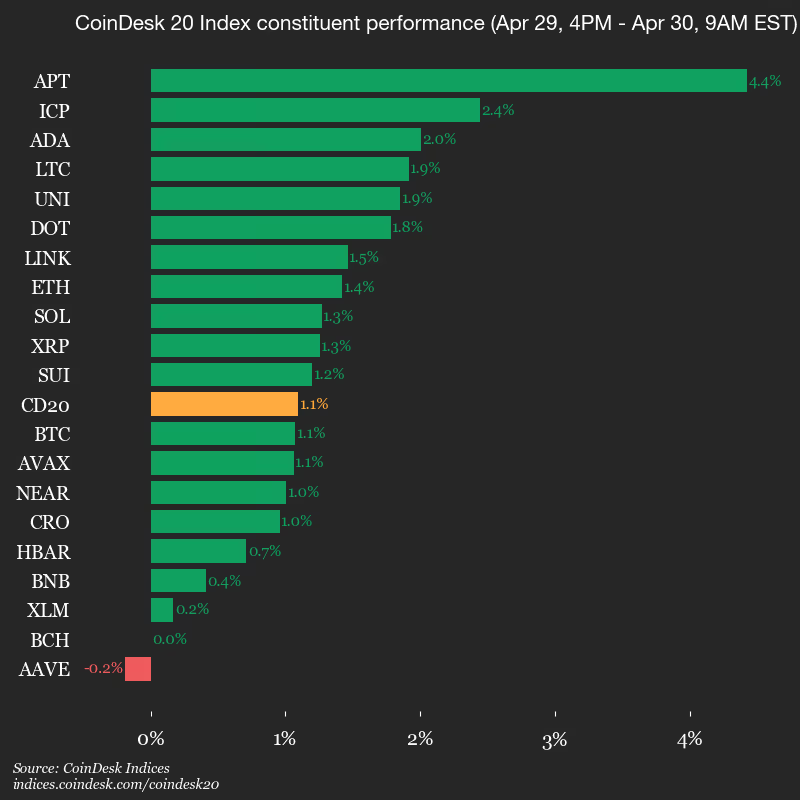
CoinDesk Indices presents its daily market update, highlighting the performance of leaders and laggards in the CoinDesk 20 Index.
The CoinDesk 20 is currently trading at 2062.95, up 1.1% (+22.36) since 4 p.m. ET on Wednesday.
Nineteen of 20 assets are trading higher.

Leaders: APT (+4.4%) and ICP (+2.4%).
Laggards: AAVE (-0.2%) and BCH (+0.0%).
The CoinDesk 20 is a broad-based index traded on multiple platforms in several regions globally.
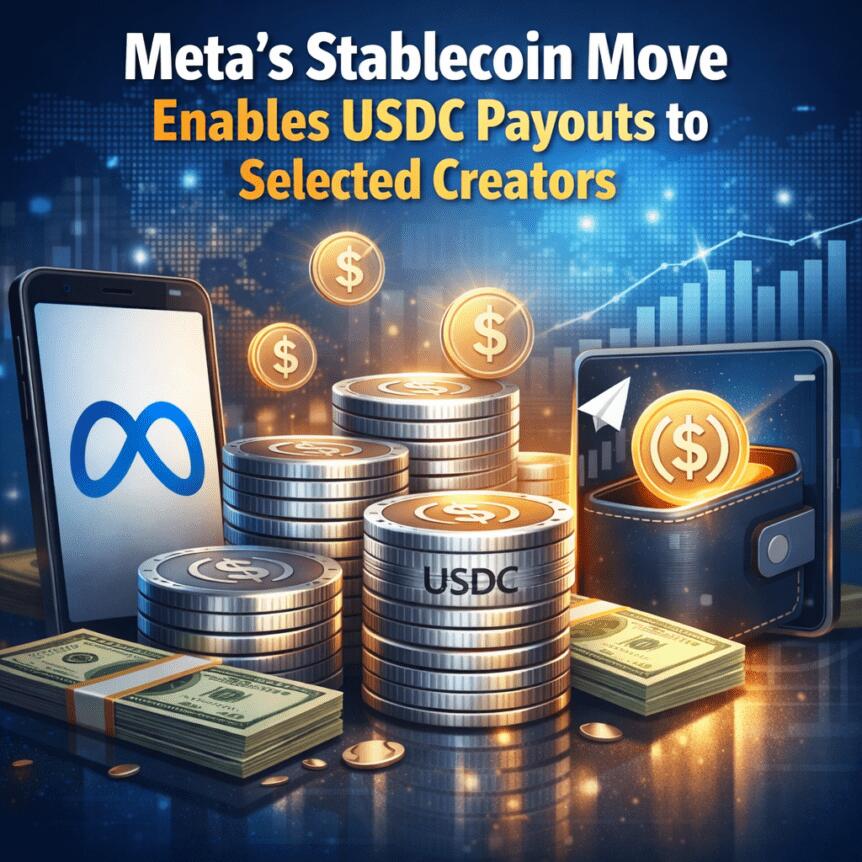
Meta is expanding its use of USD Coin (USDC) payouts to creators on Facebook and Instagram in Colombia and the Philippines, with plans to broaden the program to additional markets. Creators who opt into the service will receive payments directly into crypto wallets on the Solana and Polygon blockchains. However, Meta’s payout system does not include a built-in fiat conversion option, so recipients must use an external exchange to convert USDC into cash.
The rollout is currently limited to select creators in Colombia and the Philippines, but Polygon indicated on Wednesday that the stablecoin payout feature will extend to more jurisdictions soon. “Live in Colombia and the Philippines, with 160+ markets coming, users now get faster settlement with USDC while gaining access to dollar-denominated assets,” Polygon said. This marks a notable step in broadening on-platform monetization through crypto rails.
The payout flow requires creators to connect a third-party crypto wallet to Meta’s payout platform. Meta noted it reserves the right to pay in an alternate method in the event of technical difficulties or unforeseen circumstances. The broader aim is to give creators faster settlement and access to dollar-denominated assets through stablecoins.
Meta’s creator ecosystem spans Influencers, educators, and entertainers who monetize content across Facebook and Instagram. The company disclosed that creators earned nearly $3 billion in 2025, a roughly 35% year-over-year increase, underscoring the scale at which creators rely on platform payouts and monetization tools.
In the broader stablecoin landscape, Circle’s USDC remains the second-largest stablecoin by market capitalization, with a value exceeding $77.3 billion as of this week, according to data from DefiLlama. Tether’s USDt remains the market leader, with a substantially larger cap. The deployment of USDC for creator payouts aligns with growing institutional and consumer use cases for dollar-denominated digital assets.
Key takeaways
- Meta launches USDC-based payouts for creators in Colombia and the Philippines, with plans to expand to 160+ markets.
- Payouts flow to wallets on Solana and Polygon; no built-in fiat conversion, requiring external exchanges to cash out.
- The program is currently limited to select creators; broader access will come as Meta and its partners scale the rollout.
- Creator earnings on Meta remain substantial, with near $3 billion paid in 2025, reflecting the large monetization ecosystem on Facebook and Instagram.
- USDC’s growing role in crypto payments mirrors broader adoption of stablecoins in the creator economy and institutional use cases.
Meta’s rails, wallets, and the creator economy
Under the new framework, creators who opt into the USDC payout service can link a third-party crypto wallet to Meta’s payout platform. The arrangement emphasizes speed and dollar-denominated exposure for creators who transact across borders, a potential benefit for global audiences and sponsors. Yet the absence of an on-platform fiat conversion tool means users must navigate external exchanges or aggregator services to realize fiat value from USDC withdrawals.
Meta emphasized that it can switch payout methods if technical problems arise, a reminder that crypto payout initiatives frequently hinge on cross-border compliance, liquidity, and network reliability. The approach signals Meta’s willingness to experiment with crypto-native payment rails, even as it avoids committing to a full-fledged stablecoin wallet within its core app ecosystem.
Broader context: USDC adoption and the creator economy
Stablecoins have increasingly emerged as practical on/off ramps for digital-asset payments. Industry observers have noted that stablecoins can shorten settlement times and reduce FX frictions for cross-border transactions, a point Polygon’s statement implicitly reinforces with this rollout. In parallel, traditional financial rails remain a hurdle for many creators who earn revenues across international audiences and need to convert earnings into local currencies.
Crypto custody and infrastructure players have highlighted institutional interest in stablecoins as a bridge between crypto and fiat. Lamine Brahimi, who co-founded Taurus, noted that European banks and corporates are actively seeking infrastructure partners to enable stablecoin adoption—context that underscores why major platforms like Meta are exploring USDC as a payout instrument for creators.
Meta’s foray into stablecoin payouts is not unique in itself, but it underscores a broader shift in the creator economy toward crypto-enabled monetization. It also builds on Meta’s prior experiments in digital currencies. The company previously pursued an open-source stablecoin project, Diem, but scrapped the initiative in 2022 after regulatory pushback and privacy concerns. At the time, Meta/Mail Diem assets were sold to Silvergate Capital, marking a pivot away from a native stablecoin vision toward partner-led, fiat-anchored crypto payments.
Related coverage from the broader payments and crypto ecosystem has tracked parallel developments, including Visa’s recent stance on stablecoin settlement that leverages Polygon and Base to scale issuance and settlement rails. The evolving landscape shows how traditional payment networks are intersecting with stablecoins to streamline cross-border monetization for users and developers alike.
Circle’s USDC remains the second-largest stablecoin by market cap, trailing only USDt from Tether. As of this week, USDC sits above $77 billion in circulating supply according to DefiLlama, highlighting its growing footprint in both consumer applications and institutional workflows. The ongoing expansion of stablecoin-based payouts by Meta adds a real-world use case that could influence how creators and platforms think about liquidity and cross-border compensation in the near term.
Meta’s creator program remains dynamic, and this latest move could set a precedent for other social platforms to experiment with crypto payouts. As widespread adoption hinges on regulatory clarity and user-friendly tooling, watchers should monitor how this rollout interacts with local fintech ecosystems, KYC requirements, and currency controls in the countries where the service lands next.
Meta’s first foray into a stablecoin project, Diem, serves as a reminder of the regulatory headwinds and privacy concerns that accompany large-scale crypto ambitions from major tech platforms. The Diem episode underscored the tension between ambitious, regulated fintech products and the evolving crypto policy landscape—a backdrop that remains relevant as Meta pilots USDC payouts with creators around the world.
In sum, the current rollouts in Colombia and the Philippines mark a meaningful step in mainstreaming crypto-native payout methods for the creator economy. As Meta, Polygon, and Circle optimize the mechanics and expand the geographic scope, investors and creators alike will be watching how this experiment translates into liquidity, ease of use, and long-term viability across a rapidly changing regulatory and technological environment.
For further context on related coverage, see coverage noting payments and stablecoin integration across traditional and crypto rails in the broader market.

Key Highlights
- Performance-driven MEGA Token debuts with constrained initial circulation
- Major cryptocurrency exchanges simultaneously list MEGA Token with notable market interest
- Token distribution mechanism links supply unlocks to verified network performance metrics
- Rapid USDM stablecoin expansion drives ecosystem momentum during token introduction
- Novel tokenomics framework prioritizes achievement-based rewards over traditional vesting schedules
MegaETH initiated its MEGA Token generation following successful completion of its inaugural network performance benchmark. The platform verified that ten operational applications achieved required engagement levels connected to its proprietary USDM stablecoin. Following this validation, the team executed a week-long launch sequence before activating market trading.
The token architecture establishes a hard cap of 10 billion MEGA tokens. MegaETH designated more than half the total supply—53.3%—toward achievement-based incentive programs instead of conventional time-locked distribution. This framework creates direct linkage between token availability and quantifiable platform engagement metrics.
The MEGA Token serves multiple functions within the Layer 2 infrastructure, including governance participation, gas fee payments, and network staking mechanisms. Token holders gain access to accelerated decentralized trading capabilities throughout compatible protocols. The design philosophy establishes correlation between platform utilization and token utility through concrete performance indicators.
Trading Platform Debuts and Initial Market Response
Leading cryptocurrency venues such as Binance, KuCoin, and Bitget activated MEGA Token spot markets in unified timing. Market operations commenced simultaneously following the token creation event across multiple platforms. This coordinated rollout enhanced immediate liquidity availability for traders.
Market entry occurred with restricted token circulation owing to the achievement-gated release schedule. Initial assessments indicated minimal floating supply compared to maximum allocation, facilitating measured price formation. Pre-market indicators positioned valuation around $0.22 per token, with actual market capitalization dependent on accessible supply.
MegaETH documented substantial expansion in its USDM stablecoin circulation throughout the launch window. Total supply surged from approximately $62.9 million to surpass $300 million in mere weeks. This acceleration demonstrates increasing platform adoption and reinforces the token’s economic foundation.
Platform Architecture and Market Position
The MegaETH infrastructure functions as an Ethereum Layer 2 solution engineered for real-time decentralized applications. The system incorporates USDM—created in partnership with Ethena—to facilitate onchain transactions and liquidity mechanisms. This integration aligns token economics with application deployment and stablecoin circulation.
MEGA Token allocation encompasses incentives for testnet contributors, protocol developers, and engaged community members. Qualification criteria encompass application interaction, validator node participation, and wallet transaction history. The project additionally distributed tokens via public sale rounds priced at $0.09 per unit.
Competition from mature Layer 2 solutions with substantial liquidity pools and established user bases presents ongoing challenges. Current metrics reveal modest fee generation and intermediate engagement patterns. Nevertheless, the performance-linked distribution approach represents an innovative framework potentially influencing subsequent token deployment strategies.
The token activation coincides with variable sentiment across cryptocurrency markets. Previous funding rounds established project valuation estimates approaching $1.8 billion. Post-launch market dynamics will reveal alignment between trading prices and earlier valuation benchmarks.
MegaETH pursues expanded application integration through continuous incentive initiatives and ecosystem development efforts. Active yield farming programs and developer grants remain operational to boost participation rates. Sustained token performance ultimately hinges on persistent network utilization and broadening application ecosystem.
Crypto World
Canada’s $195 Billion Provincial Fund Buys $219 Million MicroStrategy Stake in First Bitcoin Allocation
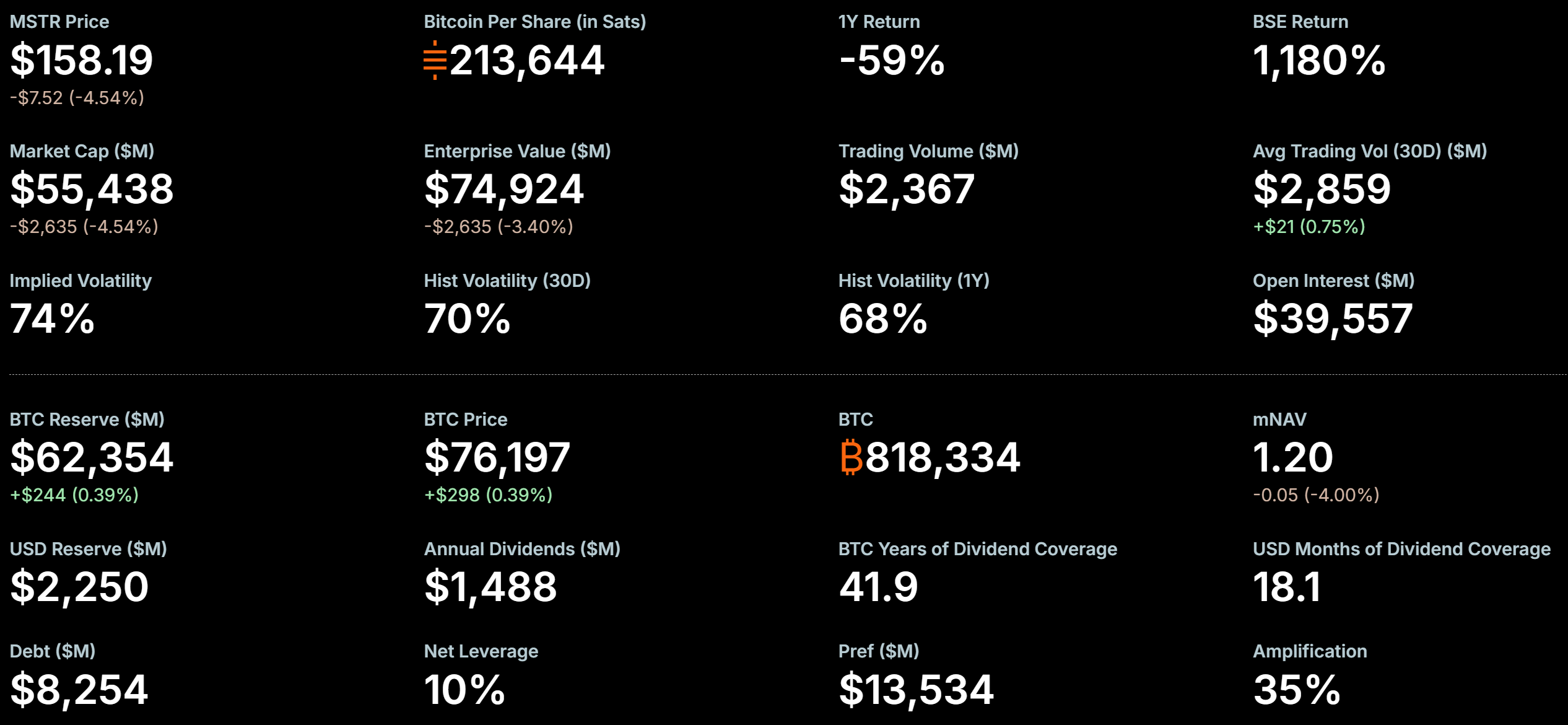
Alberta Investment Management Corporation, Canada’s $195 billion provincial fund, disclosed buying $219 million worth of Strategy Inc. (MSTR) stock. The position marks the institution’s first Bitcoin (BTC)-linked allocation.
AIMCo bought 1.38 million MSTR shares. The manager oversees Alberta’s pension plans, endowments, and the Heritage Savings Trust Fund.
Canadian Institutions Stack MSTR Exposure
AIMCo’s stake places it alongside several other large Canadian investors that have built MSTR positions over the past year.
National Bank of Canada holds roughly 1.47 million shares valued near $273 million. The Canada Pension Plan Investment Board (CPPIB) opened a 393,322-share position worth around $127 million.
Royal Bank of Canada (RBC) has expanded its holding into the $230 million range. The Healthcare of Ontario Pension Plan disclosed a $31 million stake.
The pattern reflects a preference for equity proxies over direct Bitcoin custody. Regulated holders face stricter compliance and accounting requirements.
Why Some Question the MSTR Trade
MicroStrategy held 818,334 BTC as of this writing, acquired at an average cost near $75,532 per coin. The company continues to issue common stock and high-yield preferred shares to fund further Bitcoin purchases.
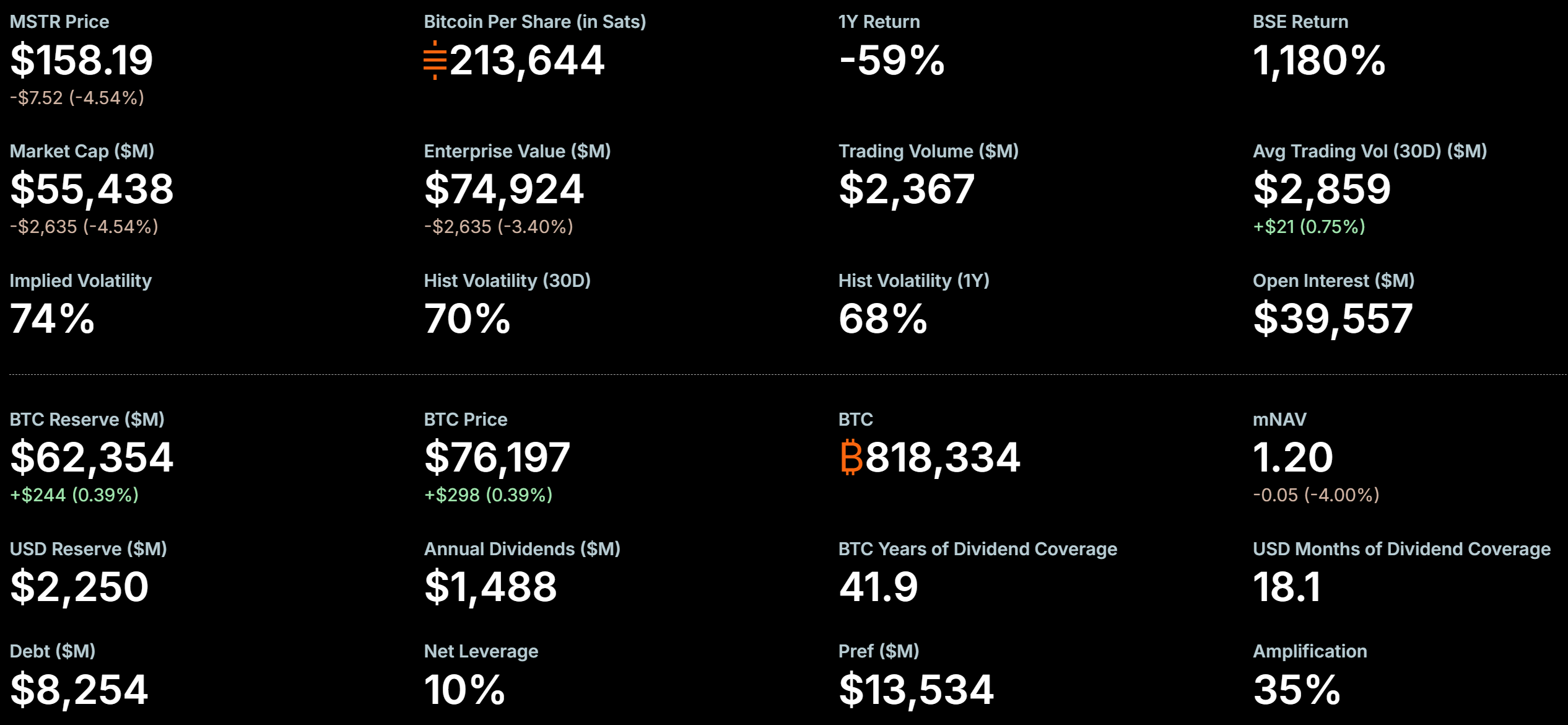
Critics argue that ongoing dilution erodes per-share Bitcoin exposure. The structure also adds corporate financing risk that direct Bitcoin or spot ETFs would avoid.
Public-fund analysts have flagged fiduciary concerns. Some U.S. state pension positions in MSTR have shown paper losses above 60% during downturns.
The drawdowns raised questions about whether a leveraged Bitcoin proxy suits conservative pension mandates.
AIMCo has not commented publicly on its rationale. The next quarterly 13F filing should clarify whether the manager scales the position or treats it as a tactical entry.
The post Canada’s $195 Billion Provincial Fund Buys $219 Million MicroStrategy Stake in First Bitcoin Allocation appeared first on BeInCrypto.
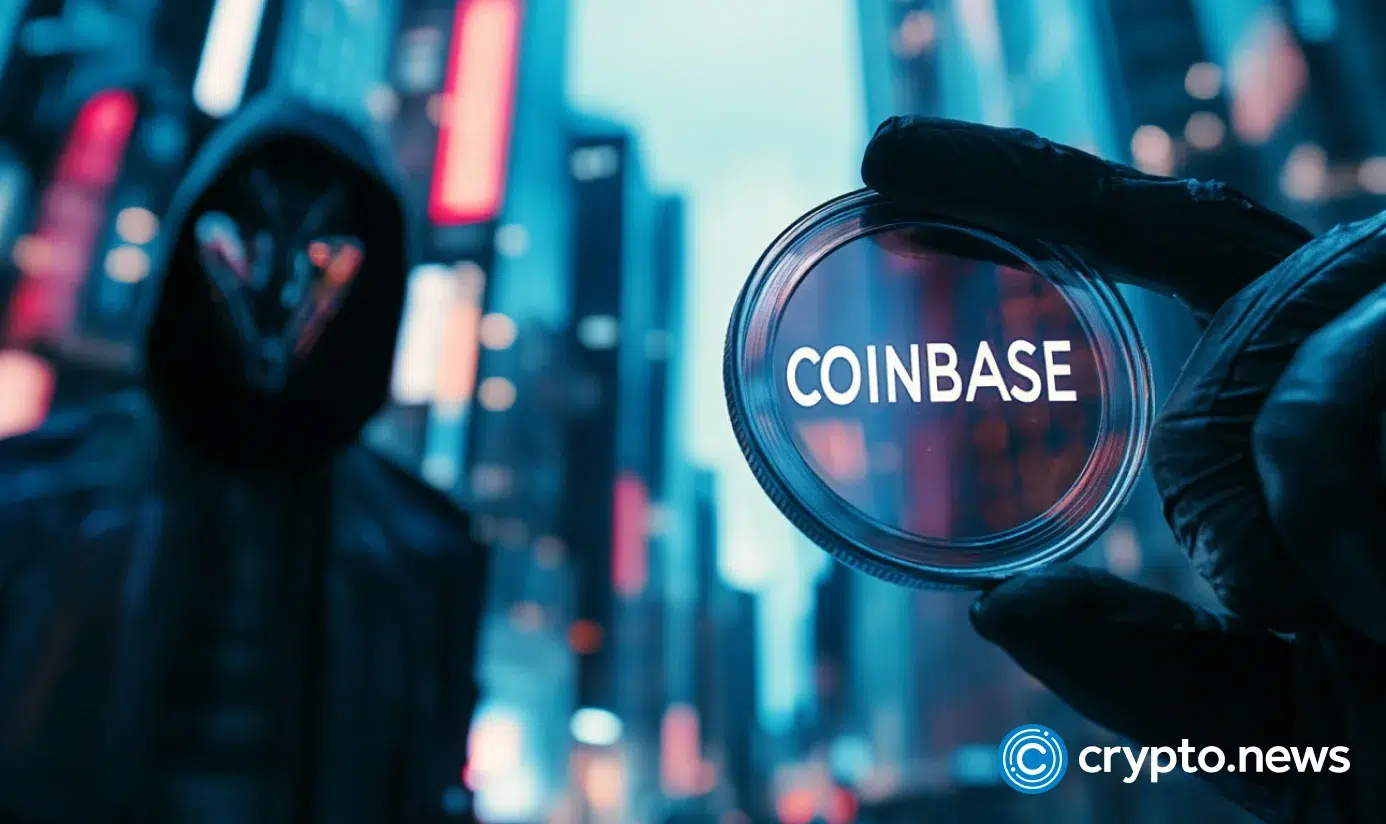
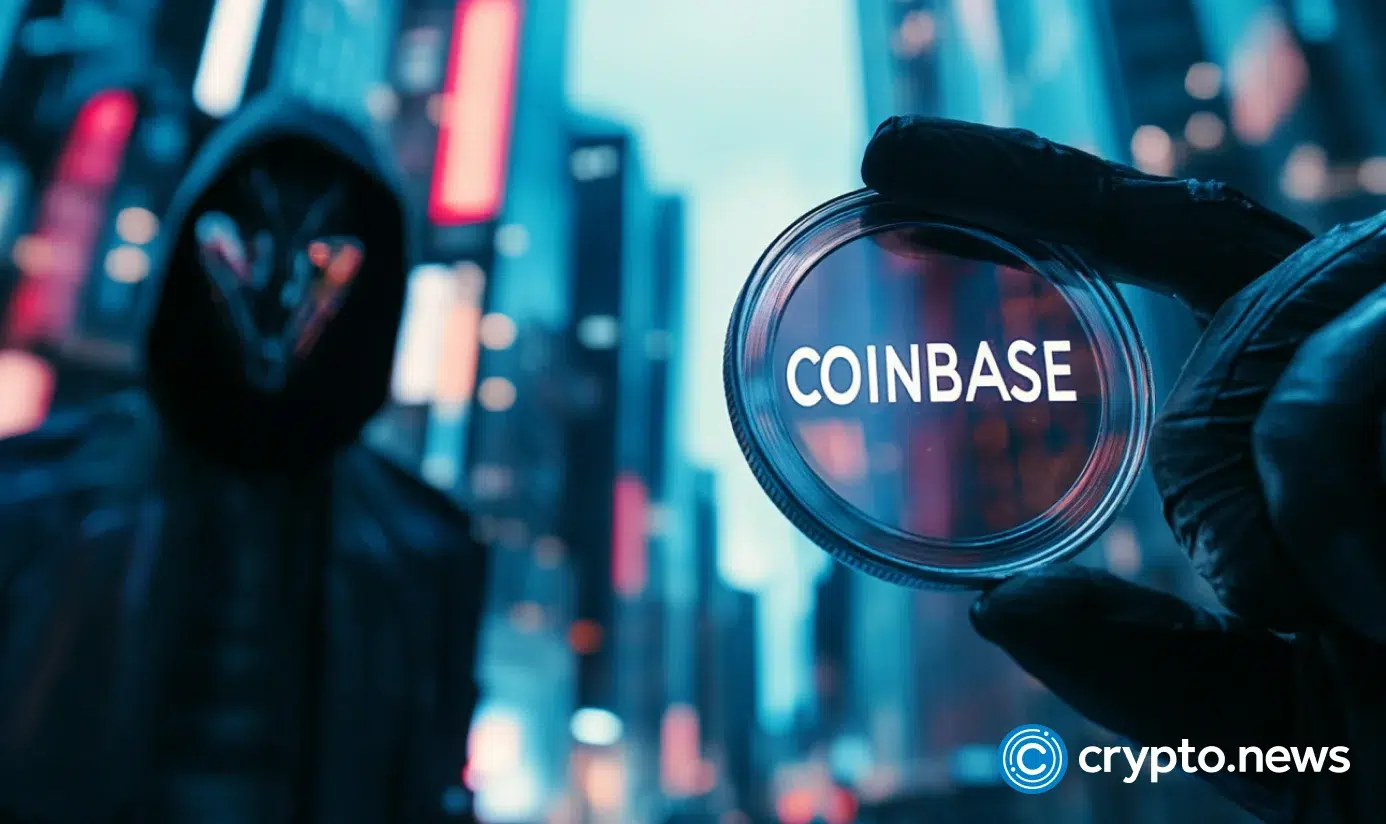
Coinbase will disable trading for Dai on May 4, 2026, as part of its latest asset review.
Summary
- Coinbase will disable DAI trading on its website and mobile app from May 4.
- Remaining DAI balances will convert to USDS at a 1:1 rate after the deadline.
- Coinbase will also suspend TIME trading and has disabled TRU ahead of migration.
The Ethereum-based stablecoin will be converted to USDS for users who leave DAI on the platform after the deadline. Coinbase reminded users that Dai trading will be disabled on Coinbase.com and the Coinbase mobile app on May 4.
The exchange also said send and receive support for DAI will be temporarily disabled from May 4 to May 6.
DAI is an Ethereum-based stablecoin linked to the MakerDAO ecosystem. Coinbase said any DAI left on the platform by May 4 will be converted to USDS at a 1:1 rate.
Users urged to move DAI before May 4
Coinbase advised users who do not want the conversion to move their DAI to a compatible self-custody wallet before the deadline.
The exchange said users in selected EEA regions will not have their DAI migrated. This means affected users may need to act before trading and transfer limits take effect.
The delisting forms part of Coinbase’s regular asset reviews. The exchange checks whether listed tokens continue to meet its standards.
Additionally, Coinbase will also suspend trading for Chrono.tech’s TIME token on May 11 at 2 p.m. ET. The suspension will apply to Coinbase Simple Trade, Advanced Trade, Coinbase Exchange, and Coinbase Prime.
Coinbase has also disabled trading for TrueFi’s TRU token ahead of its May 10 migration deadline.
These updates show that Coinbase is continuing to adjust supported assets across its main retail and institutional trading platforms.
Exchange adds new listings and futures
Coinbase has also expanded other parts of its platform. It launched perpetual futures tied to AI infrastructure and compute firms on April 29.
The listed markets include Advanced Micro Devices, Arm Holdings, Intel, Micron Technology, and SanDisk.
The exchange also added support for Gensyn and Virtuals Protocol on Coinbase and the Coinbase app.
Coinbase said it will add support for MegaETH’s MEGA token. Spot trading for Wrapped Ronin is also expected to go live on April 30.
The latest updates come as Coinbase balances new product launches with asset removals. The DAI deadline remains the key date for stablecoin users watching the May delisting schedule.
Key Highlights
-
Pre-market trading shows GPUS climbing 8.08% following Q1 revenue announcement
-
First quarter 2026 revenue reaches $44M, representing 76% year-over-year increase
-
Newly integrated subsidiaries contribute significantly to quarterly performance
-
Artificial intelligence infrastructure and blockchain initiatives fuel expansion
-
Multi-segment business model delivers enhanced revenue stability
Shares of Hyperscale Data (GPUS) experienced an uptick during pre-market hours following the disclosure of robust preliminary revenue figures. The stock climbed to $0.1404 before regular trading commenced, representing an 8.08% increase. This upturn came after the previous session’s close at $0.1312, which had reflected a 2.09% pullback.
Impressive Revenue Acceleration Fuels Pre-Market Rally
Hyperscale Data disclosed preliminary first-quarter 2026 revenue totaling approximately $44 million. This marks a substantial 76% climb from the $25 million registered during the comparable quarter in 2025. The impressive expansion demonstrates enhanced performance across multiple operational divisions.
The revenue tally benefited from fresh income channels originating from recently integrated subsidiaries. Gresham Worldwide generated roughly $10 million in the period after completing its bankruptcy restructuring in the fourth quarter of 2025. This integration provided meaningful support to consolidated financial metrics.
Additionally, Ault Lending secured approximately $10 million via a litigation settlement connected to historical ownership stakes. The organization plans to book this sum as revenue during the first quarter. These exceptional items played a notable role in amplifying reported growth figures.
Broad Business Portfolio Ensures Revenue Consistency
Hyperscale Data preserved steady income generation from its established operational divisions throughout the quarter. Crane services delivered around $11 million in revenue, while cryptocurrency mining operations added approximately $5 million. These core businesses furnished reliable support complementing newer income sources.
The company also recorded roughly $4 million from hospitality and property holdings. These divisions enhanced portfolio diversification and helped mitigate earnings fluctuations associated with trading operations. This varied revenue structure promotes operational stability through different economic conditions.
Trading activities at Ault Lending continue generating earnings variability. This segment encompasses unrealized profit and loss movements related to equity security valuations. Therefore, quarterly earnings patterns may experience fluctuations despite consistent operational revenue streams.
Strategic AI Infrastructure Investments Drive Future Trajectory
Hyperscale Data maintains its commitment to expanding artificial intelligence capabilities and technological infrastructure. The organization concentrates on AI-powered data facilities, robotics platforms, blockchain networks, and integrated financial technology solutions. These strategic priorities target building a cohesive and expandable enterprise framework.
Leadership emphasized that strengthening coordination among operational divisions remains central as consolidation activities advance. The organization observes encouraging momentum throughout AI-enabled platforms and digital infrastructure offerings. This progress reinforces its extended-term expansion agenda within evolving technology sectors.
The organization had previously established full-year 2026 revenue projections ranging from $180 million to $200 million. Given first-quarter achievements, management is evaluating whether to uphold or enhance these forecasts. A comprehensive assessment is anticipated following the publication of finalized first-quarter financial statements in May 2026.
IBM (IBM) Stock: Dallara Partnership Slashes Vehicle Design Time with AI Innovation

Netflix’s New Jennifer Lopez and Brett Goldstein Rom-Com Gets Must-See First Trailer

Man arrested after person dies in car and lorry crash

Manchester United reach agreement with Casemiro over contract clause amid transfer speculation

US brings back mandatory military draft registration

Steven Gerrard disagrees with Gary Neville over ‘shock’ Chelsea and Arsenal claim | Football


-

 Tech3 days ago
Register Renaming | Hackaday
-

 Fashion6 days ago
Weekend Open Thread – Corporette.com
-
Crypto World5 days ago
Hyperliquid $HYPE Rally Builds Momentum as AI Sector Enters Prove-It Phase
-

 Business7 days ago
Patterson-UTI Energy, Inc. (PTEN) Q1 2026 Earnings Call Transcript
-

 Politics3 days ago
Drax board avoid their own AGM, accused of greenwashing & environmental racism
-
 Sports4 days ago
IPL 2026: Ruturaj Gaikwad registers slowest fifty of the season, enters all-time unwanted list | Cricket News
-

 NewsBeat4 days ago
LK Bennett closes all stores after entering administration
-

 Crypto World6 days ago
Michael Saylor says BTC winter is over. Market analyst disagrees, says bitcoin was in a pullback
-

 Fashion2 days ago
Kylie Jenner’s KHY Enters a New Era with ‘Born in LA’
-

 Tech3 days ago
Images of Samsung’s rumored smart glasses have leaked
-
 Entertainment5 days ago
Mariah Carey Slams Deposition Claims In Brother’s Lawsuit
-
Crypto World7 days ago
Is Algorand One of the Few Quantum-Resistant Blockchains? Here’s What the Data Shows
-

 Business2 days ago
Most Commercial Energy Audits Miss the Real Losses
-

 Tech3 days ago
Why Blue Badges Disappeared From Toyota Hybrids
-
 NewsBeat6 days ago
Trump threatens to review UK’s claim to Falkland Islands and punish Nato allies over Iran war disagreement
-

 Business6 days ago
Jeanine Pirro announces closure of Federal Reserve building cost probe
-

 Business3 days ago
(VIDEO) Charlize Theron Climbs Times Square Billboard to Promote New Netflix Thriller ‘Apex’
-
 Crypto World7 days ago
Kraken Builds Beyond Crypto With Futures, Tokenized Stocks, and Payments
-

 Tech4 days ago
Microsoft to roll out Entra passkeys on Windows in late April
-

 Crypto World2 days ago
CFTC’s AI will review U.S. crypto registration applications, chairman tells CoinDesk
You must be logged in to post a comment Login