

Crypto World
Global INTERPOL Crackdown Exposes Crypto Laundering Behind Romance Scams



Thai police uncovered a crypto-laundering scheme in which one suspect’s wallet processed more than $122.5 million in proceeds from romance scams, as part of a global INTERPOL sweep.
The international police organization’s Operation First Light 2026 ran from January 15 to April 30. It targeted social engineering scams and the money laundering that sustains them.
INTERPOL Says Global Fraud Crackdown Uncovered 142,000 Victims
According to the news release, the global anti-fraud operation spanned 97 countries and territories, resulting in the arrest of 5,811 suspects and the interception of approximately $293 million in illicit proceeds.
Investigators identified more than 142,000 victims and froze 31,014 bank accounts linked to fraudulent activity. The operation also led to the resolution of 23,715 cases, while authorities issued 99 notices and diffusions.
INTERPOL said the operation highlighted how social engineering scams and financial fraud have grown into a significant transnational threat, impacting individuals, businesses, and governments worldwide.
“Social engineering scams continue to pose a significant threat to our society. Criminal syndicates exploit human psychology to manipulate their targets, and no nation can stay safe unless all countries are equipped and committed to jointly fighting back,” Tomonobu Kaya, Director of the INTERPOL Financial Crime and Anti-Corruption Centre, said.
Follow us on X to get the latest news as it happens
Crypto Money Laundering at the Center of a Global Sweep
The operation also highlighted several significant cases uncovered by participating countries. In Thailand, police arrested two suspects tied to a crypto laundering scheme that funneled funds from romance scams.
The operators used cross-chain token swaps to break the trail between blockchains. One suspect, aged 20, controlled a wallet that processed more than $122.5 million in 10 months, according to investigators.
In Palau, officials deported 22 people linked to hotel-based scam centres that leaned on crypto and illegal gambling sites. Enforcement stretched across several countries.
In Eswatini, police arrested 82 people and broke up a network running illegal gambling, laundering, and impersonation scams. Authorities in Singapore and Oman used I-GRIP to block a $6.6 million transfer linked to a business email compromise scam.
The cases reflect the growing role of cryptocurrency in cross-border fraud and money laundering schemes. They also highlight the increasing reliance on international cooperation to track illicit funds, dismantle criminal networks, and disrupt scams that span multiple jurisdictions.
Subscribe to our YouTube channel to watch leaders and journalists provide expert insights
The post Global INTERPOL Crackdown Exposes Crypto Laundering Behind Romance Scams appeared first on BeInCrypto.


Key Takeaways
- Tesla shares have declined approximately 10% in 2026, currently hovering around $408 after briefly touching $420 on Miami autonomous taxi announcement
- Tesla has registered roughly 100 self-driving taxis in Texas versus Waymo’s approximately 600 units
- The stock commands a valuation of ~210x projected 2026 earnings — dramatically exceeding the S&P 500’s ~21x multiple
- Analyst consensus stands at “Hold” with a $406.87 average price target
- Ibex Wealth Advisors reduced its TSLA holdings by 28.9% during the first quarter of 2026
Tesla’s recent trading pattern reveals a frustrating reality for shareholders: the company’s autonomous taxi initiative isn’t scaling quickly enough to support its premium market valuation.
Shares of Tesla began Friday’s session at $406.55. The stock briefly climbed to $420 earlier in the week following the announcement of an unsupervised robo-taxi launch in Miami. However, that momentum faded quickly, with the price retreating to the upper $300s territory that has become familiar ground.
As of Friday’s open, TSLA has surrendered roughly 10% since the beginning of 2026. Throughout the past year, shares have oscillated between a floor of $297.82 and a ceiling of $498.83 — volatility spanning almost $200.
Tesla officially kicked off its autonomous taxi service in Austin, Texas during June 2025. Yet more than twelve months later, the expansion remains disappointingly modest.
Gordon Johnson from GLJ Research highlighted in a Thursday analysis that the actual number of operating autonomous vehicles remains minimal. Tesla’s registration records show approximately 100 robo-taxis throughout Texas. Meanwhile, Alphabet’s Waymo operates close to 600 units within the same market.
This disparity carries significant weight for investors who have built substantial autonomous driving expectations into the stock price.
Premium Pricing Demands Flawless Execution
Tesla’s current valuation sits at approximately 210 times forward 2026 earnings estimates. For context, the broader S&P 500 index trades at roughly 21 times earnings. Even the remainder of the Magnificent Seven technology stocks command around 26 times earnings.
This enormous valuation premium creates minimal margin for disappointment — and current autonomous taxi progress isn’t strong enough to validate the multiple.
During the first quarter of 2026, Tesla reported earnings of $0.41 per share, narrowly surpassing Wall Street’s $0.39 forecast. Quarterly revenue reached $22.39 billion, falling slightly short of the $22.96 billion consensus estimate. Year-over-year revenue growth registered at 15.8%.
Full-year analyst projections call for earnings of $1.29 per share.
Institutional Activity and Wall Street Views
Ibex Wealth Advisors scaled back its Tesla allocation by 28.9% during Q1, divesting 2,661 shares and maintaining a remaining position valued at approximately $2.44 million.
However, not all institutional players are retreating. Kestra Advisory Services expanded its holdings by 11% in the first quarter, while Capstone Capital Management dramatically increased its stake by more than 2,100%, accumulating an additional 13,376 shares.
Institutional investors and hedge funds collectively control 66.20% of outstanding TSLA shares.
Among Wall Street analysts, opinions diverge significantly. Deutsche Bank and Roth Capital maintain buy recommendations. JPMorgan holds a neutral stance. Phillip Securities rates the stock as a sell with a $215 price target. Needham assigns a hold rating.
Aggregating 46 analyst opinions produces a “Hold” consensus with an average price target of $406.87 — essentially matching current trading levels.
Company insiders divested 32,015 shares valued at approximately $12.38 million during the most recent quarter. Notable transactions include CFO Vaibhav Taneja selling 3,000 shares at $450 on May 13, and Director Kathleen Wilson-Thompson offloading 26,409 shares at $378.11 on April 30.
Tesla maintains a market capitalization of $1.53 trillion, featuring a beta coefficient of 1.80 and a trailing P/E ratio of 372.98.


Key Highlights
- Shares of WD-40 surged 15% in pre-market trading Friday following impressive fiscal Q3 results
- Quarterly revenue increased 24% year-over-year to $195.1 million, significantly surpassing the $172.8 million consensus
- Earnings per share reached $2.33, substantially exceeding the Street’s $1.56 projection
- Regional performance showed Americas up 29%, Asia-Pacific climbing 24%, and EIMEA gaining 17%
- Management elevated full-year EPS outlook to $6.05–$6.35 from previous guidance of $5.75–$6.15
Shares of WD-40 (WDFC) rallied 15% in Friday’s pre-market session following the release of fiscal third-quarter financials that significantly exceeded analyst projections across all key performance indicators.
The company reported quarterly revenue of $195.1 million, marking a 24% increase compared to the same period last year and comfortably beating the analyst consensus of $172.8 million from FactSet.
Earnings per share landed at $2.33, crushing the Street’s $1.56 forecast. Management also increased its full-year EPS outlook to a range of $6.05–$6.35, moving up from the previous guidance of $5.75–$6.15. The consensus estimate had been $6.01.
The revenue growth showed strength across all geographic segments. Sales in the Americas jumped 29%, the Asia-Pacific region posted a 24% gain, and EIMEA — representing Europe, India, the Middle East and Africa — recorded a 17% increase.
Chief Executive Steven Brass attributed the Americas momentum to broader distribution channels, robust e-commerce results, and strategic promotional campaigns.
Brass also called attention to a special edition “King of the Hill” branded product developed through collaborations with Disney (DIS) and Home Depot (HD). The creative origins of that partnership remain an open question.
Worldwide Momentum
What makes this quarter particularly noteworthy is that growth wasn’t driven by a single region. The 24% revenue expansion reflected simultaneous strength across WD-40’s three global operating segments, lending credibility to the sustainability of these results.
The company has also been integrating artificial intelligence into its supply chain operations and back-office functions. This represents the practical, infrastructure-focused application of AI technology — less attention-grabbing than consumer-facing AI products, but potentially offering longer-term competitive advantages.
This quarter’s performance follows an 11% sales increase in the previous period, suggesting the company is building momentum rather than posting a one-time anomaly.
Beating the Tech Rally
While the Nasdaq advanced 1.3% during Thursday’s regular session and AI names captured renewed investor attention, WD-40 was outpacing those high-profile technology stocks on Friday.
Heading into Friday’s session, WDFC had already gained more than 20% year-to-date in 2026, before tacking on another 15% following the earnings announcement.
That performance trajectory is remarkable for a company whose core product is a household lubricant. There are no semiconductors involved, no massive data infrastructure, no multi-billion dollar AI training operations — simply a product with consistent global demand and a management team executing an effective growth strategy.
The stock maintained its sharp gains after the opening bell, continuing to significantly outperform broader market indices.
With revised full-year guidance of $6.05–$6.35 EPS now exceeding analyst expectations, the stock has a positive tailwind as the company moves through the remainder of its fiscal year.
Crypto World
Strategy or Binance: Who’s Sitting on More Unrealized Bitcoin Losses? CryptoQuant Weighs In

As the business intelligence and Bitcoin treasury company Strategy just carried out its largest BTC sale this week, analysts are comparing just how deeply the firm is underwater.
CryptoQuant analyst Darkfost reviewed Strategy’s Bitcoin unrealized losses compared to those of the world’s largest crypto exchange, Binance, in their latest report. This is because both entities are major BTC holders, with hundreds of thousands of digital assets sitting in their reserves.
Underwater Comparisons Between Strategy and Binance
According to Darkfost’s report, crypto exchanges collectively hold about 8 million BTC, with roughly 30% concentrated on Binance alone. Bitfinex, Gemini, Kraken, and OKX follow suit with more than 5% of the holdings each.
It is worth mentioning that Binance’s bitcoin reserves are mostly owned by investors. This is because the exchange liquidated about 94% of its proprietary BTC reserves and converted them into stablecoins in early 2025 during a major restructuring. So, since then, it has not actively engaged in selling its own BTC; the bitcoin in question now belongs to investors.
Although Binance accounts for the largest exchange reserves with 656,561 BTC, Strategy still tops the platform with 843,775 units. This feat is despite Strategy executing two batches of BTC sales within less than two months. The first was in late May – 32 BTC for $2.5 million – while the second was earlier this week – 3,588 BTC for $216 million. These sales have been aimed at funding security dividends and corporate liquidity needs. Darkfost said Strategy’s moves reflect the company’s need for liquidity rather than a market conviction.
Strategy In Deeper Losses
Strategy’s 843,775 BTC stash has an average acquisition price of $75,476, but the sales have been taking place around the $60,000 level. So, the business intelligence giant has realized roughly 20% sales losses.
On the other hand, all the BTC sitting on Binance has an estimated realized price of $60,900, well below Strategy’s $75,476. This indicates that the latter’s reserves are still deeper underwater than Binance’s – the treasury firm is sitting on more unrealized losses.
Moreover, Strategy has more BTC holdings than Binance, so the firm has a significantly larger unrealized loss margin than the exchange. If Saylor’s company makes any more sales while BTC hovers around $60,000, it is bound to realize even more losses.
The post Strategy or Binance: Who’s Sitting on More Unrealized Bitcoin Losses? CryptoQuant Weighs In appeared first on CryptoPotato.
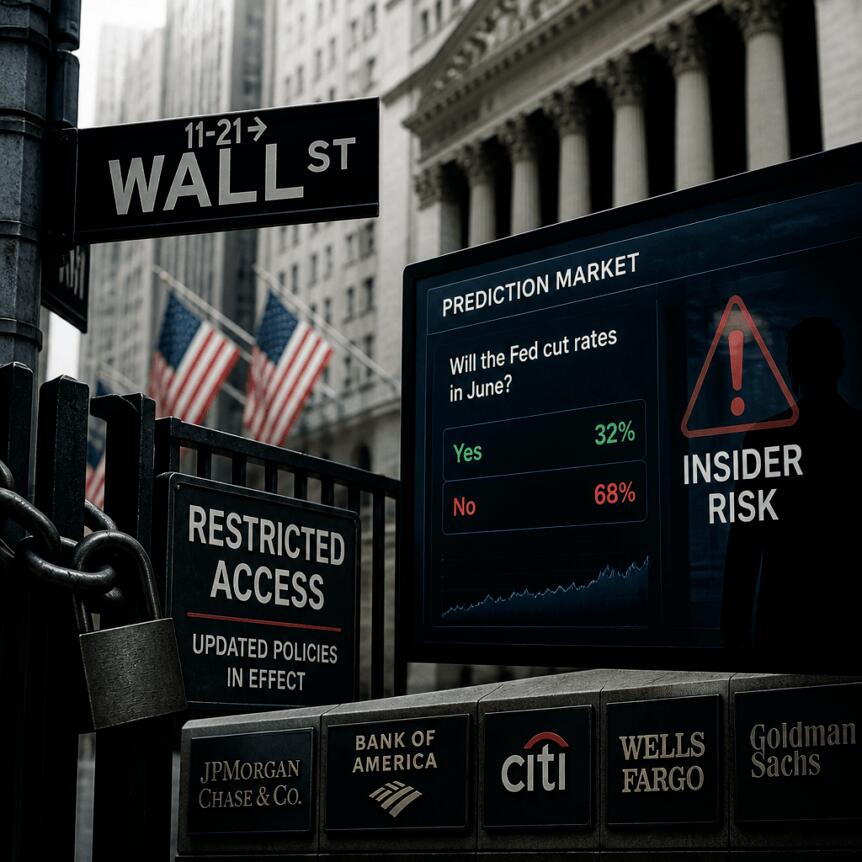
Major US investment banks are tightening internal rules around prediction market trading, according to reporting by CNBC. The move is driven by concerns that employees could use nonpublic information when trading event-based contracts—an issue that has increasingly drawn regulatory and political scrutiny in the United States.
CNBC said Goldman Sachs has reportedly banned employees from trading certain event contracts tied to the bank, including those related to financial markets, macroeconomic developments, elections, and geopolitics. Meanwhile, Morgan Stanley and Bank of America have also outlined or are preparing employee restrictions, reflecting how quickly predictive markets have moved from a niche concept to an area regulators and policymakers are willing to investigate.
Key takeaways
- Goldman Sachs has reportedly restricted employee trading on bank-specific event contracts after insider-trading concerns resurfaced.
- Other large banks are also implementing or updating internal prediction market policies, signaling a broader compliance shift.
- US oversight pressure has been building through enforcement actions and proposed legislation targeting political prediction market activity.
- Polymarket is seeking regulatory permission for margin trading for US users, which could expand participation but also raise compliance considerations.
Why banks are moving to restrict prediction market trading
Prediction markets allow participants to buy and sell contracts tied to real-world outcomes, including political and macroeconomic events. The very structure that makes these platforms useful—payoffs linked to information—also creates a perceived risk when traders have access to material nonpublic information through their day jobs.
CNBC’s report frames the banking restrictions as a response to that risk. In Goldman Sachs’ case, the reported ban covers event contracts “specific to the bank,” spanning topics such as financial markets, macroeconomic events, elections, and geopolitics. CNBC attributed the details to people familiar with the matter, and said Goldman declined to comment when approached by Cointelegraph.
Morgan Stanley reportedly has policies governing employees’ prediction market activity, according to unnamed sources cited by CNBC. Bank of America, according to the same report, is in the process of issuing additional prohibitions for employees regarding trading on prediction markets.
Regulators and lawmakers have been escalating insider-trading concerns
The banking clampdown comes amid heightened attention on insider trading risks in prediction markets. Earlier this year, the US Justice Department and the Commodities Futures Trading Commission (CFTC) said in a case involving Google software engineer Michele Spagnuolo that she profited $1.2 million on Polymarket after accessing nonpublic information at work, according to Cointelegraph coverage.
At the same time, political institutions have begun focusing on whether certain government-connected participants should be allowed to trade on outcomes connected to public policy. Cointelegraph also reported that White House attention and US lawmakers’ activity led to proposed legislation aimed at restricting political prediction market trading by government officials.
In mid-June, Wisconsin Representative Bryan Steil introduced a law intended to prevent certain public officials from “wagering on public policy issues and political outcomes,” according to Cointelegraph reporting. The proposal, as described in the coverage, does not single out lawmakers in the White House.
One earlier flashpoint underscored how quickly these platforms can intersect with real-world political events. In January, Cointelegraph reported that a soldier was charged over an alleged bet of roughly $400,000 on Polymarket tied to the removal of Venezuelan President Nicolás Maduro—a case that, while distinct from bank policies, helped intensify scrutiny of betting activity around consequential political outcomes.
Polymarket pushes for US margin trading approval
While banks focus on restricting internal trading, the prediction market ecosystem itself continues to pursue broader access in the US. Polymarket is seeking regulatory approval to offer margin trading to US users, a feature that would allow participants to place trades with less upfront capital, potentially increasing volume and market participation.
According to a July 3 filing with the National Futures Association (NFA), Polymarket applied to become a futures commission merchant through its affiliate, Coming Home GBA LLC. This step is part of the platform’s effort to expand its US footprint. Cointelegraph reported reaching out to Polymarket for comment on the proposal.
The filing process reflects a key regulatory distinction: Polymarket also needs authorization from the CFTC to enable non-fully collateralized trading for users. Until those approvals are in place, the ability to scale using margin remains conditional.
Polymarket’s competitor has already moved ahead on this specific capability. Cointelegraph reported that Kalshi’s affiliate, Kinetic Markets LLC, received an NFA authorization in March, allowing it to offer margin trading in the US. That earlier grant may shape expectations among users and market participants for how quickly Polymarket’s own application could progress.
Market activity keeps setting records as oversight tightens
Regulatory scrutiny has not stopped growth in prediction market usage. Data cited by Dune shows Polymarket hit a record $713 million in daily taker volume on June 20. Cointelegraph reported that the milestone arrived more than a week after the June 11 start of the World Cup, highlighting how major televised events can drive demand for outcome-based trading.
Other venues have also recorded strong figures tied to the same global tournament cycle. Cointelegraph reported that Kalshi posted a record monthly trading volume of nearly $9.4 billion in June, again attributing activity to the 2026 FIFA World Cup’s role in fueling participation across prediction markets.
Importantly, these growth indicators illustrate a tension that market participants will likely need to navigate: demand continues to rise, yet institutions—both regulators and traditional finance firms—are increasingly focused on information risk, conflicts of interest, and compliance controls.
For traders and builders, the next signal to watch is whether Polymarket’s margin-trading application advances in the NFA/CFTC process and how banks operationalize their restrictions in practice—particularly which categories of contracts and employee roles are treated as higher risk. As enforcement remains on the table and lawmakers continue to consider targeted rules around political outcomes, internal bank policies may become an increasingly common feature of the market landscape.


Key takeaways
- Ethereum (ETH) is extending its recovery, trading near $1,800, a key technical resistance level.
- Despite improving momentum, ETH remains below its 50-day, 100-day, and 200-day EMAs, keeping the broader trend cautious.
- Technical indicators, including the RSI and MACD, suggest bullish momentum is strengthening.
Ethereum price nears $1,800 as recovery momentum builds
Ethereum (ETH) continued its recovery on Friday, climbing to around $1,790 as buyers pushed the cryptocurrency closer to the important $1,800 resistance level.
Although recent gains have improved short-term sentiment, Ethereum remains below several major moving averages, indicating that the broader trend has yet to shift decisively in favor of the bulls.
Ethereum’s recovery is approaching a significant technical hurdle at the 50-day Exponential Moving Average (EMA) near $1,800.
The asset continues to trade below all of its major trend indicators, including the 50-day EMA at $1,800, the 100-day EMA ($1,956), and the 200-day EMA ($2,235)
This cluster of moving averages continues to cap upside momentum and suggests that the broader market remains in a corrective phase despite the recent rebound.
Momentum Indicators Turn More Constructive
Technical indicators point to improving buying momentum. The Relative Strength Index (RSI) is hovering around 60, moving above the neutral 50 level and indicating that buyers are gradually regaining control.
Meanwhile, the Moving Average Convergence Divergence (MACD) remains in positive territory, signaling strengthening bullish momentum as Ethereum attempts to build on its recent recovery.
While both indicators support additional upside in the short term, a confirmed breakout above the major resistance levels is still needed to establish a stronger bullish trend.
The immediate resistance remains the 50-day EMA near $1,800. A successful daily close above this level could allow Ethereum to target the 100-day EMA around $1,956, followed by the important $2,000 psychological resistance.
Beyond that, the 200-day EMA near $2,236 represents the next major obstacle for bulls.

On the downside, the primary support level sits around $1,385. A break below this area would signal renewed bearish pressure and could revive the broader downtrend.
As long as Ethereum remains above its key support while momentum indicators continue to improve, the possibility of further consolidation—and eventually a breakout above the $1,800 resistance zone—remains intact.
Crypto World
Bitcoin (BTC) price challenges Monday’s rejection level as ether (ETH) looks to break its streak of lower highs

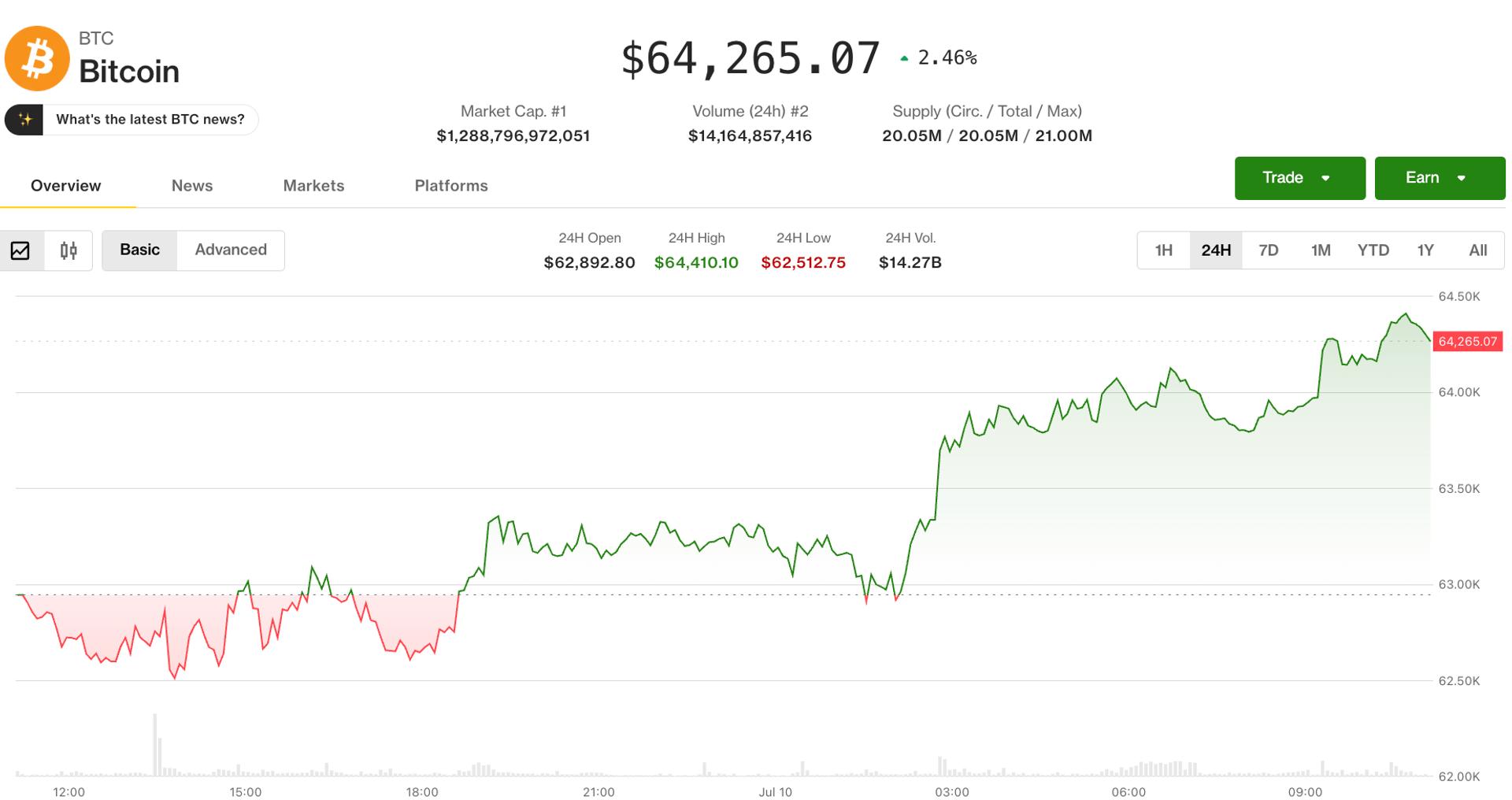
The crypto market took another leg higher on Friday with bitcoin trading at $64,400, up by 2% since midnight UTC.
The largest cryptocurrency is currently at the price it failed to penetrate on Monday. If it can break past this level, it will likely advance toward the June 15 high of $67,250.
Ether (ETH) outperformed bitcoin, rising 2.6% to $1,790 as it looks to snap a trend of sequential lower highs and lower lows.
There were also notable gains across the altcoin sector ahead of the weekend, typically a period of lower liquidity. Zcash (ZEC) and aave both rose by around 5% as optimism is slowly crept back into more speculative bets after months of waning sentiment.
Crypto diverged from U.S. equities, with S&P 500 index futures and Nasdaq 100 futures falling 0.1% and 0.4%, respectively.
Derivatives positioning
- Crypto derivatives markets are showing signs of stabilization, with speculation easing and longer-term positioning increasing.
- Volume over 24 hours fell 7% to $140 billion, while open interest (OI) rose 3% to $110.52 billion. This shift suggests the recovery is being driven more by strategic positioning than by high‑frequency speculative activity.
- Cumulative OI in bitcoin’s USD- and USDT-denominated futures on major exchanges has picked up slightly, from 262K to 272K, as the spot price topped $64,000. When read alongside positive funding rates and positive 24-hour OI-adjusted cumulative volume delta (CVD), the OI increase indicates a growing bias for bullish bets.
- Ether has yet to see a meaningful rise in futures OI, a sign that traders are still staying away from leverage.
- In the broader market, most tokens have positive 24-hour CVDs, a sign that buyers are becoming more aggressive, trading market orders rather than passive limit orders. This set expectations for continued price rises ahead.
- Confirmatory signals come from options-based implied volatility indexes tied to BTC and ETH, which continue to drop. It’s a sign of traders expecting market calm, a feature of rallies. BTC’s index, BVIV, fell to 38.5 early today, the lowest since June 6.
- In the options market on Deribit, put skews continue to weaken as the price rally eases downside concerns. Calls at $62,000, $65,000, and $67,000 are among the most-traded instruments, along with the $56,000 put. A call represents a bullish bet on the market.
Crypto World
Japan’s ‘invest locally’ plan likely to spur demand for assets like bitcoin (BTC), gold: Crypto Daily


This hidden form of taxation, first used by nations after World War II, allows authorities to finance deficits cheaply, gradually erode the real value of the debt burden through moderate inflation, and avoid the relatively damaging alternatives of outright default or severe austerity. (Other indebted nations like the U.S., U.K. and European countries may do the same soon enough.)
Such an environment creates a strong incentive to seek assets with limited supply that may preserve purchasing power, such as bitcoin and gold. BTC has already proved its mettle: Housing prices measured in bitcoin look far cheaper than in dollars.
But there’s a near-term risk worth noting. The GPIF holds $931 billion in foreign assets, including $232.1 billion in U.S. Treasuries. A slight diversion of capital to local assets may create jitters on Wall Street, potentially breeding risk aversion and selling across all corners of the market, including cryptocurrencies.
For now, however, bitcoin is buoyant, trading above $64,000, with a key momentum indicator signaling a renewed bullish shift in market trend. There are several more key levels between $65,000 and $80,000 that prices need to clear before a full-blown uptrend is confirmed. Stay alert!
Read more: For analysis of today’s activity in altcoins and derivatives, see Crypto Markets Today . For a comprehensive list of events this week, see CoinDesk’s “Crypto Week Ahead.”


A group of crypto and Web3 firms that includes OKX, MetaMask, Matter Labs and Genlayer have formed the “Internet Court” to reach dispute resolutions between AI agents.
These days, AI agents negotiate and pay one another without humans in the loop, but as with human-to-human transactions, agent-to-agent transactions will run into contractual disagreements.
The problem is that agentic systems have no way to settle these disputes, and traditional courts are not built to handle such cases. Hence the need for the 27-firm-backed protocol, led by the Genlayer Foundation, which makes AI-based payments, escrow and dispute resolution interoperable, according to a press release.
Agentic commerce is not prepared for the potential fallout when agents disagree at machine speed, according to David Riudor, CEO and co-founder of the GenLayer Foundation. “Internet Court is the shared place agents can turn to when a deal goes wrong. Machine-speed money needs machine-speed adjudication,” he said.
A key problem the dispute protocol solves is interoperability between a variety of AI commerce systems. Agentic commerce is certainly charging ahead but the infrastructure underpinning this new economy is still highly fragmented.


Bitcoin mining and data center company TeraWulf is reportedly preparing to raise about $3.5 billion in debt to fund an artificial intelligence campus leased by Anthropic.
Summary
- TeraWulf reportedly seeks $3.5 billion through leveraged loans and bonds for its Kentucky AI campus.
- Anthropic’s 20-year lease could generate about $19 billion as the facility reaches full capacity.
- The financing adds debt risk as TeraWulf shifts from Bitcoin mining toward contracted AI infrastructure revenue.
The planned financing could include leveraged loans and high-yield bonds, according to a Bloomberg report. Morgan Stanley is expected to lead the transaction, which could launch later in 2026.
TeraWulf considers first leveraged loan
TeraWulf Chief Financial Officer Patrick Fleury reportedly said the company could enter the leveraged loan market for the first time as part of the financing package.
Leveraged loans usually serve companies with high debt levels or below-investment-grade credit profiles. They often carry variable interest rates, which can increase borrowing costs when benchmark rates rise.
The company may combine the loan with high-yield bonds to finance construction at its Justified Data campus in Hawesville, Kentucky. However, TeraWulf has not announced final terms, interest rates or a closing date.
The reported $3.5 billion raise remains subject to market conditions. Neither TeraWulf nor Morgan Stanley had publicly issued a detailed financing announcement at the time of publication.
Anthropic lease targets $19B in revenue
The financing follows TeraWulf’s 20-year lease agreement with Anthropic.
Under the agreement, TeraWulf will develop a purpose-built AI infrastructure campus capable of supporting about 401 megawatts of critical computing load. Initial capacity is expected to begin operating in the second half of 2027, with full deployment targeted for early 2028.
TeraWulf estimates that the lease will generate approximately $19 billion in contracted revenue over its initial term. The company also said the contract would receive support from an investment-grade credit profile.
As previously reported by crypto.news, TeraWulf shares rose after the company disclosed the Anthropic deal. The agreement gives the former Bitcoin-focused operator a long-term source of contracted AI infrastructure revenue.
Still, the projected $19 billion represents revenue expected over 20 years rather than an upfront payment. Construction, financing and operating costs will affect the amount that ultimately reaches TeraWulf.
Previous debt financed AI expansion
TeraWulf has already used large debt offerings to build its high-performance computing operations. In October 2025, its subsidiary priced $3.2 billion of senior secured notes.
The notes carry a 7.75% annual interest rate and mature in 2030. TeraWulf used the proceeds to finance part of its Lake Mariner data center expansion in New York.
The company later raised additional capital through convertible debt and other credit facilities. Its planned Kentucky financing would further increase the amount of borrowed funds supporting its move into AI computing.
Moreover, TeraWulf is among several Bitcoin miners moving into AI and high-performance computing. Mining companies can reuse access to power, land and cooling systems to meet growing data center demand.
AI pivot brings new financial questions
TeraWulf previously generated most of its income through Bitcoin mining. However, the company now describes itself as an energy infrastructure operator serving AI and high-performance computing clients.
Its first-quarter 2026 results showed that more than 50% of revenue came from HPC hosting. The company said contracted leases could reduce its dependence on Bitcoin prices and mining difficulty.
However, the expansion requires large upfront spending. TeraWulf must build the Kentucky campus before receiving the full lease revenue expected from Anthropic.
The company has also faced questions over construction costs, insider stock sales and its long-term funding model. Fleury has argued that customers remain responsible for servers, processors and technology upgrades, while TeraWulf supplies power and physical infrastructure.
Tom Zschach, who spent six years as SWIFT’s Chief Innovation Officer before recently leaving the company, pushed back against fresh Ripple rumors with a two-word reply on X: “Not happening.” That short response landed because he led SWIFT’s digital asset strategy, giving him firsthand knowledge of what the network was actually building.
The comments followed claims from several XRP influencer accounts that SWIFT planned to support public tokens like XRP instead of developing its own infrastructure. The posts quickly spread across social media, but none included an official statement or supporting document. That’s a little like citing “trust me, bro” as a source.
One widely shared post even claimed SWIFT had said it had no intention of competing with XRP and would instead collaborate with it. However, no official SWIFT announcement, press release, or public document contains that wording. The claim appears to have circulated without any verifiable evidence.
Zschach’s response effectively shut down the rumor before it gathered more steam. While SWIFT continues testing blockchain based settlement and tokenized asset infrastructure, there is still no indication the network plans to integrate XRP or endorse the token for its core services.
Zschach’s response left no interpretive room. The crypto rumor collapsed against a two-word rebuttal from the person who ran SWIFT’s digital asset function for half a decade – a cleaner debunk than any lengthy rebuttal could achieve.
This is the same pattern that has repeated across several years: a SWIFT executive or technical document references tokenization or interoperability, XRP communities interpret it as implicit adoption, influencer accounts amplify the interpretation as fact, and a correction follows. The XRP debunk cycle is well-worn at this point, but Zschach’s direct involvement gives this iteration unusual authority.
Discover: The Best Token Presales
Zschach’s Track Record on Ripple
The former SWIFT CIO’s rejection of XRP’s institutional narrative is not new. Zschach has previously compared Ripple technology to a “fax machine” in the modern internet era, and argued that Ripple surviving its long-running SEC lawsuit does not constitute actual institutional resilience.
After a three-decade career spanning Bank of America, Barclays, and Lehman Brothers, Zschach has left SWIFT to join a research team drawing from Oxford, Harvard, and Cambridge to build new financial infrastructure, a trajectory that signals where he believes institutional-grade digital finance is actually heading.
Don’t Miss Out on Our $1,000 USDT Airdrop on ByBit
What SWIFT Is Actually Building
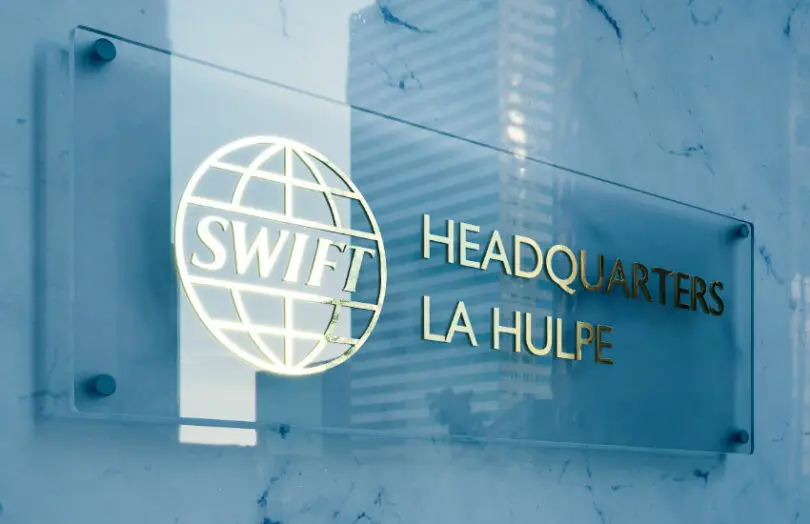
SWIFT’s digital asset strategy is becoming clearer, and it has little to do with the latest XRP rumors. Its published work centers on secure messaging, interoperability, and tokenized assets for regulated financial institutions. Recent pilots also focus on tokenized deposits across permissioned networks, not public blockchains.
That matters because permissioned ledgers and public tokens solve different problems. SWIFT is building neutral infrastructure with shared governance, while XRP remains an independent public cryptocurrency. Put simply, expecting one to quietly morph into the other is like expecting a cargo ship to win a Formula One race.
Discover: The Best Crypto to Diversify Your Portfolio
The rumor lost steam after analyst Jon Zschach publicly rejected claims that SWIFT was preparing XRP integration. No credible evidence has surfaced to support those claims. Instead, SWIFT continues emphasizing standards-based connectivity across multiple digital asset platforms rather than endorsing a single token.
Meanwhile, XRP has struggled to find momentum. The token recently traded around $1.08 to $1.10, slipping against Bitcoin as fresh institutional catalysts failed to appear. Traders hoping for a SWIFT surprise were left waiting, and the market rarely rewards wishful thinking for long.
That does not mean XRP’s long-term outlook is settled. However, tying its investment case to unverified partnership rumors only raises expectations that reality may not meet. For now, SWIFT and XRP appear to be moving on separate tracks, even if some investors keep hoping those rails eventually cross.
Don’t Miss Out on Our $1,000 USDT Airdrop on ByBit
The post Ex-SWIFT CIO Tom Zschach Shuts Down XRP Partnership Claims in Two Words appeared first on Cryptonews.

SALT Festival Returns to Portsmouth’s Victoria Park for a Powerful Fourth Year of Hope, Connection, and Free Activities

Axelrod to lead BellRing Brands
Tesla (TSLA) Stock: Why the Autonomous Vehicle Vision Isn’t Moving the Needle


-

 Fashion7 days ago
Weekend Open Thread: High Hopes
-
 NewsBeat5 days ago
Taylor Swift and Travis Kelce wedding staffer hilariously struggles to keep her cool while checking in megastars
-

 Crypto World7 days ago
Standard Chartered Secures MiCA License as ESMA Adds 37 New Crypto Firms
-

 Fashion4 days ago
Open Thread: What Great Books Have You Read Recently?
-

 Fashion1 day ago
Loro Piana Fall 2026 Enters Houston’s Art Scene
-

 News Videos3 days ago
Whats Hidden Inside This Cash Register? #treasure #reselling #money
-
 Tech3 days ago
Anthropic’s new “J-lens” reveals a silent workspace inside Claude that mirrors a leading theory of consciousness
-
 Crypto World7 days ago
ESMA Expands Crypto Register by 37 Firms Following MiCA Transition Period
-

 Business4 days ago
AXT Shares Jump Nearly 14% as Semiconductor Materials Maker Rebounds on AI-Linked Indium Phosphide Demand
-

 Sports3 days ago
Joshua Pacio ‘more complete’ ahead of ONE rematch vs Malachiev
-

 Crypto World5 days ago
South Africa proposes crypto tax guidance under existing rules
-
Crypto World4 days ago
SK hynix (000660.KS) Stock Dips as $28B Nasdaq ADR Offering Drives AI Memory Expansion
-

 News Videos4 days ago
Best Time to Enter Small Caps Right Now? Another Bull Run? | Financially Free
-

 Tech5 days ago
Lenovo laptops are now shipping with YMTC SSDs, a sign of Chinese NAND entering the mainstream
-
Sports3 days ago
We have punished the disrespect
-

 News Videos4 days ago
Avoid entering in FOMO #bitcoin #cryptocurrency #trading #scalping
-

 Tech2 days ago
Anthropic brings Claude Cowork to mobile and web as usage data shows most users aren’t coding
-

 Crypto World4 days ago
$1,000 Credit Alert! BlockDAG X Exchange Pre-Registration Now Officially Open, Polkadot Dips & Zcash Rebounds
-

 Tech6 days ago
Neuralink Threads Its Way Straight Through the Brain’s Armor
-

 Crypto World3 days ago
Binance lists Strategy’s STRC stock as company expands Bitcoin funding
You must be logged in to post a comment Login