
Crypto World
House of the Dragon Season 3 Finale Recap: Rhaenyra’s Crisis


The finale opens with Rhaenyra waking to the news that Aegon is alive, and that his return—with a still-quite-lethal Sunfyre, no less—after she declared him dead makes him some kind of messiah. Understandably, she panics, cursing the memory of Viserys (Paddy Considine) for putting her in such a terrible situation. “His prophecy has tested me again and again, and I have met its every challenge!” she complains to Daemon. He takes the opportunity to remind her of her Targaryen supremacy. So, how should she wield it? “The only quality the realm understands is strength,” Daemon says. It’s enough to get him dispatched to Tumbleton.
Baela (Bethany Antonia) urges Rhaenyra to have Lord Corlys (Steve Toussaint) rescued from the Hightowers’ clutches while Black forces are in town. He is, after all, the Hand of the Queen, and he’s sacrificed mightily for her cause. Also: “It was your fault” the Sea Snake was captured in the first place, Baela says. When Rhaenyra seems less than enthusiastic about helping him, Baela really goes off on her. “If a person is useful to you, you wield them,” she accuses. “But if not, you abandon them.” This may be true. A few scenes later, Rhaenyra abruptly banishes her paramour Mysaria (Sonoya Mizuno)—through a minion, no less. (Mysaria does get a nice severance package.) But doesn’t a responsible sovereign have to be ready to throw her friends and family under the bus in service of what she believes to be the greater good of the kingdom? I mean, wasn’t that the takeaway of six seasons of Matt Smith’s other show, The Crown? Of course, as with Elizabeth’s real-life refusal to let her sister marry a divorced man, the question of whether it’s actually prudent for the monarchy to deprioritize saving Corlys is a different matter.

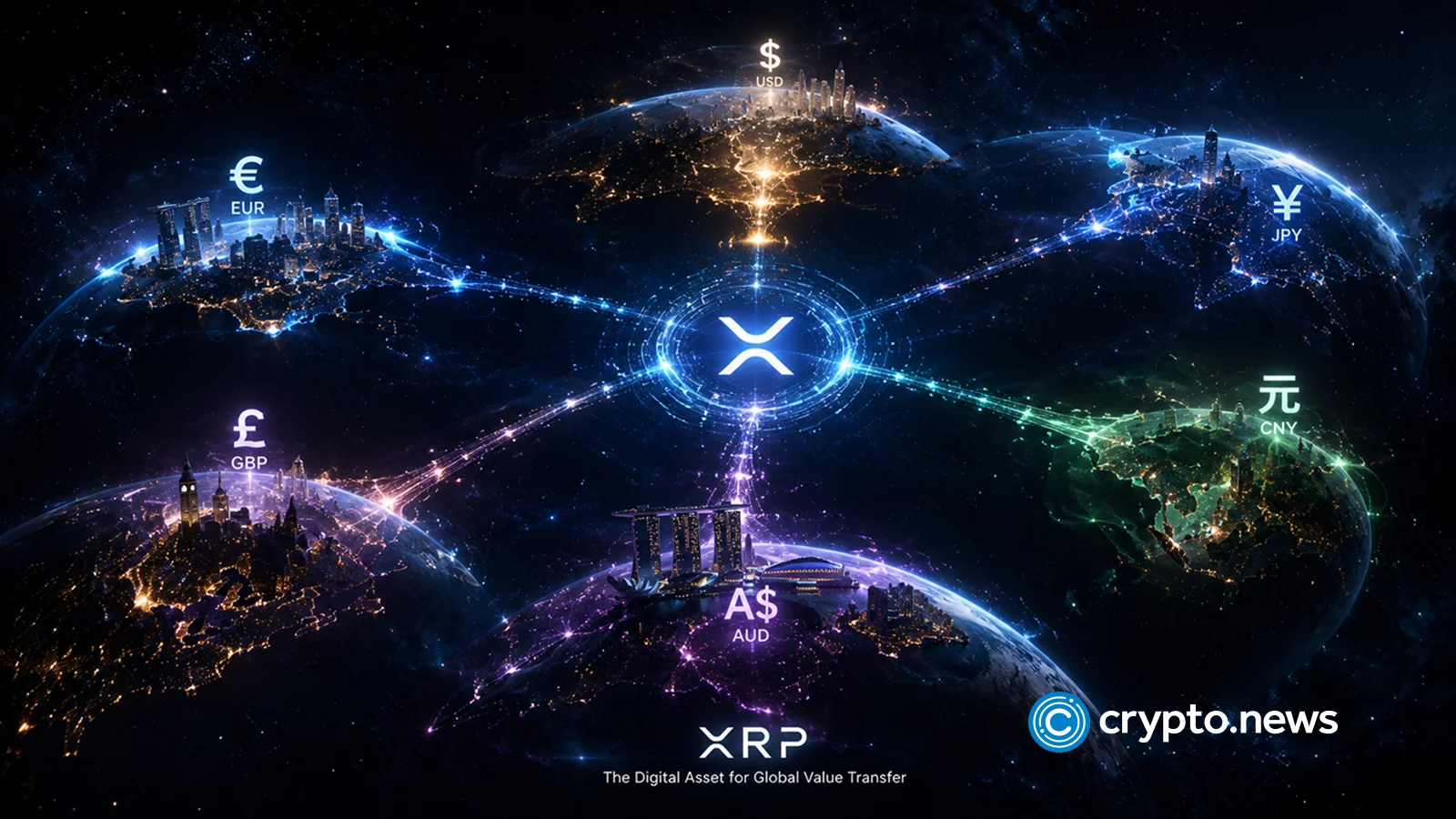
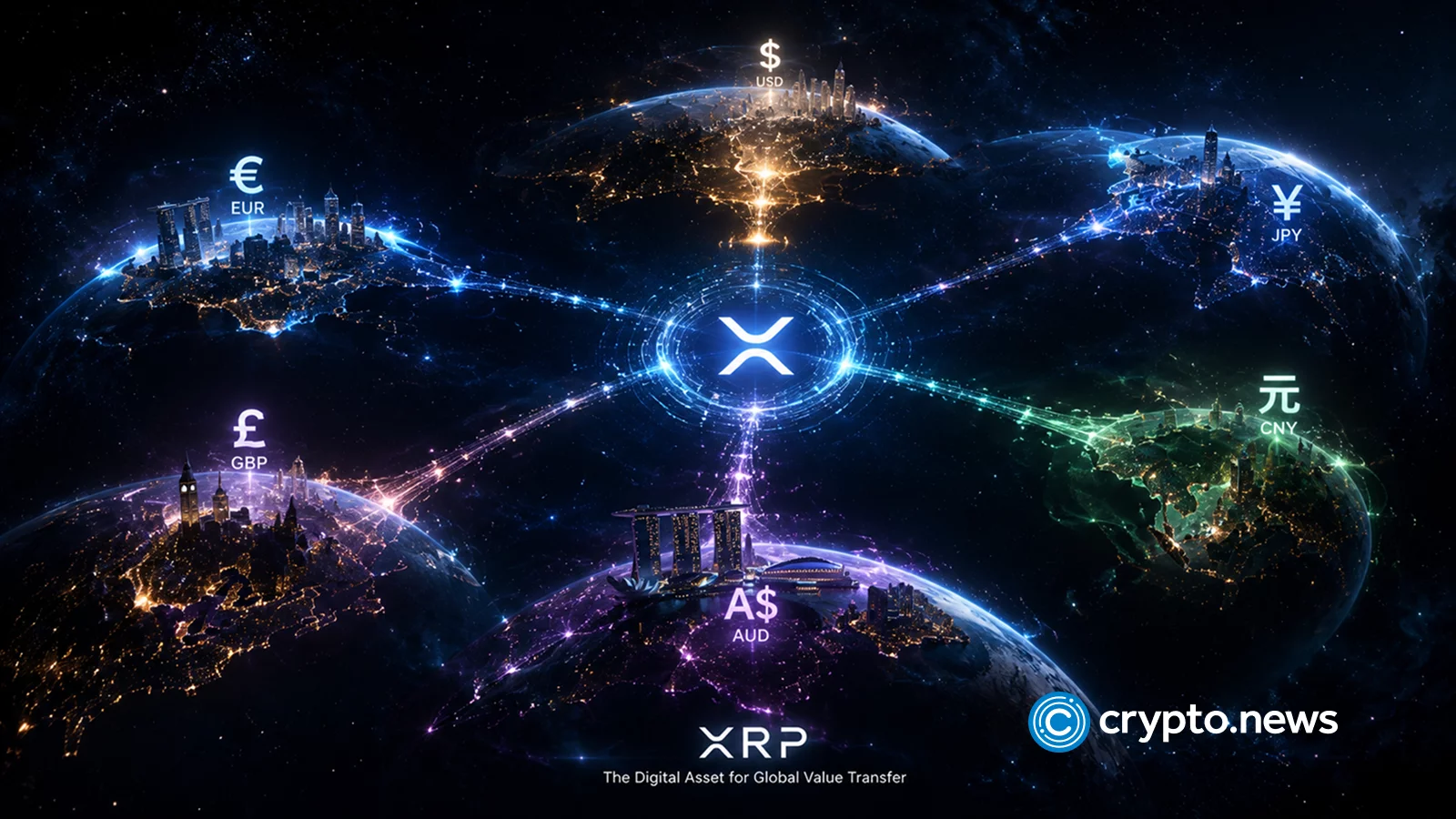
Canary Capital’s XRP exchange traded fund ended the first half of 2026 with $81.6 million fewer net assets even after positive capital share activity added $82.4 million.
Summary
- Canary XRP ETF ended June with $241.2 million, down $81.6 million from December despite creations.
- Net capital share transactions added $82.4 million, while operations reduced assets by $164.0 million overall.
- Unrealized XRP depreciation accounted for $159.7 million of the fund’s operational decline during 2026 midyear.
- XRP holdings climbed 31.7% to 231.3 million tokens, even as their dollar value declined sharply.
- XRPC posted a 42.84% NAV loss during 2026’s first six months, according to Canary data.
An Aug. 7 SEC filing shows that falling XRP valuations more than offset the increase in shares during the six months through June 30.
The unaudited Form 10 Q puts XRPC’s net assets at $241.17 million on June 30, down from $322.82 million at the end of 2025. Meanwhile, outstanding shares increased from 16.49 million to 21.77 million as the fund created 5.65 million shares and redeemed 370,000. XRP itself fell 43.27% from $1.84 to $1.04 over the same period.
Canary XRP ETF added shares while XRP erased value
The accounting behind the decline shows two forces moving in opposite directions. XRPC recorded $88.26 million from shares sold and $5.90 million from shares redeemed. The resulting $82.36 million increase from capital share transactions was outweighed by a $164 million decrease in net assets from operations.
Most of that operational decline came from XRP rather than fees. The fund recorded $159.70 million in unrealized depreciation, $3.59 million in realized investment losses and $716,898 in sponsor fees during the six month period. Unrealized depreciation was therefore almost twice the value added through net capital share transactions.
The contrast follows an initially strong reception for the fund. As crypto.news reported in its launch day coverage, XRPC generated about $58 million in trading volume when it debuted on Nasdaq in November 2025, making it one of that year’s largest new ETF launches by first day volume.
The $82 million figure is not simply investor cash inflow
The $82.36 million increase should not be treated as $82.36 million of retail investors depositing cash into XRPC. Canary’s SEC prospectus allows authorized participants to create and redeem baskets using either cash or XRP. Investors trading XRPC shares on Nasdaq do not directly create or redeem shares with the trust.
The latest filing shows the distinction clearly. XRPC purchased 34.13 million XRP valued at $52.20 million during the first half, while another 25.93 million XRP valued at $36.05 million entered the trust through in kind share creations. The fund also sold 3.93 million XRP worth $5.90 million to meet redemptions and reported no XRP distributed in kind for redemptions.
Accordingly, the filing supports describing the $82.36 million as net capital share activity rather than a direct measure of investor cash inflows. It does show that creation activity exceeded redemptions during the period.
XRPC held 31.7% more XRP but the position was worth less
XRPC’s XRP holdings increased from 175.63 million tokens at the beginning of 2026 to 231.28 million on June 30, a rise of about 31.7%. Yet the fair value of the XRP position fell from $322.97 million to $241.28 million because the underlying asset declined sharply.
That disconnect has also appeared across the wider U.S. XRP ETF market. In related ETF flow coverage, crypto.news reported in July that cumulative inflows across spot XRP funds remained well above their combined net assets as falling token prices reduced portfolio values.
The price weakness does not mean creations stopped altogether. More recent fund flow reporting showed XRP ETFs recording fresh net inflows on July 29 after a four day pause, while XRP remained near the $1.10 area.
XRPC assets slipped further after the June quarter
Canary’s latest published fund data shows XRPC remained below its June level after the reporting period. Net assets stood at $237.38 million on Aug. 7, with both NAV and market price at $10.85. Shares outstanding had increased to 21.87 million from 21.77 million at June 30.
The same data puts XRPC’s NAV return at negative 43.93% for 2026 through Aug. 7, compared with negative 42.84% through June 30. Its market price return was negative 44.22% year to date. Those figures show that the valuation pressure documented in the SEC report had not fully reversed by early August.
For XRPC, the next financial filing will provide another formal snapshot of whether continued share creation can offset movements in XRP’s price. The first half results already make the current dynamic clear: the trust accumulated substantially more XRP, but the falling value of each token left the fund with fewer dollars in net assets.


Grayscale withdrew registration statements for three planned U.S. altcoin exchange traded products on Aug. 7, ending the current registration process for its Cardano, Hedera and Polkadot funds.
Summary
- Grayscale withdrew Cardano, Hedera and Polkadot ETF registrations through three Form RW filings on Friday.
- All three filings state registrations never became effective and no securities were issued or sold.
- NYSE Arca and Nasdaq had already withdrawn corresponding listing proposals during September and November 2025.
- SEC generic listing standards now let qualifying crypto products bypass separate exchange rule change filings.
- Bittensor, Aave, BNB, NEAR and Zcash registrations remained preliminary in recent SEC filings reviewed.
SEC records show the three Form RW submissions were accepted between 4:33:37 p.m. and 4:36:47 p.m. ET, a span of exactly 190 seconds.
The filings are withdrawal requests, not SEC rejections. Grayscale said it no longer intends to proceed with the planned distribution of shares under those registration statements. It also confirmed that none had become effective and that no securities had been issued or sold.
Grayscale withdraws three S-1 registrations
The Cardano filing sought withdrawal of registration statement No. 333-289948, originally filed in August 2025. The Hedera request covered No. 333-290129, first filed in September 2025, while the Polkadot filing covered No. 333-289949, also first filed in August 2025.
Each request gives the same core explanation: the sponsor does not intend to proceed with the planned share distribution. The documents provide no separate commercial, demand related or regulatory reason. They also state that no preliminary prospectus had been distributed.
Meanwhile, the latest withdrawals follow earlier exits on the exchange listing side. SEC records show NYSE Arca withdrew its proposed rule change for the Grayscale Cardano Trust on Sept. 29, 2025. Nasdaq’s proposed rule changes for the Grayscale Polkadot Trust and Grayscale Hedera Trust were both withdrawn on Nov. 3, 2025.
Those exchange proposals were separate from the S-1 registrations withdrawn on Aug. 7. The Cardano review was covered as previously reported, while Nasdaq’s Polkadot proposal appeared in earlier related coverage. The Hedera review also entered the SEC process in March 2025, as crypto.news reported in its earlier coverage.
New SEC rules changed the crypto ETF approval route
The regulatory backdrop changed after those original exchange proposals were filed. In September 2025, the SEC approved generic listing standards allowing qualifying commodity based trust shares, including digital asset products, to list without a separate Section 19(b) rule change for each fund.
The faster exchange route does not replace Securities Act registration. A sponsor still needs an effective registration statement before selling shares. That distinction matters here because Grayscale withdrew the S-1 layer itself. A current overview of the U.S. ETF process explains how exchange listing and registration now operate separately.
What happens next for Grayscale’s altcoin ETF slate
Under Rule 477(b), an application to withdraw an entire registration statement before effectiveness is deemed granted when filed unless the SEC objects within 15 calendar days. The three requests therefore take effect without a separate approval order unless the Commission intervenes during that window.
The withdrawals do not establish that the SEC rejected ADA, HBAR or DOT products, and they do not prevent Grayscale from filing again later. For now, SEC records reviewed Aug. 10 show preliminary registrations for Bittensor, Aave, BNB, NEAR and Zcash at different stages. The Zcash registration received its third amendment on July 31.
Grayscale also has altcoin products further along. The SEC declared the Grayscale Avalanche Staking ETF registration effective on March 11 and the Grayscale Hyperliquid Staking ETF registration effective on June 2. Those differing statuses show the Aug. 7 filings are not evidence of a companywide retreat from altcoin exchange traded products.
What remains unknown is why Grayscale ended these three registrations together. The filings give no explanation beyond the decision not to proceed, leaving claims about investor demand, economics or regulatory resistance unconfirmed.
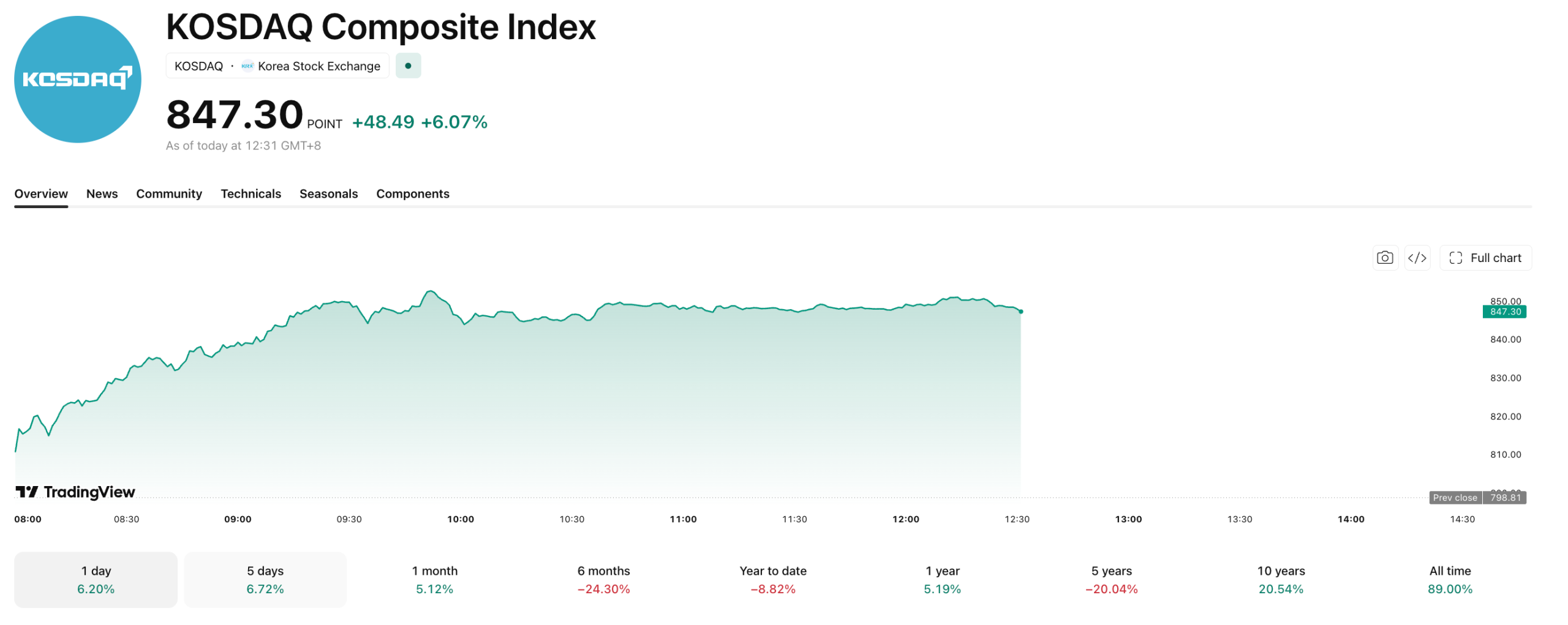
South Korea’s financial regulators wanted to calm a volatile stock market as they cracked down on leveraged ETFs. However, they have made it more chaotic instead.
Crackdowns on leveraged ETFs tied to Samsung Electronics and SK Hynix, which required retail investors to post higher cash deposits, did not cool speculation. Retail money rotated en masse into Kosdaq small caps, which have now surged 30% from their July 30 low.
How Restricting Chip ETFs Sparked a Kosdaq Surge
The Kosdaq index jumped 6.8% on Monday alone, enough to trigger a Korea Exchange program trading halt for the third time this month.

Park Wooyeol, a global ETF analyst at Shinhan Securities, described the shift plainly. “We are seeing more money flow to Kosdaq, particularly today,” he said. “Volatility-loving retail investors who have moved to the single-stock leveraged ETFs are expected to make a comeback to the Kosdaq.”
An AI-driven selloff had already sent the Kospi plunging nearly 40% from its June peak to a late-July low, triggering forced liquidations and unwinding billions in margin loans. BeInCrypto reported that the SK Hynix leveraged ETF collapsed 45%, with regulators admitting the products had amplified market swings.
When authorities then tightened cash deposit requirements, they did not account for where that speculative energy would flow next.
Kosdaq vs Kospi: Best Divergence Since the Year 2000
The Kosdaq surged last week while the Kospi slipped. The small-cap gauge is now on track to outperform the benchmark by its widest gap since the dot-com era.

Korea’s retail investors have a well-documented appetite for high-volatility trades that has shaped even its crypto markets, and BeInCrypto found that Bitcoin was posting lower volatility than the Kospi at the height of the AI selloff.
The traders now flooding into small caps are the same cohort that drove the chip ETF boom. Regulators remain one step behind.
Whether the Kosdaq rally has genuine legs depends on whether Korea’s AI selloff has truly bottomed. If this is just another venue for the same speculative cycle, the circuit breakers will keep tripping.
The post South Korea’s Regulators Accidentally Triggered a 30% Small-Cap Rally appeared first on BeInCrypto.


Bitcoin rose above $65,000 on Monday, up nearly 3% over the week, with July inflation data due Wednesday at 8:30 a.m. ET after Friday’s weak jobs report eased worries the Federal Reserve would need to raise rates.
Ether traded near $1,919 and is also up almost 3% on the week. BNB gained 0.3% to $603 and matched that weekly move. Solana was the strongest major, up 1% on the day to nearly $77 and almost 5% over seven days. Tron held at 33 cents.
XRP was the only major in the red on both views, slipping 0.4% to $1.03 and down 4% on the week. Hyperliquid’s HYPE fell over 1% to $54 but remains up over 3% on the week, and dogecoin eased to under 7 cents.
Equities set the tone. The MSCI All Country World Index rose 0.1%, its seventh gain in eight sessions, with the Asian gauge up 0.6% after Friday’s soft jobs report sent the S&P 500 to a record.
Chipmakers led, with a regional semiconductor gauge rallying more than 1.5% on gains at Taiwan Semiconductor and SK Hynix.

New York Stock Exchange President Lynn Martin said on Aug. 10 that the exchange is continuing to develop infrastructure for onchain settlement of tokenized securities, months after outlining plans for a dedicated digital trading platform.
Summary
- NYSE President Lynn Martin said the exchange is developing onchain settlement infrastructure for tokenized securities.
- NYSE participated in DTC’s July tokenization pilot, which processed live production trades across asset classes.
- NYSE’s January platform plan targets 24/7 trading, instant settlement, fractional shares and stablecoin based funding.
- An April SEC filing enabled tokenized eligible securities to trade alongside traditional shares on NYSE.
- DTCC plans to launch its tokenization service in October after July trades involving 30 firms.
Speaking at a National Assembly seminar in Seoul, Martin also confirmed NYSE participated in The Depository Trust Company’s July tokenization initiative.
The remarks provide a fresh update on a project that has moved from an early development announcement into live industry testing. NYSE first disclosed the platform in January, while regulatory filings and its participation in DTC’s July production transactions have since provided clearer details about how tokenized securities could fit into existing U.S. market infrastructure.
NYSE tokenized securities plan moves beyond January announcement
NYSE parent Intercontinental Exchange first announced the platform on Jan. 19. The planned venue is designed to combine NYSE’s Pillar matching engine with blockchain based post trade infrastructure. ICE said it would support 24/7 trading, immediate settlement, fractional shares, dollar denominated orders and stablecoin funding.
Subject to regulatory approvals, the separate digital venue would support both tokenized versions of traditional securities and securities issued natively in tokenized form. Holders would retain conventional dividend and governance rights. The system is also being designed to support multiple blockchain networks for settlement and custody.
As previously reported in the exchange’s January plans, the project represents a broader attempt to bring blockchain settlement into regulated U.S. equities rather than creating an offshore tokenized stock product. Martin said in Seoul that NYSE views the industry as being at a “critical turning point between traditional finance and DeFi.”
DTC pilot gave NYSE a live production test
Martin said NYSE participated in DTC’s tokenization pilot in July. DTCC independently confirmed NYSE among more than 30 financial and digital asset companies involved in live production transactions completed on July 15. Participants also included BlackRock, Goldman Sachs, JPMorgan, Nasdaq, Circle, Ondo Finance, Citadel Securities and Vanguard.
The DTCC release said the exercise converted securities held at DTC into tokenized representations and used them in real transactions. Tests covered equity delivery versus payment, Treasury and repo transactions, securities lending, collateral pledges, equity transfers and central counterparty margin processes. The transactions ran across DTCC’s private Besu network and the public Canton network.
The July work was therefore more than a technical sandbox. It used DTC’s production environment and followed a December 2025 SEC staff no action letter permitting DTC to operate a three year tokenization program under specified conditions. DTCC plans to launch its broader Tokenization Service in October. As crypto.news reported in recent pilot coverage, the effort brings major traditional and crypto firms onto common settlement infrastructure.
SEC filing brings tokenized shares inside existing market rules
NYSE has also taken a separate regulatory step. An April SEC filing established rules allowing eligible securities to trade in tokenized form on NYSE during DTC’s pilot program. The filing became effective upon submission under the applicable SEC rule process.
Under that framework, tokenized shares can trade alongside traditional shares on the same order book when they have the same ticker, CUSIP, rights and privileges. Eligible securities include Russell 1000 components and exchange traded funds tracking major indexes. The tokenization choice does not alter order priority. In related regulatory coverage, crypto.news previously reported how the proposal keeps the assets inside existing national market rules.
There is an important distinction between that framework and NYSE’s planned dedicated digital venue. Trades handled through the current DTC pilot continue settling on a T+1 basis, according to the SEC filing. By contrast, NYSE’s separately announced digital platform is intended to support immediate settlement and 24/7 trading and remains subject to regulatory approvals described by ICE.
What happens next for NYSE’s onchain platform
NYSE has also been building the infrastructure around the proposed venue. In March, it signed an agreement with Securitize, naming the company as the first digital transfer agent eligible to mint blockchain native securities for issuers on the upcoming platform. Securitize Markets is also expected to participate as a broker dealer, subject to applicable requirements.
The next concrete milestone is DTCC’s planned October launch of its Tokenization Service following July’s production transactions. NYSE’s April rules also state that the exchange will provide members at least 30 calendar days of notice before beginning tokenized trading under the DTC pilot framework.
For the separate 24/7 digital platform, ICE has not replaced its original qualification that the venue is subject to regulatory approvals. Martin’s Seoul remarks instead show that NYSE continues pursuing the project while testing tokenized market infrastructure through DTC. Her comments frame onchain settlement as a potential part of global financial infrastructure, but its broader rollout still depends on regulatory and operational steps.
Crypto World
XRP is getting left behind in the crypto bounce even as ETFs keep attracting investor money


Payments-focused cryptocurrency XRP dropped about 5% last week, even as bitcoin , ether , and solana (SOL) each climbed 1% to 4%. The broader crypto market added 1.4%, pushing total market capitalization to $2.19 trillion. XRP is currently hovering near $1.03.
The underperformance is puzzling because XRP exchange-traded funds still attracted net investor capital for a fourth consecutive week. The inflows, however, have slowed sharply, collapsing roughly 93% week-over-week to around $1 million, according to data source SoSoValue. Meanwhile, bitcoin and ether funds pulled in hundreds of millions.
Traders and analysts on X and elsewhere point to several overlapping explanations for the price apathy. Regulatory uncertainty tops the list: the Senate has delayed consideration of the CLARITY Act, the legislation many view as key to clarifying XRP’s status and unlocking broader institutional participation. That vote is not expected until mid-September at the earliest.
On the flow side, the setup currently looks balanced.
“XRP’s positioning looks patient in its own right, with order flow staying large even as volume metrics turn neutral — quiet absorption rather than capitulation or a confirmed breakout,” Iliya Kalchev,, analyst at Nexo, said in an email.
Still, long-term optimism remains high.
Crypto World
US Export Control Meant to Cripple China’s AI. But They Created Its Most Valuable Company
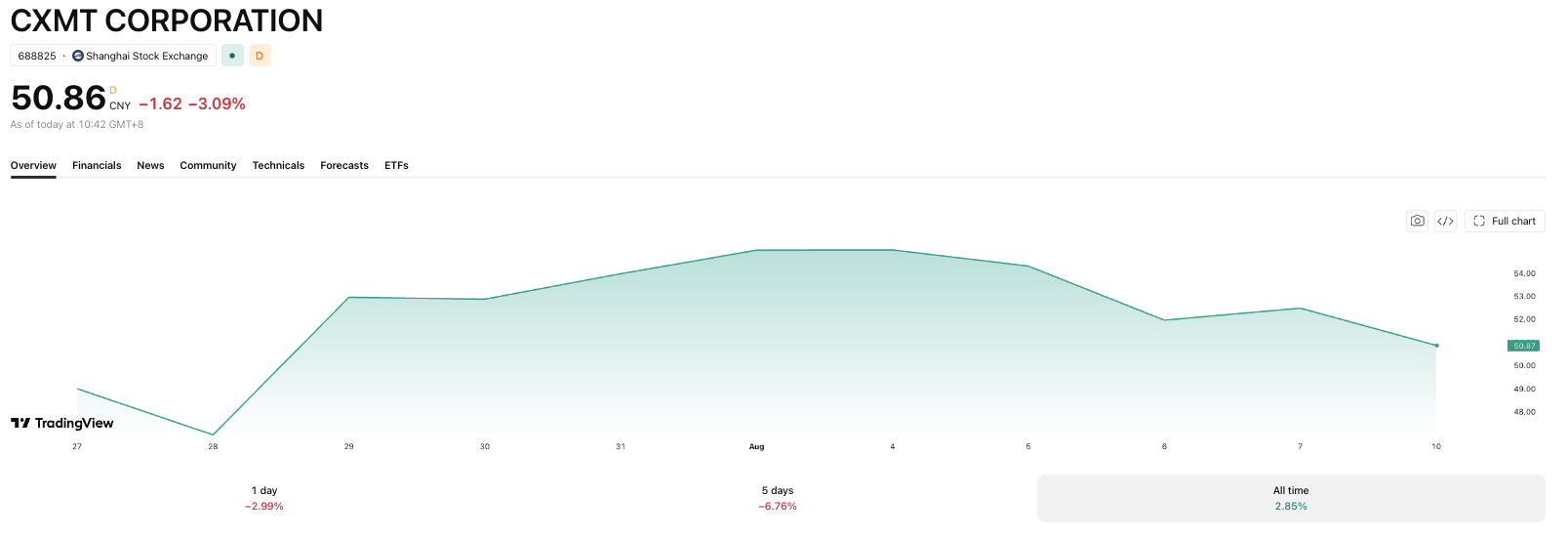
When Washington blocked China from buying advanced chips, the goal was to slow Beijing’s AI ambitions. It may have accelerated them instead.
CXMT Corp, a memory chipmaker once dependent on foreign technology, debuted on Shanghai’s STAR Market last month and surged 466% in a single session. The stock eclipsed Industrial and Commercial Bank of China to become the country’s most valuable listed company. CXMT raised $9.8 billion in one of China’s biggest IPOs in years, with proceeds going toward the chip capacity Beijing needs to win the AI race.
From Containment to Catalyst
US export controls cut off China’s access to the semiconductors that power AI systems. The logic was direct: no advanced chips meant no path to AI leadership. When Washington announced its crackdown on AI chip exports to China, the restrictions targeted Nvidia, AMD and their successors. The result, according to CXMT’s trajectory, was that China built rather than bought.

Beijing cleared the runway fast. CXMT went from filing to trading in under eight months through a preliminary review process reserved for strategically vital companies, a pace that normally takes years. When tech stocks slid in July and threatened to derail the debut, regulators and state funds intervened within days to stabilize sentiment.
Chris Miller, author of Chip War and professor at Tufts University, acknowledged the bind. “US firms have had greater access to capital, but financing costs are rising,” he told Bloomberg. Chinese domestic compute is still more expensive because domestic chips lag on quality, but the gap is closing.
The Cost Advantage America Didn’t See Coming
Beijing also rewired how it funds the race. China traditionally backed strategic industries with subsidies and state lending. Now it taps the $26 trillion sitting in household savings accounts, the largest pool of private capital in the world.
Chinese tech firms borrowed at an average coupon of 1.9% this year, more than 300 basis points below US peers paying 5.25%, the widest gap since at least 2015. That cost advantage compounds every quarter.
The IPO pipeline behind CXMT is long. DeepSeek is weighing a listing at a $71 billion valuation. Moonshot AI, whose Kimi K3 model rattled Silicon Valley, is filing in Hong Kong. Z.AI and MiniMax are next. UBS says China’s leading AI models cost less than 10% of what OpenAI and Anthropic spend to train. API prices for major Chinese models run below 20% of comparable global offerings.
Washington set out to limit China’s options. It may have forced Beijing to build better ones.
The post US Export Control Meant to Cripple China’s AI. But They Created Its Most Valuable Company appeared first on BeInCrypto.


The common view says open-weight AI is bad news for frontier labs like OpenAI and Anthropic. ARK Invest’s Cathie Wood argues the opposite. An open-weight AI model is one in which the creator releases the underlying parameters publicly. It allows anyone to download, run, and modify it on their own hardware without paying for access.
Wood says the real threat of open-weight models is not that they replace frontier AI.It is that bad actors use them to attack enterprises. That security pressure, she argues, forces companies to keep buying frontier-grade AI for protection. This makes Open AI and Anthropic richer, not poorer.
Some Models Are Arming the Threat
Wood’s case inverts the popular investment narrative. As open-weight models from Meta, Mistral, and DeepSeek grow more capable, the conventional view is that enterprises will shift away from expensive frontier subscriptions.
Wood’s response: The more powerful open models become, the more dangerous the attack surface, and the stronger the enterprise case for frontier AI as the defense layer.
The UK’s AI Security Institute found that open-weight models now match frontier cyber capabilities from just four to seven months ago. ARK’s own AI primetime report flagged expanding AI infrastructure spend as a defining trend of the decade.
Wood’s Pick for the Revenue Winners
Wood named OpenAI, Anthropic, and SpaceXAI, as the companies most likely to take the majority of model-driven revenue. ARK holds positions across all three.
“Ironically, contrary to the narrative, open weight models are becoming an important reason that OpenAI, Anthropic, and ultimately, in our view, SpaceXAI are likely to take the vast majority of model-driven AI revenue,” Wood said.
Anthropic filed its S-1 at a near $1 trillion valuation, with OpenAI eyeing a September 2026 debut. Wood’s thesis reframes both companies not as casualties of open-source disruption, but as its biggest winners.
That logic only strengthens over time. The cheaper AI gets for attackers, the more enterprises need the best defense available.
The post Cathie Wood Says Open Source AI Is Making OpenAI and Anthropic Richer, Not Poorer appeared first on BeInCrypto.
Crypto World
BTC, ETH, XRP Whales Step Up Accumulation as CryptoQuant Sees the Bear Market Nearing Its End

Large Bitcoin, Ether, and XRP holders continued accumulating during recent market weakness, analytics firm CryptoQuant said.
The firm’s weekly report, Buying the Bear: A Signal of the Bear Market’s Final Stage, examined the recent accumulation by the largest wallets. It said the steady buying reflects behavior often seen during the closing phase of a bear market.
Whales Accumulate Bitcoin, Ethereum, and XRP
For Bitcoin, wallets linked to major holders, excluding exchanges and miners, expanded their combined balance to about 3.06 million BTC this year. Buying accelerated after Bitcoin fell below $60,000 in June, though holdings remain below the 2025 cycle peak.
Ethereum showed an even stronger accumulation trend among its largest holders. Wallets holding between 10,000 and 100,000 ETH reached a record of 19.6 million ETH. Addresses with more than 100,000 ETH have added about 1.8 million ETH since mid-2025, lifting their holdings by roughly 70%.
The accumulation trend contrasted with activity among smaller Ethereum holders. CryptoQuant noted that wallets outside the largest groups reduced their combined balance by about 2.7 million ETH since January, showing a growing divide between large and smaller holders.
A similar shift was also visible in XRP, where large holders continued increasing their positions despite fears and liquidations.
Realized Prices Point to Late Bear Market Conditions
The recent accumulation comes as all three assets trade near key realized price levels. Realized price is widely used to assess market cycles because it estimates the average acquisition cost of holders.
Bitcoin was trading around $65,000 compared with a realized price of roughly $52,900, while Ether changed hands near $1,920 against a realized price of about $2,450. XRP traded near $1.04 with a realized price of approximately $0.75, levels the firm described as consistent with late-stage bear market conditions.
According to CryptoQuant, the combination of whale accumulation and prices trading near realized values is consistent with the closing phase of a bear market. The firm added that further downside remains possible before a market bottom is confirmed.
The post BTC, ETH, XRP Whales Step Up Accumulation as CryptoQuant Sees the Bear Market Nearing Its End appeared first on CryptoPotato.


The first sign that quantum computing has broken modern cryptography probably won’t be a splashy theft of Satoshi Nakamoto’s dormant Bitcoin. It could just be a wave of unrelated crypto wallet breaches with no trace of how an attacker did it, according to the founder of blockchain startup Quantus.
“When someone cracks your key, you don’t get a memo saying how they did it,” Christopher Smith, CEO and co-founder of Quantus Network, told Cointelegraph. A sufficiently powerful quantum computer could derive a private key from public keys exposed onchain, allowing an attacker to move funds without compromising a wallet, device or exchange’s internal systems.
This makes the arrival of “Q-day” — a hypothetical future moment when quantum computers become powerful enough to break standard public-key cryptography — unusually difficult to detect. In a theft involving a highly secure organization, “the only forensic evidence would be that there was no breach,” Smith said.
Smith’s warning comes as advances in quantum algorithms have reduced estimates of computing resources needed to attack the elliptic-curve cryptography used by major blockchains.
First target may not be Satoshi’s Bitcoin
Much of the fear around Q-day in crypto is what will happen if a quantum computer cracks the keys securing Satoshi Nakamoto’s estimated Bitcoin holdings, worth $63 billion at the time of writing, which could be suddenly dumped on the market.
However, Smith said the first targets may be military systems and state secrets, while crypto attackers could go for even more valuable keys.
“If I’m focusing on blockchain, what’s the single most valuable key? It’s probably Tether’s minting key,” Smith said. A quantum attacker could mint tokens out of thin air from an administrative wallet and dump them on the market before the issuer could respond, he added.
USDT is a multi-chain stablecoin, and some of the networks on which it is deployed are already actively working on post-quantum migration.
Related: Jim Cramer plans to sell his Bitcoin over quantum fears as BTC rises 1.6%
Another theory is that attackers make a quieter opening move.
Sean Cheetham, a security researcher at Blockchain Capital, said an attacker would more likely target hot wallets at exchanges “that aren’t going to ring alarm bells rather than stealing Satoshi’s coins.”
Smith said an attacker may disguise a quantum theft as an ordinary compromise.
“There’s an alternative scenario where they… have these plausible, deniable [explanations]: ‘Oh, somebody just lost their keys somehow,’” he said.
Q-day timeline hard to pin down
In March, Google accelerated its post-quantum migration timeline to 2029 as an AI-assisted breakthrough showed elliptic curve cryptography can be cracked with far fewer physical qubits than previously forecasted.
NGRAVE CEO Roy Blackstone said earlier quantum forecasts failed to account for the parallel development of AI.
“Most threat models assumed we had well into the next decade before quantum technology could realistically crack the cryptography securing public keys, but it did not account for how fast AI would develop alongside it.”
Despite growing urgency, there is little agreement on when a quantum computer capable of breaking modern cryptography will be ready.
Smith, whose company is developing a blockchain network aiming to be quantum-resistant from launch, said there was a “50-50” chance it could happen by 2028, arguing that continued AI-assisted improvements in quantum algorithms and hardware research are making forecasts less reliable.
Cheetham said the early 2030s “definitely is almost a certainty” and that an earlier arrival was “more of a trailing probability.”
Michael Coates, the Solana Foundation’s chief information security officer, declined to give an estimate during an earlier interview, saying “there’s no way to know.”
“If you talk to people in the industry, it is always five years away, and it’s been that way for 10 years or more now. Perhaps today people say it’s four years away,” he said. But the uncertainty is not a reason to delay, he added.
“Thankfully, blockchains aren’t waiting and have started migrating to post-quantum signatures,” said Blackstone. “The damage would be catastrophic if they didn’t.”
Magazine: How AI just dramatically sped up the quantum risk for Bitcoin
Usher Responds To Claims He Used A Lookalike At Concert

Yes this is prop money. I just wish the IRS would believe me

Vanessa Feltz rants at British Airways as she’s left stranded with her grandchildren and hundreds of other passengers in Sardinia but jokes ‘maybe I’ll find a man to marry me in this queue’


-

 Fashion3 days ago
Frugal Friday’s Workwear Report: Cap-Sleeve Pointelle Crewneck Sweater
-

 Fashion2 days ago
Weekend Open Thread: Mattifying Sunscreen
-

 Sports4 days ago
Jordan Coyle & Cordiamo take Laya Arena Stakes at RDS
-

 News Videos2 days ago
Can Astrology Help Find Gold and Silver Trends? A Financial Astrology Guide
-
 Business4 days ago
US stocks: Dow closes at record on Mideast optimism; SpaceX, AMD drag Nasdaq
-
 Crypto World6 days ago
US Tech Stocks See Largest 5-Week Inflow in History: Can Nasdaq Break Its Downtrend?
-

 Politics4 days ago
Reform UK And Greens Sink To Lowest Favourability Ratings To Date
-

 Business5 days ago
Nvidia Stock Climbs 2.5% as Chip Sector Rally Builds Ahead of AMD Earnings, Nvidia’s Own Report Looms
-

 Crypto World6 days ago
Polymarket targets $20 billion valuation as competition heats up in prediction market sector
-

 Tech5 days ago
OpenAI, Anthropic AI agents targeted real people and systems in cyber tests
-

 Business4 days ago
Supply chain issues impact Ingredion
-
 Crypto World6 days ago
CLARITY Act Senate Vote Locked In, But 60-Vote Hurdle Looms Large
-

 Tech2 days ago
Rinn Pharma & Biopharma to join NordicPharmaTrain network
-

 Crypto World6 days ago
The Senate has one week: CLARITY’s last August window
-
 Crypto World6 days ago
California Wildfire Bets Expose Polymarket’s Dark Side
-
 Crypto World5 days ago
Dow and S&P 500 Hit Records on AI Earnings: When Will the Bubble Burst?
-

 Business18 hours ago
Datadog: Best Of Breed For Multiple Reasons
-

 Business5 days ago
McDonald’s (MCD) Q2 2026 earnings
-

 Business6 days ago
CNH Industrial Shares Jump Over 15% After Beating Estimates and Raising Full-Year Earnings Guidance
-
 Tech6 days ago
Qwen3.8-Max arrives with a bold claim: it outperforms GPT-5.6 Sol Max and Fable 5 on agentic computer use
You must be logged in to post a comment Login