
Crypto World
How Americans use FT Mining cloud mining to earn passive income in Bitcoin, Ethereum, and Dogecoin daily



As the regulatory framework for the U.S. cryptocurrency market gradually matures, an increasing number of investors are seeking compliant and efficient ways to acquire digital assets.
Thanks to its innovative business model and rigorous security standards, the FT mining cloud mining platform is emerging as the preferred choice for U.S. investors looking to obtain Bitcoin (BTC), Ethereum (ETH), and Dogecoin (DOGE) on a stable, daily basis.
New opportunities for compliant cloud mining in the U.S.
Assurance of compliant operations:
FT mining holds a license from the UK Financial Conduct Authority (FCA) and complies with financial service regulations across multiple U.S. states. The platform ensures the security of user funds through third-party custodial services and adheres to tax reporting requirements, providing a fully compliant mining environment for U.S. investors.
Enhanced security:
The platform utilizes top-tier security technologies from McAfee® and Cloudflare® to ensure your digital assets remain protected, wherever you are.
24/7 reliability:
With 100% uptime and round-the-clock technical support, the mobile app ensures uninterrupted mining.
Instant rewards:
New users receive an immediate $15 sign-up bonus and a $0.75 daily login bonus upon registration.
Diverse contract options:
Users can choose from a variety of mining plans—ranging from low-cost daily contracts to long-term investments—to suit different budgets and goals.
How to start your free mining journey with FT Mining
Step 1: Choose FT mining as your service provider:
FT mining offers a simple and transparent mining process. The platform provides daily returns on mining contracts and flexible payment options, making it accessible to everyone.
Step 2: Register an account:
Visit the official FT mining website at https://ftmining.com
Enter your email address to create an account, log in, and access your dashboard to start mining immediately.
Step 3: Purchase a mining contract:
FT mining offers a variety of contract options to suit different budgets and goals. Users can choose from the following:
Starter Contract: $100 — 2-day term — Total profit approx. $108
Stable Contract: $800 — 5-day term — Total profit approx. $852.80
Professional Contract: $5,000 — 20-day term — Total profit approx. $6,520
Premium Contract: $25,000 — 28-day term — Total profit approx. $38,300
Visit the official website for more contract details.
Once an order is completed, earnings are automatically credited to your account within 24 hours. Once your account balance reaches $100, you can withdraw funds to your personal wallet or reinvest them to generate further returns.
Success stories from U.S. investors
Michael, a tech professional from California, shares:
“I allocated a portion of my funds to FT mining’s multi-currency mining packages, and now I earn BTC, ETH, and DOGE consistently every day. This diversified approach allows me to maintain steady returns even in a volatile market.”
Sarah, a retired fund manager from New York, states:
“As a traditional finance professional, I place great importance on platform compliance and transparency. CryptoEasily provides daily earnings reports, and checking my returns every morning has become a habit. It is far easier than any side hustle I’ve done in the past.”
About FT mining
FT mining is a UK-licensed cloud cryptocurrency mining platform. Established in 2021 and headquartered in London, the company is dedicated to providing efficient and affordable cryptocurrency mining solutions by leveraging advanced hardware, intelligent algorithms, and cloud infrastructure. With over 10 million users across more than 180 countries and regions, FT mining delivers convenient and scalable cryptocurrency mining services to a global audience.
Visit the official FT mining website or download the official app today to experience free cloud mining services and start earning steady daily passive income with ease.
Official Website: https://ftmining.com
App Download: https://ftmining.com/xml/index.html#/app
Customer Service Email: [email protected]
Disclosure: This content is provided by a third party. Neither crypto.news nor the author of this article endorses any product mentioned on this page. Users should conduct their own research before taking any action related to the company.



The London Stock Exchange has partnered with Kraken parent Payward to bring shares of the 100 largest London-listed companies onto the xStocks tokenization framework, opening the door for the products to eventually trade through the exchange’s planned 24-hour venue.
Summary
- London Stock Exchange and Kraken parent Payward will bring the 100 largest LSE-listed companies to the xStocks framework.
- The tokenized shares will be available to investors across more than 110 countries, though xStocks remain unavailable to UK investors.
- LSE plans to support xStocks trading on its LSE 24 venue, subject to regulatory approval.
- Payward and LSE will explore shares issued directly onchain with the same rights as traditional stock.
- xStocks have generated more than $40 billion in trading volume, including nearly $20 billion settled onchain.
Payward and the London Stock Exchange said Tuesday that the first batch of U.K. equities will become available as xStocks in the coming weeks, extending a tokenized stock platform that has already generated more than $40 billion in total trading volume. Nearly $20 billion of that activity has settled onchain, while the products have attracted more than 200,000 holders.
London Stock Exchange tokenization will start with 100 companies
Under the partnership, shares of the 100 largest companies listed on the London Stock Exchange will be made available through Payward’s xStocks framework.
Each xStock is backed one-to-one by the corresponding underlying security. The blockchain-based products can trade around the clock through supported centralized exchanges, move into self-custody wallets and interact with compatible onchain applications.
The planned London rollout would give eligible investors across more than 110 countries access to tokenized versions of U.K.-listed companies. xStocks are not currently available to investors based in the United Kingdom.
The agreement comes as Payward has been taking the framework beyond its original focus on U.S.-listed companies.
Crypto.news previously reported in July that Payward had partnered with financial infrastructure provider GTN to expand xStocks internationally, beginning with Hong Kong-listed shares before targeting the U.K., Europe, South Korea and other approved markets.
Under that arrangement, GTN agreed to provide execution, custody and record-keeping infrastructure spanning more than 90 international financial markets. At the time, xStocks supported more than 500 tokenized assets and had generated over $37 billion in transaction volume.
Activity has continued to climb since then. By Aug. 18, xStocks had processed more than $38 billion in total transaction volume as Kraken rolled out 7,000 U.S. stocks to eligible customers across the European Economic Area.
The service put conventional U.S.-listed shares alongside more than 700 xStocks and over 600 crypto assets within the same Kraken account. Traditional stock trading in the EEA is provided through Payward Europe Digital Solutions (CY) Limited, a Cyprus investment firm authorized under the European Union’s MiFID II framework.
Payward’s figures released with the LSE partnership now put xStocks volume above $40 billion, with nearly half of that activity having settled directly onchain.
LSE 24 could become a regulated venue for xStocks
The partnership extends beyond distributing tokenized London-listed shares through Payward’s existing network.
Subject to regulatory approval, the London Stock Exchange plans to list xStocks and support their trading on LSE 24, its recently announced round-the-clock venue. The platform is expected to eventually cover tokenized equities from the U.S., European Union, U.K. and Hong Kong, with other asset classes potentially added as the framework develops.
The exchange had already been preparing to extend access beyond conventional London market hours.
In July, the LSE was reported to be preparing a separate overnight market targeted for the first half of 2027. Initial plans called for the venue to offer exchange-traded products linked to the U.K. and U.S. stock markets.
LSE CEO Julia Hoggett said at the time that retail traders were showing interest in using London’s time zone to gain exposure to both U.K. and international assets.
The agreement with Payward now adds tokenized securities to the exchange’s plans for trading outside its standard session, although their listing remains subject to regulatory approval.
Payward co-CEO Arjun Sethi described the arrangement as a combination of regulated financial markets and blockchain infrastructure.
“For years, the assumption was that crypto and traditional finance were on a collision course, and one of them would have to lose. That was never the real story,” Sethi said.
Hoggett took a more cautious position on how tokenized markets should be developed.
Tokenization “must develop in a way that preserves the trust, rights and role of regulated markets,” she said.
Payward and LSE could issue shares directly onchain
A separate part of the partnership could take the companies beyond blockchain representations backed by conventionally issued shares.
Payward and the LSE said they will explore natively LSE-issued equity tokens, which would allow exchange members to issue and service shares directly onchain.
Under the proposed model, the blockchain-issued securities would be fully fungible with their traditional counterparts and carry the same rights as conventional shares.
That differs from the current xStocks structure, where tokens are issued against securities held through the product’s underlying custody framework.
Payward has been expanding how xStocks can be used as the platform gains volume.
In July, Kraken began allowing eligible customers outside the United States to use selected xStocks as collateral for futures and margin trading on Kraken Pro.
Ten assets were accepted when the feature launched, including tokenized versions of Apple, Nvidia, Tesla, Strategy, Robinhood, Alphabet and several major exchange-traded funds.
Futures collateral became available to eligible clients outside the U.S., including those in the EEA, while margin collateral was offered to qualifying users outside the U.S. but excluded EEA customers.
Kraken applies different collateral haircuts and limits depending on the asset. Broad-market products such as tokenized SPY and QQQ received 10% haircuts at launch, while several individual stocks carried 20% haircuts and more volatile securities received higher discounts.
The feature lets qualifying investors maintain exposure to tokenized shares while using the same holdings as collateral for other positions.
Tokenized equities are moving into existing market infrastructure
Tokenized equities have increasingly moved from crypto-native platforms toward infrastructure operated or connected to established financial institutions.
The LSE agreement puts Payward’s xStocks within a framework that could eventually include direct trading through a regulated stock exchange venue, while the companies’ work on native equity tokens would move issuance itself onto blockchain infrastructure.
For investors, the existing xStocks framework differs from conventional brokerage-held shares in how the assets can be transferred. Traditional equities remain inside market and custody systems that operate according to exchange and settlement schedules, while compatible tokenized products can be transferred between wallets and supported blockchain applications outside those trading hours.
Payward has said the framework is intended to let tokenized assets move through centralized exchanges, self-custody environments and onchain financial applications while remaining backed by their underlying securities.
Its international expansion has accelerated during 2026. The GTN partnership established plans to add securities from several major equity markets, while Kraken’s EEA launch paired thousands of conventional U.S. shares with hundreds of xStocks within the same regulated account.
The London Stock Exchange partnership would extend that model to some of the largest publicly listed companies in the U.K. and could eventually allow the tokens themselves to trade through LSE 24 if regulators approve the plan.
Industry participants have meanwhile been working on using tokenized securities for functions beyond direct trading, including collateral and credit markets. Kraken’s July collateral rollout is one example of tokenized shares being used to support other financial positions without requiring investors to first sell the underlying exposure.
Payward and the LSE have not provided a specific launch date for the first U.K.-listed xStocks beyond saying they will become available over the coming weeks.
The companies have similarly not given a timetable for natively issued LSE equity tokens, with that part of the agreement remaining an area they plan to explore.
London Stock Exchange Group shares fell roughly 2% in early London trading Tuesday.
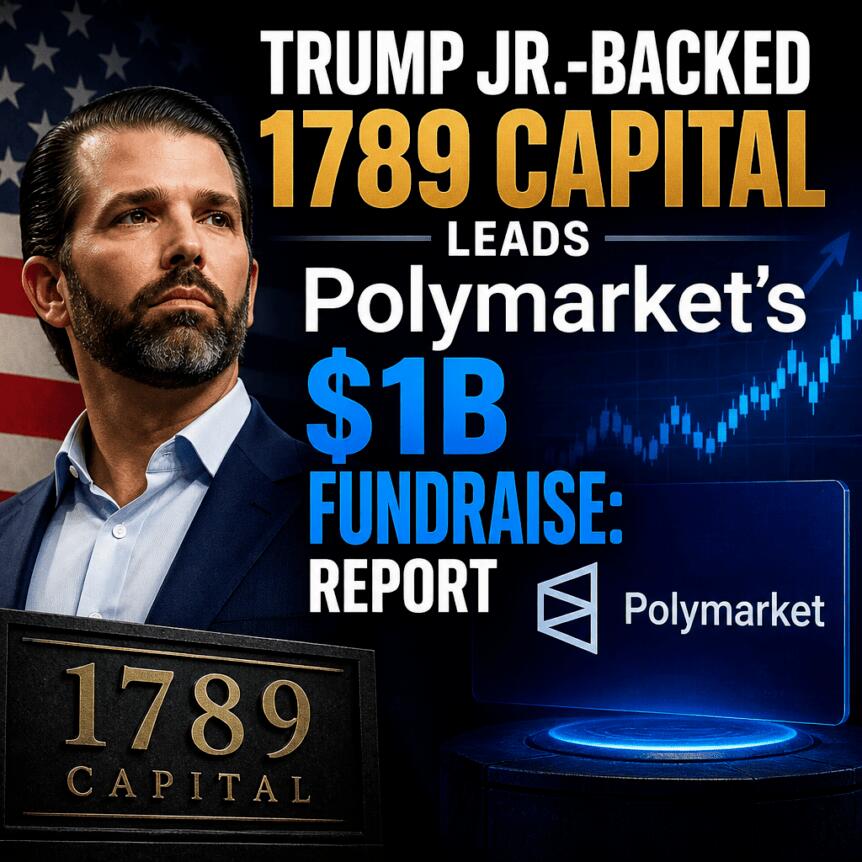
A Trump Jr.-linked investment firm is reportedly preparing to put roughly $300 million into Polymarket as part of a much larger funding effort that could value the prediction market platform at $21 billion. According to the Wall Street Journal, 1789 Capital—where Donald Trump Jr. is a partner—would participate in a $1 billion round that includes the additional $300 million commitment.
If the reported terms are accurate, the investment would lift 1789 Capital’s total disclosed exposure to Polymarket to about $500 million, potentially positioning the firm among the platform’s most significant backers.
Key takeaways
- 1789 Capital is reportedly set to invest about $300 million in Polymarket as part of a reported $1 billion fundraising round.
- The reported round could value Polymarket at $21 billion, according to information attributed to people familiar with the matter by the Wall Street Journal.
- ICE remains the largest disclosed investor, with a July 30 10-Q filing citing $1.6 billion invested and about 22% of outstanding shares on a carrying-value basis.
- Polymarket’s funding momentum is unfolding amid escalating regulatory pressure affecting prediction markets in the US and abroad.
1789 Capital’s reported entry and what it signals
For Polymarket, the reported $300 million commitment from 1789 Capital underscores continued institutional interest in prediction markets, even as the sector faces scrutiny. The Wall Street Journal report frames the investment as a portion of a broader $1 billion financing effort, with the implied valuation at $21 billion.
While Polymarket’s prior fundraising discussions have already highlighted how competitive the space has become, the latest report suggests investors are still willing to price the platform at a level that reflects expectations of growth. If 1789 Capital’s investment plan proceeds as described, it would also concentrate influence among fewer large holders—meaning future outcomes for Polymarket could be shaped by a smaller set of major investors.
ICE’s disclosed stake highlights the ownership concentration
Beyond new participation, Polymarket’s investor base already includes heavyweight capital. In a July 30 10-Q filing, ICE said it had invested a combined $1.6 billion in Polymarket preferred shares. ICE also reported that the holdings carried an approximate value of $2 billion as of June 30.
The filing further indicated ownership shares at two measurement points: about 22% of outstanding shares and about 14% on a fully diluted basis. This matters because it provides a clearer baseline for how control and economics might be distributed if Polymarket adds new investors at a high valuation.
Earlier fundraising benchmarks and the valuation race
Polymarket’s latest reported fundraising push is not happening in isolation. Earlier coverage noted that Polymarket had begun discussions to raise $400 million in fresh capital around April, at a time when it was seeking financing at a potential $15 billion valuation—an implied step up from later figures being discussed.
That earlier valuation was reportedly below the $22 billion valuation of Kalshi, Polymarket’s main competitor referenced in the prior reporting. While these figures reflect fundraising expectations rather than market trading prices, they do provide context: prediction market platforms appear to be competing not only for users and contracts, but also for investor attention and balance-sheet strength.
Regulatory pressure remains a central risk factor
One reason investors may be scrutinizing prediction markets more closely is the growing regulatory friction described in recent developments. The sector has faced mounting legal and operational challenges in the United States and other jurisdictions.
Cointelegraph reported that JPMorgan Chase ended a banking relationship with Polymarket over regulatory concerns, while also saying it would remain open to an underwriting role if Polymarket pursued a public listing. That juxtaposition—loss of a banking relationship contrasted with interest in underwriting—illustrates how regulators and compliance expectations can shape which financial services are offered to prediction market operators.
Legal actions have also broadened. More than a dozen US states have taken steps targeting Polymarket, Kalshi, or both, related to sports event contracts. Elsewhere, authorities in several countries have blocked or restricted access to Polymarket over gambling-related concerns, highlighting how regulatory boundaries differ across jurisdictions.
These pressures matter for the fundraising narrative because they can influence timelines, corporate structuring, and the practicality of certain growth plans—particularly where a company’s ability to onboard customers, settle contracts, and maintain banking relationships is at stake.
Cointelegraph has also reached out to 1789 Capital and Polymarket for comment regarding the reported investment plan, but no response is included in the available information.
Investors and market participants should watch for whether the reported $1 billion round moves forward on the cited valuation terms and how Polymarket navigates the regulatory issues affecting banking access and legal exposure. Any additional clarity on compliance, partnerships, and potential paths to public markets could determine how sustainable the current momentum is—especially as major investors like ICE already hold substantial disclosed positions.

Donald Trump Jr.’s venture capital firm, 1789 Capital, is leading a $1 billion funding round that values Polymarket at $21 billion, contributing roughly $300 million in fresh capital on top of the $200 million it had already put into the prediction market platform.
The new round lifts Polymarket’s valuation 40% above the roughly $15 billion mark it carried earlier this year, and it comes as the Trump family’s footprint in prediction markets keeps growing even as regulators in multiple countries and at least one US city move to shut the platforms out.
1789 Capital’s Stake Keeps Growing
1789 Capital spokesperson Alexa Henning said the firm’s total investment in Polymarket now sits at around $500 million combined between the new money and what it put in previously. The $21 billion figure is a jump from the roughly $15 billion valuation Polymarket was working with back in April, when the platform first opened talks on a new funding round.
Polymarket, alongside similar platforms like Kalshi, lets users bet on outcomes ranging from what a president says in a speech to who gets married on a reality show, and both have grown quickly over the past year.
Trump Jr.’s ties to the prediction market industry go beyond Polymarket. He became an adviser to Kalshi in 2025 and received shares in the company worth more than $300,000, and he separately advises Polymarket too.
His father’s administration has also moved in the industry’s favor, with Michael Selig, who heads the Commodity Futures Trading Commission (CFTC), responsible for regulating prediction markets, speaking favorably of both companies.
However, Polymarket has run into trouble, with Baltimore Mayor Brandon M. Scott and the City Council suing both it and Kalshi last month, accusing them of offering unlicensed sports betting dressed up as event contracts and marketing their products in ways that could make people think they’re legal, regulated sportsbooks.
The city is seeking penalties and restitution for residents it says were exposed to unregulated gambling.
Trouble Overseas Too
Things are also heating up abroad. As CryptoPotato reported, South Korea ordered domestic access to Polymarket blocked, with regulators there saying the platform’s structure “encourages gambling behavior.”
France, Germany, and Australia have also imposed similar restrictions, and more than 30 countries in total have blocked or limited the platform.
Despite the legal troubles, money has kept flowing into Polymarket, as months before Trump Jr. upped his stake, the firm took on a $600 million investment from Intercontinental Exchange, the parent company of the New York Exchange, as part of a plan to put up to $2 billion toward expanding into event-based trading.
The post Donald Trump Jr.’s 1789 Capital to Put $300M Into Polymarket appeared first on CryptoPotato.


The euro is closing out August with genuine momentum, having climbed to $1.1697 against the dollar, its strongest level in three months, on the back of ECB hike bets that keep gaining traction. French and Spanish inflation both surprised to the upside, with Spain's harmonised reading hitting 4.5%, its highest since 2023, reinforcing market expectations that the ECB deposit rate could climb to 2.80% by next March, from 2.25% currently. A September hike is now seen as roughly 60% likely.
Sterling, meanwhile, is navigating a genuinely awkward domestic backdrop. The Bank of England's July decision, a 6–3 hold with three members pushing for a hike, initially read as hawkish, but Governor Bailey used his press conference to firmly close the door on near-term hike bets anyway. UK inflation eased to 2.9%, yet the labour market cooled more sharply than expected, with private-sector wage growth hitting its softest pace since 2020, leaving the BoE genuinely torn between growth resilience and a weakening jobs picture.
The result: an ECB gaining real conviction towards further tightening, versus a Bank of England sending increasingly mixed signals just as political uncertainty around Downing Street's succession continues to simmer in the background.
Technical Analysis of EUR/GBP
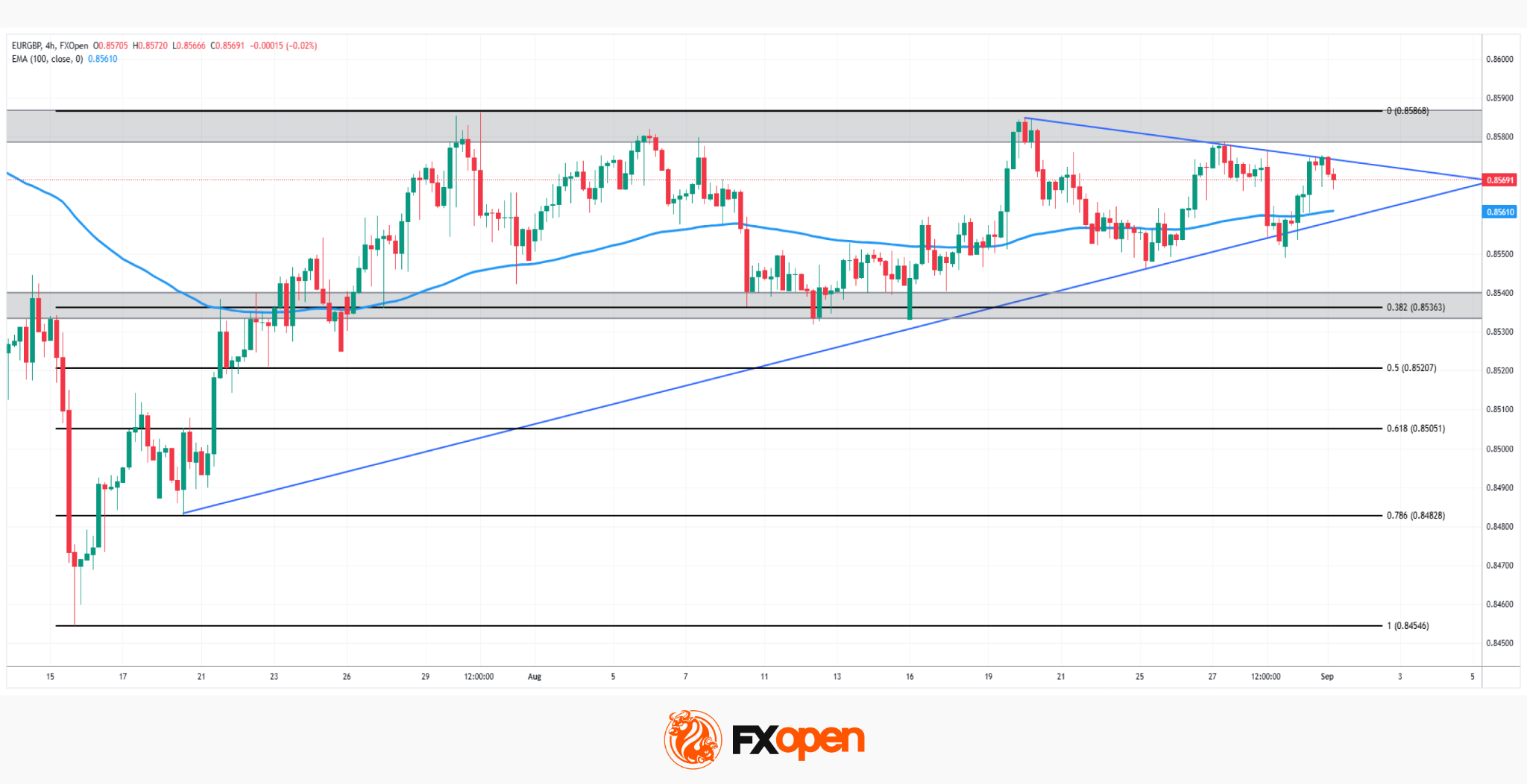
As the EUR/GBP chart shows, the pair has been compressing into a tightening symmetrical triangle since mid-August, with a descending trendline from the 0.8587 highs converging with an ascending trendline off the 0.8480 lows, both meeting right around the current price near 0.8569, exactly where the 100-period EMA also sits.
Bullish Scenario
Should buyers break above the descending trendline, the path would open towards a retest of the 0.8587 highs, the 0 Fibonacci level marking the origin of the recent pullback. A confirmed breakout above that level would signal genuine bullish continuation for the euro.
Bearish Scenario
Conversely, a break below the ascending trendline and the 100-period EMA would expose the 0.382 retracement near 0.8536, with a deeper slide risking a retest of the 0.5 level around 0.8521.
With price coiled right at the apex of this triangle, sitting exactly on the 100-period EMA, EUR/GBP looks primed for a decisive break. Will the ECB's hawkish momentum finally push the euro through resistance, or will sterling's political noise keep the pair capped?
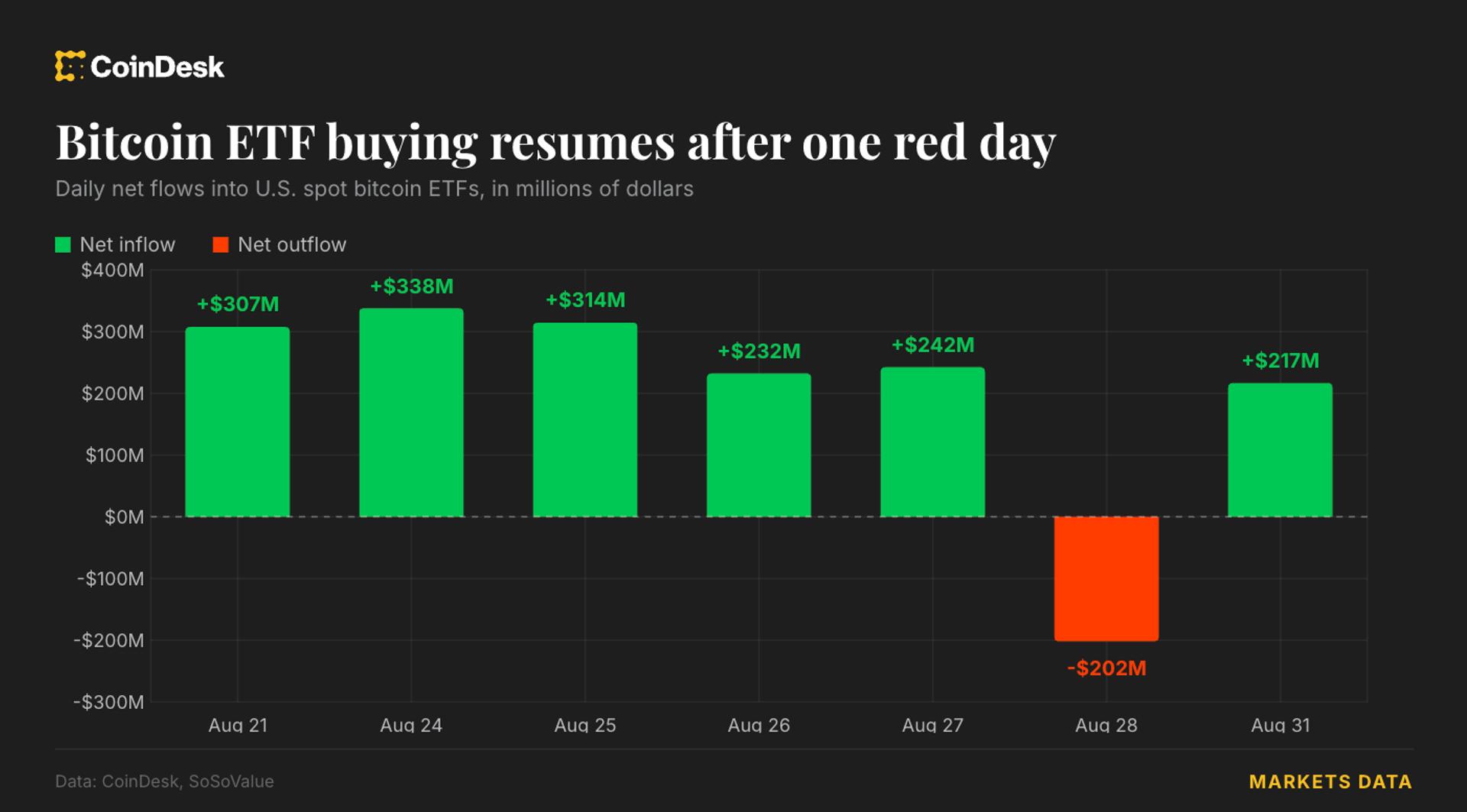
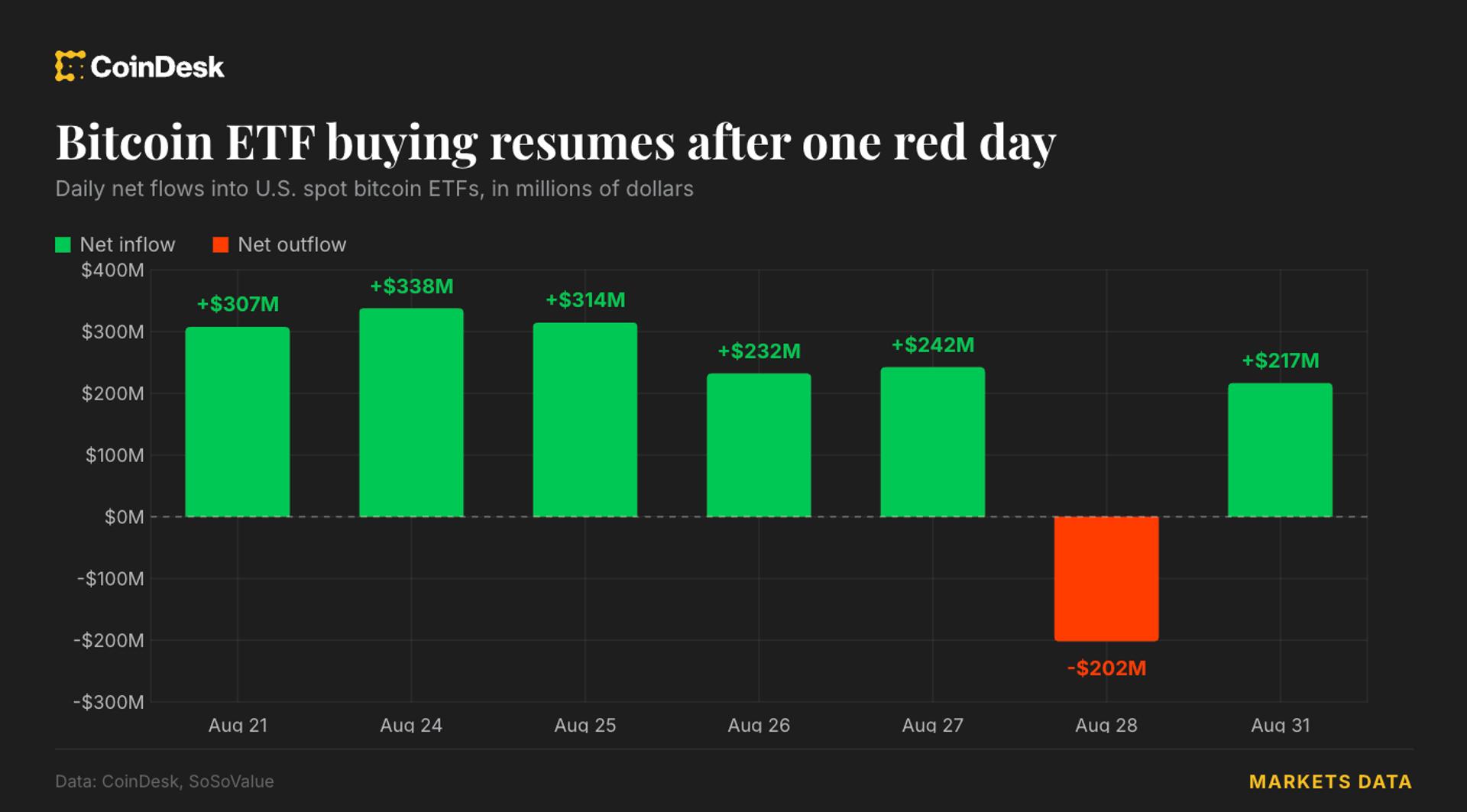
The bitcoin funds took $217 million Monday, one session after an outflow ended their nine-day run. Ether ETFs have not posted a red day since mid-August.

Trump celebrated the legal victory in a Monday post on Truth Social.
“I am pleased to report that the United States Supreme Court has just ruled in favor of the Ballroom/Military Complex being built without any further contingency, doubt, or threat,” Trump wrote. “We are living in the Golden Age of America, and this Building will be one of the Greatest ever constructed in Washington, D.C.”
The President said the ballroom will be completed in the summer of 2028.
Legal battles
The trust filed the lawsuit in December on behalf of one of its members, Alison Hoagland, an architectural historian and preservationist who lives in Washington. Hoagland said in a declaration that she would “suffer both professional and personal injuries, including to my aesthetic, cultural and historical interests, if a ballroom of the proposed form and scale were constructed.” She argued that “an adjacent structure overshadowing the White House, exceeding it in height and massing, would diminish the primacy of the White House.”
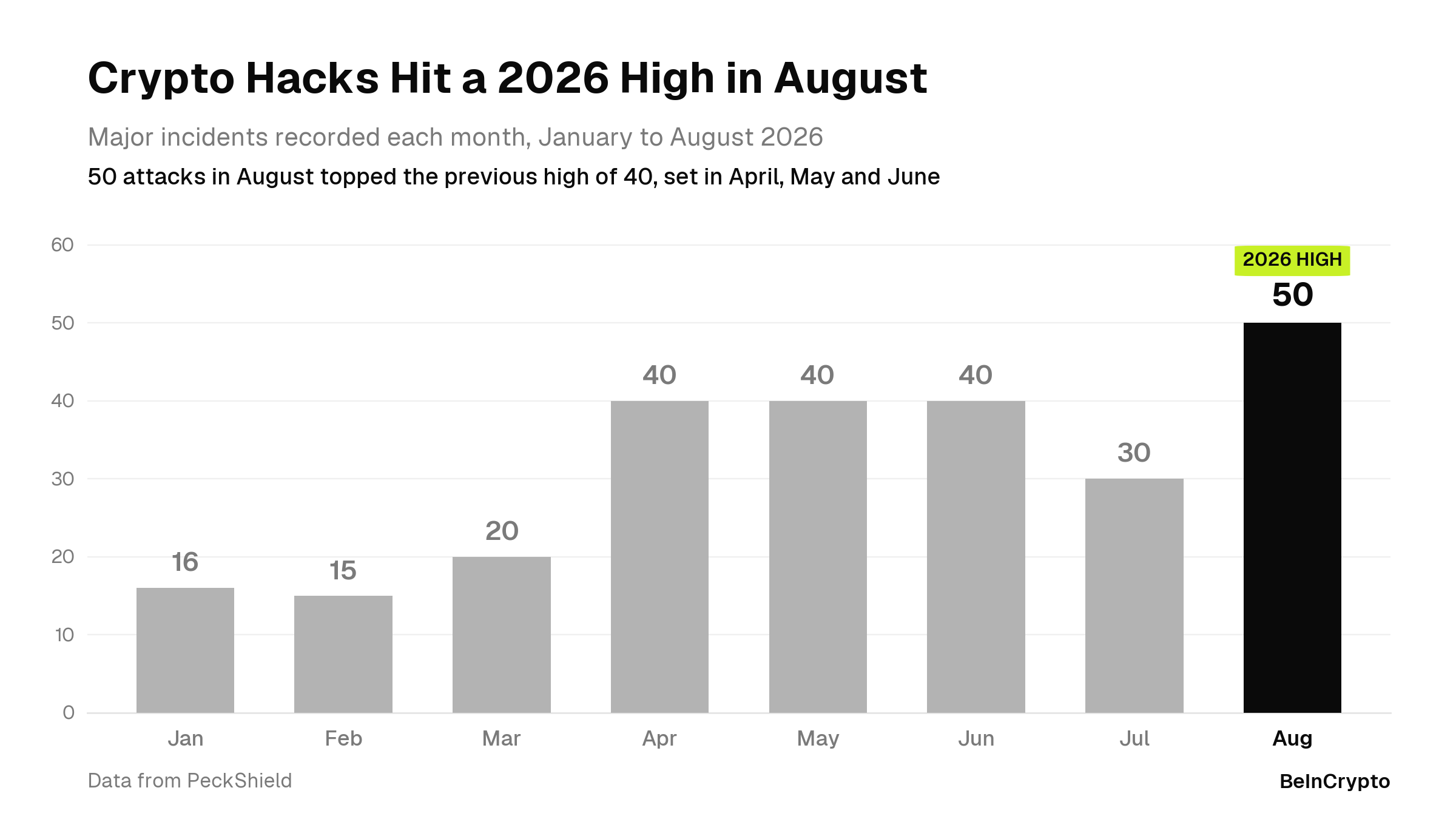
Crypto recorded 50 major hacks in August, the highest monthly count of 2026. Total losses fell to $136.3 million, down 49.5% from July.
Blockchain security firm PeckShield published the tally on Tuesday. The figures show attackers striking far more often while extracting less from each incident.
Cronos Halt Blunted the Month’s Largest Exploit
A single incident dominated the month. Tectonic is the largest lending protocol on Cronos (CRO). It reportedly lost roughly $74 million, the fourth-largest crypto theft of 2026 to date.
The attacker moved only about $6 million to Ethereum (ETH) before validators froze the network.
“The exploiter has since started laundering the stolen funds, bridging them to #BTC (~200K so far),” PeckShield said.
Cronos then restored the chain state to a point before the attack and resumed block production.
Follow us on X to get the latest news as it happens
Attack Volume Rose as Individual Hauls Shrank
August’s 50 incidents topped the 40 recorded in April, May, and June. PeckShield counted 16, 15, and 20 hacks in January, February, and March, respectively.

The average loss per hack fell to about $2.7 million, down from roughly $9 million in July. PeckShield’s top ten incidents accounted for $123.34 million of August’s total, leaving around $12.9 million across the other 40 hacks, per BeInCrypto calculations.
April remains the year’s costliest month at $646.89 million, driven by the Drift and KelpDAO exploits. Those two incidents alone accounted for $577 million.
Moonwell followed Tectonic in August with $8.7 million in losses. Term Labs lost $8.5 million, Coinsbuy $7.9 million, and TAC $7.5 million. Injective, MANTRA, BounceBit, Cosmos Labs, and aquifer rounded out the top ten.
Subscribe to our YouTube channel to watch leaders and journalists provide expert insights
The post August Broke 2026's Monthly Hack Record Even as Losses Fell 49% appeared first on BeInCrypto.


Donald Trump Jr.-linked investment firm 1789 Capital is reportedly investing about $300 million in Polymarket, a blockchain-based prediction market.
1789 Capital, where Donald Trump Jr. is a partner, will make the $300 million investment as part of a $1 billion round that would value Polymarket at $21 billion, people familiar with the matter told the Wall Street Journal on Monday.
The investment would bring 1789 Capital’s total investment in Polymarket to about $500 million and make it one of the platform’s largest backers.
Cointelegraph has approached 1789 Capital and Polymarket for comment.
ICE remains Polymarket’s largest disclosed investor. In a July 30 10-Q filing, ICE said it had invested a combined $1.6 billion in Polymarket preferred shares. The holdings had a carrying value of approximately $2 billion as of June 30 and represented about 22% of outstanding shares, or 14% on a fully diluted basis.
Polymarket reportedly started talks to raise $400 million in fresh capital in April, when it was seeking to raise the funds at a potential $15 billion valuation, below the $22 billion valuation of its main competitor, Kalshi.
Prediction markets are facing increasing regulatory scrutiny in the US and worldwide. On Aug. 14, JPMorgan Chase reportedly ended a banking relationship with Polymarket over regulatory concerns but said it remains keen on a potential underwriting role should Polymarket attempt to go public.
More than a dozen US states have taken legal action against Polymarket, Kalshi, or both over sports event contracts, while authorities in several countries have also blocked or restricted access to Polymarket.
Related: NY judge denies CFTC motion to halt enforcement action against Kalshi
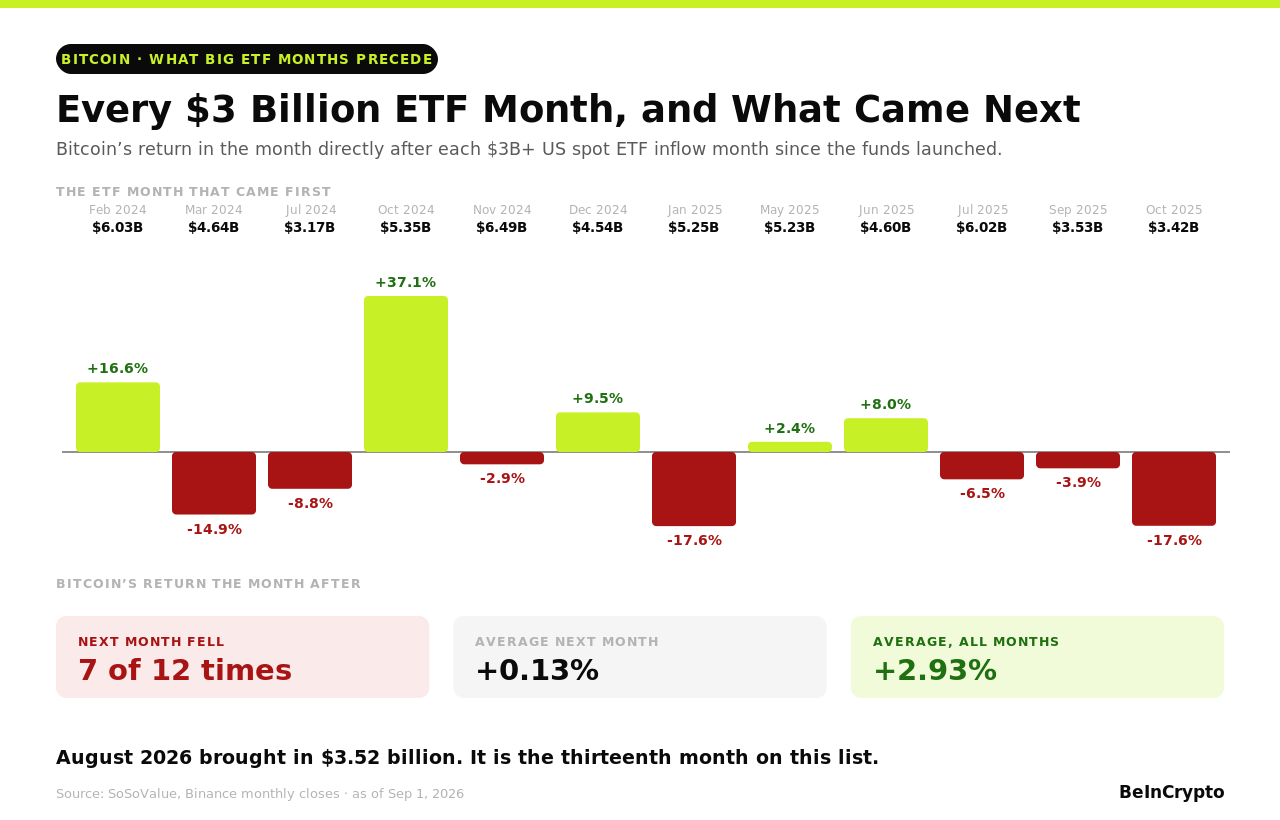
Bitcoin price rose 24.95% in August, and still trades 9.62% below where it started the year. The month was bought almost entirely by funds.
Everyone else was selling into it.
Why Did the Price Rise 25% in August?
US spot Bitcoin ETFs took in $3.52 billion during August, per SoSoValue data. Only five of 21 sessions saw money leave.
Want more token insights like this? Sign up for Editor Harsh Notariya’s Daily Crypto Newsletter here.
That single month outweighs everything before it. Across January to July, the same funds lost a net $5.30 billion. August did not just beat the year, it reversed it.

The problem is what months like this have preceded.
Will the Price Crash in September 2026?
Twelve months since these funds launched have drawn $3 billion or more. Bitcoin fell in the month straight after seven of them. The average return in those following months is 0.13%, against 2.93% for an average month.
Seasonality points the same way. Bitcoin has closed August green only two times since 2020 (before this year), and on both the occasions, September fell 7.30% and 7.96%.

One thing argues back. The last three Septembers all finished higher, so September’s reputation as Bitcoin’s worst month is out of date.
Who Was Selling While BTC Surged?
Hodler Net Position Change, which measures whether long-term holders are adding coins or releasing them, stayed negative for the whole rally. It turned red on August 2 and stayed there for four weeks.

Then it flipped. August 31 printed the first green bar since July, at 2,044 BTC.
Large wallets did the same thing and have not reversed it. Addresses holding more than BTC fell from 1,963 on July 31 to 1,908, a loss of 55 wallets during a 25% rally.

So the rally was funds buying what holders and whales were handing over. That matters, because it means the selling side was working through supply rather than reacting to bad news.
Are Big Traders Still Betting Big?
Their futures book says yes. Bitcoin’s positioning divergence score sits at 21.2, with top traders holding 111 points more long exposure than the average account.

The reading is specific to Bitcoin. XRP scores 2.7, meaning no meaningful gap between top-traders and everyone else.

That confidence is also the risk. Binance alone carries $3.00 billion in long liquidation leverage below the price against $1.80 billion in short leverage above it.

Therefore, a small BTC price drop could hurt the price prediction more going into September, as it might trigger a long flush.
Bitcoin Price Prediction: The Levels That Decide September
Bitcoin trades near $79,108. Everything rests on $77,057, the floor this range has held since the breakout, because losing it removes support all the way to $62,207.

Upside needs proof. A daily close above $82,656 opens $91,719, and only a move through that level would argue the bull phase is back, with $100,782 beyond it. Volume has to come with it, and buying volume only began recovering between August 29 and 31.
Analyst’s View: The pattern says funds buy late, and August’s money arrived after a 25% move in a year Bitcoin is still down. Against that, holders stopped selling on the final day of the month and the largest traders are positioned long. Which side wins in this Bitcoin price prediction war will be decided by the tussle between the historical bearishness and the current bullishness.
The post Bitcoin Price Prediction for September 2026: What Follows a $3.5 Billion ETF Month? appeared first on BeInCrypto.
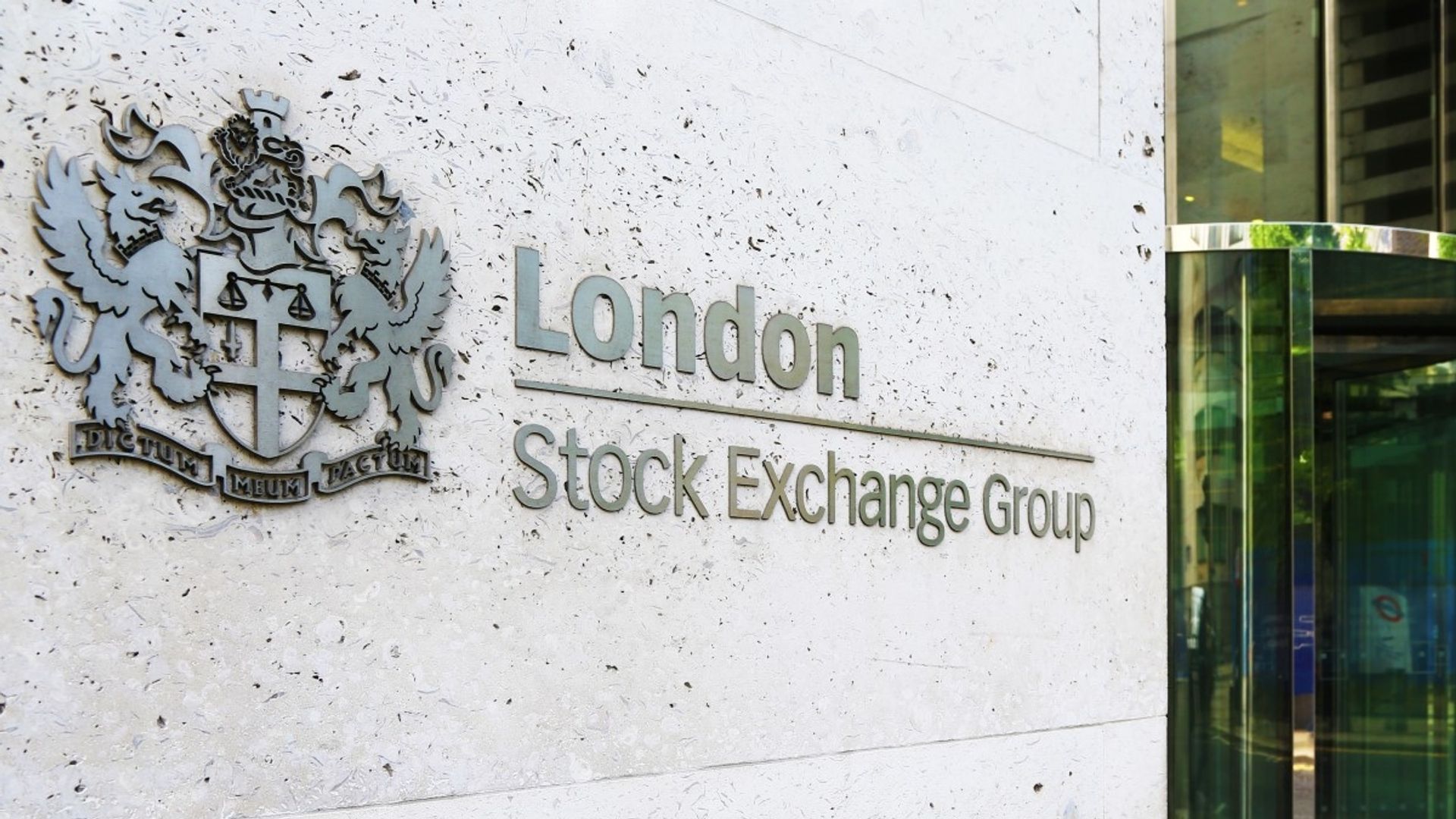
The LSE is working with Kraken owner Payward, the developer of the xStocks tokenized equities framework, to bring top U.K.-listed stocks onchain.

Aussie shares wobble as inflation fears loom large

London Stock Exchange partners with Kraken parent to tokenize UK stocks

6 Years Later, Hulu’s Unforgettable Time-Travel Sci-Fi Is the Perfect Summer Movie





-

 Crypto World6 days ago
SpaceX stock could rise 75% to $240, JPMorgan says
-

 Fashion4 days ago
Weekend Open Thread: Maeve – Corporette.com
-

 Crypto World4 days ago
Bitcoin’s 22% rally now needs real demand to outlast Treasury liquidity boost
-

 Crypto World6 days ago
Warsh Jackson Hole keynote puts financial innovation first
-

 Business4 days ago
Salesforce Stock Soars 19% as Blowout Earnings and Agentforce AI Growth Silence Software Skeptics
-

 Crypto World5 days ago
Elon Musk Grok Bot Promise: We Will Make You Whole if AI Loses Your Money
-

 Business4 days ago
Apple Confirms September 9 Keynote and Reveals Its Full Pre-Order Schedule
-

 Crypto World6 days ago
Did Trump Just Move SpaceX Stock With One Truth Social Post?
-

 Business3 days ago
Onto Innovation Stock: AI’s Next Bottleneck Is Yield (NYSE:ONTO)
-
 NewsBeat6 days ago
Lindsay Clancy jury braces for closing arguments as judge tells court: ‘You’ve heard all the evidence’ – Live updates
-

 Business6 days ago
Walmart takes aim at younger shoppers with new fashion brand
-

 Crypto World3 days ago
Bitcoin price tests $82K resistance as Brandt stays long
-

 Business6 days ago
Thailand’s Eastern Economic Corridor Capital City (EECiti): Key Developments and Investment Opportunities
-

 Crypto World5 days ago
NVIDIA revenue hits $96.2B as AI demand doubles
-

 Business4 days ago
iPhone 18 Pro Pre-Orders Could Shift to Saturday as Apple Reportedly Avoids September 11 Anniversary
-

 NewsBeat6 days ago
Trump’s trade truce with China faces test with Iran effort
-

 Crypto World6 days ago
Nvidia Q2 Earnings Reveal $96.2 Billion Beat, So Why Is NVDA Falling?
-
 Tech5 days ago
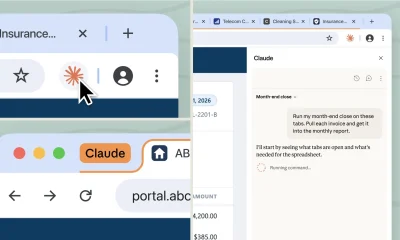
Claude Cowork gets its own browser that doesn’t touch your tabs, bookmarks, or saved passwords
-
 Tech2 days ago
Hugging Face built a $4.5 billion empire on free AI models. Now Nvidia is buying it for $12.9 billion
-

 Crypto World4 days ago
Truflation calls for Fed rate cut after PCE forecast
You must be logged in to post a comment Login