Crypto World
How Bitcoin Hashrate Recovery Mirrors 2021 Rebound Pattern

Bitcoin’s hashrate — a key metric that measures the network’s total computational power — recorded a sharp V-shaped recovery in February.
This sudden turnaround has raised hopes that Bitcoin may end its five-month losing streak and make a strong recovery.
Hashrate–Price Correlation Points to a Potential Upside Scenario
A previous report by BeInCrypto noted that Bitcoin’s hashrate suffered a major shock in early 2026. An extreme Arctic cold wave swept across the United States.
Freezing temperatures, heavy snowfall, and surging heating demand strained the national power grid. Authorities issued energy-saving requests, and several regions experienced localized blackouts.
As a result, the network’s hashrate dropped by roughly 30%. Around 1.3 million mining machines went offline, slowing block production.
By February, however, data showed a swift turnaround. Hashrate rebounded from below 850 EH/s to over 1 ZH/s, recovering nearly all of the previous large downward adjustment.

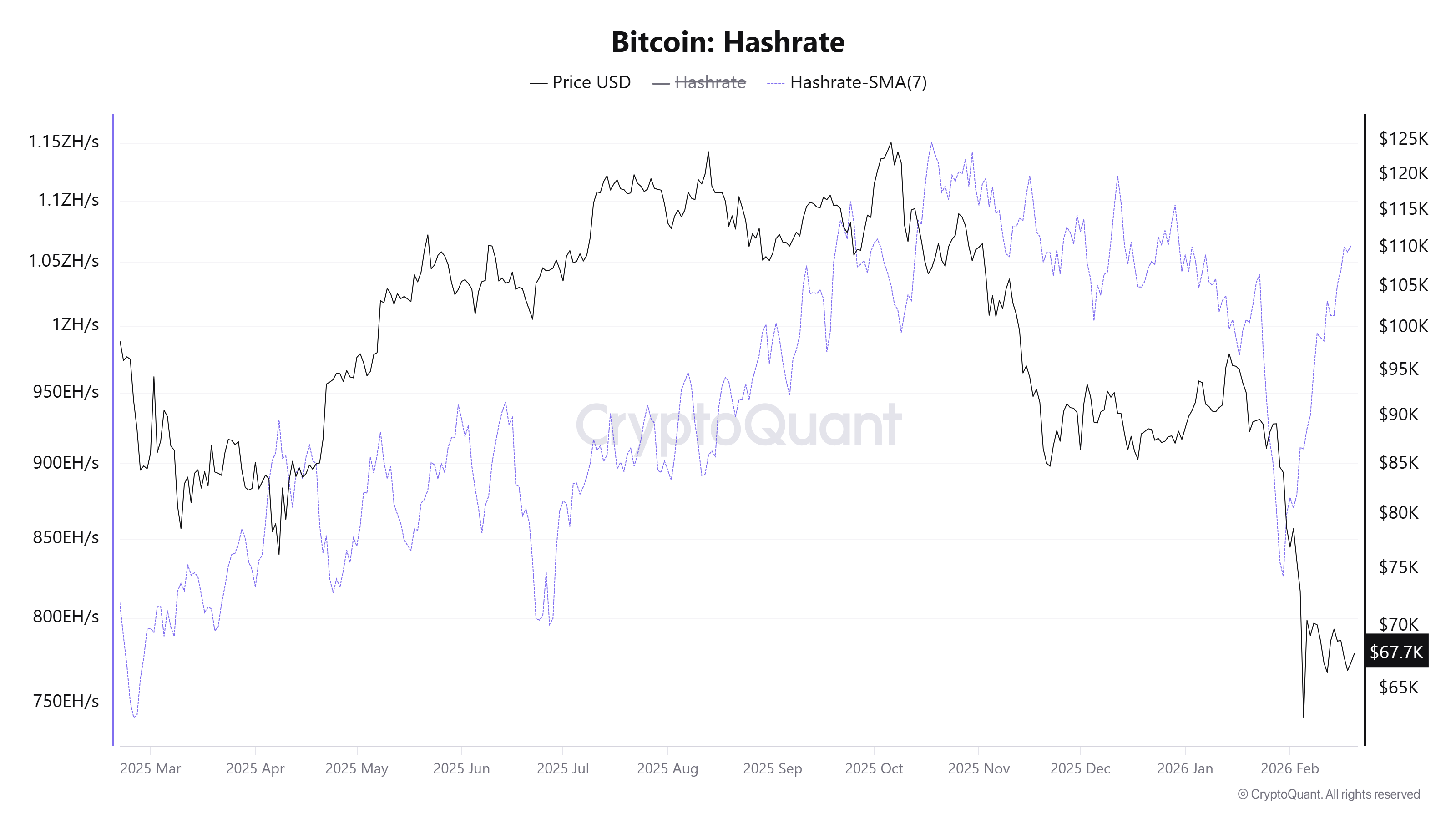
“Bitcoin mining just got ~15% harder, with the largest ever increase in absolute difficulty, completely erasing last epoch’s huge downwards adjustment,” commented Mononaut, a developer at Mempool.
Despite the recovery in hashrate, Bitcoin’s price continues to fluctuate below $70,000 and has not mirrored the same strength. According to the market analytics platform Hedgeye, the cost to mine one Bitcoin in February is approximately $84,000. This suggests that many miners are still operating at a loss.
The rise in hashrate reflects the return of computational capacity. Miners have powered machines back on and appear more optimistic about Bitcoin’s long-term profitability.
Historical data shows that V-shaped recoveries in hashrate often coincide with strong price rebounds.

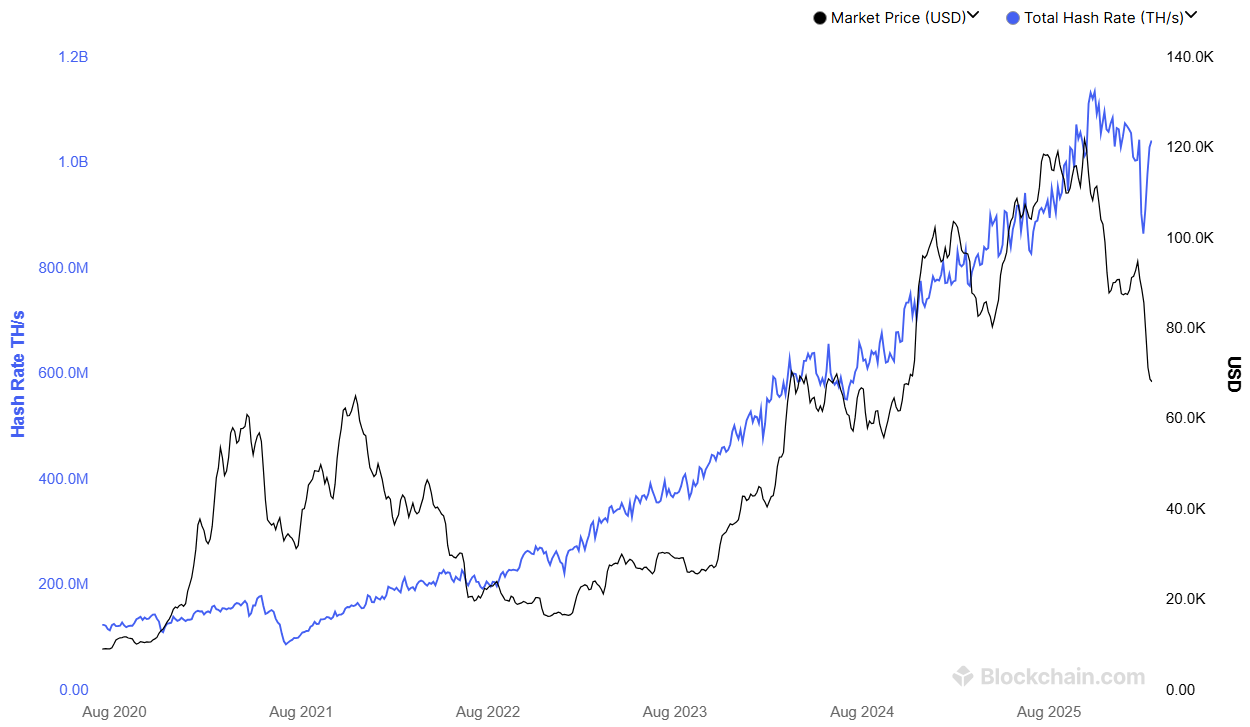
A notable example occurred in mid-2021. After China imposed a sweeping ban on Bitcoin mining, hashrate plunged by more than 50%, falling from 166 EH/s to 95 EH/s in July. Months later, a V-shaped recovery in hashrate paralleled a powerful price rebound. Bitcoin surged from around $30,000 to above $60,000 by the end of the year.
“Bitcoin network hashrate has sharply recovered after the recent dip, a strong signal that miner confidence remains intact and they are coming back online. Historically, hashrate is a leading indicator during recoveries. Price tends to follow hashrate,” said Satoxis, a Bitcoin OG.
Data from CryptoQuant on Bitcoin Miner Outflow further supports the view that miners expect a price recovery. The 7-day average outflow from miner wallets has fallen to its lowest level since May 2023.
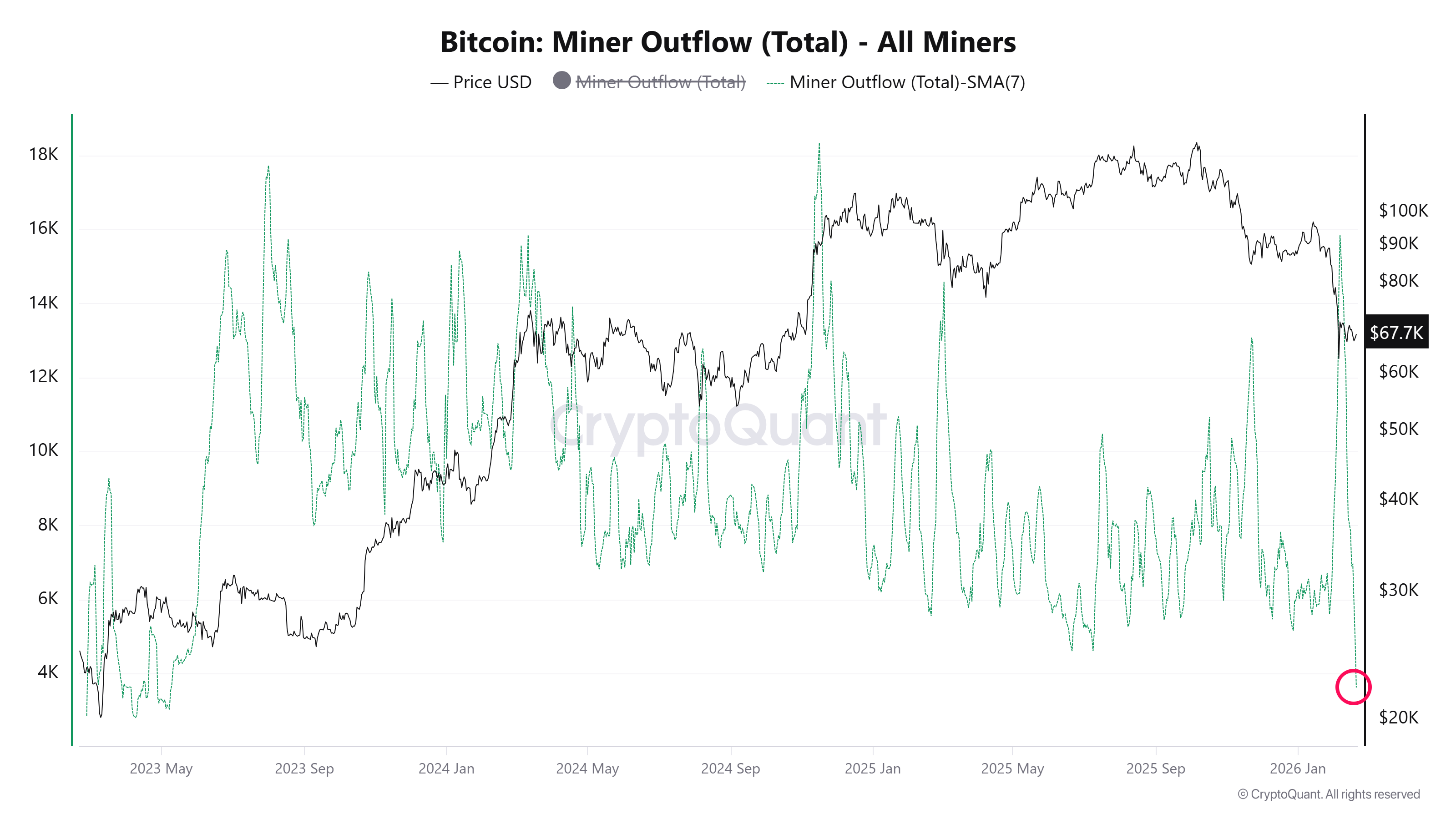
This trend indicates that miners are no longer aggressively selling their holdings. Instead, they appear to be holding in anticipation of a potential rebound.
Additional analysis from BeInCrypto emphasizes that any sustained recovery at this stage requires confirmation through a breakout above $71,693.