Crypto World
How Crypto Exchange Software Combines Trading, Gaming & Payments?

In 2026 and beyond, cryptocurrency exchange software solutions will not be competing on trading features or fees. Spot markets, derivatives, and staking have become table stakes, so they’re no longer the differentiating modules.
All-in-one crypto exchange ecosystems that enable trading, payments, tap-to-earn play, and engagement beyond charts are gradually dominating the industry. New age Web3 platforms are now consolidating wallets, trading engines, payment rails, and even gaming layers into a single product surface. Recent moves, such as Farcaster prioritizing its wallet over standalone social features and Coinbase releasing its “the everything exchange” roadmap, reveal where the industry is headed.
| Brand | Latest Strategic Move | Date | The Pivot (Why it’s a Super App) |
|---|---|---|---|
| Coinbase | The Everything Exchange | Jan 2026 | Exchange → Super App: Merged Crypto with Stocks, Commodities, & Prediction Markets (via Kalshi). Repositioned Base as a consumer gateway for on-chain identity/payments. |
| Farcaster | The “Wallet-First” Pivot | Dec 2025 | Social → Fintech: Founder Dan Romero admitted “Social-First” failed to scale. They are pivoting to a “Venmo-for-Crypto” model where the Wallet is the core product, and the Social Feed is just a feature to support transactions. |
| Crypto.com | The “Banking Level Up” | Dec 2025 | Exchange → Bank: Overhauled the “Level Up” program (originally launched Q1 2025). Effectively became a bank by bundling High-Yield Checking, Stock Trading, and Credit Cards into a single “Prime-like” subscription. |
| World App | World Chat & Mini Apps | Dec 2025 | Identity → Messaging OS: Launched World Chat (encrypted messaging) with embedded payments. Added a “Mini App Store” allowing devs to build games/tools directly inside the ID app. |
| Jupiter | The Solana “Front Door” | Mid 2025 | Aggregator → OS: Consolidated every Solana primitive (Swaps, Perps, Bridge, Launchpad) into one “Google-like” interface and mobile app, aiming to bypass wallets entirely. |
| Lens Protocol | Lens Network & Open Actions | Apr 2025 | Graph → Economy: Migrated to their own chain to launch “Open Actions” (on-chain embedded apps). Unlike Farcaster Frames (which were off-chain/social), these are financial primitives embedded in posts. |
| Safe | Safe{Core} Modules | Early 2025 | Vault → Operating System: Transformed the multisig wallet into a modular platform where users can install “apps” (recovery, automation, spending limits) directly into their account. |
For founders building or upgrading crypto exchange software, the convergence of top crypto functions isn’t optional, but rather an architectural decision that directly impacts retention, revenue diversity, and defensibility.
What is an All-in-One Cryptocurrency Exchange Software Ecosystem?
An all-in-one crypto exchange software ecosystem is not a “super app” for its features. It is a single platform architecture enabling trading, payments, wallets, and engagement on
one user account, one balance system, and one identity layer.
Instead of pushing users between applications for trading, spending, and earning, these all-in-one cryptocurrency exchange ecosystems integrate into users’ financial behaviour and keep value and activity inside the same ecosystem.
Various single-purpose buy/sell exchanges and wallets have transitioned into crypto exchange superapps and have experienced massive growth in terms of users, trading volumes, and revenues.
| Platform | Starting Focus | Key Transition Features | Growth Stats |
|---|---|---|---|
| Trust Wallet | Self-custody storage | Swaps, staking, and Earn | 220M+ users (10x since 2022), 150% YoY revenue |
| MetaMask | Wallet/DEX access | Swaps aggregator | $325M cumulative swap revenue (mid-2025), $40B+ total volume, 30M MAUs |
| Coinbase (Base app) | Wallet + trading | DEX integration, Apple Pay | 20% DAU surges, custody for 80% new BTC ETFs |
Core Components of an All-In-One Crypto Exchange Platform
1. Trading Engine
Despite numerous cryptocurrency exchange development modules emerging to modernize the standalone trading platforms, these core engines still pay the bills.
- Centralized exchanges still dominate more than 80% of total spot trading volumes and 90% of derivatives trading volumes due to liquidity, speed, and fiat connectivity.
- While spot trading continues to dominate trading charts, derivatives are reaching new highs and have become a core driver of volumes across the crypto economy.
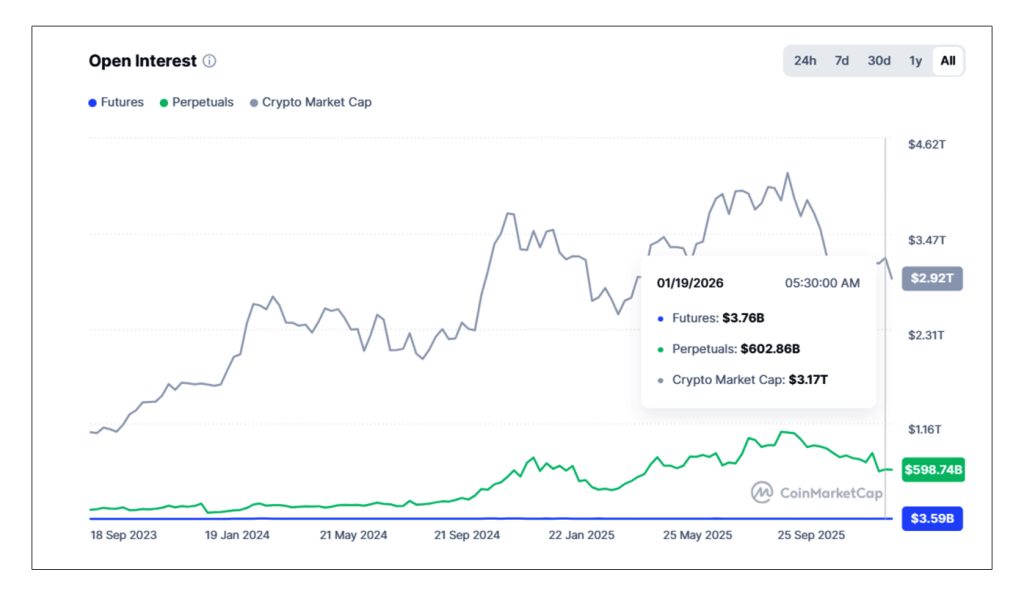

To build a crypto empire, businesses must either adopt white label exchange software with perpetual trading modules or develop custom exchanges that offer both spot and derivatives trading.
2. Payments Layer
Payments turn a crypto exchange software from a trading venue into a daily financial infrastructure. According to a16zcrypto’s report, stablecoins processed USD 46 trillion in transaction volumes, rivaling the top payment networks.
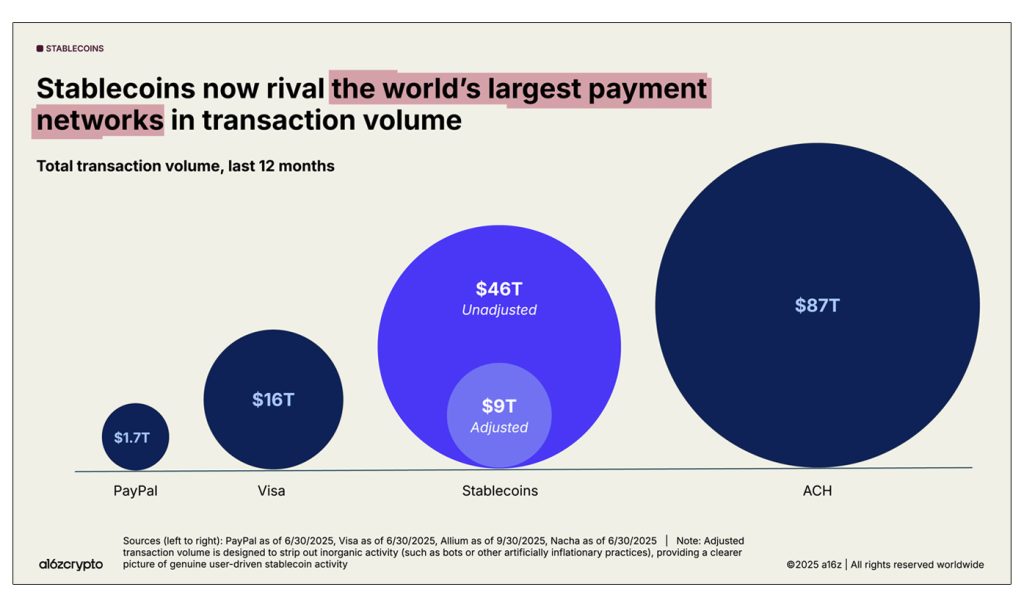

Stablecoin rails support merchant payments, in-app transactions, remittances, and gaming economies; therefore, those seeking cryptocurrency exchange development must incorporate them. By implementing these payment rails effectively, digital asset exchanges become an alternative financial ecosystem and not just trading applications.
3. Gaming & Engagement Layer
When integrated correctly, gaming is not a vanity add-on. The GameFi market size, estimated at USD 29.89 billion in 2026, is expected to reach 259.28 billion in 2035, growing with a CAGR of 27.13%.
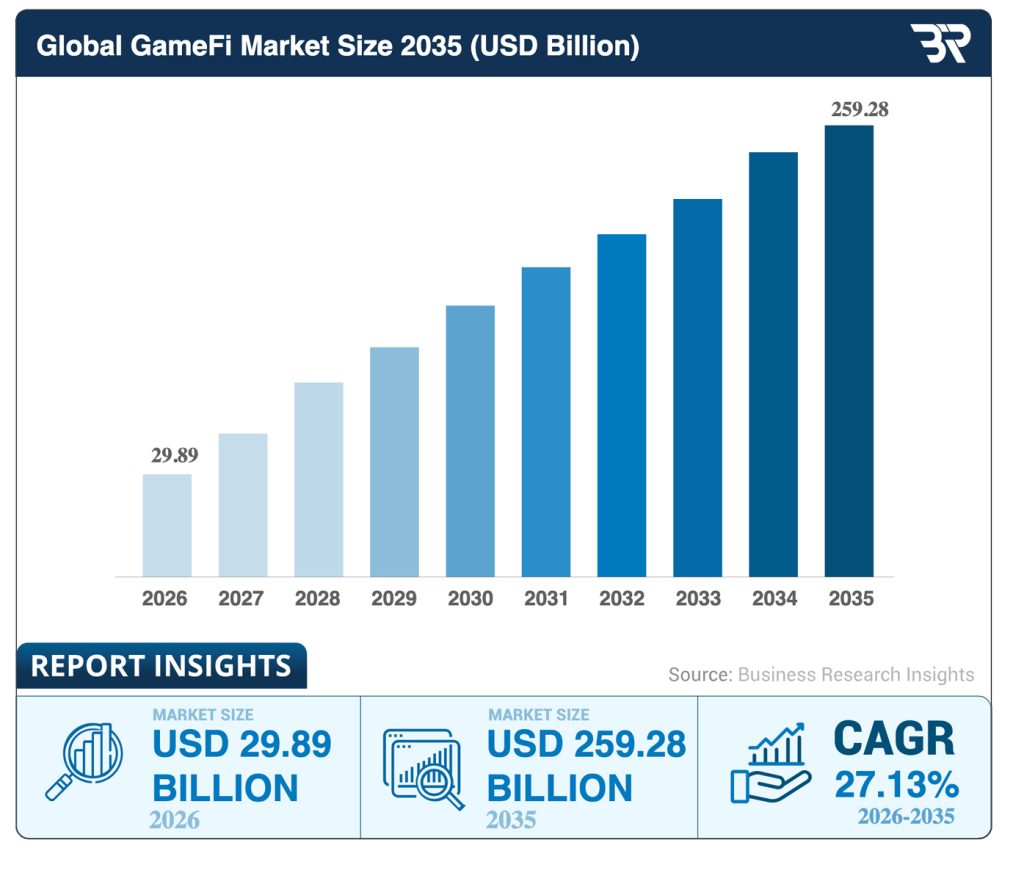

Another research by market.us revealed that the P2E segment led the GameFi market with 63.6% share in 2024. Those planning to build their cryptocurrency exchange software must integrate tap-to-earn or play-to-earn mini-games into the application, along with gamified economies.
Many well-known Web3 applications, such as OKX, Binance, WhiteBit, etc., have actively been experimenting with prediction-based tap-to-earn games. Strategically implementing T2E or P2E mini-games and gamification mechanics helps ensure users don’t leave the crypto exchange after they’ve finished trading or making payments. Instead, they continue to trade or transact more to top leaderboards and engage within the application, boosting user retention and unlocking multiple revenue opportunities for exchanges.
Also Read>>> Redefine Crypto Trading With Gamified White Label Crypto Exchange
Pro Tip: For a cryptocurrency exchange development, gaming works only when:
- Rewards tie back to trading or wallet usage
- Assets remain transferable across the ecosystem
- Compliance boundaries are respected
4. Wallet-First Architecture
Wallets are no longer just storage tools. Decentralized wallets are rapidly evolving into digital passports of the crypto economy. This shift is why many centralized exchanges are integrating DeFi wallets into their ecosystems, enabling non-custodial ownership and opening the door to yield-generating opportunities.
But that’s only part of the story. This versatile custody and identity layer strengthens the ecosystem in several key ways:
- Unified balance across trading, payments, gaming, and social
- Reduced friction when introducing new use cases
- Stronger long-term user lock-in through ownership and identity
Recent product shifts across Web3 clearly indicate one thing: whoever owns the wallet controls the gravity of the ecosystem. As crypto adoption accelerates toward 824 million users by 2026, wallet-first architectures will define which platforms capture users, liquidity, and long-term value.
5. Social Layer
A cryptocurrency exchange software must engage beyond trades, payments, and games in 2026 to survive the next wave of superapps. This is where the decentralized social platforms kick in. The social layer built inside your crypto exchange development turns an exchange from a transactional platform into a network-driven ecosystem.
- Trader profiles & activity feeds
Users can follow top traders, view positions, P&L history, and strategies—building transparency and trust. - Social signals inside trading flows
Likes, comments, sentiment indicators, and crowd activity inform decisions without leaving the platform. - Copy trading & strategy sharing
High-performing traders monetize expertise while new users trade with confidence. - Reputation & identity graph
On-chain history + social behavior creates persistent identities tied to the same wallet and balance system. - Community-driven engagement loops
Challenges, leaderboards, referrals, and discussions keep users active even outside peak trading hours.
When social interactions are tied to the same wallet, balance, and identity layer, engagement converts directly into volume, retention, and long-term platform stickiness.
Business Impact for Crypto Exchange Founders
Building all-in-one cryptocurrency exchange software ecosystems changes the business maths in the following ways:
1. Revenue diversification
- Trading fees (spot + derivatives)
- Payment fees and spreads
- Gaming commissions and asset royalties
2. Retention impact
- Cross-product usage can improve retention by 50–70%, based on 2025 ecosystem data.
- Users who trade, pay, and engage inside one platform churn far less than single-use traders.
3. Defensibility
- Hybrid CEX/DEX models create moats that pure exchanges lack.
- Wallet ownership, plus payments, plus engagement, is harder to displace than fee-based trading alone.
Is This Model Worth Building?
Businesses planning cryptocurrency exchange development in 2026 must no longer question whether they need to expand beyond trading because it is no longer an option. Major cryptocurrency exchanges have already announced their superapp strategies, and others are just following the lead. All that matters right now is how intentionally they design the ecosystem.
All-in-one crypto exchange platforms win when:
- Trading remains fast and liquid
- Payments are native, not bolted on
- Engagement layers drive real economic activity
- Wallets serve as the central account layer
This is not about adding features. So, if you’re opting for an average white label exchange software that only gives you a reliable trading engine, you’re not building for the future.
As a leading white label crypto exchange software development company, Antier delivers premium turnkey solutions equipped with built-in self-custody wallets, seamless payment rails, and integrated gaming modules. Connect with our subject-matter experts to strategize how you can own the user’s financial lifecycle and keep them engaged within your platform when the next market cycle arrives.
Frequently Asked Questions
01. What are the key trends in cryptocurrency exchange software solutions for 2026 and beyond?
In 2026 and beyond, cryptocurrency exchange software solutions will focus on all-in-one ecosystems that integrate trading, payments, and engagement features, moving beyond traditional trading features and fees.
02. How are companies like Coinbase and Farcaster adapting to the changing cryptocurrency landscape?
Coinbase is evolving into a “Super App” by merging crypto with stocks and payments, while Farcaster is pivoting to a “wallet-first” model, emphasizing its wallet as the core product rather than social features.
03. What is the significance of the “everything exchange” concept in the crypto industry?
The “everything exchange” concept signifies a shift towards comprehensive platforms that consolidate various financial services, making it easier for users to manage multiple aspects of their financial lives within a single application.