

Crypto World
Hut 8 lands second $9.8B AI lease as IREN signs $2.8B deals



Hut 8 and IREN announced billions of dollars in new artificial intelligence infrastructure deals on Monday as companies with roots in Bitcoin mining continued expanding into data centers and cloud computing.
Summary
- Hut 8 fully leased Beacon Point after signing a second 15-year, $9.8 billion AI deal.
- IREN added $2.8 billion in contracts and raised its AI Cloud target above $4 billion.
- Both companies gained double digits as former Bitcoin miners expanded deeper into AI infrastructure markets.
Hut 8 signed a second 15-year lease worth $9.8 billion at its Beacon Point AI data center campus in Nueces County, Texas.
Separately, IREN announced $2.8 billion in new multi-year AI cloud contracts and raised its year-end 2026 annualized run-rate revenue target to more than $4 billion. Shares of both companies rose after the announcements.
Hut 8 fully commercializes 1 GW Texas AI campus
The new Hut 8 agreement covers another 352 megawatts of IT capacity and doubles the existing tenant’s contracted footprint at Beacon Point to 704 MW. The company describes the customer as a high-investment-grade counterparty but has not disclosed its identity. The second agreement brings the campus’s combined base-term contract value to $19.6 billion.
The latest agreement follows the first $9.8 billion Beacon Point lease announced in May. As crypto.news previously reported, that deal also covered 352 MW under a 15-year contract and used NVIDIA’s DSX reference architecture. At the time, the agreement raised Hut 8’s contracted AI capacity to about 597 MW.
With the second contract, Hut 8 now reports 949 MW of contracted IT capacity across its AI data center portfolio. That includes 704 MW at Beacon Point and 245 MW at River Bend. The portfolio carries a combined base-term contract value of $26.6 billion and expected average annual net operating income above $1.75 billion, according to the company.
“Our tenant at Beacon Point chose to double its footprint at the site, the strongest validation an asset can receive,” Hut 8 CEO Asher Genoot said in announcing the latest agreement.
Renewal options could raise Beacon Point’s potential total contract value to $50.2 billion.
IREN raises AI Cloud target above $4 billion
IREN, meanwhile, said new contracts with AI developers added $2.8 billion in total contract value. The company raised its year-end AI Cloud annualized run-rate revenue target from $3.7 billion to more than $4 billion, with roughly 85% of that target now under contract.
IREN named Microsoft, NVIDIA, Perplexity, Figure AI, Together AI, Fluidstack, Fireworks AI, Fal AI and Hume AI among its customers. It also said recent agreements include advance payments equal to about 45% of the related GPU capital spending, reducing the amount IREN must fund directly for those deployments. The company held about $7.6 billion in cash and cash equivalents as of June 30, including restricted cash.
“Our vertically integrated AI Cloud platform is scaling at pace,” co-founder and co-CEO Daniel Roberts said.
IREN has expanded from about 3 MW of self-built AI Cloud capacity over the past year and plans to deliver 480 MW in 2026. It targets 1.2 GW for 2027.
The revised target builds on earlier large contracts. As previously reported, IREN signed a five-year, $3.4 billion agreement with NVIDIA after an earlier $9.7 billion Microsoft deal. The company had previously targeted $3.7 billion in annual recurring revenue by the end of 2026 before raising that figure on Monday.
Bitcoin miners continue shifting toward AI infrastructure
The announcements add to a broader change across the Bitcoin mining industry. Companies that already control large power connections, land and data center infrastructure have increasingly signed contracts with AI customers seeking access to electricity and computing capacity.
As crypto.news reported in June, more than $70 billion in AI and high-performance computing contracts had already been announced across publicly traded mining companies before the latest Hut 8 and IREN deals. The shift includes Hut 8, IREN, TeraWulf, Core Scientific and other companies that built large energy footprints for cryptocurrency mining.
IREN has also expanded beyond North America.The company acquired Nostrum Group, adding 490 MW of secured power in Spain. Its quarterly AI cloud revenue had risen to $33.6 million from $17.3 million in the previous quarter while Bitcoin mining revenue declined.
Hut 8 has followed a similar infrastructure-focused strategy at Beacon Point. The company secured 1,000 MW of utility capacity before signing its long-term tenant agreements, allowing it to commercialize the Texas campus through large AI leases.
Power access becomes central to the AI expansion
The move toward AI has increased investor attention on power capacity held by former and current Bitcoin miners. These companies often already operate near large electricity connections that can take years for new data center developers to secure.
Moreover, Bernstein estimated that Bitcoin miners controlled more than 27 GW of planned power capacity globally. The research argued that existing power infrastructure could shorten development timelines for AI projects compared with new sites waiting for grid connections.
For Hut 8, the second Beacon Point deal leaves the 1 GW campus fully commercialized under its current plan and doubles the tenant’s contracted capacity. For IREN, the new agreements place most of its revised $4 billion-plus year-end AI Cloud target under contract.
Both announcements therefore extend the sector’s movement from pure Bitcoin mining toward long-term AI infrastructure contracts. Hut 8 now reports $26.6 billion in base-term contract value across its AI portfolio, while IREN continues expanding its customer base and planned computing capacity across several regions.

Cardano (ADA) price jumped about 7% on July 21, stretching its gain to roughly 9% over the past month.
But the rally may be a trap. The largest and most experienced traders are quietly betting against it, even as smaller retail traders pile in long.
Top Traders Are Short While Retail Goes Long
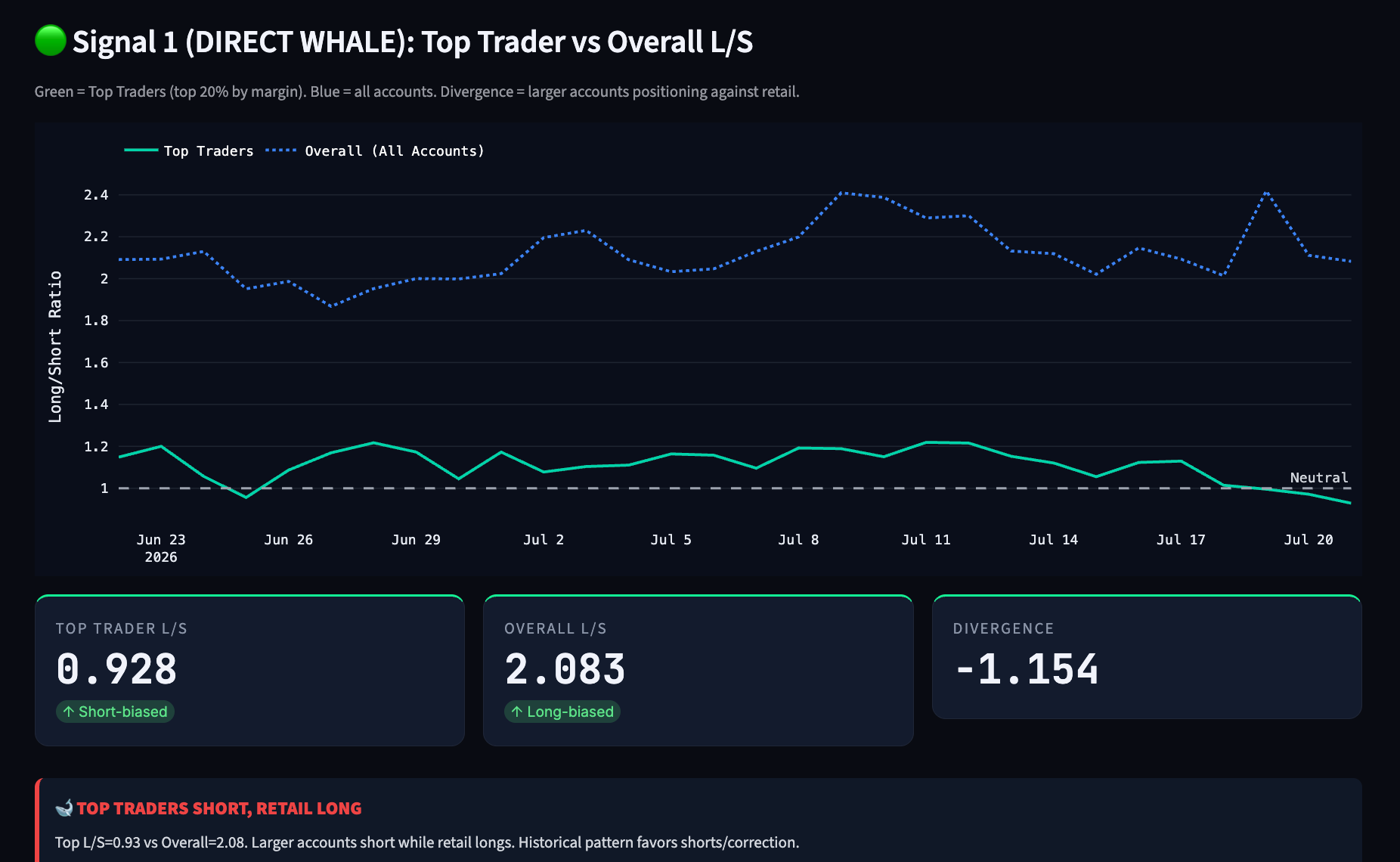
The clearest warning comes from Cardano positioning. On the top-trader long/short ratio, which compares how the biggest accounts are positioned against everyone else, the warning surfaces. The top traders (whale and smart money) sit near 0.93, meaning more short than long. All accounts together, including retail, sit at 2.08, heavily long.

So the crowd and the smart money are on opposite sides. That gap, a divergence of about 1.15, is unusually wide, and when retail and pros diverge like this, the rally often fades or reverses.
Derivatives Show a Crowded Long Bet
The ADA futures market tells the same story. Open interest, the total value of active futures bets, sits near $1.11 billion across 94 perpetual markets, according to CoinGecko data.
Want more token insights like this? Sign up for Editor Harsh Notariya’s Daily Crypto Newsletter here.
Meanwhile, the ADA funding rate is positive at about 0.01%. Funding is the small fee traders pay to hold a position, and a positive reading means longs are paying shorts to stay in.

So the crowd is paying up to bet on higher prices, aligning with the retail move, a classic sign of a stretched move.
The Cardano Price Rally Outran a Still-Weak Network
Yet the fundamentals have not caught up. Cardano activated its Van Rossem hard fork on July 18, its first upgrade approved fully through on-chain governance, and it makes smart contracts cheaper to run.
However, the network itself remains quiet. Activity recently fell to a 45-day low, and the value locked in Cardano’s apps has slid to about $69 million, down roughly 24% in a month and nearly 90% below its two-year peak. So the price is running well ahead of real usage.

That leaves Cardano price at a crossroads. If the top traders are right, the 7% pop unwinds and crowded longs can feel the ‘squeeze’. If retail wins and shorts are forced to cover, the same pressure could spark a quick move higher. Therefore, the split between top traders and retail is the line that decides which way this breaks.
The post Cardano’s 7% Pop Looks Like Bait, and the Pros Aren’t Biting appeared first on BeInCrypto.
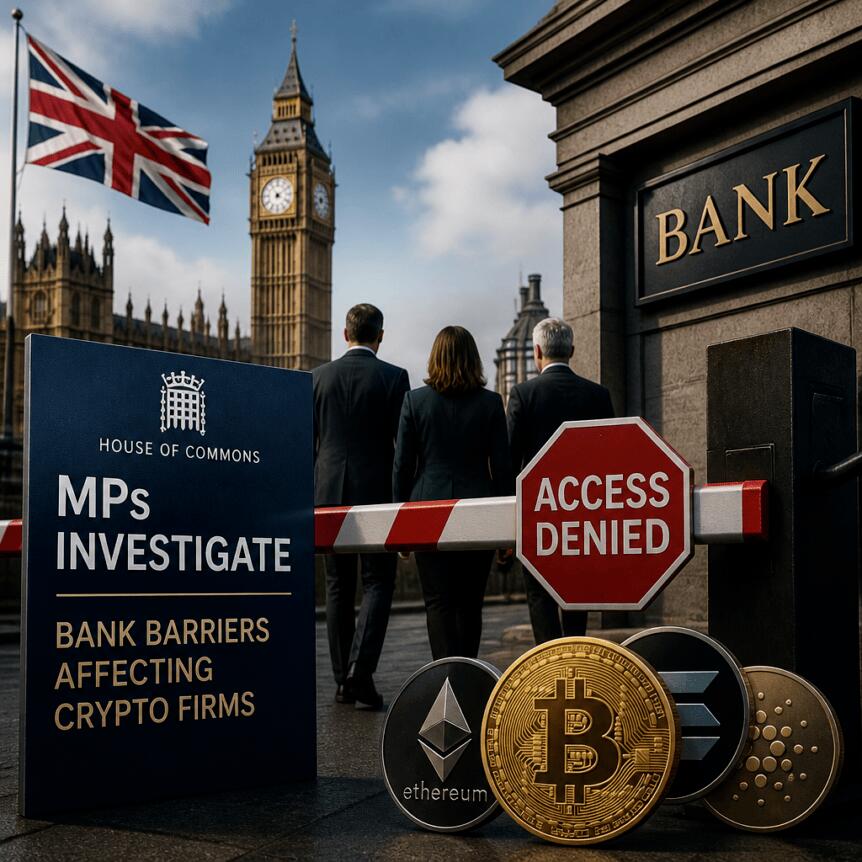
Concerns over “debanking” and banking access for the UK crypto sector have moved onto the parliamentary agenda, with a new inquiry set to examine whether crypto firms and consumers face barriers to core financial services.
On Monday, the Crypto and Digital Assets All-Party Parliamentary Group (APPG) announced it will investigate how restrictions on account access and crypto-related transactions may affect investment, competition, and broader economic growth. The group says it will assess whether any limits are proportionate and has opened written submission requests to banks, payment providers, crypto businesses, and other stakeholders until Aug. 31, ahead of publishing its findings and recommendations.
Key takeaways
- The APPG inquiry will focus specifically on access to banking services for UK crypto businesses and consumers, including limits that may restrict crypto-related payments and transfers.
- UK Cryptoasset Business Council (UKCBC) data cited by the inquiry claims banks blocked or delayed 40% of transactions to crypto platforms across 10 exchanges in a January survey.
- Most surveyed exchanges reportedly saw more customers experiencing blocked or limited transfers over the prior year and described the UK banking environment as increasingly “hostile.”
- UKCBC is urging the FCA to require banks to differentiate between firms based on regulatory status and controls rather than applying uniform restrictions.
- Industry commentary warns that the upcoming UK crypto licensing framework could lose practical value if approved firms still struggle to access mainstream banking.
A parliamentary inquiry into banking access
The Crypto and Digital Assets APPG’s announcement frames the debate around whether barriers to banking services are limiting the sector’s ability to grow within the UK. According to the group, the review will examine how restrictions influence investment decisions, competitive dynamics, and economic outcomes—and whether existing banking practices meet a proportionality standard.
The inquiry also signals a potential policy collision: while the UK is moving toward a new regulatory approach for crypto firms, banks and payments providers may still treat many crypto activities as inherently high risk. The APPG’s request for submissions will allow financial institutions and market participants to make the case for both sides, including how fraud and money-laundering risk assessments are applied in practice.
UKCBC survey highlights blocked transfers and reduced willingness to invest
A January survey conducted by the UK Cryptoasset Business Council (UKCBC) is central to the debate. The council’s report (linked in the APPG-related coverage) states that, among 10 crypto exchanges surveyed, banks blocked or delayed 40% of transactions to crypto platforms.
It also claims that 70% of respondents said the restrictions had reduced their willingness to invest, expand, or hire in the UK. The exchanges referenced in the survey include Coinbase, Kraken, Gemini, OKX, Bitpanda, Luno, Uphold, Wirex, Zumo and Xapo Bank.
Within that same survey, eight of the 10 respondents reported increased instances over the prior year where customers experienced blocked or limited transfers. Seven described the overall banking environment for digital asset businesses as becoming more “hostile.”
The survey further alleges that one exchange observed nearly £1 billion (about $1.35 billion) in transactions declined by banks over a year. The figure, as described in the referenced material, covers rejected card payments and transfers initiated through open banking, while abandoned or blocked transactions via other channels were excluded.
Industry pressure: banks should distinguish by risk, not blanket restrictions
UKCBC has urged the UK’s Financial Conduct Authority (FCA) to push banks toward more targeted approaches—requiring differentiation between exchanges based on regulatory status, governance, and fraud controls rather than applying the same constraints to every platform.
Yuriy Brisov, a partner at London-based consultancy Digital & Analogue Partners, told Cointelegraph that while banks have legitimate obligations to manage fraud and money-laundering risks, he argues that controls should scale with risk level rather than be applied uniformly. He said proportionality should depend on whether measures distinguish between high-risk and low-risk cases, adding that, in his view, current practices do not consistently do so.
Brisov cited blanket policies and fixed transaction caps that may apply regardless of where funds are destined—whether to an FCA-registered exchange or an unlicensed offshore platform.
He also pointed to potential incentives created by payment fraud reimbursement rules. Since October 2024, payment providers have generally been required to reimburse eligible fraud victims for losses of up to £85,000 per claim under faster payments-related requirements described by the UK Payment Systems Regulator (PSR). Brisov argued this can encourage banks to block crypto-linked transactions rather than assess them individually, effectively shifting the risk-management burden away from case-by-case evaluation.
Licensing timeline raises a “hub” inconsistency
The APPG inquiry comes as the FCA prepares to accept authorization applications from crypto firms starting Sept. 30. Brisov said this scheduling creates a contradiction between the government’s stated ambition to build a global crypto hub and the continued use of banking restrictions against exchanges, including firms already registered under the FCA framework.
His core argument is that once a regulator licenses a firm, banking decisions should not treat that entity as unknowable in risk terms. He said supervisors should ask banks to provide written reasons if they still consider regulated firms effectively “untouchable,” suggesting that clearer justification could become a key theme of any parliamentary or regulatory follow-up.
Policy changes are already in motion. HM Treasury laid the Cryptoassets Regulations before Parliament in December 2025, with the full regime expected to take effect in October 2027. The industry question, according to Brisov, is whether regulatory authorization will translate into practical access to the payment system.
Brisov argued that licensing would have limited value if approved crypto businesses remain unable to access mainstream banking channels. In his view, a country positioning itself as a crypto hub cannot keep its payment infrastructure effectively closed to the industry it licenses.
What to watch next
As the APPG collects submissions through Aug. 31 and the FCA moves toward crypto authorization applications beginning Sept. 30, the key uncertainty for the sector is whether policymakers can drive a more risk-sensitive approach from banks and payment providers—or whether restrictions will persist even after new licensing rules take effect. Investors and builders will likely look for signals around whether any guidance or enforcement will target “proportionality” in a measurable, bank-by-bank way.


- Ethereum (ETH) has gained 8.8% in a week as momentum strengthened.
- BlackRock’s ETHA helped drive fresh spot ETF inflows.
- $2,000 remains Ethereum’s next major resistance level.
Ethereum has extended its latest recovery, climbing above the $1,900 level and putting the $2,000 mark back into focus.
The recovery comes after several weeks of improving price action, renewed institutional interest, and technical signals that suggest bulls have regained control in the short term.
At press time, ETH was trading at $1,942.56, up 4.2% over the last 24 hours.
The cryptocurrency is up 8.8% over the past seven days, 9.7% over the last two weeks, and 12.3% during the past month, highlighting a steady recovery after months of weaker performance.
Technical momentum builds as ETH approaches key resistance
Ethereum’s latest rally has brought it close to an important technical zone.
The cryptocurrency briefly traded just below $1,947, leaving it only a few dollars away from testing the upper end of its 24-hour range.
Several technical indicators have turned more constructive during the recent advance.
ETH has moved above both its 20-day and 50-day exponential moving averages (EMAs), a development that often reflects improving short-term momentum.
At the same time, the Relative Strength Index (RSI) has climbed close to 70, indicating strong buying activity while also suggesting traders may watch for increased volatility if the rally accelerates.
According to crypto analyst Javon Marks, Ethereum has also broken above a long-standing descending trendline.
Marks believes the breakout could represent the early stages of a broader recovery if buyers manage to defend recently reclaimed support levels.
$ETH continues to hold in presumably its largest accumulation phase ever and a resulting bull move out of it can be MONSTROUS!
We continue to target levels at:
$5000
$8500
$12000Ethereum looks ripe… pic.twitter.com/NVRJZdNHdF
— JAVON⚡️MARKS (@JavonTM1) July 20, 2026
The first major resistance zone now sits between $1,950 and $2,150.
A sustained move through that area would strengthen the bullish structure and shift attention toward higher technical targets.
Beyond that zone, analysts are monitoring additional resistance levels around $2,501, $2,970, and $3,349.
Those levels would need to be cleared before Ethereum could challenge stronger resistance near $3,728, $4,108, and eventually its previous all-time high of $4,946.05, which was recorded in August 2025.
ETF inflows and institutional accumulation support the recovery
The latest price gains have coincided with renewed institutional demand for Ethereum.
Spot Ethereum exchange-traded funds (ETFs) in the United States have returned to positive net inflows after an extended period of outflows.

Among the largest contributors has been BlackRock’s ETHA fund, reinforcing signs that institutional investors are once again allocating capital to Ethereum.
Corporate treasury activity has also remained in focus.
BitMine added another 7,430 ETH during its latest reporting period.
Although that represented its smallest weekly purchase since adopting its Ethereum treasury strategy, the slowdown has been linked to the company nearing its stated objective of controlling approximately 5% of Ethereum’s circulating supply rather than a change in its investment strategy.
BitMine now holds roughly 5.777 million ETH, representing close to 4.8% of the existing supply. Around 85% of those holdings are staked, generating an estimated $247 million in annual staking rewards.
The company has also shifted part of its capital allocation toward a $4 billion share buyback programme, while maintaining its long-term Ethereum position.
1/
BitMine provided its latest holdings update for July 20, 2026$11.5 billion in total crypto + “moonshots”:
– 5,777,468 ETH at $1,879 per ETH per ETH (per @coinbase)
– 207 Bitcoin (BTC)
– $180 million stake in Beast Industries @MrBeast
– $58 million stake in Eightco…— Bitmine (NYSE-BMNR) $ETH (@BitMNR) July 20, 2026
Ethereum price outlook
From a technical perspective, $2,000 remains the most significant psychological barrier in the near term.
Analysts expect that level could require several attempts before a decisive breakout occurs.
On the downside, traders are watching the $1,900 area as the first layer of support, with $1,879 and the recent intraday low near $1,854 serving as additional levels that could determine whether the current uptrend remains intact.
The broader long-term outlook also continues to attract attention.
Marks has previously identified potential upside objectives of $5,000, $8,500, and $12,000 if Ethereum maintains its long-term market structure and successfully clears successive resistance levels.
Another long-term technical projection places a possible target near $6,941, although reaching that level would require ETH to overcome multiple resistance zones over time.
But for now, Ethereum’s immediate focus remains much closer.
After reclaiming the $1,900 level and trading near $1,942, the next test for buyers is whether the cryptocurrency can establish a sustained move above $2,000, supported by improving technical momentum, renewed ETF demand, and continued institutional participation.

An F/A-18F Super Hornet, attached to Strike Fighter Squadron (VFA) 41, prepares to launch from the flight deck of Nimitz-class aircraft carrier USS Abraham Lincoln (CVN 72).
Courtesy: U.S. Navy
A ramp-up in fighting between the U.S. and Iran over the weekend has left Wall Street reconsidering its expectations for the war’s economic impact.
The U.S. completed its 10th straight night of strikes against Iran on Monday, after the Houthis in Yemen declared a maritime embargo against Saudi Arabia. This comes after a third service member died amid recent fighting that could mean the war is entering a longer-term and deadlier era. President Donald Trump vowed the U.S. would retaliate, saying in a Truth Social post “they will pay.”
Investors appear to keep brushing off the latest flareup in tensions, with the S&P 500 only fell marginally in Monday’s session after a losing week. It also remains just 2% below its all-time high set in June. Still, economists are worried that energy prices once again ascending could weigh on consumers and the broader economy.
‘All about duration’
As far as the stock market goes, the war in the Middle East has had little impact. Since sagging to a closing low of 6,343.72 in late March, the S&P 500 has bounced to all-time highs. That’s in large part due to the assumption that neither the U.S. nor Iran will want a return to outright war — an undesirable outcome, as both stand to lose if the global economy tips into a recession.
Investors have instead shifted their focus to fundamentals, given that the strength of corporate earnings has picked up speed since the start of the second-quarter reporting season. Last week’s softer-than-expected inflation data also added to investor optimism.
But investors can’t ignore the recent spike in oil prices, nor the rise in bond yields, for long. Brent crude briefly topped $90 a barrel on Monday and hovered just below that level on Tuesday. The U.S. 10-year Treasury yield traded above 4.6% on Monday— a key level watched by traders. It remained near that mark on Tuesday.
If crude and the 10-year Treasury yield continue to rise — or stay elevated for longer than investors were hoping for — Wall Street might have to start pricing in changes to inflation expectations and monetary policy that will eventually hit a company’s bottom line.
“It’s about duration,” said Art Hogan, chief market strategist at B. Riley Wealth. “If we’re above $85 or $90 into the end of the year, I suspect that the earnings estimates for this year would have to be trimmed.”
Hogan said the S&P 500 could fall into a correction in a worst-case scenario. But he also specified that the broader index will be helped in part by tech — its largest sector which is also relatively insulated from higher energy prices. Tech has a 38% weighting in the S&P 500, while energy accounts for just 3%, according to S&P Global.
Financials and healthcare are other two sectors that could continue to benefit from secular tailwinds, regardless of higher oil prices. The energy sector and logistics companies that rely on fuel are likely to be the biggest laggards. Ryanair, for example, said on Monday that its weak first-quarter profits reflected delayed bookings because of the Middle East crisis.
The region will be carefully watched for any escalation that deters passage through the Strait of Hormuz.
Marko Papic, macro and geopolitical strategist at BCA Research, said he’s keeping an eye on whether Iran’s hardliners gain more power, or if the U.S. increases the number of troops sent to the Middle East.
Others, however, remain confident in the market, expecting the geopolitical outlook will only improve in the second half of the year. JPMorgan’s Mislav Matejka said he’s sticking to the playbook he’s had since the latter half of March — one in which he uses the rising conflict to continue adding to the dips.
“We continue to believe that investors should use the dips driven by geopolitical head-lines to add exposure,” Matejka wrote earlier this month. “We believe the market has become increasingly adept at pricing geopolitical risk as transitory.”
‘All downside’
Economists are concerned about what a potential rebound in fuel prices as a result of the ramp-up in fighting will mean for U.S. consumers and the businesses that serve them.
“There’s nothing but downside here for the U.S. and global economies,” said Mark Zandi, chief economist at Moody’s Analytics. “Obviously, a lot depends on exactly how this all plays out and what it means for oil and other commodity prices. But it’s all downside.”
The average American household has lost around $1,100 so far from the war, a figure that includes increasing energy costs and higher military expenses, according to Zandi. That’s resulted in real disposable income coming in either negative or near flat on an annual basis over recent months, which Zandi said is typically seen during recessionary periods.
Zandi said consumers have turned to savings to prop up spending as energy prices have risen. But Zandi warned that may not be able to last as rainy-day funds dwindle: The personal saving rate came in at 3% in May, down nearly 2 percentage points from a year prior, according to the Bureau of Economic Analysis.
Gasoline prices rose to $4 per gallon on Monday for the first time in more than a month, according to AAA.
Economists expect a resurgence of oil prices to put upward pressure on the consumer price index. May’s 12-month CPI reading came in at its highest level in three years before pulling back last month as energy costs eased.
However, the “core” CPI reading, which excludes volatile food and energy prices, may not move higher in tandem, which could keep the Federal Reserve from needing to hike interest rates. Fed funds futures are pricing in a more than 83% likelihood that the central bank holds rates steady at its gathering next week, according to CME’s FedWatch tool.
“We will get some higher inflation readings because of gasoline prices,” said Luke Tilley, chief economist at M&T Bank and Wilmington Trust. But, “the key for the Fed, as all of them have said out loud, is: Is it going to bleed through to core inflation?”
Companies with value-focused or driving-dependent consumer bases could see their clientele become more selective if oil prices remain elevated, said Consumer Edge analyst Michael Gunther. That could negatively affect businesses ranging from Dollar General to Tractor Supply to Texas Roadhouse, his firm found.
On the other hand, Gunther said warehouse clubs such as Costco and Sam’s Club could win market share as drivers hunt for value. Costco reported “record-breaking volumes” for gas at the end of its third fiscal quarter as the war sent pump prices higher.
“Consumers are paying attention,” Gunther said. “And they are shifting their habits to manage their wallet.”
Retail sales showed consumers continued spending in the face of war-related cost shocks. But Gunther said there were idiosyncratic boosts, such as for event tickets and gambling with the World Cup.
Consumers also had padding when the war broke out from the larger tax returns under President Donald Trump’s “big, beautiful bill,” according to Heather Long, chief economist at Navy Federal Credit Union. But Long said they likely won’t have similar tailwinds if faced with rising energy prices in the back half of the year.
“The cushion is deflating,” Long said. “There’s no other obvious air pump coming.”
Cointelegraph is committed to providing independent, high-quality journalism across the crypto, blockchain, AI, and fintech industries.
All news, reviews, and analyses are produced with full journalistic independence and integrity. For more details on our standards and processes, please read our Editorial Policy.

The White House has reached an agreement on the Clarity Act ethics provision, the main sticking point blocking a Senate floor vote, and has begun circulating deal language with Republican senators, according to Eleanor Terrett.
The agreement removes what had been the single biggest procedural overhang on the legislation, but the bill still faces a compressed timeline and a 60-vote cloture threshold.
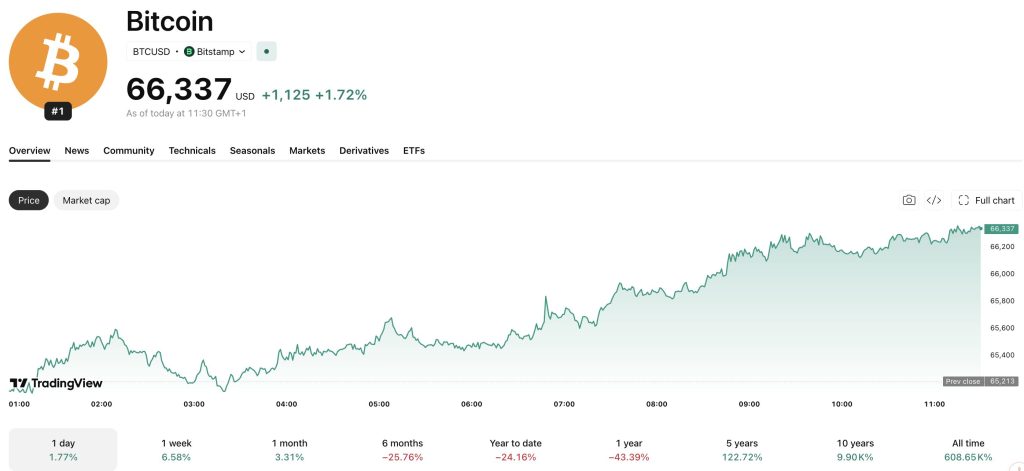
This latest CLARITY Act development comes as the crypto market is bouncing hard, with Bitcoin leading the charge after reclaiming $66,000 on the back of a +3.5% daily move and $31.5Bn in trading volume.
— Eleanor Terrett (@EleanorTerrett) July 20, 2026
 NEWS: I’m hearing from multiple industry sources that the White House has agreed on an ethics package for the Clarity Act and sent the language to certain Senate Republicans this afternoon.
It’s still unclear what the details of the agreement are (I’ve reached out for…
Why the Ethics Provision Stalled the CLARITY Act Bill
The ethics provision at the center of the dispute is designed to prevent senior officials from holding or profiting from digital assets they are responsible for regulating – a structural conflict-of-interest bar that Democrats made a hard condition of their support. The political charge intensified after an Office of Government Ethics disclosure.
The White House’s negotiating position, previously articulated by crypto adviser Patrick Witt, held that any ethics language must apply uniformly rather than targeting the president or his family specifically.
A prior compromise involving state attorneys general as enforcers collapsed after Democrats rejected it as inadequate, and a Senate committee amendment from Sen. Chris Van Hollen failed 13–11 along party lines. The July 20 agreement suggests the two sides found language that threads that needle, though the specific text has not been publicly released.
The Clarity Act is built around establishing a comprehensive federal market-structure framework for digital assets, codifying key elements of US crypto market regulation. It passed the House in July 2025 and cleared the Senate Banking Committee in May 2026.
The bill still needs additional steps before a floor vote can occur. That ethics provision deadlock had driven Senate passage odds into the 40–45% range by late June.
Discover: The Best Crypto to Diversify Your Portfolio
The Legislative Window Is Now Measured in Days
The Senate heads into its August recess after the first week of August, leaving only a matter of weeks for the chamber to process and vote on the legislation this year.
That August deadline has been the defining constraint on the bill’s timeline since spring, and if no vote occurs before the recess, momentum likely slips into 2027. The agreement on the ethics provision is necessary to unlock floor scheduling, but it is not sufficient.
The bill still needs additional steps before a floor vote can occur. The 60-vote threshold means Democratic senators must cross, and the deal language now being shared with Republican senators will need to satisfy Democratic holdouts.
What Passage Would Mean for Markets
For active traders, the main implication of the passage is regulatory clarity for US exchanges, issuers, and investors. A defined federal framework can reduce legal uncertainty and encourage broader institutional adoption.
Failure carries the inverse risk: if the bill stalls again, regulatory uncertainty extends well into next year, and the political window for a comprehensive market structure bill narrows further.
The ethics agreement meaningfully shifts the probability distribution toward passage, but traders should treat the outcome as unresolved until the revised text clears and Democratic floor commitments are on record.
Discover: The Best Token Presales
The post Ethics Provision Deal Could Unlock Senate Vote on the Clarity Act appeared first on Cryptonews.
Crypto World
BTC price rally has broad-based support as institutions, whales, options traders pile in: Crypto Daily
“Large Bitcoin whales have been building up their positions over the last two months, while medium-sized wallets have been selling. This divergence in behaviour could be a ‘constructive signal’ for BTC in the medium term, according to CryptoQuant [data],” Alex Kuptsikevich, the chief market analyst at FxPro, said in an email.
Blockchain analysis firm Glassnode noted that the market looks much more balanced now than it did a month ago.
“Overall, the market appears increasingly balanced, with long-term conviction providing support while speculative participation remains contained,” it said.
There are also signs of growing participation in BTC futures and options. Recently, a trader (or group of traders) purchased large bull call spreads in bitcoin, targeting $72,000 by month-end.
In short, the buyer profile right now appears diverse
Risks, however, remain. The most important near-term headwind is U.S. Treasury bond issuances, which could drain liquidity from the system and weigh on risk assets.
“Treasury bill settlements are expected to result in net new issuance of $56 billion, followed by an additional $37 billion on Thursday and a smaller coupon settlement of $13 billion on Friday. Treasury bill issuance will likely remain heavy until Labor Day, creating a headwind for risk assets as we move through the summer,” Mott Capital Management’s Founder Michael Kramer said in a blog post.

Nigeria’s President Bola Ahmed Tinubu has signed an executive order aimed at reducing what his administration described as the fragmentation of digital-asset regulation. The move is intended to align oversight across agencies, improve protections for consumers, and create a clearer compliance environment for businesses operating in cryptocurrencies and stablecoins.
According to a statement from Tinubu’s special adviser, Bayo Onanuga, the order—signed on Friday—sets out a framework to “harmonize” regulation of virtual assets, strengthen cooperation among Nigeria’s financial, revenue and capital markets bodies, protect citizens from fraud, and “safeguard the integrity of the financial system while enabling responsible innovation.”
Key takeaways
- Nigeria’s executive order is designed to coordinate existing regulators rather than create a new authority or transfer powers.
- A new virtual asset council will be chaired by senior representatives from major financial regulators to steer related policy.
- Registration requirements are expected to be tied to the “nature of the activity” and the specific asset involved, addressing gaps that previously allowed some operators to avoid oversight.
- Nigeria’s tax authority, the Nigerian Revenue Service, is preparing additional guidance following earlier reforms requiring crypto providers to link transactions to tax identifiers.
- The policy shift comes amid rapid stablecoin and crypto inflows into Nigeria, including a major share of sub-Saharan Africa’s stablecoin activity since 2019, per an IMF report.
Executive order targets regulatory gaps without changing mandates
Onanuga emphasized that the executive order does not create a new regulator or reallocate statutory powers. Instead, he said each institution retains its mandate and independence, while the new framework is meant to coordinate their work “rather than replacing it.”
The adviser also indicated that Nigeria plans to provide clearer certainty for market participants by basing registration on how an actor participates in the market and what type of asset is involved. In the administration’s framing, the order is intended to “close the gaps” that allowed certain unregistered operators to avoid supervision.
For investors, exchanges, payment firms, and other service providers, the core practical question is not whether regulators will become stricter overnight, but whether coordination will be more predictable. Fragmentation often translates into overlapping compliance demands or enforcement uncertainty; a harmonized approach can reduce friction while still increasing the barriers for entities that previously operated outside established oversight.
A virtual asset council to coordinate policy across regulators
The executive order establishes a virtual asset council, led by senior figures from Nigeria’s top financial regulators, with responsibility for directing related policies. The intention, as described by the administration, is to strengthen cooperation across agencies that oversee different parts of the broader financial system.
That matters because digital assets span multiple regulatory domains: market conduct, financial stability concerns, anti-fraud measures, taxation, and capital markets oversight. When these responsibilities are distributed without tight coordination, businesses can face inconsistent rules depending on which agency is driving enforcement at a given time.
Nigeria’s approach appears to be aimed at consolidating how policies are directed across agencies while leaving each regulator’s formal legal powers intact—an arrangement that could improve consistency without triggering the disruption that sometimes comes with sweeping institutional restructuring.
Tax reforms continue: Nigeria links crypto activity to identifiers
Beyond the coordination effort, the executive order also points to tax administration updates. Onanuga noted that the Nigerian Revenue Service would provide additional details about the effects on taxpayers, while earlier measures suggest the direction of travel is already underway.
In January, Nigerian authorities said that under the Nigeria Tax Administration Act, crypto service providers were required to link transactions to tax identification numbers. In some situations, national identification numbers were also required.
The policy emphasis on identifier-linked reporting is particularly relevant in a market where cross-border activity and informal rails can complicate compliance. If Nigeria tightens data requirements while harmonizing regulator oversight, firms operating locally may need to upgrade their onboarding and transaction-record systems to demonstrate that counterparties and transactions can be mapped to the relevant tax records.
The next watchpoint is how the “additional details” referenced in the executive order translate into enforceable operational requirements—such as what data formats will be expected, how compliance will be assessed, and how reporting obligations interact with existing rules for different classes of digital-asset services.
Rapid stablecoin adoption increases pressure for clearer rules
Nigeria’s regulatory attention comes as digital asset usage has expanded quickly. According to a June report from the International Monetary Fund (IMF), Nigeria accounted for about 60% of stablecoin inflows within sub-Saharan Africa since 2019. The IMF also reported that Nigeria had approximately $59 billion in crypto inflows between July 2023 and June 2024, citing the scale of activity tied to crypto demand in the region.
The IMF also framed Nigeria’s policy challenge as balancing innovation with risk control. In its discussion of stablecoin adoption, the institution said the problem is to “narrow the gap that made the workaround attractive” in cross-border payments while ensuring that “new risks remain contained.” The IMF added that doing so requires “a clear strategy: open to innovation but anchored in sound macroeconomic policy and effective regulation.”
That framing highlights a tension policymakers often face: stablecoins can meet real user needs—especially when traditional payment channels are costly or slow—but they can also introduce compliance, consumer protection, and financial integrity risks if governance is unclear. Nigeria’s executive order is positioned as an attempt to bring those risks under a more coordinated regulatory umbrella while keeping the market open for “responsible innovation,” in the administration’s wording.
The meaningful change from a practical standpoint will be whether harmonization leads to consistent enforcement and clearer registration pathways. The administration’s commitment that registration follows the nature of the activity and the asset suggests rules may be tiered rather than one-size-fits-all, which could help regulators target higher-risk activities while reducing uncertainty for lower-risk providers.
What to watch next
Market participants should focus on how the new virtual asset council operationalizes guidance, how registration requirements will be defined by activity type and asset category, and what specific compliance and reporting updates the Nigerian Revenue Service issues following earlier identifier-based tax reforms.
Crypto World
Clarity odds jump to 43% on Polymarket after unverified reports Trump agreed to ethics deal


Polymarket traders sharply raised the odds of the Clarity Act becoming law this year after reports that President Trump reportedly agreed to the ethics provision that had stalled the bill.
The market pricing whether the crypto market structure bill is signed into law in 2026 rose to about 43% on the predictons market on Monday, compared to 32% on Friday. This was its lowest level since the market started trading in January.
The jump tracked a series of reports that the final sticking point in months of negotiations had been cleared.
Democrats have not seen the bill text, a source familiar with the matter told CoinDesk, and no text has been publicly released. The White House and the offices of the senators involved had not commented.
Ethics has been the last major obstacle to the Clarity Act, which would create the first comprehensive federal framework for digital assets and split oversight between the Securities and Exchange Commission (SEC) and the Commodity Futures Trading Commission (CFTC).
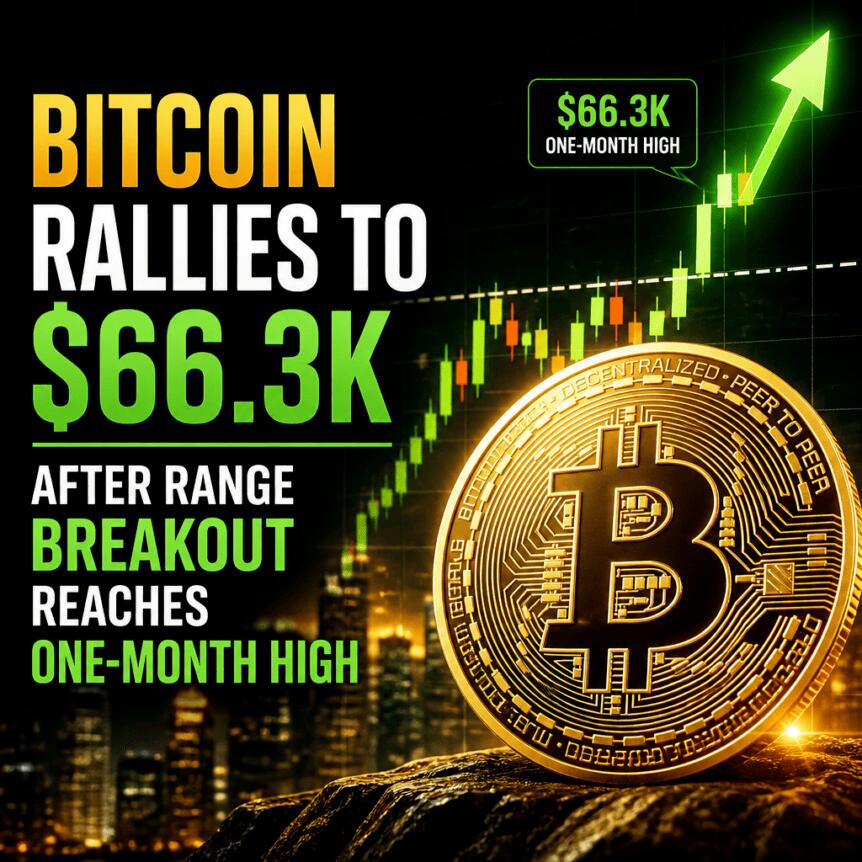
Bitcoin pushed past one-month highs on Tuesday, breaking above the $65,000 area and reaching $66,000 on the back of strengthening short-term momentum. According to TradingView data cited by the market, BTC/USD hit a high of $66,306 on Bitstamp—levels last seen on June 17.
The move appears to be drawing in traders who were previously watching for confirmation through nearby resistance. At the same time, derivatives activity suggests the latest breakout is beginning to spill over into liquidations and higher-beta positioning heading into the end of July.
Key takeaways
- BTC/USD traded at $66,306 on Bitstamp, the first time above $66,000 in more than a month.
- Traders cited $67,000–$68,000 as the next resistance zone, with one analyst suggesting 5%–6% upside could follow if reclaimed.
- CoinGlass reported roughly $200 million in cross-crypto liquidations over 24 hours as the breakout accelerated.
- QCP Capital flagged “some demand” for higher Bitcoin options pricing into late July, implying dealers may be positioned in a way that can amplify upward moves.
From failed $65,000 attempts to a clean break higher
Price action had repeatedly met resistance around $65,000, with a “series of rejections” in that zone failing to fully cool enthusiasm. Still, traders continued to reference upside levels above $67,000, while pointing to upcoming psychological markers such as $70,000.
One widely followed market commentator, trader Jelle, wrote on X that BTC had “reclaimed the range lows” and was “now pushing higher.” In the same analysis, Jelle described the 65,000 to 67,000 band as resistance from the earlier Q1 range, adding that it “might not put much of a fight” given how quickly BTC moved through it on the way down.
“The area between 65 and 67k is resistance from the Q1 range, but given how we sliced through it on the way down – it might not put much of a fight up here either. Eyes on those 70k range highs if so.”
Liquidations rise as traders reposition
As Bitcoin moved through range highs, short liquidations began to build. CoinGlass data, cited in the article, put total cross-crypto liquidations at about $200 million over the prior 24 hours—an indicator that leverage is being stress-tested as the market reprices.
Another trader highlighted the same nearby structure. Ted Pillows argued that reclaiming $65,000 shifts attention to $67,500–$68,000 as the next major resistance, framing the breakout as leaving Bitcoin “some room to pump.” Pillows further suggested that if BTC can reclaim the $68,000 level, a fast continuation higher could follow.
“If BTC manages to reclaim the $68,000 resistance too, it could rally another 5%-6% very quickly.”
Not all voices were convinced the rally reflected broad spot demand. Commentator Exitpump cautioned on X that there was “very little real buying interest” and pointed instead to derivatives dynamics—specifically the idea that closing short positions can help drive price higher. That distinction matters for traders: rallies powered mainly by squeeze mechanics can accelerate quickly, but they may also reverse faster if spot participation doesn’t keep up.
Options positioning and the macro calendar ahead
beyond spot price levels, the article points to derivatives and options flows. Trading firm and market maker QCP Capital said it observed “some demand” for higher Bitcoin bets into the end of July, according to a “QCP Market Colour” note referenced in the report.
QCP’s framing is important because it implies not just directional interest, but a specific positioning profile in options markets. The firm said dealers are short upside gamma into the 28–29 July FOMC window, which can raise the odds of an “accelerated move higher” if market stress or macro uncertainty eases. In other words, if price starts climbing and options hedging flows kick in, volatility and directional momentum can reinforce each other.
“This positioning leaves dealers short upside gamma into the 28 to 29 July FOMC meeting, increasing the potential for an accelerated move higher should tensions around the Strait of Hormuz ease.”
QCP also connected the setup to the broader geopolitical situation, referencing an ongoing focus on the Strait of Hormuz and the potential impact on global oil routes. The link is indirect for crypto, but it feeds into macro risk appetite—something investors often watch for when crypto moves in tandem with wider risk assets.
Macro expectations were also part of the backdrop. The report notes that the US Federal Reserve would hold its next interest-rate meeting on July 29, with chair Kevin Warsh potentially providing additional guidance. It further cites CME Group’s FedWatch Tool probabilities: 83.4% that the Fed keeps the current policy target range of 3.50%–3.75% at the July 29 meeting, and 53.8% for a hike to 3.75%–4.00% at the Sept. 16 FOMC meeting.
That calendar is relevant to Bitcoin traders because catalysts around central bank policy can shift liquidity conditions and risk-taking behavior quickly—especially when derivatives positioning creates leverage to amplify price moves.
What to watch if the breakout holds
Bitcoin’s jump above $66,000 suggests momentum is returning, but the next phase hinges on whether the market can convert that breakout into a sustained trend. Traders cited $67,000–$68,000 as the most immediate hurdle; passing through that zone would likely determine whether the market stays in “squeeze and continuation” mode or transitions into a more stable range.
Heading into the end-of-July FOMC window, readers should also watch for signs of whether options-driven risk appetite grows—or whether commentary about “little real buying interest” proves more prescient. If upside gamma effects are indeed in play, volatility could rise sharply around key macro moments; if not, the move may fade after the initial liquidation wave.

Cardano’s 7% Pop Looks Like Bait, and the Pros Aren’t Biting

Balenciaga Eyewear Has a Sharp Attitude for Summer

5 Proven Ways To Make Money With AI (No Experience)


-
 NewsBeat5 days ago
London Mayor Sadiq Khan handed a peerage by Keir Starmer alongside 15 other Labour figures… just days before the PM leaves No10
-

 Fashion4 days ago
Weekend Open Thread – Corporette.com
-

 Politics3 days ago
The House | The City of London can help the new chancellor deliver growth in every postcode
-

 Politics6 days ago
Young campaigners urge incoming PM to act on outdoor junk food ads
-

 Crypto World5 days ago
CFTC blocks Kalshi from unwinding Michigan trades after court order
-
Crypto World4 days ago
Two July Windows Left: The CLARITY Act’s Senate Fight and What Failure Means
-

 Crypto World3 days ago
Ripple Payments Joins MiCA With 14 Firms, Does It Mean Anything For XRP?
-

 Business5 days ago
Nvidia Stock Slips After Big Tuesday Rally as Huang Confirms Vera Rubin Chip Is Now in Production Today
-

 Politics2 days ago
Democrats look to World Cup watch parties to register thousands of voters
-
 Entertainment6 days ago
Disney’s Most Ambitious Failed Star Wars Attraction Is Coming to SDCC
-

 Crypto World4 days ago
Ripple wins EU-wide access as ESMA adds it to MiCA register
-

 Crypto World4 hours ago
Grayscale Files For Worldcoin ETF, WLD Registers Sharp Rise
-

 Crypto World5 days ago
Injective Submits SEC Transfer-Agent Registration to Onchain Ownership Records
-

 Business5 days ago
Palantir Shares Rise After Expanded Nvidia Partnership and Fresh Analyst Upgrades Ahead of Earnings Day
-

 Tech12 hours ago
Sail Virtually Aboard The “Itanic” With IA-64 Emulator
-
 Tech9 hours ago
Turtle Beach Command Series KB7 review: a nifty screen-equipped gaming keyboard
-

 Tech7 days ago
Dark Secrets Emerge When Jailbreaking LLMs
-

 NewsBeat4 days ago
Registration is now open for March for Men with Kev 2026
-

 News Videos7 days ago
XRP BOMBSHELL… XRP OMBOARDED FOR TRANSACTIONS!!!
-

 NewsBeat1 day ago
Unregistered fitter used Gas Safe logo on business flyers
You must be logged in to post a comment Login