
Crypto World
IMF Says El Salvador’s Post-Review Bitcoin Purchases Used No Public Funds

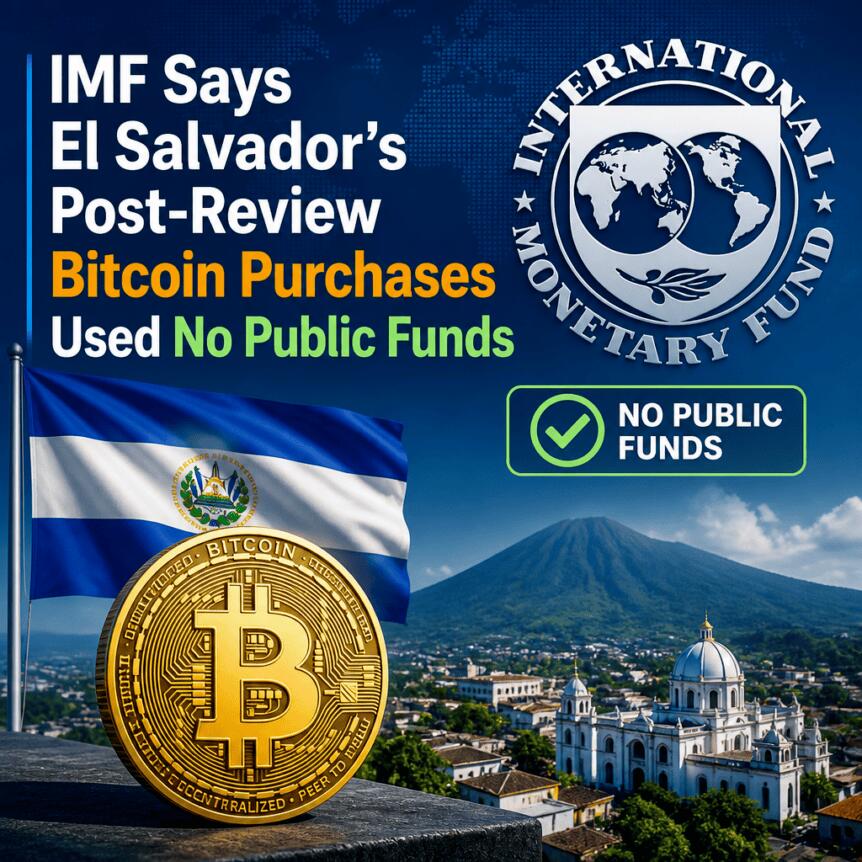
El Salvador’s Bitcoin reserve increases after the IMF began reviewing its financing program do not involve new purchases funded by public resources, according to the International Monetary Fund. In documents shared with the lender, Salvadoran authorities attributed the growth to private donations after the IMF’s first review of the program concluded in June 2025.
In a Thursday statement, the IMF said it verified the explanation through materials provided by local authorities, concluding that the additions therefore should not be treated as additional government-funded Bitcoin buying within the terms of the program. The IMF also said control of the Chivo wallet—El Salvador’s state-linked Bitcoin wallet—has been shifted to a private operator, while the government retains a minority stake and certain custodial responsibilities.
Key takeaways
- The IMF says post–June 2025 Bitcoin reserve increases were supported by documents showing they came from private donations, not government financing.
- The lender expects no further Bitcoin accumulation beyond the donation activity it says is documented.
- IMF said majority ownership and operational control of the Chivo wallet moved to a private operator, with the state keeping minority and custody roles.
- El Salvador’s public announcements about ongoing accumulation have previously renewed scrutiny over compliance with IMF conditions.
IMF verification after the June 2025 review
The IMF’s latest explanation is aimed at clarifying the source of Bitcoin increases during the period following its first review of El Salvador’s IMF-supported financing arrangement. In its statement, the IMF said the documents submitted by Salvadoran authorities verified that the accumulation did not rely on “public resources.”
The distinction matters because El Salvador’s IMF deal includes restrictions on how the public sector can engage with Bitcoin. When Bitcoin-related activity appears to expand after key compliance checkpoints, investors and stakeholders typically look for whether the activity aligns with the program’s conditions—particularly around public funding and state-led accumulation.
The IMF also framed expectations going forward: it said it does not anticipate additional accumulation beyond what can be tied to documented donations. That message effectively sets a compliance ceiling for future reserve growth, at least as the IMF continues to monitor the arrangement.
Chivo wallet control reshuffle
Beyond the donation-source question, the IMF’s statement addressed governance of the Chivo wallet. According to the lender, majority ownership and operational control have been transferred to a private operator. At the same time, the government retains a minority stake and custodial responsibilities.
This matters because earlier IMF commitments emphasized reducing the government’s role in Bitcoin-related activity. A shift in operational control can be seen as consistent with a broader effort to move away from state-driven Bitcoin operations—though the exact implications for users and custody arrangements depend on how the private operator manages day-to-day functions.
How previous rules set the stage for scrutiny
El Salvador’s IMF controversy around Bitcoin centers on the line between government involvement and private-sector activity. In December 2024, the IMF agreement required changes that included limiting public-sector involvement in Bitcoin under the IMF package. The arrangement also made private-sector Bitcoin acceptance voluntary and required that taxes be paid in US dollars, while calling for government involvement in Chivo to be unwound.
Then, in March 2025, the IMF issued new documents that barred “voluntary accumulation” of Bitcoin by the public sector. President Nayib Bukele responded publicly, saying purchases were “not stopping” and that El Salvador would continue adding at least one BTC daily.
The tension between El Salvador’s statements about ongoing accumulation and the IMF’s restrictions has repeatedly reemerged in subsequent months. After the March 2025 update, the country’s Bitcoin Office often posted that El Salvador continued to accumulate Bitcoin, which prompted renewed questions about whether the additions were consistent with the program’s constraints.
From a private-donation explanation to a reserve tracker snapshot
The IMF previously addressed the issue after El Salvador’s December 2024 commitments. In July 2025, the IMF offered an initial explanation, stating that it had found no new Bitcoin purchased since the December agreement. At that time, it attributed increases to consolidation among government wallets.
However, El Salvador’s November 2025 announcement that it had acquired 1,090 BTC worth $100 million—after the first review timeline—brought the question back to the forefront. Coverage at the time highlighted compliance concerns tied to the $1.4 billion IMF program, and an IMF representative reportedly indicated the lender would not provide “running commentary” on announcements, assessing compliance in due course.
Now, the IMF says those due diligence efforts produced a clearer result: it verified that accumulation after the June 2025 review came from private donations rather than additional Bitcoin purchases financed with government resources.
For readers tracking the scale of El Salvador’s holdings, the National Bitcoin Office’s reserve tracker reports that El Salvador holds about 7,764 BTC. Using CoinGecko’s cited BTC price of $80,900, the stockpile is valued at roughly $628 million. The IMF’s framing suggests that the higher balance relative to earlier points should be interpreted, at least for IMF monitoring purposes, as donation-linked additions rather than new public-sector purchases.
What to watch next for investors and market participants
While the IMF’s latest statement provides a compliance-oriented explanation and sets expectations for future accumulation, uncertainty remains around how independently verifiable the donation documentation is over time and whether future reserve changes match the “documented donations only” boundary the IMF described. Market participants should continue to monitor subsequent IMF reviews, alongside updates from El Salvador’s Bitcoin Office and any further disclosures tied to the Chivo wallet’s private operator arrangements.


South Korea’s Financial Services Commission (FSC) has laid out a three-phase plan to build the legal and technical groundwork for issuing tokenized securities—an effort that, if executed on schedule, would clarify how onchain securities could fit within the country’s existing capital markets framework.
In a press release issued Friday, the FSC said tokenized securities are expected to gain formal legal recognition starting Feb. 4, 2027, following an update to the Act on Electronic Registration of Stocks and Bonds. The initiative also points toward a later phase connecting tokenized issuance and payments with stablecoins.
Key takeaways
- The FSC plans to recognize tokenized securities legally from Feb. 4, 2027 via amendments to the Act on Electronic Registration of Stocks and Bonds.
- Phase one covers legal recognition for tokenized versions of selected instruments, including certain funds and bonds, along with unlisted stocks and fractional investment securities.
- Phase two would broaden tokenization to apply to all publicly offered securities.
- Phase three targets onchain payment flows linked to stablecoins, indicating regulators see stablecoins as part of the settlement picture.
- Before launching the roadmap, the FSC intends to collaborate with the Korea Securities Depository (KSD) on the necessary tokenization infrastructure.
A date-specific shift toward legal recognition
Until now, tokenized securities have faced regulatory uncertainty in many jurisdictions—typically tied to questions about legal status, transfer mechanisms, and settlement. South Korea’s plan attempts to remove at least one major friction point by tying recognition of tokenized securities to a concrete legislative timetable.
The FSC said that beginning Feb. 4, 2027, tokenized securities would be recognized as digitized forms of securities after the scheduled update to the Act on Electronic Registration of Stocks and Bonds takes effect. This is intended to align the tokenized form with the legal infrastructure already used for registering and handling stocks and bonds electronically.
The roadmap is described as part of the implementation of amended versions of the Capital Markets Act and the Electronic Securities Act, which the FSC framed as the country’s first tokenized securities framework.
What the three phases cover
The FSC’s approach is staged, moving from recognition of specific instruments to broader application and then toward a more integrated onchain settlement model.
Phase one focuses on bringing tokenized securities into the regulatory and legal fold for a limited set of products. According to the FSC, legal recognition would apply to tokenized securities that include:
- institutional money market funds
- bonds
- unlisted stocks
- fractional investment securities
Phase two would expand tokenization to all publicly offered securities. For market participants, this sequencing matters: it suggests that issuers and intermediaries will be expected to adapt operational and compliance processes first for a controlled set of instruments, before the rulebook potentially broadens to cover a wider universe of public offerings.
Phase three is the most ambitious and forward-looking. The FSC said it aims to enable onchain payments connected to stablecoins. While the announcement stops short of detailing technical standards or regulatory limits for stablecoins in this context, the fact that stablecoin-linked payments are included in the final phase indicates regulators are thinking beyond token issuance alone and toward settlement and custody-to-payment workflows.
Rulemaking steps and the role of market infrastructure
Alongside the legislative timeline, the FSC laid out additional near-term administrative work. It said it plans to propose revisions to relevant subordinate regulations by the end of September—a step that typically determines how the law will function in practice, including the operational rules that govern issuance, transfer, and compliance.
Importantly, the FSC also indicated it would decide the timetable for phase two and phase three after the subordinate revisions are prepared, meaning that the later phases are not fully locked in by the Feb. 4, 2027 recognition date.
Before the roadmap begins, the FSC said it would work with the Korea Securities Depository (KSD) to develop the tokenization infrastructure required for the framework. For investors and firms, that matters because successful tokenization depends heavily on the readiness of core market plumbing—interfaces with registries, confirmation of ownership records, and the ability to reconcile onchain activity with established capital markets processes.
Why the roadmap signals a tightening regulatory stance
This announcement comes as South Korean regulators have been steadily moving closer to a defined regime for tokenized assets. Earlier, the FSC had indicated that it would publish detailed tokenized securities rules to bring them under the country’s capital markets framework in 2027, according to reporting on the FSC’s prior stance.
In addition, South Korea has been experimenting with tokenized settlement concepts outside of securities issuance. In April, the Ministry of Economy and Finance announced a pilot project using tokenized deposits for executing government operational spending, with a full rollout planned for the fourth quarter of 2026. That effort is separate from the FSC’s tokenized securities framework, but it reinforces the broader regulatory direction: using tokenization not only for trading or issuance, but potentially for real-world payments and operational transfers.
Viewed together, the FSC’s roadmap suggests South Korea is trying to reconcile two priorities that often clash in tokenization discussions: preserving the legal certainty of traditional capital markets while making room for blockchain-based representation and, eventually, onchain payment rails.
At the same time, the phased nature of the plan leaves practical questions open. The biggest uncertainty for market participants is likely how quickly phase two and phase three will move after the subordinate regulations are drafted, and what technical and compliance requirements will accompany stablecoin-linked onchain payments.
For readers watching this space, the next signals to track are the FSC’s subordinate regulation revisions due by the end of September and the details that emerge from its coordination with the KSD—especially anything clarifying how settlement, custody records, and stablecoin-linked payment flows will be handled under the updated legal framework.
An attacker drained roughly $1.73 million from Notional Finance’s legacy escrow contract early Friday, exploiting a coding flaw that made an enormous fabricated debt register as zero.
The stolen DAI and USDC became about 689 ether (ETH). The funds then went through Tornado Cash, a service that breaks the trail between wallets. Notional has said nothing publicly.
How the Notional Finance Exploit Worked
Notional Finance is a fixed-rate lending protocol on Ethereum. Its first version recorded future cash obligations as tokens called fCash. The system screened borrowers for collateral before letting them add debt.
That screening converted debt into ether terms through a raw uint128 conversion. Two mints summed to exactly two raised to the power of 128. That is the single value the conversion flattens to zero, QuillAudits found.
A checked conversion would have rejected the figure instead of quietly dropping its digits. Notional used the safer method elsewhere in the same file, according to the write-up.
The account then read as debt free. Etherscan records show the setup landed at 11:58 p.m. UTC Thursday and the withdrawal three minutes later.
That second transaction moved 69,257 DAI and 1,658,524 USDC out of the escrow. The attacker also tipped block builder Titan 0.07 ETH to route the trade privately.
Security firm PeckShield relayed a warning from on-chain monitor Specter. The escrow now holds about $60,600 in leftover tokens.
Dormant V1 Contracts Still Held Real Money
Notional wound down its third version after the November 2025 Balancer exploit cascaded into its vaults. The V1 contracts stayed live and funded, and nobody swept them.
Independently audited protocols still account for most crypto hack losses, so an old review offered no cover here. June brought a close parallel, when an attacker drained legacy Solana pools at Raydium.
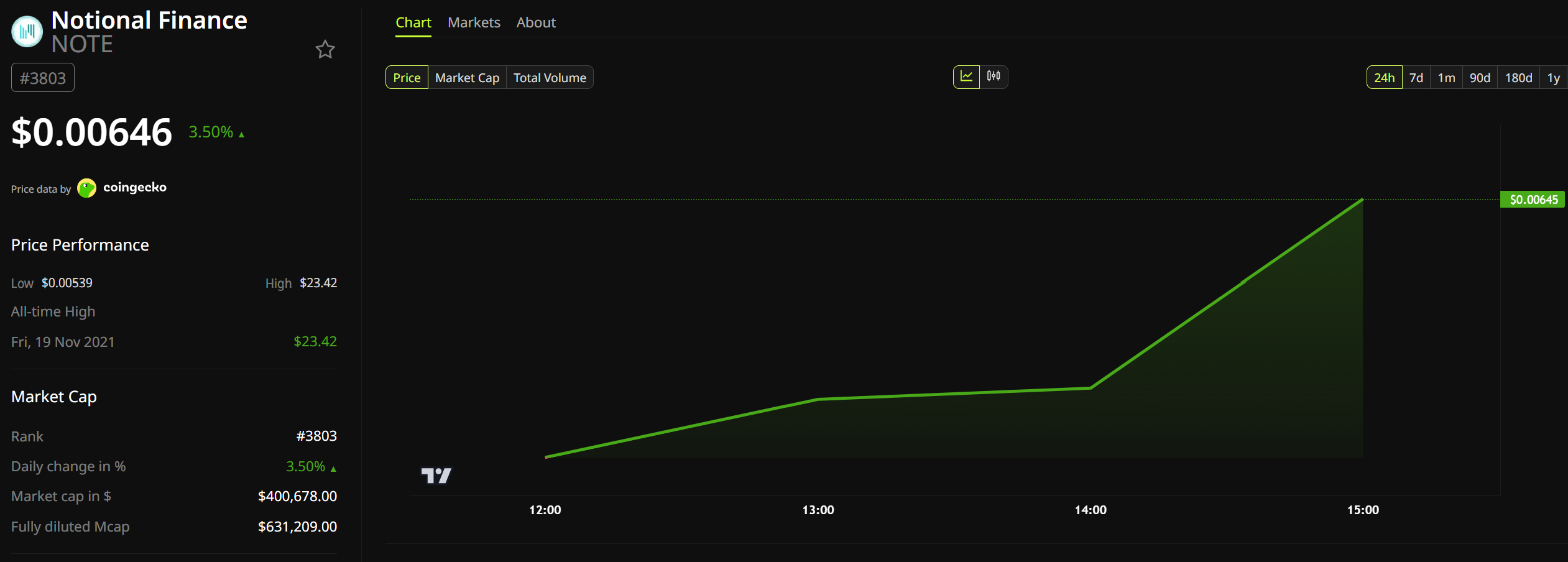
Notional’s NOTE token trades near $0.0065, up 3.5% over 24 hours, on a market value close to $400,700.

Notional had issued no statement, loss figure, or post-mortem at publication. Whether the drained cash belonged to users, the treasury, or a third party remains unconfirmed.
The post Notional Finance Hit by $1.7 Million Exploit From Integer Overflow Bug appeared first on BeInCrypto.


Your day-ahead look for Sept. 4, 2026
The Aussie enters this week with genuine hawkish backing after Australia’s Q2 GDP surprised sharply to the upside, pushing the market-implied probability of a September RBA hike from 48% to 57%, with a November move now more than fully priced. Governor Bullock’s board has already flagged upside inflation risks tied to Middle East-driven energy costs, and rising Australian bond yields, which touched their highest level since April 2011 this week, are only reinforcing that hawkish backdrop.
Across the Tasman, the RBNZ delivered exactly what all five major New Zealand bank economists expected on Wednesday: a 25bp hike to 2.75%, the second consecutive increase after July’s tightening move. Headline inflation remains elevated at 4.1%, though the central bank’s own projections signal a likely pause in October before potentially resuming in December, leaving markets pricing roughly a 30% chance of another hike this year.
The result: two central banks now both firmly in tightening mode, though the RBA’s path still carries more near-term uncertainty than the RBNZ’s, whose next move already looks broadly telegraphed through year-end.
Technical Analysis of AUD/NZD
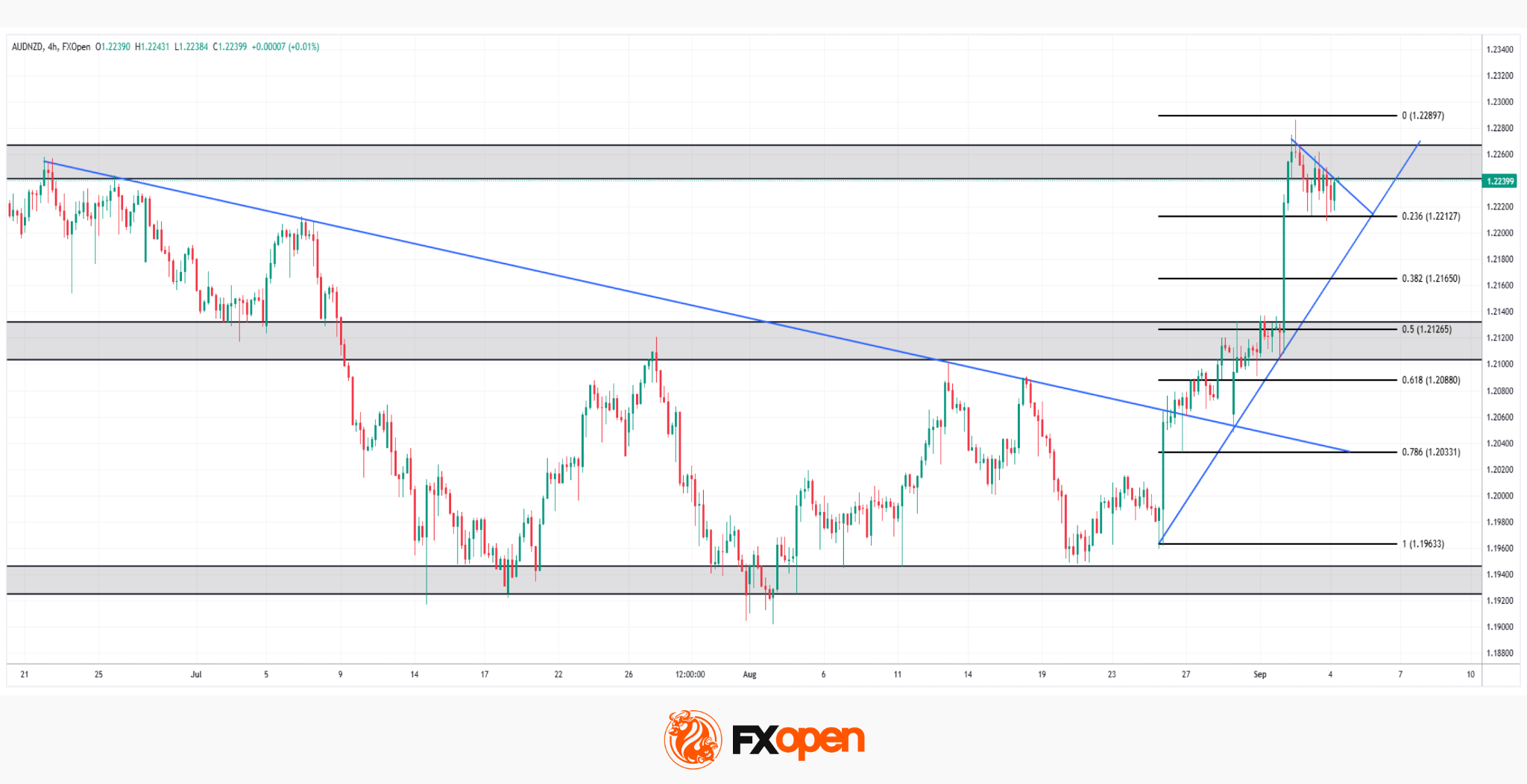
As the AUD/NZD chart shows, the pair staged a sharp rally from the 1.19633 low, riding a steep ascending trendline that has powered the entire late-August advance. That rally has since run into resistance near the 1.22897 high, the 0 Fibonacci level, where price is now consolidating just above the 0.236 retracement near 1.22127, caught between a shorter-term descending trendline from this week’s peak and the broader medium-term descending trendline that has capped the pair since late June.
Bullish Scenario
Should buyers defend the 0.236 retracement and the ascending trendline while breaking above the short-term descending trendline, the path would open towards a retest of the 1.22897 high. A confirmed break above that level would mark a genuine shift in the broader multi-month structure.
Bearish Scenario
Conversely, a break below the 0.236 level and the steep ascending trendline would expose the intermediate 1.213–1.215 support zone, coinciding with the 0.5 Fibonacci retracement. A deeper slide below that zone would risk a fuller retracement of the late-August rally, back towards the 0.618–0.786 area near 1.203–1.209.
With price squeezed between a reclaimed short-term trendline, a defended ascending trendline, and the long-term descending trendline, AUD/NZD looks poised for a decisive move. Will the RBA’s hawkish momentum push the pair through resistance, or will the broader downtrend since June reassert control?
Trade over 50 forex markets 24 hours a day with FXOpen. Take advantage of low commissions, deep liquidity, and spreads from 0.0 pips (additional fees may apply). Open your FXOpen account now or learn more about trading forex with FXOpen.
This article represents the opinion of the Companies operating under the FXOpen brand only. It is not to be construed as an offer, solicitation, or recommendation with respect to products and services provided by the Companies operating under the FXOpen brand, nor is it to be considered financial advice.


Financial regulators unveiled a phased roadmap moving traditional capital markets onto distributed ledgers, concluding with onchain stablecoin settlement.


Adam Aron, the CEO of AMC Entertainment Holdings, criticized Robinhood’s tokenized stock offerings that provide economic exposure to AMC shares, stating the company has no affiliation and that it will have a securities counsel investigate the matter.
Robinhood’s stock tokens are not registered under US securities laws and are an “outrageous” offering with no affiliation to AMC, Aron wrote in a Friday X post, adding that the company will request an investigation from its outside securities counsel.
Aron added that these stocks may not be offered to US investors and that they are subject to restrictions in several other jurisdictions, including Canada, Switzerland and the UK.
The remarks come as the latest criticism targeting tokenized stocks, which are blockchain-based shares tracking the price of traditional company shares. Tokenized stock recently came under scrutiny when some crypto exchanges canceled their SpaceX IPO allocations earlier in June.
Platforms including Bybit, Binance, Bitget Wallet and MEXC canceled their tokenized SpaceX IPO campaigns as SpaceX went public on the Nasdaq, with several blaming Kraken-owned xStocks’ inability to deliver the underlying assets.
Related: VARA, Securitize sign MoU for tokenization innovation in Dubai
Robinhood launches tokenization initiatives
Robinhood co-founder and CEO, Vlad Tenev, responded to the criticism on X by asking Aron to share his exact concerns tied to the tokenized offering. The platform did not issue a public statement.
Cointelegraph has approached Robinhood for comment on the remarks and the regulatory status of its tokenized stock offerings.
The first generation of Robinhood stock tokens launched in July 2026 as tokenized debt securities issued by Jersey-based Robinhood Assets as ERC-20 tokens, providing economic exposure to underlying assets such as US stocks and exchange-traded funds.
In February, Robinhood launched a public testnet for Robinhood Chain, its Ethereum layer‑2 network built using Arbitrum technology to host tokenized assets.
In October 2025, Robinhood shared plans to tokenize nearly 500 US stocks and ETFs on Arbitrum, as part of its push into tokenized assets.
In July 2026, Bernstein analysts raised their price target on Robinhood Markets, predicting that the platform’s next phase of growth will be driven by tokenized equities and prediction markets, rather than traditional crypto trading.
Magazine: How Hong Kong is turning tokenized bonds into real market infrastructure
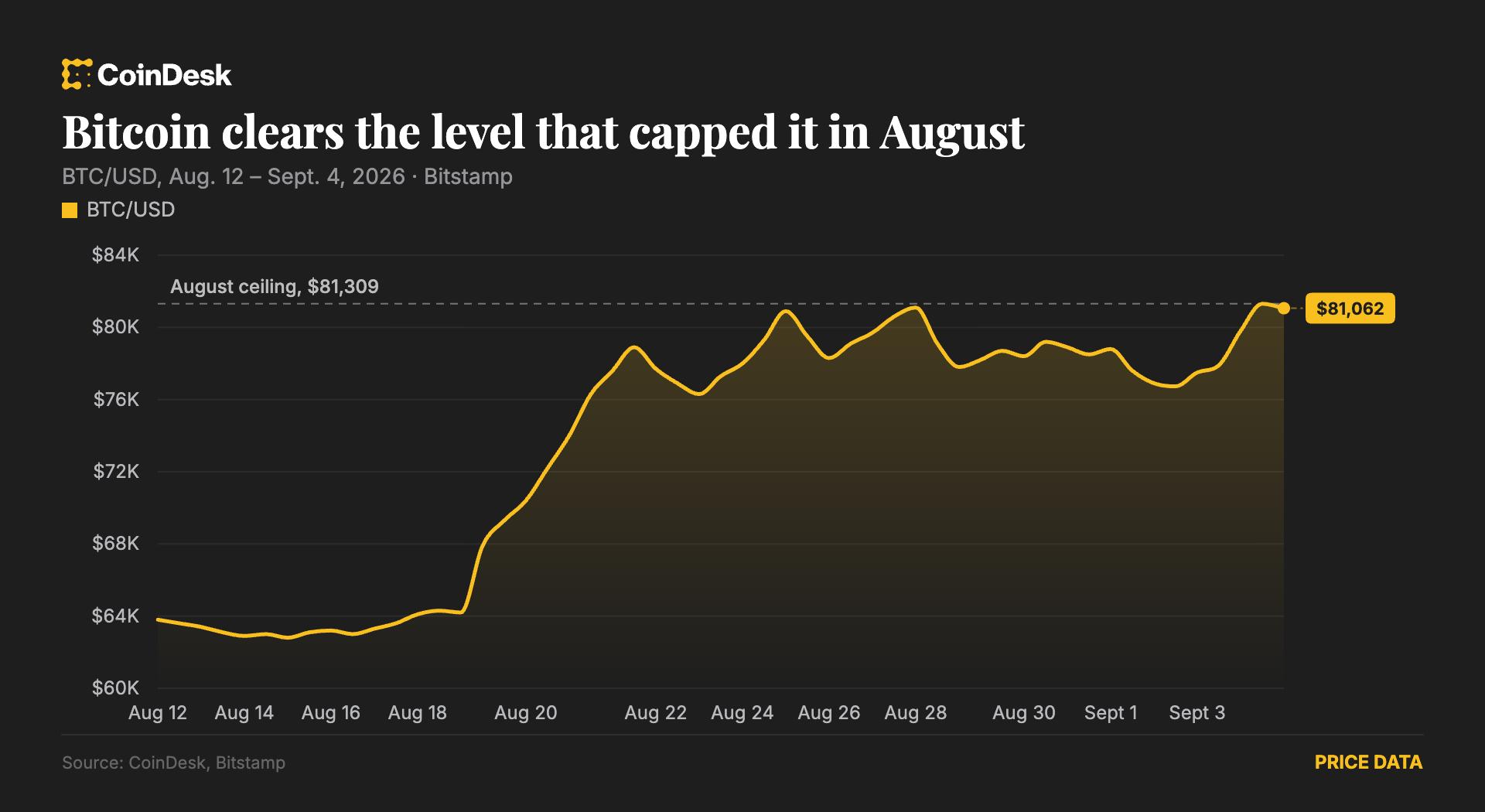
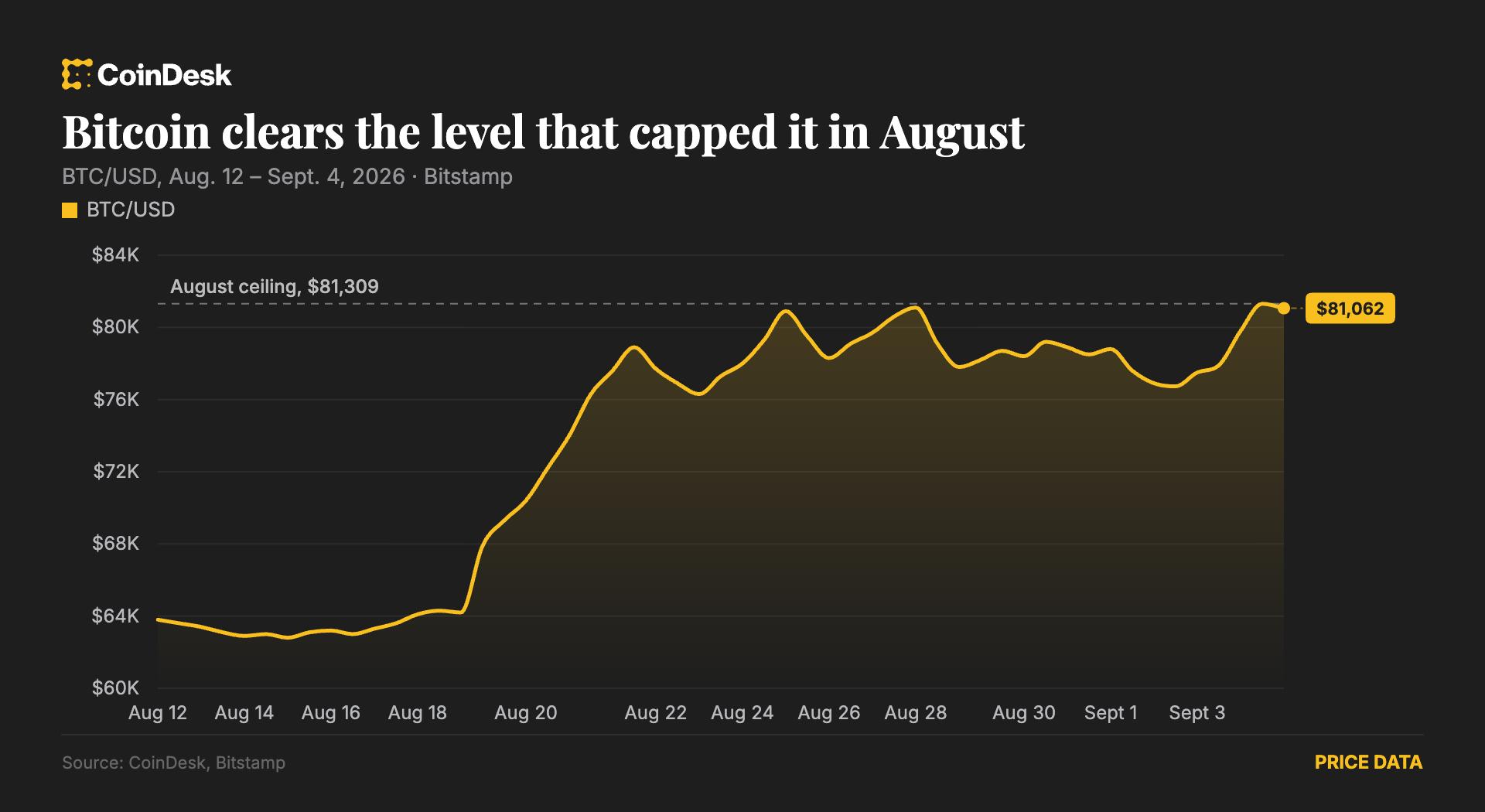
BTC pushed through the level that capped it in late August, while zcash gained 16% and dash 19%.


South Korea’s Financial Services Commission (SFC) introduced a three-phase roadmap to develop infrastructure for tokenized securities issuance, for assets including stocks, bonds and funds.
Starting Feb. 4, 2027, tokenized securities will be legally recognized as digitized forms of securities after an update to the Act on Electronic Registration of Stocks and Bonds is scheduled to take effect, the FSC revealed in a Friday press release.
The first phase will offer tokenized securities legal recognition, including for institutional money market funds, bonds, unlisted stocks and fractional investment securities. Phase two would expand tokenization to all publicly offered securities, while phase three aims for onchain payments linked to stablecoins.
The roadmap is part of a planned implementation of the amended Capital Markets Act and Electronic Securities Act, the country’s first tokenized securities framework, scheduled to take full effect on Feb. 4.
Next, the FSC plans to propose revisions to relevant subordinate regulations by the end of September and decide the timeline for the second and third phase of the roadmap. Before the roadmap’s initiation, the FSC said it will work with the Korea Securities Depository (KSD) to develop the relevant tokenization infrastructure.
South Korean regulators have been moving closer to a regulatory framework for tokenized assets. In May, the FSC said it would release detailed tokenized securities rules to bring them under the country’s capital markets framework in 2027.
In April, South Korea’s Ministry of Economy and Finance announced a pilot project that will use tokenized deposits to execute government operational spending, with a full rollout set for the fourth quarter of 2026.
Related: South Korea to bring digital assets under new state asset management system
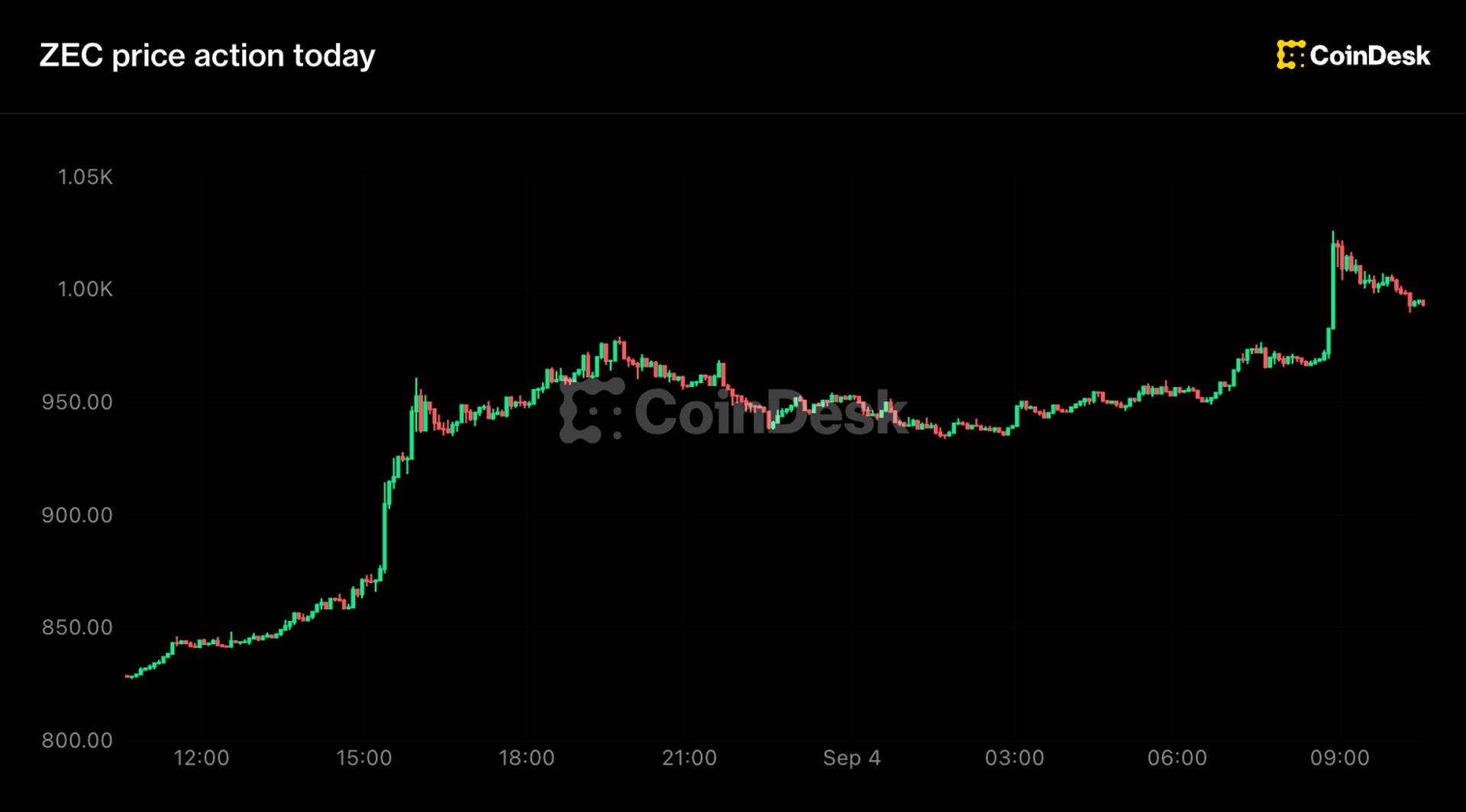
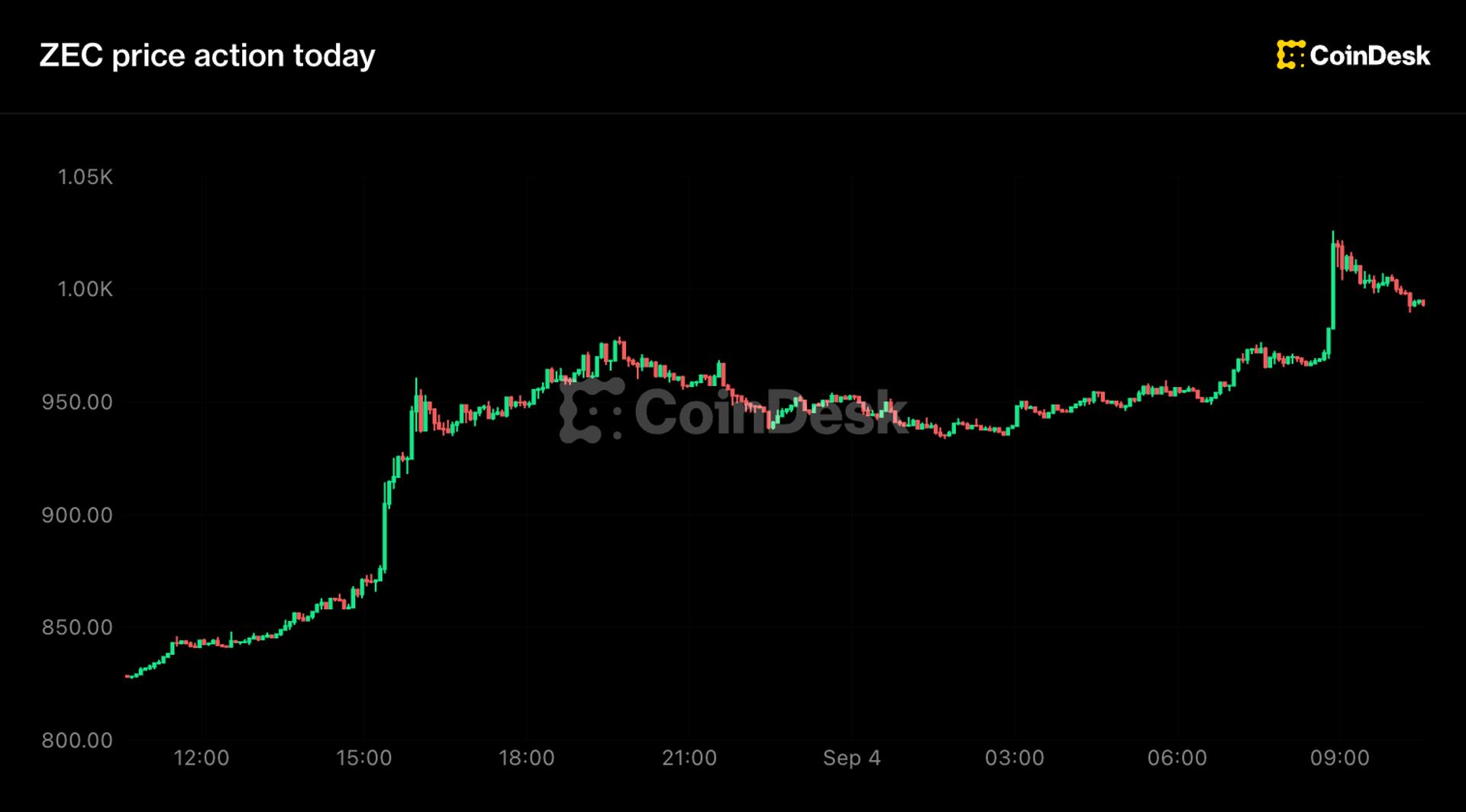
ZEC briefly traded above $1,020 as a sharp rally forced traders betting against the token out of leveraged positions.
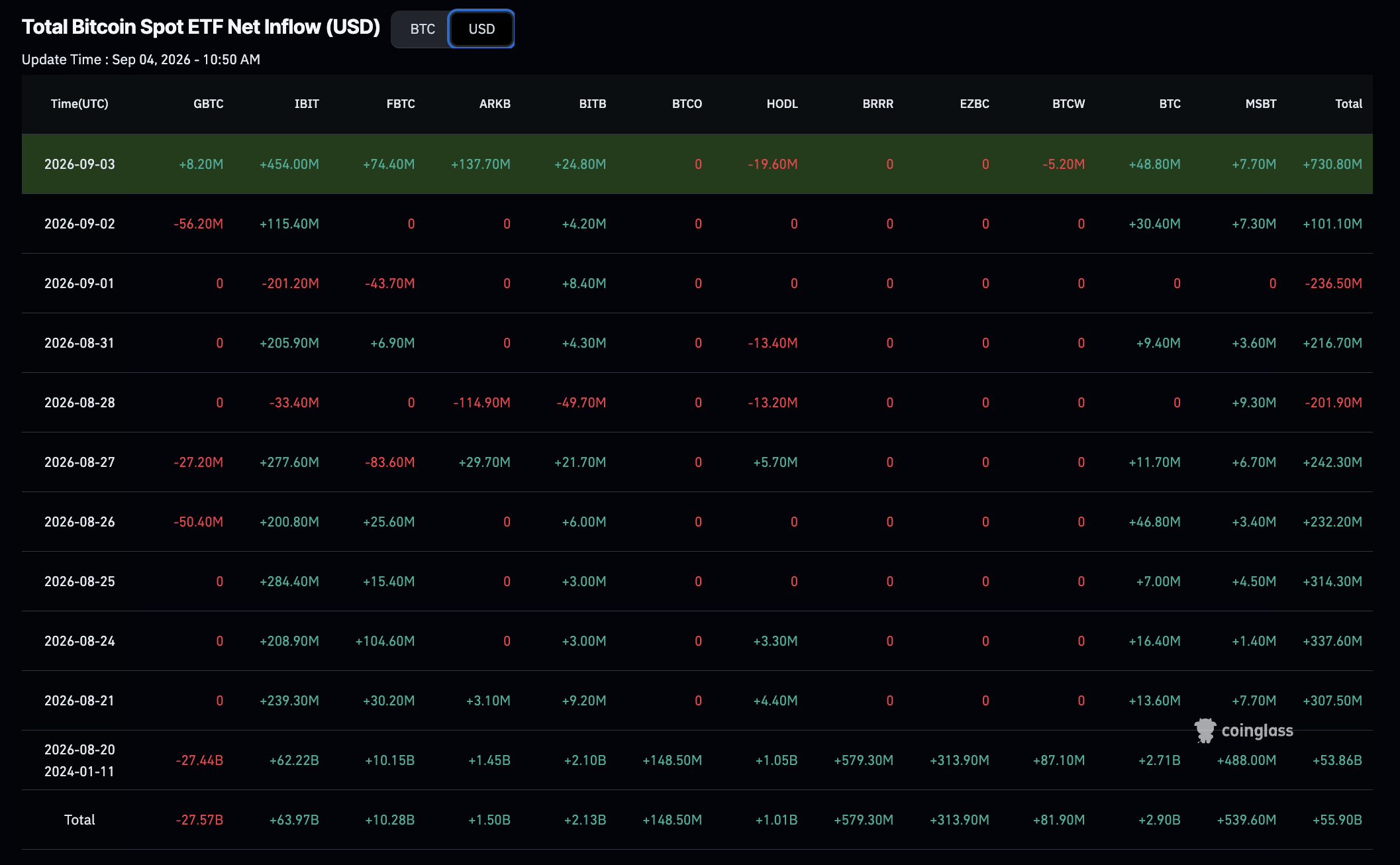
U.S. spot Bitcoin ETF recorded $730.8 million in net inflows on September 3. BlackRock’s IBIT led the session with $454 million in net inflows. That was well over half of the total.
The result offers a fund-by-fund view of where net creations and redemptions were recorded for the day. The daily flow figures can be revised as late fund reports are received, so totals should be read as tracker data for the reported trading session.

Discover: The Best Crypto to Diversify Your Portfolio
IBIT Bitcoin ETF Dominance Leaves the Rally Concentrated
IBIT’s $454.0 million inflow was substantially larger than that of the other funds reporting positive flows on September 3. ARK 21Shares’ ARKB recorded $137.7 million, while Fidelity’s FBTC recorded $74.4 million. Together, those three funds accounted for the bulk of the day’s reported positive flows.
Several additional products also recorded inflows. Grayscale’s Bitcoin Mini Trust, listed as BTC in the tracker, added $48.8 million. Bitwise’s BITB added $24.8 million, Grayscale’s GBTC added $8.2 million, and Morgan Stanley’s MSBT added $7.7 million.

The daily breakdown was not positive across every product. VanEck’s HODL recorded a $19.6 million net outflow, while WisdomTree’s BTCW recorded a $5.2 million net outflow. Franklin’s EZBC, Invesco Galaxy’s BTCO, and CoinShares’ BRRR each showed zero flow in the tracker for the date.
The concentration in IBIT is an important context for the $730.8 million headline figure. A large complex-wide total can include different outcomes among individual funds, and the September 3 data show that the largest contribution came from one product.
Earn $50 and Enter $300K Prize Draw on EdgeX
What Would Confirm the Trend
One day’s flow data provides a snapshot rather than a complete pattern. The tracker shows that daily totals can vary materially from one session to the next, including both inflow and outflow days in its historical table. It also explains that a daily figure represents net creations or redemptions across the funds.
For readers assessing the September 3 total, the useful distinctions are the overall net flow, the distribution of flows among issuers, and the possibility of later revisions. The table below separates the reported fund-level results from the complex-wide total.
Coinfuty describes its tracker as covering daily creations and redemptions, total net assets, Bitcoin held in trust, and premium or discount to net asset value. It says figures are updated once per U.S. trading day and that a dash can indicate that a fund has not yet reported rather than a zero value.
Discover: The Best Token Presales
The post Bitcoin ETF News: BlackRock IBIT Captures 62% of Inflows appeared first on Cryptonews.

Powering you on off-grid solutions

South Korea Regulators Draft Tokenized Securities Roadmap

The 10 Best War Movies in Film History





-

 Fashion7 days ago
Weekend Open Thread: Maeve – Corporette.com
-

 Crypto World1 day ago
CLARITY Act could advance within weeks, Atkins says
-

 Business6 days ago
Onto Innovation Stock: AI’s Next Bottleneck Is Yield (NYSE:ONTO)
-

 Crypto World2 days ago
Elon Musk Says Grok 4.7 Lands in 10 Days and Will Beat Every Model
-

 Crypto World6 days ago
Bitcoin price tests $82K resistance as Brandt stays long
-
 Tech6 days ago
Hugging Face built a $4.5 billion empire on free AI models. Now Nvidia is buying it for $12.9 billion
-

 Business7 days ago
iPhone 18 Pro Pre-Orders Could Shift to Saturday as Apple Reportedly Avoids September 11 Anniversary
-

 Sports6 hours ago
Devon Dampier throws for 3 TDs as No. 21 Utah demolishes Idaho
-
Crypto World6 hours ago
XRP Trading Activity Hits Highest Level Since February as Price Jumps 8%
-
 Entertainment7 days ago
‘Adults’ Creators Break Down Season 2’s Most Shocking Moments and Tease a Potential Season 3
-

 Tech6 days ago
PaperCut releases second emergency patch for exploited flaws
-

 News Videos5 days ago
Charlie Munger on Robinhood: No one should believe that Robinhood’s trades are free
-

 Crypto World1 day ago
Kalshi seeks CFTC approval for WTI perpetual
-

 Tech5 days ago
As the influencer economy drives retail sales, Seattle startup raises $22M to play matchmaker
-
 Crypto World2 days ago
Bitcoin slips below $77.5K as macro pressure offsets ETF inflows
-

 Tech5 days ago
Tamagotchi Ring Takes the 30-Year Digital Pet and Places it on Your Finger
-
 Business2 days ago
Oil Price Today (September 2): Crude oil nears $97 as war tensions escalate. Will it hit $100 again?
-
 Entertainment5 days ago
Taylor Swift Reportedly ‘Frustrated’ With Travis Kelce After ‘Short’ Honeymoon
-

 Business7 days ago
Apple Confirms September 9 iPhone Launch Event as Tim Cook Prepares to Hand CEO Reins to John Ternus
-

 News Videos5 days ago
News kii Crypto ugu danbeeyey & Suuqa oo dhaqaaqey
You must be logged in to post a comment Login