

Crypto World
Indonesia Joins Global Crackdown on Financial Influencers

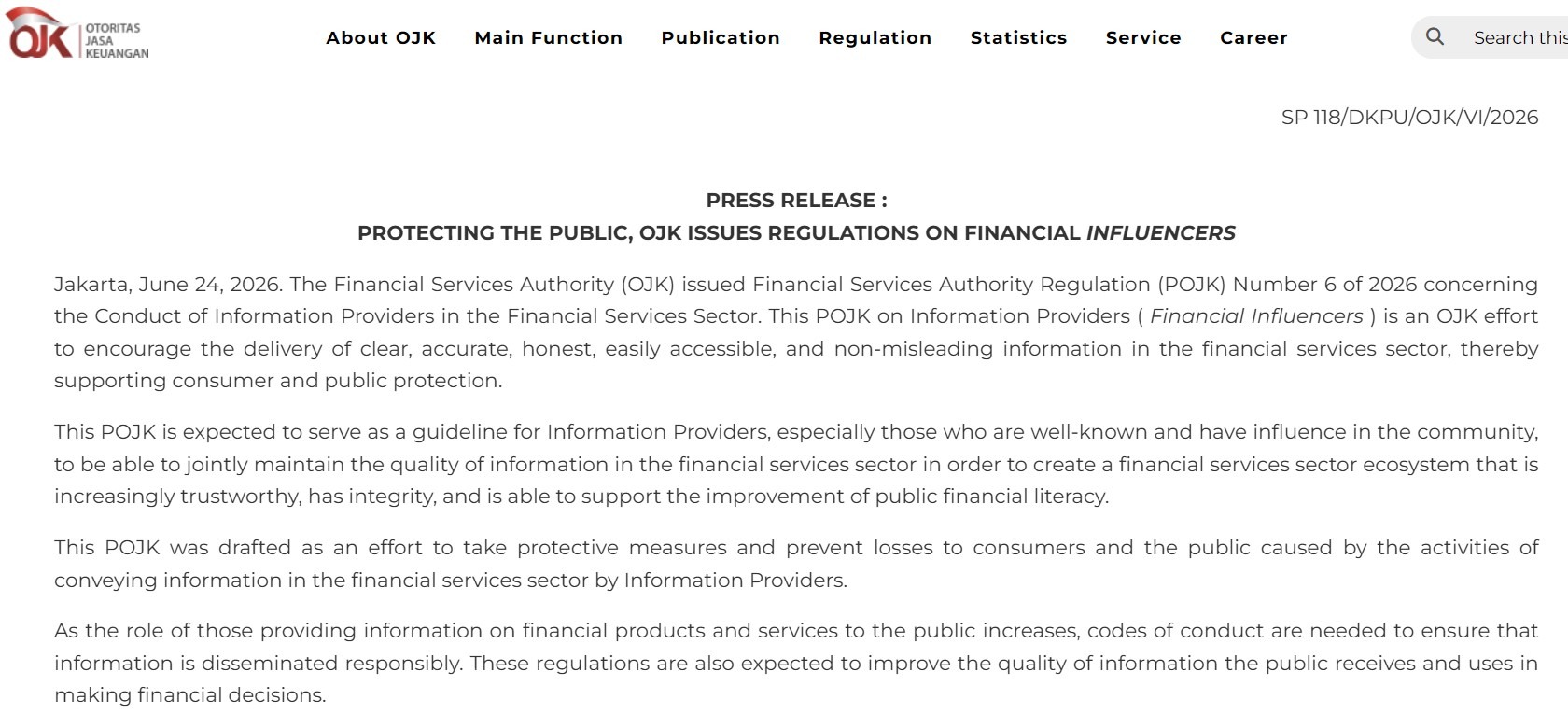
Indonesia’s financial regulator has introduced certification requirements for influencers who recommend crypto and other digital financial assets, as the country expands oversight of financial promotions on social media.
Under Financial Services Authority Regulation No. 6 of 2026, announced Wednesday, individuals recommending digital assets must obtain competency certifications unless they are already subject to a separate licensing requirement.
Influencers may recommend only digital assets listed on authorized exchanges, while any service provider they recommend must also be licensed. Marketing campaigns must be conducted through regulated financial services businesses, which are responsible for the promotional content, and distributed through their official communication channels.
Indonesia joins a growing number of jurisdictions tightening oversight of financial influencers, also called finfluencers, with Australia and the United Kingdom introducing broader rules for investment promotions and the Philippines adopting crypto-specific marketing restrictions.
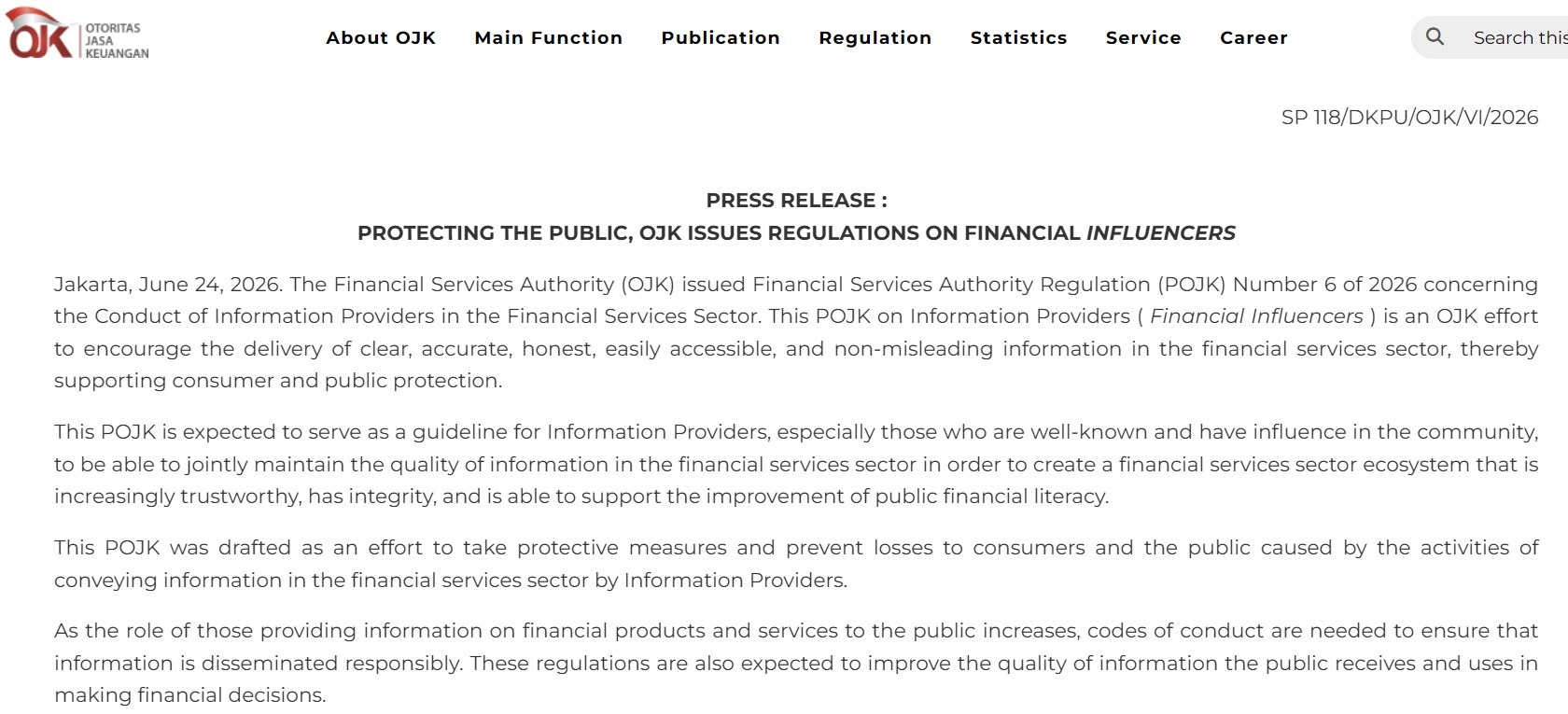
Machine translated excerpt of the OJK announcement. Source: OJK
Global regulators tighten oversight of finfluencers
Australia and the UK were among the earlier jurisdictions to clarify how existing financial laws apply to influencers.
In March 2022, the Australian Securities and Investments Commission (ASIC) said influencers may require a financial services license when their content amounts to financial advice or helps arrange transactions. It also warned that licensed financial firms may be liable for misconduct by influencers they engage with.
In 2024, the UK Financial Conduct Authority (FCA) issued guidance saying unauthorized influencers may commit a criminal offense when promoting regulated financial products without approval from an appropriately authorized firm.
Related: Indonesia blocks Polymarket after bets on president’s exit
On April 24, the FCA led an international “week of action” campaign targeting illegal finfluencers. According to the FCA, 17 regulators participated, conducting enforcement activity, consumer awareness campaigns and educational programs for influencers who want to act responsibly.
The FCA said it submitted 120 account-takedown requests covering 1,267 illegal financial advertisements that had reached at least 2.3 million UK social media accounts.
Meanwhile, the Philippines introduced crypto-specific marketing restrictions in 2025 that cover endorsements, sponsored material, social media posts, podcasts, livestreams and certain paid educational content.
Under the rules, crypto asset service providers are required to disclose their authorized third-party marketers to the Philippine Securities and Exchange Commission.
Magazine: Japanese pension fund tips 1% in crypto, G7 urges action on NK hackers: Asia Express



- GoMining mines first Stratum V2 Bitcoin block with DMND pool.
- Stratum V2 enables miners to choose block transactions directly.
- New system shifts power from pools to miners in Bitcoin mining.
GoMining has mined the first known Bitcoin block produced using the Stratum V2 protocol with the DMND Bitcoin mining pool.
The process demonstrates miner-controlled block creation in a live mining environment.
The block was created using Stratum V2’s Job Declaration functionality through the DMND pool.
The approach allowed GoMining to construct and declare its own block template rather than relying on a mining pool to select transactions.
Pool-controlled transaction selection has been the dominant model in Bitcoin mining for years.
The milestone marks an early real-world implementation of Stratum V2’s miner-driven architecture and highlights a shift toward giving miners greater authority over how blocks are constructed while remaining part of pooled mining operations.
Miner-controlled block construction demonstrated in production
The block included transactions linked to GoMining’s GoBTC Pay, an open-source Bitcoin instant payments protocol developed by the company.
By incorporating GoBTC Pay transactions into the block template it created, GoMining demonstrated a practical use case for Stratum V2’s Job Declaration feature and showed how miners can directly influence the contents of blocks they help produce.
“This block demonstrates that miners can now participate in pooled mining while retaining control over block construction,” said Mark Zalan, CEO at GoMining. “For years, mining pools have largely determined which transactions are included in Bitcoin blocks. By creating our own block template and including GoBTC Pay transactions, we’re demonstrating one of the practical capabilities that Stratum V2 makes possible.”
The successful mining of the block provides an example of how miners may be able to gain more autonomy while continuing to benefit from the shared resources and economics of mining pools.
Stratum V2 aims to expand miner participation and flexibility
Stratum V2 is an open-source mining protocol developed with contributions from multiple participants across the Bitcoin industry.
In addition to improvements in security and efficiency, the protocol enables miners to create their own block templates while still participating in pooled mining.
The latest development demonstrates that miner-controlled block construction can operate in a production environment, potentially supporting broader adoption of Stratum V2 across the mining ecosystem.
The deployment also illustrates how the protocol may allow miners to integrate their own applications and services directly into the block creation process.
“A miner just mined the first Stratum V2 block to power their own product end to end. GoMining declared the template and included their GoBTC Pay payments with no pool in the way. We built DMND for exactly this.” said Alejandro De La Torre, CEO & Co-founder at DMND.
The milestone comes as the bitcoin mining industry continues to explore technologies that improve efficiency, security and decentralization.
By demonstrating that miners can build and declare their own block templates while remaining part of a mining pool, GoMining and DMND have provided an early example of how Stratum V2’s architecture could reshape block creation and transaction selection within the broader Bitcoin mining ecosystem.

Binance has informed European Union users that access to several services will be tightened after the exchange failed to obtain Markets in Crypto-Assets (MiCA) authorization from an EU member state before a July 1 deadline. The change, according to notices circulated by users, centers on stopping onboarding for new EU customers and reducing service availability for EU-based accounts as of July 1.
Importantly, Binance’s messages also emphasize that users will be able to withdraw their digital assets after the deadline. The notices frame the transition as an “orderly process” designed to minimize disruption, while the exchange proceeds with its MiCA rollout in Europe.
Key takeaways
- Binance says it will halt onboarding new EU users and limit certain services for EU accounts effective July 1 after missing MiCA authorization timing.
- Users are told they can still withdraw “all digital assets” after the deadline, subject to applicable regulatory requirements.
- The company reportedly advises EU customers to move funds to self-custody or other crypto asset service providers (CASPs) before access is restricted.
- Questions remain among users about how staking and existing yield-related positions will be handled during the restricted-services phase.
- Industry participants are split on expected user disruption, with some arguing effects are mainly limited to marketing and new customer acquisition.
What Binance is changing for EU users
Multiple public Binance notices shared on social media indicate that access restrictions will begin after the July 1 cutoff. Users reported that the exchange will stop bringing in new EU customers and limit “certain services” for EU-based accounts starting July 1.
While services are expected to narrow, the exchange’s communications are clear that withdrawals remain available. The notices reportedly state that “all digital assets are still available for withdrawal,” aligning with regulatory requirements.
Binance’s step appears tied to how MiCA licensing is being implemented across EU member states. The situation is described as one of the early, high-profile transitions under the EU’s MiCA framework, coming after Binance announced it withdrew its MiCA license application in Greece earlier this week.
Cointelegraph attempted to obtain comment from Binance on its plans but did not receive a response prior to publication.
Why Binance recommends self-custody or switching CASPs
In circulating notices, Binance told users they may consider moving assets to self-custodial wallets or transferring funds to other crypto asset service providers. The exchange characterized the transition as intended to be an “orderly process,” with services reduced to position management and withdrawals after the deadline.
The practical message for EU customers is straightforward: if they want to keep using Binance for broader features, they may need to act before July 1, because some functionality for EU accounts is expected to be scaled back. Binance’s guidance also suggests that the exchange expects limited usability after the cutoff, even if balances remain withdrawable.
Competitors and other MiCA-licensed platforms appear to be positioning themselves for the transition. Media and user reports referenced CASPs such as Revolut and OKX actively recruiting new users in EU member states ahead of the deadline.
Staking, trading, and the unanswered operational details
Beyond onboarding restrictions, users have focused on what happens to active services—particularly staking. In public replies, some Binance users asked what will occur to staked crypto assets after the deadline, reflecting uncertainty over whether yield-generating arrangements will be impacted by the forthcoming changes.
A Binance representative responded that user balances “remain available and safe as always,” but did not offer specific details on staking rewards or the treatment of active positions during the restricted-services period.
That gap matters for EU customers because MiCA compliance is not only about marketing and customer acquisition; it also affects how services are offered and structured. If staking rewards are treated differently, or if certain yield-related operations must pause, traders and long-term holders could experience operational friction even if withdrawals remain possible.
For active traders, the immediate concern is access to trading and position management. Another user said their main use of Binance is as a trading gateway and would switch exchanges if needed, arguing that disruption would likely be most significant for active traders and users with larger balances on the platform.
How the wider industry views the impact
The expected effect of Binance’s EU transition has not been universally interpreted. Some industry figures argue that the real-world impact on existing users may be limited compared with the amount of public attention the deadline has received.
Dominik Tomczyk, CEO of SIA AlphaRoute (operating as Kanga Exchange EU), told Cointelegraph that unlicensed platforms may still continue serving existing users under the legal concept of “reverse solicitation.” From a user perspective, he suggested that “nothing will change,” except for constraints on marketing and user acquisition within the EU.
Sławomir Zawadzki, co-CEO of Kanga Exchange, similarly suggested existing users are unlikely to face major disruptions. He also implied that much of the concern is being overstated and that competitive positioning may be influencing how the narrative is playing out online.
Other EU-based Binance users described a more pragmatic approach—monitoring for enforcement actions rather than assuming immediate harm. One user told Cointelegraph they were not overly concerned about the July 1 deadline, pointing to Binance’s liquidity and proof-of-reserves reporting, and saying they would keep using Binance until they saw evidence of a potential enforcement action.
These differing perspectives highlight a key asymmetry: notices about restrictions can create urgency, but the extent to which existing account functionality is reduced may vary depending on how MiCA rules are applied in practice and how Binance structures permitted activities after the cutoff.
Scale and what to watch after July 1
Binance’s EU footprint is large enough that the outcome will be watched closely by both users and other exchanges. According to Reuters, Binance’s global client base counts at least 300 million customers, and the app was downloaded more than 4 million times in the EU last year.
Even with withdrawal access preserved, EU users will likely pay attention to what “position management” covers once the restrictions start, as well as whether staking-related operations and trading features are curtailed in a way that forces customers to adapt their workflows.
Going forward, the critical signals to watch will be any clarification from Binance on staking and active positions, how quickly EU users migrate to other CASPs, and whether regulators or service providers interpret MiCA in a way that limits service continuity for already-established customers.

In the latest Cardano news, Cardano (ADA) price is trading at approximately $0.1480, down 1% in the last 24 hours, and sitting roughly 95% below its September 2021 all-time high of $3.09. That’s not a typo.
The Leios Musashi Dojotestnet went live on June 23, a genuine scaling milestone, and the chain barely blinked. Daily transactions held near 25,000, in line with a three-month average, with active staking addresses hitting a 120-day low of around 5,000 on June 21 against a prior norm of 7,000–8,000.
The one transaction spike worth flagging came June 4–5, when daily volume jumped above 60,000, but that aligned directly with a sharp sell-off, pointing to liquidation activity rather than fresh adoption.
Charles Hoskinson’s public comments about potential “ecosystem failures” and a temporary project pause compounded the negative sentiment, helping push ADA below $0.20 for the first time since 2020.

Governance friction, including backlash over a Discord migration proposal and calls for leadership changes, has added another layer of uncertainty that pure technical analysis can’t price away.
The broader altcoin market context makes the setup even more precarious: BTC has softened, macro headwinds persist, and capital rotation out of mid-cap alts has been aggressive. Whether ADA’s current tight range resolves as capitulation or continuation is the question every ADA holder is sitting with right now.
Cardano News: Can ADA Price Recover From $0.14 Support or Is a Fresh Low Ahead?
ADA’s technical picture is compressed. Price is consolidating between $0.148 support and $0.172 resistance, a tight band after a steep breakdown from the $0.20 to $0.25 range.
Market cap sits near $5.58 billion against a circulating supply of roughly 37.24 billion ADA. Even modest buying pressure can move ADA price right now, but sustained volume is absent.
If $0.14 holds, exchange outflows sustain accumulation pressure, and a macro risk-on shift lifts altcoins broadly, ADA retests $0.172 and potentially $0.20 on momentum.
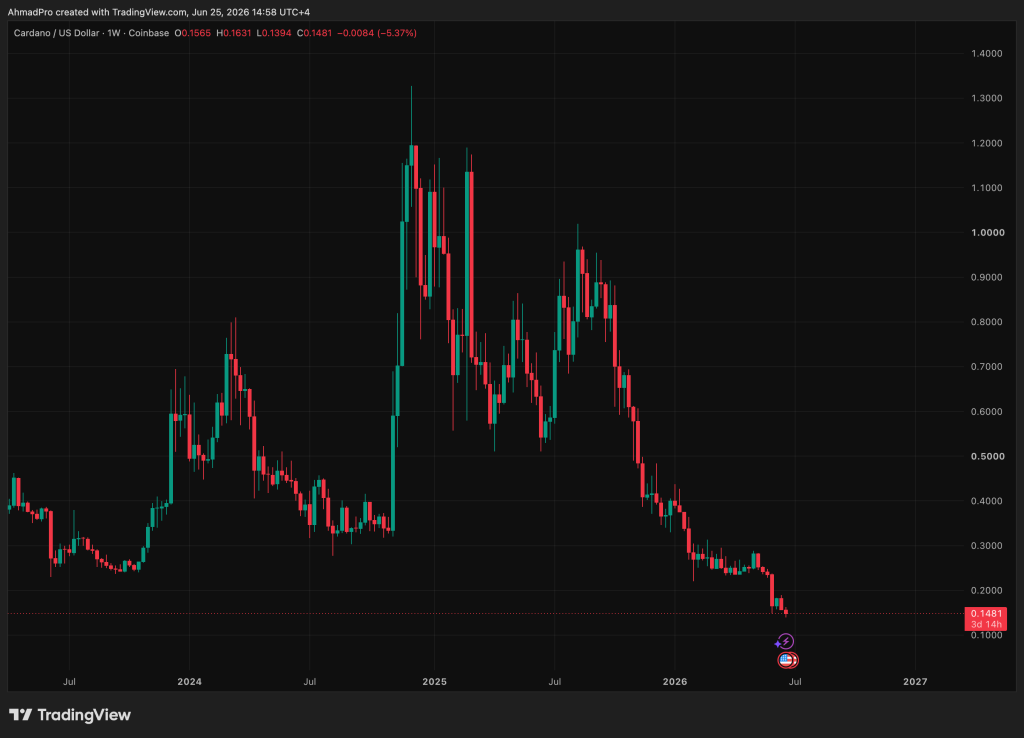
If neither side takes control, price grinds sideways through the summer in this corridor, with the 2026 mainnet target for Leios providing a longer-term catalyst that keeps capitulation buyers engaged but limits near-term upside.
A breakdown through $0.148 on volume opens a much weaker technical picture, with the next meaningful reference sitting well below current levels and a structural break from multi-year support shifting the chart narrative decisively negative.
The real tension is the divergence between exchange outflows and on-chain engagement. Buyers appear present at current levels. They are just not building anything on the network yet. That gap needs to close before any recovery gains real credibility.
Watch $0.148 closely. It is doing a lot of structural work right now.
Maxi Doge Dosen’t Promise You Anything: But It Could 1000X
ADA’s risk-reward at current levels is a genuine debate. Even in the bull case, recovering from $0.15 to prior cycle highs requires the kind of capital inflow that broad altcoin markets haven’t delivered in months.
That calculus is pushing a segment of active traders toward earlier-stage positions where entry price asymmetry is still intact, before a project reaches the liquidity constraints of a $5 billion market cap.
Maxi Doge ($MAXI) is one presale drawing that is drawing attention. Built on Ethereum (ERC-20), it positions itself around a meme-first trading culture, 1000x leverage mentality, gym-bro viral marketing, holder-only trading competitions with leaderboard rewards, and a Maxi Fund treasury allocated to liquidity and partnerships (the tagline is “never skip leg-day, never skip a pump,” which is either ridiculous or perfectly calibrated for its target audience, probably both).
The project has raised $4,811,876.93 at a current presale price of $0.0002825, with dynamic staking APY available for participants. For context on how meme coin dynamics play out post-launch, the Dogecoin cycle offers a reference point this category continues to benchmark against.
Presales carry real risk, liquidity post-launch is never guaranteed, and meme token markets are unforgiving if momentum stalls. DYOR before committing capital.
The post ADA Just Launched a Major Scaling Testnet And the Network Barely Noticed at $0.148 appeared first on Cryptonews.

Japan’s SBI Holdings has moved to fully take control of the Bitbank cryptocurrency exchange in a deal valued at 46.7 billion yen (about $289 million), building a larger, more consolidated crypto trading platform under one regulated umbrella. The agreement follows an initial announcement made in May, which positioned the combination as a potential scale-up into the country’s largest crypto exchange.
On Thursday, SBI said its wholly owned subsidiary, SBICAH, will acquire Bitbank shares from Bitbank CEO Noriyuki Hirosue and other shareholders, then participate in a third-party share allotment. After that, Bitbank will buy back shares currently held by MIXI and Ceres, leaving SBI with 100% indirect ownership. SBI expects the transaction to close around October, subject to regulatory approval.
Key takeaways
- SBI will pay 46.7 billion yen to gain full indirect control of Bitbank, aiming to accelerate its position in Japan’s regulated exchange market.
- The restructuring plan includes a third-party share allotment and a Bitbank share buyback from MIXI and Ceres, with SBI ending at 100% indirect ownership.
- SBI forecasts the combined group will manage about 1.1 trillion yen in assets under custody and reach roughly 2.92 million crypto accounts, based on end-April figures.
- Bitbank’s trading has been relatively muted for months, with CoinGecko data showing daily volume typically below $50 million over much of the past four months.
- SBI says the enlarged exchange footprint could add another distribution channel for stablecoins, tokenized assets, and onchain financial products.
Why SBI’s Bitbank control matters to Japan’s crypto market
For investors and market participants, the main significance of the Bitbank deal is not only consolidation, but also capacity—SBI is trying to connect an exchange-led customer base with a broader digital-asset product lineup. SBI’s stated goal is to expand its regulated crypto exchange operations and customer reach, which it argues could support distribution of stablecoins, tokenized assets, and other onchain financial services.
In effect, the acquisition is designed to strengthen SBI’s role across multiple layers of Japan’s crypto ecosystem: trading infrastructure, custody and account management, and settlement or product distribution. That matters in a market where regulatory clarity and institutional participation are key constraints—and where distribution channels can be as important as underlying technology.
How the transaction will be structured
SBI’s announcement outlines a multi-step process. First, SBICAH will acquire Bitbank shares from Hirosue and other existing shareholders. It will then subscribe to shares issued through a third-party share allotment. After those steps, Bitbank is expected to repurchase the shares held by MIXI and Ceres.
The result, SBI says, is that the group will hold 100% indirect ownership once the buyback completes. SBI expects the overall deal to close around October, but only after it receives regulatory clearance—an important reminder that Japan’s exchange and stablecoin frameworks rely on approvals and compliance review.
Scale effects: custody and accounts, plus the trading backdrop
Alongside the ownership changes, SBI provided combined operating figures for the enlarged group. According to SBI, combining Bitbank with SBI VC Trade would bring the group to about 1.1 trillion yen in assets under custody and roughly 2.92 million crypto accounts, using data from the end of April.
SBI also claims that this combined business would rank first among Japanese crypto exchanges by assets under custody and among the largest by account numbers. While the exact competitive landscape can shift with market activity and reporting periods, the direction of travel is clear: SBI is targeting scale metrics that are closely watched by institutions, compliance teams, and potential partners.
Trading liquidity is another piece of the picture. CoinGecko data cited by SBI indicates Bitbank’s daily trading volume has generally stayed below $50 million for most of the last four months. The exchange’s activity is heavily concentrated in key fiat pairs—BTC/JPY accounts for 39.5% of volume, with XRP/JPY and ETH/JPY each at 19.7%.
That concentration underscores why integration could matter: combining Bitbank with SBI VC Trade may help SBI manage customer routing, product access, and onchain distribution more efficiently—especially if volumes are expected to respond to broader cross-platform adoption.
SBI’s broader push: stablecoins and tokenized financial markets
The Bitbank acquisition fits into a wider strategy by SBI to extend from trading into digital-asset settlement and tokenized finance. SBI frames the move as additional infrastructure for its evolving product suite.
Earlier this year, SBI and Startale Group unveiled Strium, a layer-1 blockchain intended to support around-the-clock trading and settlement for tokenized equities and real-world assets. In parallel, SBI has been expanding stablecoin-related capabilities in Japan.
Most recently, SBI said that on Wednesday, SBI and Startale launched JPYSC, a yen-pegged stablecoin. SBI stated that the token is issued by SBI Shinsei Trust Bank and distributed by SBI VC Trade. Initially, JPYSC circulation is limited to transfers within SBI VC Trade accounts, with public blockchain circulation planned after resolving outstanding legal and tax conditions.
On the same day, Ripple and SBI Group also launched Ripple USD (RLUSD) in Japan via SBI VC Trade. SBI said RLUSD became available to both institutional and retail customers after receiving approval under Japan’s regulatory framework for foreign-issued stablecoins.
Taken together, these developments highlight why exchange ownership is strategically valuable. If distribution for stablecoins and tokenized instruments depends on access points that regulated exchanges can provide, acquiring a bigger platform and integrating accounts can directly influence adoption timelines—at least from the perspective of product rollout and customer onboarding.
Investors should watch two things next: whether SBI clears the remaining regulatory steps to complete the Bitbank acquisition around October, and how the combined operations evolve in practice—particularly whether SBI can translate scale in accounts and custody into stronger liquidity and smoother distribution for JPYSC, RLUSD, and future tokenized offerings.
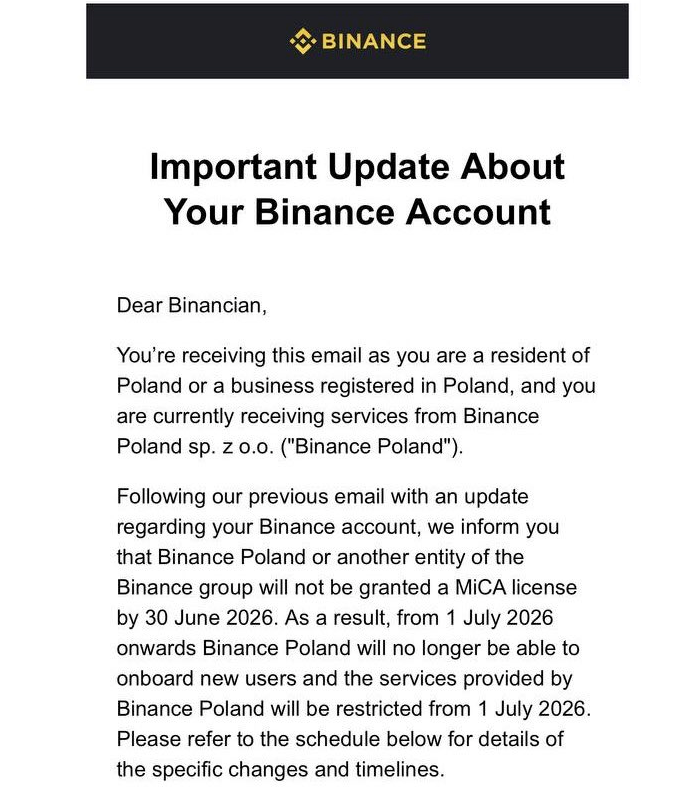
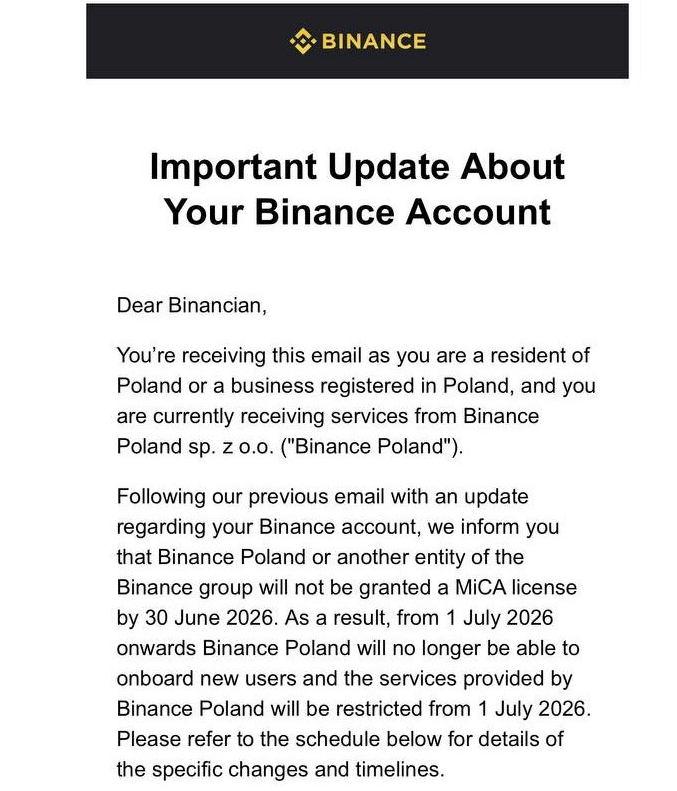
Binance has notified European Union users that access to key services will be restricted after the exchange failed to secure Markets in Crypto-Assets (MiCA) authorization from a member state before a July 1 deadline.
Those restrictions include halting the onboarding of new EU users and limiting certain services for EU-based accounts effective July 1, according to exchange notices shared by users on social media.
The notices said users will still be able to withdraw their assets after that date, stating that “all digital assets are still available for withdrawal,” in line with applicable regulatory requirements.
The move marks one of the first major transitions under the EU’s MiCA framework after Binance announced it withdrew its MiCA license application in Greece on Wednesday.
Cointelegraph approached Binance for comment on its plans but did not receive a response prior to the time of publication.
Binance advises moving funds to self-custodial wallets or other exchanges
In circulating notices, Binance told users they may move assets to self-custody wallets or transfer funds to other crypto asset service providers (CASPs).
The exchange operator said the transition is intended to be an “orderly process” aimed at minimizing disruption to users, with services reduced to position management and withdrawals after the deadline.
Source: IT_Tech_PL
Multiple MiCA-licensed CASPs including Revolut and OKX have been actively recruiting new users in EU member states ahead of next week’s deadline.
Users seek clarity on staking and trading
Some Binance users have raised concerns over how specific services will be handled once EU service restrictions take effect after the MiCA transition ends.
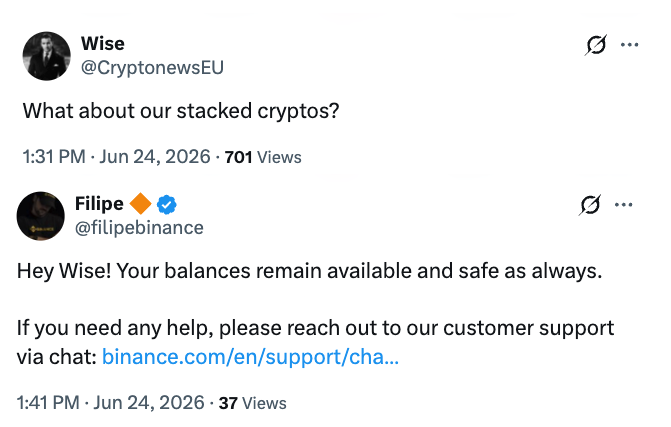
In public replies on social media, users asked what will happen to staked crypto assets on Binance after the deadline, reflecting uncertainty around whether yield-generating positions will be affected by the upcoming service changes.
Source: Filipebinance
In response, a Binance representative said user balances “remain available and safe as always,” but did not provide specific details on how staking rewards or active positions will be treated under the restricted-services phase.
Community divides over Binance user impact
Views across the crypto industry differ on how significant the upcoming MiCA transition will be for existing Binance users in the European Union.
Dominik Tomczyk, CEO of SIA AlphaRoute, operating as Kanga Exchange EU, told Cointelegraph that non-licensed platforms may still continue serving existing users under the legal concept of “reverse solicitation.” He said that, from a user perspective, “nothing will change,” apart from restrictions on marketing and user acquisition within the EU.
Sławomir Zawadzki, co-CEO of Kanga Exchange, said existing users are unlikely to see major disruptions. He also suggested that much of the concern around MiCA-related changes is being overstated, adding that competitive positioning may be shaping parts of the public narrative.
Mixed response from users
One Binance EU user told Cointelegraph they were not overly concerned about the MiCA deadline, pointing to Binance’s liquidity and proof-of-reserves reporting. “I’ll honestly continue using Binance until I see evidence of a potential enforcement action,” the person said.
Another user said the impact on Binance EU users would depend on how heavily they rely on the platform. They noted that their primary use of the platform is as a trading gateway and would switch to another exchange if needed, while suggesting the biggest disruption would likely affect active traders and users with large balances on the platform.
Related: EUR trading accounts for 1% of Binance spot volume, CryptoQuant says
According to media reports, Binance’s global client base counts at least 300 million customers, while the app was downloaded more than 4 million times in the EU last year.
Magazine: How crypto laws changed in 2025 — and how they’ll change in 2026


Uniswap (UNI) and Spark are betting that as the number of stablecoins grow, the market will need the equivalent of a foreign-exchange network to move liquidity between issuers.
Spark, a decentralized-finance (DeFi) protocol focused on stablecoin liquidity, said Thursday it is working with decentralized exchange Uniswap to create what it calls an “FX layer” for stablecoins, a shared liquidity network designed to support a growing number of issuers.
The goal is to make it easier to move between stablecoins while allowing idle capital to earn yield until it’s needed for trading, the companies said.
The move comes as stablecoins move beyond their crypto-native roots and increasingly become part of the cross-border payment network. That’s been helped by lawmakers in the U.S. and elsewhere advancing regulatory frameworks encouraging fintechs, payment firms and banks to enter the market. The stablecoin market could grow from the current $300 billion to $4 trillion by 2030, global bank Citi projected.

Binance has informed European Union users that it will restrict access to certain services after a MiCA-related authorization deadline of July 1. According to user-shared notices attributed to the exchange, Binance will limit onboarding for EU customers and reduce the range of services available to EU-based accounts from that date, while directing users to ensure their assets can be withdrawn in accordance with applicable requirements.
The transition follows Binance’s earlier decision to withdraw a MiCA license application in Greece, underscoring how the EU’s Markets in Crypto-Assets (MiCA) framework is forcing operators to reassess their regional compliance status and service models. Cointelegraph reported on Binance’s MiCA license withdrawal ahead of this development, while the exchange did not respond to Cointelegraph for comment before publication.
Key takeaways
- Binance says it will restrict onboarding and certain services for EU users effective July 1 due to lack of MiCA authorization from an EU member state.
- The exchange’s notices indicate that withdrawals will remain available after the deadline.
- Binance advises users to consider self-custody or transferring assets to other licensed crypto asset service providers (CASPs).
- Questions remain for users about how restricted services will affect products such as staking and other yield-related positions.
- Industry commentary highlights uncertainty around how MiCA enforcement may apply to existing customers versus new users.
MiCA compliance timeline and Binance’s service restrictions
Under MiCA, crypto asset service providers offering services within the European Union must meet authorization and conduct requirements tied to specific activities, such as exchange services and related custody functions. Binance’s latest EU-facing notices frame July 1 as the point after which its ability to provide full services in the bloc depends on whether it holds the necessary MiCA authorization in an EU member state.
User-shared notices state that Binance will halt onboarding new EU users and curtail certain services for EU-based accounts from July 1 onward. The notices also emphasize continued access to withdrawals, stating that “all digital assets are still available for withdrawal,” aligning with obligations typically expected during service transitions and regulatory disengagement.
In practical terms, this approach shifts the operational risk to users: while the exchange indicates assets can be withdrawn, reduced service availability can affect customer workflows—particularly where users rely on the platform for ongoing positions or account-level operations. For compliance teams, the key issue is the operational continuity of customer asset access during regulatory transitions, alongside clear communications on what is changing and what is not.
Binance’s guidance: self-custody and shifting to licensed CASPs
Binance circulated guidance suggesting users may move assets to self-custodial wallets or transfer funds to other crypto asset service providers (CASPs). The exchange described the transition as intended to be “orderly,” with services reduced to position management and withdrawals after the deadline.
The broader market context is that other MiCA-licensed platforms have been competing for EU user attention ahead of the transition date. Some actively marketed services in EU member states, positioning themselves as regulated alternatives. For EU-focused firms, this is a reminder that MiCA compliance is not only a legal permissioning process—it also functions as a competitive differentiator in distribution and customer acquisition.
From a regulatory monitoring perspective, Binance’s communications also raise questions that institutions may need to address: for example, what specific account features remain available post-deadline, how user instructions are processed, and how staking-like arrangements are treated when service categories are restricted under MiCA conditions. Clear delineation of permitted versus restricted functions is crucial for consumer protection and audit readiness.
Staking and active positions: unresolved operational questions
Binance users have sought clarity on how the restriction phase will affect specific services, particularly staking and yield-related exposure. In public replies, a Binance representative reportedly told at least one user that balances remain “available and safe,” but did not provide granular details about the status of staked assets, staking rewards, or any ongoing yield generation mechanisms once restricted services begin.
This gap matters for both users and institutional counterparties. Staking arrangements can involve distinct custody and contractual terms, and the regulatory characterization under MiCA may vary depending on how the service is structured. Even if withdrawals remain open, uncertainty around whether reward distribution continues—or whether assets are automatically unwound or frozen—can create operational risk and complicate internal reporting requirements for regulated entities.
Additionally, uncertainty about account-level outcomes can trigger heightened customer support loads and potential disputes. For compliance stakeholders, such scenarios can elevate the importance of documented policy changes, customer notice archives, and evidence that the firm provided clear, timely and accurate information about service discontinuation and asset access.
Legal interpretation debate: existing users vs. new onboarding
Commentary from executives involved in the EU crypto market points to the legal nuance of how MiCA obligations are applied. Dominik Tomczyk, CEO of SIA AlphaRoute operating as Kanga Exchange EU, told Cointelegraph that platforms without MiCA authorization might still serve existing users under the concept of “reverse solicitation.” He suggested that, from a user perspective, the main change would be restrictions tied to marketing and user acquisition within the EU rather than immediate disruption to existing account access.
Other industry voices expressed less concern about near-term user impact, arguing that some public expectations about MiCA effects may be overstated. They also suggested that competitive positioning may influence how different actors frame the transition.
Still, for institutions, these perspectives do not eliminate uncertainty. Regulatory enforcement patterns can vary by jurisdiction and by supervisory interpretation, especially when service restrictions are linked to authorization status. Organizations monitoring counterparty risk should consider that compliance posture can shift quickly—through licensing outcomes, supervisory scrutiny, or operational restructuring—even where legal theories suggest continued access for existing customers.
What users and counterparties should watch next
As July 1 approaches, the most important items for analysts and compliance monitoring are Binance’s detailed implementation of restricted services for EU accounts, the operational treatment of staking and other yield-related positions, and the practical process for withdrawals and any transfers to third-party CASPs. Institutions should also track how EU supervisors respond to the transition and whether additional guidance clarifies the boundary between serving existing customers and limiting marketing or onboarding under MiCA.
About 60% of users who placed their first World Cup bets on Polymarket had never interacted with blockchain protocols before, suggesting prediction markets are becoming an entry point into crypto.
The finding is based on a 90-day Bitget Wallet study shared with Cointelegraph on Thursday that tracked the onchain activity of 857,000 active Polymarket users.
Bitget Wallet said the findings suggest some users are entering crypto through prediction markets instead of beginning with token trading or DeFi protocols.
Alvin Kan, chief operating officer at Bitget Wallet, told Cointelegraph that earlier crypto onboarding efforts largely focused on making blockchain technology easier to understand through simpler wallets and better user interfaces, but users were still expected to learn how crypto worked before they could participate.
“Prediction markets shifted that dynamic. Users show up because they have a view on something happening in the world,” Kan said.
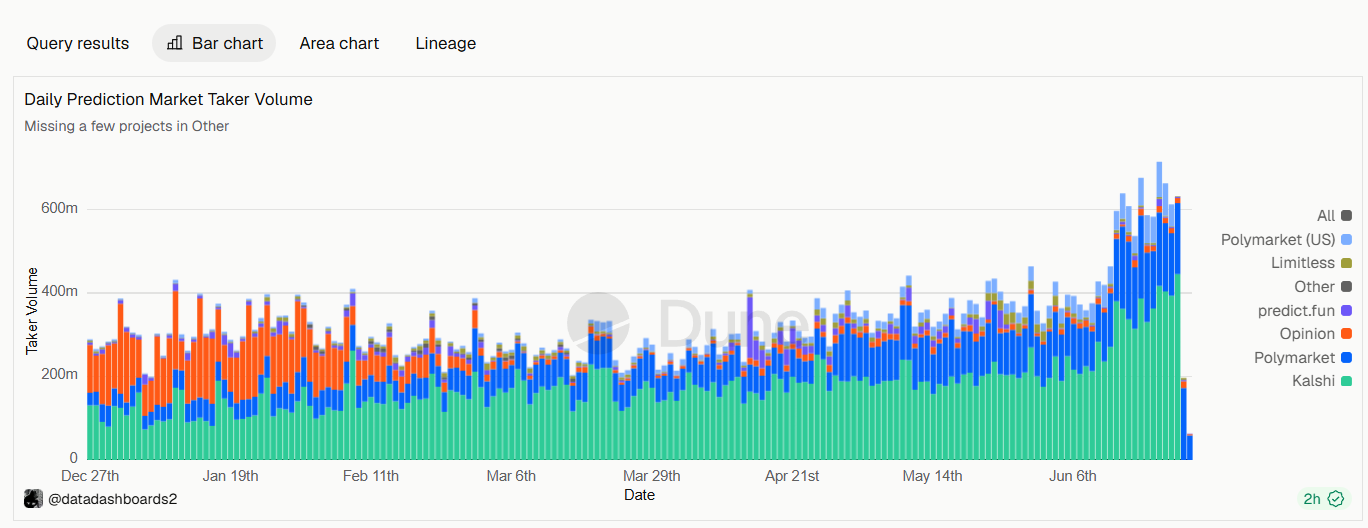
Daily prediction market taker volume. Source: Dune
Daily taker volume, which measures contracts bought or sold by traders filling existing orders, reached a record $713 million on Saturday, according to Dune data. The milestone came more than a week after the World Cup kicked off on June 11.
Related: CBOE debuts prediction market with S&P 500 contracts
World Cup contracts drive $3.1 billion in volume to Polymarket
A June 11 Bernstein report predicted that the 2026 FIFA World Cup would generate more than $3 billion in incremental sports betting handle and between $5 billion and $10 billion in additional consumer prediction market volume. The World Cup winner contract alone has generated more than $3.1 billion in trading volume on Polymarket, according to platform data.
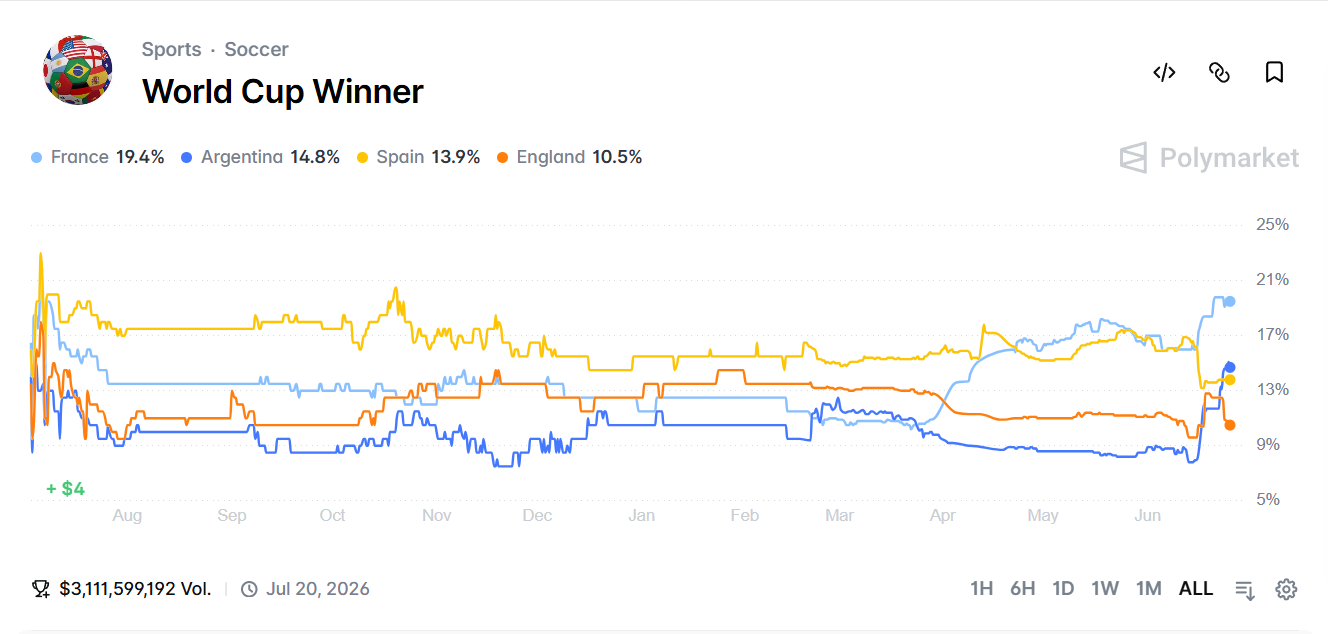
World Cup winner event contract. Source: Polymarket
Sports contracts ranked among the biggest drivers of prediction market trading over the past 30 days. On Kalshi, they generated $8.5 billion over the past 30 days, making them the platform’s largest category. On Polymarket, sports also ranked first with more than $4.9 billion in trading volume during the same period, according to Defirate data.
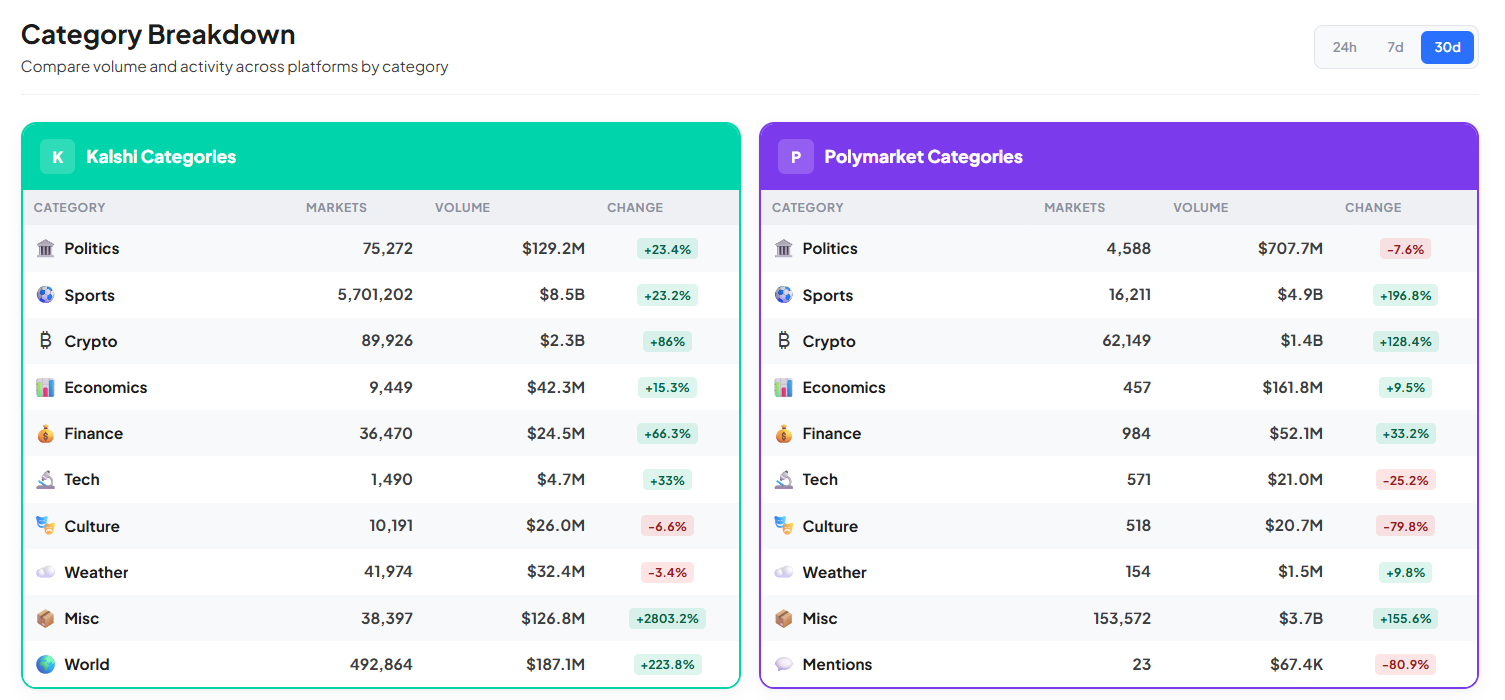
Top categories on Kalshi and Polymarket. Source: Defirate
The surge in sports-related trading has also intensified regulatory scrutiny in the US.
On June 17, Kentucky sued five prediction market platforms, including Kalshi and Polymarket, accusing them of operating unlicensed sports betting platforms. At least 17 other states have taken prediction market operators to court, attracting the involvement of the Commodity Futures Trading Commission and the White House.
The CFTC later sued eight states, arguing they had interfered with the federal regulator’s exclusive authority over federally regulated event contracts.
Magazine: Should users be allowed to bet on war and death in prediction markets?
Decentralized finance (DeFi) protocol Spark has deployed approximately $150 million in stablecoin liquidity across two Uniswap v4 pools on Ethereum as part of a collaboration aimed at creating shared liquidity and exchange infrastructure for stablecoin issuers.
A Spark spokesperson told Cointelegraph that the initial deployment is live in two pools pairing USDS with PayPal USD (PYUSD) and USDT, with USDS serving as the foundation. Spark described the deployment as one of the largest automated market maker (AMM) liquidity migrations in DeFi.
“These pools represent the initial deployment of approximately $150 million of liquidity and establish the first phase of the Stablecoin FX Layer,” the spokesperson said. “This initial deployment focuses on bootstrapping shared liquidity on Uniswap v4.”
Earlier this month, Standard Chartered identified Uniswap as a potential beneficiary of tokenized assets moving into DeFi. It forecast that total assets held in DeFi could reach $2.7 trillion by 2030, with Uniswap potentially emerging as a liquidity venue for the growing market.
The deployment announced Thursday lays the groundwork for a planned programmable liquidity system that could reduce the need for banks, financial technology firms and stablecoin issuers to build separate liquidity networks while testing whether Uniswap can make onchain capital more efficient without weakening market depth.
Spark plans programmable liquidity expansion
Spark said it plans to introduce its Shared Liquidity Layer and DualPool hook in subsequent phases using Uniswap v4’s programmable architecture to coordinate how liquidity is distributed across stablecoin markets.
A liquidity hook enables protocols to seamlessly integrate with platforms for capital access and developing yield and trading strategies.
Spark said a hook is intended to allow capital not immediately needed for trades to be deployed into governance-approved products, liquidity venues and yield-generating strategies.
The implementation of the DualPool hook will go through a separate security review, testing and production-readiness process before deployment. The first phase uses standard Uniswap v4 pools rather than the planned programmable framework.
Related: Aave positioned to capture tokenized asset growth in DeFi: Standard Chartered
Spark said the planned framework is intended to give future stablecoin issuers access to shared liquidity rather than requiring them to individually bootstrap pools, coordinate market makers and manage inventory across different venues.
The spokesperson told Cointelegraph that Spark is working with additional partners across the stablecoin ecosystem but is not yet ready to disclose those integrations.
Uniswap seen as winner as tokenized assets move onchain
In a June 15 note to clients, StanChart’s bank’s head of digital assets research, Geoff Kendrick, said that tokenized treasures, equities, bonds and other assets could bring more trading activity and liquidity to decentralized exchanges as their DeFi use expands.
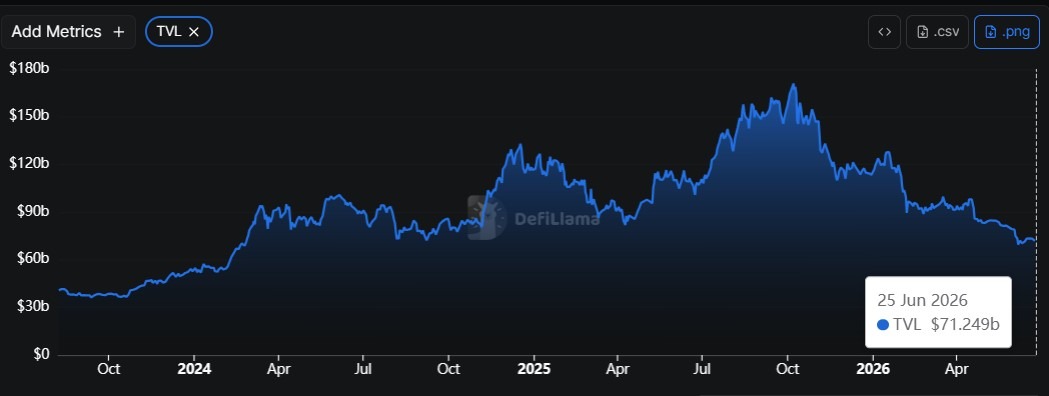
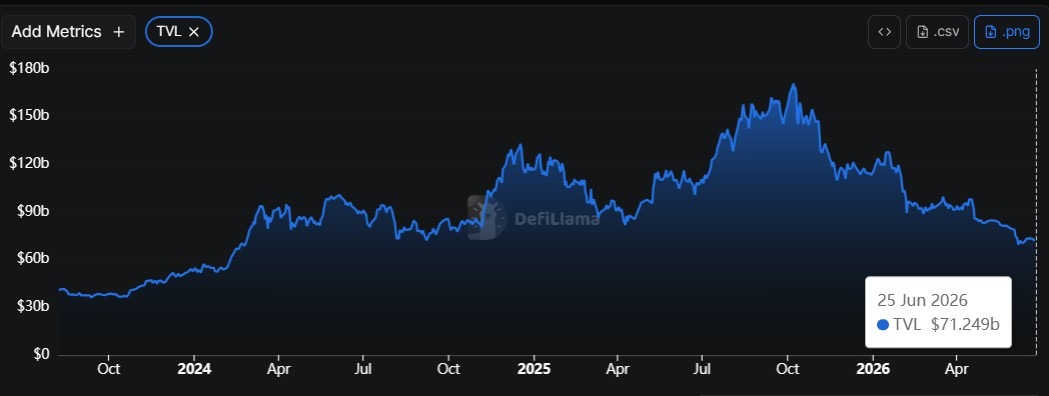
DeFi total value locked as of June 25. Source: DefiLlama
This new $150 million migration offers a more immediate test of StanChart’s infrastructure thesis, though it involves stablecoins rather than tokenized securities.
The migration also follows Uniswap’s push into institutional tokenized-asset trading. On Feb. 12, BlackRock said it would bring its $2.1 billion tokenized Treasury fund, BUIDL, to Uniswap, allowing eligible institutional investors and market makers to trade the security through decentralized infrastructure.
Magazine: Japanese pension fund tips 1% in crypto, G7 urges action on NK hackers: Asia Express
Crypto World
Post-prison CZ says time behind bars didn’t hurt the billionaire’s business after Binance
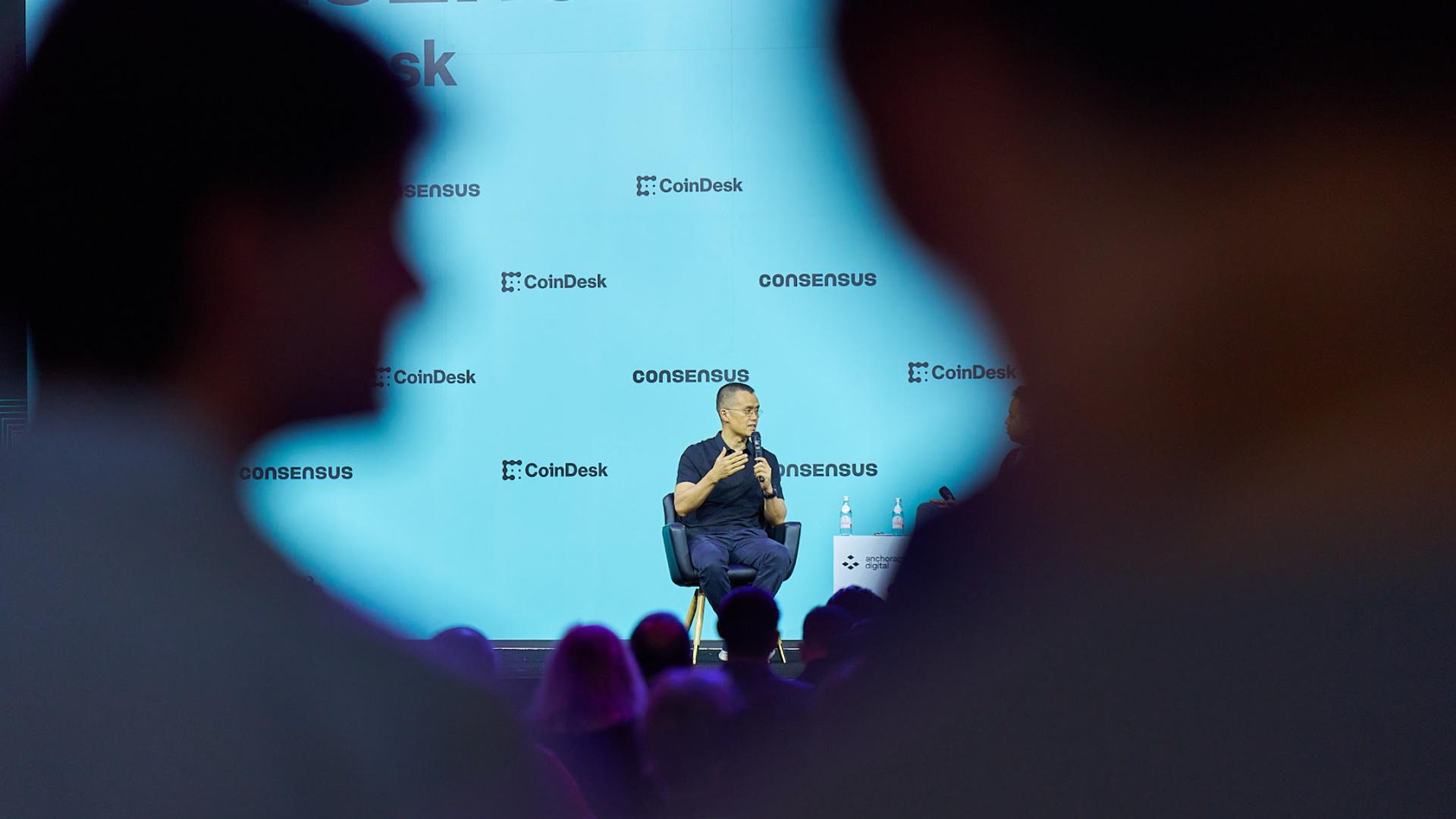
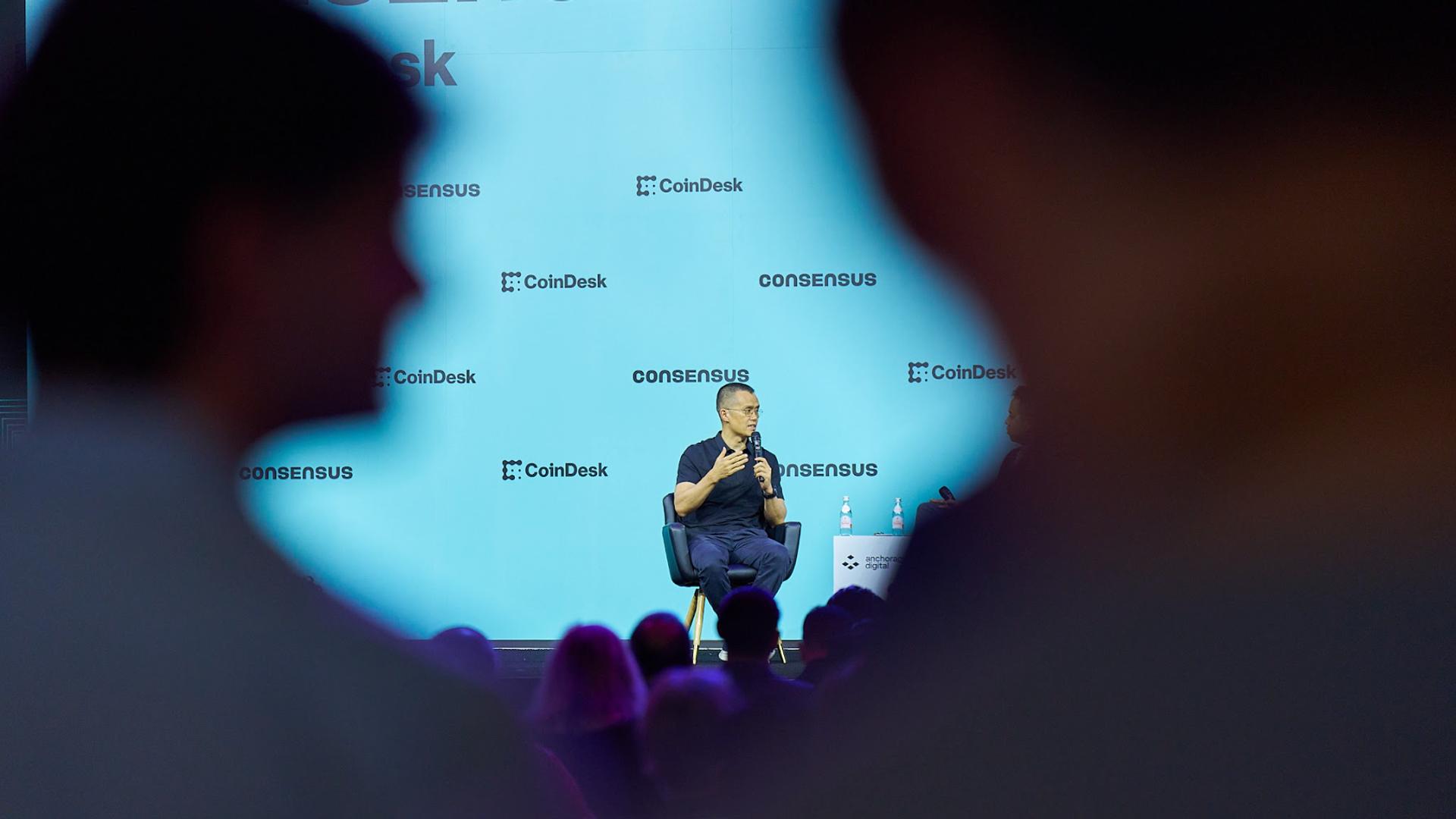
“I don’t hold grudges or anything, right? I just want to help to grow crypto anywhere in the world, and to do that, we need to help grow crypto in America.”
The Canadian national said he won’t participate at any level in U.S. politics, despite his industry’s growing reputation for political campaigning and influence. But he supports the U.S. aim to be the world’s crypto capital, and he sat for the interview during a trip to Washington.
In the meantime, he’s focused on the early backing of “highly impactful companies that may not be highly profitable companies.” So far, his criminal-justice experience hasn’t been a drag on those relationships.
“I had guys who apologized to me that they had a misunderstanding before,” CZ recalled. “They said, ‘Well, I thought there was some financial fraud.’”
If anything, he said, it’s been helpful.
“Sometimes it actually works as a plus,” he said. “It kind of builds your character that you went through this really difficult time and this unfair time, and you were tested and you were scrutinized, but they didn’t find any real issues, really. Well, there was the violation of the BSA, which I do not dispute, but there’s no fraud.”

#dabbu #money #rich #poor #telugu #quotes #youtubeshorts

George Galloway announces he will stand in Greater Manchester mayoral election
Materion Corp stock hits all-time high at 282.78 USD


-

 Fashion6 days ago
Weekend Open Thread: Miami – Corporette.com
-

 Entertainment5 days ago
Renter of Home in Anne Heche Crash Denies Settlement With Son
-
 Sports2 days ago
Two goals and an assist by sheer aura: Cristiano Ronaldo just entered the World Cup chat
-

 Tech3 days ago
Microsoft accidentally kills epic Outlook email threads
-

 Business5 days ago
Soccer-U.S. defends Iran World Cup travel restrictions, says discussions ongoing
-

 Politics5 days ago
Andy Burnham and the meaning of Makerfield
-
Crypto World1 day ago
Bitcoin (BTC) Dips Below $62K, Ethereum (ETH) Plunges 6% Daily: Market Watch
-

 Politics7 days ago
BBC Reporter Discusses Cross Party Criticism Of Trumps Iran Deal
-

 Crypto World1 day ago
Securitize Wraps Roubini's SEC-Registered ETF as Dubai VARA Digital Security
-
Business2 days ago
Entergy settles forward sale agreements, raises $672 million in cash proceeds
-

 NewsBeat6 days ago
Keir Starmer Allies Question His Chances For No 10
-
 Business5 days ago
Wall Street Week Ahead: Investors see Micron earnings as pulse check of AI rally momentum
-

 Tech7 days ago
AWS enters the context layer race with a graph that learns from agents, not manual curation
-
Crypto World5 days ago
Can Charles Hoskinson Really Rescue Cardano?
-

 Crypto World5 days ago
HIVE shares jump as $220M AI deal speeds Bitcoin mining pivot
-

 Crypto World5 days ago
Jake Chervinsky accuses CME of protecting derivatives monopoly
-

 Entertainment5 days ago
Jose Alvarado Wants Taylor Swift at More Knicks Games
-
 Tech4 days ago
Signal’s Meredith Whittaker says AI chatbots ‘are not your friends’ and calls Copilot agents a backdoor
-

 Tech3 days ago
Nearly 7,000 fake Amazon domains registered ahead of Prime Day 2026, researchers warn
-

 Sports1 hour ago
India vs Bangladesh LIVE Score, Women’s T20 World Cup: Bangladesh Opt To Bat; India Enter ‘Do-Or-Die’ Stage As Semi-Final Race Heats Up
You must be logged in to post a comment Login