
Crypto World
Interlace enters Brazil as stablecoin payment activity grows in Latin America



Interlace has opened an office in Brazil and assembled a local team as the stablecoin infrastructure company expands its payment and digital asset operations across Latin America.
Summary
- Interlace has opened an office in Brazil and assembled a local team led by country manager Guilherme Santos.
- The company plans to support financial institutions, cross-border trade platforms and digital asset businesses through its payment infrastructure.
- Interlace recently attended Blockchain.RIO, where Santos discussed stablecoin payments, digital assets and financial infrastructure.
- The company will next attend the Argentina Crecimiento LATAM Digital Assets Conference from Aug. 20 to Aug. 21.
Interlace said the Brazil operation will connect local financial institutions, cross-border trade platforms, digital asset companies and Web3 projects with its global payment and digital asset infrastructure.
Interlace Brazil office brings a local team into the market
The expansion gives Interlace a physical presence in one of Latin America’s largest digital asset markets, with the company appointing Guilherme Santos as its country manager for Brazil.
Confirming the move on X, Interlace described its strategy as “Going global. Building local,” adding that the new office was part of its effort to make stablecoin-powered payments and digital financial infrastructure more accessible internationally.
“Our new office marks another step toward making stablecoin-powered payments and digital financial infrastructure more accessible worldwide,” the company said.
Interlace has also started building relationships with Brazil’s payment and digital asset sectors through local industry events. The company recently attended Blockchain.RIO in Rio de Janeiro, where its team met participants from the country’s financial, payments and crypto industries.
During the event, Santos joined a panel covering digital assets, stablecoin payments and financial infrastructure, placing the company’s local rollout alongside discussions about how blockchain-based settlement can connect with existing financial services.
Brazil already has significant stablecoin activity alongside an established instant-payment system. In June, crypto.news reported on Oobit, which integrated Tether’s USDT with Brazil’s Pix network, allowing users to deposit Brazilian reais, hold USDT, and make payments through Pix keys or QR codes.
According to that report, Pix had nearly 170 million users, while the system processed BRL 11 trillion in transactions during 2024. Oobit said blockchain settlement could run behind the payment process while users continued interacting with the same Pix-based payment methods already available through Brazilian banking apps.
Interlace has not disclosed specific banking or payment partners tied to its new Brazilian office. Its announcement instead identified local financial institutions, cross-border commerce platforms, digital asset businesses and Web3 projects as the groups it plans to support through its infrastructure.
Brazil stablecoin payments face tighter financial rules
Interlace is entering Brazil as regulators increase supervision of digital asset transactions, particularly those involving stablecoins and cross-border payments.
A July report on IMF scrutiny found that the International Monetary Fund had called for stronger oversight of Brazil’s stablecoin market after cross-border crypto flows expanded faster than traditional capital movements. The IMF said Brazil’s crypto sector had become more closely connected with the financial system, while additional rules were needed around customer asset protection, stablecoin issuance and anti-money laundering controls.
Banco Central do Brasil Governor Gabriel Galípolo had also said stablecoins accounted for about 90% of the country’s reported crypto flows, according to the same report. Regulators have cited taxation, money laundering and reserve-related risks when discussing the large share of dollar-backed tokens in local digital asset transactions.
Brazil’s central bank has already placed restrictions on how virtual assets can be used within supervised international payment channels. Resolution BCB No. 561 requires payments and receipts between regulated electronic foreign exchange providers and foreign counterparties to use foreign exchange transactions or movements through non-resident Brazilian real accounts. Virtual assets cannot be used to settle transactions inside those regulated eFX channels.
The restriction does not prohibit crypto trading or stablecoin transfers in Brazil. According to the IMF coverage, it separates regulated cross-border settlement infrastructure from private digital asset activity conducted through wallets, exchanges and other crypto services.
For infrastructure providers entering Brazil, local financial connections therefore sit alongside a developing compliance regime governing how digital assets interact with existing payment and foreign exchange systems.
Commercial interest in stablecoin payment rails has continued across Latin America at the same time. In June, Paradigm led a $9 million Series A investment in El Dorado, a regional payments company operating across 12 Latin American countries, including Brazil, Argentina and Colombia. Coinbase Ventures and Verda Ventures also participated in the round.
El Dorado said it had processed more than 5 million transactions and served more than 100,000 active users. The company also moved into business payments, combining fiat and stablecoin payment rails for corporate customers involved in cross-border commerce.
Paradigm partner Ricardo de Arruda said Latin America handles more than $100 billion in cross-border payments annually, while El Dorado CEO Guillermo Goncalvez estimated total flows could approach $1 trillion when additional business transactions are included. Goncalvez said roughly 60% of the activity involved business-to-business payments linked to imports and exports between Latin America and the United States.
Interlace plans its next Latin America stop in Argentina
Interlace is now taking its regional expansion to Argentina, where the company is scheduled to participate in the Argentina Crecimiento LATAM Digital Assets Conference from Aug. 20 to Aug. 21.
At the conference, the company said it will give a presentation covering practices from its global card-issuance projects and its plans for Latin America. The appearance follows its participation at Blockchain.RIO and comes one day after the Brazil office announcement.
Argentina has also seen financial groups experiment with stablecoins for business payments and treasury use. A July report on peso stablecoins detailed separate projects from BIND Group and Petersen Group that were being developed through digital asset subsidiaries while Argentine banks remained restricted from offering crypto services directly.
BIND Group, which manages more than $2 billion in assets and owns BIND Banco Industrial, has been developing a peso-backed stablecoin through virtual asset service provider BEN. BEN had also partnered with Circle to provide institutional clients with access to USDC for treasury management and payment applications under Argentina’s regulatory framework.
Petersen Group, meanwhile, has been working on the DIPE stablecoin with technical support from crypto infrastructure provider Lirium. According to the July report, both projects have focused on corporate functions including programmable payments, collateral management and treasury settlement instead of consumer payment products.
Interlace said its Aug. 20–21 appearance in Argentina will cover its global card issuance experience and the company’s plans for building its Latin American operations.



A Singapore court has frozen about S$75 million ($58 million) in Bitcoin and USD Coin after a major crypto trading platform alleged that an internal ledger error caused it to mistakenly credit thousands of BTC and Bitcoin Cash to a long-standing customer.
Summary
- Singapore’s SICC froze about S$75 million in Bitcoin and USDC linked to a dispute between a major crypto platform and a long-time customer.
- The platform said an internal ledger error led it to mistakenly transfer 2,500 BTC and 2,500 BCH to the customer’s wallets in July 2024.
- The customer later moved 780 BTC off the platform and converted another 20 BTC into about 816,773 USDC.
- The court also ordered the customer to disclose the location of the disputed assets and their proceeds.
- The platform recovered the remaining 1,700 BTC and 2,500 BCH after discovering the alleged error in January 2025.
The Singapore International Commercial Court said the interim proprietary injunction prevents the customer from disposing of, dealing with or reducing the value of about 780 BTC and 816,773 USDC, along with assets, profits or interest derived from them. The order was granted on March 26 after a hearing before Singapore High Court Justice Aidan Xu and SICC International Judges Anthony Meagher and David Goddard.
The dispute involves an anonymised group of companies that operates what the court described as one of the world’s largest digital asset trading platforms and a customer who had used the platform since around 2013. Court documents identified the parties only as DVA, DVB and DVC while an application for confidentiality orders remains pending.
Along with freezing the crypto, the court ordered the defendant to disclose where the disputed assets and their proceeds were being held. The judges declined, however, to give the platform group advance permission to use that disclosure to seek similar injunctions in other jurisdictions, leaving it free to apply for permission later if required.
Singapore court dispute traces back to unsupported wallets
At the centre of the case are two specialised wallets that once contained 2,500 BTC and 2,500 Bitcoin Cash. According to the judgment, the wallets were designed as a self-custody product that required security credentials, including a user key held solely by the customer.
Support for the wallet product ended in April 2018, although customers could continue accessing the wallets for a period through an unsupported open-source tool. In March 2020, the entire 2,500 BTC and 2,500 BCH balance was transferred away from the specialised wallets, leaving them effectively empty.
The platform group alleged that a technical problem prevented those withdrawals from being recorded correctly on its internal ledgers. Because the ledger continued to show the assets as remaining in the specialised wallets, the companies operated for several years on the assumption that the customer was still entitled to the balances.
A relationship manager later tried to help the customer recover what the platform believed were assets trapped in the discontinued wallet product. Acting on its ledger records, the platform transferred another 2,500 BTC and 2,500 BCH into other accounts belonging to the customer in July 2024.
The claimants say those digital assets came from their own holdings inside the platform group’s omnibus wallets and were transferred solely because of the mistaken balance shown on the internal system. The customer disputes that account and has maintained that the assets transferred to him were rightfully his.
Mistaken crypto transfers have previously resulted in lengthy recovery disputes. In 2022, crypto.news reported on a Crypto.com transfer error in which the exchange mistakenly sent an Australian customer about $10.5 million instead of a $100 refund and discovered the error months later during an audit.
Customer moved 780 BTC and converted another 20 BTC to USDC
After receiving the July 2024 transfers, the defendant began moving part of the crypto away from the platform.
Court records show that on July 13, 2024, the customer converted 20 BTC into about 816,773 USDC and transferred the stablecoins to an unhosted wallet. Five withdrawals between July 17 and Nov. 10 moved another 380 BTC to a separate unhosted address.
A further 200 BTC was transferred on Nov. 24, followed by another 200 BTC on Jan. 7, 2025, bringing the amount sent to a third external wallet to 400 BTC. Some 150 BTC from that wallet was later transferred elsewhere in February 2026, according to evidence submitted by the claimants.
The companies also told the court that subsequent transactions involving the 380 BTC and 816,773 USDC made their current locations difficult to determine. The defendant did not dispute making the transactions but maintained that he had been dealing with crypto that belonged to him.
By the time the platform acted, 1,700 BTC and the full 2,500 BCH transferred in July 2024 remained in the customer’s accounts. The companies froze those wallets on Jan. 29, 2025, and re-credited the remaining assets to themselves in an attempt to reverse part of the earlier transfer.
The platform group subsequently sought the return of the 780 BTC and 816,773 USDC that had already left its system, but the customer refused. The companies valued the assets at roughly S$75 million at the time of the injunction hearing.
Platform alleges unjust enrichment and constructive trust
Proceedings were initially filed in the General Division of Singapore’s High Court in November 2025 before being transferred by consent to the SICC.
The claimants’ 62-page statement of claim contains four causes of action, including unjust enrichment, a proprietary claim, deceit or negligent misrepresentation, and an alleged breach of the contractual provisions governing the platform’s services. They are also seeking a declaration that the defendant holds the disputed assets on constructive trust for one of the claimant companies and must return them.
According to the claimants, the July 2024 transfers resulted from their incorrect understanding of the old wallet balances, while the customer allegedly knew about the mistake and took advantage of it.
The defendant has rejected that version of events. He told the court that he did not remember making the March 2020 transfers, although he accepted that blockchain records show the transfers occurred, and argued that the platform’s own admission of faulty internal ledger records weakened its claim that the assets transferred in 2024 belonged to the companies.
He also argued that the transferred crypto could have represented his own assets held elsewhere on the platform or assets belonging to other customers. Having maintained extensive crypto holdings and activity, the defendant said he relied on the platform to keep track of what he held and believed that the July 2024 assets belonged to him.
The customer has counterclaimed for the assets that remain frozen on the platform or compensation of equivalent value, while denying that he knew the companies had made any mistake.
Singapore courts have dealt with several high-value crypto disputes involving exchange operators over the past year. Earlier in August, Binance and RedotPay gave conflicting accounts over the status of a separate Singapore proceeding tied to claims worth nearly $473 million.
Singapore’s courts have also played a role in handling distressed crypto businesses, including proceedings involving WazirX’s Singapore-based parent Zettai, whose restructuring proposal returned to court after receiving 95.7% creditor support in August 2025.
Judges find serious ownership question to be tried
For the interim stage of the case, the three-judge panel found enough evidence to establish a serious question over whether the platform companies retained a proprietary interest in some or all of the disputed assets.
The court said it was arguable that the specialised wallet balances were effectively zero before the July 2024 credits and that the platform transferred 2,500 BTC and 2,500 BCH because its internal records incorrectly showed the earlier holdings as still present.
Judges also found an arguable case that the customer knew about the platform’s mistake either when the transfers were made or, at the latest, after the platform discovered the issue and contacted him in 2025. Under that scenario, the court said an argument could be made that identifiable assets and traceable proceeds were held on constructive trust for the claimants.
On whether an injunction was necessary, the court considered the risk that the companies could win at trial but still be unable to recover the crypto if the assets were moved or dissipated.
The judges noted evidence that the defendant had used part of the disputed assets as security for a loan to cover legal costs and had not provided updated evidence about his financial position or current asset holdings. The court found sufficient doubt over his ability to satisfy a substantial judgment if the companies eventually succeeded.
At the same time, the platform group gave the court an undertaking to compensate the customer for losses caused by the injunction if it later turns out that the order should not have been granted.
The disclosure order requires the defendant to identify the whereabouts of assets covered by the injunction, including relevant crypto controlled through third parties acting under his direct or indirect instructions. The SICC left both sides free to return to court, including if the claimants later seek permission to use the disclosed information in civil proceedings outside Singapore.


Visa is reportedly seeking a new stablecoin settlement and over the counter partner after Mastercard acquired BVNK, which previously filled that role.
Summary
- Visa reportedly seeks a stablecoin settlement partner licensed across the U.S., Canada, U.K. and Singapore.
- The confidential request reportedly requires multiple coin swaps, settlement services and support for Open USD transactions.
- Mastercard completed its BVNK acquisition on August 3, absorbing Visa’s previous stablecoin infrastructure partner entirely.
- Visa’s separate ZeroHash agreement supports stablecoin payouts but does not cover every requested licensed market.
- Visa has not confirmed the RFP, identified candidates or announced a partner selection deadline publicly.
The confidential request for product seeks a provider with cryptocurrency exchange licenses in the U.S., Canada, the U.K. and Singapore, according to a report published on August 18.
The documents reportedly call for support across several stablecoins, including the ability to conduct swaps and provide settlement services. The selected company would also help process transactions involving Open USD.
Visa declined to comment on the reported process. It has not publicly confirmed the request, named any candidates or disclosed a selection timetable.
Visa wants one partner across four regulated markets
The reported licensing requirements give the search a clear U.S. angle. A successful candidate would need regulatory coverage spanning four major financial markets rather than operating through a patchwork of regional partners.
According to the report, Visa has narrowed its attention to one settlement and over the counter provider. Its identity remains undisclosed. No evidence currently shows that Visa has made a final selection or entered a binding agreement.
The required services would extend beyond basic token transfers. The documents reportedly seek a company capable of converting between stablecoins, supplying institutional liquidity and handling settlement across different jurisdictions.
These requirements could limit the field to infrastructure providers with established licensing, banking relationships and liquidity operations. They also suggest Visa wants one coordinated service rather than separate arrangements in each country.
Mastercard’s BVNK acquisition created the reported gap
Mastercard completed its acquisition of BVNK on August 3. The payments company said BVNK would strengthen its infrastructure for stablecoin payments, settlements, payouts and treasury operations.
The transaction was announced in March at a value of up to $1.8 billion. BVNK said at the time that its infrastructure processed about $30 billion in annual payment volume.
As previously reported, Mastercard completed its BVNK acquisition after obtaining the necessary approvals. The change in ownership placed BVNK under one of Visa’s largest competitors.
BVNK had served as Visa’s stablecoin settlement partner. Neither Visa nor BVNK has publicly explained how Mastercard’s acquisition affected that earlier commercial relationship.
Visa already operates other stablecoin programs
Visa announced a separate partnership with ZeroHash on August 5. That arrangement allows eligible Visa Direct clients to fund accounts and send payouts through stablecoins.
However, the reported request was dated after the ZeroHash announcement. It also covered markets where ZeroHash reportedly does not hold the licenses sought by Visa. The new search therefore appears to address a broader geographic and operational need.
Visa has also introduced the Visa Stablecoin Platform. The company said in a July release that the platform would help institutions access, store, issue, redeem and transfer stablecoins.
Open USD is its initial supported asset. In related coverage, Visa launched its Open USD platform with selected clients participating in beta testing.
The selection process has no public deadline
Visa has not disclosed when it plans to choose a provider or begin expanded settlement services. Any agreement would likely depend on licensing checks, technical integration and commercial negotiations.
The reported partner would also need to connect with Open USD, which is backed by a consortium that includes Visa, Mastercard and Coinbase. More than 140 companies were associated with the initiative when it was announced.
As crypto.news reported, Visa supports a multiple coin strategy rather than treating Open USD as a replacement for USDT or USDC. That position fits the reported requirement for a partner capable of handling several stablecoins.
Until Visa confirms the request or names a provider, the RFP and its requirements remain attributed to the documents reviewed by CoinDesk.


U.S. Treasury yields retreat from the highest levels in decades, while bitcoin holds above $64,000.
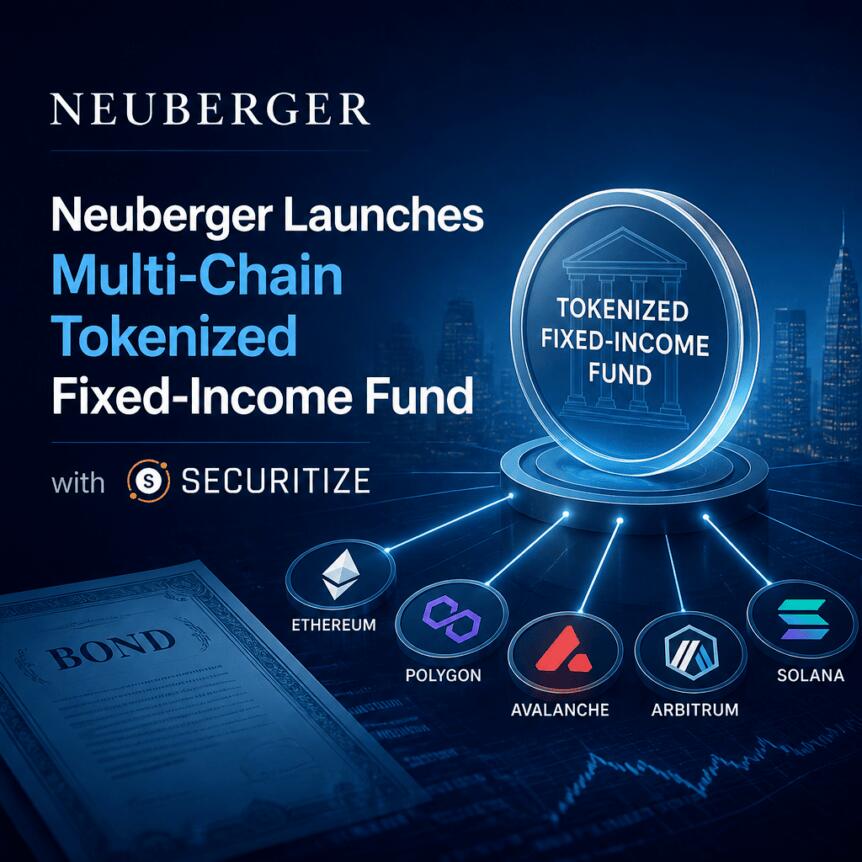
Asset manager Neuberger has partnered with Securitize to launch its first tokenized fixed-income fund, a move aimed at bringing actively managed credit exposure to investors through tokenized shares. The Neuberger Securitize High Income Tokenized Fund (HINC) will target high-yield bonds and also include collateralized loan obligations (CLOs) and leveraged loans, according to an announcement Tuesday.
Unlike many recent tokenized products that have leaned heavily toward simpler exposures, the fund is explicitly positioned as an “actively managed high-yield strategy.” It arrives at a time when investors appear increasingly willing to pay attention to yield again as competition for funding continues and the cost of capital becomes more relevant to portfolio construction.
Key takeaways
- Neuberger and Securitize launched the Neuberger Securitize High Income Tokenized Fund (HINC), their first tokenized fixed-income offering together.
- The fund focuses primarily on high-yield bonds, with additional exposure to CLOs and leveraged loans.
- The tokenized shares will be issued and managed across four blockchain networks: Ethereum, Solana, Avalanche, and Sui.
- Neuberger will act as subadvisor to the tokenized fund for the first time, marking a step into tokenized credit via Securitize infrastructure.
- Securitize reports nearly $5 billion in distributed asset value across 26 tokenized real-world assets, according to RWA.xyz data.
Why this credit-focused tokenized fund matters
Tokenization has been expanding across real-world assets, but fixed-income products have varied widely in structure—some offer straightforward exposure, while others attempt to replicate more traditional asset management approaches. HINC’s emphasis on high-yield credit and active management signals an attempt to meet investor demand where it is currently most acute: higher yields amid a macro backdrop in which capital is no longer assumed to be cheap.
Commenting on the broader shift in market assumptions, Saxo chief investment strategist Charu Chanana said in a Tuesday client note that “the previous market regime rewarded investors for assuming that capital would remain cheap and plentiful.” He added that the “emerging regime may reward investors for recognising that capital has a price again,” a framing consistent with why many fixed-income strategies are seeing renewed attention.
How the fund is structured and where tokens will live
According to the announcement, HINC will primarily invest in high-yield bonds. It also plans to hold additional positions in collateralized loan obligations and leveraged loans, giving the strategy multiple credit channels rather than relying on a single security type.
Securitize will provide the infrastructure to issue and manage tokenized shares on four blockchain networks: Ethereum (ETH), Solana (SOL), Avalanche (AVAX), and Sui (SUI). By spreading issuance across multiple networks, the offering could be positioned to reach different liquidity and access ecosystems—though the practical impact for investors will depend on how each network is supported by wallets, custody arrangements, and market access mechanisms.
The fund is available to qualified investors, in line with the regulated nature of most tokenized securities offerings.
Neuberger’s role and Securitize’s scaling track record
The collaboration is notable not only for its asset class but for the roles involved. The filing describes Neuberger serving as subadvisor to a tokenized fund for the first time, while Securitize handles the tokenization layer—issuing and managing tokenized shares using its platform.
Neuberger brings substantial balance-sheet scale in traditional asset management terms. The announcement states that Neuberger’s fixed-income platform manages more than $230 billion in assets, and that the firm manages about $613 billion overall.
Securitize’s own progress in tokenization infrastructure is also part of the story. RWA.xyz data cited in the announcement puts Securitize at about $4.96 billion in distributed asset value across 26 tokenized real-world assets. The company’s catalog includes BlackRock’s $2.7 billion BUIDL fund, a $355 million tokenized AAA CLO fund, and a $95 million Apollo diversified credit fund—examples that show why a credit-focused launch fits neatly into Securitize’s current product direction.
Market reaction to the launch
Securitize shares rose around 5% in Tuesday morning trading, according to the linked quote on Yahoo Finance (ticker: SECZ). That move brought the company’s market capitalization to roughly $838 million.
Even with the day’s gain, the stock remains significantly below earlier post-IPO levels: the article states Securitize is still down more than 50% from levels reached shortly after its public debut in July. For investors, this matters because it highlights the tension between long-term expectations for tokenization growth and the near-term market’s scrutiny of execution, adoption, and revenue conversion.
The same dynamic often plays out across the tokenized real-world asset space: platforms that build infrastructure can attract interest even before large flows arrive, while traditional markets continue to weigh tangible uptake and scale in a risk-conscious environment.
For now, the key question around HINC is how quickly tokenized fixed-income demand translates into meaningful allocations from qualified investors across the four supported blockchains—particularly as the strategy blends high-yield bonds with CLOs and leveraged loans. Readers should watch for details on distribution mechanics, investor access, and whether this actively managed credit model attracts sustained inflows as “capital has a price again” becomes the prevailing portfolio assumption.


Maya Protocol has undergone a halt after an attacker exploited 6 chained bugs to drain roughly $1.7 million from the decentralized liquidity protocol.
The pseudonymous co-founder, Aaluxx, disclosed the losses. Native token CACAO collapsed by 88% as the attacker converted the stolen supply into Bitcoin (BTC), Ethereum (ETH), and other assets across all Maya liquidity pools.
Maya Protocol Loses $1.7 Million in Latest Hack
The attack involved a single transaction that bundled 23 separate instructions. This structure tricked the network into thinking a theft had occurred.
The protocol then tried to compensate for the pool it believed had been robbed. However, the payout had no upper limit, so the system credited about 49 million CACAO to a pool that held almost nothing.
The credit was never funded. Maya’s reserve held only 168,000 CACAO, so the transfer failed, leaving the inflated balance on the books.
The attacker deposited 100 CACAO into that pool, claimed 99.93% ownership, and withdrew 48.87 million CACAO. That is nearly half the token’s 100 million supply.
CACAO fell from $0.115 to $0.013 before recovering to around $0.032. The attacker sent 20.83 BTC, worth roughly $1.34 million, to a single Bitcoin address across about 10 blocks.
Founder Aaluxx Myth announced a global halt in the project on Discord and asked the attacker to return the funds.
Follow us on X to get the latest news as it happens
DeFi Hacks Keep Stacking Up in 2026
DefiLlama has logged 219 hacks worth $1.26 billion so far in 2026. All of 2025 produced 146 incidents, even though the dollar total reached $2.71 billion.
August alone has produced 16 separate incidents. THORChain, the protocol Maya forked from, lost $10.7 million in May.
Recovery now depends on whether the attacker accepts the bounty offer. Aaluxx Myth also said the team will contact the arbitrage traders who absorbed the pool value.
Subscribe to our YouTube channel to watch leaders and journalists provide expert insights
The post Maya Protocol Becomes the 16th Crypto Hack Logged in August Alone appeared first on BeInCrypto.


Entry-level workers are taking the sharpest hit from artificial intelligence (AI), according to Goldman Sachs. The bank tracked hiring across developed economies and found the drag concentrated at the start of careers.
The bank published the research on Wednesday after examining employment growth across more than 800 occupations.
Where AI Job Losses Show Up First
Industries most exposed to automation have posted slower growth in job openings since the second half of 2022. Goldman said the pattern is clearest in Germany, Australia, and the US.
Employment across information and communication services has cooled in almost every major developed economy over the same period. Outside the US, headcount in those industries still sits near or above its long-run trend.
Narrower categories tell a sharper story. Employment in call centers, software publishing, management consulting, and advertising services has fallen below the historical trend across developed markets.
According to the research, call centers stand out the most. Employment trails trend by 39% in the US, 33% in Canada, and 27% in Germany.
Goldman reads that as proof that the pressure lands first where automation tools already exist. Uber made that link explicit in July when it tied customer service job cuts to an AI efficiency push.
Adoption explains part of the gap. Major developed markets have reached rates of 15% to 20%, with France, the US, the Netherlands, and the UK leading. Italy, Japan, and New Zealand sit at the bottom, while emerging markets range between 10% and 15%.
Follow us on X to get the latest news as it happens
Entry-Level Workers Carry the Cost
The damage concentrates at the start of careers. Across the wider workforce, the effect stays small. A 10% AI exposure was linked to a 0.1% drag on annual headcount growth in France, Canada, and the US.
For entry-level roles, that same exposure cut growth by more than 0.6 points in Australia. The US drag topped 0.2 points.
The signal is already reaching campuses, with students avoiding computer science degrees in favor of fields they judge safer. Earlier, research from Goldman Sachs estimated that the technology was subtracting 16,000 jobs per month from US payroll growth.
US Layoff Data Backs the Trend
Meanwhile, Challenger, Gray & Christmas counted 33,429 job cuts in July. This was the lowest monthly total in two years.
AI led all stated reasons for the fifth consecutive month, accounting for 10,970 of those cuts, or 33%. Employers have named it in 112,713 announcements this year, roughly 24% of the total.
Technology sits at the center of the cutting with 149,023 announcements through July, up 67% from a year earlier. The sector now accounts for 31% of all 2026 cuts, extending the losses in tech and finance tracked earlier.
Andy Challenger, the firm’s chief revenue officer, said corporate messaging around the technology has shifted.
“Naming AI in a layoff announcement can win over investors while pushing current and prospective employees away. That’s why the messaging has swung from hedging to aggressively citing it,” he said.
Hiring plans complicate the picture. Companies announced 107,500 planned hires through July, up 25% from the same stretch of 2025. Demand is strongest in aerospace, energy, and manufacturing.
“Hiring has also increased over last year by 25%, so while AI is shifting the labor market, it is not dismantling it,” Challenger added.
Goldman concluded that the hiring pressure is visible worldwide but still confined to a narrow set of industries and workers. That containment is what US lawmakers demanding action on displacement will watch as adoption rises.
Subscribe to our YouTube channel to watch leaders and journalists provide expert insights
The post Goldman Sachs Report Shows Entry-Level Workers Feel Worst of AI Squeeze appeared first on BeInCrypto.


Widening losses and intensifying competition coincide with a pause in frontier reinforcement-learning training as openai strengthens its safety controls.


US spot Bitcoin ETFs took in $189 million on Tuesday, lifting August net inflows to $951 million, while Ether ETFs added $71.5 million.
Crypto World
‘I Have the Skills, I Have the Training.’ How Refugee Doctors Are Helping the U.S. Fight COVID-19 Even Without a Medical License

The refugees’ language skills and diverse cultural background are also an asset for a testing program directed at underserved communities and communities of color. At one newly opened testing site in Atlanta, CORE was able to provide not just medical expertise, but interpretation in 13 different languages, including Amharic, Arabic, Burmese, Kiswahili, Somali and Tigrinya. “To work with these new Americans who have been resettled with the IRC is gratifying,” says CORE Co-Founder and CEO Ann Lee. “CORE appreciates these dedicated volunteers, who enable us to scale and provide free COVID-19 testing to vulnerable communities throughout the United States.”
Both the IRC and WES hope that the database and the partnership with CORE will lead to greater opportunities for immigrant health professionals down the line, as well as a more streamlined process for getting them into the U.S. medical system. “To the extent that we can turn the situation into something that can meaningfully impact those 165,000 people’s lives while improving access to health care, that would be a positive outcome,” says the WES’ Esposito. “We know that there are urgent needs for licensed health care staff and there are also needs to fill other public health roles,” she says, noting a growing need for contact tracers within the U.S. “These are roles where immigrants and refugees can really contribute. There are roles where you don’t need to change policy to make sure that people are going where they are needed.”
Although Al-Sarray is confident that eventually he will make it as a doctor in the U.S., he is thrilled to be playing a role in the pandemic response now, no matter how small. Before starting his training program as a safety officer for CORE, Al-Sarray boosted his infectious disease knowledge and personal protection equipment skills by watching instructional videos from the Centers for Disease Control and Prevention and the World Health Organization. Within a few hours of starting work at Dodger Stadium in late May, he was already adjusting the test-handling protocols to help minimize the risk of contagion. By the end of his first day, he was giddy with a sense of accomplishment.
“Now that I am in the front lines, I am even more excited because I am seeing first-hand the amount of people that we are helping,” he says. “Being a part of such a large testing site really makes you feel like you’re contributing to the response. I feel like I am making a difference.”
—With reporting from Carlo Barrera/Los Angeles
Hayes revealed his new role as Flop Labs CEO and teased a “massive airdrop” from the AI inference protocol in the fourth quarter of 2026.

The UK-US medicines deal and the hidden costs of Brexit

The seven most compelling QB transfers for the 2026 college football season

Windows 11 24H2 Home and Pro reach end of support in 2 months





-

 Fashion5 days ago
Weekend Open Thread: Ann Taylor
-
 Sports5 days ago
This U.S. Amateur is a glimpse into golf’s future in more ways than you think
-
 Tech5 days ago
11 Ways to Rank Your Videos
-
 NewsBeat4 days ago
Myanmar says over 300,000 Rohingya refugees verified for repatriation as exodus enters ninth year
-

 Sports4 days ago
Birmingham 2026: Day 6 Timetable for Irish Athletes
-

 Politics4 days ago
SEQ Code: The Three Letter Boarding Pass Code That Could Give You The Worst Seat
-
 Entertainment7 days ago
Keke Palmer Subtly Hints At Sean Evans Drama With Cryptic Post
-

 Tech6 days ago
DeepSeek Harness launches as open source rival to Claude Code, alongside V4-Pro on API with higher prices
-

 Sports7 days ago
DeQuan Jones in ‘high spirits’ after successful leg surgery
-
 Crypto World7 days ago
Perplexity AI Predicts an XRP Scenario Few Analysts Are Discussing
-
 Entertainment7 days ago
2026’s Most Ambitious Fantasy Movie Officially Scores Sequel Update
-

 Crypto World1 day ago
OCC Greenlights Trump Family Crypto Firm for Trust Charter
-
 Entertainment7 days ago
All 10 Hayao Miyazaki Fantasy Movies, Ranked
-

 Fashion7 days ago
Why Botanical Fashion Never Goes Out of Style
-
 Entertainment7 days ago
Travis Kelce Breaks Silence On ‘Crazy’ Taylor Swift Wedding
-
 Entertainment5 days ago
10 Netflix Shows That Quietly Became Modern Classics
-

 Fashion7 days ago
Wednesday’s Workwear Report: Stretch-Cotton Pleated-Waist Top
-

 Fashion6 days ago
The Details Do the Dressing
-

 Fashion5 days ago
Weekly News Update, 8.14.26 – Corporette.com
-

 Fashion7 days ago
Fendi Fall 2026 Marks a New Era
You must be logged in to post a comment Login