
Crypto World
IonQ (IONQ) Q1 Earnings Preview: High Growth Meets Steep Valuation Ahead of May 6 Report


Key Takeaways
- IonQ will release Q1 2026 financial results after trading hours on May 6, followed by a conference call scheduled for 4:30 p.m. ET
- Analysts project quarterly revenue of $49.7M, representing a massive 555.9% increase compared to last year’s Q1
- Shares of IONQ dropped 35.7% during Q1 2026, finishing Friday’s session at $46.20 with a 2.39% gain
- The company delivered 202% full-year revenue expansion in 2025 and ended with $370M in contracted future obligations
- The stock trades at a forward price-to-sales multiple of 59.3x, dramatically exceeding the sector median of 6.49x
IonQ prepares to unveil its Q1 2026 financial performance on May 6, presenting investors with a narrative of explosive expansion coupled with persistent unprofitability. The quantum computing firm will announce results following market close, with executives hosting a discussion at 4:30 p.m. ET.
Shares ended Friday’s trading at $46.20, gaining 2.39% during the session. Despite this modest uptick, IONQ has declined 35.7% throughout the first quarter of 2026, even as the company continued meeting operational milestones.
Analyst expectations call for quarterly revenue reaching $49.7 million. This figure would represent a staggering 555.9% increase versus the comparable quarter in 2025.
IonQ management issued Q1 revenue guidance between $48 million and $51 million. While this range suggests impressive annual comparison growth, it represents a deceleration from the 429% revenue expansion recorded in Q4 2025.
Chief Executive Niccolò de Masi characterized 2025 as a pivotal year in his recent shareholder correspondence. He emphasized the company’s evolution from purely manufacturing quantum systems to establishing a comprehensive quantum technology platform with merchant capabilities.
Annual 2025 revenue climbed 202% compared to 2024 performance. The company concluded the year holding $370 million in unfulfilled performance obligations, providing forward revenue visibility.
Commercial customers accounted for more than 60% of 2025 revenue generation. IonQ now maintains operations across over 30 nations, with international markets contributing above 30% of total revenue.
Notable client additions included KISTI alongside an expanded partnership with QuantumBasel. The company is also experiencing momentum in quantum networking applications, including continental-scale deployments throughout Europe.
The Path to Profitability Remains Distant
Financial losses continue at significant levels. Adjusted EBITDA for full-year 2025 registered negative $186.8 million. Looking ahead to 2026, IonQ anticipates adjusted EBITDA losses between $310 million and $330 million.
Analyst consensus for Q1 earnings per share stands at a loss of $0.26. This would represent an 85.7% deterioration compared to the year-earlier period.
The company’s forward price-to-sales valuation currently stands at 59.3x. This compares to a sector average of just 6.49x. Such a substantial premium provides minimal cushion for disappointing results.
SkyWater Acquisition Creates Additional Variables
IonQ’s pending acquisition of SkyWater Technology represents a strategic move toward vertical integration and domestic manufacturing capabilities. Federal authorities are currently conducting regulatory review of the transaction.
While the deal won’t impact Q1 financial statements, investor attention will focus on management commentary regarding long-term production scaling during the earnings discussion.
IonQ has surpassed earnings projections in half of its previous four quarterly reports while falling short in the remaining two. Zacks Research does not project an earnings surprise this quarter, assigning an Earnings ESP of 0.00%.
Wall Street analysts maintain an average price target of $61.82 on IONQ shares, suggesting potential upside of 33.81% from current trading levels. The consensus recommendation stands at Strong Buy across 12 covering analysts.
The May 6 earnings release will provide critical insight into whether IonQ’s commercial traction can sustain itself throughout 2026.



Key Highlights
-
BMNR shares surge 4.16% following disclosure of 5.18M ETH treasury position
-
Company’s total assets reach $13.1B including cryptocurrency and cash reserves
-
Staking operations now generate $297M in annualized revenue from 4.36M ETH
-
Weekly acquisition of 101,745 ETH marks fourth consecutive week of accelerated buying
-
Bitmine now controls approximately 4.29% of Ethereum’s circulating supply
Shares of Bitmine Immersion Technologies advanced during Monday’s trading session following the company’s announcement of expanded Ethereum treasury holdings and substantial staking revenue. BMNR stock closed at $22.79, reflecting a gain of $0.91, or 4.16%, after bouncing back from an early session low around $21.88. The equity climbed above the $23.00 threshold later in the day as investors responded positively to the strategic ETH accumulation.
Bitmine Immersion Technologies, Inc., BMNR
Company Accelerates Ethereum Accumulation Strategy
Bitmine disclosed that its Ethereum treasury position stood at 5,180,131 ETH as of May 3. Management calculated the position’s value using $2,336 per ETH. The firm confirmed this holding now accounts for roughly 4.29% of Ethereum’s entire circulating supply.
This disclosure brings the company significantly closer to its publicly announced goal of controlling 5% of all ETH in circulation. During the previous seven-day period, Bitmine added 101,745 ETH to its reserves. Leadership noted this purchase continued an accelerated acquisition pattern that has persisted for four consecutive weeks.
Management positioned this accumulation strategy within the context of Ethereum’s expanding role in asset tokenization and public blockchain infrastructure. The firm also highlighted ETH’s growing importance in AI-integrated commerce platforms. These strategic justifications provided additional support for BMNR stock’s positive price movement during the session.
Staking Operations Generate Substantial Revenue Stream
Bitmine reported that 4,362,757 ETH had been deployed in staking activities as of May 3. The company assessed this staked allocation at approximately $10.2 billion. This represents over 84% of the firm’s complete Ethereum holdings.
According to the announcement, current staking activities generate $297 million in annualized revenue. Furthermore, management indicated that full deployment through MAVAN and associated partner networks could increase annual rewards to $352 million. MAVAN refers to the Made in America Validator Network.
The company developed MAVAN primarily to facilitate its internal Ethereum treasury staking requirements. However, management revealed plans to extend MAVAN services to institutional investors, digital asset custodians, and blockchain ecosystem collaborators. This expansion positions the staking infrastructure as a revenue-generating service beyond internal operations.
Diversified Asset Base and Recent Transaction Activity
Bitmine disclosed combined holdings of approximately $13.1 billion across cryptocurrency, cash equivalents, and other publicly traded securities. This portfolio encompasses 5.18 million ETH, 200 BTC, and $700 million in cash reserves. Additionally, the company maintains a $200 million equity position in Beast Industries.
The firm also disclosed an $83 million investment in Eightco Holdings, which operates under the ticker symbol ORBS on the Nasdaq exchange. These diversified holdings demonstrate that Bitmine’s treasury management extends beyond exclusive Ethereum concentration. Nevertheless, ETH accumulation remains the central pillar of the company’s financial strategy.
The treasury update arrived shortly after another over-the-counter transaction between the Ethereum Foundation and Bitmine. The foundation transferred 10,000 ETH to the company at an average execution price of $2,292 per token. This represented the third documented OTC Ethereum sale from the foundation to Bitmine within the past two months.


Are stablecoins stable? Come on, it’s in the name!
Of course, the crypto industry has certainly seen categories misnamed. Anyone remember NuBits? Surely you lost money in Terra? Just last year, DeFi stables, including Synthetix and Ethena, lost their peg. And even robust stablecoins like Circle’s USDC and Tether have seen temporary depegging over the years.
It appears basic questions about stablecoins might actually uncover important lines of inquiry, especially as they relate to the structural risks of a nascent technology. As industries look to adopt stablecoins — sometimes even bypassing the much more battle-tested traditional financial system — it’s probably worth revisiting the answers to these basic questions.
During CoinDesk University’s School of Stablecoins, happening at Consensus 2026, May 5-7 in Miami, we’ll dig under the surface of these questions to give you a strong understanding of why stablecoins are the future and how to implement them into your business to reap benefits.
What is a stablecoin, and how is it different from Bitcoin?
Sam Broner, Founder of the Better Money Company, told CoinDesk he still gets these questions regularly. Bottom line, then: we’re still so early in this technology’s lifecycle. Whereas a stablecoin is a cryptocurrency that keeps a consistent price by being pegged to an asset, like the U.S. dollar, bitcoin’s price moves up and down depending on supply and demand.
Why can’t I just use fiat?
This is a deceptively important question. The idea behind stablecoins, and cryptocurrency broadly, is that it was built for this internet age we now live in. Money should be like the internet — global, real-time, programmable and composable. This innovates on the often clunky architecture of the traditional financial system, where decades of band-aids on an archaic core infrastructure have led to high fees, slow settlement, and inflexible services. So you can use fiat, but during our sessions, we think you’ll be persuaded that stablecoins are the future.
What keeps a stablecoin’s price at $1?
Just like fiat (and crypto), there are different types of stablecoins.
Some keep their peg by having the same amount of collateral in dollars (or euros or whatever fiat they choose) in their coffers. This mechanism design is called fiat collateralized, and it’s how stablecoins like USDC work — they’re backed 100% by cash or cash equivalent assets and are actually redeemable 1:1 with those.
Other stablecoins have what is known as overcollateralization, like DAI. MakerDAO’s stablecoin DAI is backed by overcollateralized loans: it keeps its dollar peg by locking other assets in contracts as collateral for DAI creation.
The last, and slightly controversial, type of stablecoins rely on algorithmic stabilization — that is, computer algorithms are built to manage the supply and demand so that a coin stays pegged to $1. While this is certainly an interesting tech that will continue to be innovated upon, it’s also led to huge failures, subsequently wiping out millions of dollars from the ecosystem.
Still confused? Join any of our CoinDesk University’s School of Stablecoins sessions to talk to the people actually building the stablecoin technology for consumers and businesses.
Who actually holds the money?
With fully backed stablecoins, the issuer holds the money. However, that doesn’t mean that a stablecoin issuer has a bank account and deposits $1 at a time when a new stablecoin is minted.
Instead, fiat-backed stablecoin reserves are usually held by custodians like BlackRock or BNY Mellon. And since each stablecoin issuer decides what their collateral looks like — whether it’s cash or other highly liquid assets — the type of custodian they use will vary based on what actually makes up the reserve.
For overcollateralized stables or coins with algorithmic backing, the issuers usually hold their version of reserves in smart contracts or blockchain-based wallets.
How do I get a stablecoin?
“Even established banks, fintechs, and payment companies that move millions of dollars in transactions every day ask this,” says Better Money Company’s Broner. “And it’s a fair question, because the on-ramps aren’t always obvious.”
So don’t feel embarrassed if you have to ask again. In the cryptocurrency industry, there are exchanges, wallet providers, custodians, payment platforms, plus decentralized and centralized versions of all those. The answer depends on what you’re trying to do with the cryptocurrency after acquiring it.
During CoinDesk University’s School of Stablecoins, you’ll hear from experts in the field about the digital storefronts you can patronize to get your hands on stables and what you can do with them afterward.
What happens if everyone redeems their stablecoins at once?
The U.S. dollar was on the gold standard until 1971 — that meant that you could walk into your bank and demand an equal amount of gold in exchange for dollars at any time. If you did that now, you’d be laughed out of the bank. But fiat-based stablecoins actually still work this way.
If you own a USD-backed stable that’s 100% collateralized, you can redeem it for dollars at any time. If every single person that owned that USD-backed stable went to the issuer to get their dollars at the exact same time (a probabilistic nightmare), hypothetically, everyone would get their money back — it just might not be instantaneous.
As the stablecoin market has grown, issuers have moved away from full cash reserves and instead are filling their reserves with Treasury notes and bonds, all of which should be highly liquid. But as the Silicon Valley Bank collapse showed, when people “run on a bank” that holds stablecoins, the dollar peg can get a little shaky.
What if the government bans stablecoins?
This isn’t as far-fetched as it might sound. In the U.S., the long-awaited CLARITY Act has been held up by unresolved issues, such as banning stablecoin yield (a rightfully tetchy issue). Businesses using stablecoins have been wary of keeping on the right side of regulation, even while getting mixed signals from Washington.
Whether CLARITY ends up passing or not, there’s still a lot to be aware of when using stablecoins in the U.S.. It’s why we invited the Blockchain Association and some of its partners to break down exactly what your business needs to know about policy and compliance.
Are stablecoins safe?
You’ve read the headlines of people losing millions of dollars of cryptocurrency, whether by losing their private keys, having invested in a scam or a project that gets hacked. As we mentioned above, depending on what type of stablecoin you’re investing in, there may be more or less risks associated.
According to Broner, though, that’s rapidly changing as legislation, such as the GENIUS Act, is passed, mandating that stablecoin issuers hold safe collateral as reserves and introducing federal oversight and transparency requirements.
“For an industry trying to earn mainstream confidence, that’s exactly the foundation you need,” Broner says.
Join us live at Consensus 2026 for our School of Stablecoins workshop series to learn more about how you can implement this new payment method for faster, cheaper, more programmable transactions in this new era of business.
Crypto World
DTCC sets October launch for tokenized securities platform in Wall Street blockchain push


Major Wall Street operator Depository Trust & Clearing Corporation (DTCC) said Monday it will begin limited production trades of tokenized securities in July, with a broader launch of its platform set for October.
The service, built within DTCC’s Depository Trust Company, will allow firms to issue digital versions of assets already held in custody, while keeping the same ownership rights and protections, according to the press release.
The system is being shaped with input from more than 50 firms, including BlackRock, Goldman Sachs, JPMorgan and crypto-native companies like Anchorage and Circle, the firm said.
The effort marks one of the most concrete timelines yet from a core piece of market infrastructure moving into blockchain-based settlement. DTCC sits at the center of U.S. markets, processing trillions of trades daily and serving as custodian of more than $114 trillion in securities.
Tokenization — the process of representing assets such as stocks or bonds on a blockchain — has drawn growing interest among traditional financial institutions. Advocates say it can reduce settlement times, cut costs and open markets to new participants.
“We believe tokenization will significantly change how markets work and operate, bringing new levels of liquidity, transparency and efficiency to investors,” said Frank La Salla, DTCC President and CEO.
Wall Street’s tokenization push
DTCC’s move comes as other Wall Street operators are pushing towards tokenization.
Nasdaq is working on a framework for companies to issue blockchain-based shares and is partnering with the parent company of crypto exchange operator Kraken to distribute them globally, with a potential launch as early as 2027. Intercontinental Exchange, which owns the New York Stock Exchange, has also backed plans for tokenized stocks through a deal with crypto platform OKX, aiming to tap into its large user base.
These efforts reflect a wider race to build what some call an “everything exchange,” where stocks, bonds and digital assets trade on shared infrastructure.
DTCC has gradually been building toward this moment. The firm has tested distributed ledger systems for years and has joined projects like the institution-focused Canton Network (CC). In December, it obtained a no-action letter from the SEC, allowing it to offer tokenization services for a defined set of assets, including Russell 1000 stocks, ETFs and U.S. Treasuries.
Read more: Here is why Nasdaq and owner of NYSE are putting the $126 trillion equity market on blockchain


It has cost Michael Saylor-founded Strategy (formerly MicroStrategy) 10 figures to flip its 11-figure loss from February back into positive territory this month and eke out a 1% annual rate of return since his company started buying bitcoin (BTC).
On May 1, BTC rallied above the company’s then-$75,537 average cost basis. Last night, it extended that rally above $80,000 per coin.
Strategy’s holdings had an $11.5 billion unrealized loss as of February 6, 2026; with BTC trading at $80,000 last night, Strategy now has an unrealized gain of $3.7 billion.
To service this investment, however, Strategy pays far more than a few basis points of trading commissions. To the contrary, the company has paid over $1 billion to operate its incredibly complex operations that funded these purchases.
Over $1 billion to buy Strategy’s bitcoin
All-in, it has cost Strategy over $1 billion, beyond the cost of the BTC itself, to purchase its BTC treasury.
In the five years since 2020, the first year Strategy bought BTC, the company has reported $259 million in net interest expenses to service its indebtedness, plus $381 million of dividends to its preferred shareholders. Issuance costs associated with compensating the brokerages and investment bankers for raising that capital added another $163 million.
Add $319 million of company-wide equity-based compensation over those five years, most of which went to executives and board members who pivoted the company from software sales to BTC buys, and the tally exceeds $1.1 billion.
Read more: Michael Saylor’s Strategy lost $1.2 billion buying bitcoin in Q1
Even ignoring the executive compensation involved in directing and managing BTC buys would still yield a figure above $1 billion. Indeed, during the first four months of 2026, the company has also paid over $8 million in additional interest payments to bondholders plus over $300 million in dividends to preferred shareholders.
Paying approximately $1 billion to lose $11.5 billion before an asset luckily rallied to recoup those losses is certainly an obtrusive investing strategy.
Just believe bitcoin will rally more
Of course, Saylor justifies this extravagantly expensive bet on BTC by repeatedly claiming that BTC is supposed to rally at least 30% a year for the next decade. If it does, he argues, all of these expenses will have been worth it.
In fact, he erroneously believes BTC has already exceeded his target over the trailing five years.
Specifically, on April 30, 2026, Peter McCormack failed to correct Michael Saylor’s claim that the average rate of return (ARR) of BTC over the five prior years was 39% annually.
“What’s the bitcoin performance for the past 5 years? 39%,” Saylor inaccurately claimed. “Ever since we got in this business, bitcoin has appreciated 39% a year ARR.”
In fact, for the five years prior to April 30, 2026, the ARR of BTC was 6%.
Even extending the timeframe to nearly six years prior — August 10, 2020 to be precise, which is the date of Strategy’s first BTC purchase — the ARR figure rises to a mere 36% and is still shy of Saylor’s loudly proclaimed number.
Strategy paid $1 billion to generate 1% annually
Moreover, the return of BTC since August 10, 2020, is not the investment return of Strategy’s BTC, which is nowhere close to 36%. Instead, Strategy’s holdings have been negative for many months of Saylor’s trade due to him buying in at high prices.
In total, the company has only earned 5.9% with BTC trading at $80,000 per coin. Worse, it has taken the company 5.7 years to achieve that 5.9%, meaning its actual ARR is just 1%.
In summary, Strategy has paid closing costs, commissions, compliance staff, executive compensation, interest, and dividends exceeding $1 billion to service more than five years of financial engineering to buy BTC. For these 10 figures worth of expenditures, Strategy has achieved annual investing returns of 1% with BTC trading at $80,000.
Got a tip? Send us an email securely via Protos Leaks. For more informed news, follow us on X, Bluesky, and Google News, or subscribe to our YouTube channel.
Crypto World
ZIGChain Summit 2026 marks a defining moment for onchain finance as ecosystem unites around execution, partnerships

Dubai, UAE, May 5, 2026 – ZIGChain, the blockchain built to bring regulated investment products onchain for everyday users, today reflected on its second annual ZIGChain Summit, a defining gathering for the future of onchain finance, held on 28 April at the The Meydan Hotel, Dubai.
Organised in partnership with Disrupt and streamed live on Cointelegraph, the summit brought together institutions, builders, regulators, and capital allocators from across the GCC and global markets under one shared conviction: that the shift from exploration to execution in onchain finance has already begun.
Nothing compounds alone
The summit’s central theme, Nothing Compounds Alone, set the tone for a programme built around coordinated progress. Each session was designed not as another discussion but as a mechanism for alignment: bringing capital, technology, and regulation into the same room so that decisions happen earlier and execution compounds faster.
The eight-session programme moved through the full arc of the ecosystem’s evolution from foundational infrastructure and the UAE’s regulatory advantage, to startup formation, fintech integration, tokenization and capital markets, and the next frontier for onchain finance. Throughout, product launches, strategic partnerships, and ecosystem announcements were unveiled, reflecting the momentum behind ZIGChain’s growing institutional pipeline.
An event built for execution
This year’s speaker roster brought together some of the most consequential voices in institutional digital finance. Participants included Dr. Saeeda Jaffar of Circle, Jez Mohideen, CEO and Co-Founder of Laser Digital, Dino Ibric, Deputy CEO of Swissquote MEA, Christiane El Habre, Regional Managing Director of Apex Group, Ramana Kumar from ADI, Faisal Al Hammadi from Further Ventures, Abhi, and Peter Tavener, CEO and Co-Founder of Beehive, among a broader cohort of operators, founders, and regulators.
What distinguished the room was intent. Every participant was either deploying capital into onchain infrastructure, building the protocols that underpin it, or designing the regulatory environment around it. The UAE’s multi-regulator framework — spanning VARA, the DFSA, and FSRA — provided the backdrop for substantive, compliance-first discussion about what institutional adoption at scale actually looks like.
“ZIGChain exists because wealth at scale doesn’t happen in isolation,” said Abdul Rafay Gadit, Co-Founder, ZIGChain. “The partnerships, the infrastructure, the capital, all of it has to move together. Our progress so far proved that they are. What we showcased, across these sessions and across every announcement made on the day, is a compounding ecosystem that grows stronger with each new connection, where every player has a role in driving the future. That’s what the next chapter of onchain finance looks like.”
Ecosystem momentum on full display
The summit served as a natural culmination of a period of significant ecosystem activity for ZIGChain. In the weeks leading into the event, the network announced a strategic partnership with Beehive — the Middle East’s pioneering DFSA-regulated SME funding platform — to explore the tokenization of private credit in the UAE. Valdora Finance, a non-custodial liquid staking protocol, had also deployed on ZIGChain, bringing liquid, composable access to institutional-grade real-world asset yield strategies through its Liquid RWA Vaults.
These announcements, combined with the summit’s programme of new partnership and product reveals, underscored ZIGChain’s position as the infrastructure layer through which regulated, institutional-grade investment products are being brought onchain at scale across the GCC and beyond.
ZIGChain’s broader institutional pipeline continues to grow, supported by a regulation-ready architecture, cross-chain interoperability, and a growing roster of ecosystem partners spanning private credit origination, asset management, digital custody, and onchain yield infrastructure.
The UAE as the world’s onchain capital
A recurring theme across the day was the UAE’s unique position at the convergence of capital, regulation, and digital asset infrastructure. The country’s progressive multi-regulator approach — with VARA, the DFSA, and FSRA providing layered, complementary frameworks — has created the conditions for institutional capital to move onchain with confidence. Dubai, in particular, has emerged as the jurisdiction where that convergence is most visible and most active.
ZIGChain Summit 2026 made that convergence tangible by bringing the builders, the allocators, and the regulators together in one room and demonstrating that the infrastructure is not only ready, but already in use.
ZIGChain thanks all speakers, partners, attendees, and the broader ecosystem for their participation in ZIGChain Summit 2026. Recordings of the main stage programme, streamed live via Cointelegraph, are available to the global community.
About ZIGChain
ZIGChain is a Layer 1 blockchain purpose-built for regulated, institutional-grade investment opportunities onchain. It provides the infrastructure for institutions to launch compliant financial products, enabling retail participants to access them alongside institutional capital.
Learn more at zigchain.com.

In this video, we’ll explore the key economic events and market trends, shaping the financial landscape. Get ready for insights into financial markets to help you navigate the week ahead. Let’s dive in!
In this episode of Market Insights, Gary Thomson unpacks the strategic implications of the most critical events driving global markets.
👉 Key topics covered in this episode:
✔️ RBA Interest Rate Decision
The Reserve Bank of Australia will announce its rate decision on 5 May, with markets expecting another hike amid rising inflation. With price pressures still elevated and a third consecutive increase possible, both the decision and the press conference could drive volatility in the Australian dollar. Will the RBA signal more tightening?
✔️ Canada’s Unemployment Rate
Canada will release its labour market data on 8 May, with the unemployment rate previously holding steady at 6.7%. Despite stable figures, the Canadian dollar showed volatility, and markets will closely watch for any signs of weakness that could pressure the currency. Will unemployment remain stable, or rise and weigh on the Canadian dollar?
✔️ US NFP and Unemployment Rate
The US labour market report will also be released on 8 May and closely watched after strong job growth and a lower unemployment rate supported the dollar last time. With USD pairs reacting sharply to the previous release, another surprise in the data could trigger significant market moves. Will the data confirm continued strength, or shift expectations for the US dollar?
✔️ Earnings Reports
This week, attention turns to earnings from Advanced Micro Devices, offering insight into AI-driven demand. Its results could shape sentiment across tech markets and growth assets. Will strong earnings reinforce optimism in tech, or highlight emerging weaknesses in demand?
With several high-impact releases scheduled, short-term direction may depend less on the data itself and more on how it compares to expectations. Risk management and flexibility remain important for navigating the markets.
Gain insights to strengthen your trading knowledge.
💬 Don’t forget to like, comment, and subscribe for more market insights every week.
Watch it now and stay updated with FXOpen.
This article represents the opinion of the Companies operating under the FXOpen brand only. It is not to be construed as an offer, solicitation, or recommendation with respect to products and services provided by the Companies operating under the FXOpen brand, nor is it to be considered financial advice.
Crypto World
Dogecoin Just Flipped a Multi-Session Resistance Level on a 122% Volume Spike: Is the Altcoin Season Starting?

Dogecoin is moving again, and the volume behind the breakout suggests this isn’t noise but a move that could move the altcoin market again and Maxi doge could be a real winner.
DOGE climbed from $0.1075 to $0.1119, breaking through the $0.109 resistance ceiling that had capped price for several sessions, with the move arriving in a single high-volume burst rather than a slow grind.
What happens at $0.109 over the next 48 hours will determine everything.
The catalyst was straightforward: Bitcoin crossed $80,000 during early Asia trading, lifting broader risk appetite and dragging altcoins higher.

CoinGecko data shows DOGE’s 24-hour trading volume spiking 122% to $35 billion, a figure that points to concentrated institutional repositioning rather than retail drift.
Price is now consolidating near $0.111, just above the breakout zone, while RSI continues pushing higher, compressing the window before momentum becomes stretched.
The broader memecoin sector is reading from the same script, with whale activity accelerating across the meme coin space in parallel.
If Bitcoin holds above $80,000, it will keep the macro bid intact. Whether DOGE can convert this breakout into a sustained trend, or stall at the next wall, is the question traders are pricing right now.
Can Dogecoin Price Break $0.12 This Week?
DOGE breaking above $0.109 is the key shift, and holding above it is what keeps the setup bullish. That level was resistance for multiple sessions, so flipping it into support matters.
Short-term structure looks clean. Higher lows, strong breakout candle, and no aggressive pullback yet, which suggests sellers are not stepping in immediately.

The next level is $0.114. If DOGE pushes through that with volume, momentum can extend quickly.
The risk is simple, lose $0.109 on a daily close and the breakout fails, sending price back into the previous range.
So this is a constructive setup, but still early. Holding support is what confirms it, not just the breakout itself.
If Doge Breakout, Maxi Doge Could Be The Biggest Winner And Here is Why
DOGE at $0.111 is a valid recovery setup, but the trade is getting crowded. With RSI stretched and resistance just above at $0.114, the easy upside from the breakout is likely already taken.
That is why some traders rotate earlier, looking for setups where the move has not happened yet.
Maxi Doge is getting attention in that context. It leans into the trading-culture meme narrative, with features like staking, holder-only competitions, and a treasury aimed at supporting liquidity and growth. The presale is around $0.0002816 with roughly $4.76M raised, showing steady inflows as it approaches higher visibility levels.
The appeal is simple, it is early, narrative-driven, and positioned where traders look for asymmetric setups.
But it is still a presale, which means high volatility and real uncertainty. Liquidity is not guaranteed, and execution matters.
So the shift is clear, DOGE offers a short-term continuation setup but limited immediate upside, while something like Maxi Doge offers earlier positioning with higher potential, but also higher risk.
The post Dogecoin Just Flipped a Multi-Session Resistance Level on a 122% Volume Spike: Is the Altcoin Season Starting? appeared first on Cryptonews.

Key Takeaways
- Amazon unveiled Supply Chain Services, extending its extensive logistics infrastructure to external businesses
- FedEx shares plummeted approximately 5–6% while UPS experienced declines exceeding 4% during Monday’s opening session
- Major corporations including Procter & Gamble, 3M, Lands’ End, and American Eagle Outfitters have already signed on
- The platform integrates freight transportation, warehousing, delivery services, and artificial intelligence-driven demand planning
- Additional logistics sector stocks declined, including GXO Logistics, XPO, and Hub Group
On Monday, Amazon revealed plans to extend its expansive logistics infrastructure beyond its own ecosystem. Branded as Amazon Supply Chain Services, this initiative enables external companies from diverse sectors to leverage Amazon’s freight handling, warehousing, and distribution capabilities.
The market responded swiftly to this development. FedEx experienced declines ranging from 4.4% to 5.7%, while United Parcel Service witnessed drops of approximately 4.1% to 4.2% during pre-market and early trading hours. Meanwhile, Amazon’s stock climbed between 1.2% and 1.75% following the announcement.
United Parcel Service, Inc., UPS
The ripple effect extended throughout the logistics industry. GXO Logistics declined 5.2%, XPO decreased 2.5%, Hub Group fell 1.7%, and RXO dropped 1.7%.
Amazon’s logistics footprint is substantial. The company operates 80,000 trailers, 24,000 intermodal containers, and maintains a fleet of 100 aircraft. Until now, this extensive infrastructure primarily served Amazon’s e-commerce and marketplace ecosystem.
The platform offers an integrated suite of capabilities. Companies can tap into ocean, air, ground, and rail transportation options. Additionally, they gain access to Amazon’s warehouse and fulfillment facilities for inventory control, complemented by parcel delivery services promising two-to-five-day transit times.
Artificial intelligence features are embedded throughout the platform. These advanced tools manage demand prediction and strategic inventory distribution, enabling businesses to enhance delivery performance and consistency.
Clients manage all operations through a unified digital dashboard. This centralized interface allows companies to select and customize their required services.
Notable enterprises have already embraced the platform. Procter & Gamble utilizes Amazon’s transportation network for moving both raw materials and completed products. 3M employs the service to transport goods from production facilities to warehouses.
Diverse Client Base Emerges Quickly
Lands’ End and American Eagle Outfitters have also joined as initial adopters. Amazon indicated the service welcomes companies regardless of size, spanning healthcare, automotive, manufacturing, and retail sectors.
This strategic shift positions Amazon as a direct challenger to established logistics giants. FedEx and UPS have historically controlled the parcel and freight transportation landscape throughout the United States.
Amazon has systematically constructed its delivery infrastructure over recent years. This network has expanded sufficiently to enable the company to manage a substantial portion of its shipments internally, reducing dependence on third-party carriers.
Freight Sector Feels the Pressure
Monday’s trading activity demonstrates investor concern regarding this strategic development. Numerous logistics companies experienced significant valuation decreases within hours of the announcement.
Amazon verified that the service is operational with confirmed enterprise clients already utilizing the platform. However, the company has not publicly revealed pricing structures in its initial announcement.
Among the broader group of impacted companies, GXO Logistics recorded the most substantial decline, dropping 5.2% during the trading session.
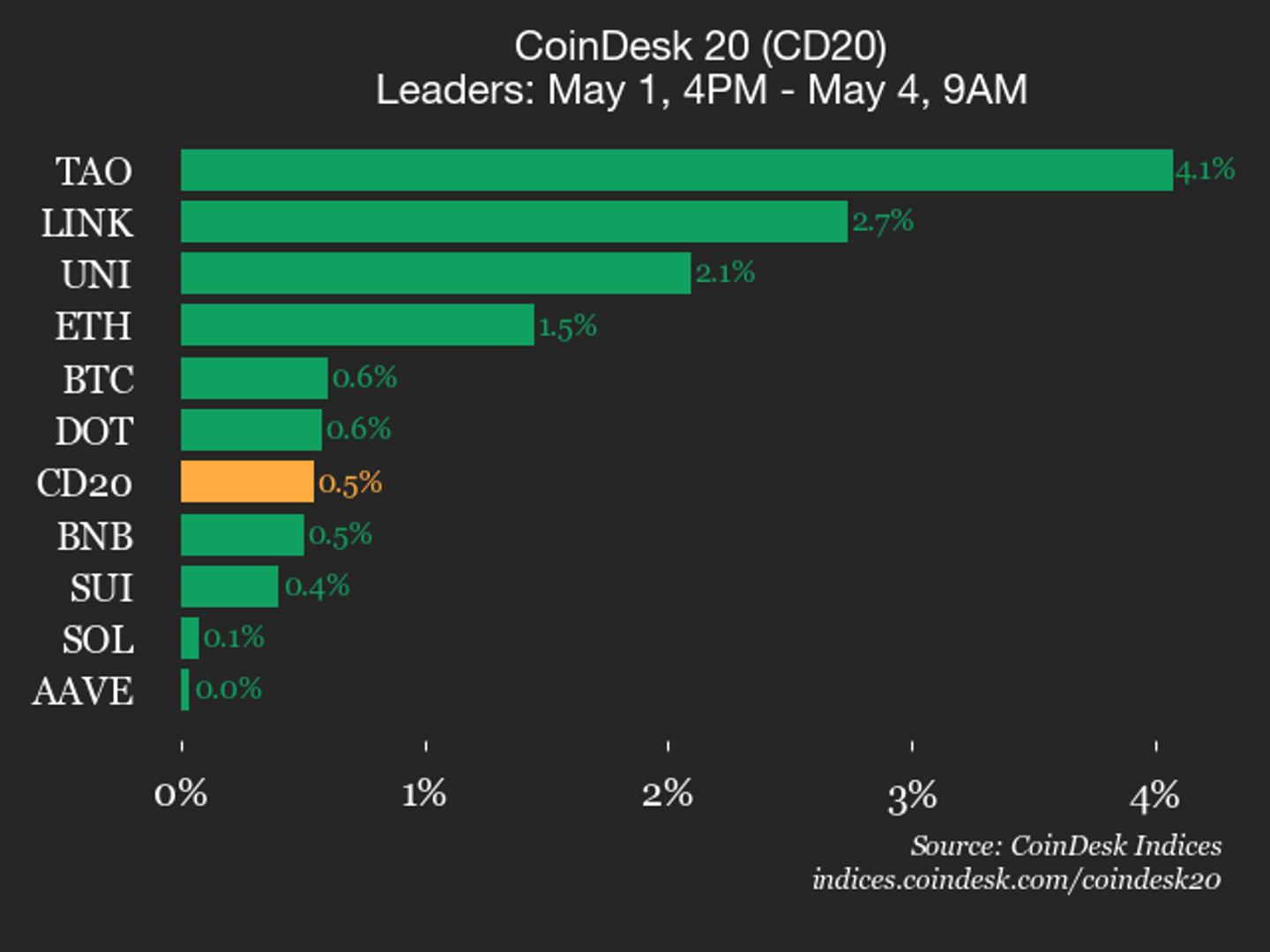
Chainlink (LINK), up 2.7% since Friday, was also a top performer.
Key Points
- The Trump family’s crypto platform, World Liberty Financial, filed a defamation lawsuit against Justin Sun this week
- The company alleges Sun engaged in short selling of WLFI tokens and made unauthorized purchases through proxy entities
- Sun previously filed his own lawsuit in April against World Liberty, alleging improper freezing of his token holdings
- According to World Liberty, Sun initiated a “public smear campaign” on social media after the company declined to restore access to his frozen assets
- Sun’s total investment in World Liberty reached approximately $75 million in 2024, which included purchases of the TRUMP meme coin
The cryptocurrency platform World Liberty Financial, co-established by President Donald Trump alongside his family members, has initiated federal legal proceedings against crypto billionaire Justin Sun, alleging defamation and improper token activity.
The complaint was submitted to federal court on Monday. This legal move comes after Sun filed his own lawsuit against World Liberty this past April, claiming the platform illegally restricted access to his tokens and stripped him of governance voting privileges.
Sun made his initial $30 million commitment to World Liberty Financial in November 2024. This capital injection provided crucial support to the platform’s operations and helped fund day-to-day expenses. Subsequently, he contributed an additional $45 million or more, pushing his aggregate investment to roughly $75 million.
World Liberty Financial now contends that Sun, despite being a major stakeholder, participated in short selling activities targeting its WLFI tokens with the intention of depressing market prices. The platform further accuses him of conducting straw purchases—essentially buying WLFI tokens through his controlled entities on behalf of undisclosed third-party investors.
Following World Liberty‘s decision to lock Sun’s token holdings due to these purported infractions, Sun allegedly requested immediate restoration of access. When the platform rejected his demands, World Liberty claims Sun escalated the matter through public channels.
Social Media Backlash
Sun posted on X in April, sarcastically renaming World Liberty as “World Tyranny.” He labeled company leadership as “bad actors” and characterized the token freeze as “illegitimate and were never authorized by any fair, transparent, or good-faith community governance process.”
World Liberty Financial maintains these public statements were both inaccurate and harmful. The lawsuit asserts that Sun’s comments damaged the platform’s standing in the industry and resulted in lost business partnerships and investment opportunities.
World Liberty contends its authority to freeze tokens was clearly disclosed in public documentation and formed part of its original contractual arrangements with Sun.
Ongoing Litigation
Sun’s April legal filing remains active in the courts. His lawsuit seeks a jury trial, financial compensation, and the immediate unlocking of his WLFI token holdings.
World Liberty Financial’s newly filed defamation case similarly requests a jury trial along with damages in an amount yet to be specified. Legal experts anticipate both proceedings could extend for months or potentially years before reaching final resolution.
As of Monday, Sun’s legal representation had not issued a statement or response to media inquiries regarding the defamation allegations.
Sun established the Tron blockchain network in 2017 and remains its primary architect. According to Forbes’ latest wealth calculations, his personal fortune stands at $8.5 billion, placing him at position 412 on the publication’s worldwide billionaires ranking.
World Liberty Financial commenced operations in 2024. The platform markets itself as a decentralized finance ecosystem championed by Donald Trump. The venture counts Eric Trump, Donald Trump Jr., and Barron Trump among its founding team members.
The Securities and Exchange Commission had previously conducted an investigation into Sun regarding potential securities fraud violations. That matter was ultimately resolved through settlement, and additional regulatory probes into cryptocurrency platforms associated with Sun have since been discontinued.
Cummins earnings on deck as investors eye power systems growth
Bitmine (BMNR) Stock Surges 4.16% on Record 5.18M ETH Treasury Holdings

Buffy’s Meanest Character Secretly Called Out Show’s Laziest Trope In First Episode

Manchester United reach agreement with Casemiro over contract clause amid transfer speculation

US brings back mandatory military draft registration

Steven Gerrard disagrees with Gary Neville over ‘shock’ Chelsea and Arsenal claim | Football

The Worst Financial Mistake You Can Make

Mexico Graduado #mexico #silver #grading #investment #investing #inversiones #coin #money #libertad

Dividend Models, Dividend Theories, Walter Model, Gordon Model, MM Approach, Financial Management
-

 Tech7 days ago
Register Renaming | Hackaday
-

 Politics7 days ago
Drax board avoid their own AGM, accused of greenwashing & environmental racism
-

 Fashion6 days ago
Kylie Jenner’s KHY Enters a New Era with ‘Born in LA’
-

 NewsBeat22 hours ago
Channel 5 – All Creatures Great and Small series 7 new post
-

 Tech7 days ago
Images of Samsung’s rumored smart glasses have leaked
-
 Tech3 days ago
Trump’s 25% EU auto tariff breaches Turnberry Agreement that also covers semiconductors and digital trade
-

 Business6 days ago
Most Commercial Energy Audits Miss the Real Losses
-

 Crypto World6 days ago
CFTC’s AI will review U.S. crypto registration applications, chairman tells CoinDesk
-
 Sports3 days ago
Paul Scholes issues Marcus Rashford reality check as agreement emerges over Man United star
-

 Business5 days ago
Barclay Brothers Avoid Bankruptcy: HSBC Drops High Court Petitions After IVA Deal
-
 Business5 days ago
Tesla Officially Registers Elon Musk’s Stock: What Investors Need to Know
-

 Tech6 days ago
Get Ready for More Brain-Scanning Consumer Gadgets
-
Crypto World6 days ago
Robinhood Phishing Scam Exploits Gmail Dot Feature to Bypass Security
-

 Crypto World6 days ago
Gmail Dot Trick Underpins Robinhood Phishing, Sending Real-Looking Emails
-

 Entertainment7 days ago
Sister Wives: Janelle Posts New Scary Warning
-

 Entertainment7 days ago
Michael Jackson’s Biopic Excluded Abuse Allegations For $25M
-

 Business4 days ago
Two Powerball Tickets Split $143 Million Jackpot in Indiana and Kansas
-

 Business7 days ago
Superdry co-founder accused of raping woman
-
 Crypto World7 days ago
Meme Coin Based on White House Shooter Conspiracy Rallies 320%
-

 Tech7 days ago
YouTube TV’s Multiview Feature Just Got A Game-Changing Upgrade
You must be logged in to post a comment Login