

Crypto World
Bitmine (BMNR) Stock Surges 4.16% on Record 5.18M ETH Treasury Holdings


Key Highlights
-
BMNR shares surge 4.16% following disclosure of 5.18M ETH treasury position
-
Company’s total assets reach $13.1B including cryptocurrency and cash reserves
-
Staking operations now generate $297M in annualized revenue from 4.36M ETH
-
Weekly acquisition of 101,745 ETH marks fourth consecutive week of accelerated buying
-
Bitmine now controls approximately 4.29% of Ethereum’s circulating supply
Shares of Bitmine Immersion Technologies advanced during Monday’s trading session following the company’s announcement of expanded Ethereum treasury holdings and substantial staking revenue. BMNR stock closed at $22.79, reflecting a gain of $0.91, or 4.16%, after bouncing back from an early session low around $21.88. The equity climbed above the $23.00 threshold later in the day as investors responded positively to the strategic ETH accumulation.
Bitmine Immersion Technologies, Inc., BMNR
Company Accelerates Ethereum Accumulation Strategy
Bitmine disclosed that its Ethereum treasury position stood at 5,180,131 ETH as of May 3. Management calculated the position’s value using $2,336 per ETH. The firm confirmed this holding now accounts for roughly 4.29% of Ethereum’s entire circulating supply.
This disclosure brings the company significantly closer to its publicly announced goal of controlling 5% of all ETH in circulation. During the previous seven-day period, Bitmine added 101,745 ETH to its reserves. Leadership noted this purchase continued an accelerated acquisition pattern that has persisted for four consecutive weeks.
Management positioned this accumulation strategy within the context of Ethereum’s expanding role in asset tokenization and public blockchain infrastructure. The firm also highlighted ETH’s growing importance in AI-integrated commerce platforms. These strategic justifications provided additional support for BMNR stock’s positive price movement during the session.
Staking Operations Generate Substantial Revenue Stream
Bitmine reported that 4,362,757 ETH had been deployed in staking activities as of May 3. The company assessed this staked allocation at approximately $10.2 billion. This represents over 84% of the firm’s complete Ethereum holdings.
According to the announcement, current staking activities generate $297 million in annualized revenue. Furthermore, management indicated that full deployment through MAVAN and associated partner networks could increase annual rewards to $352 million. MAVAN refers to the Made in America Validator Network.
The company developed MAVAN primarily to facilitate its internal Ethereum treasury staking requirements. However, management revealed plans to extend MAVAN services to institutional investors, digital asset custodians, and blockchain ecosystem collaborators. This expansion positions the staking infrastructure as a revenue-generating service beyond internal operations.
Diversified Asset Base and Recent Transaction Activity
Bitmine disclosed combined holdings of approximately $13.1 billion across cryptocurrency, cash equivalents, and other publicly traded securities. This portfolio encompasses 5.18 million ETH, 200 BTC, and $700 million in cash reserves. Additionally, the company maintains a $200 million equity position in Beast Industries.
The firm also disclosed an $83 million investment in Eightco Holdings, which operates under the ticker symbol ORBS on the Nasdaq exchange. These diversified holdings demonstrate that Bitmine’s treasury management extends beyond exclusive Ethereum concentration. Nevertheless, ETH accumulation remains the central pillar of the company’s financial strategy.
The treasury update arrived shortly after another over-the-counter transaction between the Ethereum Foundation and Bitmine. The foundation transferred 10,000 ETH to the company at an average execution price of $2,292 per token. This represented the third documented OTC Ethereum sale from the foundation to Bitmine within the past two months.




It has been more than a year since President Trump signed the executive order establishing a Strategic Bitcoin Reserve on March 6, 2025, and the project is finally moving from rhetoric toward machinery.
Summary
- The U.S. already has a Strategic Bitcoin Reserve, but it mostly holds seized Bitcoin rather than newly purchased BTC.
- July matters because the White House blueprint and Congress could clarify whether the reserve can become an actual buying program.
- The BITCOIN Act pushes for aggressive accumulation, while ARMA favors a 20-year lockup and a more moderate path.
- The budget-neutral rule is the hidden constraint that could limit how much Bitcoin the U.S. can realistically buy.
A White House report in July 2025 laid out the policy blueprint. In May 2026, Patrick Witt of the President’s Council of Advisors for Digital Assets called the latest progress a “breakthrough” and signaled concrete announcements were close. Two competing bills now sit in Congress: Senator Cynthia Lummis’s BITCOIN Act, which would have the Treasury begin actual purchases as soon as Q4 2026, and Representative Nick Begich’s rebranded American Reserve Modernization Act, which quietly dropped the headline one-million-Bitcoin purchase target and added a 20-year lockup instead.
As the one-year mark of the blueprint approaches this July, the question is no longer whether the U.S. has a Bitcoin reserve. It already does, on paper. The question is whether July brings the thing that would make it real: a legal path to actually buy Bitcoin. This piece lays out what exists now, what is expected, and why the gap between the two is the whole story.
What already exists
The first thing to get straight is that the United States already has a Strategic Bitcoin Reserve. It has had one since March 2025. What it does not have is a reserve that does what the headlines implied.
The March 6, 2025 executive order created two things: a Strategic Bitcoin Reserve, capitalized with Bitcoin the government already owned through criminal and civil asset forfeiture, and a separate U.S. Digital Asset Stockpile for the non-Bitcoin crypto the Treasury had seized. The order made one commitment crystal clear. The Bitcoin in the reserve “shall not be sold and shall be maintained as reserve assets.” That is a directive to hold, full stop.
What the order did not do was authorize the government to buy any Bitcoin with public money. It instructed the Treasury and Commerce Secretaries to develop “budget-neutral” strategies for acquiring more, meaning any purchases would have to be funded without costing taxpayers a cent, through forfeiture proceeds or penalties rather than appropriated dollars. And Treasury Secretary Scott Bessent confirmed in August 2025 that the U.S. “won’t be buying” additional Bitcoin in the near term. So the reserve, as it actually exists, is a rebranding of coins the government already held, with a promise not to sell them.
That is why critics were unimpressed at the launch. Charles Edwards of Capriole Investments called the reserve “a pig in lipstick,” arguing it just renamed existing holdings without any plan for fresh purchases. The “digital Fort Knox” rhetoric from White House crypto figures collided with the operational reality: Fort Knox holds gold the government actively acquired, while the SBR holds Bitcoin the government happened to seize from criminals. The gap between those two things is exactly what the upcoming work is supposed to close.
What the July 2025 blueprint actually said
The blueprint people are now waiting to see built on came out on July 30, 2025, when the President’s Working Group on Digital Asset Markets released its report after a 180-day review.
The working group, with Treasury Secretary Bessent, Commerce Secretary Howard Lutnick, and SEC Chair Paul Atkins as key members, produced what Atkins described as a blueprint to make America “the crypto capital of the world.” On the reserve specifically, the report confirmed the hold-don’t-sell policy and the budget-neutral acquisition framework. It also went broader, recommending that the SEC and CFTC use their existing authorities to enable crypto trading at the federal level and that agencies relaunch efforts on bank crypto custody, stablecoin reserves, and tokenization.
The report also surfaced an uncomfortable detail that complicates the entire reserve concept. While the government officially owns forfeited assets, seized assets are often earmarked to compensate victims of the hacks and scams they came from, or to flow into the general Treasury, rather than being available to lock away in a permanent reserve. In other words, a chunk of the Bitcoin people assume sits in the reserve may be legally spoken for. That accounting problem is part of why Witt said the priority was to “get our own house in order” before disclosing the size of the government’s holdings.
So the July 2025 blueprint set the policy direction clearly. What it could not do, because an executive order and a working-group report cannot do it, is create the legal authority to hold Bitcoin permanently and buy more. That requires Congress.
The two bills that would make it real
This is where the live action is, and where July matters. Two pieces of legislation would convert the reserve from a holding directive into a genuine accumulation program, and they take very different approaches.
The BITCOIN Act, championed in the Senate by Cynthia Lummis, is the maximalist version. It is the bill that originally carried the headline target of the U.S. acquiring one million Bitcoin over time. If it passes, analysts estimate the Treasury could begin its first official Bitcoin purchase as soon as Q4 2026, which would make the United States the first sovereign nation to actively accumulate Bitcoin as a strategic reserve asset rather than simply holding what it seized. Lummis has been the most aggressive congressional voice for treating Bitcoin like a true strategic reserve on par with gold.
The American Reserve Modernization Act, or ARMA, is the House version, introduced by Nick Begich of Alaska with Democrat Jared Golden of Maine as co-lead. The rename from Begich’s earlier version was a deliberate move to broaden bipartisan appeal, and the substance shifted too. ARMA quietly dropped the one-million-Bitcoin purchase target that anchored the BITCOIN Act. In its place it added a hard 20-year lockup, requiring all Bitcoin deposited into the reserve to sit untouched for at least two decades, barring the government from “selling, swapping, auctioning, encumbering, or otherwise disposing of” it for any reason.
That difference is the whole debate in miniature. The BITCOIN Act says the point of a reserve is to aggressively accumulate a scarce asset before other nations do. ARMA says the point is to credibly commit to holding what we have for the long term, while staying quiet on aggressive buying to keep moderate lawmakers on board. Begich has said he is coordinating with Lummis to align the two chambers, which means the final shape of any law will likely be a negotiation between “buy a million” and “lock up what we have for 20 years.”
Why the budget-neutral rule is the hidden constraint
The single most important phrase in this entire effort is “budget-neutral,” and it is the reason the reserve has not done more.
Both the executive order and the serious legislative proposals insist that buying Bitcoin cannot cost taxpayers anything. The acquisition has to be funded through means that do not draw on appropriated federal dollars: forfeiture proceeds, penalties, revaluing the Treasury’s gold certificates to market price and using the paper gain, or similar accounting maneuvers. The political logic is obvious. Using public money to buy a volatile asset like Bitcoin would be a lightning rod, and the budget-neutral framing is what lets the administration pursue the reserve without owning the downside if Bitcoin falls.
But budget-neutral is also a serious constraint on scale. Forfeiture proceeds are lumpy and unpredictable. The gold-revaluation idea is clever but politically and operationally complicated. None of these sources can reliably fund the kind of sustained, large-scale buying that a one-million-Bitcoin target would require. So even if a bill passes authorizing purchases, the budget-neutral rule means the actual pace of accumulation could be slow and irregular rather than the steady sovereign bid that Bitcoin bulls imagine. The constraint that makes the reserve politically possible is the same one that limits how much it can actually buy.
This is the tension to watch in whatever emerges this July. A blueprint or bill that authorizes purchases sounds transformative. A blueprint that authorizes purchases only through narrow budget-neutral channels is a much smaller thing in practice, even if the headline reads the same.
How the U.S. compares to other governments
One reason this matters beyond U.S. borders is that several governments already hold significant Bitcoin, mostly through seizure, and the question of who moves first to formalize it is a genuine geopolitical race.
China is estimated to hold roughly 190,000 Bitcoin from various seizures, the largest sovereign stash, though its intentions are opaque and it has no stated reserve policy. The United Kingdom holds approximately 61,000 Bitcoin, also largely from seizures, and has periodically signaled it may sell rather than hold. El Salvador, the outlier, holds around 6,174 Bitcoin acquired deliberately as policy after adopting Bitcoin as legal tender in 2021, making it the clearest example of a government actively accumulating rather than passively holding seized coins.
The U.S. position is distinctive because it is the only major power that has formally committed, by executive order, not to sell its seized Bitcoin and has a serious legislative effort to start buying. If the BITCOIN Act or a version of it passes, the U.S. would leapfrog from “holds seized coins like everyone else” to “first major sovereign to actively accumulate as policy.” That first-mover status is the strategic argument Lummis and the bulls make: in a world where Bitcoin’s supply is fixed at 21 million, the nation that builds a real reserve first locks in an advantage that latecomers cannot easily replicate. Whether that argument moves enough moderate lawmakers to authorize actual purchases is the open question July may begin to answer.
What to realistically expect
Setting the hype aside, here is the honest range of what July and the months around it are likely to deliver.
The most probable near-term outcome is incremental, not transformative. Expect further clarity on the size and custody of existing holdings as the government “gets its house in order,” and continued legislative movement on the BITCOIN Act and ARMA without immediate passage. A formal blueprint refining how the reserve is administered, audited, and reported is plausible. Actual large-scale buying is the least likely near-term outcome, both because the legislation has not passed and because the budget-neutral constraint limits the pace even if it does.
The realistic bull scenario is that one of the bills, probably a negotiated blend of the BITCOIN Act’s accumulation ambition and ARMA’s bipartisan lockup framing, advances far enough that a first official purchase in Q4 2026 becomes credible. That would be genuinely historic, the first major sovereign actively buying Bitcoin as a reserve asset, even if the initial amounts are modest.
The realistic bear scenario is that the reserve stays what it is today: a rebranding of seized coins with a promise not to sell, dressed in “digital Fort Knox” language but never authorized to actually accumulate. In that case July’s blueprint is another policy document that sets direction without creating the legal machinery, and the “pig in lipstick” critique holds.
For Bitcoin holders watching this, the thing to track is narrow and specific: not the rhetoric, but whether Congress actually grants purchase authority and through what funding mechanism. A reserve that can buy is a structural new source of demand for a fixed-supply asset. A reserve that can only hold is a symbolic gesture with no market impact beyond the signaling. July will move the story forward. Whether it moves it to the point that matters, real purchase authority through a workable funding channel, is the only milestone worth watching for.
This article is for informational purposes and does not constitute financial or investment advice. Cryptocurrency markets are highly volatile. The figures and analysis described reflect data available as of June 2, 2026. Always do your own research and consult with qualified financial professionals before making investment decisions.


The UK’s financial watchdog has warned Premier League Football clubs that they could be exposed to potential money laundering violations if they continue to partner with unauthorised crypto firms.
The Financial Conduct Authority (FCA) today warned all UK football clubs, while noting that it was mainly writing to clubs in the country’s top division signing sponsorship deals with unregistered financial firms.
It claimed, “These unauthorised firms may be breaching UK financial services laws by providing financial services in the UK without authorisation. Fans using these firms risk losing all their money.”
Among the clubs engaged in sponsorships with unauthorised crypto firms are Manchester City, which is partnered with Socios, OKX, and Axi.
Chelsea, meanwhile, is partnered with crypto exchange BingX while Newcastle United is partnered with VT Markets, a crypto firm currently on the FCA’s warning list.
Read more: CHART: Every crypto sponsor for the 2025/26 Champions League
One firm that is registered with the FCA is Arsenal sponsor Bitpanda.
The FCA didn’t reveal which clubs it wrote to. Regardless, clubs received a letter asking them to carry out five due diligence checks:
- Confirm whether or not the firm is FCA authorised or relies on an exemption.
- Check whether the firm’s services are regulated under UK law.
- Assess the restrictions a firm may have to prevent UK customers from accessing its services.
- Check the FCA’s warning lists and firm checker to see if the firm is authorised or not.
- If necessary, use specialist legal advice to confirm a firm’s regulatory position.
Beyond its criticisms of football clubs, the watchdog warned football fans, “It doesn’t matter how prominent the branding is, which club it sponsors, or how professional the app looks. If the sponsoring firm provides financial services and is not on the FCA Firm Checker, it is not regulated, and you will likely have no protection if things go wrong.”
Read more: Football legends Ronaldinho, Luis Figo sued for Omegapro crypto scam promo
During the 2025/2026 Premier League season, 13 teams repped sponsors from 13 different crypto firms. In the prior season, 14 teams entered into partnerships with 15 different firms.
Protos has reached out to Manchester City and Chelsea for comment and will update this piece should we hear anything back.
Got a tip? Send us an email securely via Protos Leaks. For more informed news and investigations, follow us on X, Bluesky, and Google News, or subscribe to our YouTube channel.
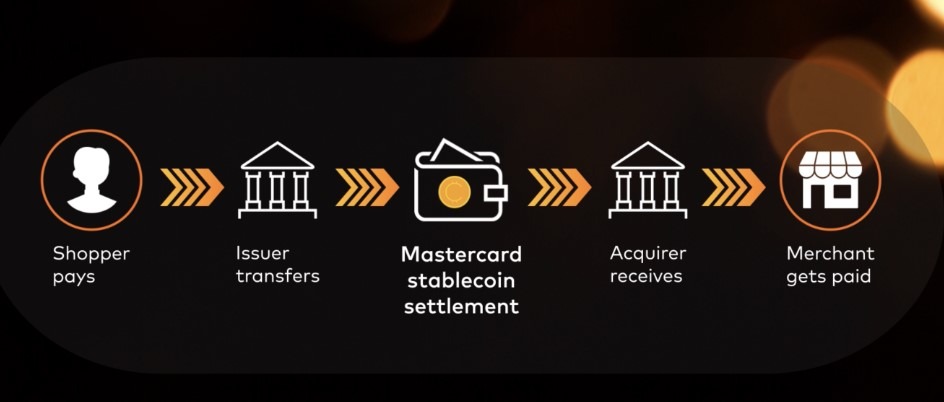
Mastercard announced its plans to expand its settlement capabilities to let issuers and acquirers settle some card transactions using regulated stablecoins.
On Wednesday, Mastercard said the new capabilities will include intraday, weekend and holiday card settlement, supporting both fiat currencies and onchain settlement through regulated stablecoins. The company said the new options are designed to give its partners more flexibility in managing settlement liquidity and timing.
The expansion shows stablecoins moving deeper into mainstream financial infrastructure as major payments networks test tokenized dollars for settlement. It follows Mastercard securing a New York BitLicense in May, allowing its US transaction services unit to conduct regulated digital asset business activity in the state.
The stablecoin settlement option will support Circle’s USDC, Paxos-issued PYUSD, USDG and USDP, Ripple’s RLUSD and SoFi’s SoFiUSD. Mastercard said the stablecoins will be enabled across supported blockchain networks, including Arbitrum, Base, Canton, Ethereum, Polygon, Solana, Tempo and XRPL.
ARQ, formerly known as DolarApp, CBW Bank, Cross River, Lead Bank and Nuvei are expected to be among the first to support stablecoin settlement optionality in the United States and Latin America, Mastercard said.
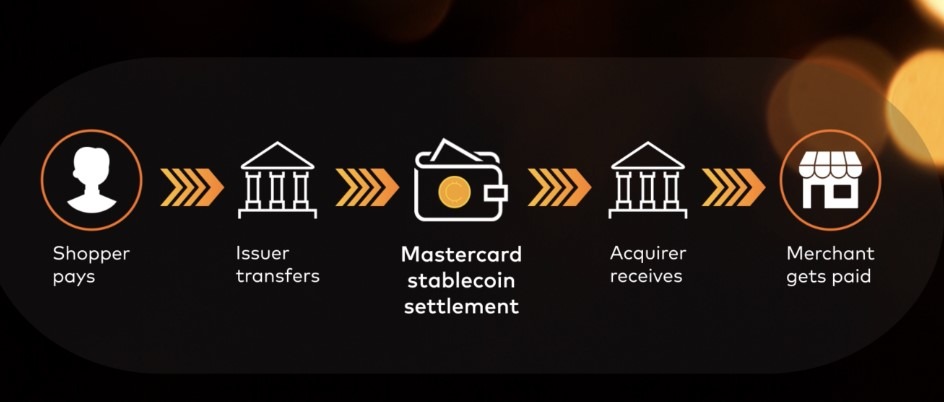
The role stablecoins would play within Mastercard’s ecosystem. Source: Mastercard
Payment firms deepen stablecoin integrations
Mastercard’s settlement expansion with stablecoins follows a series of stablecoin-related moves from major payments and remittance companies.
Visa said in April that its stablecoin settlement pilot reached a $7 billion annualized run rate, up 50% from the previous quarter, after adding five blockchains to bring its supported settlement networks to nine. The company said the expansion was aimed at giving issuers and acquirers more ways to settle with the network as stablecoins move into mainstream payment flows.
The stablecoin market is currently valued at about $320 billion.
Related: Solana lands Mastercard, Western Union on new dev platform
The remittance sector has also dived deeper into stablecoins. On Tuesday, MoneyGram launched MGUSD, a USD stablecoin on Stellar, saying that the token would support treasury management settlement and currency trading in the United States, before a broader rollout worldwide.
In early May, Western Union has also launched its US dollar-denominated USDPT stablecoin on Solana, rolling out in the Philippines and Bolivia at launch, with plans to expand in 2026.
Magazine: Korea’s first memecoin rug-pull case, China’s crypto rules review: Asia Express
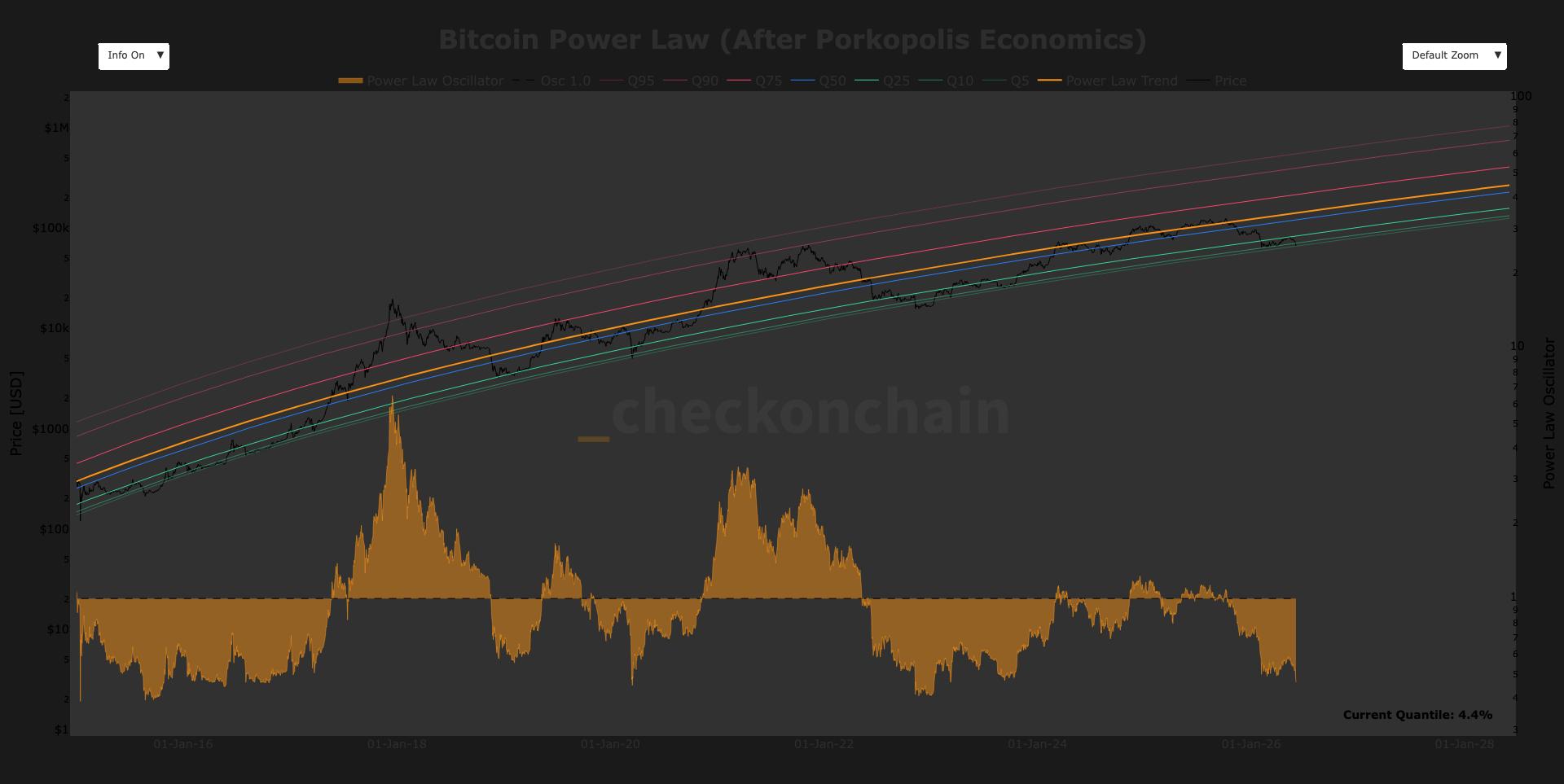
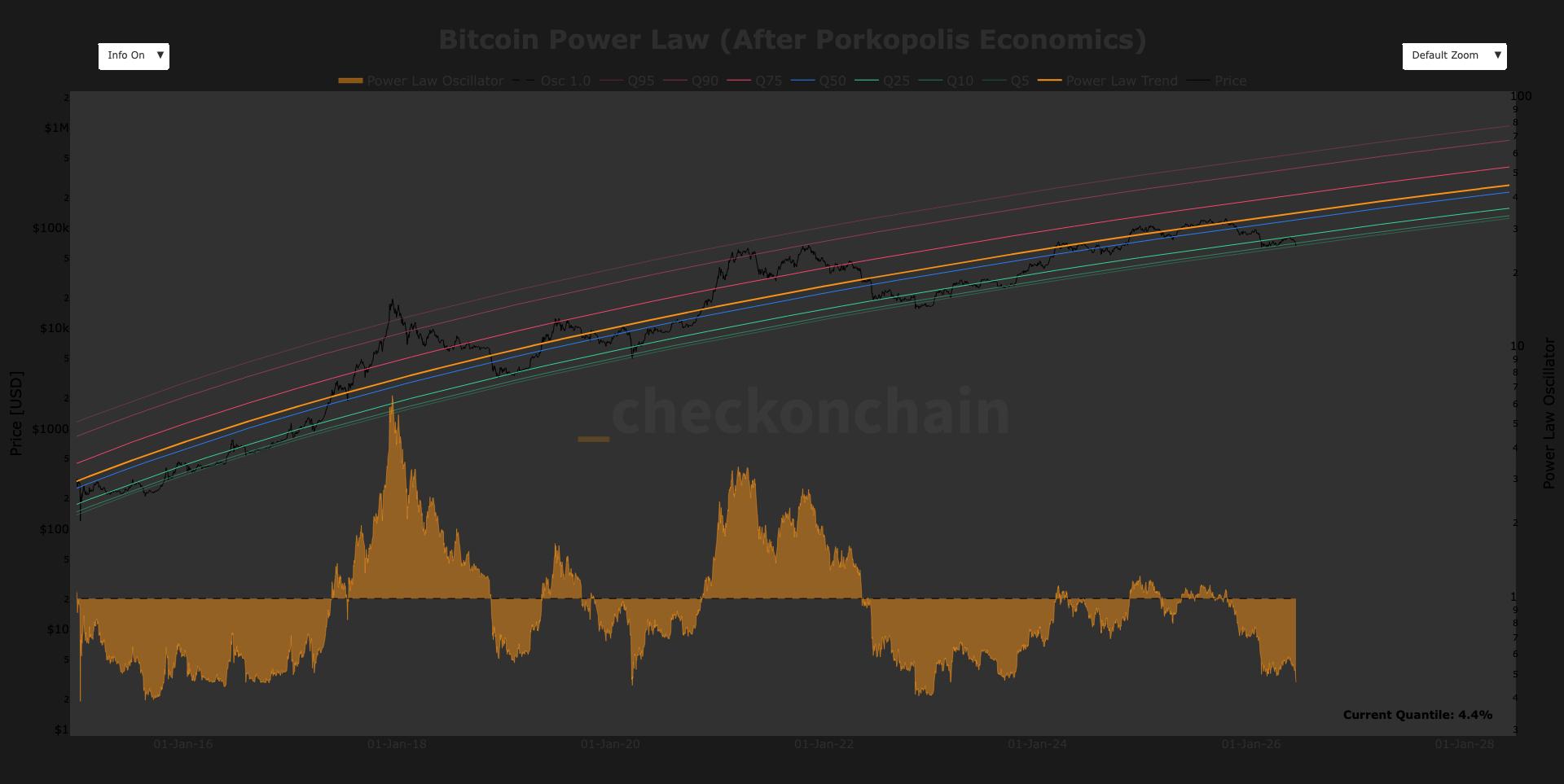
After briefly falling below $66,000 on Wednesday, bitcoin is trading near the bottom of the Power Law corridor, a level that has historically come shortly before rebounds in the price of the largest cryptocurrency.
The model, popularized by physicist Giovanni Santostasi and refined by Porkopolis Economics, plots bitcoin’s price against time on a logarithmic scale and suggests that growth slows naturally as the network matures. It has tracked bitcoin’s price trajectory for more than a decade.
Unlike traditional cycle-based models that focus on the rate at which new bitcoin is created — it’s cut by 50% roughly every four years — the Power Law argues that bitcoin follows a long-term mathematical trend similar to patterns observed in nature, where growth decelerates over time.
According to checkonchain data, the Power Law Oscillator shows that when measured against the model, bitcoin has been more expensive than it is today for roughly 95.6% of its trading history.
Previous visits to these levels have coincided with periods of extreme market stress, including the March 2020 pandemic-driven selloff and the collapse of crypto exchange FTX in November 2022. Both events pushed bitcoin toward the lower edge of the model before significant recoveries followed.
While the Power Law offers no guarantee the floor will hold again, long-term investors view the current reading as a sign that bitcoin is trading near one of its deepest historical discounts relative to trend.
The Cardano Foundation partnered with the Brazilian Olympic Committee to boost innovation in local sport with emerging technologies.
Despite the news, Cardano’s native token, ADA, remains deep in the red, mirroring the recent collapse of the broader cryptocurrency market.
The Collaboration’s Goal
The Brazilian Olympic Committee (COB) announced on its official website that the partnership will leverage Artificial Intelligence (AI), blockchain, and the Internet of Things (IoT) to modernize sports management, increase institutional transparency, and create more opportunities to interact with athletes, coaches, and fans. The entity’s Director General, Emanuel Rego, said the initiative marks a step towards the future of sports in the country.
“Our goal with this partnership goes beyond technical modernization: we want to present, guide, and educate our community about the potential of blockchain technology, adopting the best global market practices. One of the COB’s commitments is to lead by example, using innovation to safeguard institutional integrity and build an even stronger relationship of trust with our athletes, federations, and society as a whole,” he added.
The collaboration includes a three-year roadmap focused on four main action areas: identity and certification, fan engagement, equipment tracking, and governance and transparency. The first pilot projects are set to roll out in the coming months. Rafael Fraga (manager of the Cardano Foundation in Latin America) also touched upon the matter:
“We couldn’t be more pleased to build this journey alongside the COB, Brazilian sport, and Brazil, and we are eager to share the next steps in this transformation.”
Cardano’s deal with the COB seems like a major milestone, given that Brazil is the most successful South American country at the Olympic Games. The nation is also among the global leaders in terms of crypto adoption.
ADA Price Outlook
The news has failed to trigger a price rebound for Cardano’s native cryptocurrency, which recently fell to roughly $0.20, or its lowest point since the beginning of 2021. It later slightly rebounded to the current $0.21, representing a 9% weekly decline.
Not long ago, the popular analyst Ali Martinez identified $0.247 as “major historical support,” arguing that a drop below that level (as it happened) could trigger a major crash to $0.113 and even $0.051.
Despite the concerning state of the crypto market and warnings from certain industry participants, ADA’s exchange netflow should be considered a bullish factor. Over the past weeks, investors have been consistently transferring holdings from centralized platforms toward self-custody methods, thus reducing immediate selling pressure.

The post Cardano Inks a Major Deal in Brazil: But ADA Still Faces Breakdown Fears appeared first on CryptoPotato.

Key Takeaways
- Shares of XOS skyrocketed more than 200% during after-hours trading on Tuesday, jumping from $2.23 to $7.16.
- The company unveiled its “Power Hub” product line — a containerized, megawatt-class energy storage solution that operates independently from traditional power grids.
- Delivered in standard shipping containers, the system can activate a location within days, eliminating the typical 3–7 year grid connection process.
- Power Hub configurations range from 1.2 MWh to 4 MWh capacity, leveraging a proven platform with 250+ MWh already operational across 1,400+ installations throughout North America.
- In the PJM market alone, grid connection bottlenecks drove capacity auction costs to $14.7 billion in 2025, a dramatic increase from $2.2 billion just two years earlier.
Xos Inc. (XOS) experienced a spectacular after-hours rally on Tuesday, with shares soaring over 200% from their $2.23 closing price to reach $7.16, following the company’s introduction of an innovative energy storage solution aimed at data centers and industrial facilities operating without grid connectivity.
This dramatic movement positioned XOS to begin trading at levels not seen in nearly two years, claiming the top spot among percentage gainers on Stocktwits heading into Wednesday’s early trading hours.
The driving force behind this surge was the after-market unveiling of the “Power Hub” product family — a factory-assembled, on-site energy storage platform engineered to supply megawatt-level electricity without depending on traditional grid infrastructure.
The offering includes three distinct capacity options, spanning 1.2 MWh through 4 MWh, and utilizes the same proven technology foundation that powers Xos’s current mobile electric vehicle charging solutions.
CEO Dakota Semler minced no words in describing the innovation: “This is not a battery. It is a deployable power plant.”
Semler emphasized that the system was developed to arrive via conventional trucking, operate without requiring microgrid control systems, and enhance both the cleanliness and efficiency of fuel-based power generation.
Multi-Billion Dollar Grid Bottleneck Crisis
The product’s market entry addresses an increasingly critical infrastructure challenge. Within the PJM region — among America’s most significant power markets — grid connection delays resulted in $14.7 billion in consumer costs during a single 2025 capacity auction. This represents a staggering jump from the $2.2 billion recorded two years prior.
Conventional grid connection timelines typically extend from three to seven years. Xos’s Power Hub, packaged in standard intermodal shipping containers, aims to reduce that timeframe to mere days.
The International Energy Agency forecasted in 2025 that worldwide data center power consumption would approximately double by 2030, propelled primarily by AI infrastructure. Within the United States, data centers have already contributed to half of all new electricity demand growth.
Proven Track Record Behind the Technology
According to Xos, the company has successfully deployed more than 250 MWh of energy storage capability throughout over 1,400 installations across North America using its current platform, providing the Power Hub with an established technological foundation.
Financial Snapshot
Notwithstanding the dramatic after-hours jump, the company maintains a modest market capitalization of just $27.03 million, positioning XOS firmly in small-cap territory.
The equity’s 52-week trading band extends from $1.60 to $5.60, and throughout the preceding 12 months, XOS had declined 29.21% before Tuesday’s explosive movement.
At the moment of the surge, shares were trading at approximately 16% of the annual range — substantially nearer to the yearly floor than the ceiling.
The stock’s Relative Strength Index (RSI) registered 63.24 prior to the announcement, with Benzinga’s technical analysis suggesting short and intermediate-term bullish momentum combined with long-term consolidation patterns.
The premarket momentum extended into Wednesday’s opening session, with XOS climbing nearly 244% at the time of publication.
Ethereum (ETH) is closing in on its February low near $1,700, after a broader crypto sell-off pushed it just below $1,900.
But while some traders are focusing on the risk of another leg down, one analyst is arguing that growing institutional interest in Ethereum’s infrastructure is a bigger story than the current price weakness.
Ethereum Approaching Key Support as Market Sentiment Weakens
According to crypto trader Bren, ETH is making “an impulsive run” toward its February low at $1,700 following what he described as corrective price action throughout March and April.
In a June 3 post on X, he said the market’s bullish expectations at the time did not match Ethereum’s behavior in the chart, and therefore, he expected another drop.
He added that there are two possibilities for him: the case of a double bottom in which the second-biggest coin in the world trades at the aforementioned $1,700 and then bounces back up, or where the prices fall further below that level. However, he did not give any definite predictions, instead saying that both cases would not affect his long-term outlook on ETH.
In his opinion, the combination of institutional adoption of stablecoins and real-world asset tokenization, layered on top of what he described as a world “obsessed with speculation and collecting,” is enough to keep him bullish on ETH until the end of the year.
And Bren is not alone in his optimism, as Electric Capital’s Avichal Garg also made a similar argument. According to him, Ethereum has a “credible neutrality” that can’t be replicated, and with countries like China, India, and Brazil actively looking for financial infrastructure not controlled by any single nation, a neutral settlement layer has genuine geopolitical value.
“You talk to anybody on Wall Street,” he said, “everybody’s trying to build on ETH.”
Institutional activity is backing the two market observers in real time, with Lookonchain reporting earlier today that Bitmine, chaired by Fundstrat’s Tom Lee, had received another 25,000 ETH from BitGo, worth about $48 million, even as the asset’s price was falling.
Supply Trends and Institutional Adoption Support the Longer-Term Case
ETH’s current price reflects a drop of about 9.5% in the last week, and liquidations on June 3 were heavy, with data from CoinGlass showing more than $439 million in long positions were wiped out in 24 hours. Still, the structure of the market tells a more complicated story beyond the short-term price action.
According to CryptoQuant contributor CryptoOnchain, more than 32% of Ethereum’s total supply, approximately 39.5 million ETH, is now locked in staking. At the same time, they noted that exchange balances were reducing, which should cut the amount of ETH available for trading.
Meanwhile, Arab Chain pointed out that ETH funding rates on Binance have also jumped to their highest level since the start of 2026, reflecting a steep rise in leveraged long positions.
Per their assessment, that can be read two ways: that traders are positioning for a bounce or a crowded trade that becomes vulnerable if price keeps falling.
The post ETH Eyes $1,700 Low, But Analyst Says the Real Story Is Long-Term Bullish appeared first on CryptoPotato.
Crypto World
Coinbase said to be looking into participating new stablecoin platform backed by Stripe, Visa, Mastercard


Global payment networks Stripe, Visa and Mastercard are close to introducing a new stablecoin platform, according to three people familiar with the plans.
U.S.-listed cryptocurrency exchange Coinbase (COIN) is also looking into the possibility of participating in the stablecoin platform, one of the people said.
Coinbase, Stripe and Visa declined to comment. Mastercard had not responded to requests for comment by publication time.
Stablecoins, one of the busiest areas of crypto, have become a focal point for the large card networks and payments players. The total stablecoin market cap is about $325 billion, according to CoinGecko data. The market is dominated by Tether’s USDT, at $115 billion.
Stripe acquired stablecoin infrastructure firm Bridge in late 2024 for $1.1 billion. Mastercard, which acquired stablecoin firm BVNK earlier this year, said this week it plans to expand always-on stablecoin settlement.
In April, Visa announced it was expanding a stablecoin settlement pilot to nine blockchains, adding Base, Polygon, Canton Network, Arc and Tempo to existing support for Ethereum, Solana, Avalanche and Stellar.
Late last year, Coinbase announced a white-label stablecoin service, as well as the Coinbase Business service for stablecoin payments.
Since August 2023, Coinbase and Circle Internet (CRCL), issuer of the second largest stablecoin, have had a revenue-sharing agreement, which comes up for renewal in August this year. The token, USDC, has a market cap of $76 billion.
Under the deal Coinbase keeps 100% of the interest income generated from USDC held on the exchange, while splitting revenue 50/50 for USDC circulating across all off-platform and decentralized finance (DeFi) ecosystems.

Quick Overview
- Palo Alto Networks delivered Q3 adjusted earnings of $0.85 per share, surpassing Wall Street’s forecast of $0.80.
- Total revenue reached $3 billion, marking a 31% year-over-year increase and exceeding projections of $2.94 billion.
- Backlog expanded 36% to reach $18.4 billion, outpacing analyst predictions.
- PANW shares surged more than 10% after hours before retreating as market participants recognized acquisition contributions to growth.
- Multiple Wall Street firms increased their price targets, including Evercore ISI to $375 and Stifel to $330.
Palo Alto Networks (PANW) unveiled its fiscal 2026 third-quarter performance on Tuesday, exceeding expectations across all key financial indicators.
Adjusted profit per share registered at $0.85, outperforming analyst projections of $0.80 and improving from $0.80 during the corresponding period last year. Total sales hit $3 billion, surpassing the anticipated $2.94 billion.
Shares initially spiked over 10% during after-hours trading Tuesday evening. However, by Wednesday’s premarket session, most gains had evaporated, with the stock declining approximately 4.8%. Recent trading placed shares around $297.18, hovering just beneath the 52-week peak of $302.95.
Palo Alto Networks, Inc., PANW
Total sales advanced 31% compared to the prior year. When excluding acquisitions, organic revenue expansion came in at 14%.
The company’s order backlog climbed 36% to $18.4 billion, also exceeding analyst consensus forecasts. Next-Generation Security annual recurring revenue expanded 60% on a year-over-year basis.
Chief Executive Nikesh Arora attributed the strong performance to “an acceleration in organic bookings momentum, the sustained tailwinds from our platformization strategy, and surging cybersecurity needs as AI transitions from experimental stages to enterprise-wide production.”
M&A Activity Fuels Expansion
The difference between total and organic growth numbers highlights the impact of multiple acquisitions being integrated simultaneously. The most significant transaction involved identity security company CyberArk, which Palo Alto purchased through a combination of cash and stock that finalized in February, valuing CyberArk at approximately $25 billion.
Product sales climbed 31%, powered by firewall orders, XSIAM solutions, artificial intelligence offerings, and SASE products, alongside contributions from both CyberArk and Chronosphere acquisitions.
Executives increased fiscal 2026 fourth-quarter guidance beyond the magnitude of the quarterly beat. Management indicated that both organic and acquisition-related expectations for Q4 rose above the beat amount, although specific organic versus inorganic breakdowns were not disclosed.
Wall Street Upgrades Price Forecasts
Several brokerage firms elevated their price objectives after reviewing the quarterly results.
Evercore ISI boosted its target to $375 from $320. Cantor Fitzgerald increased its objective to $340 from $285. Wells Fargo adjusted upward to $325 from $285, while Citizens lifted its target to $320 from $250 alongside a Market Outperform rating. Stifel raised its price target to $330 from $275 while maintaining a Buy recommendation, highlighting robust execution across both organic initiatives and acquisition-driven expansion.
The CyberArk transaction incorporates identity security capabilities into Palo Alto’s comprehensive platform. AI agents — applications leveraging AI models to execute sophisticated tasks — need access to confidential information and external communications, establishing new vulnerability points. Identity management is viewed as a critical defensive mechanism.
Okta, a rival in the identity security space, witnessed its stock surge 30% following its earnings release last week as investors reacted positively to agent-identity software opportunities. CyberArk unveiled comparable software in late 2024, which is now being integrated into Palo Alto’s expanded ecosystem.
Ethereum is staging a quiet comeback, even as the price is falling. ETH is dropping under $1,900, well off its late-2024 highs, while Bitcoin continues to show cycle-wide underperformance that Standard Chartered says is now working directly in Ethereum’s favor.
Standard Chartered’s head of digital assets research, Geoffrey Kendrick, told clients this week that Strategy’s disclosure of a 32 BTC sale worth $2.5 million may mark a structural turning point for the ETH/BTC ratio.
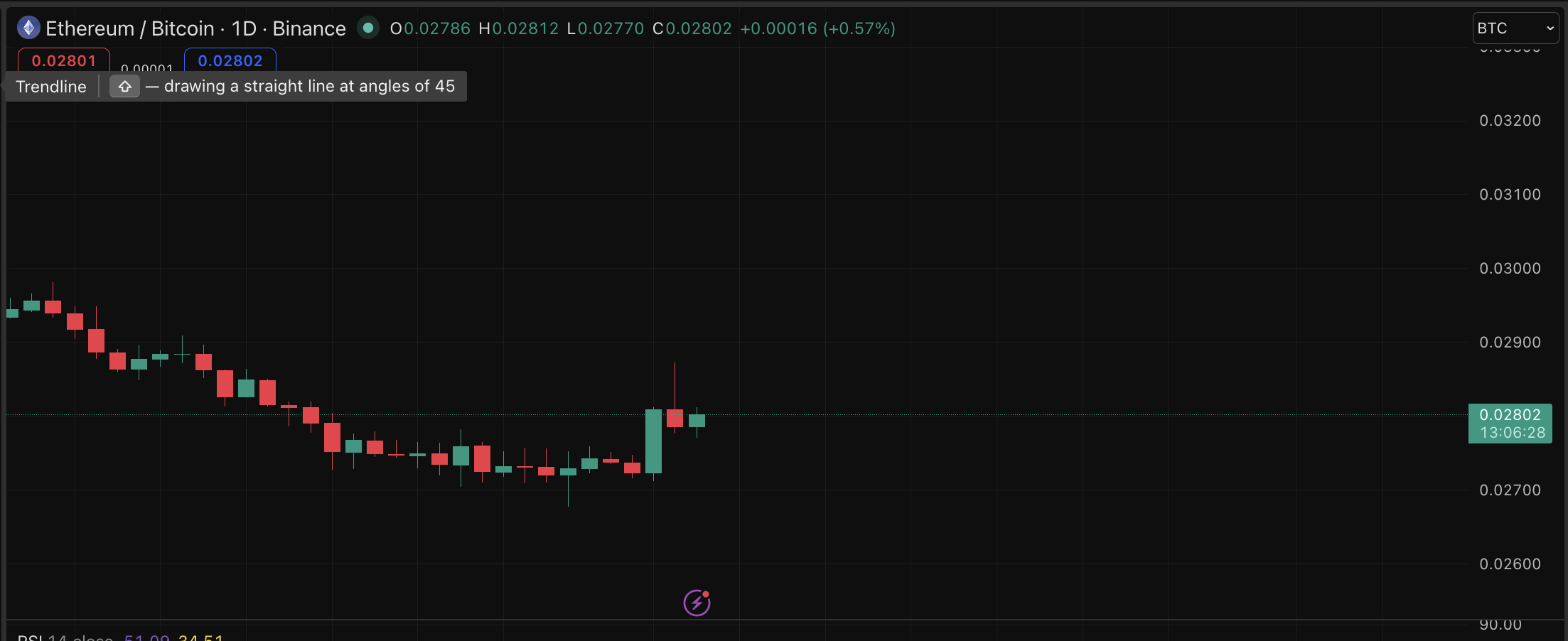
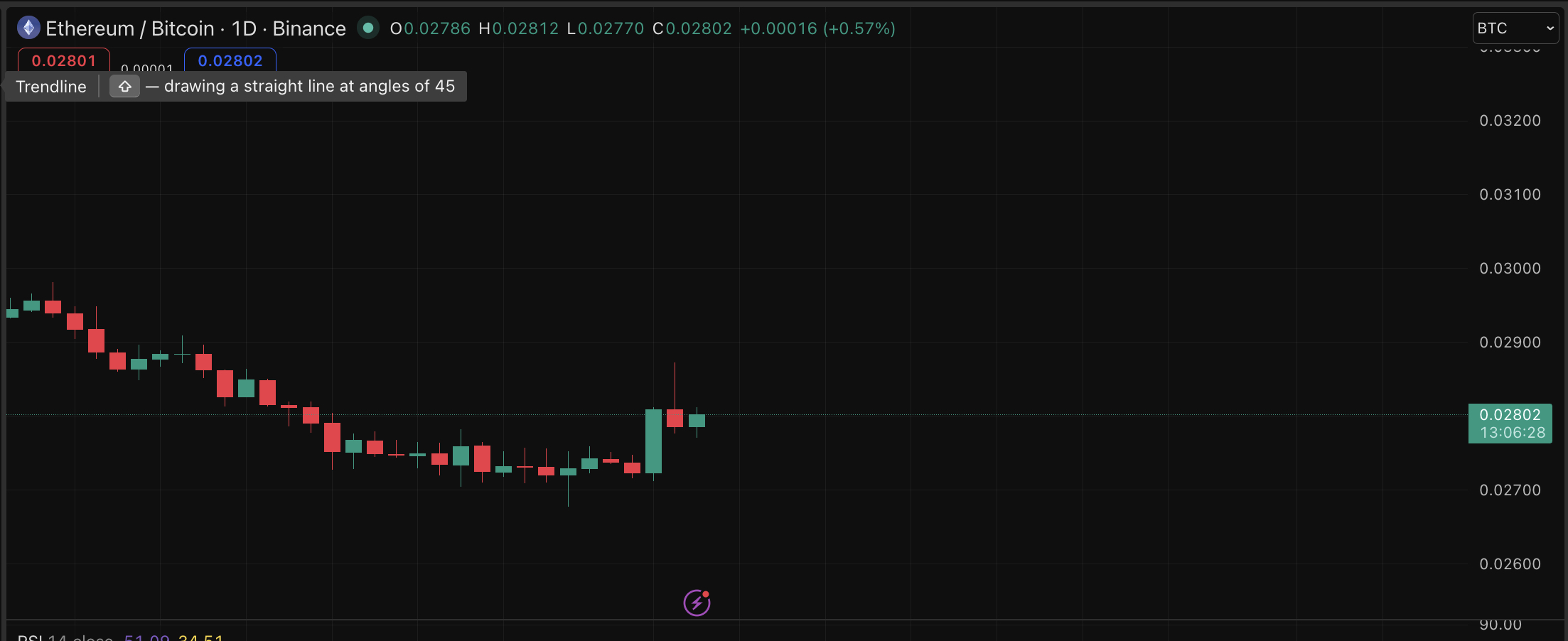
On the day of the announcement, ETH posted one of its largest single-day outperformance moves versus BTC in recent years, an event that has occurred just 23 times since the start of 2024. Kendrick projects the ETH/BTC ratio to climb from 0.028 to 0.04 by year-end, implying over 40% relative outperformance for Ethereum.
His Ethereum price target is at $2,700 near-term, assuming flat BTC at under $70,000, $4,000 by year-end, and an eyebrow-raising $40,000 by 2030.
Discover: The Best Crypto to Diversify Your Portfolio
Can Ethereum Price Hit $4,000 This Year as the ETH/BTC Ratio Turns?

Ethereum is trading under $1,900, or 62% below its August peak of nearly $5,000. The ETH/BTC ratio sits at approximately 0.028, down sharply from its high of 0.042.
Kendrick’s thesis rests on a structural argument: Ethereum-holding treasury companies can stake ETH to generate yield, funding operations without forced coin sales. Bitcoin treasury firms have no equivalent cash-flow mechanism, and Strategy’s sale illustrated this friction in real time.
This, he argues, supports a higher modified net asset value for ETH-based treasuries and reduces selling pressure on the asset itself. It’s a point the market has been slow to price in, which may be exactly why the opportunity exists.
For bull, they want ETH/BTC to reclaim 0.04 by Q4, with ETH trading toward $4,000 as RWA tokenization volume accelerates upward. However, a broad risk-off event drags both ETH and BTC lower; leveraged long flushes similar to recent Bitcoin liquidation cascades could reset ETH below $1,600 and delay the ratio recovery well into 2026.
Standard Chartered isn’t alone in flagging ETH’s structural undervaluation; multiple analysts have compared the current ETH discount to Amazon’s post-dot-com trough before its decade-defining recovery.
Discover: The Best Token Presales
Bitcoin Hyper Targets Early Mover Upside as Ethereum Staking Narrative Heats Up
The staking yield argument driving Kendrick’s ETH thesis reflects a broader market shift: infrastructure that generates native yield is being revalued faster than passive-hold assets. Bitcoin, historically locked out of that dynamic, may be changing.
Traders rotating within the Bitcoin ecosystem are eyeing a project that brings programmable yield infrastructure directly to BTC.
Bitcoin Hyper is positioning itself as the first Bitcoin Layer 2 with full Solana Virtual Machine (SVM) integration, delivering sub-second finality and smart contract execution on Bitcoin’s security layer faster than Solana itself.
The presale has raised $32.7 million at a current token price of $0.013681, with a high 36% APY staking already live for early participants. Core infrastructure features include a Decentralized Canonical Bridge for BTC transfers, extremely low-latency L2 processing, and high-speed low-cost transaction execution that targets Bitcoin’s three core limitations: slow throughput, high fees, and zero native programmability.
Research Bitcoin Hyper here before the next pricing stage closes.
The post Ethereum Could Outperform Bitcoin Despite Recent Price Weakness: Standard Chartered appeared first on Cryptonews.

The end of Trump’s ‘weaponization’ fund is another sign Republicans are fighting back

Established SMEs play a key role in Welsh private sector employment

The U.S. Bitcoin Reserve blueprint is due in July



-

 Tech5 days ago
Waymo dominates autonomous vehicle registrations as Tesla trails behind
-

 News Videos5 days ago
This is BROKEN! INSANE 5x MONEY CAR WASH WEEK! The NEW GTA Online UPDATE Today! (GTA5 New Update)
-
 Tech4 days ago
SpaceX just won a second Golden Dome contract. This one is $4.16 billion.
-

 News Videos5 days ago
SHE IS KILLING XRP!!! WATCH URGENT AND ACT FAST
-

 Business2 days ago
Jade Biosciences, Inc. (JBIO) Discusses Positive Interim Results From JADE101 Phase I Healthy Volunteer Study and Development Plans Transcript
-
 NewsBeat4 days ago
FIRST NIGHT REVIEW: Take That bring the Circus back to life in spectacular sun-soaked style
-
Crypto World5 days ago
CFTC Has Approved the First Regulated Bitcoin Perpetual Contract in the U.S.
-

 Business4 days ago
Is the Spurs Phenom Already Better Than Prime Diesel?
-
 NewsBeat5 days ago
Novak Djokovic v Joao Fonseca LIVE: French Open latest scores and results after Jannik Sinner’s shocking collapse
-
 Crypto World5 days ago
Snowflake (SNOW) Stock Rallies on Strong Q1 Results and AI Product Growth
-
 Entertainment4 days ago
Weak ‘Supergirl’ Box Office Tracking Amid Milly Alcock Backlash
-

 Business4 days ago
Demand Conditions Improve In Chemicals Sector In April 2026
-
 Crypto World5 days ago
MicroStrategy Moves $30 Million in BTC to Coinbase Prime: Is the Bitcoin Sell-Off Already Here?
-

 Politics4 days ago
The House | Inside Andy Burnham’s Makerfield Campaign: “Nobody Thinks This Is In The Bag”
-

 Tech5 days ago
This Week In Security: Ubiquiti Fixes, And FreeBSD Joins The Club You Don’t Want To Join
-
 Entertainment4 days ago
One of the Greatest Sitcoms of All Time Shoots Up Apple TV’s Charts 11 Years Later
-

 Entertainment5 days ago
Maddox Jolie-Pitt Legally Requests to Drop Brad’s Surname
-
 Entertainment4 days ago
Britney Spears Shares Troubling Update After Hard Year
-
 Crypto World22 hours ago
Seagate (STX) Stock Surges to Record High on AI Boom and Legal Settlement
-
 Entertainment5 days ago
Bruce Willis’ Generosity Resurfaces Amid His Dementia
You must be logged in to post a comment Login