

Crypto World
Iran eyes Bitcoin linked insurance model for Strait of Hormuz shipping: report



Iran has reportedly explored an insurance-based system for ships crossing the Strait of Hormuz, while unverified claims about Bitcoin-linked payments have added fresh uncertainty around how the wartime transit regime could operate.
Summary
- Iran has reportedly explored an insurance system for ships crossing the Strait of Hormuz, with speculation emerging around possible Bitcoin-based payments.
- Fars News denied reports that Tehran is already collecting crypto tolls, even as shipping firms face scam messages demanding Bitcoin or USDT for safe passage.
- U.S. authorities recently froze $344 million in USDT tied to Iran, fueling fresh debate over whether Bitcoin could become a preferred settlement tool under sanctions.
According to Iran’s state-linked Fars News Agency, the Iranian Ministry of Economic Affairs has proposed managing traffic through the Strait using a formal insurance framework tied to marine transit and financial responsibility certificates. Fars, which said it obtained a state document outlining the proposal, reported that the system could generate more than $10 billion in revenue for Tehran.
Set against the ongoing U.S.-Iran conflict, the proposal comes as commercial shipping through the Strait remains heavily disrupted. Roughly one-fifth of global oil trade normally passes through the narrow waterway, though multiple reports have stated that ship movement has slowed since U.S. airstrikes on Iran began in late February.
At the center of the latest speculation is a website called “Hormuz Safe,” which circulated online through screenshots advertising “Secure Digital Insurance for Maritime Cargo.” Several crypto-focused reports claimed the platform was linked to an Iranian effort to collect insurance payments in Bitcoin, although the site was inaccessible at the time of writing, and no official confirmation has emerged from Iranian authorities.
Iran denies active crypto toll collection
Last month, Fars News had separately rejected reports claiming Tehran was already collecting Strait of Hormuz transit tolls in cryptocurrency. In an Apr. 23 report, the outlet said allegations about Iran accepting Bitcoin or stablecoins from passing vessels were “inaccurate.”
At nearly the same time, the Financial Times reported that Iran had been considering a system under which oil tankers would pay transit fees in cryptocurrency, with negotiations allegedly starting near $1 per barrel of crude. Bloomberg later reported that an intermediary linked to Iran’s Islamic Revolutionary Guard Corps had discussed similar pricing during talks involving maritime operators.
Risk advisory firm MARISKS also warned that scammers were exploiting the uncertainty. According to the company, shipowners stranded west of the Strait received fraudulent messages from unknown actors pretending to represent Iranian authorities and demanding payment in Bitcoin or Tether for “clearance” and safe passage.
MARISKS said the messages were fake and warned that they did not originate from official Iranian channels. The firm added that at least one vessel may have come under fire while attempting to leave the area after engaging with the fraudulent communications.
Meanwhile, previous media reports have suggested Iran already collected its first revenue from wartime shipping tolls last month, although those claims remain disputed. Before the current conflict, no such toll system had existed for vessels crossing the Strait.
Bitcoin speculation grows after USDT seizures
Attention around possible Bitcoin payments intensified after U.S. authorities froze $344 million in Tether USDt tied to Iran last month. Earlier reports had claimed that Iranian-linked operators preferred USDT and the Chinese yuan for energy-related settlements, while also accepting Bitcoin in some cases.
Chainalysis noted in previous analysis that Iran has historically relied on dollar-backed stablecoins, particularly USDT on the Tron blockchain, to move funds outside traditional financial rails. The blockchain analytics firm said any future crypto-linked toll structure in Hormuz could create new compliance risks for virtual asset service providers interacting with sanctioned entities.
Industry figures have also argued that Bitcoin may appeal more to sanctioned states because it operates without a centralized issuer capable of freezing balances. Earlier in April, a spokesperson for Iran’s Oil, Gas and Petrochemical Products Exporters’ Union reportedly told media outlets that certain ships could continue passing through the Strait if they paid a tariff of $1 per barrel in Bitcoin.
Vessels would reportedly receive payment instructions only after Iranian authorities completed internal reviews, with transactions expected to be settled within seconds to avoid tracing or confiscation under sanctions enforcement.

Crypto World
Bitcoin (BTC) price climbs to $63,000 as markets shrug off Iran airstrikes: Crypto Markets Today
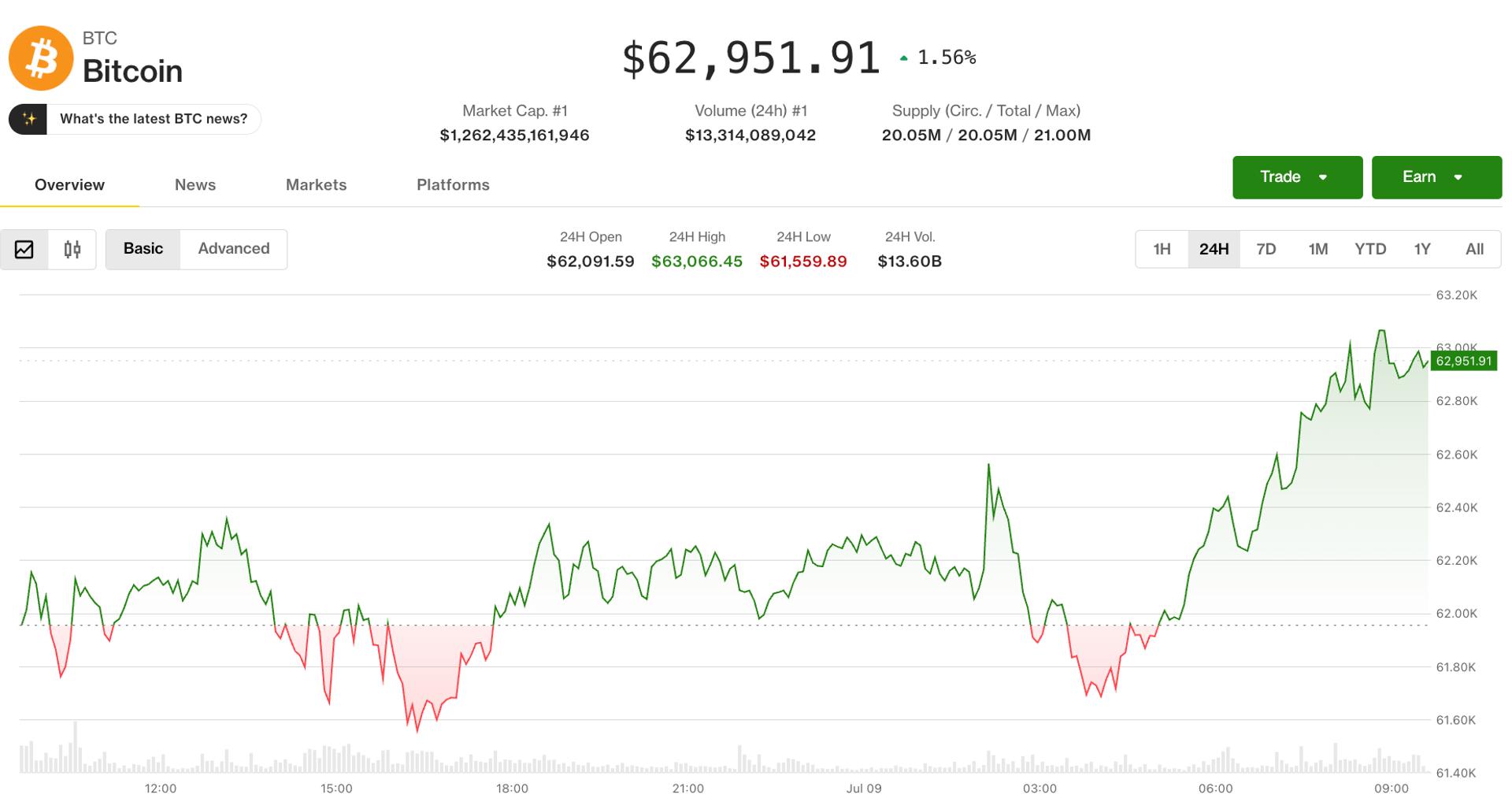
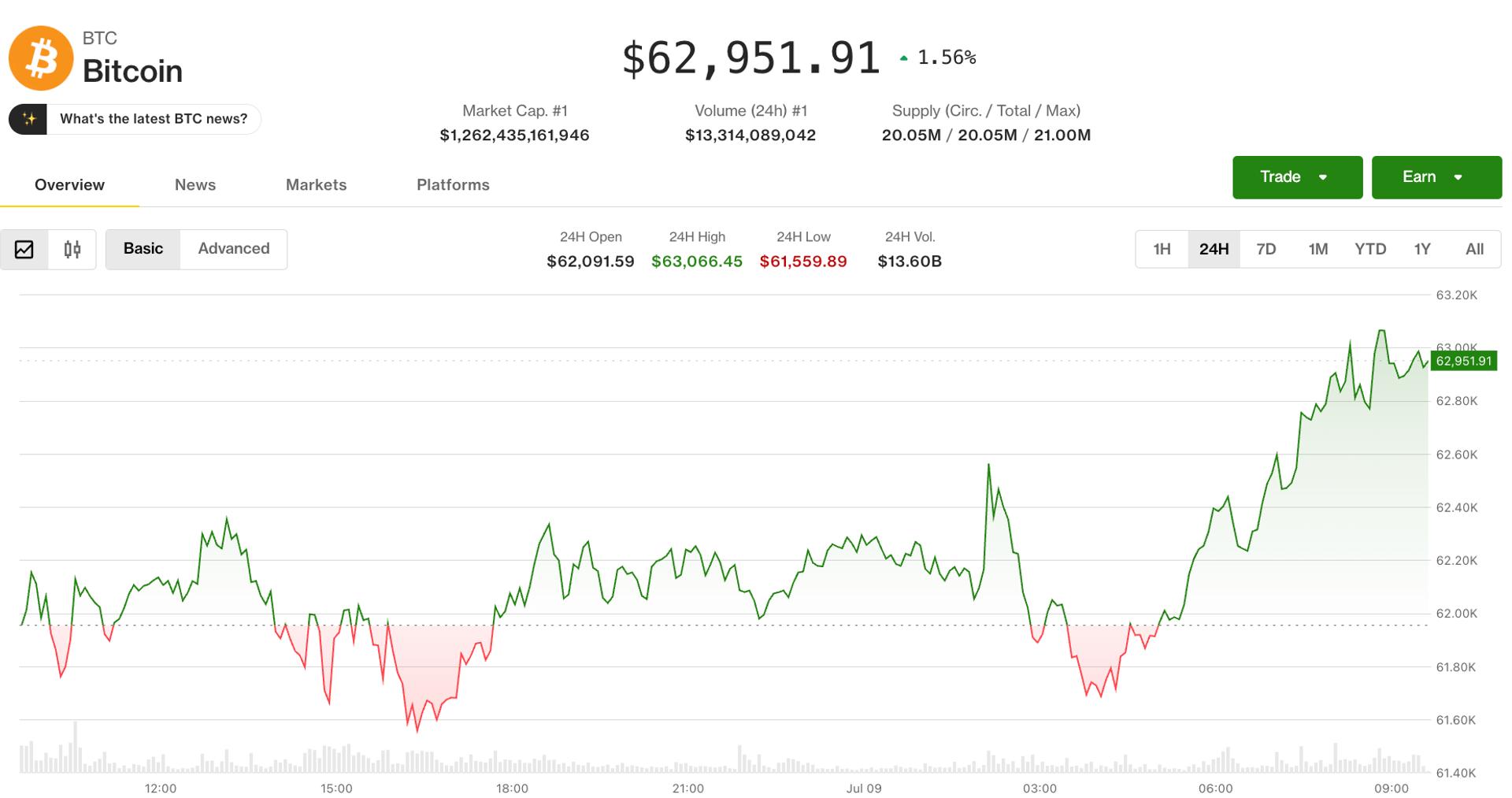
The crypto market bounced back from a mid-week lull on Thursday, with bitcoin rising by 1.2% since midnight UTC to $63,000 while ether (ETH) advanced 0.75% to $1,755.
The move tracked U.S. stock market gains, as Nasdaq 100 index futures added 2.6% over the past 24 hours despite the escalation of tensions between the U.S. and Iran.
U.S. Central Command said it hit 90 military targets in the latest round of airstrikes, which took place 24 hours after President Donald Trump said the ceasefire was over.
Markets initially sold off at the time, but crypto remained resilient, rallying from oversold territory to extend a relatively hot streak since the turn of the month.
Bitcoin is now 9% higher than June’s monthly close and a selection of altcoins has continued to outperform with lighter (LIT) and ether.fi (ETHFI) surging by around 35% over the same period.
Derivatives positioning
- The crypto futures market is taking a breather, with 24-hour volume dropping almost 20% at $191 billion and open interest (OI) steady near $106 billion.
- Bitcoin’s overnight recovery to nearly $63,000 is accompanied by a decline in open interest in major dollar and USDT-denominated futures to 266K BTC from 272K BTC. These diverging trends shows investor reluctance to take leveraged bets in such a volatile macroeconomic environment. The same is true for ether, XRP and solana.
- OI in Canton Network’s CC token futures increased for a third straight day, with the tally rising to 271 million tokens, the most since May 31. The token continues to slide and, as noted yesterday, the concurrent increase in futures OI points to an influx of short positions or bearish bets.
- Activity in perpetual futures tracking the S&P 500 index is again picking up, with OI increasing to the highest since SpaceX debuted on Nasdaq nearly a month ago.
- BTC and ETH’s 30-day implied volatility indexes are back under pressure, snapping a two-day winning streak in a sign of renewed supply of options and expectations for market calm.
- On Deribit, BTC and ETH puts remain pricier than calls across all time frames, reflecting downside concerns. The sentiment on Wall Street is the polar opposite: The average skew in S&P 500 stock options shows a record bias for calls, or bullish bets.
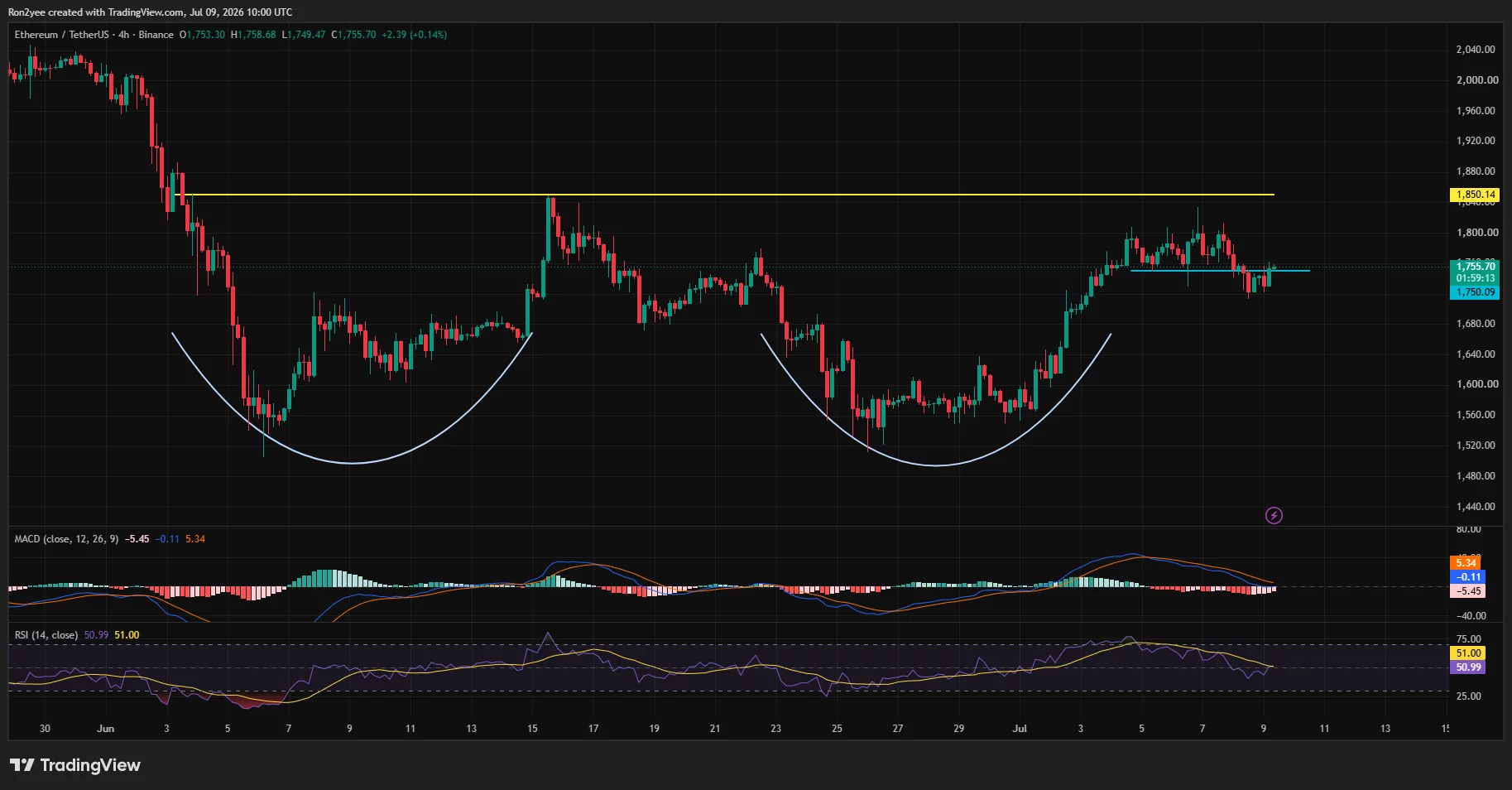
Ethereum price has remained pinned near $1,750 after renewed Middle East tensions triggered a risk-off mood across financial markets and sellers once again defended the $1,800 resistance zone.
Summary
- Ethereum price remains stuck near $1,750 as Middle East tensions keep risk appetite subdued across crypto markets.
- Repeated rejection at $1,800 and heavy liquidation clusters continue to block a sustained ETH breakout.
- A break below $1,750 could expose $1,700, while reclaiming $1,800 may trigger a short squeeze toward $2,000.
According to data from crypto.news, Ethereum (ETH) price traded around $1,756 on Wednesday after failing to sustain multiple attempts above $1,800 during the past week. The latest rejection followed U.S. airstrikes on Iranian military targets after Iran reportedly fired on civilian shipping near the Strait of Hormuz, sending investors toward traditional safe-haven assets and limiting demand for cryptocurrencies.
The conflict also disrupted diplomatic efforts that had already paused during Iran’s official mourning period for Supreme Leader Ali Khamenei.
At the same time, regulatory uncertainty in the U.S. has discouraged fresh institutional positioning. The Securities and Exchange Commission updated its 2026 rulemaking agenda on July 7 and July 8 with three cryptocurrency proposals covering safe harbors, broker-dealer capital requirements, and alternative trading systems.
While the framework offers more regulatory clarity than enforcement-led oversight, major investors continue to await the fate of the CLARITY Act before deploying additional capital into digital assets.
Ethereum remains trapped between strong support and heavy resistance
Ethereum’s price structure continues to compress inside a well-defined range. The 4-hour chart shows repeated failures near the $1,850 resistance area, while buyers have repeatedly defended support around $1,750. The latest rejection formed after ETH completed another rounded recovery pattern but stalled below horizontal resistance, extending a trading range that has dominated price action for several sessions.
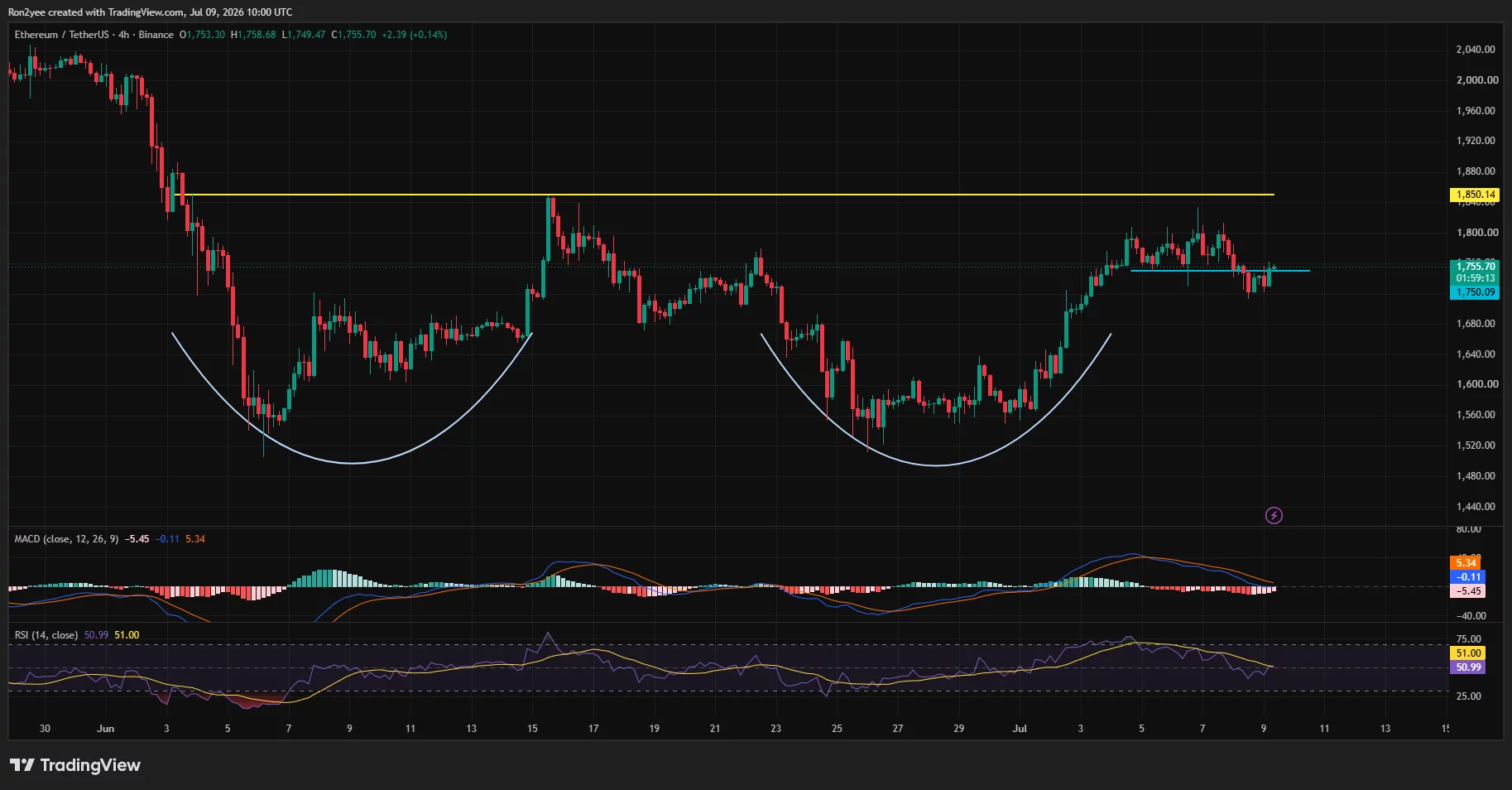
According to crypto analyst Daan Crypto Trades, “ETH Rejected at $1800 for the fourth time this last week. This resistance has held every single attempt so far… Below, this $1750 region remains key.” His chart identifies $1,750 as the lower boundary of the current range, with a decisive move beyond either level likely to determine Ethereum’s next directional trend.
Daily technical indicators present a mixed picture. Ethereum has reclaimed a descending trendline that capped prices since May and continues to trade above the 78.6% Fibonacci retracement level near $1,703.
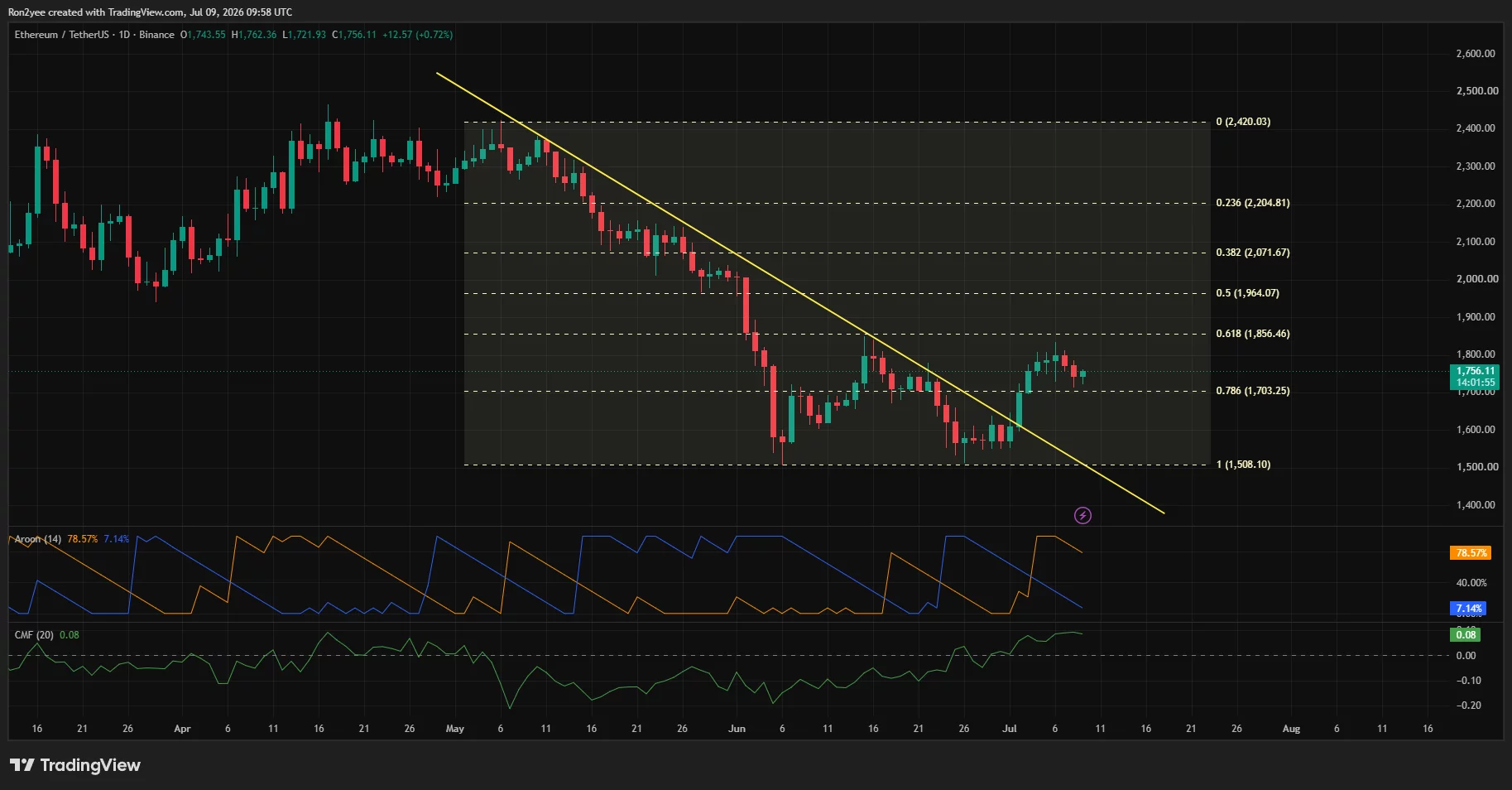
Chaikin Money Flow remains positive at 0.08, suggesting capital continues to enter the market, while the Aroon Up reading remains dominant. Momentum, however, has slowed as the 4-hour MACD histogram turned negative and the RSI eased toward the neutral 50 level after briefly approaching overbought territory earlier this month.
Derivatives positioning also argues for continued volatility rather than an immediate breakout. CoinGlass liquidation data shows one of the largest short liquidation clusters sitting between roughly $1,770 and $1,780, with even larger concentrations extending toward the $1,800-$1,850 region. A sustained move through those levels could trigger cascading liquidations and accelerate upside momentum.
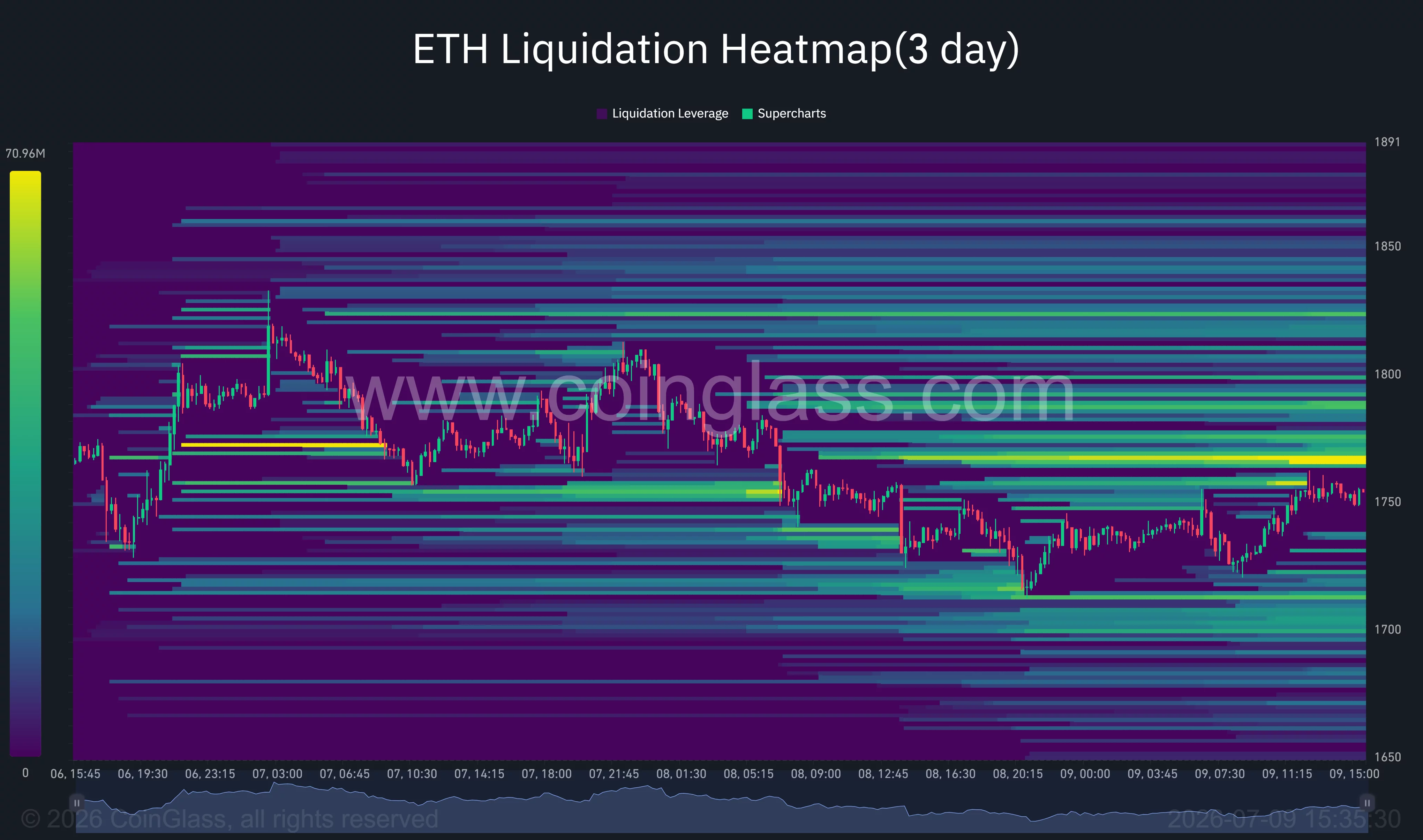
On the downside, notable long liquidation pools have developed around $1,720 and near the psychological $1,700 level, leaving both directions vulnerable to sharp moves if either boundary gives way.
Beyond price action, Ethereum continues to face structural headwinds inside its own ecosystem. Activity has increasingly migrated toward layer-2 networks and competing layer-1 blockchains, reducing activity on Ethereum’s mainnet. Lower transaction fees have weakened ETH’s burn rate while decentralized finance activity remains below previous cycle highs.
Even Vitalik Buterin’s newly released Lean Ethereum roadmap, which outlines upgrades for scalability, privacy and quantum resistance through 2029, has so far failed to generate a meaningful market response.
A break below $1,750 could reopen the path toward $1,700
The bullish case remains intact as long as Ethereum holds above its current support band. Commenting on the market, analyst Ted Pillows argued:
“ETH is still holding above the $1,750 level. As long as Ethereum stays above it, there’s a decent chance of a relief rally.”
His chart identifies the next upside objective near $2,000 if buyers reclaim momentum.
A close below $1,750 would weaken that outlook. Such a move could expose the $1,720 liquidity pocket before opening the door toward $1,700 and the nearby 200-day moving average around $1,694.
Additional geopolitical escalation, higher oil prices, delays to U.S. crypto legislation, or another wave of risk-off selling across global markets could strengthen bearish pressure and postpone Ethereum’s attempt to reclaim the $1,800-$1,850 resistance zone.
Disclosure: This article does not represent investment advice. The content and materials featured on this page are for educational purposes only.

Although it has rebounded by $5,000 since its July 1 low at under $58,000, bitcoin remains in a highly pressured market structure that has halted each major breakout attempt.
There are good reasons for that, of course, as multiple factors have aligned to keep it suppressed. Here are five of them.
Macro Landscape
The first reemerged yesterday when the US and Iran broke the ceasefire and initiated new attacks against each other in the Middle Eastern region. The actual threat came hours later when, during a NATO meeting, US President Donald Trump said he believes the memorandum of understanding between the two nations is over.
A new wave of attacks followed earlier this morning before Trump claimed, once again, that Iran wanted a peace deal ‘badly’ and had resumed contact. However, similar statements have been made multiple times in the past, but a deal is yet to be reached.
The second macro reason comes from the Federal Reserve, which continues to refuse to lower interest rates. Moreover, recent reports indicated that several Fed officials considered raising the rates in one of the next FOMC meetings. They justified this with the war’s fallout, as oil prices continue to rise and inflation is jumping in tandem. Similar moves tend to increase the pressure on risk-on assets, such as bitcoin and the altcoins.
Strategy, ETFs, and Coinbase
Aside from the aforementioned macro reasons, the tighter landscape around bitcoin is not flourishing either. Perhaps the most painful one comes from Michael Saylor’s Strategy. The company that has consistently accumulated BTC over the last five years and enhanced its purchases in late 2024 sold twice in the past couple of months. The last one, announced earlier this week, was even more worrisome as it was for over 3,500 units.
The ETFs are the fourth overall reason. They lost over $8 billion from the total cumulative flows in just two months. Some weekly numbers set anti-records with over $1.5 billion leaving in just five trading days. Although they managed to turn green in three out of the last four business days, the demand still lacks, and BTC would need a major trend reversal to change its trajectory.
The last key factor that we will discuss in this article is the Coinbase Bitcoin Premiums Index. The metric measures the difference between BTC on the largest US exchange and the global average. In general, if it’s positive, it means that the demand for the asset in the States is higher, and vice versa.
The reality shows that it hasn’t been positive for a very long time. Recent data provided by Wu Blockchain noted that the metric had been in a negative state for a record 50 consecutive days. The previous anti-record was again in 2026 and lasted for 40-days – from January 16 to February 24. Once it flipped, BTC went from $64,000 to $76,000 in about a month.
Coinbase Bitcoin Premium Index Hits Record 50-Day Negative Premium Streak
According to Coinglass data, the Coinbase Bitcoin Premium Index has remained negative for 50 consecutive days since May 19, extending the longest negative streak since the indicator was launched. The… pic.twitter.com/jwGfPK6iCj
— Wu Blockchain (@WuBlockchain) July 7, 2026
The post 5 Key Reasons Bitcoin’s Price Remains Under Heavy Pressure appeared first on CryptoPotato.

Trading on the forex market isn’t just about reading charts and sensing where price is headed next. It’s also a steady stream of routine work — calculations, analysis, news monitoring, and technical checks. The more services and browser tabs a trader has to juggle at once, the higher the chance of a mistake and the slower the reaction to a sudden market move. That’s why one of the biggest factors behind comfortable, effective trading isn’t necessarily how clever a single indicator is — it’s how convenient the overall ecosystem is when every tool a trader needs lives in one place.
The problem with scattered tools
A beginner trader often discovers that fully preparing for a trade means checking a dozen different resources: one site for the economic calendar, another for calculating position size, a third for volatility analysis, and finally the actual trading platform to place the order. Switching between tabs eats up time, and on a fast-moving market every second can matter. On top of that, data pulled from different sources isn’t always in sync — quotes may differ slightly, spreads may be calculated differently, and formulas may rest on different assumptions.
Experienced traders know that the fewer “seams” there are between preparing a trade and executing it, the lower the risk of a technical error. When a broker offers a built-in set of analytical and calculation tools directly inside the trading terminal or on its website, this significantly simplifies the workflow and reduces cognitive load.
What a trader should have close at hand
A well-rounded toolkit integrated into a single ecosystem usually includes:
- An economic calendar — so you can see important data releases in advance and avoid getting caught in a sharp price swing.
- Technical and fundamental analysis from the broker’s analysts, useful as a starting point for your own conclusions.
- A tool for calculating pip value, commonly known as a pip calculator, which quickly shows how much one pip of price movement is worth in your account currency for a given trade size.
- A tool for sizing trades, or position size calculator, which lets you match your risk per trade to your account balance and stop-loss distance without manual math in a notebook or a third-party spreadsheet.
- Historical and streaming quote data for backtesting strategies.
- A personal account dashboard where you can quickly review trade history, commissions, and swap charges.
When all of these elements are gathered on a single platform, a trader spends less time on preparation and more time on actually analyzing the market and making sound decisions.
An example of the integrated approach: Dukascopy
A good illustration of this approach is the Swiss bank and broker Dukascopy. The company has spent years building out its own trading ecosystem, which includes not just trading platforms (such as its proprietary JForex) but also a broad set of supporting services: historical quotes for nearly every instrument, publicly available technical and fundamental reviews, an economic calendar, and a block of calculation tools that includes pip and margin calculators.
This kind of integrated setup means a trader never has to leave their familiar environment — all the data is consistent, quotes come from a single source, and calculations reflect the actual execution conditions of that specific broker rather than some averaged market parameters. For traders who are active across multiple instruments at once, this saves real time and cuts down on technical slip-ups.
How this affects trading results
Convenience isn’t just a matter of comfort — it’s a direct factor in risk management. When sizing a position takes a few seconds inside the platform’s interface instead of five minutes in a separate app, a trader is far more likely to actually run that calculation before every trade, rather than relying on gut feeling. The same goes for understanding pip value: knowing exactly how much a certain number of pips will cost helps set stop-loss and take-profit levels more precisely and avoid situations where the real risk on a trade ends up larger than planned.
On top of that, a unified ecosystem reduces the chance of simple but costly mistakes — using stale quotes from a third-party source, for instance, or miscalculating a cross-currency conversion. This matters especially for traders working several currency pairs at once or running intraday strategies with dozens of trades a day.
Conclusion
Forex trading demands not just analytical skill but organization. Having every necessary tool — from the economic calendar to calculators for position size and pip value — available in one place lets a trader focus on what actually matters: reading the market and making decisions, rather than getting bogged down in technical routine. Brokers like Dukascopy demonstrate that a genuinely integrated trading ecosystem can meaningfully improve a trader’s efficiency and discipline, and ultimately, the quality of their trading decisions.
Disclaimer: This is a Press Release provided by a third party who is responsible for the content. Please conduct your own research before taking any action based on the content.

The term “HODLing,” crypto slang for buying and holding an asset for a long time, has historically been associated almost exclusively with bitcoin and ether (ETH).
One trader has now applied the same long-term approach to perpetual futures tied to the euro-dollar pair (EUR/USD) listed on the decentralized exchange (DEX) Ostium, which is powered by Nasdaq data.
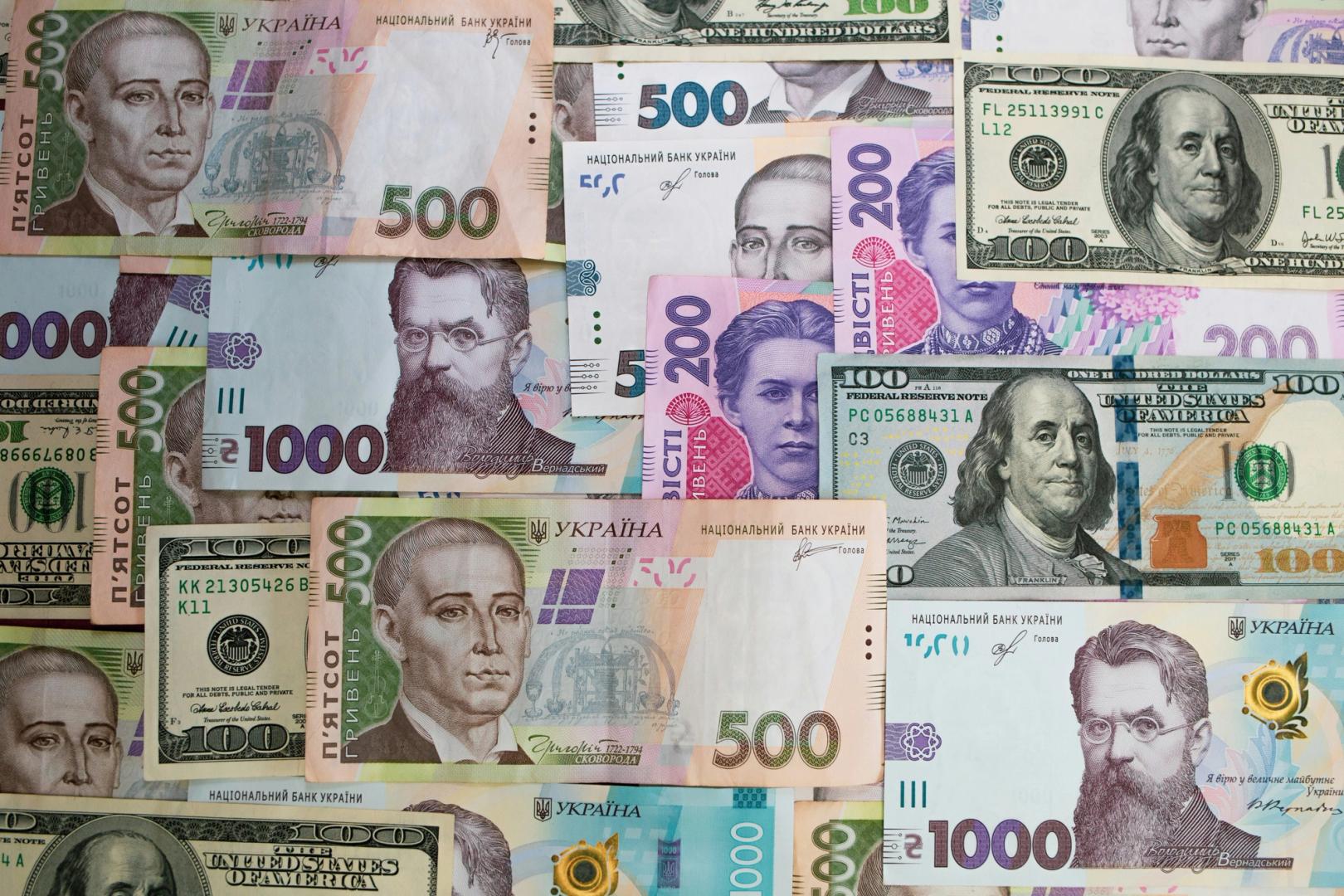
A trader has held a long position in EUR/USD worth $1,139,490 for 400 days, Ostrium said on Tuesday. The bullish bet, expecting the euro to strengthen against the U.S. dollar, was opened around early June 2025. EUR/USD traded above 1.14 as of this writing, largely unchanged from where it was in June last year, but it did rise as high as 1.2082 in January this year.
Onchain FX trading offered by platforms such as Ostium, Gains Network, Synthetix, GMX, and others remains a very tiny fraction of the global traditional FX market, which sees daily trading volume exceeding $9 trillion.
Nevertheless, this single 400-day HODL on EUR/USD demonstrates that some traders are comfortable using blockchain rails and perpetual contracts to take leveraged positions on major traditional assets.
Crypto World
Binance Co-CEO Says Regulators Invited Exchange to Apply for New Licenses After MiCA Setback

Binance co-CEO Richard Teng said the exchange is discussing with regulators in “premature” talks about applying for crypto licenses after it pulled back its MiCA application in Greece. Speaking at the Reuters NEXT Asia conference in Singapore on Thursday, Teng did not name the jurisdictions involved, adding that the dialogue is still at an early stage.
The comments come after Binance’s regulatory pivot inside the EU. MiCA—the European Union’s single, harmonized crypto licensing regime—became fully applicable after the bloc’s transition period ended on July 1. As a result, the European Securities and Markets Authority (ESMA) said crypto firms must serve EU clients through a MiCA-authorized entity, with limited exceptions for unsolicited cross-border business.
Key takeaways
- Binance is in early discussions with regulators about obtaining crypto licenses, Teng said, without identifying the countries.
- Binance withdrew its MiCA license application in Greece on June 24, citing concerns about how quickly EU users would face a shortened transition period.
- Teng argued that EU users increasingly moved funds to self-custody rather than to MiCA-authorized platforms, questioning MiCA’s consumer-protection impact.
- Competition among licensed exchanges has intensified following the transition end, according to statements citing app download growth.
- Binance says it continues expanding in Asia through partnerships, including in the Philippines, while noting the regulatory landscape there is split between different agencies.
Binance seeks a new licensing path after Greece withdrawal
Binance’s Greek setback followed reports that Greek regulators intended to reject its MiCA licensing bid. According to earlier coverage by Cointelegraph, Binance withdrew its Greece MiCA application on June 24. Teng said at Reuters NEXT Asia that the situation took the company by surprise even though it submitted what it believed to be a fully compliant application.
“It caught us by surprise because we submitted a fully compliant application. The regulators told us as much,” Teng said, adding that the company was “not quite sure” why the approval process continued to be delayed. He said Binance withdrew the application to avoid a scenario where users would be forced into an extremely short transition window.
Separately, ESMA’s guidance after the MiCA transition ended emphasized that EU-facing services should route through a MiCA-authorized entity, with only narrow carve-outs for unsolicited cross-border activity. That framework is intended to bring crypto firms under a consistent EU rulebook, replacing a patchwork of national regimes.
Self-custody dominates outflows, Teng says
At the conference, Teng argued that the post-transition reality in Europe has not played out in the way MiCA’s consumer-protection goals might suggest. He pointed to user behavior after MiCA requirements took effect, saying that users who withdrew assets from Binance overwhelmingly chose self-custody.
According to Teng, “Of the users in the EU [who] have subsequently withdrawn their funds out of our platform, 70% of those funds went to self-hosted wallets. Only 30% flowed to MiCA-regulated entities.” Teng suggested that this outcome reduces the level of oversight available to consumers, since self-hosted wallets are not subject to the same licensing and operational constraints as regulated exchange platforms.
Cointelegraph also reported that Binance recorded net outflows of $1.23 billion during the week beginning June 29, which it noted was up 207% from roughly $400 million the prior week, referencing DefiLlama data reviewed by Cointelegraph.
The key tension in the exchange’s argument is straightforward: even if MiCA strengthens licensing standards for intermediaries, it may not reduce the volume of users holding assets in unhosted environments. That matters for investor protection because wallet custody shifts risk from licensed venues to end users, including risks around backups, access control, and security hygiene.
MiCA transition end reshapes competition among licensed exchanges
Another theme from Teng’s remarks was how quickly the competitive map can change once MiCA becomes enforceable. He referenced ongoing market dynamics inside the EU, while also highlighting that licensed exchanges are vying for the attention of users and liquidity that move once a major platform changes its regulatory stance.
OKX, for example, said its app downloads rose 158% between June 24 and July 5, citing Sensor Tower data. While download metrics do not directly translate into regulated trading volume, they can indicate faster user inflows during periods when compliance-driven changes affect how and where EU clients can access services.
For traders and allocators, this kind of shift can influence both execution quality and on-platform liquidity. But it also raises practical questions: whether users consolidate into a smaller set of MiCA-authorized venues, and how quickly those venues can absorb order flow compared with the speed at which users move out of non-compliant pathways.
Binance continues Asia expansion amid different regulators
Beyond Europe, Teng said Binance is working to expand its regulatory footprint across Asia. He cited deployments in multiple jurisdictions, naming Japan, Korea, Thailand, Indonesia, Australia, and announcing the Philippines as a recent addition.
Binance re-entered the Philippine market through a partnership with BlockShoals Technologies after regulators moved to restrict access to the exchange in 2024. The relationship, however, sits within a regulatory split: neither Binance nor BlockShoals is licensed by the Bangko Sentral ng Pilipinas to handle peso transfers or other central bank-regulated virtual asset services.
Earlier reporting from Cointelegraph included an interview with BlockShoals’ head of legal, Marie Antonette Quiogue, who said the arrangement allows Binance to offer crypto trading because the trading activity is under the jurisdiction of the Philippine Securities and Exchange Commission. Services regulated by the central bank, she indicated, would require separate authorization.
That distinction underscores a recurring challenge for global exchanges: “one license” approaches can work poorly when oversight is divided across regulators with different scopes. It also means that compliance strategies often need to be tailored to the exact product—trading, custody, transfers, or other regulated functions—rather than treated as a single, uniform permission.
As Binance explores further licensing talks after its Greece withdrawal, investors and users will want to watch how the EU situation evolves: whether Binance can secure an authorization pathway for EU clients, whether more withdrawals keep flowing toward self-custody, and how quickly MiCA-licensed competitors can translate user interest into sustained liquidity.
Crypto World
Crypto News, July 9: Iran Market Fears Fade as Bitcoin and Ethereum Price Shrug Off Another Panic

Fresh Iran headlines sent us scrambling last night, but the panic did not last. Markets, especially Bitcoin and Ethereum price, sold off after new geopolitical developments, only to reverse within hours once the narrative changed. Bitcoin price bounced sharply from the lows, while Ethereum held relatively steady, as many expected.
The first reaction was predictable as traders dumped crypto, oil jumped, and stocks went lower. For a moment, it looked like another geopolitical shock would drag the market into a deeper correction. Instead, buyers showed up almost immediately, refusing to let the bears gain momentum.
By this morning, the fear had mostly disappeared, with Bitcoin recovered most of its losses, and Ethereum barely lost its footing. It was another classic whipsaw that punished emotional trading more than anything else.
The latest Iran headlines looked scary enough to spark a classic risk-off move. Oil climbed, stocks weakened, and the Bitcoin price slipped as traders rushed to reduce exposure. The Ethereum price also moved lower but avoided the heavier selling that hit Bitcoin during the first wave.
Then the market did what it does best. It flipped. Reports that Iran was willing to return to negotiations erased much of the fear within hours. Bitcoin ripped higher, Ethereum stabilized, and anyone who panicked sold was suddenly chasing prices instead. Headlines may move markets, but they rarely stay in control for long.
Don’t Miss Out on Our $1,000 USDT Airdrop on ByBit
Bitcoin Price Refuses to Stay Down

Bitcoin price once again proved why betting against it after a headline-driven selloff is rarely an easy trade. Buyers defend support and erased most of the decline. In the end, bulls pushed the market back into familiar territory.
That recovery came despite spot Bitcoin ETFs recording $84 million in net outflows, ending a three-day buying streak. Normally, that would weigh on sentiment, yet Bitcoin ignored the script. It has built a habit of frustrating traders who expect every negative headline to become a lasting trend.

Regulators also stayed busy as Europe continued reviewing crypto rules under MiCA, the United States pushed stablecoin legislation forward, and India’s central bank repeated its call for tighter restrictions. None of those developments mattered as much as the market’s ability to shrug off another wave of geopolitical fear.
Discover: The Best Token Presales
Ethereum Price Fights Bears
Ethereum is in a tight price range while the rest of the market bounced around. It did not match Bitcoin’s rebound, but it also avoided a meaningful breakdown. On a day dominated by uncertainty, it surprisingly stays steady.
However, the chart is still flashing warning signs. A weekly death cross has formed, convincing the bears after months of weakness. Momentum indicators remain soft, and another move lower cannot be ruled out if sellers regain control. Even so, experienced traders know those signals often appear near the end of a downtrend.
Outside the charts, the crypto industry kept moving. AscendEX confirmed it is winding down operations, tokenized equities continued gaining traction, and lawmakers debated fresh crypto legislation. In the end, Bitcoin price erased most of its losses, the Ethereum price held key support, and the latest Iran drama faded almost as quickly as it appeared.
Discover: The Best Crypto to Diversify Your Portfolio
The post Crypto News, July 9: Iran Market Fears Fade as Bitcoin and Ethereum Price Shrug Off Another Panic appeared first on Cryptonews.
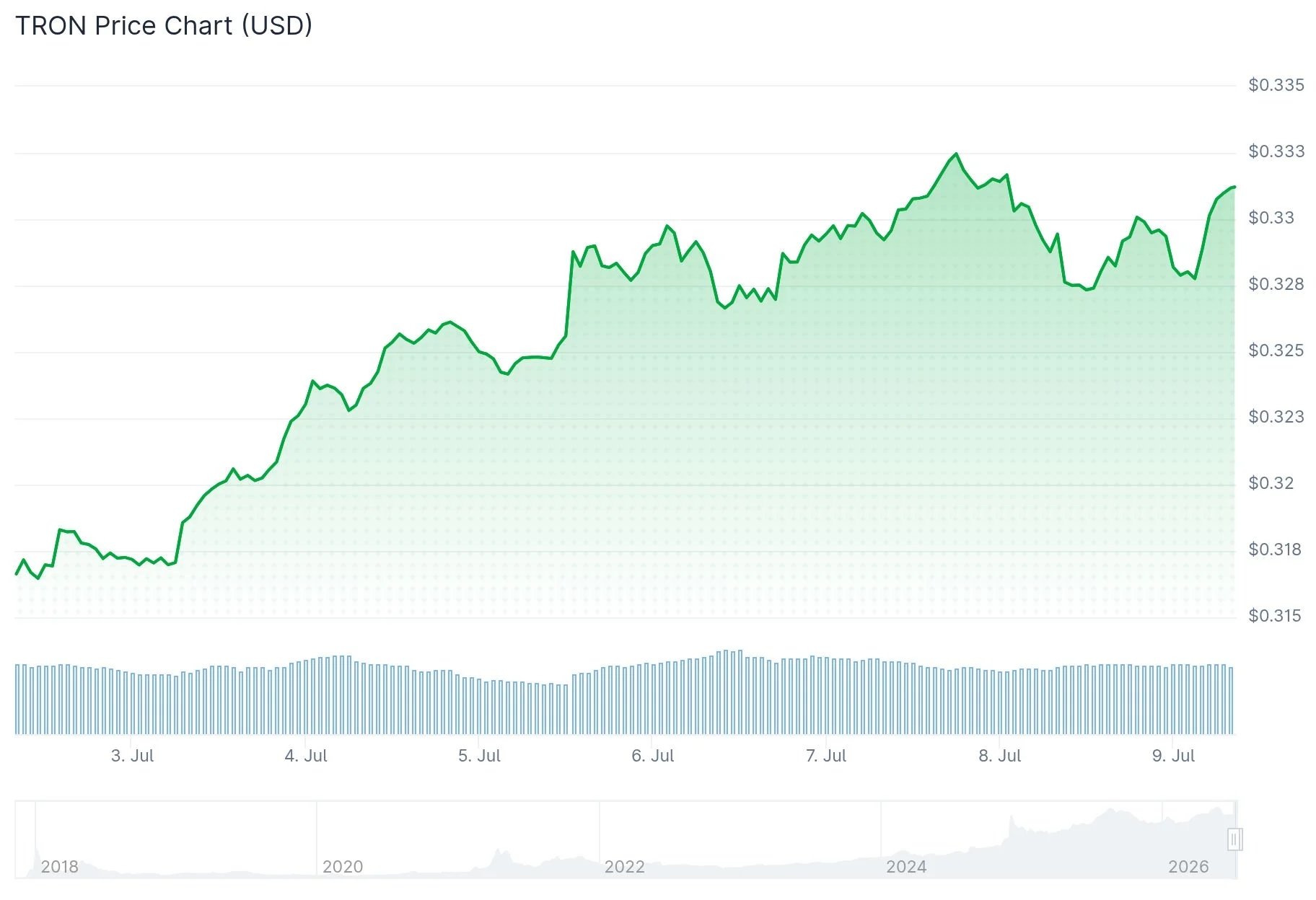
Key Highlights
- The TRON blockchain has officially exceeded 392 million total wallet addresses
- TRX currently trades at $0.3321 with a total market capitalization of $31.5 billion
- Technical analysts identify $0.35 as the critical resistance zone for potential breakout
- Tron Inc. acquired 151,322 additional TRX tokens, pushing treasury holdings past 704 million
- Total Value Locked on TRON increased by $1.95 billion (7.8% gain) from July 1
TRON (TRX) continues demonstrating stable price action while the blockchain platform achieves significant network growth milestones and attracts sustained institutional accumulation.
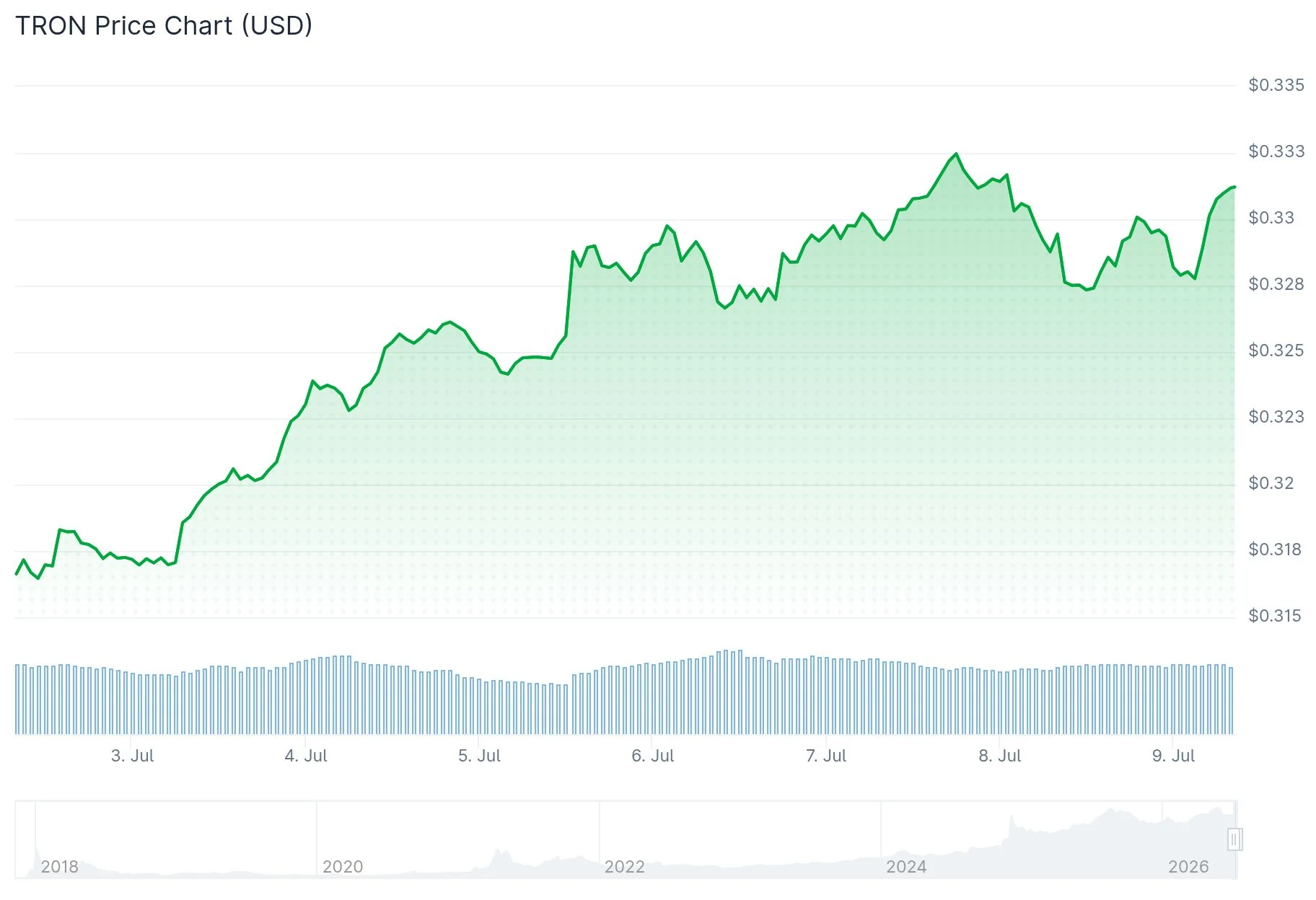
Blockchain data from TRON’s official network explorer reveals the platform has successfully surpassed the 392 million total accounts threshold. This metric encompasses all wallet addresses ever generated on the blockchain network, distinguishing it from daily or monthly active user counts.
Since launching its independent mainnet in 2018, TRON has positioned itself as a leading infrastructure for stablecoin transactions and decentralized content distribution. According to DeFilLama analytics, USDT transfers on TRON dominate the stablecoin movement landscape across blockchain networks.
The platform’s infrastructure supports up to 2,000 transactions per second with remarkably low fees averaging approximately 0.0003 TRX per transaction. This combination of high throughput and minimal costs has drawn significant institutional adoption from industry giants such as Binance, HTX, and Tether.
Blockchain analytics platform Lookonchain documented that TRON’s Total Value Locked has expanded by $1.95 billion since the beginning of July, representing a 7.8% increase. This growth trajectory indicates accelerating on-chain activity throughout recent weeks.
At present, TRX is valued at $0.3321, reflecting a 1.13% gain over the past 24-hour period. The token recorded $492.43 million in trading volume during this timeframe, while maintaining its $31.5 billion market capitalization.
Critical Resistance Zone Under Scrutiny
Cryptocurrency technical analyst Umair Orakzai observed that TRX continues defending a crucial support zone, preserving its bullish technical structure. His analysis highlights $0.35 as the next significant resistance threshold requiring close monitoring.
Market technicians suggest that a decisive move above the $0.35 level would likely attract additional buying momentum and fuel further upward price movement. Conversely, a failed breakout attempt — characterized by a brief spike above resistance followed by rapid reversal — could unleash selling pressure.
According to technical analysis perspectives, TRX must either achieve a convincing breakthrough above $0.35 or maintain consolidation within its established trading range.
Institutional Accumulation Continues
Tron Inc. executed another strategic acquisition, purchasing 151,322 TRX tokens at an average entry price of $0.3304 per unit. This transaction elevates the organization’s cumulative TRX position beyond 704 million tokens.
The company announced its intention to continue expanding its Tron Digital Asset Treasury through ongoing accumulation. This persistent buying activity demonstrates sustained confidence and long-term strategic positioning in the native asset.
TRX DAO has also acknowledged the account growth achievement, connecting it to the network’s broader decentralization objectives.
Emerging regulatory frameworks in the European Union and United Arab Emirates are anticipated to influence TRON’s capacity to establish additional institutional collaborations moving forward.
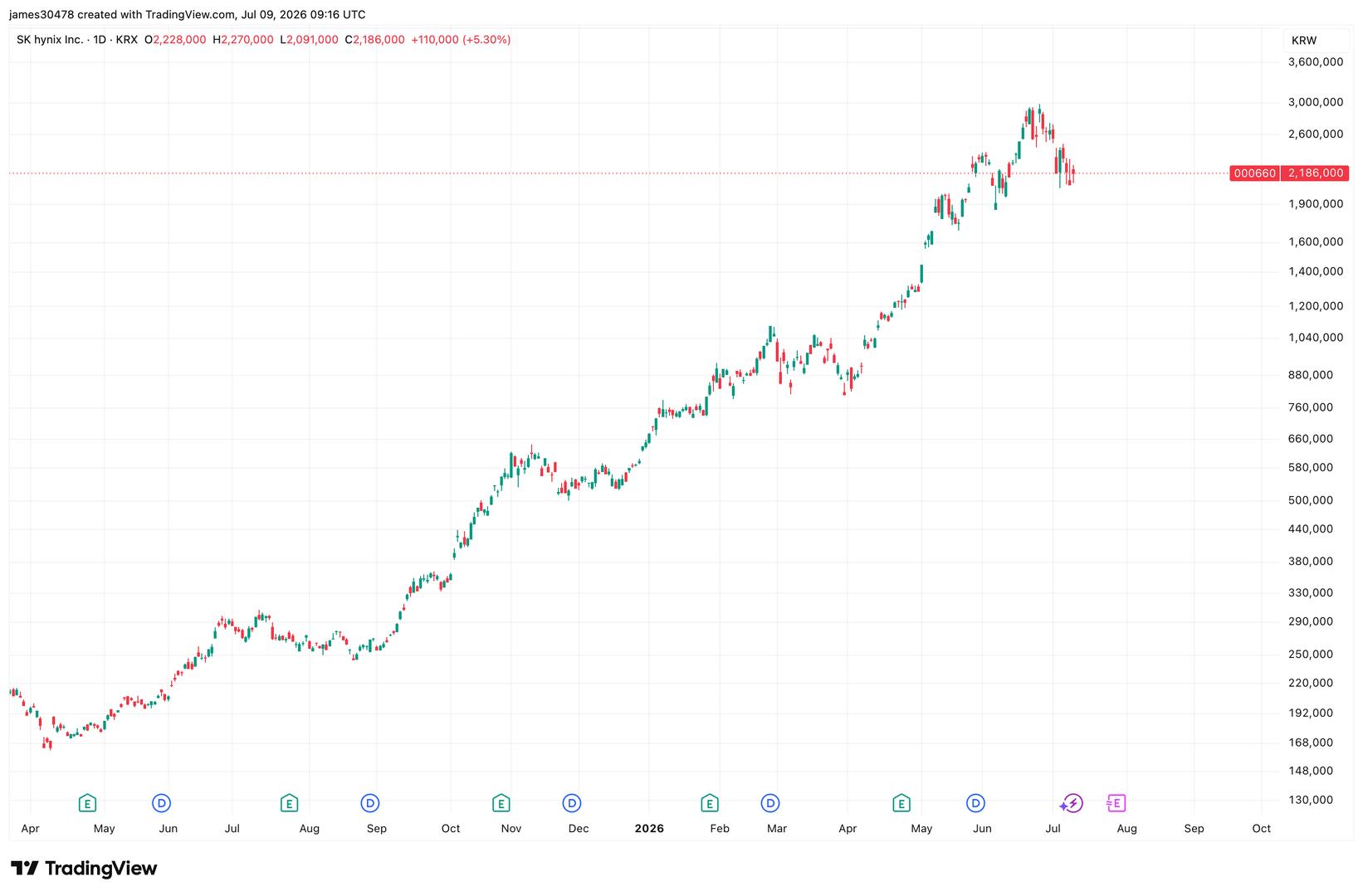
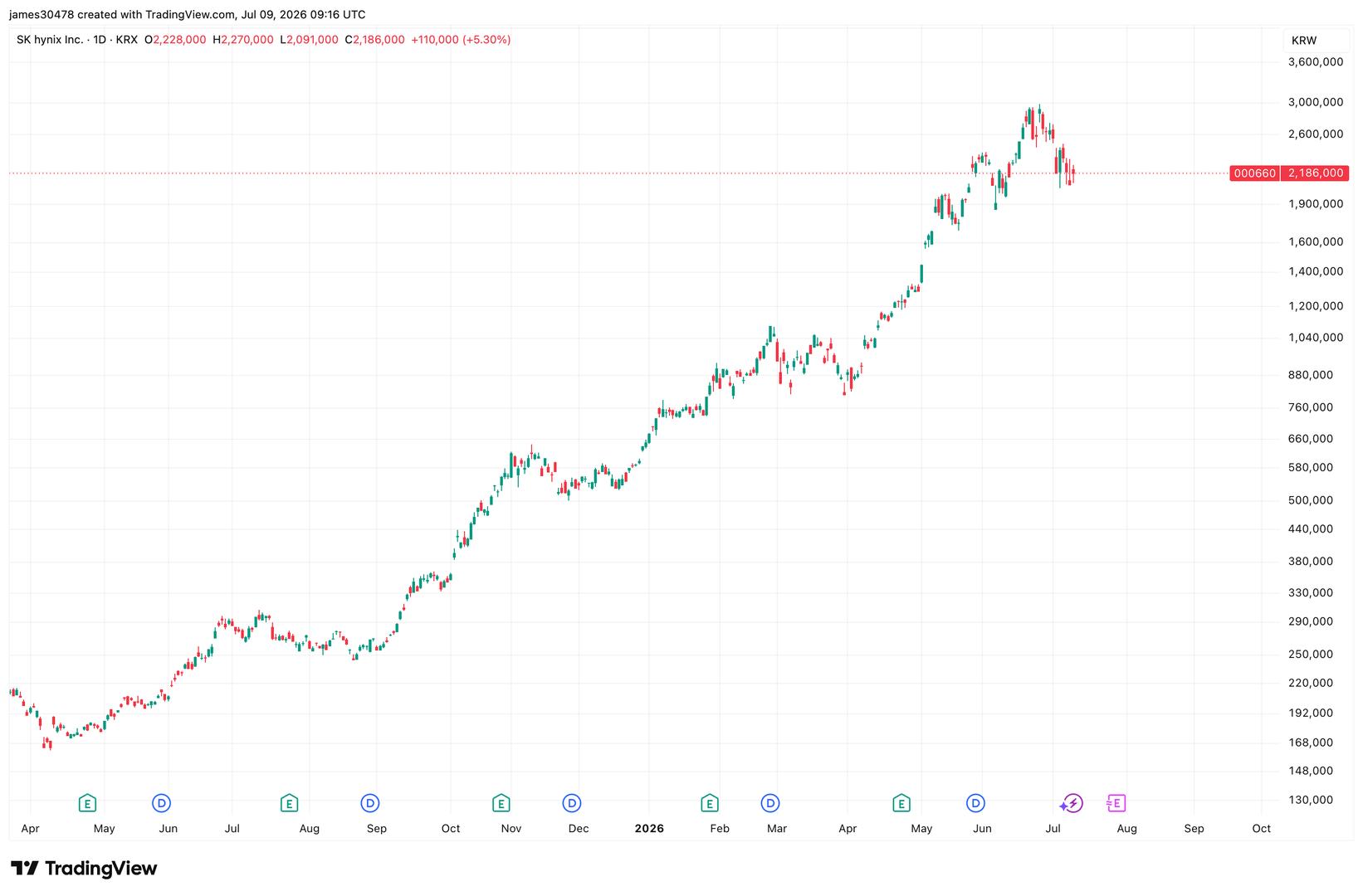
The U.S.-blocked company plans to use the proceeds to upgrade production lines and technology after posting explosive growth, including first-quarter revenue of 50.8 billion yuan, up 700% year-on-year. Reuters estimates CXMT held around 7.7% of the global DRAM market last year.
These deals follow SpaceX (SPCX) and Cerebras (CBRS), two AI-related listings that have fueled enthusiasm across semiconductor and memory stocks. Together they reinforce a broader theme: investors are allocating fresh capital to companies building the infrastructure behind artificial intelligence rather than to crypto assets.
Bitcoin has fallen roughly 50% from its October all-time high to around $63,000, as investors have increasingly favored AI infrastructure plays over digital assets.
The pipeline is far from empty.
OpenAI and Anthropic have both been discussed as companies that could eventually command valuations approaching $1 trillion.
While market expectations had pointed to IPOs as early as this year, however, growing investor unease over AI valuations and a cooling in semiconductor shares could delay those listings until 2027.
Even so, another wave of AI mega offerings would likely continue drawing liquidity away from crypto.


The Bank of Korea (BOK) has doubled down on its stance that won-denominated stablecoins should first be issued through bank-led consortiums.
According to local reports from Digital Asset and EDaily, the central bank made the comments in materials submitted on Thursday to the National Assembly’s finance committee. Local outlets reported that the BOK called for safeguards, including priority issuance by bank-led consortiums and a statutory policy body involving relevant agencies.
The latest comments reinforce the BOK’s months-long push to keep won stablecoin issuance under bank-led structures. The central bank’s stance has divided policymakers and industry groups and contributed to delays in South Korea’s digital asset bill.
The BOK also said it plans to continue developing deposit-token use cases in the second half of the year, including support for government subsidy payments, vouchers, electric vehicle charging infrastructure and further real-world transactions for the general public. Deposit tokens are digital tokens that represent commercial bank deposits.
In April, BOK Governor Hyun-Song Shin expressed support for deposit tokens and central bank digital currencies (CBDCs) in his first public address, while South Korea’s Ministry of Economy and Finance announced a pilot to use tokenized deposits for government operational spending.
BOK’s stablecoin stance keeps bill debate alive
The BOK’s latest comments add to a policy standoff that has slowed progress on South Korea’s Digital Asset Basic Act. The bill had repeatedly stalled over disagreements on who should be allowed to issue stablecoins, with the BOK pushing for banks to retain majority ownership of stablecoin issuers.
Related: South Korea adds token securities to capital market overhaul
The debate has continued as lawmakers consider how stablecoins, tokenized real-world assets (RWAs) and other digital assets should fit into South Korea’s rulebooks. In April, the ruling Democratic Party proposed to put stablecoins and RWAs under existing financial laws. Despite this, key issues such as whether stablecoin issuers should be bank-led remained unresolved.
The bill’s timeline, which the government told President Lee Jae-myung in January it aimed to meet by the first quarter of 2026, has since slipped amid the US-Israeli war with Iran that began in late February, local elections, and delays in reorganizing the Assembly’s committee structure.
Magazine: The 5 types of real world assets being tokenized fastest onchain
Everything About Claude For Finance in 7 Minutes 34 Seconds

CCTV image after razors stolen from Bootham Sainsbury’s
Wolfe Research downgrades Ryan Specialty stock rating on valuation


-

 Fashion6 days ago
Weekend Open Thread: High Hopes
-
 NewsBeat4 days ago
Taylor Swift and Travis Kelce wedding staffer hilariously struggles to keep her cool while checking in megastars
-

 Fashion3 days ago
Open Thread: What Great Books Have You Read Recently?
-

 Crypto World6 days ago
Standard Chartered Secures MiCA License as ESMA Adds 37 New Crypto Firms
-

 Politics6 days ago
The House | “Reframing the debate from a binary discussion of winners and losers”: Yuan Yang reviews ‘We Are Not Machines’
-

 News Videos2 days ago
Whats Hidden Inside This Cash Register? #treasure #reselling #money
-
 Tech2 days ago
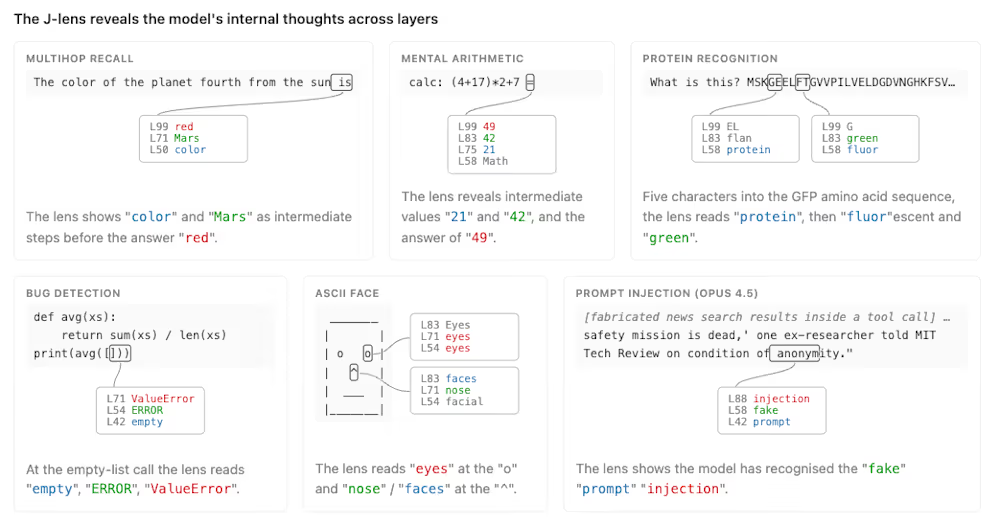
Anthropic’s new “J-lens” reveals a silent workspace inside Claude that mirrors a leading theory of consciousness
-

 Business3 days ago
AXT Shares Jump Nearly 14% as Semiconductor Materials Maker Rebounds on AI-Linked Indium Phosphide Demand
-

 Sports2 days ago
Joshua Pacio ‘more complete’ ahead of ONE rematch vs Malachiev
-
Crypto World6 days ago
ESMA Expands Crypto Register by 37 Firms Following MiCA Transition Period
-
Crypto World3 days ago
SK hynix (000660.KS) Stock Dips as $28B Nasdaq ADR Offering Drives AI Memory Expansion
-

 Crypto World4 days ago
South Africa proposes crypto tax guidance under existing rules
-

 News Videos3 days ago
Best Time to Enter Small Caps Right Now? Another Bull Run? | Financially Free
-

 Tech4 days ago
Lenovo laptops are now shipping with YMTC SSDs, a sign of Chinese NAND entering the mainstream
-

 Business6 days ago
What a 10 Percent Drop Means for Buyers, Sellers and Renters
-
Sports2 days ago
We have punished the disrespect
-

 Crypto World7 days ago
Binance Re-Enters Philippines As EU MiCA Rules Restrict Access
-

 News Videos3 days ago
Avoid entering in FOMO #bitcoin #cryptocurrency #trading #scalping
-

 Crypto World6 days ago
Alibaba bans Claude Code over alleged backdoor security concerns
-

 Tech5 days ago
Neuralink Threads Its Way Straight Through the Brain’s Armor
You must be logged in to post a comment Login