
Crypto World
JPMorgan Boosts Bitcoin, Ether ETF Positions in Q2



JPMorgan’s reported position in BlackRock’s Bitcoin exchange-traded fund increased by about 25% in the second quarter, while its Ether ETF position more than quadrupled, according to its latest securities filing.
The Form 13F filing with the US Securities and Exchange Commission, submitted Wednesday, covers holdings as of June 30 and includes 17 other investment managers across JPMorgan.
That makes it difficult to determine whether individual positions reflect a directional market view, Jonatan Randin, senior market analyst at PrimeXBT, told Cointelegraph.
“It gives you some idea of what they are doing but not their opinion about the future direction of a specific market,” Randin said.
JPMorgan reports larger Bitcoin, Ether ETF positions
The filing showed about 10.4 million shares in BlackRock’s iShares Bitcoin Trust ETF (IBIT) in Q2, up from 8.3 million shares in Q1 with a reported value of roughly $356 million.
Its position in the iShares Ethereum Trust ETF (ETHA) rose more sharply, climbing more than fourfold to about 1.17 million shares from roughly 267,000.
Randin said a 13F can combine holdings from different parts of an institution, including positions related to client activity and inventory, making it difficult to determine the purpose behind individual holdings. Form 13F filings also exclude short positions, meaning JPMorgan’s reported long holdings do not show its net exposure.
XRP appears in JPMorgan’s holdings
Beyond Bitcoin and Ether, Randin pointed to small positions reported in XRP investment products.
JPMorgan reported 181 shares of Grayscale’s XRP product worth $3,763 and 113 shares of Bitwise’s XRP ETF worth $1,356 in Q2, after reporting no positions in either product in Q1.
Randin linked the timing to regulatory developments around XRP and the emergence of spot XRP investment products in the US.
“From my point of view this adds credibility to the regulatory improvements surrounding XRP,” he said.
Related: Crypto whales accumulate as bear market nears late stage: CryptoQuant
Additionally, JPMorgan cut positions in several Bitcoin miners, which Randin said have become less straightforward proxies for Bitcoin as some expand into artificial intelligence and high-performance computing.
“If that was the reason for holding them, trimming that part of the portfolio makes a lot of sense regardless of your view of the future direction of price,” he said.
Magazine: Sorry everyone, Bitcoin is headed down to $43,500: Michael Terpin

Crypto World
Bitcoin Hits 10-Day Low Despite Positive CPI Data as Strategy Keeps Selling: Weekly Crypto Recap
The end of the week is here, which means that we will take a look at what happened in the past seven days, from the good, the bad, and the ugly price movements.
Let’s begin from this time last Friday when bitcoin was actually fighting for the $65,000 level despite the latest setback in the CLARITY Act saga and the lack of an actual deal between the US and Iran, although such was promised by the POTUS. The weekend was significantly less eventful, as BTC failed to make a move but remained sideways at around $65,000.
The actual breakout attempt came on Monday morning, but it was quickly halted at $65,400 again. The subsequent leg down drove the asset to $63,800. After another rebound to $64,400, the bears stepped up again and pushed it south to $63,200. The same pattern repeated on Tuesday and Wednesday as BTC was stopped at $64,400 and slipped back down to its starting point despite the rather positive CPI data for July.
It kept charting lower highs, and the latest rebound attempt was stopped even before the previous ones. Bitcoin tapped $64,000 yesterday, but the rejection drove it to under $63,000 almost immediately. Although it rebounded slightly, the bears are back in control now, driving it to a 10-day low of $62,500 as of press time.
Its weekly losses are close to 4% now. Its market capitalization has slumped to $1.255 trillion on CG, while its dominance over the alts has taken a major hit and is down to 56.1%. This is because several alts are actually in the green weekly, such as SOL, BNB, TRX, XMR, CC, and LINK.
ETH is down by a more modest 2.8%, while XRP slipped below $1.00 earlier this week for the first time in 21 months and is now fighting to reclaim that psychological support.
Market Data

Market Cap: $2.245T | 24H Vol: $47B | BTC Dominance: 56.1%
BTC: $62,550 (-3.5%) | ETH: $1,865 (-2.8%) | XRP: $1.00 (-3.2%)
This Week’s Crypto Headlines You Can’t Miss
Strategy Dumps Another 1,690 BTC in Ongoing Bitcoin Sell-Off. As the title of the Market Update suggests, Strategy continues to offload some of its BTC holdings. In the latest selling spree, the largest corporate holder of any cryptocurrency disposed of another 1,690 BTC for $108.6 million. The good news is that CEO Phong Le has reassured that the firm plans to resume its bitcoin purchases by the end of the year.
Only 90 Bitcoin Wallets Hold 10K+ BTC: And That Number Just Hit a 6-Month High. The number of large BTC wallets is increasing, which indicates a potential bullish trend amid cooling institutional demand. Such addresses hit a six-month high, as 90 hold over 10,000 units.
Ripple’s (XRP) Summer Slump Isn’t Stopping Large Wallets From Growing. The same trend is observed within the broader Ripple ecosystem, as the number of large wallets has increased by 32 over the past three months. This comes despite the asset’s massive price slide that drove it to a 21-month low earlier this week.
Trezor Provider ShipMonk Breach Exposed Order Data for 13,689 Hardware Wallet Customers. Trezor confirmed that a data breach at its logistics partner, ShipMonk, which stores its products and ships orders to customers, has exposed personal information and increased phishing attack risks for almost 13,000 customers.
Tether Clears First Full Audit as KPMG Issues Unqualified Opinion on 2025 Statements. For the first time in its long history, the company behind the largest stablecoin received an unqualified audit opinion from KPMG for all of its financial holdings. The Big 4 member verified Tether’s gold reserves through physical inspection.
‘Crypto Is Dead’ Talk Is Rising; Could Peak Fear Be a Contrarian Signal? Amid the ongoing price collapse of BTC and countless alts, the online chatter about the industry’s demise has been on the rise. Analysts, though, suggested that this could be a contrarian signal as large investors are accumulating ahead of a potential market recovery.
Charts
This week, we have a chart analysis of Ethereum, Ripple, Cardano, Binance Coin, and Hyperliquid – click here for the complete price analysis.
The post Bitcoin Hits 10-Day Low Despite Positive CPI Data as Strategy Keeps Selling: Weekly Crypto Recap appeared first on CryptoPotato.
Crypto World
World Liberty Wins Bank Charter From Trump-Appointed Regulator for $4 Billion Stablecoin
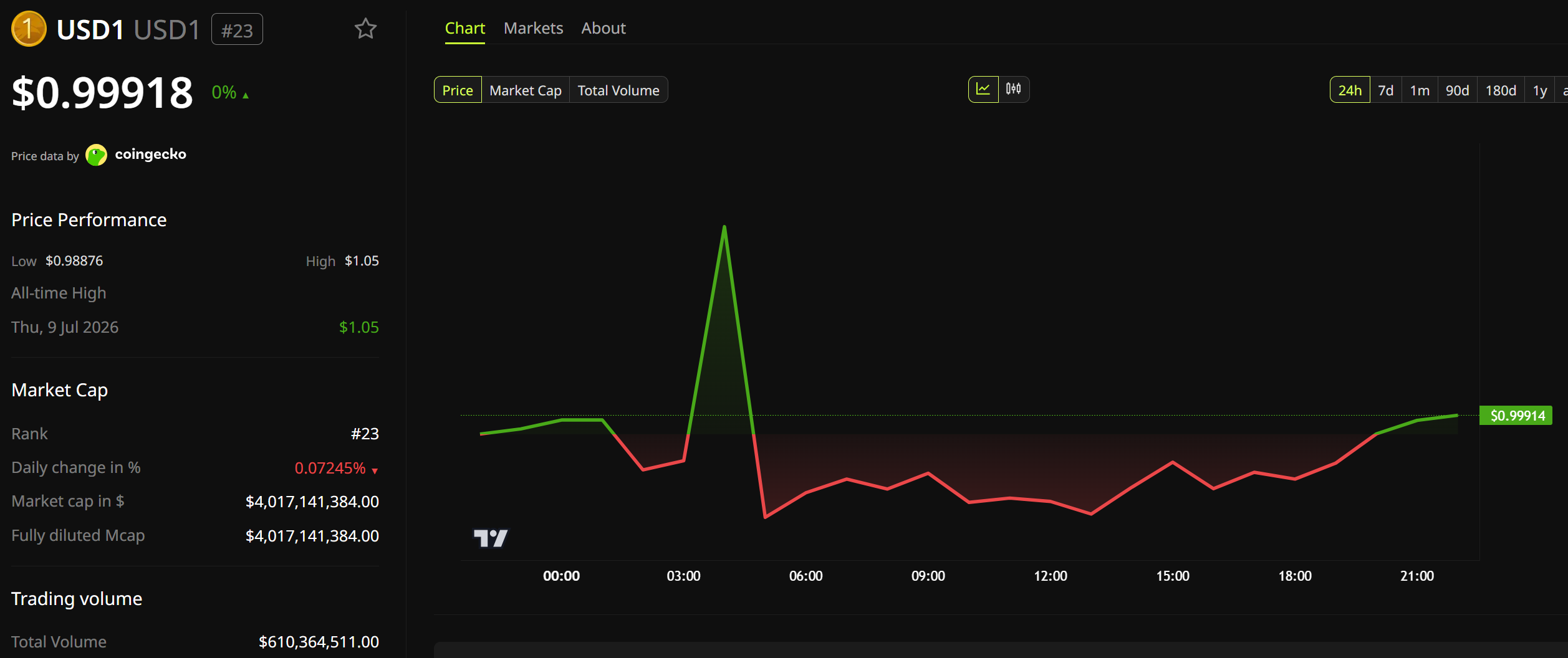
President Donald Trump’s family is set to own a federally chartered bank. A regulator he appointed conditionally cleared World Liberty Trust Company, issuer of the $4 billion USD1 stablecoin.
The Office of the Comptroller of the Currency (OCC) published its national trust charter decision Friday. Final approval would let the firm issue USD1 itself and hold the dollar assets backing it.
Trump’s Own Appointee Cleared the World Liberty Bank Charter
Trump appointed Comptroller Jonathan Gould to run the OCC last year. World Liberty Trust filed its application in early January, and congressional Democrats spent the months since warning that approval would create a conflict of interest.
The agency answered that criticism inside the letter itself. Career staff handled the review, the OCC said, and Gould met his statutory duties and ethical obligations. Nonpolitical examiners will supervise the bank once it opens.
The regulator’s structure matters here. The OCC sits inside the Treasury Department and has no bipartisan board to check a single appointee. Democrats pressed Gould at a February hearing to release the unredacted filing. The public version left out capital structure and business plan specifics.
The financial stakes explain the pressure. Reuters put Trump family earnings from USD1 at roughly $50 million through June 2026. World Liberty Financial had routed more than $1.6 billion to the president and his sons as of April, a figure consistent with his 2025 crypto earnings disclosure.
Leadership keeps the venture inside Trump’s circle. Zach Witkoff, chief executive of World Liberty Financial and son of special envoy Steve Witkoff, would chair the bank. Robert Witkoff and Scott Alper, who runs the Witkoff family real estate business, are proposed directors.
What the Charter Gives the $4 Billion USD1 Stablecoin
USD1 trades near $1 with a market capitalization of about $4.02 billion, ranking 23rd across all crypto assets. Partner BitGo currently mints the token and safeguards its reserves.

The charter pulls both functions in-house. World Liberty would issue and redeem USD1, custody the dollars and Treasury money market funds behind it, and settle payments for institutional clients under one federal license.
Trust charters stop short of full banking, with no retail deposits or lending. The OCC also imposed conditions, including a $20 million capital floor, advance notice of major business plan changes, and a qualified internal audit manager.
Rivals reached this point first. Circle won final OCC bank approval in July, while Ripple and Crypto.com hold conditional trust charter approvals. Major lenders have weighed legal action over charters that grant crypto firms federal standing without full bank supervision.
Nothing changes for USD1 holders until the conditions are satisfied and final approval lands. The open question is whether Congress ever sees the parts of the application the public never got.
The post World Liberty Wins Bank Charter From Trump-Appointed Regulator for $4 Billion Stablecoin appeared first on BeInCrypto.

XAO DAO is preparing a series of governance changes for the XRP Ledger over the next two to three months, according to Fabio Marzella, the organization’s co-founder.
The planned changes would let members delegate voting power, adjust quorum rules, and access community mini-grants, as the DAO looks to make participation easier and more representative, at a moment when several XRPL projects have already scaled back or shut down.
XAO DAO Targets Broader Participation
Marzella said the first change would introduce wallet delegation, allowing members to hand their voting power to others when they lack the time or expertise to vote on individual proposals.
The DAO is also reviewing its quorum requirements, including how inactive wallets count toward proposal thresholds. The stated aim is to prevent inactive participation from blocking decisions while keeping governance tied to the active community.
Community mini grants are another planned addition. Under the proposal, members would be able to submit smaller initiatives and seek funding for projects that contribute to the XRPL ecosystem.
“These aren’t changes for the sake of change,” Marzella wrote. He said the broader goal is to create a DAO where the community has “the ability to act” rather than simply having a vote.
The timing comes as questions around developer support have grown within the XRPL community. On August 13, Marzella said the shutdown of Gen3’s retail platforms showed that funding developers alone does not solve the problem of building lasting businesses.
Gen3, an XRPL infrastructure team, said on August 12 it would spin down two of its retail products, aigent.run and AxiomProtocol, citing weak user demand and rising infrastructure costs. Gen3 said the platforms will stay live for another month, until September 13, so users can withdraw remaining funds, and that it will keep running its core XRPL infrastructure and take part in the ledger’s amendment process.
Marzella pointed to the Gen3 news as evidence of a bigger problem, arguing that funding developers only solves half the issue if there’s no path from a funded project to a sustainable business. Builder Handy Andy, replying in the same thread, described colleagues quietly calculating how much longer they can keep funding their own work without support, calling it “the last roll of the dice” for some.
Activity Is Up
The reshuffle comes as XRP closed near a 21-month low this week, and Santiment data shows daily active addresses averaging 35,700 in August, up from 26,400 in July, even though the number of new wallets has stayed almost flat.
That distinction may matter for XAO DAO’s participation plans. More activity among existing users does not automatically mean a larger pool of people taking part in governance.
As it stands, Marzella has not provided a final timetable or detailed voting mechanics for the proposed changes, instead promising that more information will follow as each initiative progresses, leaving the community to see how delegation, quorum changes and mini grants are eventually implemented.
The post XRP Ledger’s XAO DAO Plans Major Governance Upgrades to Boost Community Participation appeared first on CryptoPotato.
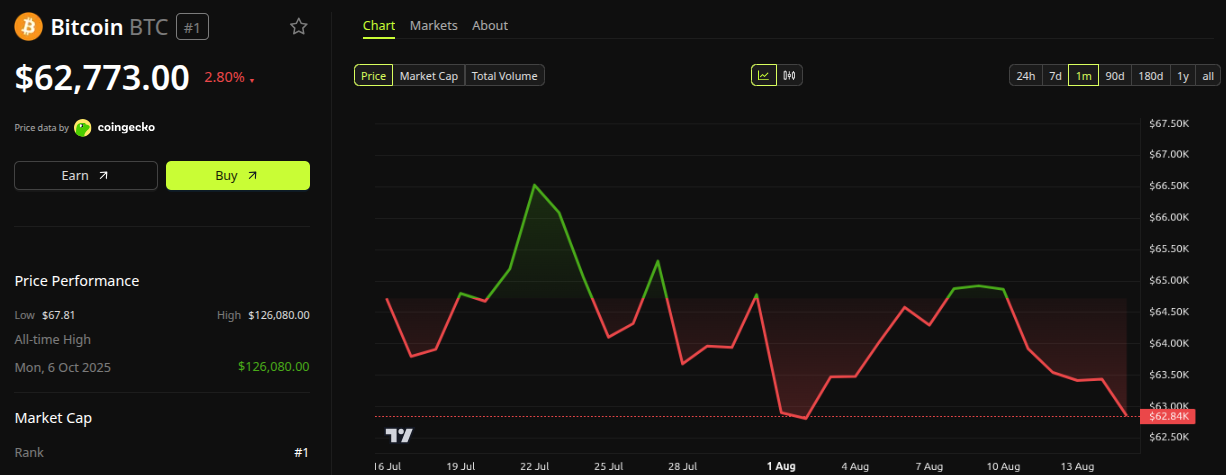
Robert Kiyosaki connected his personal trajectory to his mentor’s predictions and to the future of Bitcoin and AI in a recent, highly symbolic post.
The author of Rich Dad Poor Dad frames transformation as both a technological and a deeply personal matter.
The Mentor Behind His Turning Point
A futurist is someone dedicated to anticipating long-term technological and social trends. Kiyosaki studied for three summers with R. Buckminster Fuller, one of the most influential of the last century.
Fuller was an architect, systems theorist, and inventor best known for the geodesic dome. His work centered on doing more with fewer resources, a principle applied to housing and global resource distribution.
Kiyosaki met him after years in the rock merchandising business. That venture was profitable, though the author describes a persistent sense that the work lacked meaning beyond revenue.
Those summers changed his direction entirely. He calls Fuller the friendly genius of the planet and locates his life’s turning point in that period.
The core idea was philosophical rather than financial. Fuller held that nobody belongs to themselves but to the universe, and that purpose gets fulfilled by committing one’s existence to the benefit of others.
Follow us on X to get the latest news as it happens.
That principle shaped everything afterward. Kiyosaki spent the following decades teaching millions about financial freedom, framing education as the service he owed.
According to Kiyosaki, Fuller also anticipated shifts as disruptive as those driven by Bitcoin and artificial intelligence today. The futurist argued that accelerating innovation would restructure how societies organize wealth and work.
Whether Fuller specifically foresaw either technology is impossible to verify. He died in 1983, decades before Bitcoin existed, so the connection remains Kiyosaki’s interpretation rather than documented prophecy.
What Robert Kiyosaki Says About Bitcoin and AI
Current conditions add relevance to the message. Bitcoin trades near $62,773, roughly 50% below the record high above $126,000 reached in October 2025, according to BeInCrypto data.

The author maintains his position despite that decline. He defends the asset as a hedge against money printing and US debt, holding positions since 2012. His projections remain ambitious. Kiyosaki has forecast prices reaching $750,000 following what he calls a financial reset.
Artificial intelligence forms the second pillar of his argument. Massive infrastructure investment drives growth, generates extraordinary wealth, and threatens to replace routine jobs.
His reading of that phenomenon is blunt. Thinking as an employee leads to being replaced by AI, while thinking like an entrepreneur enables people to use it.
Some analysts draw a connection between the two themes. Accelerated wealth creation and potential credit stress from data-center debt could push capital toward scarce assets.
Subscribe to our YouTube channel to watch leaders and journalists provide expert insights.
Those projections deserve caution, however. They represent hypotheses about future correlations rather than demonstrated relationships between AI spending and Bitcoin prices.
The transformation Kiyosaki describes extends well beyond finance. His argument points toward finding purpose in service to others amid profound technological change.
The post Robert Kiyosaki Links Bitcoin and AI to an Old Prediction: Who Made It? appeared first on BeInCrypto.
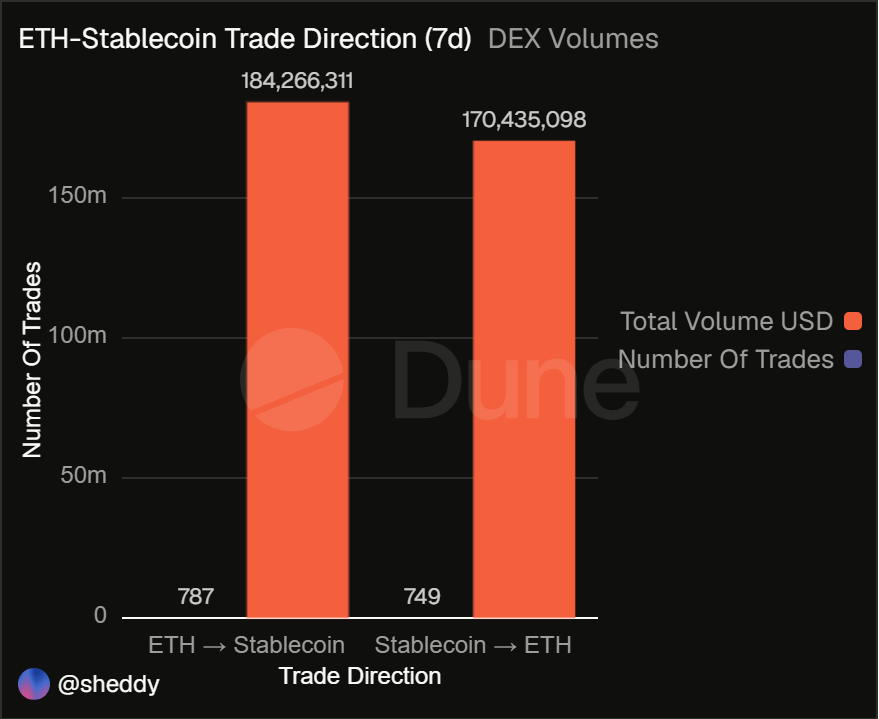
The activity of Ethereum whales has not shown any clear trend in the last seven days, although there is high volatility, meaning whales are very much in action. In a recent analysis, no dominant buying or selling bias was seen despite the high activity.
One question that needs to be answered is whether the whales are moving their wealth into stablecoins or whether the reverse is the case. This will give us an idea of the dominant sentiment among large buyers who hold a significant portion of the market value.
We analyzed data sourced from Dune Analytics for USDT and USDC, the top two stablecoins, on decentralized exchanges (DEXs) for the last seven days and found that there is only a slight difference favoring stablecoins against Ethereum.
However, something more interesting could be going on, as USDC is also clearly preferred over USDT. We dug deeper to uncover the reason for this preference.
Whales Show Slight Bias Toward Stablecoins Against Ethereum
Just like there is no significant bias toward buying or selling of ETH on DEXs as revealed by the last study, whales seem to be buying a little more stablecoins than ETH. ETH to stablecoin transactions had a volume of $184 million, while stablecoin to ETH had $170 million. This shows a difference of roughly $14 million in favor of stablecoins.
However, the relatively small imbalance suggests cautious positioning rather than a decisive exit from ETH. A significant difference in volume would have suggested that large buyers are exiting ETH, which would raise concerns about a potential worsening of the bearish trend, but that is not the case at the moment.
 Large buyers show slight bias towards stablecoins. Source: Dune.com | Analysis by author
Large Buyers Prefer USDC Over USDT
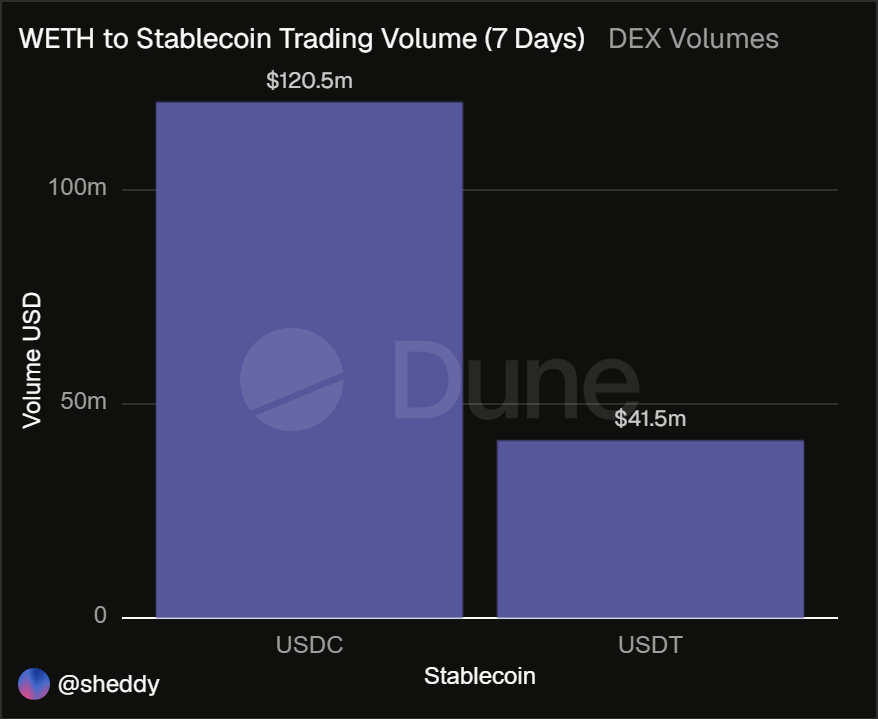
The data further revealed that large buyers are not just slightly flowing into stablecoins, but they prefer USDC by a wide margin. Of the roughly $162 million stablecoin volume traded over the last seven days, over $120 million was in USDC, while USDT only accounted for about $41 million.
Two scenarios are possible here. The first is that large buyers genuinely prefer USDC to USDT for different reasons ranging from security to fees. Secondly, the data may be showing pseudo bias toward USDC because most DEXs offered trades in USDC more than USDT, but that seems to be the case.
 Large buyers prefer USDC over USDT. Source: Dune.com | Analysis by author
We analyzed the trading volume by trading platforms to see how the two stablecoins performed on platforms offering both options. Interestingly, Uniswap was the leading platform of choice, accounting for $135 million in volume (over 83%) of the total of $162 million, and offers both USDC and USDT.
USDC still outperformed USDT, accounting for over 77% of the Uniswap-bound stablecoin volume, worth over $104 million. This shows that large traders truly prefer USDC over USDT, which only had a little over $30 million in volume.
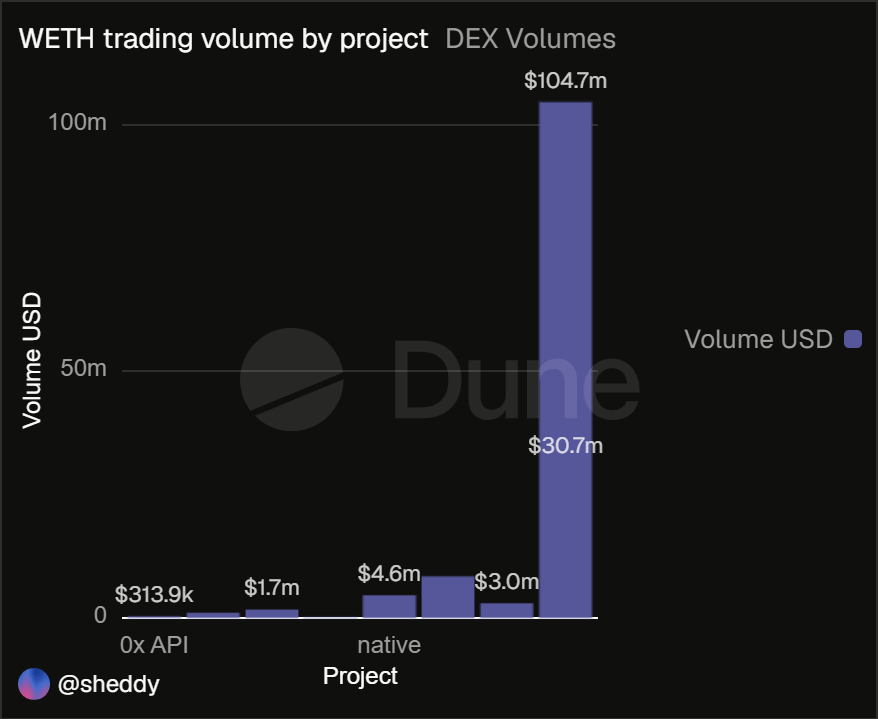 USDC volumes are significantly higher on Uniswap. Source: Dune.com | Analysis by author
Conclusion
Large buyers showing bias toward USDC could be for a number of reasons. First, it could be that USDC has deeper liquidity than USDT. This allows large traders to execute large trades running into millions with as little slippage as possible, which can save them thousands of dollars.
USDC is also commonly used as a dollar-denominated asset throughout DeFi, which is seeing significant growth, resulting in the higher volume relative to USDT.
In conclusion, large buyers are not exiting ETH. The difference in flow direction is marginal, suggesting cautious positioning rather than an outright bearish bias, despite ETH’s price decline. This is good news for retail traders, especially as we already established that the decline is not linked to whale activity.


Cointelegraph is committed to providing independent, high-quality journalism across the crypto, blockchain, AI, and fintech industries.
All news, reviews, and analyses are produced with full journalistic independence and integrity. For more details on our standards and processes, please read our Editorial Policy.

Binance Research says Gen Z traders using the exchange’s ecosystem are increasingly treating exchange-traded funds as a core part of their equity exposure. In early August, ETFs made up 25% of the cohort’s equity trading volume—an increase from earlier months—while interest in single-company stocks has eased.
The findings, based on activity across direct equities, tokenized stocks and traditional finance perpetual contracts, also highlight behavioral differences between younger traders and older generations, including how often they trade, whether they place sell orders, and the extent to which they use leveraged or inverse ETF products.
Key takeaways
- According to Binance Research, ETFs accounted for 25% of Gen Z equity trading volume in early August, up from 21.9% in July and 18.5% in June.
- Gen Z direct-equity accounts increasingly skew toward buy-only behavior, with 22% never placing a sell order—compared with 19% for Gen X and 9% for Baby Boomers.
- Gen Z traded less frequently than other working-age generations across TradFi perpetuals, averaging 13 monthly trades versus 17 for Millennials and 16.5 for Gen X.
- Leveraged and inverse ETFs appear to have limited pull among Gen Z: 88.2% of Gen Z TradFi perpetual accounts recorded no activity in those products.
Gen Z tilts equity activity toward ETFs
Binance’s analysis focused on how different generations allocate trading activity across three equity-related categories: direct equities, tokenized stocks, and traditional finance perpetuals. It compared account behavior across Gen Z, Millennials, Gen X and Baby Boomers using metrics such as trading frequency, net flows and leverage use.
Within that framework, ETFs gained share among Gen Z. In July, ETFs represented 21.9% of Gen Z net equity inflows. That compares with 18.5% in June, suggesting an accelerating preference for fund-based exposure rather than a rotation toward individual companies. Over the same period, the portion of Gen Z inflows allocated to individual stocks declined to 74.2% from 77%.
Binance Research did not frame this as a single-driver story, but the pattern is notable for traders deciding where to deploy capital: ETFs can offer diversified exposure, while direct equity allocation depends more heavily on idiosyncratic company performance.
Trading frequency and sell-order behavior differ by age
The report also points to structural differences in how Gen Z participates compared with older cohorts. Binance Research said Gen Z traded less frequently across all three equity products. For TradFi perpetuals, Gen Z averaged 13 monthly trades, compared with 17 for Millennials and 16.5 for Gen X.
Account behavior provides another window into how Gen Z approaches positioning. Among Gen Z direct-equity accounts, 22% had never placed a sell order. The share was lower for older groups—19% for Gen X and just 9% for Baby Boomers—while Millennials showed the highest level of buy-only behavior at 30%.
For Gen Z buy-only accounts, Binance reported that the most purchased assets by cumulative buying included Broadcom, Tesla and the Schwab US Dividend Equity ETF. The inclusion of a dividend-focused ETF among top cumulative buys aligns with the broader trend toward fund exposure rather than single-stock selection.
Binance also noted a key limitation for interpreting longer-term trends: its direct-equities offering only reached “meaningful scale” in June, leaving a comparatively short window to observe multi-month behavior changes.
Low use of leveraged and inverse ETF products
Beyond what Gen Z is buying, the report examines what it is avoiding—particularly in more complex ETF structures. Binance Research said Gen Z showed relatively little appetite for leveraged and inverse ETFs within TradFi perpetuals. Specifically, 88.2% of Gen Z TradFi perpetual accounts recorded no activity in leveraged or inverse ETFs.
For context, the no-activity shares were 84.5% for Millennials and 85.9% for Gen X, meaning Gen Z’s participation in these higher-risk product types appears modest relative to other cohorts. For traders, that matters because leveraged and inverse exposure can amplify volatility and risk management complexity, affecting how portfolios behave during market stress.
While the report does not provide breakdowns on whether the remaining Gen Z accounts used these products heavily or lightly, the headline takeaway is clear: for most Gen Z participants, ETF exposure—at least within these categories—has been largely non-leveraged.
Tokenized stocks: bStocks briefly overtake xStocks
Separately from the Gen Z cohort analysis, tokenized equities market data suggests shifting competitive dynamics among issuers. Binance’s bStocks briefly overtook Kraken’s xStocks as the second-largest tokenized stock issuer this week, according to Token Terminal data cited in the source.
As of Tuesday, bStocks held $610.6 million in tokenized stock value, compared with $601.2 million for xStocks. By Friday, the positions reversed: Token Terminal showed xStocks at $610.7 million and bStocks at $579.6 million. The report described these levels as about 22.3% and 21.2% of the roughly $2.7 billion tokenized stock market, respectively. Ondo Finance remained the largest issuer with $971.8 million.
Looking at the market as a whole, the source also pointed to continued expansion in distributed value tracked by RWA.xyz, which reported $2.43 billion in distributed value as of Friday—about 5% higher than over the previous 30 days. For investors, the issuer “leadership” flip between bStocks and xStocks underlines how quickly tokenized-stock balances can shift as flows move across platforms and products, even while the top issuer maintains its position.
That fast-moving ranking is also a reminder that tokenized equities remain a developing segment: total market growth is measurable, but individual issuers can move up or down quickly as their tokenized exposure rises and falls.
Going forward, traders should watch whether Gen Z’s ETF share continues to rise beyond the current early post-scale window for Binance direct equities, and whether the limited leveraged/inverse activity persists as more participants enter. In parallel, the tokenized-stock rankings may remain fluid—so changes in issuer balances could be as important as the broader market growth trend.

“Before two leaders like that have a summit meeting, there’s lots of prep work that goes into it,” recalls Souza. “But this was very last minute. The Reagan administration went to great effort leading up to Reykjavik, to not call it a summit. They’d say, ‘It’s just a meeting, and we’re not characterizing it as a summit.’”
The summit’s purpose was to discuss the arms controls between the two nations, in hopes of bringing an end to the long-lasting threat of nuclear war hanging over both countries, and the world as a whole. Over 30 hours, Reagan and Gorbachev fiercely debated in an effort to bring peace and the end of the Cold War. Now, a new film from writer-director Michael Russell Gunn, The Brink of War, gives this historical moment a worthy spotlight. The film stars Jeff Daniels as Reagan, Jared Harris as Gorbachev, and J.K. Simmons as Secretary of State George Shultz.
For Gunn, the idea for The Brink of War came from a meeting he had with the real George Shultz, to whom the film is dedicated. Shultz told him all about the Reykjavik Summit. “I had never heard of this summit before,” says Gunn, “but once I found out I couldn’t stop thinking of it.”
Coinbase and Ripple executives have been named among the expected attendees at an Aug. 19 White House meeting involving at least six crypto and prediction market companies.
Summary
- Six crypto and prediction market firms are expected to have representatives at the White House meeting.
- Coinbase, Ripple, a16z, Chainlink, Paradigm, and Kalshi are among the reported participants.
- The CLARITY Act faces a Sept. 15 procedural vote requiring at least 60 Senate votes.
- CFTC advisers will meet one day later to discuss crypto, AI, and prediction markets.
Semafor reporter Eleanor Mueller said executives from Coinbase, Ripple, a16z, Chainlink, Paradigm and Kalshi were expected to attend the White House meeting, citing people familiar with the plans.
The report did not identify the individual executives who will represent each firm. Coinbase CEO Brian Armstrong and Ripple CEO Brad Garlinghouse have both supported the Digital Asset Market Clarity Act, which remains stalled in the Senate after lawmakers left Washington for their August recess.
President Donald Trump may attend with members of his administration, according to the original report supplied for this story. However, an earlier crypto.news report said the White House had not released a formal participant list and that Trump’s attendance remained unclear.
CFTC Chairman Michael Selig and SEC Chairman Paul Atkins are also expected to participate, according to people familiar with the planning. Neither the White House nor the two regulators had published a formal agenda for the meeting at the time of writing.
Coinbase and Ripple bring CLARITY Act interests
For Coinbase and Ripple, the meeting comes before a scheduled Senate test for legislation that could decide how the two main U.S. market regulators divide responsibility for digital assets.
The CLARITY Act would place spot markets for qualifying digital commodities under CFTC oversight while keeping crypto assets classified as securities within the SEC’s authority. It would also establish federal requirements for exchanges, brokers, dealers, advisers, and digital asset custodians.
American investors could be directly affected by that division because a token’s regulatory status can determine where it may trade, which disclosures apply, and whether a platform must register with the SEC or comply with CFTC market rules.
Coinbase has supported the legislation while continuing to raise concerns about provisions governing stablecoin rewards and decentralized finance. In an Aug. 7 statement, Armstrong called the Senate delay disappointing but said adoption would continue regardless of Congress’ timetable.
“The momentum behind this technology keeps growing with or without a congressional calendar,” Armstrong said.
An Aug. 8 report on Armstrong said the Coinbase chief pointed to stablecoin use, tokenized assets and perpetual futures as areas where activity could continue while lawmakers negotiate. He also argued that a consistent federal framework could support investment and offer stronger protections for U.S. consumers.
Garlinghouse has also backed the bill during negotiations. Ripple and Coinbase were part of a coalition of more than 120 companies that urged lawmakers to advance the proposal in April, according to a May report on Garlinghouse.
Andreessen Horowitz, better known as a16z, has also supported the legislation, while Chainlink works with financial companies on blockchain infrastructure. Paradigm invests in crypto businesses and is a backer of Kalshi, a CFTC-regulated prediction market operator.
CLARITY Act faces a Sept. 15 Senate test
Senate Majority Leader John Thune filed cloture on the motion to proceed with the CLARITY Act before the chamber began its August recess. The Senate Daily Press schedule says the motion will ripen at 2:15 p.m. on Sept. 15, one day after senators return for regular business.
The procedural vote would not pass the bill or send it to Trump. Clearing cloture would allow the Senate to begin formal consideration, after which lawmakers could debate the proposal, introduce amendments, and hold a separate vote on final passage.
At least 60 senators must support cloture. Republicans cannot reach the threshold alone, making Democratic votes necessary even if most Republican senators back the measure.
The House approved its version in July 2025 by a 294–134 vote, with 78 Democrats joining Republicans. In May 2026, the Senate Banking Committee advanced its part of the legislation by a 15–9 vote after Democratic Sens. Ruben Gallego and Angela Alsobrooks voted with Republicans.
Any text approved by the Senate that differs from the House measure would require another House vote or negotiations between the two chambers before reaching the president.
Unresolved disagreements include political ethics provisions, rules for rewards paid on stablecoin balances, protections for software developers, illicit finance controls, and consumer safeguards. The White House has not said whether any of those subjects will appear on the Aug. 19 meeting agenda.
Prediction markets remain doubtful about passage
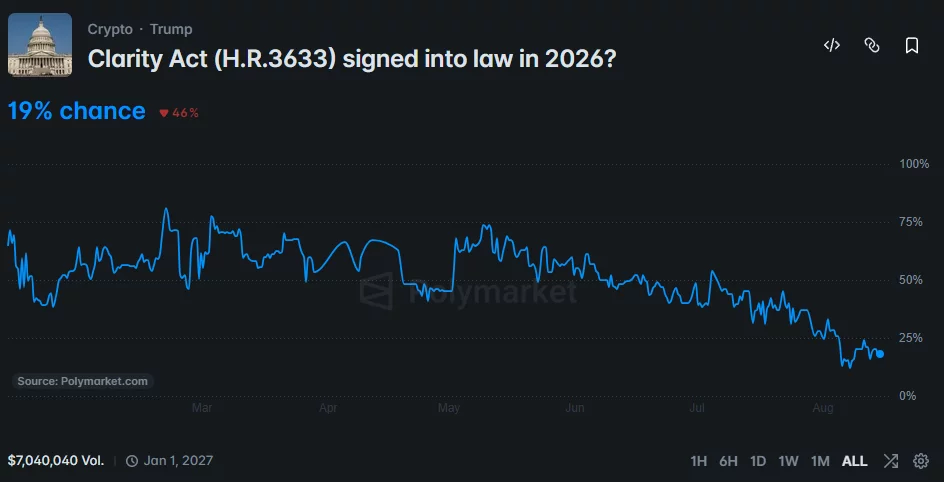
Prediction markets have continued to price in a low chance that the CLARITY Act will become law in 2026, even as the Senate prepares for its September procedural vote.
Polymarket traders placed the probability at 19%. Since such contracts trade continuously, the figure has moved as participants respond to the White House meeting reports and the Senate timetable.
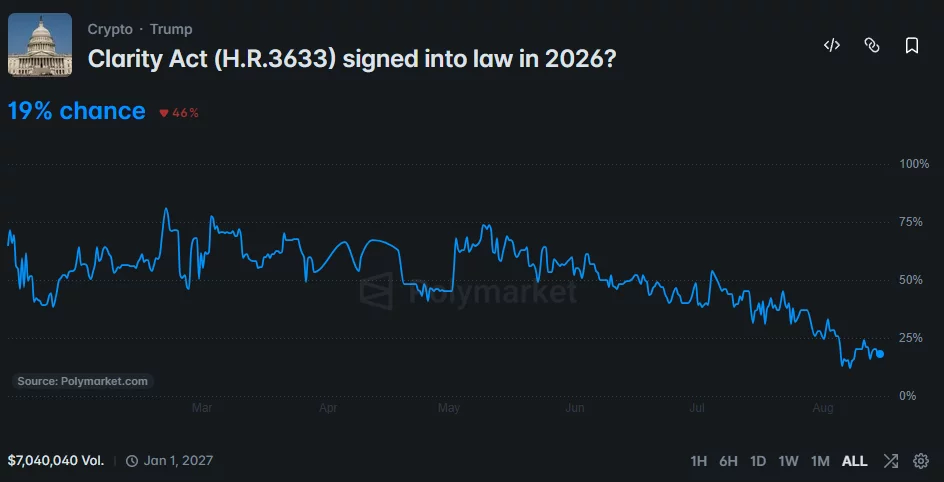
On Aug. 14, the contract briefly showed a 21% probability, rising from 17% one day earlier. Another recent reading placed the chance at 16%, down from an 82% peak in February.
Galaxy Research reportedly assigned a 10% chance of passage during 2026, citing unresolved policy disputes and the limited number of Senate working days before the midterm election recess.
A separate Kalshi contract provided a more favorable reading for an earlier procedural event. As of Aug. 11, traders assigned an 88% probability that the Senate would vote on the legislation before Oct. 1, with about $1.23 million traded on the contract. The date aligns with Thune’s Sept. 15 cloture schedule but does not indicate whether senators will ultimately approve the bill.
CFTC meeting will follow on Aug. 20
People involved in the planning have described the White House event as a kickoff for the CFTC Innovation Advisory Committee’s first meeting, which is scheduled for Aug. 20 in Washington.
According to the CFTC’s published agenda, the three-hour session will run from 1 p.m. to 4 p.m. Eastern time. Committee members will attend in person, while the public will be able to watch the proceedings online.
The first 50-minute panel will examine the history of crypto regulation, state licensing requirements, overlapping jurisdictions, and the lack of a complete federal market structure framework. Members will also discuss how the CFTC could modernize existing rules within its current legal authority and support future legislation from Congress.
A second session will cover artificial intelligence in trading, compliance, surveillance and risk management, including autonomous systems capable of carrying out transactions or managing portfolios.
During the final panel, members will examine prediction markets, event contracts, market surveillance, manipulation risks, and customer protections. The agenda also lists questions involving federal and state authority, an issue directly relevant to Kalshi and other regulated event-contract platforms.
The advisory committee will not vote on a proposed crypto rule, and its recommendations do not automatically become CFTC policy. Members of the public may submit written statements about the meeting through Aug. 27, with qualifying submissions entering the public record.
Separately, the SEC canceled an Aug. 14 open meeting that had been scheduled to consider a proposed offering framework for certain crypto-related investment contracts. The agency’s cancellation notice did not provide a reason or announce another date.
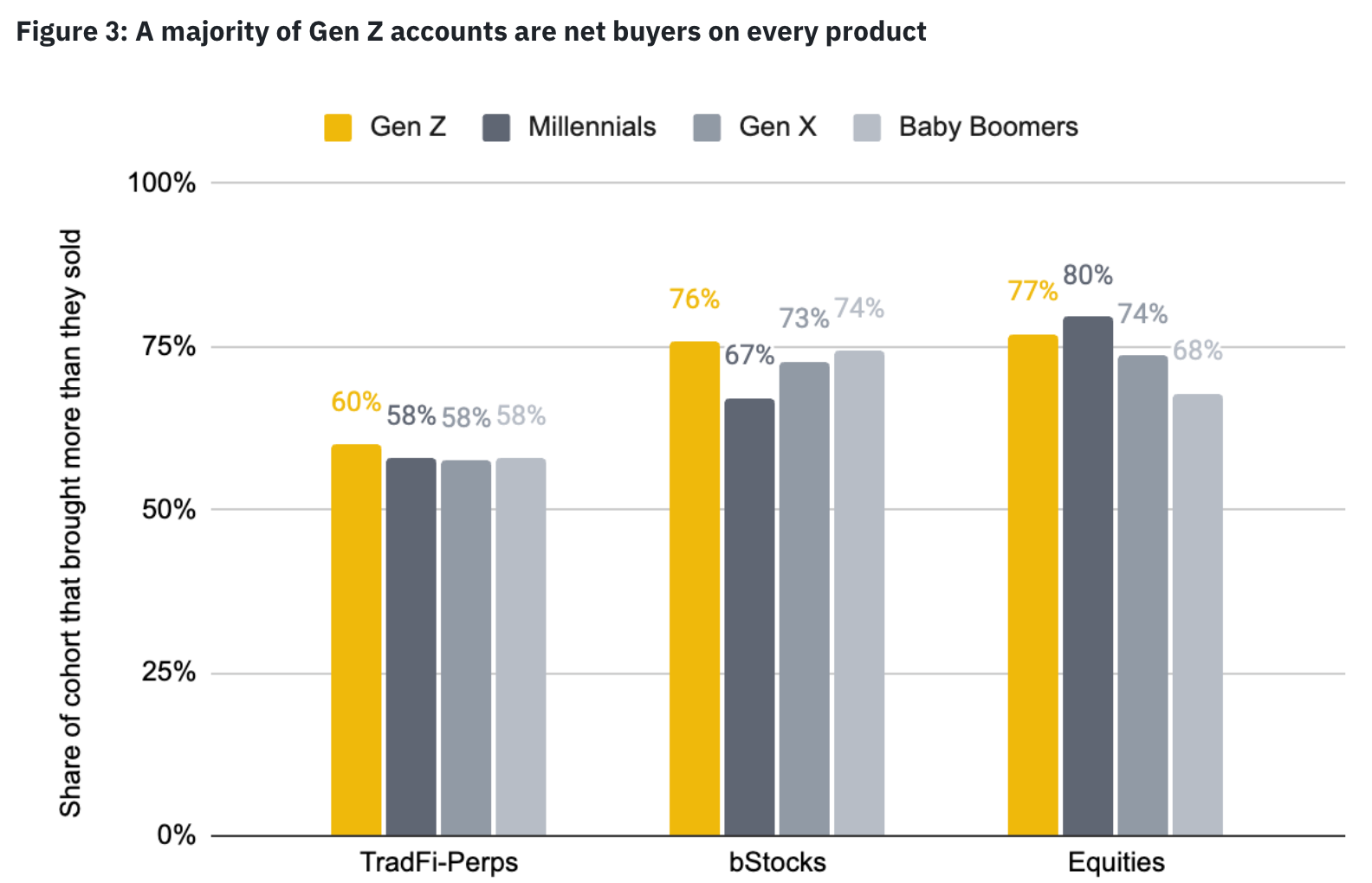
Gen Z traders on Binance are allocating a growing share of their equity activity to exchange-traded funds (ETFs), with the products accounting for 25% of the cohort’s trading volume in early August, according to Binance Research.
ETFs accounted for 21.9% of Gen Z net equity inflows in July, up from 18.5% in June, while the share going to individual stocks fell to 74.2% from 77%.
The analysis examined activity across direct equities, tokenized stocks and traditional finance perpetuals, comparing Gen Z accounts with Millennials, Gen X and Baby Boomers on measures including trading frequency, net flows and leverage use.
The younger cohort traded less frequently than other working-age generations across all three products. Gen Z averaged 13 monthly trades in TradFi perpetuals, compared with 17 for Millennials and 16.5 for Gen X.
Among Gen Z direct-equity accounts, 22% had never placed a sell order, compared with 19% of Gen X accounts and 9% of Baby Boomer accounts. Millennials had the highest share of buy-only accounts at 30%. Among those Gen Z buy-only accounts, top assets by cumulative purchases included Broadcom, Tesla and the Schwab US Dividend Equity ETF, according to Binance.
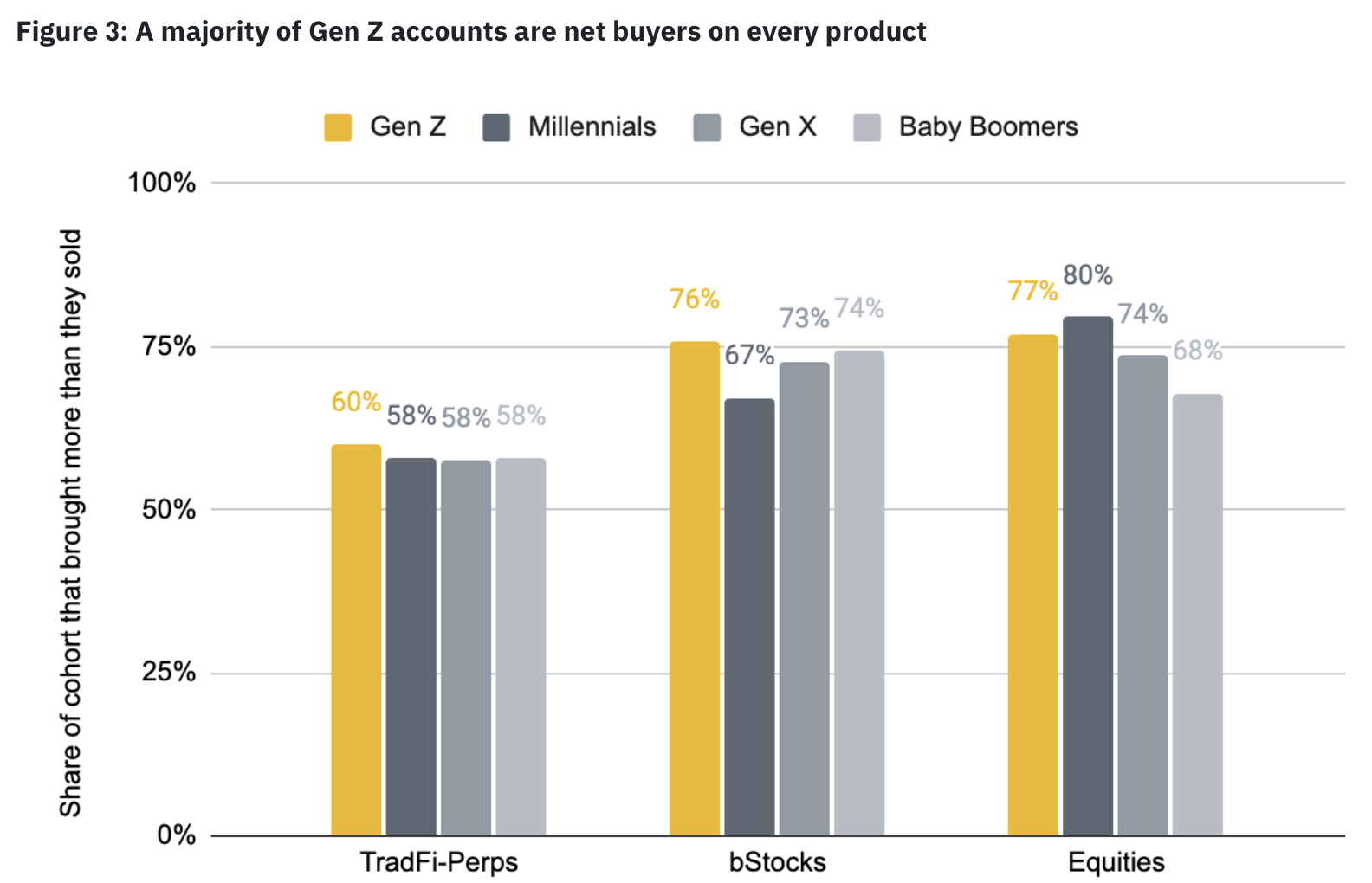
Net buyers by generation and product. Source: Binance
Gen Z also showed relatively little appetite for leveraged and inverse ETFs; 88.2% of Gen Z TradFi perpetual accounts recorded no activity in those products, compared with 84.5% of Millennials and 85.9% of Gen X.
Binance cautioned that its direct-equities product only reached meaningful scale in June, leaving a relatively short data window for establishing longer-term trends.
Related: Binance to restrict transactions involving HTX, 10 other crypto platforms
Binance bStocks briefly overtakes xStocks
Binance’s bStocks briefly overtook Kraken’s xStocks as the second-largest tokenized stock issuer this week, less than two months after launching. As of Tuesday, bStocks held $610.6 million in tokenized stock value, compared with $601.2 million for xStocks, according to Token Terminal data.
The positions had reversed by Friday, with Token Terminal showing xStocks at $610.7 million and bStocks at $579.6 million, representing 22.3% and 21.2% of the roughly $2.7 billion market, respectively. Ondo Finance remained the largest issuer at $971.8 million.
The broader tokenized stock market has continued to expand, with RWA.xyz tracking $2.43 billion in distributed value as of Friday, up about 5% over the past 30 days.
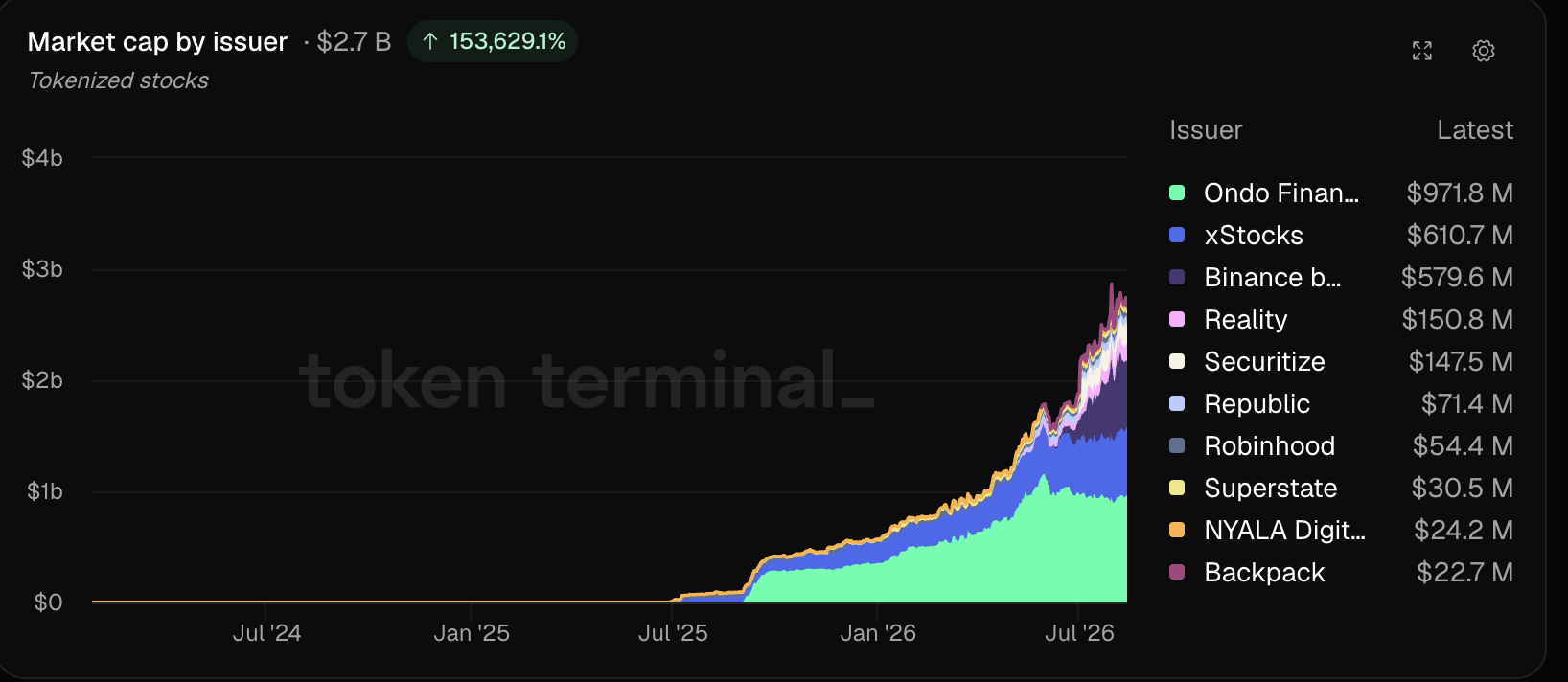
Tokenized stock market cap by issuer. Source: Token Terminal
Magazine: Solana’s fee overhaul increases burn and makes resource hogs pay

Shotton Colliery man sentenced for Wheatley Hill thefts
CoreWeave COO Sachin Jain sells $110 in company stock
Bitcoin Hits 10-Day Low Despite Positive CPI Data as Strategy Keeps Selling: Weekly Crypto Recap


-

 News Videos7 days ago
Can Astrology Help Find Gold and Silver Trends? A Financial Astrology Guide
-

 Fashion5 hours ago
Weekend Open Thread: Ann Taylor
-

 Business6 days ago
Datadog: Best Of Breed For Multiple Reasons
-

 Business6 days ago
How to Start a Cleaning Business: A Step-by-Step Guide
-

 Business6 days ago
BDC Weekly Review: Private BDC Q2 Numbers Are Strong
-
 NewsBeat3 days ago
Communication cards help banking customers access services or report scams
-
 Business4 days ago
Oil Price Today (August 11): Crude oil rises to $88 after Trump’s compensation demand dents Hormuz opening. Here’s why
-
 Entertainment7 days ago
10 R-Rated Drama Movies That Can Be Called Masterpieces
-

 Fashion5 days ago
Amazon Sundays: Closet Care Before Fall
-

 Business7 days ago
SharkNinja Keeps Eating
-

 Politics6 days ago
Be quiet, Miriam! – spiked
-

 Business5 days ago
5 Things You Must Know About Jorge Messi, the Father and Longtime Agent Who Shaped Lionel Messi’s Career
-

 Business6 days ago
Mutual Fund Manager Scoops Up Beaten-Down Stocks
-

 Politics5 days ago
Ben-Gvir’s crocodile project halted but abuses at Ketziot Prison continue
-

 Tech7 days ago
Metabase SQLi zero-day exploited in customer data-theft attacks
-

 Politics5 days ago
The Church of England’s ruinous reparations racket
-
 Crypto World4 days ago
Why Did Nvidia Stock Fall on Monday Despite a $500 Billion Wall Street AI Deal?
-

 Politics6 days ago
Calls to permanently pedestrianise central Belfast following festival success
-

 Crypto World6 days ago
A Deep Dive Into One Of The Most Significant Hacks In Recent Memory
-

 Crypto World6 days ago
Bitcoin ETFs draw $853.5M in five-day inflow streak
You must be logged in to post a comment Login